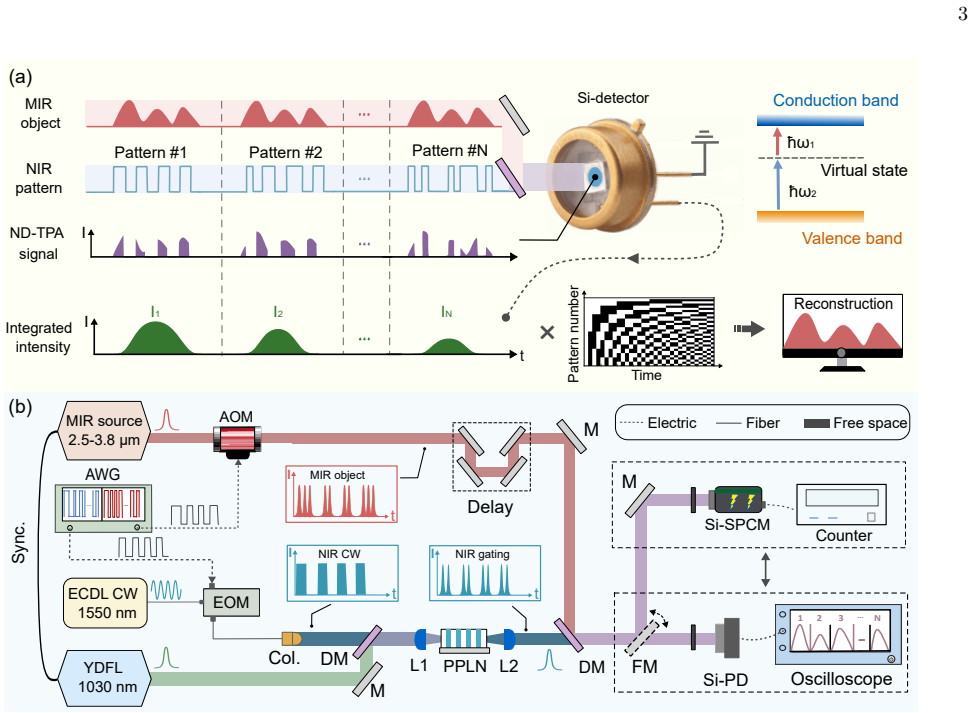
Temporal ghost imaging (TGI) enables ultrafast signal reconstruction beyond electronic bandwidth limits. Extending this concept to the mid-infrared (MIR) regime through nonlinear frequency conversion offers new opportunities for high-fidelity temporal detection, but remains constrained by stringent phase-matching condition, limited spectral coverage, and intricate optical alignment. Here, we propose and demonstrate a broadband MIR TGI system based on non-degenerate two-photon absorption. A temporally encoded near-infrared pump transfers structured modulation onto a MIR signal directly at a silicon detector, which facilitates concurrent modulation and detection without external nonlinear crystals. The reconstructed temporal waveforms exceed the detector bandwidth by more than fortyfold, achieve a detection sensitivity of 0.05 pJ/pulse, allow compressed sensing with 80\% fewer measurements, and support broadband operation across 2.5-3.8 $\mu$m. This compact, alignment-free, and room-temperature system establishes a practical route for fast and sensitive MIR time-domain analysis, holding great promise for applications in time-resolved molecular spectroscopy, high-precision infrared ranging, and high-speed free-space communication.
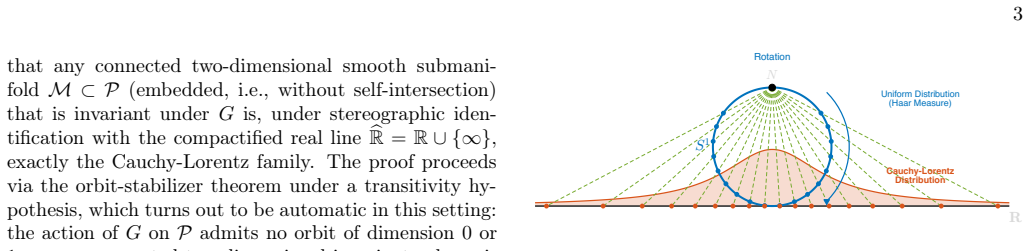
Low-dimensional descriptions of large systems of coupled oscillators and spiking neurons rely heavily on the Lorentzian Ansatz. We show that its privileged role is geometric rather than heuristic: for the transport induced by Riccati dynamics, the Cauchy-Lorentz family indeed emerges as the unique connected two-dimensional family of continuous probability densities that is invariant under the induced projective transport. The key step of the demonstration is to reformulate the dynamics on the circle, where the problem reduces to the uniqueness of the rotation-invariant probability measure. Under stereographic projection, this yields the standard Cauchy law and, under the full projective action, the Lorentzian family. This result gives a unified geometric foundation for the Ott-Antonsen [Chaos 18, 037113 (2008)] and Montbri{\'o}-Paz{\'o}-Roxin [Phys. Rev. X 5, 021028 (2015)] reductions, explains the failure of Gaussian closures, and identifies the structural condition underlying exact two-parameter reductions.
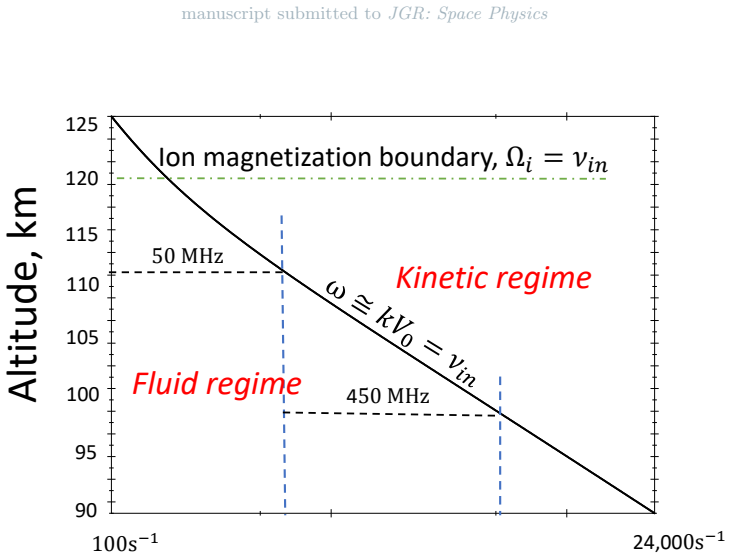
This paper develops a fully kinetic linear theory of the thermal Farley-Buneman instability (TFBI) in the E-region ionosphere with unmagnetized ions. The TFBI combines spatially uniform E-region plasma instabilities, such as the Farley-Buneman instability (FBI), ion thermal instability (ITI), and electron thermal instability (ETI). Similar collision-dominated plasma processes can also occur in the solar and stellar chromospheres, as well as in other planetary atmospheres. For the first time in the theory of the FBI-related processes, the kinetic description of ions includes the driving electric field, resulting in automatic inclusion of the ITI. This analytic theory has produced a comprehensive linear wave dispersion relation. It is remarkable that, similarly to the oversimplified earlier ion-kinetic studies, this much more general kinetic dispersion relation involves only elementary functions and the standard plasma dispersion function (albeit of several different arguments). This new theory is limited to plasma waves with the frequencies of the order, or larger than, the ion-neutral collision frequency. This inherently kinetic frequency range is of importance for accurate interpretation of radar signals scattered from relatively high E-region altitudes, but at altitudes where ions are unmagnetized (mostly, below 110 km).
Machine learning interatomic potentials (MLIPs) have become a hallmark of AI for scientific simulation. While efforts on new architectures and datasets have led to increasingly accurate and general models, the choice of optimizer for training has largely remained unexplored, defaulting to Adam and its variants in the community. Here, we implement and systematically compare a class of recently proposed matrix-structured optimizers, including Muon, SOAP, and the hybrid SOAP-Muon, for training NequIP and Allegro MLIP models. We find that these optimizers can substantially outperform Adam in both convergence speed and final accuracy. SOAP and SOAP-Muon emerge as robust and consistently strong methods, while Muon only provides partial gains relative to Adam. The improvements are particularly pronounced under partial force supervision. Our results indicate that optimizer choice is an overlooked yet impactful design axis for MLIPs.
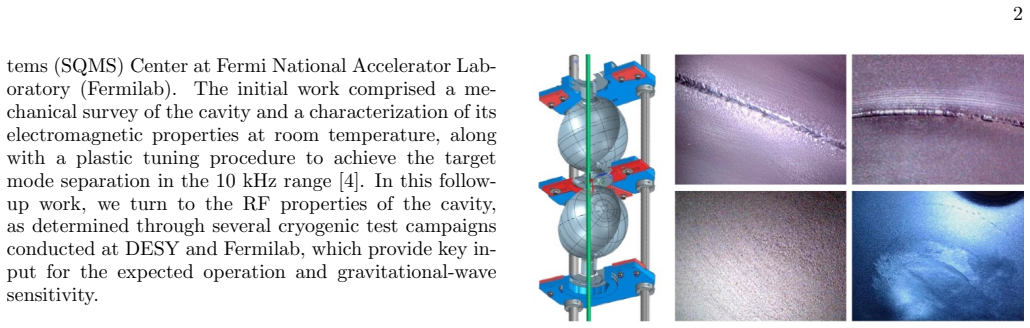
Superconducting radio-frequency (SRF) cavities are promising resonant sensors for gravitational-wave detection in the kHz-MHz frequency range. We report the cryogenic RF characterization of a prototype superconducting niobium cavity with an unconventional geometry designed for narrow electromagnetic mode separation. Following an adapted surface preparation procedure, cryogenic tests were performed at Fermilab and DESY at temperatures down to 2\,K. Mechanical tuning at room temperature achieved a mode splitting of approximately 11\,kHz at cryogenic temperature. High electromagnetic quality factors consistent with previous prototype cavities were measured. The measurements further revealed phase transfer characteristics relevant for stable low-level RF control as well as indications of mode coupling potentially caused by one-point multipacting. In addition, first cryogenic measurements of the mechanical eigenmodes yielded mechanical quality factors significantly below commonly assumed theoretical values. These results demonstrate the successful application of established SRF preparation and characterization techniques to a non-standard resonator geometry and provide important experimental input for the development of future SRF-based gravitational-wave detectors.
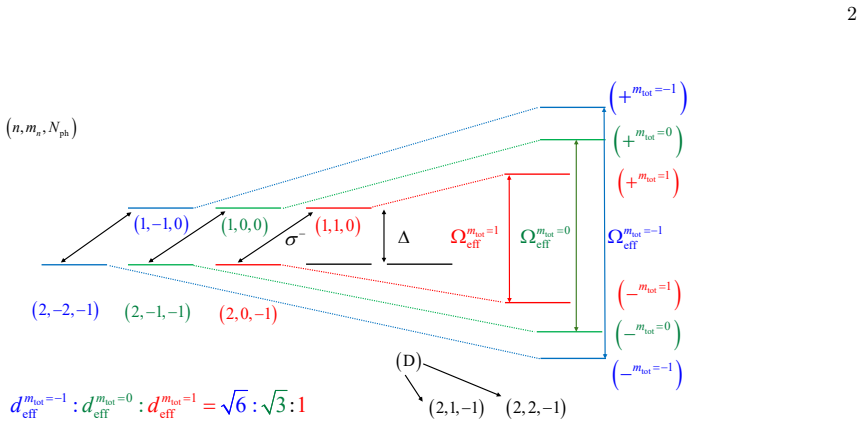
We show that microwave shielding on the rotational transition $n=1\rightarrow 2$ can be effective in preventing destructive collisions between ultracold polar molecules. It is slightly less efficient than shielding on the transition $0\rightarrow 1$, but has some important advantages. In particular, it does not produce 2-molecule bound states under the conditions needed for shielding, so it will not enhance 3-body recombination. It thus obviates the need for double-field microwave shielding using a second field of different polarization.
We present APEIRON, a distributed heterogeneous processing framework comprising both hardware architecture and software stack for multi-FPGA systems. Targeting smart trigger and data acquisition (TDAQ) systems in high energy physics, APEIRON spans the full software hierarchy: from low-level device drivers to a high-level dataflow programming model based on High-Level Synthesis. We describe the framework design, its core communication infrastructure, and a particle identification application for the NA62 experiment as a representative physics use case.
Accelerated magnetic resonance imaging reduces acquisition time, but reconstruction from undersampled k-space can blur diagnostically relevant structures or introduce failures that are not captured by global image metrics. We propose SA-RDM-DC, a Self-Auditing Residual generative Drifting Model with Data Consistency for accelerated knee MRI. The method adapts the newly proposed generative drifting paradigm to accelerated MRI by training a physics-conditioned drift field from the zero-filled reconstruction toward the fully sampled residual correction. It predicts image- and missing-k-space residual corrections, enforces data consistency with acquired k-space, uses frequency-aware and residual drifting supervision to recover fine detail, and produces dense error maps and slice-level risk scores in the same inference pass. We evaluate SA-RDM-DC on multi-coil fastMRI knee data at acceleration factors of 4, 8, and 12, with fastMRI+ pathology annotations for region-level and classifier-based task preservation, and on SKM-TEA for zero-shot and fine-tuned protocol-shift evaluation. Compared with zero-filled reconstruction, UNet-image-SENSE, DC-UNet, Score-Diffusion, ELF-Diff, SENSE-VarNet, and MoDL baselines, SA-RDM-DC achieves the highest SSIM across fastMRI acceleration factors while retaining subsecond per-slice inference and avoiding the long sampling time of iterative diffusion baselines. In pathology-aware analysis, SA-RDM-DC preserves lesion-region structural fidelity and reduces meniscus prediction instability. Its self-auditing scores strongly identify high-error reconstructions on fastMRI and partially transfer as a selective-review signal under SKM-TEA protocol shift. These results support reconstruction evaluation that jointly considers image fidelity, pathology preservation, runtime, and case-specific reliability.
We study the outcome of adaptive learning of a large number of players engaging in sets of two-strategy two-player games. We are interested in typical games, and generate the payoff matrices at random at the beginning. The payoff matrices then remain fixed during the learning process. This provides a game theoretic foundation for the Sherrington-Kirkpatrick (SK) game, recently introduced by Garnier-Brun, Benzaquen and Bouchaud. The original model by these authors is a special case, with no bias towards any strategy. We here determine stability of learning for SK games with general random bias, and find that the nature of the stable state is affected by random fields. We also introduce a grand-canonical version of the SK game, in which players can choose to abstain. We determine the stability of learning for this game. Our analysis confirms that complex situations involving many players are frequently unlearnable, even if each player only chooses between two different actions. The rate with which players lose memory of past payoffs and the competitiveness of the game emerge as key parameters determining whether learning converges to a unique fixed point, whether there are many fixed points, or if the dynamics remains persistently volatile.
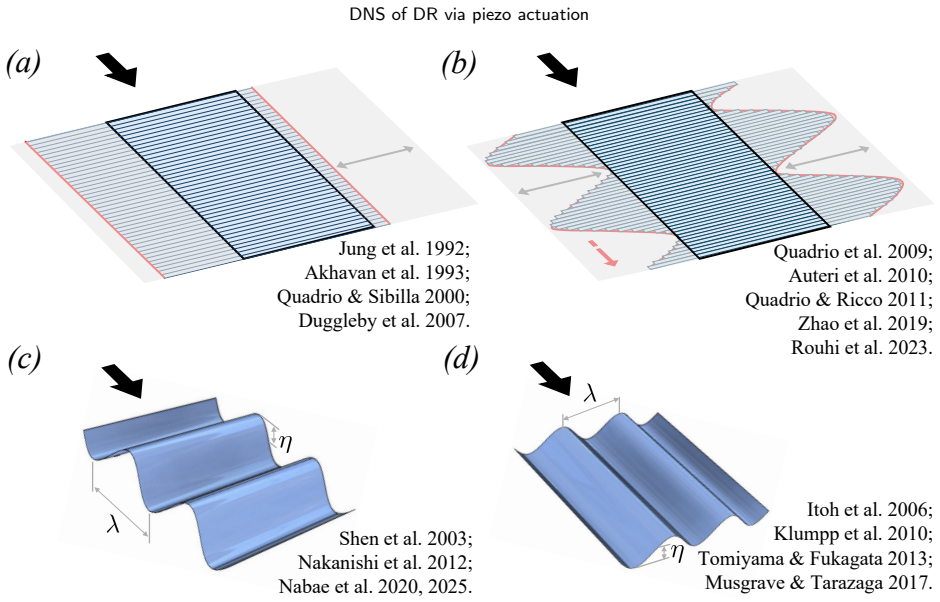
We have conducted Direct Numerical Simulations of turbulent half-channel flow over realistic surface deformations at friction Reynolds number $Re_\tau=200$. We generated the surface deformations using piezoelectric actuators. We simulated the piezoelectric actuation over the practical actuation frequency range $(119Hz\le f_\mathrm{act}\le543Hz)$ and voltage range $(250V\le Q \le500V)$ beneath an Aluminum sheet using Finite Element Analysis. The sheet deformation amplitude and actuation frequency in viscous units vary within the range $2 \le \eta^+_\mathrm{max} \le 34$, and $-0.58 \le \omega^+ \le 0.70$. The vertical surface deformations from our actuation setup generate three types of waves: travelling, hybrid, and standing waves. Surface deformations are applied as bottom-wall boundary conditions of the turbulent channel flow to generate waves in the upstream, downstream, and spanwise directions. We achieved maximum drag reductions of 1.6\%, 5.4\%, and 27.6\% for upstream, downstream, and spanwise waves, respectively. The streamwise waves generate alternating adverse and favorable pressure gradients, which locally increase and decrease drag, leading to a marginal net change in drag. In contrast, spanwise waves introduce transverse shear, accompanied by high- and low-streamwise-momentum zones that respectively attenuate and energize the near-wall turbulence. Such disruption of the near-wall turbulence-regeneration cycle produces up to $27\%$ drag reduction for the realistic spanwise hybrid wave; such an outcome demonstrates the efficacy of unconventional realistic surface deformations in achieving significant drag reduction.
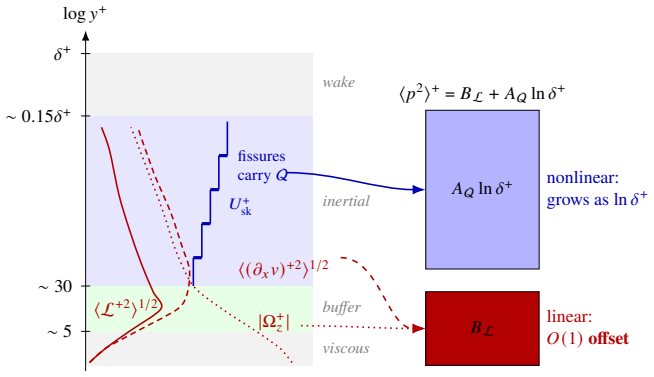
In canonical turbulent wall-bounded flows, the inner-scaled wall-pressure variance is empirically well described by a constant offset plus a slope logarithmic in the friction Reynolds number ($\delta^+$). Because the fluctuating pressure is predominantly a Poisson response to only two source terms -- a linear contribution from the mean shear coupled to a fluctuating velocity gradient, and a nonlinear contribution from the fluctuating velocity field -- the origin of this growth can be pinned down by elimination: if the linear source saturates at a Reynolds-number-independent value, the nonlinear source must carry the logarithmic growth. Here we supply the complementary evidence for inner-scaled invariance of the linear source at $\delta^+$ up to $O(10^4)$, using the simultaneous velocity and velocity-gradient hot-wire measurements of Zimmermann \textit{et al.} (2019 \textit{JFM} vol. 869 pp. 182--213) acquired with a single eight-sensor probe in both a zero-pressure-gradient turbulent boundary layer and a high-Reynolds-number pipe flow. The inner-scaled factors entering the linear source collapse across Reynolds number, and the inertial-layer variance of the relevant fluctuating velocity gradient decays inversely with wall distance. Together with the established inner scaling of the mean shear, this is consistent with a linear wall-pressure contribution that, under inner normalisation, remains $O(1)$ as $\delta^+\to\infty$. Both source terms then trace to one structural mechanism: the near-wall depletion of mean spanwise vorticity that caps the linear source also feeds, through vortex stretching, the inertial-layer fissures that carry the growing nonlinear contribution.
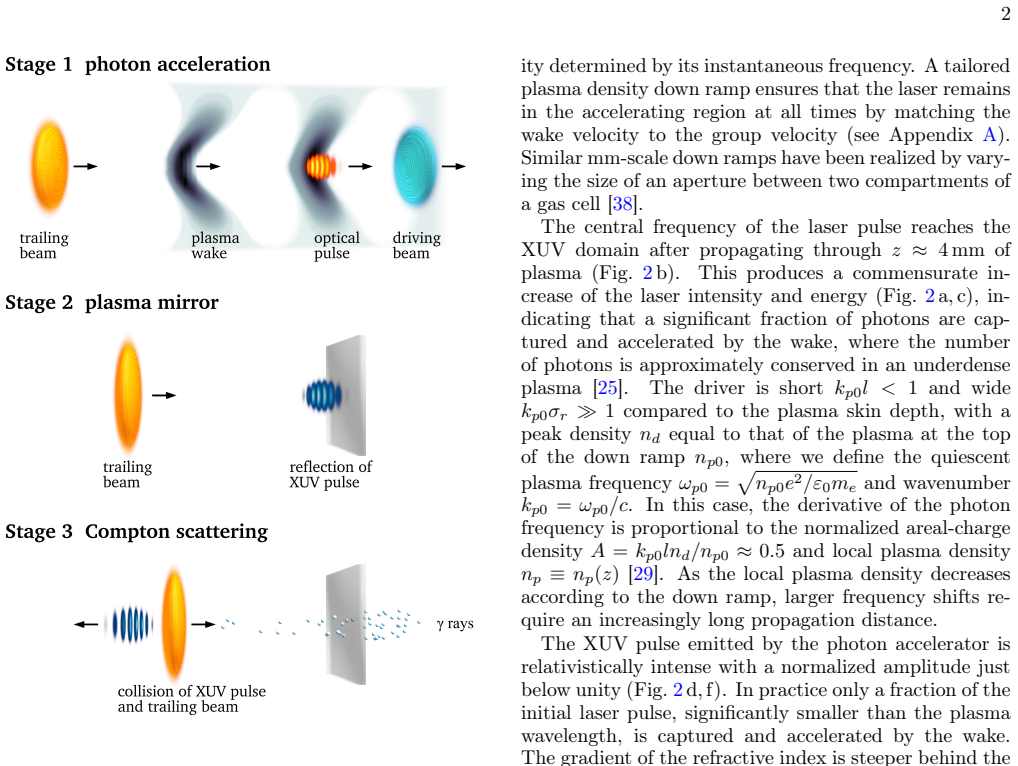
High-brilliance sources of polarized gamma rays are widely sought after to pump and probe matter at subatomic length scales. However, existing accelerator facilities and optical lasers cannot reach a sufficiently high center-of-mass energy to produce polarized, multi-GeV gamma rays from unpolarized electrons via inverse Compton scattering. Here we propose a scheme where the optical laser photons are first "accelerated" to the extreme ultraviolet in a beam-driven plasma wakefield, then reflected by a plasma mirror back onto a trailing electron beam, producing a flash of gamma rays. Numerical simulations demonstrate this light source can achieve a high peak-brilliance (10^25 photons/s mm^2 mrad^2 0.1% BW) and a high degree of circular (95 %) or linear (77 %) polarization at multi-GeV photon energies, paving the way for the production of spin-polarized positrons and tests of light-by-light scattering.
The mixing between flavor and mass eigenstates of active neutrinos is described by a $3\times3$ unitary matrix. However, the presence of additional heavy sterile neutrino states can lead to a non-unitary neutrino mixing scenario. Atmospheric neutrinos, with their wide range of baselines and energies, provide an excellent probe of such effects. In particular, Earth matter effects in neutrino oscillations play an important role, as the neutral-current potential contributes non-trivially in the presence of non-unitarity. In this work, we use 8 years of publicly available atmospheric neutrino data of IceCube DeepCore to probe this non-unitary neutrino mixing scenario. This high-purity $\nu_\mu$ CC sample provides strong sensitivity, especially to the non-unitary parameters appearing at leading order in the $\nu_\mu \rightarrow \nu_\mu$ channel. The data sample is found to be consistent with the standard unitary mixing framework with no significant deviation. Using this data sample, we place the most stringent bound to date of $\alpha_{33} > -0.027$ at 90% CL, while the other non-unitary parameters are constrained at competitive levels.
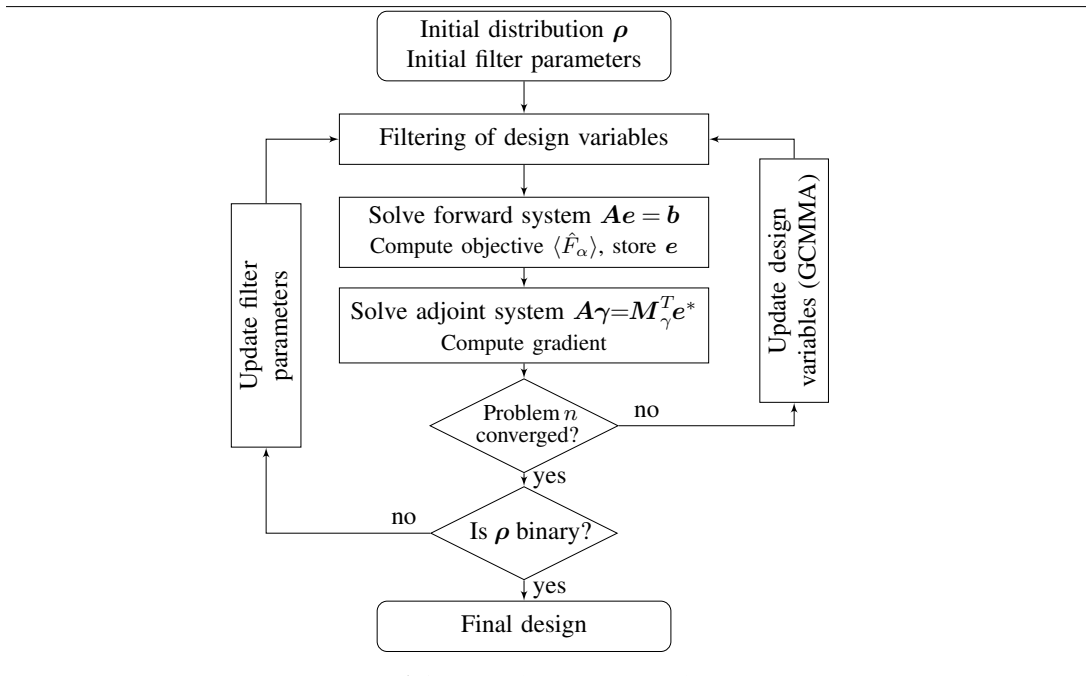
Smart metasurfaces capable of employing the momentum of light for manipulating nanoparticles hold the key to potential applications in science and nanotechnology. This article proposes a density-based topology optimization framework for optimizing plasmonic metasurfaces for nanoparticles optical trapping. The Maxwell stress tensor (MST) is employed to compute the optical force exerted on nanoparticles of different sizes and types. The metasurfaces' topologies are optimized to maximize the gradient (attractive) force on such nanoparticles subject to normally incident monochromatic excitation. Designs based on free-form optimization are investigated first, then manufacturing constraints are imposed to provide easy-to-manufacture planar designs. The results show that the topology of the optimized metasurfaces depends on the nanoparticle size and material, with a higher trapping stiffness associated with small nanoparticles. The optimized metasurfaces could offer selective mass trapping of nanoparticles for applications in biosensing, microfabrication, or assembly of quantum systems.
The steady final phonon occupation in waveguide optomechanical systems based on backward stimulated Brillouin-Mandelstam scattering has not been established in the strong-coupling regime. In this work, the displacement spectra of anti-Stokes optical modes and acoustic modes in tapered chalcogenide photonic crystal fiber are derived from the Lindblad (or Gorini-Kossakowski-Sudarshan-Lindblad) master equation. By analyzing the full spectral response, we indicate that the system can enter the strong-coupling regime through the emergence of normal-mode splitting and avoided crossings. Within a non-Hermitian framework, the threshold for strong coupling is identified, showing that it can be achieved at relatively low pump power even at room temperature. Furthermore, we derive a unified analytical expression for the final phonon occupation, revealing that quantum backaction and zero-point fluctuations impose additional fundamental limits that hinder the achievement of ground-state cooling. These results redefine the quantum limits of steady-state cooling in continuum optomechanics, motivating the search for new strategies to access the quantum ground-state of macroscopic phonons.
Variations in solar radius (hereafter R_Sun) is a key reference for solar magnetic activity in time. The sunlight amount may have varied with R_Sun and had an effect on the Earth's climate in the past. Eclipse observations offer a unique opportunity to measure the absolute R_Sun value before modern direct observations. The scientific community has discussed a possible long-term R_Sun variability from 1715 onward. Prior to their coverage, Clavius' eclipse reports had been subjected to qualitative debates regarding the local eclipse visibility and a possible secular R_Sun trend. This study leverages the recent dramatic developments of lunar topography data and ephemeris data to provide an effective resolution of this debate. Clavius' eclipse reports described an explicit totality in 1560 at Coimbra and a "slender circle" around the eclipsing Moon in 1567 at Rome. Our study revised the {\Delta}T constraints of -492 s =< {\Delta}T =< 200 s in 1560 and 140 s =< {\Delta}T =< 151 s in 1567 to satisfy Clavius' descriptions, considering the lunar limb profile and assuming Auwers' canonical R_Sun. This study constrains the R_Sun margin of 1567, utilising three scenarios to interpret Clavius' account. The local totality requires an upper R_Sun limit of 1567 as R_Sun =< 696200 km in absolute size (959.92" in angular size), indicating no linear secular R_Sun shrinkage but possible R_Sun oscillations on a centennial timescale. Conversely, the annularity scenario is considered unlikely because it requires an R_Sun decrease of 7.5" within 3 centuries, even beyond the capacity of extreme shrinking-Sun hypotheses.
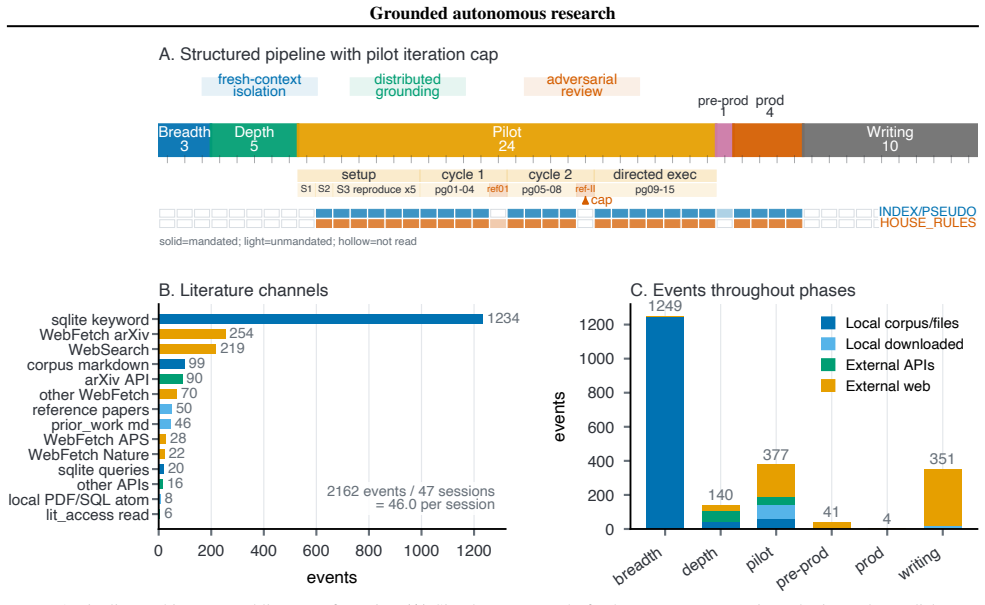
Autonomous-research agents have demonstrated end-to-end LLM automation in machine-learning sandboxes where execution provides calibration. Frontier physical science differs categorically: physical reasoning underlies every methodology choice, toolchains are often underdocumented, and calibration must come from external literature anchors - which unscaffolded agents cite but do not confront, hallucinating plausible, unverifiable results from internal priors. We present a pipeline that runs end-to-end from a corpus of 11,083 recent condensed-matter physics arXiv papers to a publication-grade manuscript with three substantive physics findings (here on altermagnetic piezomagnetism): the agent autonomously conceives a research direction by mapping the corpus, calibrates methodology by reproducing published references, conducts novel first-principles computations, and writes the manuscript - grounded in literature throughout, across 47 fresh-context sessions in six phases sharing only on-disk state, with 2,162 literature-consultation events. Fault tolerance emerges from redundancy: fresh-context isolation, distributed grounding, and adversarial review catch what any single session misses; pre- and post-pilot stages are fully autonomous, and pilot requires bounded human intervention only at reproduction failures - operational knowledge curation, not scientific direction. Two paired failure modes - a pre-architecture baseline and a no-pilot ablation - isolate structurally enforced numerical confrontation at calibration checkpoints as the operative grounding mechanism. The primitives, characterized failure modes, and quantified intervention pattern lay a foundation for autonomous research in high-stakes scientific domains beyond computational physics.
Microwave plasma sources play a critical role in scientific research and a wide range of industrial, biomedical, and space applications. Resonant microwave structures have recently enabled highly energy-efficient plasma generation by concentrating electromagnetic energy within compact volumes. However, once plasma is ignited, the formation of a conductive region at the resonator's electric-field hotspot significantly perturbs the resonant impedance, resulting in severe impedance mismatch, increased reflection, and reduced power-transfer efficiency. This limitation arises because conventional resonant operation relies on critical coupling, in which the input coupling simultaneously provides impedance matching and perturbs the resonator. This paper overcomes this fundamental limitation by operating the resonator in an over-coupled regime and achieving dynamic impedance matching through temporally modulated excitation. Specifically, an exponentially growing incident waveform is used to emulate the critical coupling condition without physically modifying the resonator, a concept known as virtual critical coupling. The proposed approach enables the resonator to store up to four times as much electromagnetic energy as a conventionally critically coupled resonator. Experimental results demonstrate ultra-efficient resonant microwave plasma generation with multi-fold reductions in ignition energy consumption and enhanced dynamic control over plasma dynamics.
Reversible dynamics in cavity QED make extracting metrological gains as central as creating entanglement.
abstractclick to expand
Quantum-enhanced metrology relies on entanglement to achieve sensitivities beyond the standard quantum limit. While remarkable progress has been made in generating highly entangled many-body states, extracting their metrological advantage remains a central challenge because the encoded information is often inaccessible to realistic measurements. A key development of the past decade has been the realization that many-body interactions can play a dual role: they can be used not only to generate entanglement, but also to decode it. This idea underlies interaction-based readout and time-reversal protocols, in which controlled non-linear dynamics transform weakly encoded signals into experimentally accessible observables. Cavity quantum electrodynamics (QED) provides a particularly powerful setting for these approaches because it combines collective enhancement, tunable interactions, and controllable reversibility within a single platform. In this review, we discuss the emergence of time-reversal protocols in cavity QED, from their conceptual roots in Loschmidt echoes to modern implementations of signal amplification through a time-reversed interaction (SATIN), scrambling-enhanced metrology, and more general interaction-based readout schemes. We examine the physical mechanisms that enable reversible many-body dynamics, review key experimental demonstrations, and discuss future directions involving complex entangled states, nonlinear decoding, and emerging quantum platforms. Together, these developments suggest that the ability to decode quantum information may become as important as the ability to generate it, establishing reversible many-body dynamics as a central resource for quantum-enhanced sensing.
Electrochemical impedance spectroscopy (EIS) is a widely used technique to understand time-dependent response and relaxation under applied voltage. While these spectra contain a wealth of information, major gaps in our understanding can hinder our ability to interpret EIS spectra in terms of microscopic chemical mechanisms. We propose an alternative approach to common empirical fitting procedures for describing the contribution of the bulk electrolyte to the EIS spectrum. This new approach is rooted in determining the moments of the frequency-dependent conductivity, with molecular interpretability provided by a generalized Langevin equation description of an effective single particle dynamics; the `itinerant oscillator' (IO) model. In contrast to a Debye--Falkenhagen description, the IO model makes no assumptions regarding the concentration of the electrolyte, a fact we demonstrate by analysing molecular dynamics simulations of a room-temperature ionic liquid. By analysing the memory function from simulation within the framework provided by the IO model, we reveal the importance of capturing the separation of timescales within the memory function for describing the temperature dependent $\beta$-relaxation process. We go on to show how our impedance model directly reports on this distribution of timescales while retaining the simplicity of commonly employed workflows.
We study pressure-driven Poiseuille flow of a one-component fluid between adiabatic plates in liquid-gas coexistence. The analysis uses Poiseuille flow and Fourier heat conduction in the bulk regions together with particle and energy conservation. From these bulk equations, we identify extremely small dimensionless parameters $A^\mathrm{L}$ and $A^\mathrm{G}$ describing coexistence Poiseuille flow, whose smallness comes from squared microscopic-to-macroscopic length ratios. In weak driving with macroscopic liquid and gas regions, the pressure difference is concentrated across the interfacial region, and the ordinary Poiseuille particle current is strongly reduced. For equal-temperature reservoirs, this residual particle current produces interfacial cooling.
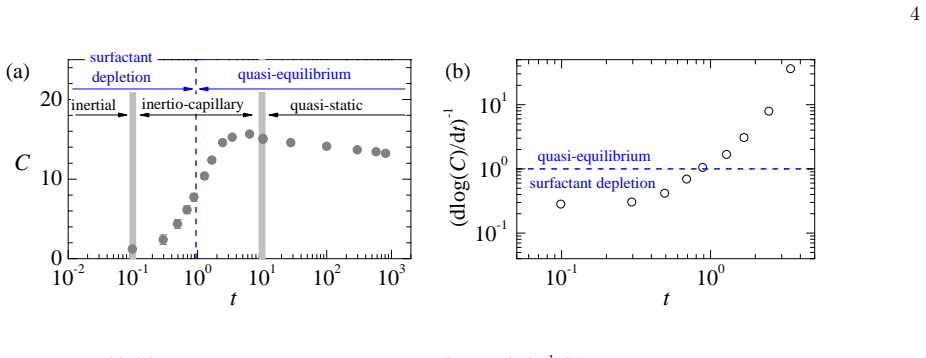
We experimentally analyze the effect of a surfactant on wetting following drop impact on rough surfaces, paying special attention to the role of dynamic surface tension. To this end, we compare the results obtained with Triton X-100, SDS, and Surfynol 465. For concentrations below the critical micelle concentration $c_{\textin{cmc}}$, the evolution of the coverage area is nearly identical for all three surfactants, suggesting that the surfactant concentration is too low to significantly influence droplet spreading. In contrast, pronounced differences emerge due to the distinct dynamic surface tensions of the surfactants at $c/c_{\textin{cmc}}=2$. The evolution of the coverage area during spreading is nearly the same for pure water droplets and those containing Surfynol 465, indicating that surfactant depletion is negligible during the rapid spreading stage. As the Weber number increases, droplet spreading becomes progressively less sensitive to surface tension, thereby reducing the influence of surfactant adsorption kinetics. Nevertheless, Surfynol 465 produces larger coverage areas than Triton X-100 and SDS. The final coverage area is governed by the quasi-static recession of the triple contact line, which is controlled by the receding contact angle. Surfynol 465 consistently yields substantially larger final coverage areas across the range of surface roughness considered in this study.
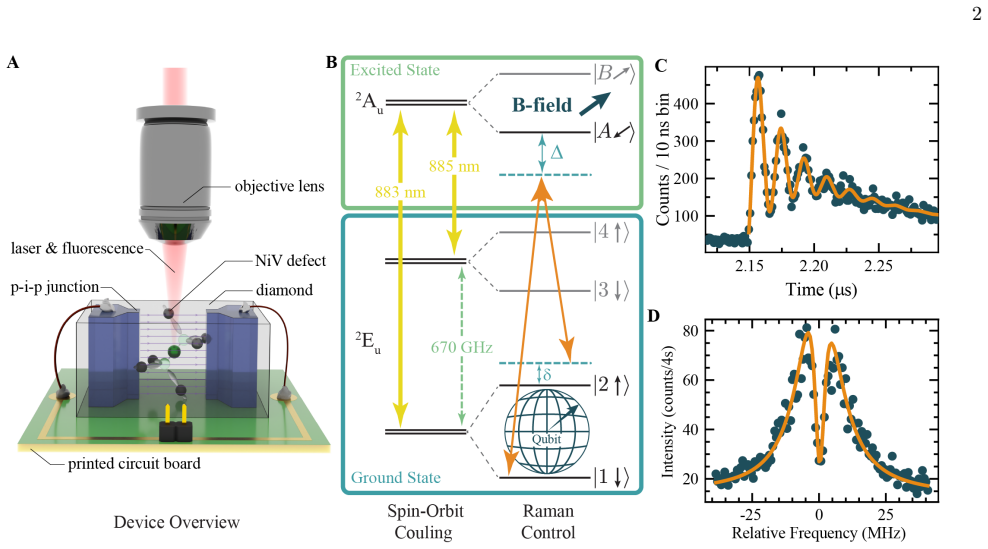
Quantum networks require qubits that combine efficient optical access, coherent control, and long-lived quantum memory, but realizing all three in one scalable platform remains a central bottleneck. Diamond color centers are leading candidates, yet widely studied defects retain tradeoffs among these capabilities. Here, we show that transition-metal defects in diamond provide a distinct route beyond these platforms by combining spin-orbit protected ground-state coherence, all-optical control, and near-infrared emission. Using a single nickel-vacancy (NiV$^-$), we demonstrate an all-optically controlled diamond spin qubit with coherence exceeding one millisecond at 1.65 K, compatible with compact closed-cycle cryogenics. We implement Raman Rabi oscillations and Ramsey interferometry and use all-optical dynamical decoupling to extend coherence from $T_2^*$ = 371 ns to $T_2^{CPMG-4}$ = 1.27 ms, establishing NiV$^-$ as a deployable diamond spin-photon interface.
Gliding mammals exhibit diverse patagium and tail/uropatagium morphologies that may influence aerodynamic performance and maneuverability. Here, we use computational fluid dynamics to isolate the aerodynamic effects of representative gliding-mammal-inspired morphologies under controlled flow conditions. Three patagium configurations were compared to evaluate the effects of membrane outline on lift generation, drag, stall behavior and pitching moment. Three tail/uropatagium configurations were further tested under baseline, symmetric-deflection and asymmetric-deflection conditions to assess their longitudinal and lateral control authority. The results show that a broader patagium configuration generated the highest lift and lift coefficient, whereas an intermediate patagium morphology showed a smoother post-stall response with lower drag. For the tail configurations, the colugo-like integrated uropatagium enhanced lift and pitch-control authority under symmetric deflection, while the flat-tail configuration produced stronger rolling and yawing responses under asymmetric deflection. These findings indicate that gliding-mammal-inspired morphologies produce distinct aerodynamic trade-offs rather than a single optimal design. The results provide insight into the functional diversity of gliding mammal morphology and offer design guidance for bioinspired morphing aerial robots.
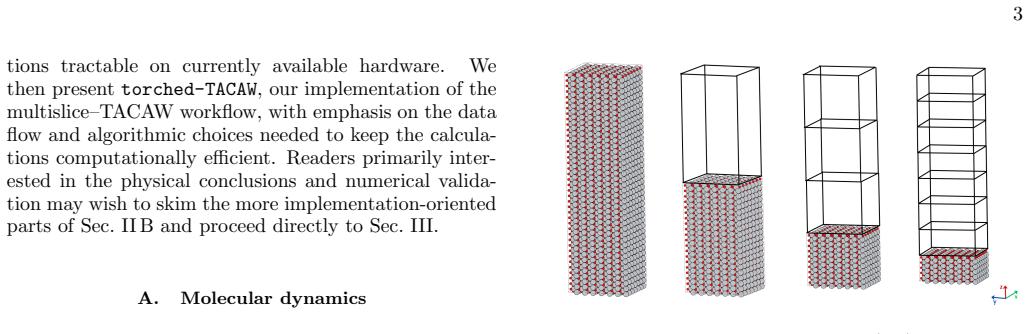
The time auto-correlation of auxiliary wave functions (TACAW) method enables efficient simulations of ultra-low-loss electron energy loss spectra (EELS) arising from vibrational and magnon excitations. In practical applications to realistic materials systems, however, TACAW calculations become challenging due to the large system sizes required for models containing defects, interfaces, impurities, or grain boundaries, as well as the substantial computational cost and data throughput associated with molecular dynamics and multislice calculations. Here we discuss a practical methodology for large-scale TACAW simulations and present torched-TACAW, a freely available implementation of the TACAW part of the described workflow for efficient STEM-EELS simulations. The overall approach combines molecular dynamics based on foundational machine-learned interatomic potentials, partitioning of elongated supercells, and on-the-fly processing of multislice outputs in order to enable near ab initio quality simulations with tractable memory use and data flow. Using rutile TiO2 as a model system, we analyze important numerical aspects of the method, including windowing and supercell partitioning, and demonstrate atomic-resolution STEM-EELS simulations for thick samples.
Traditionally, midlatitude storm tracks are viewed as being driven by meridional temperature gradients maintained by differential solar heating. Yet in the Southern Hemisphere, storm activity remains strong even when the summertime insolation gradient nearly vanishes. Here, we show that storm-track cloud radiative effects play a major role in maintaining the Southern Hemisphere storm activity. Satellite observations reveal that sunlight reflected by midlatitude clouds in early summer creates a substantial meridional gradient in surface heating, despite the nearly uniform summer insolation. Idealized aquaplanet simulations then show that shortwave cloud radiative effects reinforce meridional sea-surface temperature gradients, thereby strengthening storm activity primarily during late summer and autumn, while longwave cloud effects partly offset this response. To interpret these results, we develop a simple theoretical model linking storms, clouds, and sea-surface temperature gradients. The model reproduces the simulated seasonal response and identifies two emergent cloud properties that control the feedback strength: the maximum attainable cloud albedo and the sensitivity of cloud cover to storm activity. Together, these findings indicate that cloud radiative feedbacks are key to maintaining the thermal gradients that sustain storm activity. More broadly, they reveal a strong coupling among storms, clouds, and the ocean spanning distinct spatial and temporal scales.
Broadening of spectral and spatial responses due to intrinsic loss in real materials often hides sharp features. One recently recognized route to recover those features is to probe the system with complex-frequency (CF) signals that decay exponentially in time: a suitably tailored temporal decay can compensate for loss and reveal an intrinsic, narrow response. However, generating rapidly decaying optical waveforms in real time is often challenging (the required decay times may be in the range of tens of femtoseconds). A recently proposed alternative synthesizes the CF response numerically after detection of conventional, real-frequency signals using Fourier post-processing. Here we explore advantages and challenges of these approaches: we show that a physical CF excitation robustly sharpens spectral features in the presence of noise, while a post-detection synthesized CF response shows only limited improvement once realistic detection and readout noise is considered. At the same time, in low-noise conditions a much simpler post-detection filtering procedure attains equal or better recovery than the synthesized CF reconstruction, making the synthesis unnecessary in practice.
Operator learning has emerged as a powerful tool for modeling complex physical systems in functional spaces. However, their neural network-based architectures make them opaque models, obscuring the reasoning behind their predictions. In this work, we introduce a self-explainable operator learning framework that overcomes this challenge by reformulating operator learning as a linear combination of generalized functional linear models expressed through integral equations. Exploiting the additive decomposability of these integral equations, we divide the input domain into subdomains and compute localized integrals to evaluate the contribution of each region to the final prediction. This decomposition enables direct interpretability where the model explains both inputs and outputs by linking specific input regions to corresponding output patterns, thereby revealing which spatial features drive predictions. We demonstrate the framework on function-to-scalar and function-to-function mappings in fluid flow problems involving blood flow and unsteady aerodynamics. The results show that the operator most often prioritizes regions with strong feature gradients, providing physically meaningful insight into the model's decision-making process. Comparisons with established post-hoc explainability methods demonstrate qualitative agreement while highlighting the key advantage of the proposed approach: explainability is embedded directly within the operator structure itself and does not require an external tool. Therefore, our framework provides a mathematically transparent and physically interpretable approach to uncover relationships within data, fostering trust in machine learning for scientific applications by enabling more informed data-driven analysis of physical systems.
Purpose: To evaluate the feasibility of an integrated, free-breathing workflow for automated 2D pulmonary relaxometry (T1, T2) at 0.55T.
Methods: A 2D inversion recovery ultra-fast balanced steady-state free precession (IR-uf-bSSFP) sequence was adapted to achieve high-temporal sampling of the transient phase at 0.55T. The technique was validated in a phantom and tested in eight healthy volunteers as well as one patient. A fully automated pipeline was developed, featuring multi-contrast registration for motion correction and deep learning based lung segmentation to enable voxel-wise nonlinear fitting for T1 and T2 map generation.
Results: Phantom results were in close agreement with reference scans. In-vivo, the proposed free-breathing framework effectively mitigated respiratory motion, yielding quantitative maps in close agreement with breath-hold references. Healthy lung parenchyma relaxation times were T1 = (930+-40)ms and T2 = (90+-8)ms. In a patient case, the method successfully distinguished a solid lung mass from healthy parenchyma, with the lesion showing elevated T1 (960ms vs 810ms in the surrounding parenchyma).
Conclusions: Simultaneous free-breathing T1 and T2 mapping of the lung is feasible at 0.55T using a fully automated pipeline. By eliminating breath-holds and external gating, this approach improves patient compliance and potentially facilitates the use of quantitative lung MRI in routine clinical practice.
Physics-informed neural networks (PINNs) have emerged as a promising route to solve partial differential equations, yet they have struggled to reach the precision of classical solvers. The obstacle is increasingly understood to be one of optimisation, owing to the severely ill-conditioned loss landscape. We present $\textbf{DSGNAR}$: Doubly-Sketched Gauss-Newton with Adaptive Ratio, a scalable second-order optimisation framework that confronts this ill-conditioning and, in doing so, obtains unprecedented accuracy and speed. $\textbf{DSGNAR}$ couples a doubly-sketched Gauss-Newton model with a novel strategy that carefully controls both regularisation and step length. Across a suite of problems spanning nonlinear, chaotic, multi-scale, high-dimensional, and Navier-Stokes, the framework greatly improves on the state of the art: able to attain relative $\ell_2$ errors as low as $3\times10^{-16}$ in double precision, improve contemporary results by five orders of magnitude on the canonical Burgers' equation, and as much as eight orders on a high-dimensional Poisson problem, while remaining markedly faster. We further show that, in single precision, solutions at the limit of round-off error can be obtained very quickly: Burgers' equation to $\ell_2^{\text{rel}} = 4.75 \times 10^{-7}$ in under ten seconds. The framework is also robust to the choice of architecture, arithmetic precision, and initial hyperparameters.
The code is available at https://www.github.com/wephy/physics-informed-neural-networks
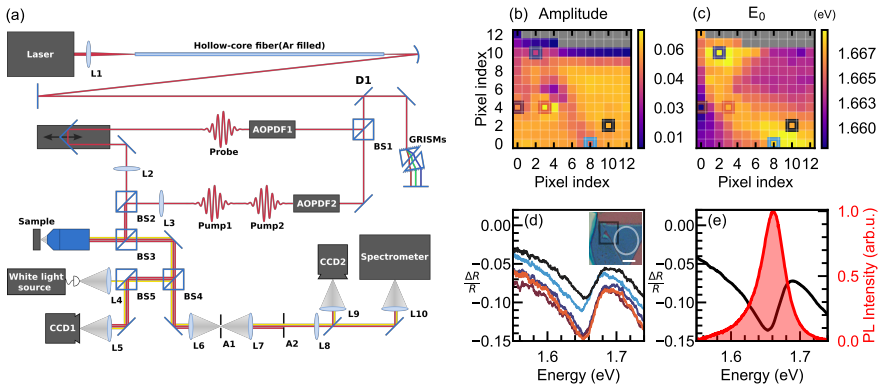
We introduce a setup for coherent two-dimensional electronic spectroscopy in the pump-probe reflection geometry that is integrated with a confocal back focal plane imaging microscope. The angle-resolved capability is utilized to control pump and probe wavevectors, while real space imaging enables co-localization of the collection spots for linear and ultrafast experiments. Compression of pulses down to 20 fs is achieved. We demonstrate the capabilities of this approach on an exfoliated WSe$_2$ monolayer on Si/SiO$_2$. The setup is suited to investigate excitons and exciton-polaritons in 2D Materials and their heterostructures.
2010-2020 data from Nigeria links Earth's gravitational changes to seasonal wind patterns via mathematical analysis.
abstractclick to expand
The Earth's gravitational field exerts a significant influence on atmospheric dynamics, including the behavior of seasonal wind flux, defined by periodic variations in wind speed and direction. While temperature gradients and Earth's rotation are established drivers of wind patterns, the role of gravitational forces in modulating these processes remains poorly understood. This study investigates the mathematical relationship between gravitational variations and seasonal wind flux in Nigeria, a region of pronounced climatic variability and varied wind patterns. Utilizing Navier-Stokes equations for atmospheric dynamics, Fourier decomposition for seasonal wind flux analysis, and Pearson correlation coefficients for gravitational-wind interactions, we analyze 2010-2020 meteorological data, alongside gravitational field measurements from the GRACE (Gravity Recovery and Climate Experiment) satellite. Results show significant annual fluctuations in average wind speed (5.1-5.6 m/s) and gravitational variations (9.60-9.95 mGal), with an inverse relationship observed in certain years, suggesting a coupling between atmospheric dynamics and gravitational forces. Seasonal wind flux exhibits a distinct sinusoidal pattern, peaking mid-year and declining toward year-end, consistent with Nigeria's monsoon climate. Correlation coefficients between gravitational variations and wind flux range from 0.79 to 0.87, indicating a strong positive relationship. These findings underscore the importance of gravitational forces in modulating wind patterns and highlight the potential for integrating gravitational data into climate models, thereby enhancing accuracy of weather forecasting and renewable energy planning. This study provides a foundational framework for further exploration of gravitational influences on atmospheric processes, with implications for global climate science and sustainable energy strategies.
Suspensions of motile microswimmers such as bacteria and other active colloids frequently encounter porous environments where obstacles and complex shear flows strongly influence their dynamics. Here, we study the distribution and transport of a dilute suspension of active particles in a square lattice of pillars, which serves as a model porous medium. The microswimmers are modeled as slender point particles, and Brownian Dynamics simulations are performed to determine how their number density and polarization fields change with systematic variations in the medium porosity, polydispersity, flow strength, and self-propulsion strength. We find that in the absence of flow, self-propulsion drives particle accumulation and radial polarization at the pillar surfaces. In the presence of a background flow, particles preferentially accumulate in the wake of pillars and exhibit upstream polarization near their surface, consistent with experimental observations. At moderate flow strengths, topological defects nucleate in the polarization field. These defects are of purely kinematic origin and mark the transition from global upstream swimming at low flow strengths to the coexistence of upstream and downstream swimming regions in the lattice at high flow strengths. The structured lattice studied here provides a controlled framework for isolating the physical mechanisms governing active transport in complex geometries, with direct relevance to transport in structured microfluidic settings.
This paper presents a reachability-aware guidance architecture for autonomous approach to a tumbling, uncooperative target under a rotating line-of-sight (LOS) docking corridor. The LOS admissible set rotates with the target body frame, producing time-varying polyhedral constraints in the chaser's relative coordinates. A safe-start region is constructed via two conservative criteria: (i) directional per-constraint erosion, the margin consumed by rotation-induced drift before thrust can arrest it, and (ii) a synchronization range bound $r < 2a_{\max}/\omega_t^2$ ensuring the chaser can cancel the apparent rotational velocity without overshooting the hold point. Closed-loop guidance uses a receding-horizon MPC controller with Clohessy-Wiltshire-Hill (CWH) prediction dynamics and explicit LOS corridor constraints in the quadratic program. Truth propagation uses the exact discrete CWH state-transition matrix with sub-stepping, so feasibility claims are physically honest: no reference blending or state projection is applied. A three-regime tracking law manages the transition from long-range inertial approach to body-frame co-rotation and synchronized hold. The analytical safe-start region is benchmarked against four standard reachability engines (backward and forward polytopic reachable sets, Hamilton-Jacobi level sets, and closed-loop Monte Carlo): the closed-form criteria are 250x faster than Hamilton-Jacobi reachability while predicting closed-loop feasibility with precision 0.80 and recall 0.91 on a 500-case sweep. The residual 6% false-positive rate and the IoU gap against Hamilton-Jacobi quantify a structural property: the synchronization set (reach and co-rotate) is a strict subset of the positional reachable set, the gap widening with tumble rate. The analytical bound is thus a sound inner certificate for onboard go/no-go decisions where Hamilton-Jacobi is prohibitively expensive.
Electronic neurons are a keystone for construction of the spiking neural networks which have numerous applications in neuroprosthetics, artificial memory, intensive calculations etc. A number of concepts of electronic neurons has been already proposedm with some of them implemented in hardware. However, new schemes are of significant interest since the existing ones do not fit all requirements: either they are too complex and expensive in realization, or they are not able to demonstrate all demanded regimes, or their do not have a appropriate mathematical description and therefore may be investigated only experimentally etc.
In this study we propose a new design of bursting electronic neuron constructed as a circuit implementation of the equations of a phase-locked loop system. To succeed, we use a novel hybrid approach: we start from the phenomenological equations providing the demanded, then we adjust and modify these equations to simplify the implementation rather than implementing the biophysical equations into thee hardware directly or writing equations for the already constructed circuit. The resulting circuit is simple in implementation and well matches the underlying equations. It can be used for description of not only a single neuron, but small neural circuits too.
Ultra-thin films are fundamental components of modern nanoelectronics, where reducing thickness to the few-nanometer scale leads to a dramatic increase in electrical resistivity. For decades, this behavior has been interpreted in terms of classical size effects, primarily surface scattering within the Fuchs--Sondheimer theory and grain-boundary scattering in the Mayadas--Shatzkes model. While these approaches successfully describe transport when the film thickness is comparable to the electronic mean free path, growing experimental evidence indicates that they become insufficient under extreme confinement. This review discusses the crossover from classical scattering to a quantum-confinement regime in which the electronic states available for transport are fundamentally restructured by finite size. We review the recently proposed reciprocal-space confinement theory, which predicts an exponential increase of resistivity with decreasing thickness at the nanoscale, and discuss how it can be combined with classical surface-scattering models to provide a unified description of ultra-thin metallic and semiconducting films. Finally, we summarize recent experimental evidence supporting this picture and discuss its implications for future nanoelectronic devices, nanoscale interconnects, and quantum transport under extreme spatial confinement.
Bulk acoustic waves deliver all-to-all connectivity and four orders higher thermal stability than optical coherent Ising machines.
abstractclick to expand
Optical coherent Ising machines based on time-multiplexing have demonstrated significant progress in terms of connectivity and spin scalability. However, they are constrained by large physical footprints, high power consumption, poor thermal stability, and high cost. Here, we present a time-multiplexed Ising machine leveraging propagating wave packets in solid-state delay lines at microwave frequencies, enabling thermally stable, robust, low-power, tabletop, and affordable design. We use two serially connected 20.5 MHz, 707 {\mu}s bulk acoustic wave delay lines supporting 2,048 spins. Our design provides all-to-all connectivity with 15-bit coupling resolution and finds approximate MAX-CUT solutions in 341 ms, potentially scalable to sub-ms by using higher frequency delay lines. Additionally, we demonstrate solutions to number partitioning and Sudoku problems. Compared with state-of-the-art Coherent Ising machines, our machine exhibits four orders of magnitude higher thermal stability. Against the simulated bifurcation algorithm, our design achieves comparable results on the MAX-CUT problem, while outperforming it on the more complex number-partitioning and Sudoku problems.
This signals limits in current model understanding and restricts machine learning uses in future observations.
abstractclick to expand
We investigate the epistemic opacity of computer simulations and machine learning methods in the context of black hole imaging. We argue that there are forms of opacity-including opacity resulting from the use of machine learning-which do not need to affect the reliability of an inference when it is seen as a part of a broader inferential framework. We propose conditions under which that can plausibly be the case, and discuss how opaque methods can be useful in the context of the (next generation) Event Horizon Telescope. However, we also argue that at least one problematic form of opacity is currently present in black hole imaging: GRMHD models of Sagittarius A* are opaque. This form of opacity signals the limitations of current understanding of the models of this source, and constrains the potential uses of ML models in future observations.
In-flight and Raspberry Pi tests show variations matching geomagnetic shielding using only built-in phone cameras.
abstractclick to expand
Cosmic rays are ubiquitous; however, their direct observation traditionally demands specialized, high-cost hardware and significant technical expertise, presenting a high barrier for non-specialist environments such as schools and community settings. We present SORAMAME, a smartphone and tablet application that lowers this barrier by repurposing built-in CMOS image sensors as particle detectors. The system enables real-time recording and visualization of particle-like events without additional hardware, integrating on-device extraction - calibration, noise filtering, and track-candidate detection - with cloud-based data management.
By simplifying the detection process, SORAMAME facilitates widespread adoption across diverse user groups, fostering an environment where educational outreach can transition into large-scale data collection. This scalability is particularly significant given the unprecedented number of internet-connected consumer devices equipped with silicon CMOS image sensors. Despite the inherent constraints of consumer-grade sensors, our in-flight validation and Raspberry Pi-based measurements successfully captured altitude and latitude-dependent variations in particle flux consistent with geomagnetic shielding. These results suggest that lowering barriers to participation in observation not only serves educational purposes but also has the potential to contribute to future scientific breakthroughs through the development of global citizen science.
Compact 314k-parameter model runs in 7 ms and generalizes to finer meshes, yet accuracy stays bounded by training resolution.
abstractclick to expand
We propose an improved Fourier Neural Operator (FNO) for modeling two-dimensional Rayleigh-B\'enard convection by predicting time increments instead of full solutions, achieving higher accuracy than a standard FNO baseline. The resulting model is compact (314k parameters, 1.26 MB) and fast (7 ms inference), while maintaining similar accuracy as demonstrated in previous benchmarks. We show that although FNOs generalize to finer meshes, accuracy remains limited by the resolution of the training data.
A template log-likelihood classifier using nanosecond observables adds information missing from morphology-based neural networks.
abstractclick to expand
The IceCube Neutrino Observatory, a cubic-kilometer detector at the South Pole, identifies neutrino flavor through event morphology. Sparse photon detection makes this classification particularly challenging in the 5--100~GeV regime, the energy range relevant for oscillation measurements and searches for physics beyond the Standard Model. We introduce WavePID, a template-based log-likelihood-ratio classifier that exploits nanosecond-scale timing on individual detector modules through three observables: the distance to the reconstructed vertex, the early-charge fraction, and the module-to-module time difference. Evaluated on a cascade-enriched sample selected by a state-of-the-art graph neural network, WavePID improves both cascade purity and classification performance over the neural network alone. This demonstrates that per-module pulse timing carries flavor-identification information complementary to morphology-based classifiers, opening a new physics-motivated observable for low-energy neutrino reconstruction. Geant4 simulations associate this signal with differences in Cherenkov emission geometry between muon tracks and electromagnetic showers. These results motivate exploiting nanosecond-scale pulse timing in future low-energy classifiers and in detector designs with improved per-module timing in next-generation neutrino telescopes.
Explicit check of MJM^T = J on the su(K) coadjoint orbit extends the two-state proof to general electronic states.
abstractclick to expand
Mapping methods are often used for the numerical simulation of nonadiabatic systems by propagating classical mapping variable trajectories. A recently popularised mapping method is spin-mapping, whose mapping variables arise from quantum mechanical operators with symmetries described by a Lie-Poisson algebra. Simulating the classical-like dynamics of spin-mapping systems accurately is generally challenging, with many methods unable to preserve the underlying geometric structure of the symplectic form. The Spin-MInt algorithm is a recently proposed algorithm propagating spin-mapping variables, with a direct proof of symplecticity existing only for 2 electronic states. Here, we directly prove the symplecticity of the Spin-MInt algorithm for a general $K$ electronic states. A review of the symplectic nature of coadjoint orbits of the $\mathfrak{su}(K)$ Lie-Poisson algebra provides the framework needed to understand symplecticity of the Spin-MInt algorithm in this general case. The symplecticity of the method on the associated coadjoint orbit is then shown for what we believe to be the first time via an explicit verification of the symplecticity condition $\mathbf{MJ}\mathbf{M}^\textrm{T}=\mathbf{J}$ exploiting the Lie-Poisson structure of the system. To our knowledge, this is the first time the monodromy matrix for the Spin-MInt algorithm has been explicitly stated using canonical coordinates on the coherent state manifold for a general number of states. We hope that this will assist the development of classical-like spin-mapping methods which might utilise elements of the monodromy matrix, and inform future work on similar symplectic algorithms for coupled and uncoupled Lie-Poisson systems.
Context: In collisionless shocks, energetic particles can carry sufficient pressure to modify the upstream plasma and the shock structure itself, a regime often invoked in theories of cosmic-ray acceleration but rarely observed in the heliosphere. Aims: We find and characterize {interplanetary} IP shocks where energetic particles dynamically dominate the upstream pressure. Methods: We analyze IP shocks observed by Solar Orbiter inside 1 au and compute the energetic particle pressure $P_{EP}$ from proton measurements above 10\,keV, comparing it with the upstream thermal $P_{Th}$ and magnetic $P_{B}$ pressures. Results: We identify four shocks for which $P_{EP} \geq P_{Th} + P_B $. These events correspond to strong and fast shocks in the high-Mach-number tail of the Solar Orbiter shock population. In several cases the $P_{EP}$ increase coincides with a decreasing upstream bulk flow speed in the shock frame, and the resulting particle-mediated foreshocks extend up to $\sim10^5$ {ion inertial lengths} $d_i$. The extent of such energetic particle dominated region depends on shock geometry. Conclusions: These observations provide evidence that accelerated particles can dynamically modify interplanetary shocks. They highlight the importance of the coupling between energetic particles, upstream fluctuations, and shock structure for understanding particle acceleration at collisionless shocks.
This paper presents a four-channel prototype system for the geometric combining and coherent addition of tightly focused femtosecond laser radiation into a standing-wave field configuration. A stabilization system for beam pointing and relative phase of the four optical channels has been implemented, and its performance has been experimentally demonstrated. To characterize the standing-wave electromagnetic field distribution at the main focus of the system, an original measurement technique based on a fiber subwavelength optical probe has been employed. This work has been conducted in support of the exawatt-scale XCELS project.
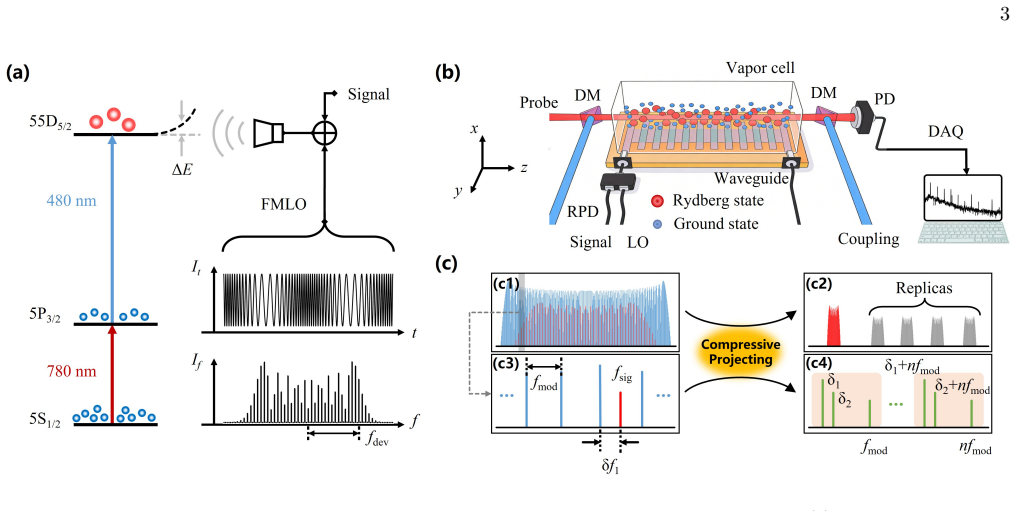
Rydberg-atomic receivers exhibit exceptional sensitivity yet are fundamentally constrained by the narrow instantaneous bandwidth, limiting their practical deployment in broadband scenarios. Prior approaches typically expand the bandwidth by physically broadening the atomic response, which usually requires auxiliary electromagnetic fields or stringent parameter tuning, thereby increasing overall system complexity. Here, we propose a compressive spectral multiplexing framework implemented in a waveguide-coupled Rydberg atomic receiver using a frequency-modulated local oscillator (FMLO). The FMLO creates multiple parallel sensing channels that collectively constitute a physical compressive sensing matrix, generating multiple narrowband intermediate-frequency replicas of the input signal. Thus, a broadband microwave spectrum is projected onto a set of narrowband atomic responses. It is demonstrated that spectral information spanning a bandwidth of over 640 MHz can be effectively compressed into the intrinsic atomic bandwidth of 126 kHz, achieving a spectrum compression ratio exceeding 1000. Furthermore, these output replicas offer intrinsic measurement redundancy and facilitate signal-to-noise ratio enhancement. An approximate 10 dB gain is achieved in the required bit-energy-to-noise-power-density ratio for multi-channel communication via maximal-ratio combining. This approach requires no auxiliary fields or broadband electronics, providing a simple and scalable pathway for chip-scale quantum receivers, latency-critical sensing, and next-generation wireless communications.
The interaction of free-electron wave packets with electromagnetic fields provides a powerful route toward coherent electron control, enabling the generation of energy combs, momentum-state superpositions, and aberration-engineered electron beams. Existing theoretical descriptions, however, often rely on eikonal or no-recoil approximations. Here, we present a mesh-free numerical framework that directly solves the time-dependent single-particle Schr\"odinger equation for arbitrary electromagnetic potentials. Comparison with a benchmark mesh-based Schr\"odinger solver reveals excellent quantitative agreement. By eliminating the need for spatial meshing, our method offers an efficient and scalable route for simulating electron wave packet dynamics in complex time-dependent and static electromagnetic environments, while the simulation time is significantly improved by up to 800 times faster. These capabilities establish a versatile computational tool for quantum electron optics and free-electron-light interactions beyond eikonal approximations.
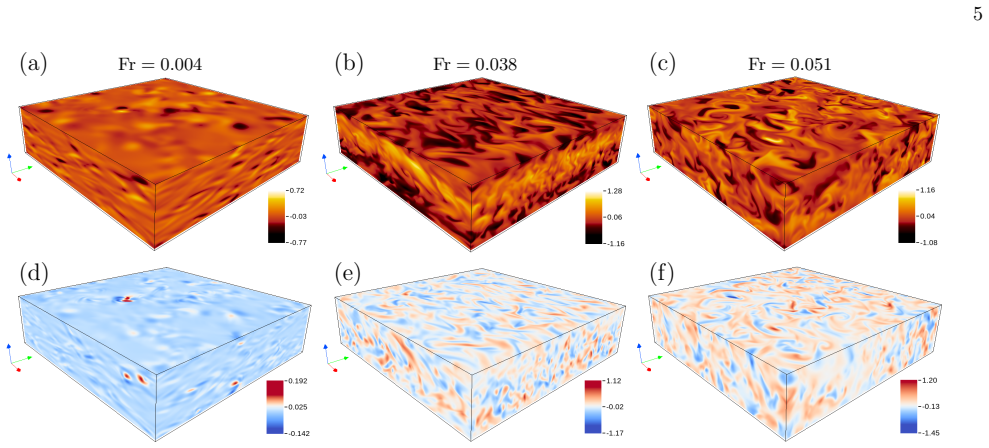
We investigate a stably stratified flow driven by deterministic Kolmogorov forcing that generates horizontal shear, using direct numerical simulations over a broad range of stratification strengths characterized by the Froude number $Fr$. As the stratification is progressively weakened, the flow exhibits a sequence of regimes: a buoyancy-dominated, strongly stratified regime, an intermediate regime characterized by Kelvin--Helmholtz instabilities and enhanced mixing, and a nearly isotropic turbulent regime. A key feature of the intermediate stratification range is the emergence of energetically significant vertically sheared horizontal flows (VSHFs), accompanied by a marked steepening of the reduced one-dimensional perpendicular kinetic energy spectra. The spectral energy transfer remains predominantly forward, although the perpendicular flux becomes negative at large horizontal scales; this apparent upscale transfer reflects anisotropic energy redistribution rather than a true inverse cascade. Strong stratification enhances intermittency, producing increasingly non-Gaussian vertical velocity fluctuations and large kurtosis associated with localized vertical bursts. The energetics-based mixing coefficient remains of order $10^{-1}$ over the parameter range investigated, with a modest enhancement near the Kelvin--Helmholtz instability regime.
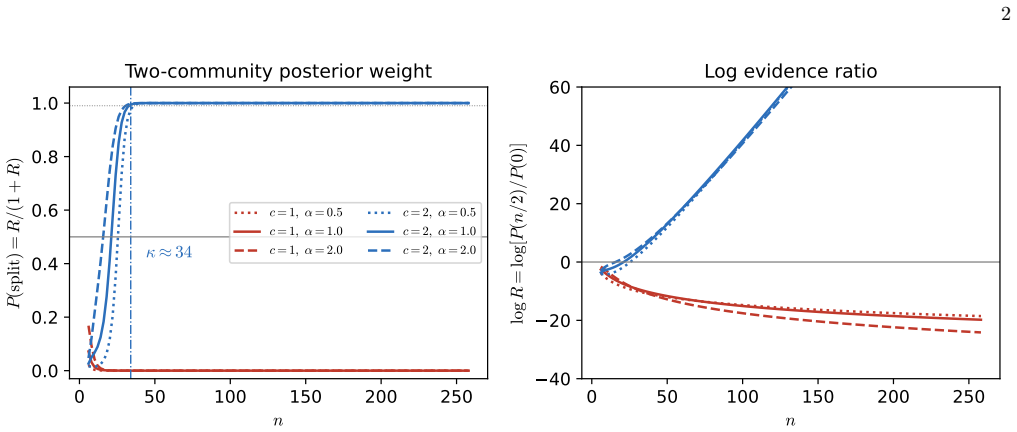
The Ramsey community number $r_\kappa$ is the minimum network size at which a graph's connectivity is better described by a partition into communities than by no partition, under a prescribed community-detection rule. It was introduced through numerical simulations of networks grown by local rules, which suggested that community structure can emerge without any node heterogeneity. Here I compute $r_\kappa$ analytically for the simplest homogeneous, locally wired graph: the circulant ring lattice $C_n(1,\dots,c)$. Using a Bernoulli stochastic block model with symmetric $\mathrm{Beta}$ priors as the detection rule, the Bayesian evidence for a balanced two-community partition and for the unpartitioned network are both obtained in closed form, so the transition between them can be located exactly. The result is a sharp dependence on the interaction range: the plain cycle ($c=1$) is never partitioned, its two-community posterior decaying as $n^{-(2\alpha+3)}$, so $r_\kappa=\infty$; but the next-nearest-neighbour ring ($c=2$) acquires a finite $r_\kappa\simeq 35$ nodes, above which the partition is preferred with a log-evidence growing as $(\ln 2)\,n$. This provides an exactly solvable instance of community emergence in a network with no built-in communities, and shows that a minimal amount of local connectivity is enough to break the ring.
Corrected automatic masks match manual accuracy for colon volumes with much less work and higher consistency.
abstractclick to expand
The movement distribution, and volume of both chyme and gas in the colon, are important metrics to understand colonic function in health, disease, and the effects of treatments and different foodstuffs. Current methods available for assessment of these colonic contents using MRI consist mainly of manual segmentation or semi-automatic segmentation. However, these methods of segmentation are very labour intensive and too slow for clinical applications, require expert knowledge and some semi-automatic methods require use of bowel preparation. MRI scans were acquired in 2 breath holds using mDIXON sequences. We used the 'No New U-Net' (nnU-Net) ML model to automatically segment the colon, including colonic regions (ascending, transverse, descending and sigmoid-rectal). The ML-generated masks were corrected manually and the time taken for correction was recorded. ML segmentations were compared to both manual segmentations and observer corrected ML (CorrML) segmentations. Observer repeatability was also evaluated for both manual and CorrML methods to create a benchmark for the allowable error in the automatic segmentations. Analysis time was significantly reduced (p<0.0001) from 56 mins (+-11 mins (SD)) for manual masks to 11 mins (+-5 mins (SD)) for CorrML masks. Both DICE and ICC values showed excellent agreement between manual, ML and CorrML segmentations for whole colonic volume (ICC = 0.96) whilst regional volumes were good-excellent (ICC = 0.80-0.95). Inter-observer repeatability was improved when using CorrML methods over manual segmentation (ICC manual > 0.89, CorrML > 0.93). Analysis time was reduced by over 80% when using CorrML methods and whole colonic volumes measured by ML would be suitable for use with minimal checks. Hence the methods proposed here would be clinically useful.
Suitability scoring for outdoor activities (kitesurfing, paragliding, ski touring) maps environmental conditions to a go/no-go verdict via expert-defined curves. These curves conflate two distinct quantities: the intrinsic difficulty of a condition and the skill of the person facing it. We introduce Inverse Suitability, a continuous-item Item Response Theory (IRT) model that identifies both from behavioural outcomes alone. Each outcome is a triple (rider r, condition metric x at site s, binary outcome y); we model P(y=1) = sigma(a (theta_r - delta(x, s))), where theta_r is latent rider skill, delta(x, s) is a latent difficulty function anchored to a physics-derived expert curve as its prior, and a is a discrimination parameter. The formulation is strictly more general than a single suitability curve, which it recovers exactly when skill is integrated out under the population distribution. Parameters are estimated by marginal maximum likelihood with Gauss-Hermite quadrature; identification holds when the rider-by-condition incidence graph is connected, with a documented single-curve fallback otherwise. We validate via synthetic recovery: on a reference cohort (80 riders times 30 outcomes) the model recovers latent skill at r = 0.96, locates the difficulty minimum within 3 units of ground truth, and improves held-out Brier Skill Score by +0.33 over the expert-curve baseline. The recovered difficulty function defines a measurable, site-level construct, an intrinsic difficulty atlas, that existing meteorological observation networks do not capture. All results reproduce from a single command on synthetic data, requiring no proprietary observations.
Large language models (LLMs) are increasingly consulted on contested scientific questions, raising the concern that they will sycophantically retreat from established consensus when a user signals doubt -- drifting toward a false balance that treats settled science as one view among several. We test this across three open instruction-tuned models (Llama-3.1-8B, Qwen2.5-7B, Mistral-7B), three consensus-science domains (climate, vaccines, evolution), and single- and multi-turn settings, combining behavioral measurement with linear probing and activation patching. We do not observe sycophantic retreat. Instead, models show three distinct policies under the same skeptical pressure: reactive assertion, where consensus assertion increases rather than decreases (Llama); surface hedging, where tone softens while the position holds (Qwen); and non-response (Mistral). Pairwise judgments confirm the reactive shift is stance, not style (63.6%, p=.007), and a decomposition identifies increased consensus assertion, not false balance, as its driver (beta=+0.042 per dose, p<1e-77). Linear probes localize the divergence to middle layers -- perfect separation in Llama and Qwen versus 72% in Mistral, with non-overlapping confidence intervals -- indicating the non-responsive model does not linearly represent the skepticism signal at all. Crucially, this robustness does not transfer: it attenuates across domains and, in the safety-critical vaccine domain, can reverse, with myth-rebuttal weakening under skeptical pressure. We synthesize these into a four-way taxonomy separating active from accidental robustness, and argue that behavioral evaluation alone cannot distinguish a model that resists skepticism because it understands the signal from one that only appears to resist because it fails to perceive it.
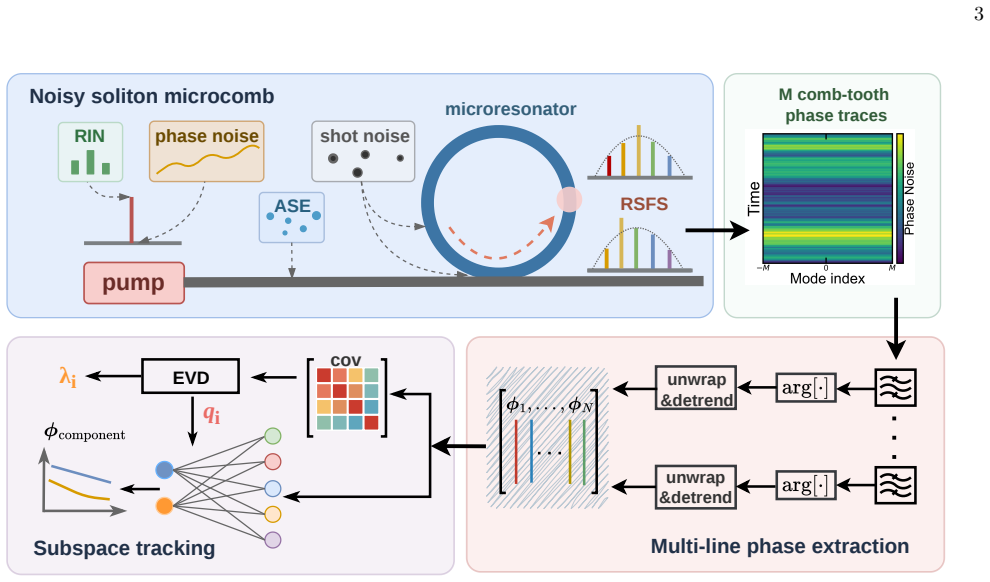
Phase noise limits the coherence and stability of soliton microcombs, yet its origin is difficult to trace because multiple noise sources act simultaneously. It is often represented by common-mode and repetition-rate components, but how each physical source contributes to these components remains unclear. We combine subspace tracking with multi-source Ikeda-map simulations, switching each source and the Raman nonlinearity on and off to isolate its contribution. Without Raman, pump phase noise is purely common-mode, while shot noise and amplified spontaneous emission drive the repetition rate noise. With Raman, the nonlinearity coherently converts pump phase noise from common-mode into repetition-rate noise without introducing an independent noise source, yielding a parabolic linewidth profile with a quiet-point minimum below the pump linewidth. When all noise sources are present, shot noise, ASE, and RIN raise the common-mode floor and shift this minimum toward the pump, setting the achievable noise floor. The intracavity dynamics thus do not merely carry noise but actively partition it, providing a mechanistic basis for low-noise microcomb design.
Digital in-line holographic microscopy is a computational imaging method useful for characterizing the refractive properties of a sample, i.e. the phase shift and absorption. This indirect measurement technique captures a diffraction pattern and uses reconstruction algorithms to retrieve the optical properties of the sample. Since only the intensity of the diffracted wave is recorded on the sensor, this inversion is not trivial, and simple backward propagation leads to artifacts known in optics as the ``twin-image''. With advances in deep learning, various algorithms have been developed for the reconstruction of in-line holograms, providing computationally efficient alternatives to iterative algorithms. These algorithms rely either on supervised learning, which requires ground truth knowledge, or physics-based self-supervised algorithms that require additional information, like phase diversity, but require multiple holograms for inference. This paper introduces a new self-supervised physics-based deep learning strategy that leverages phase diversity during training and then reconstructs sample's transmission function from a single in-line hologram during inference. We introduce five datasets of simulated and experimental in-line holograms of beads and bacteria. The proposed method produces accurate quantitative reconstructions similar or even more accurate than those obtained by regularized inversion while reducing the computational time by a factor of 1000.
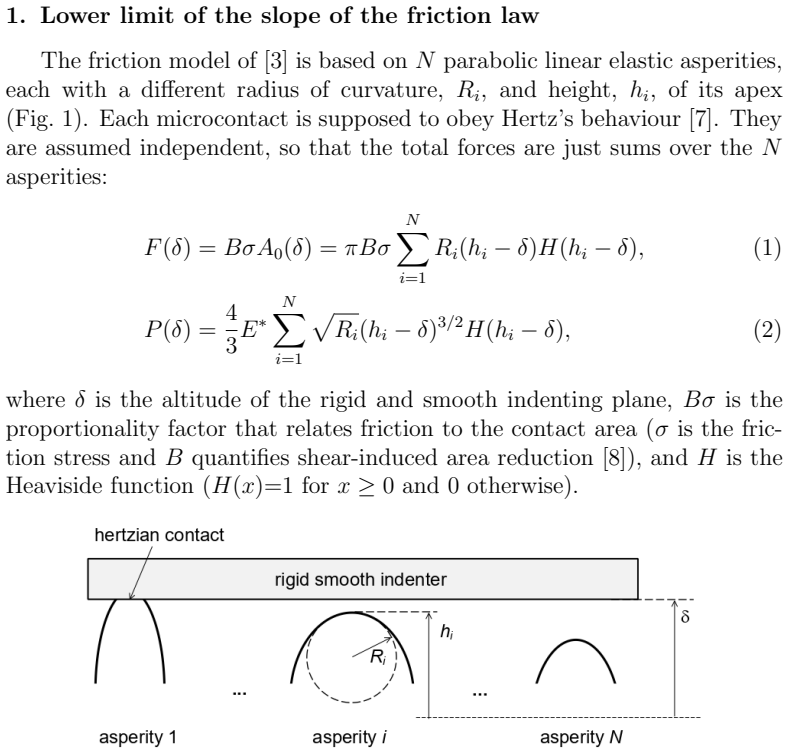
Metainterfaces can realize specified evolutions of their friction force as a function of the confining normal force (friction law), thanks to the design of the individual radii and heights of a population of independent hertzian asperities. However, not all friction laws are achievable. Here I show that, contrary to a suggestion from the literature, the slope of the friction law has a finite positive lower bound. This result is useful to identify friction laws that are not accessible to metainterfaces.
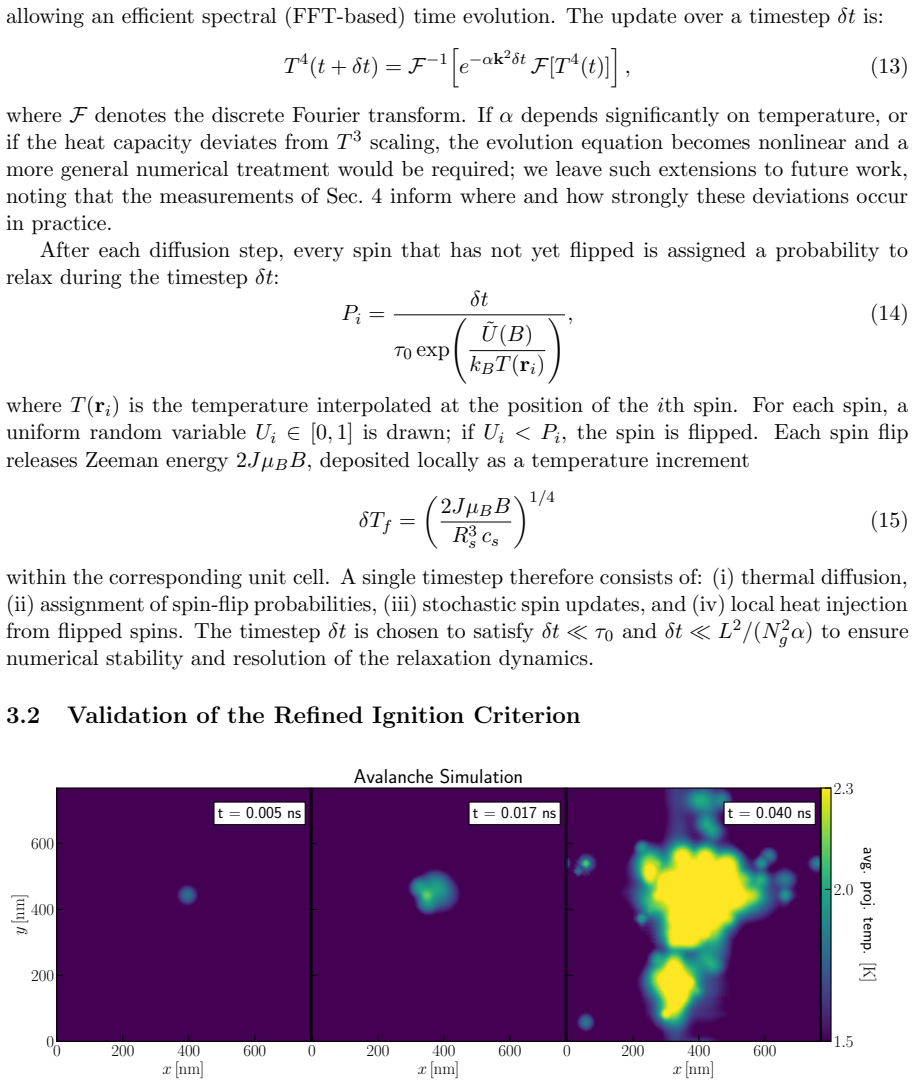
We revisit the sensitivity of Single Molecule Magnet (SMM) crystals as detectors for low-mass dark matter. In previous work, we established the concept of the ``magnetic bubble chamber'', where energy deposited by dark matter triggers a magnetic avalanche in a metastable crystal. The original sensitivity estimates relied on a conservative criterion requiring the spin relaxation time to be strictly shorter than the thermal diffusion time. Here, we demonstrate that this criterion effectively ignores the stochastic nature of spin relaxation. We derive a refined analytic estimate which accounts for the fraction of spins that relax even when diffusion is fast. We show that the Zeeman energy released by this fraction contributes to local heating, significantly lowering the energy threshold for avalanche formation. We present simulation results confirming this effect and report on experimental verification of the assumed low-temperature thermal properties of two representative SMM crystals, Mn$_{12}$-acetate and Mn$_{32}$. Together, these efforts extend this pathfinder program toward the realization of SMM-based detectors with controlled material properties and enhanced dark matter sensitivity.
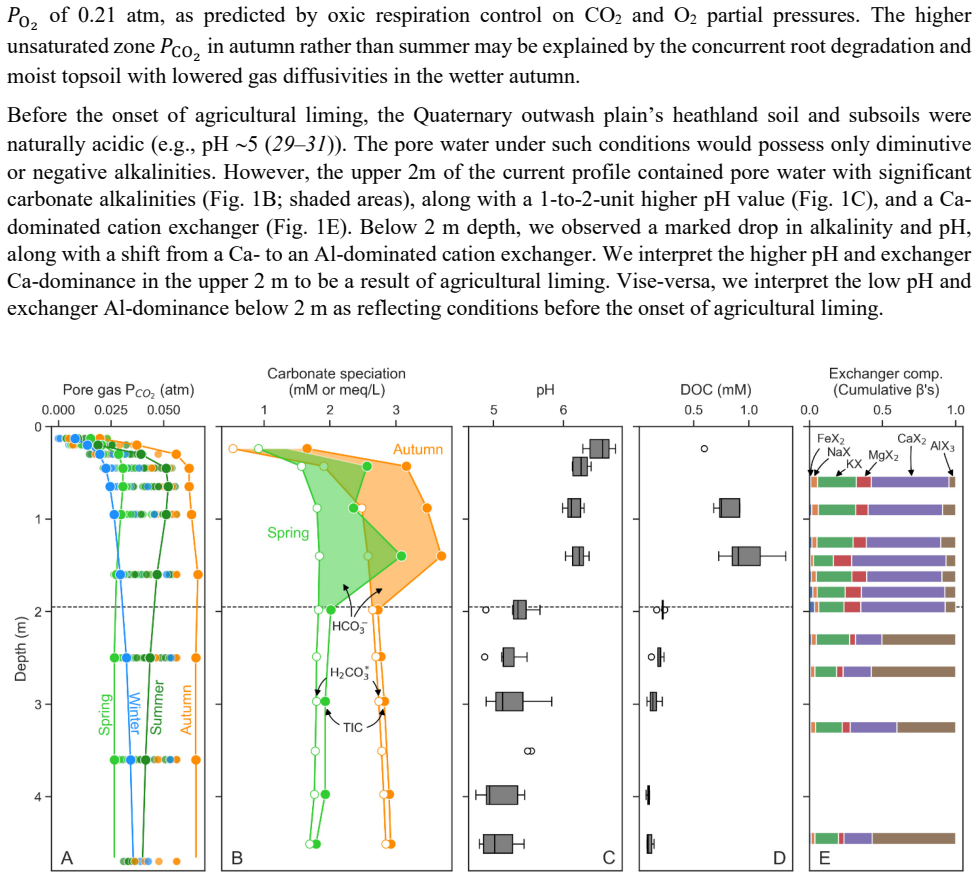
While a looming atmospheric CO$_2$ overshoot calls for immediate carbon sequestration, delays associated to Enhanced Weathering (EW) carbon dioxide removal are being investigated. Topsoil acidity is already known to delay EW carbon sequestration, but subsoil acidity remains underexplored. Using century-long agricultural liming of formerly acidic heathland as a proxy for EW, this study provides empirical evidence of subsoil-imposed delays. Below such limed terrain, we observed a downward-progressing front of topsoil-produced alkalinity that still requires 30-100 years to penetrate the approximately 5 m thick acidic sandy unsaturated zone and reach the groundwater table. Subsoil acidity thus may cause beyond-reasonable delays, prohibiting EW as a viable short-term carbon capture strategy even on topsoils made non-acidic by preceding liming. When planning EW schemes, the amounts of stored acidic cations in top- and subsoil, as well as the rate and composition of infiltrating water, controlling the duration of the delay, require careful assessment.
Memory devices for single photons are notable components for quantum information processing and quantum communications. The present study investigates the possibility of achieving storage of light at the level of single photons inside nanofibers by exploiting stimulated Brillouin scattering. We present first the standard approach using a coherent buffer in a nanoscale waveguide by transferring the optical signal coherently to an acoustic wave, and that can be extracted by the reverse process. The life time of the acoustic wave put limitation on the applicability of such approach for single photon signals. We introduce a configuration for achieving a slow signal at the level of single photons without gain or loss. The process utilizes photon-phonon Brillouin interactions involving two counter propagating pump fields. The photon storage is achieved through time delay of significantly slow signal inside nanowires. We address the condition for getting negligible influence due to the scattering off thermal phonons.
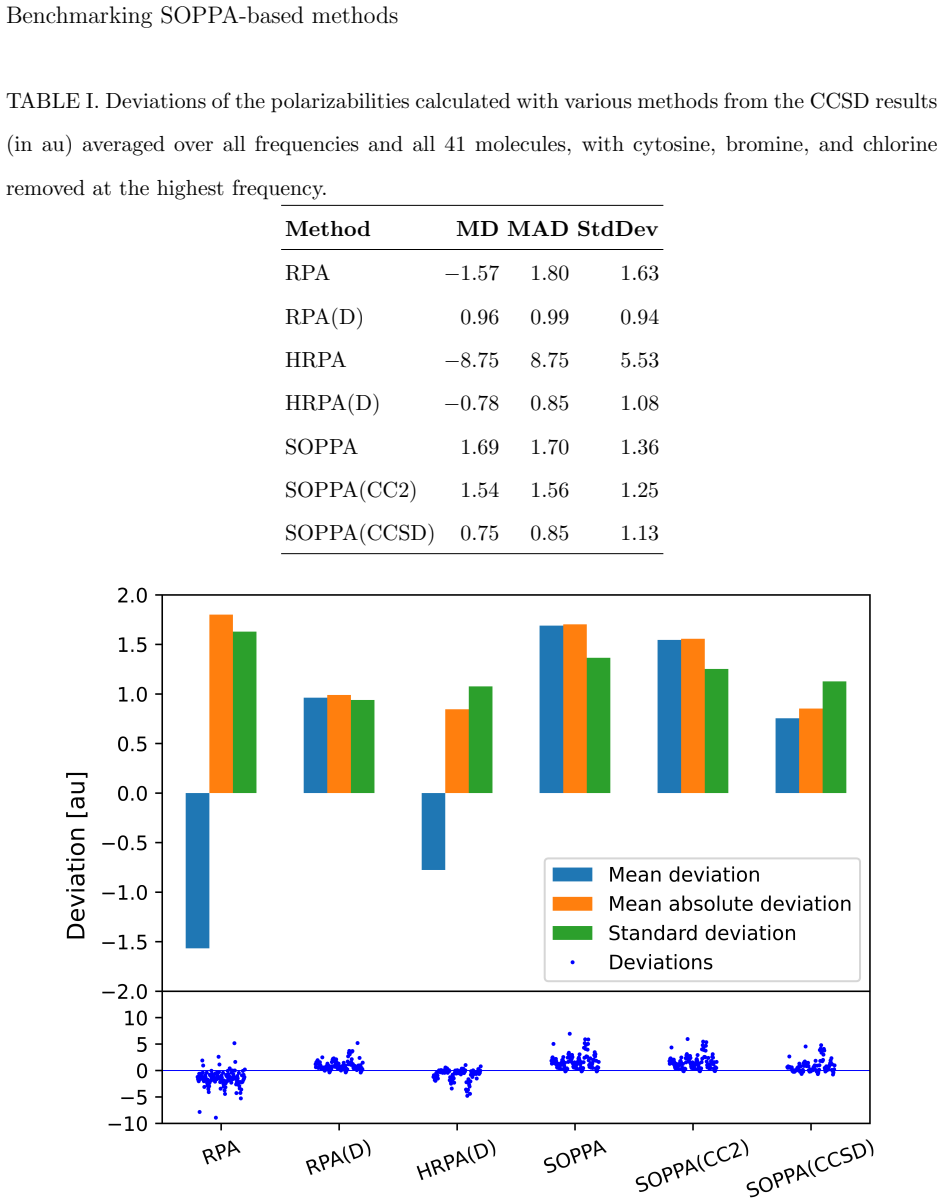
Static and frequency-dependent polarizabilities were computed for 41 molecules using RPA, RPA(D), HRPA, HRPA(D), SOPPA, SOPPA(CC2), and SOPPA(CCSD) with the aug-cc-pVTZ basis set and benchmarked against CCSD reference values and available experimental data. The analysis reveals a pronounced distinction between the performance of these methods for aromatic versus non-aromatic molecules. Across all frequencies, HRPA consistently yields substantially larger deviations from CCSD than the other approaches, whereas HRPA(D) and SOPPA(CCSD) provide the most accurate results overall. For static polarizabilities, HRPA(D) performs best for non-aromatic systems, followed by SOPPA(CCSD) and RPA(D), while SOPPA(CCSD) is most accurate for aromatic molecules. In the frequency-dependent regime, HRPA(D) remains the most accurate method for non-aromatic molecules, although RPA(D) shows greater consistency. For aromatic molecules, SOPPA(CCSD) performs best at low frequencies, with RPA offering intermediate accuracy but higher consistency than most other methods; at higher frequencies, RPA becomes the most accurate approach, followed by RPA(D), while SOPPA(CCSD) deteriorates. These trends highlight the importance of doubles corrections in RPA(D) and HRPA(D), which achieve accuracy comparable to or better than SOPPA(CCSD) at lower computational cost. The strong performance of RPA for aromatic molecules is attributed to its characteristic overestimation of the lowest electronic excitation energy. Comparison with experimental data confirms SOPPA(CCSD) as the most reliable method for static polarizabilities, while RPA and HRPA(D) provide the best agreement for frequency-dependent polarizabilities of aromatic systems.
Coherence-based spectroscopy methods are powerful tools to explore structure and dynamics of matter. However, towards higher photon energies, the generation of sequences of pulses with well-characterized relative delays and phases remains a challenge. Here, we introduce a method to measure the relative phase $\varphi$ between subsequent transform-limited pulses from high-repetition-rate x-ray free-electron lasers (XFELs). It is based on a Ramsey-type interference measurement, enabled by introducing long-lived M\"ossbauer resonances into the XFEL beam path up- or downstream a primary experiment, which allow one to bridge the temporal gap between the XFEL pulses. The measured phase can be used as additional input for the analysis of the primary experiment.
Glauber's coherent state is denoted by $\ket{\alpha}$ and its two-mode extension is represented by $\ket{\alpha,\beta}$. In this work, we introduce a two-mode superposition operator $A=tab+ra^\dagger b^\dagger$, whose action on the two-mode coherent state produces the two-mode coherent superposed quantum state $\ket{\psi}=(tab+ra^\dagger b^\dagger)\ket{\alpha,\beta}$. We investigate the nonclassicality and quantum non-Gaussianity of this state by means of the Wigner distribution and Wigner logarithmic negativity. Once its intrinsic nonclassical and non-Gaussian structure is established, the state is employed as the entangled resource in the Braunstein-Kimble continuous-variable (CV) teleportation protocol. We compute the ideal teleportation fidelity for coherent and squeezed inputs and analyze how the strengths of nonclassicality and non-Gaussianity influence the teleportation efficiency. Our results identify specific parameter regimes where enhanced non-Gaussian features or increased nonclassicality enable fidelities beyond the classical threshold, thereby revealing the operational significance of engineered two-mode quantum states in CV quantum information processing.
Positive SSTAs in western Pacific, K-KE, and North Atlantic point to high skill and above-average temperatures across China, Korea, and Japa
abstractclick to expand
The limited predictive skill of forecasts makes it difficult for decision-makers to act decisively. Advance assessment of real-time forecast credibility can strengthen decision-makers' resolve and confidence to act. Such an assessment can draw on real-time observations of large-scale background signals. This study evaluates how credible the 2026 East Asia summer temperature forecast is. Enhanced predictability of East Asia summer temperature can be indicated by the synergistic forcing of sea surface temperature anomalies (SSTAs) across three key oceanic regions: the tropical western Pacific, the Japan Sea-Kuroshio-Kuroshio Extension (K-KE), and the North Atlantic. Based on the latest observational data and model predictions, the SSTAs in these three regions maintain positive anomalies, which suggests that East Asia's summer temperature forecast skill will stay at a relatively high level in the coming summer. Based on the predictions, the following summer is expected to feature pronounced positive temperature anomalies over central and eastern China, the Korean Peninsula, and Japan, which may trigger regional droughts and place severe strain on power supply networks.
Despite increasing scale and resolution, many biological measurements remain destructive, revealing only spatial information rather than the dynamics it encodes. By combining flexible representations with mechanistic constraints, physics-informed machine learning offers a promising route to inferring these dynamics from static snapshots. Motivated by subcellular imaging of gene expression, we ask when a static spatial pattern of molecules can identify spatially varying diffusivity, creation, destruction, and boundary exchange, and how different inference schemes perform on the task. A structural identifiability analysis shows that distributed sources are non-identifiable, whereas a point source such as a transcription site can restore identifiability. These limits are further shaped by seemingly innocuous modeling choices: the boundary conditions, the spatial regularity of the underlying dynamics, and even the stochastic calculus convention. We then adapt several physics-informed schemes, differing in how they represent the solution and enforce the governing equations, and demonstrate effective inference from a single snapshot. Physics-informed approaches can thus recover spatial heterogeneities of biological dynamics from static data, but their use should be accompanied and guided by careful identifiability analysis for meaningful interpretation of the results.
We provide a theoretical derivation of the Hypergraph Minority Game with Local Hyperedge Payoffs (HMG-L), in which $N$ adaptive agents compete simultaneously in multiple overlapping groups modeled as hyperedges of a static hypergraph $\Hyper=(\Vset,\Eset)$. Each hyperedge constitutes an independent local minority game, and agents accumulate payoffs across all groups to which they belong. We derive the continuum-time limit of the score dynamics, from which we obtain a set of coupled nonlinear stochastic differential equations for the agents' strategy polarization variables. The deterministic drift is shown to derive from a global cost function that generalizes the standard Minority Game Hamiltonian to hypergraph-structured interactions. We perform a sparse-annealed replica analysis of the stationary state for the case of a $k$-uniform, $d$-regular random hypergraph, obtaining the saddle-point equations within the replica-symmetric ansatz, an explicit replicon stability criterion, and Bethe/cavity equations for sparse corrections. The leading sparse-regime transition occurs on a critical surface $\alphacrit(k,d)$, while the globally coupled MG value $\alphacrit\simeq0.3374$ is recovered only in the separate single-hyperedge limit. We derive expressions for the order parameters -- global volatility $\sigma^2$, predictability $\theta$, hyperedge frustration $F_e$, and frozen fraction $\phi$ -- and discuss their scaling behavior near criticality. The Fokker-Planck equation governing finite-$N$ fluctuations is presented, and the noise covariance matrix is computed from the hypergraph structure. Limiting cases ($k\to N$, $k\to2$, $d\to\infty$) are analyzed in detail, establishing connections to the standard MG, networked MG, and parallel MG models.
It outperforms data pooling and harmonization by learning cohort-specific representations to handle segmentation differences in cervical can
abstractclick to expand
Hematologic toxicity (HT) is a major dose-limiting complication of pelvic radiotherapy for cervical cancer. Although radiomic and dosiomic features improve HT prediction beyond dosimetric metrics, their performance is highly sensitive to contour variability, limiting generalizability. We developed a cohort-aware representation-learning framework to address this challenge.
We retrospectively analyzed 152 cervical cancer patients treated with pelvic radiotherapy without concurrent chemotherapy. Patients were divided into two cohorts based on the operators performing pelvic bone segmentation. HT prediction models were developed using cohort-specific training, pooled training, statistical harmonization, and a cohort-aware neural network (CANN) that learns shared and cohort-specific representations with contrastive regularization. Performance was evaluated using cross-validation and an independent test set.
Cohort-specific models achieved test AUCs of 0.77 and 0.71, outperforming a dosimetry-only model (AUC=0.58). Directly pooling cohorts reduced performance (test AUC=0.64). Statistical harmonization provided limited benefit, while adversarial and correlation-based alignment further degraded performance. CANN achieved the best balance between robustness and generalizability (test AUC=0.72), with ablation studies confirming the importance of cohort-specific representations and contrastive alignment.
These results demonstrate that cohort-aware representation learning effectively mitigates contour variability and improves the generalizability of radiomic and dosiomic models for HT prediction.
Machine-learning-accelerated materials discovery has yielded large numbers of computationally stable compounds, yet many remain experimentally unrealized, underscoring a persistent gap between prediction and synthesis. Here, we introduce a hierarchical screening framework that combines PBE-based thermodynamic stability, efficient dynamical-stability screening enabled by universal machine-learning interatomic potentials, and SCAN-based thermodynamic refinement. Applying this protocol to the 894 stable materials previously reported in Sci. Data 9, 302 (2022), we first curate 603 unique structures, of which only 298 remain thermodynamically stable on the complete PBE phase diagrams, demonstrating the critical role of competing phases in stability assessment. Dynamical screening then identifies 166 materials stable under both harmonic-phonon and finite-temperature molecular dynamics criteria, and SCAN phase diagrams further narrow this set to 109. Finally, by combining decomposition enthalpy with chemical-space completeness, we prioritize 25 candidates as high-confidence targets for experimental synthesis. This work provides a practical protocol for translating stability predictions into experimentally actionable synthesis targets, closing a key gap in machine-learning-driven materials discovery.
With the data-driven artificial intelligence/machine learning (AI/ML) models having demonstrated their ability to extend the prediction horizon of large-scale weather at a fraction of computational cost of numerical weather prediction models, a pertinent question is, could these models do the same for sub-seasonal to seasonal (S2S) prediction? A key challenge in developing a S2S prediction system is the requirement for a coupled ocean-atmosphere Earth system emulator that can stably simulate the observed intraseasonal and interannual variability with fidelity. In the rapidly evolving field of AI/ML weather models, such a deep learning 3D ocean-atmosphere coupled model has become available, called SamudrACE. With our interest in developing an AI/ML S2S model for Indian monsoon, here we examine the extent to which SamudrACE faithfully simulates Indian monsoon intraseasonal and interannual variability. Compared to observation, we found biases in SamudrACE's simulation of monsoon intraseasonal and interannual variability. Our systematic documentation and analyses of these biases provide a useful benchmark for improving not only SamudrACE but also coupled emulators in general and could fast track the development of a deep learning 3D global S2S prediction system.
Substrate-agnostic ecologies remove terrestrial bias by treating both as products of the same agent-environment relations.
abstractclick to expand
Substrate-agnostic perspectives are currently attracting increased attention. For example, it has become customary to refer to agnostic biosignatures to reflect the range of alternative extraterrestrial biospheres and to account for the deeper philosophical dependence of candidate biosignatures on the underlying theory of life. Analogously, one can formulate a concept of agnostic technosignatures, reflecting that the more we expand the search for technosignatures, the more we invite theories of technology that undo the terrestrial bias. For this reason, this paper argues that there exists a strong theoretical justification for an integrated study of technosignatures and biosignatures, articulated in a unified perspective on substrate-agnostic ecologies. The paper introduces the concept of substrate-agnostic ecology as an abstraction unconstrained by terrestrial circumstances, anchored instead in a functional understanding of agent-ecology coupling provided by niche construction theory.
Prescribed-motion method recovers bulk flow features of fully coupled simulation at 60% lower computational cost.
abstractclick to expand
Numerical modeling of aortic valve dynamics is essential for understanding the complex fluid-structure interaction (FSI) governing valve biomechanics in health and disease. Immersed methods provide a flexible computational framework for simulating the large deformations of valve leaflets and associated blood flow without requiring body-fitted meshes. Among these approaches, the Resistive Immersed Surface (RIS) and Immersed Boundary (IB) methods are widely used. However, systematic comparative analysis of these methods for realistic aortic valve simulations has not been performed. In this work, we compare a prescribed-kinematics RIS workflow implemented in SimVascular's svMultiPhysics solver with a fully coupled IB workflow using IBAMR for trileaflet and bicuspid aortic valve configurations. The RIS method represents the valve as a surface with prescribed kinematics embedded in the fluid domain and introduces a penalty force that drives the surrounding fluid velocity toward the prescribed leaflet velocity. This formulation reduces modeling complexity and provides useful hemodynamic predictions when representative leaflet kinematics are available. In contrast, the IB method models the leaflets as elastic structures fully immersed in the fluid domain and resolves leaflet deformation through fully coupled two-way FSI. The study focuses on the extent to which RIS reproduces bulk hemodynamic features and transvalvular pressure gradients. Results show that the RIS method captures the large-scale flow structures and predicts the mean transvalvular pressure gradient with a relative error within 15% of the fully coupled IB simulation, improving to within 5% when inlet boundary conditions are matched, while reducing computational cost by approximately 60%.
Covers 300-2900 K and 0.01-50 atm.m for ten compositions using the statistical narrow band model
abstractclick to expand
This article describes a dataset of total (spectrally-integrated rather than wavelength-dependent) emissivity values pertaining to gaseous media containing carbon dioxide (CO2) and/or water vapor (H2O) with the sum of their partial pressures being near the atmospheric level. These conditions may be particularly relevant to flue gases resulting from oxy-fuel combustion. The emissivities here are computed using the EM2C implementations of the statistical narrow band (SNB), and they are made conveniently available as 10 separate plain text files having a unified layout. Each data file in the dataset corresponds to a specific chemical composition (from pure CO2 to pure H2O), with eight intermediate H2O:CO2 molar ratios being 1:20, 1:8, 1:4, 1:2, 1:1, 2:1, 5:1, and 20:1. In addition, pure CO2 corresponds to the extreme lower-bound for the H2O:CO2 molar (as 0:1), and pure H2O corresponds to the extreme upper-bound for the H2O:CO2 molar ratio (1:0 or infinity). For each chemical composition, the total emissivity values are provided for different pressure-pathlengths and different absolute gas temperatures as two independent variables. The pressure-pathlength range spans about three orders of magnitude, from 0.01 atm.m to 50 atm.m, with 90 nonuniformly-distributed pressure-pathlength values. The absolute gas temperature spans a wide range from 300 K (room temperature) to 2900 K (high-temperature flames) with a uniform step of 25 K separating 105 temperature values. For each data file, there are 90 x 105 (9450) emissivity values; and the entire dataset contains 94500 emissivity values.
Joint full waveform inversion (FWI) of distributed acoustic sensing (DAS) and ocean-bottom node (OBN) data typically requires converting measured strain to particle velocity, introducing numerical noise and spectral distortion. To eliminate this, we present an elastic multi-parameter FWI framework using a velocity-stress-strain (VSS) formulation that directly models pressure, particle velocity, and gauge-length-averaged DAS strain from a single forward simulation. Data residuals are injected additively into a single backward simulation, making computational cost independent of the active sensor subsets. We benchmark individual and combined datasets on cross-talk and elastic Marmousi models. Our results show that joint inversion recovers elastic parameters more accurately than single deployments when the sensors offer complementary information. Specifically, pairing two-component geophones with a deviated borehole DAS cable yields the most accurate parameter recovery and mitigates inter-parameter cross-talk by providing a distinct physical observable and complementary depth aperture. We release our implementation as xFWI, an open-source, Devito-based Python package for scalable, multi-deployment inversions.
We show that exchange symmetry in collisions of identical particles enables symmetry-protected coherent control of the total scattering cross section. For identical fermions, antisymmetrization enforces complete phase synchronization of the contributing scattering channels, yielding maximal control visibility. For identical bosons, synchronization persists but with reduced visibility due to additional exchange (satellite) contributions. Collisions of distinguishable particles lack this symmetry-imposed phase locking, leading to lower controllability and visibility. We elucidate these principles through coupled-channel quantum-scattering calculations for lithium-lithium collisions, comparing the $^{6}\mathrm{Li}$-$^{6}\mathrm{Li}$ (identical fermions), $^{7}\mathrm{Li}$-$^{7}\mathrm{Li}$ (identical bosons), and $^{6}\mathrm{Li}$-$^{7}\mathrm{Li}$ (distinguishable) systems. Furthermore, in the identical particle cases, symmetry-enforced synchronization enables full control over the parity of the final state at any collisional energy. This mechanism is broadly applicable to identical-particle collisions, including homonuclear molecules for which established approaches -- DC electric fields, or microwave shielding -- are ineffective or unavailable.
Objective. Gold-standard depth-of-interaction (DOI) calibration using collimated gamma-ray irradiation is time-consuming and impractical for system-level calibration of detector arrays. This work investigates an efficient DOI and energy calibration method for detector panels using uncollimated irradiation, with gamma rays incident nearly parallel to the crystal depth direction. Approach. The 511-keV photopeak location in a dual-ended readout PET detector block was evaluated as a function of crystal depth using collimated and uncollimated $^{22}$Na irradiation. A $4\times4$ dual-ended readout PET detector panel was then assembled. Three detector blocks were calibrated using the gold-standard method, and two uncollimated-irradiation DOI calibration approaches--a physics-informed model and a multilayer perceptron (MLP)--were compared against it. Finally, the full panel was calibrated for DOI and energy using the MLP-based approach. Main Results. The median relative RMSE between second-order polynomial fits from collimated and uncollimated irradiation was 1%, showing that uncollimated irradiation can provide reliable estimates when accurate DOI calibration parameters are available. Compared with gold-standard DOI calibration, the physics-informed and MLP-based approaches achieved RMSEs of 0.38-0.58 mm and 0.36-0.61 mm, respectively. The MLP-based approach provided better DOI resolution estimates and was therefore used for full-panel calibration. After saturation correction, the panel achieved a mean energy resolution of 15.6% and a DOI resolution of 2.0 mm. Significance. The proposed MLP-based calibration requires only a single uniform 511-keV irradiation, making it simple to implement and suitable for in situ calibration of DOI-capable PET detector arrays.
High-fidelity neutronic analyses of advanced reactors require deterministic transport solvers capable of handling complex unstructured geometries while maintaining computational efficiency. This work presents the development and verification of three GPU-accelerated deterministic solvers implemented within a unified framework, Neutronics using Deterministic Finite Element Algorithm (NuDEAL): the planar Method of Characteristics coupled with the Hybrid Finite Element Method (MOC/HFEM), the Discontinuous Galerkin Method of Characteristics (DGMOC), and the Discontinuous Finite Element discrete ordinate method (DFEM-SN). These solvers provide complementary capabilities for consistently solving the multigroup transport equation and can be selectively employed to balance accuracy, computational cost, and memory requirements for a given problem. All methods emphasize efficient GPU execution by leveraging memory alignment, compressed-flux storage, and sequential azimuthal sweeps. The solvers are validated on the C5G7 benchmark and applied to advanced reactor problems, including the ABTR, Empire microreactor, and MSRE. DFEM-SN achieved the highest accuracy, with eigenvalue errors below 50 pcm, while MOC/HFEM and DGMOC provided superior efficiency, with single-GPU runtimes comparable to those of large CPU clusters. The results demonstrate that deterministic GPU solvers on unstructured meshes can deliver both accuracy and scalability, enabling practical whole-core simulations for heterogeneous advanced reactors. The unified NuDEAL framework establishes a foundation for future extensions toward transient and multiphysics analyses on large-scale GPU architectures.
Accurately resolving interfacial gradients is critical for simulating two-phase flows, particularly those involving phase transitions or active matter. The traditional diffuse-interface immersed boundary methods (IBMs) are highly efficient for such problems, but they typically suffer from a reduction to first-order accuracy near the phase-changing boundaries. We clarify that the main reason is the local derivative discontinuities. Here, we propose a smooth extension strategy to restore formal second-order spatial accuracy. By extrapolating the scalar field across the interface, the method structurally ensures derivative continuity. To preserve the divergence-free condition in incompressible fluid solvers, this smooth extension is applied exclusively to the scalar transport equations. The velocity field retains the standard diffuse-interface treatment. The proposed framework is systematically validated against classical phase-change benchmarks, specifically one-dimensional evaporation and boiling problems. Additionally, the method is applied to the spontaneous autophoretic motion of isotropic particles. The numerical results confirm the capability of our method in resolving the complex multi-physics boundary couplings.
Quantum algorithms for quantum chemistry and other many-body fermionic systems work by expressing the Hamiltonian in a basis of qubits and fragmenting the Hamiltonian into a sum of products of Pauli operators whose exponentials are easily encoded on a quantum device. Applying the product of exponentials, known as Trotterization, leads to an error associated with the non-commutativity of operators. This error can lead to breaking the symmetries of the Hamiltonian because the fragments are not symmetry conserving in general. Nonetheless, many algorithms for time evolution rely on Trotterization, including time evolution and quantum phase estimation. We show that we can express the Hamiltonian in terms of Hermitian excitation operators which map to sums of commuting Pauli strings for any encoding and conserve symmetries corresponding to Abelian groups of symmetry operators. Symmetries corresponding to non-Abelian groups, on the other hand, are not fully conserved by Trotterized Hermitian excitation operators, so we developed ``operator kirigami'' to cut the sum of non-commuting operators by orthogonal projection and to fold terms together using unitary rotations. We tested pools of operators for small molecules and basis sets, and found that electron number and spin symmetry conserving pools led to greater errors that decreased for larger molecules and were negated with second-order Trotterization. Our work shows the potential for testing quantum computing algorithms on classical computers by adapting tools used in electronic structure theory with conserved symmetries.
We investigate fluid mixing induced by microswimmers using mutual information as a global, information-theoretic measure of mixing efficiency. For a two-dimensional squirmer model in a confined domain, we compute numerically the swimmer-generated flows and solve the advection-diffusion equation for the transport of tracer particles in the fluid. We show that the spatial distribution of swimmers strongly affects mixing, which is suppressed by swimmer aggregation and enhanced by positional and orientational disorder. At fixed energy dissipation, mixing efficiency depends non-monotonically on the squirmer parameter, with an optimal finite value arising from the balance between swimmer translation and dipolar flow generation. When hydrodynamic interactions are included, pushers outperform pullers. The mutual information as a function of time decays in three stages: an initial diffusion-dominated stage, an intermediate advection enhanced regime, and a final relaxation stage controlled by system size. Our results demonstrate that mutual information, previously validated as a measure of mixing efficiency only in simplified model systems, can equally be used in complex flows. Its application reveals that mixing by microswimmers is subject to a trade-off between the generation of strong shear flows and achieving optimal dispersion across the fluid domain.
Weak-form identification inside the inverse scattering framework yields low-dimensional models that hold in perturbed regimes.
abstractclick to expand
The inverse scattering transform (IST) provides the standard theoretical framework for deriving soliton dynamics. Traditionally, such derivations have been of an analytical, rather than data-driven, nature. In this paper, we combine the conceptual framework of the IST with weak-form system identification methods to discover effective soliton dynamics directly from observed scattering data, without assuming prior knowledge of the scattering equations. Our method avoids parameterizing solitary waves via ad hoc curve-fitting by working in the scattering domain, yielding interpretable low-dimensional models that remain valid in perturbed and near-integrable regimes. We demonstrate the performance of the proposed approach on synthetic and experimental data governed by shallow-water equations of Korteweg--de Vries-type and recover models that are consistent with canonical IST theory.
We study hydrodynamic spin coupling in a two-rotor corral using DNS of 2D incompressible viscous fluid flow. An active rotor is driven at angular velocity W, and a nearby torque-free passive rotor selects an angular velocity w through hydrodynamic torque balance. The signed gear ratio Gamma=w/W distinguishes corotation from counterrotation, with Reynolds number Re=|\Omega|r^2/\nu. Motivated by a recent quasi-two-dimensional experiment, we use a DLM/FD method to compute planar phase diagrams of $\Gamma(G,Re)$ at corral sizes C=3, 4.5, and 6. The planar model recovers the benchmark gap route at Re=20: an intermediate counterrotation band, a wide-gap transition to corotation, gear-ratio magnitudes of order 10^{-2}, and the observed sequence of vortex attachment, detachment, and merger. It also produces a reentrant-like gap structure with a small-gap corotation region whose relation to the experimental close-range geometric state remains unresolved. The main discrepancy is the high-Re boundary. At the experimental mid-gap transect G about 0.3, the planar gear ratio approaches zero from the counterrotating side but does not cross through Re=400; at the narrower gap G=0.22, by contrast, the planar terminal spin reverses near Re=44. Wall-traction diagnostics show that this crossing is not the experimental shear-competition mechanism: the gap-facing counterrotating arc narrows but does not collapse or deflect as in the experiment, and the reversal at G=0.22 occurs by redistribution of the integrated planar torque. The strictly planar model therefore captures the broad gap-route architecture and the existence of a Reynolds-driven spin boundary, but displaces that boundary in gap and alters its surface-stress mechanism. The remaining mismatch points to finite-depth secondary motion, end-wall stresses, and apparatus geometry as plausible contributors to the experimental shear balance.
Symmetry-based analysis shows the structures vanish once symmetry is broken, without needing topological invariants.
abstractclick to expand
Whether topology directly shapes chemical dynamics remains an open question in theoretical chemistry. The issue arises because degeneracies of adiabatic electronic states can generate nontrivial topological structure, and such degeneracies are common in polyatomic molecules. Existing work has largely emphasized static characterizations and dynamical studies of low-energy, highly symmetric models. Here we develop a symmetry-based analysis of nonadiabatic dynamics in two-state conical-intersection models that is predictive without invoking topological invariants. We show that the nodal-line structures associated with dynamics near a conical intersection are robust in highly symmetric settings, but should not in general be expected to persist once the relevant symmetry is broken.
Market demand for transferred knowledge created a premium that closed by mid-2000s as it was absorbed into global science.
abstractclick to expand
In the early-mid 1990s, scientists emigrating from the former Soviet Union to the United States -- especially physicists, engineers, chemists, and biologists -- frequently secured prestigious and visible positions, including professorships, named chairs, and laboratory leadership; comparable scientists arriving after about 2000 built more modest, less visible, and often non-academic careers. Against the common view that this reflects the people -- the elite having left first -- this article sets aside the thin apex of Nobel- and Fields-level \'emigr\'es and examines the larger cohort of capable but non-stellar scientists, showing that similar scientists fared differently by year of arrival. The explanation therefore lies in the structure of the receiving market, not primarily in individual ability. Reading premium appointments backward from later Nobel-level recognition risks survivorship bias: celebrated successes obscure the broader demand for Soviet scientific capital. I weigh four conditions that favoured the 1990s cohort and had largely closed by the mid-2000s: technology transfer and the export of a finite, distinctive stock of Soviet expertise that commanded a career premium; the favourable immigration regime created by the Soviet Scientists Immigration Act of 1992; the surge of U.S.-trained Chinese and Indian competitors; and the securitizing aftermath of 11~September 2001. All four mattered, but technology transfer and knowledge export were primary: their premium opened the window, and their depletion -- as exported knowledge was published and absorbed into global science -- removed the demand on which the other factors depended. A further cross-cutting mechanism, the cultural ``ghettoization'' of \'emigr\'es into co-national laboratory enclaves, capped their visibility and independent advancement. The imbalance between \'emigr\'e generations was structural, not personal.