pith. sign in

physics.bio-ph

Biological Physics

Molecular biophysics, cellular biophysics, neurological biophysics, membrane biophysics, single-molecule biophysics, ecological biophysics, quantum phenomena in biological systems (quantum biophysics), theoretical biophysics, molecular dynamics/modeling and simulation, game theory, biomechanics, bioinformatics, microorganisms, virology, evolution, biophysical methods.

Top Pith
8
physics.bio-ph 2026-05-25 2 theorems

Lorentzian family is unique invariant under Riccati transport

by Hugues Berry (AISTROSIGHT), Leonardo Trujillo (AISTROSIGHT)

Geometric Origin of Exact Mean-Field Reductions: M{\"o}bius Symmetry and the Lorentzian Ansatz

Reformulating dynamics on the circle shows the Cauchy law is the sole rotation-invariant measure, unifying exact mean-field reductions.
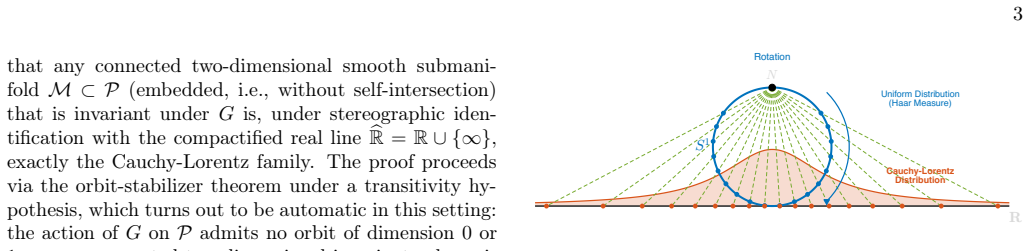
Figure from the paper full image
abstract click to expand
Low-dimensional descriptions of large systems of coupled oscillators and spiking neurons rely heavily on the Lorentzian Ansatz. We show that its privileged role is geometric rather than heuristic: for the transport induced by Riccati dynamics, the Cauchy-Lorentz family indeed emerges as the unique connected two-dimensional family of continuous probability densities that is invariant under the induced projective transport. The key step of the demonstration is to reformulate the dynamics on the circle, where the problem reduces to the uniqueness of the rotation-invariant probability measure. Under stereographic projection, this yields the standard Cauchy law and, under the full projective action, the Lorentzian family. This result gives a unified geometric foundation for the Ott-Antonsen [Chaos 18, 037113 (2008)] and Montbri{\'o}-Paz{\'o}-Roxin [Phys. Rev. X 5, 021028 (2015)] reductions, explains the failure of Gaussian closures, and identifies the structural condition underlying exact two-parameter reductions.
0
Top Pith
1
cond-mat.soft 2026-05-11 2 theorems

Insertion depth drives concentration-dependent bilayer destabilization

by Anirban Polley

Concentration-Dependent Membrane Destabilization in DPPC Bilayers: Distinct Insertion Mechanisms and Stress Redistribution by Chloroform and Alkanols

Simulations show chloroform thins membranes while alkanols crowd interfaces and redistribute stress without full melting.

Figure from the paper full image
abstract click to expand
How do solute concentration and molecular chemistry govern the transition from membrane saturation to destabilization? We address this using microsecond-scale molecular dynamics simulations of dipalmitoylphosphatidylcholine (DPPC) bilayers with chloroform (CHCl$_3$) and a homologous series of alkanols (methanol, ethanol, octanol) over $0-50\%$ concentrations. Although complete membrane melting is not observed within $1000\, ns$, all systems exhibit clear precursors of destabilization, including enhanced thickness fluctuations, reduced lipid order, and mechanical softening. Chloroform induces pronounced thinning and large fluctuations, consistent with deep, transient insertion. Methanol perturbs primarily the headgroup region, while ethanol shows intermediate behavior with partial insertion. Octanol preserves bilayer thickness at high concentrations due to lipid-like insertion but significantly increases fluctuations and interdigitation. Across all systems, increasing concentration decreases the area compressibility modulus and deuterium order parameter, accompanied by smoothing of lateral pressure profiles, indicating stress redistribution. Free energy analysis reveals increased membrane partitioning and reduced translocation barriers with concentration, strongest for octanol and weakest for methanol. These results demonstrate that membrane destabilization is governed by the interplay of insertion depth, interfacial crowding, and lipid packing disruption.
0
0
physics.flu-dyn 2026-07-03

Gliding mammal wing shapes trade lift for control authority

by Liming Zheng, Baihui Chen +2 more

Patagium and tail morphology shape aerodynamic performance and control authority in gliding-mammal-inspired wings

CFD tests of different patagia and tails find each excels at distinct tasks rather than converging on one optimum.

Figure from the paper full image
abstract click to expand
Gliding mammals exhibit diverse patagium and tail/uropatagium morphologies that may influence aerodynamic performance and maneuverability. Here, we use computational fluid dynamics to isolate the aerodynamic effects of representative gliding-mammal-inspired morphologies under controlled flow conditions. Three patagium configurations were compared to evaluate the effects of membrane outline on lift generation, drag, stall behavior and pitching moment. Three tail/uropatagium configurations were further tested under baseline, symmetric-deflection and asymmetric-deflection conditions to assess their longitudinal and lateral control authority. The results show that a broader patagium configuration generated the highest lift and lift coefficient, whereas an intermediate patagium morphology showed a smoother post-stall response with lower drag. For the tail configurations, the colugo-like integrated uropatagium enhanced lift and pitch-control authority under symmetric deflection, while the flat-tail configuration produced stronger rolling and yawing responses under asymmetric deflection. These findings indicate that gliding-mammal-inspired morphologies produce distinct aerodynamic trade-offs rather than a single optimal design. The results provide insight into the functional diversity of gliding mammal morphology and offer design guidance for bioinspired morphing aerial robots.
0
0
cs.NE 2026-07-03

Phase-locked loop yields simple bursting neuron circuit

by Lev V. Takaishvili, Vladimir I. Ponomarenko +2 more

Electronic Bursting Neuron: design, equations and hardware implementation

Adjusted equations produce hardware that matches demanded regimes and extends to small networks.

Figure from the paper full image
abstract click to expand
Electronic neurons are a keystone for construction of the spiking neural networks which have numerous applications in neuroprosthetics, artificial memory, intensive calculations etc. A number of concepts of electronic neurons has been already proposedm with some of them implemented in hardware. However, new schemes are of significant interest since the existing ones do not fit all requirements: either they are too complex and expensive in realization, or they are not able to demonstrate all demanded regimes, or their do not have a appropriate mathematical description and therefore may be investigated only experimentally etc. In this study we propose a new design of bursting electronic neuron constructed as a circuit implementation of the equations of a phase-locked loop system. To succeed, we use a novel hybrid approach: we start from the phenomenological equations providing the demanded, then we adjust and modify these equations to simplify the implementation rather than implementing the biophysical equations into thee hardware directly or writing equations for the already constructed circuit. The resulting circuit is simple in implementation and well matches the underlying equations. It can be used for description of not only a single neuron, but small neural circuits too.
0
0
q-bio.QM 2026-07-03

Point source restores identifiability of spatial dynamics from snapshots

by Rujie Gu, Ray Zirui Zhang +1 more

Identifiability Limits of Physics-Informed Inference for Spatial Stochastic Dynamics from Static Snapshots

Distributed sources cannot be uniquely recovered from static patterns, but a transcription site allows physics-informed methods to infer the

Figure from the paper full image
abstract click to expand
Despite increasing scale and resolution, many biological measurements remain destructive, revealing only spatial information rather than the dynamics it encodes. By combining flexible representations with mechanistic constraints, physics-informed machine learning offers a promising route to inferring these dynamics from static snapshots. Motivated by subcellular imaging of gene expression, we ask when a static spatial pattern of molecules can identify spatially varying diffusivity, creation, destruction, and boundary exchange, and how different inference schemes perform on the task. A structural identifiability analysis shows that distributed sources are non-identifiable, whereas a point source such as a transcription site can restore identifiability. These limits are further shaped by seemingly innocuous modeling choices: the boundary conditions, the spatial regularity of the underlying dynamics, and even the stochastic calculus convention. We then adapt several physics-informed schemes, differing in how they represent the solution and enforce the governing equations, and demonstrate effective inference from a single snapshot. Physics-informed approaches can thus recover spatial heterogeneities of biological dynamics from static data, but their use should be accompanied and guided by careful identifiability analysis for meaningful interpretation of the results.
0
0
cond-mat.soft 2026-07-02

Diffuse fronts enhance phoretic removal from dead-end pores

by Amir A. Pahlavan

Diffusiophoretic transport of colloids and emulsions in complex environments

Cross-streamline migration in flowing pathways also shifts breakthrough and dispersion by orders of magnitude.

Figure from the paper full image
abstract click to expand
Chemical gradients are ubiquitous in porous and crowded environments, including soils, filters, fabrics, tissues, hydrogels, biofilms and living cells. They arise from displacement fronts, dissolution and precipitation, ion exchange, metabolism, root exudation, evaporation, gas dissolution, freeze--thaw cycles and externally imposed chemical treatments. These gradients can drive colloids, macromolecules and emulsion droplets by diffusiophoresis, while simultaneously driving diffusioosmotic flows along confining surfaces. Classical models of colloid transport in porous media emphasize hydrodynamic dispersion, surface interactions, straining, deposition, detachment and filtration. This chapter places diffusiophoresis within that broader transport framework and reviews how porous media generate, stretch, disperse and sustain the solute gradients that drive phoretic motion. We first discuss sources of chemical gradients and the distinction between spreading and mixing, then summarize classical colloid transport, the minimal physicochemical model for diffusiophoresis and diffusioosmosis, and the experimental platforms used to study these effects. Particular emphasis is placed on recent results showing that diffuse solute fronts can enhance phoretic removal from dead-end pores by prolonging the duration of forcing, and that cross-streamline migration within flowing pathways can change macroscopic breakthrough and dispersion by orders of magnitude. We close by discussing emulsion droplets, multiphase flows, confined and living media, and open problems, including the transition from algebraic mixing in two-dimensional micromodels to chaotic mixing in three-dimensional porous media.
0
0
physics.bio-ph 2026-07-02

Hydrodynamic flow accelerates Brassica root growth and triggers ROS

by Kaushal Agarwal, Sumit Kumar Mehta +1 more

Plant-On-a-Disc (POD): A Phytofluidic platform enabling In Situ Root Analysis

Eight-seedling radial device reveals multi-scale root responses to fluid forces that static systems miss.

abstract click to expand
Phytofluidic platforms have enabled controlled studies of plant roots, however, most existing systems either impose geometric confinement without flow or introduce hydrodynamics in single-channel devices that limit throughput and disrupt downstream analysis. New experimental platforms are therefore needed to investigate how roots integrate mechanical confinement and hydrodynamic nutrient transport, two defining features of the rhizosphere that remain difficult to reproduce under controlled laboratory conditions. Here, we present the Plant-on-a-Disc (POD), a phytofluidic platform that enables the parallel cultivation of eight seedlings under controlled hydrodynamic conditions while allowing non-invasive, in situ multimodal analysis of the intact root-shoot system. The device is fabricated in PDMS using a cost-effective wire-drawing technique to generate radial microchannels that converge into a central sump beneath an optical window. This design enables sequential bright-field, fluorescence, and Raman measurements using a single microscope objective without disturbing neighbouring seedlings. Dimensionless transport analysis and finite-element modelling confirm that the radial architecture equalizes hydraulic resistance across channels, establishing creeping laminar flow with convection-dominated nutrient transport under physiologically safe shear conditions. Using Brassica seedlings, we show that hydrodynamic flow drives coordinated root responses across multiple scales. Roots grown in flow condition exhibit accelerated elongation, substantial ROS generation and anisotropic cortical cell expansion, accompanied by carotenoid signatures detected by Raman spectroscopy.
0
0
physics.bio-ph 2026-07-02

Life defined by preserving physical identity at all costs plus a grounded self

by Yehuda Roth

Identity and Self as Physical Signatures of Life in Dictyostelium and Multicellular Systems

The two signatures integrate with standard criteria and clarify Dictyostelium aggregation and social behavior.

abstract click to expand
In previous work we sought to address the fundamental question ``What is life?''. Building on that conceptual foundation, we here integrate traditional criteria for living systems with our recent proposals on physical identity and self, and apply them to concrete biological cases. We suggest that life can be characterized as the preservation of a well-defined identity ``at all costs'' together with the presence of a physically grounded self, and we show how this perspective illuminates the organization and social behavior of Dictyostelium and other multicellular systems.
0
0
physics.bio-ph 2026-07-02

Calcium noise narrows Hydra body forms during regeneration

by Oded Agam, Erez Braun

Dynamical noisy canalization in morphogenesis: lessons from Hydra regeneration

Stochastic activity progressively confines tissue fluctuations, evolving the space of possible morphologies rather than following a fixed la

Figure from the paper full image
abstract click to expand
Developmental robustness is framed as progress through a fixed Waddington-type landscape. We argue that in morphogenesis this landscape evolves through coupled bio-signaling, mechanical, and physiological processes, while fluctuations aid exploration. In Hydra regeneration, stochastic Ca activity plays a major role in reshaping the landscape of accessible morphologies as regeneration unfolds, including the early progressive confinement of tissue fluctuations. We propose testing this framework of dynamical noisy canalization in developmental systems.
0
0
physics.bio-ph 2026-07-02

Vaccine optimization unnecessary when protection routes balance

by Mi Feng, Zhaohua Lin +2 more

When is vaccine prioritization worth optimizing?

Many allocation rules perform nearly as well when transmission blocking and direct protection are balanced, but the balance shifts as infect

Figure from the paper full image
abstract click to expand
Optimizing vaccine prioritization is often treated as the default policy response when vaccine supply is limited. Yet optimized prioritization carries administrative, ethical and communication costs, motivating an upstream question: whether differences among vaccine allocations can alter epidemic outcomes enough to make optimization epidemiologically necessary. We show that optimization is not always worth pursuing: in some regimes, vaccination markedly reduces epidemic burden, but many feasible allocation rules perform almost equally well, making the necessity of optimization low. We quantify this necessity as the range of epidemic outcomes generated by different allocations under fixed supply and show that it is governed by competition between vaccinating high-contact groups to slow transmission and vaccinating groups that benefit most directly: necessity is low when these protection routes are balanced and high when one dominates. Increasing transmission intensity changes this balance and drives a transition in the optimal allocation from transmission-focused prioritization toward direct protection. Different prevention objectives exhibit distinct transition thresholds, creating regimes in which optimizing one objective substantially compromises another, thereby revealing when the choice of prevention target matters most. This framework reframes vaccine prioritization as a prior decision problem, identifying when optimization is warranted, when simpler rules suffice, and when prevention goals conflict.
0
0
physics.bio-ph 2026-07-02

Bilayer model shows edge matching peaks in fluid-like cell sheets

by Troy Singletary, Andrea James +1 more

A bilayer cellular Potts model of epithelial docking

Matching across layers is highest above shape index 4.6 and at balanced coupling; stronger adhesion traps the system in worse states.

Figure from the paper full image
abstract click to expand
Fusion of two epithelial cell sheets brought together in a bilayer configuration is a common step in animal morphogenesis, yet, in contrast to other epithelial fusion processes such as wound healing in a monolayer of cells, it has not been a strong focus of modeling efforts. Here we consider a preliminary stage of bilayer fusion, recently termed "docking." In multiple instances of docking that span apical and basal varieties, cells appear to have a tendency to remodel so as to co-localize their bilateral junctions (match their edges) across the bilayer. Motivated by this observation, we introduce a bilayer cellular Potts model that couples two standard 2D area- and perimeter-elasticity models via short-range, out-of-plane interactions between cell edges. The new coupling involves a single adjustable parameter that minimally models the combined effect of dynamic cytoskeletal protrusions, cadherins, and other potential edge-associated adhesion molecules. Our model predicts that bilayer edge matching is maximized when the two monolayers are in their fluid-like regimes (average cell shape index greater than 4.6 in our implementation), and when the bilayer coupling strength strikes a balance between in-plane and out-of-plane energy scales. At higher coupling strengths, the system tends to get stuck in metastable states with sub-optimal edge matching. Exploration of the mechanisms of edge matching reveals that pairs and quadruplets of coordinated T1 transitions play a particularly important role. We also find numerous examples of emergent features we term "domain walls" - branching or unbranching curves that cross no matched edges, but that separate regions of nearly complete matching. These domain walls can be both system spanning and long lived. Finally, we extend our model to crudely account for bending of the two sheets, and study the distributions of docking front speeds that result.
0
0
q-bio.PE 2026-07-01

Senescence mortality matches multi-level selection patterns

by Ananda Shikhara Bhat, Hanna Kokko

Demographic senescence as multi-level selection in miniature

A two-level Moran process models both group competition and damage buildup, producing equivalent age-specific death rates through selective

Figure from the paper full image
abstract click to expand
Multi-level selection and senescence do not at first sight have much in common. Here, we demonstrate that the emergent mortality patterns generated by demographic senescence can be understood as the product of multi-level selection. We formulate a two-level Moran type process and use its scaling limits to illustrate that a simple mathematical framework that models multi-level selection in group-structured populations also models damage accumulation patterns and resultant mortality curves in ageing organisms. To verbally make the connection, observe that defectors spread within a group consisting of cooperators and defectors; when groups compete against each other, defector-rich groups suffer, and between-group selection causes such groups to be systematically under-represented. Exactly analogously, senescing individuals accumulate damage to physiological sub-systems, and `damage begets damage'; individuals who are more damaged are more likely to die, hence damage-rich individuals are systematically under-represented in later age classes. Thus, emergent senescence patterns in complex, integrated organisms are formally equivalent to the patterns generated by a within-generation multi-level selection process in which intra-organismal sub-systems play the role of particles, organisms play the role of collectives, and selective disappearance plays the role of group selection.
0
0
cond-mat.stat-mech 2026-07-01

Power-law contacts produce multifractal scaling in Hi-C maps

by Seong-Gyu Yang, Lucas Hedström +2 more

Multifractal Scaling in Hi-C Maps

Deriving tau(q) from empirical P(s) shows the large-q slope equals 2-gamma when gamma is below 1.

Figure from the paper full image
abstract click to expand
The three-dimensional organization of the genome exhibits rich, scale-dependent structure, as revealed by both chromosome contact maps (e.g., Hi-C maps) and chromatin density measured by microscopy. Recent studies have reported multifractal scaling in these data. Yet, the origin of this scaling behavior remains unclear: existing efforts describe it through postulated models. Here, we show that the multifractal structure of Hi-C maps is a direct consequence of the power-law contact probability $P(s)$, which is itself an empirical observable measured from Hi-C maps. Starting from $P(s)$ with a single exponent $\gamma$, we analytically derive the mass exponent $\tau(q)$, which characterizes how the $q$-th moment of contact density scales with box size $l$ used to coarse-grain the genomic coordinate. This multifractal behavior reflects the geometric competition between intra- and inter-segment contacts. We find that the slope of $\tau(q)$ at large $q$ is given by $2 -\gamma$ when $\gamma <1$, and by $1$ when $\gamma \geq 1$. We further show that this behavior is robust to noise and consistent across diverse organisms, indicating that it is a universal feature of chromatin organization. We extend our analysis into double-exponent $P(s)$, and show the $l$ dependence in multifractal behavior. Taken together, these results provide a physical explanation for multifractal scaling and establish a direct link between the multifractality in Hi-C maps and polymer contact statistics, with the large-$q$ slope of $\tau(q)$ mapping onto a known polymer contact exponent.
0
0
cond-mat.soft 2026-07-01

Source-driven droplets form compressive rims at diffusion fronts

by Avraham Moriel, Howard A. Stone

Nonlinear diffusion and compressive rims in source-driven biopolymer condensates

Coupling thermodynamics to viscoelastic flow predicts the rim structure and matches nucleolar features.

Figure from the paper full image
abstract click to expand
Many subcellular condensates continuously produce biopolymers. Coupling Flory-Huggins thermodynamics to two-fluid viscoelasticity, we probe the diffusion of such source-driven polymeric droplets, and identify a universal structural compressive rim at their diffusion front. Integrating analytical scaling laws, numerical simulations, and experimental data, we show that this framework captures key structural and dynamic characteristics of the nucleolus, demonstrating the role of polymer diffusion in non-equilibrium biological transport.
0
0
physics.bio-ph 2026-07-01

Bacterial lifetime equals inverse decay rate of identity mode

by Yehuda Roth

Fock-Space Formulation of the Lifetime of a Unicellular Organism

Fock-space model links DNA code conservation to cell survival time via a simple Markovian expression.

abstract click to expand
What is life? In this work, we take life to mean a dynamical tendency to conserve identity for as long as possible. For a single bacterium, identity is carried by its chromosomal DNA code, so the bacterium is alive precisely insofar as it actively maintains a well-defined chromosomal configuration over time and can, in principle, replicate this configuration into progeny. For a multicellular organism, many cells share essentially the same DNA code and behave as a single coherent entity; in that case, life corresponds to the persistence of a common genetic identity across the cellular ensemble, rather than to the survival of any particular cell. Cell duplication in multicellular organisms likewise serves to maintain this dynamical tendency to conserve identity over time. In previous studies we implemented this idea at the multicellular and colonial scale using a classical notion of coherence, in which an organism is represented by a single nonseparable state over the DNA codes of its constituent cells, while a colony is describable as a separable ensemble. Here we apply the same principle to the simplest possible case, a single bacterium, and show that its biological identity can be identified with the coherence of its chromosomal DNA code within an abstract state space. We then introduce a Fock-space representation in which bacteria carrying given codes occupy fermionic modes, and replication, repair, and death are realized as elementary operators acting on these modes. Within this framework we define the lifetime of a unicellular organism as the integral coherence time of a code-occupation autocorrelation function and, in a minimal Markovian model, obtain a compact expression in which the lifetime coincides with the inverse decay rate of the corresponding identity mode.
0
0
cond-mat.soft 2026-06-30

Vertex model stress tensor has freedom in tension distribution

by Paulo C. Godolphim, Leonardo G. Brunnet +1 more

Stress tensor field and mesoscopic stresses in the vertex model for tissues

Microscopic derivation links VM forces to mesoscopic stresses and recovers prior expressions as special cases

Figure from the paper full image
abstract click to expand
Mechanical stresses are fundamental regulators in biological tissues, where the vertex model (VM) is pivotal for theoretical and force-inference studies. Yet, no uniform expression for the stress tensor exists for the VM. Here we provide a microscopic derivation of it, linking mesoscopic stresses to the VM forces. The stress field presents a freedom on how tensions are distributed across cells, which allows previous expressions to emerge as particular realizations of the field and suggests a link between mesoscopic stresses and cytoskeletal force-transmission architectures in real cells.
0
0
q-bio.SC 2026-06-30

Clathrin coats develop stiffness and memory from growth conditions

by Johannes H. H. Dreckhoff, Ulrich S. Schwarz +2 more

Pathway variability, coat stiffening and mechanical adaptation during clathrin-mediated endocytosis

Simulations reveal how emergent properties create two gates that decide flat, stalled or closed fates and match experiments without fitting.

abstract click to expand
Clathrin assemblies in cells can persist as flat plaques, abort after partial invagination, or close into clathrin-coated vesicles, but the determinants of these different fates remain unresolved. To investigate the stochastic and complex dynamics of clathrin assemblies, we have developed a kinetic Monte Carlo simulation framework that couples individual clathrin agents to an adaptive continuum membrane. In this hybrid discrete-continuum description, the effective coat bending rigidity and the preferred coat curvature emerge during growth, rather than being prescribed as material parameters. Once connected, curved lattices stiffen from molecular bending modes to coat-level rigidities, because curvature changes require increased stretching or compression, while newly incorporated triskelia hardcode a history-dependent preferred curvature. An analytical theory for non-Euclidean elasticity identifies the relevant internal variables and predicts growth laws that are validated by the simulations. The same microscopic assembly rules yield flat, stalled, and closed coats through two sequential gates in the effective membrane-coat energy landscape. Comparisons with experimentally observed coat geometries and nanodissection-induced curvature changes agree with our theoretical predictions without any fitting parameters. The clathrin coat thus emerges as an adaptive assembly with prestress and memory, whose fate and material parameters reflect the environment in which it has been growing.
0
0
cond-mat.soft 2026-06-30

Tumors lose symmetry via buckling and cell-death volume loss

by Luise Zieger, Min Wu +3 more

A phase-field model for viscoelastic compressible tumor growth

Phase-field simulations show stationary symmetric tumors become unstable in 2D and 3D when nutrient gradients drive differential growth and

Figure from the paper full image
abstract click to expand
It is well known that growing tumors generate and respond to stress in their local microenvironment. Tissue re-arrangements can relax these mechanical stresses and make the tissue more fluid-like. Further, intricate coupling between mechanotransduction and biochemical signaling leads to complex patterns of growth. To predict the outcomes of these nonlinear interactions, we develop a phase-field model to simulate tumors growing into a surrounding medium taking into account their elastic and viscous properties as well as their compressibilities. We couple continuum modeling of the viscoelastic mechanics to the concentration of a diffusible growth-promoting nutrient in a mass conservative way. The phase-field method is a stable and flexible way to describe the dynamics of arbitrarily shaped tumors. We demonstrate convergence of the phase-field model to a sharp interface model in radially symmetric geometries and can observe progression to stationary tumors. However, our results show that these stationary symmetric tumors are subject to symmetry-breaking instabilities in 2D and 3D driven by two primary mechanisms: (i) elastic buckling instabiliies due to differential growth induced by the nutrient gradient and (ii) instabilities generated by apoptosis-related volumetric loss. Further, tissue fluidity and compressibility can lead to changes in tumor topologies. Our modeling framework provides a robust methodology for investigating how tissue mechanics and growth factor signaling influence the progression and invasive potential of solid tumors.
0
0
cond-mat.soft 2026-06-29

Anchored magnetic bot chains buckle into sustained flagellar beating

by Francisca Guzmán-Lastra, Daniel Hernández +3 more

Emergence of beating in a magnetic flagellum consisting of active bots

Stress from self-propulsion overcomes dipole stiffness, producing Hopf-bifurcation oscillations in macroscopic chains.

Figure from the paper full image
abstract click to expand
We investigate the emergence of flagellar beating in chains of magnetic self--propelled particles (MSPPs) built from centimeter--scale vibrating robots (Hexbugs) with embedded neodymium dipoles. When one end of the chain is anchored and self--propulsion is activated, longitudinal stress accumulates along the chain until it overcomes the magnetic bending stiffness, triggering a buckling instability that drives sustained flagellar beating. Using a combination of experiments and numerical simulations, we identify three distinct dynamical regimes straight chain, stable flagellar beating, and fission governed by the competition between active force, chain length, and magnetic bending stiffness. The onset of beating requires a seed misalignment set by the balance between magnetic torques and rotational noise, and we show that the transition corresponds to a supercritical Hopf bifurcation. A kinematic model reproduces the observed orientation dynamics with excellent agreement. The magnetic bending stiffness, which arises directly from dipole--dipole interactions, is fully tunable via dipole strength and chain length, offering independent experimental control over both activity and rigidity. Our results establish a macroscopic platform for studying force-induced buckling and self--oscillations in active filaments, with direct connections to flagellar motion in biological and synthetic microswimmers.
0
0
physics.bio-ph 2026-06-29

Subjective time scales with entropy

by José Weberszpil, Oscar Sotolongo-Costa

Entropic Time, Psychophysics, and Deformed Neural Dynamics: A Unified Physical Theory for Human Time Perception

Closed triplet of fractal dimension, derivative order and nonextensivity derives power-law time scaling and deformed neural firing without f

abstract click to expand
We present a unified physical theory demonstrating that human subjective time perception does not track geometric coordinate time $t$, but instead emerges from a local metric mutation driven by macroscopic physical entropy production. By establishing the Nonextensive Troika -- a closed, mutually dependent algebraic triplet linking the phase-space fractal dimension $D$, the conformable derivative order $\alpha$, and the Tsallis nonextensive parameter $q$ -- we eliminate independent phenomenological fitting constants. We prove that the local time metric inherently scales as $t^{\alpha}$, deriving the conformable operator as a necessary kinetic consequence. Furthermore, we derive the $q$-index from the equiprobable monofractal Tsallis entropy $S_q$. This structural closure unifies anomalous neural dissipative transport within a deformed leaky integrate-and-fire framework and analytically predicts macroscopic psychophysical response transitions, providing a clear thermodynamic basis for time dilation in psychedelic states (the REBUS model) and temporal compression during cognitive aging.
0
0
physics.bio-ph 2026-06-29

Bacterial flows order independently of cell polarity

by Yuhao Wang, Premkumar Leishangthem +3 more

Flow-polarity decoupling and universal mobility enhancement in dense bacterial active fluids with mesoscale order

Near-field interactions break the force-dipole alignment, so total active forcing no longer follows cell direction and mobility increases un

Figure from the paper full image
abstract click to expand
Active fluids consisting of living cells or synthetic microswimmers display rich emergent behavior and nonequilibrium mechanical properties, which not only shed light on various biological processes but also inform the engineering of autonomous fluidics and self-driven materials. The individual behavior of microswimmers and their interaction with self-generated mesoscale solvent flows underlie the emergent properties of active fluids. Here we studied the microscopic dynamics in dense 3D bacterial active fluids by simultaneous imaging of cell body, flagella, and flow field. A surprising finding is that the polarity of cells was randomly distributed in mesoscale flow regimes, and yet the system displays mesoscale order in the self-generated solvent flows. Despite the apparent flow-polarity decoupling, the motion of cells relative to local solvent flows predominantly navigated upstream, with the self-advection speed universally enhanced by a flow-controlled constant. Numerical modeling with full hydrodynamic interactions reveals that the observed flow-polarity decoupling arises from the breakdown of the commonly held force-dipole assumption for anisotropic microswimmers: in the presence of flow gradient and near-field hydrodynamic interactions, the direction of total active forcing exerted by a swimming bacterium to the surrounding fluid no longer aligns with its polarity. The simulations suggest that near-field interactions serve as a new type of emergent, configuration-dependent active forcing, which profoundly impact self-organization and transport in dense bacterial suspensions. Taken together, our work establishes fundamental knowledge for faithfully understanding the collective behavior of dense polar active fluids.
0
0
physics.bio-ph 2026-06-29

Aging as drift in DNA code coherence parameters

by Yehuda Roth

Classical Coherence and Biological Aging

A formalism shows how decreasing code correction and increasing damage erode the shared genetic identity state across cells.

Figure from the paper full image
abstract click to expand
In previous work it was argued that the cells of a multicellular organism form a classically coherent system and that such coherence is essential for life. Here we make this claim precise by introducing an explicit classical formalism in which a many-cell system is represented by a single state vector in an abstract DNA code space. Using Dirac's bra-ket notation purely as a compact representation of classical states, we construct an analogue of the center-of-mass coordinate that encodes the organismal identity and show how a common genetic code shared by all cells corresponds to a coherent phase in this space. We then map this structure onto DNA sequence space by introducing a classical Biological Hamiltonian whose generalized coordinates encode DNA codes and their cell-wise distribution, so that the organismal identity is represented by a global code state rather than by individual molecular constituents. Within this framework we define a time-dependent maintenance operator with code-correcting and code-breaking terms, weighted by coefficients $A(t)$ and $B(t)$, which captures the balance between restorative dynamics and environment-induced damage to the code. Aging is described as a slow drift in these control parameters: as $A(t)$ decreases and $B(t)$ increases, the identity state becomes less stable and the organism moves from robust code coherence to stochastic code variability. In this picture, death appears as a transition in which the global identity state can no longer be maintained.
0
0
physics.bio-ph 2026-06-29

Microbes generate spontaneous flows to cut cooling energy use

by Nilanjan Mondal, Soumitree Mishra +1 more

Engineering Collective Microbial Dynamics for Sustainable Thermal Management

Review finds motile microorganisms create density-driven plumes that boost heat transfer without pumps or external forcing.

abstract click to expand
The rapid growth of energy-intensive technologies, including artificial intelligence, large-scale computing, and thermal management systems, has intensified global energy demand amid accelerating climate change. Meeting these demands requires innovative, low-carbon thermal management strategies that improve energy efficiency while minimizing environmental impact. This review revisits the underexplored phenomenon of bioconvection, a self-organized fluid motion generated by motile microorganisms, as a bio-inspired approach to sustainable heat transfer. Drawing on studies from natural ecosystems and laboratory experiments, we synthesize current knowledge of microorganism-induced hydrodynamics, pattern formation, and thermofluidic transport to assess the feasibility of harnessing bioconvection for thermal management. We further support this assessment through quantitative analyses of the thermal performance of bioconvective systems and discuss this in the framework of relevant non-dimensional numbers. By generating spontaneous convective plumes through density stratification, motile microorganisms enhance heat and mass transfer without external mechanical forcing. These self-organized flows provide a promising route toward hybrid bio-engineered cooling systems that reduce pumping energy, disrupt thermal boundary layers, and improve heat transfer efficiency. We conclude the review with the key challenges on the way to practical implementation, including microbial stability, material compatibility, controllability, scalability, as well as integration with existing cooling technologies. Finally, we identify critical research directions spanning heat transfer, microbiology, and nonlinear fluid mechanics within the broad context of sustainability, positioning bioconvection as a promising strategy for environmentally responsible thermal management in an era of rapidly increasing energy demand.
0
0
math.OC 2026-06-29

ILTS-SINDy recovers nonlinear dynamics models from data with up to 20% outliers by first…

by Fabio Amaral, Geovani N. Grapiglia +1 more

Robust Sparse Identification of Nonlinear Dynamics via Least Trimmed Squares

ILTS-SINDy decouples outlier detection from sparse regression and maintains accuracy with up to 20% corrupted observations.

Figure from the paper full image
abstract click to expand
In this work, we propose a robust Sparse Identification of Nonlinear Dynamics (SINDy) pipeline for handling datasets corrupted by noise and outliers. The method decouples outlier filtering from sparse regression by combining Iterative Least Trimmed Squares (ILTS) with Sequentially Thresholded Least Squares (STLS). Unlike standard approaches that treat all observations uniformly within a single regression stage, the proposed ILTS-SINDy framework first applies an ILTS procedure that iteratively minimizes the sum of the smallest squared residuals to identify the most reliable observations without prior knowledge of outliers, after which STLS is used to recover a parsimonious governing model. Extensive numerical experiments show that ILTS-SINDy can significantly outperform existing robust SINDy variants across a range of outlier contamination levels, with performance maintained even under settings with up to $20\%$ corrupted observations.
0
0
physics.bio-ph 2026-06-29

Variable conditions erase fitness gains from learning egg templates

by Xiao Zhou, BingKan Xue

Effect of environmental variation on the benefits of learning

Temporal distortion of signals creates an effective cost that can offset learning benefits in uniform host populations.

Figure from the paper full image
abstract click to expand
Signal recognition plays a critical role in species interactions and can be enhanced by learning signal characteristics through experience. In brood parasitism, host species may use visual cues to recognize and reject parasite eggs from their nests; because egg appearances vary within and between host individuals, a host can improve recognition by learning a tailored template of its own eggs. Nevertheless, constitutive and induced costs of learning may inhibit an extended learning period. We use a simple model of signal detection and learning to study how the benefits of learning are affected by different sources of variation in the learning signal. We find that phenotypic variation in egg appearances within a host hinders learning by adding noise to the signals, whereas genotypic variation between individuals promotes learning by carrying more information in the signals. Moreover, we consider environmental variation that can cause egg appearances to fluctuate across clutches over time. We find that such environmental variation reduces the fitness of learning hosts by distorting the signals, creating an effective cost that can offset the benefits of learning. Our results imply that learning or even a brief period of imprinting may be evolutionarily disfavored in homogeneous populations and variable environments.
0
0
cond-mat.stat-mech 2026-06-29

Optimal transport fits exact master equations to discrete data

by Chih-Wei Joshua Liu, Jérémie Klinger +1 more

Optimal parameterization of nonequilibrium generalized master equations from discrete-time experimental data

Maximum-likelihood estimators enable memory-inclusive models without Markov or equilibrium assumptions for biomolecular kinetics.

Figure from the paper full image
abstract click to expand
Kinetic analyses of experiments often require coarse-grained descriptions, but complex systems rarely conform to the widely used modeling assumptions of Markovianity and thermodynamic equilibrium. Memory is indeed a general and often inevitable consequence of coarse-graining. Markov state models (MSMs) are a popular choice of coarse-grained description, but require microstate assignments -- which are rarely experimentally tunable -- to macrostates that minimize memory. Generalized master equations (GMEs) circumvent this limitation of MSMs by explicitly capturing memory. However, GMEs are difficult to parameterize and usually formally approximate in the experimentally relevant discrete-time setting. Here we introduce a maximum-likelihood-based procedure to parameterize formally exact, physically feasible, discrete-time generalized master equations from experiments and simulations in and out of equilibrium. By adapting algorithms typically used in optimal transport, we construct physical-constraint-satisfying conditional-maximum-likelihood estimators of both exact Nakajima-Zwanzig memory kernels and time-convolutionless GME propagators in discrete time. Applying these estimators to three examples -- experimental recordings of F\"orster-resonance energy-transfer in an ion channel, experimental nanoparticle tracking of a processive molecular motor, and simulated folding of a benchmark protein domain -- we recover kinetic parameters including relaxation rates, irreversibilities, dwell times, and first-passage times. These results establish discrete-time GMEs as a physically and statistically principled alternative to MSMs for kinetic analyses of experimental and simulated biomolecular systems.
0
0
physics.bio-ph 2026-06-29

Compressible turbulence caps Allee strength before extinction

by Jonathan Bauermann, Roberto Benzi +2 more

The Allee Effect in Compressible Flows

In thin ocean layers, flow sinks and sources drive microbial populations extinct once Allee strength exceeds a value set by turbulence stati

Figure from the paper full image
abstract click to expand
Microbes in marine environments are often confined to thin near-surface layers while being advected by turbulent flows. Because such constrained advection generates an effectively compressible flow, reproduction and transport interact in a nontrivial way. Here, we focus on populations whose growth is governed by an Allee effect and show that sinks and sources, generated by the compressible flow, have dramatic consequences for the survival of such species. We derive analytical expressions for the carrying capacity as a function of the Allee strength in the limit of small and large Damk\"ohler number, which measures the product of the large eddy turnover time and the organism growth rate. Numerical simulations reveal how these two limits connect. In the limit of small Damk\"ohler number, we find a maximal Allee strength, set by the statistics of the compressible flow, that leads to species extinction in fully developed turbulence.
0
0
physics.chem-ph 2026-06-29

NanoVer brings live MD simulations into shared XR on commodity headsets

by Mark D. Wonnacott, Luis Ernesto Toledo Castro +7 more

NanoVer: An open-source framework for interactive molecular dynamics in extended reality (iMD-XR) on commodity hardware

Multiple users on standalone hardware can now treat flexible molecules as tangible objects during real-time simulations.

Figure from the paper full image
abstract click to expand
This article outlines 'NanoVer', an open-source software framework which enables groups of people to co-habit the same virtual space and manipulate real-time MD (Molecular Dynamics) simulations of flexible 3D molecular structures with atomic-level precision as if they were tangible objects, an approach that we call 'interactive Molecular Dynamics in eXtended Reality' (iMD-XR). Distinct from our earlier iMD work that relied on tethered PC-VR systems with large graphics cards, NanoVer represents a change in philosophy, emphasizing compatibility with standalone mobile consumer XR hardware and corresponding software APIs. The NanoVer architecture enables multiple XR clients and/or Python clients to simultaneously communicate with a flexible server architecture that can carry out a range of tasks, including for example: recording iMD-XR sessions, static structure visualization, and MD trajectory visualization. NanoVer allows researchers, educators, and students to fluidly move between AR and VR environments, to explore creative new approaches to molecular research and education, including for example: molecular conformational sampling, protein-ligand binding, molecular psychophysics, training AI agents to sample molecular transitions, and a new interface which allows iMD-XR participants to sketch 3D conformational paths which automated agents can then follow. As an immersive platform that offers new ways to understand, engineer, communicate, and interact with dynamical behaviour at the nanoscale, NanoVer invites us to imagine new ways for combining human intelligence (e.g., spatial cognition and design reasoning) with machine intelligence. To expand NanoVer's accessibility, we have published a version to the Meta Horizon Store, for easy download by those with a Meta Quest 3/3S headset, to explore pre-recorded iMD-XR trajectory visualizations and set up their own multi-user system.
0
0
physics.bio-ph 2026-06-29

Active mixing boosts plankton carbon uptake and enlarges phycosphere

by Maggie Liu, Arnold J. T. M. Mathijssen

Active diffusion enhances plankton carbon capture and phycosphere radius

Analytical expressions show higher photosynthetic turnover and larger boundary layer from fluid stirring.

Figure from the paper full image
abstract click to expand
Plankton fix about 40 gigatons of carbon annually, using photosynthesis to convert $\text{CO}_2$ into $\text{O}_2$ and carbohydrates. These solutes are exchanged with the ocean in a diffusive boundary layer around the organism called the phycosphere. Here, we study how organisms can increase their carbon influx and outflux by actively mixing the surrounding fluid. By developing exact analytical expressions validated by stochastic simulations, we determine the enhanced diffusivity of phycosphere particles as a function of mixing activity, and their resulting fluxes and concentration fields. Hence, we find that plankton can significantly increase their uptake and photosynthetic turnover. Moreover, we find that the phycosphere radius is enlarged both by increased metabolism and by increased diffusive transport further from the organism. These results provide new biophysical insights into marine microbial ecology, with important implications for global carbon capture and climate change.
0
0
cond-mat.stat-mech 2026-06-29

Tsallis q shifts at bilaterian transition in protein lengths

by Sertac Eroglu

Nonextensive Statistical Signatures of the Bilaterian Transition in Proteome Length Distributions

q stays below 1 until cnidarians and basal bilaterians then rises above 1 with increasing values in complex animals.

abstract click to expand
Protein length distributions across the tree of life carry a quantitative signature of organismal complexity. Nonextensive statistical mechanics, through the Tsallis generalized entropy formalism, provides a natural framework for describing complex systems characterized by long-range correlations, scale invariance, and hierarchical organization -- features that classical Boltzmann-Gibbs statistics cannot accommodate. In this work, the complementary cumulative distribution function (CCDF) of protein lengths is analyzed within this framework for the reference proteomes of 22 fully sequenced organisms spanning the domains Archaea, Bacteria, and Eukarya, with deliberate sampling across the animal transition zone from sponges and cnidarians to higher bilaterians. Maximum likelihood (MLE) fitting of truncated discrete q-exponential distributions, with bootstrap 95% confidence intervals (CIs) reveals that the entropic index q resolves into three statistically distinct regimes: superextensive (q < 1) for prokaryotes, unicellular and non-animal multicellular eukaryotes, and basal animals; a boundary regime (CI on spanning unity) for the two cnidarians studied and the basal bilaterian C. teleta; and subextensive (q > 1) for all higher bilaterians, with q increasing monotonically across the four deuterostomes sampled from S. purpuratus (1.033) to H. sapiens (1.147). The q-exponential outperforms the ordinary exponential distribution across all 22 proteomes and becomes progressively more competitive against alternative two-parameter distributions as proteome complexity increases. These results identify the Tsallis entropic index as a continuous, physically interpretable indicator of proteome organizational complexity and extend the applicability of nonextensive statistical mechanics to proteomic systems.
0
0
q-bio.PE 2026-06-29

Maximum-likelihood paths often atypical of real evolutionary histories

by Roberto Netti, Martin Weigt

Reconstructability of evolutionary intermediates in generative epistatic landscapes

Generative protein landscapes show conditional sampling recovers plausible ensembles better than point estimates, with topology setting the

Figure from the paper full image
abstract click to expand
Evolutionary intermediates connect observed proteins, but the sequence of steps that produced them is rarely recoverable from extant data alone. Here we ask what can, and cannot, be inferred about such intermediates from the endpoints. Using generative sequence landscapes as controlled models of protein-family evolution, we benchmark data-driven reconstruction against ground-truth simulated trajectories. We find that the best point prediction is not necessarily the most faithful evolutionary reconstruction: maximum-likelihood intermediates can be residue-wise accurate yet statistically atypical, whereas conditional sampling better captures the ensemble of plausible histories. Predictability is limited by the topology of the landscape. Constrained, low-mutability regions preserve information about the path, while permissive high-mutability regions open many alternative routes and erase path-specific memory. We also show that sequence divergence alone is an insufficient measure of elapsed evolutionary time; incorporating endpoint mutability provides a more reliable way to place intermediates in the landscape. These results recast intermediate reconstruction as a calibrated probabilistic problem. Rather than seeking a single "true" sequence, data-driven models should identify when endpoints contain evolutionary information, and return realistic ensembles.
0
0
q-bio.BM 2026-06-29

Method adds coevolution to ancestral protein reconstruction

by Alya Zeinaty, Leonardo di Bari +4 more

Towards coevolution-aware ancestral sequence reconstruction

DCA-integrated phylogeny produces ensembles that match both trees and natural sequence statistics under epistasis

Figure from the paper full image
abstract click to expand
Ancestral sequence reconstruction (ASR) is a powerful approach for studying molecular evolution and the emergence of protein function. Yet most ASR methods assume that sites evolve independently, neglecting the epistatic constraints that shape protein structure, stability, and function. This simplification affects both ancestral inference and its evaluation: maximum-a-posteriori reconstructions may over-concentrate probability into a single over-idealized sequence, whereas independent posterior sampling can generate implausible or poorly functional ancestors. Here, we introduce a coevolution-aware ASR framework that combines standard phylogenetic inference with Direct Coupling Analysis (DCA), thereby preserving site-wise ancestral uncertainty while enforcing residue-residue constraints learned from extant protein families. To benchmark the method, we develop a controlled forward-evolution framework based on a DCA evolutionary sampler, allowing reconstructed ancestors to be compared with known ground-truth sequences generated under realistic epistatic constraints. Applied to beta-lactamases and DNA-binding domains, the approach improves reconstruction when ancestral states are epistatically constrained, and yields ensembles of candidate ancestors that are both phylogenetically consistent and statistically compatible with natural protein families. This framework bridges the gap between single-sequence MAP reconstruction and unconstrained posterior sampling, providing a practical route toward ancestral reconstructions that better reflect the coupled nature of protein evolution.
0
0
physics.bio-ph 2026-06-29

Self-organized seascapes accelerate relaxation to equilibrium

by Emmy Blumenthal, Gautam Reddy

Self-organized robustness in mean-field interacting systems

Meta-optimization in mean-field systems shapes interactions to encode slow and frequently perturbed modes when communication is limited.

Figure from the paper full image
abstract click to expand
Self-organization is a defining feature of living systems, with order often maintained through interactions between constituent units rather than centralized feedback. We introduce a tractable mean-field model of self-organized robustness, formulated as meta-optimization over the system's response to perturbations. The resulting interaction structure has an intuitive picture as a dynamically modulated landscape (``seascape'') whose shape is determined self-consistently to accelerate relaxation back to equilibrium. The collective dynamics follows an optimized Wasserstein gradient flow toward an attractor in the space of collective states. When communication is limited, interactions preferentially encode slowly relaxing modes and modes that are frequently perturbed. The model further shows that robust collective states are associated with flatter equilibrium landscapes and predicts a continuum of intermediate ``reservoir states'' in such systems. The model offers a perspective of self-organization as a hierarchical associative memory that operates on the scale of a collective of interacting computational units.
0
0
cond-mat.soft 2026-06-26

Coarse-grained proteins need internal friction to match dynamics

by Carlos Monago, J. A. de la Torre +2 more

Unraveling Internal Friction in a Coarse-Grained Protein Model

Hydrodynamic couplings alone miss dissipation from hidden atomic motions inside each bead

Figure from the paper full image
abstract click to expand
Understanding the dynamic behavior of complex biomolecules requires simplified models that not only make computations feasible but also reveal fundamental mechanisms. Coarse-graining (CG) achieves this by grouping atoms into beads, whose stochastic dynamics can be derived using the Mori-Zwanzig formalism, capturing both reversible and irreversible interactions. In liquid, the dissipative bead-bead interactions have so far been restricted to hydrodynamic couplings. However, friction does not only arises from the solvent but notably, from the internal degrees of freedom missing in the CG beads. This leads to an additional ''internal friction'' whose relevance is studied in this contribution. By comparing with all-atom molecular dynamics (MD), we neatly show that in order to accurately reproduce the dynamics of a globular protein in water using a coarse-grained (CG) model, not only a precise determination of elastic couplings and the Stokesian self-friction of each bead is required. Critically, the inclusion of internal friction between beads is also necessary for a faithful representation of protein dynamics. We propose to optimize the parameters of the CG model through a self-averaging method that integrates the CG dynamics with an evolution equation for the CG parameters. This approach ensures that selected quantities, such as the radial distribution function and the time correlation of bead velocities, match the corresponding MD values.
0
0
physics.bio-ph 2026-06-26

13 amino acids switch bonds to relay protons in channels

by Xiangyu Su, Yuwei Cao +2 more

Efficient Proton Relay Orchestrated by Covalent Bond Switching of Active Amino Acids in Protein Channels

The other 7 cannot because their side chains end in stable C-H bonds, creating a new activity-based classification.

Figure from the paper full image
abstract click to expand
Through systematic mutational simulations of the key site in a proton channel, we find that 13 of the 20 canonical amino acid residues are active for proton transfer through covalent bond switching, whereas the remaining 7 residues, whose side chains terminate in sp3 hybridized carbon-hydrogen covalent bonds, do not undergo such bond switching and are therefore inactive. All active residues have a negative electrostatic potential extremum at the proton accepting atom and lower energy barriers for proton relay orchestrated by bond switching, whereas the inactive residues have positive electrostatic potential extremum and significantly higher barriers for bond switching. We further find that the active residues tend to be distributed within the pore to mediate proton transfer, while the inactive residues are enriched in the periphery to stabilize the structure. This bond switching activity can also be observed in respiratory complex I. These findings establish a new classification criterion for amino acids based on their covalent bond switching activity, providing insights into how life utilizes the 20 types of amino acids.
0
0
q-bio.QM 2026-06-26

Energy allocation links scaling exponents to von Bertalanffy growth

by Hana Krakovská, Klaus Stiefel +1 more

Metabolic scaling, von Bertalanffy growth and an exponent equation

Feasibility of energy fractions imposes constraints on developmental speed and mass scales.

Figure from the paper full image
abstract click to expand
In this work, we interpret developmental growth as a metabolic energy allocation problem and link the von Bertalanffy growth model to metabolic energy investments into the growth channel. Using a framework that specifies how metabolic energy is allocated among baseline maintenance, growth, and other processes, we analyse the resulting growth allocation patterns and derive direct relationships between key scaling exponents: the mass-growth exponent, the length-based exponent, the metabolic scaling exponent, and the geometric exponent, which describes the mass-length relationship. These exponents determine the metabolic investment exponent, which controls the qualitative behaviour of the growth-allocation function. Requiring the inferred allocation fraction to remain biologically feasible, we derive constraints on developmental velocity and characteristic mass scales. This provides a physical, energy-based interpretation of phenomenological growth curves and clarifies how metabolic scaling, geometric scaling, and growth dynamics are interrelated within a single allocation framework.
0
0
cond-mat.soft 2026-06-26

Elongated cells switch tissues between two solids

by Shao-Zhen Lin, Jean-François Rupprecht

Solid-to-solid transition in dense assemblies of elongated cells

Intrinsic shape preference keeps yield stress and shear rigidity finite on both sides of the transition

Figure from the paper full image
abstract click to expand
Cell shapes in confluent tissues range from nearly isotropic epithelial morphologies to highly elongated endothelial ones. In standard vertex models, tissue rigidity is controlled by a target shape index; increasing this index drives cell elongation and ultimate tissue fluidization. Here, we consider the case where cell elongation emerges autonomously by assigning an intrinsic, passive elastic preference for anisotropic shape. This distinction reverses the usual expectation: cell elongation does not fluidize the tissue, but drives a solid-to-solid transition from an ordered isotropic solid to a disordered anisotropic solid, with finite yield stress and shear rigidity on either side of the transition. These results decouple cell shape from tissue rheology and caution against inferring fluid-like mechanics from elongated cell morphologies alone.
0
0
physics.flu-dyn 2026-06-25

Fusion and recovery of droplets obey separate mechanisms

by Mohammad Moein Naderi, Zhangli Peng +1 more

Droplet Fusion as a Relaxation Process: Comparison with Shape Recovery of Newtonian and Viscoelastic Droplets

Fusion proceeds via localized neck growth and bridge expansion while recovery follows global exponential decay; viscoelasticity adds a disti

Figure from the paper full image
abstract click to expand
Biomolecular condensates formed by phase separation often exhibit viscoelastic behavior, yet their shape recovery and fusion dynamics are frequently interpreted using purely viscous models. Here, we develop a unified theoretical and computational framework to quantify how viscoelasticity governs these two processes. We combine analytical theory for small-deformation shape recovery with axisymmetric finite-element simulations based on the Oldroyd-B constitutive model to systematically investigate both shape recovery and droplet fusion under comparable conditions. Our results show that, although both processes are driven by capillary forces, they are fundamentally distinct in their underlying physics. Shape recovery is governed by global viscocapillary relaxation of a single connected interface and follows single- or multi-exponential decay depending on the relative magnitude of the viscocapillary timescale and the stress relaxation time. In contrast, droplet fusion is intrinsically a multistage process involving localized curvature-driven neck formation, rapid bridge expansion, and a transition to global relaxation. We demonstrate that viscoelasticity introduces an additional intrinsic timescale that governs the competition between capillary driving and stress relaxation, characterized by the Deborah number. This leads to enhanced intermediate-stage fusion dynamics and modified relaxation behavior compared to Newtonian droplets. Furthermore, we show that the presence of an exterior fluid introduces additional hydrodynamic dissipation, significantly slowing the fusion process. Finally, we compare the computationally predicted droplet fusion in the Newtonian and viscoelastic cases with a stretched-exponential empirical formula. Deviations observed in viscoelastic regimes highlight the limitations of purely viscous descriptions and the need for models incorporating stress relaxation.
0
0
physics.bio-ph 2026-06-25

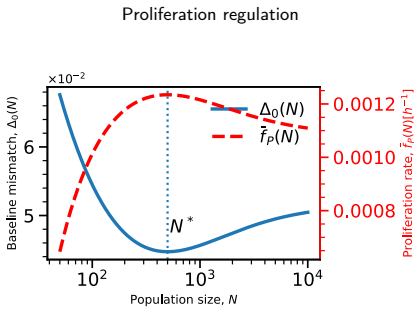
Bayesian cell sensing creates density-dependent growth

by Manish Kumar Gupta, Arnab Barua +1 more

Density-dependent growth emerges from Bayesian adaptation of phenotype

A model shows population size shifts phenotype matching, imposing quadratic penalties that explain observed tumor growth patterns.

Figure from the paper full image
abstract click to expand
Classical models often describe early tumor expansion as exponential growth, yet experimental and clinical evidence shows that tumor populations can deviate systematically from this behavior, exhibiting density dependent proliferation, cooperative low-density growth, intermediate growth optima, and finite upper growth bounds before resource limitation or spatial crowding dominate. These observations raise a common question: why should the per capita growth rate depend on population size? Here, we propose that sensing mismatch provides a mesoscopic link between environmental change and density dependent proliferation. We model the cell as a Bayesian adaptive agent whose coarse grained phenotype evolves on an intrinsic regulatory landscape, while environmental sensing reweights phenotypic states according to how well they account for the extracellular signal statistics generated by the population. In the weak phenotype signal correlation regime, the stationary phenotype distribution is Gaussian, with its mean displaced from the proliferative optimum by a population size-dependent baseline information mismatch. This displacement produces a quadratic penalty in the per capita growth rate. Coupling the framework to a receptor ligand decoding model, we show that basal readout error and nonlinear receptor saturation make the mismatch nonmonotonic in population size. This single structure gives rise to an intermediate proliferation optimum, an Allee survival threshold, a tissue specific capacity, and superlinear scaling at low density. A phase diagram in the phenotype signal coupling and readout-error plane partitions growth into regulated, uncontrolled, and arrested regimes. Thus, density dependent proliferation need not be imposed phenomenologically, but can emerge from cellular sensing and inference.
0
0
physics.bio-ph 2026-06-25

Viral capsid height spread traces to stiffness differences

by Yeraldinne Carrasco Salas (Phys-ENS), Kassandra Gérard (Phys-ENS) +5 more

Mechanical control of the height distribution of adsorbed viral capsids

Thermal fluctuations fall short; AFM data plus shell model point to intrinsic mechanical variation from surface features on identical partic

Figure from the paper full image
abstract click to expand
The height of viral particles adsorbed on solid substrates is governed by the equilibrium between adhesion energy and capsid elasticity. While the resulting height distribution has been proposed as a non-invasive proxy for viral sti$\hookleftarrow$ness, the physical origin of its broadening is unknown. In this work, we combine Atomic Force Microscopy (AFM) topography measurements of Adeno-Associated Virus (AAV8) and Hepatitis B Virus (HBV) with a theoretical shell-deformation model to identify the determinants of height dispersion. By modeling the viral shell as an elastic body under adhesive load, we evaluate the relative contributions of thermal fluctuations and mechanical heterogeneity to the observed height dispersion. We demonstrate that thermal noise is insu cient to explain the width of the distribution. Instead, the data support a model where the dispersion in height arises from the intrinsic variability of capsid sti$\hookleftarrow$ness. This variability is associated to the surface inhomogeneity of identical capsids. Our results validate that, when this inhomogeneity is accounted for, the height distribution of adsorbed particles provides a quantitative measure of viral mechanics without the need for individual nanoindentation.
0
0
q-bio.QM 2026-06-24

Neural net recovers phase-field energy terms from snapshots

by Callum Marsh, Radek Erban +1 more

Extended pseudo-spectral physics-informed neural networks for phase-field models

ESPINN identifies bulk chemical potential and gradient coefficients even from one noiseless snapshot pair on the Cahn-Hilliard equation.

Figure from the paper full image
abstract click to expand
Phase-field models play a central role in the continuum description of phase separation, in which the bulk free-energy density and the interfacial thickness parameter determine pattern formation and microstructural evolution. In practice, these constitutive quantities are rarely known a priori and must be inferred from limited dynamical observations. In this work, an extended pseudo-spectral physics-informed neural network (ESPINN) framework is developed for the inverse identification of phase-field models from transient snapshot data. It enables the simultaneous recovery of both the bulk chemical potential and unknown gradient coefficients. Numerical experiments on the one-dimensional Cahn-Hilliard equation demonstrate accurate and statistically stable reconstruction in the noiseless regime, with substantial constitutive information recoverable from even a single snapshot pair. In the presence of noise, reconstruction accuracy degrades gracefully, and increasing the number of snapshots improves robustness by reducing variance across runs. These results establish ESPINN as a data-efficient and physically consistent approach for learning free-energy structure in continuum models of phase separation.
0
0
physics.bio-ph 2026-06-24

Intelligent active particles form swarms and predator-prey groups

by Priyanka Iyer, Segun Goh +1 more

Emergent Self-Organisation of Intelligent Active Particles

Non-reciprocal sensing and fluid interactions generate flocks and complex navigation from local rules alone.

Figure from the paper full image
abstract click to expand
Intelligent active particles are characterized by self-propulsion, directional sensing of their environment, information processing, decision making and goal-oriented self-steering. This implies, in particular, the prevalence of non-reciprocal interactions, and the importance of information propagation through agent groups. Examples include biological systems (cells, insects, birds, fish, pedestrians) as well as engineered systems (nano- and microbots). As many agents move in an aqueous medium, hydrodynamic interactions strongly affect the dynamics. The emergent dynamics includes the formation of swarms and flocks, predator-prey behavior, and the navigation in complex environments.
0
0
cs.RO 2026-06-24

RL agents learn universal strategies in blood capillary simulations

by Jannik Drotleff, Samuel Tovey +5 more

Reinforcement Learning Enables Autonomous Microrobot Navigation and Intervention in Simulated Blood Capillaries

Trained agents block and unblock flow to restore healthy throughput without retraining.

Figure from the paper full image
abstract click to expand
Autonomous microrobots navigating biological vasculature could enable targeted drug delivery and thrombolysis, yet training control policies for realistic environments remains an open challenge. Prior reinforcement learning (RL) studies of microrobotic navigation have been limited to idealized geometries that omit complex hydrodynamic flow fields, confined branching structures, and dense cellular obstacles found in vivo. Here, we develop a physically grounded simulation of a blood capillary network, incorporating realistic hydrodynamic flow fields, explicit red blood cell dynamics, and anatomically derived branching geometry, and train deep RL agents to navigate it via chemotaxis. We systematically map the physical limits of navigation across robot size and swimming speed, revealing a forbidden regime where Brownian motion and flow overcome propulsion. Successful agents independently discover multiple universal strategy types, including run-and-rotate and energy-efficient search-and-sit policies, regardless of robot parameters. Without retraining, these agents perform targeted blocking and unblocking of capillary flow, restoring throughput to healthy baseline levels. These results establish RL as a viable framework for developing autonomous microrobotic intervention strategies in complex biological environments.
0
0
physics.bio-ph 2026-06-24

Crimped fibrils let tendons stretch farther without high strain

by Zoe C. Godard, Sarah L. Waters +1 more

Uniaxial poroelastic tendon model with crimped fibre recruitment

A poroelastic model shows gradual fibril recruitment slows relaxation on unloading and produces load-dependent hysteresis.

Figure from the paper full image
abstract click to expand
Fibre recruitment plays an important role in tendon and other biological soft tissue mechanics. Due to their large water content, a popular modelling approach for tendons is poroelasticity. Within this framework some tendon studies have included fibres, though none have included crimped fibre recruitment. We present a one dimensional poroelastic model in which the solid skeleton is composed of a soft neo-Hookean background matrix and crimped fibrils which do not bear load (FIB model). As the tissue is stretched, fibrils are straightened and contribute to load bearing. The fibre-reinforced tissue is compared to a tissue with a purely neo-Hookean (NH) skeleton in response to a uniaxial constant applied load (loading) and release of the load (unloading). The system dynamics are governed by a diffusion equation where the diffusion coefficient depends on stiffness. Within tendon parameter ranges, the FIB model is softer than the NH model, and so approaches steady state more slowly during loading. The presence of crimped fibrils allows the tendon to stretch further without excessively straining the fibrils or the NCM, providing a natural protection mechanism for the tendon's structural components to load, in agreement with experiments. During unloading, the FIB model is much slower to relax as the tissue softens due to fibril re-crimping. This asymmetry in loading and unloading manifests as a hysteresis loop in the stress-strain curve averaged over the tendon. The hysteresis is reduced with increasing applied load. The inclusion of fibrils allows for clearer biological interpretation and potential comparison to data. While the stress law employed in this study is bespoke for the application at hand by accounting for crimp and fibril recruitment, other fibril constitutive laws can readily be considered and incorporated into this framework.
0
0
physics.chem-ph 2026-06-24

Causal directions link protein principal components

by Debarshi Banerjee, Ali Hassanali +1 more

Investigating causality between principal components in protein dynamics

MD trajectories yield directed networks among motion modes that covariance methods miss

Figure from the paper full image
abstract click to expand
Principal component analysis (PCA) is widely used to characterize collective protein motions from molecular dynamics (MD) simulations. While PCA identifies the dominant modes of structural fluctuation, it does not reveal whether different principal components (PCs) causally influence each other. Here, we investigate this question using a recently introduced causal-discovery framework [Del Tatto et al, PNAS 2024], which allows to infer putative causal asymmetries between high-dimensional time series. We apply this approach to long-timescale MD trajectories of two proteins. By analyzing relationships among PCs, we construct directed networks describing how PCs influence one another across time scales. These directional relationships, whose existence is a necessary condition for the presence of a causal link, are not captured by conventional covariance-based analyses and provide information that is complementary to PCA and Time-lagged Independent Component Analysis (TICA). Our results suggest that our causal inference approach can uncover previously hidden aspects of the dynamical organization of protein motions and offer a new perspective on this very popular class of collective variables.
0
0
math.NA 2026-06-23

Diagonal Frog schemes preserve nonnegativity in Fokker-Planck equations

by Andrey Itkin

Diagonal Frog: High-order positivity-preserving FD schemes for anisotropic Fokker-Planck equations

Second-order methods stay stable and mass-conserving for wide Peclet numbers without flux limiters

Figure from the paper full image
abstract click to expand
The Fokker-Planck equation is fundamental to statistical mechanics, yet in settings with multiple state variables, anisotropic (cross-) diffusion, and jumps, conventional discretizations frequently produce non-physical negative probability densities. Building on the operator approach of "A. Itkin, Pricing derivatives under Levy models. Modern finite difference and pseudo-differential operators approach, Springer, 2017, ISBN 978-1-4939-6792-6", we introduce a family of "Diagonal Frog" discretizations whose spatial operators are eventually M-matrices (EM-matrices). Although these operators lack a local M-matrix structure, positivity of the directional sub-operators emerges in the spirit of Zeno's paradox: the matrix exponential, assembled as the limit of infinitely many ever-smaller substeps, is provably nonnegative after a short transient even though no single substep is. For the mixed-derivative block, whose generator is not eventually nonnegative, positivity instead rests on a factorized resolvent solver and holds conditionally, on an explicit step-size window; discrete mass is conserved exactly by the splitting for every step size. The resulting schemes are second-order accurate in time and space and require O(m 2 N + m 3) operations per time step, where m is the dimension of the Krylov subspace used to apply the exponential. As stress tests, we solve a two-dimensional anisotropic Fokker-Planck equation in the strong cross-diffusion regime against an exact Gaussian reference, a Kramers escape problem in a double-well potential, and an advection-dominated problem, and observe that the schemes remain stable, nonnegative, and mass-conservative for a wide range of P\'ecklet numbers (so, don't need any flux limiter). Finally, we extend the construction to multidimensional processes and to the backward Kolmogorov equation with jumps.
0
0
cond-mat.stat-mech 2026-06-23

Time integration creates hyperuniform scaling in stochastic Turing patterns

by Anirban Mukherjee, Hong-Yan Shih

Effective hyperuniformity in time-integrated stochastic Turing patterns

Number variance in large windows falls as 1/R toward a constant floor over ranges that expand near the instability, without fine-tuning.

Figure from the paper full image
abstract click to expand
Demographic noise generates stochastic Turing patterns even when reaction-diffusion systems are deterministically stable. We show analytically and verify numerically in the Levin-Segel model that temporal integration of configurations reveals emergent large-scale organization. The intensive number variance in a window of size $R \gg 1$ approaches a finite reaction-kinetic floor as $1/R$, over a spatial range growing by orders of magnitude near the Turing instability. This yields an effectively hyperuniform, fine-tuning-free regime previously unidentified in non-conserved multispecies stochastic systems.
0
0
cond-mat.stat-mech 2026-06-23

Noisy single-molecule data underestimates entropy production

by Todd R. Gingrich, Oleg A. Igoshin +2 more

Thermodynamic inference from noisy single-molecule time series

Both inference-then-estimate and direct-on-Y strategies produce lower bounds on true dissipation

Figure from the paper full image
abstract click to expand
Single-molecule or single-particle tracking measurements inherently yield noisy microscopic trajectories, often significantly constrained by the diffraction limit and by the finite rate at which photons are emitted and counted. Here we study systematically the resulting effects of finite spatial and temporal resolution on one's ability to discern and quantify the arrow of time in microscopic trajectories. Given an experimental time series Y(t) degraded by noise, we consider the problem of estimating the entropy production associated with the corresponding microscopic variable X(t) using two strategies. The first attempts to infer the statistical properties of X(t) from those of Y(t) before estimating the entropy production. The second uses the experimental observable as a proxy for the true microscopic observable, with the entropy production estimator applied directly to Y(t). We prove that both strategies result in lower bounds on the true entropy production. Importantly, noise-degraded observables Y(t) undergo non-Markovian dynamics even when X(t) are Markovian, and non-Markovian entropy production estimators are advantageous. We further note nontrivial interplay between spatial and temporal resolution: in the presence of detection noise, improving the temporal resolution alone may lead to poorer rather than better entropy production estimates.
0
0
physics.bio-ph 2026-06-23

DNA hairpin sensor separates intercalators from groove binders

by Kiara Thompson, Kian Barnes +6 more

Electrochemical DNA Hairpin Sensors for Differentiating Small Molecule Intercalation from Minor Groove Binding

Four-base stem version matches known affinities and shows larger signal gains for intercalation than for minor groove binding.

Figure from the paper full image
abstract click to expand
Small molecule double-stranded DNA intercalators have significant potential for therapeutic applications. However, screening for and confirming a drug candidate's intercalative behavior remains labor-intensive and costly. To address this, we investigated the sequence and biophysical parameters that affect the performance of electrochemical DNA hairpin sensors for streamlined identification of structural intercalators. These sensors utilize oligonucleotide (oligo) sequences that form hairpins upon intercalator binding. The 3prime end of the oligo is modified with alkylthiol linkers for gold electrode surface monolayer self-assembly, while the 5prime end carries a methylene blue redox reporter. Hairpin formation enhances electron transfer between methylene blue and the gold electrode, which can be detected via voltammetry. We tested seven hairpin structures varying in stem length and sequence. Our optimal oligo, HP4, features a four-base-pair stem and responds to five DNA intercalators over a broad detection range, with EC50 in close agreement with published affinity (KD) values for these interactions. We further demonstrate HP4s ability to discriminate intercalator binding from a series of minor groove binders through significant differences in signal gain upon incubation. Altogether, our strategy establishes a platform for identifying intercalative compounds that should support the development of DNA-targeting therapeutics.
0
0
physics.bio-ph 2026-06-23

Rotational invariants yield 3D images of aerosolized viruses

by Tim B. Berberich, Johan Bielecki +13 more

Imaging aerosolized viruses with an X-ray free-electron laser using single-particle rotational invariants

They expose capsid asymmetries, internal density changes, and vertex extensions in PR772 particles from XFEL patterns at modest resolution.

abstract click to expand
X-ray free-electron lasers (XFELs) enable diffraction-before-destruction measurements of individual nanosized bioparticles, making it possible to study the structure and dynamics of non-crystalline targets under near-biologically relevant conditions. In this work, we employ rotational invariants for model-guided and ab initio three-dimensional (3D) structure determination of aerosolized bacteriophages PR772 measured with an XFEL. The rotational invariants derived from diffraction patterns collected during multiple independent XFEL experiments facilitate the characterization of similarities and structural variations within the measured ensembles of PR772 particles. Despite modest experimental resolution, we can identify various structural features of the viruses, including the asymmetric nature of capsid distortions from the perfect icosahedral shape, density variations in the encapsulated content, and an extension at one of the capsid vertices. Rotational invariants combine structural sensitivity with applicability to forward-scattering modeling and inverse problem solving, making them powerful tools for probing the structure and temporal evolution of nano- and bioparticles using an XFEL, particularly enhancing the fidelity of structural analysis at limited experimental resolution.
0
0
physics.bio-ph 2026-06-23

Entropy-weighted cycles replace calendar time for measuring aging

by Mesfin Taye

A Nonequilibrium Internal-Time Model of Aging: Entropy-Normalized Biological Proper Time and Repair Bifurcations

A new coordinate tracks the fraction of a reference lifetime entropy budget consumed by physiological activity.

Figure from the paper full image
abstract click to expand
Chronological age is an incomplete coordinate for aging. Individuals and species sharing the same calendar time can differ substantially in physiological reserve, molecular damage, mortality hazard, and remaining lifespan. The Principle of Biological Time Equivalence (PBTE) offers a thermodynamic reformulation: biological aging is governed by the accumulation of \emph{internal} physiological time rather than chronological time alone. Building on prior PBTE work, this paper defines the internal-time coordinate $\theta(t)=\int_0^t f(s)\dd s$, where $t$ is chronological time and $f(s)$ is an instantaneous physiological frequency (for example heart rate or respiratory rate), so that $\theta$ is the accumulated count of physiological cycles. Its entropy-normalized extension is $\Tsig(t)=\int_0^t[\sigz(s)/\sref]f(s)\dd s$, where $\sigz(s)=\dd\Sigma/\dd\theta$ is the entropy produced per physiological cycle (the entropy cost per biological tick), $\Sigma$ is cumulative entropy production, and $\sref$ is a fixed reference entropy cost per cycle used as a normalizing unit. The normalized PBTE age $\APBTE(t)=\Tsig(t)/\Nref$ measures the fraction of a reference entropy--cycle budget consumed, where $\Nref$ is the reference number of entropy-weighted cycles available over a lifetime. The manuscript is explicitly theoretical: no empirical cohort is analyzed, and the numerical demonstrations are synthetic stress tests rather than validation.
0
0
physics.bio-ph 2026-06-22

Method extracts geometric phase from noisy sperm and nematode data

by Pyae Hein Htet, Kenta Ishimoto

Data-driven geometric phase in biological locomotion

Koopman autoencoder recovers limit cycles and perturbation sensitivities using only gauge theory, no mechanics needed.

Figure from the paper full image
abstract click to expand
Geometric phase quantifies net locomotion in dissipative media via gauge theory, but linking this theoretical quantity to noisy, sparse, and weakly periodic biological shape data is challenging. We develop a theory-guided, data-driven Koopman autoencoder to recover the limit cycle embedded in imperfect cyclic data and extract shape gaits and geometric phase from sperm and nematode data. We introduce a geometric phase sensitivity function that quantifies responses to shape perturbations and reveals mechanical information using only gauge-theoretic structure, without assuming mechanical laws.
0
0
physics.bio-ph 2026-06-22

Glass stretching creates physical model for tissue deformation

by Gopika Madhu, Carolyn Delli-Santi +4 more

Glass-based physical models for tissue mechanics

Heated glass monolayers capture eccentricity changes in Trichoplax adhaerens cells, enabling accessible mechanics experiments.

Figure from the paper full image
abstract click to expand
Techniques from glass art and fabrication provide a controllable physical platform for studying tissue mechanics in simple organisms. Here, we use glass-based physical models to investigate tissue deformation in the marine organism Trichoplax adhaerens. Previous studies have shown that the epithelial tissues in T. adhaerens undergo large deformations and form fracture holes under mechanical loading, exhibiting a ductile-to-brittle transition at fast loading rates. To model these behaviors in a tunable and experimentally accessible system, glass is shaped into tissue-like monolayers in a glass studio, heated to its specific process temperature, and subjected to controlled stretching. Rapid cooling arrests the deformed configurations, providing snapshots of tissue-like strain states under load. Under lateral and radial stretching, we quantify changes in the area and eccentricity of individual "cells" in the glass models, and found that eccentricity increases after stretching. We further use tensegrity-based models to quantify deformations in the cellular geometry of the glass tissues, enabling direct comparison between experiments and simulations. The model captures the principal experimental deformation patterns, but underestimates the magnitude of the observed eccentricity changes. Our results demonstrate that glass-based physical models provide an experimentally accessible platform for studying tissue-scale deformation and mechanical behavior, while supporting interdisciplinary approaches that connect methods in the arts and sciences.
0
0
cond-mat.soft 2026-06-22

Photoswitching generates pressure pulses matching fractional wave model

by Tom Rosenstein, Philipp Zolthoff +2 more

Generation of two-dimensional pulses in lipid monolayers by rapid photoswitching

Optical azoPC isomerization creates 2D waves whose propagation is captured without free parameters in narrow channels.

Figure from the paper full image
abstract click to expand
We study pressure pulse generation and propagation in lipid monolayers by an experimental approach employing rapid photoisomerization of photoswitchable lipids (azoPC). This allows us to generate longitudinal surface pressure pulses by optical flash excitation in both free and constrained layer geometries. We compare the observed pulse shapes with a theoretical approach based on a nonlinear fractional wave equation for a surface displacement field, where a fractional time derivative term captures the hydrodynamics of the monolayer subphase. We explore channel geometries of different lengths and widths and find quantitative agreement between theory and experiment regarding pulse speed and pulse shapes. For narrow channels, we employ a one-dimensional version of the fractional wave equation to study pulse propagation without any fit parameters by using the pressure signal at a close pressure sensor as boundary condition to predict the pressure signal at a second far sensor. A full two-dimensional description can capture all effects arising from the channel geometry for wider channels using one common set of fit parameters for the pulse excitation that can be applied to all geometries. The nonlinearity in the fractional wave equation plays no role in explaining the observed pulse shapes because pulse amplitudes generated by azoPC photoswitching remain very small.
0
0
cond-mat.soft 2026-06-22

Nonlocal sensing yields hybrid phase separation with internal order

by Benchang Wu, Ziluo Zhang +3 more

Nonlocal Sensing Drives Hybrid Phase Separation in Brownian Matter

Brownian particles form dense domains containing bubbles and patterns whose scales come from the sensing range alone.

Figure from the paper full image
abstract click to expand
Matter can organize not only through forces, but also through the information its constituents acquire from their surroundings. Here we use perceptive Brownian particles as a minimal model to isolate nonlocal sensing as an organizing principle for nonequilibrium matter. The particles undergo purely Brownian motion, with no mechanical interactions, self-propulsion, alignment, or auxiliary fields. Their only coupling is informational, through diffusivity regulated by density measured over a finite perception zone. Whereas local sensing, when unstable, produces conventional long-wavelength demixing, nonlocal perception restructures the instability spectrum, introducing finite-wavelength patterning and nonlinear bubbling instabilities. More fundamentally, it reshapes the ordering pathway by assembling a cascade of instabilities: macroscopic demixing creates dense domains, finite-wavelength modes pattern them internally, and nonlinear feedback hollows them into void bubbles. This produces hybrid phase separation, where a macroscopic dense phase coexists with a dilute background while retaining ordered internal microstructure, whose symmetry, anisotropy, and length scales are selected by the perception kernel. These results establish information acquisition as a constitutive principle of nonequilibrium matter, capable of governing both phase stability and the dynamical pathways through which order emerges.
0
0
physics.bio-ph 2026-06-22

Histidine mutation lowers barriers in UPO enzyme simulations

by Hanna-Friederike Poggemann, Tim Dirks +2 more

Computationally guided modifications of CviUPO to improve catalytic activity

QM/MM calculations on CviUPO find the cysteine-to-histidine swap reduces activation energies, while aspartic acid swap raises them

Figure from the paper full image
abstract click to expand
Unspecific peroxygenases (UPOs) are promising biocatalysts that selectively oxyfunctionalize saturated hydrocarbons using only hydrogen peroxide as a co-substrate. Peroxide-induced enzyme inactivation makes targeted enzyme engineering essential to mitigate this effect and also enhance catalytic performance. To meet this need, systematic approaches are used, including extensive database studies for rational enzyme design, as well as computational enzyme engineering. In this study, we followed the latter strategy and explored the possibility for computationally-guided modification of UPOs. Specifically, our focus was on uncovering the influence of active site amino acids on the catalytic activity of the enzyme CviUPO. Two mutations were introduced close to the active center, and the changes in the energy barriers leading to the activated complex were investigated in detail by Quantum Mechanics/Molecular Mechanics Nudged Elastic Band simulations. Our studies revealed that a change of the glutamic acid, assisting the catalytic cycle, by the shorter aspartic acid, leads to an increased reaction barrier, probably decreasing the catalytic activity of the enzyme. Exchanging the heme-anchoring cysteine group by a histidine exhibited promising behavior as the energy barriers decreased significantly. However, it is possible that the histidine modification also alters the reaction behavior of the peroxygenase, turning it into a peroxidase, an aspect that so far could not be confirmed beyond doubt. Simulations alone cannot conclusively determine whether substrate specificity and reactivity are maintained in the modifications tested. Nevertheless, our results highlight the importance of spin states and active pocket hydration for the catalytic reaction and demonstrate why a synergistic approach of theoretical predictions and experimental verifications is required for efficient enzyme engineering.
0
0
cond-mat.mtrl-sci 2026-06-19

Silicon biosensors reach lab sensitivity but stall before clinic

by Ang Liu, Jun Cao +2 more

Silicon Nanostructures for Biosensing: From Field-Effect Transistors to Photonic Resonators, and the Long Road to the Clinic

Review finds three decades of platforms limited by variability, fouling, and drift; integration and benchmarking offer the clearest path for

Figure from the paper full image
abstract click to expand
Silicon has a unique combination of properties that makes it one of the best material choices for biosensor platforms: it is inexpensive, its native oxide is atomically smooth, its fabrication processes are CMOS-compatible and have been refined for more than three decades, and it can support many transduction mechanisms in biosensor design. Over the past thirty years, researchers and engineers have used silicon nanostructures to produce ion-sensitive transistors, ultrasensitive nanowire field-effect biosensors, refractive-index-based porous silicon films, microring photonic resonators, suspended cantilevers, luminescent quantum dots, and solid-state nanopores. These device families have demonstrated successful sensing capabilities at the single-molecule, single-virus, or sub-femtomolar level under laboratory conditions; however, they have rarely been widely deployed in clinical assays. This gap is mainly caused by several well-characterized bottlenecks: for nanowire BioFETs, device variability and Debye screening; for porous silicon, fouling, pore wetting, and surface stability; for silicon photonics, thermal drift, spectral readout, and packaging; and across all platforms, calibration, reproducibility, and validation in real biofluids. In this review, we trace the development of silicon biosensors from their early stages to their current state, search and organize the literature focusing on the three most mature platforms and a set of emerging directions, summarize and compare the performance and bottlenecks of different platforms, and argue that progress over the next decade will come primarily from integrated readout, interface engineering, and systematic benchmarking rather than from the discovery of new silicon nanostructures.
0
0
q-bio.PE 2026-06-19

Quantum Game of Life fits West Nile virus spread in Italy

by Andrea Fontana, Simone Tambascia +4 more

West Nile virus outbreak in Italy modelled with the quantum Game of Life

Matches cumulative infections at local and regional scales by optimizing only mosquito birth and removal rates.

Figure from the paper full image
abstract click to expand
In the last years, an anomalously high spreading of West Nile virus (WNV) has been observed in Italy, with particularly high peaks of infections in southern Lazio, Campania and Veneto regions. The main disease vector for WNV is represented by Culex pipiens mosquitoes, which spread human infections through their bites. Here, we investigate WNV fever epidemic diffusion during summer season 2025 in Italy through a computational approach based on a quantum version of the Game of Life (GOL) cellular automaton model. Specifically, human dynamics evolves according to the GOL rules, while stochastic dynamics of disease vectors, i.e., mosquitoes, as well as their interaction with humans, simultaneously occur. We show that this model fits the curves of cumulative infected individuals with high accuracy, either at local and average-regional level, with only optimization of mosquito birth and removal rates parameters. Furthermore, leveraging model flexibility, we show that changes in model parameters values elucidate system response to environmental variations. For instance, we quantify, e.g., the impact of mosquito spreading containment measures or sudden mosquito increasing abundance due to climatic and ecological changes. Overall, we provide a general, quantitative description of WNV infection spreading in Italy which could represent a supportive tool to test different environmental scenarios and could be useful to devise strategies for decision makers to monitor disease vector dynamics and to control consequent virus diffusion.
0
0
physics.bio-ph 2026-06-19

Nanolipogels keep friction at 0.0001 while releasing drugs

by Panpan Zhao*, Avijit Mondal +4 more

Cytoskeleton-inspired, adaptive nanolipogels as superlubricating delivery vehicles

Internal network recovers lubrication after overload, enabling joint therapy vehicles that do not rupture.

abstract click to expand
Phosphatidylcholine liposomes fill a special niche in alleviating osteoarthritis via intra-articular (IA) administration, attributed to their superlubricity at the articular cartilage surface, but their co-utilization as drug delivery vesicles in such therapy remains challenging as they may rupture under mechanical stress. Here, we describe cytoskeleton-inspired, supramolecular, self-assembled nanolipogels (NLGs), encompassing liposome-encased nanogels with a dynamic network formed by hydrogen bonding and cation-pi interactions, as a platform for simultaneous robust drug-delivery and massive reduction of interfacial frictional dissipation. We use a surface force balance to assess such dissipation at the sub-nanometer level, elucidating the mechanism involved, and atomic force microscopy to probe the NLGs structural stability. A useful proxy for the interfacial dissipation is the coefficient of friction, which remains as low as 10-4 at contact pressures at least up to 2 MPa, while under higher pressures exceeding the H-bonding energy density it increases abruptly and irreversibly to the still-low value 10-2. Under sustained sliding above this threshold, however, friction gradually decreases again, indicating recovery of the lubricating interface. Molecular dynamics simulations identify the compressive stress decrease due to hydrogen-bond rupture/rearrangement within the nanogel as a buried supramolecular transition associated with lubrication breakdown and recovery, while cargo release during sliding emphasizes the drug-delivery potential of such NLGs. These findings reveal how supramolecular core-shell reinforcement regulates load-bearing hydration lubrication, and provides a framework for designing adaptive biomimetic lubricants which are at the same time load-bearing intra-articular cargo-delivery vehicles.
0
0
cond-mat.soft 2026-06-19

Epithelial cells form mixed polar-nematic defect phases

by Tianxiang Ma, Niels de Graaf Sousa +3 more

Epithelia Realize Nematopolar Topological Defect Structures

Shape-based measurements show coexistence of integer and half-integer defects whose density is tuned by stiffness and adhesion.

Figure from the paper full image
abstract click to expand
We introduce a shape-based polar order parameter that captures the structural asymmetry of cells within epithelial monolayers. By combining bright-field imaging and traction force microscopy, we demonstrate that shape polarity serves as a unifying biomechanical metric, integrating the physical information encoded by nematic directors, principal stresses, and cellular motion. Furthermore, we show that the tissue organizes into a mixed polar-nematic phase, characterized by the coexistence of integer ($\pm 1$) and half-integer ($\pm 1/2$) defects. Through mechanical perturbations, we demonstrate that both substrate stiffness and cell-cell adhesion modulate the density of these excitations and the length of domain walls binding like-signed positive half-integer defects. Using a minimal continuum model of polar-nematic active matter, we establish that this mixed phase is fundamentally driven by the interplay of active stresses and polar-nematic elasticity. These findings provide a direct experimental evidence that epithelial monolayers behave as nematopolar matter, in which coupled polar and nematic elastic interactions jointly shape the active state
1 0
0
physics.soc-ph 2026-06-18

Sign error inverted US east-west axis in circadian health study

by Jose Maria Martin-Olalla, Jorge Mira

Methodological guidelines for circadian modeling of Daylight Saving Time: application to the United States

Correct longitude offset needed to match local solar time with social clock for daylight saving analyses.

Figure from the paper full image
abstract click to expand
Modeling the circadian impact of seasonal clock changing requires precise synchronization between solar and social time. This report critiques a recent study that associated disease prevalence in the United States with seasonal clock exposure. We identify a fundamental computational error in which a sign reversal of the longitudinal offset effectively inverted the US East-West axis, cross-correlating local health data with the circadian burden of hypothetical locations on the opposite side of a time zone. We outline the methodology for a correct modelization of the circadian process in the context of US geography.
0
0
cond-mat.stat-mech 2026-06-18

Hyperstatistics models Brownian motion and brain dynamics

by Lucas Squillante, Samuel M. Soares +2 more

A few remarks on hyperstatistics and some applications

The framework handles non-Boltzmann-Gibbsian behaviour in physical and biological systems at high accuracy.

abstract click to expand
In a recent paper [arXiv:2604.24783 (2026)], we have proposed a general approach to treat systems with inherent non-Boltzmann-Gibbsian behaviour. Given the extremely high accuracy of our approach, we have adopted the term hyperstatistics. We have applied such a statistical mechanics approach, i.e., hyperstatistics, to the discharge of a capacitor in a RC series circuit, pumping of $^4$He of a closed cycle cryostat, midrapidity data of $p$-Pb collisions at the LHC, as well as for the distribution of accelerations in turbulent systems. Here, we discuss into more details the ground of hyperstatistics. We demonstrate the versatility of hyperstatistics upon applying it to the velocity autocorrelation function in Brownian motion and also regarding its potential to describe brain dynamics.
0
0
cond-mat.soft 2026-06-18

Weak cylinder deformation creates new sphere-packing phases

by Xuebin Wang, Jiahao Guo +1 more

Chiral Packings in Cylinders are Ultrasensitive to Confinement Deformation

Elliptic models of imperfect tubes show packings lose or gain hierarchical chirality and produce non-chiral double chains.

Figure from the paper full image
abstract click to expand
Sphere packings in circular cylinders have attracted substantial research interest, among which the discovery of chiral helical structures is the most iconic. However, recent experimental results on zebrafish do not match the known packing structures in circular cylinders. To account for the inherent imperfections of biological tubes, we take elliptic cylinders as the canonical deformation of circular cylinders and investigate the densest packings of hard spheres in them using simulation, theory, and experiments. Starting from the chiral structures in circular cylinders, we demonstrate that even a weak cross-sectional deformation can trigger entirely new phases, including ones that either eliminate global chirality or significantly complicate the chiral structures. This reveals the significant effect of cylindrical anisotropy. The new helical phases under anisotropic confinement remain chiral and develop hierarchical periodic structures, which are difficult to obtain by simulations but are predicted by our newly developed theory for helical phases in elliptic cylinders. The theory also predicts double oscillated-chain phases without chirality, which perfectly match the simulations. Our work offers fresh insights into understanding packings in anisotropic cylinders, which will help researchers to design new materials and to understand many living systems.
0
0
physics.bio-ph 2026-06-18

Human groups evolved external entropy production for fire control

by Yasuji Sawada, Kenji Toma

External Entropy Production and Human Evolution toward Multi-body Life

Coupled model of brain and group growth ties 2.5-million-year expansion to multi-body life alongside internal entropy production.

Figure from the paper full image
abstract click to expand
Ancient human beings started "external entropy production" in a late stage of evolution, in addition to the internal entropy production by which energy was dissipated within the body of life, as previously described consistently with the birth of life by maximum entropy production principle. In this paper, the mechanism for development of external entropy production, which is strongly related with use of tools and controlling fire, is theoretically investigated. Archaeological data show that the brain size of ancient human beings started rapid increase around 2.5 million years ago when the usage of tools and control of fire started. It may be natural to assume that the rapid growth of brain size is related to the growth of awareness which helped cooperation with the other human beings for control of fire. Coupled equations for the growth rate of brain including awareness and for growth rate of size of the interacting human beings are analyzed. The external entropy production per one human being which is directly related to the group size of cooperating human beings is estimated to increase as about 20 million years in the beginning from the critical time. This evolution created coexistence of internal entropy production of traditional multi-cellular life and new external entropy production of multi-body life. A psychological problem due to the coexistence of two kinds of entropy production mechanism in human being and concept of technologies based on the present thermodynamic evolution theory are discussed. It is suggested that the evolutionary understanding of the origin of global warming based on the external entropy production may be important to create an useful countermeasure.
0
0
physics.bio-ph 2026-06-18

Symmetric relaxation stabilizes 2D cell networks against T1 events

by Kai Xu, Lifan Weng +3 more

A symmetric relaxation method for entire two-dimensional cellular networks and its implications

Angle-symmetry method reproduces von Neumann-Mullins law and links T1 to force imbalance overcoming stabilization

abstract click to expand
To simulate the relaxation of an entire 2D cellular network, this study proposes a symmetric relaxation method for both inner and marginal vertices. The relaxations of these two types of vertices are determined by the central angle symmetry of associated cells and the angle symmetry at each vertex, but with different major considerations. Trimmed Voronoi networks with varying irregularity are used as initial networks for the relaxation simulation. In particular, we propose a regular hexagon disordering method to generate Voronoi networks and find that the inner cells of networks with an irregularity value of one exhibit a conserved edge number distribution, as found in other 2D cellular networks. Simulation results agree with the von Neumann-Mullins law for both inner and marginal cells, and a modified equation including a geometric correction term significantly improves prediction quality. The Aboav-Weaire law and Lewis law are also reproduced, with the latter showing that relaxed cells tend to approach the ellipses' maximum inscribed polygons. Analysis of edge length, interior angle, and shape index reveals that symmetric relaxation inhibits T1 (neighbour exchange) topological transitions by reducing short edges while increasing area disparity among neighbouring cells. The findings suggest that T1 events may be triggered when force disequilibrium overcomes the stabilising effect of symmetric relaxation, providing a possible mechanistic explanation for T1 in 2D foams.
0
0
physics.chem-ph 2026-06-17

Jeffreys measure normalizes Bayesian ensemble posteriors

by Ivan Gilardoni, Giovanni Bussi

Bayesian Sampling of Structural Ensembles: The Role of Ensemble-Counting Measures

Flat measure in Lagrange space produces non-normalizable distributions for finite trajectories; Jeffreys restores consistency and averages

Figure from the paper full image
abstract click to expand
Structural ensemble refinement is widely used to integrate molecular simulations with experimental measurements. While most applications focus on the maximum-a-posteriori (MAP) ensemble, Bayesian sampling of the posterior distribution can provide uncertainty estimates and posterior averages for arbitrary observables. A notable step in this direction was introduced by the Bayesian Energy Landscape Tilting (BELT) framework, where sampling is performed on a family of maximum-entropy ensembles parametrized by Lagrange multipliers. Here, we show that Bayesian sampling in this setting requires an explicit choice of ensemble-counting measure. In particular, the flat measure in Lagrange-multiplier space used in the original BELT formulation leads to a posterior distribution that is formally non-normalizable for finite reference trajectories. We propose the Jeffreys measure as an invariant ensemble-counting prescription, restoring normalizability in the finite-sample situations considered here, and providing a consistent definition of posterior averages. Using both an analytically tractable Gaussian model and maximum-entropy refinement of RNA oligomer simulations, we compare different ensemble-counting measures and show that they can significantly affect Bayesian estimates. The resulting methodology has been implemented in the \texttt{MDRefine} software package.
0
0
cond-mat.stat-mech 2026-06-17

Exact cluster counts derived for 1D ring lattice gases

by Thomas Alfonsi, Jérôme Dorignac +2 more

Equilibrium cluster statistics of cooperative and anticooperative binding on finite one-dimensional rings

Formulas for mean clusters and size distributions reveal parity effects near half filling under attraction or repulsion.

Figure from the paper full image
abstract click to expand
We study equilibrium clustering in a finite one-dimensional lattice gas of $L$ sites with periodic boundary conditions, as a minimal model for adsorption and binding on small ring-like substrates. Using a grand-canonical formulation with nearest-neighbor coupling, we derive exact finite-size expressions for the mean occupancy, the mean number of domain walls, and the mean number of clusters. Building on exact $k$-site correlation functions, we further derive expressions for the mean number of clusters of size $k$ and for two complementary size statistics: the cluster-size distribution, and the site-weighted cluster-size distribution. These observables characterize how spatial organization changes across attractive (cooperative) and repulsive (anticooperative) interactions, and highlight finite-size and parity-dependent effects of the underlying lattice, the latter being particularly pronounced near half filling in small systems. To access larger lattices without enumerating all $2^L$ microstates, we also develop a cluster-based combinatorial formulation in which configurations are classified by cluster counts and sizes, reducing the effective state space to a set whose size scales with integer partitions, $\approx e^{\sqrt{L}}$, rather than with $\approx e^{L}$. Taken together, our results provide exact benchmarks for finite periodic systems and suggest experimentally relevant cluster observables that complement occupancy-based measures of cooperativity, with particular relevance for binding on ring-like substrates for biological assemblies.
0
0
q-bio.CB 2026-06-17

Four regimes classify chemotactic fronts of mixed cell populations

by Giulia L. Celora, Marjorie Watts +2 more

A nonlinear theory for chemotactic fronts of mixed populations

Heterogeneity in diffusivity, consumption and sensitivity determines all possible density profile shapes in self-guided migration.

Figure from the paper full image
abstract click to expand
Collective migration of heterogeneous cell populations is central to many biological and physiological processes, including development and immune response. Recent experimental and theoretical advances have shown how asymmetric interactions with self-generated chemical gradients shape the spatial distribution of distinct cell types within migrating collectives. However, the principles governing robust spatial organisation of heterogeneous cell populations remain poorly understood. Here, we use asymptotic analysis to systematically derive a nonlinear analytical theory for heterogeneous cell collectives guided by self-generated chemotaxis. Our theory disentangles how heterogeneity in cell diffusivity, chemoattractant consumption, and chemotactic sensitivity shape the density profiles of migrating heterogeneous collectives, revealing four distinct dynamical behaviours that together capture all possible regimes. We calibrate our framework to experimental data on the co-migration of dendritic and T cells. We predict that this system operates in a parameter regime that balances intercellular mixing with T-cell localisation at the leading front of the migrating collective. Our theory reveals that this behaviour is enabled by intermediate long-range chemoattractant signalling generated through strong chemoattractant consumption by dendritic cells. Overall, our framework provides general principles for understanding how non-reciprocal chemical interactions shape robust collective migration in heterogeneous cell populations.
0
0
physics.bio-ph 2026-06-16

Active cell behaviors bypass passive sensing limits

by Andrew Mugler, Maria Rose

Cell sensing: from physical limits to active behaviors

Cells coordinate, reshape, update, and discriminate to amplify and share sensory data beyond physics alone.

Figure from the paper full image
abstract click to expand
Physics sets the information contained in the signals that cells sense. But cells are active, not passive, sensors. They shape and reshape both the environment and themselves. These active behaviors allow cells to amplify, redistribute, share, and prioritize sensory information, often surpassing or obviating passive physical limits. Here, we review recent results on active sensing. After describing classic and more recent limits to sensory precision, we focus on four ways that cells implement active sensing: coordinating with other cells, reshaping their environment, dynamically updating themselves, and discriminating signals. We conclude with potential future directions.
0
0
physics.bio-ph 2026-06-16

C++ platform adds real-time multi-camera previews to μManager

by Tianyi Zhao, Staffan Persson +1 more

ScopeOne: Flexible and C++-driven Microscope Control Platform

ScopeOne uses process isolation and shared memory to handle several cameras simultaneously without losing compatibility with existing device

Figure from the paper full image
abstract click to expand
Modern microscopy systems integrate heterogeneous hardware devices that require dedicated software for coordination. However, high-performance C++ implementations of microscopy control software remain scarce. We present ScopeOne, a C++ and Qt-based microscopy control software built on the MicroManager hardware abstraction layer. Through process isolation and shared memory, ScopeOne achieves simultaneous multi-camera preview with real-time image processing, while maintaining full compatibility with the {\mu}Manager device ecosystem.
0
0
physics.med-ph 2026-06-12

Beam-membrane model adds vocal fold posturing at low cost

by Mohamed A. Serry, Matías Zañartu +1 more

A beam--membrane biomechanical vocal fold model incorporating posturing and glottal conformation

Boundary moments from muscle activation let the reduced model reproduce glottal closure patterns seen in detailed simulations while running

Figure from the paper full image
abstract click to expand
The posture of the vocal folds produced by laryngeal muscle activation plays a central role in determining the dynamics of voice production. Abnormal vocal fold configurations are frequently associated with inefficient phonation and a variety of voice disorders. Although diverse glottal closure patterns have been observed clinically, the biomechanical mechanisms governing their dynamic behavior and resulting phonatory characteristics remain incompletely understood. Moreover, existing numerical models that incorporate the effects of the intrinsic musculature on posturing and glottal conformation are computationally expensive, which limits their suitability for large-scale parametric investigations. In this work, we introduce a computationally inexpensive vocal fold (VF) model wherein the body and cover VF layers are treated as a composite beam and a coupled membrane, respectively. Intrinsic laryngeal muscle activation, in addition to positioning the arytenoid cartilages and cricothyroid joint, introduces moments at the boundaries of the structure that influence glottal conformation. The model produces phonatory characteristics that are qualitatively consistent with those reported in high-fidelity finite-element models and clinical studies, thereby supporting its predictive capability while offering substantial computational advantage. The proposed framework provides biomechanical insights into the influence of incomplete glottal closure on phonation dynamics and may serve as a computationally tractable tool for investigating mechanisms underlying certain voice disorders.
0
0
physics.bio-ph 2026-06-12

Review connects bacterial cell motility to group behaviors

by Anna Mas (CBS), Antoine Le Gall (CBS) +1 more

Bacterial Motility Across Scales: Mechanisms, Live Imaging, and Quantitative Analysis

Imaging and analysis now link molecular machines to collective dynamics such as spreading and development.

abstract click to expand
Bacteria live in environments that are constantly changing. To survive, they rely on different motility systems that let them move, explore, and interact with their surroundings. These motility systems not only control the movement of individual cells but also give rise to collective behaviors such as coordinated spreading, cooperative predation, and multicellular development. Understanding these processes requires not only a description of the underlying molecular machines, but also quantitative observations spanning single-cell behavior and collective dynamics. Imaging approaches now make it possible to follow motility across scales, from molecular machines to bacterial communities, while computational analyses extract principles that link mechanisms to emergent dynamics. By combining molecular, behavioral, imaging, and analytical perspectives, this review provides an integrated view of bacterial motility that links single-cell behavior to community-level dynamics across scales.
0
0
cond-mat.stat-mech 2026-06-12

Proofreading raises both speed and accuracy when stall fluctuations are large

by Arup Biswas, L. Mahadevan

When proofreading improves both speed and accuracy

Exact renewal calculations show the reversal occurs once the coefficient of variation of stall times exceeds a threshold fixed by the error

Figure from the paper full image
abstract click to expand
Proofreading is generally thought to improve accuracy at the expense of speed. We show that this trade-off can be reversed in stochastic processes with long-lived stalled states. Using a non-Markovian renewal framework, we derive exact expressions for the error rate and completion time under proofreading for arbitrary stall-time distributions. Our analysis reveals that fluctuations in stall durations, rather than their mean alone, determine whether proofreading can simultaneously increase speed and accuracy. In the limit of strong stalling, this regime emerges when the coefficient of variation of the stall time exceeds a threshold set by the intrinsic error rate. These results provide a general criterion for proofreading in systems ranging from self-assembly and polymer replication to immune recognition and other nonequilibrium information-processing systems.
0
0
cond-mat.soft 2026-06-11

Pinned boundaries delay contraction in active gels

by Aniket Marne, James Clarke +7 more

Pinned Boundaries Delay Contraction and Shape Stress Relaxation in Active Gels

Internal stress accumulates before releasing through detachment and rupture, controlling how contractile materials behave under fixed edges.

Figure from the paper full image
abstract click to expand
Cells dynamically generate, transmit, and dissipate stress. Central to these processes is the actomyosin cortex, an active contractile material that drives cellular mechanical behavior. While prior studies have focused on freely contracting actomyosin systems, the role of mechanical constraints such as adhesion to boundaries remains less explored. To address this, we employ reconstituted actomyosin gels to investigate cellular contractility. We study contraction dynamics under pinned boundary conditions, where the gel is adhered transversely to two opposing surfaces, mimicking supracellular actomyosin networks in tissues and embryos. We find that pinned contraction leads to stress buildup, delaying contraction, producing intermittent dynamics, and generating spatially nonuniform strain fields. Stress is relieved through several pathways, including active-stress-driven symmetric constriction and defect-driven processes such as boundary detachment and internal rupture. We develop a hydrodynamic model incorporating elastic, viscous, and active stress contributions that distinguishes between stress-accumulation and stress-release phases and links variations in active stress to the observed intermittent dynamics. The model predicts distinct energy relaxation rates before and after detachment events, providing insight into stress dissipation. We compare experiments with numerical simulations, which reproduce the observed behavior and reveal how internal energy is generated and dissipated during stress buildup and relaxation. Together, our results demonstrate how boundary conditions and spatial heterogeneity govern the mechanical behavior of contractile active gels. These findings provide insight into stress regulation in cellular and tissue-scale systems and may inform the design of adaptive soft materials and bioinspired robotic systems.
0
0
cond-mat.soft 2026-06-10

Nonlocal curvature feedback keeps noisy filaments straight

by Ludwig A. Hoffmann, L. Mahadevan

How to grow a straight filament

Local rules still need orientation sensing to kill long-wavelength bends, while nonlocal sensing and substrate coupling suffice.

Figure from the paper full image
abstract click to expand
How can a growing biological filament remain straight despite stochastic fluctuations in growth? Motivated by filamentary structures that develop reproducibly across biological systems, we study the stability of a noisy, growing elastic filament regulated by feedback. We formulate a minimal model in which growth responds to the filament's strain, curvature, and orientation through local or nonlocal spatiotemporal feedback laws. Linear stability analysis identifies the conditions under which these feedback mechanisms stabilize a straight configuration. In the presence of noise, we show that purely local feedback requires orientation sensing to suppress long-wavelength instabilities, whereas nonlocal feedback allows stabilization through proprioceptive (curvature) sensing alone. Coupling to an elastic substrate further suppresses large-scale fluctuations. Our results establish minimal control strategies that ensure robust straight growth and suggest experimental signatures for identifying the feedback mechanisms underlying morphogenesis.
0
0
physics.bio-ph 2026-06-10

Motion polarizes actin regulator to trigger cell crawling

by Pierre Recho

Spontaneous polarization for protrusion-driven cell crawling

Minimal model shows feedback between boundary movement and chemical cue creates spontaneous motility above a critical activity level.

Figure from the paper full image
abstract click to expand
We propose a minimal one-dimensional continuum model for the spontaneous initiation of protrusion-driven cell crawling on a rigid substrate. The cell cytoskeleton is represented as a viscous actin meshwork that turns over in the bulk and polymerizes at two moving cell edges. Symmetry breaking arises from the feedback between cell motion, an external chemical regulator of actin nucleation, and actin polymerization at the cell fronts. When the cell moves, the regulator becomes polarized around the moving boundaries, thereby imposing different actin nucleation densities at the two edges. This generates unequal protrusive rates, which in turn reinforce motion and sustain the chemical polarization. Above a critical protrusive activity, the static symmetric state loses stability and the system undergoes a bifurcation toward a motile polarized state. Depending on how the external cue controls actin nucleation, the transition can be either supercritical or subcritical, leading in the latter case to coexistence between static and motile states. Using parameter values appropriate for keratocyte cells, the model predicts realistic crawling speeds and actin-density profiles, including asymmetric edge-localized density peaks. These results identify a generic mechanism by which external biochemical regulation of actin nucleation can trigger spontaneous motility along a one-dimensional track without requiring molecular motors, specific adhesion dynamics, deformable substrates, or pre-existing polarity.
0
0
cond-mat.soft 2026-06-10

NANOG forms self-limiting micelles that gel and stabilize DNA entanglements

by Amandine Hong-Minh, Yair Augusto Gutierrez Fosado +5 more

NANOG assembles into self-limiting aging micelles that drive a sol-gel transition and modulate DNA dynamics

At high concentrations the protein creates aging gels whose disordered domain drives the transition and may restrict genome motion in stem c

abstract click to expand
Proteins and nucleic acids form non-Newtonian liquids with complex rheological properties that contribute to their function in vivo. Here we investigate the rheology of the transcription factor NANOG, a key protein to maintain embryonic stem cell pluripotency. We find that at high concentrations, NANOG forms macroscopic aging gels that are dependent on its intrinsically disordered domain. By combining molecular dynamics simulations, mass photometry and Cryo-EM, we also discover that -- in contrast with unbounded condensates formed by other intrinsically disordered proteins -- NANOG forms self-limiting micelles with exposed DNA-binding domains. We show that these micelles can stabilize DNA entanglements and in turn modulate DNA dynamics. Based on our findings, we conjecture that NANOG may contribute to regulate gene expression by creating local gel-like environments that restrict genome dynamics and that its aging may ingrain mechanical memory in gene regulatory networks.
0
0
cond-mat.soft 2026-06-10

Cell sliding propels diatom chains faster than waves

by Julien le Dreff, Blaise Delmotte

Moving backward to go faster: Diatom-inspired sliding reveals efficient modes of locomotion

Internal shear yields higher speeds and efficiency at long wavelengths matching natural shapes

Figure from the paper full image
abstract click to expand
Across biological scales, from sperm cells to whales, locomotion commonly relies on undulatory gaits, in which traveling deformation waves interact with the surrounding fluid to generate thrust opposite to the direction of wave propagation. In viscous environments, microorganism locomotion is classically understood in terms of undulatory bending of slender filaments such as flagella, with optimal propulsion achieved when the deformation wavelength is comparable to the swimmer length. Inspired by diatom colonies, we identify a fundamentally different swimming mechanism based on sliding between neighboring elements within a chain. We show that sliding between stacked elongated cells generates internal shear that drives propulsion opposite to classical undulatory swimming, while achieving higher speeds and greater energetic efficiency. Remarkably, optimal performance occurs at wavelengths much larger than the chain length and at cell aspect ratios consistent with those observed in natural diatom colonies, suggesting that hydrodynamic efficiency may constitute an evolutionary selective pressure in diatom chains. Together, these results identify sliding as a previously overlooked mode of locomotion in multicellular assemblies and suggest new design principles for efficient bio-inspired microswimmers and swarm robotic systems.
0
0
cond-mat.soft 2026-06-10

Swim stress excluded from local stress tensor in inertial active particles

by Chandranshu Tiwari, Sunil P. Singh +1 more

Virial stress in systems of active Brownian particles in the presence of translational and rotational inertia

Periodic systems follow an inertia-dependent equation of state; confinement breaks it via wall polarization, yet swim stress stays out in bo

Figure from the paper full image
abstract click to expand
We elucidate the stress in a system of active Brownian particles augmented with translational and rotational inertia (ABP+TRI). Stress tensors are derived for periodic systems as well as systems confined between walls by employing Lagrange's equations of motion of the first kind for the rotational motion. Using Langevin simulations of an ideal active gas in two dimensions, we confirm the existence of an equation of state for periodic systems that depends on translational and rotational inertia in general. Confinement implies a strong polarization of the propulsion direction near a wall and an enhanced density, both of which increase with increasing rotational inertia. This affects the local stress tensor normal to the confining walls, leading to a breakdown of the equation of state. Yet the local stress in the bulk part of the confined systems is identical with that of the periodic system. Importantly, for both kinds of boundary conditions, the so-called swim stress is not included in the local stress tensor; thus, in general, the swim stress is not representative of the stress in systems of ABP+TRIs.
0
0
cond-mat.soft 2026-06-10

Finite relaxation rate drives phase sequence in active matter

by Rajneesh Kumar, Subhransu Sekhar Mishra +1 more

Finite-Time Orientational Relaxation Restructures Collective Motion in Polar Active Matter

Varying alignment timescale in simulations yields isotropic, banded, cross-sea, polar, and micro-clustered states.

Figure from the paper full image
abstract click to expand
We introduce a Langevin formulation of Vicsek-like active particles in which orientations evolve through finite-rate relaxation toward the local mean direction, with alignment strength $J$ and rotational diffusivity $D_r$, thereby combining Vicsek-type local consensus with XY-like orientational dynamics. Using large-scale numerical simulations, we determine the nonequilibrium phase diagram as a function of activity and alignment rate. Increasing the alignment rate drives a sequence of transitions from a homogeneous isotropic state to polar bands, a cross-sea phase of intersecting bands, a homogeneous polar state, and ultimately a micro-clustered regime. The isotropic-to-polar transition is strongly first order, as evidenced by Binder cumulants and bimodal distributions of local polarization and density, indicating coexistence of gas-like and liquid-like regions. Near the onset of collective motion, band size increases with activity but depends non-monotonically on alignment rate. Further increasing the alignment rate drives the system through the cross-sea and homogeneous polar phases before enhanced density fluctuations lead to micro-clustering. Our results demonstrate that finite-time orientational relaxation acts as a control parameter that qualitatively restructures collective behavior in polar active matter.
0

browse all of physics.bio-ph → full archive · search · sub-categories