Accelerator theory and simulation. Accelerator technology. Accelerator experiments. Beam Physics. Accelerator design and optimization. Advanced accelerator concepts. Radiation sources including synchrotron light sources and free electron lasers. Applications of accelerators.
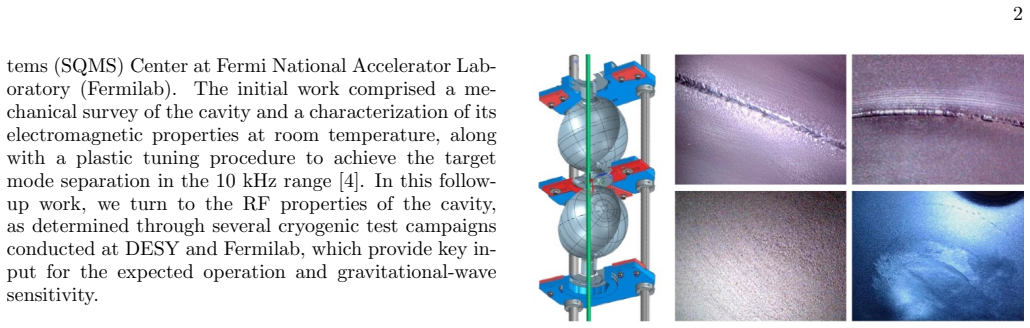
Superconducting radio-frequency (SRF) cavities are promising resonant sensors for gravitational-wave detection in the kHz-MHz frequency range. We report the cryogenic RF characterization of a prototype superconducting niobium cavity with an unconventional geometry designed for narrow electromagnetic mode separation. Following an adapted surface preparation procedure, cryogenic tests were performed at Fermilab and DESY at temperatures down to 2\,K. Mechanical tuning at room temperature achieved a mode splitting of approximately 11\,kHz at cryogenic temperature. High electromagnetic quality factors consistent with previous prototype cavities were measured. The measurements further revealed phase transfer characteristics relevant for stable low-level RF control as well as indications of mode coupling potentially caused by one-point multipacting. In addition, first cryogenic measurements of the mechanical eigenmodes yielded mechanical quality factors significantly below commonly assumed theoretical values. These results demonstrate the successful application of established SRF preparation and characterization techniques to a non-standard resonator geometry and provide important experimental input for the development of future SRF-based gravitational-wave detectors.
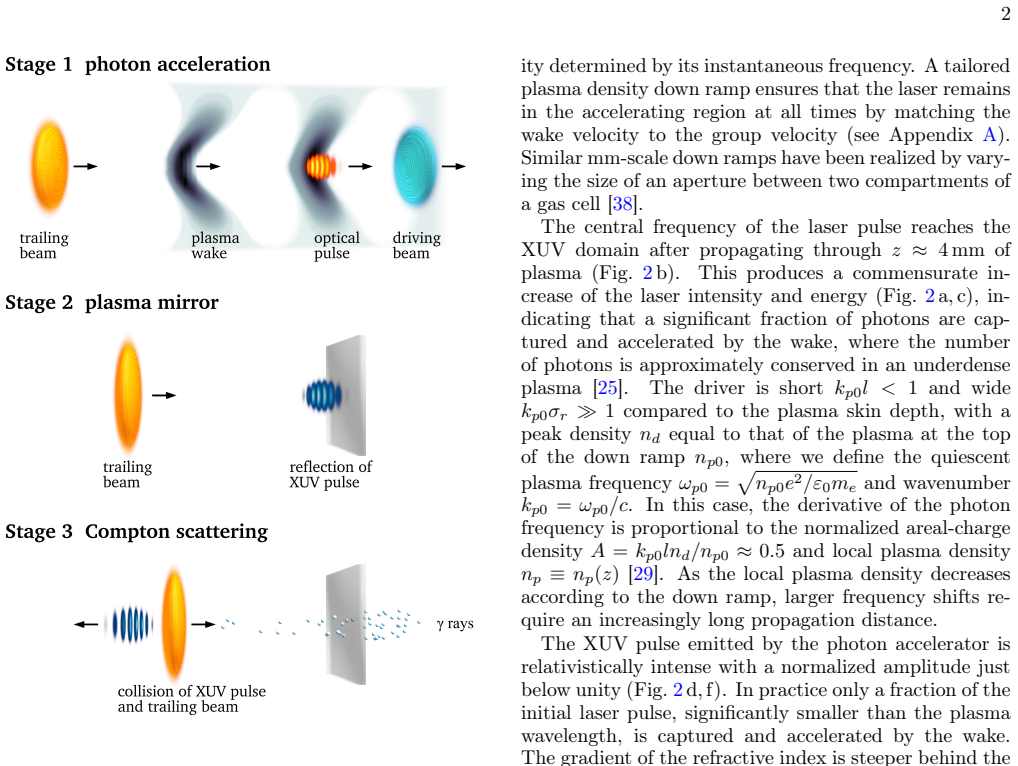
High-brilliance sources of polarized gamma rays are widely sought after to pump and probe matter at subatomic length scales. However, existing accelerator facilities and optical lasers cannot reach a sufficiently high center-of-mass energy to produce polarized, multi-GeV gamma rays from unpolarized electrons via inverse Compton scattering. Here we propose a scheme where the optical laser photons are first "accelerated" to the extreme ultraviolet in a beam-driven plasma wakefield, then reflected by a plasma mirror back onto a trailing electron beam, producing a flash of gamma rays. Numerical simulations demonstrate this light source can achieve a high peak-brilliance (10^25 photons/s mm^2 mrad^2 0.1% BW) and a high degree of circular (95 %) or linear (77 %) polarization at multi-GeV photon energies, paving the way for the production of spin-polarized positrons and tests of light-by-light scattering.
Exceptionally, a bunched electron beam can get trapped by its own spontaneously emitted synchrotron undulator radiation in the self-interaction scheme of TES (Tapering Enhanced Superradiance). In this scheme, excess radiative energy is extracted from the beam by tapering the undulator after the bunch trapping. To avoid slippage of the radiation wavepacket away from the bunch, the interaction takes place in a waveguide with a slow group velocity mode. Here we study the time domain waveform of the Electric Field and the radiation energy buildup in this scheme. We compare its analytical theory and numerical simulations in an ideal exemplary setup based on a rectangular waveguide and a planar undulator
We demonstrate a versatile platform for high-power attosecond soft X-ray pulse generation with polarization and photon energy control at the SwissFEL free-electron laser. An isolated high-current spike embedded within a long electron-beam pedestal emits soft X-ray pulses with single-spike spectra and multi-electronvolt bandwidths in the tunable magnetic fields of Apple-X undulators. Demonstrated pulse parameters include a photon energy range of 450--1070 eV, circular as well as linear polarization, and pulse energies from tens to above hundred microjoules. By tuning the longitudinal slice-dependent transverse electron beam orbit we can rapidly switch between attosecond and few femtosecond pulse length. By exploiting magnetic chicanes in the undulator line we can produce two-colour pulse pairs with tunable delay or increase the pulse energy beyond 200~\textmu J through multi-stage amplification schemes. High-resolution longitudinal phase-space measurements and start-to-end simulations in addition to spectral measurements provide consistent evidence for attosecond-scale pulse durations. This unique combination of high pulse energy and polarization control of attosecond-scale soft X-ray pulses enables the element-specific investigations of spin and chiral dynamics on the natural time scale of electron motion.
Thin carbon-strip targets provide fast relative hadron beam polarimetry, but their response in intense relativistic bunched beams is not governed by local stopping-power heating alone. We develop a coupled response model that combines beam-target overlap, secondary-electron escape, retained heat, target motion, transient heat transport, RF-induced strip-end heating, beam-induced forces, resistance changes, and slack-strip deformation. RHIC target observations constrain the relevant motion, force, and nonlocal-heating scales and show that target survival depends on both beam-center heating and electromagnetic boundary conditions near the strip ends. Applying the model to Booster, AGS, RHIC, and EIC proton and $^{3}\mathrm{He}$ cases shows that the RHIC proton lifetime scale is reproduced at the order-of-magnitude level, while the RHIC target-holder fin results require the additional RF/end-heating mechanism. For EIC proton flattop operation, carbon-strip polarimetry may remain viable only with reduced dwell time, sufficient detector acceptance, and suppression of RF-induced end heating. For cooled-emittance $^{3}\mathrm{He}$, the calculated sublimation-loss scale is far beyond a straightforward RHIC-like carbon-strip extrapolation. Conventional carbon strips are therefore unlikely to remain viable for the most demanding EIC light-ion cases without major changes in target motion, target technology, or diagnostic concept.
Lambertson method is a classical approach that can indirectly measure the electrical center offset in the beam position monitor (BPM) due to imperfections in the pickup buttons. It applies to BPMs that are symmetric in both the horizontal and vertical directions. In this paper, we present our extension of this method to BPMs that are asymmetric in the horizontal direction, and we apply it to such BPMs in ALS Upgrade project at Lawrence Berkeley National Laboratory.
It is shown that, when high-voltage pulses (with a voltage amplitude exceeding 100 kV in centimeter gaps) with a leading edge duration of 1 ns or shorter are applied to gas-filled and vacuum electric discharge diodes, electrons with kinetic energies nominally exceeding the amplitude of the applied voltage are detected. In the experiments, electron beam attenuation curves were measured in absorbers consisting of Al foil of varying thicknesses. These curves were used to reconstruct the electron beam energy spectrum by regularizing the solution of an integral equation based on deep machine learning. The obtained spectra contain electrons with anomalously high energies, the proportion of which, depending on the conditions, can reach 25 percent. A control experiment with a long voltage pulse on a large-area vacuum diode (voltage 150 kV, pulse duration 35 microseconds, vacuum gap 12 cm, electrode area 75 x 15 cm2) showed that the proportion of electrons with anomalous energies is less than 0.2 percent. Experiments have shown that the main mechanism for generating electrons with anomalous energy is the spatio-temporal synchronism of the motion of fast electrons in the enhanced field formed in the gap by space charge.
Wakefield calculations are essential for analyzing beam-driven electromagnetic structures in accelerators. Although analytical wake functions are available for simple symmetric structures, complex geometries generally require mesh-based electromagnetic simulations, which provide finite-bunch wake potentials rather than point-charge wake functions directly. In this study, we present a systematic deconvolution-based method for extracting reliable wake functions from numerically calculated wake potentials using the prescribed drive-bunch distribution. The method is validated with a rectangular dielectric-lined waveguide (DLW), where the extracted longitudinal wake functions agree well with analytical solutions in both the short- and long-range regimes when the drive bunch is sufficiently short. The extracted wake function is further implemented in particle-tracking simulations, producing phase-space distributions consistent with those obtained using a built-in analytical wake-function model. The method is also applied to a modified rectangular DLW with a non-uniform horizontal dielectric distribution. The extracted longitudinal and transverse wake functions and corresponding beam impedances show that the dominant deflecting wakefield can be substantially reduced without significantly degrading the longitudinal wakefield. These results demonstrate the reliability and applicability of the proposed method for complex dielectric-loaded structures.
The nonlinear space-charge effect plays a significant role in high-intensity accelerators and has been extensively studied using multi-particle tracking methods. In this paper, we present a novel 2.5-dimensional symplectic space-charge solver specifically designed for long beam bunches. We begin by detailing its application to a transverse Gaussian density distribution under open boundary conditions in a straight system, where a semi-analytical expression is derived. We then demonstrate the solver's adaptation to arbitrary distributions in open space, as well as within rectangular and round conducting pipes. Finally, we discuss the extension of this solver to circular accelerator systems. This study shows that the fast 2.5-dimensional solver can be a good approximation to the fully three-dimensional solver for long bunches in large circular accelerators.
A critical review of the methodology used in F. Rathmann et al., Phys. Rev. Accel. Beams 29, 021001 (2026), to evaluate beam-induced depolarization of the Atomic Polarized Hydrogen Gas Jet (HJET) target at the Electron--Ion Collider (EIC) is presented. It is shown that several key assumptions underlying that analysis -- including the introduction of a photon emission threshold, the application of Fermi's Golden Rule to coherent hyperfine transitions, the interpretation of power broadening as a physical linewidth increase, and the treatment of spatial magnetic fields -- are either incorrect or internally inconsistent. As a consequence, the predicted large depolarization effects are demonstrated to be artifacts of the adopted methodology rather than genuine physical phenomena. A consistent quantum-mechanical treatment based on the time-dependent Schr\"odinger equation shows that beam-induced depolarization probabilities at the EIC are negligibly small.
Achieving a luminosity of $\gtrsim 10^{34} cm^{-2} s^{-1}$ in a $10 \text{ } TeV$ Muon Collider, given the short lifetime of a muon, requires reducing the 6D emittance of the muon beam through a process known as ionization cooling. In the final stage of this cooling process, the transverse emittance must be reduced to $22 \text{ } \mu m$, typically by allowing longitudinal emittance growth up to downstream acceptance limits. While the current International Muon Collider Collaboration designs involve $40 \text{ } T$ solenoids to reach the transverse emittance target, such high-field solenoids come with several challenges, including mechanical stress management, quench protection, and potential limitations in relying on High Temperature Superconductor technology. Designed as an alternative to using such solenoids while simultaneously reaching target transverse emittance, the previously proposed wedge-based, reverse emittance-exchange cooling scheme requires excellent dispersion suppression. In this study, we design and simulate a dispersion suppressor channel for the wedge-based final cooling design that reduces dispersion in the target direction to a target value of $D_x \sim 0.001 \text{ } m$.
Under certain conditions, a long particle beam self-modulates in a dense plasma, that is, it breaks down into a train of short, stable microbunches under the influence of its own wakefield. During this process, the beam also changes its radial profile: initially having a Gaussian shape, it evolves to a highly peaked equilibrium state with a density singularity on the axis. This change makes individual beam slices several times more efficient at exciting the wakefield. We have developed an analytical iterative model describing the transverse equilibrium state of the microbunches, which is applicable to most beam cross-sections. The model is based either on the conservation of the transverse adiabatic invariant or on empirically established relationships in cases where adiabaticity is violated. It predicts the radial profiles of beam density and wakefield potential, as well as the particle distribution in the transverse phase space. The model is benchmarked against numerical simulations and demonstrates a high degree of accuracy. In addition to the full model, we present simplified engineering formulas based on elementary functions that bypass iterative procedures
Talk outlines projects transforming the US's largest hadron facility and their effects on the accelerator community.
abstractclick to expand
The largest hadron accelerator facility in the US is undergoing radical changes and the undertaking of new HEP-driven neutrino research. This talk will discuss the wide-ranging projects and impacts to the accelerator community taking place at FNAL.
Slow extraction commissioning runs in 2025 and 2026 follow g-2 completion to enable 8 GeV beams.
abstractclick to expand
Following the successful completion of the Muon g-2 experiment run at Fermilab, the Muon Campus facility has been reconfigured from delivering 3 GeV muon beams to the g-2 storage ring to providing slow-extracted 8 GeV proton beam spills for the Mu2e experiment. The first full-scale commissioning run with slow extraction was conducted during the 2025 run, followed by the second run in early 2026. We present the results and current status of this commissioning campaign.
Conventional radio-frequency (rf) transverse deflecting structures provide high-resolution longitudinal beam diagnostics, but require externally generated high-power rf, waveguide distribution, synchronization and input coupling at the operating frequency. We propose design criteria for a beam-driven resonant passive transverse deflector that does not require an external rf source. A leading drive bunch excites long-range wakefields in an off-axis periodic copper structure and a delayed witness bunch experiences the transverse wake near a zero crossing. The concept is based on the large temporal slope available from high-frequency wake components. A structure designed for installation after the second bunch compressor in the three-bunch-compressor layout of the European XFEL is optimized to place the zero crossing of the drive-bunch-induced transverse wake potential approximately one rf-bucket spacing of the 1.3 GHz linac, behind the drive bunch. The selected geometry produces a multi-mode transverse kick dominated by TM-like modes. We use time-domain wake simulations, frequency-domain decomposition, cell-number scaling, mechanical-tolerance scans, orbit-offset studies and uniform thermal scaling to determine the operating point and its sensitivity. For this geometry, the zero crossing occurs at s0 = 230.6 mm, with a per-cell temporal slope of Scell = 1.186 mV/(pC fs cell). For a compact 1 m structure operated with a 250 pC drive bunch and a 700 MeV witness beam, the estimated temporal resolution is about 33 fs.
The comparison isolates repeatable design and assembly practices that later high-beta projects can apply before construction starts.
abstractclick to expand
This document presents a deliverable of the project Innovate for Sustainable Accelerating Systems (iSAS), funded by the EU under its program HORIZON-INFRA-2023-TECH-01 via grant agreement n{\deg}101131435 (deliverable D16, WP5). It contains an analysis on elliptical cryomodules developed for the European Spallation Source (ESS) and a benchmark of high-beta cryomodules across six leading international facilities.
This paper presents SuperCond-GNN, a graph neural network-based surrogate model for predicting the voltage distribution in high-temperature superconducting (HTS) magnets. HTS magnets are modeled as lumped-element equivalent circuits and mapped onto graph representations, enabling message passing GNNs to learn the electrical response as a function of circuit topology, material properties, and operating current. As a proof of concept, tape stacks of up to 10 tapes are considered across a range of circuit topologies and operating conditions. The surrogate is trained on data generated from circuit simulations and achieves a mean MAPE of 4.3 % within the prescribed design space. The predicted nodal voltages enable fast and scalable inference of current redistribution and local operating conditions across a wide range of circuit configurations. The effect of incorporating physics-informed regularization via Kirchhoff's current law is also evaluated, and generalizability to unseen topologies is assessed through zero-shot inference and few-shot fine-tuning. While demonstrated on tape stack circuits, the graph-based framework is topology-agnostic and naturally extensible to more complex HTS cable and magnet configurations, offering a scalable alternative to conventional circuit solvers for downstream applications such as design space exploration, current sharing analysis, and real-time magnet monitoring.
Compact electron linear accelerators are being increasingly investigated as enabling platforms for localized X-ray generation and energy-controlled irradiation, due to the demand for a reduced footprint and improved beam control. In this work, a conceptual compact LINAC architecture with a fixed total length of 0.5 m is investigated through comprehensive Monte Carlo beam dynamics simulations, focusing on the comparative performance of two operating modes delivering electron beams at 60 keV and 300 keV, respectively. The study aims to isolate energy-dependent beam transport effects within an identical lattice configuration, emphasizing transverse and longitudinal phase-space evolution, emittance growth, beam envelope stability, and target spot formation. Particle tracking is performed using a statistical Monte Carlo framework incorporating RF cavity acceleration, simplified quadrupole focusing, and space-charge-induced diffusion effects. Transverse and longitudinal phase spaces are analyzed at multiple locations along the accelerator, and key beam quality metrics are extracted at the exit. The results demonstrate that low-energy operation at 60 keV is strongly influenced by collective effects, leading to pronounced emittance growth and halo formation, whereas the 300 keV mode exhibits significantly enhanced beam rigidity, improved phase space preservation, and a compact beam spot at the target.
Transverse emittance is one of the central figures of merit for charged-particle beams because it connects the microscopic phase-space distribution to macroscopic accelerator performance. This report introduces the trace-space description of emittance, relates it to the Courant-Snyder formalism and the second-moment beam matrix, and then follows the experimental logic behind common diagnostics. Emphasis is placed on how profile measurements, masks, drifts, quadrupole scans, and transverse deflecting structures convert otherwise inaccessible angular or slice information into measurable beam sizes.
Powder spreading and layer deposition are fundamental stages of Powder Bed Fusion (PBF) technologies and play a critical role in determining process stability and final component quality. This chapter examines the mechanisms governing powder-bed formation, highlighting the interactions between powder characteristics, process parameters, and machine architecture. Particular attention is devoted to the influence of particle size distribution, morphology, cohesion, flowability, layer thickness, recoater velocity, and environmental conditions on powder-bed quality. The resulting powder-bed is discussed as a process state variable whose characteristics, including packing density, surface coverage, effective layer thickness, and spatial homogeneity, directly affect energy absorption, melt-pool stability, defect formation, and mechanical performance. The chapter also reviews the application of the Discrete Element Method (DEM) for modelling powder spreading phenomena and quantifying powder-bed quality metrics. Finally, the role of powder reuse, lifecycle management, and future developments involving process monitoring, digital twins, and data-driven optimization strategies is discussed, emphasizing the growing importance of powder engineering in advanced metal additive manufacturing.
We propose a noninvasive SQUID-based polarimeter for the polarized proton beam in the Electron-Ion Collider (EIC) Hadron Storage Ring (HSR), exploiting the collective magnetic dipole moment of the bunches rather than scattering. The six-snake HSR lattice has synchronous-particle spin tune $\nu_s = 1/2$, placing the in-plane spin-precession signal at half the revolution frequency ($\sim$39 kHz), in the DC SQUID band. Three pickup channels (cosine-$\theta$ and sine-$\theta$ saddle loops for the transverse components, a coaxial axial gradiometer for the longitudinal one) reconstruct the full polarization vector $(P_x, P_y, P_z)$ in two complementary modes. Static mode, the default for continuous noninvasive monitoring, reads all three components: $P_y$ at the revolution frequency and the residual in-plane components at $\nu_s f_\mathrm{rev}$, bunch by bunch over an hours-long fill, including $P_z$, inaccessible to single-spin scattering polarimetry by parity conservation. Dynamic mode gives a precise polarization-magnitude measurement: a longitudinal kicker tips a small fraction of the polarization into the horizontal (ring) plane to produce a free-induction-decay (FID) signal, and many phase-locked tip-$\pi$-echo-restore cycles are summed coherently via a matched filter across all bunches, with $\mathcal{O}(\alpha^2/\pi^2) \sim 10^{-4}$ loss per cycle, negligible over a full $\delta P/P = 1\%$ measurement. For tipping angle $\alpha = 30$ mrad, polarization $P = 0.7$, and effective rms spin-tune spread $\sigma_{\nu_s}^\mathrm{eff} = 10^{-3}$ (coherence time $\sim$2 ms), the integration time to reach $\delta P/P = 1\%$ is about 18 s at injection and 5 min at flattop. The architecture extends to deuteron and $^3$He beams via species-specific spin-magnetic factors, with applications to storage-ring EDM searches.
Conditioning, the progressive increase of voltage-holding through the controlled application of fields, is an important and widely used process for bringing high-field and high-voltage devices up to their full operating parameters. Here, a study is presented on how conditioning can vary within a device, specifically, when there is a spatial variation in the surface electric field. What has been observed in high-field pulsed direct-current electrodes and radio-frequency structures is that locations exposed to higher fields exhibit a greater tendency to breakdown, but this increase is counteracted by an increased conditioning rate. This interplay explains the observed breakdown locations and provides important insights into the mechanisms underlying both conditioning and breakdown. This study combines Monte Carlo simulations with experimental results from pairs of high-field electrodes with a radially varying surface electric field. Results are presented from a high-field pulsed DC system, in which the position of each breakdown during conditioning was recorded by triangulation using a pair of cameras, and the results are compared with Monte Carlo simulations.
Laser wakefield accelerators (LWFAs) provide extremely large accelerating gradients for compact electron accelerators and photon sources but are limited by dephasing, where trapped electrons outrun the accelerating phase of the wakefield. Flying-focus pulses can eliminate dephasing by driving a wake at the vacuum speed of light, but these pulses involve tradeoffs such as varying spot size, long duration, or large plasma volume. Here we show that a spatiotemporally structured laser pulse propagating in a plasma waveguide can drive a wakefield at the vacuum speed of light while maintaining a constant spot size and ultrashort duration. The pulse is formed by superposing plasma-waveguide modes with appropriately selected frequencies. Compared with flying-focus approaches, the waveguide substantially reduces the required plasma volume. Scaling laws and quasi-3D particle-in-cell simulations show that the single-stage energy gain increases linearly with the number of modes used to construct the pulse, enabling larger energy gains or shorter stages than standard LWFA.
High-field conditioning is the process by which radio-frequency structures in particle accelerators and other high-gradient devices reach their operating fields, yet the underlying physical mechanism remains an open question. Models and indirect measurements point to subsurface dislocation dynamics, but large-area structural measurements have been missing. We present electron backscatter diffraction measurements spanning millimeter-scale regions on a copper cathode conditioned at pulsed direct-current fields up to $\sim$80~MV/m in a sloped-anode geometry, which imposes a known gradient of field exposure across a single electrode. Across nine regions of interest spanning this exposure range, the mean intragrain misorientation of field-exposed regions exceeds that of unexposed references by $\sim$75\%; the difference is reproduced by three independent misorientation metrics and confirmed by Kolmogorov--Smirnov tests. To our knowledge, this is the first large-area observation of structural differences between conditioned and unconditioned regions of a high-field electrode. The misorientation separates into three tiers (high-field center and edge, low-field periphery, and unexposed reference) that match the spatial profile of the conditioning-state variable $E_S$ predicted by Monte Carlo simulations. These observations point to the evolving subsurface dislocation population as a candidate physical basis of conditioning.
We review beam-quality physics in laser-driven (LWFA) and beam-driven (PWFA) plasma wakefield accelerators through the symmetry group of the idealised blowout wake -- axisymmetry $\mathrm{SO}(2)_\phi$, adiabatic longitudinal translation, and propagation-direction parity. Transverse perturbations of the wake are classified by an integer azimuthal multipole order $m$ labelling the irreducible representations of $\mathrm{SO}(2)_\phi$, with the lowest beam-quality observables coupling at a specific multipole: the bunch centroid at $m=1$, cross-plane emittance coupling at $m=2$. A symplectic analogy relates transverse matching to longitudinal beam loading. Several phenomena common to LWFA and PWFA -- hose instabilities, pulse-front-tilt jitter, spot-asymmetry emittance growth, polarisation-dependent centroid motion, resonant cross-plane mixing -- populate the two lowest non-trivial $m$-channels and admit a unified discussion. The positron-witness problem reorganises in the same language: each known mitigation abandons one specific feature of the uniform-density blowout, drawn from a finite set. The classification also raises the possibility of an $m=3$ response channel whose magnitude remains open. We note the connection to symmetry-equivariant Bayesian optimisation of plasma accelerators.
The strong electric fields from tightly-focused and ultrashort laser beams have always been discussed as a way to accelerate charged particles without any need for a medium or external cavity. Radially-polarized light is one way to do this, motivated by the emergence of longitudinal electrical fields with tight focusing. However, the laser pulse will generally quickly overtake the electrons under its influence, and every-other half-cycle will decelerate the electrons in effect partially reversing the acceleration. In this work we present the effect of optical aberrations, primarily spherical aberration, and how despite their purely spatial nature they can significantly optimize the net acceleration, and advantageously allow for longer pulses to drive this optical field-based process. We discuss the optical physics responsible for this increase in performance and find optimal aberration profiles using a stochastic algorithm.
Conductor-on-round-tube (CORT) cables are a potential solution for carrying AC power in a small cross-section. Due to the geometry of the cable and the helical arrangement of the coated conductors (CC), the current follows a non-trivial pattern inside each CC. For instance, for the case of a single-layer cable, the current flow is mostly axial along the outer face of the CCs and mostly azimuthal along their inner face. Such a current distribution, known as the Garber current pattern, affects the transport AC losses. In numerical models, commonly adopted simplifications are either based on straight conductors or infinitely thin CCs. Such approaches neglect the Garber current pattern and thus misrepresent both the detailed current flow within the CC and the resulting 3D distribution of the fields. In this work, the detailed 3D current distribution in the CCs is investigated in a one-layer CORT cable, as a function of the cable geometrical parameters such as the conductor thickness, the pitch angle, and the gap between adjacent CCs. In particular, the impact of the Garber current pattern is studied on the two largest contributions to the AC losses, namely the surface losses (associated with the penetration of the component of the magnetic field parallel to the wide faces of the superconducting layer) and the edge losses (associated with the penetration of the perpendicular component of the magnetic field occurring in the vicinity of the gaps between the CCs). The detailed distribution of the currents in the CCs is examined and its relationship with the different AC loss mechanisms is established. This study is carried out by means of an effective 2D model that uses a system of coordinates conforming with the helical structure of the cable.
Sub-femtosecond electron beams are powerful probes of ultrafast electronic, atomic, and nuclear dynamics, and promising drivers for ultrashort radiation generation from the extreme-ultraviolet to gamma-ray regimes. However, producing such beams at hundred-MeV energies with pC-level charge remains challenging. Here we propose a two-dimensional beam-compression scheme based on transverse--longitudinal coupling, in which dispersive beam optics convert the small transverse emittance of modern electron beams into an ultrashort longitudinal duration. Linear analysis and particle tracking show that, after the dominant longitudinal and energy-spread contributions are cancelled, the compressed bunch length is governed primarily by transverse beam quality and collective-effect growth. We further derive and verify a scaling law showing that, in the relevant parameter range, collective-effect-induced bunch-length degradation increases approximately linearly with bunch charge and decreases with beam energy. Start-to-end simulations of a realistic injector-to-compressor beamline produce a 200 MeV, pC-level bunch with an rms duration of 0.45 fs and a peak current of about 3.5 kA. Jitter studies indicate that sub-femtosecond performance is maintained for most error seeds. These results suggest a feasible route toward compact, high-energy attosecond electron beam sources and may provide a basis for future sub-femtosecond radiation sources based on undulator emission or inverse Compton scattering.
In this paper, we study Mahalanobis-guided latent out-of-distribution (OOD) detection for test-time RL controller switching in nonlinear time-varying systems. RL controllers can quickly control high-dimensional systems within the training distribution, but their performance can degrade when time-varying dynamics produce unseen observations. We consider a combined ES--DRL controller, where RL provides fast in-distribution actions and bounded extremum seeking (ES) provides robust model-independent control under OOD operation. The key challenge is deciding when to switch. We train a variational autoencoder (VAE) on in-distribution beam-profile observations and use Mahalanobis distance in the VAE latent space to detect OOD beam profiles at test time. This OOD decision sets a binary switch that selects either the RL controller or the ES controller. We evaluate the approach in safety-critical particle accelerator control. In this setting, spatial magnet motion creates OOD beam profiles that were not seen during RL training. Visualization of the VAE latent space shows that the proposed method identifies this OOD scenario and provides an interpretable signal for switching between RL and ES in the combined controller.
This paper reviews the main types of radio-frequency powering systems which may be used for accelerators. It gives essentials on vacuum tubes, including tetrodes, klystrons and inductive output tubes, and essentials on transistors. Basics of combining systems, splitting systems and transmission lines are discussed, including RF power couplers.
We calculate the low-temperature superheating field $B_{\rm sh}$ of clean superconductors near the boundary between type-I and type-II superconductivity, with particular emphasis on Nb. The calculation is based on the self-consistent nonlinear nonlocal Eilenberger theory and the linear stability analysis of the Meissner state. For a Nb-like material with $\kappa_{\rm GL}=0.7$, we obtain $B_{\rm sh}\simeq 290\,{\rm mT}$ at $T/T_c=0.2$, using $B_{c0}\simeq 200\,{\rm mT}$. This value is substantially higher than the value obtained by naively extrapolating the Ginzburg--Landau result near $T_c$ to $T\ll T_c$. For a TESLA-shaped Nb accelerator cavity, it corresponds to an intrinsic Meissner-stability limit of about $67\,{\rm MV/m}$.
Modification of superconductor-dielectric interfaces is known to strongly impact coherence times of superconducting quantum devices. This relationship is thought to arise from differences in the concentration of "two-level system" defects in the disordered dielectrics and superconductor-dielectric interfaces; these defects couple to electromagnetic modes in the device and cause dissipation. Zirconium oxide barrier layers on niobium have emerged as a promising pathway to low-loss interfaces in recent years, evidently due to the crystalline nature of these layers in comparison to the amorphous niobium native oxide. We explain the unique ability of zirconium oxide to form a crystalline layer, to maintain a sharp interface with metallic niobium, and to prevent niobium oxide re-growth in terms of the chemical properties of ZrO$_2$ and the Nb-Zr-O ternary system. We demonstrate a new method to grow air-stable zirconium oxide layers on niobium with a higher level of crystallinity and a sharper oxide-metal interface than previously shown, and provide the first comprehensive microscopic analysis of ZrO$_2$ capping layer properties. These developments pave the way toward vital performance advances in superconducting quantum devices.
This chapter introduces the fundamental principles of metrology and the concept of measurement uncertainty. It explains the role of measurement in engineering and manufacturing, outlines the distinction between error and uncertainty, and presents standard methods for evaluating uncertainty, including the GUM framework, uncertainty budgets, and Monte Carlo simulation. Practical examples and industrial standards are discussed to illustrate real-world applications.
Storage-ring-based fully coherent light sources, including steady-state microbunching (SSMB), as well as compact seeded FELs driven by laser plasma accelerators, typically have relatively large intrinsic energy spreads. Extending the spectral reach of these facilities toward the X-ray regime represents a major challenge, as existing seeded schemes require rather extreme parameters to generate appreciable microbunching at high harmonics. In this Letter, we propose an echo enhanced strong focusing scheme that employs transverse-longitudinal coupling together with the beam echo effect to simultaneously resolve the energy spread bottleneck and enable efficient high-harmonic generation. This approach substantially relaxes the requirements on both the intrinsic energy spread and the transverse emittance, paving the way for soft X-ray production using relatively weak laser modulation. Based on this scheme, we further present an SSMB storage ring capable of generating kW-level average power 6.7 nm soft X-ray radiation.
We derive the vertical chromaticity $\xi_y$ of the Fermilab Muon g-2 storage ring in closed analytic form. Expanding the Hamiltonian as a Taylor polynomial in the dynamical variables and integrating the equations of motion order by order, we obtain the vertical second-order aberrations of the homogeneous magnetic dipole ($\mathtt{DI}$) and the combined-function dipole-and-electrostatic-quadrupole element ($\mathtt{DIQ}$) used in the muon $g{-}2$ ring. Composing the per-element maps over the periodic dispersion orbit yields a closed-form expression for the vertical chromaticity $\xichromy$ of the continuous-ring $\mathtt{DIQ360}$ model, in direct functional analogy with the horizontal result of our earlier work on the same ring (Ref.~\refcite{ChromCPO11}). Comparison against COSY INFINITY differential-algebra computation shows agreement at the $10^{-11}$ level across all three ring models ($\mathtt{DIQ360}$ closed form and the modular $\mathtt{DIEQ\_ON}$, $\mathtt{DIEQ}$ via per-element composition) for muon $g{-}2$ electrostatic-quadrupole (ESQ) voltages $\Vesq \in [10, 26]\,\mathrm{kV}$.
Virtual accelerators and digital twins are increasingly essential tools for accelerator operations, controls development and verification, and model-based optimization. However, current implementations are often tightly coupled to specific simulation codes, facilities, and applications, resulting in fragmented, ad hoc solutions that are difficult to reuse or extend. To address this, we expand the LUME Python package to include standardized implementation and deployment of virtual accelerators and digital twins across heterogeneous simulation backends and control system interfaces. At the core of this change is the introduction of LUMEModel abstraction, which defines a fixed, simulator-agnostic API and a variable system that encodes metadata such as units and data types/validation. This design enables standardized interaction with physics-based simulators, surrogate models, and differentiable simulations, while supporting both Python-native workflows and IOC-based operation via EPICS using the lume-pva package. Facility- and simulator-specific details are encapsulated through extensible transformer layers, allowing consistent control-system semantics to be mapped onto diverse simulation engines. We describe the LUMEModel architecture, variable system, and package ecosystem, and present representative use cases including model interchangeability, staged and chained simulators, and continuous integration testing. This work will make implementing and using virtual accelerators easier and more flexible.
Laser plasma accelerators (LPAs) are a promising platform for compact radiation sources. For a wide range of applications, including radiotherapy, ultrafast electron diffraction and time-resolved imaging, stable operation at high repetition rates is essential in order to deliver competitive average particle flux. Here we demonstrate the first LPA driven by an industrial-grade ytterbium-doped yttrium aluminium garnet (Yb:YAG) laser, designed for high-average-power operation. The picosecond laser pulses are post-compressed in a multi-pass cell to 50 fs duration and used to drive the interaction. The electron accelerator is operated in burst mode, at repetition rates tuneable from 0.625 to 6.25 kHz, representing a substantial increase compared to the state-of-the-art. Across this range, the electron beam properties remain unchanged, with average charges of 10-12 pC per shot, divergences of 50-70 mrad, and Maxwellian-like spectra extending to a few MeV. Numerical simulations capture the key features of the experimental observations and indicate acceleration in the self-modulated regime, enabled by relativistic self-focusing in near-critical-density plasma. Combining industrial high-average-power laser technology with plasma-based acceleration, these results represent a key step toward scalable, compact high-repetition-rate electron sources for medical, imaging and industrial applications.
Dynamic aperture evaluation relies on long-term tracking, while existing machine-learning surrogates remain difficult to generalize across machines. We demonstrate that coarse-grained dynamic aperture can be learned directly from suitably encoded one-turn maps. By reformulating dynamic-aperture prediction as an image segmentation problem, a deep surrogate model captures the long-term stability topology and transfers to realistic multidimensional Electron-Ion Collider Electron Storage Ring tracking. Failure analysis identifies a challenging resonant regime in which invariant tori are strongly deformed yet remain unbroken. These results establish a proof-of-principle that practical surrogate models can be constructed from one-turn transport information.
Accurate extraction of trapped-mode impedance parameters of complex storage ring components is essential for assessing their impact on coupled-bunch instabilities. This paper proposes a parameter extraction method based on particle swarm optimization. By constructing a multi-resonator fitting model, trapped-mode parameters are extracted from partially decayed long-range wake potentials. Benchmark validation using a cylindrical pillbox cavity demonstrates that the proposed method yields results consistent with those obtained from the CST eigenmode solver and the existing differential evolution method for both longitudinal and transverse cases, while significantly reducing the computational cost. The method is further applied to three critical components of the Hefei Advanced Light Facility storage ring, demonstrating its applicability to complex structures.
Beam intercepting devices rely on cooling systems to effectively dissipate the thermal energy generated during the impact of a high-energy beam. Regardless of the device's size, integrating the cooling system is a complex task, particularly when the resulting device is only a few centimetres in size, as is the case with the positron source target for the Future Circular Collider at CERN, where the current design consists of a tungsten core with two embedded tantalum cooling tubes. Due to the reduced dimensions of the chosen tantalum tubes (OD6.35xID4.35 mm), the selected manufacturing method is compression bending. The present study develops and evaluates a numerical model to manufacture the required elbow. The methodology is divided in four steps: i) minium allowable bending radius calculation, ii) material constitutive law validation, iii) prediction of the resulting distortion due to ovalization and iv) experimental validation via (non) destructive methods. The results indicate that a minimum bending radius of 10 mm is suitable for manufacturing the elbow. The distortion caused by ovalization is within +-0.5 mm, resulting in an important deviation respect to the nominal geometry. The numerical model was successfully validated experimentally. The micrographies performed in the cross-section of the tantalum tube before and after plastic bending confirm the integrity of the elbow. Additionally, an empirical expression is proposed to estimate the yield stress of pure tantalum based on Vickers hardness measurements. The proposed numerical model is capable to predict the ovalization along the resulting elbow, offering a viable alternative to define the cooling tube geometry. This study provides a methodology to determine the minimum bending radius for thick walled tubes to be used with compression bending and can be applied for the cooling system design of other high-performance devices
The Cool Copper Collider (C3) is a linear accelerator (LINAC) concept based on compact, high gradient, and normal conducting accelerator technology to support Higgs boson studies at 250 GeV and 550 GeV center of mass. The C3 accelerator is ten kilometers in scale and consist of 2,200 RF stations for 550 GeV center of mass. To maintain the stringent beam quality required by the collider across the LINACs, each of the cavities has a dedicated low-level RF (LLRF) system to stabilize the phase and amplitude of the field in the cavities from pulse to pulse and to compensate the fluctuation of the RF field within each pulse introduced by the beam loading process. To meet the design goals of being compact and affordable for future accelerators, we have designed the next generation LLRF (NG-LLRF) with a higher integration level based on radio frequency system-on-chip (RFSoC) technology. The NG-LLRF system samples RF signals directly and performs RF mixing digitally. The NG-LLRF has been characterized in loopback mode to evaluate the performance of the system and has also been tested with a standing-wave accelerating structure, a prototype structure for the C3 with peak RF power level up to 16.45 MW. This paper will focus on introducing the LLRF system design and timing system for C3 and the current NG-LLRF design. The high-power test results at different stages of the test setup with several pulse modulation schemes, including square pulse, pulse with phase reversals, and pulse trains, will be summarized, analyzed, and discussed.
Laser plasma accelerators can deliver high-energy, quasi-monoenergetic electron beams over centimeter-scale distances. In this work, we report on the generation of narrow, quasi-monoenergetic electron bunch trains with periodic energy spacing issued from downramp injection in a laser driven wakefield accelerator. The periodicity in energy is shaped via relativistic lengthening of the wakefield during the acceleration phase, while the spatial periodicity is obtained via injection into multiple plasma periods. At the end of the accelerator, a rotation in phase-space is performed to compress each bunch in energy, producing narrow periodic spikes in the spectrum. The experimental observations are supported by particle-in-cell simulations, which reproduce the formation and evolution of the periodic bunch trains, providing an insight into the underlying plasma dynamics.
We describe fully coupled simulations that bridge atomistic cathode dynamics and plasma formation during the earliest stages of vacuum arcing. The model combines molecular dynamics, finite element electrothermal calculations, electron emission and particle-in-cell plasma simulations via dynamic transfer of particles between the surface and plasma domains. Simulations of Cu nanoprotrusions reveal two routes to thermal runaway: direct Joule heating-driven instability and a novel nanoparticle-assisted mechanism, where detached nanoparticles generate neutral vapor that becomes ionized.
We present a kinematic and optical design of a high-energy polarized gamma-ray facility based on Compton backscattering of lasers against the FCC-ee electron beams in its $Z$, $WW$, $ZH$ and $t\bar{t}$ modes. The conversion point is located in the FCC-ee full-energy booster, allowing parasitic CBS operation without dedicated interaction-point optics. Saturating the safe value of the kinematic parameter $\kappa = 4.35$ in each mode fixes the laser wavelength and yields backscattered photons up to $\omega_{\max} = 148$~GeV. The facility operates in a parasitic mode with Compton fraction $f_{\rm CBS} = 10^{-8}$ per bunch crossing, preserving the nominal FCC-ee collider luminosity; the corresponding operational laser pulse energies are in the millijoule range. Polarized photon selection is performed event-by-event via a pair spectrometer that reconstructs $E_\gamma$ on the high-energy Compton edge, delivering circular polarization $|\langle S_{2}\rangle| > 0.99$. We project the resulting sensitivity to the polarized gluon distribution $\Delta g(x)$ through open-charm photoproduction $\gamma p \to c\bar{c}X$ on an NH$_{3}$ dynamic-nuclear-polarization target, including next-to-leading-order QCD corrections via $K$-factors and propagating polarized-PDF uncertainties through the $100$ Monte Carlo replicas of NNPDFpol2.0. The projected total precision on $\Delta g(x)/g(x)$ is $\delta(\Delta g/g)_{\rm tot}\simeq 1.8$--$3.0\times 10^{-2}$, a factor of $\sim 4$--$7$ smaller than the total uncertainty of the most precise existing direct world measurement (HERMES, dominated by Monte-Carlo model uncertainties), with four distinct values of $\langle x\rangle$ in the medium-$x$ region $0.07\leq x\leq 0.19$. The proposed facility would set the dominant constraint on the polarized gluon distribution in the medium-$x$ region, complementary to the low-$x$ reach of the Electron--Ion Collider.
Review examines techniques, mechanical designs, issues, and trends that keep particle accelerators running and improving
abstractclick to expand
Beam instrumentation is known as the 'eyes and ears of a particle accelerator'. It provides the data required for the most basic operating functions such as beam steering and intensity measurement, but also for diagnosing problems and optimising performance. This paper describes some of the many techniques used in the field, with an emphasis on mechanical designs, issues and current research trends.
Beam Intercepting Devices (BIDs) include targets, scrapers, collimators, protection absorbers and beam dumps. They enable secondary particle production, shape or clean beams, and protect sensitive components by concentrating beam losses into shielded locations. In high-power proton machines, BIDs operate close to thermo-mechanical limits under intense radiation fields, and their reliability directly impacts accelerator availability. This review summarizes the dominant design drivers (energy deposition, temperature gradients, thermal stress, fatigue, radiation damage and activation), outlines a pragmatic design workflow combining energy-deposition assessment with coupled thermal/structural and fluid dynamic analyses, and reviews representative BIDs at PSI's High Intensity Proton Accelerator (HIPA), including current hardware and developments for the IMPACT project (Isotope and Muon Production using Advanced Cyclotron and Target technology).
A laser-plasma acceleration scheme combining electron extraction from a solid overdense target with wakefield acceleration in an adjacent underdense plasma region is presented. A laser pulse excites a diffracted electromagnetic wave at the overdense plasma interface, extracting and pre-accelerating electrons, which are then injected into laser-driven wakefield cavities in the underdense plasma. A parametric study identifies key conditions enabling efficient electron injection and energy gain in this two stage acceleration configuration. Two-dimensional particle-in-cell simulations performed with the \Smilei code show that the proposed scheme produces high quality electron bunches with high amounts of charge and energy at laser intensity $I_0 \lambda_0^2 \simeq 3.4 \times 10^{19}$ W$\mu$m$^2$/cm$^2$ ($\lambda_0=0.8 \mu$m). According to the parameters used, the electron beam is accelerated to peak energies of $\sim150-250$ MeV with an estimated charge in 3D of $\sim50-400$ pC integrated over the full width at half maximum energy range, and $\sim100-1800$ pC with energies above $50$ MeV.
Following CERN findings, the device could cool regions and regularize precipitation patterns.
abstractclick to expand
We argue that an airborne proton accelerator is an interesting tool for weather control. Following the findings of the CLOUD experiment at CERN, one expects that a beam of protons, likewise cosmic rays and other aerosols, can enhance the formation of low-altitude clouds, allow for tailor made cooling of overheated areas and induce the precipitation of high-altitude clouds that trap solar radiation reflected from the ground. The proton accelerator can also be used to mitigate droughts, regularise precipitation and avoid that it takes place through large and harmful storms.
In 2005 and 2006, we began to consider the feasibility of long-pulse (LP) and continuous-wave (CW) operation for the E-XFEL. The operation modes considered were assumed to be complementary to the short-pulse operation (SP), with ~1 ms RF pulses and a 10 Hz repetition rate, which at that time had already been chosen and presented in the TDR [1] of the E-XFEL facility. This operation mode originated from the previously proposed linear collider TESLA project [2]. We initiated several R&D programmes in 2005 and 2006 to enable operation modes with a duty factor significantly higher than that of the short-pulse mode, which is still approximately 1%. In this report, we briefly present the initiated R&D programmes and their results, with particular emphasis on the results of the E- XFEL cryomodule tests, which led to minor modifications of the design and subsequently to the implementation of these cryomodules in large-scale X-ray FEL facilities.
Extending megaelectronvolt ultrafast electron diffraction (MeV UED) into the attosecond regime is essential for resolving intrinsic structural dynamics, yet requires simultaneously controlling electron-pulse duration and arrival-time stability. Here, we propose a generalized harmonic laser-electron interaction that extends beam modulation into a continuous harmonic regime. We demonstrate that highly detuned, non-integer harmonic modulation via a single-period undulator achieves stronger coupling efficiency than conventional integer-harmonic resonance. Driven by a mid-infrared seed laser whose wavelength is a small fraction of the nominal resonant wavelength, this mechanism enables effective longitudinal phase space manipulation. It facilitates attosecond compression with minimal laser-induced energy spread, preserving the beam quality required for high-fidelity diffraction. Furthermore, deriving both the modulation and experimental pump lasers from a common source intrinsically locks their relative timing. Simulations demonstrate 680-as pulse durations and 470-as arrival-time jitter, establishing a viable route to attosecond MeV UED for resolving coupled electron-nuclear dynamics.
No-insulation (NI) and metal-insulation (MI) high-temperature superconducting (HTS) magnets require three-dimensional (3D) models to describe the current distribution around critical current defects. In this work, we design and validate the EXTRA homogenisation method, standing for explicit turn resolution with anisotropic homogenisation method. It allows 3D magneto-thermal finite-element (FE) simulations of large-scale magnets to be performed with high accuracy at a reasonable computational cost. The method combines the anisotropic homogenisation of turn-to-turn contact layers (T2TCLs) and their neighbouring winding turns with the explicit resolution of specific T2TCLs. In particular, the inner- and outermost winding turns and adjacent contact layers are explicitly resolved to properly describe the current distribution near current leads. In addition, the method is able to simulate local $J_{\textrm{c}}$ defects for a broad range of turn-to-turn contact resistances, provided the winding turns and T2TCLs next to the defect are explicitly resolved. For efficiency, the resolved T2TCLs are modelled using the surface contact approximation. The consistency of the proposed method is first verified on a 50-turn single pancake benchmark. It is shown to reproduce AC losses and temperature distributions obtained with a turn-resolved FE reference model, for both nominal operation and during thermal runaway. The computational efficiency of the EXTRA method is demonstrated with the simulation of a stack of three 150-turn pancake coils, for which computation time is reduced by a factor of up to 13 with respect to a turn-resolved FE reference model. Finally, the results of a large-scale 3D FE simulation, currently out of reach of turn-resolved models, are provided for an insert HTS magnet with 10,000 turns. The EXTRA method is open-source and input files to reproduce all results are made available.
Externally seeded free-electron lasers (FELs) are promising approaches for generating fully coherent soft-X-ray radiation. Their extension to shorter wavelengths and MHz-level repetition rates is, however, constrained by the limited availability of high-repetition-rate seed lasers with sufficient energy modulation. Recent self-amplification and direct-amplification experiments at the Shanghai Soft X-ray FEL facility have significantly relaxed the peak-power requirement for high-gain harmonic generation (HGHG) and opened a practical path toward echo-enabled harmonic generation (EEHG). Using the SHINE bypass line, three compatible high-repetition-rate seeded-FEL configurations are explored: self-modulation cascaded HGHG, self-modulation EEHG, and direct-amplification-driven EEHG. Numerical simulations indicate that these schemes can provide flexible routes toward MHz-level operation with harmonic generation beyond the 30th order. A common modulator-chicane layout is proposed to preserve compatibility among the candidate modes and to support future optimization and experimental implementation at SHINE.
Following the Future Circular Collider (FCC) Feasibility Study completion, the impedance model for the FCC-ee High-Energy Booster (HEB) has been significantly expanded beyond the initial copper vacuum pipe resistive wall analysis. This paper presents a comprehensive impedance and wake budget incorporating RF cavities, bellows, and beam position monitors, evaluated through 3D electromagnetic simulations and analytical methods.
The updated model provides the basis for future beam dynamics studies, including transverse coupled bunch instability analyses and single bunch tracking simulations. The present work focuses on the construction and comparison of the main impedance and wake contributions, identifying the dominant sources and the components requiring further investigation. These results will be used to refine the HEB collective effects studies and to support future assessments of instability margins and mitigation requirements.
This document presents the energy-saving metric of the project Innovate for Sustainable Accelerating Systems (iSAS), funded by the EU under its program HORIZON-INFRA-2023-TECH-01 via grant agreement n{\deg}101131435 (milestone 9.5)
High-temperature superconducting (HTS) coated conductors (CCs) can be wound into no-insulation (NI) coils, in which electrical current can partially bypass local normal zones via turn-to-turn contact layers (T2TCLs). Accurate magneto-thermal simulation of such coils, therefore, requires an efficient representation of the electrical and thermal behavior of the T2TCLs. This paper introduces a magneto-thermal surface contact approximation (SCA) for finite element analysis of NI HTS coils. The formulation is derived as a special case of the more general thin shell approximation (TSA) by introducing suitable approximations such as negligible tangential surface currents and eddy-current effects inside the T2TCL. The resulting SCA formulation replaces the thin volumetric contact layer with a dedicated surface weak formulation based on the electric contact resistance and thermal contact conductance. In contrast, the TSA formulation requires the definition of electric resistivities and thermal conductivities as well as the thickness of the T2TCL. The SCA is implemented in the Pancake3D module of the free and open-source Finite Element Quench Simulator. It is verified through transient magneto-thermal simulations of a model NI pancake coil. Numerical results are compared against the established TSA formulation. The results show that the SCA accurately reproduces the relevant electromagnetic and thermal behavior. For the TSA, there is a trade-off between choosing large (potentially unphysical) thicknesses with low resistivities leading to inaccurate results, or small thicknesses with large resistivities making the linear system harder to solve, increasing the computational effort. In contrast, the SCA, thanks to using contact resistances and conductances directly without the necessity to define a thickness, is easy to use and robust.
Understanding the electron beam distribution in the longitudinal phase space (LPS) is crucial for free electron laser (FEL) facilities. Conventionally, LPS diagnostics utilize radio frequency (RF) deflecting structures to streak the electron beam transversely, mapping the longitudinal bunch distribution onto a transverse plane for observation. However, RF structures are complex and costly, especially for high-energy machines like the European XFEL. Wakefield structures have emerged as a promising alternative, offering simplicity in construction and minimal maintenance costs. However, they suffer from nonlinear streaking, requiring image reconstruction for LPS distribution. Several iterative algorithms have been developed for LPS reconstruction using passive wakefield streakers in recent years. This paper proposes a simple, computationally efficient method tailored for cases with known beam current profiles.
Direct-amplification technique removes need for high-power lasers and dual synchronization in EEHG setups.
abstractclick to expand
High-repetition-rate, fully coherent extreme-ultraviolet (EUV) and X-ray free-electron lasers (FELs) are essential for advanced time-resolved ultrafast spectroscopies. While external seeding serves as the standard technique to achieve precise temporal coherence, conventional methods demand hundred-megawatt peak-power laser systems. Furthermore, advanced configurations like echo-enabled harmonic generation (EEHG) introduce the severe complexities of dual-laser synchronization. Together, these requirements fundamentally restrict operations to kilohertz repetition rates and compromise overall system stability. Here, we experimentally demonstrate a fully coherent EEHG-FEL driven by a single, sub-microjoule seed laser. By employing a direct-amplification enabled harmonic generation technique, we utilize an initial 0.4 microJ (2 MW peak power) ultraviolet seed to directly drive coherent lasing at nanometer wavelengths. By eliminating the need for extreme peak powers and multiple synchronized lasers, this approach significantly simplifies the seeding architecture and provides a practical and robust pathway toward megahertz-class, fully coherent EUV and X-ray light sources.
Due to its unique advantages, wakefield particle acceleration has been proposed as a promising pathway toward a 10 TeV collider. Several concepts, including Laser Wakefield Acceleration (LWFA), Plasma Wakefield Acceleration (PWFA), and Structure Wakefield Acceleration (SWFA), are being actively explored as potential approaches toward a 10 TeV collider. Each of these approaches requires particle sources (for the witness beam or for both drive and witness beams) with specific parameter sets to enable efficient wakefield acceleration. This work represents evaluation of existing and emerging particle generation technologies in the context of specific 10 TeV wakefield collider design requirements, with a particular focus on achievable brightness.
In storage-ring-based light sources, harmonic cavities are commonly employed to lengthen the bunch, thereby mitigating collective effects and increasing beam lifetime. While this dual-RF configuration provides important benefits, it also introduces additional challenges. In particular, the impedance of the fundamental cavity modes can drive the beam into a longitudinal coupled-bunch unstable regime. To mitigate this effect, low-level RF (LLRF) feedback is introduced to reduce the effective impedance experienced by the beam. This work investigates longitudinal beam dynamics in the PETRA-IV dual-RF system with normal-conducting cavities, explicitly accounting for the LLRF feedback loop. Both analytical modeling and numerical simulations are used to characterize the onset and growth of coupled-bunch instabilities. The results show that, with appropriately chosen LLRF parameters, the destabilizing effect of the cavity fundamental mode can be effectively suppressed, enabling stable operation of the storage ring at the design beam current. This work highlights the critical role of RF feedback systems in ensuring robust longitudinal stability, thereby supporting the realization of PETRA-IV design goals and contributing to the development of next-generation synchrotron light sources, where high brilliance and operational reliability are essential.
The recent development of differentiable simulation codes for particle accelerators has enabled gradient-based workflows that promise finer control and more realistic modeling of accelerator facilities. However, when using reverse-mode automatic differentiation, the memory usage continuously increases during the simulation, and can potentially exceed the available hardware memory -- especially when costly space charge computation is included. To study the memory requirements for differentiable simulations, we have implemented space charge in Cheetah, a PyTorch-based beam tracking code that supports reverse-mode differentiation. We find that the memory usage for reverse-mode differentiation grows linearly with the number of macroparticles and cells, and that it is proportional to the number of space charge kicks involved in the simulation. This general scaling can be used to evaluate whether a given differentiable simulation is feasible given hardware memory constraints.
Muon-catalyzed nuclear fusion (\mucf) replaces atomic electrons with negative muons, compressing atomic orbitals by about two orders of magnitude and enabling deuterium--tritium (D--T) fusion under near-room-temperature conditions. This paper reviews the physical principles of \mucf{} and formulates its essential dynamics as a four-step cycle: muonic-atom formation, muon transfer, resonant \dtmu{} molecular formation, and D--T fusion with muon release and recycling. A kinetic model is used to quantify the number of catalysis cycles per muon and the corresponding energy gain. We focus on the central limitation of catalytic efficiency, namely the alpha-sticking effect, and discuss possible breakthrough routes including nuclear-spin and muon dual polarization, in-flight muon-catalyzed fusion, and heavy-ion-driven magneto-inertial fusion. Within the idealized assumptions of the present model, a four-dimensional synergistic scheme combining dual polarization, high-density confinement, electric-field-assisted muon recovery, and resonant enhancement may increase the number of catalysis cycles per muon from the present experimental record of about 150 to more than 500, potentially enabling an energy gain \(Q>2\). On this basis, we propose a conceptual fusion--fission fuel-breeding hybrid reactor, denoted as \mucf-FBR, which exploits the 14.1-MeV neutron yield of \mucf{} to breed \({}^{239}\mathrm{Pu}\) from a \({}^{238}\mathrm{U}\) blanket in a decoupled fusion--fission operating mode. This concept may offer advantages in engineering robustness, radiation-damage tolerance, and natural-uranium utilization.
We present the first quantitative evaluation of the hybrid target concept proposed in $\mu$TRISTAN. The $\mu$TRISTAN project is a positive-muon collider concept based on the ultraslow-muon production technique, in which thermal muonium emitted from a material surface is subsequently laser-ionized. The hybrid target consists of a pion production target and a surrounding pion- and muon-stopping target that also serves as a muonium-production target. In this paper, Monte Carlo simulations of the hybrid target are performed to evaluate the yield of positive muons stopped near the tungsten surface, where they can contribute to muonium emission. The ultraslow-muon yield at the hybrid target before extraction is estimated to reach the 10$^{-3}$ level per p--Li nuclear collision, assuming unit muon-to-muonium conversion efficiency. This study provides a quantitative benchmark for hybrid-target design toward an intense ultraslow-muon source.
The Versatile ULtra-Compact Accelerator-based Neutron source (VULCAN) project is developing a compact accelerator-driven neutron source (CANS) optimised for neutron diffractometry in industrial and university settings. Central to VULCAN is a novel target-moderator-reflector (TMR) assembly optimised to convert a 35 MeV pulsed electron beam into short neutron pulses (FWHM < 20 {\mu}s) in the 1.5-3.5 {\AA} wavelength range. To validate the simulation-driven design process, a prototype TMR was developed for testing at CERN's CLEAR facility, and this paper presents the design, installation, and results of the first experimental campaign. While moderated neutron pulses were successfully detected, significant discrepancies were observed between the experimental and simulated energy spectra. Potential causes are discussed and recommendations for follow-up measurements are provided.
Quantum heating and radiation cooling set a stable value, matching simulations for ICS source design.
abstractclick to expand
Inverse Compton scattering (ICS) is a unique source of highly monochromatic x-ray and gamma radiation. We investigate theoretically the cumulative effects of repeated head-on interactions between the electron beam and a train of powerful laser pulses inside a linear accelerating structure placed between mirrors of an optical resonator. We find that the longitudinal momentum spread converges exponentially to an equilibrium value due to the competition between quantum excitation (heating) and radiation friction (cooling). The predictions of the developed theory coincide very well with computer simulations. Our work establishes the necessity to account for cumulative transverse beam dynamics in the design and optimization of future stable, high-brightness ICS sources.
The preservation of witness beam polarization in wakefield accelerators will be crucial for future collider applications. While extensive theoretical studies on the injection and initial acceleration of polarized electrons exist, a study concerning higher-energy regimes has been neglected thus far. Besides the spin precession usually considered in wakefield-related research, radiative effects could become increasingly relevant at higher energies as the witness electrons perform betatron oscillations during which they will emit photons. In the present study, we use particle-in-cell simulations extended with Monte-Carlo routines to study the influence of radiative spin-flips on beam polarization. We find that at high energies, the importance of radiative effects on beam polarization mainly comes down to the alignment of the witness beam with respect to the wakefield.
We present a novel dielectric terahertz-driven accelerator (DTA) that integrates a dual-pillar grating structure within a tapered parallel-plate waveguide (TPPWG). This compact setup enables efficient particle acceleration using multi-cycle, narrowband terahertz (THz) pulses. The TPPWG serves a dual role: it enhances the THz field via geometric tapering and delivers it to the dielectric structure by efficient coupling. Experimental validation of the THz field inside the waveguide is conducted using electro-optic sampling. Optimization of waveguide parameters through time-domain simulations reveals a sixfold peak electric field amplification at the end of the waveguide. The dielectric accelerator is tailored for maximum acceleration by adjusting the DTA pillar radius and vacuum channel gap for relativistic electron beams. Particle-in-cell (PIC) simulations demonstrate that the structure supports net acceleration with gradients up to 120 MeV per m for 0.1 GV per m field strengths, and can accommodate bunch charges up to 10 pC with minimal degradation. Energy spread evolution and beam dynamics are discussed in detail, including the role of phase slippage and bunch length. This work establishes the DTA-integrated TPPWG as a compact and scalable platform for high-gradient THz-driven acceleration, combining simple fabrication and design, strong field enhancement, and compatibility with existing electron sources. It opens new pathways toward practical, tabletop accelerators for scientific and industrial applications.
The P³-TID supports installation and replacement of fixed targets to test new positron source configurations at the PSI experiment.
abstractclick to expand
The P-cubed Target Insertion Device (P$^3$-TID) is a research instrument dedicated to test novel positron source target configurations inside of the proof-of-principle PSI Positron Production (P-cubed or P$^3$) experiment at the Paul Scherrer Institute. The device allows an easy installation, positioning and replacement of different fixed targets. The present article describes its mechanical design at a detailed level.
In this paper, we propose to use longitudinal strong focusing principle to lower particle beam energy spread locally in a storage ring. An example application of the proposed scheme in reversible Echo SSMB for high-power EUV radiation generation is presented. We believe strong focusing in the longitudinal dimension has a wide application potential.
A key factor in any RF system is the mechanism for coupling the RF power from an amplifier into an accelerating cavity. Any tranmission line will experience reflections if there is a mismatch in the impedance between the line and its load. In accelerating cavities due to their high quality factors there is often a large mismatch between the cavity shunt impedance and the tranmission line. This lecture will look at how to overcome this mismatch and ensure efficient coupling without steady-state reflections in both standing-wave and travelling-wave cavties.
The Super Tau-Charm Facility (STCF) is a proposed high-luminosity electron-positron collider operating in the beam energy range of 1-3.5 GeV, targeting a peak luminosity larger than $0.5\times10^{35}\ \mathrm{cm^{-2}s^{-1}}$ at 2 GeV. In this regime, the combination of beam-beam interaction in the crab-waist scheme and low beam energy imposes stringent constraints on dynamic aperture, momentum acceptance, and Touschek lifetime. In this paper, we present an alternative one-fold lattice design for the STCF collider rings, developed within a systematic optimization framework. The approach consists of three stages: (i) lattice-agnostic global parameter optimization using a parameter optimization model that consistently incorporates luminosity performance, beam-beam limits, and collective effects; (ii) optics design based on a compact interaction region with local chromatic correction and crab-waist sextupoles; and (iii) global nonlinear optimization combining analysis-driven methods and tracking-based refinement. The optimized lattice achieves the more ambitious luminosity of $1\times10^{35}\ \mathrm{cm^{-2}s^{-1}}$ while maintaining a Touschek lifetime of about 600 s at 2 GeV, with sufficient dynamic aperture and momentum acceptance for stable operation. The results highlight the critical role of local nonlinear control in the interaction region and demonstrate that the proposed optimization strategy provides an effective and general methodology for the design of high-luminosity low-energy colliders.
The NESSA (Neutron Source in Uppsala) facility hosts a compact 14 MeV deuterium-tritium sealed tube neutron generator at the {\AA}ngstr\"om Laboratory, Uppsala University. The generator, housed in a bunker inside the FREIA hall, reaches a maximum yield of $4.7\times10^{8}$ n/s. This paper describes the facility: the generator, the bunker and its shielding, the detector systems, and the Monte Carlo models used to characterize the neutron field. We also report the first commissioning measurements: yield calibration with $^{93}$Nb activation foils, fission chamber response at two positions, and simulated air and structural activation. Initial indium foil activations and single event effect (SEE) tests on silicon devices are also presented. The facility will be used for nuclear data measurements, neutron detector response studies, moderation and thermalization experiments, irradiation testing of electronics as well as for training and education.
Two undulators with magnetic delay produce deterministic fringes in accumulated light from one relativistic particle.
abstractclick to expand
Double-slit diffraction studies with photons or massive particles rank among the most beautiful experiments in physics. In particular, measurements at very low intensities demonstrate the particle-wave duality and the coherent superposition of states very clearly. In this paper, low-intensity double-slit experiments in the time domain are presented measuring the spectral distribution of synchrotron light from a single relativistic electron in a storage ring. In two consecutive radiation sources (so-called undulators) with a magnetic detour between them, electrons emit two temporally separated light pulses leading to a spectrum with interference fringes, very much like the angular distribution of light behind two spatially separated slits. Independent experiments at two synchrotron light sources (DELTA in Germany and UVSOR-III in Japan) directly demonstrate that the spectral distribution of accumulated synchrotron light from a single electron is essentially the same as the spectrum from a beam of many electrons. While the latter is usually explained as interference between electromagnetic waves from the two undulators, the single-electron experiments demonstrate that coherent photon emission is delocalized over several meters and the accumulated spectral distribution exhibits a deterministic interference pattern at small wavelengths. The experiments presented here were conducted with near-ultraviolet light to avoid an elaborate in-vacuum setup, but the very wide spectral range of synchrotron radiation, from infrared light to X-rays, enables access to regimes not available in laser-based quantum optics experiments.
Attosecond electron pulses enable real-time probing of ultrafast matter dynamics, yet conventional modulation schemes suffer from drastically shortened longitudinal focal lengths when targeting sub-attosecond durations. To address this bottleneck, we propose and demonstrate a compact scheme utilizing two counter-propagating lasers that reveals a previously unidentified stable modulation regime. Contrary to established models of ponderomotive forces and stochastic acceleration in dual-laser fields, we show that a specific parametric resonance condition permits the electron beam to be stably modulated into highly periodic attosecond trains with rapid energy gain. Using a sub-relativistic electron beam, simulations confirm the generation of ~1 as pulses with a Lorentz factor up to 15 and a relative energy spread below 0.02%, extending the focal length by three orders of magnitude compared with conventional approaches. This work identifies the critical transition from ordered modulation to stochastic acceleration, offering a viable route to overcoming the focal-length barrier in attosecond electron-pulse applications.
High-resolution longitudinal phase-space (LPS) diagnostics are essential for X-ray free-electron lasers and advanced accelerators. Conventional radio-frequency transverse deflecting structures (TDSs) provide direct femtosecond-scale LPS measurements, but their substantial RF-power and infrastructure requirements strongly limit their deployment at multi-GeV beam energies. Here, we propose a beam-driven transverse deflecting structure in which a leading driver bunch, separated by one RF bucket from a trailing witness bunch under study, excites long-lived wakefields in a resonant cavity array. By placing the witness bunch near a zero crossing of the wakefield, the bunch experiences an approximately linear time-dependent transverse kick. Electromagnetic simulations of the resonant structure, combined with start-to-end beam-dynamics simulations based on European XFEL parameters at a final beam energy of 14 GeV, demonstrate a temporal resolution of $\sim 1.6$ fs for a 500 pC driver bunch, with a clear scaling toward the sub-femtosecond regime at higher charge.
Review covers properties, cryogenic and radiation behavior, and CERN examples for material optimization.
abstractclick to expand
Polymers and composite materials play an essential role in accelerator and detectors technology, with varying roles that range from electrical insulation and structural support to thermal management. This paper provides a general review of their key properties and classifications, including behaviour under demanding service conditions such as cryogenic operation and high radiation exposure. The paper addresses polymeric materials - their mechanical, thermal, and viscoelastic behaviour, and the effects of crystallinity and additives - alongside composite families, focusing on the characteristics of the matrix and the types of reinforcement. CERN case studies illustrate how both polymers and composites present opportunities and challenges in material selection. Examples include adhesives and structural composites for detectors, reinforced alloys for collimators, and insulation for Nb$_3$Sn superconducting magnets, all emphasising the need to optimise material properties and interfaces to ensure the long-term reliability of components in accelerator facilities.
This paper presents the design of a rapid cycling synchrotron (RCS) featuring a longitudinal localized kick driven fast extraction system for three-dimensional (3D) pencil beam scanning (PBS) proton FLASH delivery. The extraction method is designed to accommodate a novel scanning scheme that addresses the stringent requirement for substantially shorter delivery time compared to current solutions, where the scanning layer is parallel to the proton beam direction. In this method, the kicker pulse waveform is applied selectively to specific longitudinal segments of the proton bunch. For each scanning spot, the functional region of the kicker along the longitudinal direction is dynamically adjusted based on real-time beam longitudinal line density measured by a beam current monitor. The corresponding region-determination algorithm is provided. We analyze the spot dose accuracy and the beam loss at the septum, indentifying increased particle longitudinal line density will reduce spot dose accuracy and increase beam loss. A total number of particles of $2\times10^{10}$ can satisfy the requirements of spot dose accuracy and the beam loss due to the septum is less than 1%. The extraction system comprises a stripline kicker, an electric septum (ESe), and a magnetic septum (MSe), imposing specific requirements on the RCS lattice design. The RCS is carefully designed to meet these constraints, and the parameters of the extraction elements are detailed. By integrating a novel scanning scheme with a specially designed RCS and fast extraction method, this work demonstrates the feasibility of achieving 3D PBS proton FLASH delivery.
Quasi-strong-strong simulations identify stable bootstrapping injection up to nominal bunch population in W and H modes of FCC-ee but…
abstractclick to expand
The FCC-ee is designed to operate with exceptionally strong beam--beam interactions, making continuous injection a critical and non-trivial aspect of its operation. During the injection process, an unavoidable charge imbalance between the two colliding beams leads to asymmetric beam--beam forces, potentially compromising transverse stability.
In this paper, we introduce a quasi-strong-strong (QSS) beam--beam scheme, implemented in the SAD simulation framework. The method preserves a self-consistent beam--beam lens by coupling paired weak--strong simulations, while avoiding the computational cost of full strong--strong tracking. The injection process is modeled as a gradual increase of the stored bunch population, allowing the isolated study of beam--beam--driven optics deformation under charge imbalance.
Using the QSS approach, we investigate the feasibility of bootstrapping injection in the Z, W, and H operating modes of FCC-ee. Stable injection paths up to the nominal bunch population are identified in the W and H modes. In contrast, in the explored parameter region, the Z mode exhibits saturation of the stored population below the nominal value.
A shared framework for interface design helps keep systems intuitive and lowers training demands for operators.
abstractclick to expand
The purpose of this style guide is to provide a clear, consistent framework for the design and development of human system interfaces (HSIs) used throughout the Fermilab accelerator complex. It establishes a shared visual and interaction foundation to ensure that interfaces remain intuitive, effective, and cohesive, regardless of when or by whom they are developed. By adhering to these guidelines, developers can avoid introducing unnecessary deviations that compromise usability or increase system training burden. This consistency is especially critical in long-term, multi-contributor projects where interface continuity and maintainability are paramount. This document serves as a practical reference for all HSI development activities related to the accelerator control environment. While the guidance provided is comprehensive, it is not exhaustive of every potential design scenario. As such, the style guide is intended to function as a living document, subject to regular review and revision. Updates will be made at least annually to incorporate emerging best practices, operational feedback, and evolving system needs. Areas where detailed guidance is still under development are clearly indicated in gray throughout the document and will be addressed in future revisions according to project priorities.
We present the first part of an efficient framework for nonlinear beam dynamics, termed Approximate Invariant Analysis (AIA). The framework is based on the construction of approximate invariants~[Y.~Li, D.~Xu, and Y.~Hao, Phys.\ Rev.\ Accel.\ Beams \textbf{28}, 074001 (2025)] and on the extraction of the betatron frequency with the geometric foundations of Poincar\'e rotation number~[S.~Nagaitsev and T.~Zolkin, Phys.\ Rev.\ Accel.\ Beams \textbf{23}, 054001 (2020)]. The method is demonstrated using the National Synchrotron Light Source~II (NSLS-II) storage ring as an illustrative example.
Laser wakefield accelerators (LWFAs) are attractive compact drivers for free-electron lasers (FELs) because they can generate femtosecond electron beams with high peak current over centimeter-scale acceleration distances. However, their relatively large energy spread remains a major obstacle to high-gain FEL operation. Although bunch energy compression can reduce the slice energy spread to a level suitable for FEL amplification, it also introduces a strong energy chirp. The energy chirp detunes the FEL resonance along the planar undulator, causing phase slippage between the electrons and the radiation field, reduced bunching efficiency, and degraded radiation power and spectral quality. Here we investigate a longitudinally tapered undulator for compensating the chirp-induced resonance mismatch in a self-amplified spontaneous-emission (SASE) FEL driven by an energy-compressed LWFA beam. Using three-dimensional unaveraged simulations, we show that an optimized taper profile restores electron-radiation phase synchronization and significantly improves both the saturation power and the spectral properties relative to the untapered case. We also assess the sensitivity of the scheme to shot-to-shot beam-energy fluctuations characteristic of LWFA operation. Our results show that undulator tapering is an effective method for mitigating chirp-induced performance degradation in compact plasma-based FELs.