pith. sign in

astro-ph.IM

Instrumentation and Methods for Astrophysics

Detector and telescope design, experiment proposals. Laboratory Astrophysics. Methods for data analysis, statistical methods. Software, database design

Top Pith
1
gr-qc 2026-05-13 2 theorems

Black hole mergers calibrate gravitational wave detectors

by The LIGO Scientific Collaboration, the Virgo Collaboration +1839 more

GW240925 and GW250207: Astrophysical Calibration of Gravitational-wave Detectors

Two loud binary black hole events yield the first direct astrophysical constraints on LIGO and Virgo calibration uncertainties.

Figure from the paper full image
abstract click to expand
GW240925 and GW250207 are two loud gravitational-wave signals from binary black hole coalescences observed with network signal-to-noise ratios $\sim 32$ and $\sim 69$, respectively, by the LIGO Hanford--LIGO Livingston--Virgo network. Gravitational-wave signals from coalescing binaries have characteristic phase and amplitude evolution predicted by general relativity. These signal waveforms, together with measured instrumental calibration uncertainties, are used to infer source parameters. However, for sufficiently loud detections it is possible to constrain the calibration of the detectors directly using the signals themselves. We present the first informative astrophysical measurements of gravitational-wave detector calibration. For GW240925, we verify the inference of Hanford calibration from the astrophysical signal through cross-checks with known calibration errors obtained from in-situ measurements. At the time of GW250207, the Hanford detector was not fully stabilized, leading to elevated calibration uncertainties; thus, astrophysical calibration is essential to obtain accurate data and to enable source localization. These well-localized, high signal-to-noise observations have the potential to offer precise measurements of source properties, stringent tests of general relativity, and informative dark siren measurements, provided that calibration uncertainties are properly incorporated. As detector sensitivity improves, astrophysical calibration will become an increasingly valuable complement to in-situ calibration measurements. Obtaining accurate calibration will be essential for precision gravitational-wave science.
2 0
0
astro-ph.IM 2026-07-03

Near-IR IFS design for HWO coronagraph targets planet spectra

by Stephen P. Todd (1), Dan Dicken (1) +10 more

Design and development of a near-IR integral field spectrograph for the HWO Coronagraph Instrument

Lenslet and image-slicer options are traded to sample speckles at all wavelengths and boost contrast in the 0.8-1.7 μm band.

Figure from the paper full image
abstract click to expand
The primary mission of the Habitable Worlds Observatory (HWO) is to identify and characterise potentially habitable worlds. Spectra across a wide wavelength range are needed to cover multiple spectral features per molecule of interest. An integral field spectrometer (IFS), fed by a coronograph system, can be used to measure spectra from any planets within the nulled field of the coronograph, while also characterizing the residual speckles as a function of wavelength, enabling the contrast ratio to be further enhanced. We present design trades for an infrared IFS (0.8 to 1.7 {\mu}m) for the HWO Coronagraph Instrument, including assessment of the relative merits of lenslet and image slicer based architectures. Key requirements include full sampling of the speckle field at all wavelengths, maximized optical throughput, and control of spectral cross talk and stray light. We identify technology developments needed to advance the instrument design to the required technology readiness level.
0
0
astro-ph.IM 2026-07-03

Narrow slit narrows line spread function below its geometric width

by Stephen P. Todd (1), Éamonn J. Harvey (1) +14 more

HARMONI at ELT: line spread functions in a diffraction limited spectrometer

Spatial coherence in HARMONI produces non-linear dependence on post-slit pupil aperture for ELT spectrograph performance.

Figure from the paper full image
abstract click to expand
HARMONI is the first light, adaptive optics assisted, near-IR integral field spectrograph for the ELT. It covers a spectral range from 800~nm to 2450~nm with resolving powers from 3000 to 7000 and spatial sampling of 25~mas and 6~mas. It can operate in two adaptive optics modes - SCAO (including a high contrast capability) and MCAO. The project is resuming its final design phase after a rescope design phase in 2025. Diffraction of the pupil becomes significant in a spectrograph where the slit width is comparable to the diffraction limited PSF. When the spatial coherence due to the narrow slit is considered, the resulting line spread function can be narrower than the geometric width of the input slit, with a non-linear dependence on the size of the pupil aperture after the slit. We outline the impact of these diffraction and spatial filtering effects on the line spread function of HARMONI and identify parameters that should be considered when designing a diffraction limited spectrograph.
0
0
physics.hist-ph 2026-07-03

GRMHD models of Sgr A* carry problematic epistemic opacity

by Juliusz Doboszewski, Jamee Elder

Black Boxes in Black Hole Imaging

This signals limits in current model understanding and restricts machine learning uses in future observations.

abstract click to expand
We investigate the epistemic opacity of computer simulations and machine learning methods in the context of black hole imaging. We argue that there are forms of opacity-including opacity resulting from the use of machine learning-which do not need to affect the reliability of an inference when it is seen as a part of a broader inferential framework. We propose conditions under which that can plausibly be the case, and discuss how opaque methods can be useful in the context of the (next generation) Event Horizon Telescope. However, we also argue that at least one problematic form of opacity is currently present in black hole imaging: GRMHD models of Sagittarius A* are opaque. This form of opacity signals the limitations of current understanding of the models of this source, and constrains the potential uses of ML models in future observations.
0
0
astro-ph.IM 2026-07-03

Smartphones record cosmic ray flux changes with altitude

by Wakiko Takano, Shigeharu Udo +2 more

Development of a cosmic ray detector using CMOS sensors embedded in smartphones and Raspberry Pi devices

In-flight and Raspberry Pi tests show variations matching geomagnetic shielding using only built-in phone cameras.

abstract click to expand
Cosmic rays are ubiquitous; however, their direct observation traditionally demands specialized, high-cost hardware and significant technical expertise, presenting a high barrier for non-specialist environments such as schools and community settings. We present SORAMAME, a smartphone and tablet application that lowers this barrier by repurposing built-in CMOS image sensors as particle detectors. The system enables real-time recording and visualization of particle-like events without additional hardware, integrating on-device extraction - calibration, noise filtering, and track-candidate detection - with cloud-based data management. By simplifying the detection process, SORAMAME facilitates widespread adoption across diverse user groups, fostering an environment where educational outreach can transition into large-scale data collection. This scalability is particularly significant given the unprecedented number of internet-connected consumer devices equipped with silicon CMOS image sensors. Despite the inherent constraints of consumer-grade sensors, our in-flight validation and Raspberry Pi-based measurements successfully captured altitude and latitude-dependent variations in particle flux consistent with geomagnetic shielding. These results suggest that lowering barriers to participation in observation not only serves educational purposes but also has the potential to contribute to future scientific breakthroughs through the development of global citizen science.
0
0
astro-ph.IM 2026-07-03

Classical SNR mode approximates quantum optimum for planet nulling

by Yinzi Xin, Sebastiaan Haffert +2 more

Quantum-optimal coronagraphy with spatial mode sorting for direct exoplanet observations

The match holds to leading order in leakage, enabling optimal coronagraph designs for realistic stars and complex apertures at lambda/D scal

Figure from the paper full image
abstract click to expand
Conventional coronagraphs struggle to reach the theoretical limit of exoplanet detection at close separations to the star, particularly when the telescope has a complex aperture or when the star is partially resolved. Coronagraphy or nulling using spatial mode-sorting can reach the theoretical limit, but the optimal solution has so far only been calculated for an idealized unresolved star, whose signal lies entirely in the piston mode of the telescope. This work aims to enable the calculation of optimal nulling modes for realistic observational scenarios as a function of the size of the star and planet parameters, with the goal of improving coronagraphic performance at ~lambda/D working angles given partially resolved stars and complex telescope apertures. We perform numerical calculations using tools from quantum information theory and explore the behavior of optimal mode-sorting measurements. The optimal measurement for measuring a planet parameter is calculable from the density matrix describing the state of the system. The spatial mode that maximizes the classical signal-to-noise ratio is approximately quantum optimal to leading order in the stellar leakage and the planet flux ratio. We present optimal modes for measuring planets with known signals, and we characterize the tradeoffs inherent to coronagraphs targeting more than one planet location. Example coronagraph designs are presented for three cases of scientific interest: 1) the optimal extension of the fiber nuller architecture for detecting and spectrally characterizing planets across an arbitrary field-of-view using high-resolution spectroscopy, 2) following up planets detected by the visible coronagraph of the Habitable Worlds Observatory at more challenging infrared wavelengths, and 3) detecting and localizing planets at close working angles with the Planetary Camera and Spectrograph on the Extremely Large Telescope.
0
0
astro-ph.IM 2026-07-03

Eight-station coherent beamform reaches SNR 699 on PSR B0329+54

by Yukai Zhou, Junhua Gu +9 more

Pulsar Backend for 21 CentiMeter Array: Implementation of Data Acquisition and Initial Results

RFSoC backend with Cas A and Cyg A phase solutions enables 2.5-hour tied-array observation at 50-350 MHz on 21CMA.

Figure from the paper full image
abstract click to expand
We implemented a data acquisition system for 21 CentiMeter Array (21CMA), enabling baseband observations targeting pulsars and fast radio bursts. Based on the Radio Frequency System-on-Chip (RFSoC) platform, the new backend is capable of instantaneously covering the effective bandwidth from 50 to 350 MHz, with multi-board synchronization achieved at the timescale of the sampling clock. We observed PSR B0329+54 with a single station to verify the signal path integrity; then solved phase relations of multiple station pairs using bright persistent radio sources like Cas A and Cyg A; using these phase solutions, a multiple-station coherently beamformed observation of PSR B0329+54 was carried out, showing a signal-to-noise ratio of 699.09 for a 2.5-hour observation with eight stations, opening up a possibility of tied-array low-frequency pulsar observations on 21CMA.
0
0
astro-ph.IM 2026-07-03

HR-MOS defines fiber specs and multiplex for WST

by Andrea Tozzi, Anna Brucalassi +11 more

Current status of the High-Resolution Multi-Object Spectrograph (MOS-HR) for the Wide-field Spectroscopic Telescope

Trade-off studies set modular architecture, mass estimates, and stability analysis for the 12m telescope module.

Figure from the paper full image
abstract click to expand
The Wide-field Spectroscopic Telescope (WST) is a planned 12-meter class dedicated spectroscopic facility for massive spectroscopic surveys. This paper presents the current status of Work Package 4.5, the High Resolution Multi-Object Spectrograph (HR-MOS) module. We describe the international team organization and optical design resulting from extensive trade-off studies, presenting its evolution driven by scientific requirements and technical constraints. Design parameters derived from science cases and astronomical community requirements are detailed. Given the critical importance of mass and volume budgets, we present envelope dimensions and mass estimates for HR-MOS. The spectrograph constructive parameters are defined, including optical fiber specifications, multiplex capability, and modular architecture. Finally, we present the structural analysis addressing mechanical stability and performance requirements for this high-resolution multi-object spectrograph.
0
0
astro-ph.IM 2026-07-03

Polar night dims Dome A NIR sky by 0.1-0.4 mag

by Jinji Li, Bin Ma +10 more

J and H band sky brightness measurements from polar day to polar night at Dome A, Antarctica

Continuous J/H measurements find darker backgrounds than regular day-night cycles, plus solar-activity trends in H band.

Figure from the paper full image
abstract click to expand
The near-infrared (NIR) sky brightness is a fundamental parameter for evaluating the performance of ground-based infrared observatories. Dome~A on the Antarctic plateau offers exceptional atmospheric conditions, yet its NIR sky background has not been continuously monitored. We present the first continuous $J/H$-band measurements of the sky background at Dome~A from polar day to polar night, and characterize their median levels and temporal variability. The Antarctic Infrared Binocular Telescope (AIRBT), operating in the $J$ and $H$ bands, obtained continuous fixed-pointing observations from February to May 2024, which were used to measure the NIR sky background. The median sky brightness is $5.2/2.9$ and $15.3/13.4~\mathrm{mag~arcsec^{-2}}$ in $J/H$ bands during daytime and nighttime, respectively. The twilight--nighttime boundaries occur at solar elevations of $-9.3^\circ$ in $J$ and $-7.4^\circ$ in $H$. At the same solar elevation, the NIR sky background during the polar night is darker by about $0.1$ and $0.4~\mathrm{mag~arcsec^{-2}}$ in the $J$ and $H$ bands compared with the period of regular day--night alternation. During the polar-night period, the nighttime sky brightness in the $H$ band shows a more evident association with the sunspot number, while the corresponding trend in the $J$ band is weaker. These results reveal systematic differences in sky background between polar and non-polar environments and between polar night and regular day--night cycles. The measured sky brightness may be elevated, as the observations were conducted near solar maximum, highlighting the importance of long-term monitoring across the solar cycle.
0
0
astro-ph.CO 2026-07-03

Meer21cm pipeline reaches 1 percent accuracy on HI power spectra

by Zhaoting Chen, Steven Cunnington +24 more

meer21cm: an Analysis Pipeline and Comprehensive Toolkit for HI Intensity Mapping

The toolkit recovers model spectra within 0.5 sigma on simulated 750 deg squared patches for k from 0.02 to 0.2 h Mpc inverse.

Figure from the paper full image
abstract click to expand
We present meer21cm, a comprehensive python package for cosmological data analysis of single-dish HI intensity mapping surveys. This package is simple to use, with a modularised code structure designed for interactive usage. meer21cm is designed for data analysis, with particular focus on the UHF-band observation of MeerKAT Large Area Synoptic Survey (MeerKLASS). We explicitly impose meer21cm to be survey-oriented, ensuring consistent modelling of observational effects in the clustering power spectrum with the survey specifications and data analysis choices. meer21cm covers a large range of data analysis procedures post calibration, including data read-in, foreground cleaning, power spectrum estimation, mock simulation, transfer function corrections and parameter inference. It handles both meer21cm intensity maps and overlapping galaxy catalogues, allowing for multi-tracer and cross-correlation analysis between MeerKLASS and optical galaxy surveys. Tested with a simulated survey of ten $750\,$deg$^2$ sky patches in the redshift sub-band $0.6\,{<}\,z\,{<}\,0.8$, the meer21cm pipeline achieves per-cent accuracy in the power spectrum estimation for $k \in [0.02, 0.2]\,{h{\rm Mpc}^{-1}}$, with deviations $\lesssim 0.5\sigma$ between the mock and the model power spectra, where $\sigma$ is the signal variance. The meer21cm package is publicly available and easy to install, with a comprehensive documentation website at https://meer21cm.readthedocs.io
0
0
astro-ph.IM 2026-07-03

No periodic radio signals detected from 3I/ATLAS

by Jian-Kang Li, Zhen-Zhao Tao +2 more

Periodic Radio Technosignature Search toward 3I/ATLAS with FAST

FAST telescope search using signal decomposition sets upper limit of 0.146 watts on artificial periodic emissions

Figure from the paper full image
abstract click to expand
3I/ATLAS, the third confirmed interstellar object discovered in the Solar System, provides a unique opportunity for targeted technosignature searches. We report a periodic radio technosignature search toward 3I/ATLAS using the Five-hundred-meter Aperture Spherical Telescope (FAST) L-band multibeam receiver. To search for periodically modulated signals and distinguish center-beam-dominated candidates from multibeam radio-frequency interference, we apply canonical polyadic decomposition (CPD) to the multibeam dynamic spectra. CPD factorizes the multibeam data tensor into a set of separable components, with associated time, frequency, and beam signatures. Candidate components are then selected through periodogram and autocorrelation diagnostics. We find no credible artificial periodic radio technosignature above 0.146 W is detected from the direction of 3I/ATLAS. This search expands the range of signal types explored for this target by including periodic modulated signal, and illustrates that CPD is a promising framework for multibeam periodic technosignature searches.
0
0
astro-ph.IM 2026-07-03

RAG assistant retrieves Rubin docs to cut hallucinations

by Leanne P. Guy, Connor Yablonski +6 more

Development of a Retrieval-Augmented Generation Virtual Assistant for Enhanced Information Discovery at Rubin Observatory

Prototype uses Weaviate and LangChain to ground answers in observatory-specific material for LSST users.

Figure from the paper full image
abstract click to expand
The NSF-DOE Vera C. Rubin Observatory will generate petabytes of data through the Legacy Survey of Space and Time (LSST) over the next decade, enabling discoveries across a broad range of astrophysical fields. Alongside these data products, Rubin maintains a large but heterogeneous collection of supporting documentation, including operational guides, technical notes, and scientific papers. Because this material is distributed across multiple platforms and formats, staff and scientists often struggle to efficiently locate accurate, up-to-date information. Many resources also reside on internal systems, limiting the ability of general-purpose language models to provide reliable answers to Rubin-specific questions. To address these challenges, we explore the use of Retrieval Augmented Generation (RAG) to improve information discovery. We present a prototype RAG-based virtual assistant that delivers context-aware, factual, conversational access to Rubin's vast and heterogenous documentation ecosystem. The system integrates material from multiple sources and enables semantic search through a conversational interface, using Weaviate for embeddings, LangChain for query orchestration, and an OpenAI GPT model as the LLM backend. By grounding responses in domain-specific knowledge, the assistant reduces hallucinations, improves accuracy, and demonstrates the potential of RAG to enhance access to distributed knowledge, streamline workflows, and support effective use of LSST data products.
0
0
astro-ph.IM 2026-07-03

CRS F-Engine digitizes 1024 CHORD signals with chFPGA

by Ian Hendricksen, Jean-François Cliche +2 more

Architecture and Validation of the CRS F-Engine for the CHORD Radio Telescope

128 RFSoC boards and interchangeable firmware deliver 8192-channel outputs validated on single-board noise tests.

Figure from the paper full image
abstract click to expand
We introduce the design of the t0.technology Control and Readout System (CRS) F-Engine that will be used for the Canadian Hydrogen Observatory and Radio transient Detector (CHORD), a new radio interferometer currently being commissioned at the Dominion Radio Astrophysical Observatory (DRAO) in Canada. The CRS F-Engine will directly digitize and channelize 1024 individual RF signals from the 512 dual-polarized dishes of the core array using an array of 128 CRS boards, a multi-purpose microwave readout platform using an AMD Zynq Ultrascale+ RF-System-on-Chip (RFSoC) architecture. The CRS supports the required analog and digital signal processing and is appropriately scalable, with rack-mountable crates each supporting up to 16 CRS boards, equipped with a backplane for distribution of power, common clock and time synchronization signals, and a full-mesh network for intra-crate data transmission. Implemented on the CRS boards is the chFPGA firmware which supports the digitization of 8 analog signals at 3.2 GSPS and channelizes them with a CASPER-based PFB/FFT into 8,192 frequency bins with ~195 kHz of resolution, which are then re-quantized into (4 + 4i) bits for data offload to an external X-Engine. chFPGA supports multiple post-channelization signal processing options through separate bitstream files for different applications, such as a 100 GbE packet assembler-transmitter for CHORD to feed channelized data to its external GPU-based X-Engine, as well as FPGA-based N^2 correlators, including a single-board (N = 8) correlator (the ``Pocket Correlator"), and a multi-board corner-turn engine coupled with a half-CRS crate (N = 64) correlator. We demonstrate the performance of chFPGA by injecting a wideband Gaussian noise source into a CRS board running the Pocket Correlator firmware, and find that recovered digitized timestream and channelized data are in excellent agreement with expectations.
0
0
astro-ph.IM 2026-07-03

New splitting yields explicit high-order PN integrators

by Yujie Jiang, Lijie Mei

Efficient high-order explicit symplectic splitting methods for post-Newtonian Hamiltonian systems

Avoids order reduction for time steps below ε cubed and improves efficiency over implicit methods in binary simulations.

abstract click to expand
The nonseparability of post-Newtonian (PN) Hamiltonian systems typically necessitates the use of computationally expensive implicit integrators. Recent research overcomes this limitation by embedding the dynamics into a doubled phase space, which enables the development of explicit symplectic methods. However, existing specially designed explicit integrators suffer from order reduction for high-order methods when the time stepsize is small, i.e., $h <\varepsilon^3$. In this paper, we propose a novel extension and splitting approach for the doubled Hamiltonian, under which specially designed explicit symplectic integrators can be constructed. It is shown that the proposed integrators achieve genuine high-order convergence without order reduction and take advantage of the small PN parameter $\varepsilon$. Numerical results from simulations with 2PN spinning binaries demonstrate superior long-term conservation of invariants and significantly higher computational efficiency compared to both implicit methods and existing explicit splitting techniques.
0
0
astro-ph.GA 2026-07-02

Filtering creates a window for broad lines across AGN accretion rates

by Mohammad Hassan Naddaf

Radiative filtering unifies broad-line phenomenology in active galactic nuclei

The product of intrinsic ionizing output and transmission explains why lines vanish at both low and high accretion and unifies multiple obse

Figure from the paper full image
abstract click to expand
Broad emission lines (BELs) are a defining feature of active galactic nuclei (AGNs), yet they weaken or disappear in both very low- and very high-accretion systems. These regimes are typically treated separately, and a unified physical explanation has remained elusive. Here we show that this behavior arises if line formation is governed not by the intrinsic luminosity of the central engine, but by the ionizing radiation field that survives filtering before reaching the broad-line region (BLR). In this picture, line production depends on the product of intrinsic ionizing capability and an effective transmission. Because the former increases from low accretion rates while the latter declines at high accretion rates, the effective ionizing field naturally develops a finite and non-universal window for BEL formation. This framework unifies the absence or extreme faintness of BELs in low-luminosity AGNs, LINERs, and weak-line quasars (WLQs), and accounts for the Baldwin effect and the $R_{\rm Fe}$ trend. It also necessarily implies the breakdown of standard BLR-based scaling relations in extreme accretion regimes. We show that a minimal quantitative realization reproduces this behavior across black-hole mass, accretion rate, and radiative efficiency. These results suggest that AGN emission-line phenomenology is governed by global regulation of the ionizing radiation field rather than by mere presence or condition of local gas.
0
0
astro-ph.HE 2026-07-02

Neural net matches matched-filter sensitivity for BNS signals

by Bhavya Gupta, Deep Chatterjee +8 more

AI-enabled gravitational-waves searches for binary neutron stars at optimal sensitivity

Heterodyning data lets a black-hole network handle longer neutron-star waveforms on one GPU

Figure from the paper full image
abstract click to expand
Gravitational Waves (GWs) represent the newest window of astronomy, furthering our understanding of compact objects like black holes and neutron stars in the Universe. The signal from two merging neutron stars is especially interesting since it brings the prospect of concordant electromagnetic and neutrino emissions. Such multi-messenger observations have a transformational impact on fundamental physics, nuclear matter, astrophysics, and gravity. It was first witnessed in 2017 with the detection of the binary neutron star (BNS) merger GW170817. However, searching for BNS signals in real-time in the LIGO-Virgo-KAGRA (LVK) GW detectors presents a computational challenge, as the data streaming out must be matched against $\sim$ million reference waveforms, which requires up to a thousand CPU cores. We present a different approach using neural networks to learn the presence of a signal in the data. Our algorithm, called Aframe, was deployed in the LVK's fourth observing run and was the first artificial intelligence (AI)-enabled search to detect multiple binary black holes (BBHs) live. In this work, we demonstrate that the approach extends to the lower-mass BNS regime, and is the first AI-enabled search that achieves sensitivity comparable to matched-filter pipelines at lower computational and latency costs. The challenge of the longer-duration BNS signals is addressed by heterodyning the data, following which the network architecture used for BBHs is sufficient to distinguish signal versus background. We also show that this analysis requires a single non-flagship GPU for online deployment. Furthermore, the design and adoption of inference-as-a-service tools allow rapid offline analysis using a distributed pool of GPU resources. Hence, aside from the use case of rapid online data analysis, we also establish the use of Aframe for efficient archival data analysis.
0
0
astro-ph.IM 2026-07-02

Instrument reaches 0.15% polarimetry precision with no moving parts

by Alan M. Watson, Noémie Globus

TEQUILA: Mechanism-free polarimetry for astronomy

On-chip micro-polarizer array enables single-exposure Stokes measurements for point-source transients on a 1.3 m telescope.

Figure from the paper full image
abstract click to expand
TEQUILA (Transient Event $Q$, $U$, and $I$ Light Analyzer) is an optical imaging polarimeter developed for the second Nasmyth port of the 1.3-m COLIBR\'I altitude-azimuth telescope at Observatorio Astron\'omico Nacional in San Pedro M\'artir, M\'exico (OAN-SPM). TEQUILA uses a CMOS sensor with an on-chip wire-grid micro-polarizer array to obtain simultaneous, single-exposure measurements of the Stokes parameters $I$, $Q$, and $U$ without moving optical components. This mechanism-free instrument, built entirely from commercial components, delivers seeing-limited imaging in a fixed optical band and is optimized for early-time follow-up of transient sources, including gamma-ray burst afterglows, blazars, and variable young stellar objects. In this paper, we describe the scientific motivation, the instrument design and implementation, the calibration, and initial science results. Sensor characterization reveals a polarimetric structure in the flat field and a low quantum efficiency, which we estimate to be approximately 17%, including losses introduced by the micro-polarizer array. For point sources, TEQUILA achieves absolute polarimetry with RMS uncertainties of 0.15% in pupil-tracking observations and 0.20% in field-tracking observations. In pupil-tracking mode, the observed RMS is fully explained by the measurement and standard-star uncertainties, with no evidence for an additional calibration term. In contrast, field-tracking observations require an additional calibration uncertainty of approximately 0.10%. Calibration for resolved-source polarimetry remains in progress.
0
0
gr-qc 2026-07-02

LISA orbit errors limit response mismatches to below 10^{-7}

by Lorenzo Speri, Olaf Hartwig +6 more

Impact of Spacecraft Orbit Uncertainties and Velocity Mismodeling on the LISA Gravitational-Wave Response

Velocity mismodeling at 10^{-4} Hz produces 10^{-4} mismatches but keeps galactic binary biases under 1 sigma

Figure from the paper full image
abstract click to expand
The Laser Interferometer Space Antenna (LISA) is a space-based gravitational wave observatory that consists of three spacecraft in a near-equilateral triangular formation. The spacecraft orbits are typically assumed to be perfectly known in LISA data analysis studies, but in reality, the orbit determination process introduces uncertainties in the spacecraft positions and velocities. In this work, we investigate how these uncertainties propagate into the LISA detector output and the impact of neglecting the spacecraft velocities. We quantify these errors in the knowledge of the LISA response using mismatches and discuss the implications for gravitational wave data analysis. We find that spacecraft orbit uncertainties impact the LISA response knowledge at high frequencies with worst mismatch below $10^{-7}$. The effect of neglecting the spacecraft velocities is largest at frequencies around $10^{-4}$ Hz with mismatches of order $10^{-4}$. For a galactic binary with frequency $10^{-4}$ Hz and SNR=200 observed for one year, we find that neglecting the spacecraft velocities in the response leads to less than 1-$\sigma$ biases in the parameter estimates. This work provides the first characterization of how errors in the LISA gravitational wave response propagate from gravitational wave strain through detector output to estimated parameters.
0
0
astro-ph.IM 2026-07-02

TIME pipeline matches Bolocam survey to under 3 percent

by Benjamin J. Vaughan, Abigail T. Crites +25 more

TIME Commissioning Observations: II. On-sky Characterization and the 2D Map Data Processing Pipeline

Commissioning maps of galactic sources confirm calibration accuracy ahead of Epoch of Reionization intensity mapping.

Figure from the paper full image
abstract click to expand
The Tomographic Ionized-carbon Mapping Experiment (TIME) is a line intensity mapping (LIM) instrument that is designed to observe the power spectrum of the [CII] $158$~$\mu$m emission line during the Epoch of Reionization. TIME completed a commissioning run in 2022 at the Arizona Radio Observatory onboard the 12-M Radio Telescope at Kitt Peak, where it observed galactic sources for the first time. In this paper we report on an analysis of observations of the Orion Molecular Cloud (OMC) and G49.5 (a local HII region). The OMC observations were taken at least once a day to assess the stability of the instrument and demonstrate its on-sky performance. We describe a spectral image processing pipeline to make calibrated maps of raster scans of these sources, incorporating planet observations for gain calibration. We show with G49.5 that, when compared to the Bolocam Galactic Plane Survey, we are able to achieve a $< 3\%$ calibration difference. Based on the outcomes from this commissioning phase of TIME, we have demonstrated preliminary performance, and identified sources of improvement necessary for pursuing a LIM measurement.
0
0
astro-ph.IM 2026-07-02

WST instrument designs advance for simultaneous MOS and IFS on 12 m telescope

by David Lee, Joel Vernet +46 more

WST, the wide-field spectroscopic telescope: progress on the design of the instruments

Progress detailed on fibre positioner, low- and high-resolution spectrographs, integral field unit, detectors and calibration to enable join

abstract click to expand
WST, the Wide-field Spectroscopic Telescope is a proposed new facility that will provide a transformational gain in spectroscopic survey capability over existing facilities. The WST is a 12 metre class telescope equipped with instrumentation to provide simultaneous observations in both multiple-object spectroscopy and integral field spectroscopy modes. This paper will describe the status of the instruments being designed for the WST, the fibre positioner module, the low and high-resolution multiple object spectrographs, the integral field spectrograph, disperser technology, sustainable detector and cryostat technology, and the calibration system. An overview of the overall layout of the instruments within the WST facility will be provided.
0
0
astro-ph.IM 2026-07-02

FE model refines WST altitude structure dimensions

by Simone D'Auria, Vincenzo Cianniello +7 more

WST, the Wide-field Spectroscopic Telescope: Telescope structure FE analyses

Iterative analysis yields estimates of weight, deformations, stresses and resonance modes to set final design criteria.

abstract click to expand
The Altitude Structure of the Wide-field Spectroscopic Telescope (WST) is designed to support and position both primary and secondary mirrors, made of structural steel. Due to its dimensions, the Altitude Structure is a substantial part of the WST facility, and its weight, performance, and dynamic behavior play a critical role in the functioning of the Telescope. This paper discusses the iterative process starting from the preliminary structural layout and leading to the optimization of the entire Structure. A Finite Element (FE) model was developed, defining the detailed dimensions and cross sections of each assembly's beams and plates under representative boundary conditions, in order to correctly simulate the operational environment. This model enables accurate estimation of structural weight, mechanical deformations, and stresses, as well as its frequency response for the evaluation of both local and global resonance modes. Based on the initial results obtained using preliminary beam cross sections and shell thickness, several assumptions were formulated to drive the mechanical optimization of the Altitude Structure. The outcome of this work consists of a refined structural configuration and the formulation of the governing design criteria.
0
0
astro-ph.IM 2026-07-02

Four vertical modules form WST high-res spectrograph design

by Simone D'Auria, Andrea Tozzi +6 more

WST, the Wide-field Spectroscopic Telescope: Mechanical Design and FE Analyses for the High Resolution Spectrograph

The layout supports estimates of mass, volume, cost and performance for a 2000-target instrument.

abstract click to expand
The Wide-field Spectroscopic Telescope (WST) is a planned 12-meter-class dedicated spectroscopic facility designed to address key scientific challenges through large spectroscopic surveys. This paper presents the current status of Work Package 4.5, which focuses on the High-Resolution Multi-Object Spectrograph (MOS-HR) module for WST. The MOSHR instrument is expected to provide a resolving power of R = 40,000 with a multiplexing capability of about 2,000 targets. The mechanical design activities carried out for the development of the HR spectrograph and for the definition of its optomechanical architecture are described. To account for both the scientific requirements of the spectrograph and the manufacturability constraints associated with such a complex instrument, the mechanical layout has been organized into four larger modules, each containing two sub-modules. Guided by feasibility considerations, such as mechanical performance, available volume, and fabrication and assembly aspects, each sub-module adopts a vertical optical bench configuration with optical elements mounted on both sides. Starting from the baseline optical design, the mechanical configuration has been developed to achieve the required alignment accuracy, structural stability, and environmental robustness. The workflow includes the translation of the optical prescription into a complete mechanical model, the definition of the main mounting and alignment interfaces, and preliminary static, modal, and seismic analyses to evaluate performance under operational and survival loads. As an outcome, the proposed design provides architecture that enables preliminary estimates of mass, volume, cost, and mechanical performance in terms of deformation, stress, and modal behavior of the modules.
0
0
astro-ph.HE 2026-07-02

SVOM detects hundreds of X-ray sources beyond its GRB mission

by A. Coleiro, L. Tao +45 more

Early results from the SVOM Observatory Science program

Early observations show the observatory tracking microquasars, blazar flares and stellar activity with its wide-field instruments.

abstract click to expand
We present the organisation and early results from the Observatory Science program of the Space-based multi-band astronomical Variable Objects Monitor (SVOM), based on data collected between July 2024 and December 2025. Although primarily designed for gamma-ray burst studies, SVOM's wide-field, multi-wavelength instruments enable a broad range of high-energy astrophysical investigations. We summarize the execution and performance of the General Program and Target-of-Opportunity observations, and we describe the frameworks used for serendipitous source detection and monitoring with the ECLAIRs coded-mask instrument. Over this period, SVOM carried out more than a thousand pointed observations and detected several hundred non-GRB high-energy sources, mainly X-ray binaries, as well as blazars, stellar flares, magnetars, and unidentified events. We highlight some key results, including the monitoring of the microquasar Cygnus X-1, the detection of burst oscillations from the Low-Mass X-ray Binary 4U 0614+091, the spectral-state monitoring of Aql X-1, the first SVOM detection of an X-ray blazar flare from 1ES 1959+650, and observations of a stellar flare from HD 22468. These results demonstrate SVOM's strong capabilities for time-domain astrophysics beyond its core GRB program.
0
0
astro-ph.HE 2026-07-02

SVOM begins full characterization of gamma-ray bursts

by F. Daigne, D. Turpin +35 more

First Gamma-Ray Burst Observations with SVOM

Early sample includes prompt emission, afterglows and distances for long, short and X-ray flash events.

abstract click to expand
Following its launch on 22 June 2024, the Space-based multi-band astronomical Variable Objects Monitor (SVOM) successfully completed its flight acceptance, commissioning, and scientific validation phases in early 2025, during which several tens of gamma-ray bursts (GRBs) were detected onboard. Three quarters of these events have also been detected by other satellites, and a quarter are SVOM-only GRBs. In this article, we describe these early GRB observations, with a first description of the SVOM GRB sample that is emerging, and of the level of characterisation already achieved, and with a focus on a few events of particular interest. These early results are very encouraging regarding SVOM's ability to detect and fully characterise (including prompt emission, afterglow and distance) a wide range of GRBs (classical long GRBs, short GRBs, X-Ray Flashes, etc.) and to enable the use of these extreme high-energy transients as probes of the distant Universe.
0
0
astro-ph.CO 2026-07-02

SKA array design aids 21-cm signal detection amid strong foregrounds

by Jacob Burba, Philip Bull +21 more

Foreground Characterization and Mitigation in the Observations of the CD/EoR with the SKA

Wide field of view and calibration accuracy in SKA-Low AA* aim to recover the faint early-universe signal buried under Galactic and extragal

Figure from the paper full image
abstract click to expand
The Square Kilometre Array (SKA), with its unprecedented sensitivity, frequency coverage, and large collecting area, is poised to revolutionize our understanding of the Cosmic Dawn (CD) and Epoch of Reionization (EoR) epochs marking the formation of the first luminous sources and the subsequent reionization of the intergalactic medium (IGM). However, detecting the faint redshifted 21-cm signal from neutral hydrogen remains one of the foremost challenges in observational cosmology, as it is buried beneath bright foregrounds from Galactic synchrotron radiation, free-free emission, and extragalactic point sources that are 4-5 orders of magnitude stronger than the cosmological signal. In this chapter, we highlight the key components and characteristics of these foregrounds and review ongoing efforts to model, characterize, and mitigate them. We emphasize how the SKA-Low AA* configuration, through its optimized array design, wide field of view, and improved calibration accuracy, enhances our capacity to suppress foreground contamination and recover the cosmological signal. The SKA Observatory Foreground Challenge plays a pivotal role in this effort by bringing together the global EoR/CD community to develop, compare, and validate foreground removal pipelines using realistic simulated datasets. Building on the experience of existing pathfinders such as LOFAR, MWA, and HERA, these collaborative initiatives are helping refine statistical and machine learning-based approaches for signal recovery. Together, these advancements are laying the groundwork for the SKA to probe the thermal and ionization history of the early Universe with unprecedented precision.
0
0
astro-ph.IM 2026-07-02

Pathfinder data forecast ionosphere effects for SKA

by Abhirup Datta, Samit Kumar Pal +5 more

Studying Ionosphere Using SKA-Low and SKA-Mid

uGMRT, VLA, MWA and LOFAR measurements quantify phase errors and predict impacts on SKA-Low and SKA-Mid calibration and imaging.

Figure from the paper full image
abstract click to expand
The Earth's ionosphere introduces systematic effects that limit the performance of radio interferometers operating at low frequencies ($\lesssim 1$\,GHz). These ionospheric effects intensify during periods of heightened geomagnetic activity or for observations with extended baseline configurations. As each Pathfinder telescope operates at a different magnetic latitude, they experience distinct ionospheric regimes, offering complementary insights into ionospheric behaviour. In this work, we present a comparative study of ionospheric disturbances using observations from the uGMRT, VLA, MWA, and LOFAR, spanning a wide range of geographic and geomagnetic conditions. We present both antenna-based and field-based analyses to quantify phase fluctuations, positional offsets, and scintillation effects across these arrays. The measured total electron content (TEC) gradients reveal variations in spatial and temporal ionospheric structures with sensitivities that exceed those achievable with Global Navigation Satellite System (GNSS) measurements. By combining multi-telescope results, we assess the impact of ionospheric turbulence on calibration and imaging fidelity, and use these findings to forecast the expected ionospheric effects on observations with SKA-Low and SKA-Mid.
0
0
astro-ph.IM 2026-07-02

WaveDiff recovers wavefront errors to 3% from in-focus images

by Ezequiel Centofanti, Samuel Farrens +2 more

Point spread function wavefront recovery from in-focus stellar observations

Wavefront projections plus extra optimization cycles cut error tenfold using only noisy stellar observations

Figure from the paper full image
abstract click to expand
Recovering the wavefront error (WFE) field of an optical system from intensity in-focus observations is a challenging inverse problem with broad implications for telescope point spread function (PSF) modelling. Accurate WFE recovery enables both precise PSF modelling and direct insight into the state of the telescope optics, facilitating the detection of potential malfunctions. Recently, non-parametric PSF models have shown promising performance in modelling complex optical systems in space-based telescopes. WaveDiff is a semi-parametric PSF model that represents the PSF in wavefront space by combining parametric and learnable features with a differentiable forward optical model. This parameterisation enables phase retrieval from in-focus observations by exploiting the spatial variation of the PSF across the field of view (FOV). The original version of WaveDiff achieves outstanding PSF recovery results in pixel space; however, the recovered WFE is far from the ground truth, with a relative error of around $30 \%$. In this paper, we present a new optimisation scenario that bridges WaveDiff's parametric and non-parametric components through wavefront feature projection, yielding a substantial improvement in WFE recovery and making WaveDiff the first demonstrated method to combine wide-field WFE recovery, in-focus-only polychromatic observations, and non-parametric wavefront features in a single framework. We show that incorporating wavefront projections and increasing the number of optimisation cycles enables WaveDiff to recover the WFE with an error of approximately $3 \%$ using only noisy, undersampled, in-focus observations. This represents a tenfold improvement over the original model while further reducing the pixel-space error. The code to reproduce the results of this article is publicly available at https://github.com/tobias-liaudat/wf-psf/tree/v1.4.0
0
0
physics.atom-ph 2026-07-02

Oxygen Kα resonance fixed at 554.372 eV with isotope shift resolved

by Jonas Danisch, Marc Botz +16 more

Parts-per-million-accurate determination of the K{α} photoionization resonance of Be-like oxygen with resolution of its ¹⁶O-¹⁸O isotopic shift

Measurement pins inner-shell transition in four-electron oxygen ions and separates the 2.2 meV difference between ¹⁶O and ¹⁸O.

Figure from the paper full image
abstract click to expand
We determine with high accuracy the energy of the inner-shell transition $1s^2 2s^2~{}^1\mathrm{S}_0 \rightarrow 1s~2s^2~2p_{3/2}~{}^1\mathrm{P}_1$ ${}^{16}\mathrm{O}_{K\alpha}^{4+}$ at $554.372(3)~\mathrm{eV}$ ($\lambda$ = $22.36480(12)~\unicode{x212B}$) as well as its small shift of $2.2 \pm 1.3~\mathrm{meV}$ ($\Delta \lambda$ = $0.089(52)~\mathrm{m}\unicode{x212B}$) for the ${}^{18}\mathrm{O}$ isotope. This transition blends with a $K_\alpha$ line of $\mathrm{O}^{5+}$ used in astrophysical diagnostics, potentially affecting its reliability. In contrast to our experimental uncertainty of $\pm 3~\mathrm{meV}$, advanced electronic structure predictions for this four-electron system, including quantum electrodynamic (QED) corrections on the order of $100~\mathrm{meV}$, still scatter by more than $\pm 250~\mathrm{meV}$. Ions generated and stored in an electron beam ion trap were excited at the ELETTRA synchrotron facility with monochromatic soft x rays, with photon energies corrected by an additional spectrometer. Upon resonant excitation of $\mathrm{O}^{4+}$ and subsequent autoionization, we separate the photoions of each isotope by a time-of-flight measurement. This way, we resolve soft x-ray isotopic shifts of a few meV, obtain very accurate data on an essential astrophysical ion, and test calculations down to the level of QED contributions.
0
0
astro-ph.EP 2026-07-02

JWST retrievals fit VHS 1256 b to 1% with 79% cloud cover

by S. de Regt, N. Whiteford +4 more

Native-resolution retrievals of VHS 1256-1257 b spanning the JWST/NIRSpec wavelength range: Chemical composition of a partially cloudy atmosphere

Native-resolution spectra yield solar metallicity and C/O but depleted 18O, tracing formation while explaining high variability

Figure from the paper full image
abstract click to expand
The wide wavelength coverage and sensitivity offered by JWST enable detailed analyses of extrasolar atmospheres. At its highest resolution (R~2700), NIRSpec measures the absorption from atomic, molecular, and isotopic gases whose abundances reflect the chemical composition of accreted material, making them key tracers of the formation environment. Orbiting an inner M-dwarf binary at a wide separation, the planetary-mass companion VHS 1256 b is one of the most variable sub-stellar objects known, with flux variations of 10-30%. We analyse the 0.97-5.27 micron NIRSpec ERS spectra of VHS 1256 b, update the data reduction and employ petitRADTRANS for atmospheric retrievals at the native spectral resolution. We model a partially cloudy atmosphere in chemical disequilibrium and fit directly for the elemental and isotopic abundances. Our best-fitting model closely matches the observations, bringing the residuals down to ~1%. The results are cautiously interpreted as degeneracies can bias some parameter constraints, most notably the mass and radius. Still, the retrieval finds a partial cloud deck covering ~79% of the visible surface, with a clearer column dominating at short wavelengths. Small changes of 1-3% can account for the high observed variability. From the many detected gases, we infer a metallicity, C/O ratio, and 12C/13C ratio in line with a solar composition, while the 18O isotope appears depleted relative to the Sun and local ISM. The isotope abundances are significantly lower than previous studies suggested, underlining the importance of our updated spectra. The 18O-depletion defies our understanding of the likely top-down formation. Our interpretation of the retrieved composition is complicated further by the lack of host star abundances. Nevertheless, this study demonstrates the value of panchromatic, native-resolution retrievals for characterising complex extrasolar atmospheres.
0
0
astro-ph.IM 2026-07-02

Bright stars induce dark dips up to 7% in LSST CCDs

by Claire Juramy, Pierre Antilogus +5 more

The "dark dips" phenomenon in the LSST Camera on-sky images

Lateral charge shifts cause the effect with no color dependence; dynamic masking removes it from measurements.

abstract click to expand
When the commissioning camera (ComCam), and then the LSST Camera, started taking on-sky images at the Vera Rubin Observatory, some of the ITL STA3800 CCDs exhibited a previously undocumented effect. When a sufficiently bright star is superimposed over the sky background, the sensor columns that contain the star appear slightly darker than the background, both above and below the position of the star. The visual appearance of these "dark dips" in the background is enhanced by a slight excess of flux within the neighboring columns, suggesting that they are caused by a lateral field distortion that shifts charges away from the central columns. This effect is not uniform across sensors, reaching an amplitude of up to seven percent of the background in the worst cases, but being undetectable in other sensors under the same conditions. For the affected sensors, the threshold required for the dips to become detectable also varies, from a few hundred to a few thousands saturated pixels within the star footprint. We developed means to quantify the dips, and studied the effect statistically over hundreds of frames, in order to categorize each sensor. In particular, we found no significant dependence on the filter color. We then developed a strategy to dynamically mask the affected columns during the Instrument Signature Removal process, to avoid any potential effect on photometric and astrometric performance.
0
0
astro-ph.EP 2026-07-02

SKA-LOW to map lightning initiation with radio waves

by Brian M Hare, Sjoerd Bouma +16 more

Unveiling the Mysteries of Lightning: Exploring its fundamental Physical Processes with SKA-LOW

Wide bandwidth and sensitivity will capture the faint signals marking how flashes start and spread.

Figure from the paper full image
abstract click to expand
Lightning is a surprisingly poorly understood phenomena. It consists of a wide variety of complex processes such as initiation, propagation, connection to ground, even emission of high-energy radiation. However, due to the extreme challenges in observing lightning at fast time scales, small spatial scales, and behind obscuring clouds, these processes are not well understood. In the past, interferometers such as the LOFAR radio telescope have provided unique insight and discoveries into the physics of lightning. The new SKA-LOW being built in western Australia will provide unrivaled spectral bandwidth and sensitivity, which will be combined with high resolution resulting from large antenna baselines. We will use SKA-LOW to observe lightning in order to explore its fundamental plasma physics, such as how it initiates and propagates. SKA's high bandwidth will allow us to test how lightning emits VHF radiation, giving tremendous insight into precisely how the plasma behaves. SKA's sensitivity will allow us to explore extremely faint lightning processes, such as the very first radio emission from a lightning flash. Here, we detail the lightning physics that can be explored with SKA, as well as the observation strategy needed explore such physics.
0
0
astro-ph.EP 2026-07-02

Chain gives Mars clock-rate gap of 48 μs per day

by Hong-Bo Jin, Jinsong Ping +2 more

Relativistic Time Scales and Transformations in the Solar System

A documented sequence of 1PN transformations links barycentric and planetary times, matching published lunar and Mars offsets while keeping

Figure from the paper full image
abstract click to expand
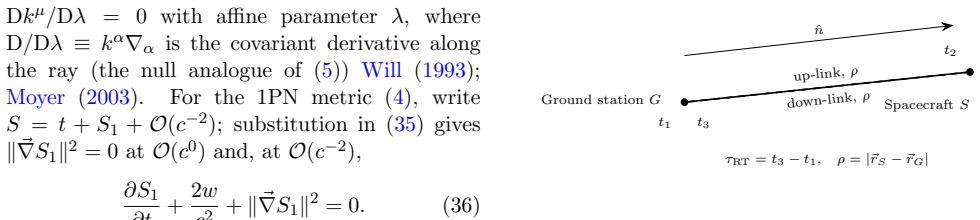
Each solar-system observable is characterised by celestial reference system (CRS) coordinate time, proper time on its world line, and the transformation between them. Ephemerides and Deep Space Network (DSN) tracking use the International Astronomical Union (IAU) barycentric and body-centric hierarchy, now extended to cislunar and Mars work. The IERS Conventions, Moyer radiometric models, and recent lunar-time papers distribute metric, scale, and tracking formulae across separate manuals. Merged Chang'e- or Tianwen-class data can acquire microsecond-level range and Doppler biases unless proper time $\tau$ is mapped consistently to barycentric and body-centric coordinate times. We present a unified 1PN documentation chain: tabulated harmonic Christoffel symbols through $\mathcal{O}(c^{-4})$, the barycentric-geocentric-terrestrial coordinate-time sequence, Fermi normal coordinates, null-geodesic observables, and a 1PN two-way range-rate expansion, applied in parallel to Mars (MCRS/MCG) and lunar (LCRS/TCL) body-centric systems. The chain yields a Mars areoid-geoid metric clock-rate difference of $\sim$48~$\mu$s\,day$^{-1}$ and lunar selenoid-geoid rates of $\sim$57.4-58.7~$\mu$s\,day$^{-1}$ consistent with published nested coefficients. Mars-range Shapiro-rate terms reach $10^{-12}$-$10^{-13}$. Multi-CRS consistency relies on documented transformation chains rather than a single master clock.
0
0
astro-ph.IM 2026-07-02

Open data tied to 32% citation boost in astrophysics

by Parth Joshi, Rupert Croft

Open Science in Astrophysics: Citation Benefits of Open Code, Open Data, and Open Access

Regression on 53k papers shows open access adds 26% and open code adds 16% after controls for grants and length.

Figure from the paper full image
abstract click to expand
We analyze the relationship between open-accessibility in data, code, and paper text in astrophysics using a sample of 53,194 peer reviewed papers published between January 2021 and April 2025, drawn from NASA's Astrophysics Data System (ADS). We measure eleven quantities: open accessibility of text, open-code status, open-data status, number of grants received, code size, programming language, data repository size, citation count, number of authors, paper length, and publication date. We break down citation advantages based on six astrophysical sub-fields: Solar System, Planet, Stellar, ISM, High Energy, and Galaxies+Cosmology, determined by keywords. This is accomplished by tuning a multivariate least-squares regression model with alongside partial correlations and non-parametric tests to isolate the contribution of each facet of openness. After controlling for the aforementioned quantities, we find significant citation advantages associated with all three forms of openness: open data (+32%, p < 10^-24), open access (+26%, p < 10^-67), and open code (+16%, p = 0.003). The open-data citation advantage is present in all six sub-fields, and especially in Galaxies+Cosmology and ISM, which have the strongest cultures of sharing simulation outputs and observational data products. Open-code and open-data sharing rates are highest in Galaxies+Cosmology and HEA (~0.9% and ~2.9%), reflecting their more developed community data infrastructure, and lowest in Solar System and ISM, where data is distributed on platforms not taken into account by this study. Our findings support the long held notion that public access comes with concrete personal incentives for authors in terms of citations.
0
0
physics.space-ph 2026-07-02

VLBI sessions refine deep space orbit tracking over two years

by Oliver James White, Guifre Molera Calves +3 more

VLBI Tracking of the JUICE Mission: Two Years of Cruise Phase Operations and Performance Analysis

More than 100 observations add geometric diversity for better position accuracy and spacecraft diagnostics during cruise.

Figure from the paper full image
abstract click to expand
The JUpiter ICy moons Explorer (JUICE) mission, launched by the European Space Agency (ESA) in April 2023, represents one of the most ambitious deep space exploration endeavours targeting Jupiter's icy moons. This paper presents results from the Very Long Baseline Interferometry (VLBI) radio telescope tracking conducted by the University of Tasmania during the first two years of JUICE's cruise phase operations. We have conducted over 100 tracking sessions capturing the spacecraft across different orbital regimes as JUICE progresses through its complex cruise trajectory towards Jupiter. Our analysis focuses on three key areas: Doppler residual characterisation, mission performance indicator extraction, and solar wind scintillation pattern analysis (including space weather forecasting). UTAS measurements demonstrate the enhanced capabilities that VLBI networks provide for deep space mission support, particularly for precision orbit determination and spacecraft health diagnosis. The results showcase the UTAS VLBI array as a valuable complement to traditional tracking infrastructure, offering Southern Hemisphere coverage and enhanced geometric diversity for deep space missions.
0
0
astro-ph.IM 2026-07-02

GPU speeds transit search by factor of 24

by QuanQuan Hu, Jian Ge +2 more

GTLS: A GPU-accelerated method for periodic transit detection

GTLS finishes a 3000-day curve in 138 seconds instead of 3289 while matching TLS precision and recall.

Figure from the paper full image
abstract click to expand
Computational efficiency is a critical requirement for transit searches in modern large-scale photometric surveys. We present Graphics Processing Units Transit Least Squares (GTLS), a GPU-accelerated implementation of the Transit Least Squares algorithm designed to reduce the computational cost of periodic transit detection while preserving TLS-like sensitivity to transit-shaped signals. GTLS parallelizes the dominant steps of the TLS search, including phase folding, transit-duration evaluation, moving-window depth estimation, and chi-squared calculation. Using Kepler-like long-cadence light curves and synthetic Kepler-like time series, we benchmark GTLS against the reference CPU implementation of TLS and the GPU-based BLS implementation in cuvarbase. On an AMD Ryzen 9 7950X CPU and an NVIDIA RTX 4090 GPU, GTLS processes a 3000-day synthetic light curve in approximately 138 seconds, compared with 3289 seconds for TLS. With two RTX 4090 GPUs, the runtime is reduced to approximately 79 seconds. In recovery tests, GTLS achieves detection performance statistically consistent with TLS, with a precision of 9.3 percent and recall of 79.4 percent, compared with 9.4 percent and 81.1 percent for TLS. These results demonstrate that GTLS enables efficient TLS-style searches for large photometric data sets from Kepler, TESS, PLATO, ET, and future missions. The source code is publicly available.
0
0
astro-ph.IM 2026-07-01

Constellation survey maps sub-Neptune atmospheres

by Luis Welbanks, Kylie E. Hall +11 more

Nautilus Space Observatory: Unveiling the Diversity and Origin of Sub-Neptunes with the Nautilus Space Observatory

Nautilus observatory would deliver first statistical view of the most common exoplanet class to test ocean and interior models.

Figure from the paper full image
abstract click to expand
Sub-Neptunes are the most common class of planets in the Galaxy, yet they have no Solar System analog and remain poorly understood as a population. JWST observations have revealed atmospheres spanning a wide range of metallicities, compositions, and cloud properties, driving active debates over whether warm sub-Neptunes harbor liquid water oceans beneath H2-rich envelopes, maintain stratified H2/H2O interiors, or have well-mixed, metal-rich envelopes. Open questions also remain over what physical processes drive transitions between hazy and clear atmospheres. These are intrinsically population-level questions that single-target observations, however deep, cannot resolve. Here we argue that a sub-Neptune population survey with the Nautilus Space Observatory, a proposed constellation of large-diameter space telescopes, would deliver the first statistical map of sub-Neptune atmospheric diversity, test competing classification schemes, identify habitable candidates, and serve as a pathfinder population for the eventual habitable-worlds search. These goals are achievable across the proposed mission classes for the constellation, and this architecture is uniquely well-matched to this science case since population-level questions demand sample size and a uniform observing strategy.
0
0
astro-ph.IM 2026-07-01

CHWP rotation reconstruction reaches 0.16 μrad√s noise

by Junna Sugiyama, Kyohei Yamada +6 more

The Simons Observatory: Overview of the Cryogenic Half-wave Plate Polarization Modulators

Precision angle tracking separates polarized CMB signals from atmospheric noise on degree scales

Figure from the paper full image
abstract click to expand
The Simons Observatory (SO) is a ground-based Cosmic Microwave Background (CMB) experiment that is located in the Atacama plateau. The Small Aperture Telescopes (SATs) of SO are optimized for polarimetry on the degree scale. Atmospheric $1/f$ contamination of the CMB signal poses a significant challenge for observations at this angular scale. In order to control the $1/f$ noise, the SATs utilize a Cryogenic Half-Wave Plate (CHWP) in their optics. The CHWP modulates the polarization signal to a higher frequency to separate it from the unpolarized atmospheric noise. Precision measurements of the CHWP rotation angle are required to successfully recover the target polarized signals. We present a method to reconstruct the CHWP rotation angle that achieves a noise level of 0.16 $\mu\mathrm{rad\sqrt{s}}$, meeting our requirement.
0
0
astro-ph.SR 2026-07-01

Gaia DR4 pipeline to give masses and ages for 500 million stars

by Orlagh L. Creevey, Laia Casamiquela +24 more

Stellar masses and ages in Gaia Data Release 4 from the Final Luminosity Age Mass Estimator algorithm

FLAME combines analytical luminosity-radius steps with Bayesian or minimization fitting on Gaia data to produce the estimates.

Figure from the paper full image
abstract click to expand
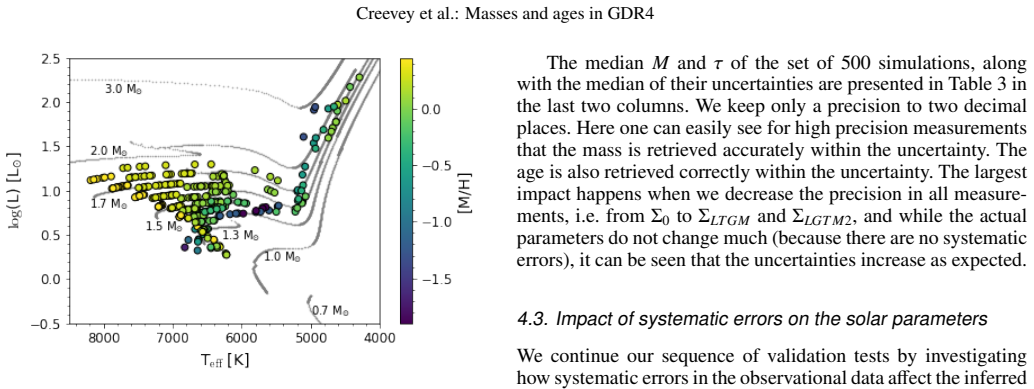
The masses and ages of stars are key quantities for understanding exoplanetary, stellar, and galactic evolution. In the context of Gaia, these parameters provide insights into the stellar populations, helping to trace the formation and history of the Galaxy. As part of the Gaia Data Processing and Analysis Consortium (DPAC), the Final Luminosity Age Mass Estimator (FLAME) pipeline processes Gaia data to derive stellar parameters comprising luminosities, radii, masses and ages. This paper discusses the methods and data used in FLAME for Gaia Data releases and the expected performances of FLAME for the 4th Gaia Data Release. FLAME comprises two main components: the first one, which is analytical, is used to estimate luminosity, radius, and radial velocity correction due to gravitational redshift by exploiting the atmospheric, astrometric, and photometric parameters produced within Gaia. The second is a model inference based on two main approaches: a classical minimization approach, and a Bayesian framework. It aims to derive mass, age, and evolutionary stage. The two step implementation offers flexibility in handling photometric properties that are prone to systematic errors. Tests with simulated data, the Sun, and well characterised samples of stars show that the methods in FLAME perform as expected, producing results in statistical agreement with the literature. We provide new stellar fundamental parameters for some high velocity stars, stars with very low mass companions, and a selection of stars in the Plato Field of View. In Gaia Data Release 4 approximately 500 million sources will have results from the pipeline. [abridged]
0
0
astro-ph.IM 2026-07-01

Multimodal inputs raise ZTF transient classification F1 by up to 40%

by Ved G. Shah, Nabeel Rehemtulla +14 more

Leveraging Multimodality for Real-Time Classification of Transients and Variables found by the Zwicky Transient Facility

ORACLE-2 models reach 0.73 macro F1 on real ZTF data and 0.88 on simulations, showing largest gains at early times when light curves are spa

Figure from the paper full image
abstract click to expand
Modern time-domain surveys such as the Zwicky Transient Facility (ZTF) generate hundreds of thousands of alerts each night, making real-time decisions for follow-up observations a central challenge in time-domain astronomy. Robust early classification is crucial for making informed decisions, but is hindered by sparse light curves and degeneracies between classes. In this work, we leverage multimodality to substantially improve real-time classification and demonstrate the practicality of our approach by deploying our model on the ZTF alert stream. Building on the Online Ranked Astrophysical CLass Estimator (ORACLE), we introduce the ORACLE-2 models, which combine light curves, metadata, and images for real-time hierarchical classification. Using both real and simulated datasets, we show that incorporating additional modalities consistently improves classification performance. On observations from ZTF's Bright Transient Survey, our best-performing model, ORACLE-2 Omni, achieves a macro F1 score of 0.73 -- an improvement of up to 11% over models using light curves and metadata alone, and up to 40% over light-curve-only models, with the strongest gains realized at early times. To demonstrate applicability to the Legacy Survey of Space and Time, which will increase alert volume by more than an order of magnitude, we train a light curve + metadata variant on the simulated ELAsTiCC dataset. This model achieves a macro F1 score of 0.88, an improvement of up to 13% over the light-curve-only variant, matching the performance of other state-of-the-art models. Finally, we quantify the trade-offs between performance and throughput, identifying regimes where multimodal approaches offer the greatest benefit. These results show that combining multiple modalities improves early-time classification, enabling more effective triage of high-volume alert streams for current and future time-domain surveys.
0
0
astro-ph.IM 2026-07-01

Rubin ToO system efficiency reviewed after first year

by Sean Patrick MacBride, R. Lynne Jones +42 more

The Rubin Observatory Target-of-Opportunity System in the First Year of Operations

Review examines targets observed and performance of the 3 percent allocation for special astrophysical alerts.

Figure from the paper full image
abstract click to expand
The NSF/DOE Vera C. Rubin Observatory is a discovery machine, with unprecedented survey speed, which can be used to identify exotic astrophysical transients. In its prime mission, the ten year Legacy Survey of Space and Time will use 3% of its total time for Target of Opportunity observations, which includes response to gravitational wave events, high energy neutrinos, potentially-hazardous asteroids, and other astrophysical phenomena. Target of Opportunity observations exist outside of the usual LSST operational mode, requiring special attention to maximize performance. We review the Rubin Target of Opportunity system during its first year of Rubin Observatory operations, the Targets of Opportunity pursued since LSST first light, and the overall efficiency of the system.
0
0
astro-ph.IM 2026-07-01

M1M3 mirror settles within 5 seconds in slew tests

by HyeYun Park, Petr Kubánek +21 more

Rubin M1M3 Dynamic performance : stability and actuation during operations

Tests at 20 percent speed across velocities and elevations show the 53-ton system damps vibrations for survey operations.

Figure from the paper full image
abstract click to expand
The Vera C. Rubin Observatory is preparing to commence the Legacy Survey of Space and Time with the fully integrated Simonyi Survey Telescope. To verify that the primary/tertiary (M1M3) mirror system is ready to meet the demanding survey requirements, dynamic tests of the 8.4 m, 53 ton M1M3 system were conducted to assess safety, stability, and image quality under realistic operating conditions. The M1M3 is supported by 156 pneumatic force actuators and positioned, relative to its mirror cell, by six hardpoint actuators that together must counteract gravitational and inertial loads during rapid telescope motion. The Rubin Observatory telescope mount is capable of moving at a rate that meets its nominal motion requirements, and can approach it maximum allowable values that are 50 percent higher. Even at just 20 % of its operational speed, it is an exceptionally fast motion for such a large structure. After slewing, the system must stabilize and dampen vibrations within 5 seconds to ensure image quality during observations. Achieving this rapid settling requires precise control of 156 force actuators, which must adjust dynamically with changes in telescope elevation to compensate for gravity effects. We present results for M1M3 from a comprehensive series of TMA dynamical tests spanning the operational envelope of slew velocities and accelerations. The analysis evaluates elevation axis balancing and lookup table updating as we install the M1M3 mirror; slew-and-settle behavior, force response and stability of the pneumatic actuator system across telescope attitudes including responses to the earthquake. The results demonstrate the readiness of the M1M3 subsystem for routine survey operations and provide validation data for ongoing performance modeling.
0
0
astro-ph.GA 2026-07-01

Gaia DR3 census identifies 1256 Stellar Snakes near Sun

by Xiang-Ming Yang, Ju-Yong Zhang +1 more

The Stellar "Snake"-V: the census within 3 kpc in the Solar Neighborhood

Catalogue of 802489 stars in coherent 9D associations offers foundation for studying Milky Way star formation hierarchies.

Figure from the paper full image
abstract click to expand
We present a Gaia DR3 source-level census of \emph{Stellar Snake} complexes within 3\,kpc of the Sun. We define a Stellar Snake as a mutually coherent association of two or more stellar overdensities, characterised by consistent positions, kinematics, orbital invariants, ages, and chemical properties, rather than as a single gravitationally bound object. Moving beyond catalogue-driven searches seeded by known open clusters, our framework operates directly on individual Gaia sources to recover extended, low-density substructures and interconnecting stellar bridges. The multi-stage pipeline extracts statistically significant, non-overlapping base nodes, infers homogeneous parameters using a PointNet point-cloud regressor, and links these nodes into large-scale macro-structures across a 9D space spanning positions, tangential velocities, radial velocity, age \(\log t\), and orbital integrals \((E,L_Z)\). After FoF-topology cross-validation and boundary resolution, the final catalogue contains 1,256 Stellar Snake candidates comprising 802,489 unique member-star entries in 5,491 final base nodes selected from a 9,909-node input pool. Derived parameters are validated against external open-cluster catalogues and spectroscopic benchmarks. To quantify structural coherence, we introduce a graph-relation Snake Reliability Index (SRI), coupled with a peripheral-branch diagnostic and Gold/Silver/Bronze quality flags. At the population level, the census shows a broad age--metallicity pattern, a declining upper envelope of member-star entries toward older ages, and a projected association between young Snake nodes, nearby spiral-arm loci, and the Radcliffe Wave. This homogeneous inventory provides an observational foundation for probing the formation, coherence, and dynamical evolution of hierarchical stellar complexes in the Milky Way.
0
0
astro-ph.HE 2026-07-01

ZTF sample pins Type Ia rise at 18.55 days average

by Chang Liu, Adam A. Miller +14 more

Decoding the Early-Time Light Curves of Type Ia Supernovae. II. Population Parameters of One Thousand ZTF Supernovae

972 events show rise-stretch relation splits into two regimes, with high-stretch events tied to outward nickel mixing.

Figure from the paper full image
abstract click to expand
Early-time light curves of Type Ia Supernovae (SNe Ia) encode critical information about their progenitor systems. We characterize the rise of normal SNe Ia using a volume-complete sample of 972 events from the Zwicky Transient Facility Data Release 2, an order of magnitude larger than any previous dataset for similar analyses. Fitting light curves up to $30\%$ of peak flux with a power-law model under a hierarchical Bayesian framework, we provide robust population-level constraints on the rise time ($t_\mathrm{rise}$; $\mu=18.55\pm0.08$ days, $\sigma=1.42\pm0.07$ days), rise index ($\alpha$; $\mu=2.10\pm0.04$, $\sigma=0.48\pm0.03$ in ZTF $r$), and $g-r$ color evolution ($\alpha_g - \alpha_r$; $\mu=0.20\pm0.02$, $\sigma=0.17\pm0.02$). These power-law fits are sensitive to the chosen truncation epoch if data beyond $\sim$$40\%$ of peak flux are included, but generally converge when restricted to earlier epochs. The relation between rise morphology and light-curve width ($\texttt{SALT2}$ $x_1$ stretch) bifurcates into two distinct regimes: high-stretch SNe Ia show clear trends where a higher $x_1$ correlates with shallower rises and more persistent blue colors, whereas low-stretch SNe Ia lack such trends. While rise times correlate positively with $x_1$ overall, this relation flattens significantly within the high-stretch population. Searching for anomalies, we identify several normal SNe Ia with unusually long rise times, which potentially exhibit short-duration ($\lesssim$2 days) flux excesses over a smooth rise. Long-duration ($\sim$5 days) flux excesses appear common within the high-stretch population and are tied to the shallow rises and early blue colors, pointing to widespread outward $^{56}$Ni mixing. Multi-dimensional explosion models with more realistic progenitor setups are needed to fully reproduce the observed dichotomy in rise morphology and stretch.
0
0
astro-ph.HE 2026-07-01

Hierarchical fit reduces bias in supernova population parameters

by Chang Liu, Adam A. Miller

Decoding the Early-Time Light Curves of Type Ia Supernovae. I. A Hierarchical Bayesian Framework for Demographic Inference

Simultaneous Bayesian modeling of many early light curves recovers mean rise time and scatter more accurately than separate fits.

Figure from the paper full image
abstract click to expand
Light curves of Type Ia Supernovae (SNe Ia) in the days following explosion encode the diversity of progenitor systems and explosion physics. We present a hierarchical Bayesian framework to robustly constrain the population-level light-curve morphology of SNe Ia by fitting a large light-curve dataset simultaneously to power-law rises. Using a multivariate Gaussian population prior, this framework automatically down-weights sparsely sampled SNe and noisy measurements in the inference, obviating the need for restrictive quality cuts that introduce selection biases. Validation on simulated power-law light curves demonstrates that the population prior effectively suppresses the volume-projection bias from the asymmetric likelihood: compared to the classic two-step approach of fitting individual SNe and then aggregating the results, the hierarchical approach dramatically reduces the bias on the population-level parameters (mean, scatter, and correlation). When fitting the power-law model to light curves with more realistic morphologies, while the rise time can be mildly underestimated due to model misspecification, the recovered population scatter remains reliable. Furthermore, SNe with early flux excesses can emerge as outliers in the inferred parameter space, offering a potential diagnostic for identifying such events. Finally, we show that the inferred population distribution can also improve individual-event inference. Restricting the population prior to nuisance amplitudes, while preserving the complete correlation structure, regularizes fits to individual SNe without shrinking the physically meaningful rise time and rise index toward their population means.
0
0
hep-ph 2026-07-01

Radio ranges probe ultralight dark matter at 10^{-15} eV

by Jonas Frerick, Hyungjin Kim +1 more

Precision Solar System Dynamics for Ultralight Dark Matter Search

Current precision suffices if solar system density is 100000 times the local average, complementing pulsar timing.

Figure from the paper full image
abstract click to expand
Ultralight dark matter exhibits an order-one density fluctuation at the scale of its wavelength. This density fluctuation exists across the entire dark matter halo and interacts with stars and planets, perturbing their motion via gravitational interactions. We investigate the possibility of using precision solar system dynamics to search for ultralight dark matter. We examine this possibility with interplanetary radio range measurements. We show that the precision of current range measurements can probe ultralight dark matter at masses around $10^{-15}\,$eV, had its density in the solar system been $10^5$ larger than the so-called local dark matter density. This limit complements other constraints, such as the one from analyses of pulsar timing observations.
0
0
astro-ph.HE 2026-07-01

Pressure-ratio dependent alpha removes disk radiation-pressure instability

by M. H. Naddaf, M. Ghasemnezhad +3 more

Radiation-pressure instability is an artifact of constant-α closure

Requiring single-valued steady solutions in the Mdot-Sigma plane forces alpha to rise with gas-pressure fraction and eliminates the unstable

Figure from the paper full image
abstract click to expand
The standard $\alpha$-disk formalism parametrizes turbulent angular momentum transport through a dimensionless coefficient $\alpha$, assumed to be spatially and thermodynamically invariant. While analytically convenient, this assumption leads to the well-known thermal and viscous instabilities in radiation-pressure dominated (RPD) regions. We show that this instability is not the consequence of radiation pressure, but is due to enforcing a constant $\alpha$ across distinct thermodynamic regimes. Requiring the steady thin-disk (TD) to remain thermally stable and single-valued in the $\dot{M}$--$\Sigma$ plane yields a necessary condition on the stress response, expressed as $\eta_{\rm x} \equiv d\ln\alpha_{\rm x}\,/\,d\ln X > 4/7$, where $X \equiv P_{\rm gas}/P_{\rm rad}$. The resulting viscosity law $\alpha_{\rm x} \equiv \alpha(X)$ emerges directly from the internal consistency of TD equations, without modifying the stress law or invoking any additional physics. $\alpha_{\rm x}$ removes the RPD unstable branch. The disk structure becomes smooth and globally single-valued, with higher $\Sigma$ and $\tau$ in the inner RPD disk, while preserving the standard effective-temperature profile. This increases thermal and inflow timescales, offering a natural route to accretion-state dependent variability without large-amplitude radiation-pressure limit cycles. It also motivates revisiting AGN disk tensions, including microlensing sizes and continuum reverberation lags with improved radiative-transfer modeling. The results show that the RPD instability, and possibly some associated AGN disk tensions, reflect an inconsistent viscosity closure.
1 0
0
astro-ph.IM 2026-07-01

Filter system completes 40 swaps per night in under 90 seconds

by Alexandre Boucaud, Pierre Antilogus +27 more

The filter exchange system of the LSSTCam at the Vera C. Rubin Observatory

Year-one data from LSSTCam show the exchange mechanism delivers the speed and 100-micrometer repeatability needed for the survey cadence.

Figure from the paper full image
abstract click to expand
The Filter Exchange System of the LSSTCam at the Vera C. Rubin Observatory is a critical subsystem enabling the Legacy Survey of Space and Time (LSST) by performing rapid, repeatable exchanges among five large-format filters within a highly constrained in-camera volume. Since the start of on-sky operations in April 2025, the FES has routinely performed up to 40 filter exchanges per night, completing each change in under 90 seconds with a positioning repeatability of 100 micrometers in the focal plane. Safety and reliability are ensured through a dedicated software architecture. Drawing on over a year of operational experience, we report on the in-situ performance of this sophisticated system within the observatory environment, characterize the key performance metrics, and discuss how specific design choices have influenced system behavior and reliability in practice.
0
0
math.NA 2026-07-01

GQL reformulation yields non-iterative PCP limiters for relativistic hydro

by Linfeng Xu, Shengrong Ding +1 more

GQL-Based Physical-Constraint-Preserving High-Order Finite Difference Schemes for Special Relativistic Hydrodynamics in Arbitrary Dimensions

Linear inequalities and small eigenvalue solves enforce positive density and subluminal velocity in high-order WENO schemes up to 3D

Figure from the paper full image
abstract click to expand
High-order accurate simulations of special relativistic hydrodynamics (RHD) are prone to numerical breakdown if intrinsic physical constraints (positive rest-mass density/pressure and subluminal velocity) are violated near strong discontinuities. In this work, we develop a robust and efficient physical-constraint-preserving (PCP) flux-limiting framework for high-order schemes, using finite-difference WENO as a representative example. By leveraging the geometric quasilinearization (GQL) representation, which equivalently reformulates the nonlinear RHD constraints into a family of linear inequalities, we integrate a Zalesak-type Flux-Corrected Transport (FCT) update into a scalar-style limiter that acts directly on conservative variables. A critical innovation is the explicit, non-iterative determination of limiting parameters via a rational stereographic parameterization of the GQL normal vector. This technique transforms the required worst-case minimization over auxiliary variables into a generalized Rayleigh-quotient formulation, allowing the optimal parameters to be obtained by solving small symmetric eigenvalue problems ($2\times2$ in 1D; $(d+1)\times(d+1)$ in $d$ dimensions). Relaxed variants are further introduced to reduce computational costs in multidimensions while retaining the PCP guarantee. Extensive numerical benchmarks ranging from 1D to 3D, including ultra-relativistic Riemann problems and astrophysical jets, demonstrate that the proposed method robustly enforces physical admissibility, sharply resolves discontinuities, and maintains design-order accuracy for smooth solutions.
0
0
astro-ph.CO 2026-07-01

Diffusion models jointly sample lensing maps and cosmology

by Benjamin Remy, Chihway Chang +1 more

Joint inference of weak lensing convergence map and cosmology with diffusion models

The network learns the full posterior from simulations and produces calibrated map and parameter samples without a differentiable forward mo

Figure from the paper full image
abstract click to expand
We present a method for joint inference of cosmological parameters and convergence maps from weak lensing observations, targeting the full posterior conditioned on the observed shear field. Our approach uses implicit inference with diffusion models, learning the joint distribution from simulations, without the need to have an explicit and differentiable forward model for gradient-based MCMC sampling. We introduce a transformer-based architecture that operates in pixel space and treats cosmological parameters as additional tokens in a unified sequence, enabling efficient multimodal processing within a single network. At inference time, the trained model generates posterior samples of joint convergence maps and cosmological parameters conditioned on observed noisy shear fields. We demonstrate the method on simulated weak lensing data generated from log-normal fields in a wcdm cosmology. The model accurately reconstructs convergence maps and recovers cosmological posteriors that agree with traditional MCMC, while remaining well calibrated across the prior, with a MIRA calibration score of $0.635 \pm 0.017$ on the joint posterior (where $0.667$ is optimal). The inferred fields reproduce the correct two-point statistics as well as non-Gaussian statistics such as the one-point distribution. This work establishes diffusion-based implicit inference as a viable route toward full field-level cosmological analyses, paving the way for applications to more realistic, non-differentiable simulators.
0
0
astro-ph.IM 2026-07-01

Ray tracing traces stray light sources in wide-field camera images

by Gabriele Rodeghiero, Alex Drlica-Wagner +79 more

An overview of stray light findings and interpretation during on-sky commissioning of LSSTCam

Workflow moves from on-sky discovery to simulation to corrections for cleaner survey data

Figure from the paper full image
abstract click to expand
Wide-field telescopes are intrinsically difficult to shield from unwanted stray and scattered light, while the search to identify sources of contaminating light is frequently a challenging task. The Vera C.~Rubin Observatory, which achieved its first photon with the LSST Camera (LSSTCam) on April 15, 2025, will initiate a revolutionary era for the study of dark matter, dark energy, the transient sky, the Solar System, and the Milky Way. LSSTCam will provide near seeing-limited images of the sky in six bands ($u,g,r,i,z,y$) over a $3.^\circ 5$-diameter field of view, and over the course of a decade, it will execute the Legacy Survey of Space and Time (LSST). This work provides an overview of the dedicated stray and scattered light test campaign that has been undertaken since the start of Rubin commissioning. In particular, we highlight the processes used to characterize, model, and mitigate stray light present in LSSTCam images. The Rubin commissioning team created a series of testing and analysis tools to track stray light artifacts from their initial discovery through reproduction with timely observations, simulation using ray tracing to identify opto-mechanical origins, and finally devising corrective actions. The complex stray light features encountered by Rubin provide a wealth of experience for the future wide-field and extremely wide-field observatories. This work covers the many stages of a long journey that started with conceiving an innovative and challenging optical design, followed by the engineering and system engineering efforts to build it, to finally delivering an optimized and revolutionary cutting-edge facility.
0
0
astro-ph.IM 2026-07-01

Off-axis light path creates scratched tape artifact in Rubin camera

by Alex Drlica-Wagner, Alessio Taranto +13 more

Investigation and Mitigation of a Prominent Off-Axis Stray Light Path in Rubin Observatory Commissioning

Light at 20 degrees passes baffle gap, reflects off primary mirror to focal plane when wind screen is missing

Figure from the paper full image
abstract click to expand
The "scratched tape" stray light feature is the most prominent and prevalent stray light artifact identified during the commissioning of the Vera C. Rubin Observatory. The scratched tape feature originates when light from large off-axis angles (~20 deg) passes between the mid-level and center-section light baffles, reflects off the primary mirror, and illuminates the LSST Camera focal plane. This scenario represented an unobstructed stray light path to the sky during Rubin commissioning due to delays in the integration of the dome slit light-wind screen. This document describes the identification, modeling, characterization, and mitigation of the scratched tape stray light artifact.
0
0
astro-ph.GA 2026-07-01

ELT SHARP will map z>9 Lyman-alpha nebulae at 150 pc scales

by Susanna Bisogni, Giustina Vietri +6 more

Unveiling the Cosmic Dawn with SHARP: Probing extended Lyman-α nebulae in a Universe less than 600 Myr old

First views of gas structures around early quasars less than 600 million years after the Big Bang.

Figure from the paper full image
abstract click to expand
The existence of luminous quasars just a few hundred million years after the Big Bang challenges our understanding of both black hole growth and galaxy formation and evolution. These objects harbour supermassive black holes exceeding a billion solar masses (M$_{BH} > 10^{9} M_{\odot}$) by redshift $z\sim 6.5$-$7.5$, powered by extreme gas accretion. At the same time, their host galaxies are also undergoing intense star formation, consuming gas at the rate of hundreds of solar masses per year. Characterising the circumgalactic medium (CGM) and intergalactic medium (IGM) surrounding high-redshift quasars becomes an essential tool to understand the conditions that enable the rapid formation and evolution of these extreme sources. While in the last decades spatially resolved observations in the optical band have targeted CGM through Ly$\alpha$ nebulae surrounding $z \sim 2-6$ quasars, current instrumental limitations hamper observations of high-z ($z>8$) quasars that will be discovered by Euclid/Roman/LSST surveys. Despite the large fraction of neutral hydrogen at the epoch of reionisation, in the last decade several surprising Ly$\alpha$ detections have been obtained from sources deep in the epoch of reionisation. The unprecedented collecting area of ELT, coupled with the resolution and wavelength coverage of SHARP, specifically VESPER, will enable us to map for the first time $z>9$ Ly$\alpha$ emission down to the structures of size $\sim$150 pc, while simultaneously capturing their large-scale structure up to 100 kpc for the first time at this redshift. This will allow a major and long-awaited step forward in the exploration of quasars and galaxies formation and evolution deep in the epoch of reionisation.
0
0
astro-ph.IM 2026-07-01

Mechanical checks weigh L3 baffle addition for LSSTCam

by Hannah Mary Margaret Pollek, Gabriele Rodeghiero +12 more

Mechanical Studies of an Additional Light Baffle for the LSST Camera

Studies on installation, geometry, materials and purge impacts decide if stray light fix justifies change to running camera.

abstract click to expand
Commissioning the NSF-DOE Vera C. Rubin Observatory consisted of engineering operation and on-sky data-taking, initially with the Commissioning Camera followed by the commissioning run of the LSST Camera (LSSTCam). As with other wide-field astronomical projects, the Rubin team anticipated a significant amount of stray light effects which would necessitate investigation and systematic mitigation. This led the Rubin stray light working group to develop tools, including a robust model of the entire observatory in Zemax, to trace the light paths of stray light artifacts back to their sources. This model along with the other efforts of the working group enabled significant improvements in stray light mitigation leading up to the commencement of the Legacy Survey of Space and Time (LSST). One such potential source was identified as a small chamfer on the L3 lens, for which it was hypothesized that a simple baffle added inside of the LSSTCam near the L3 should prove beneficial to the quality of data being collected in the LSST. Initial Zemax models proved this hypothesis to be correct, but it is important to weigh the improvements made versus the effort, risk, and cost especially when considering any hardware modifications to an instrument that is already running and collecting immense amounts of data each night. This paper investigates the impacts of installing an L3 baffle via a collection of mechanically focused studies, where the principal areas of focus are installation feasibility, baffle geometry, materials & coating selection, and potential impacts to the purge system.
0
0
astro-ph.IM 2026-07-01

RSS of bending mode stresses matches full simulations within a few percent

by Malhar Sonaniskar, Douglas Neill +2 more

Determining stress-based bending mode limits for the Vera C. Rubin Observatory M1M3 active mirror system

The method enables real-time stress margin checks for the Rubin Observatory's 8.4 m active mirror without repeated NASTRAN runs.

Figure from the paper full image
abstract click to expand
The Vera C. Rubin Observatory Simonyi Survey Telescope's primary-tertiary mirror (M1M3) is an actively supported, 8.4-m cast borosilicate optic controlled by 156 pneumatic actuators. This work presents a rapid stress-estimation methodology based on the root-sum-square (RSS) combination of Finite Element Analysis to derive pre-computed unit bending mode stresses. Since the stress is proportional to strain, and strain is proportional to displacements, we theorized that since the bending mode displacements can be combined RSS, that the peak stresses would also combine by RSS. We validate the RSS-based major principal stress predictions against NASTRAN simulations for representative bending mode combinations, demonstrating agreement within a few percent for peak Principal major stress across the mirror glass substrate. Unit displacement and corresponding unit stress fields for the first 20 natural bending modes of the M1M3 system are generated using NASTRAN. Representative multi-mode corrections including combinations that include astigmatism, coma, and spherical modes of higher order are then analyzed to compare the resulting peak principal stresses with RSS-based predictions. The method enables near instantaneous evaluation of stress margins for active optics corrections, safety-limit checking, and actuator-force optimization during telescope operations. This paper outlines the formulation, implementation workflow, validation results, and practical use cases for integrating RSS-based stress prediction into the Vera C. Rubin Observatory's M1M3 active optics system.
0
0
astro-ph.IM 2026-07-01

Ghosts affect 0.57% of LSSTCam focal plane

by Aashay Pai, Alex Drlica-Wagner +5 more

In Situ Measurements of the Reflectances of the LSSTCam Optics and Assessing the Impact of Optical Ghosts

Simulations tuned to commissioning data and reflectance measurements quantify reflection artifacts in the camera.

Figure from the paper full image
abstract click to expand
Optical ghosts are image artifacts caused by successive reflections of light between optical surfaces such as lenses, filters, and detectors. These artifacts are unavoidable due to the nonzero reflectances of optical elements and are a major source of contamination for low-surface-brightness science. We use optical ray tracing simulations tuned to observations from LSST Commissioning to quantify the impact of optical ghosts on the LSST data. In particular, we find that ~0.57% of the LSSTCam focal plane is impacted by optical ghosts when averaged across all bands. We also use data from the Collimated Beam Projector to measure the reflectances of various optical elements, generally confirming estimates of ~2% from the systems engineering throughput predictions.
0
0
astro-ph.IM 2026-07-01

Projector maps nanometer-scale filter shifts in Rubin telescope

by Nathan Amouroux, Parker Fagrelius +7 more

Early Telescope Throughput Results from the Collimated Beam Projector at the Vera C. Rubin Observatory

Early tests with known monochromatic sources reveal angle-dependent bandpass variations across the focal plane for precise photometry.

Figure from the paper full image
abstract click to expand
The Vera C. Rubin Observatory LSST requires precise photometric calibration to meet its science goals, particularly for cosmological analyses based on Type Ia supernovae. The Collimated Beam Projector (CBP) has been developed to support this effort by projecting monochromatic point sources of known wavelength and flux directly into the telescope aperture, enabling direct in situ measurements of the full system throughput. We present initial results demonstrating the CBP capability to characterize the instrumental response of the Rubin Telescope and to measure the transmission profiles of LSSTCam broadband filters. In particular, the CBP enables spatially resolved mapping of filter bandpass edge shifts across the focal plane, which can vary by several nanometers as a function of the ray angle of incidence. These early results establish the CBP as a powerful photometric calibration tool and lay the groundwork for continuous throughput monitoring throughout LSST operations.
0
0
astro-ph.IM 2026-07-01

Dual UV channels measure exospheric Lyman-alpha at mission-required sensitivity

by Martin Sirk, Alex M. Zhang +14 more

Design and Performance of the Carruthers Geocoronal Imager

Lab tests confirm the narrow and wide field imagers meet accuracy goals for global and regional hydrogen structure studies.

abstract click to expand
The GeoCoronal Imager (GCI) onboard the Carruthers Geocorona Observatory is the primary scientific instrument of the mission. It is designed to measure far ultraviolet light at 121.6 nm (Lyman-alpha) emitted by hydrogen (H) atoms in Earth's exosphere with the sensitivity, accuracy and precision to meet the mission's scientific objectives regarding the nature of terrestrial exospheric structure and dynamics on both global and regional scales. The GCI is comprised of two co-aligned UV imaging systems. The Narrow Field Imager (NFI) acquires nearly continuous images of exospheric Lyman-alpha radiance near and above the Earth's limb at relatively high spatial and temporal resolution, while the Wide Field Imager (WFI) uses relatively higher optical sensitivity and a wider field of view to detect faint Lyman-alpha emission from the exosphere's outermost extent. Both imaging channels feature identical active pixel sensor cameras, gain-intensifiers, and 6-position optical filter wheels. This paper outlines the instrument design requirements, informed by mission science goals, as well as its performance as measured in the vacuum ultraviolet laboratory test and calibration.
0
0
astro-ph.IM 2026-07-01

LSST Camera CCDs ready for full southern sky survey

by Sean Patrick MacBride, Aaron Roodman +89 more

The On-Sky Performance of the LSST Camera CCD Array

First year of operations confirms the 189-CCD focal plane meets needs for wide, fast, and deep imaging.

Figure from the paper full image
abstract click to expand
The focal plane of the LSST Camera contains 189 individual science CCDs, arranged into 21 raft tower modules, along with 4 wavefront and 8 guider CCDs located in 4 additional corner RTMs. Altogether, the LSST Camera CCDs compose the largest focal plane ever constructed. The LSST Camera is the primary instrument of Rubin Observatory, which will begin the Legacy Survey of Space and Time in 2026. In this paper, we describe the on-sky performance of the LSST Camera CCDs, from receipt at NSF/DOE Vera C. Rubin Observatory in May 2024 to on-sky observations during the first year of operations. We discuss the process to establish functionality of several CCDs which were affected by an electrical short and faulty analog-digital converter, optimizations of readout timing in response to changes in the survey strategy, and implementation of enhanced focal plane safety measures through an active clearing mechanism on the CCDs. Finally, we discuss sensor features observed on-sky, and global performance during the first year of operations. The operations to date of the LSST Camera CCDs have demonstrated the capability of performing a wide, fast, and deep optical imaging survey of the entire southern sky at the Rubin Observatory.
0
0
astro-ph.IM 2026-07-01

Daily test cycles coordinate observatory commissioning tests

by Bruno Quint, Tiago Ribeiro +4 more

Test Management and Coordination During the Vera C. Rubin Observatory Commissioning and Early Operations Using Zephyr Scale

Zephyr Scale groups scripts into daily plans and links them to the observation scheduler for summit execution.

Figure from the paper full image
abstract click to expand
The commissioning of the NSF-DOE Vera C. Rubin Observatory required coordinating the planning, design, and execution of hundreds of integration and on-sky tests involving different subsystems and geographically distributed teams. To support this task, we adopted a Jira-native test management tool, Zephyr Scale. The initial use of Zephyr Scale focused solely on system verification and validation. Its use was rescoped to coordinate higher-level tests, and it is still in use in early operations. Zephyr Scale allows the creation of Test Cases, which represent individual tests. Each Test Case contains the information needed to execute a test at the summit. This includes a step-by-step script. Every day, Test Cases are grouped into a Test Cycle, which represents the test plan for all tests to be executed that day and that same night. We describe the defined workflow for test creation, review, and deployment, which bridges the gap between ideation and on-sky execution within a Test Cycle. We also outline how we write more complex tests as partially automated JSON files consumed by the Scheduler--the system's real-time, constraint-aware observation optimization engine. This integration enables the Scheduler to ingest high-level observing scripts that communicate with subsystems via an abstraction layer to execute common observatory operations, such as slewing, tracking, and data acquisition. Finally, we summarize the benefits and limitations of using Zephyr Scale, designed initially to coordinate software testing, for large-scale observatory commissioning and early operations.
0
0
astro-ph.IM 2026-07-01

Dome tests convert to on-sky M2 baffle scatter predictions

by Alessio Taranto, Gabriele Rodeghiero +59 more

Modeling of the diffuse background produced by the Vera C. Rubin Observatory M2 baffle scattered light

Relation from CBP, stellar, and Moon data maps in-dome measurements to LSSTCam background levels across magnitudes.

Figure from the paper full image
abstract click to expand
The Vera C. Rubin Observatory, with its unprecedented field of view and fast focal ratio, will survey the entire sky every 3.5 nights. This unique capacity requires dealing with off axis light that can produce stray light artefacts on the images. The secondary mirror (M2) baffle restricts the light that reaches the LSSTCam detector and it contributes to shaping the inner edge of the telescope optical pupil. This work studies the contribution to the background from the light scattered by the M2 baffle itself. The evanescence of this feature, together with the challenge of isolating it from the sky background, led to the necessity of performing in dome tests using a Collimated Beam Projector (CBP), normally used for calibration purposes. To complete the analysis, in addition to the in dome tests, an on sky observational campaign was conducted. This campaign employed both stellar targets and the Moon as illumination sources in order to determine the actual energy associated with the feature. The test data have been retro fitted thanks to the combination of ray tracing simulation, CBP and on sky data to infer the intensity and spatial distribution of the background scattered light within the different LSSTCam filters. We quantified the on sky impact of scattered light from the M2 baffle, both for light coming from bright and red stars and from the Moon. We also developed an approximate relation to transform the in dome measurements into predictions of on sky behavior. This transformation was achieved by comparing the illumination footprint produced by an off axis star with that generated by the CBP and by mapping the stellar Spectral Energy Distribution (SED) onto the CBP's set of discrete wavelengths. Finally, we extrapolated the scattered light behavior of the Moon to stellar sources, in order to build a compplete description of the M2 baffle contribution over the full range of magnitudes.
0
0
astro-ph.IM 2026-07-01

Two 8m telescopes swap laser tracking and wavefront sensing roles

by Luca Rosignoli, Gabriele Rodeghiero +27 more

Laser-based metrology systems vs wavefront sensing techniques: a comparative overview between the Large Binocular Telescope and the Vera C. Rubin Observatory for the telescope alignment and collimation tracking

LBT starts with focal plane analysis then uses laser metrology, while Rubin begins with laser tracking and follows with curvature sensing.

Figure from the paper full image
abstract click to expand
This work presents a comparative overview of the collimation and alignment strategies employed by two leading 8m-class facilities: the Large Binocular Telescope (LBT) and the Vera C. Rubin Observatory. While both telescopes share a challenging fast f-number of approximately f/1.2 (considering the LBT in its Prime Focus configuration), they have adopted reciprocal architectures for the initial optical alignment strategy and for maintaining collimation during the night. As an initial alignment strategy, the LBT relies on a Wavefront Sensing technique called Focal Plane Image Analysis. Conversely, the Vera C. Rubin Observatory baseline foresees the usage of a Laser Tracker system to establish the initial optical states. The strategies for preserving the optical alignment and maintaining the collimation against gravitational flexure and thermal drift during observations are instead reversed. Besides the use of open-loop corrections based on Look-Up Tables, common on both telescopes, the LBT utilizes a laser-based Telescope Metrology System to monitor the relative position of optics in real-time, applying the corrections between the exposures. In contrast, the Rubin Observatory employs a Curvature Wavefront Sensing technique, using dedicated detectors at the four corners of the focal plane. Rather than identifying a best strategy, this work aims to synthesize the strengths, limitations, and operational trade-offs of these complementary approaches, from the perspective of the next generation of Extremely Large Telescopes and their instruments.
0
0
astro-ph.IM 2026-07-01

Attenuation factors derived for LiteBIRD out-of-band rejection

by L. Mousset, L. Montier +16 more

Setting requirements on out-of-band rejection for next-generation CMB experiments. Application to the LiteBIRD instrument

Power propagation modeling sets dB requirements in frequency subdomains to protect detectors and signal separation.

abstract click to expand
Next-generation cosmic microwave background experiments have very stringent constraints to achieve the required sensitivity to target polarization $B$ modes. In this work, we intend to set requirements on the out-of-band rejection level, with out-of-band referring to frequencies outside the telescope band-pass. The method developed is applied to the LiteBIRD Medium and High Frequency Telescopes. In order to determine the impact of out-of-band power, we model the instrument's optical response and the spectral emissions of the sky and of the instrument itself. This allows us to propagate optical power inside the telescope. Using this tool, we address both the impact of out-of-band power on the detection chain and on the thermal heat load, together with the impact on the process of separation between astrophysical components. The role of additional static power as well as dynamic power variations is studied. The requirement derived consist in attenuation factors (in dB) in frequency subdomains. They will be used to design the telescope filters.
0
0
astro-ph.HE 2026-07-01

Carbon-alpha rate shifts upper black hole mass gap edge by 30 solar masses

by Jeremy Sakstein, Djuna Croon

The location of the upper edge of the pair-instability supernovae black hole mass gap

Simulations identify the 12C(α,γ)16O reaction as the largest source of uncertainty in where pair-instability supernovae cut off black hole f

Figure from the paper full image
abstract click to expand
Gravitational wave observations are beginning to probe the upper edge of the pair-instability supernova (PISN) black hole mass gap, a key prediction of stellar evolution. In this work, we quantify the sensitivity of this boundary to uncertainties in stellar evolution using a suite of simulations that vary inputs including nuclear reaction rates, mixing processes, and stellar winds. We find that the $^{12}{\rm C}(\alpha,\gamma)^{16}{\rm O}$ reaction rate is the dominant source of uncertainty, shifting the upper edge by $\Delta M\sim30\,{\rm M}_\odot$, with the triple-$\alpha$ rate producing a comparable shift of $\sim25\,{\rm M}_\odot$. Notably, $^{16}{\rm O}+^{16}{\rm O}$ reactions shift the upper edge by $\sim15\,{\rm M}_\odot$ while leaving the lower edge unchanged, implying they can widen or narrow the mass gap. Other processes affect the location at the $\lesssim10\,{\rm M}_\odot$ level. In contrast to the lower edge, we find that the upper edge is robust to variations in spatial and temporal resolution, indicating that it is reliably resolved in current simulations. Our results demonstrate that the upper edge carries substantial theoretical uncertainty and, while comparatively less affected by astrophysical contamination than the lower edge, provides a direct probe of the nuclear processes governing pair instability. We discuss the implications for interpreting high-mass black hole detections in gravitational wave data.
0
0
astro-ph.EP 2026-07-01

No new Earth Trojans detected in L4 survey

by Junqiang Lu, Lulu Fan +17 more

Search for L4 Earth Trojan asteroids with the 2.5-meter Wide Field Survey Telescope

Wide search covering one-third of stable region sets tightest bound yet on objects larger than 500 meters.

Figure from the paper full image
abstract click to expand
Earth Trojan asteroids (ETAs) are a mysterious population, and dynamically stable ETAs, if primordial, could be "living fossils" of the early solar system. To date, there are only two known ETAs, but both are temporary ETAs. The aim of our survey is to discover new temporary or stable ETAs; in the absence of detections, we derive upper limits on the population of stable ETAs. We conducted the largest wide-area survey of the Earth's L4 Lagrange point region so far using the Wide Field Survey Telescope, covering about 236.74 deg^2, corresponding to 33.24% of the probability coverage for sky regions where dynamically stable L4 ETAs are likely to reside. No new ETAs were detected in our survey. We place a cumulative upper limit of N(H < 19.1) < 19 on the stable population of objects larger than ~520 m (for an assumed albedo of 0.15). This represents the most stringent constraint on the ETA population to date.
0
0
astro-ph.IM 2026-07-01

5-axes machining meets focal plate tolerances for large telescopes

by Maxime Rombach, Jean-David Perriard +4 more

Focal Plate Prototyping for Modular Focal Planes of Stage-5 Instruments For Ground-Based Telescopes

Prototype achieves 0.05 degree tilt and 30 micrometer focus precision needed for 20000-fiber instruments.

Figure from the paper full image
abstract click to expand
As current Stage-4 multi-object instruments such as SDSS-V, DESI, MOONS or 4MOST are providing astrophysicists data to study the objects of the Universe, effort is arising to build the next generation of Stage-5 multi-object focal planes; aiming for 20'000 fibers-class instruments. The focal plate structure is a central element of the future focal plane assemblies. It maintains the fiber positioners, the Guide, Focus and Alignment cameras (GFAs) and wave-front sensors together on the focal surface of the telescope. In addition to being optimized for stiffness and mass, the plate needs to meet tight tolerances in tilt, typically pm 0.05 degres, and focus, typically, pm 30 um, to match the telescope's curved focal surface. The presented focal plate prototype shows that 5-axes machining is promising to meet the desired tolerances.
0
0
astro-ph.IM 2026-07-01

Mapmaker marginalizes slow noise for clean CMB polarization

by Wuhyun Sohn, Simon Biquard +2 more

Robust CMB polarisation mapmaking with a rotating half-wave plate

Treating signals slower than a quarter HWP rotation as nuisances yields near-optimal maps with little intensity leakage.

Figure from the paper full image
abstract click to expand
We present a novel mapmaking method for obtaining unbiased estimates of CMB polarisation, tailored to modern CMB experiments with a rotating half-wave plate. These experiments are exposed to strong unpolarised contaminant sources, such as atmospheric emission and ground pickup, which can be several orders of magnitude stronger than the sky signal. Our mapmaker mitigates these systematic effects by marginalising over all signals that vary slowly compared to the timescale of a polarimeter's angle rotation on the sky, while recovering high-fidelity polarisation maps. When the variability timescales of the unpolarised signals exceed a quarter of the half-wave plate rotation period, the method can produce maps with nearly optimal noise levels and minimal contamination. Furthermore, if the half-wave plate rotation period is sufficiently short relative to the beam-scale crossing time, the method efficiently mitigates the sky intensity-to-polarisation leakage. This mapmaker, named the Polarisation-Optimised Map-Making Estimator (POMME), is implemented within the open-source FURAX package and is ready for application to upcoming ground-based CMB surveys.
0
0
astro-ph.IM 2026-07-01

Contrastive pre-training classifies ZTF light curves at 70 percent accuracy

by Torsha Majumder, Konstantin Malanchev +1 more

Multi-Scale Contrastive Attention for Light-Curve Representation Learning

Asymmetric short-versus-long sequence views train representations for 12 variability classes without labels.

Figure from the paper full image
abstract click to expand
Current and next-generation time-domain surveys demand automated techniques capable of analyzing millions of light curves, observed in multiple filters, without relying on exhaustive human annotation or scarce spectroscopic follow-up. We present Astra-CLR, an attention-based, self-supervised contrastive learning framework which enables the representation of raw light curves into a highly discriminative latent space. Pre-trained on $\sim$2.1 million unlabeled Zwicky Transient Facility light curves, the framework utilizes partial light curves as input sequences to generate asymmetric, multi-scale temporal views (explicitly contrasting shorter sequences against longer ones) forcing the network to learn a robust "local-to-global" mapping strategy. Furthermore, we introduce a novel multi-view late fusion architecture that extends the model to efficiently handle longer light curves with larger numbers of observations while accommodating the different cadences associated with each filter. The discriminatory power of the resulting representations was evaluated by using them as input to a Multinomial Logistic Regression classifier, trained to identify 12 broad classes of variability. Final accuracy achieved $\sim 0.70$. When applying a label-efficient, partial top-layer fine-tuning strategy, the topological structure of the latent space is significantly refined, boosting results to $\sim$0.77. Astra-CLR is the first publicly available multi-filter time-series Transformer trained exclusively on real ZTF light curves. Results presented here demonstrate that it provides an ideal foundation for the development of end-to-end pipelines, taking into account color evolution and respecting the inhomogeneous nature of astronomical light curve sampling.
0
0
astro-ph.SR 2026-07-01

SKA needs special signal chain to image the bright

by Divya Oberoi, Devojyoti Kansabanik +7 more

State-of-the-art Observation, Calibration, and Imaging Framework for Solar and Heliospheric Sciences with SKA

Non-standard configurations and high-fidelity spectropolarimetric snapshots are required to capture emission spanning many orders of magnitu

Figure from the paper full image
abstract click to expand
The Sun is a surprisingly difficult radio source to observe and image, even with the SKA. It is multiple orders brighter than the typical radio sources, which sensitive radio telescopes like SKA are optimized for. So, configuring the signal chain to enable solar observations while maintaining linearity is the very first non-standard requirement to be met. Next, solar radio emission spans an impressive range along every single phase-space parameter that can be used to describe it -- time scales from solar cycles to millisecond; spectral scales from smooth thermal emission to $\sim$100 kHz coherent emission; brightness temperatures from $10^4$ K for gyrosynchrotron emissions to $10^{13}$ K for bright type-III bursts; fractional polarizations from less than 1\% to nearly 100\%; and angular scales extending beyond a degree. Capturing the dynamics in solar radio emission in their full glory requires, on the one hand, that all the data that goes into making an image be acquired over very short temporal and spectral spans and, on the other, also imposes requirements for very high imaging dynamic range with high polarization purity. Extracting the information at the requisite temporal and spectral scales from SKA data will require a spectropolarimetric snapshot capability with high dynamic range and fidelity. Additionally, some of the most interesting insights into solar physics and space weather come from studying solar activity, which remains inherently unpredictable. This chapter discusses the various considerations that need to be addressed to help realize the promise of solar and heliospheric science from SKA.
0
0
astro-ph.GA 2026-07-01

Review groups filament detection methods by magnetic alignment utility

by Dana Alina

Interstellar filament detection and characterization: methods and implications for studies of magnetized interstellar medium

Classification shows how different techniques affect conclusions on filament orientations relative to magnetic fields in the interstellar me

Figure from the paper full image
abstract click to expand
Filamentary structures are ubiquitous in the interstellar medium and play a key role in the evolution of molecular clouds and star formation. Their morphology and relative orientation with respect to magnetic fields have been widely used as a diagnostic of magnetohydrodynamic processes, turbulence, and gravitational accretion. In recent years, the growing availability of large continuum, spectroscopic, and polarization data stimulated the development of various filament detection techniques. In this review, we present a systematic overview of filament detection methods applied to observations of the interstellar medium. We classify the existing approaches into methodological categories, discuss underlying principles, illustrate their application on a same observational field, discuss limitations and advantages, in particular with respect to the studies of the relative alignment between magnetic fields and filaments. We conclude with presenting a point of view on the perspectives for filament studies in the era of ever-growing astronomical data volume.
0
0
astro-ph.GA 2026-07-01

New instruments expand scoured galaxy core search by factor of 40

by E. Bortolas, E. Portaluri +4 more

Unveiling the properties of galaxy cores excavated by supermassive black hole binaries with SHARP

SHARP-VESPER and MICADO enable detection of black hole binary signatures up to reionization and in smaller galaxies to complement gravitatio

Figure from the paper full image
abstract click to expand
Massive black hole (MBH) binaries form as a result of galaxy mergers and can coalesce into a single MBH by emitting gravitational waves detectable by LISA and pulsar timing array campaigns. Although electromagnetic observations of bound MBH binaries are extremely challenging, an indirect signature of their passage is the core scouring: a bound binary shrinks by ejecting nearby stars, creating a flat stellar density core of the size of the binary influence radius. Through this mechanism, stars on radial orbits are preferentially ejected, resulting in a central tangential anisotropy in the velocity field of stars that can be identified via IFU observations. At present, the sample of galaxies with such properties is limited by instrument resolution to the closest giant ellipticals within the nearest ~100 Mpc. The SHARP-VESPER IFU and MICADO+MORFEO instruments can work in concert to detect both these features: their unprecedented spatial resolution can allow us to detect central scourings with sizes above ~500 pc in principle up to reionization; smaller cores of ~150 pc can be detected up to z~0.14, encompassing a volume that is more than 40 times the one available at present. In addition, they can enable the search for these features in smaller galaxies, enhancing by a factor 30 the volume over which we can search for pc-size cores around 1-10 million solar mass MBHs. The fraction of scoured galaxies, combined with their kinematic and morphological properties, carry information on the amount of merging binaries, their masses and typical environment, thus knowing this will be fundamental to complement the forthcoming gravitational wave data.
0
0
astro-ph.GA 2026-07-01

Neural network unifies six extinction maps into 1.9 billion stars

by Baisong Zhang, Bingqiu Chen +10 more

GSED: The Galactic Stellar Extinction Database

Query service returns corrected E(B-V), Gaia colour excess and A_V from homogenized stellar data

Figure from the paper full image
abstract click to expand
Reliable extinction correction is essential for nearly all astrophysical studies within the Galaxy. We present the Galactic Stellar Extinction Database (GSED, https://nadc.china-vo.org/data/gsed/), a homogenised database that unifies six representative 3D extinction datasets under a common $E(B-V)$ and parallax-distance baseline. A six-layer multilayer perceptron is designed to correct the systematic differences in both extinction and distance across the heterogeneous input catalogues. Applying the trained models yields a catalogue of over 1.9 billion homogenised entries, which is built into a publicly accessible, real-time query service: a user supplies a coordinate and a search radius, the system retrieves the data, fits the distance--extinction relation, returns $E(B-V)$ together with $E(G_{\rm BP}-G_{\rm RP})$ and $A_V$, and allows the raw catalogue and the fitted curve to be downloaded. By delivering extinction as raw stellar measurements rather than voxelised map products and retaining the capacity to incorporate future datasets, GSED provides a flexible, traceable, and extensible new tool for Galactic extinction correction and dust-structure studies.
0
0
astro-ph.IM 2026-07-01

Coupled coronagraph and fiber nuller reaches 3.5e-5 contrast at 6% off design

by Satoshi Itoh, Taro Matsuo +4 more

Combining a Diffraction-Limited Coronagraph with Fiber Nulling: A Demonstration of Serially Coupling Different Nullers

The second-stage nuller erases flat wavefront leaks from the first stage, improving performance by a factor of 20 for non-monochromatic ligh

Figure from the paper full image
abstract click to expand
We present experimental results of an efficient small-IWA ($\sim$1 $\lambda/D$) high contrast imaging approach realized by co-optimizing a coronagraph front-end with a fiber nulling 2nd stage. The setup includes the one-dimensional diffraction-limited coronagraph (1DDLC) and Parity Fiber Nuller (PFN). The 1DDLC has promising features (binary nuller, small inner working angles (IWAs)). Although the 1DDLC has the 2nd/4th-order sensitivity to spectral bandwidth and tilt aberrations, it outputs stellar leak due to wavelengths other than the design wavelength only as a flat wavefront on the Lyot-stop plane, preserving the same complex amplitude profile as an on-axis point source. The PFN after the 1DDLC erases the leak from the 1DDLC. For the wavelength 6% less than the coronagraph's design-center wavelength, we confirmed the contrast mitigation ability of $3.5\times10^{-5}$, which is about 1/20 times the value of the case with only 1DDLC, suggesting that the combined system works robustly against the broad spectral bandwidth. Future work needs to address the demonstration of the anticipated broadband robustness for the contrast level lower than about $10^{-5}$.
0
0
gr-qc 2026-07-01

Joint glitch model recovers true GW source parameters

by Charlie Hoy, Ruxandra Bondarescu +2 more

A parametric signal plus noise inference framework for short duration non-Gaussian noise transients

Adding a parametric description of short non-Gaussian transients to the inference allows unbiased recovery of signal properties where standa

Figure from the paper full image
abstract click to expand
Gravitational waves are now routinely detected with ground-based observatories, and, through a process known as Bayesian inference, their source properties are inferred. However, terrestrial noise artifacts, often referred to as glitches, commonly overlap astrophysical signals. This invalidates a fundamental assumption of gravitational wave analyses: the noise is no longer stationary and Gaussian. As a result, traditional techniques can provide biased inferences in realistic data. One method for mitigating the effect of glitches is to jointly analyse both the signal and noise in a single framework. In this work, we introduce bilby-antiglitch to infer the astrophysical signal properties in non-Gaussian noise. By additionally including a quasi-physical glitch model to describe short duration non-Gaussian noise transients, we show that unlike traditional techniques, we infer the true source properties of simulated signals contaminated with loud glitches. We also show that bilby-antiglitch prevents false violation claims of General Relativity, and validates the exceptional nature of gravitational wave signals in spurious data.
0
0
cs.LG 2026-06-30

Normalizing flow learns posterior for cislunar angles-only orbit determination

by Walther Litteri, Massimiliano Vasile

Physics-informed Conditional Normalizing Flows for Angles-only Cislunar Orbit Determination

Trained on perturbed NRHO data, the model samples consistent state hypotheses that warm-start least-squares refinement.

abstract click to expand
Generative Astrodynamics is advanced in this work by extending generative modelling to an orbit determination problem in the cislunar environment. The task is formulated as conditional density estimation, aiming to infer the probability distribution of the initial state from angles-only measurements over short observation arcs. A normalising flow is trained on perturbed topocentric observations from Near Rectilinear Halo Orbits, enabling a flexible and potentially multimodal posterior representation. Given new measurements, the learned density is sampled to generate statistically consistent and physics-informed state hypotheses. These estimates are refined via nonlinear least-squares minimisation, providing a competitive warm start for classical algorithms.
0
0
astro-ph.IM 2026-06-30

DS9 handles event data and image cubes with interactive region tools

by Antonella Fruscione, Kenny Glotfelty +2 more

SAOImageDS9: An Essential Tool for Astronomical Exploration

The open-source program supports many formats and external communication for research, operations, and teaching.

Figure from the paper full image
abstract click to expand
SAOImageDS9 (DS9) is an open-source, cross-platform application for the visualization and analysis of astronomical data. Developed at the Smithsonian Astrophysical Observatory, DS9 evolved from an example implementation of reusable imaging components into one of the most widely used astronomical display environments. It has remained useful because it supports many astronomical file formats and coordinate systems, can work directly with event data and image cubes, provides interactive region-based analysis, and can communicate with external tools through command-line and messaging interfaces. DS9 is used in research, mission operations, and education across a range of wavelengths and at both ground- and space-based observatories. This paper summarizes the historical development of DS9, its principal capabilities, and its impact on the astronomical community, and concludes with an appendix describing the internal architecture that has supported its long-term sustainability.
0
0
astro-ph.IM 2026-06-30

SHARP reaches H=24 for YSO studies beyond 5 kpc

by Juan Manuel Alcala', Alessio Caratti o Garatti +6 more

SHARPing accretion and outflows in young stellar objects in star forming regions of the outer Galaxy and beyond

Exposure time calculator confirms signal-to-noise for embedded accretion and outflow observations in outer Galaxy and Magellanic Clouds

Figure from the paper full image
abstract click to expand
As part of the science book of SHARP, we present here the science case of star-disk interaction of low-mass (\Mstar$\leq$2\Msun) young stellar objects (YSOs), in low-metallicity (Z$<$ 0.2 \Zsun) star forming regions (SFRs) and supermassive star clusters, using the SHARP instrument mounted on the ESO-ELT. Extreme adaptive optics (AOs), with a spatial resolution a factor $\sim$3 better than JWST, as well as sensitive multiplexing capabilities, uniquely offered by SHARP, are essential to efficiently survey the whole area of low-Z SFRs and massive clusters in the outer Milky Way (MW) Galaxy and in the Magellanic Clouds (MCs). Using the SHARP exposure time calculator (ETC) we demonstrate that SHARP can achieve the required signal-to-noise, both for the continuum and emission lines, to investigate accretion and outflows in YSOs in distant (d$>$5\,kpc) SFRs, including those relatively embedded. SHARP will be able to observe very faint YSOs ($H\sim$\,24\,mag), allowing us extending studies to very low-mass YSOs in distant SFRs. The performance of SHARP in terms of sensitivity and spatial resolution in the NIR will provide significant insights into the evolution of protoplanetary disks in low-metallicity and massive environments: studies of accretion, jets/winds and photo-evaporation processes, down to the very low-mass ($\sim$0.2\,\Msun) regime in the MCs, and down to substellar YSOs in SFRs of the outer MW Galaxy (d\,$\lesssim$\,10\,kpc), will be possible. SHARP will also be able to observe jets/outflows in targets that are several magnitudes fainter than those reachable with current instruments, and will facilitate studies in low metallicity environments of wide binaries and multiple systems, with separations of $\sim$1600\,au, at a distance $\sim$50\,kpc scale, and of $\sim$150\,au, in regions of the outer MW Galaxy (d $\sim$10\,kpc).
0
0
astro-ph.IM 2026-06-30

Open textbook supplies 23 chapters on deep learning for astrophysics

by Yuan-Sen Ting, Digvijay Wadekar +22 more

Deep Learning for Astrophysics: An Open Textbook from the NASA Cosmic Origins AI/ML Science and Technology Interest Group

Resource targets education gap that limits AI use with upcoming astronomy facilities

Figure from the paper full image
abstract click to expand
The astronomical community's ability to use modern machine learning shapes the science return of upcoming facilities. Recent community assessments single out education as the principal barrier to adoption, because what limits uptake is the uneven understanding of these methods rather than their availability. The NASA Cosmic Origins Artificial Intelligence and Machine Learning Science and Technology Interest Group (AI/ML STIG) was formed to address this gap through short, domain-specific tutorials and community discussion. We present Deep Learning for Astrophysics, a freely available textbook at https://deeplearning4astro.com, curated from the group's lecture series. It collects 23 chapters across six parts from 17 lecturers, running from computational foundations and deep-learning architectures through generative modeling, simulation-based inference, and reinforcement learning to large-language-model agents, and closing with the practice of AI-laden science. Many chapters include executable notebooks. We also outline the group's plan for the coming year, centered on agentic research and on NASA's ASTRA mission-concept initiative.
0
0
astro-ph.GA 2026-06-30

SHARP-VESPER IFS to separate bulge and disk histories in z~3 galaxies

by Chiara Mancini, Adriana Gargiulo +12 more

A SHARP Look at Quenching and Bulge-Disk Growth in Massive Galaxies at Cosmic Noon

15-hour exposures will yield component-specific star-formation histories and gas maps for galaxies above 10^11 solar masses at 2.2<z<3.5.

Figure from the paper full image
abstract click to expand
The physical mechanisms that quench star formation in massive galaxies remain poorly understood. At cosmic noon (1<z<3), when star formation and AGN activity peak, galaxies rapidly evolve from star-forming disks into quiescent, bulge-dominated systems. While quenching correlates with stellar mass and bulge growth, the causal link between bulge assembly, star-formation suppression, and feedback processes remains unclear. Stellar population analysis from spatially resolved spectroscopy of galaxies caught during quenching is crucial to advance on this issue. We show that the SHARP-VESPER Integral-Field Spectrograph (IFS) can efficiently fill this gap by combining ELT-class sensitivity, 31 mas spatial resolution (>3x sharper than JWST) and broad near-IR wavelength coverage with 12-IFU multiplexing. This will enable, for the first time, a simultaneous bulge-disk decomposition of stellar populations and spatially resolved mapping of ionised gas in massive galaxies (log $M_*/M_{\odot}\geq 11$) at 2.2<z<3.5, targeting systems on the main sequence shortly before quenching or already in the green valley. With typical exposure times of 15 hr, we will obtain S/N>15-20 per spectral resolution element, on the inner bulge, and outer disk extracted spectral continuum, and S/N>5 for nebular lines ([OII], H$\beta$, [OIII], H$\alpha$) on sub-kpc scales. These observations will allow us to reconstruct independent bulge and disk star-formation histories, ages, metallicities, and $\alpha$-enhancements, while mapping spatially resolved star formation, gas kinematics, and feedback-driven outflows. By directly comparing the timing of bulge growth and star-formation suppression across galaxy components, this programme will test whether quenching proceeds inside-out, distinguish fast and slow quenching pathways, and link structural transformation to feedback processes in the most massive galaxies at cosmic noon.
0
0
astro-ph.SR 2026-06-30

Review outlines methods to detect star-planet interactions amid stellar noise

by P. Figueira, H. Korhonen +9 more

Star-Planet Interactions: Observational Techniques and Methods

Radial velocities, photometry, spectral lines and radio data are examined for their ability to isolate planetary effects from stellar activi

Figure from the paper full image
abstract click to expand
This chapter summarizes the techniques and methods used to study star-planet interaction (SPI) from the observational point of view. SPI can produce a wide range of observational signatures, from localized stellar activity enhancements to changes in planetary atmospheric escape and transmission spectra. This chapter reviews the main observational techniques used to detect and characterize SPI, emphasizing the methodological challenges involved in separating planet-induced signals from intrinsic stellar variability. We discuss radial-velocity diagnostics, including cross-correlation, template matching, line-by-line methods, and activity indicators, highlighting their sensitivity to line-profile distortions and chromatic variability. We then review precision photometry as a tool to search for orbit-locked variability, flare modulation, and active-region occultations during planetary transits. Chromospheric diagnostics, including Ca II, Halpha, He I, and Na II lines, are presented as tracers of magnetic variability at different atmospheric heights and as potential probes of intermittent SPI signatures. We also discuss transmission spectroscopy as a complementary approach, since planetary atmospheric tracers such as H I Lyalpha, Balmer lines, C II, and He I can encode information about the stellar high-energy environment, stellar wind, and magnetic coupling. In addition, radio observations provide a promising avenue to probe magnetic SPI directly through coherent emission mechanisms. Finally, we examine time-series analysis techniques commonly employed in SPI searches, including generalized Lomb-Scargle periodograms, rolling periodograms, harmonic analyses, and bootstrap-based significance estimation. (abridged)
0
0
astro-ph.IM 2026-06-30

ELT spectrograph proposal splits into units for faint and bright sources

by P. Saracco, P. Conconi +48 more

SHARP -- A spectrograph proposal to fully exploit ELT capabilities and look beyond JWST

NEXUS targets the faintest galaxies while VESPER handles brighter nearby objects to exceed JWST depth and resolution.

Figure from the paper full image
abstract click to expand
The Extremely Large Telescopes (ELTs), with their large apertures and cutting-edge Multi-Conjugate Adaptive Optics (MCAO) systems, promise to deliver data that is both sharper and deeper than even the James Webb Space Telescope (JWST) across large fields. SHARP is a concept study for a near-IR (0.95-2.45 $\mu$m) spectrograph specifically designed to fully exploit the collecting area and angular resolution capabilities of the upcoming ESO's ELT. The instrument concept is driven by the goal of tackling the most important questions in astrophysics and cosmology, from exploring primordial galaxies to studying the formation of young stellar object and planetary systems in the nearby dust-enshrouded regions, bridging the gap between the local and the distant Universe. This requires versatility to accommodate diverse observational needs. SHARP is composed of two main units: NEXUS, a Multi-Object Spectrograph (MOS) optimized for detecting the faintest sources, and VESPER, a multi-object Integral Field Unit (multi-IFU) designed for brighter ones. This article provides an overview of the scientific design drivers, the solutions developed to meet them, and the resulting optical design that achieves the required performance.
0

browse all of astro-ph.IM → full archive · search · sub-categories