pith. sign in

cond-mat.mes-hall

Mesoscale and Nanoscale Physics

Semiconducting nanostructures: quantum dots, wires, and wells. Single electronics, spintronics, 2d electron gases, quantum Hall effect, nanotubes, graphene, plasmonic nanostructures

Top Pith
1
cond-mat.mes-hall 2026-06-30

Chiral nanotubes realize p-wave magnetism from collinear parents

by Zhejunyu Jin, Robin R. Neumann +3 more

Rolling Two-Dimensional Collinear Magnets into Chiral Nanotubes with p-Wave Magnetism

Rolling 2D collinear magnets yields odd-parity spin symmetry and large nonrelativistic Edelstein response independent of the original order
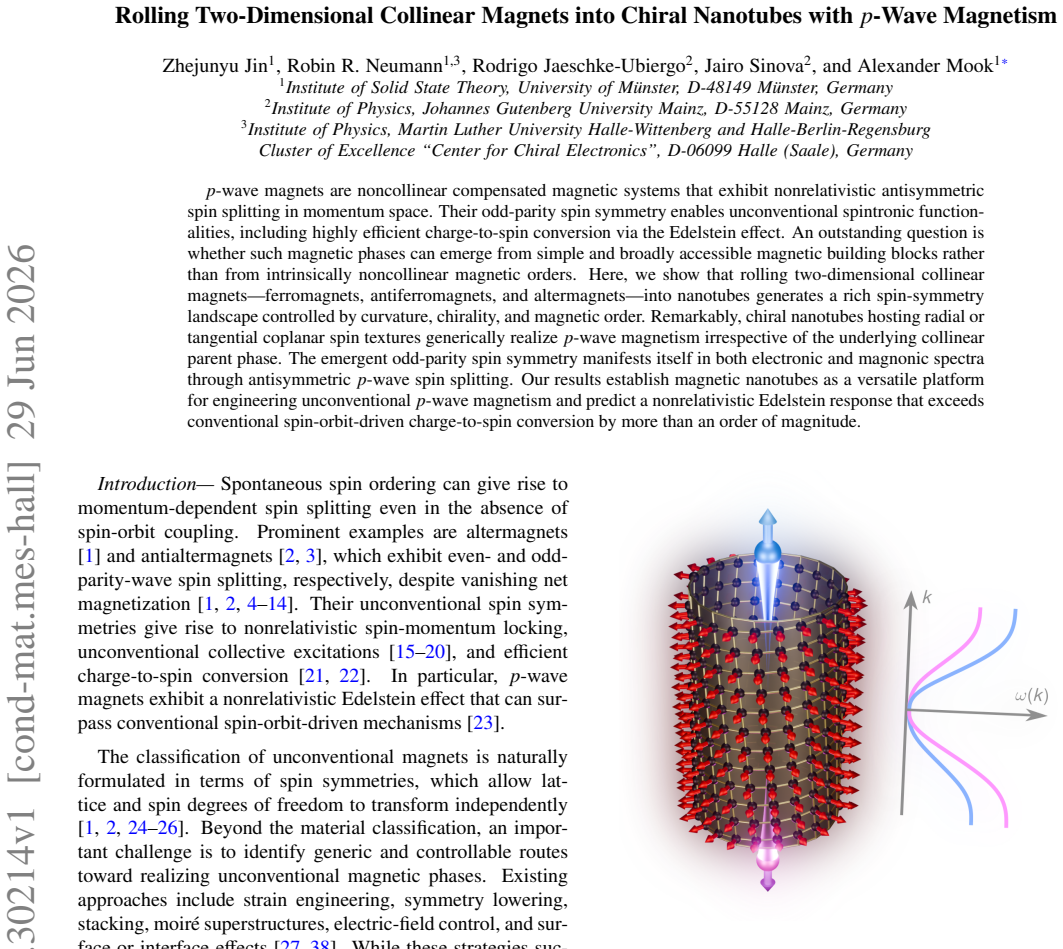
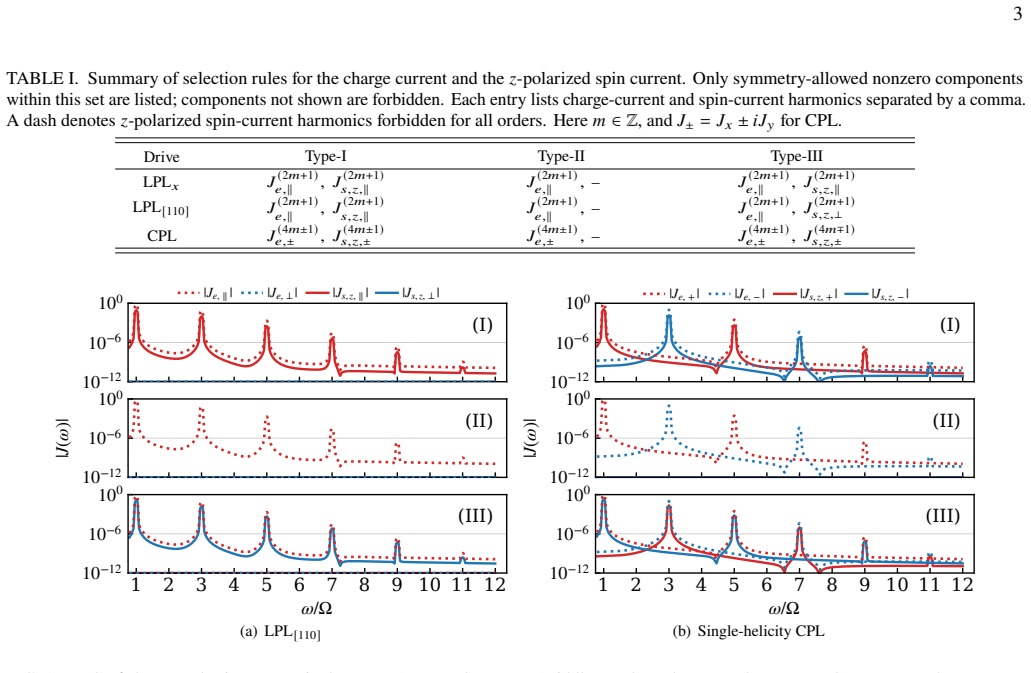
Figure from the paper full image
abstract click to expand
$p$-wave magnets are noncollinear compensated magnetic systems that exhibit nonrelativistic antisymmetric spin splitting in momentum space. Their odd-parity spin symmetry enables unconventional spintronic functionalities, including highly efficient charge-to-spin conversion via the Edelstein effect. An outstanding question is whether such magnetic phases can emerge from simple and broadly accessible magnetic building blocks rather than from intrinsically noncollinear magnetic orders. Here, we show that rolling two-dimensional collinear magnets -- ferromagnets, antiferromagnets, and altermagnets -- into nanotubes generates a rich spin-symmetry landscape controlled by curvature, chirality, and magnetic order. Remarkably, chiral nanotubes hosting radial or tangential coplanar spin textures generically realize $p$-wave magnetism irrespective of the underlying collinear parent phase. The emergent odd-parity spin symmetry manifests itself in both electronic and magnonic spectra through antisymmetric $p$-wave spin splitting. Our results establish magnetic nanotubes as a versatile platform for engineering unconventional $p$-wave magnetism and predict a nonrelativistic Edelstein response that exceeds conventional spin-orbit-driven charge-to-spin conversion by more than an order of magnitude.
2 0
Top Pith
3
cond-mat.mes-hall 2026-05-22 2 theorems

Quantum metric drives Bloch oscillations without Berry curvature

by M. Maneesh Kumar, Md Kaif Faiyaz +2 more

Quantum-metric Bloch oscillations in weakly inhomogeneous electric fields

A weak electric-field gradient produces real-space oscillations via the quantum metric even when curvature vanishes.

Figure from the paper full image
abstract click to expand
Geometric analogs of Bloch oscillations studied so far have relied on Berry curvature. We show that a weakly inhomogeneous electric field adds a distinct quantum-metric term to semiclassical wavepacket dynamics, generating an oscillatory real-space contribution even when the Berry curvature vanishes. The associated transport response comprises an intrinsic and a scattering-time-dependent part. In the regime studied, the latter can dominate and approach finite saturation at high field when the relative field inhomogeneity is held fixed. A tilted Dirac model illustrates the mechanism. Realistic platforms will likely require synthetically engineered superlattices, with a finite quantum metric and an adequate band gap.
1 0
Top Pith
5
cond-mat.mes-hall 2026-05-19 2 theorems

AI robotic lab creates graphene and atomically thin transistors

by Lihan Shi, Zhaoyi Joy Zheng +15 more

Qumus: Realization of An Embodied AI Quantum Material Experimentalist

Qumus completes the first autonomous AI fabrication of vdW-stacked nanodevices with error correction in a closed physical loop.

Figure from the paper full image
abstract click to expand
While modern Large Language Models (LLMs) and agentic artificial intelligence (AI) have demonstrated transformative capabilities in digital domains, the realization of embodied AI capable of real-world scientific discovery remains a difficult frontier. The advancements are hindered by the inherent complexity of integrating high-level reasoning, multimodal information processing and real-time physical execution. Here we introduce Qumus, the first AI quantum materials experimentalist. Physically embodied within a robotic mini-laboratory, Qumus is an intelligent, multimodal, and multi-agent system designed for the creation and nano-processing of atomically thin two-dimensional (2D) materials and stacked van der Waals (vdW) structures. Qumus autonomously navigates the full scientific cycle, from hypothesis generation and protocol planning to multi-step experimental execution, result analysis and reporting, acting as an experimentalist. Markedly, the system has achieved, for the first time, the AI-creation of graphene, as well as the first AI-fabrication of complex nanodevices including atomically thin field-effect transistors via vdW stacking. Qumus excels at these tasks by demonstrating autonomous error correction and closed-loop experimentation. Our results establish a generalizable framework for self-improving embodied AI systems that learn directly from the quantum world, opening a pathway toward accelerated discovery in quantum materials, electronics and beyond.
0
0
cond-mat.mes-hall 2026-07-03

Orbital Hall conductivity set by Bloch geometry

by Min Ju Park, Jongjun M. Lee +1 more

Intrinsic orbital Hall effect in a nonuniform electric field

Nonuniform field response matches charge Hall terms using orbital Berry curvature and quantum metric.

Figure from the paper full image
abstract click to expand
Geometric analysis of electronic Bloch states offers a universal framework for understanding electronic properties, yet its role in the transport of orbital angular momentum remains unexplored. In this work, we establish an analytic connection between orbital angular momentum transport and the geometric properties of Bloch wave functions in electronic systems. Focusing on the intrinsic orbital Hall effect in the dc limit under a spatially nonuniform electric field, we show that its conductivity can be expressed in terms of universal geometric quantities, such as the orbital Berry curvature and quantum metric. This formulation provides a term-by-term correspondence with the geometric description of intrinsic charge Hall transport established in previous studies. Using a tight-binding model, we further illustrate that the higher-order orbital Hall response can exhibit enhanced sensitivity to the orientation of an anisotropic sample. Our work deepens the understanding of diverse intrinsic transverse transport phenomena and the role of quantum geometry in electronic systems.
0
0
cond-mat.mes-hall 2026-07-03

Two p-wave phases arise from coupled crystal and magnetic chirality

by Tom G. Saunderson, Börge Göbel +2 more

Coupled Spin-Orbital p-Wave Magnetism via Structural and Magnetic Chirality

Relative chirality η produces distinct longitudinal conductivity signatures in helical magnets

Figure from the paper full image
abstract click to expand
Helical spin textures represent the minimal realization of $p$-wave magnetism which is characterized by momentum-odd spin polarization. Independently, structurally chiral crystals exhibit momentum-odd orbital polarization arising from broken inversion symmetry. Here, we demonstrate that spin-orbit coupling couples these two independent microscopic chirality degrees of freedom, allowing the orbital polarization of a chiral crystal to generate an additional contribution to the $p$-wave spin splitting. The resulting spin-orbital state is naturally classified by the relative chirality $\eta=\chi_{\mathrm c}\chi_{\mathrm m}$, giving rise to two symmetry-distinct $p$-wave phases corresponding to homochiral and heterochiral configurations which can be directly probed by the longitudinal conductivity. These phases exhibit distinct transport signatures, establishing relative chirality as an experimentally accessible symmetry degree of freedom in chiral magnetic systems.
0
0
cond-mat.mes-hall 2026-07-03

Tunneling in polariton rings produces circulating currents

by A. Kudlis, I. Yu. Chestnov +3 more

Josephson and Spin Currents in Coupled Polariton Condensates

Spin-conserving and spin-flip processes create hidden counterflows that label equilibrium phases in closed networks of condensates.

Figure from the paper full image
abstract click to expand
We analyze particle and spin currents in networks of coupled spinor exciton-polariton condensates arranged as plaquettes and regular polygonal rings. In closed geometries, spin-conserving and TE-TM-induced spin-flip tunnelling combine to generate circulating particle currents, hidden spin counterflows, and bond-dependent spin-current patterns. For the minimal geometries - an equilateral triangle, and a square plaquette - we derive analytical expressions for edge-resolved currents from stationary configurations obtained by energy minimization. We then show how particle, in-plane spin, and out-of-plane spin currents partition the parameter plane and provide direct signatures of the equilibrium phases. Finally, we apply the same current-resolved diagnostics to larger rings, where winding numbers and a branch-invariant common-phase coherence metric organize the resulting phase structure.
0
0
cond-mat.mes-hall 2026-07-03

Phase switching yields anyon entropy in Hall interferometers

by Eran Sela, Mitali Banerjee

Entropy of Non-Abelian Anyons from Slow Quasiparticle Dynamics in Quantum Hall Interferometers

Charge on an embedded antidot is read from interference flips, allowing extraction of the O(1) entropy at intermediate temperatures.

Figure from the paper full image
abstract click to expand
Non-Abelian anyons emerging in fractional quantum Hall states carry a characteristic entropy, $\Delta S = k_B \log d$, where \(d\) is the anyon's quantum dimension. This \(\mathcal{O}(1)\) entropy can, in principle, be extracted from charge measurements of an antidot via Maxwell relations. However, equilibrium charge measurements in fractional antidots have proven to be challenging with conventional charge detectors. Here, we propose a scheme based on an antidot embedded in an interferometer, in which the charge can be inferred from the recently observed time-dependent switching of the interference phase. Performing such non-local charge measurements at equilibrium, the characteristic \(\mathcal{O}(1)\) entropy of non-Abelian anyons (e.g., $d = \sqrt{2}$ for the $\nu = 5/2$ state) can be extracted for intermediate temperatures, which exceed the level spacing of the interferometer edge, but are much smaller than the level spacing of the antidot.
0
0
cond-mat.mes-hall 2026-07-03

Quantum confinement drives exponential resistivity rise in ultra-thin films

by Alessio Zaccone

Electrical transport in ultra-thin films: from Fuchs-Sondheimer to quantum-confinement

Classical scattering models fail at few-nanometer scales, so a new theory unifies them with quantum effects for nanoelectronics.

Figure from the paper full image
abstract click to expand
Ultra-thin films are fundamental components of modern nanoelectronics, where reducing thickness to the few-nanometer scale leads to a dramatic increase in electrical resistivity. For decades, this behavior has been interpreted in terms of classical size effects, primarily surface scattering within the Fuchs--Sondheimer theory and grain-boundary scattering in the Mayadas--Shatzkes model. While these approaches successfully describe transport when the film thickness is comparable to the electronic mean free path, growing experimental evidence indicates that they become insufficient under extreme confinement. This review discusses the crossover from classical scattering to a quantum-confinement regime in which the electronic states available for transport are fundamentally restructured by finite size. We review the recently proposed reciprocal-space confinement theory, which predicts an exponential increase of resistivity with decreasing thickness at the nanoscale, and discuss how it can be combined with classical surface-scattering models to provide a unified description of ultra-thin metallic and semiconducting films. Finally, we summarize recent experimental evidence supporting this picture and discuss its implications for future nanoelectronic devices, nanoscale interconnects, and quantum transport under extreme spatial confinement.
0
0
cond-mat.mes-hall 2026-07-03

Delay-line machine solves 2048-spin Ising problems

by Venkatesh Vadde, Roman Ovcharov +4 more

A 2048-spin bulk acoustic wave Ising machine for number partitioning and Sudoku

Bulk acoustic waves deliver all-to-all connectivity and four orders higher thermal stability than optical coherent Ising machines.

abstract click to expand
Optical coherent Ising machines based on time-multiplexing have demonstrated significant progress in terms of connectivity and spin scalability. However, they are constrained by large physical footprints, high power consumption, poor thermal stability, and high cost. Here, we present a time-multiplexed Ising machine leveraging propagating wave packets in solid-state delay lines at microwave frequencies, enabling thermally stable, robust, low-power, tabletop, and affordable design. We use two serially connected 20.5 MHz, 707 {\mu}s bulk acoustic wave delay lines supporting 2,048 spins. Our design provides all-to-all connectivity with 15-bit coupling resolution and finds approximate MAX-CUT solutions in 341 ms, potentially scalable to sub-ms by using higher frequency delay lines. Additionally, we demonstrate solutions to number partitioning and Sudoku problems. Compared with state-of-the-art Coherent Ising machines, our machine exhibits four orders of magnitude higher thermal stability. Against the simulated bifurcation algorithm, our design achieves comparable results on the MAX-CUT problem, while outperforming it on the more complex number-partitioning and Sudoku problems.
0
0
cond-mat.mes-hall 2026-07-03

Quantum-metric dipole sets nonreciprocal current through distribution shift

by Sota Kitamura, Takahiro Anan +1 more

Quantum-geometric shift of quasiequilibrium: Origin of nonreciprocal current driven by quantum-metric dipole

The shift arises because electron wave packets spread while relaxing under bias, an effect missed by semiclassical methods.

Figure from the paper full image
abstract click to expand
We study nonlinear DC electric transport of quantum-metric origin by combining adiabatic perturbation theory with the nonequilibrium Green function approach. The adiabatic ansatz provides a basis for directly treating a DC electric field in the velocity gauge, rather than introducing it as the zero-frequency limit of an AC field. The resulting adiabatic-basis Hamiltonian takes the same form as in the length gauge, enabling a systematic comparison across different formulations. Applying this fully quantum formulation, we find a longitudinal nonreciprocal current governed by the quantum-metric dipole. The essential ingredient is a quantum correction to the distribution function that is absent in semiclassical treatments. We trace this correction to the finite spread of an electron wave packet during relaxation under a bias field, thereby identifying shifted quasiequilibrium as the physical origin of quantum-metric nonreciprocal transport.
0
0
cond-mat.mes-hall 2026-07-03

Wigner function derived for integer quantum Hall states

by Yao Wang, Qi-Ming Fu +3 more

The Wigner function for Integer quantum Hall effect

Landau-gauge wave functions are integrated to obtain the phase-space quasi-probability distribution.

abstract click to expand
Wigner's quasi-probability distribution function in phase space is a specialized representation of the density matrix, possessing significant physical importance. In this article, we first review the wave function describing electronic motion in an electromagnetic field under the Landau gauge. Next, based on an introduction to the properties of the Wigner function, we calculate the Wigner function for the integer quantum Hall effect using the integral method.
0
0
cond-mat.mes-hall 2026-07-03

Magnetic barriers filter electrons by direction in borophene

by Rachid El Aitouni, Sanae Zriouel +3 more

Anisotropic tunneling through magnetic barriers in 8-Pmmn borophene

Tilted Dirac cones cause transmission to drop for certain angles, allowing magnetic tuning of current flow.

Figure from the paper full image
abstract click to expand
We present a theoretical study of electron tunneling through a magnetic barrier in 8-Pmmn borophene, created by depositing two ferromagnetic strips on the borophene sheet. Using a low-energy effective Hamiltonian that captures the anisotropic Dirac spectrum, we solve the Dirac equation in three regions and impose wave-function continuity at the interfaces. From the resulting spinor solutions, we compute current densities and determine transmission and reflection probabilities as functions of incident energy, angle, and barrier parameters. The transmission exhibits strong anisotropy due to the tilted Dirac cones, with pronounced suppression for specific incident directions, suggesting directional filtering of carriers. We further calculate the conductance using the Landauer-B\"uttiker formalism, revealing that both magnetic strength and barrier width can tune the charge transport properties. The results demonstrate that engineered magnetic barriers in 8-Pmmn borophene enable precise control over electron flow, offering a platform for anisotropic transport control and tunable quantum devices. The interplay between the intrinsic anisotropy of borophene and external magnetic barriers provides rich opportunities to manipulate Dirac fermions in two-dimensional systems.
0
0
cond-mat.mes-hall 2026-07-03

Ellipticity angle defines inertial spin wave chirality and polarization

by De-Yun Zhao, Ri-Xing Wang +3 more

An efficient formalism for inertial spin waves: Dzyaloshinskii-Moriya antiferromagnets as case studies

Framework applied to Dzyaloshinskii-Moriya antiferromagnets shows how interactions lift degeneracy and fix handedness in precessional and nu

Figure from the paper full image
abstract click to expand
Magnetic inertia, emerging in the ultrafast regime, supports inertial spin waves (SWs) as novel magnetic excitations. Despite considerable efforts devoted to inertial SWs, a systematic formalism for fully characterizing their intrinsic properties, especially chirality and polarization, is still lacking, and inertial SWs in spatially nonuniform magnetic configurations remain poorly explored. Here, we develop a framework for calculating inertial SWs and establish a general definition of their chirality and polarization via the ellipticity angle, a unified parameter encoding frequency sign, phase difference, and elliptical axis ratio. Using this method, we systematically investigate precessional and nutational SWs in uniaxial antiferromagnets with staggered and homogeneous Dzyaloshinskii-Moriya interactions (DMIs), covering uniform collinear, canted, and spiral magnetic configurations. The results reveal that small staggered DMI preserves spin-wave degeneracy, whereas small homogeneous DMI lifts it. Further space-time inversion symmetry breaking in canted and spiral structures fully removes spin-wave degeneracy across the entire Brillouin zone. Long-wavelength nutational SWs behave as backward waves, and flat bands emerge in canted and spiral configurations near a critical inertial relaxation time. In canted and spiral configurations, nutational modes are always lefthanded whereas precessional modes are always righthanded; additionally, the dispersion spectra of the canted configuration can be derived from those of the spiral configuration via band folding. Polarization is wavenumber insensitive for uniform configurations but becomes strongly dispersive for nonuniform ones. This work advances the fundamental understanding of magnetic inertial dynamics and provides theoretical insights for the development of ultrafast magnonic devices.
0
0
cond-mat.mes-hall 2026-07-03

No technique images nanoscale heat at cryogenic temperatures

by Valentin Fonck, Jean Spiece +1 more

Quantum Heat Under the Microscope: A Perspective on Cryogenic Scanning Thermal Microscopy

Review of current limits and five case studies motivates cryogenic scanning thermal microscopy for quantum phases.

Figure from the paper full image
abstract click to expand
Exploring thermal transport at cryogenic temperatures presents both significant challenges and valuable insights. By uncovering the thermal counterpart of well-known quantum phenomena, researchers investigated fascinating phenomena ranging from the violation of the Wiedemann-Franz law to the quantisation of phonons. One key frontier remains : no existing method can image local heat transport at the nanoscale under cryogenic conditions. In this Perspective, we review the current state state of the art of local heat transport characterisation techniques and highlight their limitations. As a motivation for the development of cryogenic Scanning Thermal Microscopy, we provide five case studies illustrating how this approach could deepen our understanding of exotic quantum phases and enable the emergence of transformative technologies.
0
0
cond-mat.mtrl-sci 2026-07-03

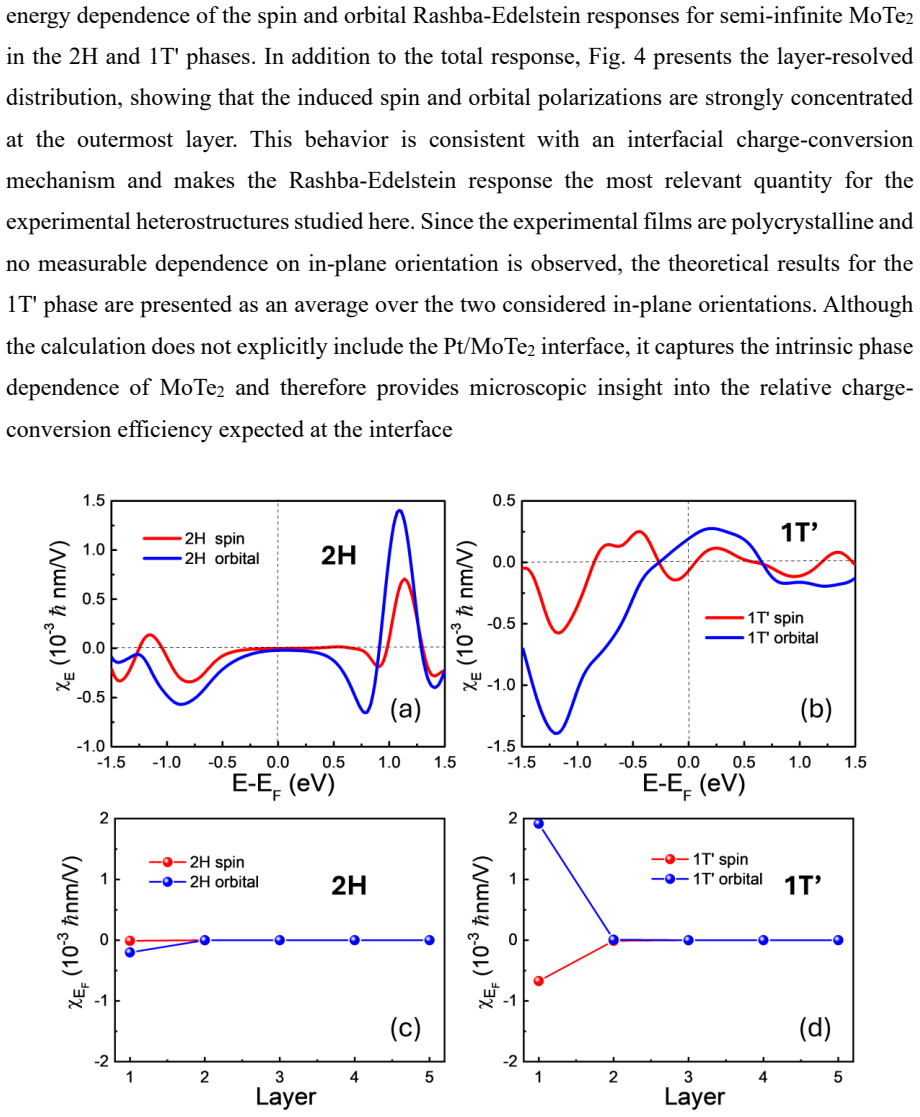
MoTe2 films convert charge orbitally only below 4.5 nm

by J. L. Costa, E. Santos +8 more

Phase-selective orbital-charge conversion in MoTe₂

Metallic 1T' phase enables orbital Rashba-Edelstein response while thicker 2H films show none, per spin-pumping and calculations.

Figure from the paper full image
abstract click to expand
Two-dimensional transition metal dichalcogenides (TMDs) have emerged as promising materials for spin--orbitronics owing to their strong spin--orbit coupling and rich electronic phases. However, their orbital transport properties remain largely unexplored. Here, we demonstrate that the orbitronic response of $\mathrm{MoTe_2}$ is governed by a thickness-driven structural phase transition. RF-sputtered $\mathrm{MoTe_2}$ thin films exhibit a crossover at a critical thickness of approximately $4.5\,\mathrm{nm}$, stabilizing in the metallic $1T^\prime$ phase below this threshold and in the semiconducting $2H$ phase above it. Raman spectroscopy and scanning tunneling spectroscopy (STS) confirm the structural and electronic transition, revealing gapless behavior in ultrathin films and a finite band gap in thicker samples. Spin-pumping measurements detect an additional transverse charge-conversion signal exclusively in metallic $1T^\prime$-$\mathrm{MoTe_2}$, in agreement with first-principles calculations that identify a dominant orbital Rashba--Edelstein response as the underlying conversion mechanism.
0
0
cond-mat.str-el 2026-07-02

Green's functions reach nonlinear Hall response past perturbative crossover

by Lei Geng, Martin Eckstein +5 more

Nonperturbative Nonlinear Hall Effect in Nonequilibrium Steady States

New nonequilibrium method handles interactions where constant-relaxation-time and dipole approximations fail

Figure from the paper full image
abstract click to expand
The nonlinear Hall effect in quantum materials has attracted broad interest, yet most existing studies focus on the weak-field, perturbative regime. Here we develop a nonperturbative approach based on nonequilibrium steady-state Green's functions for dc-field-driven lattice systems, with dissipation and interactions incorporated through self-energies beyond the constant relaxation-time approximation and interband transitions treated alongside their intraband counterparts. Applied to a two-band semimetal model, our approach provides direct access to the strong-field Hall response beyond the nonperturbative crossover where the edge of the nonequilibrium distribution reaches Berry-curvature hot spots, a regime in which constant relaxation-time estimates and Berry curvature dipole calculations become unreliable. We further demonstrate that interaction and electron-phonon self-energies within dynamical mean-field theory can substantially change the Hall signal. Our framework enables quantitative simulations of nonequilibrium nonlinear Hall phenomena and provides guidance for strong-field transport experiments.
0
0
cond-mat.mes-hall 2026-07-02

Modulated light cools nuclear spins in MAPbI3

by Mladen Kotur, Dmitri R. Yakovlev +4 more

Resonant cooling of nuclear spins by optically-oriented holes in MAPbI₃ perovskite crystals

Helicity switching shifts Hanle resonances outward, showing strongly localized holes cool 207Pb nuclei.

Figure from the paper full image
abstract click to expand
Resonant cooling of nuclear spins by photogenerated spin-oriented holes is demonstrated for MAPbI$_3$ perovskite crystals. It is evidenced by Hanle-effect measurements under helicity-modulated excitation with variable frequency. The resonance position in magnetic field shifts toward higher fields with increasing modulation frequency. The invariance of the Hanle curve upon in-plane sample rotation is consistent with the involvement of $^{207}$Pb nuclei with spin $I = 1/2$, which do not exhibit quadrupolar splitting. The shape of the resonance feature in the Hanle curve reveals that the nuclear spins are cooled by carriers with a negative $g$-factor, consistent with holes. The resonance fields associated with the modulation frequencies exceed the half-width of the weakly localized hole contribution to the Hanle curve, indicating that strongly localized holes are the primary carriers responsible for the nuclear spin cooling.
0
0
cond-mat.mes-hall 2026-07-02

Room-temperature process keeps low carrier density in TI nanodevices

by Linh T. Dang, Ayushi Solanki +3 more

Fabrication of high-quality topological insulator nanodevices from bulk-insulating air-sensitive Sb-Bi₂Se₃

Quantum oscillations and weak antilocalization confirm bulk insulation preserved in Hall bars and nanowires.

Figure from the paper full image
abstract click to expand
High-quality topological insulator (TI) materials are essential for the realization and detection of Majorana bound states (MBSs) in TI-superconductor hybrid platforms. Widely used compensated TIs exhibit substantial disorder and charge inhomogeneity, which may be detrimental for Majorana devices. In this regard, Sb-substituted Bi$_2$Se$_3$ (SBS) is promising, because it is non-compensated and yet achieves very low bulk carrier density. We systematically investigate the impact of thermal processing during microfabrication on the transport properties of SBS. We developed a room-temperature fabrication protocol that preserves the low carrier density of exfoliated SBS upon fabrication of Hall bar and nanowire devices as evidenced from the observation of quantum interference oscillations in nanowires, a large gate tunability, and clear signatures of weak antilocalization (WAL).
0
0
cond-mat.mes-hall 2026-07-02

Magnetic field creates quasibound states in WSe2 dots

by Rachid El Aitouni, Mohammed El Azar +3 more

Confinement in a magnetically induced WSe₂ quantum dots

Localized barrier suppresses Klein tunneling and produces tunable resonances for low-energy carriers.

Figure from the paper full image
abstract click to expand
Monolayer tungsten diselenide (WSe$_2$) has become a suitable platform for quantum transport and spintronics and valleytronics applications because it possesses an intrinsic band gap and strong spin-orbit coupling and spin-valley coupling features. The electrostatic confinement of Dirac fermions proves challenging in graphene because of Klein tunneling, yet WSe$_2$ provides an environment that supports both carrier localization and the development of confined quantum states. In this work, we theoretically investigate the confinement of massive Dirac fermions in a WSe$_2$ quantum dot generated by a localized magnetic field. Using the effective Dirac Hamiltonian in the presence of a magnetic flux, we derive the exact wave functions and scattering coefficients by employing Kummer's confluent hypergeometric functions together with Bessel and Hankel functions. Our results show that the localized magnetic field provides an efficient mechanism to suppress Klein tunneling and promote the formation of stable quasibound states. We systematically examine the scattering efficiency and carrier density distributions as functions of the incident energy, magnetic field strength, and quantum dot radius. We find that low-energy carriers are strongly confined by the magnetic barrier, while the interplay between magnetic localization and geometric confinement gives rise to sharp and tunable resonance peaks. These results provide valuable insight into the control of spin-valley transport in transition metal dichalcogenide nanostructures and establish a theoretical basis for the development of quantum confinement devices and quantum information technologies.
0
0
cond-mat.mtrl-sci 2026-07-02

Electric fields reshape GaN defect barriers nonlinearly

by Farshid Reza, Hamdy Arkoub +3 more

Electric-field effects on defect migration energetics in GaN

Anisotropic changes from charge redistribution replace simple linear bias and matter for high-field device reliability.

Figure from the paper full image
abstract click to expand
A predictive understanding of defect transport in GaN under operating electric fields is critical for assessing device reliability in high-power and radiation environments. In this work, a ReaxFF reactive force field for GaN is developed using a density-functional-theory training set that includes structural, thermodynamic, and defect properties. The force field yields various properties such as lattice parameters, cohesive energies, and defect formation and migration energies in close agreement with prior first-principles and experimental results. Under externally applied electric fields, we find that migration barriers can be strongly modulated, with changes that depend on defect type and field orientation. Notably, the electric fields do not simply linearly bias defect motion in GaN, but can anisotropically modify migration barriers through charge-lattice coupling, leading to nonlinear transport behavior. The response arises from field-induced partial charge redistribution and local lattice distortion. These results demonstrate that electric fields can complexly modify the defect migration landscape, providing new insight into defect transport in GaN under high-field conditions.
0
0
cond-mat.mtrl-sci 2026-07-02

Skyrmion scattering sets Hall conductivities at all couplings

by Arijit Mandal, Hareram Swain +2 more

Topological Hall effect due to electron-skyrmion scattering

The Lippmann-Schwinger method finds resonances and minima that make both topological and spin Hall responses vary sharply with electron ener

Figure from the paper full image
abstract click to expand
Electron scattering from chiral spin textures such as skyrmions is fundamental to the understanding of transport in more complex systems, including skyrmion crystals. Most of the previous studies have focused on the weak-coupling regime, where the exchange interaction is small compared with the electron energy. Real materials, however, often lie in the strong-coupling regime, which exhibits qualitatively different behavior. Using the Lippmann-Schwinger equation and Green's function formalism, valid for all coupling strengths, we uncover several new features in the scattering cross section, including Ramsauer-Townsend minima, pronounced intermediate-coupling resonances, and Landau-level resonances for skyrmions with larger winding numbers. These features strongly influence the topological and spin Hall conductivities, which depend sensitively on the incident electron energy. Our work provides important insights into the Hall transport in collective chiral spin textures such as the skyrmion crystal.
0
0
cond-mat.mes-hall 2026-07-02

Critical current scales with miniband width in tunable moiré graphene

by Riccardo Bertini, Xueqiao Wang +17 more

Bandwidth-Limited Critical Currents in Electrically Tunable Moir\'e Bands

Displacement field narrows the valence band and lowers the nonequilibrium threshold, with identical scaling across graphene superlattices.

Figure from the paper full image
abstract click to expand
Moir\'e superlattices host narrow minibands whose bandwidth governs correlated and topological phases. Here, we demonstrate that the bandwidth also sets the critical current for the onset of out-of-equilibrium transport. In bilayer graphene aligned to hexagonal boron nitride, we explore the high-current transport regime as we continuously flatten the valence miniband using an out-of-plane displacement field. We observe a significant reduction in the critical current, which is captured by a minimal analytical model and corresponds to the calculated narrowing of the miniband. Moreover, by comparing distinct moir\'e platforms, we show that the scaling between critical current and bandwidth is a universal feature of graphene superlattices. Our results reveal a direct link between miniband dispersion and high-current transport, and establish this regime as a fast and accessible electrical probe of bandwidth evolution.
0
0
cond-mat.supr-con 2026-07-02

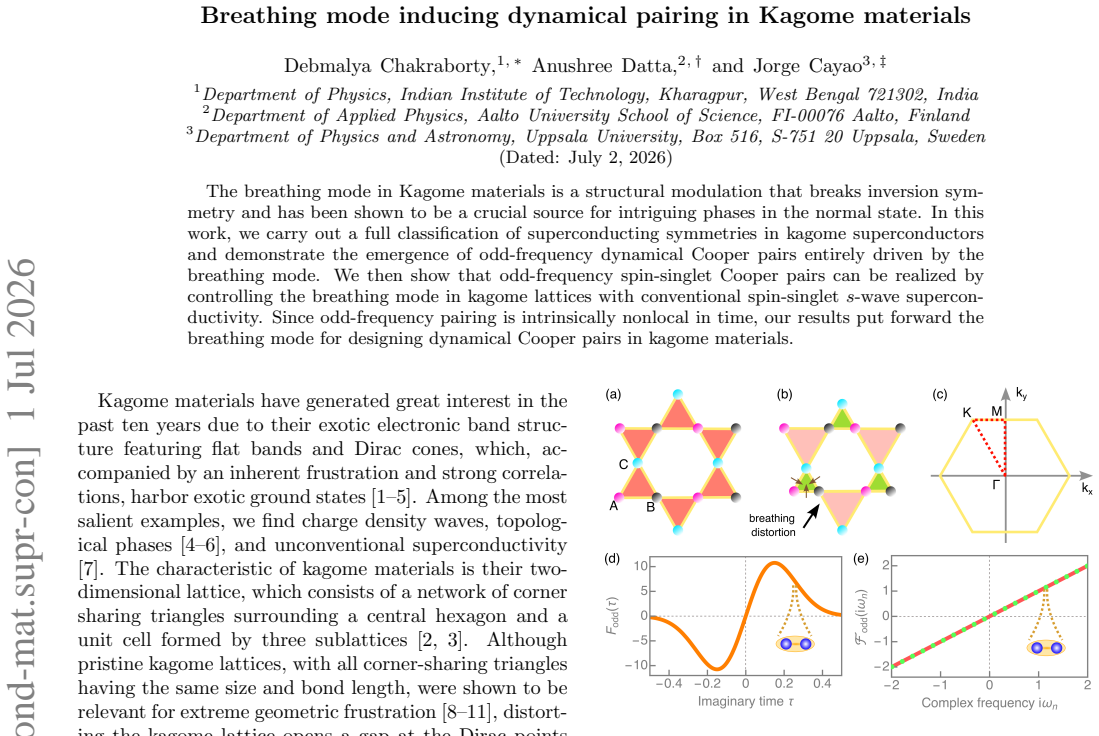
Kagome breathing mode turns s-wave into odd-frequency Cooper pairs

by Debmalya Chakraborty, Anushree Datta +1 more

Breathing mode inducing dynamical pairing in Kagome materials

Controlling this lattice distortion realizes time-nonlocal spin-singlet pairs on top of conventional superconductivity.

Figure from the paper full image
abstract click to expand
The breathing mode in Kagome materials is a structural modulation that breaks inversion symmetry and has been shown to be a crucial source for intriguing phases in the normal state. In this work, we carry out a full classification of superconducting symmetries in kagome superconductors and demonstrate the emergence of odd-frequency dynamical Cooper pairs entirely driven by the breathing mode. We then show that odd-frequency spin-singlet Cooper pairs can be realized by controlling the breathing mode in kagome lattices with conventional spin-singlet $s$-wave superconductivity. Since odd-frequency pairing is intrinsically nonlocal in time, our results put forward the breathing mode for designing dynamical Cooper pairs in kagome materials.
0
0
quant-ph 2026-07-02

Susceptibility-kinetic bound limits quantum current precision

by Didrik Palmqvist, Ludovico Tesser +1 more

Susceptibility-kinetic uncertainty relations for quantum systems

Partial activity from Fisher information plus susceptibility term holds for arbitrary open quantum systems.

Figure from the paper full image
abstract click to expand
Kinetic uncertainty relations bound current precision of stochastic processes by dynamical activity. The extension of these bounds to quantum systems has been impeded by coherence, strong system-reservoir coupling, and the subtlety of defining dynamical activity in the quantum regime. Here, we introduce a partial dynamical activity through the quantum Fisher information associated with the rescaling of the system-reservoir coupling and show that it bounds current precision via a universal susceptibility-kinetic uncertainty relation. The general validity of this relation for any open quantum system is guaranteed by the natural contribution of a susceptibility term, which is experimentally accessible by tuning the system-reservoir coupling strength. We show how the partial dynamical activity encompasses previous definitions of activity in the weak-coupling Markovian limit and that it provides an information-geometric interpretation of correlator-based activities. We illustrate the tight constraint on precision that our bound provides with the example of steady-state transport through a double quantum dot, where quantum effects invalidate previously developed kinetic uncertainty relations. We expect our bound to provide a powerful tool for optimizing precision in arbitrary quantum systems.
0
0
cond-mat.mes-hall 2026-07-02

Dissipative coupling creates tunable exceptional points in polaritons

by A. J. Vega-Carmona, D. A. Mendoza +2 more

Exceptional points in dissipative coupling polaron-polaritons

Many-body correlations and non-Hermitian light-matter coupling together produce controllable anomalous dispersion across multiple branches.

Figure from the paper full image
abstract click to expand
Understanding how strong correlations and dissipation combine to shape collective quantum excitations is a central challenge in many-body physics. We investigate the effect of dissipative light-matter coupling on strongly interacting exciton-polaritons in the presence of a biexciton resonance, which gives rise to polaron-polariton quasiparticles. We show that the interplay between many-body correlations and non-Hermitian coupling generates anomalous dispersion relations and exceptional points in the polaron-polariton spectrum. The location and coexistence of exceptional points are controlled by the dissipative coupling and the relative decay rates of the excitonic and photonic constituents, allowing them to emerge across different polaron-polariton branches. These results identify dissipative polaron-polaritons as a versatile platform for exploring non-Hermitian many-body physics with tunable light-matter quasiparticles.
0
0
cond-mat.mes-hall 2026-07-02

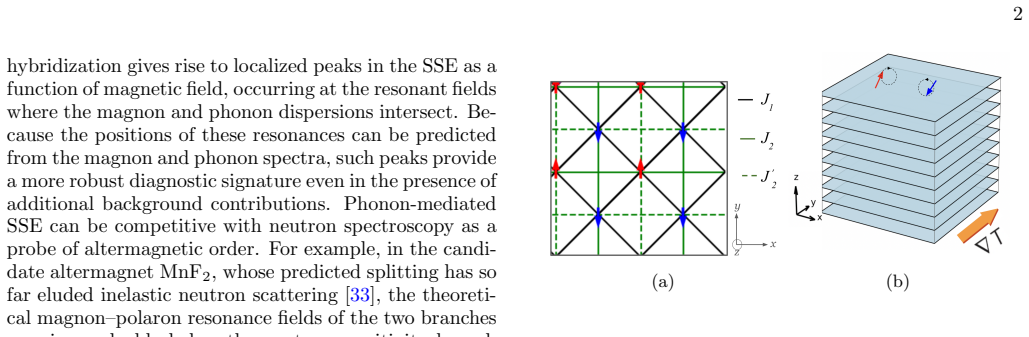
Altermagnets display directional spin Seebeck anisotropy under magnetic field

by Ilia Moghayer, Ritesh Das +1 more

Magnon-polaron mediated spin Seebeck effect in altermagnets

The in-plane difference grows with field strength while magnetoelastic coupling adds resonant peaks that track the anisotropic magnon bands.

Figure from the paper full image
abstract click to expand
Altermagnets, distinguished by compensated antiparallel spins yet nondegenerate magnon spectra, bridge the gap between ferromagnets and antiferromagnets. Although several probes such as anisotropic transport and spectroscopic measurements have been proposed to identify altermagnetic order, experimentally accessible transport signatures remain highly desirable. Here, we show that in altermagnets subject to an external magnetic field, the spin Seebeck effect exhibits pronounced directional anisotropy. Specifically, the spin Seebeck coefficient differs significantly along in-plane directions, and this anisotropy increases with field strength. Magnetoelastic interactions further produce resonant peaks whose positions with respect to an applied magnetic field reflect the intrinsic magnon band anisotropy, and provide localized features that enhance the distinguishability of the altermagnetic response. The peaks provide a robust experimental signature of altermagnetic order. Our findings serve as signatures of altermagnetic order while laying the groundwork for their application in spintronic devices.
0
0
cond-mat.str-el 2026-07-02

Tensor networks solve billion-site tight-binding problems

by Tiago V. C. Antão, Anouar Moustaj +2 more

Tensor Network Solvers for Ultra-large Tight-binding Hamiltonians: Algorithms and Applications

Mapping to pseudospin chains keeps bond dimensions small and fixed for compressible real-space Hamiltonians.

Figure from the paper full image
abstract click to expand
Understanding quantum materials at meso and even macroscopic scales requires tight-binding calculations on system sizes where explicit matrix representations become prohibitively costly. This represents a major bottleneck to rationalize phenomena in moir\'e and super-moir\'e heterostructures and quasicrystals. Here, we present a unified tensor-network methodology to solve tight-binding problems at exceptionally large scales, by mapping a system of $N = 2^L$ sites onto a many-body problem of $L$ pseudospin sites, which is subsequently solved with tensor network algorithms. For Hamiltonians with compressible real-space structure, the tensor network bond dimension remains modest, typically of order a few tens, independent of $N$.Tensor network representations of arbitrary hopping functions including long-range, spatially modulated, and twisted-layer couplings are built with quantics tensor cross interpolation, and all physical observables are evaluated entirely with tensor network algebra without explicit matrix storage or diagonalization. We demonstrate applications to spectral functions, momentum-space spectra via the tensor-network quantum Fourier transform, real-space topological invariants, real-time dynamics, correlation induced symmetry breaking with self-consistent mean-field calculations, non-Hermitian phenomena, and excitonic many-body physics. Our methodology enables routinely solving systems with billions of sites, by leveraging the tensor network compressibility of real-space structures, and establishing a flexible framework to study quantum matter at ultra-large length scales. The methodology is implemented in the open-source Julia package TensorBinding.jl.
0
0
cond-mat.mes-hall 2026-07-02

Bilayer turns spin waves unidirectional via dipolar polarization

by M. A. Kuznetsov

Modification of Damon-Eshbach magnetostatic mode spectra in ferromagnet/paramagnet bilayer

Nonreciprocity magnitude follows from paramagnet susceptibility and can be switched by field or temperature near T_C.

Figure from the paper full image
abstract click to expand
Using the magnetostatic approximation, we calculate the spectra of bulk and surface spin waves in an in-plane magnetized ferromagnet/paramagnet bilayer. Due to the dipolar coupling between the layers, the paramagnet becomes polarized, which in turn modifies the spectrum of the Damon-Eshbach magnetostatic modes. We assume that the paramagnet is characterized by a magnetic susceptibility, $\chi \propto 1/(T-T_C)$, which reaches large values when the system temperature $T$ is close to the Curie temperature $T_C$. We find the conditions under which surface spin waves become unidirectional, i.e., capable of carrying energy in only one direction, and determine the magnitude of their frequency nonreciprocity. We demonstrate the possibility of switching the unidirectional wave regime on and off by varying the external magnetic field or temperature, making the ferromagnet/paramagnet system an attractive platform for tunable magnonic logic devices.
0
0
cond-mat.mes-hall 2026-07-02

Ring devices need both T and I broken for non-reciprocal flow

by Chen-How Huang, Tero T. Heikkilä

Symmetry Classification of Non-Reciprocal Responses in Multiterminal Ring Devices

For three terminals, residual geometry symmetry then selects which circulation patterns are allowed.

Figure from the paper full image
abstract click to expand
We present a symmetry-based framework to classify the non-reciprocal responses of multiterminal ring quantum devices. The device is modeled as a ring of $n$ vertices, where a binary variable $e_k\in\{+1,-1\}$ on each bond encodes the preferred direction of signal flow between terminals. Non-reciprocity corresponds to a preferred current configuration on the ring, and the symmetry group of the device partitions all $2^n$ configurations into equivalence classes(orbits) characterized by a topological winding number $W$. Using the minimal non-trivial case $n=3$, we establish two results independent of microscopic details. First, lifting the degeneracy within an orbit generates non-reciprocal responses. For $n=3$ this requires simultaneous breaking of both time-reversal $T$ and spatial inversion $I$. Breaking either alone is insufficient. Second, the residual geometry symmetry after $T$ and $I$ are broken determines which responses are observable. For an isosceles triangular geometry, only two types of response are allowed: uniform circulation (all bonds carrying current in the same direction) and semi-circulation with the reversed bond on the geometrically distinct base. Semi-circulation with the reversed bond on either equal leg is symmetry-forbidden. Both predictions are validated using a minimal toy model of three quantum dots coupled to superconducting baths, which demonstrates a reactive quantum circulator response.
0
0
cond-mat.supr-con 2026-07-02

THz nanoscopy spots 300-nm defects in superconductors

by Sergio J. Salvía-Fernández, Ekaterina Khestanova +10 more

Imaging superconducting weak spots through vortex-assisted THz near-field photovoltage

Photovoltage peaks mark sites of enhanced vortex pair creation in current-biased NbN.

abstract click to expand
Nanoscale inhomogeneities are a defining feature of many superconducting materials, yet their local electromagnetic response has remained difficult to access experimentally. This is because their relevant energy scale lies in the terahertz range, where wavelengths -- on the order of hundreds of microns -- are too large to spatially resolve nanoscopic variations. Here, we demonstrate the first application of THz near-field photovoltage nanoscopy in a superconductor, achieving 300 nm spatial resolution at 2.52 THz. Scanning a current-biased NbN strip, we reveal photovoltage peaks within the bulk associated with nanoscopic defects of reduced superfluid density. The observed photovoltage follows the evolution of the vortex-dissipative state and is attributed to enhanced vortex-antivortex pair nucleation at defect sites. Together, these results open a direct route to probing how material inhomogeneities influence light-matter interactions in superconductors, with implications for superconducting devices and strongly inhomogeneous systems such as high-Tc and moir\'e materials.
0
0
cond-mat.mes-hall 2026-07-02

Electric field tunes magnon spin photocurrent in Cr2O3

by Zhuo-Cheng Gu, Hiroaki Ishizuka

Electrical control of spin photocurrent in a magnetoelectric oxide Cr₂O₃

Field-induced Dzyaloshinsky-Moriya interaction creates anisotropy in conductivity that varies with light polarization and field strength.

Figure from the paper full image
abstract click to expand
Controlling magnetism by electric field or current is a central topic in spintronics. In this work, we argue that the magnon spin photocurrent can also be controlled by the electric field in magnetoelectrics. Taking Cr$_2$O$_3$ as an example, we demonstrate how the spin current is modified by the electric field, using nonlinear response theory. We find that the Dzyaloshinsky--Moriya interaction induced by the applied field plays a key role in modifying spin-current conductivity, which exhibits pronounced anisotropy with respect to the light polarization. In particular, both the resonance frequency and the peak intensity show distinct dependences on the external electric field $E$, demonstrating electrical control of the spin photocurrent. In addition, we show that the two-magnon processes give rise to a continuum spectrum, a consequence of the field-induced spin canting. These results show that Cr$_2$O$_3$ is a promising platform for realizing electrically tunable spin photovoltaic effect.
0
0
cond-mat.mes-hall 2026-07-02

Three nanowires implement every classical logic gate

by Martin Berke, Lőrinc Kupás +4 more

Universal logic circuit for gate-controlled superconductor-based switches operating at liquid-helium temperatures

Gate-controlled supercurrent switches realize AND, OR, NOT and the half-adder at liquid-helium temperatures.

Figure from the paper full image
abstract click to expand
The observation of the gate-controlled supercurrent (GCS) effect in superconducting nanostructures initiated major research efforts toward the realisation of superconducting-based computing architectures. Here we introduce a universal logic circuit that can be a promising superconducting building block of classical hybrid supercomputers. We demonstrate a functionally complete set of logic gates by realising the AND, OR, NOT and COPY gates. The general layout and scalability of our device, combined with recent experiments demonstrating fast switching and small voltage signals, make it a functional candidate in superconducting electronics. Our device enables the realization of all classical logic gates and the half-adder combinational logic circuit using at most three nanowires, each uniquely configured with two side-gate electrodes.
0
0
physics.optics 2026-07-02

s-SNOM maps mode losses in WS2 waveguides from 800 to 1400 nm

by Zara S. Taylor, Luke M. Hallacy +8 more

Near-Field Characterisation of Guided Modes in WS2 Nanobeams and Quasi-Bulk Crystals

Cavity imaging bounds extinction while near-field probes show dispersion trends and interference artefacts that shift indices by up to 0.25

Figure from the paper full image
abstract click to expand
The exceptionally high in-plane refractive index, low sub-bandgap absorption, and strong optical anisotropy of WS2 make it a promising material platform for next-generation integrated circuits for nanophotonics. Its layered van der Waals structure further enables heterogeneous integration with silicon photonics and emerging two-dimensional optoelectronic materials. However, despite increasing interest in the waveguiding properties of WS2, experimental studies of wavelength-dependent modal confinement and attenuation remain limited. Additionally, though the extinction coefficient of WS2 is expected to be near-negligible beneath the bandgap, reported values span orders of magnitude, leading to large uncertainty in predicted modal decay lengths and wafer-scale integration feasibility. To resolve these ambiguities we perform hyperspectral cavity-enhanced imaging, determining high-resolution upper and lower bounds on the extinction coefficient of WS2 within the visible-NIR edge. We further employ scattering-type scanning near-field optical microscopy (s-SNOM) to probe TE0, TM0, and higher-order modes in both quasi-bulk and nanobeam WS2 waveguides across the 800-1400 nm spectral range, enabling identification of mode-specific trends in wavevector dispersion and loss. This work simultaneously assesses s-SNOM as a probe of waveguide performance, and we find that while absolute loss values depend on measurement geometry, s-SNOM reliably captures relative modal trends and provides upper bounds on propagation loss, supporting its use as a diagnostic tool for anisotropic waveguides. We further identify significant artefacts in nanobeam measurements arising from transverse interference and spatial sampling effects when the structure size approaches the excitation wavelength, which can shift extracted effective indices by up to 0.25.
0
0
cond-mat.mes-hall 2026-07-02

SQUID oscillations confirm facet-selective supercurrent in ZrTe5

by Prasanna Rout, Ankit Khola +10 more

Facet-selective ballistic supercurrent in a weak topological insulator

Josephson junctions on weak topological insulator exhibit ballistic transport confined to specific crystal facets linked to gapless surface

abstract click to expand
Topological superconductivity is widely pursued by inducing superconducting correlations in topologically protected boundary states. In two dimensions, this strategy has been realized using one-dimensional topological edge modes, but in three-dimensional crystals, spatially separated surface supercurrents confined to selected facets have not yet been achieved. Here we demonstrate facet-selective ballistic supercurrent in Josephson junctions based on the weak topological insulator ZrTe<sub>5</sub>. Superconducting quantum interferometry reveals SQUID-like critical current oscillations with flux-quantum periodicity, establishing that the supercurrent is spatially concentrated on specific crystallographic facets that host gapless topological surface states. Rotating the magnetic field yields markedly distinct interference patterns, linking the supercurrent distribution to the underlying bulk topology. The exponential temperature dependence of the critical current and triangular interference lobes provide signatures of ballistic transport due to high-transmission topological channels. These results establish weak topological insulators as a platform for facet-resolved superconducting devices and higher-order topological superconductivity.
0
0
cond-mat.mes-hall 2026-07-02

Charge current through chiral bridge creates internal field for spin selectivity

by Subhajit Sarkar, Oliver L. A. Monti +1 more

Spinterface-like mechanism of the chirality-induced spin selectivity in donor chiral-bridge acceptor complexes

Model shows tens-of-percent polarization arises from donor electron acting as localized moment at the interface.

Figure from the paper full image
abstract click to expand
The chirality-induced spin selectivity (CISS) effect has been invoked to explain recent reports of differences in the time-resolved EPR signals between chiral and achiral molecules. However, the microscopic origin of these differences and their connection to CISS remains contested, particularly since these systems lack a metal interface. Here we introduce an intramolecular spinterface-like mechanism that naturally arises within donor-chiral bridge-acceptor (D--$\chi$B--A) complexes and quantitatively reproduces experimentally reported observed spin polarization in time-resolved EPR studies. In our two-electron Lindblad model, the photoexcited charge-transfer electron traversing the chiral bridge exchanges with the residual donor electron, which acts as a localized magnetic moment analogous to an induced magnetic moment on an electrode surface. The resulting through-bridge charge current produces an effective solenoidal field at the donor--bridge interface, breaking spin degeneracy and directional symmetry, thus enabling spin-selective transport without invoking intrinsic spin-orbit coupling on the bridge. We show that the interplay between this current-induced field, donor thermalization (which breaks time-reversal symmetry), and bridge spin mixing yields tens-of-percent polarization over realistic experimental conditions and charge-transfer time scales, matching reported CISS signatures in triads and DNA hairpins. By explicitly resolving the dependence on solenoidal coupling strength, temperature, and spin-mixing rates, the model identifies the regime in which internal spinterfaces can generate robust CISS-like spin filtering. These findings demonstrate that CISS-like signals in isolated D--$\chi$B--A complexes are fully compatible with a spinterface mechanism, providing a unified conceptual framework for interpreting both device-based and molecule-internal CISS platforms.
0
0
cond-mat.mes-hall 2026-07-02

Quantum discord stays finite under thermal bias in double quantum dots

by Thingujam Yaiphalemba Meitei, Saikumar Krithivasan +2 more

Robustness of Quantum Discord in Nonequilibrium Electronic Transport through Tunnel-Coupled Quantum Dots

Thermal gradients weaken but do not erase nonclassical correlations in tunnel-coupled systems

Figure from the paper full image
abstract click to expand
Quantum discord captures quantum correlations beyond entanglement and can remain finite even when the entanglement vanishes. We investigate the transient nonequilibrium dynamics and steady-state behavior of quantum discord and classical correlations in a double quantum dot (DQD) system coupled to fermionic reservoirs. By employing a quantum Langevin equation formalism, we obtain the exact reduced density matrix of the system, enabling a comprehensive analysis of its quantum and classical correlations under nonequilibrium conditions. The influence of system-reservoir coupling strength, spectral bandwidth, thermal bias, and varying initial state on both the transient dynamics and steady-state correlations is systematically analyzed. Quantum discord remains finite in the nonequilibrium steady state over a broad parameter range. Although thermal gradients reduce the overall magnitude of correlations, quantum discord persists and exhibits greater resilience. These results demonstrate that nonequilibrium electronic transport, together with the environmental spectral properties and reservoir asymmetry, provides an effective means of controlling nonclassical correlations in mesoscopic systems and establishes quantum discord as a robust hallmark of open fermionic quantum devices.
0
0
cond-mat.mes-hall 2026-07-02

Phonons induce triplet-resonant tunneling in quantum dots

by Kazuyuki Kuroyama, Sasha R. Valentin +5 more

Real-time dynamics of triplet-resonant tunneling driven by nonequilibrium phonons

Time-resolved sensing shows spin blockade modifies the flow and creates unidirectional cycles at weak coupling along phonon gradients.

Figure from the paper full image
abstract click to expand
Driven nonequilibrium systems can host emergent functionalities beyond equilibrium, but real-time access to excited-state dynamics remains limited. Here we report real-time measurements of phonon-driven charge and spin dynamics in excited states of a double quantum dot. Under phonon irradiation, resonant inter-dot tunneling emerges at triplet resonance. Time-resolved charge sensing reveals that the resonant inter-dot tunneling is strongly modified by spin blockade. For weaker inter-dot coupling, the nonequilibrium phonon environment generates a unidirectional transport cycle along the phonon density gradient.
0
0
cond-mat.mtrl-sci 2026-07-02

Doping activates atom-specific spin channels in altermagnet

by Liu Yang, Yuan-Yuan Jiang +7 more

Atom-selective spin-polarized transport in a charge-ordered altermagnet

In α-Fe₂PO₅, electron doping uses Fe³⁺ channels and hole doping Fe²⁺ channels with opposite spins, yielding compensated current and large ju

abstract click to expand
Altermagnets provide a promising platform for spin-polarized transport without net magnetization, but their transport properties are usually discussed in terms of momentum-space spin splitting. Here, using first-principles calculations and quantum transport simulations, we show that the charge-ordered altermagnet $\alpha$-Fe$_2$PO$_5$ exhibits a distinct form of real-space spin selectivity despite weak altermagnetic spin splitting near the Fermi level. The charge order creates inequivalent Fe$^{2+}$ and Fe$^{3+}$ sites within each sublattice, while the puckered C-type antiferromagnetic stacking suppresses inter-sublattice transport. As a result, electron and hole doping activate spin-polarized transport predominantly through Fe$^{3+}$- and Fe$^{2+}$-based channels, respectively. These atom-selective channels carry opposite spin polarizations on the two antiferromagnetic sublattices, giving rise to a globally compensated charge current with hidden N\'eel spin character. We further propose an all-in-one $\alpha$-Fe$_2$PO$_5$ tunnel junction, where matching or mismatching atom-selective conduction channels yields orders-of-magnitude conductance modulation. Our findings establish a real-space design principle for atomically controlled spin functionality and spintronic devices.
0
0
cond-mat.str-el 2026-07-02

NiS2 nanocrystals favor domain walls over canting for weak ferromagnetism

by Hayato Miyazaki, Tomohiko Yoshinaga +8 more

Weak Ferromagnetism in NiS₂ under Nanocrystallization

27-nm crystals show surface moments alone explain the low-temperature response and leave no room for a bulk-like weak-FM component.

Figure from the paper full image
abstract click to expand
Structurally well-ordered NiS$_2$ nanocrystals with an average diameter of $27.0 \pm 6.5$ nm retain the bulk-like two-step antiferromagnetic transitions, as shown by magnetization and heat-capacity measurements. Below the lower transition, the nanocrystals exhibit a hysteretic ferromagnetic response with large coercivity, exchange bias, and a vertical loop shift after field cooling, whereas the $M$-$H$ response just above the transition is nearly linear. These features are best explained by uncompensated surface moments generated where the low-temperature antiferromagnetic order terminates at the nanocrystal surface. The absence of a clear additional bulk-like weak-ferromagnetic component constrains homogeneous-canting models and indirectly favors a domain-wall scenario for the weak ferromagnetism of bulk NiS$_2$.
0
0
cond-mat.mes-hall 2026-07-02

Anomalous Hall angle reaches 25 degrees via resistivity-conductivity tuning

by Jinying Yang, Yanxing Shang +15 more

Modulation of anomalous Hall angle in a magnetic topological semimetal

Fe-doped Co3Sn2S2 devices attain 7028 μΩcm/T sensitivity and 23.5 nT/Hz0.5 detectability at 1 Hz.

Figure from the paper full image
abstract click to expand
The anomalous Hall angle ({\theta}A) is a measure of the efficiency of converting a longitudinal driving current to a transverse spin-polarized Hall current. For anomalous Hall sensing, a large anomalous Hall angle can improve the sensitivity of magnetic field detection. However, modulation of this angle is challenging and magnetic materials typically have low angles of 0.1 to 3{\deg}. Here, we report modulation of the anomalous Hall angle in the magnetic Weyl semimetal Co3Sn2S2. We propose that the angle parameter tan{\theta}A can be formulated as a function of the product of electrical resistivity and anomalous Hall conductivity. Our scheme was utilized to demonstrate the modulation of tan{\theta}A up to a magnitude of 0.46, corresponding to an angle of around 25{\deg}. Microfabricated anomalous Hall devices using Fe-doped Co3Sn2S2 single-crystalline nanoflakes exhibit a high Hall sensitivity of 7028 {\mu}{\Omega}ucm/T and a magnetic field detectability of 23.5 nT/Hz0.5 at 1 Hz.
0
0
cond-mat.mes-hall 2026-07-02

Spin Hall effect shows three conductivity scaling regimes

by Atsuo Shitade, Naoto Nagaosa

Universal Scaling of the Spin Hall Effect

Dirac electron calculations give linear, constant, and sigma^0.6 behaviors across superclean to dirty limits

Figure from the paper full image
abstract click to expand
We study the spin Hall (SH) effect for the Dirac electrons in terms of the spin and magnetic-moment accumulation coefficients $-\Gamma^{00} g_{s(m)z}^{\phantom{s(m)z} xy}$. We take short-range nonmagnetic impurities into account within the self-consistent $T$-matrix approximation. Similarly to the universal scaling for the anomalous Hall (AH) effect, we find three disctinct regimes by changing the electric conductivity $\sigma^{yy}$; the superclean regime with $-\Gamma^{00} g_{s(m)z}^{\phantom{s(m)z} xy} \propto \sigma^{yy}$ owing to the skew scattering, moderately dirty regime with almost constant $-\Gamma^{00} g_{s(m)z}^{\phantom{s(m)z} xy}$, and dirty regime with a new scaling relation $-\Gamma^{00} g_{s(m)z}^{\phantom{s(m)z} xy} \propto (\sigma^{yy})^{0.6}$ whose exponent differs from that of the AH conductivity. Our results construct a unified theory of the SH effect without any ambiguity of spin current.
0
0
cond-mat.other 2026-07-01

Quantum dots deflect bilayer graphene electrons by valley

by Fereshte Ildarabadi, Stephen R. Power

Valley-dependent electron optics using quantum dots in bilayer graphene

Layer-antisymmetric gating produces opposite mass terms, enabling splitters and filters at accessible energies.

Figure from the paper full image
abstract click to expand
Electrostatically defined quantum dots (QDs) with layer-antisymmetric gating in Bernal-stacked bilayer graphene (BLG) open a local gap and generate a mass-like term with opposite sign in the two valleys, producing strongly valley-dependent scattering without magnetic fields, strain, or spin-orbit coupling. Building on this mechanism, we propose a tunable platform based on such QDs for valley-dependent electron optics in BLG. Using a four-band continuum model and a generalized multiple-scattering formalism, we analyze scattering of Gaussian electron beams from single- and multi-dot architectures and compute valley-resolved currents and angular profiles. A single dot produces distinct valley-dependent deflection, while multi-dot configurations enable enhanced control: identical-dot arrays act as valley splitters, whereas oppositely gated pairs function as valley filters. Combining these elements yields tunable generation, steering, and filtering of highly valley-polarized currents with strong suppression of forward transmission. The required energy scales, gate asymmetries, and device dimensions are within experimentally accessible regimes for dual-gated BLG, establishing quantum-dot arrays as a realistic platform for controllable valley-resolved electron optics.
0
0
quant-ph 2026-07-01

Spiral inductors for qubit readout operate at several kelvin and 1 T

by Euan Parry, Murat Cubukcu +4 more

Superconducting Spiral Inductors for RF Reflectometry: Operation at Elevated Temperatures and Magnetic Fields

Dual measurements isolate inductive from capacitive effects to yield geometry-based design metrics for stable RF circuits.

Figure from the paper full image
abstract click to expand
Superconducting spiral inductors are emerging as key components for radio-frequency (RF) reflectometry, a widely used readout technique for semiconductor spin qubits. Future scalable quantum-computing architectures are expected to operate at elevated temperatures and magnetic fields, placing new demands on the performance and stability of superconducting circuit elements. Here, we present a systematic study of NbTiN spiral inductors under temperatures of several kelvin and magnetic fields approaching 1 T. By combining weakly coupled resonator measurements with independent two-port inductance extraction, we separate inductive and capacitive contributions to device behaviour and directly identify the origin of resonance shifts and quality factor degradation. Furthermore, we establish practical design metrics linking geometry, temperature sensitivity, and magnetic-field robustness. These results provide a general framework for benchmarking superconducting inductors and guiding the design of future RF-reflectometry circuits for practical quantum technologies.
0
0
cond-mat.mes-hall 2026-07-01

Straintronic MTJ amplifies AC voltage with tunable gain

by Cael Johnson, Rahnuma Rahman +1 more

An analog ac voltage amplifier based on a single straintronic magnetic tunnel junction

Biasing inside the linear conductance region lets an external supply set the gain instead of fixed internal parameters.

Figure from the paper full image
abstract click to expand
Magnetic tunnel junctions (MTJs) are known for their digital applications (memory and logic). A special class of them called "straintronic" magnetic tunnel junctions (s-MTJ) has lately emerged as a potential platform for analog applications because their conductance can be varied continuously with mechanical strain generated with a gate voltage. The conductance versus gate voltage (transfer) characteristic always has a linear region and that can be leveraged for a variety of analog applications. Here, we discuss one such application, namely analog voltage amplification. If the s-MTJ's gate voltage is fixed around the midpoint of the linear region and a small ac voltage is superimposed on it, then the ac voltage can be amplified without distortion as long as its amplitude is small enough to avoid gate voltage excursion beyond the linear region. Unlike a transistor-based voltage amplifier whose amplification is determined solely by the transistor's internal parameters - namely the transconductance and Early resistance - here the amplification can be varied by an external power supply voltage. We examine the maximum allowed amplitude and frequency of input signal for distortion-free amplification by modeling the magnetization dynamics and derive an expression for the amplification.
0
0
cond-mat.mes-hall 2026-07-01

DF-TEM extracts 3D atomic shifts from twisted bilayers

by Pankaj Kumar, Michel Bosman +5 more

Untangling 3D atomic reconstruction in twisted bilayer 2D crystals via dark field transmission electron microscopy

Stacking-to-intensity relation gives displacements and spacing where no prior 3D method existed.

Figure from the paper full image
abstract click to expand
Reconstruction of the atomic crystal structure in twisted 2D materials has been demonstrated to be responsible for multiple exciting phenomena in van der Waals heterostructures, from the appearance of flat bands in twisted bilayer graphene to Wigner crystallization in transition metal dichalcogenides (TMDs). However, there are still no experimental methods for accessing the 3D atomic distributions nor models that describe the exact atomic shifts in such reconstructed structures, which significantly impedes the development of the field. Dark field (DF) transmission electron microscopy (TEM) has been conventionally employed to visualize the local in-plane atomic displacements. Here we expand this method to obtain a full description of the reconstructed atomic systems and demonstrate the quantitative relations between the local stacking and the intensity in the DF image. We show how local 3D atomic displacements and the interlayer distance can be extracted from a DF image.
0
0
cond-mat.mtrl-sci 2026-07-01

Bichromatic drive yields giant perpendicular polarization in 2D magnets

by Mohsen Yarmohammadi, Daegeun Jo +4 more

Giant perpendicular Edelstein polarization in 2D compensated magnets via bichromatic Floquet driving

Two-frequency light breaks rotational symmetry to produce 0.5-1.5 μ_B Edelstein responses usable for memory writing.

Figure from the paper full image
abstract click to expand
While unconventional $p$-wave magnets can generate nonrelativistic Edelstein polarizations, spin-group symmetries strictly forbid these responses in unconventional magnets with higher-order harmonics, such as $d$-wave altermagnets. Here, we demonstrate that combining Rashba spin-orbit coupling with bichromatic Floquet driving activates giant perpendicular Edelstein polarizations (PEPs) across 2D altermagnets and broader classes of unconventional spin-polarized magnets -- a feat monochromatic driving cannot achieve. By dynamically breaking two-fold rotational symmetry, the two-frequency drive (including bilinear, bicircular, and circular-linear configurations) induces a stray-field-free in-plane Zeeman-like field that generates orbitally dominated PEPs (0.5--1.5 $\mu_{\rm B}$). This massive response is governed by universal selection rules tied to the system's magnetic parity and the second beam's harmonics. These emergent PEPs provide a powerful mechanism for perpendicular memory writing.
0
0
cond-mat.supr-con 2026-07-01

Chiral superconductor yields abrupt zero-field Hall voltage below Tc

by Vladislav Poliakov, Alex Levchenko +1 more

Anomalous Hall Effect Driven by Chiral Superconductivity

Open-circuit supercurrent cancellation leaves quasiparticle drag whose sign tracks order-parameter winding

Figure from the paper full image
abstract click to expand
Direct dc-current signatures of unconventional superconductivity remain scarce. Existing probes of unconventional pairing are typically indirect, relying on phase-diagram anomalies, responses to external fields, or optical measurements. Here we propose a zero-field Hall drag effect as a direct transport signature of chiral superconductivity. The effect arises from Coulomb drag between quasiparticles in a chiral superconductor and those in an adjacent time-reversal-symmetric normal layer. We develop a minimal hydrodynamic theory that includes both quasiparticle normal current and condensate supercurrent in the superconducting layer. In an open-circuit superconducting layer, the condensate generates a counterflowing supercurrent that cancels the net layer current, while a finite quasiparticle current remains and mediates the transverse drag response. This results in anomalous Hall voltage signal appearing abruptly when $T$ is lowered below $T_c$, of the sign reflecting the sign of the superconducting order parameter phase winding.
0
0
cond-mat.mes-hall 2026-07-01

Quantum dot on silicon generates energy-time entangled photons

by Marcel Hohn, Imad Limame +5 more

Energy-time entanglement from a monolithically integrated quantum dot on silicon

Monolithically integrated InGaAs dot achieves 64% visibility in Franson interferometer nearing Bell test threshold.

Figure from the paper full image
abstract click to expand
Scalable quantum photonic technologies require deterministic sources of entangled photons that are compatible with established semiconductor manufacturing platforms. While self-assembled III--V semiconductor quantum dots are among the most promising sources of on-demand entanglement generation, their integration with silicon-based architectures remains a central challenge. Here, we demonstrate energy--time entanglement from a single InGaAs/GaAs quantum dot monolithically grown on a silicon substrate. Under coherent two-photon excitation, we achieve coherent control of the biexciton--exciton cascade, evidenced by Rabi oscillations and dressed-state formation. Using a four-channel Franson interferometer, we observe phase-dependent two-photon interference with visibilities up to $(64.0 \pm 7.0)\%$ for an 80 ps integration window (and $(49.4 \pm 1.9)\%$ for a 1600 ps window), approaching the threshold for Bell inequality violation at short time scales. These results establish monolithically integrated III--V-on-silicon quantum dots as promising sources of energy--time entangled photons for scalable quantum photonic technologies.
0
0
cond-mat.mes-hall 2026-07-01

Strain sign flip reverses second-harmonic current in bilayer graphene

by Narjes Kheirabadi, Aliasghar Shokri

Strain-Tunable Harmonic Responses in Valley-Polarized Bilayer Graphene

Valley polarization enables the net signal while uniaxial strain controls its direction and anisotropy through band distortion.

Figure from the paper full image
abstract click to expand
We theoretically investigate the linear and second-order nonlinear optical responses of valley-polarized bilayer graphene under uniaxial strain. Employing a low-energy effective Hamiltonian that incorporates trigonal warping and strain-induced anisotropy, we calculate the optical susceptibilities within the quantum kinetic formalism. We show that, while the second-order response vanishes in valley-balanced bilayer graphene owing to the cancellation of contributions from opposite valleys, a finite valley polarization lifts this cancellation and enables a net second-harmonic generation (SHG) signal. Uniaxial strain substantially modifies the nonlinear response by distorting the low-energy electronic structure and altering the pseudospin texture, producing a highly anisotropic SHG spectrum. Pronounced resonant enhancements occur at photon energies $\hbar\omega \approx E_f$ and $\hbar\omega \approx 2E_f$, associated with two-photon and one-photon interband resonances, respectively. Remarkably, changing the sign of the strain parameter reverses the direction of the induced second-harmonic current, providing a mechanically controlled switching mechanism for nonlinear optical transport. These results establish strain engineering as an effective route for manipulating valley-dependent nonlinear optical phenomena in bilayer graphene and suggest new opportunities for tunable mid-infrared photonic and valley-optoelectronic applications.
0
0
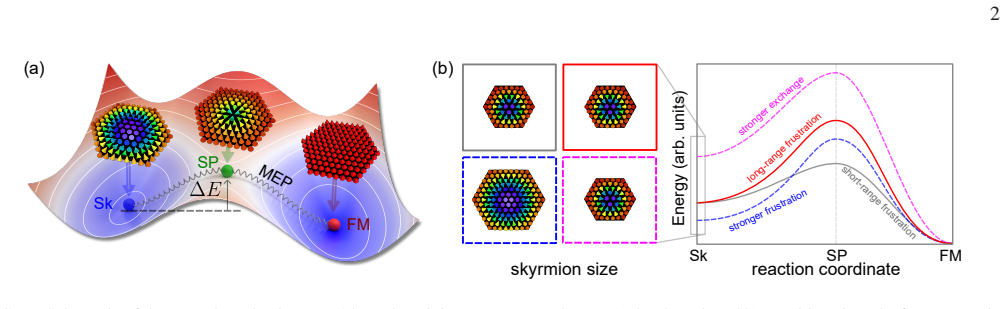
cond-mat.mes-hall 2026-07-01

Long-range frustration doubles skyrmion collapse barrier

by Shiwei Zhu, Moritz A. Goerzen +2 more

Beating micromagnetic limits on skyrmion stability by long-range frustration

Same size and micromagnetic parameters yield higher stability once atomistic exchanges are allowed to frustrate at longer range.

Figure from the paper full image
abstract click to expand
Skyrmion stability is commonly assumed to scale with skyrmion size or exchange stiffness within micromagnetic models. Here, we demonstrate that long-range exchange frustration can break this paradigm, enhancing the collapse energy barrier without increasing skyrmion size or magnetic energy scale. By mapping the continuum model onto a spin-lattice Hamiltonian, we find that skyrmions with identical micromagnetic parameters can exhibit significantly different energy barriers, depending on their underlying atomistic exchange interactions. We attribute this behavior to saddle point textures, whose pronounced noncollinearity captures long-range frustration beyond the micromagnetic approximation. We further develop an exchange optimization framework to predict that long-range frustration can double the energy barrier in physically realistic conditions, possibly valid for ultrathin films or van der Waals magnets. These results hold across different lattice symmetries, revealing an intrinsic limitation of micromagnetics and establishing long-range frustration engineering as a promising route toward highly stable nanoscale skyrmions.
1 0
0
cond-mat.mes-hall 2026-07-01

Dihedral symmetry yields zero-reflection points in multi-terminal wires

by Abhiram Soori, Udit Khanna +1 more

Topological zero-reflection points in multi-terminal quantum wire junctions

These points, protected by a winding number, are stable to weak disorder and can cover the full energy band under magnetic flux.

Figure from the paper full image
abstract click to expand
We study scattering in noninteracting multi-terminal quantum wire junctions and show that junctions with dihedral symmetry can exhibit exact zero-reflection points for $N \ge 4$ terminals. By analyzing the scattering matrix, we identify these reflectionless points in the $(E,t')$ parameter space, where $E$ is the incident particle energy and $t'$ is the junction hopping amplitude. These points exhibit an even-odd dependence on $N$ and converge asymptotically to a common limiting value in the large-$N$ limit. We show that the reflectionless points are characterized by an integer winding number associated with the phase of the reflection amplitude, providing a topological description for their stability against weak on-site disorder. We also consider junctions with broken time-reversal symmetry and find that a magnetic flux can induce additional reflectionless points, including for the $N = 3$ case. For a four-terminal junction threaded by a $\pi$-flux, we identify a unique parameter regime in which the reflection amplitude vanishes over the entire energy band. Finally, we discuss experimental signatures through the behavior of Friedel oscillations and examine the stability of these reflectionless points in the presence of weak interactions.
0
0
cond-mat.mes-hall 2026-07-01

Spin-current harmonics distinguish altermagnetic phases

by Koki Mizuno

High-harmonic spin-current signatures of altermagnetic spin-group symmetry

Polarization-specific drives reveal spin-group symmetries inaccessible to charge currents.

Figure from the paper full image
abstract click to expand
Spin point groups classify magnetic phases in the weak spin-orbit coupling regime and characterize the static properties of altermagnetic phases, but their dynamical consequences remain largely unexplored. Here, we derive selection rules for high-harmonic generation of charge and spin currents by extending dynamical symmetry to include spin point group operations. Since spin currents transform under both real and spin space operations, whereas charge currents transform only under real space operations, spin current selection rules can reveal magnetic information that is inaccessible to charge current harmonics. In a minimal altermagnetic model, an axis-aligned linearly polarized drive is non-diagnostic for distinguishing ferromagnetic and altermagnetic phases, although the antiferromagnetic phase is distinguished by the absence of the corresponding spin-current harmonics. A diagonal linearly polarized drive distinguishes the three SPG phases within the weak-SOC spin-group description, whereas a single-helicity circularly polarized drive provides a sharper spin-current-harmonic criterion for distinguishing them from magnetic-point-group mimics. These results establish spin current harmonics as a dynamical probe of spin group symmetry.
0
0
cond-mat.mes-hall 2026-07-01

Driving doubles Cooper-pair symmetries in magnet-superconductor interface

by Subhendu Kumar Patra, Gaurab Kumar Dash +1 more

Floquet Majorana flat bands and emergent Cooper pair symmetries in p-wave magnet-superconductor heterostructure

Periodic drive in p-wave magnet and s-wave superconductor setup creates odd-Floquet pairing channels and extra Majorana bands with no static

Figure from the paper full image
abstract click to expand
We investigate the emergence of topological superconductivity at the two-dimensional heterostructure interface between a $p$-wave magnet (pWM) and an $s$-wave superconductor. By analyzing nodal gap closings, we identify seven distinct nodal topological phases, each characterized by the presence of Majorana zero-energy flat bands and quantized zero-bias conductance peaks. We demonstrate that the effective $p$-wave nature of the system gives rise to spin-triplet pairing correlations with even-frequency, odd-parity and odd-frequency, even-parity symmetries. Notably, the introduction of inter-orbital hopping induces an exotic orbital-singlet term characterized by simultaneous odd-parity and odd-frequency. Furthermore, we explore the transition from static phases to Floquet topological regimes through periodic driving. These driven phases host both zero and $\pi$ Majorana flat bands, with transport signatures governed by the Floquet sum rule. Most significantly, we show that periodic driving fundamentally reshapes the topological and superconducting landscape by generating multiple nodal points that support higher winding numbers and multiple Majorana flat bands, while the emergent Floquet degree of freedom doubles the number of symmetry-allowed Cooper-pair correlations. The first class of correlations is hosted by the even-Floquet sectors and has a direct counterpart in the static limit. In contrast, the second is a distinct Floquet-generated class that confines to the odd-Floquet sectors, representing a fundamentally nonequilibrium pairing channel that cannot exist in static systems. Finally, we demonstrate the robustness of these topological modes against strong disorder, confirming their potential for stable fault-tolerant applications.
0
0
cond-mat.mes-hall 2026-07-01

Hodge decomposition gives smooth Berry proxy for topological transport

by Zhi-Wei Wang, Samuel L. Braunstein

Hodge Topology of Semiclassical Transport: A Coordinate-Free Geometric Framework for the Anomalous Hall Effect and Non-Linear Berry Dipole

The approach partitions linear response into Fermi-sea and Fermi-surface parts and removes Dirac-string singularities for any Chern number.

Figure from the paper full image
abstract click to expand
We establish a coordinate-free differential geometric framework for anomalous transport in topological bands using the Hodge-de Rham decomposition of the Brillouin zone. Standard formulations face mathematical singularities (Dirac strings) when using the quantum Berry connection in bands with non-zero Chern numbers. Applying this decomposition to the Berry curvature 2-form isolates the quantized topological monopole flux from a globally smooth geometric 1-form proxy potential, $\mathcal{A}$. Substituting this regularized potential into semiclassical transport integrals yields distinct analytical advantages. For linear transverse transport, our cohomological decomposition enables an exact geometric derivation of Haldane's insight via the co-area formula, partitioning the response into a continuous Fermi sea topological background and a localized Fermi surface geometric line integral. For non-linear transport, this globally smooth proxy unifies the geometric description, reproducing the high numerical stability of scalar integration-by-parts techniques directly from its exact sector, accommodating arbitrary Chern numbers. By enforcing the continuous Coulomb-Hodge gauge ($\delta \mathcal{A} = 0$) alongside vanishing harmonic holonomies over fundamental 1-cycles ($\oint_{\gamma_i} \mathcal{A} = 0$), we map the Hodge potential $\mathcal{A}$ to the Maximally Localized Wannier Function (MLWF) gauge in trivial bands, providing a non-singular computational proxy for topologically obstructed bands. Finally, we analytically demonstrate that solving the Hodge Laplacian for $\mathcal{A}$ zeroes the macroscopic Brillouin zone average (uniform $\mathbf{R}=0$ zero-mode) topological divergence, yielding a mathematically consistent covariant formulation that matches the algorithmic robustness of standard methods against discrete $\mathbf{k}$-grid noise.
0
0
cond-mat.mes-hall 2026-07-01

Alignment angle switches moire Chern insulators from C=1 to C=0

by Jiao Xie, Yongqin Xie +10 more

Orientation-tunable correlated Chern insulating states in chiral twisted double bilayer graphene proximitized by WSe2

Ising SOC at zero twist angle produces topological bands while Rashba at 15 degrees produces trivial ones at quarter filling.

abstract click to expand
Moire flat bands in graphene systems proximitized by transition-metal dichalcogenides (TMDCs) provide a setting where spin-orbit coupling (SOC) can reshape band topology. The crystallographic alignment angle twist angle between TMDC and graphene layers is predicted to tune the balance of Ising and Rashba SOC, but a combined theoretical and experimental understanding of how twist angle governs the topological character of correlated states has not been systematically established. Here we show that in chiral-stacked twisted double bilayer graphene in proximity to WSe2, twist angle between graphene and WSe2 determines the topological character of correlated Chern insulators. Continuum model calculations reveal that Ising spin-orbit coupling dominates at zero twist angle, giving rise to flat bands with finite valley Chern numbers, whereas Rashba coupling dominates at larger twist angle, resulting in topologically trivial bands. Transport measurements at quarter filling confirm this picture: twist angle = 0 deg devices exhibit C = +1 Chern insulators, consistent with spontaneous isospin polarization, whereas twist angle = 15 degree devices show C = 0 despite exhibiting similar correlated insulating behavior. The sharp contrast establishes crystallographic alignment as a new tuning knob, complementary to twist angle, displacement field, and carrier density, for engineering correlated topological states in van der Waals heterostructures.
0
0
cond-mat.mes-hall 2026-07-01

Same-material nanoparticles of different sizes rectify heat

by Alexej D. Semenov, Mariia Sidorova +2 more

Thermal rectification due to phonon confinement in nanoparticles

Phonon confinement opens a size-dependent gap that makes heat flow direction-dependent, with efficiencies rising at low temperatures.

Figure from the paper full image
abstract click to expand
We demonstrate that thermal rectification can arise at the contact between two spherical nanoparticles of identical material but different size due to the geometric confinement of phonons. This confinement suppresses long-wavelength phonons differently in differently sized particles and creates a size-dependent gap in the phonon density of states. This gives rise to direction-dependent heat transport even in perfectly homogeneous materials. We develop an analytical model based on phonon confinement and phonon ray-tracing in the Casimir regime and derive expressions for heat fluxes and rectification efficiency as functions of particle sizes and temperatures. The model predicts measurable rectification efficiencies for nanoparticles with radii of a few tens of nanometers, reaching fraction of percent at room temperature and much larger values at low temperatures. The proposed mechanism provides a straightforward and scalable route to thermal rectification in granular nanomaterials without requiring material heterogeneity or strong nonlinearities.
0
0
cond-mat.mes-hall 2026-07-01

Clean assembly reveals intrinsic Anderson localization in ReS2

by Shreya Paul, Pritam Das +3 more

Observation of Intrinsic Anderson Localization in Few-Layer ReS₂

All-dry van der Waals methods and hBN dielectric yield 3.5 nm localization length via 2D Mott hopping, an order of magnitude larger than dis

Figure from the paper full image
abstract click to expand
Electron localization phenomena are expected to play an important role in the transport properties of two-dimensional materials. Rhenium disulfide (ReS$_2$), with its narrow conduction bandwidth, is uniquely susceptible to this effect. However, extrinsic disorder caused by fabrication methods obscures inherent localization behavior arising from reduced dimensionality and degrades transport properties. We report intrinsic Anderson localization in few-layer ReS$_2$ by eliminating extrinsic fabrication-induced disorder through all-dry van der Waals assembly and suppressing interface charge trapping through a hexagonal boron nitride (hBN) gate dielectric. Temperature-dependent transport reveals a crossover from nearest-neighbor hopping to two-dimensional (2D) Mott variable-range hopping (VRH). The non-monotonic gate-voltage dependence of activation energy provides direct access to the energy-resolved band-tail density of states of the ReS$_2$ conduction band. 2D Mott VRH yields a localization length of (3.5 $\pm$ 0.1) nm, an order of magnitude larger than disorder-dominated devices, providing a quantitative characterization of intrinsic Anderson localization in ReS$_2$.
0
0
physics.optics 2026-07-01

OMIT turns into gain in unresolved-sideband hBN optomechanics

by Francesco Fogliano, Thibaud Ruelle +2 more

Unresolved-Sideband Optomechanics with Hexagonal Boron Nitride: Induced Transparency, Gain, and Frequency Combs

Power-dependent spectra match the full linearized response and break the rotating-wave approximation.

Figure from the paper full image
abstract click to expand
Optomechanically induced transparency (OMIT) is usually modeled and studied in the resolved-sideband regime, but many compact microcavity platforms operate in the unresolved-sideband limit $(\kappa \gg \Omega_m)$. Here we investigate OMIT in this regime using a tunable fiber-based Fabry-Perot microcavity coupled to a suspended hexagonal boron nitride (hBN) drum resonator in a membrane-in-the-middle geometry. The system achieves a large single-photon coupling rate of $g_0/2\pi \sim 180$ kHz and exhibits strong radiation-pressure backaction. By measuring OMIT spectra as a function of pump power and cavity detuning, we observe a crossover from a transparency-like dip to a gain feature in the reflected response. These maps are quantitatively reproduced by the full linearized optomechanical response, demonstrating the breakdown of the standard rotating-wave approximation used in the resolved-sideband limit. Finally, we drive the system into a nonlinear regime to generate optomechanical frequency combs. These results establish hBN fiber-cavities as a versatile architecture for unresolved-sideband optomechanics, nonlinear dynamics, and hybrid device integration.
0
0
cond-mat.mes-hall 2026-07-01

Corner states mediate perfect Andreev reflection near zero energy

by Kai-Tong Wang, Yunjin Yu +2 more

Andreev reflection mediated by topological corner states in a two-dimensional honeycomb lattice

Localized states in an insulating 2D topological region form resonant channels to a superconductor, producing a conductance peak.

Figure from the paper full image
abstract click to expand
Topological corner states in two-dimensional second-order topological insulators (SOTIs) are localized in real space. We numerically demonstrate that such localized topological corner states can mediate Andreev reflection when coupled to a superconducting lead. We consider a transport setup based on a two-dimensional honeycomb lattice, consisting of a normal lead, a central SOTI region, and a superconducting lead. The central SOTI region is described by the modified Kane--Mele model with an in-plane Zeeman field and hosts topological corner states in a diamond-shaped flake. Although the central region is insulating, the local density of states shows that incident electrons can turn the localized corner state into an extended scattering state, which forms a resonant tunneling channel to the superconducting lead. This process leads to a perfect Andreev reflection peak near zero energy. Away from this resonance, antiresonance dips appear in the Andreev reflection spectrum, and their positions can be tuned by the Zeeman field strength. We show that the suppression of Andreev reflection is caused by quantum interference and the imbalance between electron and hole dwell times in the central region. These results demonstrate that topological corner states can provide a resonant tunneling path to the superconducting interface and mediate Andreev reflection in second-order topological systems.
0
0
cond-mat.mes-hall 2026-07-01

Twisted graphene shows tunable non-Fermi liquid

by Yongqin Xie, Jian Wang +14 more

Tunable Extended Magnetic Non-Fermi Liquid in Graphene Moir\'e Heterostructures

Extended NFL phase spans wide densities with resistance exponent that varies with carrier density via localized-itinerant interplay.

Figure from the paper full image
abstract click to expand
Exploring exotic quantum metallic states beyond Landau's Fermi liquid theory remains a central focus in condensed matter physics. Such non-Fermi liquid behavior is mostly observed near quantum criticality, yet growing attention is directed toward extended NFL phases with intrinsic quantum fluctuations rooted in the extended ground state. While these extended NFL states have been previously reported only in a limited set of d- and f-electron systems, realizing a single, highly tunable platform capable of exhibiting multiple resistance exponent values is essential for uncovering the connection between the resistance exponent and the dominant quantum fluctuations coupled to quasiparticles. However, corresponding experimental progress remains elusive. Here, we report the observation of tunable extended non-Fermi liquid behavior in twisted double bilayer graphene encapsulated by aligned hBN layers. This NFL phase spans a broad range of carrier densities and exhibiting a carrier density dependent resistance exponent. Combined with temperature dependent resistance, magnetotransport and differential resistance measurements, these findings support a scenario where strong quantum fluctuations emerge from the interplay between localized and itinerant carriers. Our work establishes a highly tunable platform beyond conventional frameworks to investigate the organizing principles of non-Fermi liquid physics manifested in diverse behaviors.
0
0
cond-mat.mes-hall 2026-06-30

Dopant loops trigger topological transitions at low density

by Subrata Pachhal, Aziz Hasan +1 more

Topological random alloy

Minimal alloy model shows chiral current loops form domains in trivial hosts or enable metallic inter-domain transport when chiralities oppo

Figure from the paper full image
abstract click to expand
Topological phases of matter are often realized in crystalline materials. To extend their understanding beyond perfect stoichiometry, we introduce a minimal model of a topological random binary alloy and show that the system realizes an exotic form of impurity-band engineering. We reveal that, in contrast to Wannier charge centers pinned by impurities in conventional semiconductors, doping a proximate quantum anomalous Hall insulator results in dopant-centric chiral current loops. The nature of such current loops is intrinsically tied to the properties of both the host and the dopant. We demonstrate that, even at dilute dopant density, these current loops can form topological domains in an otherwise trivial host and trigger a topological phase transition. On the other hand, doping a topological host having chirality opposite to that of the dopants can unexpectedly stabilize a metallic phase in which bulk transport is mediated by inter-domain edge modes.
0
0
cond-mat.mes-hall 2026-06-30

NV sensors detect nanoscale phase segregation in doped oxide

by Izidor Benedičič, J. Paul Attfield +1 more

Quantum sensing of nanoscale electronic phase segregation

ODMR splitting grows 15 MHz and 1/T1 jumps an order of magnitude at Tc, showing charge-ordered domains at nanometer scale.

Figure from the paper full image
abstract click to expand
Doping of transition metal oxides such as CaFe$_3$O$_5$ offers a controlled way to tune the interplay of charge, spin, and lattice degrees of freedom, yet local-probe studies remain difficult because strong correlations and dynamic charge-spin fluctuations obscure fine spectroscopic features in powder samples. Here, we employ quantum magnetometry based on nitrogen-vacancy (NV) centers in nanodiamonds impressed into an Mn-doped CaFe$_3$O$_5$ powder pellet to probe static and dynamic magnetic fields at the nanoscale across the weak ferromagnetic transition. The splitting and broadening of the optically detected magnetic resonance (ODMR) spectra exhibit an order-parameter-like increase by ~ 15 MHz upon cooling below the critical temperature, T$_{\rm c}$. Concomitantly, the spin-lattice relaxation rate, 1/T$_1$, exhibits a pronounced, divergence-like enhancement at T$_{\rm c}$, increasing by about one order of magnitude from its high-temperature value. Moreover, detailed lineshape fits of ODMR spectra together with the stretched-exponential NV magnetization recovery curves corroborate the proposed electronic phase segregation in charge-ordered and charge-averaged phases at the nanometric scales. The presented study demonstrates the viability of using nanodiamonds as a platform for nanoscale magnetic probing of strongly correlated matter, including phenomena such as electronic phase separation.
0
0
quant-ph 2026-06-30

Modular stages let spin-qubit arrays stay stable at scale

by Justyna P. Zwolak, Anthony Sigillito

Overcoming Configuration Bottleneck: Modular Pathways to Stable Semiconductor Spin-Qubit Arrays

Five workflow modules with defined interfaces and aggregate metrics replace ad-hoc tuning for larger devices.

Figure from the paper full image
abstract click to expand
Over the past decade, semiconductor spin qubits have progressed from few-qubit demonstrations towards larger-scale devices fabricated in increasingly reproducible academic and industrial processes. This progress marks an inflection point: the central challenge is no longer to demonstrate high-fidelity operation in carefully tuned devices, but to discover, verify, and maintain stable operating conditions reliably across many interdependent controls, varied device geometries, and disparate material platforms. In this Perspective, we frame spin-qubit operation as a modular automation problem. We decompose the workflow into five modules: bootstrapping from minimal prior information, configuration tuning, virtualization of physical gates into effective control axes, qubit-level tuning, and an operation layer with drift-aware maintenance. Using recent demonstrations from our work and the broader community, we argue that scalability will depend on explicit interfaces between modules, standardized intermediate data products, and workflow-level metrics such as throughput, success probability, stability time, recovery time, and robustness. We close by outlining the infrastructure needed to move beyond isolated tuning demonstrations toward sustained operation: qubit-performance-aware feedback, reusable software and benchmark tasks, and tight collaboration among experimental, theoretical, and software efforts.
0
0
cond-mat.mes-hall 2026-06-30

Laser pulses build carbon barrier on levitated gold nanoparticles

by Joyce E. Coppock, Sunghyun Kim +1 more

Carbon encapsulation of levitated Au nanoparticles

Mass measurements show slow uptake independent of carbon gas pressure, pointing to rare surface-state catalysis for graphene growth.

Figure from the paper full image
abstract click to expand
We investigate the formation of a barrier to evaporation that develops when levitated nanoscale Au nanoparticles are exposed to pulses of 532 nm laser radiation in a high vacuum (pressure $p=10^{-8}-10^{-7}$ Torr) environment. Our data are derived from precision measurements of the charge to mass ratio ($Q/M$) of $\sim$200 nm diameter Au particles confined in a quadrupole ion trap. We characterize the development of the barrier over time as the particle is repeatedly heated with laser pulses and determine the impact of variations of the interval between pulses and of exposure to several gases added to the vacuum chamber. We observe a slow increase in the mass of particles upon prolonged exposure to the vacuum, which we attribute to the growth of a barrier layer. For particles that have acquired a barrier during exposure to CO, we observe a rapid decrease in their mass upon subsequent exposure to O$_2$. These findings are consistent with the growth and subsequent oxidation of a graphene layer on the Au that forms the barrier to evaporation. However, we have not found that the rate of formation of the barrier depends on the pressure of carbon-containing gases (CO, C$_2$H$_4$, CO$_2$) we have added to the chamber. We hypothesize that a rare surface state on the solid Au particle catalyzes the reaction that introduces C to the particle. Repeated laser pulse heating is necessary--either to enable diffusion away from this state or to create fresh states that allow continued C uptake--to facilitate the growth of the surface graphene layer.
0
0
cond-mat.mes-hall 2026-06-30

Floquet modulation builds magnon lattice in one YIG device

by Amin Pishehvar, Jayakrishnan M. P. Nair +6 more

Experimental Realization of Synthetic Magnonic Lattice via Floquet Engineering

Time-periodic drive couples frequency modes for high-dimensional dynamics without extra device space.

Figure from the paper full image
abstract click to expand
Magnonic systems, which exploit spin-wave excitations in magnetic materials, offer a promising platform for coherent information processing due to their low dissipation, strong nonlinearities, and intrinsic nonreciprocity. However, scaling magnonic circuits remains challenging, particularly with low-loss insulators such as yttrium iron garnet (YIG), which are difficult to pattern. Here, we experimentally realize a synthetic dimension in a magnonic system by coupling multimode magnon resonances in the frequency domain using time-periodic Floquet modulation. This approach enables electronically tunable interactions between discrete modes within a single YIG device, forming a reconfigurable mode-space lattice that supports functionalities such as Bloch oscillation. Our results demonstrate that high-dimensional magnonic dynamics can be achieved without increasing device footprint, establishing synthetic dimensions as a scalable and programmable route for integrated magnonic technologies. This advancement positions magnonic systems as promising platforms for engineering emergent phenomena that are inaccessible at equilibrium.
0
0
cond-mat.mes-hall 2026-06-30

Magnon conductivity diverges logarithmically in 2D magnets

by Ping Tang

Critically Enhanced Magnon Transport in Low-dimensional Magnets

Long-range dipolar interactions drive the enhancement only in ultrathin films, absent in bulk.

Figure from the paper full image
abstract click to expand
Transport properties of (quasi)particles in condensed matter depend profoundly on the spatial dimension. Motivated by recent advances in growing ultrathin magnetic films and monolayer van der Waals magnets, we present a theory of magnon transport in magnetic films spanning the crossover from bulk to the two-dimensional (2D) limit. We find a magnon conductivity that diverges~\emph{logarithmically} in magnetically soft but stable (quasi)2D magnets with long-range dipolar interactions. This critical enhancement is absent in bulk systems and may explain the unusually large magnon conductivities recently observed in ultrathin yttrium iron garnet films. Our results reveal an intrinsic mechanism for enhanced magnon transport in low dimensions and highlight the potential for engineering high-efficiency magnon conductors in atomically thin magnets.
0
0
cond-mat.mes-hall 2026-06-30

Fabrication process yields 30% Au/graphene platelets in suspension

by Sunghyun Kim, Joyce E. Coppock +1 more

Microfabricated Au and Au/graphene bilayer platelets for levitation experiments

HF etching and cleaning produce minimal aggregation for levitation and nanostructure applications

Figure from the paper full image
abstract click to expand
We describe a fabrication process for preparing liquid suspensions of micron-scale Au and Au/graphene bilayer platelets using thin-film deposition, optical lithography, ion milling, hydrofluoric acid (HF) substrate etching, and release from the substrate into a liquid suspension. Residual HF is removed through repeated centrifugation, decanting, and dilution cycles. The resulting suspension is characterized by electrospray deposition onto a secondary substrate, followed by electron and atomic force microscopy. The deposited platelets exhibit minimal aggregation, and the overall platelet yield reaches up to 30% of the platelets originally patterned on the wafer. Lateral force microscopy further confirms that the Au/graphene bilayer remains intact throughout fabrication, release, and electrospray deposition. This process provides a practical route for preparing high-quality platelet suspensions for levitated nanoparticle experiments and other applications requiring suspensions of two-dimensional nanostructures.
0
0
cond-mat.mes-hall 2026-06-30

GaAs/AlAs nanocavities enable coherent GHz-THz phonon control

by S. Sandeep, E. R. Cardozo de Oliveira +2 more

GaAs/AlAs Acoustic Nanocavities for Coherent GHz-THz Phonon Engineering

Mature growth and optical-acoustic colocalization position the material for scalable nanophononic and hybrid quantum devices.

Figure from the paper full image
abstract click to expand
The controlled confinement of high-frequency acoustic phonons in semiconductor nanostructures has emerged as a key ingredient for functional nanophononic and hybrid quantum technologies. In this Review, we summarize recent advances that have established GaAs/AlAs acoustic nanocavities as a versatile and scalable platform for GHz-THz phonon engineering. Compared with alternative nanophononic platforms, GaAs/AlAs offers a particularly favorable combination of mature epitaxial growth, strong photoelastic coupling, and simultaneous optical-acoustic mode colocalization across the GHz-THz regime. We focus on distributed Bragg reflector (DBR)-based architectures, with particular emphasis on micropillar resonators enabling three-dimensional phonon confinement and strong colocalization of acoustic and optical fields. Recent developments in ultrafast optical techniques, including picosecond ultrasonics and Brillouin scattering, have provided unprecedented access to phonon dynamics, coherence, and dissipation at the nanoscale. These advances, combined with strong optophononic coupling, have enabled efficient coherent generation, detection, and manipulation of confined acoustic modes. We discuss key performance metrics, integration strategies, and remaining challenges, notably in acousto-optic transduction efficiency and scalable electrical control. Finally, we outline near-term perspectives for nonlinear phononics, hybrid quantum systems, and integrated phononic circuits, positioning GaAs/AlAs heterostructures as a robust and scalable platform for next-generation nanophononic functionalities.
0
0
cond-mat.mes-hall 2026-06-30

TRS breaking changes transport differently in long-range Kitaev chains

by Averi Banerjee, Syeda Rafisa Rahaman +1 more

Transport in extended Kitaev chain with time reversal symmetry breaking and long-range interaction

The symmetry-breaking term alters density of states and localization in ways that differ from the short-range case, yielding distinct conduc

Figure from the paper full image
abstract click to expand
We consider a junction consisting of an extended one-dimensional Kitaev chain which incorporates both time-reversal symmetry (TRS) breaking and long-range interaction, sandwiched between two metallic leads from two sides. In this hybrid device, we study electrical transport under voltage bias for varying strength of the TRS breaking phase. We compare the transport characteristics of long-range type Kitaev chain with that of the short-range Kitaev chain as the strength of the TRS breaking phase varies. We find that the TRS breaking modifies the density of states and localisation/delocalisation property of the eigenstates which in turn affect the transport characteristics. Moreover, we find that the impact of the TRS breaking is not identical for the long-range Kitaev chain and its short-range counterpart. Therefore, noticeable differences in the transport properties can be observed due to the interplay between the TRS breaking and the range of interaction.
0
0
cond-mat.mtrl-sci 2026-06-30

AFM hard tapping nucleates graphene kirigami ribbons

by Pierce C. Sinnott, Majid Fazeli Jadidi +1 more

Mechanical Manipulation of Graphene Auto-Kirigami with an AFM tip

Indentation and high-setpoint imaging replace specialized equipment for high-yield ribbon formation and control on any standard microscope.

Figure from the paper full image
abstract click to expand
Graphene auto-kirigami describes the thermodynamically self-driven tearing, sliding and folding of graphene sheets to form micrometre-scale, folded ribbons. However, this process typically requires specialised multi-axial nanoindentation systems or highly laborious AFM-based scratching methods. We here introduce a novel, scalable, wholly AFM-based method to nucleate high yields of ribbons in comparable timeframes to previous multi-axial indentation methods, by AFM-based indentation and "hard tapping", whereby high setpoint AFM imaging can nucleate, manipulate and dynamically image the auto-kirigami ribbons. This can be performed with any conventional AFM, enabling extensional growth, rotation and reversal of ribbons towards potential applications as NEMS devices.
0
0
cond-mat.mes-hall 2026-06-30

Quantum spin-boson rectifier follows universal power law

by Tsuyoshi Yamamoto, Manuel Houzet

Heat rectification through a quantum two-level system

Tensor-network results confirm the rectification ratio obeys a power law derived from infrared perturbation theory around the Kondo temperat

Figure from the paper full image
abstract click to expand
We study heat rectification through a quantum two-level system asymmetrically coupled to two thermal baths, as described by the Ohmic spin-boson model. We evaluate the steady-state heat current using a tensor-network approach, which enables us to access the strongly correlated regime, and benchmark the results against analytical formulas in several limiting regimes, including the weak-coupling and incoherent-tunneling regimes. We identify a scaling regime where the studied system flows from an ultraviolet regime, at temperatures larger than the Kondo temperature, to an infrared regime, at temperatures lower than the Kondo temperature. By applying perturbation theory near the infrared fixed point, we find that the rectification ratio follows a universal power law. Our numerical results agree well with this analytical prediction. Our results provide a fundamental understanding of how dissipation-induced many-body physics affects heat transport.
0
0
quant-ph 2026-06-30

DMS tracks biexciton entanglement via entropy difference

by Yusuke Masaki, Takashi Otaki +1 more

Connecting Density Matrix Spectroscopy to Biexciton Entanglement Dynamics

Analytical link and simulations show the technique captures S_bi minus S_k dynamics in two-dimensional electron-hole systems.

Figure from the paper full image
abstract click to expand
Quantum entanglement is one of the most intriguing features of quantum mechanics. To investigate the entanglement between two excitons in a biexciton, an experimental technique called density matrix spectroscopy (DMS) has recently been developed. DMS combines stimulated emission tomography and pump-probe techniques to obtain a time-resolved density matrix of the polarization state of a photon pair emitted from the biexciton. The reconstructed density matrix is expected to encode information about the biexciton state and its entanglement dynamics, but the precise nature of this connection has remained unclear. In this paper, we derive an analytical relationship between the density matrix obtained by DMS and the biexciton state. In addition, we perform numerical simulations to compare the entanglement dynamics obtained by DMS with the biexciton's entanglement dynamics in a two-dimensional electron-hole system using an extended ionic Hubbard model. We find that DMS can partially capture the entanglement in the biexciton, in particular, the dynamics of the difference $S_{\mathrm{bi}} - S_k$, where $S_{\mathrm{bi}}$ is the entanglement entropy of the biexciton and $S_k$ is the entanglement in terms of the wavevectors of the excitons that constitute the biexciton. These results demonstrate the validity of DMS for obtaining information about the entanglement dynamics of the biexciton.
0
0
quant-ph 2026-06-30

Plasmonic nanodimer switches entanglement all-optically

by Elif Ozturk, Mehmet Gunay +2 more

All-optical switching of continuous-variable entanglement in an absorption-suppressed plasmonic nanodimer

Control polarization tunes a nanorod dimer to suppress absorption while switching quantum correlations in a subwavelength device.

Figure from the paper full image
abstract click to expand
A subwavelength quantum-photonic circuit element should simultaneously generate nonclassical light, suppress plasmonic loss, and remain dynamically tunable. We show that an orthogonal plasmonic nanorod dimer can satisfy all three requirements. A phase-locked control polarization induces plasmonic refractive-index enhancement, driving the probe response toward a near-zero-extinction regime while simultaneously tuning the local second-harmonic parametric interaction. The resulting nonlinear plasmonic source operates in an absorption-suppressed regime and enables all-optical control of quantum correlations. We demonstrate switchable logarithmic negativity and single-mode nonclassicality, establishing a route toward actively tunable quantum-plasmonic circuit elements operating well below the diffraction limit.
0
0
cond-mat.mes-hall 2026-06-30

Spiral dislocation blocks SHG but allows THG in quantum rings

by Carlos Magno O. Pereira, Denise Assafrão +1 more

Topological control of third-harmonic generation in a mesoscopic quantum ring with spiral dislocation

Preserved axial symmetry forbids second-harmonic generation yet permits third-harmonic generation through multistep transitions.

Figure from the paper full image
abstract click to expand
We investigate the nonlinear optical response of a two-dimensional mesoscopic quantum ring subjected to a spiral dislocation, with emphasis on third-harmonic generation (THG). The topological defect is modeled through a torsion-induced deformation of space, which modifies the effective metric without introducing curvature. By combining the minimal-coupling prescription in curved space with a radial ring confinement and a perpendicular magnetic field, we derive the effective radial Schr\"odinger problem, obtain the bound states, and evaluate the nonlinear susceptibilities within the electric-dipole approximation. We show that the axial symmetry of the topologically deformed ring preserves the dipole selection rule $\Delta m=\pm 1$ and therefore suppresses second-harmonic generation, while THG remains allowed through multistep transition chains. The study is further expanded through three complementary analyses that can be implemented without changing the Hamiltonian: a dephasing-controlled study of spectral resolution, three-dimensional waterfall spectra showing the dependence on $\beta$ and $B$, and a channel-resolved decomposition of the THG amplitude. Together, these results establish the spiral dislocation as a robust geometric knob for tuning nonlinear optical activity in mesoscopic ring-shaped nanostructures.
0
0
cs.LG 2026-06-30

Advanced molecular models underperform simpler ones on NMO nano benchmark

by Matthias Blaschke, Daniel Kienzle +4 more

Beyond Drug Discovery: The Nanotechnology Molecular Optimization (NMO) Benchmark

Quantum simulations and strict rules expose limits of drug-pretrained methods while yielding new nanotechnology motifs.

Figure from the paper full image
abstract click to expand
Generative molecular design is shaped by simple proxy benchmarks for drug-like properties and models pretrained on large pharmaceutical datasets. This combination yields strong benchmark metrics but limits transferability to domains structurally distinct from drug discovery. To overcome this limitation and drive discovery toward real, scientifically grounded targets, we introduce the Nanotechnology Molecular Optimization (NMO) Benchmark, which bridges machine learning (ML) and quantum materials science. NMO acts simultaneously as a rigorous testbed for the ML community and a discovery engine for nanotechnology research. The suite replaces proxy oracles with quantum simulations and introduces strict protocols that prioritize scientific utility over leaderboard-oriented overfitting. The physics-based NMO tasks impose hard structural constraints and rugged fitness landscapes, posing fundamentally new requirements on generative models. Notably, advanced molecular optimization methods underperform much simpler approaches on the NMO tasks. We develop a new baseline method identifying the critical components to solve the NMO tasks, including a novel representation for modeling structural constraints and a domain-agnostic pretraining strategy to eliminate pharmaceutical dataset bias. Our results surpass state-of-the-art physical properties and reveal previously unknown structural motifs, offering new insights for the nanotechnology community and demonstrating that ML can drive genuine scientific discovery.
0
0
quant-ph 2026-06-30

Spin bath triples NV spin-echo lifetime at perpendicular field

by Akshat Rana, Pooja Lamba +4 more

Spin bath mediated long-lived coherent oscillations of NV centers in diamond

Many-body entanglement at anti-crossing yields stable oscillations with zero first-order Zeeman dephasing for quantum applications.

Figure from the paper full image
abstract click to expand
Decoherence is the biggest bottleneck in all quantum technologies. For nitrogen-vacancy (NV) centers in diamond, the loss of coherence is caused by the electron and nuclear spin bath of the diamond lattice. Here, we demonstrate that the spin bath - that typically causes decoherence - entangles the spin states of the NV electron and the host $^{14}$N nucleus. The many-body interaction between the $^{14}$N nucleus - electron - bath spins at an energy level anti-crossing occurring for an applied magnetic field orientation perpendicular to the NV axis is responsible for this effect. This is observed experimentally on NV ensembles via electron spin-echo measurements, where the echo envelope is modulated at the frequency of a $^{14}$N nuclear spin transition. Using numerical simulations, we show that the spin bath coupling to the NV centers is essential for observing this modulation. Due to the zero first-order Zeeman effect at the anti-crossing, the observed oscillations have long spin-echo coherence times, 2--3 times those at the parallel magnetic field orientation. The oscillation frequency is highly stable and robust against environmental fluctuations. These findings provide new opportunities for fundamental studies of many-body physics and quantum sensing.
0
0
cond-mat.mes-hall 2026-06-30

Nanotube resonator stiffens at tunneling edges instead of softening

by Akong N. Loh, Furkan R. Özyiğit +4 more

Anomalous Duffing mechanics of a suspended carbon nanotube quantum dot at ultrastrong coupling

Duffing parameter rises where single-electron tunneling should soften the spring, matching scale but reversing sign.

Figure from the paper full image
abstract click to expand
At cryogenic temperatures, suspended single-wall carbon nanotube quantum dots act both as prototypical quantum dots as well as high-quality factor mechanical resonators. Single-electron tunneling enables reaching an ultrastrong electron-vibron coupling regime, where the coupling parameter exceeds the vibration frequency. Due to the high quality factors, a strongly nonlinear Duffing response is easily reached. Here, we quantitatively study the Duffing response parameters of such a device and their relation to Coulomb blockade oscillation. At the edges of single-electron tunneling regions, a local increase of the Duffing parameter corresponding to a stiffening spring is observed. Size and approximate scaling of the effect agree with single-electron tunneling phenomena, which however should lead to softening spring behaviour. Possible causes of these puzzling results are discussed.
0
0
cond-mat.mes-hall 2026-06-30

Rotating saddle drives measure Hall viscosity via dichroism

by Alberto Nardin, Bruno Mera +4 more

Hall viscosity from metric-sensitive dichroic probes

Chiral metric perturbations produce a dichroic signal that isolates the geometric response in quantum Hall droplets.

Figure from the paper full image
abstract click to expand
Hall viscosity characterizes the geometric response of a quantum Hall droplet to deformations of the underlying metric, yet it has remained difficult to measure directly. We propose a spectroscopic probe based on circular dichroism, using chiral metric-sensitive drives -- implemented as rotating quadrupolar ("saddle") perturbations -- that effectively modulate the metric and couple to the generators of area-preserving deformations. The resulting dichroic signal directly measures the Hall viscosity, while frequency-resolved spectroscopy disentangles it from other excitations. A local formulation further enables spatially resolved markers of Hall viscosity applicable to both continuum and lattice systems. Our results open a direct route to measuring Hall viscosity in quantum-engineered platforms such as cold atoms in optical lattices.
0
0
cond-mat.mes-hall 2026-06-30

Elliptical probe reads quantum Hall droplet metric

by Bruno Mera, Alberto Nardin +4 more

Perfect elliptic dichroism: Probing the metric of anisotropic quantum Hall droplets

Perfect elliptic dichroism occurs when probe polarization matches the droplet's intrinsic geometry, giving a direct measurement in quantum H

Figure from the paper full image
abstract click to expand
Understanding the geometry of quantum Hall systems is a central challenge in modern condensed matter physics. We introduce a framework for probing the geometric structure of quantum Hall droplets by engineering the geometry of a dichroic probe and identifying the onset of "perfect elliptic dichroism", a regime in which the system responds exclusively to an elliptically polarized drive of a given chirality. This phenomenon provides a direct diagnostic of the droplet's intrinsic metric, and we show that it extends naturally to ideal Chern bands, where holomorphicity of the occupied states guarantees the vanishing of one chiral absorption rate with a quantized response for the other. In lattice realizations, such as the Harper-Hofstadter model, finite lattice-spacing corrections break the exact continuum metric description and give rise to a renormalized, emergent Landau-orbit metric; the probe ellipticity at which perfect dichroism is achieved then shifts accordingly, offering a direct spectroscopic window onto this lattice-induced geometric renormalization. Our results illuminate the rich geometric structure of quantum Hall phases and offer concrete pathways for observing these effects in quantum-engineered platforms.
0
0
cond-mat.mes-hall 2026-06-30

Haldane model yields Chern numbers of 3 in Sierpiński fractals

by Shneha Biswas, Shouya Yoshida +2 more

Spin-1 Dirac dispersion and Chern insulating phases in 2D honeycomb Sierpi\'nski fractal

Complex hoppings and staggered mass disperse flat bands and create high-Chern phases in fractal structures.

Figure from the paper full image
abstract click to expand
Graphene-based Sierpi\'nski fractals host a zero-energy chiral mode and spin-1 Dirac dispersions within the nearest-neighbor tight-binding model. However, the presence of complex next-nearest neighbor hopping arising from the local flux and the staggered Semenoff mass terms, modeled within the Haldane Hamiltonian, breaks the time-reversal and spatial inversion symmetries, respectively, and makes these flat bands dispersive. Moreover, they introduce rich topological phases in this class of systems that can be characterized by Chern numbers up to $\pm 3$, i.e., beyond the conventional honeycomb lattice. These observations pave the way for the exploration of 2D periodic fractals beyond graphene, where topological phase transitions can be realized through externally applied fields.
0

browse all of cond-mat.mes-hall → full archive · search · sub-categories