pith. sign in

hep-lat

High Energy Physics - Lattice

Lattice field theory. Phenomenology from lattice field theory. Algorithms for lattice field theory. Hardware for lattice field theory.

Top Pith
5
hep-lat 2026-05-22 2 theorems

Lattice QCD yields first full form factors for rare kaon decay

by R. Di Palma, R. Frezzotti +7 more

Complete lattice QCD calculation of K⁻to ell⁻bar{ν}_(ell)ell^('+)ell^('-) form factors

Physical-mass ensembles and spectral reconstruction control errors across all four lepton channels
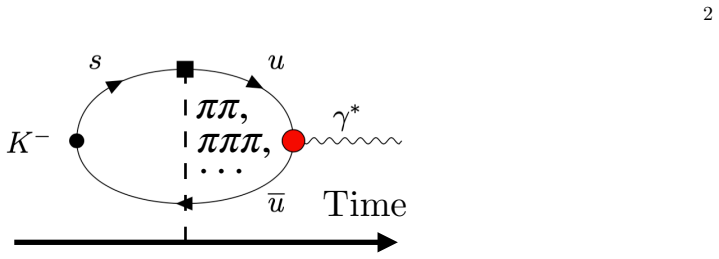
Figure from the paper full image
abstract click to expand
We present the first complete lattice QCD calculation of the four structure-dependent form factors governing the rare charged kaon decay $K^- \to \ell^- \bar{\nu}_\ell \ell'^+ \ell'^-$, with fully controlled statistical and systematic uncertainties. Our calculation is based on gauge ensembles generated by the Extended Twisted Mass Collaboration (ETMC) with $N_f = 2+1+1$ flavors of Wilson-clover twisted-mass fermions. Simulations are performed directly at the physical values of the light and strange quark masses, and include an estimate of the quark-disconnected contributions in which the virtual photon couples to sea quarks. All four form factors are determined across the kinematical region probed by experiments. The Spectral Function Reconstruction (SFR) method of Ref. [1] is employed to overcome the analytic continuation problem for dilepton invariant masses above the two-pion threshold. Finite-volume effects are investigated using ensembles with spatial extents $L\simeq [3.8,7.6]~\mathrm{fm}$, while the continuum limit is obtained from three lattice spacings in the range $a\in[0.057, 0.08]~\mathrm{fm}$. Our results for the form factors enable the evaluation of decay rates and differential observables for all four channels, $K^- \to e^- \bar{\nu}_e e^+ e^-$, $K^- \to e^- \bar{\nu}_e \mu^+ \mu^-$, $K^- \to \mu^- \bar{\nu}_\mu e^+ e^-$, and $K^- \to \mu^- \bar{\nu}_\mu \mu^+ \mu^-$, thereby providing first-principles Standard Model predictions against which existing and upcoming measurements can be directly compared. A detailed phenomenological analysis of the decay rates and associated observables is presented in a companion paper [2].
0
0
hep-ph 2026-07-03

B_s decays predict four lepton flavor universality ratios

by Karthik Jain, Tarun Kumar +2 more

A Comprehensive Analysis of B_s to D_s^(**)ellν_ell Decays Within and Beyond the Standard Model

Scalar and tensor operators cause some observables to deviate by more than 2 sigma from the Standard Model.

abstract click to expand
We examine the exclusive semileptonic decays $B_s \to D_s^{**} \ell \nu_\ell$, with $D_s^{**} =$ $\bigl\{D_{s0}^*,D_{s1}^*,D_{s1},D_{s2}^*\bigr\}$, within the Standard Model and beyond, using form factors evaluated in the Heavy Quark Effective Theory, including corrections up to $\mathcal{O}(\alpha_s, \Lambda/{m_Q})$. A data-driven approach is employed to extract Heavy Quark Effective Theory parameters, and the resulting synthetic data are used to parameterize the form factors via the $z$-expansion. With the resulting form factor information across the full kinematic region, we compute various observables derived from the two-fold angular decay distribution, and predict precise lepton flavor universality ratios: $R_{D_{s0}^*}= 0.158(20)$, $R_{D_{s1}^*}= 0.045(5)$, $R_{D_{s1}}= 0.073(4)$, $R_{D_{s2}^*} = 0.066(9)$. We also analyse potential new physics effects using the Weak Effective Theory and the Standard Model Effective Field Theory, performing a global analysis considering both real and complex Wilson coefficients. Furthermore, we investigate new physics contributions arising from the general Two Higgs Doublet Model. We evaluate the sensitivity of decay observables to new physics, highlighting their potential to probe deviations from the Standard Model in future measurements. Notably, the scalar and tensor new physics operators induce large sensitivity, with some observables deviating by more than $2 \sigma$ from Standard Model predictions.
0
0
cond-mat.stat-mech 2026-07-02

Fuzzy sphere extracts extensive 3D CFT data at low cost

by Yin-Chen He, W. Zhu

A Fuzzy Sphere Journey in Critical Phenomena

The regularization links critical phenomena to noncommutative geometry and the quantum Hall effect via state-operator correspondence on S^2

abstract click to expand
This review discusses the recently proposed fuzzy sphere regularization for studying $2+1$D critical phenomena, particularly three-dimensional (3D) conformal field theory (CFT). The fuzzy sphere scheme not only offers remarkable efficiency in extracting extensive CFT data at low computational cost but also reveals unexpected connections among 3D CFT (critical phenomena), noncommutative geometry, and the quantum Hall effect. We introduce the fundamental ideas of fuzzy sphere regularization, emphasizing its role in demonstrating the state-operator correspondence of 3D CFTs on the $S^2 \times \mathbb{R}$ geometry. Additionally, we review key developments in this approach across various directions and outline potential future applications.
0
0
hep-lat 2026-07-02

Lattice data interpolated with infinite-mass limit gives B_s decay rate

by Alessandro De Santis, Antonio Evangelista +17 more

Inclusive bar B_smapsto X_(bar sc) ell bar ν decays from lattice QCD: computational strategy and a first physical result

Non-perturbative results up to 4.3 GeV combined with OPE yield first-principles inclusive rate at 7 percent uncertainty.

Figure from the paper full image
abstract click to expand
We present a strategy to compute the inclusive decay rate for the process $\bar B_s \mapsto X_{\bar sc} \ell \bar{\nu}$ from first principles in lattice QCD. The physical decay rate is obtained from the interpolation of non-perturbative lattice data, obtained at lighter than physical heavy meson masses ($M_{\bar B_s}^\mathrm{max}=4.3$GeV), with the Operator Product Expansion predictions, which become exact in the limit of infinitely heavy quarks. We also present a new method for the computation of the required lattice four-point correlators, which represents a considerable improvement over the state-of-the-art on the subject. We show the effectiveness of the strategy by performing the calculation on a subset of the available $n_f=2+1+1$ physical-point Extended Twisted Mass Collaboration (ETMC) gauge ensembles. Our current determination of the inclusive decay rate has a 7% total error, that is dominated by uncertainties due to the relatively limited configuration ensembles considered herein, and can be significantly reduced in the near future.
0
0
nucl-th 2026-07-02

Lattice EFT sets dd scattering length at 12.96 fm

by Helen Meyer, Serdar Elhatisari +2 more

Elastic deuteron-deuteron scattering within Nuclear Lattice Effective Field Theory

Phase shifts more negative than prior work indicate stronger repulsion in the quintet S-wave channel.

Figure from the paper full image
abstract click to expand
We calculate low-energy deuteron-deuteron scattering in the spin-quintet $^{5}S_2$ channel using nuclear lattice effective field theory. The calculation combines chiral interactions at next-to-next-to-next-to-leading order, implemented through wavefunction matching, with the adiabatic projection method. Because the radial cluster basis develops small norm-matrix eigenvalues at large Euclidean projection time, we investigate two stabilization procedures: Tikhonov regularization and projection onto well-resolved norm eigenmodes. The two procedures yield consistent Coulomb-subtracted phase shifts within their statistical and numerical uncertainties. A Coulomb-modified effective-range analysis gives ${}^5a_{dd} = (12.96 \pm 0.26)\,\mathrm{fm}$ and ${}^5r_{dd} = (3.62 \pm 0.79)\,\mathrm{fm}$. The phase shifts are more negative, and the scattering length is substantially larger than in previous calculations, corresponding to a stronger effective repulsion in the $^{5}S_2$ channel. These results provide a first nuclear-lattice benchmark for deuteron-deuteron scattering and establish a basis for future coupled-channel calculations of the deuteron-induced reactions relevant to big-bang nucleosynthesis.
0
0
hep-lat 2026-07-02

Lattice QCD+QED separates isospin effects in inclusive tau decays

by Mattia Bruno, Taku Izubuchi +4 more

Isospin-breaking effects in inclusive hadronic τ data for the muon (g-2) from first principles

Three infrared-safe classes plus Euclidean final-state strategy give first-principles access to the corrections needed for muon g-2 from tau

abstract click to expand
The knowledge of isospin-breaking effects in hadronic $\tau$ decays is required for a high-precision determination of the Hadronic-Vacuum-Polarization contribution to $(g-2)_\mu$ from experimental $\tau$ data. In this work we present a strategy for their calculation in a fully inclusive setup from first-principles Lattice QCD+QED simulations. We separate radiative corrections in three infrared safe classes, which we study individually. We provide analytic expressions for their effects in the initial state and propose a strategy for final-state corrections directly in Euclidean space. We also examine the non-factorizable contributions and highlight the challenges associated with their analytic continuation from Euclidean to Minkowski space. By studying short-distance corrections in the context of momentum schemes, we provide a prescription for the renormalization of the individual terms at first order in the ispospin-breaking parameters.
0
0
hep-lat 2026-07-02

A and V gradient flow schemes match fermion operators to MSbar

by Matthew Black, Anna Hasenfratz +1 more

Gradient Flow Renormalization Schemes for Composite Fermion Operators

Nonperturbative fixing of wavefunction renormalization via axial charge or vector current yields renormalization factors and quark masses fr

Figure from the paper full image
abstract click to expand
We introduce gradient flow (GF) normalization prescriptions for fermionic composite operators in which the flowed fermion wavefunction renormalization factor is fixed nonperturbatively using either the partially conserved axial charge or the conserved vector current. The resulting $A$ and $V$ schemes are defined through standard flowed two-point correlation functions and therefore avoid the backward-flow construction required by local ringed-scheme definitions. In the short-flow-time limit, the $A$ and $V$ schemes can be matched to $\overline{\mathrm{MS}}$ using known ringed-scheme short-flow-time expansion (SFTX) coefficients. We show how these schemes can be implemented through ratios of two-point correlation functions, leading to simple nonperturbative determinations of renormalization factors, anomalous dimensions, and evolution factors which connect lattice-accessible flow times to shorter flow times where perturbative matching is reliable. We illustrate the method with RBC-UKQCD domain-wall fermion ensembles, including a GF determination of the ratio of matching factors $Z_V/Z_A$, and a new GF determination of the renormalized strange quark mass.
0
0
hep-lat 2026-07-01

Monte Carlo interpolation yields twisted Casimir difference of 0.327(2)

by José Matos

Monte Carlo reconstruction of symmetry-twisted partition function ratios: the critical 3D Ising

Interpolation between periodic and antiperiodic sectors reconstructs free energy ratios at criticality without derivatives or bulk subtracti

abstract click to expand
We introduce a Monte Carlo strategy for directly estimating partition function ratios between distinct global sectors of a lattice theory. It enlarges the configuration space to sample an interpolating family whose endpoints are the desired sectors, and uses flat histogram methods to reconstruct the corresponding free energy difference. Although the construction is more general, we focus here on the three-dimensional Ising model on the slab $\mathbb{R}^{2}\times S^{1}_{L_{z}}$ at the bulk critical point, comparing the untwisted periodic sector with the $\mathbb{Z}_{2}$-twisted antiperiodic sector. A large-volume and aspect ratio extrapolation gives the symmetry-twisted thermodynamic Casimir difference $\Delta_{\mathbb{Z}_{2}}=0.327(2)$ directly, without lattice derivatives or bulk subtractions. This provides an independent twisted sector probe of tensions observed in periodic sector thermodynamic Casimir observables. More generally, the method gives direct but selective numerical access to CFT compactification data, including estimates of the effective thermal screening scale and the $\mathbb{Z}_{2}$-odd sector energy gap on $T^{2}$.
0
0
hep-th 2026-07-01

Lattice discretization matches MCS degeneracy exactly at commensurable sizes

by Andrea Bulgarelli, Maria Cristina Diamantini +7 more

Toward Hamiltonian simulations of Maxwell-Chern-Simons theory: constant modes and gauge field truncation

Constant mode sector on the torus maps to a Harper-Hofstadter model that preserves the magnetic translation algebra when lattice sizes satis

abstract click to expand
Maxwell-Chern-Simons (MCS) theory in $2+1$ dimensions provides a paradigmatic example of a topological gauge theory with both dynamical and topological degrees of freedom. Its Euclidean formulation suffers from a sign problem, making Hamiltonian numerical approaches particularly attractive. As a first step toward the non-perturbative Hamiltonian study of MCS theory, we investigate the constant mode sector on a spatial torus. Being analytically solvable in the continuum, it provides an ideal benchmark for understanding how the topological properties of the theory are encoded in a finite-dimensional lattice Hilbert space. We construct a finite-dimensional discretization of the torus of flat connections and show that the resulting lattice problem maps onto a generalized Harper-Hofstadter model with twisted boundary conditions. We identify the commensurability conditions under which the finite lattice exactly reproduces the magnetic translation algebra and the topological degeneracy of the continuum theory. A systematic analysis of gauge field truncation and its convergence toward the continuum limit is then presented.
0
0
hep-ph 2026-07-01

Imaginary magnetic fields create exceptional points in meson masses

by Ahmad Jafar Arifi, Kei Suzuki

Hadronic exceptional points

Two QCD models show the points separate real spectra from complex ones, with level attraction at weak fields and deconfinement at strong fie

Figure from the paper full image
abstract click to expand
Exceptional points, where eigenvalues and eigenvectors coalesce, are a defining feature of non-Hermitian systems and have been extensively observed in photonic, atomic, and condensed matter systems. However, they have received little attention in quantum chromodynamics (QCD), which is the fundamental theory of quarks, gluons, and hadrons. We propose that imaginary magnetic fields provide a simple realization of non-Hermitian dynamics in hadronic systems. Based on two theoretical approaches, a hadronic effective Lagrangian and a constituent quark model, we compute mass spectra of neutral mesons and find exceptional points separating the real-spectrum and complex-eigenvalue regimes. In small fields, the real spectrum exhibits level attraction between hadronic states, whereas in larger fields, hadrons are deconfined, which is a signature of a field-induced inverted potential. Our findings open a new avenue for studying QCD dynamics in non-Hermitian environments.
0
0
hep-lat 2026-07-01

Trie algorithms compute high-order hopping terms up to κ^12

by Masakiyo Kitazawa, Tatsuya Wada

Higher-order hopping-parameter expansion by human-AI collaboration

Costs range from 20x to 8900x a staple evaluation, enabling more accurate lattice gauge calculations.

Figure from the paper full image
abstract click to expand
We develop efficient algorithms for evaluating higher-order terms in the hopping-parameter expansion of $\textrm{Tr}\ln M$ on $SU(N_\textrm{c})$ gauge configurations. The resulting algorithms, which exploit a trie data structure for the computation of high-order terms, evaluate the $\kappa^8$, $\kappa^{10}$, and $\kappa^{12}$ terms at computational costs of approximately $20$, $460$, and $8900$ times that of a single staple evaluation, respectively. The correctness of the algorithms is verified by comparison with a computationally expensive but reliable reference calculation. We emphasize that collaboration between human researchers and AI coding agents was essential to the development of these algorithms.
0
0
hep-ph 2026-07-01

Topological susceptibility falls with density in two-color QCD

by Gergely Fejős, Daiki Suenaga

FRG analysis of dense two-color QCD within the linear sigma model

Meson anomaly couplings grow but susceptibility tracks chiral restoration at high chemical potential.

Figure from the paper full image
abstract click to expand
We investigate the phase structure, hadron masses, and topological susceptibility in the two-flavor and two-color QCD (QC$_2$D) medium, particularly focusing on the $U(1)_A$ axial anomaly effects. To this end, we employ the linear sigma model, and hadron fluctuations are incorporated through the functional renormalization group method. We establish in detail an effective potential that respects symmetries of QC$_2$D at finite quark chemical potential, $\mu_q$: $SU(2)_L\times SU(2)_R$ chiral, $U(1)$ baryon-number, parity and time-reversal symmetries. We find that the $U(1)_A$ anomaly couplings for mesons at finite temperature are enhanced with increasing $\mu_q$, while that of the baryons are not too sensitive to $\mu_q$. Despite the anomaly enhancement, we find that the topological susceptibility at larger $\mu_q$ is always suppressed regardless of the temperature, following chiral restoration. We also find that mass degeneracies of the chiral partners are well realized at higher temperatures and densities by the chiral restoration. Our findings are expected to provide useful information on properties of the $U(1)_A$ anomaly in medium for sign-problem-free lattice simulations of QC$_2$D.
0
0
math.NA 2026-06-30

Four steps recover exact alignments in matrix Lie groups

by Congzhou M Sha

Vector alignment in matrix Lie groups

Pseudoinverse, log, projection, and exp are exact without noise for GL(n), SO(n), SL(n) and others; Newton fix improves noisy cases.

Figure from the paper full image
abstract click to expand
The difference in gauge between two observers of the same physical system can be thought of as a group element acting on their common vector representations. Recovering that group element from a finite, noisy list of paired observations may be of use in both theory and experiment. The Kabsch and Horn algorithms efficiently align point clouds in $\mathbb R^3$, reconciling rotated frames of reference in Galilean relativity (i.e. $SO(3)$). In a previous work, we proposed an alternative Lie algebra method which extends to the Lorentz group $SO(3,1)_+$, and putatively to all Lie groups. In this work, we report the explicit formulae for applying the Lie algebra method to the classical matrix Lie groups (general linear $GL(n)$, special linear $SL(n)$, special orthogonal $SO(n)$, unitary $U(n)$, indefinite special orthogonal $SO(p,q)$, symplectic $Sp(n)$, spin $Spin(n)$, special Euclidean $SE(n)$) over both the real and complex fields. The four steps (pseudoinverse, matrix logarithm, projection onto the Lie algebra, matrix exponential) are exact in the noiseless case. The only group-dependent step is the projection, which we show produces the unique least squares-optimal element of the Lie algebra whenever its image lies in $\mathfrak g$ and its residual is orthogonal to $\mathfrak g$. Additionally, the Lie algebra method is optimal only to leading order for noisy data, so we refine it with a Newton-style correction. This correction matches the Lie algebra method in the noiseless case and direct least squares optimization in the noisy case, with performance between that of the Lie algebra method without correction and naive least squares optimization. The projections, their optimality, and the identity underlying the correction are formally proven in Lean~4.31.0 (with Mathlib 4.31.0), and numerical experiments are benchmarked in Julia.
0
0
hep-ph 2026-06-30

NNLO ChPT with Delta extracts g_A=1.257 from lattice axial data

by Fernando Alvarado, Luis Alvarez-Ruso

Extraction of the nucleon axial form factor from Lattice QCD using NNLO chiral perturbation theory

Fits to pion masses up to 400 MeV give axial radius 0.312 fm² and a parametrization for nucleon weak processes at the physical point.

Figure from the paper full image
abstract click to expand
We calculate the nucleon axial form factor in relativistic chiral perturbation theory with $\Delta(1232)$ up to next-to-next-to-leading order (NNLO). Relevant low-energy constants are determined by fitting to recent lattice-QCD results at several pion masses, while accounting for the uncertainty associated with the truncation of the chiral expansion. We obtain a good description of the lattice data for momentum transfers up to $\sqrt{Q^2}\simeq0.6$ GeV and pion masses up to $M_\pi\simeq400$ MeV. We find that the explicit inclusion of the $\Delta$ resonance is required to reproduce the lattice-QCD pion-mass dependence of the axial charge and axial radius, as well as the momentum dependence of the form factor. At the physical point we obtain $g_A=1.257\pm 0.011$ and $\langle r_A^2\rangle=0.312\pm0.037~\mathrm{fm}^2$. Our analysis provides a model-independent and systematically improvable parametrization of the pion-mass and momentum dependence of the axial form factor, offering a framework for extrapolating lattice-QCD results to the physical point and for improving predictions of low-energy weak interactions involving nucleons.
0
0
hep-lat 2026-06-30

Lattice pipeline extracts baryon light-cone amplitudes from quasi-DAs

by Mu-Hua Zhang, Haoyang Bai +12 more

Baryon Light-Cone Distribution Amplitudes from Lattice QCD: Formalism, Renormalization, Extrapolation, and Matching

LaMET framework supplies renormalization, large-distance extrapolation and matching to obtain x-dependent LCDAs for the Lambda baryon.

Figure from the paper full image
abstract click to expand
Baryon light-cone distribution amplitudes (LCDAs) are inherently multidimensional objects parametrized by two independent longitudinal momentum fractions, making their first-principles determination substantially more challenging than that of meson LCDAs. We present a systematic large-momentum effective theory (LaMET) framework for determining baryon leading-twist LCDAs from lattice QCD. The framework covers the complete path from equal-time three-quark quasi-distribution amplitudes to physical baryon LCDAs. We formulate the leading-twist $V$, $A$, and $T$ quasi-DAs and analyze their spin-flavor and coordinate-space symmetries, including antisymmetric amplitudes with vanishing local limits. We develop a hybrid renormalization prescription on the $(z_1,z_2)$ plane, introduce a newly developed large-$\lambda$ extrapolation strategy based on the asymptotic large-distance behavior of Euclidean correlators, and derive the corresponding one-loop LaMET matching relation in the hybrid renormalization scheme. As a demonstration, we apply the complete analysis pipeline to the $\Lambda$-baryon $A$-structure quasi-DAs using seven $2+1$--flavor lattice ensembles, and use this amplitude to examine the impact of large-distance extrapolation, perturbative matching, and extrapolation to the continuum, physical-pion-mass, and infinite-momentum limits, together with the associated systematic uncertainties. This work provides the formalism, renormalization, extrapolation, and matching infrastructure for first-principles determinations of $x$-dependent baryon LCDAs.
0
0
hep-ph 2026-06-30

Lattice fits in chiral theory predict bound states for charmed baryons

by Peng-Qi Wang, Zhi-Hui Guo

Doubly charmed baryon-light meson scattering in chiral effective theory with lattice constraints

Extrapolation from unphysical masses yields phase shifts and scattering lengths for doubly charmed baryon-meson systems.

Figure from the paper full image
abstract click to expand
We study the scattering of the ground states of doubly charmed baryons ($\Xi_{cc}^{++},\Xi_{cc}^{+},\Omega_{cc}^{+}$) and light-flavor pseudoscalar mesons ($\pi,K,\eta$) up to the next-to-leading order within chiral effective theory. We perform the unitarization of the $S$-wave scattering amplitudes in order to study the excited doubly charmed baryons. The unknown next-to-leading order low energy constants are determined through the fits to recent lattice data in the elastic scattering processes based on the CLQCD ensembles. Following the chiral extrapolation to physical quark masses, we predict resonance, virtual and bound doubly-charmed-baryon states arising from the single- and coupled-channel scattering of $\Xi_{cc}^{++},\Xi_{cc}^{+},\Omega_{cc}^{+}$ with $\pi,K,\eta$. Furthermore, we also calculate the corresponding scattering lengths, effective ranges, phase shifts and inelasticities at physical quark masses, which could shed light on future experimental searches and lattice simulations.
0
0
hep-lat 2026-06-30

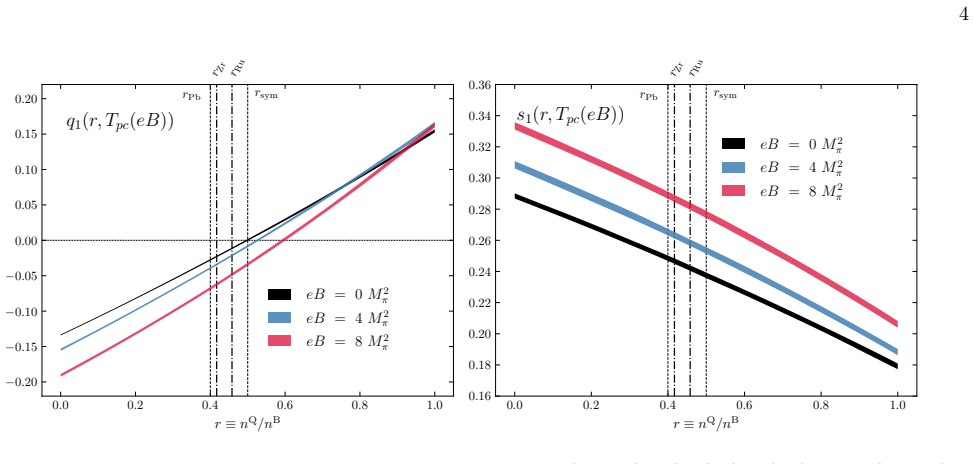
Lattice QCD finds isospin splits chemical potentials in Ru-Zr collisions

by Heng-Tong Ding, Jin-Biao Gu +2 more

Isospin-Driven Splitting of Chemical Potentials in Isobar Collisions from Lattice QCD

Splitting ratios match STAR data magnitude with charge sector dominant and only moderate magnetic dependence

Figure from the paper full image
abstract click to expand
Strong magnetic fields produced in relativistic heavy-ion collisions can modify fluctuations of conserved charges and, consequently, their associated chemical potentials. We present first-principles $(2+1)$-flavor lattice-QCD results for isospin-driven splittings of conserved-charge chemical potentials between the isobar systems $^{96}_{44}\mathrm{Ru}+^{96}_{44}\mathrm{Ru}$ and $^{96}_{40}\mathrm{Zr}+^{96}_{40}\mathrm{Zr}$ in the QCD crossover region, both at vanishing and nonzero magnetic fields along the pseudo-critical line $T_{pc}(eB)$. We outline a framework that, under strangeness neutrality and charge-to-baryon ratio $r\equiv n_{\rm Q}/n_{\rm B}$, maps the isospin difference between two nuclei, as encoded in $r_{\rm Zr}$ and $r_{\rm Ru}$, onto splitting ratios $\Delta\mu_{\rm Q}/\Delta\mu_{\rm B}$, $\Delta\mu_{\rm S}/\Delta\mu_{\rm B}$, and $\Delta\mu_{\rm S}/\Delta\mu_{\rm Q}$ as functions of $\mu_{\rm B}(r_{\rm Ru})/\Delta\mu_{\rm B}$. Using continuum-estimated lattice results for the leading-order coefficients $q_1\equiv(\mu_{\rm Q}/\mu_{\rm B})_{\rm LO}$ and $s_1\equiv(\mu_{\rm S}/\mu_{\rm B})_{\rm LO}$, we find that, at vanishing magnetic field, the splitting ratios are of similar magnitude to recent Bayesian extractions from STAR isobar data and yield $\Delta\mu_{\rm Q}<0$ and $\Delta\mu_{\rm S}>0$, with the electric-charge sector dominating. At nonzero magnetic fields, the splitting ratios show only moderate $eB$ dependence. We therefore further examine Ru--Zr differences in the normalized magnetic-field response of chemical-potential ratios, particularly those involving $\mu_{\rm Q}/\mu_{\rm B}$, which display a pronounced enhancement in lattice QCD. We also present hadron resonance gas (HRG) results and experimentally motivated proxy observables with kinematic cuts to facilitate contact with experiment.
0
0
hep-lat 2026-06-30

First lattice value of χ' at large N for Yang-Mills

by Claudio Bonanno

The topological susceptibility slope chi^prime in the large-N limit

New algorithm bypasses freezing to extract the O(p²) term of the topological charge density correlator

Figure from the paper full image
abstract click to expand
This paper presents the first non-perturbative lattice determination of the Yang--Mills topological susceptibility slope $\chi^\prime$ in the large-$N$ limit. This quantity represents the $\mathcal{O}(p^2)$ term of the momentum expansion of the topological charge density two-point correlator, and has important theoretical and phenomenological implications for strong interactions. This calculation is based on a novel algorithm that avoids topological freezing at large $N$ on fine lattices, and on a novel method to reliably compute $\chi^\prime$ on the lattice. The results of this study are relevant for the description of the proton spin in deep inelastic scattering experiments via the Shore--Veneziano formula.
0
0
hep-th 2026-06-30

Color confinement equals missing long-distance color reference frame

by Kei-Ichi Kondo

Understanding Color Confinement through Quantum Reference Frames and Relational Observables

No global color QRF exists to define isolated non-singlet states, so free colored particles cannot appear as relational observables.

Figure from the paper full image
abstract click to expand
We present a formulation for understanding color confinement on the basis of quantum reference frames (QRFs) and relational observables. In the QRF approach to color confinement, colored quantities are not defined as isolated local fields, but rather as relational observables with respect to a color frame or a dressing field. By the Gauss law, local color charge is excluded from the physical bulk algebra, whereas semi-local data such as boundary fluxes and Wilson lines may remain. Color confinement is characterized by the absence of a globally well-defined long-distance color QRF capable of supporting isolated non-singlet relational observables. This formulation preserves the insight of the Kugo-Ojima type picture, while avoiding dependence on a particular covariant gauge, an unbroken global BRST symmetry, and a specific infrared confinement criterion. As concrete examples, we consider (1+1)-dim. Yang-Mills theory, (1+1)-dim. U(1) gauge-Higgs model, and the two-dim. U(1) gauge-Higgs model on $\mathbb{H}^2$ ($AdS_2$) and three-dim. SU(2) gauge-Higgs model on $\mathbb{H}^3$ ($AdS_3$) obtained by dimensional reduction of four-dim. SU(2) Yang-Mills theory restricted to symmetric-instanton sectors. Through explicit calculations in these examples and in controlled sectors, we provide nontrivial consistency checks for the validity of the present formulation. We also discuss prospects for four-dim. Yang-Mills theory and gauge-Higgs theories. QRF-based color confinement provides a relational formulation of why isolated colored asymptotic sectors are absent. At the same time, it clarifies the role played by topological defects and shows that other confinement criteria -- the Wilson-loop area law, the preservation of generalized symmetry, namely center one-form symmetry, and the restoration of residual gauge symmetry -- can be organized as manifestations of a common QRF structure.
0
0
hep-lat 2026-06-29

Lattice QCD computes full two-dimensional LCDAs for Lambda baryon

by Mu-Hua Zhang, Haoyang Bai +12 more

Complete Access to Leading-Twist Λ-Baryon Light-Cone Distribution Amplitudes from Lattice QCD

The complete amplitudes replace asymptotic forms and shift the electromagnetic form factor by O(10%) at perturbative scales.

Figure from the paper full image
abstract click to expand
We report the first complete lattice-QCD determination of the leading-twist light-cone distribution amplitudes (LCDAs) of the $\Lambda$ baryon, obtained as full two-dimensional functions of the valence-quark momentum fractions. The calculation employs large-momentum effective theory to relate the light-cone amplitudes to equal-time nonlocal three-quark matrix elements of boosted $\Lambda$ baryons. Controlled physical extrapolations to the continuum, physical pion mass, and infinite momentum, together with hybrid renormalization, large-$\lambda$ extrapolation, and perturbative matching, yield the three leading-twist LCDAs $V$, $A$, and $T$. Using the lattice-determined LCDAs in place of the asymptotic form, we find an $\mathcal{O}(10\%)$ shift in the $\Lambda$ electromagnetic form factor at perturbative scales, demonstrating that the full two-dimensional LCDAs, rather than only their asymptotic shapes or lowest moments, are required for precision baryonic phenomenology. This work, together with the companion paper [1] detailing the baryon-LaMET framework, provides the first complete multi-dimensional $x$-dependent baryon LCDAs from first principles and establishes a benchmark for lattice access to multi-dimensional baryon structure.
0
0
nucl-th 2026-06-29

Alpha-alpha phase shifts match data on fine lattice

by Avik Sarkar, Serdar Elhatisari +2 more

Ab initio α-α scattering with high-fidelity chiral interactions

First ab initio calculation with N3LO chiral force recovers empirical S- and D-wave results after regularization of the ill-conditioned norm

Figure from the paper full image
abstract click to expand
Low-energy $\alpha$-$\alpha$ scattering underlies stellar helium burning and sharply tests nuclear forces in the reaction regime. We present its first calculation using the high-fidelity N3LO chiral NLEFT interaction, incorporated through wave function matching, on a fine lattice, using the adiabatic projection method. On the fine lattice, the two-cluster norm matrix becomes severely ill-conditioned, and its direct inversion is unstable. We address this with Tikhonov regularization, extrapolating the regulator to zero, and confirm the result with an independent truncated singular-value decomposition. The S- and D-wave phase shifts agree with empirical analyses, extending the validation of this interaction from bound states and charge radii to scattering and providing a practical route to ab initio nuclear reactions on fine lattices
1 0
0
hep-lat 2026-06-29

aHISQ taste splittings differ qualitatively from naive staggered under anisotropy

by Alexei Bazavov, Yannis Trimis +1 more

Highly improved staggered quarks on anisotropic lattices

Tuning study across anisotropy 1-8 on pure gauge ensembles yields distinct patterns and an empirical model for aHISQ.

Figure from the paper full image
abstract click to expand
We present a study of tuning of the anisotropic highly improved staggered quark (aHISQ) action on pure gauge ensembles with the renormalized anisotropy ranging from 1 to 8. We discuss multiple gradient flow schemes for tuning the gauge anisotropy and comment on what scheme may be optimal for anisotropic simulations. Next, we compare tuning of the fermion anisotropy for the naive staggered and aHISQ actions. Finally, we study the dependence of the staggered pion taste mass splittings on anisotropy for the two actions and develop an empirical model that captures the main features of the aHISQ spectrum. We observe qualitatively different behavior of the naive and aHISQ taste spectrum with anisotropy.
0
0
cond-mat.dis-nn 2026-06-29

SGD induces BBP transition in neural network spectra

by Chanju Park, Dario Bocchi +3 more

Spectral phase transitions and trainability in neural network learning dynamics

Isolated eigenvalues detach from the bulk, supplying a dynamical account of representation formation and trainability.

Figure from the paper full image
abstract click to expand
The emergence of low-dimensional structures in the spectra of neural network weight matrices is a common empirical feature of trained models, but the dynamical origin of this phenomenon during learning remains an open problem. We formulate neural network training as the stochastic evolution of an initially random matrix ensemble, driven by stochastic gradient descent (SGD) updates that reshape the spectral bulk while amplifying signal strength. This induces a Baik-Ben Arous-P\'ech\'e (BBP) transition during training, where isolated eigenvalues detach from the random bulk distribution, providing a dynamical framework for representation formation in high-dimensional learning dynamics. We demonstrate this in a solvable linear teacher-student model, where spectral evolution is analytically tractable and a phase diagram of trainability governed by the step size (or learning rate) and initial weight variance is obtained, and subsequently extend our formalism beyond the linear regime to nonlinear and stochastic settings. Numerical simulations in realistic settings support this picture, showing robust emergence of spectral alignment during training. Our results suggest that spectral analysis may provide a unified perspective of stochastic learning dynamics, linking trainability, optimisation hyperparameters, spectral phase transitions, and representation learning in neural networks.
0
0
hep-ph 2026-06-29

Neural nets produce broader TMD PDFs when SIDIS joins DY data

by Matteo Cerutti

Neural-Network extraction of TMDs with SIDIS data

First global NN fit at N3LL shows wider distributions and smaller uncertainties than DY-only NN extraction.

Figure from the paper full image
abstract click to expand
A first global analysis of unpolarized Transverse-Momentum-Dependent (TMD) distributions based on a neural-network (NN) parametrization is presented. Drell-Yan (DY) and semi-inclusive deep inelastic scattering (SIDIS) data are simultaneously included at next-to-next-to-next-to-leading logarithmic (N$^3$LL) accuracy. The results indicate that the inclusion of SIDIS data leads to broader unpolarized TMD PDFs compared to a DY-only NN extraction. The associated uncertainties are reduced with respect to the DY-only case, while remaining larger than the ones obtained using traditional models. These results demonstrate the potential of flexible NN parametrizations in reducing model dependence and provide guidance for future high-precision measurements at Jefferson Lab and the Electron-Ion Collider.
0
0
hep-ph 2026-06-29

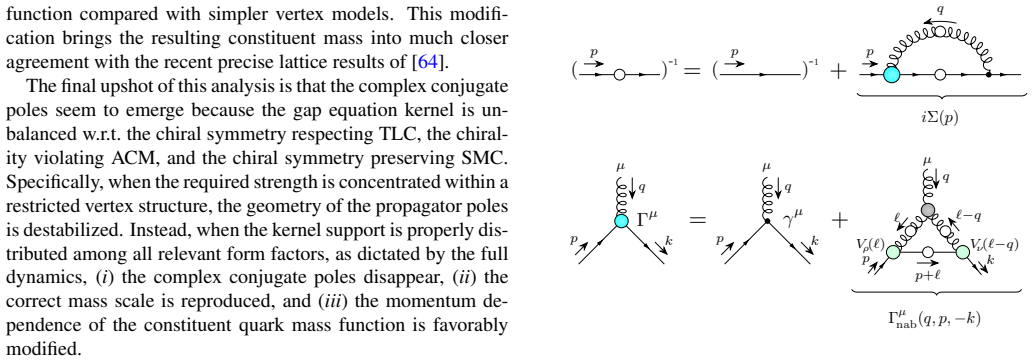
Quark propagator shows real poles with opposite-sign residues

by R. Alkofer, M.N. Ferreira +3 more

Real poles with opposite-sign residues in the non-perturbative quark propagator

Full non-perturbative vertex coupling replaces complex conjugate poles with real ones at sub-GeV momenta while keeping confinement signals.

Figure from the paper full image
abstract click to expand
We investigate the analytic structure of the quark propagator in the Landau gauge by dynamically coupling the standard gap equation to the non-perturbative quark-gluon vertex. Employing the full vertex basis, we demonstrate that for sub-GeV time-like momenta, the proper inclusion of the underlying dynamics leads to a pair of real poles with opposite-sign residues. In particular, in stark contradistinction to the results obtained in widely used approximations, we see no sign of complex conjugate poles. This distinctive analytic structure evades conceptual shortcomings frequently associated with complex conjugate poles while remaining fully compatible with the aspects of color confinement related to positivity violation. Crucially, this novel behavior is governed by a dominant triplet of vertex form factors: the tree-level component, the anomalous chromomagnetic moment, and a component we label as "spin-momentum curvature". By gradually tuning the individual strengths of these components, we demonstrate that while they contribute in distinct ways to the quark propagator, their joint action is vital for stabilizing the system. Together, they place the low-lying poles onto the real axis while producing a robust constituent quark mass of $350$ MeV.
0
0
hep-lat 2026-06-29

Formulas invert Laplace transforms on Euclidean correlators

by Leonardo Giusti, Matteo Saccardi +1 more

Spectral densities from Euclidean correlators via integral transforms: theoretical framework

Recover spectral densities from lattice or continuum data with O(a^2) errors and rigorous bounds on unknowns.

abstract click to expand
Spectral densities link experimental measurements to dynamical properties of a quantum field theory which, in turn, can be resolved non-perturbatively from the Euclidean time-dependence of correlation functions. By making extensive use of integral transforms, we present analytic formulae to carry out the inverse Laplace transform so as to extract spectral densities from either the continuum or the discrete sampling of correlation functions in the Euclidean time. Formulae extend to regulated and/or smeared spectral densities as well. We explicitly show that the proposed lattice solution tends to its continuum counterpart up to $O(a^2)$ effects in the lattice spacing $a$ if the lattice correlator is $O(a)$-improved. In practical computations, lattices have necessarily a finite Euclidean temporal extent, a lack of knowledge which suggests to introduce incomplete integral transforms and the corresponding incomplete smeared spectral densities. The contribution from the unknowns to a smeared spectral density can then be rigorously bound and kept under control if the integral transform of the smearing function decays fast enough with the conjugate variable. Conversely, the bound can be used to plan lattices so as to achieve a given target precision on the reconstructed spectral density of interest. The formulae presented here in the context of lattice field theory can be easily applied or extended to other areas of research.
1 0
0
hep-th 2026-06-29

Temperature estimator equals one in matrix models and ensembles

by Anosh Joseph, Vinod Mamale

Configurational Temperature in Matrix Models and Random Matrix Ensembles

Numerical checks in Gross-Witten-Wadia and Gaussian ensembles confirm the Schwinger-Dyson identity holds, offering a check on simulation acc

abstract click to expand
We investigate the configurational temperature estimator in interacting matrix models and Gaussian random-matrix ensembles. The estimator follows from an exact Schwinger--Dyson identity and may be expressed in terms of the gradient and Hessian of the action. We study the Gross--Witten--Wadia model, a quartic double-well matrix model, and the Gaussian Orthogonal, Unitary, and Symplectic Ensembles. In all cases, the estimator satisfies the exact Schwinger--Dyson identity, $\beta_{\rm config} = 1$, within statistical uncertainties. Separating the estimator into isotropic and anisotropic parts, we find that the leading finite-$N$ corrections satisfy the approximate relation $\beta_{\rm iso} - 1 \simeq - \beta_{\rm aniso}$. We also show that the configurational temperature estimator provides a sensitive diagnostic of Monte Carlo simulations.
0
0
hep-ph 2026-06-29

Gap stays finite in magnetized quark matter at high density

by Francisco X. Azeredo, Dyana C. Duarte +4 more

Dense and Cold Magnetized Quark Matter: A Review of Magnetic-Field-Independent Regularization and the Medium Separation Scheme

Medium separation in regularization removes artificial normal-phase transition at zero temperature

Figure from the paper full image
abstract click to expand
We present a comprehensive review of regularization schemes for magnetized dense quark matter within effective models of quantum chromodynamics, focusing on the Magnetic-Field-Independent Regularization (MFIR) and the Medium Separation Scheme (MSS) at finite chemical potential and magnetic field. In nonrenormalizable frameworks such as the Nambu-Jona-Lasinio model, the treatment of ultraviolet divergences is crucial, particularly in magnetized and dense environments where conventional regularization procedures may introduce unphysical artifacts. We show that MFIR consistently isolates divergent vacuum contributions from finite magnetic-field-dependent terms, while MSS extends this separation to the medium sector, ensuring that only vacuum quantities are regularized. Within this unified framework, we analyze the thermodynamics of cold and dense quark matter, including color-superconducting phases, and demonstrate that the superconducting gap remains finite at large chemical potentials, even in the presence of strong magnetic fields. In contrast to results obtained with traditional regularization schemes, we find no evidence for a transition to a normal phase at zero temperature, highlighting the importance of a proper separation between vacuum and medium contributions. These results eliminate spurious oscillations and other nonphysical artifacts, leading to a more robust and physically consistent description of strongly interacting matter under extreme conditions relevant to compact stars and heavy-ion collisions.
0
0
hep-lat 2026-06-29

Lattice QCD extracts pion and kaon PDF moments at NNLO

by Joshua Miller, Joseph Torsiello +3 more

Mellin Moments of Pion and Kaon Unpolarized PDFs from Nonlocal Operators in Lattice QCD

Nonlocal Wilson-line operators on boosted mesons give first-principles values at 2 GeV scale.

Figure from the paper full image
abstract click to expand
We present a first-principles lattice-QCD determination of Mellin moments of the unpolarized pion and kaon parton distribution functions using matrix elements of boosted mesons coupled to nonlocal operators containing a straight Wilson line. The calculation is performed on an $N_f=2+1+1$ ensemble of maximally twisted-mass fermions with a clover term, with lattice volume $32^3\times64$, lattice spacing $a=0.0934$ fm, and pion mass $m_\pi=260$ MeV. Matrix elements are computed for hadron momenta $P_3=0$, 0.41, 0.83, 1.25, 1.66, and 2.07 GeV and analyzed within the short-distance factorization framework. We investigate the dependence of the extracted moments on the truncation of the operator-product expansion, the coordinate-space fit window, and the perturbative accuracy of the Wilson coefficients, comparing next-to-leading-order and next-to-next-to-leading-order results. We also perform an RG-improved analysis as a consistency check of the perturbative treatment. Our final results are obtained from combined fits in $(P_3,z)$ space at next-to-next-to-leading-order and are quoted at $\mu=2$ GeV. We also study the SU(3) symmetry-breaking effect and reconstruct the valence PDFs from the moments.
0
0
hep-lat 2026-06-29

Three-flavor QCD transition is crossover at studied masses

by Yu Zhang, Yasumichi Aoki +5 more

The QCD phase diagram for three-flavor M\"obius domain-wall fermions

Volume scaling weaker than for sharp transitions down to quark masses of a few MeV.

Figure from the paper full image
abstract click to expand
We investigate the phase transition of Quantum Chromodynamics (QCD) with three degenerate quark flavors at zero baryon chemical potential. Using M\"{o}bius domain-wall fermions as the lattice fermion formulation, we ensure excellent chiral symmetry preservation. Our simulations are performed at three different temporal lattice extents, $N_{t}=6, 8, 12$, with a fixed lattice spacing $a=0.1361(20)$ fm, corresponding to temperatures of 242(4), 181(3), and 121(2) MeV, respectively. We explore a range of quark masses and spatial volumes with aspect ratios $N_{s}/N_{t}$ spanning from 2 to 4. By analyzing the mass and volume dependencies of the plaquette, plaquette susceptibility, chiral condensate, chiral susceptibilities, and Binder cumulant, we identify the pseudocritical transition quark masses from our largest lattice volumes. For $N_t=6$, this is 184(10) MeV (determined from the plaquette susceptibility). For $N_t=8$ and 12, the transition points vary slightly depending on whether the total or disconnected chiral susceptibility is used, yielding ranges of 36(1)-39.1(9) MeV and 3.5(3)-3.7(2) MeV, respectively, in the $\overline{\text{MS}}$ scheme at a scale of $\mu=2$ GeV. The negligible volume dependence at $N_t=6$ and 8, combined with finite-size scaling analysis at $N_t=12$ revealing volume growth significantly weaker than expected for a first- or second-order phase transition, points to a continuous crossover at these specific quark mass points. Additionally, we study the effects of residual chiral symmetry breaking on the chiral condensate and chiral susceptibilities using two different values of $L_s$.
0
0
hep-lat 2026-06-29

Ward identities fix lattice QCD energy-momentum tensor renormalization

by Matteo Bresciani, Mattia Dalla Brida +4 more

The QCD energy-momentum tensor on the lattice: non-perturbative renormalization with N_f=3

Triplet and sextet renormalization constants reach few percent accuracy for couplings up to g0 squared of 0.96.

abstract click to expand
We construct the traceless components of the energy-momentum tensor on the lattice for QCD with $N_f=3$ flavours, such that their correlation functions satisfy the appropriate Ward identities in the continuum limit. To carry out this program, we define the theory on the lattice by the Wilson-plaquette and the $O(a)$-improved Wilson actions for gluons and quarks respectively. The discretization of the space-time entails that (i) the irreducible nonet representation of the SO($4$) group splits into a triplet and a sextet irreducible representations of the hypercubic group, and (ii) for each multiplet non-perturbative determinations of the the gluonic and fermionic renormalization constants are required. The bare gluonic components of the energy-momentum tensor are defined via the clover discretization of the field strength tensor, while the fermionic ones are discretized by appropriate combinations of symmetric covariant derivatives. Either for the triplet or the sextet representations, the two independent renormalization constants are then fixed non-perturbatively by imposing discretized versions of continuum Ward identities for one-point correlation functions in the presence of shifted boundary conditions and an imaginary chemical potential. The non-perturbative calculation is then carried out by Monte Carlo simulations, and the resulting renormalization constants are determined with a final accuracy of a few percent for values of the bare coupling constant squared in the range $0 \leq g_0^2\leq 0.96$.
0
0
hep-lat 2026-06-29

KL iterates improve overlap operator approximation

by Stephan Durr, Stylianos Gregoriou +1 more

Diagonal Kenney-Laub Rational Approximation to the Overlap Operator using Wilson and Brillouin Kernel

Diagonal Kenney-Laub method shows better chiral symmetry and efficiency than Chebyshev on quenched lattices.

Figure from the paper full image
abstract click to expand
We propose a formulation of the overlap Dirac operator in lattice QCD that employs diagonal Kenney-Laub (KL) iterates to approximate the matrix sign function. KL iterates require no prior spectral information about the kernel operator and, when expressed via their partial fraction decomposition, offer a practical and efficient approximation scheme. We evaluate this approach in a proof-of-concept implementation using quenched lattices at $\beta=6.2$ and two Dirac operator discretizations as a kernel, namely the Wilson and the Brillouin operators. By examining the approximate overlap operator's violation of the Ginsparg-Wilson relation and the critical bare quark mass for increasing approximation order, we find that KL iterates deliver enhanced chiral symmetry preservation and computational efficiency compared to the Chebyshev polynomial approach.
0
0
hep-lat 2026-06-26

Equivariant diffusion samples Schwinger model without topological freezing

by Octavio Vega, Aida X. El-Khadra

Sampling the Schwinger Model with Gauge-Equivariant Diffusion

Model likelihoods give unbiased observables matching MCMC and reduce freezing near critical points.

Figure from the paper full image
abstract click to expand
We present a first study of a diffusion-based approach to accelerated sampling of the $N_f = 2$ lattice Schwinger model. Our work is inspired by recent and growing successes in developing such generative models for ensemble generation in LFT to overcome the well-known critical slowing down problem. We train a U(1)-equivariant score-based generative model to sample gauge link configurations from the marginal Schwinger model. By computing model likelihoods, we obtain unbiased estimates for observables that closely match those produced by MCMC simulations. We also demonstrate improvement over HMC as measured qualitatively by a reduction in topological freezing near critical parameters.
0
0
hep-th 2026-06-26

Score mismatch field controls every Schwinger-Dyson violation

by Anosh Joseph

Probing Probability Geometry with Schwinger--Dyson Identities: Score Mismatch, Fisher Information, and Configurational Temperature

Its squared norm bounds relative Fisher information; convergence restores the full hierarchy and identifies configurational temperature as a

abstract click to expand
We develop a geometric interpretation of Schwinger--Dyson identities by showing that their violations are controlled by a single score-mismatch field $\delta s$. For an arbitrary sampled probability distribution $Q$ and equilibrium measure $P_{\rm eq}$, every Schwinger--Dyson violation is determined by $\delta s = \nabla \log (Q / P_{\rm eq})$, which characterizes the departure from equilibrium. Each Schwinger--Dyson identity measures a projection of this field onto a probe direction in configuration space. The relative Fisher information is its squared norm. This gives a universal bound relating Fisher information to the complete Schwinger--Dyson hierarchy, thus implying that convergence in Fisher information restores all Schwinger--Dyson identities. We further obtain a variational characterization of the relative Fisher information in terms of Schwinger--Dyson violations, leading to a natural tomographic interpretation in which increasingly rich families of probe fields encode progressively more information about the underlying probability distortion. The configurational temperature, within this framework, emerges as a distinguished Schwinger--Dyson probe. The Stein operators and score-function methods arise naturally from the same probability-geometric structure. The score-mismatch field, therefore, provides a unified geometric language for understanding Schwinger--Dyson identities, configurational temperature, Fisher information, and non-equilibrium sampling in stochastic processes.
1 0
0
hep-lat 2026-06-26

Low-mode averaging cuts noise in physical-pion lattice QCD

by Constantia Alexandrou, Simone Bacchio +5 more

Performance of Low Mode Averaging on Twisted-Mass Fermion Ensembles at the physical pion mass point

Twisted-mass ensembles show clear variance and cost reductions for meson and baryon correlators at large times plus chiral condensate of 269

Figure from the paper full image
abstract click to expand
We study the performance of low-mode averaging (LMA) on twisted-mass fermion ensembles at near-physical quark masses, assessing both its theoretical framework and practical cost-effectiveness in modern lattice QCD. In particular, we present a numerical study of light-quark meson and baryon observables. For mesons, we analyse two-point functions, including the vector-vector correlator relevant for the hadronic vacuum polarisation contribution to the muon anomalous magnetic moment, comparing two implementations of LMA: an exact approach based on explicit low modes and an approximate, high-statistics variant using multigrid techniques. For baryons, we restrict to the exact approach and study both two- and three-point functions, quantifying the resulting noise and cost reductions at large Euclidean times. In addition, we compute the eigenvalue density of the massless Wilson operator and determine the renormalised chiral condensate via the Banks-Casher relation, obtaining $\sqrt[3]{\Sigma_{\mathrm{R}}}=269.5(4.5)~\mathrm{MeV}$ for $N_f{=}2{+}1{+}1$ isospin-symmetric QCD at a scale $2~\mathrm{GeV}$ in the $\overline{\mathrm{MS}}$ scheme, with an uncertainty dominated by the chiral extrapolation. Additionally, from the pion-mass dependence of $\Sigma_{\mathrm{R}}$, we extract the scale-independent low-energy constant $\bar{h}_1=5.2(1.1)$.
0
0
hep-lat 2026-06-25

Intermediate photons capture ΔI=1/2 enhanced effects on ε'

by Norman H. Christ, Erik Lundstrum

Isospin breaking corrections to a lattice QCD calculation of varepsilon'

Lattice QCD+QED with 0.5-2 GeV photons handles the large isospin-breaking corrections to direct CP violation while low-energy contributions

Figure from the paper full image
abstract click to expand
Because of the $\Delta I = 1/2$ rule, the effects of electromagnetism and the isospin-breaking light quark mass difference on the direct CP violation parameter $\varepsilon'$ may be as large as 25\% and are consequently of immediate interest. In a lattice QCD calculation the effects of isospin breaking on the various features of kaon decay can be clearly distinguished and those effects enhanced by the $\Delta I=1/2$ rule on $\varepsilon'$ explicitly identified. We show that all such enhanced effects can be captured in a QCD + QED lattice calculation in which the exchanged photon has an energy in an accessible, intermediate range between 0.5-2.0 GeV. Short-distance effects ($2.0 \mathrm{\ GeV} \lesssim E_\gamma$), usually treated in QCD and electroweak perturbation theory, are not enhanced by the $\Delta I=1/2$ rule, beyond the well-understood contribution of the two electroweak penguin operators. Infrared photons do not contribute to $\varepsilon'$ while low-energy photons ($E_\gamma \lesssim 0.5$ GeV) are not $\Delta I=1/2$ rule enhanced or are suppressed by one order in chiral perturbation theory (ChPT). An explicit ChPT estimate of this low-energy-photon contribution, a contribution that is difficult to determine in a finite-volume lattice calculation, suggests that the effect on $\varepsilon'$ is on the order of 0.5\%.
0
0
hep-ph 2026-06-25

One lattice point fixes meson screening response in hot QCD

by Jie Ren, Chen Chen +2 more

Axial-Vector Lattice Benchmarks Reveal a Common Medium Response of Meson Screening in Hot QCD

Axial-vector benchmark sets temperature dependence for all channels and flavors with no further input

Figure from the paper full image
abstract click to expand
Meson screening masses trace the dissolution of hadronic correlations in hot QCD. Combining lattice-QCD benchmarks with a symmetry-preserving Dyson--Schwinger baseline, we identify a flavor-dependent axial-vector quasi-free onset and a finite-interval medium response. One axial-vector point fixes the response; remaining axial-vector data test it, and vector screening masses validate it without input. The framework predicts light-charm and bottom-containing spectra; its pseudoscalar--scalar extension gives conservative lower estimates for ordinary chiral partners.
0
0
hep-ph 2026-06-24

Pentaquark moments fix light-quark ratio at -2

by Ulaş Özdem

Analytic electromagnetic signatures of compact pentaquark structure: A multi-current QCD light-cone sum rules analysis of the P_(psi s)^(Λ) states

LCSR on four currents yields exact analytic signatures that differ from molecular models and exceed other predictions.

Figure from the paper full image
abstract click to expand
Probing the internal organization of hidden-charm pentaquarks -- including the spin-color correlations that distinguish compact diquark-diquark-antiquark configurations from loosely bound hadronic molecules -- requires observables beyond mass spectroscopy. We argue that multi-current QCD light-cone sum rules (LCSR) provide a diagnostic framework through exact analytic relations among flavor-sector contributions enforced by the algebra of the interpolating currents. We identify two such signatures: (i) the light-quark contributions satisfy $\mu_{u}/\mu_{d}=e_{u}/e_{d}=-2$ in all four currents considered, reflecting a common Lorentz-color kernel; and (ii) for the $J_{3}(x)$ current the charm contribution vanishes identically, $\mu_{c}=0$, from the Dirac structure of the anti-charm coupling rather than the pseudoscalar charm-diquark embedding alone. Using four diquark-diquark-antiquark currents $J_{1}(x)$-$J_{4}(x)$ with $J^{P}=\tfrac{1}{2}^{-}$, we obtain $\mu_{J_{1}}=-1.35^{+0.35}_{-0.28}\,\mu_{N}$, $\mu_{J_{2}}=3.14^{+0.65}_{-0.50}\,\mu_{N}$, $\mu_{J_{3}}=1.01^{+0.25}_{-0.20}\,\mu_{N}$, $\mu_{J_{4}}=-1.79^{+0.41}_{-0.34}\,\mu_{N}$. These predictions are paired with the $P_{\psi s}^{\Lambda}(4338)$ and $P_{\psi s}^{\Lambda}(4459)$ on mass grounds as a working hypothesis, since the $\pm 0.11~\text{GeV}$ uncertainties accommodate either state within $1\sigma$ of all four currents. The magnitudes $|\mu|\sim 1$-$3\,\mu_{N}$ lie above quark-model and heavy pentaquark chiral perturbation theory expectations ($|\mu|\lesssim 0.5\,\mu_{N}$). Applying the same procedure to two previous molecular LCSR analyses yields $\mu_{u}/\mu_{d}=-1/2$ rather than $-2$, providing an LCSR-internal contrast at the flavor-decomposed level even when total magnitudes are comparable. The two signatures are immune to the state-to-current pairing and offer falsifiable tests of the compact picture.
0
0
cond-mat.stat-mech 2026-06-24

Quenched particle density scales dynamically in fermionic wires

by H. Panagopoulos, E. Vicari

Out-of-equilibrium scaling of the particle density in quantum fermionic wires after a critical quenching of the chemical potential

The difference from critical value follows θ = t/ξ^z scaling after chemical potential quench, unlike equilibrium case.

Figure from the paper full image
abstract click to expand
We study the out-of-equilibrium scaling behavior of the particle density in quantum fermionic Kitaev wires, after instantaneous quantum quenches (QQs) of the chemical potential within their quantum critical region. The critical scaling of the ground-state particle density is known to be subleading at its Ising-like quantum transition, hidden by regular and logarithmic terms arising from peculiar mixings with the identity operator. This situation changes along the out-of-equilibrium dynamics arising from QQs of the chemical potential to the critical point, starting from the ground state for Hamiltonian parameters within the critical region. We analytically show that the difference between the post-QQ particle density and its critical value develops an out-of-equilibrium scaling behavior, in terms of the dynamic scaling variable $\theta\sim t/\xi^z$ (where $t>0$ is the post-QQ time, $\xi$ is the length scale of the initial state, and $z$ is the dynamic critical exponent) associated with the post-QQ time evolution. The scaling function turns out to have a peculiar singular behavior in the $\theta\to 0$ limit, apparently related to the anomalous equilibrium scaling behavior of the particle density at the starting point of the QQ protocol. This provides analytical evidence of earlier conjectures on the general emergence of post-QQ dynamic scaling behaviors of the subtracted particle density (supported by numerical finite-size scaling analyses), unlike their equilibrium counterpart which turns out to be dominated by nonuniversal contributions.
0
0
hep-lat 2026-06-24

Lattice EMT renormalizes spin-2 part separately from trace anomaly

by Mushtaq Loan, Nasser Demir

One-Loop Renormalization of the Improved Energy-Momentum Tensor in Lattice QCD

Z_T(u0) multiplies the traceless component while the scalar trace follows from the beta function and F squared.

Figure from the paper full image
abstract click to expand
We present the one-loop renormalization of the improved gluonic energy-momentum tensor (EMT) by employing a three-loop-improved clover discretization of the field-strength tensor in pure SU(3) lattice gauge theory. The renormalization factor is extracted by matching the amputated two-gluon matrix element of the lattice energy-momentum tensor to the continuum MSbar scheme. The one-loop contribution is separated into sail, operator-tadpole, and external-leg corrections, each expressed in terms of a minimal set of scalar Brillouin-zone integrals to obtain the explicit expression for the finite lattice coefficient B_lat(u_0) and the multiplicative renormalization factor Z_T(u_0) associated with the traceless spin-2 component of the energy-momentum tensor. A key result, obtained in this framework, is the clear distinction between two sectors: the spin-2 sector, governed by Z_T, and the scalar trace sector, which encompasses the Yang-Mills trace anomaly. The trace is determined by the scalar operator F_{\rho\sigma}F_{\rho\sigma} and the Yang-Mills beta function, rather than by the spin-2 renormalization factor. The renormalized EMT modifies the normalization and short-distance behaviour of energy-density correlators through both traceless and scalar-channel contributions. Comparison with existing lattice thermodynamic data demonstrates that the improved operator accurately reproduces the expected temperature dependence of the trace anomaly and offers a systematically improvable framework for investigating the equation of state, gluon condensate, and transport coefficients in lattice QCD.
0
0
cond-mat.str-el 2026-06-23

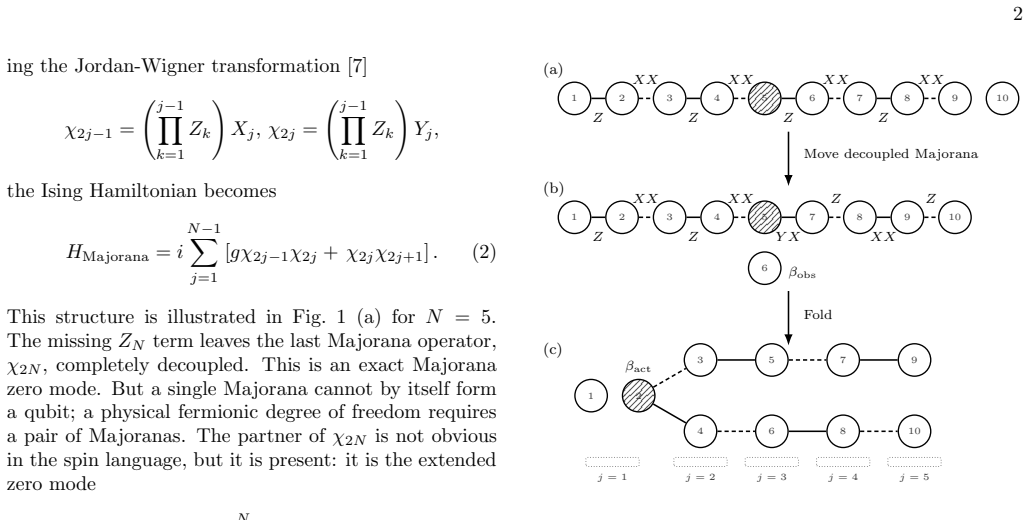
Lattice defect creates Andreev reflection without superconductor

by Atsushi Ueda, Tokiro Numasawa +2 more

Emergent Andreev Reflection from a Lattice Duality Defect

A one-site translation in a folded Majorana chain becomes a sign-flipping boundary for left-moving modes in the continuum.

Figure from the paper full image
abstract click to expand
Andreev reflection converts an incoming fermion into an outgoing hole and is usually tied to a superconducting interface. We show that an analogous charge-conjugating boundary condition emerges from a purely lattice duality defect. Starting from a Majorana representation of the transverse-field Ising chain, we construct a folded lattice model in which a boundary Majorana impurity implements a one-site translation of a staggered Majorana chain. In the continuum, this translation becomes a chiral fermion-parity defect: it flips the sign of the only left-moving Majorana mode while leaving the right-moving mode unchanged. When the two Majorana modes are recombined into a complex fermion in the folded geometry, this sign flip becomes the Andreev-like boundary condition. Our lattice formulation gives a microscopic interpretation of the Emery--Kivelson boundary of the two-channel Kondo problem and of Maldacena--Ludwig monopole scattering, while identifying the boundary as the interface between a Kitaev-chain SPT phase and a gapless chain. The same Majorana translation defect also provides a lattice realization of an axial $U(1)_A$-symmetric charge-flip boundary.
0
0
hep-ph 2026-06-23

Lattice-experiment fit sets |V_cb| to 0.03997(71) and excludes NP below 2.5 TeV

by Marzia Bordone, Ollie Heald +1 more

Angular Analysis of B to D^(*)ell bar{ν}_(ell) from Lattice and Experiment: |V_(cb)| and New Physics Constraints

Joint analysis of form factors and angular data leaves the exclusive-inclusive puzzle open while ruling out scalar leptoquarks below 1 TeV.

abstract click to expand
We present a combined angular analysis within and beyond the Standard Model (SM) of experimental measurements for the $B \to D^{*}\ell \bar{\nu}_{\ell}$ angular coefficients provided by the Belle collaboration, together with lattice-calculated hadronic form-factor data from the HPQCD, JLQCD, and FNAL/MILC collaborations. We focus on determining the CKM matrix element $|V_{cb}|$ and constraining a set of Wilson coefficients associated with new physics (NP) mediated by scalar and tensor currents. SM predictions for the angular coefficients are obtained using form-factor parameterisations based on the Boyd-Grinstein-Lebed (BGL) ansatz, with unitarity constraints imposed as Bayesian priors. Experimental and theoretical data are analysed jointly by considering the cases $\ell = e, \mu$ separately and comparing with the massless approximation. For the latter, we determine $|V_{cb}| = 0.03997(71)$, with no resolution of the exclusive-inclusive puzzle. Using the full expressions for the angular coefficients in the presence of scalar, vector, and tensor currents, the corresponding Wilson coefficients are constrained through a joint Bayesian fit to lattice and experimental data. By including the renormalisation group evolution of the Wilson coefficients in the SM effective field theory (SMEFT), these constraints translate into bounds on the effective scale of potential heavy NP at the TeV scale. We find, at the $68\%$ confidence level, that NP mediated by a scalar leptoquark and a vector leptoquark/colourless scalar boson are excluded at the effective scales 1.0 and 2.5 TeV, respectively.
0
0
hep-ph 2026-06-22

Quantum algorithm simulates GPDs in Schwinger model

by Tianyin Li, Hongxi Xing

Quantum Simulation of Generalized Parton Distributions in the Schwinger Model

Wilson fermions preserve charge conjugation symmetry and deliver polynomial scaling with qubit count and precision.

Figure from the paper full image
abstract click to expand
We present a quantum algorithm for simulating Generalized Parton Distributions (GPDs) in the Schwinger model. Unlike the staggered fermions widely utilized in current quantum simulations, we employ Wilson fermions for lattice discretization. This choice is critical for the quantum computation of GPDs due to their strict preservation of charge conjugation symmetry. We construct a comprehensive algorithmic framework that includes the preparation of hadronic states with non-zero momentum and the measurement of light-cone correlation functions incorporating Wilson lines. We provide a complexity analysis, demonstrating that the resources required for our algorithm scale polynomially with both the number of qubits and the desired precision $\varepsilon$. Finally, we benchmark our approach using exact diagonalization, extracting mass spectra and GPDs (also parton distribution functions) that are consistent with theoretical expectations and fundamental physical constraints.
0
0
hep-ph 2026-06-22

Gluon screening mass rise flips catalysis to inverse near QCD transition

by Fei Gao, Kairen Huang +2 more

From Magnetic to Inverse Magnetic Catalysis: The Interplay of Quark and Gluon Mass Generation in Magnetic Fields

Competing gluon effect overtakes quark mass enhancement close to the chiral phase transition.

Figure from the paper full image
abstract click to expand
We analyze the effects of the magnetic field on the quark and gluon propagators within the functional QCD framework. By solving the coupled Dyson-Schwinger equations for the quark and gluon propagators, we find that the quark mass is generally enhanced in the presence of a magnetic field, leading to magnetic catalysis of the chiral condensate. Meanwhile, the magnetic field also induces an increase in the gluon screening mass. The enhancement of the gluon screening mass suppresses the quark-gluon interaction and thereby weakens the strength of dynamical chiral symmetry breaking, establishing a competing mechanism against magnetic catalysis. In particular, this enhancement of the gluon screening mass becomes dominant near the chiral phase transition, which in turn gives rise to inverse magnetic catalysis.
0
0
hep-lat 2026-06-22

Tensor RG extracts particle states in Ising model

by Fathiyya Izzatun Az-zahra, Shinji Takeda +1 more

Multi-particle states investigation with tensor renormalization group method

Coarse-grained networks yield energies and phase shifts matching theory for one- to three-particle states.

Figure from the paper full image
abstract click to expand
We investigate multi-particle states of the (1+1)d Ising Model using a spectroscopy scheme based on transfer matrix and tensor renormalization group method. The scheme begins with computing the energy spectrum of the system from the transfer matrix estimated by the coarse-grained tensor network. The quantum number and momentum of these energy eigenstates are not a priori known, thus we identify them using matrix elements of an interpolating operator that is numerically computed with an impurity tensor network. Furthermore, by observing the dependence of the energy as a function of system size, we identify the number of particles of the eigenstates and obtain one-, two-, and three-particle states for a specific quantum number and momentum. From the two-particle state sector, we compute the scattering phase shift using L\"uscher's formula and wave function approach, and observe their consistency with theoretical prediction. Using the information of the two-particle scattering phase shift, we investigate the degeneracy of the two-particle states, the theoretical prediction of the three-particle finite volume energy and also the degeneracy in the three-particle states.
0
0
hep-lat 2026-06-22

Lattice reanalysis aligns proton PDF with fits to 1 sigma

by Xiangdong Ji, Yushan Su

Proton's isovector PDF with updated analysis of large-momentum lattice data

Updated large-momentum calculations for u(x)-d(x) now fall within one standard deviation of global fits, supporting the expansion method.

Figure from the paper full image
abstract click to expand
The proton's unpolarized $u(x)-d(x)$ parton distribution function (PDF) has been studied by a number of lattice QCD groups through large momentum expansion. However, due to lattice artifacts (excited state contaminations, unphysical pion masses, and discretization effects) and less-advanced theoretical analysis (renormalizations, large-distance extrapolations, and large-log resummations), the resulting PDFs cannot be compared strictly with experimental data. By using the state-of-the-art theoretical tools and mitigating the lattice artifacts empirically, we reanalyze the available datasets in the literature and find that the new PDF in the physical limits is consistent with global fittings within $\sim1\sigma$. This provides compelling evidence that large momentum expansion is capable of accurately predicting the $x$-dependence of the PDFs when ideal lattice data become available.
0
0
hep-th 2026-06-22

Monopole-instanton chains form vortex sheets on twisted tori

by Benjamin Dobozy, Erich Poppitz

Metamorphosis of fractional instantons on a twisted T⁴ with a double-trace deformation: a numerical study

Lattice minimization shows the analytic collimation picture holds in pure Yang-Mills when twists and deformation align abelianizations.

Figure from the paper full image
abstract click to expand
We use numerical minimization of the lattice action of trace-deformed Yang-Mills theory on $T^4$ with twisted boundary conditions to find the classical minimum action configurations of fractional topological charge. We vary the twists and ratios of torus periods to interpolate between different $R^{4-k} \times T^k$ geometries. This allows us to see how the corresponding minimum action saddle point configurations -- monopole-instantons ($k=1$), center vortices ($k=2$), and fractional instantons ($k=3,4$) -- morph into each other. We also study how the transition between them depends on the presence of a deformation potential. In particular, we argue that the recent analytic picture of chains of monopole-instantons collimating their flux into center-vortex sheets, while technically relying on the deformation potential, also holds in pure Yang-Mills theory, for tori whose shape causes the abelianization due to the deformation to align with the one due to the twists. Our results also indicate that with nonzero deformation potential, some transitions between different minimal-action fractional charge configurations may be discontinuous and involve level crossing.
0
0
hep-lat 2026-06-22

Semi-simple cubic lattice halves qubit needs for SU(2) fermions

by Randy Lewis, Shidsa Pourbakhsh +2 more

SU(2) gauge theory with fermions on a semi-simple cubic lattice

Trivalent vertices streamline Gauss's law while links in all directions still allow a local fermion derivative.

Figure from the paper full image
abstract click to expand
A practical Hamiltonian approach to lattice gauge theories would provide access to several important areas of phenomenology that have been beyond the reach of conventional lattice methods. Quantum computers seem to be a natural platform for this approach. With near-term quantum computers in mind, our work considers a three-dimensional spatial lattice that can host fermions and non-Abelian gauge fields while needing fewer qubits than a simple cubic lattice. Specifically, the semi-simple cubic (ssc) lattice is obtained by removing half of the gauge links from a standard cubic lattice in such a way that every vertex becomes trivalent, which streamlines the handling of Gauss's law. The ssc lattice is topologically equivalent to the triamond lattice but, because the gauge links at each vertex span all three directions, the ssc lattice can accommodate a local fermion derivative. The case of staggered fermions with SU(2) gauge fields is presented here.
0
0
hep-lat 2026-06-22

Event-chain Monte Carlo samples SU(N) Yang-Mills without rejections

by Benoît Blossier, Manon Michel +1 more

Event-Chain Monte Carlo for Yang-Mills SU(N) lattice field theory I : Design and proof of concept

Ballistic updates plus stochastic events satisfy global balance and match conventional Monte Carlo on plaquette observables.

abstract click to expand
We develop two implementations of the Event-Chain Monte Carlo (ECMC) algorithm for Yang-Mills $\mathrm{SU}(N)$ lattice gauge theories with the Wilson action. These algorithms consist in a succession of local ballistic updates intersped with stochastic events, resulting in an irreversible and rejection-free Markov process. The resulting dynamics satisfy global balance, ensuring the correct equilibrium distribution. The algorithms are formulated for general $\mathrm{SU}(N)$ Yang-Mills theories with Wilson action and implemented for the case $N=3$. Numerical tests on four-dimensional lattices show that standard gauge observables, such as the mean plaquette, agree with results obtained using conventional Monte Carlo algorithms. These results provide a first validation of ECMC as a viable sampling scheme for Yang-Mills lattice gauge theories.
0
0
hep-lat 2026-06-19

Neural wavefunctions recover asymptotic freedom in 2D sigma model

by Paulo F. Bedaque, Hersh Kumar +2 more

Neural Wavefunctions in Quantum Field Theory I: Asymptotic Freedom

A variational neural-network approach reproduces asymptotic freedom, dynamical mass generation, and the step-scaling function.

Figure from the paper full image
abstract click to expand
We present a variational approach to quantum field theory based on wavefunctions parameterized by neural networks. While variational methods have a celebrated history across many fields, their application to quantum field theory has been limited by well-known challenges. We show that neural-network wavefunctions, combined with modern machine-learning techniques, enable competitive variational calculations in nontrivial field theories. As a demonstration, we reproduce the essential features of the two-dimensional nonlinear $\sigma$-model: asymptotic freedom, dynamical mass generation and the model's step-scaling function.
0
0
hep-lat 2026-06-19

Reconfined flux tube obeys rigid-string description

by Claudio Bonati, Michele Caselle +3 more

Confining Flux Tube in the Trace Deformed (2+1) Dimensional SU(2) Gauge Theory

Lattice energies in trace-deformed SU(2) match Polchinski-Yang while Nambu-Goto fails deep in reconfinement.

Figure from the paper full image
abstract click to expand
We study the confining flux tube in the reconfined phase of trace deformed SU(2) Yang-Mills theory in (2+1) dimensions. Using lattice simulations above the standard deconfinement temperature, we analyze Polyakov-loop correlators and extract the ground state energy of the effective string. We show that the usual Nambu-Goto effective string description, including its standard higher-order corrections, fails to reproduce the data as the trace deformation is increased. Remarkably, deep in the reconfined regime the results are instead accurately described by the Polchinski-Yang rigid-string solution, corresponding to an effective string dominated by an extrinsic-curvature term. We further investigate the transverse profile of the chromo-electric flux tube and find significant deviations from the standard Yang-Mills behavior, including a substantial modification of the intrinsic width. Finally, we present an exploratory study of the phase diagram, finding evidence for a transition from a continuous to a first order reconfinement line as the deformation parameter increases. These results suggest that the reconfined phase realizes a qualitatively different effective-string regime from ordinary confinement.
0
0
hep-lat 2026-06-19

4D Wilson-Dirac fermions reduce exactly to 3D Hamiltonian

by P. V. Buividovich, B. Hind

Hamiltonian-based dimensional reduction and spectral reconstruction with Wilson-Dirac fermions

Explicit expressions for determinant and propagator quantify lattice artifacts at finite temporal spacing.

abstract click to expand
Motivated by the process of reconstructing real-time spectral functions from Euclidean correlators in lattice QCD, we derive explicit expressions for the fermionic determinant and the propagator of the four-dimensional clover-improved Wilson-Dirac fermions on anisotropic lattices in terms of the three-dimensional Wilson-Dirac Hamiltonian operator. We derive an effective Hamiltonian that governs Euclidean time evolution at finite temporal lattice spacing, and demonstrate its hermiticity and particle-anti-particle symmetry. Our results allow to quantify lattice artifacts of the numerical spectral reconstruction based on Euclidean fermionic correlators at finite temporal lattice spacing.
0
0
hep-lat 2026-06-19

Finite-volume scheme stabilizes continuum step-scaling in Hamiltonian U(1) theory

by Alessio Negro, Emil Otis Rosanowski +5 more

A Finite-Volume Scheme for the Continuum Extrapolation of Lattice Step-Scaling in (2+1)D Hamiltonian U(1) Gauge Theory

Dual formulation and matrix-product-state extraction of the force yield a stable limit on currently accessible lattices.

Figure from the paper full image
abstract click to expand
We propose a finite-volume scheme to perform controlled continuum extrapolations of the lattice step-scaling function, a key ingredient for determining the running coupling in a Hamiltonian lattice gauge theory in small volumes. As a testbed, we employ a dual Hamiltonian formulation of pure U(1) gauge theory in (2+1) dimensions and an operator basis that remains efficient toward weak coupling. We describe the implementation of static external charges on the spatial lattice and study, using matrix product states, the resulting confining string, from which we extract the static potential and a force-based renormalized coupling. Using the proposed finite-volume scheme, we demonstrate a stable continuum limit of the step-scaling function on the lattice sizes accessible to present Hamiltonian simulations. The method is readily extendable to other gauge groups and dimensions, providing a pathway toward Hamiltonian step-scaling studies in other theories.
0
0
hep-ph 2026-06-19

Theory line shape aligns charmonium decays with lattice widths

by Magnus C. Schaaf, Antonio Vairo

Extraction of charmonium branching fractions from J/psitoγη_c radiative decays

A first-principles photon spectrum removes the need for empirical damping and restores consistency between PDG data and QCD calculations.

Figure from the paper full image
abstract click to expand
We assess the tension between theoretical predictions and the values quoted by the Particle Data Group (PDG) for the partial decay width and branching fraction associated with the radiative charmonium decay $J/\psi\to\gamma\eta_c$. A profile scan over the most recent PDG data depending on the branching fraction $\mathcal{B}(J/\psi\to\gamma\eta_c)$ suggests that the correlation between measured branching fractions is compatible with lattice QCD determinations of the partial decay widths $\Gamma(J/\psi\to\gamma\eta_c)$ and $\Gamma(\eta_c\to\gamma\gamma)$. We propose a theoretically grounded photon line shape for the radiative decay spectrum and a prescription for the extraction of (product) branching fractions involving the magnetic dipole (M1) transition $J/\psi\to\gamma\eta_c$. This approach obviates the need to modify the photon energy spectrum line shape using empirical damping functions, as done in the most recent experimental extractions of $\mathcal{B}(J/\psi\to\gamma\eta_c)$ from the photon line shape, thereby eliminating an inherent ambiguity in the determination of the derived observables.
0
0
hep-lat 2026-06-19

Lattice QCD finds scalar diquark mass near (2/3) nucleon mass

by Kai-Wen Kelvin-Lee, Noriyoshi Ishii

Scalar diquark mass and quark--diquark potential from lattice QCD using the potential method with a static quark

Quark-diquark potential is Cornell type with string tension matching quark-antiquark result to 5 percent

Figure from the paper full image
abstract click to expand
We study the scalar diquark mass and the quark--diquark potential by applying a HAL QCD-inspired potential method to a baryonic system composed of a scalar diquark and a static quark. The diquark mass is determined self-consistently by requiring that the p-wave baryonic spectrum obtained from two-point correlators be reproduced within the potential framework. Numerical calculations are performed using $2+1$ flavor QCD gauge configurations generated by the PACS-CS Collaboration on a $L^{3} \times T = 32^{3} \times 64$ lattice with $a^{-1} \approx 2.176$ GeV and the pion mass, $m_{\pi} \approx 702$ MeV. From the analysis, we obtain a scalar diquark mass which is close to the na\"{\i}ve constituent quark estimate $ (2/3)m_{N}$, together with a quark--diquark potential of the Cornell type (Coulomb + linear). The string tension extracted from the quark--diquark potential agrees within approximately 5% with that obtained from the static quark--antiquark potential (Wilson Loop).
1 0
0
quant-ph 2026-06-18

Quantum computer tracks string fluctuations in 2+1D U(1) gauge theory

by Anthony Gandon, Alessandro Mariani +6 more

String dynamics of a (2+1)D U(1) quantum link model on a digital quantum computer

112-qubit quenches match tensor networks at short times and thermal averages at long times

Figure from the paper full image
abstract click to expand
The (2+1)D U(1) pure gauge theory always exists in the confining phase, with strings of non-zero string tension giving a characteristic linear potential between static charges. This makes it a useful testing ground for quantum computing methods designed to study string dynamics of confining gauge theories. Here we implement a minimal U(1) quantum link model on a quantum computer with qubit degrees of freedom representing the dual height variables of the model. This facilitates an efficient realization of plaquette interactions and enables effective calculations of real-time dynamics that are inaccessible to traditional quantum Monte Carlo. A specifically tailored lattice geometry is chosen to match the heavy-hexagonal geometry of the IBM quantum hardware used here, minimizing non-adjacent qubit interactions. By performing quantum quenches from a simple initial string state, we probe the transverse quantum fluctuations of the string before it thermalizes. Our experimental results from digital quantum simulations, with up to 112 qubits, show good agreement with reference tensor-network calculations at short times and with thermal averages at long times. Near the phase transition, the quench dynamics exhibit large fluctuations of the initial string that extend across both spatial dimensions of the lattice. Nonetheless, our error-mitigated estimators from the quantum hardware also give accurate predictions in that regime, with noise-induced violations of local gauge symmetries comparable to finite-bond-dimension tensor-network results.
0
0
hep-lat 2026-06-18

Exact maps convert smeared spectra between kernels

by William I. Jay, Matteo Saccardi

Kernel transformations and bounds for smeared spectral functions

Analytic conditions give direct transformations; regulated maps carry computable bounds from input data alone.

Figure from the paper full image
abstract click to expand
This work develops a framework for transforming between smeared spectral functions computed using different smearing kernels. The kernel-transformation problem naturally arises when information is available for one family of energy-smeared observables, while phenomenology or comparison with other calculations require a different smearing. For exact transformations, analytic conditions are established for the maps to exist and converge without arbitrary regularization. Explicit expressions are provided for several kernel classes of interest, including Cauchy-to-Gaussian transformations and Gaussian-to-Cauchy width mixtures. When exact transformations are unavailable, the inverse problem is tackled through regulated maps paired with bounds on the associated systematic error, directly computable from the given input data. Errors on the input smeared spectral functions, either statistical or in the form of pointwise rigorous bounds, are then propagated to the target observables. Enforcing spectral positivity can be used to tighten the bounds.
2 0
0
hep-th 2026-06-18

Large-N bootstrap bounds pion decay constant and radius

by Jan Albert, Dilara Kosva +1 more

Bootstrapping Pion Form Factors at Large N

Analyticity and unitarity on meromorphic form factors connect hadronic data to QCD scales via perturbative input at finite energy.

abstract click to expand
We initiate a bootstrap study of pion form factors in large $N$ QCD. We consider the mixed system of the vector-current two-point function, the pion vector form factor, and the pion scattering amplitude in the chiral limit. At large $N$ these observables are meromorphic, with spectral data constrained by unitarity, crossing symmetry, and Regge boundedness. We obtain bounds of two kinds. The first are rigorous and universal: from analyticity, unitarity and the asymptotic Brodsky-Farrar scaling, we constrain low-energy form-factor coefficients. The second are more phenomenological, of the Shifman-Vainshtein-Zakharov type: feeding in the perturbative ultraviolet behavior at a finite scale lets us bound the pion decay constant, convert a large $N$ lattice measurement into a lower bound on the scale at which asymptotic freedom sets in, and constrain the pion charge radius. Combining these inputs, the space of allowed chiral Lagrangians shrinks toward the region where large $N$ QCD is expected to sit. Our results illustrate how local gauge-invariant probes provide a canonical bridge between the hadronic bootstrap and the microscopic QCD Lagrangian.
1 0
0
hep-lat 2026-06-18

Collins-Soper kernel extracted from lattice vacuum soft function

by Anthony Francis, C.-J. David Lin +2 more

The Collins-Soper kernel from a vacuum soft function

Complex-directional Wilson lines enable high-precision pure gauge results that match evolution over wide rapidity ranges.

Figure from the paper full image
abstract click to expand
The Collins-Soper kernel is calculated from a vacuum soft function using space-like Wilson lines with complex-directional vectors on the Euclidean lattice. Our pure gauge calculations with this method achieve high statistical precision in computing the soft function, whose rapidity dependence is well described by Collins-Soper evolution across a wide range of rapidity differences. The extracted kernel contains errors comparable to those achieved in state-of-the-art lattice calculations based on hadronic observables, but exhibits saturated behavior at large transverse Wilson-line separations.
0
0
hep-ph 2026-06-18

Three-body fit fixes f1(1285) pole at 1277-i12 MeV

by Tao-Ran Hu, Hai-Long Fu +3 more

Three-body unitary determination of the f₁(1285) and f₁(1420) pole positions

Analytic continuation of the unitary K K-bar pi amplitude also locates the f1(1420) and traces its molecular origin.

abstract click to expand
We study the $I^G(J^{PC})=0^+(1^{++})$ $K\bar K\pi$ system in an infinite-volume three-body unitary framework, focusing on the pole content of the region of the $f_1(1285)$ and $f_1(1420)$ resonances. The coupled $\pi a_0$-$K\bar K^*$ amplitude is constructed in the spectator-isobar representation, where the one-particle-exchange interaction required by three-body unitarity automatically incorporates the triangle-singularity mechanism. The short-range three-body interaction is constrained by fitting the $0^+(1^{++})$ component of the BESIII $K^0_SK^0_S\pi^0$ invariant-mass distribution in the $J/\psi\to\gamma(K^0_SK^0_S\pi^0)$ decay. Analytically continuing the fitted amplitude to the relevant unphysical Riemann sheets, we find two robust poles: \begin{align} \sqrt{s_{f_1(1285)}}&= \left(1277\pm2\pm1\right) -i\left(12\pm1\pm0\right)\text{MeV}\,,\notag\\ \sqrt{s_{f_1(1420)}}&= \left(1435\pm2\pm7\right) -i\left(40\pm2\pm1\right)\text{MeV}\,.\notag \end{align} The pole trajectories indicate that the $f_1(1285)$ originates from dressing a bare state introduced in the potential. In contrast, the $f_1(1420)$ is predominantly dynamically generated, and a single-channel analysis traces it to an $S$-wave $K\bar K^*$ quasi-bound state mixed with the nearby bare state, supporting its hadronic-molecule interpretation. We also find an additional pole deeper in the complex plane in the best-fit amplitude on the same Riemann sheet as the $f_1(1285)$. This additional pole is generated by the $P$-wave $\pi a_0$ contact interaction alone. It has a sizable cutoff and two-body-input dependence, and leaves little visible imprint on the physical lineshape. Finally, we provide a detailed and pedagogical appendix on how three-body cuts affect the solution of the integral equation.
0
0
hep-th 2026-06-18

Genetic algorithm mutates matrices to create diverse pseudomanifolds

by Boyu Li, Kohta Hatakeyama +3 more

Mutation and crossover of simplicial complexes

Colored-graph correspondence turns crossover into a generator of varied simplicial-complex topologies and their geometric data.

Figure from the paper full image
abstract click to expand
Color graphs and their subgraphs, referred to as bubble graphs, correspond bijectively to the simplicial complexes of pseudomanifolds and their subsimplices, respectively. In this paper, we introduce matrix representations for colored graphs and their associated bubble graphs. By using this correspondence, we define simplicial-complex matrices and subsimplex matrices that encode the simplicial complexes of pseudomanifolds and their subsimplices. Moreover, we formulate mutation and crossover operations on colored graphs. Through the established correspondence among simplicial complexes, colored graphs, and simplicial-complex matrices, we extend these operations to simplicial complexes and simplicial-complex matrices. We further implement an algorithm generating simplicial-complex matrices and a genetic algorithm performing mutation and crossover of them to produce pseudomanifolds exhibiting diverse topologies. In addition, we implement procedures for decomposing the generated simplicial-complex matrices into simplex matrices, reconstructing the simplicial complexes of the associated pseudomanifolds from this information, and computing geometric quantities such as the volume, circumcenter, and dual-simplex volume of each simplex.
0
0
hep-lat 2026-06-18

Hybrid renormalization removes linear divergences from baryon quasi-DAs

by Mu-Hua Zhang

Hybrid renormalization in lattice calculation of baryon LCDAs

Scheme applied to octet baryons on three lattice spacings produces smooth quasi-DAs ready for LaMET conversion to light-cone amplitudes.

Figure from the paper full image
abstract click to expand
At the 2025 International Conference on the Structure of Baryons (Baryons 2025), I presented our recent progress in lattice calculations of baryon light-cone distribution amplitudes (LCDAs). In Ref.[1], we implemented a novel hybrid renormalization scheme for octet baryons, leading to reliable determinations of quasi-distribution amplitudes (quasi-DAs). The calculations were performed on $N_f=2+1$ ensembles with stout-smeared clover fermions and a Symanzik-improved gauge action at three lattice spacings, $a = 0.052,0.077,0.105$ fm. The hybrid renormalization removes linear divergences in lattice matrix elements and yields smooth, self-consistent quasi-DAs, providing a solid foundation for LaMET-based extractions of baryon LCDAs. Results at the continuum limit and physical pion mass will be reported in the near future.
0
0
hep-th 2026-06-17

BFSS sign problem delayed to tenth order

by Gauri Batra, Henry W. Lin +1 more

An effective field theory approach to the sign problem in BFSS

O(9) pseudoscalar symmetry of the Pfaffian pushes first effects to 10 loops, keeping errors small above T ~ λ^{1/3}.

Figure from the paper full image
abstract click to expand
The sign problem is a notorious obstacle for classically simulating quantum theories with fermions. We propose an effective field theory method for analyzing the sign problem. At high temperatures, a $d$+1 dimensional field theory reduces to a bosonic $d$-dimensional theory; the phase of the Pfaffian in the higher dimensional theory is encoded in an operator in the lower dimensional theory. We apply this framework to the D0-brane/BFSS matrix quantum mechanics, where the phase becomes an operator in a bosonic multi-matrix integral. Our results show that the continuum theory has a sign problem that persists in the large-$N$ 't Hooft regime. However, detecting the sign problem involves going to 10-loop order in the high-temperature expansion. This delayed onset follows from the fact that the Pfaffian phase transforms as an $O(9)$ pseudoscalar. Furthermore, the relevant diagrams give a numerically small prefactor. Consequently, ignoring the sign problem leads to a relatively small fractional error in thermodynamic quantities for temperatures $T \gtrsim \lambda^{1/3}$. However, at stronger coupling in the 't Hooft regime, the sign problem may become more severe. Finally, we initiate the application of this framework to higher-dimensional maximally supersymmetric Yang-Mills theories.
0
0
quant-ph 2026-06-17

TETRIS-ADAPT-VQE reaches 99.3% fidelity on SYK models at N=20

by Sabhyata Gupta, Bharath Sambasivam +4 more

Ground state preparation of random all-to-all Hamiltonians using ADAPT-VQE

The adaptive variational method prepares ground states of dense random Hamiltonians with high accuracy, though circuit cost stays high for S

Figure from the paper full image
abstract click to expand
The ground state of random Hamiltonians with all-to-all interactions such as the quantum Sherrington-Kirkpatrick (SK) model and the Sachdev-Ye-Kitaev (SYK) model follow volume-law entanglement and are expected to be hard to model using tensor networks. In recent years, some progress has been made to push the limit of classical methods using neural quantum states. However, it remains an open question whether there exist quantum algorithms that could offer a quantum advantage over the state-of-the-art classical methods in simulating random Hamiltonians. In this work, we show that one such algorithm, TETRIS-ADAPT-VQE, can construct accurate ground states for dense and sparse SYK models containing up to $N=20$ Majorana fermions achieving fidelities $\geq 99.3\%$ and for the quantum SK model with up to $L=18$ sites achieving fidelities $\geq 99.9998\%$. We find that while the preparation of ground states is efficient (in terms of operator pool size and circuit depth) for the SK model, it is not efficient for either dense or moderately sparse SYK models.
0
0
hep-th 2026-06-17

Double-scaling limit balances commutators and mass in BFSS matrix model

by Badis Ydri

A Double--Scaling Large--\(d\) Saddle of BFSS/BMN Matrix Quantum Mechanics

Fixed kappa equals m to the 3/2 over d yields an enlarged uniform-holonomy sector with BFSS2-like dynamics at low temperature and suppressed

Figure from the paper full image
abstract click to expand
We study the large--\(d\) dynamics of the mass--deformed bosonic \(\mathrm{BFSS}_{d+1}\) matrix quantum mechanics using a Hubbard--Stratonovich localization of the Yang--Mills interaction. After integrating out the matrix coordinates, the theory reduces to a holonomy--dependent effective action for an auxiliary adjoint kernel. We introduce a commuting--symmetric saddle and its maximally symmetric specialization, in which the interaction is encoded in a single dynamically generated mass shift \(k_0\). The resulting large--\(d\) description is a gauged matrix harmonic oscillator with self--consistent frequency \(s^2=m+k_0\), fixed by a gap equation. We analyze the low--temperature \(X\)-space physics, the holonomy effective action, the Yang--Mills observable, and the associated phase structure. We then identify a correlated double--scaling limit in which \(d\to\infty\), \(m\to\infty\), and \(\kappa=m^{3/2}/d\) is held fixed. In this limit the Yang--Mills interaction and the explicit mass deformation remain parametrically balanced: the theory interpolates between the commutator--dominated BFSS regime and the mass--dominated Gaussian regime. The double--scaled theory exhibits two complementary large--\(d\) regimes. At low temperature, the enhanced gap pushes the deconfinement scale upward and opens a parametrically large uniform--holonomy region, where the bulk dynamics behaves as weakly coupled \(\mathrm{BFSS}_2\)--type gauged harmonic--oscillator sectors. At the same time, the high--temperature branch reveals an overlap window in which the Gaussian description remains self--consistent while the commutator contribution per matrix pair is parametrically suppressed. The resulting dynamics is therefore \(\mathrm{BFSS}_2\)--like in its enlarged uniform--holonomy sector and IKKT--like in its almost--commuting matrix behavior.
0
0
hep-th 2026-06-17

Center-vortex condensation forces monopole condensation too

by Yui Hayashi, Yuya Tanizaki

Monopoles, Center Vortices, Confinement in (3+1)d, and the Lens-Space Twisted Partition Function

Twisted partition functions on the torus and lens space serve as diagnostics, with a topological proof linking the two in gapped phases.

abstract click to expand
We propose the gauge-invariant criteria of center-vortex condensation and monopole condensation using the $\mathbb{Z}_N^{[1]}$-symmetry twisted partition functions: The torus twisted partition function characterizes the center-vortex condensation, and the lens-space twisted partition function characterizes the monopole condensation. To justify our proposal, we study how these twisted partition functions behave in the adjoint Higgs phase and show that their leading nontrivial contributions come from the center vortex and monopole, respectively. Using the techniques of topological field theories, we uncover the relation between the center-vortex and monopole condensations, and in particular, we prove that the gapped phase with the center-vortex condensation necessarily shows the monopole condensation, too. We then study a center-vortex model with monopoles as an illustrative example, and the higher-charge monopole condensation gives an example of the symmetry fractionalization, which goes beyond the conventional Wilson-'t Hooft classification.
0
0
hep-lat 2026-06-16

Wilson lattice QCD reaches four-to-five digit renormalization

by Patrick Fritzsch, Jochen Heitger +3 more

Precision renormalisation and improvement of N_(rm f)=3 lattice QCD with Wilson fermions

Chiral symmetry restoration at 0.01 fm spacing makes ZA and ZV reliable to four or five digits via Ward identities.

Figure from the paper full image
abstract click to expand
We renormalise (and improve) the flavour non-singlet axial current, pseudo-scalar density, vector current and tensor current, as well as quark masses, in O(a) improved lattice QCD with three massless flavours and lattice spacings down to 0.01 fm. To this end, we tune a number of lattices with Schr\"odinger functional boundary conditions and resolutions $8\leq L/a\leq 64$ to lines of constant physics with massless quarks and fixed gradient flow coupling $\bar{g}_\mathrm{GF}^2(L_i),\; i=0,1,2$, corresponding to $L_0 \approx 0.25$ fm, $L_1=2L_0$ and $L_2=4L_0$. We further renormalise and improve the quark mass of additional heavy quarks for use in the B-physics programme of the collaboration (arXiv:2312.09811). Our somewhat technical results enable first-principles strategies for solving multi-scale problems involving, e.g., the b-quark mass (arXiv:2312.10017) or a large temperature (arXiv:2501.11603). Comparing also to other determinations of the axial current renormalisation constant $Z_{\rm A}$, we have a precise confirmation of how renormalisation and the restoration of chiral symmetry work out with Wilson fermions at small $a$. In particular, the accurate restoration of chiral symmetry and the exact flavour symmetry lead to practically negligible uncertainties in observables determined from Ward identities: four to five significant digits are achieved for $Z_{\rm A},Z_{\rm V}$. We provide an explanation for the strong suppression of their statistical variances.
0
0
hep-lat 2026-06-15

Partition function zeros back first-order transition below critical mass in 12-flavor QCD

by Anas Saleh, Michael Hite +2 more

Zeros of the partition function for 12 flavor QCD

Scaling fits for m_q=0.02 give d=3.98(6) consistent with discontinuous transition; critical mass near 0.05.

Figure from the paper full image
abstract click to expand
We consider a four dimensional $SU(3)$ lattice gauge theory with 12 staggered fermions having identical masses and an unimproved action. Using sets of plaquette distributions for various inverse bare couplings $\beta$, we reconstruct the density of states with the Ferrenberg -Swendsen method and calculate the zeros of the partition in the complex $\beta$ plane with bare quark masses $m_q$ = 0.02, 0.06, 0.08 and 0.1 for hypercubes of linear size $L$= 4, 6, 8, 10, and 12. Our hypothesis is that there is a line of first order transitions in the $(m_q,\beta)$ plane ending at a second order phase transition. We expect this transition to be in the 4D Ising, mean field, universality class. We fit the $L$ dependence of the zeros with the lowest imaginary part using two ($y = bL^{-d}$) and three ($y = a + bL^{-d}$) parameter fits. For $m_q$ = 0.02 the results provide strong support for a first order phase transition ($d=3.98(6)$, and $a$ statistically compatible with 0). The results also indicate, with less statistical significance for $m_q=0.06$, that the three other masses are above the critical value $m_q^c$. In addition, we suggest that the infinite volume gap for the lowest zero $a$, can be represented as $a\simeq A(m_q-m_q^c)^{B}$ with $m_q^c\sim 0.05$ and $B\sim 1$. Given that there are only three data points with significant error bars, it is difficult to rule out the mean field value $B=3/2$. Combining this result with spectroscopic results by Jin and Mawhinney, indicates that the gap with real axis (Lee-Yang edge) scales roughly like $m_\sigma ^2$, where $m_\sigma $ is the mass of the $0^{++}$ scalar which is also the lowest excitation.
1 0
0
hep-lat 2026-06-12

Alternative Gribov copies restore additive decomposition of static potential

by V. Bornyakov, V. Goy +1 more

New results on gauge field decomposition in SU(3) gluodynamics

In SU(3) lattice gluodynamics a second set of copies makes the monopole and modified nonabelian potentials sum to the full V(r) at all dista

Figure from the paper full image
abstract click to expand
We study decomposition of the nonabelian gauge field into the Abelian component created by Abelian monopoles and the modified nonabelian components with monopoles removed after fixing the Maximal Abelian gauge in SU(3) lattice gluodynamics. We compute the static potential V (r) for the original gauge field and for its components V_mon and V_mod at two values of the lattice spacing. We confirm that with optimal gauge fixing the sum V_mon + V_mod deviates substantially from V(r). We show that this decomposition of the static potential is satisfied with good precision at all distances when we use another set of Gribov copies.
1 0
0
hep-lat 2026-06-12

Simulations support dyon condensation at θ=2π in SU(2) Yang-Mills

by Hiromasa Watanabe, Issaku Kanamori +4 more

Numerical Hints for Dyon Condensation at θ=2π via Wilson-'t Hooft Loops in SU(2) Yang-Mills Theory

Wilson-'t Hooft loops exhibit long-distance decay matching dyons rather than monopoles, consistent with distinct SPT states.

abstract click to expand
Yang-Mills theories at $\theta$ and $\theta+2\pi$ are unitarily equivalent, but their $2\pi$ periodicity has a nontrivial realization. Recent developments in generalized global symmetries show that confinement vacua at $\theta=0$ and $2\pi$ should belong to different symmetry-protected topological (SPT) states with the $1$-form center symmetry. For its examination, we measure the Wilson-'t Hooft loop operators at $\theta=2\pi$ for the $SU(2)$ Wilson lattice gauge action and discuss their long-distance behaviors. This requires us to identify the gauge topological charge in the presence of defects, and we employ the $1$-form covariant DBW2 gradient flow to smear lattice gauge fields. We then obtain numerical evidence consistent with dyon condensation at $\theta=2\pi$, rather than monopole condensation, as theoretically predicted.
0
0
hep-th 2026-06-11

QCD singularity in complex temperature located via lattice data

by Gokce Basar, Vladimir V. Skokov

Analytic structure of the QCD phase diagram in the complex-temperature plane

Real part sits between chiral transition and susceptibility peak at physical masses, imaginary part nonzero.

Figure from the paper full image
abstract click to expand
We study the analytic structure of the QCD phase diagram by treating temperature as a complex variable. The nearest Yang-Lee edge singularities in the complex $T$ plane bound the domain of analyticity of temperature-dependent thermodynamic observables and complement the more commonly studied singularities in the complex chemical-potential plane. Our analysis combines three complementary perspectives: universal critical scaling, a first-principles extraction from lattice-QCD data, and explicit illustrations in effective models. We illustrate the resulting structure in a random-matrix model and in a quark-meson model, where the singularity trajectories can be followed explicitly. At small real chemical potential, the leading complex-temperature singularity admits an analytic expansion in $\mu^2$, while near a critical point it crosses over to the universal Puiseux form dictated by Ising critical scaling. We show that the complex-$T$ and complex-$\mu$ trajectories are controlled by the same scaling variables and mapping coefficients, so their comparison provides a stringent consistency test of critical-point searches and constrains the extent of the critical scaling regime. Finally, we analyze lattice-QCD data at $\mu=0$ using an iterated conformal-Pade approach and extract the continuum location of the nearest complex-temperature singularity. The result is consistent with the expectation that, at physical quark masses, the real part of the leading singularity lies between the chiral-limit transition temperature and the physical-mass chiral-susceptibility peak temperature, while its imaginary part remains nonzero.
0
0
hep-th 2026-06-11

CPT symmetry lifts lattice anomaly to infinite order

by Elijah Lew-Smith, Salvatore D. Pace +1 more

Infinite-Order Lattice Chiral Anomalies and CPT

Onsager symmetry's order-two anomaly becomes infinite-order when lattice CPT is imposed, matching continuum chiral anomalies.

Figure from the paper full image
abstract click to expand
A key property of a global symmetry's anomaly is its order: the smallest integer $n$ for which the diagonal symmetry of the $n$-copy system is anomaly-free. While many familiar lattice anomalies have finite order, perturbative anomalies in the continuum$-$those captured by Feynman diagrams$-$have infinite order. In this paper, we show that the Onsager symmetry, a lattice realization of the chiral symmetry of a 1+1d massless Dirac fermion, has an order-two anomaly. However, imposing lattice CPT symmetry enhances this anomaly from order two to infinite order, yielding a lattice chiral symmetry structure that more faithfully matches the continuum chiral anomaly. We also discuss the corresponding 2+1d symmetry-protected topological phases for these infinite-order lattice anomalies.
0
0
hep-lat 2026-06-11

Lattice cancels chiral gauge anomalies at finite spacing

by Soma Onoda

Lattice chiral non-Abelian gauge symmetry via bosonization

Bosonized two-dimensional non-Abelian theories show left and right bulk terms cancel exactly before the continuum limit when indices match.

Figure from the paper full image
abstract click to expand
A central issue in lattice formulations of chiral gauge theories is how the anomaly cancellation mechanism of the continuum theory can be realized at finite lattice spacing. In the present paper, based on non-Abelian bosonization, we propose a lattice formulation of the bosonic theory corresponding to a two-dimensional non-Abelian chiral gauge theory. In the continuum theory, the gauge anomaly of chiral fermions is represented, in the bosonized description, as anomaly inflow from a three-dimensional Chern--Simons-type bulk contribution contained in a gauged Wess--Zumino--Witten model. Motivated by this structure, we introduce gauge-neutral spectator fermions and use the resulting bosonized description. We then construct a lattice counterpart of the gauged Wess--Zumino--Witten model with a three-dimensional bulk extension under appropriate smoothness conditions. A salient feature of this lattice formulation is the cancellation of the left and right bulk contributions in the exponentiated action. This cancellation occurs even before taking the continuum limit when the anomaly-free condition is satisfied, namely when the left and right representations have identical quadratic indices. Thus, the present construction realizes the anomaly-cancellation mechanism at finite lattice spacing via the bosonized description of two-dimensional anomaly-free chiral gauge theories. Establishing the desired continuum limit remains an important open problem.
0
0
hep-lat 2026-06-11

Mock tests show lattice QCD spectral bands often miss peak heights

by Haozheng Li

Conditional Model-Adequacy Tests for Spectral Uncertainty Claims in Lattice QCD

Even when reconstructions match Euclidean data, reported intervals fail coverage checks for heights while passing for locations.

Figure from the paper full image
abstract click to expand
Euclidean lattice correlators determine spectral functions only through a smoothing integral transform, so a nominal uncertainty band on a reconstructed spectrum need not have a coverage interpretation for a physical summary. We formulate this as a target-wise adequacy test for reported spectral uncertainties. For a chosen summary \(T[\rho]\), the reported interval is tested on Euclidean-admissible mock correlators with known truth using empirical coverage, simulation-based calibration ranks, physical diagnostics, and stress tests. The test is conditional, but it is a useful falsification tool: passing it does not prove that a reconstruction is the QCD truth, while failing it shows that the reported uncertainty law is not adequate for the chosen functional under the stated mock extension. In a generic benchmark, peak locations are substantially better calibrated than peak heights or low-frequency weights, reflecting different degrees of functional identifiability under the Euclidean kernel. We then apply the same logic to a finite-temperature shear correlator. A family of BG-style reconstructions is compatible with the Euclidean data at \(\chi^2/N_\tau\simeq 1.3\). Within the scanned grid and stated observable-matched mock extension, a \(W_{\rm low}\)-calibrated representative can be identified, whereas pointwise peak-height intervals are not certified for the tested BG-style uncertainty law. Thus Euclidean compatibility is a necessary consistency check, but not a sufficient adequacy criterion for spectral uncertainty claims.
0
0
hep-lat 2026-06-10

Reflection-positive lattice produces 4D Yang-Mills with gap and confinement

by Mir Faizal, Arshid Shabir

Reflection-Positive Construction of a Four-Dimensional SU(N) Yang-Mills Theory with Mass Gap and Confinement

Multiscale analysis and Osterwalder-Schrader reconstruction turn Euclidean area law into Minkowski linear potential between charges.

abstract click to expand
In the Euclidean view one must first require that positivity not be violated, and from this modest demand, together with locality, a great deal follows: starting from a reflection-positive lattice formulation of pure SU(N) Yang-Mills theory we obtain a transfer operator with a uniform gap, while large Wilson loops already show an area law by means of convergent character (polymer) expansions; a finite-range, gauge-covariant multiscale analysis then carries these features from one scale to the next with interlaced inequalities whose small defects can be summed, so that exponential clustering and a strictly positive string tension endure in the continuum; the Osterwalder-Schrader reconstruction turns these Euclidean facts into a Minkowski theory with a self-adjoint Hamiltonian, the spectral gap lying above the vacuum and the linear potential for static charges appearing, which gives a concrete picture of confinement; the construction depends on no special regulator, for a single-scale Lipschitz control and a telescoping argument bind all admissible reflection-positive slicings into a unique limiting measure and thus secure universality; moreover, the same framework admits entry from weak coupling, so that the continuum reached from strong coupling meets the one approached along an asymptotically free trajectory, yielding one and the same theory; in my view this is how mathematical clarity and physical insight cooperate: positivity, locality, and renormalization working together so that the mass gap and confinement are not marvels to be assumed, but natural properties of the non-Abelian vacuum.
0
0
hep-th 2026-06-10

Elliptic saddles give one-loop corrections to large-n scaling dimensions

by Francesco Sannino

Lectures on Semiclassical Methods for Composite Operators

At the Wilson-Fisher fixed point the Lamé spectrum around the classical solution supplies the leading correction for operators phi^n.

Figure from the paper full image
abstract click to expand
These lecture notes are intended as a coherent introduction to conformal field theory in general, and composite operators in particular, through a semiclassical framework for computing scaling dimensions, with emphasis on operators of the form $\phi^n$. In doing so, they aim to fill a gap in the literature and to help decode some of the relevant concepts. The physical idea is that at large $n$ an (heavy) operator creates a highly occupied state. Through the state-operator correspondence, this state lives on the cylinder $\mathbb{R}\times S^{d-1}$, and its scaling dimension is the corresponding energy of the theory on the cylinder. The notes are organized as a self-contained route from conformal symmetry to semiclassical dynamics. Part I reviews the conformal group, primary operators, radial quantization, the state-operator correspondence, and operator mixing. Part II builds the semiclassical framework, first in the free scalar theory, where the dimension of $\phi^n$ is recovered in three independent ways, and then through the double-scaling limit, the action variable, and Bohr-Sommerfeld quantization. Part III develops the general machinery of periodic saddles, Floquet theory, fluctuation determinants, the Gel'fand-Yaglom method, and the Gutzwiller trace formula. Part IV applies the framework to the $O(N)$ $\phi^4$ theory in $d=4-\epsilon$ at the Wilson-Fisher fixed point, deriving the classical elliptic solution, the Lam\'e fluctuation spectrum, the zero modes, and the one-loop contribution to the large-$n$ scaling dimensions. Beyond the explicit computation, the notes emphasize the role of composite operators as probes of collective sectors of quantum field theory, with extensions to gauge theories, conformal windows, and asymptotically safe field theories.
0
0
hep-lat 2026-06-10

VAPOR finds RG fixed points for discretized lattice operators

by Federica Fragomeno, Jorden Roberts +2 more

Implementing Hamiltonian Renormalization Group Flow on Quantum Computers with VAPOR

Variational algorithm decomposes Pauli strings to locate error-free points in SU(2) Yang-Mills toy model

Figure from the paper full image
abstract click to expand
While Hamiltonian Lattice Gauge Theory is gaining traction, today's limited numerical capacity leaves simulations affected by discretization errors. This motivates the implementation of renormalization group (RG) techniques to find discretization-error-free operators. To this end, we introduce VAPOR, a variational quantum algorithm that decomposes operators into Pauli strings, identifies RG flow orbits, and determines fixed points of a naively discretized operator. We illustrate this using a toy model of a kinematic operator in a symmetry-restricted SU(2) Yang-Mills theory.
0
0
hep-lat 2026-06-10

Combined lattice and experiment data cuts pion TFF error by up to 3x

by Franziska Hagelstein, Danaheb Naomi Navarro Durán +4 more

Combined Analysis of Lattice QCD and Experimental Data on the Pion Transition Form Factor

The gain for the muon g-2 pion-pole term is only 1.5x because low-Q2 is already fixed by normalization.

Figure from the paper full image
abstract click to expand
The evaluation of the hadronic light-by-light scattering contribution to the muon anomalous magnetic moment requires precise knowledge of the pion transition form factor (TFF). In this work, we present a feasibility study for a combined analysis of lattice QCD (LQCD) and experimental data. Our methodology is driven by the goal of combining complementary datasets to leverage their respective kinematic advantages: while LQCD provides robust predictions for the doubly-virtual TFF, $e^+e^-$ scattering experiments offer high-precision singly-virtual measurements up to large momentum transfers. To ensure a statistically rigorous combination, we implement a global one-stage fitting approach based on the modified $z$-expansion, utilizing synthetic jackknife replicate sampling and a normalized $\chi^2$ weighting scheme. We demonstrate that the inclusion of experimental data substantially tightens the constraints on the pion TFF, yielding up to a factor of three reduction in uncertainty in the singly-virtual limit. In contrast, the uncertainty of the resulting pion-pole contribution to the muon $g-2$ improves by a factor of $1.5$. This more modest improvement reflects the fact that the $g-2$ integral is heavily dominated by the low-$Q^2$ region, which is already well constrained by physical normalization constraints.
1 0
0
hep-lat 2026-06-10

Counterexamples to hot QCD symmetry claims violate m² analyticity

by Sinya Aoki, Hidenori Fukaya

Reply to "Comment on "Chiral symmetry restoration, the eigenvalue density of the Dirac operator, and the axial U(1) anomaly at finite temperature""

Reply shows proposed refutations of chiral restoration arguments break the required analytic dependence of gluonic observables on squared qu

abstract click to expand
We respond to the comment by Matteo Giordano [1] on our article [2]. We find -- and [1] itself acknowledges -- that the proposed counterexamples intended to refute our argument violate a crucial assumption of QCD at high temperatures, namely that every gluonic observable is an analytic function of the squared quark mass, $m^2$. We further point out a technical mistake found in [1]. We conclude that the arguments presented in [1] are not valid.
0
0
nucl-th 2026-06-09

Correlation distributions predict universal n-body spectra

by Charles Kacir, Joseph Moscoso +3 more

Determining universal spectra from probability distributions

Lattice and analytic calculations refine how probability distributions of two-particle functions map to cluster energies.

Figure from the paper full image
abstract click to expand
The probability distribution of a two-particle correlation function computed over background auxiliary field configurations, used to generate the interactions, has been shown to inform about the spectra of universal $n$-body clusters [1]. Here, we utilize two approaches, a numerical lattice computation and an analytic expansion in the limit of large numbers of identical species, in an attempt to refine the initial predictions. Exploratory calculations in these directions are presented, and future investigations laid out.
0

browse all of hep-lat → full archive · search · sub-categories