Experimental, computational, and theoretical physics of atoms, molecules, and clusters - Classical and quantum description of states, processes, and dynamics; spectroscopy, electronic structure, conformations, reactions, interactions, and phases. Chemical thermodynamics. Disperse systems. High pressure chemistry. Solid state chemistry. Surface and interface chemistry.
Ozone (O3) is a triatomic molecule of central importance in the chemistry and physics of the Earth's and other planetary atmospheres. Beyond its environmental significance, a detailed understanding of the electronic structure and ionization dynamics of ozone is essential for modeling atmospheric, ionospheric, and astrochemical processes. In the present work, we substantially extend the experimental and theoretical characterization of ozone into the regime of valence double photoionization. Using HeII-alpha, HeII-beta, and higher-energy vacuum ultraviolet radiation in combination with a versatile multiple charged-particle correlation detection technique, we report the first single-photon valence double ionization electron spectrum of O3. To interpret the experimental observations, we mapped the lowest potential energy surfaces of dicationic ozone employing post-Hartree-Fock multi-configurational-interaction methods, and computed with high accuracy the energetics of the relevant dissociation channels. Our results demonstrate that dissociative double ionization of ozone produces electronically excited cationic atomic oxygen fragments in addition to the ground-state dissociation pathway, revealing a richer fragmentation dynamics than hitherto recognized.
A transient boron-carbon contact stabilizes an intermediate and places the transition near a nonradiative funnel for solar energy storage.
abstractclick to expand
The planar to Dewar valence isomerisation of 4a,8a-azaboranaphthalene (BN$_\text{Naph}$), a $\pi$ extended BN-doped analogue of azaborine, is investigated to evaluate how BN incorporation reshapes the minimum energy pathway on the ground state. This process is, for example, relevant in the context of molecular solar thermal (MOST) energy storage, where absorbed sunlight is converted into chemical energy through reversible photoisomerisation. Structures and vertical excitations were computed using DFT and TD-DFT, minimum energy pathways were mapped with nudged elastic band (NEB) calculations, and pathway energetics were refined with state averaged XMS-CASPT2. In addition, azaborine was examined as a comparison system, with particular emphasis on whether substituents at nitrogen and boron promote Dewar formation. The effect of BN doping on the system was analysed in detail. Compared with the carbon analogue, the conversion pathway becomes asymmetric with a metastable intermediate stabilized by a transient boron to carbon contact. The transition structure closely resembles an S$_0$/S$_1$ conical intersection, which is consistent with a vibrationally activated nonradiative funnel. For tuning MOST properties, screening of single substituents across the whole molecule reveals predominantly red shifted S$_1$ energies together with increased oscillator strengths and indicates that appropriate substitution can improve Dewar formation in azaborine derivatives.
We study a simple but useful test for neural exchange-correlation (XC) functionals: can a neural model reproduce an established XC functional when it is used self-consistently? We call this test functional cloning. The model is trained at the GGA level to reproduce a known semilocal functional, using either a constrained or an unconstrained architecture. The motivation is that an XC functional is not used on a fixed input. In a Kohn-Sham self-consistent-field calculation it contributes to the potential, and the resulting density is part of the outcome of the same calculation. A good pointwise fit to sampled density descriptors is therefore not by itself enough. Because the target functional is known, the error can be measured directly. We compare the clones on sampled descriptors, molecular total energies, energy differences, transfer between PySCF and SIESTA, and equations of state for crystalline solids. The constrained models reproduce the reference functional more accurately in molecular self-consistent calculations. They also give better initial parameters for later optimization against correlated molecular energies. An additional observation is that the constrained architecture already gives a reasonable solid-state baseline before cloning, as seen from randomly initialized constrained models. Clones trained only on molecular densities transfer well to solids, reproducing reference lattice constants and bulk moduli across metallic, covalent, ionic, oxide, and layered systems. Cross-code tests show that energy differences are relatively robust, while total energies depend strongly on whether the cloning descriptors come from all-electron or pseudopotential densities. These results make functional cloning a useful diagnostic before full self-consistent training of neural XC functionals.
Machine learning interatomic potentials (MLIPs) have become a hallmark of AI for scientific simulation. While efforts on new architectures and datasets have led to increasingly accurate and general models, the choice of optimizer for training has largely remained unexplored, defaulting to Adam and its variants in the community. Here, we implement and systematically compare a class of recently proposed matrix-structured optimizers, including Muon, SOAP, and the hybrid SOAP-Muon, for training NequIP and Allegro MLIP models. We find that these optimizers can substantially outperform Adam in both convergence speed and final accuracy. SOAP and SOAP-Muon emerge as robust and consistently strong methods, while Muon only provides partial gains relative to Adam. The improvements are particularly pronounced under partial force supervision. Our results indicate that optimizer choice is an overlooked yet impactful design axis for MLIPs.
Electrochemical impedance spectroscopy (EIS) is a widely used technique to understand time-dependent response and relaxation under applied voltage. While these spectra contain a wealth of information, major gaps in our understanding can hinder our ability to interpret EIS spectra in terms of microscopic chemical mechanisms. We propose an alternative approach to common empirical fitting procedures for describing the contribution of the bulk electrolyte to the EIS spectrum. This new approach is rooted in determining the moments of the frequency-dependent conductivity, with molecular interpretability provided by a generalized Langevin equation description of an effective single particle dynamics; the `itinerant oscillator' (IO) model. In contrast to a Debye--Falkenhagen description, the IO model makes no assumptions regarding the concentration of the electrolyte, a fact we demonstrate by analysing molecular dynamics simulations of a room-temperature ionic liquid. By analysing the memory function from simulation within the framework provided by the IO model, we reveal the importance of capturing the separation of timescales within the memory function for describing the temperature dependent $\beta$-relaxation process. We go on to show how our impedance model directly reports on this distribution of timescales while retaining the simplicity of commonly employed workflows.
Explicit check of MJM^T = J on the su(K) coadjoint orbit extends the two-state proof to general electronic states.
abstractclick to expand
Mapping methods are often used for the numerical simulation of nonadiabatic systems by propagating classical mapping variable trajectories. A recently popularised mapping method is spin-mapping, whose mapping variables arise from quantum mechanical operators with symmetries described by a Lie-Poisson algebra. Simulating the classical-like dynamics of spin-mapping systems accurately is generally challenging, with many methods unable to preserve the underlying geometric structure of the symplectic form. The Spin-MInt algorithm is a recently proposed algorithm propagating spin-mapping variables, with a direct proof of symplecticity existing only for 2 electronic states. Here, we directly prove the symplecticity of the Spin-MInt algorithm for a general $K$ electronic states. A review of the symplectic nature of coadjoint orbits of the $\mathfrak{su}(K)$ Lie-Poisson algebra provides the framework needed to understand symplecticity of the Spin-MInt algorithm in this general case. The symplecticity of the method on the associated coadjoint orbit is then shown for what we believe to be the first time via an explicit verification of the symplecticity condition $\mathbf{MJ}\mathbf{M}^\textrm{T}=\mathbf{J}$ exploiting the Lie-Poisson structure of the system. To our knowledge, this is the first time the monodromy matrix for the Spin-MInt algorithm has been explicitly stated using canonical coordinates on the coherent state manifold for a general number of states. We hope that this will assist the development of classical-like spin-mapping methods which might utilise elements of the monodromy matrix, and inform future work on similar symplectic algorithms for coupled and uncoupled Lie-Poisson systems.
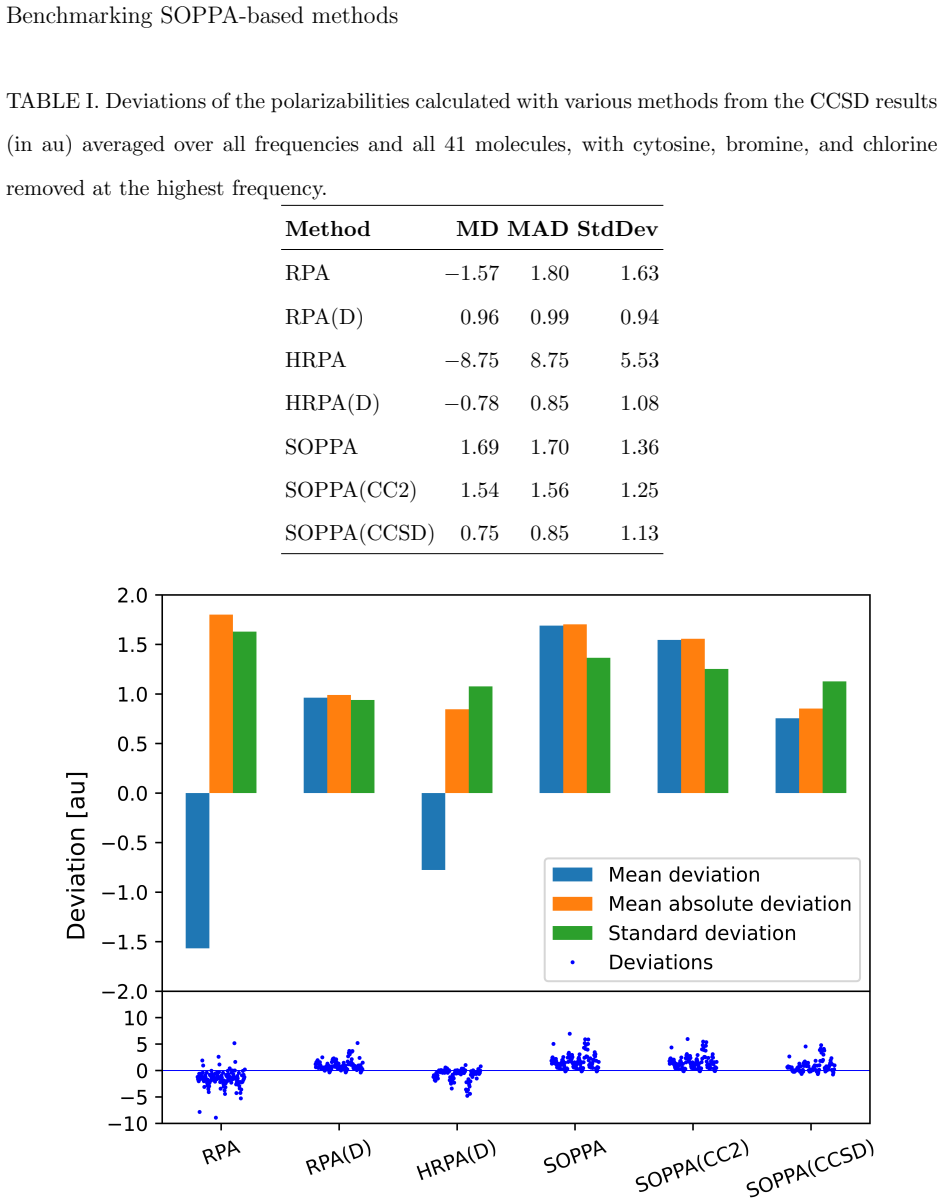
Static and frequency-dependent polarizabilities were computed for 41 molecules using RPA, RPA(D), HRPA, HRPA(D), SOPPA, SOPPA(CC2), and SOPPA(CCSD) with the aug-cc-pVTZ basis set and benchmarked against CCSD reference values and available experimental data. The analysis reveals a pronounced distinction between the performance of these methods for aromatic versus non-aromatic molecules. Across all frequencies, HRPA consistently yields substantially larger deviations from CCSD than the other approaches, whereas HRPA(D) and SOPPA(CCSD) provide the most accurate results overall. For static polarizabilities, HRPA(D) performs best for non-aromatic systems, followed by SOPPA(CCSD) and RPA(D), while SOPPA(CCSD) is most accurate for aromatic molecules. In the frequency-dependent regime, HRPA(D) remains the most accurate method for non-aromatic molecules, although RPA(D) shows greater consistency. For aromatic molecules, SOPPA(CCSD) performs best at low frequencies, with RPA offering intermediate accuracy but higher consistency than most other methods; at higher frequencies, RPA becomes the most accurate approach, followed by RPA(D), while SOPPA(CCSD) deteriorates. These trends highlight the importance of doubles corrections in RPA(D) and HRPA(D), which achieve accuracy comparable to or better than SOPPA(CCSD) at lower computational cost. The strong performance of RPA for aromatic molecules is attributed to its characteristic overestimation of the lowest electronic excitation energy. Comparison with experimental data confirms SOPPA(CCSD) as the most reliable method for static polarizabilities, while RPA and HRPA(D) provide the best agreement for frequency-dependent polarizabilities of aromatic systems.
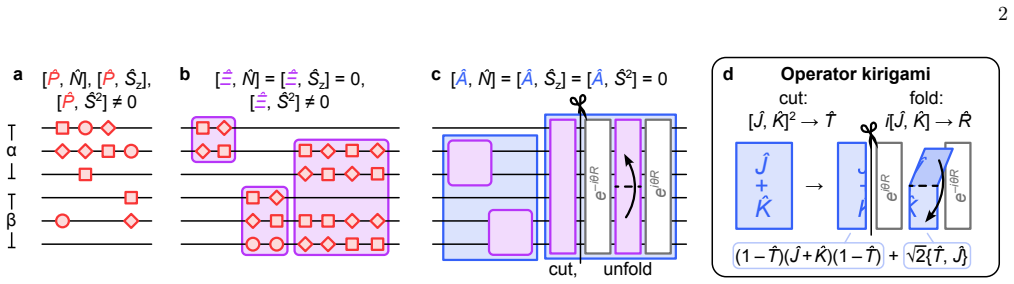
Quantum algorithms for quantum chemistry and other many-body fermionic systems work by expressing the Hamiltonian in a basis of qubits and fragmenting the Hamiltonian into a sum of products of Pauli operators whose exponentials are easily encoded on a quantum device. Applying the product of exponentials, known as Trotterization, leads to an error associated with the non-commutativity of operators. This error can lead to breaking the symmetries of the Hamiltonian because the fragments are not symmetry conserving in general. Nonetheless, many algorithms for time evolution rely on Trotterization, including time evolution and quantum phase estimation. We show that we can express the Hamiltonian in terms of Hermitian excitation operators which map to sums of commuting Pauli strings for any encoding and conserve symmetries corresponding to Abelian groups of symmetry operators. Symmetries corresponding to non-Abelian groups, on the other hand, are not fully conserved by Trotterized Hermitian excitation operators, so we developed ``operator kirigami'' to cut the sum of non-commuting operators by orthogonal projection and to fold terms together using unitary rotations. We tested pools of operators for small molecules and basis sets, and found that electron number and spin symmetry conserving pools led to greater errors that decreased for larger molecules and were negated with second-order Trotterization. Our work shows the potential for testing quantum computing algorithms on classical computers by adapting tools used in electronic structure theory with conserved symmetries.
Symmetry-based analysis shows the structures vanish once symmetry is broken, without needing topological invariants.
abstractclick to expand
Whether topology directly shapes chemical dynamics remains an open question in theoretical chemistry. The issue arises because degeneracies of adiabatic electronic states can generate nontrivial topological structure, and such degeneracies are common in polyatomic molecules. Existing work has largely emphasized static characterizations and dynamical studies of low-energy, highly symmetric models. Here we develop a symmetry-based analysis of nonadiabatic dynamics in two-state conical-intersection models that is predictive without invoking topological invariants. We show that the nodal-line structures associated with dynamics near a conical intersection are robust in highly symmetric settings, but should not in general be expected to persist once the relevant symmetry is broken.
Quantum mechanical (QM) cluster models provide an effective framework for mechanistic studies of enzymatic reactions but remain computationally demanding. Neural network potentials (NNPs) offer a promising route to reduce this cost, but enzymes present challenges beyond small molecules, including large system sizes, implicit-solvent environments, substantial polarization, and charge transfer. Here, we present an integrated software framework for efficient NNP training for mechanistic studies of enzymes, demonstrated on QM cluster models of S-adenosyl-L-methionine-dependent methyltransferases (MTases). Our Enerzyme code introduces modular electrostatics-aware NNP architectures and combines automated QM-cluster construction with reactive dataset generation. The Enerzymette subpackage automates reaction pathway exploration at both NNP and DFT levels. We show that iterative flexible scans and nudged elastic band calculations impose stricter requirements on NNPs than conventional dataset metrics. Nevertheless, NNPs trained on fewer than 1,000 system-specific datapoints reproduce reaction energetics and transition-state structures for MTase clusters containing up to 545 atoms with near-chemical accuracy. Direct supervision of atomic charges and consistent dielectric screening substantially improve simulation stability and accuracy, while multitask-learned atomic charges capture charge transfer and polarization trends and provide chemically meaningful descriptors of reactivity. Finally, transferability across chemically diverse catechol O-methyltransferase substrates indicates that NNPs learn generalizable reactivity patterns as training data expand across multiple enzymes. Together, these results establish a foundation for accelerating enzyme mechanistic studies and guide future NNP development for biomolecular reactivity.
Chemical gradients are ubiquitous in porous and crowded environments, including soils, filters, fabrics, tissues, hydrogels, biofilms and living cells. They arise from displacement fronts, dissolution and precipitation, ion exchange, metabolism, root exudation, evaporation, gas dissolution, freeze--thaw cycles and externally imposed chemical treatments. These gradients can drive colloids, macromolecules and emulsion droplets by diffusiophoresis, while simultaneously driving diffusioosmotic flows along confining surfaces. Classical models of colloid transport in porous media emphasize hydrodynamic dispersion, surface interactions, straining, deposition, detachment and filtration. This chapter places diffusiophoresis within that broader transport framework and reviews how porous media generate, stretch, disperse and sustain the solute gradients that drive phoretic motion. We first discuss sources of chemical gradients and the distinction between spreading and mixing, then summarize classical colloid transport, the minimal physicochemical model for diffusiophoresis and diffusioosmosis, and the experimental platforms used to study these effects. Particular emphasis is placed on recent results showing that diffuse solute fronts can enhance phoretic removal from dead-end pores by prolonging the duration of forcing, and that cross-streamline migration within flowing pathways can change macroscopic breakthrough and dispersion by orders of magnitude. We close by discussing emulsion droplets, multiphase flows, confined and living media, and open problems, including the transition from algebraic mixing in two-dimensional micromodels to chaotic mixing in three-dimensional porous media.
High-order coupled-cluster theories with iterative triples (CCSDT), perturbative quadruples [CCSDT(Q)], and iterative quadruples (CCSDTQ) provide benchmark-quality correlation energies, but their steep computational scalings, $O(N^8), O(N^9)$, and $O(N^{10})$, together with the large memory requirements of high-order amplitude tensors, have historically limited their application to small molecules. In this work, we develop efficient open-source implementations of spin-restricted CCSDT (RCCSDT), RCCSDT(Q), RCCSDTQ, and spin-unrestricted CCSDT (UCCSDT) within the PySCF package. The shared-memory implementation combines compact triangular storage of the highest-order amplitude tensors with the multithreaded tensor contraction backend pytblis, enabling efficient use of modern many-core CPU architectures. This design delivers near-ideal thread scaling up to 90 cores and achieves wall times shorter than or comparable to existing single-node implementations for representative benchmark molecules. We further extend RCCSDT, RCCSDT(Q), and RCCSDTQ to distributed-memory architectures using MPI-based algorithms. By distributing compact high-order amplitudes across MPI ranks and overlapping communication with computation through nonblocking data transfers, the distributed implementation achieves near-ideal strong scaling on up to 32 nodes, corresponding to approximately 3,000 CPU cores. These developments substantially extend the practical reach of canonical high-order CC theory, enabling CCSDT(Q) calculations with approximately 100 correlated electrons in 450 orbitals and CCSDTQ calculations with approximately 50 correlated electrons in 115 orbitals. Applications to $\pi$-stacked noncovalent dimers, the CO dissociation energy of Cr(CO)$_6$, and the Cope rearrangement of semibullvalene demonstrate that canonical high-order CC benchmarks are now feasible for chemically realistic molecular systems.
Electric double-layer capacitors (EDLCs) rely on the dynamical response of confined electrolytes to store and release charge, yet the interplay between ion transport, electrostatic interactions, and electrode metallicity remains poorly understood at the nanoscale. We develop a comprehensive Brownian dynamics framework to compute the frequency-dependent admittance of nanocapacitors, explicitly accounting for salt concentration and the finite screening length of electrodes (modeled via Thomas-Fermi theory). We derive the fluctuation-dissipation relation connecting the dynamics of equilibrium charge fluctuations to the linear response of the system quantified by the frequency-dependent admittance. Specifically, we obtain two estimators for the admittance, based on ionic positions and forces, and combine them via a control variate method to reduce uncertainty across all frequencies. We show that the admittance exhibits a low-frequency regime dominated by capacitive effects, and a high-frequency one governed by the ideal Nernst-Einstein conductivity. The crossover between these regimes is characterized by a timescale that depends on both the electrode metallicity and salt concentration, highlighting the role of ion-wall collisions and electrostatic interactions. Comparisons with analytical models show that while mean-field theories capture qualitative trends, they systematically overestimate low-frequency admittance and underestimate high-frequency behavior, underscoring the necessity of explicit ion-ion and ion-wall interactions. This work connects microscopic dynamics to macroscopic electrochemical observables, offering a tool to interpret impedance spectra in nanoscale systems. Beyond charge storage in EDLCs, our framework provides insights for sensing applications in nanofluidic devices, where charge/current fluctuations enable the detection of electrochemically active species.
Attosecond technologies provide unique opportunities to study electron dynamics and electron correlation on their intrinsic timescales. From a theoretical perspective, this places strong constraints as an accurate treatment of electron correlation is required. Recently, it was demonstrated that time-dependent density-functional theory (TDDFT) is capable of correctly predicting correlation-driven charge migration arising from hole mixing following ionization of the highest occupied molecular orbital (HOMO). Given the ability of TDDFT to treat large-scale systems, this approach offers promising perspectives for investigating electron-correlation-driven mechanisms in complex molecules. In this work, we assessed the constraints and limitations associated with using TDDFT to study this mechanism. We found that the charge-migration dynamics are already correctly reproduced using local-density approximation for the exchange-correlation functional, provided the states involved in the coherent superposition are well described within the TDDFT. However, for dynamics triggered by the ionization of orbitals below the HOMO, artificial ultrafast dynamics may appear on top of the charge-migration dynamics. These artifacts indicate that careful analysis of the simulated dynamics is required in order to reliably predict phenomena that could be observed experimentally.
Recent discoveries of electron-induced coherence in both resonant and non-resonant interactions have introduced new perspectives in the field. In non-resonant processes, coherence has been observed in dipolar dissociation, where electron-induced excitation forms a coherent superposition of states of opposite parities, resulting in asymmetry in the angle-differential cross-section of the process relative to the incident electron beam. Notably, an isotope effect has been observed in $D_2$ at 50 eV, where heavier isotopes exhibit diminished asymmetry due to their longer dissociation times. Here, we report the isotope effect on quantum coherence in $D_2$ across different electron energies. Additionally, we investigate the role of coherence in the isotopologue HD. Our findings reveal that the asymmetric masses in HD do not influence electron-impact excitation, leading to similar asymmetry in the angular distributions of $H^-$ and $D^-$ ions. This observation is explained by the homonuclear-like behavior of HD within the Franck-Condon region.
The chirality-induced spin selectivity (CISS) effect has been invoked to explain recent reports of differences in the time-resolved EPR signals between chiral and achiral molecules. However, the microscopic origin of these differences and their connection to CISS remains contested, particularly since these systems lack a metal interface. Here we introduce an intramolecular spinterface-like mechanism that naturally arises within donor-chiral bridge-acceptor (D--$\chi$B--A) complexes and quantitatively reproduces experimentally reported observed spin polarization in time-resolved EPR studies. In our two-electron Lindblad model, the photoexcited charge-transfer electron traversing the chiral bridge exchanges with the residual donor electron, which acts as a localized magnetic moment analogous to an induced magnetic moment on an electrode surface. The resulting through-bridge charge current produces an effective solenoidal field at the donor--bridge interface, breaking spin degeneracy and directional symmetry, thus enabling spin-selective transport without invoking intrinsic spin-orbit coupling on the bridge. We show that the interplay between this current-induced field, donor thermalization (which breaks time-reversal symmetry), and bridge spin mixing yields tens-of-percent polarization over realistic experimental conditions and charge-transfer time scales, matching reported CISS signatures in triads and DNA hairpins. By explicitly resolving the dependence on solenoidal coupling strength, temperature, and spin-mixing rates, the model identifies the regime in which internal spinterfaces can generate robust CISS-like spin filtering. These findings demonstrate that CISS-like signals in isolated D--$\chi$B--A complexes are fully compatible with a spinterface mechanism, providing a unified conceptual framework for interpreting both device-based and molecule-internal CISS platforms.
Adaptive Derivative-Assembled Problem-Tailored variational quantum eigensolvers (ADAPT-VQE) represent one of the most promising approaches for quantum chemistry on near-term quantum devices. However, their optimization is slow and may stall due to vanishing parameters and redundant operators in the ansatz. In this work, we propose a simple strategy of operator elimination that removes non-contributing operators from the pool once they are detected, enabling the optimization to continue progressing toward convergence. We examine two variants, with and without pool restoration after elimination, and find that the former converges more smoothly and faster than the latter and the standard ADAPT-VQE. To capture dynamical correlations between the active space and its environment, we combine ADAPT-VQE with our recently developed downfolding approach, the one-body downfolding framework (OBDF). In OBDF, the bare molecular Hamiltonian in the active space is replaced by a correlated effective Hamiltonian that incorporates dynamical correlation effects outside the active space. We benchmark our implementation on a linear \ce{H_6} chain, an \ce{H_6} lattice, an \ce{H_6} ring, and the \ce{N_2} molecule using the OpenFermion simulator. Our results show that operator elimination significantly reduces circuit depth and iteration count, and that OBDF-ADAPT-VQE yields energies closer to the full configuration interaction (FCI) reference than the standard approach within the same active space.
Multireference behavior in molecules often arises when a small gap between frontier orbitals results in mixing of closed and open-shell configurations. Standard multireference diagnostics of this regime usually rely on correlated wavefunctions, natural-orbital occupations, or reduced density matrices. Here, we examine a complementary, symmetry-based criterion for a model system. For a time-reversal-invariant Hamiltonian, a symmetry-preserving, closed-shell Slater determinant must transform as the trivial irreducible representation of its point group. Therefore, a nontrivial, many-electron irreducible representation excludes such a description. We compare two pathways within the same model to demonstrate this. Along the control pathway, the frontier orbitals remain separated and the ground state retains a trivial irreducible representation over the weak-to-intermediate interaction regime. Along the obstructed pathway, a high-symmetry point produces a frontier-orbital degeneracy, resulting in a singlet ground state with two-configuration character and a nontrivial irreducible representation. Exact diagonalization, a two-state effective model, and the Frobenius norm of the two-particle cumulant provide a consistent picture in this regime, demonstrating that irreducible representations can serve as a low-cost diagnostic of multireference character in diradicaloid models. While symmetry is not a quantitative measure of correlation strength, it does offer a computationally inexpensive screening tool to identify obstructions to a single-reference description.
Explicit differentiation of basis functions isolates the non-zero primitive terms and produces the standard vertical recurrence for electron
abstractclick to expand
The Obara-Saika (OS) method is one of the most widely used techniques in quantum chemistry for evaluating electron repulsion integrals (ERIs) via a set of recurrence relations that build higher angular momentum integrals from lower-order ones. The original derivation by Obara and Saika proceeded by directly relating integrals of differing angular momentum. In this work, we present a compact novel derivation of the OS vertical recurrence relation based solely on differential relations between Gaussian basis functions, expanding on a method suggested in earlier work. By explicitly deriving the required derivative expressions we identify all non-zero primitive terms contributing to the full ERI to develop a hierarchical formulation of the OS recursion relations. This approach has pedagogical value as a rigorous and self-contained derivation. Additionally, the resulting organization exposes independent primitive derivative quantities and may be useful for code generation and parallel implementations on modern GPU architectures.
Experiments have shown that, by tuning a microcavity to resonance with a vibrational mode of the molecules contained within it, one can modify chemical properties, such as reaction rates. This gives rise to the exciting prospect of steering chemical reactivity, just by placing a pair of carefully spaced mirrors around the reaction mixture. However, a decade after the first demonstration, the mechanism behind this effect remains ill-understood. Here, we show how vibrational strong coupling can lead to resonant modification of vibrationally-resolved London dispersion interactions. Employing a mixed quantum-classical dynamics scheme, we then show how this in turn can give rise to resonant rate enhancement in the case of two molecules strongly coupled to the cavity mode, for all regimes of solvent friction. The resonant changes of the London dispersion interaction seem to persist when increasing the number of molecules. Whether this also leads to altered reaction rates in the experimentally relevant collective limit remains an open question, as this regime falls outside the range of applicability of our mixed quantum-classical dynamics approach. Nevertheless, the framework presented here offers an exciting new avenue to explore, and hopefully bring us a step closer towards explaining the mechanism behind vibropolaritonic chemistry.
Molecular spintronics seeks to control spin states in single molecules for ultrafast switching and efficient information processing. Transition metal complexes are promising candidates for such applications due to their modular ligand fields, diverse spin configurations, and potential for spin-vibronic coupling that facilitates rapid spin dynamics. Chromium(III) complexes, in particular, offer long-lived emissive doublet states and chemical robustness, making them attractive for room-temperature spin control. Here we investigate the spin-state dynamics of tris(2,4-pentanedionato)chromium(III), [Cr(acac)3], a photochemically stable d3 complex with minimal vibrational congestion. Using ultrafast transient grating and two dimensional electronic spectroscopy with ~10 fs resolution, we directly probe vibrational and electronic dynamics associated with the 4T2 -> 2E intersystem crossing (ISC). These measurements reveal coherent vibrational modes implicated in mediating nonadiabatic spin transitions. Complementary theoretical modelling shows that vibronic coupling and spin orbit interactions promote the formation of multiple conical intersections, providing ultrafast channels for spin-flip dynamics. Metal-ligand bending and stretching modes serve as tuning and coupling coordinates, enabling ISC despite weak spin-orbit coupling in 3d transition metal. Our study provides mechanistic insight into spin-vibronic dynamics in Cr(III) complexes and establishes a design framework for achieving ultrafast molecular spin switching, advancing the development of optically addressable spin centres for future spintronic and quantum technologies.
Addressable self-assembly asks that each building block assemble into a particular location in a target structure. Although particles may all be distinct, achieving high yield is a challenge because of monomer depletion: more target structures can nucleate than there are building blocks for, so they form partial fragments which cannot complete growth. We ask how to design the interactions between building blocks to achieve the highest yield in a given time. Using reaction equations describing all the intermediate steps of assembly, combined with numerical optimization, we show that the optimal interactions are such that (i) all bonds are either very strong or very weak, and (ii) the strong bonds form a spanning tree of the target structure. We then prove that when interactions form a spanning tree, monomer depletion cannot occur: assembly can always proceed downhill in energy space, with no kinetic traps. This result is a combinatorial property of the underlying interaction graph, and does not depend on the particular model for the kinetics. It suggests a robust design principle: create a network of strong interactions that has no loops, and make all other interactions much weaker. We validate this principle in numerical simulations of larger structures, and we further show that spanning trees that are more compact have typically better yield. Our results suggest a new framework for understanding monomer depletion and addressable self-assembly, which may be applied to DNA nanotechnology and which may give insight into the assembly pathways of certain multiprotein complexes.
The gate and qubit requirements of quantum computations of electronic structure have been extensively studied. However, the quantum resources present in electronic ground states, as measured by entanglement and magic, remain less well understood. We study the relationship between correlation in electronic structure Hamiltonians and magic as measured by the 2-stabilizer Renyi entropy (2-SRE). Perturbative calculations show that the 2-SRE of a given state is proportional to its overlap with a reference stabilizer state. In the context of quantum chemistry, this links the magic of electronic structure ground states to their Hartree-Fock weight, an established measure of electronic correlation. We then show that the 2-SRE of post-Hartree-Fock ground states is proportional to the correlation energy they recover. We explore this connection through the contextual subspace (CS) method. We present a theoretical framework showing that the CS method can be used to monotonically vary the magic of approximate CS ground states, and we prove that the correlation energy recovered by the CS ground states is proportional to the magic present in the approximate ground state. We present simulation results using 190 molecular species under Jordan-Wigner encoding at a range of bond lengths. The linear relationships between magic and correlation are robust across the Hamiltonians in our dataset, but break down at bond lengths beyond the Coulson-Fischer point, where Hartree-Fock fails to capture key physical features of the true ground state wavefunction. By establishing linear relationships for both correlation energy and Hartree-Fock reference weight with the 2-SRE, we conclude that for weakly- and moderately-correlated electronic structure Hamiltonians, the correlation is directly represented by 2-SRE, and thus by the magic.
Phase-resolved signals give composition, orientation, conformation and order at sub-micron resolution with sub-monolayer sensitivity.
abstractclick to expand
The highly variable physico-chemical properties of thin molecular films play an essential role in numerous research fields ranging from biophysics to the fabrication of functional devices such as molecular sensors. The properties of molecular films are largely governed by their three-dimensional molecular structure which often exhibits important spatial heterogeneity, either naturally, or introduced deliberately. In order to understand and control these properties microscopic insight into structural parameters such as composition, molecular orientation and conformation, as well as molecular order is required, which, so far, represents a mostly unachieved experimental target. In this contribution we present a powerful experimental approach that can overcome this limitation. Using phase-resolved rotational sum-frequency generation (SFG) microscopy all of these structural parameters can be obtained with sub-monolayer sensitivity and at sub-micron resolution. In measurements of monolayer assemblies of mixed phospholipids, we uncover the molecular packing structure in previously-unattained detail and demonstrate the large potential of the technique for the elucidation of the complex architecture inside molecular films. The structural insight provided by this nonlinear microscopy approach spans all the way from the molecular to the macroscopic scale opening the door to a completely new type of interfacial studies.
Machine learning interatomic potentials are trained to predict energies and forces but built to be sampled: their purpose is to drive molecular simulations whose observables average over the equilibrium distribution the potential defines. They exemplify a broader AI problem -- learned regressors deployed as generators -- where pointwise accuracy does not guarantee a correct distribution. We show that potentials trained by standard Mean Squared Error (MSE) minimization on Density Functional Theory (DFT) data can reach chemical accuracy on held-out data, yet still fail as samplers: their trajectories drift into spurious low-energy minima and return thermodynamic observables that depart sharply from the reference. To correct this, we introduce Contrastive Regularized MSE (CRMSE), a post-training step that augments the MSE with a contrastive term derived from the Kullback--Leibler divergence between the potential's implicit Boltzmann distribution and the target. The network serves as its own energy-based model: persistent Langevin chains expose the configurations it drifts into and raise their energy, adding no new ab initio data. On the ethanol and aspirin molecules of the MD17 dataset, CRMSE confines the sampler to the physical basin and recovers the energy distribution, interatomic-distance distributions, and dihedral free-energy profiles to near-quantitative agreement with DFT, while preserving force accuracy and keeping energy errors within chemical accuracy; it remains effective when the training set is sharply reduced. That MSE training fails this way on MD17 -- one of the most widely used benchmarks -- while a minimal contrastive correction repairs it suggests that reliable sampling depends less on data volume than on training the model against the distribution it produces: distribution-level training is not a refinement of regression accuracy, but a distinct requirement.
We introduce an additive reference correction for the transcorrelated (TC) method and its three-body mean-field approximation (xTC), to improve energy differences computed in small orbital basis sets. The correction is motivated by the observation that, for xTC atomization energies, the dominant error in double-{\zeta} bases originates from the reference contribution rather than from the correlation energy. In the proposed reference-corrected scheme (RC-xTC), the small-basis correlation energy is retained, while the corresponding TC reference energy is replaced by its value from a larger basis. Benchmark calculations for the non-relativistic HEAT set with the Dunning basis-set family show that RC-xTC substantially improves both total and atomization energies relative to standard xTC in double-{\zeta} bases. At the CCSD(T) level, RC-xTC yields better atomization energies than CCSD(T)-F12a in the double-{\zeta} regime, while preserving the favorable total-energy accuracy of xTC. At the CCSD level, RC-xTC improves atomization energies relative to F12a throughout the full basis-set sequence. As the basis set is enlarged, xTC and RC-xTC become progressively identical, as expected from the construction of the correction.
Atmospheric entry processes are characterized by high-enthalpy gas flows in strong thermo-chemical non-equilibrium. Accurate simulations of such conditions remain challenging due to the extreme conditions and the complex influence of internal energy modes. In particular, the common assumption of uncoupled harmonic vibrations may break down, and excited internal energy states can directly influence reaction rates. Previously, an anharmonic oscillator model has been developed by Civrais et al. to improve the accuracy of the Direct Simulation Monte Carlo (DSMC) method under such conditions. However, this extension has so far been limited to diatomic molecules. To increase the accuracy of the DSMC method in the open-source code PICLas, the anharmonic oscillator model is extended to include polyatomic species. The proposed model explicitly considers anharmonic effects and intramolecular energy redistribution. Vibrational degrees of freedom are treated in a local mode basis, in which anharmonic stretching modes are harmonically coupled by harmonic bending modes. The coupling allows for the redistribution of localized vibrational excitation. Dissociation can occur by the strong excitation of a stretching mode, and specific modes can be coupled to the reaction coordinate of the transition state in bimolecular exchange reactions. The newly developed model is evaluated by the comparison to high-fidelity calculations for a set of representative processes. Investigated are different dissociation reactions, which exhibit a high degree of energy redistribution, and the hydrogen-exchange reaction between methane and a hydrogen radical, in which only selected modes contribute to the reactive process. In addition, the recombination-dissociation equilibrium system has been investigated for methane.
Magnetization vector inclusion produces curves paralleling non-relativistic results without forced broken symmetry on hydride test cases.
abstractclick to expand
Non-collinear density functional theories were developed to extend the use of established collinear exchange-correlation functionals to systems with unpaired electrons in the presence of significant spin-orbit coupling. A comparison of different approaches and implementations is not straightforward, as the methods are often formulated using different fundamental variables and numerical approximations. A consistent review of the formal and numerical aspects of collinear and non-collinear schemes has recently been reported (Desmarais et al., J. Chem. Phys. 154, 204110 (2021)) in the context of two-component methods. In this work, we present an initial effort towards a unified formulation of collinear and non-collinear approximations, encompassing both canonical and Scalmani-Frisch schemes, within the relativistic four-component DKS formalism based on G-spinor basis sets. Our preliminary implementation of the collinear and canonical non-collinear formulations in the DKS module of the \texttt{BERTHA} code extends its applicability and provides a benchmark for a series of simple open-shell hydride molecules (namely, H$_2$X$^+$, with X = O, S, Se, Te, and Po). Finally, we show that incorporating the magnetisation vector into the reformulated non-collinear canonical LDA approach enables a description of H$_2$ dissociation - and open-shell systems more broadly - that closely parallels unrestricted non-relativistic approaches, notably without explicitly imposing the broken symmetry solution as is often required in non-relativistic collinear calculations. This unified formulation forms the basis for a rigorous comparison between different numerical approximations, which will be essential for obtaining stable results for the non-collinear GGA exchange-correlation functionals.
Driven by high-throughput experimentation, computational modeling, and artificial intelligence (AI), materials data has expanded at an unprecedented rate. Conventional materials databases function only as passive repositories, archiving raw experimental records indiscriminately including both successful and failed data, without systematic value filtering or asset management. This creates a critical gap between massive data accumulation and actionable innovation, hindering the identification of high-potential materials and industrial translation. To address this bottleneck, we propose an industrialization-oriented Materials Bank, a dedicated valuefiltering and assetization layer that operates beyond traditional databases. It does not merely curate high-quality data but systematically elevates qualified candidates into standardized, upgradable materials assets via a multi-dimensional BankCard framework covering scientific validity, synthesis feasibility, application readiness, and industrial value. By unifying databases, AI models, automated experimentation, and multi-criteria assessment into a cohesive closed-loop ecosystem, the Materials Bank establishes a clear trajectory from data to knowledge, candidate, asset, and product. It serves not as an enhanced database or screening tool, but as a decision infrastructure bridging academic discovery and industrial demand, offering a scalable paradigm to accelerate AI-driven materials innovation and deliver tangible real-world impact.
Hydrogen bonds are the fundamental backbone for deoxyribo-nucleic acid (DNA) stability. In this letter we propose a new strategy based on plasmonic cavities to perform a local manipulation of hydrogen bonds in DNA. The analysis is performed using state-of-the-art Quantum Electrodynamics Coupled Cluster calculations (QED-CC). We demonstrate that in standard strong coupling regimes, small but appreciable local modifications of the nucleotide bases' interactions can be induced in a totally non-intrusive manner. The effect can eventually be enhanced if ultra-strong coupling conditions can be reached. Our strategy provides an alternative approach to methodologies based on a collective coupling to perform optical DNA manipulation.
Machine learning provides a scalable solution for quantum error mitigation. However, the selection of appropriate Pauli strings for inclusion in training data remains a challenge. Current methods rely on heuristic or uniform random sampling, requiring data for every Pauli string in the Hamiltonian, a process that scales linearly with measurements and grows with system size. To address this, we introduce quantum error mitigation with prior knowledge of Pauli weights (Pauli weight quantum error mitigation (Pi-QEM)), a systematic framework that selects training observables based on Pauli weight. By leveraging the relationship between variance and locality in parameterized quantum circuits, Pi-QEM trains on a small subset of dominant, low-weight Pauli strings. In numerical simulations of molecular systems on a noisy IBM quantum backend, Pi-QEM reduces ground-state energy estimation error by up to 34.01% using just a single dominant local observable, offering an efficient, scalable pathway for high-precision error mitigation on NISQ devices.
We introduce a radical-fragment many-body expansion at the two-body level (MBE2) for quantum chemistry of linear alkanes. Instead of heterolytic bond cleavage with hydrogen capping atoms and electrostatic embedding like in Fragment Molecular Orbital (FMO), we perform homolytic C-C bond cleavage to produce open-shell radical fragments (CH3, CH2) treated with restricted open-shell Hartree-Fock (ROHF) in isolation. The two-body MBE2 assembly formula reconstructs total alkane energies from only four unique fragment calculations regardless of chain length, reducing the maximum qubit requirement. We benchmark this framework against five energy solvers (RHF, CCSD, VQE, ADAPT-VQE, and SQD) across 11 linear alkanes from butane (C4H10) to hexacosane (C26H54). The MBE2 decomposition achieves a 12.3x qubit reduction for C26H54 (from 368 to 30 qubits) and a 12.8x reduction in unique calculations via symmetry exploitation. MBE2-VQE and MBE2-SQD (executed on IBM quantum hardware) closely track their respective classical MBE2 references, demonstrating that fragmentation-based quantum chemistry is viable for scaling quantum solvers to large molecular systems.
Advances in deep learning architectures and representations have enabled ML-driven chemical property prediction, but state-of-the-art (SOTA) models have remained largely confined to independent codebases and lack support for diverse chemical species. This work introduces ElemeNet, a unified, general-purpose software package for molecular machine learning. The ElemeNet software package enables the training of advanced ML models for diverse properties and datasets with an enlarged range of elemental compositions. We define molecular representations compatible with elements 1-100, supporting diverse organometallic and biological systems in addition to organic chemistry already well-served by the Chemprop ML toolkit. As well as more common atom-, bond-, and molecule-level predictions, we introduce moiety predictions. We also natively define optional conditioning on charge and spin states. Advanced E(3)-equivariant and transformer architectures are supported, as well as classical 2D models, with all classes including built-in uncertainty quantification through deterministic and statistical measures. We benchmark our protocols for ML model training against representative datasets from organic, inorganic, coordination, and biological chemistry, achieving competitive and SOTA performance relative to literature baselines and favorable scaling to millions of molecules. The entire workflow is exposed through a concise command-line interface, lowering the barrier to entry for non-expert users. We anticipate ElemeNet will empower non-computational researchers to leverage modern deep learning methods across the chemical and physical sciences.
W\"achtersh\"auser's theory proposes iron-sulfur minerals as key platforms for molecular synthesis and supramolecular organization in prebiotic environments. However, defects have been traditionally considered at the center of such assemblies, thereby underestimating the contributions of regular and pristine interfaces. Here, we combine scanning tunneling microscopy and spectroscopy (STM/STS) with density functional theory (DFT) to investigate the fundamental prebiotic chemistry system of L-Cysteine (L-Cys) on defectless FeS$_2$(100) terraces. To do so, we first achieved atomically ordered, defect-free terraces that act as support of two distinct supramolecular phases of L-Cys: one compact, highly ordered supramolecular network and another less packed, labile supramolecular network. We unveil trimer-based intermolecular interactions to be at the origin of these pattern formations. These results demonstrate that L-Cys self-assemblies can be hosted on flawless FeS$_2$ terraces due to the cooperative interplay between substrate electronic structure and intermolecular interactions, without the participation of dominant defects. Therefore, the autocatalytic activity of pyrite could have triggered the on-surface polymerization process of these non-static self-assembled structures under primordial conditions, thereby endorsing W\"achtersh\"auser's postulates on the origin of life.
Physics-based SCMs quantify how support ratios and loadings drive performance in under-10-sample alkaline tests.
abstractclick to expand
State-of-the-art artificial intelligence (AI) and Machine-Learning (ML) tools have not yet enabled rapid design of next-generation materials. Detailed physical understanding of how material properties affect device performance is required to advance materials development. For example, optimization of ink parameters for electrocatalysts has no known physical mathematical model and thus insights are difficult to translate from material studies to device studies. Herein, we demonstrate how to use the emerging AI tool, physics-based structural causal models (SCMs), to extract quantitative causative insights from complex heterogeneous electrochemical systems with small (n < 10), but multi-modal datasets (modes > 10). Our SCM quantitatively separates the role that varying the support-to-catalyst ratios and total material loadings plays on catalytic performance. The proof of concept model developed in this work enables root-cause-analysis on the cyclic voltammograms of manganese-antimony oxide oxygen reduction electrocatalysts on Vulcan carbon supports tested in alkaline media using a rotating disc electrode device configuration. Our preliminary causal analyses quantitatively disentangle how the catalyst performance is affected by the number of active sites versus the thickness of the electrode. To the best of our knowledge, this is the first demonstration of physics-based SCMs applied to electrochemical materials and their performance.
The COSMO-SAC-Phi model developed by Soares et al. extends the COSMO-SAC activity-coefficient framework into a full equation of state by explicitly accounting for pressure effects. In this approach, pure substances and mixtures are represented as pseudo-mixtures consisting of the actual number of moles and an additional pseudo-component that describes free volume, or holes. In this work, we implement this extension within the openCOSMO-RS framework and evaluate it using a large and diverse set of molecules and binary systems. The resulting equation of state includes an extensive open-source parameter set with around 1800 pure-component entries, made freely available to the academic community. The four pure-component parameters were fitted to vapor-pressure and liquid-molar volume data for each substance. Model performance was assessed against two benchmark equation-of-state databases, one for pure compounds and one for binary mixtures, without introducing any binary interaction parameters. The resulting openCOSMO-RS-Phi model reproduces the accuracy of the original COSMO-SAC-Phi formulation while providing a fully open-source and accessible implementation for the scientific community. Beyond its immediate utility, it also establishes a foundation for future development of predictive EoS for electrolyte solutions.
We investigate the formation of a barrier to evaporation that develops when levitated nanoscale Au nanoparticles are exposed to pulses of 532 nm laser radiation in a high vacuum (pressure $p=10^{-8}-10^{-7}$ Torr) environment. Our data are derived from precision measurements of the charge to mass ratio ($Q/M$) of $\sim$200 nm diameter Au particles confined in a quadrupole ion trap. We characterize the development of the barrier over time as the particle is repeatedly heated with laser pulses and determine the impact of variations of the interval between pulses and of exposure to several gases added to the vacuum chamber. We observe a slow increase in the mass of particles upon prolonged exposure to the vacuum, which we attribute to the growth of a barrier layer. For particles that have acquired a barrier during exposure to CO, we observe a rapid decrease in their mass upon subsequent exposure to O$_2$. These findings are consistent with the growth and subsequent oxidation of a graphene layer on the Au that forms the barrier to evaporation. However, we have not found that the rate of formation of the barrier depends on the pressure of carbon-containing gases (CO, C$_2$H$_4$, CO$_2$) we have added to the chamber. We hypothesize that a rare surface state on the solid Au particle catalyzes the reaction that introduces C to the particle. Repeated laser pulse heating is necessary--either to enable diffusion away from this state or to create fresh states that allow continued C uptake--to facilitate the growth of the surface graphene layer.
The method explores carbohydrate chemistry up to C4 without rules and matches quantum calculations for most transition states.
abstractclick to expand
Mapping a chemical reaction network, the graph of minima and transition states (TS) and the elementary reactions connecting them, is the natural language of chemistry, from catalysis to combustion to the origin of life. Constructing such a reaction network for a given chemistry has been impractical: it requires finding and characterizing tens of thousands of TS, a task for which traditional methods such as density functional theory (DFT) are typically prohibitively slow and require reactant and product as input. We introduce ReactionAtlas, which builds a reaction network $\textit{ab origine}$ from a handful of seed molecules and without hand-crafted rules. Specifically, our machine-learned generative model proposes reactions from kinetically sampled candidate compounds and a DFT-trained machine learned force field (MLFF) filters them to valid TS, the resulting products of which enter the search as new seeds. Starting from eight pre-biotic seeds (CH$_2$O, H$_2$O, OH$^-$, H$_3$O$^+$, CO$_2$, H$_2$CO$_3$, HCO$_3^-$, H), ReactionAtlas discovers $\sim$47,000 reactions among $\sim$12,000 compounds. The MLFF TSs match the PBE0 references within 0.5 \r{A} RMSD in 85% of the cases and can be easily brought to the PBE0 level. Thus, ReactionAtlas maps small carbohydrate chemistry up to C$_4$H$_8$O$_4$ at unprecedented scale and accuracy, including charge and stereo information. It enables novel insights into many well-studied reaction paths, including the formose cycle, which we highlight for its centrality to the chemical origins of life. Notably, our framework also allows establishing alternative reaction pathways for formose chemistry.
Excited-state dynamics of open quantum systems is analyzed by the hierarchical equations of motion (HEOM) or the thermalized time-evolving density operator with orthogonal polynomials algorithm (T-TEDOPA) method when a discrete $ab$ $initio$ linear vibronic model is parametrized by continuous temperature-dependent spectral densities leading to crossed correlation functions, i.e. correlated fluctuations of the energy gap collective modes. We focus on a conical intersection involving two collective modes tuning the energy of each excited state and we revisit the transformation of the initial correlated tuning baths to de-correlated shared baths in order to reduce the computational resources. While a completely frequency-dependent transformation poses problems for HEOM, we find that in some particular cases, an optimal approximate frequency-independent transformation may be derived. On the contrary, T-TEDOPA is very efficient and allows to use this frequency-dependent transformation at the price of managing long-range couplings in the tensor chain. An illustrative application is shown by using the linear vibronic coupling model of a planar symmetrical (phenylethynyl)benzene dimer.
Calculation of binding energies for protein-ligand molecular systems requires accurate treatment of the electronic structure, a quantum chemistry problem that scales exponentially on classical hardware, while current quantum hardware remains too noisy for the required circuit depths. This report presents a hybrid quantum-classical workflow performed on the Fujitsu FX700 ideal state-vector simulator using QARP that addresses two structural inefficiencies in quantum-sampling-based diagonalization workflows. First, we integrate the Linear Scaling CNOT UCCSD (LCNot-UCCSD) ansatz into the QSCI framework, replacing the $\mathcal{O}(N^6)$ CCSD parameter initialization of the competing LUCJ ansatz approach with $\mathcal{O}(N^4)$ MP2-amplitude initialization. Second, we introduce QSCI-RBM, a variant that replaces the configuration recovery of the SQD framework with a Restricted Boltzmann Machine (RBM) acting as a compact generative subspace expansion model. Both are evaluated on eight different molecules in STO-3G across 14 controlled artificial error levels with 100 independent runs each, validated on potential energy surface scans of the N$_2$ molecule in cc-pVDZ, and embedded within DMET to treat the FDA-approved antiviral Amantadine (C$_{10}$H$_{17}$N, 11 DMET fragments) and the active region of the SARS-CoV-2 main protease complexed with its covalent inhibitor Carmofur (PDB: 7BUY, C$_{15}$H$_{28}$N$_4$O$_5$S, 10 fragments). To our knowledge, this is the first deployment of LCNot-UCCSD within QSCI on a quantum computing simulator, and the first DMET-QSCI(LCNot-UCCSD)-RBM application to an industry-relevant protein-ligand system. By utilizing a fraction of the classical computing resources required by the current state-of-the-art work by Cleveland Clinic, RIKEN, and IBM Quantum, this approach enables more efficient and economical drug discovery simulations for the industry.
Herein it is shown spontaneous symmetry breaking in supramolecular aggregates of D4h-symmetric zinc phthalocyanine (ZnPc). Ab initio density functional theory calculations at the M06/DGDZVP level reveal that intermolecular interactions induce a subtle relaxation of the macrocyclic framework, producing a characteristic red shift of the aza-bridge (C-N-C) stretching mode and symmetric stretching of the pyrrole ring. Confocal Raman Optical Activity measurements further reveal a negative Cotton effect at 1505 cm^-1 and 1338 cm^-1, providing evidence of emergent supramolecular chirality. Our findings identify pristine ZnPc as a model system for spontaneous self-assembled chiral symmetry breaking in molecular condensates and suggest new opportunities for chiroptical, spin-selective, and quantum functional materials.
Molten salts such as FLiBe (2LiF--BeF$_2$) are leading blanket materials for breeding and recovering tritium in fusion reactors. Predicting tritium speciation requires accurate electronic ground-state energies for representative molten-salt clusters, a demanding task for correlated electronic-structure methods. Here we report the first application of heterogeneous quantum--classical computing to tritium binding in FLiBe. Clusters drawn from ab initio molecular dynamics are partitioned by an embedded-wavefunction (EWF) method into atom-centered fragments, and the largest fragments are solved on IBM quantum hardware using extended sample-based quantum diagonalization (ext-SQD). Across nine clusters, the heterogeneous quantum--classical workflow reproduces fragment ground-state energies with agreement to full configuration interaction within 0.7~kcal/mol and a mean absolute deviation of 0.3~kcal/mol. In contrast, fragmented and unfragmented conformational energy differences and tritium binding energies differ by 12~kcal/mol and 110~kcal/mol on average, respectively, identifying fragment construction rather than fragment solution as the dominant source of algorithmic bias. To the best of our knowledge, this is the first such demonstration for a charged ionic system and in particular an inorganic molten salt, where electrostatic and polarization effects make the accurate treatment of electronic correlation particularly challenging. These results also identify areas of future research towards an accurate and scalable quantum--classical workflow to compute free-energy estimates of tritium speciation in fusion blankets.
The size-dependent strong-field ionization and dissociation dynamics of (H$_2$O)$_n$ (n=1-4) are investigated using real-time time-dependent density functional theory (RT-TDDFT) coupled to Ehrenfest molecular dynamics under a common few-cycle near-infrared laser pulse. It is found that the net ionization per monomer varies only weakly on cluster size, whereas the protonic and oxygen response is changed much more strongly once the cluster size grows beyond the dimer. In particular, H-ejection activity is observed to rise sharply from the dimer to the trimer/tetramer regime, while stable H-transfer is essentially absent in the dimer under the present criterion but becomes substantial in the trimer and is further amplified in the tetramer. Through timing analyses, it is shown that the dimer exhibits a weak and temporally broad response, whereas the larger clusters display a much stronger early-time protonic response concentrated within and immediately after the laser pulse window. By endpoint oxygen statistics, a systematic increase in dissociation propensity with cluster size is likewise shown. For a clean subset of direct two-body dimer breakup trajectories, the asymptotic kinetic energy release is estimated to be 4.47 $\pm$ 1.03 eV, in reasonably good agreement with the experimental value for the unprotonated two-body Coulomb-explosion channel. Overall, it is shown by the results that increasing water-cluster size primarily reshapes the strong-field response through proton-mediated and topology-level nuclear dynamics rather than through a large change in net ionization alone.
We consider a population dynamics model in which each diffusing particle that hits a catalytic surface can split into two independent copies (clones). The particles of such a growing-in-size population search in parallel for a hidden partially reactive target to trigger a reaction event (e.g., a viral attack). We investigate the statistics of the fastest first-reaction time (FRT) among all the particles. We establish a nonlinear integral equation for the survival probability and then analyze the associated probability density of the FRT and its moments. Lower and upper bounds on the mean FRT are then deduced in terms of the system parameters (target reactivity, catalytic rate, diffusivity, etc.). Because autocatalytic replication can rapidly increase the number of searchers, it can substantially accelerate the diffusive search. We solve the nonlinear equations numerically in a basic geometric setting and reveal advantages and limitations on the autocatalytic search.
Release of trapped vapor coincides with and speeds up hematite to magnetite change, revealing pore topology as key to redox speed.
abstractclick to expand
Hydrogen-based direct reduction of metal oxides is a ubiquitous solid-gas redox process central to geophysics, sustainable metallurgy, redox energy cycles and catalysis. During this process, hydrogen removes lattice oxygen to form water, yet product water has long been regarded as a passive exhaust, and its nanoscale formation, trapping and removal remain poorly understood. Here, we directly observe redox-product water release from iron oxide during hydrogen-based direct reduction. Because water removal emerges from coupled structural, chemical and crystallographic evolution across multiple length-scales under realistic non-equilibrium reaction-conditions, we establish a correlative multiscale in-situ approach that links pore evolution, molecular water signatures, phase transformation and chemical-state evolution during hematite reduction. We uncover a mechanism in which oxygen removal induces closed nanopores spatially delocalized from reaction surfaces, causing transient trapping of water vapor. Water is released only when these pores coalesce into a percolating network connected to the surface, coinciding with and accelerating the onset of the hematite-to-magnetite transformation. These findings show that dynamically evolving pore topology governs mass transport and redox kinetics in solid-gas reactions, closing a critical mechanistic gap in product-water removal and providing nanoscale guidance for hydrogen-based metal extraction, reactor design, and sustainable redox energy technologies under practical conditions.
The third frequency moment sum rule of the dynamic structure factor $S(\mathbf{q},\omega)$ is explored for the first time as an alternative estimator of the kinetic energy $K$ of quantum many-body systems. As a practical example, the uniform electron gas at warm dense matter conditions is considered. First, $K$ is extracted from quasi-exact \emph{ab initio} path integral Monte Carlo results for the imaginary-time density--density correlation function $F(\mathbf{q},\tau)$ and the expected excellent self-consistency with the thermodynamic differentiation route is confirmed. Second, $K$ is extracted from approximate dielectric formalism results for $S(\mathbf{q},\omega)$ and it is observed that common semi-classical approximations lead to a wave-number dependent $K$ with an incorrect short-wavelength limit. Our results are expected to be of broad interest for a great variety of applications, including time-dependent density functional theory, dielectric formalism schemes and warm dense matter models, as well as for the design of dedicated x-ray Thomson scattering experiments with the potential to provide model-free access to the full electronic equation of state.
Predicting electronic fundamental gaps at finite temperature has remained conceptually and practically challenging. We address this in three connected steps. First, we extend generalized Kohn--Sham hybrid density functional theory to thermal ensembles, deriving a Mermin generalized Kohn--Sham framework from a thermal one-particle auxiliary system and an exact density-functional remainder. Second, via an extension of Janak's theorem that holds rigorously in this framework, we recast Hirata's thermal-quasiparticle picture as a thermal orbital gap estimator and derive a closed low-temperature form, the error of which is controlled by the derivative discontinuity. Third, because optimal tuning eliminates this error, the auxiliary orbital gap matches the interacting gap at low temperature, upgrading optimal tuning from a ground-state strategy to the governing principle -- mandatory, not optional -- for accurate finite-temperature gap predictions obtained from gaps of orbital eigenvalues within a hybrid functional framework. We present applications that validate the theory and demonstrate its consequences.
$\mathrm{Cl}(3,0)$ interatomic potentials, despite their algebraic elegance, predict force magnitudes accurately but force directions poorly. Across ten rMD17 molecules, every $L \leq 1$ baseline in our twelve-model study attains aggregate force-cosine similarity below $0.25$. The cause is structural. The geometric product of two vectors in $\mathbb{R}^3$ realises only the $L=0$ and $L=1$ components of its irreducible representation content, leaving the symmetric-traceless rank-2 component absent from the per-edge bilinear that drives each message-passing layer. We address this with CliffordSTF, which couples the Clifford multivector to closed-form symmetric-traceless tensor tracks at ranks two and three through bilinear cross-track contractions, using a single learned bilinear and no Clebsch--Gordan tables, Wigner-$D$ matrices, or e3nn calls. On rMD17, CliffordSTF raises aggregate force-cosine similarity from $0.055$ (base Clifford) to $0.551$, an order-of-magnitude relative directional gain, alongside improved magnitude accuracy (force MAE $15.8\%$ lower; energy MAE $10.9\%$ lower). It outperforms all CG-free or body-ordered baselines in our study (all $\leq 0.17$). On catalysis benchmarks, CliffordSTF achieves the best out-of-distribution S2EF energy MAE on OC22 in our experiments, and the best in-distribution energy MAE among $L \geq 2$ methods on OC22 IS2RE. An eleven-variant ablation shows the two tracks are complementary: neither alone matches the combined model.
The simulation of molecular excited states is a key challenge in quantum chemistry and a promising application for quantum computing. In this work, we investigate the efficacy of the truncated eigenvalue parametrized initial density adaptive variational algorithm (TEPID-ADAPT-VQE) for computing low-lying excited states and potential energy surfaces. TEPID-ADAPT variationally diagonalizes a truncated low-temperature Gibbs state, enabling the simultaneous preparation of multiple excited states within a single optimization. We apply the method to H$_2$, LiH, and linear H$_4$ across bond lengths spanning weakly and strongly correlated regimes. The adaptive derivative-assembled problem-tailored (ADAPT) ansatz construction yields compact circuits suitable for near-term hardware. We also implement a modified version of the MORE-ADAPT-VQE algorithm for comparison with TEPID-ADAPT. We find that both algorithms accurately reproduce excited-state spectra and potential energy curves within chemical accuracy for all the molecules and geometries studied. However, TEPID-ADAPT has the advantage of utilizing only a single, physically motivated hyperparameter (temperature) that controls the energy scale at which excited states are targeted, while MORE-ADAPT utilizes multiple hyperparameters whose optimal values depend sensitively on the target problem. These results demonstrate that combining adaptive ansatz construction with density-matrix-based formulations provides an efficient framework for excited-state quantum chemistry on near-term devices.
Action-operator framework extracts ΔF from endpoint ensembles even with no phase-space overlap
abstractclick to expand
Diffusion models are increasingly utilized for modeling molecular structures and conformational ensembles, yet the thermodynamic meaning of their learned representations and scores remains elusive. To resolve this ambiguity, we introduce a mathematically consistent action-operator framework natively compatible with diffusion models. By defining a fixed molecular environment as a base action $S_0(x)$ and an alchemical perturbation as an operator $O(x)$, standard diffusion noising induces effective noised actions and operators whose gradients and alchemical derivatives are directly represented by the model's learned fields. This rigorous self-consistency enables a ``noisy operator bridge'' capable of reading out free-energy differences ($\Delta F$) from endpoint ensembles and per-frame evaluations. In controlled experiments on alanine dipeptide systems, we show that incorporating physical inductive biases enables partial recovery of the base action and perturbation operator. When applied to a challenging C6-H to C6-F ligand-pocket nonbonded perturbation (185L/IND) with negligible phase-space overlap, our supervised bridge estimates the alchemical $\Delta F$ within approximately $1\ k_\mathrm{B}T$ of a stable 19-state MBAR reference. Finally, we demonstrate that endpoint coordinates and binary labels alone are sufficient to partially recover the operator shape and a centered free-energy scale without any force or action supervision. This work provides a rigorous path toward transforming generative molecular diffusion models from black-box coordinate samplers into auditable thermodynamic estimators.
Shadow tomography has appeared as a powerful tool for estimating observables on quantum computers from a small number of samples. We show that shadow-tomography-inspired ideas can offer similarly improved sample scaling for estimating observables on tensor network states on classical computers after proper adaptation. We develop strategies for both spin (bosonic) and fermionic systems, tailored to the contraction requirements of tensor networks, and generate scaling improvements of factors of $O(N)$ to $O(N^{3})$ (where $N$ is system size), depending on the specific task and system type. For the important and difficult task of evaluating the expectation value of long-range interacting Hamiltonians, we achieve the optimal $O(1)$ overall scaling (up to logarithmic factors) for an arbitrarily fixed relative Monte Carlo error in both spin and fermionic systems. Additionally, we show that shadow estimators offer more stable gradients of observables in variational optimization tasks than standard Monte Carlo estimators. We demonstrate practical advantage by simulating systems with long-range interactions, including the 2D long-range Heisenberg model and an ab-initio quantum chemistry Hamiltonian.
We investigate linear lumping for parameter-dependent mass action reaction networks, distinguishing between generic and critical parameter regimes. For generic parameters -- those ranging in some non-empty open subset of parameter space -- we prove that exact linear lumping yields only "obvious" reductions: elimination of non-reactant species or projections along stoichiometric first integrals. This characterization extends to reaction networks with product-form kinetics, including Michaelis-Menten and Hill-type rate laws. For mass action systems we proceed to develop an algorithmic approach to identify critical parameter sets -- algebraic subvarieties in parameter space where non-trivial lumpings become available. This procedure reduces the determination of lumping maps to a system of finitely many polynomial equations. It also applies to constrained lumping scenarios (which are frequently motivated by chemical considerations). We then review and extend results about proper lumpings. Finally, we discuss lumpings of a self-replicator system, and of a two-pathway enzyme mechanism, to document the viability of our methods in relevant scenarios. Our results clarify the relationship between structural (parameter-independent) and fine-tuned (parameter-dependent) reductions, with implications for approximate lumping when system parameters lie near critical values
We formulate a continuity equation for the Schr\"odinger equation in the complex space. We define a complex momentum by normalizing the complex current by the particle density. This momentum is a quantum analog of the classical, kinematic momentum analytically continued into the complex plane. The kinematic momentum and the gradient of the wavefunction's phase each represent a fluid-like flow in the complex plane; the phase-gradient flow is incompressible. The zeros of the wavefunction give rise to simple poles in the momentum. The poles manifest as irrotational vortexes in the phase-gradient flow, while critical points of the wavefunction present as rigid body-like rotational flows of the kinematic momentum. A discrete nature of elementary excitations comes about inherently because the quantity of the poles is automatically integer. An exact quantization condition is subsequently formulated, which reduces to the Bohr-Sommerfeld condition in the semiclassical limit. We establish a priori that the Bohr-Sommerfeld condition must be exact for the Harmonic Oscillator. We show that the kinetic energy is a sum of contributions of the average value and fluctuations, respectively, of the kinematic momentum. The zero-point vibrations within bound states are solely due to the fluctuations of the momentum and manifest as rigid-body flows at infinity. The momentum poles -- and hence the wavefunction's zeros -- can be viewed as emergent, consistent with the remarkable property of quantum entanglement exhibited by standing wave solutions of the Schr\"odinger equation.
Kinetic analyses of experiments often require coarse-grained descriptions, but complex systems rarely conform to the widely used modeling assumptions of Markovianity and thermodynamic equilibrium. Memory is indeed a general and often inevitable consequence of coarse-graining. Markov state models (MSMs) are a popular choice of coarse-grained description, but require microstate assignments -- which are rarely experimentally tunable -- to macrostates that minimize memory. Generalized master equations (GMEs) circumvent this limitation of MSMs by explicitly capturing memory. However, GMEs are difficult to parameterize and usually formally approximate in the experimentally relevant discrete-time setting. Here we introduce a maximum-likelihood-based procedure to parameterize formally exact, physically feasible, discrete-time generalized master equations from experiments and simulations in and out of equilibrium. By adapting algorithms typically used in optimal transport, we construct physical-constraint-satisfying conditional-maximum-likelihood estimators of both exact Nakajima-Zwanzig memory kernels and time-convolutionless GME propagators in discrete time. Applying these estimators to three examples -- experimental recordings of F\"orster-resonance energy-transfer in an ion channel, experimental nanoparticle tracking of a processive molecular motor, and simulated folding of a benchmark protein domain -- we recover kinetic parameters including relaxation rates, irreversibilities, dwell times, and first-passage times. These results establish discrete-time GMEs as a physically and statistically principled alternative to MSMs for kinetic analyses of experimental and simulated biomolecular systems.
In this work, we introduce a quantum inverse power iteration (QIPI) algorithm based on the quantum singular value transformation (QSVT) to target arbitrary excited states. Given an energy shift $\omega$, QIPI prepares the target excited state by iteratively applying an approximation of the shifted inverse Hamiltonian $(H-\omega I)^{-1}$ to a trial state. Prior quantum inverse power approaches typically relied on Fourier decompositions of the inverse Hamiltonian, with numerical quadrature used to reconstruct the transformation, but such methods are highly sensitive to hyperparameter choices and have been observed to be numerically unstable, effectively restricting their use to ground-state preparation. To enable robust excited-state targeting, we investigate two alternative transformation techniques: a Chebyshev decomposition of the inverse (Cheb-inv) and an eigenstate filtering (EF) approach based on QSVT. We find that EF-based QIPI is substantially more robust than Cheb-inv and other decomposition-based approaches due to the symmetry of the applied filtering polynomial, avoiding divergence with respect to the choice of $\omega$ and efficiently suppressing off-target eigenstates even in closely spaced spectra. Numerical simulations for molecular Hamiltonians of H$_2$, LiH, and BeH$_2$ show improved convergence and enhanced access to higher excited states relative to other quantum power methods. Assuming standard oracle access to the Hamiltonian, we further provide logical resource estimates in fault-tolerant settings in terms of T gate counts, and conclude that QIPI can achieve high target state amplification with modest polynomial degrees, thereby making it a promising candidate for scalable excited-state preparation in fault-tolerant quantum chemistry applications.
This article outlines 'NanoVer', an open-source software framework which enables groups of people to co-habit the same virtual space and manipulate real-time MD (Molecular Dynamics) simulations of flexible 3D molecular structures with atomic-level precision as if they were tangible objects, an approach that we call 'interactive Molecular Dynamics in eXtended Reality' (iMD-XR). Distinct from our earlier iMD work that relied on tethered PC-VR systems with large graphics cards, NanoVer represents a change in philosophy, emphasizing compatibility with standalone mobile consumer XR hardware and corresponding software APIs. The NanoVer architecture enables multiple XR clients and/or Python clients to simultaneously communicate with a flexible server architecture that can carry out a range of tasks, including for example: recording iMD-XR sessions, static structure visualization, and MD trajectory visualization. NanoVer allows researchers, educators, and students to fluidly move between AR and VR environments, to explore creative new approaches to molecular research and education, including for example: molecular conformational sampling, protein-ligand binding, molecular psychophysics, training AI agents to sample molecular transitions, and a new interface which allows iMD-XR participants to sketch 3D conformational paths which automated agents can then follow. As an immersive platform that offers new ways to understand, engineer, communicate, and interact with dynamical behaviour at the nanoscale, NanoVer invites us to imagine new ways for combining human intelligence (e.g., spatial cognition and design reasoning) with machine intelligence. To expand NanoVer's accessibility, we have published a version to the Meta Horizon Store, for easy download by those with a Meta Quest 3/3S headset, to explore pre-recorded iMD-XR trajectory visualizations and set up their own multi-user system.
Variational excited-state quantum algorithms fail for reasons usually studied in isolation: barren plateaus, symmetry contamination, finite-sampling instability, and hardware cost. Using one small but complete system -- H$_2$O in the STO-3G basis (12 qubits, Jordan--Wigner) -- we assemble these into a single reproducible pipeline, checking every claim against exact diagonalization. The bare qubit Hamiltonian interleaves cation ($N{=}7$) states below the neutral manifold; hardware-efficient and number-conserving ans\"atze stall at Hartree--Fock, an exact stationary point by Brillouin's theorem, while ADAPT-VQE escapes; variational deflation inherits the contamination and inverts the spectrum, whereas the quantum equation-of-motion (qEOM) subspace method restores the ladder to sub-milli-Hartree accuracy. Particle number is protected \emph{structurally} under shot noise, and a realistic measurement model collapses the thousands of subspace matrix elements to $\sim\!10^5$ commuting groups; a matrix-aware shot allocation then reaches chemical accuracy at $\sim\!3\times10^9$ total shots -- a thousandfold below the naive per-element estimate and reachable in days -- leaving single-circuit gate fidelity, not measurement, as the binding constraint. This work is a teaching and benchmarking reference, not a new method; all code, parameters, and figures are released.
QM/MM reference exposes limits of fixed-charge models for integrin metal binding modes
abstractclick to expand
Standard biomolecular force fields often present limitations in modeling metal coordination modes. Here, we combined classical and QM/MM molecular dynamics simulations to investigate the Ca$^{2+}$ mediated binding of cRGD to integrin $\alpha_V\beta_3$. The results demonstrate the inherent limitations of fixed-point-charge force fields in reproducing asymmetric binding modes and highlight the value of QM-based multilevel approaches to assess the correctness and accuracy of FF models and capture metal coordination modes in complex biomolecular systems.
We present the fragment molecular orbital method (FMO) combined with the GFN1-xTB extended tight-binding approach (FMO-xTB) for efficient quantum-mechanical calculations of large molecular systems. Both the two-body (FMO2) and three-body (FMO3) expansions are formulated, and fully analytic energy gradients including the response contribution from the self-consistent embedding potential are derived and implemented. The FMO-xTB method inherits the broad element coverage of GFN1-xTB, which employs element-specific rather than atom-pair-specific parameters and is parameterized for all spd-block elements up to radon(Z = 86), representing a significant practical advantage over FMO- DFTB approaches. The accuracy of FMO-xTB is systematically benchmarked against non-fragmented xTB calculations for water clusters, anthracene aggregates, and pentacene supercells. FMO3-xTB reproduces the reference energies with deviations on the order of 10^-4 Hartree for organic semiconductor systems. The covalent bond fragmentation capability using the hybrid orbital projection (HOP) boundary treatment is also implemented with fully analytic gradients and validated for polyalanine alpha-helices and B-DNA double helices, yielding FMO3-xTB energy deviations on the order of 10^-6 Hartree for polyalanine and in the millihartree range for B-DNA. Near-linear scaling is achieved with effective scaling exponents between b= 1.06 and b= 1.28, compared to cubic scaling for non-fragmented xTB. Parallelization over multiple CPU cores yields significant speed ups, and a complete energy and gradient evaluation of a pentacene supercell containing 23760 atoms is feasible within minutes on a single computing node, enabling routine molecular dynamics simulations of systems with tens of thousands of atoms. The method is implemented in the DIALECT software package.
Two-dimensional real-space imaging of vibrational polariton transport in planar Fabry--P\'erot microcavities is numerically simulated via the mesoscale cavity molecular dynamics approach, which self-consistently propagates $\sim\!2\times10^4$ realistic molecular simulation cells on a two-dimensional grid coupled to the same number of cavity modes. Beyond the well-known polariton ballistic-to-diffusive turnover in the linear response regime, these atomistic simulations reveal a nonlinear freezing mechanism of vibrational polariton transport, i.e., under strong pumping of the upper polariton, the initially ballistically propagating upper polariton completely freezes and localizes energy to molecules at specific locations. This mechanism originates from pump-induced breaking of the in-plane translation symmetry: significant molecular excitations at the pulse hot spot broaden the polariton density of states, thus funneling population to the $k_{\parallel}\rightarrow 0$ band edge with vanishing group velocities.
Selectively controlling the dynamics of molecular enantiomers underlies advances across chemistry, biology, and physics, yet direct imaging of enantiomer-specific motion has so far remained elusive. Here, we image ultrafast enantioselective orientation dynamics in isolated chiral molecules. Unidirectional coherent rotation induced by a femtosecond laser-pulse pair generates equal and opposite out-of-plane orientations of the two enantiomers. Applying this scheme to 2-methyloxirane, we follow the rotational wave packets by time-resolved Coulomb explosion imaging with two orthogonally arranged detectors. The measured angular distributions reveal that the unidirectional rotation is identical for both enantiomers, while the out-of-plane orientations are mirror images that persist through both early-time quasi-classical and quantum dynamics regimes, in quantitative agreement with simulations. We demonstrate that full angular distributions provide richer dynamical information, with some qualitatively different distributions yielding similar orientation factors upon integration. Our approach opens a route to real-time observation and control of chiral dynamics in the gas phase.
Supports real-time study of surface species with 1400 nm/RIU sensitivity in flowing cells.
abstractclick to expand
Surface-enhanced IR absorption (SEIRA) and surface-enhanced Raman spectroscopy (SERS) are complementary techniques that allow for ultrasensitive chemical fingerprinting. Non-invasive optical sensing would be significantly improved by a robust implementation of a reusable substrate that combines these techniques. Here, we present an electrochemically-cleanable metamaterial that enables combined real-time SEIRA and SERS in flow. This metamaterial facilitates the study of surface-adsorbed species and diffusion layers, elicits spectral shifts from changes in nanogap refractive index of 1400 nm/RIU, and delivers ultrasensitive analyte detection. Combining SERS and SEIRA clarifies molecular (electro)chemical transformations and tracks changes in selection rules and symmetry breaking at the analyte-electrode interface. This development in enhanced multimodal spectro-electrochemistry is suited for multiple domains, including understanding charge transport mechanisms and interfacial dynamics at electrodes, and is capable of real-time flow monitoring for a wide range of molecular processes.
Production of useful chemicals using photoelectrochemical biohybrid devices offers an environmentally friendly alternative to existing energetically demanding processes. These devices exploit light-driven charge separation, e.g. by a photosystem, and require efficient electron transfer to a tailored redox enzyme cascade. Here we demonstrate that electron transfer efficiency can be increased by confining the photosystem with the redox protein inside a self-assembling, virus-based nanocontainer. The photosynthetic system from the phototrophic bacterium Cereibacter sphaeroides and cytochrome c were conjugated to a bacteriophage P22 scaffolding protein and co-incorporated into the 50 nm diameter virus shell in vitro. The porous shell confined the macromolecular components for efficient electron transfer while allowing free exchange of small electron mediators. Sustainable and accelerated light-driven electron transfer between the encapsulated components was confirmed by optical spectroscopy. This self-assembly system presents a versatile platform for developing nanoreactors that combine photosystems with complex redox pathways.
Selected configuration interaction (SCI) methods have emerged as powerful, lower-cost alternatives to full configuration interaction (FCI) for ground- and excited-state energies. Still, calculating molecular response properties with SCI remains a significant challenge. In this work, we introduce perturbative corrections to the linear response selected configuration interaction (LR-SCI) framework, using an order-by-order Epstein-Nesbet perturbation expansion through second order. We demonstrate that in this theoretical framework, the finite-order perturbative treatment preserves the pole structure of the parent variational LR-SCI theory, which means that although the method can be useful for static properties, it is not suitable for frequency-dependent molecular response properties. Numerical benchmarks targeting the static polarizabilities of water, ethene, boron hydride, and hydrogen chloride demonstrate systematic convergence toward the FCI limit for both ground and excited electronic states. While first-order corrections yield marginal improvements, the inclusion of second-order corrections substantially enhances accuracy over underlying variational treatments and diminishes oscillatory convergence behavior present in the parent variational LR-SCI method. Combined with extrapolation techniques, LR-SCI-PT achieves excellent agreement with high-level coupled-cluster references, establishing a powerful route toward near-FCI quality molecular properties for systems otherwise inaccessible to exact FCI treatments.
Molecular ground-state energies help determine conformer rankings, reaction energetics, and electronic effects in computational drug discovery, but accurate calculations become difficult when strong correlation or large active spaces are important. Variational quantum eigensolvers estimate these energies by optimizing a parameterized quantum state, making ansatz design central to both accuracy and cost. We study a fixed-topology Givens-exchange ansatz that avoids architecture search. The circuit starts from the computational-basis state with the lowest diagonal Hamiltonian expectation and applies local RY rotations with two ordered all-pair Givens exchange blocks. Parameters are optimized using Hamiltonian expectation values, while exact diagonalization is used only after optimization to compute errors and fidelities. Across six fixed seeds, coefficient-verified LiH-6 and H2O-8 Hamiltonians, together with a BeH2-6 public-specification candidate, are chemically accurate in every run. The corresponding six-seed mean errors are 0.000000124 Hartree, equivalent to 0.000124 milli-Hartree; 0.000128558 Hartree, equivalent to 0.128558 milli-Hartree; and 0.000002152 Hartree, equivalent to 0.002152 milli-Hartree, respectively. On LiH-6 and H2O-8, these mean errors are lower than the published point errors of the compared quantum-architecture-search methods, while the ansatz uses a larger pre-compilation macro budget. The method is therefore an accurate, reproducible, and search-free reference template for molecular variational eigensolvers.
Accurately solving the electronic Schr\"{o}dinger equation for strongly correlated systems remains a central challenge in quantum chemistry, where the exponential growth of configuration space limits the applicability of exact methods. Selected Configuration Interaction (SCI) algorithms address this challenge by adaptively constructing compact determinantal expansions, yet their efficiency depends critically on the quality of the sampling strategy used to identify chemically important configurations. Here we introduce the Handover Iterative Neural Quantum State (HI-NQS) algorithm, which embeds a classically trained autoregressive Transformer neural quantum state within the iterative sample--diagonalize--update framework of Sample-Based Quantum Diagonalization. A dual-channel Transformer architecture with explicit spin-up/spin-down cross-attention encodes fermionic spin structure as an architectural inductive bias, enabling expressive and physically informed wavefunction representations. After each subspace diagonalization, the resulting eigenvector is distilled back into the network through a factorized spin-marginal teacher signal, establishing a closed feedback loop between generative sampling and exact diagonalization. Benchmarks across a range of small molecules and a systematic nitrogen active-space series demonstrate that HI-NQS achieves chemical accuracy on all systems tested, with determinant-count scaling substantially more favorable than conventional CIPSI-based SCI for all but the smallest active spaces. All calculations are performed on GPU hardware without quantum computing resources, establishing HI-NQS as an efficient and scalable purely classical approach to the selected configuration interaction problem.
Self-limiting saturation curves, monotone responses that rise from zero to a plateau, govern gas adsorption, enzyme kinetics, dose-response pharmacology, and the growth per cycle of atomic layer deposition (ALD), yet mapping each curve from a handful of costly measurements is a shared bottleneck. The standard surrogate, a stationary-kernel Gaussian process, enforces no shape constraint: on sparse, noisy data it produces unphysical dips that corrupt both the inferred curve and the uncertainty used to choose the next experiment. We present an active-learning platform built on Bayesian monotonic I-spline regression, in which every posterior curve rises from exactly zero and never decreases, the plateau is set by a measurement at maximum exposure rather than a prior, and the input at any saturation level is read from the posterior by level crossing with no kinetic model assumed. Benchmarked isotherm by isotherm on five kinetically distinct families (Langmuir, dissociative Michaelis-Menten, sigmoidal Sips, logarithmic Elovich, and dispersive Kohlrausch-Williams-Watts), with ALD process development as the working example, the same fixed surrogate recovers every curve to within measurement noise without a single non-monotone posterior draw, and noise-free sweeps show the basis itself is near-exact across each family's regimes, locating its single capacity boundary at the sharpest sigmoidal onset. Driven by ordinary uncertainty sampling, the platform reaches noise-floor accuracy within a 20-measurement budget in every regime, in as few as seven measurements, whereas random sampling succeeds in only two of the five; the predicted pulse times err only on the conservative side, toward longer pulses, near saturation. Because the basis privileges no kinetic form, the platform applies wherever a self-limiting response must be learned from scarce data.
Ion-exchange resin system uses vacuum water evaporation for regeneration, matching amine productivity without external heat and managing wat
abstractclick to expand
Direct Air Capture remains highly energy intensive, with most systems relying on high-temperature regeneration of amines or metal oxides. Here we present the first comprehensive evaluation of a low-temperature DAC process based on a moisture-swing mechanism that reversibly captures and releases CO2 using commercial ion exchange resins. The proposed vacuum moisture swing, VMS, process replaces thermal regeneration with a low-temperature water vapor stripping step driven by vacuum evaporation. A cyclic model, informed by experimentally measured water and CO2 sorption kinetics, was optimized across air relative humidity of 20 to 80 percent and kinetic regimes of 0.5 to 2.0x baseline. Optimized VMS operation at 20 percent relative humidity achieves CO2 productivities of 0.2 to 0.6 kg CO2 per kg sorbent per day, comparable to or exceeding high-temperature amine systems without external heat input. Electrical energy required for gas and vapor flow and CO2 compression to 0.1 MPa ranges from 1 to 15 MJ per kg CO2, driven primarily by vapor flow in the stripping step. At a representative productivity of 0.5 kg CO2 per kg sorbent per day, energy demand is about 2.5 MJ per kg CO2, surpassing typical productivity, energy tradeoffs, but with water losses of 1.4 to 3.5 kg water per kg CO2 due to evaporation, similar to liquid-based systems. Water loss scales with productivity and decreases under higher humidity and faster kinetics. The VMS process manages water through vacuum-driven evaporation and condensation, enabling the use of non-fresh or saline water sources. This work establishes a low-temperature DAC pathway that integrates realistic CO2 and water transport with built-in water management.
Variational quantum eigensolvers have been extensively studied, yet there are still no methods that offer black-box applicability with consistent performance. Separable pair approximations promise to be candidates for such methods: they compile to shallow constant-depth quantum circuits with linear gate count and parameter dependence and circumvent most bottlenecks of variational quantum algorithms through their classical simulability. At the same time, they seamlessly integrate into prominent more general circuit designs and subspace strategies. So far, their capability as a consistent method has only been indicated and demonstrations have been restricted to manually designed model systems. In this work, we extensively evaluate the consistency of SPA states for hydrogen chains, alkanes, and small molecules within an orbital-optimized VQE framework. Our benchmarks demonstrate consistent approximations with classical complexity comparable to Hartree-Fock. Our open-source implementation within the Tequila framework allows convenient use of the algorithms as a standalone method or as a subpart of more extensive procedures. Our results underpin the potential of SPA circuits as scalable, chemically motivated low-depth circuits with various applications and validate their usage as a chemically consistent method.
We develop a robust algorithm for locating bound states in coupled-channel calculations. Bound states exist at energies where an individual eigenvalue of a log-derivative or ratio matching matrix passes through zero. We describe an algorithm to identify the required eigenvalue of the matching matrix over the full range of energy where it exists. This allows much simpler programming than previous methods. We also consider the choice of the matching distance $R_\textrm{match}$, where the matching matrix is defined; coupled-channel methods are most efficient if $R_\textrm{match}$ is chosen to be in the classically allowed region for all channels that support bound states of interest, but not very close to a node in the wavefunction.
In perovskite nanocrystals a second excitonic configuration appears only after the polaron field forms, separating state creation from coher
abstractclick to expand
Electronic excitations in solids are commonly described within a hierarchy in which the excitonic Hamiltonian is defined first and the lattice acts later through renormalization, relaxation, and dephasing. This picture assumes that the optically accessible excitonic manifold is already present at the moment of photoexcitation. Here we show that this assumption fails in a soft polar semiconductor. Using femtosecond coherent multidimensional spectroscopy on lead-halide perovskite nanocrystals, we observe quantum back-action between an electronic excitation and a collective lattice-polarization field that expands the excitonic Hilbert space in real time. The optical pulse first prepares an excitonic polarization, X1. A second configuration, X2, emerges only after the polaron field develops, while coherent X1-X2 coupling appears at later times. State formation and coherence formation are therefore resolved as distinct stages of quasiparticle formation. In contrast, CdSe quantum dots exhibit the conventional limit in which excitonic states and couplings are present at time zero and are only weakly perturbed by phonons. The observed diagonal and anti-diagonal splittings increase with nanocrystal size and correlate with radiative oscillator strength, opposite to expectations from simple quantum confinement. A dynamical polaron-field model describes the lattice polarization as an order parameter that expands the optically accessible manifold and generates time-dependent coherent coupling. These results show that strong system-bath coupling can actively create excitonic states and the coherent manifold in which they evolve.
A tower of categories from Petri nets upward places each quantity at the level that can both record and explain it.
abstractclick to expand
Many laws of chemistry are exact within a limited scope and acquire a separate caveat outside it, and the caveats are usually treated as unrelated. This work argues that they share one cause. Each caveat marks a point where a question is asked of a description too coarse to answer it: the question belongs to a richer level of structure than the description carries. To make these levels explicit, the paper builds a tower of categories over the free symmetric monoidal category of a Petri net, the simplest categorical presentation of a reaction network. The levels, from the bottom up, are stoichiometry, thermochemistry, equilibrium, reaction kinetics, reaction mechanism, molecular geometry, and electronic structure. Each adds one kind of chemical content over the level below, and a forgetful functor runs back down. One question runs through the tower: what can a level express that the level below cannot? Answering it places each measurable quantity at the level where it lives, and identifies the content the levels below could record but not account for. The method is then turned on with two pieces of known chemistry. It recasts a classical criterion for when a reaction network has a unique stable equilibrium, the deficiency-zero theorem, as the rigidity of a single forgetful fibre. It also follows one familiar reaction up the tower: the ring opening that the Woodward-Hoffmann rules govern. At each level, from stoichiometry to electronic structure, the reaction becomes a distinct categorical object.
Hierarchy between intrinsic curved-path currents and measured transport explains high CISS polarization without strong spin-orbit coupling.
abstractclick to expand
Large spin polarization observed in chiral-induced spin selectivity (CISS) remains difficult to explain quantitatively. Experimental polarizations measured in chiral molecular systems are often substantially larger than expected from weak microscopic spin-orbit interaction in organic materials. We revisit the geometrical spin current introduced previously for electrons constrained to curved paths and propose a scale argument relevant to transport through double-stranded DNA (dsDNA). Estimation of the intrinsic geometrical spin-current scale using representative dsDNA parameters yields current magnitudes substantially larger than measured transport currents in many CISS experiments. We suggest that this hierarchy allows transport to be interpreted as weak leakage from underlying curved spin-current states. Within this picture, large CISS polarization emerges as transport selection of pre-existing spin-current branches.
Organic diradical molecules have emerged in recent years as highly promising candidates for next generation optoelectronic and quantum information technologies. As efforts continue to synthesise diradicals with unique photophysical properties, developing our theoretical understanding of their complex electronic structure is crucial to enable rational design strategies. However, existing computational tools struggle to properly describe the multi-reference character of diradical electronic states while also preserving a low computational scaling that enables fast calculations on large emissive diradicals. This work presents a new computational method, termed Diradical Extended Restricted Open-shell PPP (D-ExROPPP) theory, which we show yields accurate and spin-pure electronic states at a very low computational cost relative to existing approaches. This is achieved by implementing a novel, spin-adapted configuration interaction approach within the semi-empirical Pariser-Parr-Pople framework. D-ExROPPP is then used to study the electronic structure of three prototypical organic diradicals, and benchmarked against results from computationally intensive, post-Hartree-Fock methods. Excitation energies for these molecules are predicted that show a similar level of accuracy as high-level ab-initio calculations, while requiring up to five orders of magnitude less computational time. We further apply D-ExROPPP to a number of recently reported stable, emissive, organic diradicals. In the majority of cases, electronic transitions measured in experimental UV-vis spectra are reproduced with qualitative accuracy and the spin states involved can be reliably assigned. Together, these results establish D-ExROPPP as a promising new tool for efficiently predicting and interpreting the photophysics of organic diradical molecules.
Photocatalytic CO2 conversion driven by solar energy is a highly promising approach in addressing rising atmospheric CO2 levels; however, its practical application remains limited by low conversion efficiency. In this study, a new strategy to enhance CO2 reduction toward CO and CH4 is proposed through the employment of microalgae as a sacrificial agent, and the efficiency is compared with conventional CO2 conversion without and with the use of microplastics as sacrificial agents. To realize this strategy, an AB2O6-type high-entropy oxide (HEO), (Cs1/7Ba4/7Bi2/7)(Nb1/2Ta1/2)2O6, with bi-polymorphy of layered perovskite and pyrochlore, is rationally designed. The HEO incorporates alkali metal cesium and alkaline earth metal barium to increase surface basicity for CO2 chemisorption, bismuth with its stereochemically active lone pairs for localized polarization and charge separation, and tantalum and niobium to form octahedral crystalline frameworks for charge transport. The utilization of microalgae during photocatalytic reactions leads to a remarkable enhancement in CO2 conversion compared to catalysis with or without using microplastics, with CO and CH4 production increasing by 10- and 4-fold, respectively, compared to the system using only HEO. These findings not only demonstrate a new family of polymorphic AB2-type HEOs for photocatalysis but also show the potential of microalgae as a sustainable sacrificial agent, offering an environmentally friendly pathway for efficient CO2 capture (through photosynthesis by microalgae) and CO2 conversion (through photocatalysis by HEOs).
Chemical potentials are among the most important properties that can be obtained from a molecular simulation since they define many technologically relevant collective properties. The chemical potential of a species in solution is obtained by computing the free energy change of adding that species into a bulk system, a calculation typically very expensive for systems such as electrolytes, due to the lack of phase space overlap between "not-inserted" and "inserted" states. Recently, normalizing flows have been introduced as a way to accelerate free energy computations by learning a bijective function, constructed to be as expressive as possible, that maps the configuration space of one Boltzmann distribution onto another. This expressivity makes them difficult to train, limiting their ability to be generated "on-the-fly" for any new system, and in practice these mappings have shown only modest sampling improvements for liquids. We address these issues by introducing a "minimal" normalizing flow (MNF). This is a trainable bijective mapping that is intentionally limited in expressivity, and instead applies low-dimensional, physically informed transformations. Useful MNFs can be trained in 1 minute of GPU time due to their simplicity and our introduction of a novel training strategy. We show how calculations of chemical potentials of Lennard-Jones particle systems can be accelerated by at least 10 times with a simple radial mapping. We also apply a radial and orientational mapping to ion solvation in water, showing that MNFs can increase the effective sample size by 3 times for charging free energy calculations and 8 times for calculating free energy changes due to force field perturbations. This provides the foundation for the development of physically-informed mappings that can accelerate complex free energy calculations while retaining low training costs.
Blackbody infrared radiative dissociation (BIRD) activates molecules through successive absorption of ambient thermal photons until the internal energy reaches a dissociation threshold. Because these radiative transition rates depend on the electromagnetic density of states (DOS), structured infrared environments provide a route to control thermal unimolecular dissociation. Here we develop a state-resolved master-equation framework for polyatomic BIRD in a planar Au/MgO multilayer cavity, where the reactive cluster $\mathrm{(H_2O)_2Cl^-}$ is studied. The cavity modifies the kinetics through the DOS sampled by anharmonic fundamental, overtone, and combination transitions. We show that MgO surface phonon polaritons produce strong near-field enhancements in the central vacuum reaction region of a microcavity. We find that short cavities with thick polar crystal layers yield the largest BIRD enhancements due to enhanced evanescent surface phonon polariton contributions. We further include collisions with a methane bath gas and show that cavity DOS engineering shifts the crossover between BIRD and collisional activation. These results establish Reststrahlen-band DOS engineering as a practical strategy for controlling polyatomic BIRD in infrared microcavities.
Near-UV optical absorption is increasingly reported in hydrogen-bonded organic and biomolecular materials lacking aromatic or extended pi-conjugated chromophores, yet its microscopic origin remains unresolved and electronic-structure calculations often overestimate experimental absorption onsets. Here, we combine machine-learned interatomic potentials for large-scale classical and quantum nuclear sampling with periodic excited-state calculations to address this discrepancy in L-pyroglutamine ammonium, an experimentally established glutamine-derived crystal containing a well-resolved short hydrogen bond and exhibiting non-aromatic near-UV optical response. Using controlled in silico ion substitutions that vary the surrounding hydrogen-bond environment while preserving this scaffold, we compute optical spectra from configurations sampled along classical and quantum nuclear trajectories using hybrid-functional time-dependent density functional theory. We show that nuclear quantum effects stabilise proton-sharing configurations that are strongly suppressed classically, redshifting the lowest bright excitations by 0.5-0.8 eV and raising the fraction of configurations with bright excitations below 6 eV from approximately 3% to approximately 30%. Explicit Brillouin-zone sampling provides a further, mechanistically distinct redshift of 0.5-1.1 eV, reflecting modest but significant indirect electronic character. Only when both effects are incorporated does the calculated onset recover the experimental 3.8-4.5 eV range. These results establish quantum proton fluctuations and reciprocal-space convergence as cooperative but physically distinct ingredients required for predictive optical spectroscopy of strongly hydrogen-bonded molecular materials.
This work examines conditionally convergent Coulomb lattice sums under periodic boundary conditions. The recently developed finite lattice sum cleanly decomposes the series into three distinct components: a periodic bulk term $\nu_{\rm pbc}$, a shape-dependent non-periodic boundary term $\nu_{\rm b}$, and a finite-size correction term $\nu_{\rm corr}$. This rigorous formulation explicitly parameterizes the geometry of a finite lattice by its exact shape and size and takes an effective pairwise form. We analyze it in detail and compare it with various derivations of lattice sums in the literature. Perspectives on future applications are discussed, including analytical developments for arbitrarily shaped crystals and numerical mesh-type algorithms for condensed matter simulations.
Implicit solvent machine learning potentials (MLPs) offer a powerful route to bridging the gap between accuracy and efficiency in molecular simulations. However, existing models have largely focused on aqueous environments, overlooking the diverse and important roles of non-aqueous solvents in areas such as organic synthesis and battery technology. Here, we present ConSolv, a solvent-conditional MLP architecture that explicitly incorporates solvent effects on solute interactions through an attention-based solvent-embedding block. By combining experimental solvation free energy data with ab initio data, we train a single implicit solvent MLP that is transferable across 66 common organic solvents. ConSolv outperforms classical explicit solvent methods and selected ab initio implicit solvent approaches across multiple solvation free energy benchmarks, and demonstrates generalization to unseen solvents. Beyond solvation free energies, the model shows close agreement with experimental nuclear magnetic resonance (NMR) data for $\gamma$-fluorohydrin molecules in chloroform. ConSolv's architecture is readily extensible to broader chemical spaces and alternative training strategies, while its attention-based design supports explainable artificial intelligence (AI) analysis that can help elucidate complex, solvent-dependent molecular interactions.