pith. sign in

physics.geo-ph

Geophysics

Atmospheric physics. Biogeosciences. Computational geophysics. Geographic location. Geoinformatics. Geophysical techniques. Hydrospheric geophysics. Magnetospheric physics. Mathematical geophysics. Planetology. Solar system. Solid earth geophysics. Space plasma physics. Mineral physics. High pressure physics.

0
astro-ph.SR 2026-07-03

Clavius report caps 1567 solar radius at modern value

by Hisashi Hayakawa, Mitsuru Sôma +5 more

Analyses on Christoph Clavius' Reports of Total Solar Eclipses in 1560 and 1567: Key References for the Centennial Variations of the Earth's Rotation Speed and the Solar Radius

Revised Delta T bounds from 1560 and 1567 eclipses exclude linear shrinkage but allow oscillations

Figure from the paper full image
abstract click to expand
Variations in solar radius (hereafter R_Sun) is a key reference for solar magnetic activity in time. The sunlight amount may have varied with R_Sun and had an effect on the Earth's climate in the past. Eclipse observations offer a unique opportunity to measure the absolute R_Sun value before modern direct observations. The scientific community has discussed a possible long-term R_Sun variability from 1715 onward. Prior to their coverage, Clavius' eclipse reports had been subjected to qualitative debates regarding the local eclipse visibility and a possible secular R_Sun trend. This study leverages the recent dramatic developments of lunar topography data and ephemeris data to provide an effective resolution of this debate. Clavius' eclipse reports described an explicit totality in 1560 at Coimbra and a "slender circle" around the eclipsing Moon in 1567 at Rome. Our study revised the {\Delta}T constraints of -492 s =< {\Delta}T =< 200 s in 1560 and 140 s =< {\Delta}T =< 151 s in 1567 to satisfy Clavius' descriptions, considering the lunar limb profile and assuming Auwers' canonical R_Sun. This study constrains the R_Sun margin of 1567, utilising three scenarios to interpret Clavius' account. The local totality requires an upper R_Sun limit of 1567 as R_Sun =< 696200 km in absolute size (959.92" in angular size), indicating no linear secular R_Sun shrinkage but possible R_Sun oscillations on a centennial timescale. Conversely, the annularity scenario is considered unlikely because it requires an R_Sun decrease of 7.5" within 3 centuries, even beyond the capacity of extreme shrinking-Sun hypotheses.
0
0
physics.geo-ph 2026-07-03

Subsoil acidity slows Enhanced Weathering carbon capture by decades

by S{o}ren Jessen, Rasmus Jakobsen +3 more

Subsoil acidity causes long delays in inorganic carbon sequestration by Enhanced Weathering

Proxy from century-old liming shows 30-100 year delay through 5m acidic zone, even after topsoil neutralization.

Figure from the paper full image
abstract click to expand
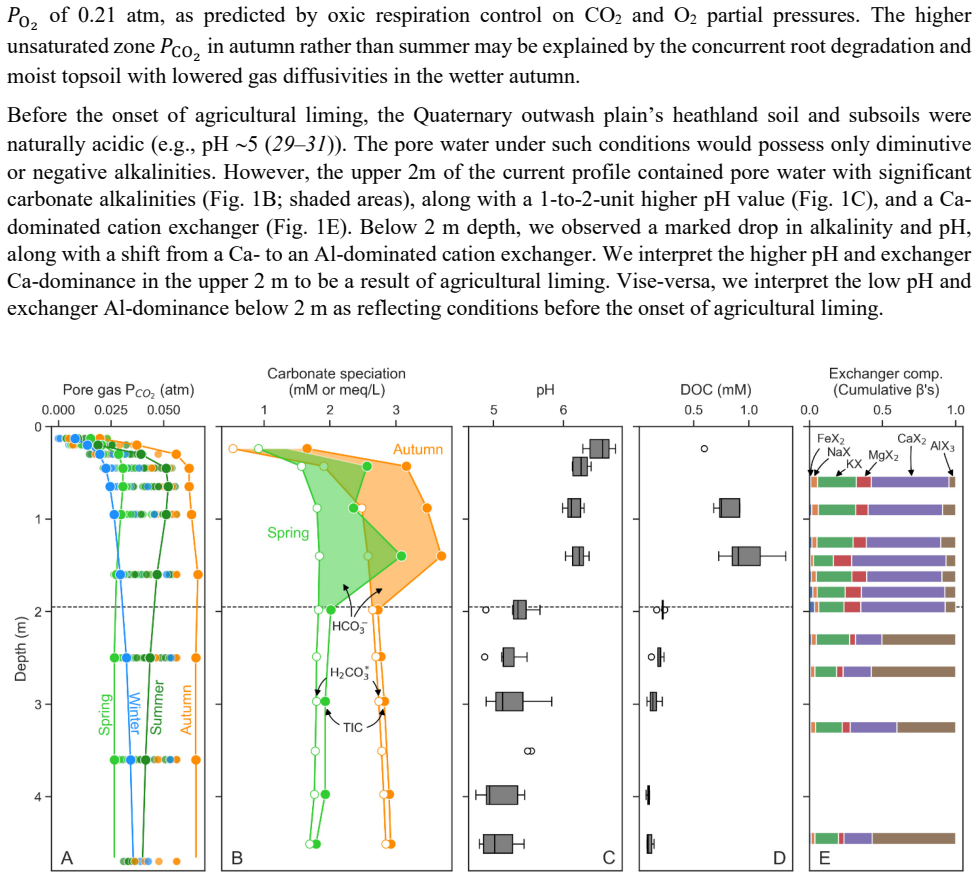
While a looming atmospheric CO$_2$ overshoot calls for immediate carbon sequestration, delays associated to Enhanced Weathering (EW) carbon dioxide removal are being investigated. Topsoil acidity is already known to delay EW carbon sequestration, but subsoil acidity remains underexplored. Using century-long agricultural liming of formerly acidic heathland as a proxy for EW, this study provides empirical evidence of subsoil-imposed delays. Below such limed terrain, we observed a downward-progressing front of topsoil-produced alkalinity that still requires 30-100 years to penetrate the approximately 5 m thick acidic sandy unsaturated zone and reach the groundwater table. Subsoil acidity thus may cause beyond-reasonable delays, prohibiting EW as a viable short-term carbon capture strategy even on topsoils made non-acidic by preceding liming. When planning EW schemes, the amounts of stored acidic cations in top- and subsoil, as well as the rate and composition of infiltrating water, controlling the duration of the delay, require careful assessment.
0
0
physics.geo-ph 2026-07-03

Joint geophone-DAS inversion recovers elastic parameters more accurately

by Hoang Anh Nguyen, Ali Tura

Joint elastic full waveform inversion of multi-component geophone and distributed acoustic sensing data

A single VSS simulation models both sensor types and shows that two-component geophones plus deviated borehole DAS reduce cross-talk best.

Figure from the paper full image
abstract click to expand
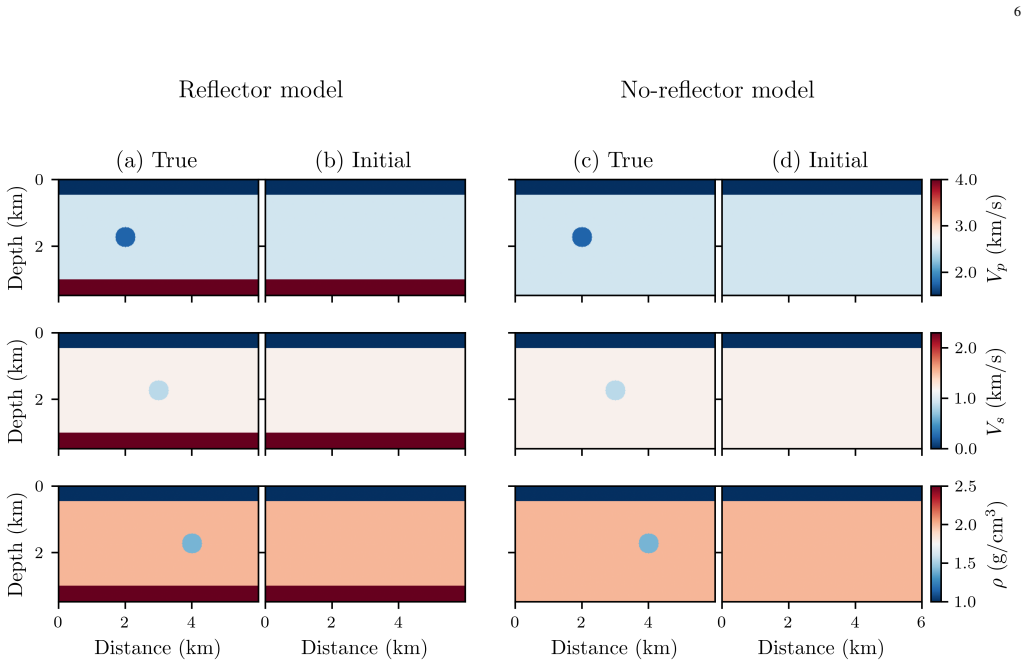
Joint full waveform inversion (FWI) of distributed acoustic sensing (DAS) and ocean-bottom node (OBN) data typically requires converting measured strain to particle velocity, introducing numerical noise and spectral distortion. To eliminate this, we present an elastic multi-parameter FWI framework using a velocity-stress-strain (VSS) formulation that directly models pressure, particle velocity, and gauge-length-averaged DAS strain from a single forward simulation. Data residuals are injected additively into a single backward simulation, making computational cost independent of the active sensor subsets. We benchmark individual and combined datasets on cross-talk and elastic Marmousi models. Our results show that joint inversion recovers elastic parameters more accurately than single deployments when the sensors offer complementary information. Specifically, pairing two-component geophones with a deviated borehole DAS cable yields the most accurate parameter recovery and mitigates inter-parameter cross-talk by providing a distinct physical observable and complementary depth aperture. We release our implementation as xFWI, an open-source, Devito-based Python package for scalable, multi-deployment inversions.
0
0
physics.geo-ph 2026-07-02

Stress cycles fail fault gouge at most frequencies except mid-range

by Pritom Sarma, Einat Aharonov +2 more

How effective normal stress oscillations advance failure in fault gouge: frequency dependence, non-failure window, and the role of dilation

Models reveal a non-failure window at 30-200 Hz where neither low-frequency ratcheting nor high-frequency dynamic dilation occurs.

Figure from the paper full image
abstract click to expand
Cyclic pore-pressure or normal stress variations arise both in relation to natural earthquakes and in engineered subsurface systems, yet their effect on fault stability remains poorly constrained at the grain scale. Here we numerically model, using a coupled Discrete Element--fluid dynamics model, the response of a sheared, fluid-saturated or dry, gouge-filled fault to effective normal stress oscillations over a wide frequency range (0.5-10000 Hz). The effective normal stress is oscillated either by cycling the pore-pressure or by directly cycling the normal stress, while keeping the stress state below the Mohr-Coulomb threshold measured in continuous loading. Despite this sub-critical loading, we observe failure across most frequencies, with a non-monotonic frequency dependence. A distinct non-failure window emerges at intermediate frequencies (30-200 Hz), bounded by failure at both lower and higher frequencies; the system exhibits four regimes from cyclic failure-and-arrest to continuous sliding. Pore-pressure and normal stress oscillations produce the same regime structure, confirming that they act as equivalent forcings via Terzaghi's principle, with fluid coupling adding only a delay due to dilatant hardening. Sub-critical failure arises from dilation-induced strength deterioration via two mechanisms: (i) low-frequency cycles allow sufficient time for shear-driven ratcheting dilation, while (ii) high-frequency cycles induce dynamic dilation (acoustic fluidization) via amplified seepage forces, stress gradients and inertial forces. The intermediate non-failure window represents the gap between these mechanisms. These results identify frequency as a controlling parameter for failure in granular materials, with implications for dynamic earthquake triggering and cyclic injection protocols.
0
0
physics.comp-ph 2026-07-02

Sequential THM coupling matches analytical benchmarks

by J. Al Kubaisy, G. E. Hammond +5 more

Verification of a sequential thermo-poroelasticity formulation in PFLOTRAN

A non-iterative fixed-stress split solves flow and temperature first then mechanics, agreeing with solutions for pressure, temperature, and

abstract click to expand
We present the verification of a thermo--hydrologic--mechanical capability implemented within the PFLOTRAN framework, with emphasis on benchmark-based assessment of the THM implementation. The thermal--hydrologic (TH) equations for mass and energy balance are solved on control-volume blocks or Voronoi cells, while the quasi-static momentum balance is solved on an element-based dual mesh. The coupling is achieved using a strictly sequential, non-iterative fixed-stress split strategy in which the TH system is solved implicitly for pressure and temperature, followed by a mechanics update for the displacement unknowns. Several verification problems are set up against poroelastic and thermo-poroelastic benchmarks, demonstrating agreement with analytical or semi-analytical benchmark responses for pressure diffusion, the temperature field, and mechanical deformation. In addition, we propose a treatment for discontinuities (e.g., fractures) based on mapping between mechanical and flow degrees of freedom, and validate the approach by comparison to an analytical solution. This work establishes the basis for thermo-poroelastic coupling in PFLOTRAN and provides a solid modeling foundation for a range of applications (e.g., enhanced geothermal systems and other subsurface energy storage) involving coupled thermal--hydrologic--mechanical (THM) processes in geologic porous media.
0
0
cond-mat.soft 2026-07-02

Diffuse fronts enhance phoretic removal from dead-end pores

by Amir A. Pahlavan

Diffusiophoretic transport of colloids and emulsions in complex environments

Cross-streamline migration in flowing pathways also shifts breakthrough and dispersion by orders of magnitude.

Figure from the paper full image
abstract click to expand
Chemical gradients are ubiquitous in porous and crowded environments, including soils, filters, fabrics, tissues, hydrogels, biofilms and living cells. They arise from displacement fronts, dissolution and precipitation, ion exchange, metabolism, root exudation, evaporation, gas dissolution, freeze--thaw cycles and externally imposed chemical treatments. These gradients can drive colloids, macromolecules and emulsion droplets by diffusiophoresis, while simultaneously driving diffusioosmotic flows along confining surfaces. Classical models of colloid transport in porous media emphasize hydrodynamic dispersion, surface interactions, straining, deposition, detachment and filtration. This chapter places diffusiophoresis within that broader transport framework and reviews how porous media generate, stretch, disperse and sustain the solute gradients that drive phoretic motion. We first discuss sources of chemical gradients and the distinction between spreading and mixing, then summarize classical colloid transport, the minimal physicochemical model for diffusiophoresis and diffusioosmosis, and the experimental platforms used to study these effects. Particular emphasis is placed on recent results showing that diffuse solute fronts can enhance phoretic removal from dead-end pores by prolonging the duration of forcing, and that cross-streamline migration within flowing pathways can change macroscopic breakthrough and dispersion by orders of magnitude. We close by discussing emulsion droplets, multiphase flows, confined and living media, and open problems, including the transition from algebraic mixing in two-dimensional micromodels to chaotic mixing in three-dimensional porous media.
0
0
physics.geo-ph 2026-07-02

Acid rain dissolves shells, adds strontium to Haifa aquifer

by Vasily Rogojin, Joel Kronfeld

The effect of 20th century industrialization: Power station, acid rains, over-pumping, on an erstwhile uniform freshwater dune aquifer in Haifa Bay, Israel

Power station emissions and overpumping have raised sulfate, alkalinity and carbon-13 levels in a coastal dune aquifer since the 1930s.

Figure from the paper full image
abstract click to expand
A small phreatic sand dune aquifer lies along the shore of Haifa Bay. It has been exploited for its freshwater resources since the 1930s. During this time the salinity has increased continuously, partly by seawater intrusion due to overpumping. The chemistry of the young aquifer water is laterally variable and is characterized by excess SO$_4^{2-}$, high $Sr^{2+}$ concentrations above that of modern seawater, high alkalinity, and markedly enriched $\delta^{13}C_{DIC}$ values. Acidic winter rains, formed from $SO_x$ and $NO_x$ gaseous emissions from a nearby power station, leach the dry deposition that accumulated across the dune surface during the dry summers. The acidity also partially dissolves the aragonite sea shells in the dune sands, remnants of a previous marine transgression. As a consequence, this adds $Sr^{2+}$, $Ca^{2+}$ excess, and alkalinity, while leading to enriched $\delta^{13}C_{DIC}$ values, particularly during the winter, at which time the radiocarbon activity in the DIC is observed to decrease.
0
0
physics.geo-ph 2026-07-01

Two-stage model generates three-component ground motions

by Yi Ding, Jinjun Hu +6 more

Scenario-conditioned flow matching for probabilistic generation of three-component ground-motion waveforms

Separates PGA amplitude prediction from waveform shape in wavelet space to match scaling while preserving component correlations and integra

Figure from the paper full image
abstract click to expand
Performance-based seismic risk assessment requires three-component acceleration histories compatible with specified source, path, and site conditions. Conventional ground-motion prediction equations provide scalar intensity measures, while many generative waveform models learn amplitude and waveform shape within a single high-dimensional target. We present WaveFlowGMM, a two-stage probabilistic ground-motion model that uses peak ground acceleration (PGA) as an amplitude interface between scenario conditioning and waveform generation. The amplitude stage uses physics-informed symbolic learning to estimate component-wise PGA medians and a full cross-component covariance. The waveform stage uses few-step AlphaFlow in an invertible wavelet-packet coefficient space to generate normalised three-component histories that are rescaled by sampled PGA. Tests on an event-level NGA-West2 holdout set show that the generated motions recover the main magnitude, distance, and site scaling, keep peak and spectral residuals close to zero, preserve three-component amplitude dependence, and yield velocity and displacement histories without systematic drift after integration of the generated three-component acceleration histories. The framework provides an interpretable and computationally efficient candidate component for waveform-level seismic hazard and risk analysis.
0
0
cs.LG 2026-07-01

Flow matching adapts AI generation for probabilistic seismic inversion

by Baldur Paulwitz, Stefan Buske

Probabilistic Inversion with Flow Matching

The technique produces ensembles of velocity models consistent with seismic data, enabling direct uncertainty quantification.

Figure from the paper full image
abstract click to expand
We demonstrate the application of Flow Matching, a technique originating from generative Artificial Intelligence, to probabilistic inversion in geophysical settings, such as seismic Full-Waveform inversion. We adapt the well-established mathematical theory of Flow Matching from generative Artificial Intelligence to the context of probabilistic inversion. We evaluate the approach with two case studies: a simple 2D velocity model to illustrate the general features of the method, and the OpenFWI dataset to show its capabilities for probabilistic inversion of more complex seismic velocity models.
0
0
physics.geo-ph 2026-06-30

Fourier neural network boosts seismic inversion accuracy

by Gui Chen, Yang Liu +2 more

Seismic full waveform inversion via a physics-guided Fourier representation neural network

PGFRNN embeds data in Fourier space and uses physics-guided updates to beat L2 and SALC baselines on the Overthrust model.

Figure from the paper full image
abstract click to expand
Accurate subsurface velocity models are essential for seismic imaging, yet conventional full waveform inversion (FWI) often suffers from cycle skipping, noise sensitivity, and reliance on good initial models. We develop a physics-guided Fourier representation neural network (PGFRNN) for unsupervised acoustic FWI and simultaneous-source FWI (SSFWI), which embeds Fourier-transformed seismic data into a latent space and iteratively updates the velocity model using a softplus-approximated log-cosh (SALC) loss and a physics-guided optimizer. Numerical tests on the Overthrust model demonstrate that PGFRNN outperforms conventional L2- and SALC-loss-based FWI methods, achieving higher inversion accuracy and robustness to noise and challenging initial models.
0
0
physics.geo-ph 2026-06-29

Sensor-dropout training during optimization

by Isao Kurosawa

Two kinds of robustness are not the same: disentangling fault tolerance and low-SNR robustness in multi-domain event detection on real data

Ablations on three real datasets show training recipe accounts for most noise tolerance while architecture contributes little

abstract click to expand
Reliable event detection underpins induced-seismicity monitoring for Carbon dioxide Capture and Storage (CCS) and geothermal operations, distributed acoustic sensing (DAS), and industrial condition monitoring. In each setting a detector must stay reliable both when sensors fail and when the signal is buried in noise. These two failure modes are routinely conflated, and architectural complexity is often credited with robustness it may not deserve. We assemble a unified binary event-detection benchmark from three physically distinct real sources -- Hi-net seismic waveforms, Utah FORGE 2024 borehole DAS, and MAFAULDA industrial vibration -- each mapped to a common 8-channel, 256-sample representation, and evaluate a fault-tolerant detector (CEPHALON) trained with per-sample sensor-dropout against standard detectors (a 1D convolutional network, a temporal convolutional network, and a compact Transformer) trained with an identical recipe. On clean data every model is near-perfect (AUC ~ 0.99). Under progressive sensor loss, simple models with sensor-dropout are already robust and CEPHALON holds no advantage. Under additive noise, however, CEPHALON degrades far more gracefully: at -2.5 dB its overall AUC is 0.939 versus 0.532-0.572 for the convolutional baselines. Same-architecture ablations isolate the cause: disabling internal redundancy at inference reduces the low-SNR advantage only modestly, whereas removing sensor-dropout training collapses it (0.899 to 0.603 at -5 dB). The training recipe is therefore the dominant cause and parallel redundancy only secondary. We release a complete, numbered, reproducible pipeline so that every figure can be regenerated.
0
0
physics.geo-ph 2026-06-26

Brookfield readings match precision rheometer after correction

by A. E. Vasiliev, A. S. Besov +1 more

Quantitative interpretation of Brookfield DV3TLV measurements: shear rate conversion, correction factors, and applicability limits

Geometry-specific factors convert spindle speed to shear rate for viscosity estimates in labs without high-end equipment.

abstract click to expand
The flow behavior and hydrodynamic characteristics of fluids in rotational viscometry systems are investigated using the Brookfield DV3TLV viscometer, with emphasis on measurement reliability and applicability limits of different measuring geometries. The results are compared and validated using the high-precision MCR 302 rheometer manufactured by the Austrian company Anton Paar. Both Newtonian (water and glycerol) and non-Newtonian fluids (guar-based gels), exhibiting fundamentally different viscosity-shear rate behavior, were included in the study. Based on the comparison of measurements obtained with the Brookfield DV3TLV viscometer and the MCR 302 rheometer, empirical coefficients were determined that relate the spindle rotational speed to the shear rate, taking into account the geometry of the measuring systems. Analysis of the Reynolds number range showed that laminar flow conditions were maintained for all measurement systems, which justifies the application of quasi-static models that neglect possible flow turbulence within them. Comparison with high-precision measurements performed on the MCR 302 rheometer showed that, with appropriate interpretation, the data obtained using the Brookfield instrument can be used to estimate the real viscosity of process fluids with an accuracy specific to each geometry and its operating conditions. The proposed methodology enables reliable characterization of flow properties in rotational systems and can be applied in engineering practice and laboratory analysis of complex fluids, especially at oil and food production facilities where high-end rheometers are unavailable or impractical to use. The study is formulated within the framework of experimental fluid mechanics and non-Newtonian flow characterization.
0
0
cs.LG 2026-06-26

Corner pore volume conservation cuts pressure errors in CO2 models

by Romal Ramadhan, Seyyed A. Hosseini +1 more

Boundary condition fidelity for bottom-hole pressure and CO2 plume prediction in geological carbon storage

Truncated-domain simulations match full-domain BHP and plume results when corner storage is preserved, with IoU rising above 0.94.

Figure from the paper full image
abstract click to expand
Accurate prediction of bottom-hole pressure (BHP) and CO2 plume migration is essential for safe geological carbon storage, yet practical simulations often rely on truncated domains where artificial boundaries distort pressure diffusion and CO2 saturation footprints. In this study, we evaluate how boundary-condition fidelity affects BHP and CO2 plume prediction by comparing ten reduced-domain boundary treatments against full-domain reference simulations in homogeneous and heterogeneous reservoirs. We test uniform pore-volume multipliers, transmissibility modifiers, corner-adjusted pore-volume corrections, layered corrections, and gradual modifiers using BHP RMSE, NRMSE, peak pressure deviation, and plume Intersection over Union (IoU) as performance metrics. Our results show that conserving corner pore volume is the most important requirement for truncated-domain modeling. We find that uniform treatments which neglect corner storage generate large pressure errors, with BHP RMSE of 362 to 382 psi in the homogeneous model and 250 to 304 psi in the heterogeneous model, and yield plume IoU values near 0.80 to 0.84, indicating roughly 16 to 20% of the combined plume area is misrepresented. Corner-adjusted scenarios substantially reduce pressure errors and raise plume IoU above 0.94, but we observe that transmissibility correction is not universally beneficial. In homogeneous reservoirs, uniform transmissibility adjustment improves pressure fidelity; in heterogeneous reservoirs, it can over-restrict flow across variable-permeability boundary faces, increasing BHP error and contracting the predicted plume. We find the gradual modifier with transmissibility correction provides the most consistent performance, achieving BHP NRMSE below 3.7% and plume IoU above 0.97 in both reservoir types.
0
0
physics.flu-dyn 2026-06-26

Non-resonant acoustic streaming unpinns trapped oil droplets

by D. Tsiklauri

Unpinning of trapped oil droplets via non-resonant acoustic streaming in capillary tubes

Model shows bulk force from attenuated waves overcomes pinning when absorption length equals half the distance to the droplet.

Figure from the paper full image
abstract click to expand
We establish a self-consistent analytical model demonstrating that trapped non-wetting liquid phases in narrow capillary channels can be successfully unpinned via non-resonant, second-order acoustic streaming (acoustic wind) coupled with background static drive gradients. Moving away from boundary-guided or resonant mechanisms, our approach exploits the bulk acoustic-wind force density generated by the steady-state momentum flux of attenuated first-order linear wave interactions. By expanding the hydrodynamic equations up to second order, we determine the critical assisted acoustic wave amplitude required to break capillary pinning thresholds and derive an explicit formulation for steady transport velocity under viscous wall constraints. Furthermore, incorporating both boundary-layer wall effects and bulk core thermo-viscous dissipation reveals a natural mathematical optimum condition where the spatial absorption coefficient matches half the inverse distance to the target droplet ($\alpha = 1/2x_0$). This condition is then numerically validated and cross-correlated against legacy industrial frequency baselines, providing a fundamental theoretical framework for minimizing transducer power requirements while maximizing localized mobilization velocities in geological pore networks. Finally, we demonstrate that this optimal operational frequency scales inversely with the transmission distance, providing an analytical framework to optimize downhole acoustic tools according to the spatial damping constraints of the specific formation rather than relying on rigid hardware parameters.
0
0
physics.space-ph 2026-06-26

Radar echoes recover auroral electric-field spectrum with -5/3 index

by Magnus F Ivarsen, Kaili Song +2 more

Excursion-set structure factor of the auroral electric field

Structure factor of threshold exceedances matches in-situ observations in co-moving frames

Figure from the paper full image
abstract click to expand
We treat coherent radar echoes from aurorae as a finite point process and measure its structure factor $S(k)$ from pairwise echo separations. Backscatter requires electron drifts to exceed the ion-acoustic speed, making the echoes a threshold (excursion-set) sample of the ionospheric electric field, and $|S-1|$ is that field's spectrum, to leading order. We test this against in-situ observations: in co-moving frames, the radar spectrum is scale-free with a spectral index near -5/3, matching the in-situ indices. The auroral electric field is thus imaged by its excursion set, a point process of Farley-Buneman threshold exceedances.
0
0
physics.geo-ph 2026-06-25

Heterogeneous heat flux matches geomagnetic inclination patterns

by Souvik Naskar, Jonathan E. Mound +4 more

Paleomagnetic signatures of core-mantle interactions inferred from top-heavy thermochemical geodynamo simulations

Simulations show that only models with varied mantle heat flux reproduce observed longitudinal variations in time-averaged field anomaly.

Figure from the paper full image
abstract click to expand
The time-averaged geomagnetic field provides crucial insights into deep Earth dynamics and thermal core-mantle interactions. Paleomagnetic observations and numerical dynamo simulations are equivocal regarding the longitudinal structure of the time-averaged field, though the latter have often considered a generic buoyancy source, which may obscure distinct signatures of thermal and chemical buoyancy that arise near the equator and poles, respectively. In this study, we present a new suite of top-heavy geodynamo simulations, varying the relative strengths of thermal and chemical driving and comparing the resultant magnetic signatures to observational field models spanning centuries to tens of thousands of years. None of the spatially-averaged measures of field morphology and variability we tested could robustly distinguish between different levels of chemical driving or the presence of heterogeneous outer boundary heat flux. On the other hand, observational constraints requiring longitudinal variations in time-averaged inclination anomaly are readily matched by simulations with heterogeneous outer boundary thermal forcing, in contrast to those with homogeneous mantle heat flux. Longitudinal field structures are reduced, but not erased, by elevated chemical driving, which also promotes the formation and deepening of polar minima in the radial magnetic field. Our simulations indicate that both the strong heat flux heterogeneity and chemical driving in Earth's core are likely to result in small but persistent departures from the geocentric axial dipole approximation.
0
0
physics.comp-ph 2026-06-25

CNN surrogate speeds up rock elastic moduli prediction

by Hanfeng Zhai, Rasool Ahmad +2 more

A convolutional neural network surrogate for hierarchical homogenization: fast elastic moduli prediction of digital rocks

Subcube predictions upscaled via homogenization match direct simulations across rock types at far lower cost.

Figure from the paper full image
abstract click to expand
Digital rock physics (DRP) aims to estimate effective rock properties (e.g., elastic moduli) directly from 3D micro-CT images. However, direct numerical simulations (DNS) on high-resolution large 3D scans are often computationally prohibitive and severely limit the application of DRP. To address this bottleneck, we combine a lightweight 3D convolutional neural network (CNN) with hierarchical homogenization (HHM) and apply it to determine effective elastic moduli. In this scheme, a large rock image is divided into subcubes. The CNN replaces costly DNS by directly predicting subcube elastic moduli, while HHM upscales subcube-level predictions to the full rock. Using a shared convolutional backbone, we systematically compare three training targets: (i) full anisotropic $6\times6$ stiffness tensors, (ii) isotropic bulk and shear moduli $(K, G)$, and (iii) Hashin--Shtrikman (HS)-normalized factors. Across multiple rock types, all three models agree well with DNS results while substantially reducing the computational cost. Moreover, training from scratch on each rock type is fast enough that transfer learning is unnecessary. Across all three targets, the accuracy is comparable. In our comparative study, the HS-normalized factor offers the best overall speed--accuracy trade-off while guaranteeing physical consistency, making it a convenient default. The isotropic $(K, G)$ target is a slightly more accurate alternative.
0
0
cs.LG 2026-06-24

RLVR teaches reusable geological reasoning across visual formats

by Lukas Mosser

Geo-Strat-RL: Learning Geological Event Reasoning from Verifiable Tasks

A synthetic verifier environment raises VLM scores on stratigraphic histories and enables transfer to seismic sections without domain-specif

Figure from the paper full image
abstract click to expand
To evaluate whether vision-language models can reason about geological histories, it is necessary to construct observations for which the underlying process history is known. Furthermore, reasoning over geological histories is not just a question of recognizing visual patterns, but also of understanding temporal and structural relationships that may be only indirectly visible or highly ambiguous. When ground-truth event histories are not uniquely identifiable or are unavailable, it remains an open challenge to teach models capable of visual reasoning to produce valid geological reconstructions that are consistent with both observed evidence and geological principles. We therefore investigate whether defining a verifiable geological reasoning task can improve geological event reconstruction across observation domains through reinforcement learning with verifiable rewards (RLVR). To this end, we present Geo-Strat-RL, a synthetic environment that generates stratigraphic observations and compact visible-evidence event histories. The environment combines a geological generator with an executable verifier that scores chronology, event identity, deposition, and structural relationships. We show that RLVR improves geological reconstruction in vision-language models (VLMs), increasing geological content scores on held out stratigraphic diagrams. We further evaluate the same held-out geological histories in a synthetic seismic observation domain by converting the generated scenes into acoustic-impedance-derived amplitude sections. In this controlled paired-renderer setting, we present evidence that geological reasoning learned from stratigraphic diagram-domain RLVR training transfers to synthetic seismic representations without seismic-specific training examples, supporting the hypothesis that RLVR can teach reusable geological reasoning concepts across related observation formats.
0
0
physics.geo-ph 2026-06-24

Physics-based stacking fills gaps in 5D seismic data

by Tiago A. Coimbra, Rodrigo Bloot +3 more

Offset-continuation-trajectory stacking based on common-reflection-point kinematics for five-dimensional prestack dataset regularization and enhancement

It stacks events along consistent traveltime surfaces from wavefront and reflection kinematics to raise SNR and continuity without artificia

Figure from the paper full image
abstract click to expand
Prestack seismic data regularization and enhancement are critical steps for reliable imaging and inversion, particularly in five-dimensional (5D) dataset geometries affected by irregular sampling, noise contamination, and incomplete spatial coverage. These limitations often degrade event continuity and compromise the physical consistency of conventional interpolation methods. This study introduces a physics-informed framework for 5D prestack dataset reconstruction based on a multi-parameter common-reflection-point (CRP) traveltime stacking operator. The proposed offset-continuation-trajectory (OCT) operator derives coherent stacking trajectories from wavefront propagation, isochronous surface geometry, specular reflection, and diffraction kinematics. All kinematic parameters are estimated directly from the data through a global coevolutionary optimization strategy. The method reconstructs missing traces and enhances spatial continuity by stacking seismic events along physically consistent traveltime surfaces, preserving both reflection and diffraction kinematics. Applications to synthetic and field datasets demonstrate improved signal-to-noise ratio, enhanced structural continuity, and reliable recovery of unrecorded amplitudes without introducing artificial events. The results indicate that incorporating physically constrained traveltime models into the regularization process provides a robust, geologically consistent alternative to purely mathematical interpolation techniques, thereby improving data fidelity for subsequent imaging and quantitative interpretation.
0
0
astro-ph.EP 2026-06-24

Earth magma oceans solidify in 4 Myr

by Harrison Nicholls, Joshua Krissansen-Totton +23 more

Coupled atmospHere Interior modeL Intercomparison (CHILI). I. Evolutionary Modelling -- Primordial Magma Oceans of Earth and Venus

First intercomparison of interior-atmosphere codes shows how initial volatiles and model details shape early planet histories

Figure from the paper full image
abstract click to expand
Earth and Venus represent two evolutionary outcomes arising from initially molten 'magma ocean' periods, followed by lifetimes of chemical and geophysical divergence. Their physics is common to all rocky planets and is accessible to simulations that adopt coupled interior-atmosphere modelling approaches. Our understanding of planet histories and interpretation of current states is dependent on this modelling, yet existing codes vary in their approximations. Here, we present the first results from the Coupled atmospHere Interior modeL Intercomparison (CHILI) project; benchmarking planetary evolution codes in the context of Earth and Venus to identify key model sensitivities. Our 'nominal' Earth models predict magma ocean solidification timescales within 4 Myr of thermal evolution, and are consistent with empirical constraints on Earth's early history. Venus scenarios exhibit more diverse behaviours where prolonged magma ocean stages can be conditionally sustained for 50 Myr. Cooling timescales correlate with initial hydrogen and carbon budgets, but model-specific treatments of volatile partitioning and vertical energy transport introduce substantial inter-model variance. Different parametrisations of mantle geodynamics, convection, melting curves, rheological properties, and radiative transfer give rise to divergent evolutionary behaviours. Discrepancies in atmospheres generated by magma ocean outgassing underscore these differences, although C-H-O compositions with surface pressures exceeding 100 bar are favoured. This intercomparison identifies critical sensitivities in volatile partitioning, escape processes, mantle viscosity, and melting. Validating these treatments is essential for enabling deep insight into the early histories of the Solar System's terrestrial planets, and for drawing meaningful interpretations from ongoing observational exoplanet campaigns.
0
0
physics.geo-ph 2026-06-24

Tremors most sensitive to tides where quakes are scarce

by Yishuo Zhou, Hideo Aochi +3 more

Tidal sensitivity of tremors in a mixed fast and slow earthquake system in northeastern Japan

In NE Japan, strongest tidal response occurs at southern Kuril Trench with migrating tremors and low seismicity, weakening where activity is

Figure from the paper full image
abstract click to expand
Tidal modulation of tectonic tremors provides a sensitive measure of fault response to small stress perturbations, yet how this response varies in a mixed fast and slow earthquake system remains unclear. Here we present the first systematic investigation of tremor tidal sensitivity in such a system, focusing on tectonic tremors along the northeastern Japan subduction zone. Using a tremor catalog from 2016 to 2024, we show that the southern end of the Kuril Trench, characterized by tremor migration and relatively weak seismicity, exhibits the strongest tidal sensitivity, whereas the northern Japan Trench shows the weakest response. Spatial analysis further reveals that areas with weaker tidal sensitivity tend to coincide with more earthquakes ($M_j \geq 4$) and denser tremor activity. In addition, tidal sensitivity at the southern end of the Kuril Trench increases from the early to later stages in tremor migration, potentially reflecting changes associated with underlying slow slip processes. Together, these spatial and temporal patterns suggest that tremor tidal sensitivity may be influenced by the relative contribution of other ongoing perturbations. These results highlight tidal sensitivity as a useful probe of the underlying perturbation environment and provide insight into the possible influence of slow slip processes, earthquakes, and other stress changes on tremor-generating regions.
0
0
physics.geo-ph 2026-06-24

Curvature correction stops droplet shrinkage in microflow simulations

by A. M. Gurin

Suppressing Spontaneous Droplet Shrinkage in Cahn-Hilliard-Stokes Microflows

A shift in the double-well potential counters the energy bias for less interface and keeps phase fractions near 0 and 1.

Figure from the paper full image
abstract click to expand
This paper addresses non-physical artifact, specifically spontaneous droplet shrinkage, in Cahn-Hilliard-based simulations of immiscible two-phase microflows. That artifact arise from the energy functional's preference for reduced interfacial area, leading to shifts in equilibrium phase fractions away from the physical bounds of 0 and 1. A curvature-dependent correction is proposed that shifts the double-well potential to counteract this drift. This method is validated on the following test cases: an isolated droplet in a cubic cavity, drainage in a synthetic porous medium, and flow through a T-shaped junction. Results demonstrate significant suppression of phase fraction overshoot/undershoot and improved droplet volume conservation.
0
0
cond-mat.soft 2026-06-23

Free Na+ and Cl- ions peak at 6-10% NaCl in supercritical water

by Mikhail V. Ivanov, Olga V. Alexandrovich

Dissociation of NaCl in supercritical aqueous fluids of moderate and high concentrations: A molecular dynamics study

Molecular simulations show the fraction of dissociated ions reaches a maximum before clustering dominates at higher salinity.

abstract click to expand
We report classical molecular dynamics simulations of NaCl association and dissociation in supercritical aqueous fluids over a wide range of salt concentrations, from moderate salinity to highly concentrated H2O-NaCl mixtures attainable at high temperatures. The degree of dissociation a and the corresponding ideal dissociation constant Kd, derived directly from a, were calculated as functions of the stoichiometric NaCl mole fraction at selected pressure-temperature (PT) conditions from 673.15 to 1273.15 K and from 0.1 to 2 GPa. At moderate salinity corresponding to a molality of approximately 1 mol/kg, NaCl remains largely dissociated a = 0.3-0.7 depending on pressure and temperature). In contrast, when the mole fraction of NaCl increases up to xNaCl = 0.333 (27.8 mol/kg), the degree of dissociation tends towards zero, and most ions form Na$^+$Cl$^-$ contact pairs and multi-ion clusters. As a result of these competing trends, the mole fraction of structurally dissociated Na$^+$ and Cl$^-$ ions is a non-monotonic function of the stoichiometric NaCl concentration and typically reaches a maximum at xNaCl = 0.06-0.10. This result shows that increasing salinity does not necessarily increase the abundance of structurally available chloride ions in supercritical aqueous fluids. Additional fixed density simulations at 1 and 7 mol/kg extend the analysis up to 1673.15 K and separate the effects of temperature and density on the associate/dissociate state of the ions. The obtained concentration dependences provide molecular-level constraints for thermodynamic descriptions of concentrated supercritical electrolytes and for evaluating chloride availability in high-temperature aqueous fluids.
0
0
physics.geo-ph 2026-06-23

Climate change lifts zero-delay landslide share to 72%

by Pritom Sarma, Krishnendu Paul

Frictional timescales and the impact of climate change-driven extreme weather on rainfall-triggered landslides in Mizoram, NE India

Pore-pressure threshold in friction model on 19 Mizoram events projects more clustered failures under high-emission scenarios.

Figure from the paper full image
abstract click to expand
Mizoram records the highest landslide frequency among all Indian states, yet physics-based models that predict the timing of slope failure remain unavailable for the region. Here, we apply the rate-and-state friction (RSF) block-slider framework of Paul et al.(2024) to 19 rainfall-triggered landslides in and around Aizawl (2016--2025) to investigate the hydro-mechanical coupling between pore-pressure transients and the slow-to-fast transition of slopes hosted in Miocene shale-dominated lithology. For each event, satellite-derived (GPM) rainfall is propagated to failure depth using a 1D infiltration model across three hydraulic conductivity scenarios, and RSF parameters are inverted to reproduce the observed failure date. The resulting dimensionless normalized pore-pressure $\chi = \mu_0 \Delta P / (a\,\sigma'_f)$ cleanly separates the 19 events into two dynamically distinct failure regimes: synchronous failure ($\chi \gtrsim 4$, zero delay from peak pore-pressure), exemplified by the eight-event Cyclone Remal cluster of May 2024, and delayed failure ($\chi \sim 1$--$3$, delays of hours to 10~days), controlled jointly by $\chi$ and the velocity-weakening ratio $a/b$. Using CMIP6 extreme-rainfall scaling factors for northeast India under SSP2-4.5, SSP3-7.0 and SSP5-8.5 scenarios, we project that the fraction of landslides falling in the zero-warning synchronous regime increases from the current $\sim$56% to $\sim$72% under SSP5-8.5. Our results imply a significant climate-driven escalation of multi-site, clustered landslide failure risk driven by the intensification of extreme precipitation events.
0
0
physics.geo-ph 2026-06-23

Tensor train decomposition lowers memory for 3D seismic inversion

by Liangsheng He, Chao Song +3 more

Tensor Train Decomposition-based 3D Implicit Full Waveform Inversion with Multi-scale Structural Similarity

Core tensors from axis-specific networks plus multi-scale loss recover continuous velocity models despite bad starts or missing low frequenc

Figure from the paper full image
abstract click to expand
Three-dimensional full waveform inversion (3DFWI) is a powerful technique for reconstructing high-resolution subsurface velocity models. However, its application is often limited by high memory requirements, computational costs, and sensitivity to cycle skipping. To overcome these challenges, we propose a novel tensor train (TT) decomposition-based 3D implicit full waveform inversion framework (TT-3DIFWI) combined with a multi-scale structural similarity (M-SSIM) objective function. In this framework, the 3D velocity model is represented by TT decomposition as a product of a series of low-rank core tensors. Then, three axis-specific implicit neural network representations (INR) based on one-dimensional vector coordinates as input are constructed to predict these core tensors, rather than directly predicting the velocity model. This INR reparameterization method based on TT decomposition can significantly reduce the memory consumption of INR training while maintaining the accuracy and resolution of the 3D velocity model reconstruction. Meanwhile, the low-rank structure of TT decomposition also ensures the structural consistency of the reconstruction velocity, thereby improving the accuracy and continuity of the inversion result. Furthermore, the M-SSIM objective function can compare the multi-scale structural differences between predicted and observed data, and utilize the ultra-low frequency features to reduce cycle skipping. Numerical experiments on synthetic and challenging land datasets demonstrate that TT-3DIFWI with M-SSIM achieves accurate and continuous velocity reconstruction, even with poor initial models or missing low-frequency data.
0
0
physics.geo-ph 2026-06-22

Binary matrix sorts geophysical triggers into 128 varieties

by A.V. Guglielmi, A.D. Zavyalov +1 more

On the classification of triggers of dynamic processes in geophysics

The system reveals new phenomena including seismic-echo aftershocks, Earth-oscillation modulation, and antitriggers that halt processes.

abstract click to expand
In geophysics, the problem of classifying triggers of dynamic processes in the lithosphere, hydrosphere, atmosphere, ionosphere and magnetosphere has arisen and needs to be solved. Triggers that induce catastrophic events, such as destructive earthquakes, require special attention. Classification is necessary in order to express the diversity of triggers in a limited number of ordered and well-identifiable species. This paper proposes a project for collective work on the systematization of triggers, i.e., the formation of a unified classification and nomenclature. A simplified (basic) and extended classification table are proposed. The basic matrix uses the principle of binary opposition. The matrix contains three categories of descending rank: type (natural, artificial), class (endogenous, exogenous) and specie (periodic, aperiodic). Three additional categories have been added to the expanded classification table. This results in 128 trigger varieties. The heuristic significance of the classification of triggers is emphasized. New phenomena discovered during the classification process are indicated: excitation of a strong aftershock by a round-the-world seismic echo, modulation of global seismicity by spheroidal oscillations of the Earth, the weekend effect in earthquake activity. In the magnetosphere, a cause-and-effect chain of triggers has been identified, called a trigger cascade. The existence of so-called antitriggers is indicated, which do not excite, as usually happens, but interrupt the ongoing dynamic process. Key words: systematics, nomenclature, dynamic system, disturbance, lithosphere, hydrosphere, atmosphere, ionosphere, magnetosphere, earthquake, magnetic storm, trigger cascade, antitrigger.
0
0
physics.optics 2026-06-22

Fiber interferometry turns 1,770 km subsea cable into geophysical sensor

by Georgios Aias Karydis, Nicolas L. Celli +7 more

Per-Span Microwave Frequency Fiber Interferometry in Subsea Cables for Scalable Deep-Ocean Geophysical Monitoring

Four-month test on Ireland-Iceland link resolves tides, storms and earthquakes per span using existing fiber.

abstract click to expand
We demonstrate low-cost microwave frequency fibre interferometry for per-span monitoring of a 1,770 km operational subsea cable connecting Ireland and Iceland. Over four months, this approach successfully resolved tidal variations, storms, and teleseismic earthquakes, highlighting its potential for large-scale, cost-effective ocean monitoring.
0
0
physics.geo-ph 2026-06-22

Neural velocity model enables Bayesian 3D seismic tomography

by Ryoichiro Agata, Kazuya Shiraishi +2 more

Bayesian three-dimensional seismic travel-time tomography for active- and passive-source seismic data using physics-informed neural network

The approach uses PINNs and particle variational inference to combine active and passive sources while producing uncertainty maps from real

Figure from the paper full image
abstract click to expand
Accurate 3D seismic velocity modeling through seismic travel-time tomography using both active- and passive-source data provides critical underpinning models for seismicity monitoring and hazard assessment. Because travel-time tomography is an inherently ill-posed inverse problem, UQ of the estimated models using Bayesian methods is also important for reliable downstream interpretations and analyses. However, Bayesian inference for 3D tomography based on conventional grid-based representations faces the ``curse of dimensionality'' and severe computational bottlenecks. Consequently, rigorous Bayesian UQ for margin-wide 3D travel-time tomography has remained largely unexplored. In this study, we propose a meshless 3D Bayesian travel-time tomography method that combines PINNs with a neural representation of the velocity structure, enabling tractable and data-efficient Bayesian inference through function-space particle-based variational inference. To efficiently integrate passive-source data into the Bayesian estimation of the velocity structure, we conduct analytical marginalization treating uncertain source parameters as nuisance parameters, with passive-source relocation carried out in post-processing. We validated the capability of our approach for 3D problems through synthetic experiments. Furthermore, we applied the method to a real-world dataset from marine active-source surveys and natural earthquakes off the Kii Peninsula, Nankai Trough. Our probabilistic 3D ensemble successfully resolves key geological features and provides data-consistent uncertainty maps. The posterior mean hypocenters shifted mainly in the vertical direction by 10-15 km, consistent with a previous relocation result. Finally, the neural representation drastically reduces storage requirements for the entire ensemble velocity model, highlighting the scalability and data efficiency of the proposed framework.
0
0
physics.flu-dyn 2026-06-22

Dead-end fracture flow raises heat transfer to matrix

by Lisa Maria Ringel, Yves Méheust +3 more

Enhanced Heat Transfer through Density- and Pressure-Driven Flow at Fracture Intersections With Dead-Ends

Buoyancy or pressure gradients inside vertical branches keep fluid-matrix temperature differences larger than conduction alone allows.

Figure from the paper full image
abstract click to expand
Heat transport in fractured media is governed by coupled thermal-hydraulic (TH) processes. This study evaluates TH processes at fracture intersections, focusing on T-intersections where one horizontal fracture is subjected to a pressure gradient while the other forms a vertical dead-end fracture. Using numerical simulations, we investigate the influence of the inlet velocity, thermal P\'eclet, and Rayleigh numbers, and the impact of a pressure gradient along the T-intersection, on the resulting heat transport. The model domain consists of a fluid and a solid region. Fluid flow and heat transport in the fractures are described by the conservation equations for mass, momentum, and energy. The rock matrix is considered impermeable, therefore, it is governed by heat conduction. The simulations consistently show that heat transfer from the fluid to the matrix is enhanced when fluid flow occurs within the dead-end fracture, since such fluid flow maintains a higher temperature difference between the matrix and the fluid. This flow arises either from buoyancy-driven natural convection due to temperature-dependent fluid density or from a pressure gradient imposed by the orientation of the dead-end fracture with respect to the flow direction in the horizontal fracture. Natural convection dominates at high flow rate, Rayleigh, and P\'eclet numbers, whereas pressure-driven flow becomes the controlling mechanism for an increasing deviation from the orthogonal configuration of the two fracture planes and under higher flow rates. At low flow rates, P\'eclet, or Rayleigh numbers, no flow develops in the dead-end fracture, and heat transport in the dead-end fracture becomes conduction-dominated.
0
0
physics.ao-ph 2026-06-22

ENUFFT compacts orographic spectra by 25-60% on irregular grids

by Tridib Banerjee, Felix Jochum +1 more

Elastic Non-Uniform FFT (ENUFFT) spectral reconstruction of irregularly sampled orography on unstructured grids

Direct Fourier computation without interpolation keeps energy error at 14-24% and allows flow-dependent mode selection for mountain-wave mod

Figure from the paper full image
abstract click to expand
Subgrid-scale orography remains a leading source of uncertainty in numerical modeling because terrain spectra must be recovered from irregularly sampled elevation data and then reduced to a flow-dependent launch budget for parameterizations. Existing approaches are limited either by assuming regular samples on rectangular grids or by fitting coefficients whose truncation and regularization effects become embedded in the spectrum. None achieves dynamic, flow-dependent truncation. This study introduces an Elastic Non-Uniform Fast Fourier Transform (ENUFFT) framework that computes local Fourier coefficients directly from irregularly sampled orography on unstructured grids, without interpolation or fitting. It combines a type-1 NUFFT with local windowing, quadrature weights, and a new Elastic Mode Selection (EMS) algorithm for retaining a local flow-dependent subset of modes. ENUFFT is compared with the strongest relevant existing method in a monochromatic and a real Alpine terrain test. In both cases, it recovers peak amplitude and direction comparably while significantly compacting the spectra (monochromatic ~25%, Alpine ~60%). It also satisfies the Parseval condition more closely with its spectral variance (energy) deviating from reference by ~14-24% versus ~500-122,000% for the existing method. Its EMS is additionally tested in a mountain-wave test where it reduces the launch spectrum by >=75% while keeping launch-power loss <=7%. Along with better compute scaling, ENUFFT is thus a computationally efficient, physically interpretable framework that can make Fourier-based orographic source descriptions practical for spectral-budget-aware parameterizations.
0
0
cs.CE 2026-06-22

Tool aligns 11 wildfire datasets into ready NumPy arrays

by Zeyu Xia, Lexie Chen +2 more

FireDataForge: A Unified Framework for Multi-Source Wildfire Data Retrieval and Integration

FireDataForge takes one event ID and outputs harmonized data from fire behavior to land cover for analysis.

Figure from the paper full image
abstract click to expand
Wildfire research, modeling, and education require geospatial data from multiple sources that vary in formats, coordinate systems, spatial resolutions, and temporal cadences. This preprocessing burden limits reproducible reuse. We present FireDataForge, an open-source Python framework that automates retrieval and harmonization of 11 wildfire-related sources spanning fire behavior, weather, land cover, vegetation, elevation, built environment, wildland-urban interface, fire history, and satellite imagery. Given an MTBS Event ID, FireDataForge retrieves relevant datasets, aligns them to a common grid, and outputs analysis-ready NumPy arrays with embedded metadata. Batch processing of historical fires demonstrates support for fire behavior simulation, educational visualization, machine learning, and AI-assisted wildfire analysis.
0
0
physics.ins-det 2026-06-19

Mobile ocean detector cuts crustal background 50-100 times for mantle signals

by Takumi Araki, Simran Chauhan +18 more

Deep-Ocean Application-Specific Neutrino Experiment: a white paper

Design enables direct measurement of Earth's internal uranium and thorium decay by moving away from continental interference.

Figure from the paper full image
abstract click to expand
This white paper introduces the concept, prototype design, projected costs, and scientific goals of a mobile experiment for detecting geoneutrinos originating from uranium and thorium decay chains in the Earth's mantle. This will constrain the planet's radiogenic heat production and unearth its geochemical makeup. This design of a deep-ocean mobile neutrino experiment, which is not mirrored by any active or planned experiments, supports physics and geoscience's goal of multi-modal data on the Earth's internal composition and structure. Based on geoscientific studies, this design is expected to achieve a 50--100-fold reduction in crustal background compared to similarly sized continental detectors, thereby enabling direct measurements of mantle geoneutrinos. The multiple stereoscopic projections enabled by the detector's unique mobility can map spatial variations in heat-producing elements within the mantle. Beyond discussing the design, we report on our collaboration's most recent hardware developments in the active prototyping of this detector. We briefly highlight the potential multiuse and interdisciplinary nature of this detector.
0
0
cs.LG 2026-06-19

Neural net sets soil biokinetic parameters from DNA traits

by Paul Collart, Juergen Gall +3 more

Constrained hybrid modelling to predict microbial dynamics and organic matter turnover in soil systems

Constrained hybrid model improves forecasts of organic matter turnover even with limited data by learning unmeasurable dynamics.

Figure from the paper full image
abstract click to expand
Soil microorganisms control organic matter cycling and largely determine how soil systems can cope with and mitigate climate change and environmental threats. Representing microbial dynamics in process-based soil models is therefore critical to predict carbon cycling in soils, albeit highly challenging to inform from data. One promising approach to improve their parametrisation is the integration of genomic data, yet modelling the complex and unknown relationship between genomes and the processes the microbes are driving is an unsolved problem. In this work, we present the first hybrid modeling framework for deriving biokinetic parameter values of a process-based soil organic matter turnover model from metagenome-inferred functional traits based on DNA sequencing data. Our model predicts biokinetic parameters of the process-based model from genomic trait data with a neural network and integrates constraints from ecological theory and literature to ensure realistic behavior, even of non-observed state variables. We evaluate our method on synthetic genomic trait datasets of varying complexity and on real data, showing that our approach improves performance over multiple baselines and learns the dynamics of unmeasurable components of the process-based model effectively, even for small training datasets.
0
0
astro-ph.EP 2026-06-19

Volatiles and surface redox state set exoplanet magma ocean fate

by Mariana Sastre, Tim Lichtenberg +4 more

Geophysical and atmospheric implications of fO₂-dependent melting on rocky exoplanets

Simulations show volatile content and oxygen fugacity dominate thermal state while fO2 melting curves provide only secondary control, yieldi

Figure from the paper full image
abstract click to expand
The geochemical evolution of long-lived magma oceans is strongly regulated by volatile exchange between the molten mantle and the atmosphere. For planets inside the runaway-greenhouse limit, this coupled evolution can persist for billions of years. However, most existing studies assume Earth-like (oxidized) conditions and neglect the influence of redox state on melt thermodynamics and volatile release. We quantified how experimentally derived, oxygen-fugacity-dependent melting curves implemented within the coupled interior-atmosphere framework PROTEUS propagate into the thermal structure, melt fraction, and rheological evolution of rocky exoplanet interiors, applying this to the short-period super-Earth GJ 1132 b. We found strongly non-linear thermal responses to variations in melting curves. In volatile-poor systems, reduced melting curves promote earlier deep-mantle crystallisation relative to oxidised and Earth-like cases, favouring late-stage surface magma oceans sustained by greenhouse warming, while oxidized melting curves maintain higher melt fractions and a vertically extended magma ocean. Reduced mantles produce massive H$_2$-CO-rich atmospheres; oxidized mantles favour thinner H$_2$O-CO$_2$ envelopes. In volatile-rich systems, the interior reaches radiative equilibrium at high melt fractions, sustaining a steady-state global magma ocean in which melting curve variations do not significantly influence solidification timing. This indicates a hierarchical control: volatile inventory and surface oxygen fugacity act as the primary regulators of thermal state, while oxygen-fugacity-dependent melting relations provide a secondary modulation. These contrasting regimes produce distinct atmospheric compositions and formation timescales, offering testable spectral predictions for close-in rocky exoplanets evaluable with forthcoming JWST observations.
0
0
physics.geo-ph 2026-06-19

Planar 3D fracture code runs four times faster

by V. I. Shukalo (1), A. V. Valov (1) +1 more

Acceleration methods for the planar 3D ILSA hydraulic fracturing model

Unified iteration, sparse-matrix splitting and Anderson acceleration cut runtime while aperture error stays under five percent.

Figure from the paper full image
abstract click to expand
Planar 3D models of hydraulic fracturing provide a practical balance between models with restrictive geometric assumptions and fully 3D simulators, capturing fractures with arbitrary planar footprints at moderate computational cost. Nevertheless, applications such as treatment design optimization and mini-frac test interpretation require large ensembles of simulations, for which the cost of planar 3D models remains a significant bottleneck. This work presents acceleration strategies for the planar 3D Implicit Level Set Algorithm (ILSA) to reduce simulation runtime while preserving numerical accuracy. A unified planar 3D ILSA scheme that consolidates the nested loops of the elastohydrodynamic solver and the front tracking algorithm into a single iterative process is introduced. A matrix splitting approach is applied to the linearized elastohydrodynamic system, moving the dense part of the elasticity operator to the right-hand side and yielding a sparse system matrix that can be solved more efficiently. Anderson acceleration is incorporated into the solution of the elastohydrodynamic system to improve convergence under varying fracture geometry. Additionally, a predictor--corrector scheme is examined with the proposed methods to assess their combined effect. Each technique is evaluated individually and in combination on both the reference and unified planar 3D ILSA schemes across five benchmark cases. Numerical experiments demonstrate that the unified scheme alone delivers an average 2.5x speedup, reaching 5.7x for the sandglass geometry. The combined application of all techniques achieves an average 4x speedup and up to 11x for the sandglass case, with the relative discrepancy in fracture aperture below 5% compared with the reference scheme.
0
0
physics.flu-dyn 2026-06-17

Inverse PINNs recover Manning friction below 5% error in 2D

by Soheil Radfar

How Sparse and How Noisy? Systematic Benchmarking of Inverse Physics-Informed Neural Networks for Manning Friction Estimation in Shallow Water Equations

One-dimensional recovery retains a 15% positive bias regardless of observation count or noise level.

Figure from the paper full image
abstract click to expand
Physics-informed neural networks (PINNs) offer a promising framework for inverse hydrodynamic modeling by combining sparse observations with governing physical constraints. However, their reliability for estimating hydraulic parameters under data limitations remains insufficiently characterized. This study benchmarks inverse PINN recovery of the Manning friction coefficient in the shallow water equations under controlled variations in observation sparsity, noise, and observed variable type. Two cases are considered: a one-dimensional MacDonald subcritical channel with an analytical steady reference solution, and a two-dimensional sloped channel with a parabolic transverse bed generated using a balanced finite-volume solver. The Manning coefficient is treated as a trainable positive scalar and recovered jointly with the flow field using a two-phase strategy that first fits observations and then incorporates the physics residual. Results show that the two-dimensional case achieves robust friction recovery, with errors below 5% when at least 10 depth and velocity observations are available and noise is at or below 10% of the field standard deviation. Recovery remains stable up to 20% noise with 50 observations, but becomes unreliable with only five observations. In contrast, the one-dimensional case shows a persistent positive bias of about 15% that is largely insensitive to observation count and noise, indicating a structural identifiability limitation rather than a data-density limitation. Observation-type ablation shows that recovery degrades substantially when only depth or velocity is observed, demonstrating that joint depth-velocity information is essential for reliable inverse identification. Overall, the results provide a reproducible benchmark for assessing when inverse PINNs can and cannot reliably estimate Manning friction from sparse and noisy shallow-water observations.
0
0
physics.geo-ph 2026-06-17

Entropy rises and water height falls before 2023 Turkey quake

by Muhammed Hossein Mousavi, Hamzeh Mohammadigheymasi +1 more

Joint Analysis of Shannon and Tsallis Entropy and GRACE-FO driven Equivalent Water Height Anomalies for Pre- and Post-Rupture Monitoring: An Example of the 2023 Mw = 7.8 Kahramanmarac{s} Earthquake, T\"urkiye

Joint seismic catalog and GRACE-FO analysis tracks pre-rupture complexity buildup on the East Anatolian Fault.

Figure from the paper full image
abstract click to expand
In order to understand the variations in fault systems throughout the seismogenic cycle, mechanical states and the complexities of seismic interactions must be considered. In this study, we present a data integration framework combining a 25-year seismic catalog with Equivalent Water Height (EWH) datasets from the GRACE-FO mission and two information-theoretic complexity measures (Shannon and Tsallis entropy) to examine spatiotemporal changes in the East Anatolian Fault System associated with the 2023 Kahramanmara\c{s} earthquake doublet. The pre-rupture period exhibits a systematic increase in the entropy measures alongside a gradual decrease in EWH, suggesting a transition towards fault network criticality driven by segment fragmentation, long-range correlations, poroelastic contraction, fluid migration, and progressive stress accumulation. During the co-seismic phase, we observe an abrupt increase in entropy with a corresponding negative shift in EWH. In the post-seismic period, the persistence of elevated entropy and EWH anomalies indicates that the fault system remains in a non-equilibrium state dominated by aftershock clustering, fault zone damage, permeability changes, and viscoelastic relaxation. Additionally, structured computational workflows detailing these joint methodologies are provided via the Seismic Entropy Analysis (Algorithm 1) and the Relationship Between Tsallis q and Gutenberg-Richter b-value (Algorithm 2) pseudo-codes, facilitating the direct reproduction and regeneration of all results.
0
0
physics.geo-ph 2026-06-17

Diffusion model embeds seismic physics to raise resolution

by Huanhuan Tang, Shijun Cheng +3 more

Incorporating wave physical priors into diffusion models: A novel approach to seismic resolution enhancement

Self-supervised method enforces convolution constraint on field data to recover thin layers without high-resolution labels.

Figure from the paper full image
abstract click to expand
Seismic resolution enhancement remains a critical challenge in exploration geophysics, particularly when processing field data characterized by limited bandwidth, strong noise, and insufficient labeled training samples. Existing deep learning methods typically rely on supervised learning with synthetic training data, leading to distribution mismatch and poor generalization on real seismic acquisitions. To address these limitations, we develop a physics-guided self-supervised diffusion model (PG-SSDM) that learns directly from field observations without requiring paired high-resolution labels. The proposed framework combines three key innovations. First, a self-supervised training strategy constructs learning targets by progressively filtering the observed data itself, eliminating the need for high-resolution ground truth through iterative refinement across multiple stages. Second, seismic convolution model is embedded as a hard physical constraint in both the training loss function and the reverse sampling process, ensuring that generated high-resolution outputs respect fundamental seismic wave propagation physics. Third, the probabilistic nature of diffusion models enables uncertainty quantification, providing spatial confidence maps that identify regions where resolution enhancement may be less reliable. We validate PG-SSDM on synthetic data under various noise conditions and on a 3D post-stack field dataset. Experimental results demonstrate that the proposed method effectively recovers thin layers and subtle structures, suppresses noise, preserves structural continuity, thereby significantly improving the resolution and interpretability of seismic data.
0
0
cs.CE 2026-06-16

Eccentric casing cuts wellbore crack pressure by 30 percent

by Tharunsarathy Sachithanantham, Wasim Niyaz Munshi +2 more

Phase-field analysis of fracture in heterogeneous wellbore systems: effects of casing eccentricity and cement-formation interface strength

Simulations show off-center placement triggers inclined cracks past 50 percent eccentricity and diverts fractures along weak interfaces.

Figure from the paper full image
abstract click to expand
Predicting the initiation and propagation of cracks in heterogeneous wellbore systems under complex in-situ conditions remains challenging. We present a hybrid phase-field fracture framework to model crack growth in heterogeneous wellbore systems with weak interfaces. The framework is first validated against benchmark problems with available analytical and numerical solutions. Subsequently, numerical experiments are conducted to isolate the effects of interface strength and casing eccentricity on crack growth. The results show that casing eccentricity strongly influences both the pressure at crack initiation and the resulting crack paths, reducing the crack initiation pressure by up to 30% relative to the concentric configuration. Beyond a critical eccentricity threshold of 50%, localized shear stresses drive the nucleation of inclined cracks in the formation in addition to radial cracking -- a failure mode absent in concentric configurations. For sufficiently weak interfaces (i.e., interfaces with 30% of the strength of the surrounding bulk material), radially propagating cracks in the cement sheath are deflected along the interface rather than penetrating into the formation. This deflection delays stress relaxation within the sheath, promotes the nucleation of additional radial cracks, and increases the risk of sustained casing pressure and wellbore failure. Finally, a three-dimensional simulation reveals depth-dependent crack nucleation, stress-shadow effects that suppress full-depth crack growth and crack coalescence along the cement-formation interface -- phenomena that are fundamentally inaccessible under plane-strain assumptions - demonstrating the applicability of the framework to realistic heterogeneous wellbore systems.
0
0
physics.geo-ph 2026-06-15

Two mechanisms alter Gutenberg-Richter law for big quakes

by Bogdan Felix Apostol

Mechanism of production and deviation from the standard Gutenberg-Richter law of the big earthquakes (An analysis of big earthquakes)

Self-replicating energy buildup slows or accelerates around a critical magnitude range, reducing the expected frequency of the largest event

Figure from the paper full image
abstract click to expand
We describe two self-replicating mechanisms of energy accumulation in the seismic focus, which modify the Gutenberg-Richter law in the region of the big earthquakes. The first mechanism acts for magnitudes smaller than a narrow region of large critical magnitudes; it slows down the energy accumulation and may produce precursors. The second mechanism acts above that region, and accelerates the energy accumulation; the precursors may be absent. Both mechanisms reduce the Gutenberg-Richter excedence distribution. On the left of the critical region the Gutenberg-Richter magnitude probability density is unchanged, while on the right the probability density is reduced. The procedure described in this paper introduces a critical-magnitude region (range) as an additional fitting parameter. The results may bear relevance upon the recent concepts of "self-arresting" and "dragon-king" earthquakes. The two self-replicating mechanisms may introduce a magnitude gap between the two types of big earthquakes, and two branches in the excedence law, in the vicinity of the critical region.
0
0
physics.geo-ph 2026-06-12

Ocean floor detector to map Earth's mantle with geoneutrinos

by Zhihao Xu, Takumi Araki +18 more

Towards imaging Earth's large-scale structures by directional geoneutrino detection with Ocean Bottom Detector

Directional sensitivity at a site above the Pacific LLSVP could distinguish enriched regions through unique arrival angles.

Figure from the paper full image
abstract click to expand
Geoneutrinos, electron antineutrinos produced by radioactive decays of heat-producing elements (HPEs) within the Earth, provide unique insights into Earth's interior and heat budget since their first detection in 2005 by KamLAND. Conventional geoneutrino detectors currently provide integrated global information and lack the capability to spatially resolve structures deep within the Earth. Here, we evaluate the ability of angular-sensitive geoneutrino detectors to distinguish between homogeneous and heterogeneous mantle models, focusing on Large Low Shear Velocity Provinces (LLSVPs). Our results show that LLSVPs enriched in Th and U yield a distinct flux of geoneutrinos with distinctive angular patterns. An oceanic site above the Pacific LLSVP is considered a particularly favorable detector location. The Ocean Bottom Detector (OBD) project aims to leverage this spatial resolving advantage by deploying a kiloton-scale liquid scintillator detector directly on the ocean floor, enabling unprecedented sensitivity for mantle geoneutrino detection. These findings demonstrate the critical role of combining geophysical and geochemical data to guide detector site selection, ultimately improving constraints on Earth's internal heat and the HPE distribution.
1 0
0
physics.geo-ph 2026-06-12

Seismic networks at geothermal sites track induced events

by Nori Nakata, Ernest Majer +5 more

Historical Seismic Monitoring of EGS and Conventional Geothermal Fields: LBNL Efforts and Lessons Learned

Multi-site records support studies of subsurface changes and operational risk management.

Figure from the paper full image
abstract click to expand
Enhanced Geothermal Systems (EGS) deployment across diverse geological settings requires a better understanding and management of induced seismicity. Lawrence Berkeley National Laboratory (LBNL) has established seismic monitoring systems at numerous geothermal sites, including the Geysers, Desert Peak, Brady Hot Springs, Raft River, Newberry, Patua, Don A. Campbell, Jersey Valley, Utah FORGE, and Cape Modern. These multi-site deployments provide valuable observations of induced seismicity and reservoir evolution, supporting studies of thermo-hydrological-mechanical-chemical (THMC) processes, risk assessment, and reservoir management. In this presentation, we review the status of LBNL-operated seismic networks, summarize lessons learned from sensor deployment and long-term monitoring, and discuss challenges related to noise mitigation, sensor coupling, data transmission, real-time processing, and data quality. We also highlight ongoing efforts to make these datasets publicly accessible to support future geothermal and induced seismicity research.
0
0
cs.CE 2026-06-11

Shear from natural fractures steers hydraulic fracture paths

by S. Shandilaya, M. Alaleeli +3 more

Local Stress Redistribution Controls Interactions between Hydraulic Fractures and Pre-existing Fractures

Lab and simulation results show orientation-driven shear stress signs cause deflection or linkage, aiding trajectory prediction in stimulati

Figure from the paper full image
abstract click to expand
Hydraulic fracture (HF) propagation in naturally fractured formations is strongly influenced by local stress states near pre-existing natural fractures (NFs). The role of NF-induced shear deformation and stress redistribution in controlling HF trajectories remains poorly characterized. This study investigates how NF-induced stress redistribution governs HF-NF interactions through coupled laboratory experiments and poroelastic extended finite element simulations on intact and pre-fractured PMMA specimens under plane-strain conditions. Digital image correlation provides full-field measurements of displacement and strain evolution during mechanical loading and hydraulic fracturing. Under fixed-base, lateral confinement, and vertical compression boundary conditions, inclined NFs induce asymmetric stress redistribution and shear deformation, generating distinct local stress states prior to fluid injection. The results demonstrate that the HF trajectory is governed by the sign and spatial distribution of shear stress and shear strain components generated by NF orientation relative to the far-field maximum principal stress. Shear deformation that promotes compressive stress development adjacent to the NF causes the HF to deflect away, whereas shear deformation that reduces the effective normal stress along the NF promotes fracture attraction and linkage. Corresponding numerical reproduction of HF curvature in pre-fractured specimens requires mixed-mode (Mode I-II) fracture energy release criteria, while the intact specimen propagates in pure Mode I. Overall, the findings reveal a transition from tensile opening to shear-assisted mixed-mode propagation as local stress states evolve due to the presence of NFs, providing a mechanistic basis for predicting and controlling fracture trajectories in subsurface stimulation and storage applications.
0
0
physics.geo-ph 2026-06-11

Broad viscosity spread at grain boundaries erases distinct EAGBS peak

by Zhengxuan Li, John F. Rudge

Effects of microstructural heterogeneity on the macroscopic spectrum of elastically accommodated grain-boundary sliding

Simulations show broad grain-boundary viscosity distributions convert the sharp EAGBS peak into a wide background while preserving relevance

Figure from the paper full image
abstract click to expand
Elastically accommodated grain-boundary sliding (EAGBS) is a plausible source of upper-mantle seismic attenuation and dispersion, yet classical theory predicts a localized Debye-like peak that is absent or only weakly expressed in dry olivine experiments. Here we test whether microstructural heterogeneity can explain this discrepancy using 2-D finite-element simulations on periodic Voronoi tessellations. We find that irregular grain geometry changes the baseline EAGBS response relative to the regular hexagonal benchmark, but increasing grain-size variance alone produces only modest changes in modulus and peak height, with little spectral broadening. In contrast, a broad distribution of grain-boundary viscosities progressively suppresses and broadens the Debye-like loss peak into a weak background spanning a wide frequency interval. This broadening arises from the superposition of many localized relaxation processes with distinct characteristic timescales and motivates a reduced-order 0-D description of the aggregate response. These results suggest that the absence of a pronounced EAGBS peak in dry olivine does not necessarily imply the absence of EAGBS mechanism itself. If grain boundaries sample a sufficiently broad viscosity distribution, the macroscopic EAGBS contribution may appear experimentally only as part of a broad attenuation background, while still remaining relevant for upper-mantle seismic attenuation and velocity dispersion.
0
0
physics.geo-ph 2026-06-11

Ruptures cross forbidden super-Rayleigh range continuously

by Anna Pomyalov, Fabian Barras +1 more

Breakdown of the classical rupture theory and earthquake propagation in the "forbidden" super-Rayleigh range

Rate-dependent friction removes the sharp supershear jump in two-dimensional models.

Figure from the paper full image
abstract click to expand
Earthquakes propagating faster than the shear wave-speed are commonly thought to undergo a super-shear transition upon which they discontinuously jump from the sub-Rayleigh regime to the super-shear one. The super-Rayleigh regime, i.e., the range of propagation speeds between the Rayleigh and shear wave-speeds, is regarded as "forbidden" by the two-dimensional classical rupture theory. Here, we revisit the assumptions underlying the classical theory and develop a rupture theory that takes into account the dependence of the fault strength (frictional resistance) on the slip rate. The theory quantitatively agrees with numerical simulations nearly up to the Rayleigh wave-speed. Yet, very close to the latter, two-dimensional rupture solutions change their character due to frictional rate nonlinearity and rupture continuously propagates through the "forbidden" super-Rayleigh range into the super-shear regime, without a sharp super-shear transition. These results demonstrate that frictional rate dependence, generically observed in experiments, can have profound implications for fast earthquake propagation.
0
0
physics.geo-ph 2026-06-10

Monte Carlo beats ensemble Kalman in subsurface model calibration

by Guido Di Federico, Wenchao Teng +1 more

Data assimilation for subsurface flow using latent diffusion model parameterization: performance of ensemble-Kalman and Monte Carlo techniques

Latent diffusion parameterization enables rigorous sampling that reduces data mismatch more than ensemble methods while preserving realism.

Figure from the paper full image
abstract click to expand
Data assimilation (DA) in subsurface flow entails calibrating model parameters to match observed data, typically at wells, while preserving geological realism. Latent diffusion models (LDMs) provide efficient mappings from high-dimensional geological model space to a low-dimensional latent variable, reducing the dimensionality of the inverse problem while maintaining plausibility in posterior geomodels. However, the high nonlinearity in the LDM mapping may degrade the performance of Kalman-gain-based ensemble updates. We present a systematic comparison of DA algorithms applied to large-scale 3D channelized geomodels with hierarchical geological uncertainty. We compare model-space and latent-space DA using the ensemble smoother with multiple data assimilation (ESMDA), and demonstrate a key trade-off: model-space updates achieve significant uncertainty reduction but produce geologically unrealistic posterior models, while latent-space updates preserve realism but exhibit limited uncertainty reduction. Motivated by this, we explore rigorous Markov chain Monte Carlo (MCMC) and Sequential Monte Carlo (SMC) algorithms in the 3D-LDM latent space. To accommodate their high computational demands, we develop a fast surrogate flow model that approximates well-rate responses. MCMC and SMC are evaluated against ESMDA across three synthetic test cases, with DA performed in the LDM latent space. All models maintain geological realism due to the LDM parameterization. MCMC and SMC are consistent with one another and achieve lower data mismatch and more uncertainty reduction than latent-space ESMDA. Our overall results demonstrate that ensemble Kalman methods may provide overestimated posterior uncertainty with highly nonlinear parameterizations, while rigorous Monte Carlo sampling, enabled by fast surrogate models, can provide a more reliable alternative.
0
0
physics.geo-ph 2026-06-10

Icequake mapping tracks glacier crevasse growth at meter scale

by Wojciech Gajek, Ugo Nanni +4 more

Surface Crevasse Evolution Observed Using Matched Field Processing and Source Relocation at Hansbreen, Svalbard

Precise locations from a sparse array give diffusion rates of 0.47-0.55 m²/s consistent with slow viscous crack opening on Hansbreen

Figure from the paper full image
abstract click to expand
Crevasses control glacier dynamics through fracture and meltwater routing, yet their propagation rates remain observationally scarce and poorly constrained across brittle-to-viscous regimes. Cryoseismology offers a powerful means to capture dynamic processes within glacial ice, with recent advances in novel processing methods like Matched Field Processing (MFP) applicable to dense seismic arrays. However, precise localisation of cryoseismic sources remains challenging in sparse or irregular seismic arrays. We propose a two-step workflow for metres-scale resolution mapping of glacial seismic activity that integrates MFP and discrete arrival times relocation under a limited instrumentation constraint. We apply this approach to analyse seismic activity at the ice surface on the Hansbreen glacier, Svalbard. Using MFP, we detect surface icequakes and characterise meltwater noise regardless of the limited instrumentation. The relocation procedure increases the accuracy of surface icequakes localisation and reveals ongoing crevasse opening episodes. The precise locations of the icequakes allow for the estimation of the crevasse propagation rate and the determination of the diffusion coefficients of 0.47 to 0.55 m2 per s. Based on the obtained results, we discuss brittle-to-viscous regime transfer and interpret the crevassing mechanism as sustained subcritical crack propagation, where viscous stress relaxation governs rates of orders of magnitude below elastic limits.
0
0
physics.flu-dyn 2026-06-10

Gamma distribution governs flow rates in disordered porous media

by Jose Arnal, Guillem Sole-Mari +1 more

Topological origin of flow distributions in disordered porous media

Pore throat width variation sets the statistics via local splitting and merging, outperforming mean-field models in simulations.

Figure from the paper full image
abstract click to expand
We investigate steady Stokes flow through porous media composed of two-dimensional disordered arrays of circular obstacles. We develop a theory for the statistics of flow rates based on a pore-network model that captures local flow correlations. We show that the flow rate distribution across the ensemble of pore bodies follows a Gamma distribution, and that the flow rate distribution through pore throats is fully determined in terms of it. Furthermore, this Gamma distribution can be directly linked to simple geometrical properties such as the coefficient of variation of pore throat widths, rendering the model parameterisable from minimal medium information. The resulting predictions agree closely with computational fluid dynamics simulations and show markedly better agreement than prior mean-field models that neglect local flow-rate correlations, clarifying how local splitting and merging shape flow in disordered porous networks.
0
0
physics.geo-ph 2026-06-10

Near-fault motion patterns flag supershear earthquake ruptures

by Suli Yao, Hongfeng yang +2 more

Supershear Rupture Indicator in Near-fault Particle Motion

Displacement particle motion in strong-motion records distinguishes subshear from supershear propagation in strike-slip events.

Figure from the paper full image
abstract click to expand
Earthquake rupture propagation speed is an essential source parameter that fundamentally controls hazard and risk. In this paper, we develop and demonstrate the capability of near-fault seismic records in delineating rupture speeds of strike-slip earthquakes through inspecting displacement particle motion. We apply the new method on near-fault strong-motion data in global M7+ strike-slip earthquakes and identify diverse particle motion signatures associated with sustaining subshear rupture, sustaining supershear rupture, supershear transition, oblique slip, initial rupture expanding process, and multiple rupture fronts. This study highlights the superior application of near-fault observations in rapid rupture speed determination.
0
0
physics.comp-ph 2026-06-10

Optimization tightens intervals to bound groundwater model uncertainty

by Maximilian Ramgraber, Ksenia Bestuzheva

Bounding the Null Space: Interval-Based Uncertainty Quantification for Non-Identifiable Groundwater Models

Guaranteed outer bounds replace sampling ensembles by extremizing variables over physical constraints and observations.

Figure from the paper full image
abstract click to expand
Groundwater models are routinely non-identifiable: sparse subsurface observations leave many combinations of parameters, states, and boundary conditions equally consistent with the available data. Existing uncertainty quantification (UQ) methods address this by exploring a finite set of model realizations, but incomplete exploration can systematically underestimate the true range of admissible solutions. We propose a fundamentally different approach based on Optimization-based Bound Tightening (OBBT), which represents uncertainty directly as intervals and tightens them by extremizing variables over a constraint system encoding physical laws and observations. This yields guaranteed outer bounds on all uncertain variables without sampling, side-stepping the exploration problem entirely. To apply OBBT to groundwater flow, we discretize Darcy's law using a finite-volume scheme and handle the resulting bilinear terms through McCormick relaxations. We show that these relaxations can break the sign coupling between fluxes and head gradients, permitting non-physical rotational flow and failing to provide sufficient information for effective bound tightening. We identify flow sign prescription and irrotationality constraints as effective remedies and characterize their respective strengths and limitations. We demonstrate the framework on three numerical examples - a 1D steady-state model, a 2D steady-state model across four experimental configurations, and a 2D transient model on a hexagonal grid - and discuss computational performance, scalability, and directions for future research. OBBT offers a conservative, deterministic, and physically grounded alternative to ensemble-based UQ, with natural connections to null space theory and data assimilation.
0
0
cs.LG 2026-06-09

VQ-VAE map error boosts localized quake forecasts and replaces b-value

by Wei Quan, Denise Gorse

Using Seismic Statistical Features and VQ-VAE to Improve Spatiotemporal Seismicity Predictability

Reconstruction error from 2D seismic maps improves 24 km radius predictions on Japan data and tops SHAP rankings.

Figure from the paper full image
abstract click to expand
In this paper we build upon a previous study in which we demonstrated, using XGBoost and earthquake catalogue data from Japan and Chile, that a set of 60 seismic statistical features (SSFs) had much greater predictive value than a set of 428 generic time series features from the tsfresh package. We here extend this previous work in two key ways, focusing on data from Japan as a large dataset is necessary in order to allow for the training of a deep learning (autoencoder) model. First, we move from whole-region prediction (considering, for each candidate event, the likelihood of an event M $\geq$ 5.0 anywhere in the region in the next 15 days) to localised predictions in which both the region of feature computation and the region of prediction are restricted to a circle of radius 24 km around the candidate event, and we show that performance remains excellent, similar to our previous whole-region study for the same area. Second, we here couple this proven set of SSFs, based on one-dimensional (catalogue) data, with a novel feature based on two-dimensional seismic maps, obtained by training a VQ-VAE model to reproduce such maps as output and identifying a measure of its error in doing so with a localised build-up of crustal stress. We show that while localised prediction based on SSFs can be effective alone, with test AUC values as high as those obtained in the case of Japan in our previous whole-region study, the inclusion of the new natively-spatial VQ-VAE-derived feature, top-ranked by SHAP analysis, can enhance performance and additionally appears to near-wholly replace the traditionally-computed $b$-value in terms of feature usage.
0
0
physics.geo-ph 2026-06-09

6-year gravity signal fixes inner core viscosity at 4.6e16 Pa s

by Yachong An, Hao Ding +4 more

Satellite gravity constraints on inner core viscosity and LLVPs density anomalies

Anti-phase match with length-of-day data also yields 200 m ICB relief and +5.5 per mil LLVP base density.

abstract click to expand
Constraining the physical properties of Earth's deep interior, particularly the viscosity of the solid inner core and the density structure of large low-velocity provinces (LLVPs), remains a major challenge in geophysics. Here we develop a unified dynamical framework that combines mantle-inner core gravitational coupling (MICG) with torsional oscillations in the fluid outer core and show that their interaction can produce a distinct and testable geodetic signature. Guided by this prediction, we analyze satellite gravity observations together with independent corrections for surface mass variability. We identify a robust approximately 6-year signal in the Stokes coefficient Delta S22, while no corresponding stationary signal is detected in Delta C22. A signal with the same periodicity is independently detected in length-of-day variations (Delta LOD), and the two signals exhibit a near anti-phase relationship. Interpreting this coupled signature within the proposed framework allows us to constrain the inner core viscosity to approximately 4.6 (+/- 1.8) x 10^16 Pa s and the equatorial relief of the inner core boundary to a semi-axis difference of about 200 +/- 70 m. The inversion further indicates mean density anomalies of +5.5 (+/- 0.6) per mil at the base of LLVPs. These results indicate that satellite gravimetry provides a direct observational window into deep-Earth dynamics and the physical properties of Earth's deep interior.
0
0
physics.optics 2026-06-09

Phase offset between lasers tracks cavity length to sub-micron

by Todd Kozlowski, Henry Frädrich +1 more

Absolute Length Sensing in a Long-Baseline, High-Finesse Optical Cavity

Detuning of second laser in 123 m cavity yields strain sensitivity of 10^{-10} to 10^{-9} for quakes and tides

Figure from the paper full image
abstract click to expand
The relative phase between two lasers in transmission of an optical cavity can be used to continuously measure its absolute length with sub-micron precision. The first laser is kept on resonance with the cavity, while a second laser is phase-locked to the first with a frequency separation equal to an integer multiple of the cavity's initial free spectral range. As the free spectral range frequency changes due to cavity length changes, the second laser de-tunes slightly from resonance and gains an additional phase offset in transmission of the cavity. The cavity length changes can be calibrated in terms of this phase offset. This technique is applied to a high-finesse optical cavity with a length of 123 meters, transforming it into a strainmeter with an effective sensitivity to transient seismic events of $10^{-10} \, - \, 10^{-9}$ m/m. We report absolute length changes associated with anthropogenic noise, a distant earthquake, and the diurnal and semidiurnal earth tides.
0
0
physics.geo-ph 2026-06-09

Benchmark unifies four AI tasks for subsurface seismic imaging

by Yimin Dou, Xinming Wu +10 more

CIG-Bench: A Comprehensive Survey and Benchmark for AI-Driven Subsurface Imaging Understanding

It supplies synthetic data for metrics and real surveys for realism plus shared protocols to replace fragmented private tests.

Figure from the paper full image
abstract click to expand
Subsurface imaging understanding bridges observed geophysical data and quantitative geological models, supporting hydrocarbon exploration, CO2 storage site assessment, and geohazard monitoring. Over the past decade, deep learning has substantially reshaped interpretation workflows. To take stock of this progress, we systematically analyze 652 publications from 2015 to 2025 and organize the field into four major tasks: structural interpretation, geobody identification, seismic facies analysis, and property estimation. Yet subsurface imaging interpretation differs fundamentally from other AI-driven tasks, facing ambiguous signals, pronounced interpretive non-uniqueness, sparse semantics, unfixed target locations, and scarce reliable annotations. Building on the reviewed literature, we summarize three interrelated challenges that define its frontier: interpretation under complex geological conditions, cross-survey semantic generalization under low information density, and the absence of reliable benchmarks. Addressing them will hinge on integrating human expertise, physical constraints, and geological priors into model training or inference, and on treating uncertainty quantification as an intrinsic model output. Among these, the lack of unified benchmarks has been particularly consequential, making fair comparison difficult, hindering reproducibility, and fragmenting community efforts. We therefore propose a community benchmark spanning fault segmentation, relative geologic time estimation, geobody segmentation, and property modeling. It integrates unified evaluation protocols, pretrained models, and datasets that combine synthetic data for quantitative evaluation with real surveys for qualitative assessment. By coupling a decade-spanning review with an evolving benchmark, this work offers a timely reference and a reproducible foundation to accelerate future research and deployment.
0
0
physics.geo-ph 2026-06-08

Web platform opens Romania's LiDAR elevation data to browser access

by Alexandru Hegyi

RO-LiDAR GeoQuickView: A Web Platform for Exploring Public LiDAR-Derived Elevation Data in Romania

It merges DTMs from multiple sources with standardized hillshades and a spatial index for quick retrieval.

Figure from the paper full image
abstract click to expand
Public elevation data can support landscape research, environmental interpretation, planning, education, and public engagement, but their practical reuse is often limited by fragmented delivery and specialist processing requirements. This paper presents RO-LiDAR GeoQuickView, an independent, voluntary, and non-commercial Web-GIS initiative for exploring and reusing publicly accessible elevation data in Romania. The platform integrates LiDAR-derived digital terrain models (DTMs) and complementary elevation models of different resolutions, publishes standardized hillshade visualizations for immediate browser access, supports participatory landscape documentation, and provides a spatial index for direct raster retrieval. Its most detailed currently integrated component is the 0.5 m LAKI III Zone A DTM coverage for Caras-Severin, Gorj, Mehedinti, and Dolj counties. LAKI III Zone B, comprising Suceava, Neamt, Bacau, and Vrancea counties, is the next scheduled high-resolution extension. It will be integrated after the public products become available and pass through the same harmonization and quality-control workflow. The platform also incorporates LAKI II and additional public altimetric sources through a source-aware processing workflow that accommodates different acquisition units, including one-kilometre cells and larger raster blocks. The paper documents the data architecture, harmonization steps, quality-control procedures, access modes, application range, and limitations. The platform is conceived as an accessibility layer over public data infrastructures: it supports rapid discovery and preliminary interpretation, but it does not replace official products, specialist modelling, expert review, or field verification.
0
0
physics.geo-ph 2026-06-08

Injection rate controls fault failure through pressure heterogeneity

by Pritom Sarma, Stanislav Parez +2 more

Injection-rate effects on failure in a fluid-saturated granular fault gouge

Slow rates weaken the whole layer uniformly while fast rates leave distant parts stronger, explaining why uniform-pressure models miss exper

Figure from the paper full image
abstract click to expand
Fluid injection into the Earth's subsurface, performed for energy extraction, waste disposal, and resource development, is known to reactivate gouge-filled faults and induce seismicity, a key hazard in modern geotechnical operations. Nevertheless, the role of injection rate in controlling fault-gouge failure remains poorly understood. Here we present both an analytical theory and coupled fluid--granular (discrete element) numerical simulations to explain this rate dependence. Assuming a pre-stressed gouge-filled fault subject to fluid injection, we derive a pore-pressure diffusion equation with a dilative sink. Its solution predicts a rate-dependent failure criterion, arising from pressure heterogeneity within the layer: slow injection allows pressure to diffuse uniformly throughout the layer, promoting uniform weakening, whereas rapid injection produces strong gradients, leaving distal regions stronger. The numerical simulations confirm the theory and reproduce experimental observations not captured by classical, uniform-pressure effective-stress theory. The framework links grain-scale physics to fault-scale failure and provides quantitative guidance for the design of injection protocols in geotechnical operations involving granular geomaterials.
0
0
physics.app-ph 2026-06-08

Cloaking and holography emerge as limits of one acoustic operation

by Jonas Müller, Dirk-Jan van Manen

Acoustic disguising: a unified framework for cloaking and holography

Driving a closed surface with Green's functions hides objects or mimics others for any incoming sound.

Figure from the paper full image
abstract click to expand
Cloaking and holography -- usually treated as distinct problems -- are two limits of a single operation that we call acoustic disguising, realized here using immersive boundary conditions on a closed surface. Driving the boundary with homogeneous Green's functions suppresses any incident field inside the enclosed volume and cloaks unknown objects broadband; driving it with scattering Green's functions synthesizes a holographic scatterer indistinguishable from a target for arbitrary illuminations. Combining the two, using heterogeneous Green's functions, replaces the scattering signature of one object with that of another, transforming its acoustic identity. We demonstrate the framework in three-dimensional FDTD simulations driven by impulsive Green's functions, complemented by data-driven Green's-function retrieval, establishing a direct route to real-time 3D acoustic cloaking, holography, cloning, and disguising.
0
0
physics.geo-ph 2026-06-08

Self-supervised GNSS model beats baselines in forecasting and detection

by Nick Teutschmann (1), Laura Crocetti (1) +8 more

GNSS-FM: A Self-Supervised Foundation Model for Daily GNSS Displacement Time Series

Pretraining on unlabeled data from 17,000 stations boosts 90-day predictions and seismic step localization.

Figure from the paper full image
abstract click to expand
Displacement time series from Global Navigation Satellite Systems (GNSS) are essential for a wide range of applications, including monitoring tectonic crustal deformations and investigating the different stages of the earthquake cycle. Machine learning methods have proven promising for GNSS applications; however, most remain fully supervised. This creates a bottleneck as labeled data are scarce, even though large amounts of unlabeled GNSS data are freely available. We present GNSS-FM, a self-supervised foundation model for daily GNSS time series. The model uses a dual-stream input combining displacement and velocity-like increments, and is pretrained using a masked latent prediction objective with vector-quantized targets adapted from wav2vec 2.0, with several modifications for geodetic data. Pretrained on data from over 17,000 globally distributed GNSS stations, an analysis of the learned codebook suggests that the representations capture the main signal types in GNSS displacement data, including seismic offsets, tectonic drift, and seasonal patterns. The foundation model is later fine-tuned on two downstream tasks, namely 90-day displacement forecasting and seismic step localization, where it outperforms strong task-specific baselines in both cases. These results show that self-supervised pretraining is a promising approach for GNSS time series analysis.
0
0
physics.geo-ph 2026-06-08

Neural network inverts 1D MT data without fixed layers or tuning

by Fareeda Begum Shaik, Roshan K. Singh +1 more

Implicit Neural Representations Framework for One-Dimensional Magnetotelluric Inversion

Resistivity is learned as a continuous depth function by optimizing a differentiable physics forward model, producing ensembles that estimat

abstract click to expand
Magnetotelluric (MT) inversion is a very useful technique to image the subsurface electrical resistivity structures. It is used for mineral exploration, geothermal studies, groundwater assessment, and lithospheric investigations. In this work, we proposed a physics-informed machine learning framework for 1D MT inversion based on implicit neural representations (INR). Our approach models the subsurface resistivity as a continuous function of depth using a coordinate-based neural network. This method does not require fixed discretization or layered models. The neural network is trained directly on a differentiable MT forward-model loss based on Wait's recursive impedance formulation. This setup allows inversion to occur in a physics-consistent optimization framework. The implicit regularization avoids the need for manual tuning of external regularization. We have tested this method on synthetic conductor models and real MT data. The results showed its ability to recover geologically relevant resistivity structures over various depths and thicknesses. Through different initializations, we can compute an ensemble of plausible models to estimate model uncertainty. These results suggest that implicit neural representations provide a flexible framework for geophysical inversion, with even greater potential in higher-dimensional MT problems and joint inversion applications.
0
0
physics.geo-ph 2026-06-08

Diffusion models generate implicit geological models from simulations alone

by Yimin Dou, Xinming Wu +3 more

Implicit Structural Modeling via Generative Diffusion Frameworks

Trained on normal-fault examples, the network produces consistent thrust-nappe and flower-fault structures without real-data fine-tuning.

Figure from the paper full image
abstract click to expand
Implicit structural modeling can support understanding subsurface spatial configurations, revealing patterns of geological evolution, and enabling quantitative simulation of geological processes, thereby offering substantial scientific and engineering value. Conventional approaches formulate it as an optimization problem or framework interpolation to fit a continuous scalar field, whereas machine learning methods typically adopt discriminative regression to directly predict implicit models. However, in complex scenarios involving fault intersections, branching, and thrust nappes, these methods still struggle to maintain topological consistency and kinematic plausibility. In this work, we develop an implicit structural modeling approach based on diffusion models. We construct a set of training data through a simulation based synthesis pipeline and design a dedicated encoder for conditional injection, allowing the conditional branch to converge rapidly while effectively reinforcing the input conditional priors throughout the diffusion process, thereby more stably propagating structural constraints. We then inject these conditional features into a backbone network pretrained on large scale natural images to enable conditional training of the diffusion model. Although our synthetic data include only a relatively stylized normal fault system, experiments demonstrate strong generalization, enabling the model to effectively handle diverse complex structural types such as strike slip faults and intricate flower fault systems. More importantly, even in challenging thrust nappe settings where the scalar field becomes non monotonic and exhibits abrupt depth discontinuities, the model can still generate reliable implicit structural models.
0
0
physics.flu-dyn 2026-06-05

Porous convection crosses five regimes with rising drive

by Jing Dong, Lu Zhang +1 more

An experimental study on the heat transport in porous media convection

3D-printed lattice experiments map the shift from Darcy-like to classical roll convection and show permeability sets the transition points.

Figure from the paper full image
abstract click to expand
We investigate the heat transport in porous media convection over a wide Rayleigh--Darcy number range of $26.8\leq Ra\leq 2.62\times 10^5$, and a Darcy number range of $6.18\times10^{-7}\leq Da\leq 1.21\times 10^{-5}$. In the experiments, we employ 3D-printed lattice structures as the solid porous matrix and water as the working fluid. Quantitative analyses of the porous medium Nusselt number $Nu_m$ and local temperature statistics reveal that the present system undergoes a transition through five distinct regimes: I. Conduction, II. Convection, III. Oscillation, IV. Transition, V. Classical Rayleigh--B\'enard convection. This transitional process bridges the gap between Rayleigh--Darcy-like behaviour and Rayleigh--B\'enard-like behaviour in porous media convection. By varying the permeability of the matrix, we further examine the role of the Darcy number $Da$, which turns out to have a profound impact on the transitional processes across different regimes. Flow field measurements reveal that the flow structures within Regime IV and Regime V evolve from several horizontally stacked convection rolls to a single-roll structure, and the pore-scale Reynolds number both exceeds unity in these two regimes. Finally, we report the corresponding phase diagram in the $Ra$-$Da$ space.
0
0
cond-mat.soft 2026-06-05

Pore pressure alone does not trigger granular layer failure

by Bimal Chhushyabaga (1), Behrooz Ferdowsi (1) ((1) Department of Civil +2 more

Investigating frictional instability due to pressurization in granular media: insights from coupled computational fluid dynamics discrete element method

Coupled changes in effective stress, drainage, and fabric control when subcritically stressed shear layers reactivate

Figure from the paper full image
abstract click to expand
Fluid pressurization can reactivate subcritically stressed granular layers in faults, slopes, and injection-perturbed reservoirs, but grain-scale feedbacks among pressure diffusion, drainage, and contact-network degradation remain unresolved. Here, 3D coupled CFD-DEM simulations investigate pore-pressure-induced reactivation of confined, fluid-saturated granular shear layers under imposed shear stress. Strain-controlled tests define the Mohr-Coulomb strength envelope; stress-controlled simulations then impose subcritical shear stresses while basal pore pressure increases under drained and undrained conditions. Instability is governed not by pore pressure alone, but by its coupled evolution with effective stress, drainage, dilation or compaction, hydraulic connectivity, and granular fabric. Undrained boundaries retain excess pore pressure, whereas drained boundaries maintain vertical gradients and suppress excess pressure. Internal fields reveal alternating dilation and compaction bands and reorganization of a porosity-derived permeability proxy, showing that hydraulic pathways evolve during deformation. Micromechanical diagnostics identify localized particle rotation, force-chain reorganization, porosity redistribution, and coordination-number variations controlled mainly by imposed shear-stress level rather than drainage. Second-order fabric metrics show that post-failure weakening coincides with loss of directional force-chain organization, especially at lower shear. Friction-velocity and friction-porosity trajectories indicate a transition from dilatancy-dominated strengthening to pore-pressure-driven weakening. Viscous-number scaling partially organizes the low-Iv creeping response, 10^-8 <= Iv <= 10^-5, but not onto a unique local rheology. These results clarify how drainage-controlled hydromechanical feedbacks and fabric degradation convert pore-pressure forcing into instability.
0
0
physics.geo-ph 2026-06-05

Diffusion model generates elastic parameters under multiple constraints

by Hongling Chen, Qi Pang +3 more

Multi-Condition Guided Diffusion Model for Controllable Elastic Parameter Synthesis

Conditioned on seismic data the same model improves inversion accuracy for wave velocities and density while needing only modest labeled set

Figure from the paper full image
abstract click to expand
Prestack elastic parameter inversion is important for reservoir characterization and quantitative seismic interpretation. Most existing deep-learning-based methods have achieved promising results, but they generally require sufficient labeled training data and have limited flexibility in integrating multi-source conditioning information. To address this issue, we propose a multi-condition guided diffusion model for controllable elastic parameter synthesis. Elastic parameter training datasets are first constructed based on well log statistics and geological characteristics of the target area and are used to train the diffusion model. A unified multi-condition guided diffusion framework is then developed to incorporate both implicit and explicit conditioning information. Specifically, iterative latent variable refinement, Adapter-based conditioning, and a diffusion posterior sampling (DPS)-projection guidance strategy are introduced for implicit model-domain constraints, implicit structural constraints, and explicit conditioning-operator constraints, respectively. Synthetic examples demonstrate that the proposed method can generate elastic parameter samples that are consistent with the prescribed conditions under both single-condition and multi-condition guidance. When seismic data are used as conditioning information, the framework can be further adapted to seismic elastic parameter inversion. Experiments show that the proposed method improves the prediction of representative elastic parameters, including P-wave velocity, S-wave velocity, and density, compared with baseline methods. The synthesized samples can also support downstream deep-learning-based inversion under limited labeled data, achieving competitive performance.
0
0
physics.geo-ph 2026-06-05

Model predicts 8x drag on 95% of LEO satellites in big solar storm

by Rushil Kukreja, Edward J. Oughton +2 more

Preparing for the Next Carrington: Spatiotemporal Agent-Based Modeling for Safeguarding Satellite Infrastructure Under Extreme Space Weather Disturbances

Simulations of Carrington-class event show 2-3x higher collision risks and $40M costs per satellite with 92% accurate real-time advice

Figure from the paper full image
abstract click to expand
Extreme space weather poses an existential threat to modern satellite infrastructure, with a Carrington-class solar storm projected to cause economic losses of billions of dollars per day. Due to the rapid proliferation of satellites (with over 70,000 expected to be deployed in the next 5 years), understanding extreme space weather impacts has become essential for global economic stability and national security, and consequently, the lives of millions. However, our current vulnerability to such events remains largely unknown, and existing models rely primarily on statistical populations instead of individual satellite behavior. Through the development of a novel spatiotemporal agent-based model (ABM), this study addresses two critical research challenges: (1) predicting the impacts of extreme space weather disturbances and (2) enabling real-time maneuver guidance for satellites during such events. Utilizing 41,644 satellite records, historical records from 5 recent space weather events, and atmospheric density models, we built individual satellite agents with physics-driven behaviors that make independent decisions by dynamically responding to constraints such as propellant requirements and collision avoidance thresholds. Scenario analysis suggests that 95% of satellites in Low Earth Orbit altitudes would experience enhanced atmospheric drag of 8x baseline levels, increasing collision risks by 2-3x. Monte Carlo simulations also predict direct economic impact per affected satellite on the order of $40M. Furthermore, the model successfully uses real-time conditions to provide maneuver recommendations, with 92% accuracy. This study is thus the first to provide a prototype framework for real-time adaptive decision systems to safeguard satellites against the next Carrington-class disruption.
0
0
physics.geo-ph 2026-06-04

Neural surrogate speeds Bayesian inference of CO2 flow parameters

by Hannah Lu, Lluis Salo-Salgado +3 more

Learning and Inferring Multiphase Flow Dynamics in Porous Media using Scientific Machine Learning: Application to the "FluidFlower" CO2 Injection Experiment

Full spatial and temporal data from the FluidFlower lab experiment produces closer matches to observations than earlier manual calibrations.

abstract click to expand
Accurate prediction and parameter identification of multiphase flow in porous media remain central challenges in geological carbon dioxide storage due to strong nonlinearities, high-dimensional parameter spaces, and limited observational data. We present a machine learning framework that integrates surrogate modeling and Bayesian inference to enable efficient forward prediction and inverse parameter estimation for CO2-brine flows in geological media. The approach is demonstrated using the "FluidFlower" experimental rig, a controlled laboratory system that provides high-resolution, time-resolved observations of CO2 migration in heterogeneous porous media. A convolutional neural network surrogate is trained on high-fidelity numerical simulations to learn the evolution of CO2 saturation and dissolved CO2 concentration fields over a wide range of multiphase flow properties. The trained surrogate is embedded within a Markov chain Monte Carlo framework for parameter inference conditioned on experimental observations. Results show that the surrogate accurately captures large-scale CO2 plume migration, dissolution dynamics, and multiphase flow behavior while providing orders-of-magnitude acceleration compared to traditional simulations. Embedding the surrogate within a Bayesian framework enables computationally tractable exploration of the parameter space and reveals both identifiable and non-identifiable parameter combinations that produce similar plume behavior. By leveraging spatially and temporally resolved full-field observations, the framework substantially improves agreement between simulations and experiments compared to previous manual calibrations based on limited plume-scale metrics. Analysis using progressively increasing observation horizons further shows that observations become more informative once the plume interacts with geological features such as faults and sealing layers.
0
0
physics.ao-ph 2026-06-04

Surface pressure spectra recover stratification parameters

by A. V. Kochin

The relationship between atmospheric stratification and internal wave processes

Frequencies of internal gravity waves inverted from ground records match radiosonde ascent data.

Figure from the paper full image
abstract click to expand
The atmosphere is a resonant system and its oscillation spectrum is determined by the spatial distribution of parameters. For example, the frequency of internal gravity waves depends on the vertical temperature gradient. Therefore, the study of the spectra of internal wave processes can be used to estimate the spatial distribution of atmospheric parameters. The work is aimed at detecting wave fluctuations in the atmosphere and calculating atmospheric parameters based on the measured spectra. The rate of ascent of the radiosondes was used as a reference information, which was compared with the spectra of pressure fluctuations at the surface. The stratification parameters were calculated based on the frequency of internal gravity waves and showed good agreement with the upper-air sounding data.
0
0
astro-ph.EP 2026-06-03

Entry angle controls bolide infrasound detection

by Miro Ronac Giannone, Elizabeth A. Silber

The Role of Source Geometry and Atmospheric Propagation in Global Bolide Infrasound Detectability

Steeper trajectories with lower energy deposition reach global arrays more reliably than shallow high-altitude ones across the 623-event sam

Figure from the paper full image
abstract click to expand
Global infrasound monitoring provides a persistent means of detecting energetic bolide atmospheric entries, complementing optical observations and extending coverage over remote regions. We present a global assessment of the physical factors governing bolide infrasound detectability by correlating 623 bolide events reported by the Center for Near-Earth Object Studies between 2007 and 2025 with waveform data from the International Monitoring System. We identify 311 events with confirmed infrasound detections, corresponding to a detection rate of approximately 50%, substantially higher than inferred from earlier surveys, reflecting both the maturation of the global infrasound network and advances in automated, multi-frequency array processing. Analysis of flight parameters shows that infrasound detectability is selective rather than uniform across the bolide population. Detected events are preferentially associated with steeper entry angles and lower-altitude energy deposition, while shallow, high-altitude trajectories are less consistently observed. Very high-energy events remain detectable regardless of geometry, but for the more common lower-energy regime, observability depends on specific combinations of entry parameters and propagation conditions. This geometric dependence persists across comparable energy ranges and atmospheric conditions, indicating that entry angle exerts a primary control on detectability, with energy and propagation acting as secondary modulating factors. These results provide new physical constraints on bolide-atmosphere interactions and improve interpretation of global infrasound observations for planetary defense and atmospheric-entry studies.
0
0
cs.LG 2026-06-03

Frequency-weighted guidance removes neural operator spectral bias

by Niccolò Perrone, Fanny Lehmann +2 more

Correcting Neural Operator Spectral Bias via Diffusion Posterior Sampling with Sparse Observations

Diffusion sampling with 2% sensors restores high frequencies where surrogates and isotropic baselines fail.

Figure from the paper full image
abstract click to expand
Neural operator surrogates (NO) approximate PDE solutions orders of magnitude faster than numerical solvers, but suffer from spectral bias: high-frequency content is systematically attenuated, limiting reliability where fine-scale structure matters. Sparse sensor measurements of the field are often available too, offering pointwise accuracy without spectral distortion but covering only a small fraction of the domain. We address this by treating NO predictions as auxiliary observations in a diffusion posterior sampling framework. Our method, FreqNO-DPS (https://github.com/niccoloperrone/FreqNO-DPS), combines an unconditional score-based diffusion prior, trained on high-fidelity simulations, with diffusion posterior sampling (DPS) conditioned on sparse observations and guided by a frozen neural operator. Naive integration reintroduces the surrogate's spectral bias; we resolve this with a closed-form, spectrally shaped guidance score that weights the surrogate by its frequency-dependent accuracy and needs no denoiser backpropagation. A distribution-free analysis bounds the approximation error across the frequency-diffusion-time plane and shows the guidance's frequency dependence is preserved regardless of distributional assumptions. On 3D elastic wavefield prediction at 5% and 2% sensor coverage, the method reaches near-zero spectral bias across all bands, where both the surrogate and sensor-only DPS show systematic high-frequency attenuation. Isotropic guidance, the natural baseline, improves pointwise accuracy but carries the bias into the posterior nearly intact, confirming that frequency-dependent calibration is essential, not merely beneficial. The framework needs only paired surrogate/reference data and exploits no problem-specific structure beyond the residual's approximate spectral diagonality, verifiable for new surrogates via the coherence diagnostic we provide.
0
0
physics.geo-ph 2026-06-03

Localized rupture traces longer paths on latent hypersphere

by Jose Sanchez-Andreu

A Fixed Representation Probe Reveals Morphology-Space Organization in Non-Gaussian Elastic Transients

Granite acoustic emissions mapped by a fixed interferometric encoder separate distributed damage from localized rupture by cumulative angula

Figure from the paper full image
abstract click to expand
Elastic systems driven by intermittent energy release generate non-Gaussian transients across domains such as brittle fracture, seismicity, rotating machinery and interferometric instrumentation. These signals often contain bursts, ringdowns, ridges and clustered energy packets, but it remains unclear whether such motifs define a measurable morphology comparable across physical systems. Here we use a frozen convolutional encoder trained on transient-rich interferometric noise as a fixed probe of non-Gaussian elastic morphology. The encoder is not fine-tuned, retrained or recalibrated on any target domain. Signals are mapped to a common time-frequency representation and compared through latent geometry and perturbation response rather than task-specific classification. In granite acoustic-emission experiments, L2-normalized embeddings define trajectories on a latent hypersphere. The cumulative angular path provides a derivative-free observable of morphological reorganization. This geometry distinguishes two fracture organizations: a more distributed damage evolution and a more localized rupture regime. The localized regime accumulates a larger angular path and degrades more strongly under phase randomization and temporal-order perturbation, consistent with a more phase-sensitive and sequence-dependent rupture morphology. Synthetic controls and seismic morphology-destruction experiments indicate that the response is not explained by marginal spectral energy alone, while random-weight attribution controls show that visual localization is insufficient without quantitative perturbation tests. These results support frozen transient-rich representations as fixed measurement probes for comparing non-Gaussian elastic morphology across heterogeneous physical systems.
0
0
physics.geo-ph 2026-06-03

Small quakes rose before Kamchatka July 2025 quake

by I.O. Kitov

Prediction of the Kamchatka July 29, 2025, earthquake by the evolution of low-magnitude seismicity recovered using waveform cross-correlation at IMS seismic arrays

Cross-correlation on array data uncovers increasing low-magnitude activity missed by standard detection.

Figure from the paper full image
abstract click to expand
Waveform cross-correlation (WCC), when used for detection at seismic arrays, allows for a reduction in threshold by an order of magnitude compared to beamforming. An additional benefit of WCC detection is the significant suppression of signals unrelated to the studied area. This effect simplifies and improves the accuracy of local phase association with event hypotheses located near corresponding master events. All the advantages of WCC-based processing are best utilized in the detailed study of low-magnitude seismicity prior to mega-earthquakes. For the Sea of Okhotsk Mw8.3 earthquake that occurred on May 24, 2013, WCC processing detected the onset and subsequent evolution of intensive, low-magnitude seismicity during the five days leading up to the mainshock. The Kamchatka earthquake on July 29, 2025, is analyzed using a similar WCC-based processing extended by a detailed study of the recurrence curves of the cross-correlation bulletin (XSEL). The transition to the coseismic phase was marked by a progressive increase in the intensity of seismic activity with growing magnitude. These XSEL events fell below the detection level of the International Data Centre, which utilizes the same data stream from the International Monitoring System.
0
0
physics.geo-ph 2026-06-03

Latent diffusion generates surrogate 3D geological volumes for inversion

by Qi Pang, Hongling Chen +1 more

GeoVolDiff: Taming 3D Geological Volumes with Latent Diffusion

Networks trained only on the generated data reach competitive accuracy on field datasets without added physical or geological priors.

Figure from the paper full image
abstract click to expand
Deep learning has become a prevailing paradigm across a wide range of geophysical applications. Yet most existing studies concentrate on methodological refinements -- novel network architectures, physics-informed constraints, or taskspecific loss functions -- while paying comparatively little attention to a more fundamental challenge of any data-driven approach: the availability and representativeness of high-quality training data. This limitation is especially pronounced in geophysics. Unlike computer vision, which benefits from large-scale, well-curated benchmarks such as ImageNet, comparably abundant and reliably labelled geophysical data are prohibitively expensive to acquire and, in most field settings, lack accessible ground-truth supervision. To alleviate this data deficiency, we propose GeoVolDiff, a generative framework for three-dimensional geological volumes. It comprises three coupled stages: (i) constructing a foundational training corpus through physics-based forward simulation; (ii) training a Latent Diffusion Model (LDM) to capture the statistical distribution of 3D geological structures; and (iii) synthesizing diverse, structurally plausible volumes at scale for downstream geophysical tasks. We examine the utility of the synthesized data on a representative downstream task, seismic impedance inversion. Without incorporating any additional physical or geological prior, inversion networks pre-trained exclusively on synthesized data attain competitive performance on both synthetic and field datasets, indicating that data synthesised by the generative model can serve as an effective surrogate for costly field-acquired labels.
1 0
0
physics.geo-ph 2026-06-03

Closed-form method retrieves land temperatures at 1.06 K error

by Huanyu Zhang, Bo-Hui Tang +6 more

RIFTES: An RTM- and iteration-free temperature-emissivity separation framework for accurate and efficient clear-sky land surface temperature retrieval

RIFTES removes iterations and radiative transfer models while cutting errors up to 32 percent and runtime by more than 60 percent on ECOSTRE

Figure from the paper full image
abstract click to expand
This study proposes an RTM- and iteration-free TES (RIFTES) framework to improve both computational efficiency and retrieval accuracy of the temperature-emissivity separation (TES) algorithm for clear-sky land surface temperature (LST) retrieval. Based on physical derivations, a non-iterative TES algorithm was first developed by reformulating the original iterative procedure into a mathematically equivalent closed-form solution, thereby eliminating the need for cumbersome iterations. To further reduce error propagation risks and computational burdens, a deep residual neural network that integrates atmospheric radiative transfer physics was adopted to conduct atmospheric correction using easily accessible parameters, with a masking mechanism introduced to flexibly incorporate atmospheric constraints when available. Comprehensive validations demonstrate the effectiveness of the proposed algorithm. Simulation results show that RIFTES remains robust to input uncertainties and achieves the lowest root mean squared error (RMSE) of 1.06 K among representative existing algorithms, including split-window (SW), TES, and SW-TES hybrid methods. In-situ measurements from globally distributed sites were then used to evaluate the practical performance of RIFTES when applied to both the ECOsystem Spaceborne Thermal Radiometer Experiment on Space Station (ECOSTRESS) and the Advanced Baseline Imager (ABI). The new algorithm achieves RMSE values of 1.51 K and 1.97 K for ECOSTRESS and ABI, respectively, reducing retrieval uncertainties by up to 24% and 32% compared with existing methods. Furthermore, by simplifying both the iterative procedure and atmospheric correction, RIFTES reduces the overall computational time by 74.0% and 62.5% compared with the TES and hybrid algorithms, respectively.
0
0
astro-ph.IM 2026-06-02

Transformer forecasts seismograms at median 0.93 correlation

by Waleed Esmail, Stuart Russell +3 more

Data-Driven Forecasting of three-Component Seismograms Using Transformer Architectures

Autoregressive model continues three-component waveforms past S-wave arrival while keeping phase and spectrum on synthetic tests.

Figure from the paper full image
abstract click to expand
Forecasting seismic waveforms beyond observed data remains challenging due to the nonlinear, dispersive, and multi-scale nature of seismic wave propagation. In this work, we introduce \textsc{SeismoGPT}, a transformer-based autoregressive model designed to forecast three-component seismic waveforms directly in the time domain. Forecasting is formulated as a physically constrained continuation problem in which the model receives waveform context beginning at the P-wave arrival and extending a defined time beyond the S-wave arrival, after which future motion is generated recursively without access to ground-truth samples. Evaluation is performed on synthetic seismograms spanning source depths of 5--100\,km, epicentral distances of 10--90$^\circ$, and magnitudes $3 \leq M_w \leq 7$. To disentangle the effects of context length and prediction horizon, we define three evaluation configurations using a distance-normalized context ratio and fixed prediction horizons of 120 and 240\,s. Across all configurations, the model achieves median normalized cross correlation above 0.93. Analysis of representative forecasts shows that successful predictions preserve both phase coherence and spectral energy distribution. Where failure cases arise, this is primarily due to gradual phase drift during autoregressive rollout rather than unphysical signal generation. These results demonstrate that transformer-based sequence models can learn stable dynamical continuation of seismic wavefields, highlighting the potential of foundation-model approaches for physics-driven time-series forecasting. There are potential applications of this methodology in seismic warning and hazard mitigation, particularly for next-generation gravitational-wave observatories, such as the Einstein Telescope.
0
0
physics.geo-ph 2026-06-02

Curved subduction zones produce frequent small quakes

by Oscar Y. L. Chau, Rebecca Bendick +2 more

How geometry of subduction zones correlates with earthquake dynamics

Weakly curved slabs build stress for rare large events; high curvature variation yields many small ones instead.

Figure from the paper full image
abstract click to expand
Subduction zones on the surface of the Earth, where abrupt sliding leads to earthquakes, are generally curved and localized. How does the geometry of these zones influence the occurrence of megathrust earthquakes? Here we use a combination of simple scaling arguments and data analysis using the differential geometry of surfaces to examine the relationship between the earthquake productivity of subduction zones and their shape. A scaling argument suggests how interface curvature changes both the accumulation and release of stress relative to planar interfaces; conformable sliding along relatively flat subduction zones should lead to rare but large events, while curved subduction zones should lead to frequent smaller events. To test this, we leverage global geometry datasets and analyze the correlation between the surface curvatures of the subduction zones and the frequency and magnitude of earthquakes therein. Our analysis shows that weakly curved slab geometries are associated with rarer larger magnitude events, while slab geometries with a larger relative dispersion in curvature are associated with frequent but smaller magnitude events. Using different scale-dependent shape metrics of the subduction zones, we show that the earthquake productivity is influenced by the conformability of the overriding and downgoing plates. More broadly, our results suggest the need to incorporate the large-scale geometry of subduction zones in computational models and predictive frameworks for earthquake risk.
0
0
physics.geo-ph 2026-06-01

Quantum hybrid cuts FWI iterations by factor of 8

by Hoang Anh Nguyen, Divakar Vashisth +1 more

Accelerating physics-informed neural networks for full waveform inversion using a hybrid quantum-classical finite-basis architecture

It recovers velocity models with lower error using one-third fewer parameters than classical physics-informed networks on anomaly benchmarks

Figure from the paper full image
abstract click to expand
Full waveform inversion (FWI) reconstructs heterogeneous material properties from receiver data but remains computationally demanding. Physics-informed neural networks (PINNs) and their domain-decomposed variants (FBPINNs) offer a mesh-free alternative but face convergence challenges when representing complex velocity fields. We present a hybrid quantum-classical FBPINN for acoustic FWI, bringing together quantum computing and classical machine learning, in which the decomposed wavefield network and the global velocity network are implemented as classical-to-quantum pipelines terminating in parameterized quantum circuits (PQCs). The PQCs are realized as differentiable JAX statevector simulators, enabling end-to-end automatic differentiation through the classical PINN, the quantum circuit, and the physics-informed loss. On a geophysical anomaly benchmark, the quantum hybrid reaches a lower L1 velocity error than the primary classical FBPINN baseline in approximately 8x fewer training iterations, despite using approximately 33% fewer trainable parameters, and it outperforms all 15 classical hyperparameter variants tested. A second benchmark (checkerboard) demonstrates the generality of the inversion pipeline, confirming that the quantum hybrid architecture can recover structured spatial variations beyond the localized anomaly benchmark. Our framework is broadly applicable to wave-based inverse problems beyond geophysics, including medical ultrasound tomography and non-destructive evaluation.
0
0
physics.geo-ph 2026-06-01

Physics equations in neural net raise ore-finding accuracy

by Boris Kriuk

Korzhinskii-Net: Physics-Informed Neural Network for Sub-Surface Mineral Prospectivity Modelling

By simulating fluid flow and heat transport the model ranks deposit locations better than surface-only classifiers across six provinces.

Figure from the paper full image
abstract click to expand
Mineral prospectivity modelling (MPM) underpins exploration economics, yet most operational pipelines reduce to data-driven classifiers trained on shallow surface proxies. Such models are blind to the subsurface physics that actually localises ore: heat advection, fluid flow, and lithology-dependent precipitation. We present Korzhinskii-Net, a 2-D radial physics-informed neural network (PINN) that couples Darcy flow, advective-diffusive heat transport, and a softplus-saturated reaction rate into a single differentiable forward model, weakly supervised by surface and remote-sensing proxies. The network is named after Dmitri S. Korzhinskii (1899-1985), whose theory of infiltration metasomatism provides the physical scaffold. We evaluate Korzhinskii-Net on six ore provinces spanning three commodity classes - Udokan (sandstone-hosted Cu), Sukhoi Log, Olimpiada, and Berezovskoye (orogenic Au), Vorontsovskoye (Carlin-type Au), and Dalnegorsk (skarn polymetallic) - under a fair, leakage-controlled 5-fold cross-validation protocol with hard ring-shaped negatives and baseline proxy features disabled. Korzhinskii-Net attains a mean PR-AUC of 0.708 versus 0.235 for the strongest classical baseline (support vector machine), and a mean fractional rank of 0.036 versus 0.475. The improvement is consistent across all six provinces and three commodity systems, suggesting that physics-informed differentiable simulators, even when constrained only by global open-data proxies, can recover localisation patterns that pure feature-based learners systematically miss. We release the full pipeline and evaluation harness as open source.
0
0
physics.geo-ph 2026-06-01

Markov model unifies earthquake reliability and resilience metrics

by C. NArdin, S. Marelli +2 more

A generalized framework for performance-based earthquake engineering: integrated assessment of structural reliability and resilience

A generator matrix embeds recovery into system dynamics to compute both time-dependent failure risk and long-term operational time.

Figure from the paper full image
abstract click to expand
Assessing structural performance under seismic hazard requires accounting for both damage accumulation and post-event recovery. In current performance-based earthquake engineering (PBEE), recovery is generally treated as a post-processing attribute, while structural performance is modeled using Poissonian exceedance assumptions that imply renewability and memorylessness. These assumptions hinder a unified treatment of reliability and resilience under repeated seismic loading. This study proposes a generalized PBEE framework in which damage and recovery are embedded directly into the system dynamics through a continuous-time Markov chain. A single generator matrix governs state-dependent transitions, providing a unified description of structural reliability and resilience while remaining compatible with standard PBEE metrics. Time-dependent failure probabilities and reliability indices are derived from the transient system dynamics, whereas resilience is quantified through the expected fraction of operational time before collapse. The framework exploits the spectral properties of the generator matrix to compute both metrics efficiently and transparently. The methodology is illustrated on a three-state example and applied to two structural archetypes: a braced frame and a base-isolated system. Results show that recovery dynamics can strongly affect long-term resilience even when conventional reliability measures exhibit limited sensitivity, emphasizing the need to explicitly account for recovery in life-cycle seismic performance assessment.
0
0
physics.ao-ph 2026-06-01

Ocean data reverses expected bulge pattern in tide counts

by Yongfeng Yang, Jiajia Yuan +1 more

Testing the physical reality of tidal bulges in the world's oceans

In phases where bulges should form, low tides exceed high tides at 362,000 satellite spots.

abstract click to expand
Persistent alternation of high and low water in coastal and oceanic regions has attracted human attention for millennia. This movement of water is generally explained through the double water bulge model. Although this model has been widely adopted in the scientific literature on tides since the 18th century, the physical existence of water bulges on the Earth's surface has yet to be verified. Herein, we establish a lunar angle phase-dependent statistical analysis of tide patterns at 362,370 oceanic locations spotted by Jason-3 satellite of AVISO in 2021 to address this issue. We show that during lunar angle phases of 0 degree-45 degree and 135 degree-180 degree, which spatially correspond to the water bulging regions expected in the double water bulge model, the number of low tides consistently exceeds that of high tides. Conversely, during lunar angle phase of 45 degree-135 degree, which spatially correspond to the water-depressing region expected in the model, high tides predominantly outnumber low tides. These findings evidently contradict the physical existence of two water bulges in the world's oceans, suggesting that the scientific community should pay additional attention to alternative explanations for tides, such as gravitational forcing mechanism and oceanic basin oscillation-generated driving mechanism.
0
0
cs.LG 2026-05-29

Generator creates 42 field-scale 3D models for seismic ML

by Joseph Stitt, Pratik Rathore +2 more

SubsurfaceGen: Procedural Generation of Field-Scale Earth Models and Seismic Data

Dataset of 4,276 velocity slices and wavefields from 10 km models reveals failure modes in neural FWI methods at realistic scale.

Figure from the paper full image
abstract click to expand
Full waveform inversion (FWI) is the gold standard for subsurface imaging, with applications from carbon sequestration to energy and mineral exploration to earthquake hazard assessment. Machine learning approaches to FWI need field-scale, geologically diverse, and physically realistic training data, but existing resources such as Marmousi, SEAM, and OpenFWI fall short on spatial extent, temporal extent, geological diversity, and physical realism. We address these limitations with SubsurfaceGen, a GPU-accelerated generator for 3D velocity models and seismic data. Along with SubsurfaceGen, we release a paired dataset of 4,276 2D velocity slices, 5 s wavefields, and 8 s shot gathers drawn from 42 realistic, field-scale 3D velocity models, each spanning 10 km x 10 km laterally and 6.19 km deep at 10 m resolution. The dataset spans six geological settings -- four built with SubsurfaceGen and two drawn from prior sources -- relevant for carbon sequestration and hydrocarbon exploration. We use this dataset to evaluate neural operators on wavefield prediction and encoder-decoders on end-to-end velocity inversion, holding out one geological setting for out-of-distribution testing. These experiments surface failure modes at field-scale and demonstrate how SubsurfaceGen and the associated dataset can impact ML-based FWI.
0
0
astro-ph.EP 2026-05-28

Volatiles let tiny meteoroid form 30 m shock at 92 km

by Elizabeth A. Silber, Denis Vida +8 more

Shock wave formation in the thermosphere by an earthgrazing fireball: Empirical evidence for volatile-enhanced hydrodynamic shielding

Multi-station data show a 45 g object produced an acoustic source far larger than itself, requiring density boost from volatiles in thin air

abstract click to expand
Hydrodynamic shielding is a theoretically well-established but observationally elusive and experimentally difficult-to-replicate phenomenon with implications that extend far beyond meteor physics. Rare earthgrazing meteoroids with infrasound signatures that penetrate to the ground can be used to probe hydrodynamic shielding that leads to strong shock formation at high altitude. Here, we report the first coordinated optical and multi-station infrasound observations of a centimeter-scale earthgrazing fireball that generated sustained cylindrical line shock at thermospheric altitudes near 92 km. The event was recorded by numerous optical stations and three infrasound arrays, allowing trajectory reconstruction, ablation behavior, acoustic source localization, and shock characteristics. Optical observations indicate early mechanical erosion and ablation/evaporation at exceptionally low dynamic pressure, consistent with a cometary or a porous, volatile-bearing CM chondritic object. Independent infrasound detections localize shock generation to multiple points along a 164 km trajectory segment near perigee. Weak-shock modeling yields a consistent blast radius of ~30 m, implying an acoustic-equivalent source size far exceeding the physical dimensions of the ~45 g nucleus. We demonstrate that classical gas dynamics and ablation-driven hydrodynamic shielding alone cannot account for these observations under ambient thermospheric conditions. We show that volatile release provides the additional flow-field density enhancement required to amplify hydrodynamic shielding, reduce the effective local Knudsen number, and sustain a shock envelope capable of radiating detectable infrasound. These results demonstrate that small, volatile-rich meteoroids can transiently establish continuum-like flow in rarefied environments.
0

browse all of physics.geo-ph → full archive · search · sub-categories