Results from high-energy/particle physics experiments and prospects for future experimental results, including tests of the standard model, measurements of standard model parameters, searches for physics beyond the standard model, and astroparticle physics experimental results. Does not include: detectors and instrumentation nor analysis methods to conduct experiments.
QCD collinear factorization allows coherent hard exclusive reactions to reveal the quark-gluon structure of light nuclei, enabling their 3D tomography. We study elastic form factors and deeply virtual Compton scattering on a helium-4 target, achieving theoretical precision unprecedented even in proton studies. Constraining generalized parton distributions at next-to-leading order in $\alpha_s$, incorporating kinematic twist corrections, and using full evolution equations, we provide the first tomography of a light nucleus, revealing distinct transverse spatial distributions of quarks and gluons.
We propose a one-point charge-correlator (OPCC) probe of the Sivers effect in back-to-back deep-inelastic scattering. This measurement uses only the signs and directions of charged tracks, with no calorimetric or particle-identification information required. The observable weights the final state by its electric charge and measures the azimuthal correlation between the charge flow and the transverse spin of the proton. This probe is shown to be IRC finite and admits a factorization involving the usual Sivers distribution and a perturbatively calculable charge-weighted jet function for small transverse seperation $b\ll \Lambda_{\rm QCD}^{-1}$, with no reliance on non-perturbative fragmentation functions or track functions due to charge conservation. We validate the factorization against the full fixed-order QCD and present resummed predictions at N\(^3\)LL accuracy for the unpolarized distribution and N\(^2\)LL for the Sivers asymmetry. The OPCC provides a theoretically clean and simple experimental measurement, and establishes a charge-and-angle measurement paradigm for spin physics at a future Electron-Ion Collider.
A search is presented for single production of a vector-like top quark T, decaying into the standard model top quark and Higgs boson, in a final state including two opposite-sign leptons (electrons or muons), jets, and missing transverse momentum. The data were recorded by the CMS experiment in proton-proton collisions at a center-of-mass energy of 13 TeV at the CERN LHC in the years 2016$-$2018, and corresponding to an integrated luminosity of up to 138 fb$^{-1}$. No excess in data over the background expectations is observed. Upper limits at 95% confidence level on the product of the T production cross section and its decay branching fraction to tH are set, ranging from 2.0 pb at a T mass of 600 GeV to 0.1 pb at 1000 GeV. This is the first search in the T $\to$ tH channel in opposite-sign dilepton final states.
Event-shape dependent TMD measurements in e+e- and SIDIS are described by a model tested on Pythia simulations.
abstractclick to expand
Transverse-momentum-dependent (TMD) fragmentation in $e^+e^-$ collisions can be studied by measuring hadrons with respect to the thrust axis, and has been measured at Belle. This provides a complementary way to extract TMD fragmentation functions, avoiding the need to disentangle the two TMD fragmentation functions that enter conventional back-to-back hadron-pair measurements. Starting from the established factorization theorems for this observable, we complete the operator-level formulation of the soft ingredients and perform one-loop checks using the $\delta$-regulator. We also extend existing results for 1-jettiness factorization in semi-inclusive deep-inelastic scattering (SIDIS), where analogous measurements give access to the TMD parton distribution functions of the incoming hadron. For phenomenology, we discuss the nonperturbative effects and propose a model that captures both the event-shape dependence and correlations between the event-shape and transverse-momentum measurements. We resum the transverse-momentum and thrust logarithms, explore several schemes for treating the latter, and implement it in artemide. As a first validation, we compare to simulated $e^+e^-$ data from Pythia8.3. We find that the proposed nonperturbative model is flexible enough to describe the simulated data, with fitted parameters of the expected size in powers of $\Lambda_{\rm QCD}/Q$. In this test, the resummation of the logarithms of $q_T/(\tau Q)$ appears to have little impact on the fit quality, but changes the fit parameters.
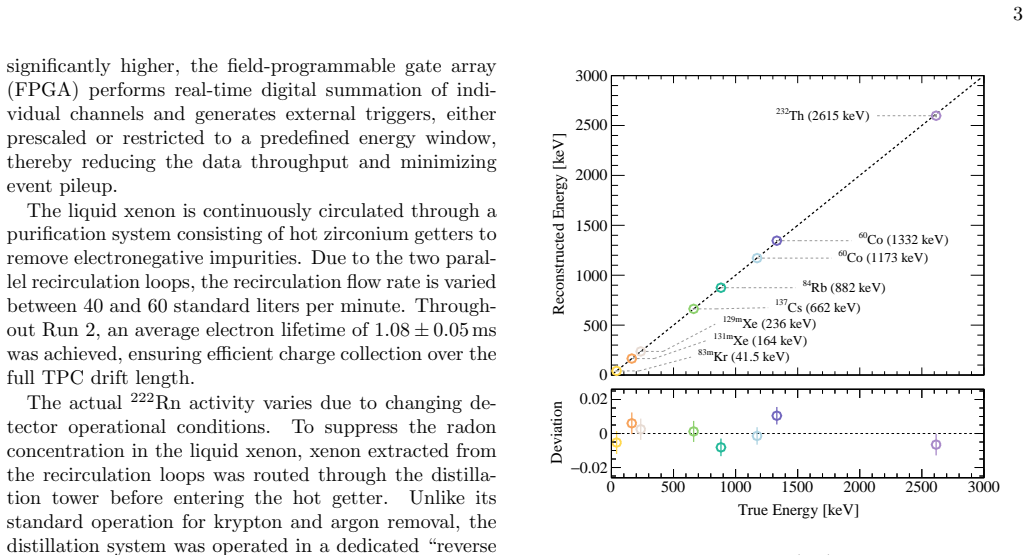
We report a new measurement of the solar proton--proton ($pp$) neutrino flux via neutrino--electron elastic scattering using the PandaX-4T Run 2 data set collected between 2024 and 2026, corresponding to an exposure of 1.9 tonne$\cdot$yr. Before Run 2 data taking, the detector underwent a series of upgrades to improve its response and background conditions. Time variations of radioactive noble-gas impurities are constrained using the physics data themselves, complemented by measurements from the gas-assay system. The analysis introduced improvements in the data processing chain, detector response characterization, and background models. A blind spectral analysis was then performed on the electronic-recoil data across a wide energy range from 20 to 1000 keV. In combination with the Run 0 data published earlier, the fitted $pp$ flux is $(8.5 \pm 3.5)\times 10^{10}$ $\mathrm{cm^{-2}s^{-1}}$, consistent with the prediction of the Standard Solar Model. With a statistical significance of $2.2\sigma$ above background, this marks the first positive indication of solar $pp$ neutrino--electron scattering below an electronic-recoil energy of 165 keV.
The mixing between flavor and mass eigenstates of active neutrinos is described by a $3\times3$ unitary matrix. However, the presence of additional heavy sterile neutrino states can lead to a non-unitary neutrino mixing scenario. Atmospheric neutrinos, with their wide range of baselines and energies, provide an excellent probe of such effects. In particular, Earth matter effects in neutrino oscillations play an important role, as the neutral-current potential contributes non-trivially in the presence of non-unitarity. In this work, we use 8 years of publicly available atmospheric neutrino data of IceCube DeepCore to probe this non-unitary neutrino mixing scenario. This high-purity $\nu_\mu$ CC sample provides strong sensitivity, especially to the non-unitary parameters appearing at leading order in the $\nu_\mu \rightarrow \nu_\mu$ channel. The data sample is found to be consistent with the standard unitary mixing framework with no significant deviation. Using this data sample, we place the most stringent bound to date of $\alpha_{33} > -0.027$ at 90% CL, while the other non-unitary parameters are constrained at competitive levels.
Scalar and tensor operators cause some observables to deviate by more than 2 sigma from the Standard Model.
abstractclick to expand
We examine the exclusive semileptonic decays $B_s \to D_s^{**} \ell \nu_\ell$, with $D_s^{**} =$ $\bigl\{D_{s0}^*,D_{s1}^*,D_{s1},D_{s2}^*\bigr\}$, within the Standard Model and beyond, using form factors evaluated in the Heavy Quark Effective Theory, including corrections up to $\mathcal{O}(\alpha_s, \Lambda/{m_Q})$. A data-driven approach is employed to extract Heavy Quark Effective Theory parameters, and the resulting synthetic data are used to parameterize the form factors via the $z$-expansion. With the resulting form factor information across the full kinematic region, we compute various observables derived from the two-fold angular decay distribution, and predict precise lepton flavor universality ratios: $R_{D_{s0}^*}= 0.158(20)$, $R_{D_{s1}^*}= 0.045(5)$, $R_{D_{s1}}= 0.073(4)$, $R_{D_{s2}^*} = 0.066(9)$. We also analyse potential new physics effects using the Weak Effective Theory and the Standard Model Effective Field Theory, performing a global analysis considering both real and complex Wilson coefficients. Furthermore, we investigate new physics contributions arising from the general Two Higgs Doublet Model. We evaluate the sensitivity of decay observables to new physics, highlighting their potential to probe deviations from the Standard Model in future measurements. Notably, the scalar and tensor new physics operators induce large sensitivity, with some observables deviating by more than $2 \sigma$ from Standard Model predictions.
Electrons from semi-leptonic decays of charm (D) and bottom (B) hadrons are important probes in high-energy collisions, while their separation remains challenging due to the similarity of the underlying decay topologies. In this work, we represent the hadronic environment as a point cloud and investigate a hadron-based approach for distinguishing charm- and bottom-origin electrons using several set-based machine learning architectures, including Transformer models. Comparable performance is observed across different architectures, indicating that the dominant limitation originates from the intrinsic similarity between charm- and bottom-related hadronic structures rather than model expressivity. At an experimentally relevant working point corresponding to approximately 40% efficiency, the classifier achieves a purity close to 80% on the test dataset and significantly improves the classification performance relative to a hand-crafted observable BDT baseline. By studying the relation between the model response and physics-motivated observables, together with feature perturbation tests, we find that the learned representation is primarily sensitive to geometric and topological properties of the hadronic environment. Comparisons with high-level observables further suggest that the learned representation captures nontrivial discriminating information beyond a small set of manually constructed variables.
A template log-likelihood classifier using nanosecond observables adds information missing from morphology-based neural networks.
abstractclick to expand
The IceCube Neutrino Observatory, a cubic-kilometer detector at the South Pole, identifies neutrino flavor through event morphology. Sparse photon detection makes this classification particularly challenging in the 5--100~GeV regime, the energy range relevant for oscillation measurements and searches for physics beyond the Standard Model. We introduce WavePID, a template-based log-likelihood-ratio classifier that exploits nanosecond-scale timing on individual detector modules through three observables: the distance to the reconstructed vertex, the early-charge fraction, and the module-to-module time difference. Evaluated on a cascade-enriched sample selected by a state-of-the-art graph neural network, WavePID improves both cascade purity and classification performance over the neural network alone. This demonstrates that per-module pulse timing carries flavor-identification information complementary to morphology-based classifiers, opening a new physics-motivated observable for low-energy neutrino reconstruction. Geant4 simulations associate this signal with differences in Cherenkov emission geometry between muon tracks and electromagnetic showers. These results motivate exploiting nanosecond-scale pulse timing in future low-energy classifiers and in detector designs with improved per-module timing in next-generation neutrino telescopes.
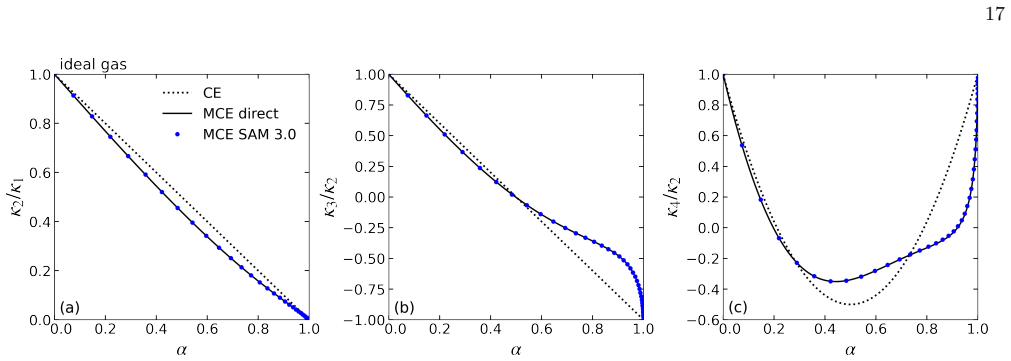
We present the subensemble acceptance method 3.0 (SAM-3.0), which corrects cumulants of an observable measured in a subsystem of a large system for the effect of exact global conservation of multiple charges. The required input is the set of joint grand-canonical cumulants of the acceptance observable with the total event charges, from which the canonical cumulants follow algebraically via a closed recursion based on (multivariate) partial exponential Bell polynomials. The framework accommodates any number of observables, including non-conserved quantities such as net protons, and any number of simultaneously conserved charges, including the total energy, which yields the microcanonical ensemble. The mapping contains SAM-1.0 and SAM-2.0 as special cases and, unlike SAM-2.0, reproduces the exact binomial-acceptance limit. We also derive the leading finite-size corrections from the saddle-point expansion. We apply the method to update the hydrodynamics-based non-critical baseline (Hydro-EV) for net-proton cumulants at RHIC-BES energies, finding a refined baseline that agrees with direct canonical Monte Carlo sampling and stays close to the earlier SAM-2.0 result. We further validate the formalism against direct Monte Carlo sampling with exact simultaneous conservation of baryon number, electric charge, and strangeness, including hadronic-afterburner effects.
A study of the production of pairs of Z bosons (ZZ) and of the associated production of a Z boson and a Higgs boson (ZH) in final states containing two b quarks and two tau leptons (bb$\tau\tau$) is presented. The analysis is based on proton-proton collisions collected at $\sqrt{s}$ = 13 TeV by the CMS experiment at the LHC, corresponding to an integrated luminosity of 138 fb$^{-1}$. The nonresonant analysis targets the standard model ZZ and ZH processes in the bb$\tau\tau$ final state, motivated by the prominent role of this channel in searches for nonresonant Higgs boson pair production. The resonant searches target physics beyond the standard model, probing heavy spin-0 resonances X that decay into ZZ and spin-1 resonances Z' that decay into ZH, with masses in the 0.2$-$5 and 0.5$-$6 TeV ranges, respectively. Upper limits at 95% confidence level are set on the product of production rate and branching fraction $\sigma$(X)$\mathcal{B}$(X $\to$ ZZ), ranging from 300 pb to 24 fb, and $\sigma$(Z')$\mathcal{B}$(Z' $\to$ ZH), ranging from 0.4 pb to 12 fb. These are the first measurements to probe the ZZ/ZH $\to$ bb$\tau\tau$ processes. No deviation from standard model expectations is observed.
High Energy Physics experiments at flagship colliders produce and process some of the biggest datasets on Earth, with the current generation of flagship experiments at the Large Hadron Collider producing more than a tenth of the world's total internet traffic every second. Moreover the quantities of data produced have increased exponentially over the past decades and this trend shows no sign of slowing down. In parallel, the use of picosecond timing is becoming more common in HEP detectors, enabling qualitatively new approaches to real-time processing and selections. I review the planned introduction of precision timing information into the upcoming upgrades of the CMS, ATLAS, and LHCb experiments. I discuss the ways in which the combination of timing and networking technology may enable future detectors to be designed as triggereless from the ground up, and reflect on the physics benefits of such a paradigm shift for the field.
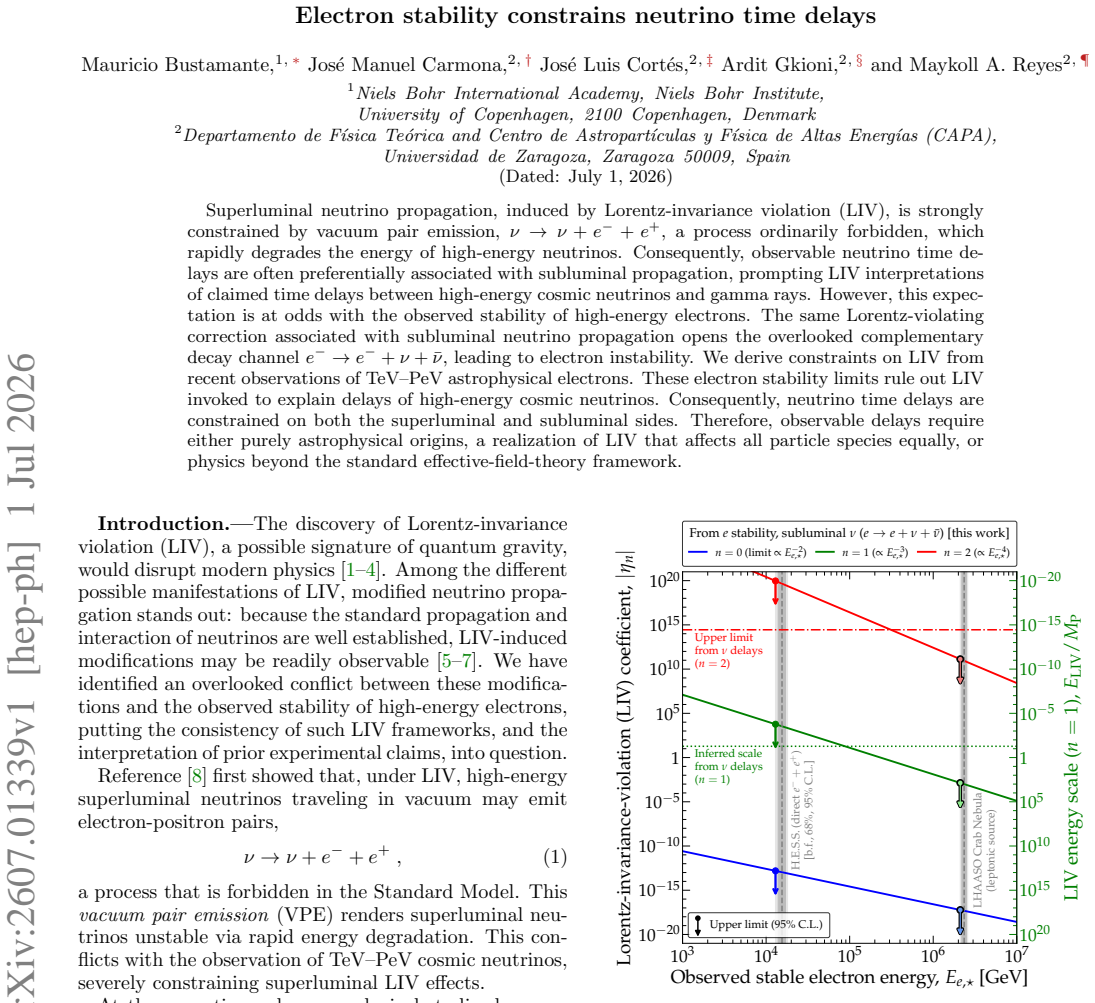
Superluminal neutrino propagation, induced by Lorentz-invariance violation (LIV), is strongly constrained by vacuum pair emission, $\nu \to \nu + e^- + e^+$, a process ordinarily forbidden, which rapidly degrades the energy of high-energy neutrinos. Consequently, observable neutrino time delays are often preferentially associated with subluminal propagation, prompting LIV interpretations of claimed time delays between high-energy cosmic neutrinos and gamma rays. However, this expectation is at odds with the observed stability of high-energy electrons. The same Lorentz-violating correction associated with subluminal neutrino propagation opens the overlooked complementary decay channel $e^- \to e^- + \nu + \bar{\nu}$, leading to electron instability. We derive constraints on LIV from recent observations of TeV--PeV astrophysical electrons. These electron stability limits rule out LIV invoked to explain delays of high-energy cosmic neutrinos. Consequently, neutrino time delays are constrained on both the superluminal and subluminal sides. Therefore, observable delays require either purely astrophysical origins, a realization of LIV that affects all particle species equally, or physics beyond the standard effective-field-theory framework.
First results for doubly polarised signals in vector-boson scattering enable precise LHC predictions in fiducial regions
abstractclick to expand
We present the first calculation of the next-to-leading-order electroweak corrections to vector-boson scattering into doubly polarised Z bosons at the LHC in the fully leptonic decay channel. The production and decay of the two polarised Z bosons are consistently modelled in the double-pole approximation, separating polarisation states at the amplitude level and including factorisable real and virtual electroweak corrections. Doubly polarised and unpolarised signals are investigated and confronted with off-shell results. A broad analysis, including results at integrated and differential level, is carried out in a realistic, CMS-inspired fiducial setup. Our study paves the way to upcoming analyses with LHC Run-3 and High-Luminosity data as well as to further phenomenological investigations.
With increasing experimental precision, the prospect of extracting the polarisation of electroweak gauge bosons is becoming particularly attractive. To this end, regression and classification procedures based on precise and accurate theoretical predictions are becoming increasingly important. In this work, we present the first amplitude-assisted regression procedure at next-to-leading-order accuracy in QCD, supplemented with parton-shower effects, using machine-learning techniques to extract the rate of longitudinal-boson production in high-energy collisions. Several neural-network architectures are presented and benchmarked against a standard random-forest regressor, demonstrating the robustness of the results for di-boson production at the LHC.
Tests on datasets of 28.6 million and 5,000 events plus simulations show small bias and consistent coverage.
abstractclick to expand
Searches for new physics at the LHC often look for localized excesses on smoothly falling background distributions. Several classes of background models have been considered, including polynomials and other parametric families; however, these approaches can require extensive analysis-specific development as datasets grow. In this work, we motivate the finite exponential mixture as a flexible semi-parametric class of functions for approximating falling distributions, drawing on results from extreme value theory. Using two published datasets ($n=28,619,185$ and $n=5,036$), we show that the exponential mixture performance is comparable to existing methods for both small and large datasets. Finally, in simulation studies ($n = 5,036$), we find that the finite exponential mixture exhibits small bias relative to the true statistical uncertainty while maintaining consistent nominal coverage in the bulk.
Five-layer cylindrical detector at 14-140 mm radii uses self-supported MAPS and low-mass aluminum readout to cut material budget.
abstractclick to expand
The vertex detector upgrade project for the Belle II experiment, based on CMOS depleted monolithic active pixel sensor technology, is planned to be carried out in conjunction with the major modification of the interaction region of the SuperKEKB collider during Long Shutdown 2 from 2032 to 2034. The MAPS sensor, named OBELIX currently under development, is derived from the successor to TJ-Monopix2, with modifications implemented to ensure compatibility with the Belle II trigger system. The new vertex detector consists of two layers of four self-supported consecutive OBELIX sensors, and three layers of discrete OBELIX sensors mounted on mechanical support structures with readout flex circuits attached to the sensors. The detector is arranged cylindrically around the beam pipe at radii ranging from 14 mm to 140 mm. The minimization of the material budget is required in order to enhance physics performance. We present an overview of the project and its latest developments, with particular emphasis on the development of low-material-budget flex circuits employing aluminum conductors.
We determine the mixing angle between the \(1^1P_1\) and \(1^3P_1\) axial-vector states in the \(B_c(1P)\) sector using QCD sum rules. The analysis gives \(\theta_{B_c(1P)}=(43.3\pm0.2)^\circ\), indicating sizable mixing between these two states. We also compare our result with theoretical studies available in the literature.
Common final-state mixing of S- and D-waves explains the lone negative α_Σ while fitting all channels with χ²=4.43.
abstractclick to expand
Experimental measurements of $J/\psi$ and $\psi(2S)$ decays to octet baryon pairs reveal a negative-$\Sigma\bar{\Sigma}$ puzzle in the angular distributions: $\alpha_\Sigma^{J/\psi}<0$, whereas the other measured $J/\psi$ octet channels and the corresponding $\psi(2S)$ channels have positive angular parameters. We show that an $SU(3)_F$-exact singlet description fails decisively in a $\chi^2$ fit, giving $\chi^2\simeq10^4$. By contrast, a fit that allows a common final-state interaction to mix the ${\rm S}$- and ${\rm D}$-wave amplitudes, together with a symmetric $SU(3)_F$-breaking octet, gives $\chi^2=4.43$ for two nominal degrees of freedom and strongly favors this breaking pattern. The negative $\Sigma\bar{\Sigma}$ angular parameter is traced to the suppression of the magnetic form factor by the common final-state rescattering.
Precision measurements of neutrino--electron elastic scattering provide low-energy tests of weak interactions and beyond-the-Standard-Model effects. Non-standard interactions (NSIs) and an anomalous neutrino magnetic moment modify the differential cross section through different kinematic terms, but both can alter the normalization and shape of the recoil-electron spectrum. Likelihood tests are computationally costly when each parameter point requires the recoil spectrum to be propagated through a detector response obtained from Monte Carlo (MC) simulation. We present a GPU-accelerated spectrum-reweighting framework that avoids regenerating detector MC samples for each new-physics parameter point. Bin-to-bin weights are applied at the recoil-spectrum level and folded with a fixed two-dimensional response model in recoil and reconstructed energy. This keeps the detector response inside the likelihood calculation while reducing each parameter update to operations on precomputed spectra and response kernels. The implementation uses NVIDIA Thrust transformation--reduction primitives and is compiled from a common source for CUDA and OpenMP back ends. In the benchmarks considered here, one likelihood evaluation takes ${\sim}87$ ms on an NVIDIA RTX 3080Ti and ${\sim}52$ ms on an NVIDIA A30X; the latter gives a $58\times$ speedup over a single CPU thread and ${\sim}2.5\times$ over a fully loaded 64-thread CPU. The consumer-GPU result demonstrates that interactive parameter scans are feasible on a single workstation. The main acceleration, however, comes from avoiding detector-MC regeneration at each parameter point rather than from GPU execution alone. The framework applies to neutrino--electron scattering analyses in which the new-physics dependence can be represented by reweighting an existing recoil spectrum, including flavor NSI and magnetic-moment cases studied here.
Spin correlations are among the most fundamental quantum observables in many-body systems, yet they remain difficult to access experimentally in relativistic heavy-ion collisions. Existing spin measurements, including hyperon polarization and vector-meson spin alignment, have revealed important single-particle spin phenomena, but genuine two-particle spin correlations in the produced hadronic system remain largely unexplored. Here we propose spin femtoscopy, a framework for accessing genuine two-particle spin correlations through spin-resolved femtoscopic measurements. The key principle is that different two-particle spin configurations can give rise to different femtoscopic correlation functions because of quantum statistics, spin-dependent final-state interactions. Using $\Lambda\Lambda$ pairs as a proof of principle, we exploit the self-analyzing weak decay of $\Lambda$ hyperons to construct spin-sensitive femtoscopic correlation functions with different singlet and triplet admixtures. We show that these observables provide experimental access to the spin-state populations of the pair and allow genuine spin correlations to be separated from spin-dependent femtoscopic mixing caused by quantum statistics and final-state interactions. This work extends femtoscopy from a probe of source geometry and final-state interactions to a framework for revealing the quantum spin structure of strongly interacting matter.
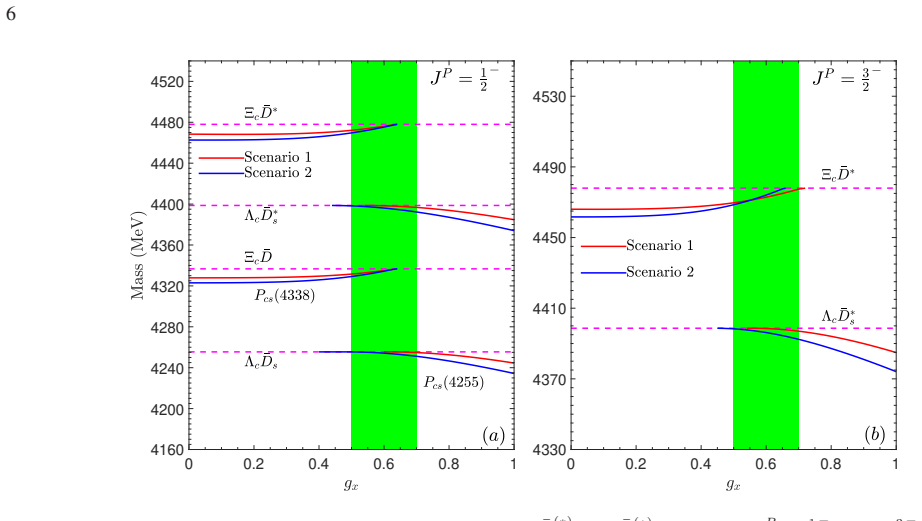
In this work, we propose a scheme to classify the molecular states consisting of ground single-charm baryons ($\Lambda_c$, $\Xi_c$, $\Sigma_c^{(*)}$, $\Xi_c^{\prime(*)}$, $\Omega_c^{(*)}$) and $\bar{D}^{(*)}/\bar{D}_s^{(*)}$ mesons. Within this framework, all considered baryon-meson systems are categorized according to the flavor components of their light degrees of freedom. We briefly illustrate how this classification scheme can consistently explain the experimentally observed $P_c$ and $P_{cs}$ states. This framework also predicts the existences of single-strange and double-strange hidden-charm bound states. The attractive interactions of these states arise from channel mixing between $\Sigma_c^{(*)}\bar{D}_s^{(*)}$ and $\Xi_c^{\prime(*)}\bar{D}^{(*)}$ for single-strange systems, and mixing between $\Xi_c^{\prime(*)}\bar{D}_s^{(*)}$ and $\Omega_c^{(*)}\bar{D}^{(*)}$ for double-strange systems, respectively. Using parameters fitted from the measured $P_c$ and $P_{cs}$ states, we systematically present the predicted mass spectra for these single- and double-strange hidden-charm bound states.
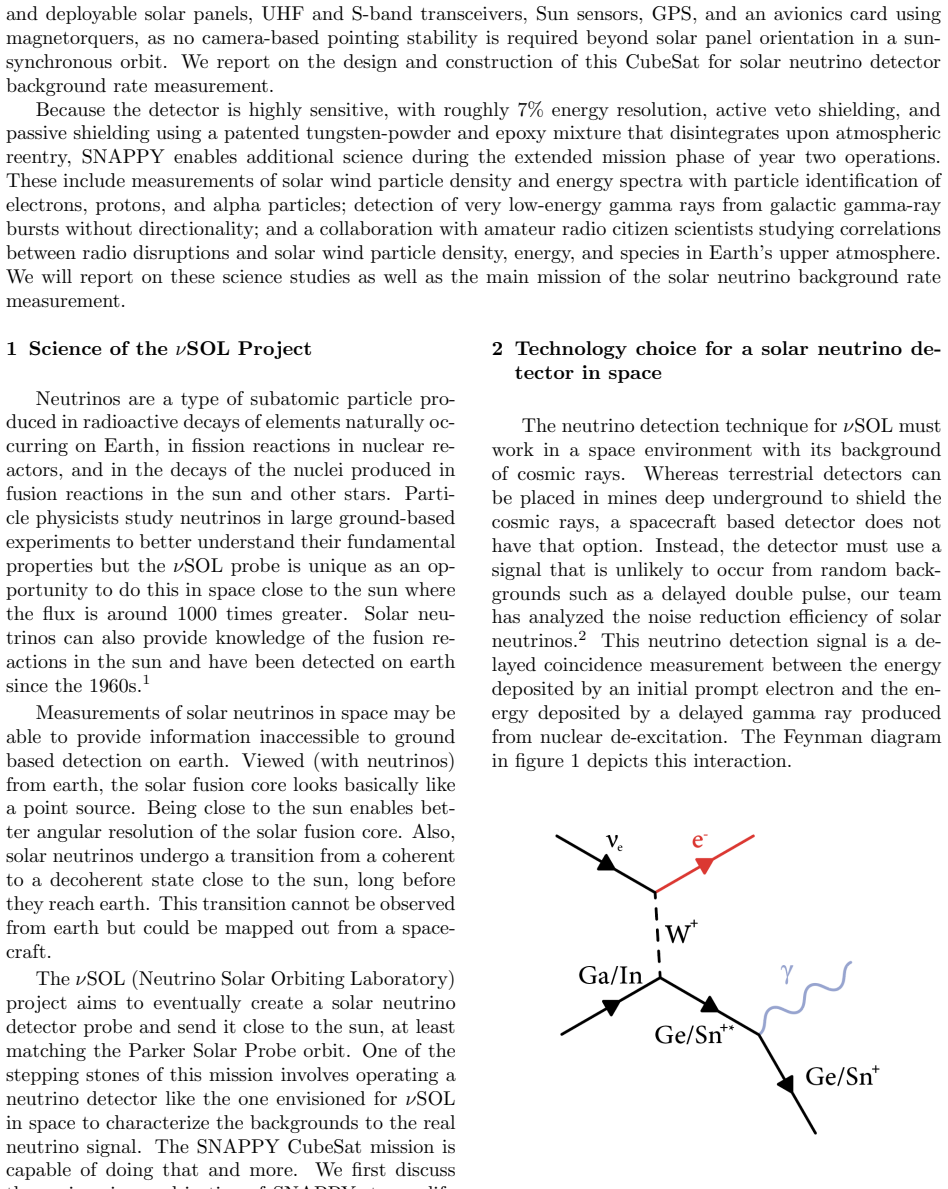
The SNAPPY CubeSat, which was launched May 3, 2026, will demonstrate and space qualify the nuSol neutrino-detection technology. The nuSol technology detects solar neutrinos using a gallium isotope which decays by emitting two particles spaced apart in time; this allows differentiating neutrino events from cosmic rays. In the NIAC Phase II project review in 2021, concept and science were determined to be feasible; however, two precursor studies were recommended before pursuing a full mission study. These studies were to characterize the true deep-space background for the detector's gallium double-pulse signal and to collect a statistically significant number of double-pulse events demonstrating that fast electronics can reliably select and analyze this signal. To test double-pulse signals in space, a NIAC Phase III funded building a 3U CubeSat carrying a 0.1-kg gallium-aluminum-gadolinium-garnet detector housed within an active veto array and shielding. Because the detector requires deep-space-like conditions, the CubeSat is designed for a polar low-Earth orbit at 450 km or higher altitude, collecting data over the Earth's poles above the Van Allen belts. The detector is highly sensitive, with roughly 7-percent energy resolution, with active veto shielding and passive shielding using a patented tungsten-powder and epoxy mixture that disintegrates upon atmospheric reentry. SNAPPY enables additional science during the extended mission phase of year two operations. These include measurements of solar wind particle density and energy spectra with particle identification of electrons, protons, and alpha particles; detection of very low-energy gamma rays from galactic gamma-ray bursts without directionality.
The search for new particles, conducted at the LHC by the ATLAS and CMS collaborations, covers several production and decay modes, leading to a large variety of final states that could be observed in both detectors. This review focuses on the production of new heavy scalars that have a Higgs boson in the final state. Three cases are covered: resonant production of a heavy scalar $X$ decaying into a Higgs boson and a lighter scalar $S$, heavy neutral Higgs boson decaying into another neutral Higgs boson and a $Z$ boson, and a heavy charged Higgs boson production with subsequent decay into another neutral Higgs boson and a $W$ boson. The reviewed searches are based on the complete LHC Run-2 dataset and partial Run-3 dataset.
One of the main advances in analysis strategies at the Large Hadron Collider (LHC) has been the ability to study the detailed structure of energy flow within high transverse momentum jets, a field referred to as jet substructure. Jet substructure has provided new ways to search for new physics, measure Standard Model parameters, and study the dynamics of the strong nuclear force. To push to the next level of precision, and to make measurements of increasingly subtle correlations, requires exquisite angular resolution achieved through the use of tracking information. In this paper we leverage recent progress in our understanding of factorization theorems and renormalization group techniques to present the first complete calculations of jet substructure observables at the LHC on tracks. We compute projected energy correlators up to four points at next-to-leading collinear logarithmic accuracy, matching the state of the art for jet substructure observables, but extending to tracks. This marks a significant step in enhancing the collider physics program, enabling precise and systematically improvable comparisons between experimental measurements and theoretical calculations, made possible by the exceptional angular resolution of tracking.
Aligning NOνA and T2K regions with lowest entanglement tightens joint limits on mixing angle and CP phase.
abstractclick to expand
We present a quantum-information-theoretic study of three-flavor neutrino oscillations in long-baseline experiments by mapping flavor states to qubit-like representations and quantifying quantum correlations through total concurrence. The local minima of this entanglement measure identify energy regions where the flavor state is closest to separability, enabling cleaner extraction of oscillation parameters. We explain how these local minima offer opportunities for precision measurements and provide insight into the accurate determination of neutrino oscillation parameters. We then propose a strategy to improve parameter extraction by aligning the benchmark oscillation regions of NO$\nu$A and T2K with the minimum entanglement achievable in each experiment. This shifts the concurrence minima toward higher-event-count energy regions, leading to tighter constraints and reducing the tension arising from their different energy regimes. For normal ordering, we obtain $(0.581^{+0.0136}_{-0.0150},,195^{+38}_{-32},^\circ)$ in the $(\sin^2\theta_{23},\delta_{\rm CP})$ plane and $(0.580^{+0.0140}_{-0.0153},,2.515^{+0.0344}_{-0.0344}\times10^{-3},\mathrm{eV}^2)$ in the $(\sin^2\theta_{23},\Delta m^2_{31})$ plane, yielding improved joint constraints. Using GLoBES simulations together with real data, we assess how local minima of quantum correlations influence leptonic CP-violation sensitivity, $\theta_{23}$ octant-degeneracy resolution, and mass-ordering determination. Our results show that minimizing entanglement can significantly affect these key sensitivities, highlighting quantum information measures as complementary probes of neutrino flavor oscillations and offering new insight into the role of quantum correlations in precision neutrino physics.
The focal plane of the LSST Camera contains 189 individual science CCDs, arranged into 21 raft tower modules, along with 4 wavefront and 8 guider CCDs located in 4 additional corner RTMs. Altogether, the LSST Camera CCDs compose the largest focal plane ever constructed. The LSST Camera is the primary instrument of Rubin Observatory, which will begin the Legacy Survey of Space and Time in 2026. In this paper, we describe the on-sky performance of the LSST Camera CCDs, from receipt at NSF/DOE Vera C. Rubin Observatory in May 2024 to on-sky observations during the first year of operations. We discuss the process to establish functionality of several CCDs which were affected by an electrical short and faulty analog-digital converter, optimizations of readout timing in response to changes in the survey strategy, and implementation of enhanced focal plane safety measures through an active clearing mechanism on the CCDs. Finally, we discuss sensor features observed on-sky, and global performance during the first year of operations. The operations to date of the LSST Camera CCDs have demonstrated the capability of performing a wide, fast, and deep optical imaging survey of the entire southern sky at the Rubin Observatory.
Nuclear modification factors for isolated, non-isolated, and inclusive J/ψ show distinct trends up to the highest measured momenta.
abstractclick to expand
Yields of charmonia, bound states of $c\bar{c}$ quarks, are observed to be strongly suppressed in heavy-ion collisions relative to proton-proton collisions as a result of their interaction with the quark-gluon plasma produced in such collisions. Understanding the mechanisms responsible for this suppression requires a detailed understanding of charmonium production. To constrain the production mechanisms, it is essential to quantify how charmonium production correlates with jet activity. Measurements of $J/\psi$ production in the dimuon decay channel are presented for inclusive $J/\psi$ mesons and for $J/\psi$ mesons that are either isolated or not isolated from jets, separately for prompt and non-prompt production. Non-isolated $J/\psi$ mesons are defined by matching $J/\psi$ candidates to anti-$k_t$ jets with $R=0.2$ and $p_\mathrm{T}>20$ GeV, reconstructed without signal from the $J/\psi$ meson, allowing the quantification of jet activity accompanying $J/\psi$ production. The analysis uses Pb+Pb and $pp$ collisions at $\sqrt{s_{\text{NN}}}=5.02$ TeV recorded by the ATLAS experiment at the LHC, corresponding to integrated luminosities of 1.82 nb$^{-1}$ and 0.26 fb$^{-1}$, respectively. The $J/\psi$ yields in Pb+Pb, cross sections in $pp$, and nuclear modification factors are presented for non-isolated, isolated, and inclusive $J/\psi$ up to $p_\mathrm{T}=60$ GeV. Isolated fractions and non-prompt fractions are reported in both $pp$ and Pb+Pb collisions. Strong $J/\psi$ suppression is observed to persist up to the highest measured $p_\mathrm{T}$ values, with differences observed between non-isolated, isolated, and inclusive $J/\psi$. These results provide new constraints on charmonium production mechanisms and their in-medium suppression.
A search for physics beyond the standard model using four and three top quark production events is reported. The analyzed proton-proton collision data were recorded at 13 TeV with the CMS detector at the CERN LHC in 2016$-$2018 and correspond to an integrated luminosity of 138 fb$^{-1}$. Events with two same-sign, three, or four leptons (electrons and/or muons) are selected. Constraints on six Wilson coefficients that modify interactions between four third-generation quarks or between top quarks and the Higgs boson in the standard model effective field theory framework are derived. The data are further used to exclude narrow topphilic heavy resonances in the mass ranges between 400 GeV and 1.6 TeV depending on their spin and color states. Finally, the top quark Yukawa coupling is extracted, considering both $CP$-even and $CP$-odd contributions.
We calculate the nucleon axial form factor in relativistic chiral perturbation theory with $\Delta(1232)$ up to next-to-next-to-leading order (NNLO). Relevant low-energy constants are determined by fitting to recent lattice-QCD results at several pion masses, while accounting for the uncertainty associated with the truncation of the chiral expansion. We obtain a good description of the lattice data for momentum transfers up to $\sqrt{Q^2}\simeq0.6$ GeV and pion masses up to $M_\pi\simeq400$ MeV. We find that the explicit inclusion of the $\Delta$ resonance is required to reproduce the lattice-QCD pion-mass dependence of the axial charge and axial radius, as well as the momentum dependence of the form factor. At the physical point we obtain $g_A=1.257\pm 0.011$ and $\langle r_A^2\rangle=0.312\pm0.037~\mathrm{fm}^2$. Our analysis provides a model-independent and systematically improvable parametrization of the pion-mass and momentum dependence of the axial form factor, offering a framework for extrapolating lattice-QCD results to the physical point and for improving predictions of low-energy weak interactions involving nucleons.
We present a magnetically levitated ferromagnetic vector force sensor that enables selective searches for spin-dependent exotic interactions mediated by beyond-Standard-Model bosons. A defining feature of spin-dependent exotic interactions is that they can generate forces with distinct directional signatures set by the relative spin configuration of the interacting bodies. We show that our sensor resolves these signatures by mapping forces along different axes onto distinct translational modes with different resonance frequencies, thereby separating interaction channels within the same coupling class. As a representative example, we study parity-violating axial-vector--vector interactions mediated by a spin-1 $Z'$ boson between a sensing and a driving levitated ferromagnet. Using a matched-filter likelihood analysis, we show that a setup based on an already demonstrated experiment can probe the pure electron--electron coupling $g_A^e g_V^e$ in the previously inaccessible force range $\lambda \lesssim 1\,\mathrm{cm}$, corresponding to mediator masses $M_{Z'} \gtrsim 10^{-5}\,\mathrm{eV}/c^2$. Our results establish levitated ferromagnets as a promising platform for millimeter-scale searches for spin-dependent fifth forces and for resolving the multiple effective potentials associated with a given coupling class.
This makes quantum steering observable at 10 sigma and Bell nonlocality near 9 sigma with current LHC data.
abstractclick to expand
We investigate quantum steering and Bell nonlocality in top-quark pair production at the LHC near threshold. The toponium contribution strengthens the spin-singlet component and substantially enhances the entanglement between the two quark spins. With current LHC data, quantum steering appears observable with a statistical significance around $10\sigma$. For Bell nonlocality, the statistical significance can also be high close to threshold, reaching about $9\sigma$, although the feasibility of such a measurement will depend crucially on the control of systematic uncertainties.
We review theories with confining dark sectors and their implications for dark matter, cosmology, phenomenology, and unsolved Standard Model puzzles. Models with new strongly-coupled non-Abelian gauge interactions can lead to a variety of dark matter candidates (dark mesons, baryons, glueballs, etc.), as well as mechanisms to generate its abundance and symmetries that explain its stability. There are also many potential discovery channels, including direct detection, indirect detection, astrophysical observables, and colliders, as well as correlations between different experiments. We compile a broad conceptual overview of the literature on this topic, aimed at both theorists looking for which questions remain unanswered and experimentalists looking for novel search opportunities. While the theoretical landscape is vast, there are both unifying features and calculational techniques that apply to various regimes. We particularly highlight applications to explaining the similarity of visible and dark matter energy densities, i.e. the $abundance~similarity~puzzle$. We advocate further exploration of this class of theories in the effort to uncover physics beyond the Standard Model.
Simulations of core-collapse supernovae have revealed an epoch of hydrodynamic instability in which the matter of the collapsing star undergoes quasi-periodic oscillations, known as the standing accretion shock instability (SASI). Neutrinos produced in the core of the star travel through this oscillating matter, and information about this epoch is encoded in their high-statistics event rate observable at neutrino observatories. We propose a parametrization of the SASI-modulation to study its broad features, enabling statistical inference of SASI parameters. For the benchmark Galactic supernovae considered, we show that IceCube can identify this epoch of instability and reconstruct its parameters with precision at the sub-percent level for the SASI frequency, percent level for the peak time, and a few to ten percent level for the amplitude and duration.
Normalizing Flows excel at modeling a single fixed density, yet many problems across the sciences, such as high energy physics, instead require modeling how that density deforms as a function of continuous parameters: the strength of a physical effect, a calibration constant, or a source of systematic uncertainty. Learning a separate flow for every parameter configuration quickly becomes intractable, since the number of joint settings grows exponentially with the number of parameters. We introduce Factorizable Normalizing Flows (FNFs), which represent the parameter-dependent density as a fixed, high-fidelity flow for a reference configuration composed with a learnable transformation that is polynomial in the parameters and factorized over them. This structure has a practical consequence: each parameter's effect is learned in isolation, from samples in which that parameter alone is varied. The combined response of many parameters is then recovered by summation at inference, without ever sampling their combinatorially large joint space. On a controlled problem with two interpretable deformations applied jointly to the data, the learned transformation reproduces the true deformations and matches the optimal likelihood, while optional interaction terms capture residual correlations when several parameters vary strongly at once. The resulting model is interpretable, scales linearly with the number of parameters, and keeps the likelihood tractable. This provides a general tool for any inference workflow requiring continuous density morphing, and directly enables the next generation of unbinned likelihood fits in high energy physics.
Hit-level ML-based particle reconstruction methods have recently shown promising results. However, the reconstruction models are currently provided with targets that are unaware of the detector geometry and its resolution, resulting in training ambiguities. This can introduce a dependence on sample priors and reduce robustness under changes in event topology. We study the effect of a detector-aware target definition in the context of end-to-end Particle Flow reconstruction using a generic GEANT4-based detector simulation. We introduce the concept of detector-aware targets built from calorimeter showers with a hit-based merging algorithm based on cell-wise energy sharing that takes into account the spatial resolution of the detector. This includes a Particle-Flow-aware variant that preserves charged-particle consistency. Using a fixed GNN-based reconstruction model, we show that merged targets improve physics performance on a training-like sample. More importantly, models evaluated on an independent sample with different particle composition and topology show improved momentum response and resolution when trained with PF-aware merged targets. Our results show that removing experimentally non-resolvable target structure enhances not only reconstruction performance, but also improves model robustness against process-dependent variations in event topology.
Highly compact and finely segmented silicon-tungsten electromagnetic calorimeters are being developed within the FCAL collaboration for applications in the LUXE experiment at DESY and future electron-positron collider facilities. These detectors combine tungsten absorber plates with thin silicon pad sensors, providing a small effective Moli\`ere radius and high spatial granularity, which are essential for resolving nearby electromagnetic showers in high-occupancy environments.
The fundamental active unit of this calorimeter concept is the Compact Silicon Sandwich (CSIS), integrating a silicon pad sensor together with signal routing, high-voltage distribution and mechanical support in a highly compact structure. The assembly of these CSIS modules is performed within a dedicated infrastructure for silicon detector integration.
A partially instrumented prototype of such a calorimeter has been tested in an electron beam with energies between 1 and 6~GeV. First results from the 2025 test beam campaign are presented, including minimum-ionizing particle calibration and preliminary event displays illustrating the shower development in the highly granular detector. These results constitute an important step towards the validation of this technology for LUXE and future collider experiments.
SS floor at J-PARC gives strongest projected reach on active-sterile mixing in future runs.
abstractclick to expand
In this paper, we investigate the sensitivity of future NINJA-like experiment at J-PARC to eV-scale sterile neutrinos within the 3+1 framework. We perform a phenomenological feasibility study using the $\nu_\mu \rightarrow \nu_e$ appearance, $\nu_\mu \rightarrow \nu_\mu$ and $\nu_e \rightarrow \nu_e$ disappearance channels, focusing on possible future configurations of the detector located at different floors of the NM building (B2, SS, and GROUND), corresponding to different off-axis angles. Our analysis is based on a simplified and effective detector response, in which events are classified into electron-like and muon-like topologies and constant benchmark selection efficiencies are applied. We explore different exposure scenarios and assess the impact of analysis choices such as upper energy cuts. We include systematic uncertainties corresponding to normalization for signal and background rates and study the robustness of our results with respect to variations in the assumed energy resolution, and vary efficiencies for key backgrounds such as muon misidentification from charge current and neutral current interactions. Finally, we examine the effects of combining data from multiple detector locations. We find that the SS floor provides the strongest constraints on the active-sterile mixing parameters, while the B2 and GROUND configurations offer constraints comparable to the current bounds for probed mass-squared differences. Our results indicate that a NINJA-like detector, optimized for sufficient statistics and benchmark identification performance, has the potential to provide competitive constraints on light sterile neutrino scenarios in its future runs.
Cosmic-ray muon scattering has shown considerable potential for detecting nuclear materials and other dense contraband, but practical deployment remains challenging. A major difficulty arises from the coupling between material properties and muon momentum, since the broad natural momentum distribution influences the scattering angle and prevents unambiguous material identification. In this work, we propose a Coarse Momentum-Aware Domain Adaptation (CMADA) method to enable precise identification of materials. Instead of relying on high-precision momentum measurements, the proposed framework adopts coarse momentum binning combined with unsupervised domain adaptation to learn transferable scattering representations. In addition, a precision review mode based on averaging repeated samplings was proposed to further enhances identification performance. The coarse momentum binning strategy improves same-domain identification accuracy from 62.15% without momentum information to 89.52% with 5-bin momentum information, and further to 93.37% (precision review mode). Furthermore, the proposed unsupervised domain adaptation framework improves the cross-domain identification accuracy from 71.71% for the source-only baseline to 89.00% without requiring target domain labels.
Using the soft-gluon theorem, we identify a soft-recoil mechanism by which unresolved gluon radiation induces decoherence in the spin correlations of heavy quark-antiquark pairs produced in deep-inelastic scattering. We show the eikonal soft contribution preserves the Born spin structure, whereas the subleading soft term generates stochastic recoil-induced rotations of the spin-correlation plane. Upon tracing over the unresolved gluon, these rotations produce an effective dephasing channel: the normal-axis correlation remains unchanged at this order, while the in-plane spin coherences are suppressed. We estimate the resulting reduction of concurrence and Bell-CHSH violation, and propose a radiation-binned EIC observable based on the ratio of in-plane to normal spin correlations. This observable isolates the characteristic anisotropic suppression predicted by the soft-recoil mechanism and provides a measurable handle on radiation-induced spin decoherence of an entangled quark-antiquark pair produced in a deep-inelastic scattering process.
Standalone reconstruction on four-plane pixel tracker keeps ghost rate below 4% for LHCb Upgrade II.
abstractclick to expand
This work presents the layout design of the LHCb UP detector, a MAPS-based pixel tracker composed of four detection planes, and several approaches for its standalone track reconstruction. The dedicated UP tracking algorithms demonstrates that efficient standalone reconstruction can be achieved for LHCb Upgrade II with high purity, reaching efficiencies close to $98\%$ while maintaining a ghost rate below $4\%$. These results indicate that UP standalone tracks can provide high-quality inputs for global LHCb reconstruction and offer a viable solution for future high-luminosity tracking and real-time reconstruction challenges.
Evidence for two KK graviton candidates has been previously reported at 380 GeV and 700 GeV. Following a Randall Sundrum interpretation, two extra resonances should appear at 1000 GeV and 1300 GeV. Recently ATLAS, in its search for triple Higgs coupling, has reported an excess in that mass region in conformity with this prediction. Local cross sections are therefore clearly in excess of the standard predictions even for large values of kl. While still marginally significant, this effect appears in a mass region with low background which allows to expect good prospects of discovery with RUN3 data. Such a result could therefore allow to interpret an excess in the measurement of kl and confirm the existence of a series of KK graviton resonances observable at LHC. Other opportunities seem to appear in searches for heavy resonances decaying into ZZ/WW in semi-leptonic and fully hadronic modes. Indirect evidences for the RS model coming from precision measurements are also presented.
More than two decades have elapsed since the discovery of $\chi_{c1}(3872)$. For this meson, previously denoted as $X(3872)$, an impressive amount of theoretical and experimental studies has been devoted concerning its properties, decays and production mechanisms. Despite the extensive work, a full understanding of the nature of $\chi_{c1}(3872)$ is missing. I describe a theoretical framework based on the heavy quark large mass limit to analyze the radiative decays of heavy quarkonia, in particular the electric dipole transitions of $\chi_{c1}(2P)$ to $S$-wave charmonia. The results favorably compare to recent LHCb collaboration measurements for $\chi_{c1}(3872)$, if this meson is identified with $\chi_{c1}(2P)$.
We report a search for the diffuse supernova neutrino background (DSNB) with the KamLAND detector, targeting electron antineutrinos via inverse beta decay in the neutrino energy range of 8.3 to 30.8 MeV. Using liquid-scintillator exposures of 9.02 kton-year for 8.3 to 9.3 MeV and 9.42 kton-year for 9.3 to 30.8 MeV, we observe seven candidate events after applying a new deep-neural-network-based event classification technique. This result is consistent with the background-only expectation of 16.2 plus or minus 9.4 events, including systematic uncertainties associated with the neural-network selection. A spectral analysis of the energy and radial distributions finds no significant excess attributable to the DSNB. We therefore set 90 percent confidence-level upper limits on the DSNB flux of 38 to 43 per square centimeter per second, depending on the assumed DSNB model. We also derive model-independent 90 percent confidence-level upper limits on the electron-antineutrino flux, obtaining some of the most stringent constraints below 13.3 MeV. Beyond the DSNB search itself, this work demonstrates neural-network-based event classification as a promising approach for suppressing neutron-associated backgrounds in liquid-scintillator neutrino detectors.
The nature of the $G(3900)$ structure, observed in $e^{+}e^{-}\to D\bar{D}$, remains unclear and may stem either from a genuine resonance or from charmonium interference and threshold effects. We therefore propose searching for the $G(3900)$ signal in the reaction $K^- p \to D_s^- \Lambda_c^+ G(3900)^0$, where the interference effects present in $e^{+}e^{-}\to \bar{D}^{*}D$ are absent. We employ an effective Lagrangian approach, where the reaction proceeds via a central production mechanism dominated by $t$-channel $D^{0}$ and $D^{*0}$ exchanges, based on the possible interpretation of $G(3900)$ as a $P$-wave $\bar{D}^{*}D$ molecular state, whose coupling to the $\bar{D}^{*}D$ channel is fixed from our previous fit to the $e^{+}e^{-}\to \bar{D}^{*}D$ data. The $\bar{K}N$ initial-state interaction, mediated by Pomeron and Reggeon exchanges, is also included and leads to a significant enhancement of the production cross section. If measured in future experiments, the predicted total cross sections and angular distributions can provide a promising probe of the nature of the $G(3900)$, and in particular of its possible genuine resonance nature.
Collider analyses combine rigorous statistical techniques with state-of-the-art Machine Learning models. However, when the latter are used directly to estimate the likelihood function of the background, hard to quantify systematic effects may bias the estimation of the relevant signal parameters. To address this problem, we present the Minimum Resolution Likelihood (MRL) method, which defines a Fiducial Signal Region that effectively turns the systematic effects into statistical uncertainties. We show with examples that the resulting signal strength estimation is either unbiased or consistent with zero. We consider both toy examples and a realistic application based on the HI-SIGMA technique applied to di-Higgs searches.
Using new methods for computing helicity amplitudes with intermediate helicity-polarized gauge bosons, we revisit the transverse-longitudinal polarization interference in the $pp\to V+{\rm jets}$ process for $V=\gamma^*,Z^{(*)},W^{(*)}$ decaying to massless leptons. At each order of the strong coupling constant $\alpha_s$ and remaining exclusive with respect to jet kinematics, we show that the polarization interference in $\gamma^*\to\ell^+\ell^-$ vanishes after phase-space integration over the kinematics of $\ell^\pm$, thereby extending well-known results for the inclusive process. Due to parity violation, cancellations are softened for the $W$ and $Z$ bosons. We give a simple formula to account for fiducial cuts. We comment on the implications for multiboson processes, and the applicability of our results to chiral gauge bosons in new physics scenarios and to polarization measurements of weak bosons in heavy ion collisions.
Next-to-next-to-leading order (NNLO) QCD corrections to quarkonium production and decay are known to exhibit perturbative instabilities within non-relativistic QCD. We identify the origin of this problem and propose a simple remedy. Applying our approach to $S$-wave color-singlet quarkonium processes, we achieve substantially improved perturbative convergence and agreement with experimental data.
Parameterized Instantaneous Quantum Polynomial (IQP) circuits have proven useful in quantum generative learning models, particularly for binary distributions. However, when applied to non-binary datasets, they exhibit notable limitations: mapping integer values into qubit-compatible binary representations often destroys the original metric structure of the data. In this paper we aim to extend them to a qudits formulation operating on an integer mapping of the data. The IQP quantum circuit is adapted to encode each integer valued pixel into a bit-string of fixed length and quantum gates are transformed to follow the qudit formalism. As a generative machine learning approach, a suitable loss function for the circuit training and the calculation of the covariance matrix among features are developed and validated on the energy deposits from single-particle electron showers in the electromagnetic calorimeter of the CLIC detector. The method proposed in this work can be also extended to other applications that utilize quantum generative machine learning for non-binary data.
A first global analysis of unpolarized Transverse-Momentum-Dependent (TMD) distributions based on a neural-network (NN) parametrization is presented. Drell-Yan (DY) and semi-inclusive deep inelastic scattering (SIDIS) data are simultaneously included at next-to-next-to-next-to-leading logarithmic (N$^3$LL) accuracy. The results indicate that the inclusion of SIDIS data leads to broader unpolarized TMD PDFs compared to a DY-only NN extraction. The associated uncertainties are reduced with respect to the DY-only case, while remaining larger than the ones obtained using traditional models. These results demonstrate the potential of flexible NN parametrizations in reducing model dependence and provide guidance for future high-precision measurements at Jefferson Lab and the Electron-Ion Collider.
We present a first-principles lattice-QCD determination of Mellin moments of the unpolarized pion and kaon parton distribution functions using matrix elements of boosted mesons coupled to nonlocal operators containing a straight Wilson line. The calculation is performed on an $N_f=2+1+1$ ensemble of maximally twisted-mass fermions with a clover term, with lattice volume $32^3\times64$, lattice spacing $a=0.0934$ fm, and pion mass $m_\pi=260$ MeV. Matrix elements are computed for hadron momenta $P_3=0$, 0.41, 0.83, 1.25, 1.66, and 2.07 GeV and analyzed within the short-distance factorization framework. We investigate the dependence of the extracted moments on the truncation of the operator-product expansion, the coordinate-space fit window, and the perturbative accuracy of the Wilson coefficients, comparing next-to-leading-order and next-to-next-to-leading-order results. We also perform an RG-improved analysis as a consistency check of the perturbative treatment. Our final results are obtained from combined fits in $(P_3,z)$ space at next-to-next-to-leading-order and are quoted at $\mu=2$ GeV. We also study the SU(3) symmetry-breaking effect and reconstruct the valence PDFs from the moments.
By utilizing novel lobster-eye optics, the Wide-field X-ray Telescope (WXT) onboard the Einstein Probe (EP) satellite achieves an unprecedented combination of a large instantaneous field-of-view (FoV) and high sensitivity for monitoring the dynamic X-ray sky. In this paper, we present the in-orbit calibration results of the WXT during its first two and a half years of operations. By conducting observations of standard celestial sources--including the Crab Nebula, Scorpius X-1, and Cassiopeia A--we systematically characterized key instrumental properties. Our analysis demonstrates that the in-orbit performance of the WXT agrees with prelaunch ground calibrations well. The spatial resolution, denoted by the full width at half maximum (FWHM) of the focal spot, typically ranges from $3'$ to $6'$ across $\sim$90% of the FoV, with a median of $\sim 4.3'$. The post-calibration source positioning accuracy achieves $1.3'$ (at the 90% confidence level). The in-orbit effective area is consistent with model predictions and ground measurements, exhibiting an overall systematic uncertainty of $\lesssim 10\%$ (90% C.L.) in the 0.5-4 keV band. While the vast majority of the detectors remain highly stable, a noticeable long-term degradation at the low-energy end ($\sim30\%$-$40\%$, 0.4-0.6 keV) is observed in a few specific modules. Furthermore, spectral evaluations using Cas A confirm the stability of the energy scale and spectral resolution of the focal-plane Complementary Metal-Oxide Semiconductor (CMOS) detectors. All derived calibration products have been incorporated into the WXT calibration database (CALDB). These results comprehensively verify the instrumental capabilities of the WXT, providing a solid foundation for the reliable analysis of scientific observations.
Femtoscopic analysis can shed light on hadron production in pp collisions. In this paper, proton-proton correlations measured in collisions at $\sqrt{s}=13.6$ TeV recorded with the ALICE detector at the LHC are presented. The analysis is based on the minimum bias dataset collected in 2022 following the upgrade of the ALICE detector and corresponds to an integrated luminosity of $19.3$ pb$^{-1}$. The increased integrated luminosity allows us, for the first time, to simultaneously measure the multiplicity and transverse-mass ($m_{\rm T}$) dependence of the size of the hadron-emitting source. Precise knowledge of the femtoscopic source size in pp collisions is a crucial ingredient for using femtoscopy to study the residual strong interaction among stable and unstable hadrons at the LHC. In this light, the source radius was determined from the measured correlation functions by assuming several state-of-the-art models of the nucleon$-$nucleon interactions. The consistency among the extracted radii demonstrates the robustness of the measurement with respect to interaction model assumptions. A comparison to femtoscopic radii measured in Pb$-$Pb collisions at $\sqrt{s}=5.02$ TeV reveals a markedly different multiplicity dependence in similar $m_{\rm T}$ intervals, providing new insight into the system-size dependence of particle emission dynamics.
We present a phenomenological study of quantum correlations in the decay of $B^0$ mesons into a system of two vector mesons. The decay of the $B^0$ meson into two vector mesons constitutes a bipartite system of two qutrits. The entanglement entropy is used as a measure of quantum correlations in the system of decaying particles. We study the variation of the R\'enyi entropy with R\'enyi order ($\alpha$) for the decay channels $B_s^0 \rightarrow \phi\, \phi$, $B_d^0 \rightarrow J/\psi\, K^{*}(892)^0$, $B_d^0 \rightarrow \phi\, K^{*}(892)^0$ and $B_s^0 \rightarrow J/\psi\, \phi$ and discuss the significance of entanglement entropy at different R\'enyi order regimes. The LHCb, ATLAS and Belle collaborations experimental measurements of complex polarization amplitudes and relative phases are used as input for our analysis. A comparison of entanglement entropy for all the $B^0$ meson decay processes, with both vanishing and non-vanishing phases, reveals a strong phase dependence of the entropy. We further present the results of Hartley entropy (Max-Entropy), von Neumann entropy, collision entropy, and min-entropy, each corresponding to different values and limits of the R\'enyi order. The comparison between the branching fractions of the decay processes and the von Neumann entropy shows a connection between entanglement and decay dynamics, indicating the role of weak and strong interaction in generating quantum entanglement. In addition, we evaluate several other entanglement measures, including linear entropy, I-concurrence, tangle, negativity, logarithmic negativity, Schmidt coefficients, and Schmidt rank for different $B^0$ meson decay processes. Our study demonstrates that entanglement measures provide useful insights into the underlying decay dynamics and may serve as important tools for understanding quantum correlations in high-energy particle physics processes.
We present a phenomenological study where we probe the sensitivity to invisible dark matter (DM) mediators produced in association with a $t\bar{t}$ pair at the Large Hadron Collider (LHC). Building on previous work focused on scalar mediators, we extend the analysis to include spin-1 mediators, $Y_1$, with both vector and axial-vector couplings to top quarks. The mediator mass is fixed to 5 GeV. Signal samples of $pp \rightarrow t\bar{t}Y_i$ ($i = 0, 1$) are generated using a MadGraph5_aMC@NLO simplified DM model. Only dileptonic final states of the $t\bar{t}$ system are considered, and the reconstruction is performed through a kinematic fit without explicitly reconstructing the invisible mediator. All relevant Standard Model backgrounds are included. We consider several exclusion scenarios to assess the sensitivity to the presence of a spin-1 mediator, as well as the ability to distinguish a pure vector or axial-vector mediator from alternative hypotheses with different spin and CP properties. We find that the analysis is sensitive to light spin-1 mediators and that CP-sensitive angular observables provide discrimination power between vector, axial-vector, scalar and pseudoscalar scenarios. These results highlight the potential of $t\bar{t}$ final states not only to search for invisible particles, but also to characterize their spin and parity properties in case of discovery.
The physical origin of dark energy remains one of the most profound open questions in modern physics. Although cosmological observations tightly constrain the equation of state parameter $w$, this information alone does not reveal the underlying microphysics, as many distinct theoretical models can reproduce the same expansion history. A key discriminator among these models is the sound speed of dark energy perturbations, yet this quantity remains largely unconstrained by current astrophysical observations. In this work, we propose a fundamentally new approach: using collider measurements of beyond-the-Standard-Model (BSM) mediator resonances as a probe of dark energy microphysics. We construct a unified effective-field-theory framework in which a dynamical dark energy scalar is coupled, through symmetry-motivated derivative interactions, to a pseudoscalar mediator in the 2HDM+$a$ model. These interactions naturally induce invisible decays and modify the propagation of the BSM mediator in a dark energy background, leading to measurable distortions of resonance properties at colliders such as the LHC. We show that the decay widths, branching ratios, and kinematic structure of the mediator resonance become sensitive to the propagation properties of dark energy fluctuations, in particular the sound speed. As a result, collider observables provide a direct and complementary handle on dark energy microphysics, with the potential to distinguish between models that are otherwise indistinguishable through cosmology alone. Our results establish a new paradigm in which high-energy collider experiments can probe the physics of cosmic acceleration, revealing a connection between the smallest and largest scales in nature and opening a novel experimental pathway to uncover the fundamental origin of dark energy.
Characterising fully hadronic events is a difficult task at hadron colliders. Signal jets from the hard process are mingled with an arbitrary number of ISR and FSR jets, leading to a large combinatorial background. This also poses a challenge for machine-learning analyses, where the number of input features is fixed while the jet multiplicity fluctuates from event to event due to QCD radiation. In this work, we explore the use of the two-point correlation spectral function as an input feature for machine-learning analyses of such events. The spectral function maps the transverse-momentum data of an event into a one-dimensional function of the angular distance, encoding the event information modulo collider isometries and jet permutations, and is defined independently of the jet multiplicity. As a concrete benchmark we apply the method to discriminate gluino-pair production followed by $\tilde{g} \to t \bar{t} \tilde{\chi}_1^0$ against the fully hadronic $t \bar{t}$ background. With $139~{\rm fb}^{-1}$ of $\sqrt{s} = 13$ TeV $pp$ collision data, a dense neural network supplied with spectral-function features improves the expected reach in gluino-mass by roughly 150 GeV relative to a recent ATLAS analysis, and by roughly 250 GeV relative to the same network trained on jet kinematics alone.
It uses cathode strip chamber multiplicity to catch displaced decays while controlling rates in high-pileup Run 3 data taking.
abstractclick to expand
Searches for long-lived particles (LLPs) at the CMS experiment often involve unconventional event topologies that are difficult to efficiently select using standard trigger strategies. To improve sensitivity to such signatures during LHC Run~3 operation, a dedicated High Multiplicity Trigger (HMT) has been developed and deployed in the CMS trigger system. The trigger targets events containing unusually large numbers of hits in the CMS cathode strip chamber (CSC) muon detectors, a characteristic signature of several LLP scenarios involving displaced decays in the muon system. The HMT implementation, trigger logic, rate dependence with pileup, and operational stability are described. Optimized hit multiplicity thresholds are used to maintain acceptable trigger rates under high-luminosity and high-pileup conditions while preserving high efficiency across a broad range of LLP lifetimes and kinematic regimes. The trigger performance is evaluated using both simulated event samples and proton-proton collision data collected during Run~3 of the LHC. The HMT substantially extends the CMS sensitivity to non-standard signatures associated with LLP decays and provides a flexible platform for future searches for physics beyond the Standard Model.
Event counts vary by model, with separation power set by distance, systematics and efficiency.
abstractclick to expand
In this paper, we have studied the sensitivity of the ESSnuSB far detector to supernova neutrinos. ESSnuSB is a proposed long-baseline neutrino experiment in Sweden, which will use a 538 kt water Cherenkov detector to probe the leptonic phase $\delta_{\rm CP}$ by studying the second oscillation maximum. However, given the very large detector volume, it will have an excellent sensitivity to supernova neutrinos if a supernova explosion occurs during the run-time of ESSnuSB. Motivated by this, we first estimate the expected event rates at the ESSnuSB far detector for three different supernova flux models and then we probe its capability to distinguish these flux models. Additionally, we also investigate the impact of systematic errors and detector efficiency. Our results show that depending on the model of the supernova neutrinos, the expected number of events detected at Earth varies significantly. Our results also show that the ESSnuSB far detector may have excellent potential in distinguishing these flux models depending upon the distance of the supernova explosion, systematic errors and detector efficiency.
Xenon-based time projection chambers have established themselves as one of the most powerful technologies for rare-event searches. HERETIX is a proposed multi-tonne liquid xenon observatory featuring two nested time projection chambers that enable the simultaneous optimisation of searches for weakly interacting massive particles and neutrinoless double beta decay ($0\nu\beta\beta$) of $^{136}$Xe. A hermetically sealed sapphire vessel containing xenon enriched to 90% $^{136}$Xe forms the inner detector, providing an ultra-low-background environment for $0\nu\beta\beta$ searches. Monte Carlo studies indicate that material-induced backgrounds can be effectively eliminated, yielding a projected $0\nu\beta\beta$ half-life sensitivity of $3.2 \times 10^{28} \, \mathrm{years}$ at 90% confidence level after a 10-year exposure, while the surrounding xenon volume, depleted in $^{136}$Xe, preserves the excellent dark matter sensitivity of large liquid xenon detectors. HERETIX therefore offers a unified experimental approach capable of delivering leading sensitivity to two of the most compelling questions in fundamental physics.
Long-Lived Particles (LLPs) are a common feature in various extensions to the Standard Model (SM) that seek to address known limitations. The ANUBIS detector has been proposed to extend the sensitivity of the ATLAS experiment at the LHC to LLPs by instrumenting the ceiling of the ATLAS detector cavern. This article presents the projected sensitivity of ANUBIS to Heavy Neutral Leptons (HNLs). For a minimal Majorana HNL model that only couples to a single flavour of lepton ($e$ or $\mu$) ANUBIS reaches a maximum sensitivity of $|V_{1e}|^2=1.8\times10^{-8}$ and $|V_{1\mu}|^2=1.9\times10^{-8}$ for a HNL mass of $m_{N_1}=6.4$ GeV and 6.3 GeV respectively. This provides complementary coverage to other proposed LLP experiments in the HNL parameter-space, with potential for significant improvement during ANUBIS data-taking through advances in analysis strategies. The results are obtained with SET-ANUBIS, a flexible framework to evaluate the sensitivity of ANUBIS to a variety of LLP models.
Long-lived particles with lifetimes $\tau>10$~ps are predicted by many extensions of the Standard Model with viable dark matter candidates. The ANUBIS experiment proposes to extend the experimental sensitivity to long-lived particles by instrumenting the ceiling of the ATLAS cavern with Resistive Plate Chamber detectors in order to reconstruct vertices from long-lived particle decays in the air-filled volume above the ATLAS detector. The proANUBIS detector has been installed in the ATLAS cavern to validate the detector technology planned for ANUBIS and to take in-situ measurements of muon and hadron fluxes inside the ATLAS cavern using $pp$ collision data from the LHC. In this paper, the data collected, reconstruction techniques used, and performance of the \proanubis detector are discussed. The detection efficiency and timing resolution are found to be consistent with expectations and to meet the performance requirements of ANUBIS.
Discovering new fundamental physics requires spotting subtle deviations between theoretical predictions and experimental data. This delicate comparison hinges on the precise knowledge of the integrated luminosity, the measure of how many particle interactions were actually delivered by the collider. Here, we report a landmark measurement of the integrated luminosity by the Compact Muon Solenoid (CMS) experiment for proton-proton collisions at a center-of-mass energy of 13 TeV at the CERN Large Hadron Collider (LHC). By calibrating multiple independent monitors through specialized beam-separation techniques and rigorously validating their long-term stability against well-understood Z boson production rates, we comprehensively map and minimize systematic uncertainties. Combining the findings yields a total integrated luminosity precision of 0.73% for the entire data set. This marks the most precise luminosity measurement ever achieved at a bunched-beam hadron collider. Crossing the sub-percent precision threshold per data taking year fundamentally sharpens our ability to test the standard model and establishes a vital baseline for the upcoming High-Luminosity LHC era.
If the new physics scale is within the energy scale of neutrino oscillation experiments, it may lead to a renormalization group (RG) running effect between the production and detection processes as well as between different experiments. It is then possible to use multiple neutrino oscillation experiments to disentangle the multiple RG running parameters. We investigate this effect in a general model-independent sense for a variety of flavor structures in the context of upcoming experiments DUNE-ND, JUNO-TAO, and FASER$\nu$2 that span a large range in neutrino energies and many different flavor combinations. We find strong sensitivity to the running effects of new physics with combination of these experiments, especially the possibility of addressing the non-trivial degeneracies.
Relativistic three-quark model uses one semirelativistic potential fit to generate parameter-free form factors that match data and lattice r
abstractclick to expand
We present a unified theoretical study of semileptonic decays of ground-state octet hyperons using the relativistic three-quark model (R3QM). A key innovation of our approach is that all baryon wave functions are determined by fitting the baryon mass spectrum with a semirelativistic potential model, leading to predictions for weak transition amplitudes without free parameters. With the same wave functions, we calculate the branching fractions and lepton flavor universality ratios for the octet channels. The calculated values agree with the available experimental data and give predictions for channels with limited experimental information. We further compute the complete set of octet transition form factors without any additional free parameters, so that the weak current can be examined beyond the rate observables. In the well-measured $\Lambda \to p \ell^-\bar{\nu}_\ell$ channel, the calculated leading vector and axial-vector form factors, $f_1(0)$ and $g_1(0)$, agree well with recent lattice QCD results, and the $g_1/f_1$ ratio is consistent with recent BESIII measurements. Beyond the leading vector and axial-vector terms, the complete form factor set separates the weak magnetism, second class, and the pole contribution associated with the partially conserved axial current (PCAC) relation. The weak magnetism term $f_2$ shows the clearest channel dependence compared with lattice QCD results, and its smaller values in some channels may point to transverse current strength not fully saturated by pure $qqq$ valence components. This work provides a framework for connecting octet hyperon weak form factors to the spin--flavor and spatial structure of baryons at the quark level, and gives testable weak current observables for future hyperon semileptonic decay measurements.
Skipper charge-coupled devices (CCDs) are an offshoot of standard silicon pixel detectors and are capable of performing repeated non-destructive charge measurements, enabling deeply sub-electron readout noise. This capability has opened the door to single-photon counting from the near-infrared ($\sim$1.1\,$\mu$m) to the soft X-ray (several keV), making these devices strong candidates for future astronomical instruments operating in the photon-starved limit. Furthermore, the p-channel architecture used to fabricate Skipper CCDs on n-type silicon has been demonstrated to have an increased hardness to the intense radiation environment of space. Building upon previous irradiation campaigns on room-temperature sensors, here we describe the first radiation-hardness tests of p-channel skipper CCDs at their cryogenic operating temperatures. We assess the performance of the floating-gate output stage and global CCD parameters (charge transfer inefficiency, dark current, hot pixels, and charge traps). We find that these devices maintain excellent performance after displacement damage doses equivalent to ${\sim}$10 years at the Earth/Sun L2 Lagrange point, demonstrating for the first time that these sensors remain radiation-hard in realistic deep-space thermal and radiation environments.
Largest such area yet installed on the cathode improves triggering and calorimetry for neutrino events.
abstractclick to expand
We report on the design, production, and installation of a wavelength-shifting reflective system on the cathode of the Short-Baseline Near Detector (SBND), a liquid argon time projection chamber located along the Fermilab Booster Neutrino Beam. To increase and homogenize scintillation-light collection, 64 double-sided plates were fabricated from FR4, laminated with specular reflector film and coated with 300 $\mu$g/cm$^2$ of tetraphenyl butadiene (TPB) wavelength shifter using controlled physical vapor deposition. The coating uniformity was validated through dedicated measurements of deposited mass and profilometry studies. Because exposure to ambient blue/UV light could degrade the TPB, protective filtering and controlled storage conditions were implemented during handling and installation. The coated plates were assembled between conductive meshes for high-voltage compatibility and installed in situ during detector integration. This system constitutes the largest TPB-coated area deployed in a neutrino detector. It operates in conjunction with SBND's photon detection system, which consists of photomultiplier tubes and X-ARAPUCAs. Early light-collection measurements show high uniformity and light response across the detector, supporting improved triggering, calorimetry, and position reconstruction in SBND.
Effective particle identification capabilities are a strategic priority for the physics program of the Belle~II experiment. We describe the algorithms used at Belle~II for identifying electrons and muons and separating them from charged hadrons. We present the performance obtained by the experiment during Run 1, which consists of 428 fb$^{-1}$ of data collected at the energy-asymmetric $e^+e^-$ collider SuperKEKB between 2019 and 2022 at center-of-mass energies near the mass of the $\Upsilon(4S)$.
Dark photons in the sub-eV regime may be produced by the Earth's hot core, representing a much less extreme environment than stellar cores. We consider this possibility and estimate constraints on the kinetic mixing parameter $\varepsilon$ that governs dark photon coupling to charged particles, using Earth core cooling arguments, as well as dark matter direct detection bounds from SENSEI and DAMIC-M experiments. Our estimates suggest that the current results from these experiments constrain new dark photon parameter space. We also find that the proposed Oscura experiment may reach two to three orders of magnitude below existing bounds on $\varepsilon$, for dark photon masses $\sim 10^{-4}$ eV, depending on the assumed parameters characterizing the Earth core.
Meson screening masses trace the dissolution of hadronic correlations in hot QCD. Combining lattice-QCD benchmarks with a symmetry-preserving Dyson--Schwinger baseline, we identify a flavor-dependent axial-vector quasi-free onset and a finite-interval medium response. One axial-vector point fixes the response; remaining axial-vector data test it, and vector screening masses validate it without input. The framework predicts light-charm and bottom-containing spectra; its pseudoscalar--scalar extension gives conservative lower estimates for ordinary chiral partners.
We present the public software release of Parnassus, a Python/PyTorch, GPU-compatible framework for fast detector simulation and reconstruction in particle and nuclear physics. Parnassus provides a user-friendly framework with interchangeable detector models: neural models can emulate computationally expensive Geant4-based detector simulation and reconstruction chains, while parametric models provide PyTorch implementations of selected Delphes-style detector responses. This initial release includes two models of the CMS detector: one based on a flow-matching neural network architecture and one based on a PyTorch implementation of the Delphes CMS card (parametric bias and smearing). PyTorch versions of the ATLAS and ALEPH Delphes cards are also available, together with a flow-matching neural model of the ALEPH detector that extends the framework to the e+e- LEP environment. All detector-specific backends share the same process-agnostic and detector-agnostic API: users select a detector card - analogous to choosing a detector card in Delphes - and the same tool can be applied to new physics processes without retraining the released detector model. There are native interfaces to the event generator Pythia and the event clustering package FastJet. Unlike previous C++/ROOT-based tools, Parnassus provides GPU-capable PyTorch detector-response backends and requires no ROOT installation. We describe the installation, command-line and Python API, configuration system, and demonstrate the framework on Standard Model and BSM processes.
Our direct-drive-relevant experiments on the low-coherence Kunwu laser facility identify two-plasmon decay (TPD) as the primary source of hot electrons, and demonstrate for the first time that broadband laser pulses enhance TPD. Using particle-in-cell simulations, we attribute this TPD enhancement and the consequent hot electron production to stochastic intensity spikes inherent in broadband laser fields, robust in both weakly- and strongly-driven regimes. These findings suggest that mitigating hot electron generation requires suppressing these intensity spikes.
Nearly thirty years ago, Baier, Dokshitzer, Mueller, Peign\'e, Schiff, and Zakharov (BDMPS-Z) introduced a formalism to calculate the fully differential probability for a high-energy quark or gluon to radiate inside a finite-volume QCD plasma. We report on the first, complete numerical solution to the BDMPS-Z equations for in-medium QCD splittings. Our numerical routines are precise across phase-space, enabling a determination of the in-medium splitting functions that is significantly beyond the state-of-the-art, including finite-energy effects, subleading-color contributions, and a realistic model for parton-medium interactions. We quantify the uncertainties associated with standard approximations in the literature, revealing substantial deviations across phase-space. This work opens a path toward more precise calculations of jet observables and for powerful new constraints of medium parameters from high-energy heavy-ion collider data.
This improves detection prospects at the LHC and future colliders even when mass splittings are small.
abstractclick to expand
Symmetry-protected low-scale seesaw models can account for the observed neutrino flavour oscillations without fine-tuning, while yielding collider-accessible signatures through pseudo-Dirac heavy neutral leptons (HNLs). Seesaw frameworks generically predict lepton number (LN) violation, which provides a powerful discovery channel. In symmetry-protected realisations, however, the amplitudes for LN violation are strongly suppressed by destructive interference between the contributions of the two quasi-degenerate HNLs within the usual QFT plane-wave treatment. We demonstrate that damped heavy neutrino-antineutrino oscillations significantly alleviate this suppression. We compare the sensitivities to pseudo-Dirac HNLs in both LN-blind and LN-violating channels at the LHC and future hadron colliders such as the FCC-$hh$ and the S$pp$C. We find that, although searches for LN violation outperform their LN-blind counterparts, small mass splittings in the pseudo-Dirac HNL pair can drastically reduce the sensitivities in these channels. We further show that combining LN-blind and LN-violating searches can distinguish a pseudo-Dirac HNL pair from the double-Majorana limit in the intermediate regime where LN violation is observable but not yet saturated.
We consider non-logarithmic heavy-quark mass effects in the factorization and resummation of the Energy-Energy-Correlation (EEC) function, in the two-jet limit. We define a new, "partial" event fraction, restricted to the two-jet region and excluding the forward region, whose calculation at first order requires to consider real emission diagrams only, in $D=4$ space-time dimensions (no need to consider virtual diagrams or take $D \ne 4$). In order to determine explicitly the next-to-leading order coefficient function and the remainder function (both entering the standard resummation formula), we evaluate numerically the EEC spectrum at first-order in $\alpha_S$, finding good agreement with previous calculations. To have a smooth massless limit, a new, improved factorization scheme is proposed, in which the coefficient function also depends on the correlation angle $\chi$.
Achieving a luminosity of $\gtrsim 10^{34} cm^{-2} s^{-1}$ in a $10 \text{ } TeV$ Muon Collider, given the short lifetime of a muon, requires reducing the 6D emittance of the muon beam through a process known as ionization cooling. In the final stage of this cooling process, the transverse emittance must be reduced to $22 \text{ } \mu m$, typically by allowing longitudinal emittance growth up to downstream acceptance limits. While the current International Muon Collider Collaboration designs involve $40 \text{ } T$ solenoids to reach the transverse emittance target, such high-field solenoids come with several challenges, including mechanical stress management, quench protection, and potential limitations in relying on High Temperature Superconductor technology. Designed as an alternative to using such solenoids while simultaneously reaching target transverse emittance, the previously proposed wedge-based, reverse emittance-exchange cooling scheme requires excellent dispersion suppression. In this study, we design and simulate a dispersion suppressor channel for the wedge-based final cooling design that reduces dispersion in the target direction to a target value of $D_x \sim 0.001 \text{ } m$.
A search for long-lived particles decaying into muons is performed using proton-proton collisions at $\sqrt{s}$ = 13.6 TeV, collected by the CMS experiment at the LHC in 2022 and 2023, corresponding to an integrated luminosity of 62.4 fb$^{-1}$. The data were collected using dedicated dimuon triggers with low transverse momentum thresholds, recorded with a high-rate data scouting trigger stream. This data stream retains a reduced amount of information at the high-level trigger, to explore otherwise inaccessible phase space at low multimuon invariant mass and nonzero displacement from the primary interaction vertex. No significant excess of events above the standard model prediction is found. Upper limits on branching fractions at 95% confidence level are set for a wide range of mass and lifetime hypotheses in several beyond the standard model frameworks, where the Higgs boson decays into long-lived dark photons or into dark partons that produce showers containing long-lived particles, or where a long-lived scalar resonance is produced from the decay of a b hadron. The resulting constraints improve and extend existing ones in large regions of the parameter space.
We report on an improved microwave detection protocol for dark matter candidates such as the axion and the dark photon. We employ a superconducting transmon qubit dispersively coupled to a double-cavity system, enabling quantum non-demolition measurements of the photon occupation in a relatively short-lived storage cavity. To reduce the experimental cycle time and enhance sensitivity for axion and dark-photon searches, we operate this detector in a regime of increased qubit-cavity coupling, resulting in Stark shifts of 4.6 MHz. In this regime, conventional control pulses suffer from strong frequency-detuning sensitivity and photon-number-dependent errors. We address this limitation by implementing frequency-detuning-robust $\pi/2$ pulses (obtained by machine-learning optimization) that preserve high-fidelity qubit control over a bandwidth of approximately 20 MHz. We experimentally validate this protocol and demonstrate single-photon detection performance comparable to previous implementations, despite significantly reduced qubit coherence times and storage-cavity lifetimes. Using parity-based measurement sequences combined with a Hidden Markov Model (HMM) analysis, we achieve background rates on the order of $\mathcal{O}(20)$ Hz. In the absence of a magnetic field, we derive exclusion limits on the dark photon model for dark matter, reaching a sensitivity to the kinetic mixing angle of $\epsilon_{95\%} \sim 1\times10^{-14}$ at 5.051 GHz. These results establish machine-learning robust control as a key enabler for faster, more scalable microwave quantum sensors for dark-matter searches.
Massless and massive results combined via variable flavour scheme and power counting to support precise PDF fits
abstractclick to expand
In this work we construct an accurate description of Deep-Inelastic Scattering (DIS) at third order in perturbative QCD that is valid at all energy scales. We do so by assembling massless and massive results in a variable flavour number scheme, performing a careful power counting of the various contributions. We also propose an improved approximation for the massive neutral-current DIS coefficient function at order $\alpha_s^3$, whose construction is validated against lower order results. These results are instrumental for state-of-the-art next-to-next-to-next-to-leading order fits of parton distribution functions.
In this work, we approach for the first time the task to perform a shell-model calculation of the matrix element for the neutrinoless double-beta decay, within a fully-consistent framework where the expressions of the nuclear Hamiltonian and of the decay operators have been derived through chiral perturbation theory. More precisely, the effective shell-model Hamiltonian and all transition operators have been constructed by way of the many-body perturbation theory, and then employed to calculate both spectroscopic properties of the nuclei involved in the decays under our consideration - namely 48Ca, 76Ge, and 82Se -, as well as the nuclear matrix elements of the electromagnetic and neutrinoless double-beta decays. We also present a study of the convergence properties of the calculated matrix elements in order to provide the elements for an estimate of the theoretical uncertainty.
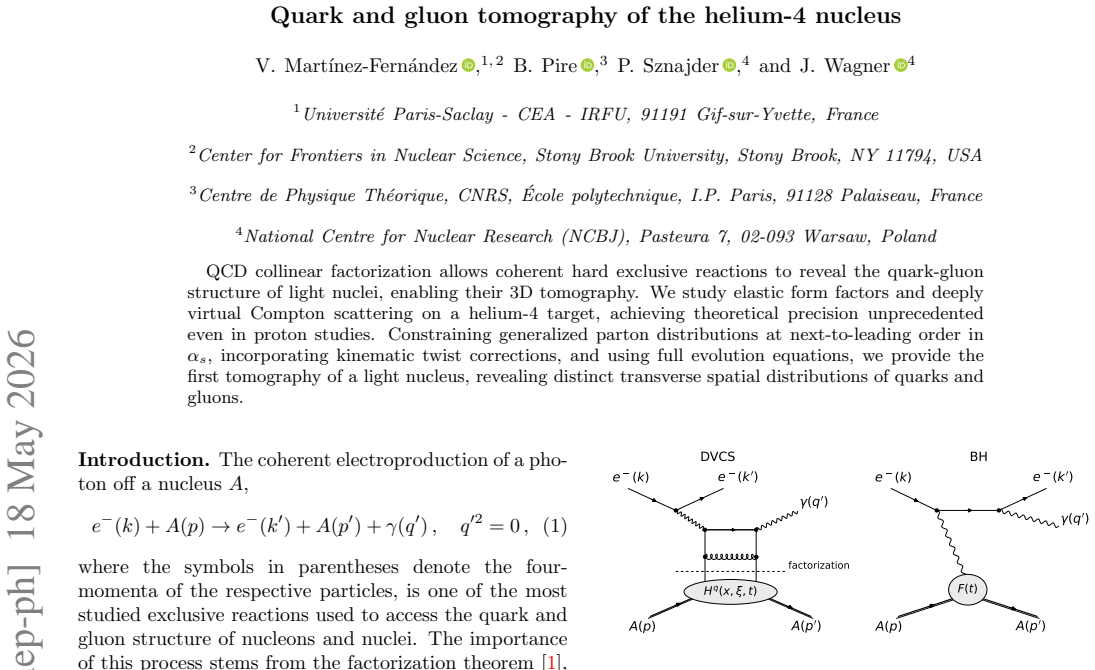 full image