pith. sign in

hep-th

High Energy Physics - Theory

Formal aspects of quantum field theory. String theory, supersymmetry and supergravity.

Top Pith
1
hep-th 2026-06-23

AdS4 gluon correlators expand into flat-space amplitudes

by Humberto Gomez, Renann Lipinski Jusinskas +2 more

On the amplitude expansion of gluon correlators in textrm{AdS}₄

n-point correlators decompose over energy poles with flat-space residues; curvature effects come from lower-point merged data.

abstract click to expand
We show that tree-level gluon correlators in $\textrm{AdS}_4$ admit a natural expansion in terms of flat-space scattering amplitudes at all multiplicities. In particular, every $n$-point correlator can be decomposed into a sum over energy poles whose residues are flat-space amplitudes. The $n$-point amplitude encodes the flat-space limit while curvature corrections are captured by lower-point amplitudes with merged external data. The merging of external polarizations is recursively defined via an AdS analogue of the Berends-Giele currents, giving rise to all-multiplicity formulae which we verify against Feynman diagram computations up to five points. Crucially, our approach works at the level of full correlators rather than individual diagrams, providing an elegant and transparent alternative to conventional approaches for computing correlators in anti-de Sitter space.
2 0
Top Pith
5
math.AG 2026-05-22 2 theorems

Integrable observables prove Π-hierarchy equivalences

by Xavier Blot, Danilo Lewański +1 more

Beyond descendants: integrable observables for cohomological field theories

They replace psi classes while keeping integrability, establish Miura links to Dubrovin-Zhang and ramification hierarchies, and give a short

Figure from the paper full image
abstract click to expand
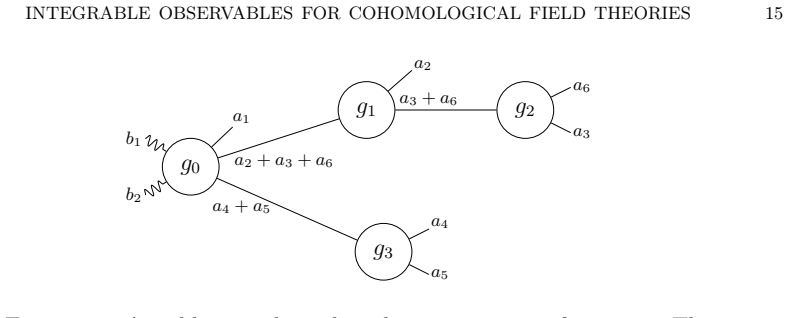
We introduce the concept of integrable observables and propose them as alternatives to the standard Witten's psi classes (a.k.a. descendants in $2D$ quantum gravity) to be coupled with cohomological field theories and their generalisations. The main property of integrable observables is that they retain the integrability properties. We present three examples of integrable observables. The first two recover the Dubrovin-Zhang and double ramification hierarchies, while revealing new structural features in this framework. The third, a new example, builds on recently established properties of the so-called $\mathbb{\Pi}$-class, extending them and placing this class naturally within the theory of integrable systems. Notably, our integrable observables framework yields a proof that the new $\mathbb{\Pi}$-hierarchies are Miura equivalent both to the Dubrovin-Zhang hierarchies and to the double ramification hierarchies. A new very short proof of Witten's conjecture is also provided.
0
Top Pith
4
gr-qc 2026-05-21 2 theorems

Modified gravity changes low-frequency gravitational-wave lensing

by Alice Garoffolo, Gianmassimo Tasinato

Wave-optics gravitational wave lensing in modified gravity

A curvature-coupled propagation equation prevents the amplification factor from reaching unity at zero frequency.

Figure from the paper full image
abstract click to expand
We initiate the study of gravitational-wave lensing in the wave-optics regime within modified gravity. We consider a phenomenological setup in which the gravitational-wave amplitude obeys a curvature-coupled propagation equation. This framework reproduces the standard GR behaviour in the geometric-optics regime, while leading to qualitatively different infrared dynamics. In particular, the usual argument implying that the amplification factor approaches unity in the zero-frequency limit no longer applies. This is due to the persistence of curvature-induced interactions in the infrared, which modify the natural propagation basis itself. As a result, the standard Fresnel treatment ceases to be valid at sufficiently low frequency. The correct infrared regime is instead controlled by an interacting static Green function, with a finite-frequency completion provided by a partial-wave formulation. We show that this structure admits an equivalent distorted-wave interpretation, in which the curvature interaction is absorbed into a dressed reference propagation basis, while the residual lensing effect is encoded in finite-frequency phase shifts. We further demonstrate that these phenomena admit a natural interpretation in the language of scattering amplitudes. Wave-optics lensing can therefore probe propagation-level departures from GR that remain entirely invisible in geometric optics.
0
0
hep-th 2026-07-03

AdS field Lagrangians reduce to algebra

by R.R. Metsaev

BRST-BV approach to fields in Poincare patch of AdS

A single set of algebraic equations for a spin operator determines the BRST-BV Lagrangian for all free fields in the Poincaré patch of AdS.

abstract click to expand
We use the Poincare parametrization of AdS space to develop a general BRST-BV approach for free fields. A general expression for the BRST-BV Lagrangian of fields with arbitrary masses and symmetry types is obtained. We apply this general framework to study totally symmetric massless, massive, and partially-massless fields with arbitrary integer spin and a continuous-spin field. For these fields, both the constrained and unconstrained BRST-BV formulations are developed. In addition, we demonstrate the matching between the obtained BRST-BV Lagrangian and the metric-like Lagrangian formulated in terms of the modified de Donder divergence. Finally, a realization of AdS space symmetries is obtained within the space of fields and antifields entering the BRST-BV formulation.
0
0
quant-ph 2026-07-03

Topology sets speed of quantum chaos in Ising networks

by Reza Pirmoradian, Soheir Rouhani +1 more

Topological Control of Quantum Chaos Diagnostics: OTOCs, Spectral Statistics, and Information Scrambling in Ising Model

Long-range links on random graphs shorten Thouless time and drive exponential operator growth compared with regular paths.

abstract click to expand
We investigate the integrability-to-chaos transition and information scrambling in Ising spin networks via a graph-theoretic formulation. Modeling spins as vertices and interactions via adjacency matrices across path, Erd\H{o}s--R\'{e}nyi, and Watts--Strogatz topologies, we demonstrate that long-range couplings and heterogeneous degree distributions drastically accelerate quantum information propagation. The Hamiltonian comprises local and normalized non-local interactions; tuning the non-local coupling and field heterogeneity drives integrability breaking. To quantify scrambling, we employ bipartite mutual and tripartite information. Increasing non-local interactions drives tripartite information to large negative values, signaling deep information scrambling. Out-of-time-order correlators (OTOCs) exhibit exponential early-time growth, yielding quantum Lyapunov exponents that scale systematically with parameters governing the chaotic regime. Complementing this, Krylov complexity reveals rapid operator growth in the chaotic phase, synchronizing with OTOC and mutual information dynamics. Spectrally, the transition manifests as a shift from Poissonian to Wigner--Dyson level spacing statistics. The spectral form factor (SFF) exhibits the characteristic slope-dip-ramp-plateau structure, enabling the extraction of Thouless and Heisenberg times. Crucially, a reduced Thouless time strongly correlates with accelerated informational and operator scrambling. Ultimately, this work establishes a unified framework bridging network topology with information-theoretic, operator, and spectral diagnostics, offering profound insights into thermalization and non-equilibrium dynamics in quantum many-body systems.
0
0
quant-ph 2026-07-03

Quantum walks reproduce MHV scattering amplitudes

by Anirudh Verma, C. M. Chandrashekar

A Quantum-Walk Representation of Color-Ordered MHV Scattering Amplitudes

Permutation tree paths with spinor transitions and a final Fourier step match the Parke-Taylor structure for color-ordered gluons.

Figure from the paper full image
abstract click to expand
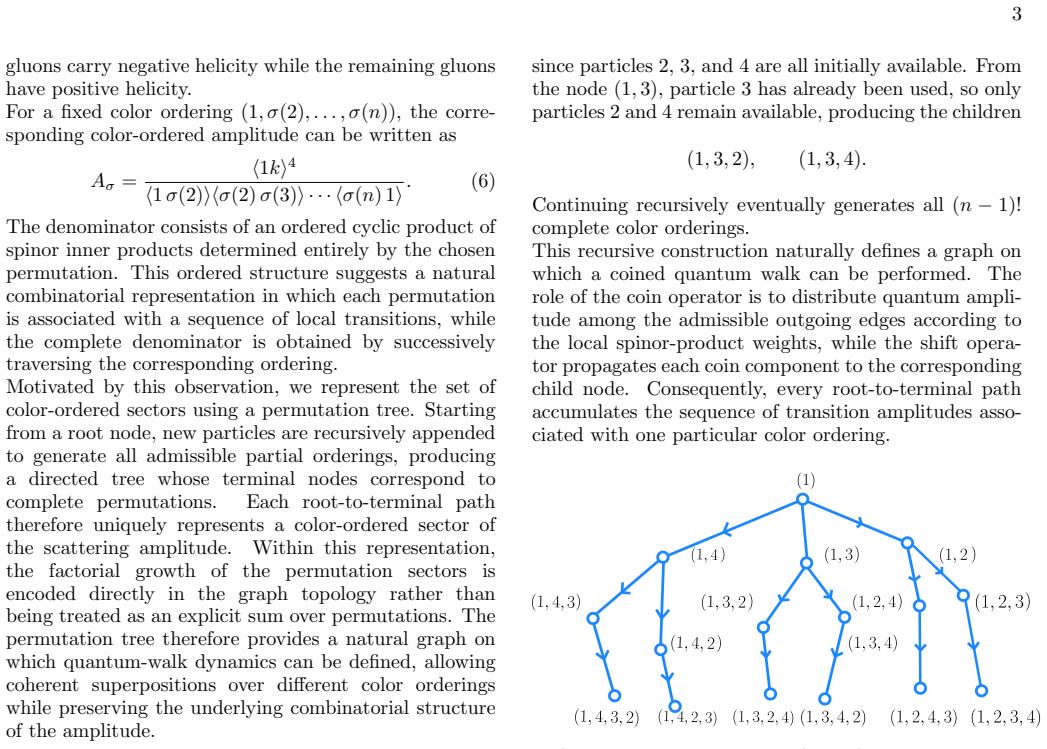
We introduce a graph-theoretic framework for representing color-ordered maximally helicity violating (MHV) scattering amplitudes in quantum chromodynamics using coined quantum walks on permutation trees. Each root-to-terminal path corresponds to a distinct color ordering of the external gluons, while local transition amplitudes are assigned according to the spinor-product structure of the Parke--Taylor amplitudes. The walk evolves in coherent superpositions over permutation sectors, giving a dynamical picture of the underlying combinatorics. A quantum-channel formulation based on Kraus operators is also introduced to describe sector-resolved contributions, while a weighted collection operator coherently combines the terminal sectors at a common reference node. A quantum Fourier transform on the coin space is then employed to combine the encoded contributions into the corresponding color-decomposed amplitude. Together, these constructions establish a unified graph-based framework connecting permutation trees, quantum walks, and open quantum systems providing a framework for quantum algorithms to simulate scattering processes in quantum field theory. As an example, numerical results for low-point gluon amplitudes demonstrate that the proposed representation faithfully captures the characteristic Parke--Taylor structure and is consistent with analytical results.
0
0
hep-th 2026-07-03

Boundary charges defined for string field theory backgrounds

by Klaus Kaja, Carlo Maccaferri +2 more

Boundary observables in string field theory

Gauge-invariant observables analogous to Brown-York charges remain consistent even when the bulk contains sources.

abstract click to expand
Starting from the gauge invariant action for free string field theory with boundary recently constructed in 2506.05969, we define new gauge invariant observables which are analogous to the Brown-York charges of General Relativity. Just like the Brown-York charges, our observables originate from a boundary tadpole, and are associated to isometries of the SFT gauge group around a given background. The consistency of the construction requires the equation of motion of the background to be satisfied only at the boundary and therefore these observables can also be defined for backgrounds generated by sources in the bulk. As examples of our construction in open string field theory, we compute the flux through the boundary of constant electromagnetic field-strength solutions and the charge associated to the Coulomb solution. As a further example in closed string field theory, we characterize the infinite conserved charges associated to stringy-haired black-hole solutions in two-dimensional string theory. We also construct a generalization of these boundary observables to the full interacting string field theory.
0
0
hep-ph 2026-07-03

Chebyshev approximations speed up Feynman integral calculations

by Samuel Abreu, Afonso Guerreiro +1 more

Chebyshev Approximations of Feynman Integrals for Collider Physics

Polynomial fits along paths give stable, competitive results for two-loop five-point integrals with little manual tuning for singularities.

abstract click to expand
We present a novel approach for solving canonical differential equations for Feynman integrals based on an approximation of the integrals with Chebyshev polynomials. By exploiting the analyticity properties of Feynman integrals, the method constructs rapidly converging polynomial approximations along a path, enabling highly efficient numerical evaluation. Moreover, we introduce an adaptive approximation method that dynamically samples to optimise convergence. We implement this framework in double-precision arithmetic and demonstrate its stability across physical phase space using a series of two-loop, five-point examples. Our proof-of-principle implementation proves competitive with state-of-the-art one-fold integral methods, while requiring little to no case-by-case intervention to handle spurious singularities.
0
0
quant-ph 2026-07-03

Bockstein braiding appears for Z_N excitations with p+q=d-1

by Po-Shen Hsin, Yu-An Chen

Bockstein braiding statistics

A unitary process on staggered operators measures statistics that block simultaneous condensation and symmetric gapped phases.

Figure from the paper full image
abstract click to expand
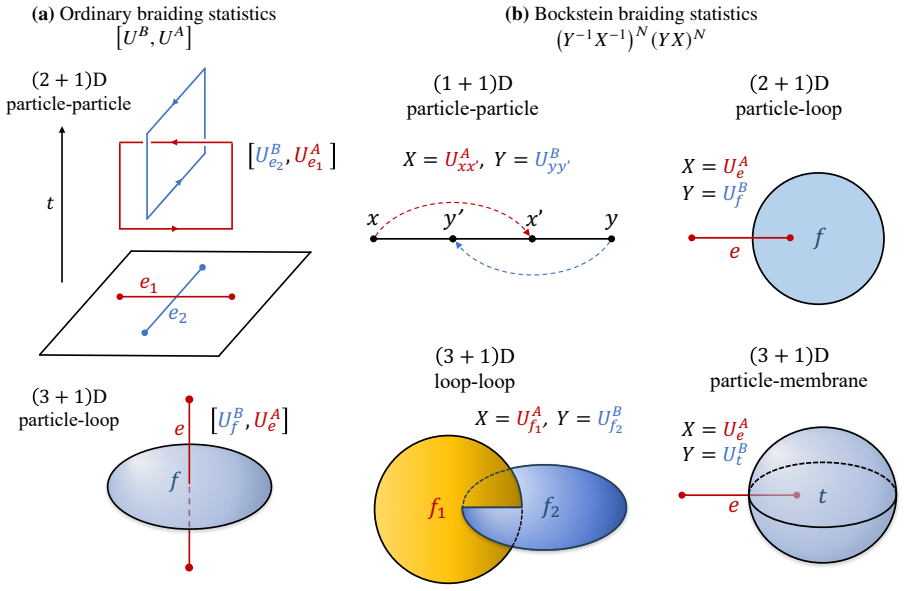
Braiding statistics, from the Aharonov-Bohm phase to anyons in fractional quantum Hall systems, play a central role in quantum physics. For $p$- and $q$-dimensional excitations in $d$ spatial dimensions, ordinary braiding requires $p+q=d-2$. In a field-theoretic description of $\mathbb Z_N$ excitations, ordinary braiding is described by the linking response $(2\pi i/N)\int A_{d-p}\cup B_{d-q}$, where $A_{d-p}$ and $B_{d-q}$ are background fields coupled to the two excitation types. In this work, we identify new mutual statistics in the adjacent case $p+q=d-1$. For two invertible excitations obeying $\mathbb Z_N$ fusion, one can choose local creation operators $X$ and $Y$ whose supports have a staggered one-dimensional overlap. The closed unitary process $W_N(X,Y)=(Y^{-1}X^{-1})^N(YX)^N$ measures the resulting mutual statistic. Its field-theory description is $(2\pi i/N)\int A_{d-p}\cup\beta_N B_{d-q}$, where $\beta_N$ is the Bockstein operation; we therefore call the invariant Bockstein braiding statistics. The construction yields particle-particle statistics in one dimension, particle-loop statistics in two dimensions, and loop-loop or particle-membrane statistics in three dimensions. Nontrivial Bockstein braiding statistics obstructs simultaneous condensation of the two $\mathbb Z_N$ excitations. It also rules out a fully symmetric gapped phase for systems with the corresponding mixed anomaly and implies symmetry fractionalization when one of the $\mathbb Z_N$ symmetries is broken.
0
0
hep-th 2026-07-03

Black hole microstates follow random matrix statistics

by Eric Perlmutter

Black Holes and Random Variables

An avatar of the Fyodorov-Hiary-Keating conjecture yields bounds on CFT operator intervals and a limit on semiclassical AdS path integral re

abstract click to expand
We formulate an avatar of the Fyodorov-Hiary-Keating conjecture for black hole microstate counts in quantum gravity. By holography, this implies sharp bounds on interval counts of high-dimension primary operators in conformal field theory. The extremal fluctuations of these counts are characterized by a random variable, with a prescribed tail distribution. At large $N$, these order-one erratic fluctuations set a quantitative limit on the resolution of the semiclassical AdS gravitational path integral. Gaussian random models for state counts arise naturally in this context; we express the phenomenon of erratic $N$-dependence in AdS/CFT as a decorrelation property of these models. Our broader point is to suggest that AdS black hole microstate spectra and their field theory duals should exhibit the extreme value statistics of random matrices, lying in the universality class of Gaussian log-correlated fields.
0
0
hep-ph 2026-07-03

Axion background splits photon modes into Krein-sign sidebands

by Run-Min Yao, Xiao-Jun Bi +2 more

Sideband Structure of Axion Electrodynamics

A periodic axion field folds the dispersion into a ladder whose degeneracies are stable or unstable according to the symplectic signatures o

abstract click to expand
We develop a Floquet--Bloch sideband formulation of the linearized Maxwell--axion system in a coherent periodic axion background. Linearizing around prescribed magnetic and axion fields, we show that the pump generates a sideband ladder of photon and axion branches. Near an isolated folded degeneracy, this ladder reduces to a two-mode crossing whose algebra is fixed by the symplectic signatures of the colliding modes. In temporal fixed-momentum evolution, same-Krein-sign collisions give stable avoided crossings, whereas opposite-sign collisions give parametric instabilities, unifying the axion-photon difference channel with the Mathieu and Masaki-Aoki-Soda resonances. In stationary fixed-frequency transfer, the corresponding flux signatures distinguish bounded forward conversion from forward-backward stop bands and distributed reflection. Ray projection of a temporal pump gives a related but local WKB description of driven forward mixing, with an effective wavenumber distinct from the true axion momentum. External-field diagrams reproduce the sideband selection rules, and full temporal monodromy calculations verify the instability topology and finite-coupling shifts.
0
0
hep-th 2026-07-03

Twistor space twists localize gauge theories to spacetime

by Matheus Balisa, Eduardo Casali

Supersymmetric twists in twistor space and holography

Minimal and chiral algebra twists of self-dual theories and their bulk duals match known spacetime results.

abstract click to expand
We compute some supersymmetric twists of field theories in twistor space, including the minimal supersymmetric and the chiral algebra twists of supersymmetric self-dual Yang-Mills, and the minimal twist of $\mathcal{N}=1$ self-dual supergravity. In the case of $\mathcal{N}=4$ we also find their holographic duals in the framework of chiral holography. We find that the minimal twist of gauge theories in twistor space localizes them to spacetime, making the choice of complex structure manifest, and reproducing the minimal twist on spacetime. For superconformal theories we apply a further twist which localizes the theory to a plane contained on spacetime, reproducing the chiral algebra twist of $\mathcal{N}=4$ sYM. We show that the bulk duals of these twists also localize reproducing the results from twisted holography.
0
0
math-ph 2026-07-03

Yang-Baxter plus once-per-period rule yields integrable circuits for any geometry

by Miguel García Fernández, Chiara Paletta +1 more

Open-boundary integrable quantum circuits with different geometries

A mapping from transfer-matrix inhomogeneities produces time-periodic open circuits that stay integrable when each bulk gate is used exactly

Figure from the paper full image
abstract click to expand
We present a complete classification of integrable Yang-Baxter quantum circuits with open boundary conditions and arbitrary circuit geometries. Starting from the standard transfer-matrix construction with two types of staggered inhomogeneities, we derive a general mapping that determines the arrangement of circuit gates in terms of the inhomogeneities and the system size. We conjecture that time-periodic quantum circuits are integrable whenever the local bulk and boundary gates satisfy the Yang-Baxter equation and the same bulk gate is applied exactly once per period to every nearest-neighbor pair of spins. Our construction also provides an algorithm to detect Yang-Baxter integrability for circuits with arbitrary geometries. Furthermore, we introduce a third type of inhomogeneity, denoted by $\rho$, and demonstrate that the minimum possible circuit depth is four. We show that when these $\rho$-inhomogeneities are placed at the endpoints and in their immediate neighborhood, the resulting boundary gates can be interpreted as single gates acting on multiple sites. Our construction is fully general and applies to regular $R$-matrices, both of difference and non-difference type, together with their associated boundary matrices. As an application, we consider two-qubit gates corresponding to 6- and 8-vertex $R$-matrices of non-difference form satisfying the Yang-Baxter equation, and we construct the associated reflection matrices that generate integrable quantum circuits.
0
0
hep-th 2026-07-03

Squeezed ultra-cold bosons enable graviton lasing

by Soham Sen, Vlatko Vedral

Towards graviton lasing from squeezed ultra-cold systems

Exponential growth depends on boson number and wave-packet squeezing, with a proposed lab setup for coherent gravitons.

Figure from the paper full image
abstract click to expand
In our recent work, arXiv:2604.11474 [hep-th], we have shown that effective detection of gravitons is possible using an array of charged harmonic oscillators in a dynamical electromagnetic field. Using the interaction Hamiltonian of the identical model, we find out that a systematic way of population inversion of the gravitons is possible in ultra-cold atomic systems. We find out that the exponential growth depends strictly on the number of bosons in the system as well as their inherent squeezing of the matter wave packets. A coherent source of gravitons may lead directly to an unavoidable evidence on the existence of gravitons and based on this analysis we propose an experimental proposal for generating true graviton laser.
0
0
gr-qc 2026-07-03

Excited boson stars violate energy conditions in teleparallel gravity

by Long-Xing Huang, Ke Yang +1 more

Boson Stars in Teleparallel Gravity with a Nonminimally Coupled Field: The Violation of Energy Conditions and Gravitational Waveforms from EMRIs

Ground states obey them, yet EMRI signals from both lie in the LISA detection range.

Figure from the paper full image
abstract click to expand
In this work, we investigate boson star models within the framework of teleparallel gravity with non-minimal coupling, and obtain static, spherically symmetric solutions for both the ground state and excited states. The results indicate that the energy density of the excited-state solutions can become negative. For these solutions, the four commonly used energy conditions are no longer satisfied. In contrast, for all the ground-state solutions we have studied, the energy density remains positive and all four energy conditions are consistently satisfied. Moreover, considering the importance of astrophysical observations, the gravitational-wave signals from Extreme-Mass-Ratio Inspirals (EMRIs) composed of these boson stars are investigated. Our results reveal that the frequency-domain characteristic strain of these waveforms falls within the detectability range of LISA, which can provide potential evidence for distinguishing compact astrophysical objects.
0
0
hep-th 2026-07-03

E theory local symmetry requires differential conditions on parameters

by Keith Glennon, Peter West

Local symmetry and the dependence on extended spacetime

These restrictions differ from section conditions in Double Field Theory and preserve dilaton invariance without constraining fields.

abstract click to expand
We show that linearised E theory possesses a local symmetry at low levels provided the parameters of the local symmetry obey differential conditions that restrict their dependence on the extended spacetime. In the decomposition of E theory that leads to Siegel theory, also known as Double Field theory, we also find the analogous restrictions on the parameters. They are different to the section conditions which are universally used in this context. We also show that the dilaton equation of Siegel theory is invariant under the local symmetry if the parameters satisfy an analogous non-linear constraint on the parameters. We argue that there is no need to impose conditions on the fields of E theory or Siegel theory.
0
0
math.CO 2026-07-03

Chord diagram crossings alone set weights for q-deformed planar maps

by Timothy Budd

Double-scaled SYK from boundary metrics of planar maps

At fixed perimeter the geodesic chord diagrams follow exactly the same distribution as in the double-scaled SYK model.

Figure from the paper full image
abstract click to expand
The enumeration of planar maps with control on the boundary metric, i.e. the pseudometric induced on the outer face of the map by its bulk graph distance metric, is a difficult problem in general. However, we show that for a family of bipartite planar map models with special q-deformed face weights that arise in the physics context of the double-scaled Sachdev-Ye-Kitaev model (DSSYK) the enumeration admits a very simple answer. Encoding the boundary metric of a bipartite planar map by its so-called geodesic chord diagram, we prove that the weighted enumeration depends only on the crossing number of the chord diagram. At fixed perimeter, the induced law of the geodesic chord diagram in these planar map models coincides exactly with the chord diagram representation of the DSSYK model.
0
0
quant-ph 2026-07-03

2D quantum Ising simulations match semi-classical bubble decay rates

by Luka Pavešić, Ian G. Moss +1 more

False vacuum decay in a two-dimensional quantum spin system

Extracted decay rate, wall tension and critical size agree with field theory, showing the nucleation picture holds in 2+1D.

Figure from the paper full image
abstract click to expand
False vacuum decay describes the relaxation of a metastable state through the nucleation and growth of bubbles of the stable phase. Despite describing a broad variety of phenomena across different fields, the quantum version of the nucleation theory has little experimental or numerical support. Testing its predictions is particularly important in two or more spatial dimensions, where bubble nucleation acquires its true geometrical nature. Here, we study false vacuum decay in the quantum Ising model in two dimensions. Through tree tensor network simulations we extract the decay rate, the effective interface tension and the critical bubble size. We compare them to new semi-classical field theory calculations, and find excellent agreement. These results provide numerical evidence that the critical-bubble picture survives in an interacting quantum spin system in 2+1 dimensions.
0
0
hep-th 2026-07-03

KM black-hole states have temperature-tuned magic linear in N

by Antonio M. García-García, Xianlong Liu +1 more

Tuning quantum magic of pure quantum chaotic states with a gravity dual

Pure SYK states dual to black holes show magic scaling from zero to N/2 set by temperature, while Gaussian states reach N/2 exponentially fa

Figure from the paper full image
abstract click to expand
Quantum magic is a fundamental resource that quantifies to what extent quantum states can be efficiently simulated on a classical computer. We study it for states constructed from the Sachdev-Ye-Kitaev (SYK) Hamiltonian with $N$ Majoranas by the fermionic anti-flatness (FAF). We show analytically that, in the large $N$ limit, the quantum magic of pure Kourkoulou-Maldacena (KM) states, dual to a quantum black hole with an end-of-world particle behind the horizon, is linear in $N$ with a slope, depending on the black hole temperature, that can be tuned between zero and $1/2$. By contrast, the FAF of Gaussian states evolved in real time with the SYK Hamitonian approaches $\approx N/2$ exponentially at a rate given by a multiple of the leading Ruelle-Pollicot resonance. Subleading corrections in $N$ for SYK energy eigenstates, computed numerically for $N \leq 54$ by combining Krylov subspace with GPU acceleration techniques, decay exponentially with $N$, but power-law if the SYK couplings are sparsified, and are order of magnitude larger for states close to the ground state, a region with an established gravity analogue. Our results offer new insights about the relation between quantum information, quantum chaos and low-dimension quantum gravity.
0
0
gr-qc 2026-07-03

Lyapunov exponents track black hole phase transitions across frames

by Hocheol Lee, Bogeun Gwak

Phase Transitions with Lyapunov Exponents under Einstein and String Frames in Dilatonic Reissner--Nordstr\"om--AdS Black Holes

Values depend on the frame but critical cusps and points remain fixed, agreeing with thermodynamic calculations.

Figure from the paper full image
abstract click to expand
We investigate Lyapunov exponents as dynamical probes of black hole phase transitions in dilatonic Reissner--Nordstr\"om--AdS black holes within Einstein--Maxwell--dilaton theory. The thermodynamic quantities and the Lyapunov exponent of charged probe particles were analyzed in both the Einstein and string frames, thus providing a direct comparison between the thermodynamic phase structure of the black hole and that captured by the Lyapunov exponent. Thermodynamic quantities, including the Hawking temperature and Wald entropy, remained constant under conformal frame transformations, yielding identical phase structures in the two frames. In contrast, the Lyapunov exponent exhibited non-trivial frame dependence for massive probe particles due to dilaton coupling, while no frame dependence was found in the massless limit. Numerical analysis revealed that the phase structure features captured by the Lyapunov exponent, including characteristic cusp behavior and transition points, were independent of the choice of frame, despite the Lyapunov exponent itself being frame-dependent. Therefore, the Lyapunov exponent exhibited frame-dependent values, while the critical structure it captures remained constant across conformal frames.
0
0
gr-qc 2026-07-03

Anisotropic matter suppresses local chaos near black holes

by Khusan Alibekov, Hocheol Lee +5 more

Chaotic behaviors of particles around the black hole with an anisotropic matter immersed in a magnetic field

Magnetic field changes instead produce transitions between regular and chaotic orbits via Poincaré sections in the exact solution.

Figure from the paper full image
abstract click to expand
We present an exact solution to the Einstein-Maxwell equations that describes a static black hole coexisting with anisotropic matter immersed in an external magnetic field, obtained via the Harrison transformation. Our findings reveal that an increase in the anisotropic matter parameter systematically suppresses the local chaotic behavior, as indicated by a reduction in the Lyapunov exponent. Conversely, variations in the external magnetic field lead to qualitative changes in global chaotic behavior. This is analyzed through Poincar\'e sections, which demonstrate transitions between regular and chaotic trajectories resulting from the nonlinear gravitational-magnetic interactions. These factors play distinct yet complementary roles in shaping chaotic particle dynamics around black holes. This study would offer a new theoretical framework for exploring non-integrable particle motion within magnetized black hole spacetimes and for probing a black hole at the galactic center, where magnetic fields may arise from plasma effects surrounding astrophysical black holes.
0
0
gr-qc 2026-07-03

Kerr/CFT matches Komar entropy for Bumblebee black holes

by YU-Qi Chen, Jin-Yang Shen +1 more

Rotating Black Holes and the Kerr/CFT Correspondence in Einstein-Bumblebee Gravity

Microscopic count from near-horizon CFT agrees with Komar integrals but differs from Wald by the Bumblebee coupling factor.

abstract click to expand
We constructed rotating black holes with equal angular momentum in five dimensional Einstein-Bumblebee gravity with and without cosmological constant. Their thermodynamic properties are examined via two distinct methods: the Wald formalism and the Komar integral. Notably, the conserved charges, including mass, angular momentum, and entropy, computed from these two approaches differ by a constant prefactor that is solely determined by the Bumblebee coupling. Subsequently, we apply the Kerr/CFT correspondence to derive the microscopic entropy of these black holes and find that it precisely reproduces the entropy in Komar-integral version, rather than the Wald entropy.
0
0
hep-th 2026-07-03

Typicality bounds extend to Type II von Neumann factors

by Zhi-Wei Wang, Samuel L. Braunstein

Lubkin-Page typicality bounds for Type~II von~Neumann factors

Mutual information vanishes as O((dA dB/dE)^2) for Type II1 and gains entropy suppression for II∞ gravitational algebras.

abstract click to expand
Typicality arguments for emergent spacetime rely on the Lubkin-Page bounds, which show that generic quantum states have vanishing correlations between subsystems. These bounds assume a tensor-product Hilbert space (a Type~I von~Neumann algebra), but the observable algebras in quantum field theory and quantum gravity are generically Type~II or Type~III, raising the question of whether the bounds survive. We prove that they do for all Type~II von~Neumann factors. For the hyperfinite Type~II$_1$ factor with a tripartite decomposition $R \cong A \otimes B \otimes E$, the mutual information between subsystems $A$ and $B$ vanishes as $O((d_A d_B / d_E)^2)$ in finite-dimensional approximations, provided $d_A d_B \leq d_E$ (Theorem~1). For Type~II$_\infty$ factors, including the gravitational algebras constructed via the crossed-product method by Witten and by Chandrasekaran, Longo, Penington, and Witten, the bound acquires an additional exponential suppression controlled by the Bekenstein-Hawking entropy (Theorem~2). We identify the obstructions to extending the result to Type~III factors and discuss the open question of whether the commutant of the observable algebra can serve as a natural thermal bath that tightens the bound further.
0
0
hep-th 2026-07-03

Gauge invariance fixes unique operators for bosonic string amplitudes

by Qu Cao, Fan Zhu

Uniqueness and Analytic Structures of Bosonic String Effective Amplitudes

Recursive build from Yang-Mills gives factorized expressions valid at any multiplicity for finite alpha prime.

Figure from the paper full image
abstract click to expand
We revisit the zero-transcendentality sector of bosonic string effective amplitudes with spin-1 external states, conjectured to correspond to a mass-deformed $(DF)^2$ theory, known as the $(DF)^2{+}\text{YM}$ theory. Imposing gauge invariance, locality, and cyclicity under minimal assumptions uniquely fixes a set of dimension-raising operators and leads to a recursive construction of amplitudes from Yang-Mills amplitudes in the $\alpha'{\to}0$ limit. At finite $\alpha'$, certain derivative operators dressed with gauge invariant and $\alpha'$-dependent factors, what we call $\textit{inverse operators}$, reconstruct the full bosonic string effective amplitudes, yielding compact expressions that universally factorize into tachyon-pole coefficients times Yang-Mills-Scalar amplitudes. This structure holds at arbitrary multiplicity and also extends to the amplitudes of the pure $(DF)^2$, $(DF)^2{+}\phi^{3}$ and $(DF)^2{+}\text{YM}{+}\phi^{3}$ theories.
0
0
hep-ph 2026-07-03

Algebraic method corrects cumulants for exact multi-charge conservation

by Roman Poberezhnyuk, Volodymyr A. Kuznietsov +2 more

Subensemble Acceptance Method 3.0: General Corrections to Cumulants from Exact Conservation Constraints

SAM-3.0 converts joint grand-canonical inputs to canonical results for any number of charges and observables.

Figure from the paper full image
abstract click to expand
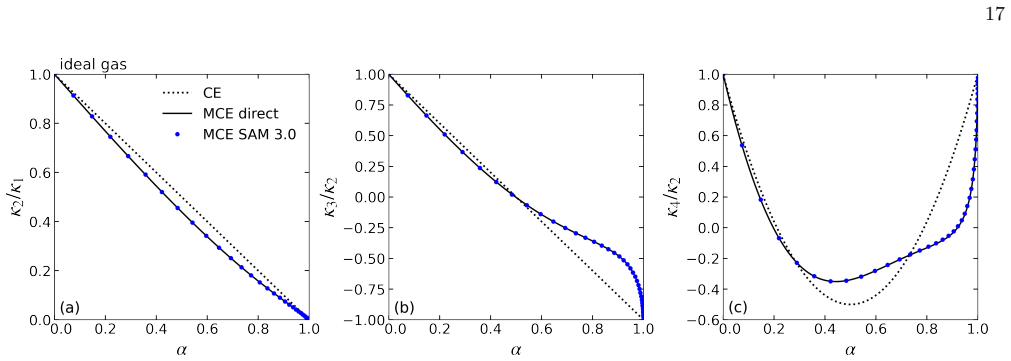
We present the subensemble acceptance method 3.0 (SAM-3.0), which corrects cumulants of an observable measured in a subsystem of a large system for the effect of exact global conservation of multiple charges. The required input is the set of joint grand-canonical cumulants of the acceptance observable with the total event charges, from which the canonical cumulants follow algebraically via a closed recursion based on (multivariate) partial exponential Bell polynomials. The framework accommodates any number of observables, including non-conserved quantities such as net protons, and any number of simultaneously conserved charges, including the total energy, which yields the microcanonical ensemble. The mapping contains SAM-1.0 and SAM-2.0 as special cases and, unlike SAM-2.0, reproduces the exact binomial-acceptance limit. We also derive the leading finite-size corrections from the saddle-point expansion. We apply the method to update the hydrodynamics-based non-critical baseline (Hydro-EV) for net-proton cumulants at RHIC-BES energies, finding a refined baseline that agrees with direct canonical Monte Carlo sampling and stays close to the earlier SAM-2.0 result. We further validate the formalism against direct Monte Carlo sampling with exact simultaneous conservation of baryon number, electric charge, and strangeness, including hadronic-afterburner effects.
0
0
hep-th 2026-07-03

Morse Hamiltonian bridges Kepler and hyperbolic Landau problems

by Mikhail S. Plyushchay

Morse Bridge between Planar Kepler and Hyperbolic Landau Dynamics

Radial Kepler dynamics and fixed-horocyclic-momentum Landau sectors both reduce to the Morse spectral problem, relating their spectra and tr

Figure from the paper full image
abstract click to expand
We show that two paradigmatic systems, the planar Kepler--Coulomb problem and the Landau problem on the hyperbolic plane $H^2$, are connected by a common one-dimensional mediator: the Morse Hamiltonian. On the Kepler side, a Liouville transformation and coupling-constant metamorphosis turn the radial dynamics into the Morse problem, with the Kepler polar angle becoming the Morse evolution parameter. On the Landau side, horocyclic reduction of the hyperbolic magnetic dynamics gives the same Morse Hamiltonian, with a quantum half-density correction. Consequently, the radial Kepler problem and the fixed-horocyclic-momentum sectors of the hyperbolic Landau problem are mapped to one Morse spectral problem, relating their bound spectra, continuum thresholds, resonances and scattering data. We further show that the Landau time evolution has a Kepler-conic form and reduces to the bound, threshold and scattering trajectories of the Morse system. The resulting dictionary connects Kepler conics with magnetic circles, horocycles and hypercycles, and turns the magnetic $SL(2,\mathbb R)$ symmetry of the Landau problem into the spectrum-generating algebraic structure of the Morse system.
0
0
hep-th 2026-07-03

Hybrid feedback method prepares TFD state at near-unit fidelity

by Guilherme E. L. Pexe, Lucas A. M. Rattighieri +3 more

Preparing a Thermofield Double State with Feedback Quantum Algorithms

Combining imaginary-time evolution with time-rescaled FALQON escapes symmetry traps in the Maldacena-Qi model and matches exact entropy spec

Figure from the paper full image
abstract click to expand
The efficient preparation of correlated thermal states, such as the Thermofield Double (TFD) state, is a fundamental prerequisite for simulating quantum gravity models and many-body thermodynamics on quantum processors. In this work, we investigate the ground state preparation of the Two Coupled Sachdev-Ye-Kitaev model, known as the Maldacena-Qi model, which is dual to a traversable wormhole in $AdS_2$, utilizing feedback-based quantum algorithms. We demonstrate that the standard feedback-based quantum algorithm (FALQON) and its time-rescaled variant (TR-FALQON) face severe kinetic limitations in this system, failing to converge to the highly entangled ground state when initialized in trivial product states. To overcome these barriers, we propose the hybrid ITE-TR-FALQON protocol, which integrates the imaginary-time evolution present in imaginary-time-enhanced FALQON (ITE-FALQON) with the time-rescaling mechanism. Our numerical results indicate that the introduction of non-unitary dynamics is strictly necessary to break symmetry traps and filter out excited states, while time-rescaling drastically accelerates algorithm convergence. The proposed method achieves fidelities close to unity and reproduces the von Neumann and R\'enyi entropy spectra of the exact TFD state with high precision.
0
0
astro-ph.HE 2026-07-02

MRI in solids needs strong shear to beat elasticity

by Arthur G. Suvorov, Thomas Celora +1 more

Magneto-rotational instabilities in solids: application to neutron-star crusts

Neutron-star crusts allow magnetic growth only above 300 Hz spin, or less if heated viscously.

Figure from the paper full image
abstract click to expand
The magneto-rotational instability can generate strong, turbulent substructure within magnetised shear flows. The efficacy of the mechanism as a function of microphysical aspects of the fluid, such as stratification and diffusivity, has been explored extensively. One aspect that has not been studied thus far, however, is whether the instability can also operate in solids. Motivated by the possibility that solid regions within planets or degenerate stars may rotate differentially with respect to liquid or gaseous layers during some phase of their life, we examine the extent to which elasticity suppresses the instability. A simplified, plane-parallel analysis reveals that only in cases where the flow is strongly sheared, such that the magnetic tension that would result from the instability in a liquid exceeds the shear modulus of the elastic cavity, can magnetic growth occur. In the context of dynamical tides in binary neutron-star mergers, this implies that the magnetic field can be amplified in the crust prior to coalescence only if the star boasts a spin frequency of $\gtrsim 300$Hz. If viscous heating weakens the crystalline structure prior to resonance, the required spin frequency is reduced.
0
0
quant-ph 2026-07-02

Rotation splits Lamb shift into orbital and spin terms

by César D. Fosco, Fernando C. Lombardo +1 more

Lamb Shift of a Static Atom Facing a Rotating Surface

Formula for static atom near rotating plane separates tangential-velocity effect from photon-helicity shift and shows material-dependent enh

Figure from the paper full image
abstract click to expand
We study how the Lamb shift of a static atom is modified when a nearby planar body rotates rigidly about its normal while the atom is held at a fixed distance $a$. We derive a general formula for the shift in terms of the angularly Doppler-shifted reflection coefficients of the surface, valid for any axially symmetric planar material. Expanding the result to second order in the angular velocity $\Omega$, we identify two independent contributions associated with the orbital and spin components of the electromagnetic angular momentum. The orbital contribution, proportional to $(\Omega\rho)^2$, reproduces locally the Lamb shift induced by a surface translating at the tangential velocity $\Omega\rho$, whereas the spin contribution, proportional to $(a\Omega)^2$, originates from the rotational Doppler shift of the photon helicity and survives even on the rotation axis. We first illustrate the formalism using a graphene sheet and then apply it to finite-thickness Drude and plasma conductors and to doped semiconductors. Rotation enhances the Casimir-Polder interaction for graphene and metallic surfaces, whereas it weakens it for doped semiconductors, depending on whether the carrier plasma frequency reaches the near-field scale $1/a$. Above a threshold angular velocity, the atomic level also acquires a finite linewidth, providing a spectroscopic signature of quantum friction.
0
0
astro-ph.CO 2026-07-02

ALP dark matter produces Lyman-Werner photons via magnetic fields

by Abdias Aires, Robert Brandenberger +1 more

Secondary Production of Photons from ALP Dark Matter interacting with a Cosmological Magnetic Field

Chern-Simons interactions with cosmological B-fields yield sufficient flux without violating CMB or X-ray limits.

abstract click to expand
Under the assumption that dark matter is a coherently oscillating pseudoscalar field coupled to electromagnetism by the usual Chern-Simons term, we study the production of secondary photons from dark matter fluctuations coupled to a pre-existing magnetic field, taking into account the spectral distribution of the magnetic field. Specifically, we apply the formalism to the case of a large-scale magnetic field generated previously via a parametric resonance instability due to the same Chern-Simons coupling. However, our analysis is applicable to any spectrum of cosmological scale magnetic field fluctuations present at the time of recombination. We show that obtaining a sufficiently large flux of photons in the Lyman-Werner frequency range is consistent with constraints from CMB and X-ray observations.
1 0
0
quant-ph 2026-07-02

Minimal length breaks coherent-state equivalence

by Giuseppe Gaetano Luciano, Pasquale Bosso +1 more

Coherent states in minimal-length Quantum Mechanics: inequivalent characterizations and emergent squeezing

Annihilation eigenstates, displaced vacua and minimum-uncertainty packets diverge, deforming trajectories and producing intrinsic squeezing.

Figure from the paper full image
abstract click to expand
Several approaches to quantum gravity suggest the emergence of a fundamental minimal length at the Planck scale. In quantum mechanics, this feature is naturally encoded through deformations of the Heisenberg algebra, leading to the Generalized Uncertainty Principle (GUP). While the phenomenological implications of GUP have been extensively explored, a consistent characterization of coherent states in minimal-length quantum mechanics remains elusive. In this work, we present a systematic analysis of coherent states for the one-dimensional harmonic oscillator. We show that the canonical equivalence among their standard characterizations - as eigenstates of the annihilation operator, displaced vacuum states and minimum-uncertainty wave packets - is generically lost in the presence of a minimal length. We then investigate the dynamical and semiclassical consequences of this inequivalence by comparing the evolution of generalized coherent states with that of states saturating the GUP. In particular, we demonstrate that minimal-length effects induce nontrivial deformations of phase-space trajectories and give rise to an intrinsic squeezing mechanism with no counterpart in ordinary quantum mechanics. These results establish a unified framework for coherence in GUP-based quantum theories and identify distinctive semiclassical signatures of minimal-length physics, opening a new avenue for probing quantum-gravitational effects.
0
0
hep-th 2026-07-02

JT gravity in a box reduces to Pöschl-Teller scattering

by Luca Griguolo, Jacopo Papalini +3 more

Quantum JT Gravity in a box as a P\"oschl-Teller Scattering Problem

Exact universe wavefunctions and a disk partition function as a zero-length transition amplitude emerge, with nonperturbative cutoff correct

abstract click to expand
We present a canonical quantization of Jackiw-Teitelboim gravity with finite Dirichlet boundary conditions, using the geodesic length between the two boundaries and its conjugate momentum as reduced phase space variables. The dynamics is recast as the scattering problem of a nonrelativistic particle in a repulsive P\"oschl-Teller potential, naturally embedded within a hyperbolic reduction of the $\mathfrak{sl}(2,\mathbb{R})$ Casimir. We obtain exact wavefunctions of the universe and the disk partition function, interpreted as a transition matrix element between states of vanishing bare length. In the asymptotic limit, the theory reduces to Liouville quantum mechanics and reproduces the standard Schwarzian spectral density. At finite cutoff, however, the spectral measure exhibits genuinely nonperturbative corrections, absent in existing $T\bar T$ treatments. We also obtain closed form expressions for thermal two-point functions in terms of Wilson functions and propose diagrammatic rules for time- and out-of-time-ordered four-point functions. We further address the issue of the branch cut singularity of the quasi-local energy and propose a UV completion of the model in which the Brown-York charge is analytically continued beyond the black hole horizon. This continuation naturally extends the scattering problem to configurations that foliate the black hole interior.
0
0
hep-th 2026-07-02

Krylov basis yields semiclassical dynamics in large-N systems

by Vijay Balasubramanian, Pawel Caputa +2 more

Wigner negativity in Krylov space and emergent semiclassicality

Wigner negativity stays constant in CFTs and grows only as t to the 1/2 in matrices and late SYK, without scaling with system size.

abstract click to expand
We propose that the Krylov basis gives a semiclassical representation of dynamics in general large-$N$, complex, many-body systems. As a probe of this semiclassicality, we study the growth of Wigner negativity -- a measure of the complexity of classical simulation -- under time evolution in Krylov space in several solvable models. We begin with 2d CFTs, initially in either the vacuum or the thermofield double state on a line excited by a primary operator. In both cases, Wigner negativity remains an $O(1)$ constant and does not grow at late times, indicating approximately classical dynamics in the Krylov basis. We then study random matrix theory with the maximally entangled state between two copies as the initial state. For general one-cut matrix models, we argue that Wigner negativity in the Krylov basis grows as $t^{1/2}$ at large $O(1)$ times but does not scale with the Hilbert space dimension, thus indicating semiclassical dynamics in Krylov space. Finally, in the double-scaled SYK model, we find an approximately classical phase (constant negativity) at early times and a semiclassical phase ($t^{1/2}$ growth) at late times. In all these examples, Wigner negativity either remains constant or grows slowly, demonstrating emergent semiclassicality of dynamics in Krylov space.
0
0
cond-mat.str-el 2026-07-02

Spin Hall response in chiral spin liquids has only exponential finite-size corrections

by Kumar Ghosh

From Dirac Cones to Semions: An Exact Finite-Size Theory of Parity-Anomaly Transport in Chiral Spin Liquids

Exact cylinder determinant maps spinon Chern number to fractional conductance with no 1/L term, confirmed by kagome DMRG at -0.5.

Figure from the paper full image
abstract click to expand
Chiral spin liquids carry a hidden bookkeeping problem: the integer Chern number of their fractionalized spinons, the level of the emergent Chern--Simons gauge field, and the fractional spin response actually measured in experiment or simulation are related but distinct quantities, and the literature routinely conflates them. Here we resolve this by deriving the exact parity-odd determinant of a gapped Dirac cone on a spatial cylinder, resummed to all orders in the compact holonomy rather than truncated at leading order. The result proves that finite-circumference corrections to the topological response are strictly exponential, with no universal $1/L$ term, and fixes the precise map from microscopic spinon Chern number to physical spin Hall conductance. We validate this chain of reasoning on the kagome lattice at three independent levels: an exact parton band-structure calculation ($C=-1$, converging exponentially over cylinders four to twelve sites wide), and an interacting density-matrix renormalization group flux pump ($\nu_s=-0.500\pm0.011$) that agrees with the analytic prediction without any adjustable parameter. Together, these results turn a one-loop anomaly calculation into a quantitatively verified bridge between microscopic topology and observable fractional response.
0
0
hep-ph 2026-07-02

Electron stability rules out LIV explanation for neutrino delays

by Mauricio Bustamante, José Manuel Carmona +3 more

Electron stability constrains neutrino time delays

The violation term slowing neutrinos would also destabilize high-energy electrons, contradicting observations.

Figure from the paper full image
abstract click to expand
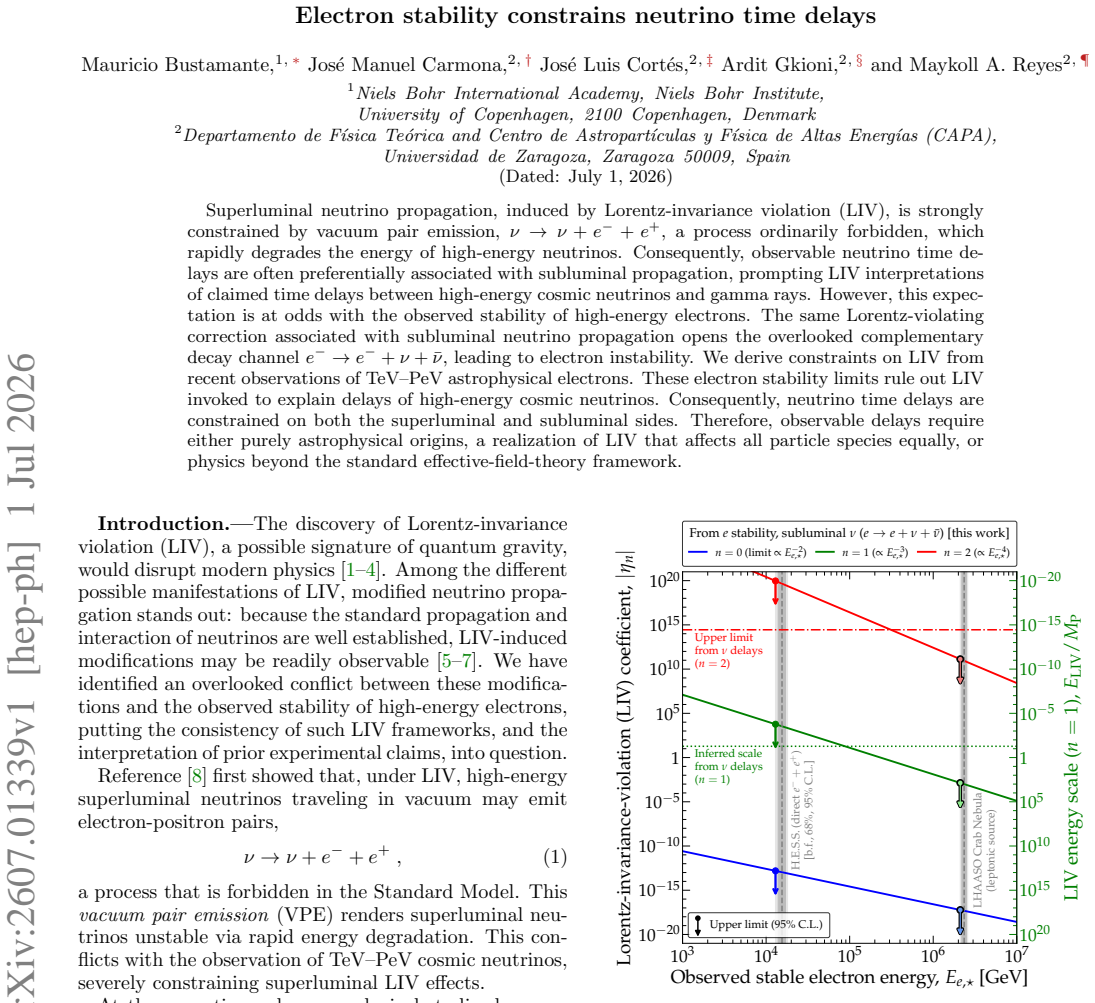
Superluminal neutrino propagation, induced by Lorentz-invariance violation (LIV), is strongly constrained by vacuum pair emission, $\nu \to \nu + e^- + e^+$, a process ordinarily forbidden, which rapidly degrades the energy of high-energy neutrinos. Consequently, observable neutrino time delays are often preferentially associated with subluminal propagation, prompting LIV interpretations of claimed time delays between high-energy cosmic neutrinos and gamma rays. However, this expectation is at odds with the observed stability of high-energy electrons. The same Lorentz-violating correction associated with subluminal neutrino propagation opens the overlooked complementary decay channel $e^- \to e^- + \nu + \bar{\nu}$, leading to electron instability. We derive constraints on LIV from recent observations of TeV--PeV astrophysical electrons. These electron stability limits rule out LIV invoked to explain delays of high-energy cosmic neutrinos. Consequently, neutrino time delays are constrained on both the superluminal and subluminal sides. Therefore, observable delays require either purely astrophysical origins, a realization of LIV that affects all particle species equally, or physics beyond the standard effective-field-theory framework.
0
0
hep-th 2026-07-02

Defect fusion yields walking RG flows with universal state density

by Filipp Chernikov, Nikolay Gromov +1 more

Quark Anti-Quark Fusion and Walking RG Flows

Fixed points collide into the complex plane at criticality, yet SL(2,R) symmetry organizes the spectrum into conformal families in planar N=

abstract click to expand
We study the fusion of two conjugate conformal line defects on the sphere. At small separation, their spectrum is governed by a universal Fusion Master Equation. Below a critical coupling, the fused defect has two conformal fixed points; at criticality, they collide and move into the complex plane, producing walking RG behaviour. Although individual energy levels then drift with the UV scale and are scheme dependent, the $SL(2,\mathbb{R})$ Casimir continues to commute with the Hamiltonian below that scale. This organises the spectrum into conformal families and fixes a universal, scheme-independent density of states. We derive this structure in the planar ladder model and obtain an exact finite-coupling description of conjugate $1/2$-BPS Wilson-line fusion in planar ${\cal N}=4$ SYM using the Quantum Spectral Curve. We test our results against perturbation theory and semiclassical string theory.
0
0
hep-th 2026-07-02

Algorithm constructs SL(2,Z) duality web for circular quivers

by Riccardo Comi, Chiung Hwang +1 more

Algorithmic Dualization of Unitary Circular Quivers

New blocks and moves derive mirror symmetry for good cases and match indices for bad ones, linking to ADHM models.

abstract click to expand
We introduce a field-theoretic algorithm to find the $SL(2,\mathbb{Z})$ duality web of 3d $\mathcal{N}=4$ circular quiver theories with unitary gauge groups, extending the algorithm for linear quivers. Although circular and linear quivers share the same local structure, the circular topology requires additional ingredients, which we formulate in terms of topological and baryonic QFT blocks, together with new $SL(2,\mathbb{Z})$ duality moves acting on them. For good circular quivers, this provides a field-theoretic derivation of mirror symmetry and extends it to the full $SL(2,\mathbb{Z})$ duality web. We then study bad circular quivers, distinguishing between local badness, associated with under-balanced gauge nodes, and global badness, arising from the circular topology itself. In particular, we analyze the magnetic and electric dual frames of globally bad circular quivers and provide additional evidence for the proposed duality by matching the Higgs branch index with the dual Coulomb branch index. The latter exhibits a structure reminiscent of permutation-group gauging and reveals a refined relation to the ADHM quiver, flowing to the $\mathcal{N}=8$ infrared fixed point.
0
0
hep-th 2026-07-02

Worldsheet description generalizes to arbitrary heterotic networks

by Chiara Altavista, Edoardo Anastasi +3 more

The Art of Networking: Networks of Trivalent 10d Heterotic Junctions

Junctions among three non-tachyonic 10d heterotic theories extend to graph networks, bubble nucleation, and compact configurations with sect

abstract click to expand
We initiate the study of networks of 10d string theories connected by junctions implied by the cobordism conjecture. Focusing on the recently constructed junction of the three 10d non-tachyonic heterotic theories, we generalize its $(0, 1)$ heterotic worldsheet description to construct arbitrary networks. For one-dimensional networks, we formulate their topology in terms of graph theory and provide a simple worldsheet realization for general graphs. We then extend our analysis to higher-dimensional networks, describing e.g. nucleation in a theory of bubbles of pairs of other theories. We also discuss compact configurations, which define a novel class of compactifications in which different sectors propagate on different compact spaces, in a way reminiscent of compactifications on quantum geometries like $S^1 \vee S^1$.
0
0
hep-th 2026-07-02

Closed manifold data fixes unitary QFTs uniquely

by Jacob McNamara, Zhencheng Wang

Wormholes as red herrings: reflection positivity and the reconstruction of unitary quantum field theories

Reflection positivity turns the data into a full theory, showing factorization issues arise from missing charged states.

abstract click to expand
As Coleman famously argued, the apparent breakdown of partition-function factorization in quantum gravity associated with Euclidean wormholes is a red herring, arising from a hidden average over an ensemble of theories. We present a direct analog of Coleman's argument for the apparent breakdown of Hilbert-space factorization associated with spatial wormholes, i.e., Einstein--Rosen bridges. Our main result is the following reconstruction theorem for quantum field theories: unitary QFTs are determined, up to unitary isomorphism, by their closed-manifold partition functions; every reflection-positive partition function arises from a unitary quantum field theory; and the states prepared by manifolds span the space of invariant states under the reconstructed theory's symmetry group. Interpreting the result gravitationally, we conclude that any apparent breakdown of Hilbert-space factorization is a red herring, arising from restricting to an incomplete spectrum of charged states.
0
0
quant-ph 2026-07-02

Negativity equals entanglement cost for random mixed states

by Bowen Ouyang, Jonah Kudler-Flam

Logarithmic negativity typically equals exact entanglement cost

In large random induced states, this computable measure matches the exact cost under PPT-preserving operations.

Figure from the paper full image
abstract click to expand
Quantum entanglement plays a leading role in modern understanding of physical systems, from quantum phases of matter to quantum gravity. In quantum information theory, one seeks operationally meaningful quantifiers of entanglement, which for large quantum systems are notoriously difficult to evaluate due to the lack of computationally efficient algorithms. In this Letter, we show that for large random induced mixed states the logarithmic negativity, an efficiently computable entanglement measure, generically coincides with the exact entanglement cost under positive-partial-transpose-preserving operations, thereby acquiring a precise operational interpretation. Our results establish logarithmic negativity as an exact characterization of entanglement in generic many-body states and provide a tractable route for quantifying entanglement in complex quantum systems.
0
0
hep-th 2026-07-02

Worldline quantization yields all-orders 3D gravity path integral

by Robert Bourne, Jackson R. Fliss +1 more

What's the Matter with 3D Gravity?

Geometric quantization on the matter phase space reproduces the one-loop result and conjectures the full thermal AdS3 partition function wit

abstract click to expand
We revisit the problem of minimally coupling matter to Einstein gravity in three dimensions with negative cosmological constant. By working in the worldline formalism, we construct a classical phase space on an initial time surface $\Sigma$, which we quantize using geometric quantization. States in the Hilbert space correspond to Virasoro conformal blocks with operators of conformal weight $h<c/24$. As an application of our formalism, we compute the partition function on thermal $\text{AdS}_3$ through equivariant localization. Our answer reproduces the AdS$_3$ Wilson spool and agrees with the known one-loop result. It further serves as a conjecture for the value of the path integral of gravity minimally coupled to a massive scalar field in thermal $\text{AdS}_3$ to all orders in $G_N$.
0
0
hep-th 2026-07-02

BPS instanton Hessian factorizes as Q dagger Q

by Soo-Jong Rey

Type IIB Axion--Dilaton Wormholes and the BPS Limit Hessian

Reductions around E=0 saddle produce factorized operator, strengthening wormhole stability statements

abstract click to expand
I revisit Type-IIB axion--dilaton Euclidean saddles in a specified axion charge sector. In that sector, the solution with $E=0$ is the BPS instanton, while $E>0$ gives non-BPS wormholes with a smooth throat. The two cases solve the same radial equations but define different fluctuation problems. For the $E=0$ instanton, the Hamiltonian constraint, gauge quotient, charge-sector boundary condition, and removal of collective zero modes reduce the quadratic action to a physical Hessian. This Hessian factorizes, $ {\cal H}_\nu={\mathcal Q}_\nu^\dagger{\mathcal Q}_\nu$. I interpret this as an endpoint theorem, beyond a stability theorem for the full $E>0$ wormhole. This puts Type IIB wormhole spectra on firmer grounds. I also separate the connected two-ended wormhole throat from its long-distance two-end multipole operator term. Once the coefficient matrix $C^{ij}$ is derived, the different-component and same-component placements of the two end insertions are terms in the same quadratic expression. Removing either term requires a genuine projection or cancellation.
0
0
cond-mat.stat-mech 2026-07-02

Fuzzy sphere extracts extensive 3D CFT data at low cost

by Yin-Chen He, W. Zhu

A Fuzzy Sphere Journey in Critical Phenomena

The regularization links critical phenomena to noncommutative geometry and the quantum Hall effect via state-operator correspondence on S^2

abstract click to expand
This review discusses the recently proposed fuzzy sphere regularization for studying $2+1$D critical phenomena, particularly three-dimensional (3D) conformal field theory (CFT). The fuzzy sphere scheme not only offers remarkable efficiency in extracting extensive CFT data at low computational cost but also reveals unexpected connections among 3D CFT (critical phenomena), noncommutative geometry, and the quantum Hall effect. We introduce the fundamental ideas of fuzzy sphere regularization, emphasizing its role in demonstrating the state-operator correspondence of 3D CFTs on the $S^2 \times \mathbb{R}$ geometry. Additionally, we review key developments in this approach across various directions and outline potential future applications.
0
0
gr-qc 2026-07-02

Gauss-Bonnet corrections preserve oscillons but break EFT at large coupling

by Areef Waeming, Josu C. Aurrekoetxea +3 more

Preheating and oscillon formation in Einstein-scalar-Gauss-Bonnet gravity

Simulations show curvature in dense cores drives the leading-order description out of its validity range.

Figure from the paper full image
abstract click to expand
Non-perturbative processes in the early universe may create overdense structures in scalar fields like the inflaton, called oscillons. In this work, we explore whether the leading order higher derivative contributions to the scalar-tensor theory change the formation and growth of these structures, and investigate the limits in which the effective field theory (EFT) description breaks down. We find that whilst the properties of the oscillons are not significantly modified, and black holes do not generically form, for large couplings the period of formation can result in the evolution leaving the regime of validity of the EFT, at which point predictivity is lost and the next order terms in the EFT should become relevant. If the oscillons survive their formation, they tend to be stable and the EFT corrections remain bounded. The EFT breakdown is triggered by large curvature terms in the metric in the densest regions of the oscillon, meaning that approximations of such modified theories that neglect the local backreaction and non-linear dynamics of the fields may miss important effects.
0
0
hep-th 2026-07-02

Indecomposable multiplets give new N=4 Calogero models

by Sergey Fedoruk, Evgeny Ivanov +1 more

{cal N}{=}\,4 supersymmetric multiparticle systems based on indecomposable multiplets

Nonlinear (1,4,3)⊃+(4,4,0) supermultiplets produce OSp(4|2)-invariant U(2)-spin rational and hyperbolic systems

abstract click to expand
We construct new multiparticle models of $\mathcal{N}=4$ supersymmetric mechanics with spin degrees of freedom by employing nonlinear indecomposable supermultiplets ${\bf (1,4,3){\supset\hspace{-1.1em}+}(4,4,0)}$. These systems are proper deformations of those associated with the standard irreducible $d=1, \mathcal{N}=4$ multiplets. In this way we find a new $\mathcal{N}=4$ supersymmetric generalization of U$(2)$-spin rational Calogero system invariant under $d=1$ superconformal group OSp$(4|2)$. One more deformed model reproduces $\mathcal{N}=4$ supersymmetric U$(2)$-spin hyperbolic Calogero system, up to a shift of the Hamiltonian by some U$(1)$ generators.
0
0
hep-th 2026-07-02

Helical twist lifts Dirac zero mode while torsion preserves it

by Matheus D. Moro, Fabiano M. Andrade +2 more

Dirac oscillator in a helically twisted spacetime with axial torsion

Finite-element spectrum and Witten analysis show quadratic lifting by twist but protection by axial torsion and momentum.

Figure from the paper full image
abstract click to expand
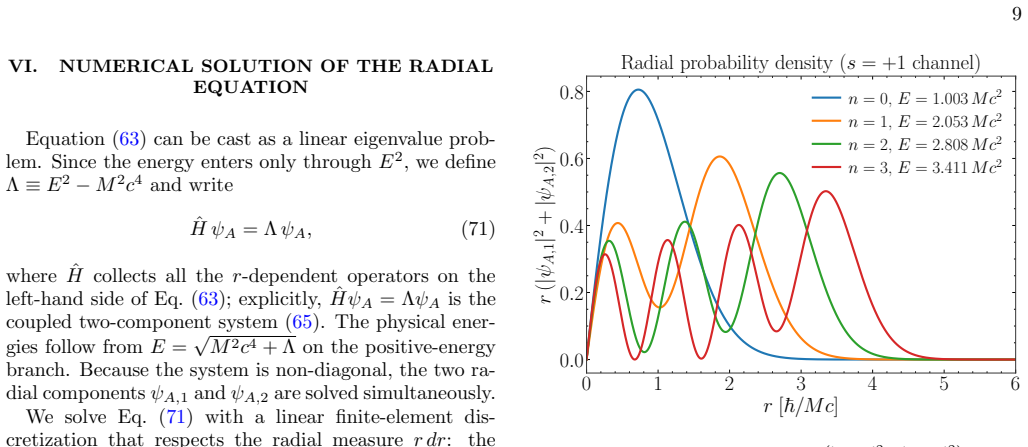
We investigate the Dirac oscillator in a helically twisted spacetime endowed with a uniform axial torsion. Starting from an orthonormal coframe, we compute the Levi--Civita spin connection explicitly and separate the geometric contribution from the axial contortion. Retaining the matrix $\beta$ in the radial Moshinsky coupling, we show that the second-order problem is the ordered product $\hat\Pi_+\hat\Pi_-$ rather than the square of a single operator. The resulting radial dynamics is a coupled, self-adjoint two-component system in which the spin connection supplies the correct cylindrical radial operator, while the off-diagonal metric generates the helical combination $m/r-\omega k$ and a Coulomb-like geometric term. A finite-element solution reproduces the planar Dirac-oscillator spectrum in the flat limit and reveals asymmetric dependence on the longitudinal momentum, avoided level crossings, and a supersymmetric zero mode at $E=Mc^2$. The axial torsion and longitudinal momentum preserve this zero mode, whereas the helical twist lifts it quadratically. Sector-resolved thermodynamic functions are obtained from the relativistic bound-state spectrum. The explicit spinors further determine longitudinal vector and axial currents, and a Witten-index analysis identifies the helical twist as the deformation that removes the protected zero mode.
0
0
hep-ph 2026-07-02

Entropy bound forces primordial black holes to explain dark matter and early galaxies

by Sidan A, Tom Banks +1 more

Can Primordial Black Holes Be Seeds for Early Galaxies in Models Satisfying the Covariant Entropy Bound?

Tiny early black holes decay to radiation while larger ones supply all dark matter and seed JWST galaxies.

Figure from the paper full image
abstract click to expand
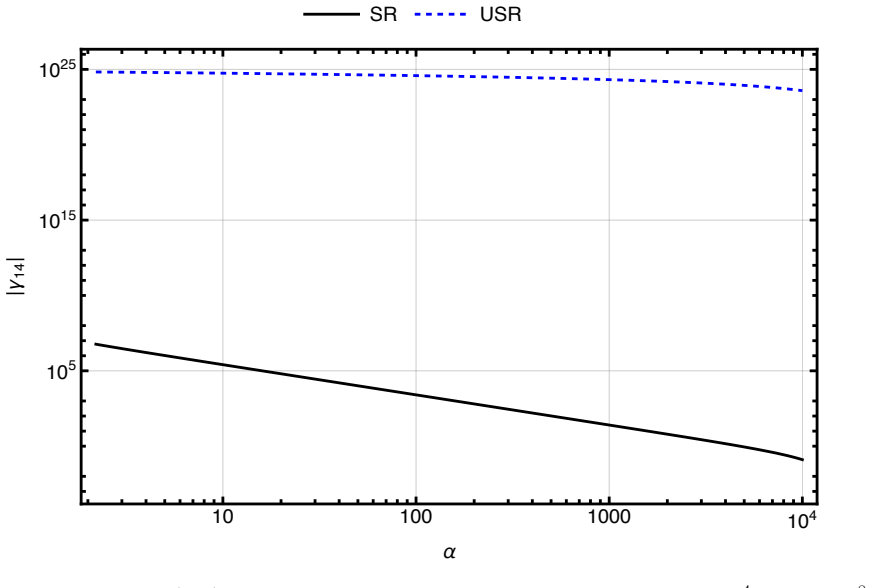
We argue that cosmological models obeying the Covariant Entropy Bound (CEB) mathematically favor states with no localized excitations or one large black hole containing all the energy in a constrained initial state. In order to get a long radiation-dominated era, one must postulate that at a very early time, most horizon volumes of the universe contained tiny black holes that decayed into radiation. A previous work by two of the authors showed that such a scenario could fit the data on the Cosmic Microwave Background (CMB). In order to account for dark matter, we also postulate some random black holes of at least horizon size at that time. A reasonable distribution of such primordial black holes can account for all of dark matter as well as the early galaxies seen by the James Webb Space Telescope. Some of the dark matter may also be in Planck-scale remnants of the decaying black holes. We describe our model both in terms of approximate solutions to General Relativity and a speculative quantum gravity model whose hydrodynamics matches the flat $p = \pm \rho$ FRW model that saturates the CEB.
0
0
hep-th 2026-07-02

Monodromy orbits equate Stokes constants across D-brane charges

by Gengbei Guo, Jiashen Chen +1 more

Modular resurgence of topological string

A few known values generate infinitely many others that reproduce the full BPS spectrum.

Figure from the paper full image
abstract click to expand
Topological string free energy has a rich collection of non-perturbative contributions which are labeled by D-brane charge vectors, and the associated Stokes constants are conjectured to coincide with BPS or DT invariants, i.e. D-brane multiplicities. In this paper, we provide additional evidence to this conjecture by studying modular properties of non-perturbative contributions. We argue using resurgence theory that non-perturbative contributions form orbits of local monodromy group induced by singular points inside a stability chamber, and that the associated Stokes constants must be the same across the orbits. In some examples, this allows generation of infinitely many Stokes constants, which reproduce the entire BPS spectrum. In addition, following [DK26], we also show that generators of Stokes transformations of non-holomorphic partition function satisfy Lie brackets of the Kontsevich-Soibelman Lie algebra, making it possible to identify the global Stokes transformation with the Kontsevich-Soibelman wall-crossing invariant.
0
0
hep-th 2026-07-02

Horizon diffeomorphisms yield dissipative hydro actions

by Mike Blake, Arpit Das +1 more

Dissipative hydrodynamic actions and horizon symmetries in gravity

The action matches known Green's functions to first order for thermal stress tensor dynamics in AdS4 gravity.

abstract click to expand
We give a prescription to compute a dissipative action describing the large-scale thermal stress tensor dynamics of a holographic quantum field theory dual to AdS$_4$ gravity, in the context of the Schwinger-Keldysh formalism. Our prescription is valid to quadratic order in perturbations about the thermal equilibrium state. The hydrodynamical degrees of freedom of this action are realised in gravity as relative diffeomorphisms between the black hole horizon and the two asymptotic boundaries of the Crossley-Glorioso-Liu contour. We explicitly compute the action to first order in derivatives, and confirm it correctly reproduces the known hydrodynamic Green's functions. Our prescription requires a choice of horizon boundary conditions for the metric. We study the horizon symmetries that preserve these, and their relation to conjectured hydrodynamic symmetries responsible for many-body quantum chaos.
0
0
hep-th 2026-07-02

Celestial recursions miss bulk soft terms beyond first three

by Sruthi A. Narayanan

Soft Algebras via Bulk Double Soft Limits

Combined soft and collinear limits create subtleties in bulk amplitudes absent from the boundary description.

abstract click to expand
Soft and collinear limits of "celestial amplitudes" give rise to infinite dimensional symmetry algebras for two-dimensional (2D) "celestial" conformal field theories (CFTs). A small subset of these operators generates the action of the entire set recursively via the commutation relations. Insertion of this subset into celestial CFT correlators gives the boundary version of the first three terms in a soft expansion of the corresponding 4D bulk gravitational scattering amplitude. In this paper, we find that a bulk analog of this, which would allow the entire soft expansion of a gravitational amplitude to be determined via just the first three terms, does not follow trivially from the celestial algebras. We show how the interplay of soft and collinear limits results in subtleties for bulk amplitudes that do not show up in the boundary description.
0
0
math.RA 2026-07-02

Block doubling on graphs creates high-corank Kac-Moody algebras

by Simon Beaudoin, Quentin Bonnefoy +3 more

On a new class of high-corank Kac-Moody algebras

Recursive families show exponential corank growth and link it to the multiplicity of adjacency eigenvalue 2.

Figure from the paper full image
abstract click to expand
We present recursive constructions of several families of generalized Cartan matrices associated with Kac-Moody algebras, whose sizes and coranks grow exponentially. The constructions are encoded by connected multigraphs and by block-doubling operations on their associated symmetric generalized Cartan matrices. Equivalently, the corank problem is translated into a spectral graph-theoretic problem: the corank of $2\mathrm{Id}-\operatorname{Adj}(G)$ is the multiplicity of the adjacency eigenvalue $2$. We give two explicit recursive families, compute their spectra and coranks, and emphasize the difference between absolute exponential growth and relative asymptotic density. The resulting algebras are typically indefinite and singular of corank larger than one, and therefore contain several independent central directions and several isotropic radical directions in the root lattice. We also discuss alternative constructions and possible applications to the algebraic structures appearing in gravity, supergravity, string/M-theory and related generalized symmetry problems.
0
0
hep-th 2026-07-02

DGKT vacua require rigid Calabi-Yau threefolds

by Filippo Revello, Vincent Van Hemelryck

mathcal{N}=1 spectra, cubic couplings and the rigid fate of DGKT

Holographic constraint on cubic couplings holds only when h^{2,1} equals zero.

abstract click to expand
We show that in the DGKT scenario on a generic Calabi-Yau three-fold, a recently proposed holographic constraint on cubic couplings is satisfied if and only if the Calabi-Yau is rigid, i.e. when $h^{2,1}=0$. More generally, we illustrate how in 4d $\mathcal{N}=1$ supergravity, extremal cubic couplings are determined by the third derivatives of the real, K\"ahler-invariant superpotential, while the eigenvalues of its Hessian compute the conformal dimensions of the dual scalar operators. These results extend more broadly beyond 4d $\mathcal{N}=1$ supergravity. Applying them to supersymmetric DGKT vacua, we prove that extremal cubic couplings always vanish in the K\"ahler + universal CS/dilaton sector, whereas non-vanishing (super-)extremal couplings are always present in the complex structure sector. It follows that the holographic constraint is satisfied in DGKT if and only if the Calabi-Yau three-fold is rigid with $h^{2,1}=0$.
0
0
hep-ph 2026-07-02

DLA sums double logs in QED, QCD since 1956

by B.I. Ermolaev

70 years of Doubly-Logarithmic Approximation

Review marks seventy years of the approximation that became basic for high-energy scattering and structure functions.

Figure from the paper full image
abstract click to expand
Existence of Double-Logarithmic (DL) contributions to scattering amplitudes in QED was discovered by V.V. Sudakov in 1956 and total summation of DL contributions to electron-photon scattering resulted in appearance of famous Sudakov exponentials. Then, thanks to contributions of V.G. Gorshkov, V.N. Gribov, G.V. Frolov and L.N. Lipatov, the pattern of calculations in Double- Logarithmic Approximation (DLA) was constructed. Since then, DLA has become one of basic ways of describing various high-energy processes in the framework of QED, QCD and theory of EW interactions. In the present paper, we remind the history of DLA and present a brief overview of application of DLA to various objects like form factors, scattering amplitudes, DIS structure functions.
0
0
math.NT 2026-07-02

Coupling Eisenstein series yields depth-two mock modular forms

by Kathrin Bringmann, Caner Nazaroglu

Depth Two Mock Modularity by Eisenstein Series Coupling

New construction gives an independent route to higher-depth mock forms used in physics and geometry.

abstract click to expand
The notion of depth two and higher mock modular forms have found important applications in mathematical physics and enumerative geometry since their inception through indefinite theta functions with general signature. These theta functions generalize Zwegers' work on Lorentzian signature lattices and the framework of mock modular forms that emanated from it. Mock modular forms can also be studied through Eisenstein and Poincar\'e series. The interaction of this second point of view with the indefinite theta function approach yields a wealth of tools to unearth the rich structure behind mock modular forms. For mock modular forms of higher depth, on the other hand, indefinite theta functions and their variants largely remained the only available approach. In this paper, we show that one can indeed get mock modular forms of depth two by "coupling" a pair of Eisenstein series that yield depth one mock modular forms, thereby providing a new and independent approach to higher depth mock modular forms. We exemplify this new perspective on a depth two object that appeared in the context of Vafa-Witten invariants.
0
0
hep-th 2026-07-02

Symplectic eigenvalues match for Wands-dual backgrounds

by Suddhasattwa Brahma, Jaime Calderon-Figueroa +2 more

Hidden quantum-informatic symmetries of quasi-de Sitter backgrounds

Covariance matrix entries differ but quantum measures of entanglement coincide in dual quasi-de Sitter histories.

Figure from the paper full image
abstract click to expand
We investigate how degeneracies in quasi-de Sitter backgrounds, in the sense of Wands' duality, are reflected in real-space quantum correlations of primordial perturbations. Using the continuous-variable Gaussian formalism for coarse-grained scalar fluctuations, we construct the covariance matrix of a pair of spatially localized modes in inflationary spacetime, and extract the symplectic invariants of the system. For a generic Wands-dual pair of backgrounds, we find that while the individual entries of the covariance matrix are highly background-dependent, the symplectic eigenvalues -- and hence the entanglement entropy, mutual information, quantum discord and log-negativity -- all coincide for the two dual realizations. Our results unveil a new ''quantum-informatic symmetry'' of the de Sitter vacuum, according to which local linear entanglement witnesses constructed from coarse-grained fields cannot distinguish between Wands-dual inflationary histories, even though their background trajectories differ. We show that the special nature of the Wands-duality symmetry (of being local, scale-independent canonical transformations) is at the heart of this duality.
0
0
nlin.SI 2026-07-02

Yangian doubles yield off-shell Bethe vectors

by A. Liashyk, S. Pakuliak +1 more

Yangian Doubles and off-Shell Bethe Vectors

The vectors satisfy properties used to derive recurrence relations and confirm eigenvalues in related ggo-invariant models.

abstract click to expand
Off-shell Bethe vectors for a generic $\fg$ invariant integrable model are constructed through the currents of the Yangian doubles of the classical series. These off-shell Bethe vectors are shown to satisfy the defining properties which were used in \cite{LPR-RR} to prove the rectangular recurrence relations and verify the eigenvalue property of the on-shell Bethe vectors in $\ggo$-invariant integrable models.
0
0
gr-qc 2026-07-02

Modified gravity object relaxes without ringdown

by Gianmassimo Tasinato

Relaxation without ringdown for a compact object in modified gravity

Odd-parity perturbations follow one-way transport; black-hole limit erases the modes rather than creating them.

Figure from the paper full image
abstract click to expand
Compact objects with black-hole-like exteriors may hide new strong-field physics in their interiors, making their dynamical response a sensitive probe of gravity beyond General Relativity. We present an analytically tractable, gravitationally bound compact object with a genuinely new dynamical signature: under a minimal passive boundary prescription, its exactly controlled odd-parity sector exhibits purely dissipative relaxation poles, rather than the oscillatory modes usually associated with black holes and exotic compact alternatives. The object we study is a regular, vector-supported compact solution of a vector--tensor theory, matched without any surface layer to an exterior Schwarzschild geometry. Owing to its anisotropic stress, it can violate the Buchdahl bound and be continuously connected to the black-hole compactness limit. Its unusual response follows from a hidden chiral symmetry, which turns the perturbation problem into one-way transport rather than ordinary wave propagation. The exterior region alone has no conventional quasinormal-mode spectrum; instead, the regular interior and the matching conditions break the symmetry and quantize the fluctuation spectrum. We analytically compute the retarded Green function and susceptibility, and derive an effective membrane response by integrating out the object's interior. In the black-hole limit, the relaxation times diverge, the poles collapse toward zero frequency, and finite-frequency exterior perturbations decouple from the interior. Black-hole behaviour is therefore approached through the disappearance of relaxation modes, not through the emergence of ringdown.
0
0
hep-ph 2026-07-02

Modular symmetry model drives inflation with 1% axion isocurvature

by Yoshihiko Abe, Komei Goto +3 more

Finite modular Coleman-Weinberg inflation

Imaginary part of modulus acts as inflaton while real part dominates after reheating and may yield detectable signals.

Figure from the paper full image
abstract click to expand
We propose a modular symmetric inflationary model based on a Coleman--Weinberg potential generated by integrating out heavy vector-like quarks that couple to the complex modulus field $\tau$ through modular forms. In this framework, the imaginary part of modulus $\tau$ plays the role of the inflaton, while the real part is identified with a heavy axion. We show that the model successfully explains the current cosmological observations. We further discuss reheating through modulus-dependent gauge kinetic functions and the cosmology of the axion. The axion oscillation dominates over the Universe after the reheating via inflaton decay, and then it decays before Big Bang Nucleosynthesis in the viable parameter region. The quantum fluctuation of the axion can be of order $\mathcal{O}(1)\% $ of that of the inflaton, which would induce isocurvature perturbations that may be detectable in future observations.
0
0
hep-th 2026-07-02

Scalar vacuum satisfies Leggett-Garg inequality under spacelike tests

by Yang Xiang

Leggett-Garg inequality in the massive scalar vacuum: No violation under spacelike-separated measurements

Independent ensembles at causally disconnected points give K3 below 1 for all masses, showing no violation unlike Bell tests.

Figure from the paper full image
abstract click to expand
We overcome the long-standing noninvasive measurability (NIM) challenge in Leggett-Garg tests by exploiting the causal structure of quantum field theory (QFT). Our protocol uses three independent ensembles of the vacuum state, each measured by a different pair of observers at spacelike-separated events, yielding the three two-time correlators. By placing these events at positions $(0,0)$, $(\tau,L)$, and $(2\tau,2L)$ with $L>\tau+2\tau_0$, we rigorously ensure that no measurement can influence another. We investigate the vacuum state of a free massive scalar field in 1+1 dimensions, employing the dichotomic observable $Q(f)=\operatorname{sign}(\phi(f))$ where $\phi(f)$ is the smeared field. In the Heisenberg picture, the time evolution is absorbed into a translation of the time-window function, allowing us to derive the two-time correlation function $C(\tau,L)$ and the Leggett-Garg parameter $K_3=2C(\tau,L)-C(2\tau,2L)$. For non-overlapping time windows, we find that the correlation function decays exponentially with $\tau$ for a massive field. For overlapping windows, our numerical computation for a rectangular time window yields $K_3<1$ across the entire mass range, firmly establishing that the vacuum does not violate the LGI. Thus, under strict noninvasive conditions, the vacuum shows no violation of macrorealism, in stark contrast to its well-known violation of spatial Bell inequalities. Our spacelike-separated protocol provides the first LGI test in QFT with rigorously satisfied NIM, setting a methodological benchmark for future studies and highlighting the fundamental distinction between spacelike entanglement and temporal macrorealism in relativistic quantum fields.
0
0
quant-ph 2026-07-02

Spin symmetry maps Dirac equation to shape-invariant Schrödinger problem

by Camila C. Soares, Luis B. Castro +1 more

Scattering, bound states, and resonances in the one-dimensional Dirac equation via supersymmetric quantum mechanics

Closed-form transmission follows from supersymmetric factorization, with bound states read from the amplitude poles.

Figure from the paper full image
abstract click to expand
We develop a unified treatment of scattering and discrete spectra for the one-dimensional Dirac equation with scalar and vector interactions. Under the spin-symmetry condition, the coupled first-order Dirac system maps exactly onto an effective Sturm--Liouville (Schr\"o\-din\-ger-like) problem for a single spinor component. This mapping provides a convenient framework for analyzing transmission, reflection, and analytic continuation. As an explicit application, we consider effective interactions of hyperbolic P\"oschl--Teller type and exploit supersymmetric quantum mechanics and shape invariance to obtain a closed-form expression for the transmission probability. The bound-state spectrum is then recovered from the poles of the analytically continued transmission amplitude, reproducing known results and offering a unified description of scattering and bound states. For the barrier configuration, we briefly comment on the resulting pole pattern in the complex momentum plane and its connection with resonance and quasi-normal-mode behavior. Moreover, we use the chiral transformation to relate the spin- and pseudospin-symmetry sectors and translate results between them without repeating the full derivation.
0
0
hep-th 2026-07-01

Geometry guides faster two-loop integral evaluation

by Stefan Weinzierl

From geometry to phenomenology

Mixed K3 and curve structures in Drell-Yan and similar processes supply information that reduces computational effort.

Figure from the paper full image
abstract click to expand
Precision calculations in quantum field theory rely very often on perturbation theory and thus on the computation of Feynman integrals. Feynman integrals are also fascinating objects from a mathematical point of view and show deep connections to algebraic geometry. Cutting-edge Feynman integrals usually have geometries of "mixed" type, for example parts of it may correspond to a K3-surface, other parts may correspond to curves of a certain genus and the simplest parts correspond to points. In this talk I will discuss how to extract the geometric information from a Feynman integral and how this information can be used to compute more efficiently Feynman integrals. Non-trivial mixed geometries already occur in $2 \rightarrow 2$-processes at two-loops, like Drell-Yan, Bhabha and Moller scattering.
0
0
hep-ph 2026-07-01

Left-hand cuts of partial waves written as right-cut integrals

by Alexandre Salas-Bernárdez

The left-cut for partial waves in terms of physical amplitudes

Exact formula isolates logarithmic structures for any isospin and angular momentum using only physical amplitudes on the right cut.

abstract click to expand
We derive a novel representation of the partial wave amplitude over the left-hand cut for $2 \to 2$ scattering. We express the left-hand cut of arbitrary isospin and angular momentum partial waves as an integral of right-hand cut imaginary parts. This formulation provides an explicit, exact extraction of the logarithmic branch cut structures, offering a valuable tool to systematically quantify left-hand cut uncertainties in unitarization methods such as the Inverse Amplitude Method or $N/D$ approaches.
0
0
hep-lat 2026-07-01

Monte Carlo interpolation yields twisted Casimir difference of 0.327(2)

by José Matos

Monte Carlo reconstruction of symmetry-twisted partition function ratios: the critical 3D Ising

Interpolation between periodic and antiperiodic sectors reconstructs free energy ratios at criticality without derivatives or bulk subtracti

abstract click to expand
We introduce a Monte Carlo strategy for directly estimating partition function ratios between distinct global sectors of a lattice theory. It enlarges the configuration space to sample an interpolating family whose endpoints are the desired sectors, and uses flat histogram methods to reconstruct the corresponding free energy difference. Although the construction is more general, we focus here on the three-dimensional Ising model on the slab $\mathbb{R}^{2}\times S^{1}_{L_{z}}$ at the bulk critical point, comparing the untwisted periodic sector with the $\mathbb{Z}_{2}$-twisted antiperiodic sector. A large-volume and aspect ratio extrapolation gives the symmetry-twisted thermodynamic Casimir difference $\Delta_{\mathbb{Z}_{2}}=0.327(2)$ directly, without lattice derivatives or bulk subtractions. This provides an independent twisted sector probe of tensions observed in periodic sector thermodynamic Casimir observables. More generally, the method gives direct but selective numerical access to CFT compactification data, including estimates of the effective thermal screening scale and the $\mathbb{Z}_{2}$-odd sector energy gap on $T^{2}$.
0
0
hep-th 2026-07-01

Four-derivative theory stays unitary via hidden ghost parity

by Sam Bateman, Neil Turok

Escape from Ostrogradsky via Hidden Ghost Parity

Embedding the model in a two-field O(1,1) theory reveals a symmetry that keeps tree-level probabilities positive.

abstract click to expand
We present a counterexample to Ostrogradsky's famous "no go" theorem as usually interpreted in quantum field theory (QFT), namely a four-derivative, UV-complete QFT with a consistent perturbative expansion which describes high energy scattering processes. We carefully quantize the theory on an $\textit{indefinite}$ space of states - a Krein space - using covariant methods which ensure perturbative causality and unitarity (in the form of the optical theorem) to all orders. We generalize the Born rule to Krein spaces and prove that all tree level transition probabilities are positive in spite of the presence of ghosts. A key role in the proof is played by a hidden "ghost parity" symmetry which becomes explicit when the theory is embedded in a two-derivative, two-field $O(1,1)$-symmetric perturbative field theory.
0
0
hep-th 2026-07-01

Lattice discretization matches MCS degeneracy exactly at commensurable sizes

by Andrea Bulgarelli, Maria Cristina Diamantini +7 more

Toward Hamiltonian simulations of Maxwell-Chern-Simons theory: constant modes and gauge field truncation

Constant mode sector on the torus maps to a Harper-Hofstadter model that preserves the magnetic translation algebra when lattice sizes satis

abstract click to expand
Maxwell-Chern-Simons (MCS) theory in $2+1$ dimensions provides a paradigmatic example of a topological gauge theory with both dynamical and topological degrees of freedom. Its Euclidean formulation suffers from a sign problem, making Hamiltonian numerical approaches particularly attractive. As a first step toward the non-perturbative Hamiltonian study of MCS theory, we investigate the constant mode sector on a spatial torus. Being analytically solvable in the continuum, it provides an ideal benchmark for understanding how the topological properties of the theory are encoded in a finite-dimensional lattice Hilbert space. We construct a finite-dimensional discretization of the torus of flat connections and show that the resulting lattice problem maps onto a generalized Harper-Hofstadter model with twisted boundary conditions. We identify the commensurability conditions under which the finite lattice exactly reproduces the magnetic translation algebra and the topological degeneracy of the continuum theory. A systematic analysis of gauge field truncation and its convergence toward the continuum limit is then presented.
0
0
hep-th 2026-07-01

Transformer RL finds heterotic line bundle standard models

by Jacky H. T. Yip, Alessandro Mininno +1 more

Exploring Line Bundle Standard Models with Transformers

Agent learns to enforce E8 embedding, anomaly cancellation and supersymmetry on Calabi-Yau threefolds

Figure from the paper full image
abstract click to expand
We propose a Transformer-based Reinforcement Learning architecture, "LB-Explorer", to search for heterotic line bundle standard models arising from compactifications on smooth Calabi-Yau (CY) threefolds. We construct $E_8\times E_8$ vacua with $\text{SU}(5)$ symmetry, where the $\text{SU}(5)$ can be further broken to the Standard Model gauge group via discrete Wilson lines. We test the LB-Explorer environment on complete intersection Calabi-Yau (CICY) manifolds, though the neural network architecture naturally generalizes to any CY admitting a smooth, simplicial Mori cone and a freely-acting discrete symmetry. The LB-Explorer efficiently learns constraints on the line bundle sums, guaranteeing the $E_8$ gauge embedding, anomaly cancellation, poly-stability (supersymmetry), chirality of the spectrum, and the absence of exotic matter. Valid configurations can be subsequently filtered by imposing the missing constraints, such as the equivariant structure of the line bundle sum and further requirements on the particle spectrum. In this direction, we introduce a hybrid architecture incorporating CP-SAT solvers that aims to impose some of the conditions exactly by perturbing solutions found by the LB-Explorer. The versatility and scalability of the LB-Explorer make it a powerful tool for navigating the string landscape with a large number of moduli. The code and tools necessary to reproduce our findings are available at https://github.com/alexmininno/LB-Explorer
0
0
hep-th 2026-07-01

Flow equations for QFT data extend to AdS3 and AdS4

by Fabiana De Cesare, Manuel Loparco

QFT as a set of ODEs: higher dimensions

The ODEs track how scaling dimensions and OPE coefficients change under bulk deformations and reproduce operator mergers and level repulsion

abstract click to expand
Correlation functions of local operators in Quantum Field Theory (QFT) in Anti-de Sitter space (AdS) are completely fixed by the QFT data: the set of scaling dimensions $\Delta_i$ and OPE coefficients $C_{ijk}$ of the boundary operators, and the bulk-boundary (BOE) coefficients $b^{\hat\Phi}_i$ encoding how bulk fields decompose into boundary operators. In this work, we generalize the ordinary differential equations (ODEs) that govern the variation of the QFT data under a bulk relevant deformation, originally derived for AdS$_2$ \cite{Loparco:2026fki}, to the cases of AdS$_3$ and AdS$_4$. We demonstrate that these flow equations natively capture the mechanism of merger-annihilation when a boundary operator hits marginality, as well as level repulsion when different $\Delta_i$'s approach each other. Furthermore, we address the practical implementation of the framework: we propose substituting the ODE for the OPE coefficients with the crossing equation for greater efficiency, and we observe that Pad\'e approximants dramatically improve the convergence of the sums over boundary operators, at least in free theories. Altogether, these advances lay the groundwork for the future application of the flow equations to the study of strongly coupled QFTs in AdS and their flat space limits.
0
0
hep-th 2026-07-01

D-brane probes match short-time Krylov complexity growth

by Dimitrios Chatzis, Madison Hammond +3 more

Holographic Spread Complexity from Branes and Strings

Routhian fixes charges for D0-branes in ABJM and rotating D3-branes to yield correct quadratic behaviour

abstract click to expand
We study Krylov spread complexity in holographic theories using genuine string-theory probes. Building on the proposal that the growth rate of spread complexity is measured by a proper momentum in the bulk, we embed the falling-particle picture in top-down examples. We first analyse a D0 brane in the type IIA AdS$_4\times {\mathbb{CP}}^3$ background dual to ABJM theory, identifying it with a dressed monopole operator in the boundary CFT. For purely radial motion the proper-momentum prescription reproduces the expected quadratic growth of the complexity. When the probe carries momentum along an isometric direction, the naive prescription gives an apparent conflict with the short-time behaviour required of Krylov complexity. We propose that the correct fixed-charge description is obtained by Legendre transforming to the Routhian. We support the D0-brane interpretation through the regulated monopole two-point function, whose survival amplitude determines the Krylov moments, and we show that radial fluctuations give controlled corrections to the effective energy governing the complexity growth. We then extend the analysis to a rotating non-BPS D3 brane in AdS$_5\times S^5$, where angular momentum produces a centrifugal barrier and a sharp condition for radial in-fall. In the falling regime the Routhian prescription again gives the correct short-time behaviour. Finally, we consider a wound fundamental string in AdS$_5\times S^5$, which reduces to an effective massive falling particle. This clarifies the distinction between Noether charges, which require a fixed-charge Routhian treatment, and winding data, which enter through the effective mass. Our results provide a string-theoretic realisation of holographic spread complexity for point-like and extended excitations, making manifest their dependence on field theory parameters.
0
0
hep-th 2026-07-01

Elliptic kernels prove Seiberg dualities as residue identities

by Alessio Fontanarossa, Fabrizio Nieri +1 more

Localization, Factorization and Dualities for Elliptic Kernels

4d N=1 theories on cylinder geometries give theta-function kernels whose residues match dual theories of different ranks.

abstract click to expand
We study the exact partition function of 4d $\mathcal N=1$ supersymmetric gauge theories on a torus times a cylinder $\mathrm{Cyl}=I\times S^1$, where $I$ is a finite interval carrying two boundary components. Each endpoint supports an independent Dirichlet or Robin-like boundary polarization, so that the partition function is a boundary-to-boundary elliptic kernel. We construct the rigid supersymmetric geometry, determine the BPS locus, and compute the chiral-multiplet 1-loop determinants for the four possible boundary polarizations via equivariant localization. The resulting elementary building blocks are theta functions dressed by cubic phases. We then prove rank-changing Seiberg-type dualities as identities of Jeffrey--Kirwan residues of these elliptic kernels. We also discuss factorization into holomorphic-block cap wavefunctions represented by elliptic Gamma functions, dimensional reductions to three and two dimensions, complete-intersection gauged linear sigma models, and elliptic kernels for 4d $\mathcal N=4$ super Yang--Mills and the Klebanov--Witten theory, useful for holographic applications.
0
0
cond-mat.stat-mech 2026-07-01

Analytic continuation yields solvable non-unitary conformal interfaces

by Qicheng Tang, Zixia Wei +1 more

Exactly solvable non-unitary conformal interfaces in unitary CFTs

SL(2,C) family from unitary lattice data obeys generalized Cardy condition and produces complex effective central charge.

Figure from the paper full image
abstract click to expand
We construct directly on the lattice a class of non-unitary interfaces that are both exactly conformal and exactly solvable, and establish their corresponding boundary and interface conformal field theory (CFT) descriptions. The construction is obtained by analytically continuing the scattering data of known exact unitary conformal interfaces on the lattice, yielding an $SL(2,\mathbb C)$-parametrized family, which is non-compact and breaks probability-current conservation. Exploiting the exact lattice-continuum correspondence, we derive the conformal boundary states in the folded picture. We show that a proper definition of the Hilbert space in the closed-string channel requires the incoming and outgoing boundary states to be specified independently by boundary data associated with a pair of dual biorthogonal bases, in close analogy with the right and left eigenvectors of a non-Hermitian Hamiltonian. This requirement determines a consistent CFT construction of non-unitary boundaries and interfaces, and leads to a non-unitary generalization of the conventional Cardy's condition for unitary boundary CFT. Beyond their formal construction, these non-unitary interfaces are shown to exhibit logarithmic entanglement scaling governed by an effective central charge that is generally complex. For the $SU(1,1)$ subclass, the effective central charge remains real but grows without bound as the transmission coefficient increases. This result is demonstrated through analytical and numerical lattice calculations, as well as an interface CFT analysis in the unfolded picture. Finally, we present a general CFT analysis of a class of global quantum quenches whose initial states are prepared with non-unitary boundaries. We relate their effective temperature to the conformal dimension of the boundary-condition-changing operators associated with non-unitary boundary conditions.
0
0
hep-th 2026-07-01

String amplitudes obey complete set of difference equations

by A.Morozov, K.Pushkin +1 more

Towards Equations for String Amplitudes

Koba-Nielsen integrals for open bosonic strings satisfy linear relations in kinematics, with count matching parameters and low-energy limit

abstract click to expand
Generic Feynman integrals are widely studied as solutions of Picard-Fuchs equations on moduli spaces of their parameters, and this calls for consideration of this phenomenon at a more basic level - of string amplitudes which are integrals over true non-singular module space of Riemann surfaces and their various generalizations. The main puzzle here is that a single string amplitude involves mane different particle diagrams, corresponding to different parts of the same moduli space, but different particle diagrams are usually believed to satisfy different equations, not unified into a common entity. We begin investigation of this problem, starting from Koba-Nielsen diagrams. While there is nothing interesting at this level for particles, the tree-level open bosonic string amplitudes satisfy non-trivial linear difference equations in kinematic variables. Moreover, the integration-by-parts on moduli space, standing behind Picard-Fuchs equations for particle loops, for strings are operative already at the tree level. We construct a complete system of such equations for arbitrary n-point tree amplitudes, with the number of independent relations matching the kinematic parameters. In variance with the particle case equations are difference ones rather than differential. The low-energy limit $\alpha \to 0$ smoothly recovers the algebraic QFT structure.
0
0
gr-qc 2026-07-01

Gravitational wave turns static charge field into electromagnetic radiator

by Vladimir Epp, Konstantin Osetrin +1 more

Electromagnetic radiation from a point-like charge in a weak gravitational wave: a Shapiro-delay-motivated approach

The initially Coulomb field becomes time-dependent and radiates with an angular pattern derived from first-order potentials for any polariza

Figure from the paper full image
abstract click to expand
We investigate the field of a point-like electric charge freely falling in a gravitational wave. In the presence of a gravitational wave, the initially static Coulomb field of the charge becomes time-dependent and generates corresponding radiation. The gravitational wave is treated as a weak perturbation of the Minkowski metric. The electromagnetic four-potential of the charge is sought as a solution to Maxwell's equations in the gravitational wave metric, to first order in perturbation theory. The potentials of the point charge are found in quadratures throughout the space. To regularize the potentials, an approach motivated by the Shapiro effect for the time delay of radiation in a gravitational field is used. The potentials of the charge in the far zone are calculated explicitly for a monochromatic, arbitrarily polarized gravitational wave. The angular distribution of the electromagnetic radiation induced by the gravitational wave is obtained.
0
0
hep-th 2026-07-01

Geometric ordering in Laporta produces Laurent-polynomial DEs in ε

by Antonela Matijašić

The geometric bookkeeping guide for varepsilon-factorised differential equations

A two-step procedure first selects masters by geometric properties to obtain a Laurent form, then builds the matrices that factor ε out for

Figure from the paper full image
abstract click to expand
Precision predictions for high-energy experiments rely on accurately evaluating multi-loop, multi-scale Feynman integrals in dimensional regularisation. The method of differential equations is by now the standard tool for this task, but its full power is only realised when the system can be brought into an $\varepsilon$-factorised form. In this talk, we present an algorithmic framework that systematically constructs $\varepsilon$-factorised differential equations for arbitrary integral families, independent of their underlying geometry. We work in the setting of twisted cohomology and study the space of differential forms associated with a given family of Feynman integrals in the Baikov representation. Our approach consists of two steps. First, we introduce a particular ordering for the Laporta algorithm that orders Feynman integrals within a sector according to their geometric properties. We observe that this order relation yields a basis whose differential equation is in a Laurent polynomial form in the dimensional regulator $\varepsilon$. In the second step, we systematically construct transformation matrices such that the resulting system is in the $\varepsilon$-factorised form.
0
0
hep-th 2026-07-01

BMPV black hole receives analytic first α' corrections

by Alejandro Ruipérez

BMPV black hole at first order in α'

Entropy computed via generalized Wald formula matches supersymmetric index for unequal charges

abstract click to expand
We consider the low-energy effective action of the heterotic string and derive an analytic solution describing the first-order $\alpha'$ corrections to the supersymmetric and extremal BMPV black hole with three unequal charges. The solution interpolates between an asymptotically-flat region and the near-horizon geometry. We compute the corrected black hole entropy using a generalization of Wald formula available in the literature, which correctly accounts for the Lorentz Chern-Simons term. The resulting expression agrees with recent results in the literature, which are based on the evaluation of an appropriate supersymmetric index.
0
0
hep-ph 2026-07-01

Generalized curvature lifts inflaton decay suppression in no-scale models

by Ignatios Antoniadis, John Ellis +3 more

Reheating in No-Scale Models of Inflation

Models with α≠1 or extra gauge terms produce non-zero decay rates to SM fields and new (n_s,r) predictions.

abstract click to expand
Analogously to the suppression of inflaton decays into conformally-coupled scalar fields in the original Starobinsky $R + R^2$ model of inflation, inflaton decays to Standard Model fields are also suppressed in minimal no-scale models of inflation with field space curvature $\mathcal{R} = 2/3$. We study how this suppression can be avoided in generalized no-scale inflationary models. These include models in which the field space curvature $\mathcal{R} = 2/(3\alpha)$ with $\alpha \ne 1$ as exemplified by models derived from string theory, as well as models with non-minimal gauge kinetic terms and anomaly-induced couplings. We analyze direct and anomaly-induced inflaton couplings to gauge bosons and gauginos and demonstrate the K\"ahler-frame invariance of the physical gauge coupling. We determine the resulting reheating temperatures and the corresponding predictions in the $(n_s,r)$ plane. Finally, we consider an $R^3$ deformation of Starobinsky supergravity, which modifies the inflaton and stabilizer sectors but does not, by itself, generate new tree-level inflaton couplings to visible matter fields.
0
0
hep-th 2026-07-01

Nekrasov sums converge for unitary quivers in positive radius

by Bruno Le Floch

Convergence of Nekrasov instanton sum for unitary quivers

The instanton series for N=2 quiver theories with unitary groups converges absolutely inside an open dense set of parameters.

Figure from the paper full image
abstract click to expand
The convergence radius of Nekrasov partition functions (as a function of instanton counting parameters) is shown to be positive for 4d $\mathcal{N}=2$ quiver gauge theories with unitary gauge groups in an open dense subset of parameters. For $U(N)$ SQCD this is established if the ratio of equivariant parameters $b^2=\epsilon_1/\epsilon_2$ belongs to $\mathbb{C}\setminus[0,+\infty)$ and Coulomb parameters or masses are away from a lattice of hyperplanes. For general quivers it is only established for $b^2\in\mathbb{C}\setminus\mathbb{R}$. When gauge multiplets are asymptotically free, the radius is infinite, whereas in the (mass-deformed) conformal case the radius admits a positive lower bound that only depends on $b^2$. The proof relies on the expression of the partition function as a sum over tuples of partitions, and a proof of absolute convergence based on combinatorial inequalities on products of (co)hook lengths. Through the AGT correspondence this implies that large classes of Virasoro and W-algebra conformal blocks on the sphere or torus have positive convergence radius, for generic dimensions and complex central charges.
0
0
hep-th 2026-07-01

Matrix model singularities vanish beyond double scaling

by Sumit R. Das, Shaun D. Hampton +2 more

Fate of "Space-like singularities" in c=1 Matrix Model

Quenches retaining non-linear terms cause phase space folds to proliferate then relax to equilibrium with universal power law.

abstract click to expand
A class of time dependent backgrounds in two dimensional String Theory leads to superluminal Liouville walls on the worldsheet. In the dual double scaled $c=1$ matrix model these backgrounds involve eigenvalues leaking out to infinity, and the collective field fluctuations become strongly coupled along space-like regions, resembling singularities. We realize these backgrounds as results of quantum quenches in the matrix model, retaining non-linear terms in the matrix potential, thus departing from a double scaling limit. Working in the fermion picture in a Thomas-Fermi approximation, we show that while the early time behavior of the phase space density near the maximum of the potential agrees with that obtained in the double scaled theory, at times of the order $(\log N)$ the effect of the IR wall becomes significant. At later times, with a characteristic winding time of order $(\log N)^2$, folds on the fermi surface proliferate and eventually cover the allowed region in phase space densely. Using action-angle variables, we show that the phase space density oscillates around a time independent and angle independent value rapidly at late times. A coarse-grained density in the angle space relaxes to a time independent equilibrium value as a power law with a universal exponent largely independent of the details of the initial state. Thus, the appearance of a space-like singularity is an artifact of the strict double scaling limit. We comment on the interpretation of the final state in String Theory.
0
0
hep-th 2026-07-01

Exact black brane solution recovers conformal fluid in IR

by Sangheon Yun

Exact Planar Black Hole in AdS-Einstein-Scalar Gravity with IR Emergent Nearly Conformal Fluid

The dual three-dimensional QFT breaks scale symmetry at high energies through a marginally relevant operator but approaches conformal behavi

abstract click to expand
We study an exact analytic solution describing a static plane-symmetric hairy black brane in four-dimensional Einstein gravity minimally coupled to a neutral scalar, arising as a consistent truncation of the type IIA supergravity whose low-energy limit captures the strongly coupled thermal dynamics of the ABJM theory. The solution is characterized by two independent parameters. We perform the thermodynamic description by treating the scalar hair parameter as an independent variable, deriving the generalized first law and verifying the Euler relation. The UV boundary theory is a three-dimensional QFT at finite temperature deformed by a marginally relevant scalar operator with logarithmic RG flow. The boundary theory exhibits explicit scale-symmetry breaking at high energies but recovers the behavior of a conformal fluid in the infrared thermal limit.
0
0
hep-ph 2026-07-01

Particle physics explains the Universe's birth and evolution

by Venus Keus

Particle Cosmology

The early Universe functions as a natural laboratory revealing fundamental laws through observations like the CMB and theories such as infla

abstract click to expand
Particle cosmology is the branch of science that seeks to understand the birth and evolution of the Universe by applying the principles of particle physics. It brings together the physics of the very small (fundamental particles and forces) with the physics of the very large (the structure and evolution of the cosmos). In many ways, the early Universe acts as a natural laboratory - one far more energetic than any collider we can build - offering unique insights into phenomena that may never be accessible on Earth. Cosmological observations such as the Cosmic Microwave Background, the distribution of galaxies, and the accelerating expansion of the Universe serve as windows into the fundamental laws of nature. At the same time, theoretical developments in particle physics have led to theories, such as inflation, baryogenesis, and Dark Matter, that help explain key features of the cosmos.
0
0
cond-mat.str-el 2026-07-01

Algebra contractions link Sommerfeld coefficient to spin and charge responses

by Eoin Quinn

The exceptional origin of the strange metal and the LFL-HFL transition

A parameter-free relation 4π²γ^{-1} = χ_s^{-1} + χ_c^{-1} follows from competition between Landau-Fermi and Hubbard-Fermi liquids in the str

Figure from the paper full image
abstract click to expand
We propose an algebraic framework for the strange metal regime of strongly correlated electrons. We show that the exceptional superconformal algebra $D(2,1;\alpha)$ admits two distinct contractions of its conformal sector: one to a pair of canonical fermions, the underlying degrees of freedom of the Landau-Fermi liquid (LFL), and one to the algebra of Hubbard operators, which characterise a distinct metallic regime, the Hubbard-Fermi liquid (HFL). We argue that competition between these two metallic states drives the emergence of the strange metal as a $0+1$D superconformal bath. We analyse the resulting thermodynamics, and obtain a parameter-free prediction, $4\pi^2\gamma^{-1} =\chi_s^{-1} + \chi_c^{-1}$, relating the Sommerfeld coefficient to the static spin and charge susceptibilities. We further show that the LFL-HFL transition is discontinuous at low temperature, owing to a degeneracy at the emergence of the HFL, and map out the resulting phase diagram. We connect the framework to microscopic lattice models and to the phenomenology of correlated insulators.
0

browse all of hep-th → full archive · search · sub-categories