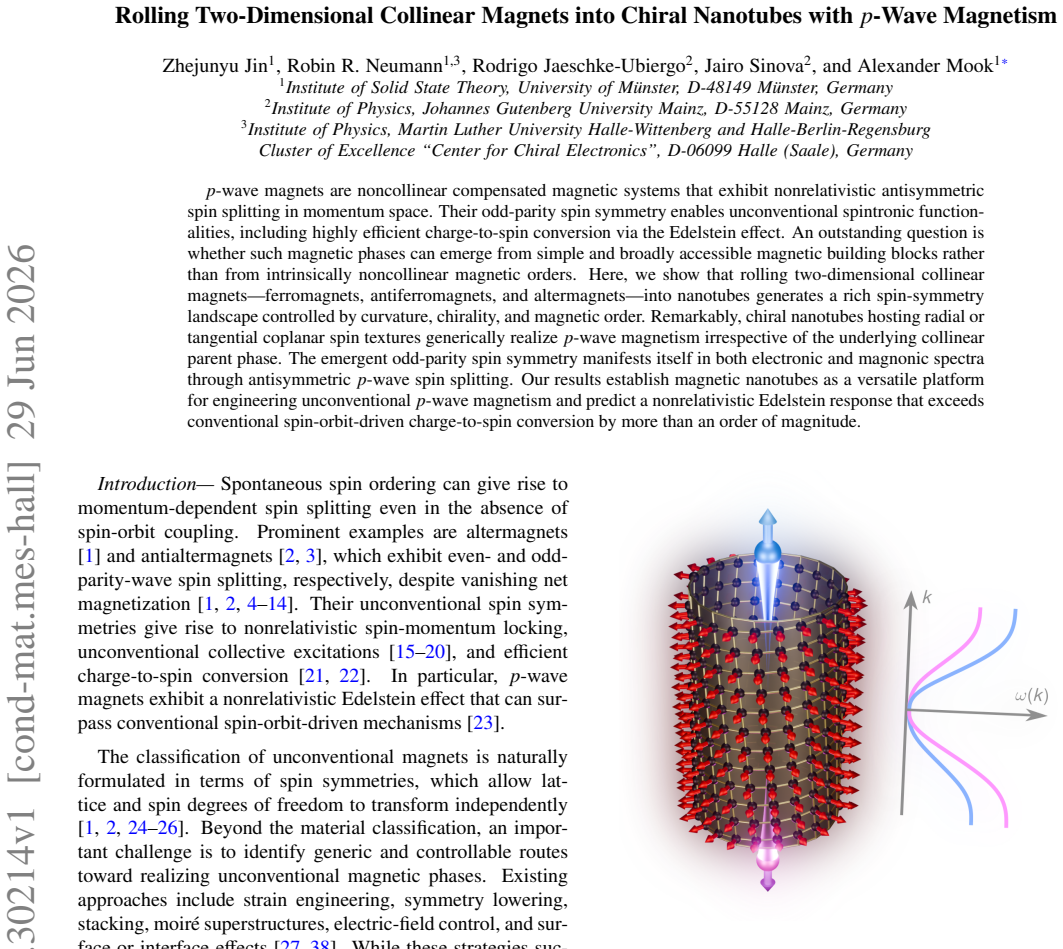
$p$-wave magnets are noncollinear compensated magnetic systems that exhibit nonrelativistic antisymmetric spin splitting in momentum space. Their odd-parity spin symmetry enables unconventional spintronic functionalities, including highly efficient charge-to-spin conversion via the Edelstein effect. An outstanding question is whether such magnetic phases can emerge from simple and broadly accessible magnetic building blocks rather than from intrinsically noncollinear magnetic orders. Here, we show that rolling two-dimensional collinear magnets -- ferromagnets, antiferromagnets, and altermagnets -- into nanotubes generates a rich spin-symmetry landscape controlled by curvature, chirality, and magnetic order. Remarkably, chiral nanotubes hosting radial or tangential coplanar spin textures generically realize $p$-wave magnetism irrespective of the underlying collinear parent phase. The emergent odd-parity spin symmetry manifests itself in both electronic and magnonic spectra through antisymmetric $p$-wave spin splitting. Our results establish magnetic nanotubes as a versatile platform for engineering unconventional $p$-wave magnetism and predict a nonrelativistic Edelstein response that exceeds conventional spin-orbit-driven charge-to-spin conversion by more than an order of magnitude.
We show how a broad class of two-component square-gradient models of wetting may be solved exactly for the surface tensions and density profile paths, and clarify how the presence or absence of critical point wetting, in binary and ternary mixtures, is related to universality and symmetry principles at critical end points. We begin by solving a model of fluid interfaces, first introduced by Koga and Widom, in ternary mixtures showing three phase coexistence. Numerical studies had revealed interesting wetting transitions, as well as curious geometrical properties of the profile paths in the density plane, and led these authors to conjecture expressions for the surface tensions. These conjectures were extended by Koga and Indekeu and predicted that partial wetting may persist up to the line of critical end points, i.e. critical point wetting was absent. Here, we obtain the exact density profiles and surface tensions for the Koga-Widom-Indekeu (KWI) model using complex analysis and drawing on the theory of algebraic curves. The exact solution determines the location and order of wetting transitions in the surface phase diagram, confirming that critical point wetting is absent. The model also displays the remarkable property that microscopic density profiles are mapped, by a conformal transform, onto the shape of a macroscopic drop near the contact line whose tensions satisfy the Neumann triangle. Two related models, which illustrate the role of the component isotropy, are also discussed. These models suggest that a universality principle governs wetting in fluid mixtures, resolving contradicting results from earlier studies: Critical point wetting is present if the order-parameter components of the mixture describe Ising-like criticality, but is absent if there is a local XY symmetry. Implications for wetting transitions in more microscopic models and in experiments are discussed.
Geometric analogs of Bloch oscillations studied so far have relied on Berry curvature. We show that a weakly inhomogeneous electric field adds a distinct quantum-metric term to semiclassical wavepacket dynamics, generating an oscillatory real-space contribution even when the Berry curvature vanishes. The associated transport response comprises an intrinsic and a scattering-time-dependent part. In the regime studied, the latter can dominate and approach finite saturation at high field when the relative field inhomogeneity is held fixed. A tilted Dirac model illustrates the mechanism. Realistic platforms will likely require synthetically engineered superlattices, with a finite quantum metric and an adequate band gap.
We develop a quantitative theory for the emergence of quantum many-body chaos as integrability is broken via a tunable parameter. In a circuit model of free fermions, 'doped' with a tunable density of integrability-breaking gates, we uncover the microscopic mechanisms underpinning the crossover from early-time integrable behaviour to late-time chaos through the lens of the out-of-time-ordered correlators (OTOCs). The integrability-breaking gates act as local, in spacetime, hotspots which locally amplify the OTOCs such that an accumulation of them eventually leads to fully-developed chaos. We identify the explicit characteristic time and length scales governing this crossover, as well as the dependence of the chaotic OTOC characteristics -- such as the butterfly velocity and front broadening -- on the integrability-breaking parameter.
The dynamics of a quantum system encode signatures of whether the underlying Hamiltonian is integrable or chaotic, giving rise to the concept of quantum information scrambling through the properties of the resulting dynamical states or operators. We introduce an information-theoretic framework based on the Haar-averaged sum of total correlations (aSTC), together with average genuine multipartite entanglement generated dynamically from initially fully separable states, as robust probes of quantum information scrambling. Using the long-range quantum XYZ spin model in transverse and longitudinal magnetic fields, whose integrable limit is the nearest-neighbor transverse XY model, we demonstrate that the long-time average and, more importantly, the temporal fluctuations of the aSTC provide a faithful and system-size-independent signature of integrable and chaotic dynamics, similar to the conventional measure of scrambling, out-of-time-ordered correlator (OTOC). When the system is in contact with the thermal reservoir and system-bath coupling follows Markovianity, we find that the fluctuations of the aSTC and OTOC continue to distinguish integrable and chaotic dynamics only at intermediate times. However, we observe that in the non-Markovian domain, information backflow restores the scrambling dynamics, enabling the aSTC to retain its distinguishing power even at long times. Interestingly, we exhibit that, under Markovian amplitude damping and non-Markovian dephasing noise, the temporal fluctuations of the aSTC can discriminate between integrability and non-integrability in the weak Markovian regime, even when OTOC fails to do so.
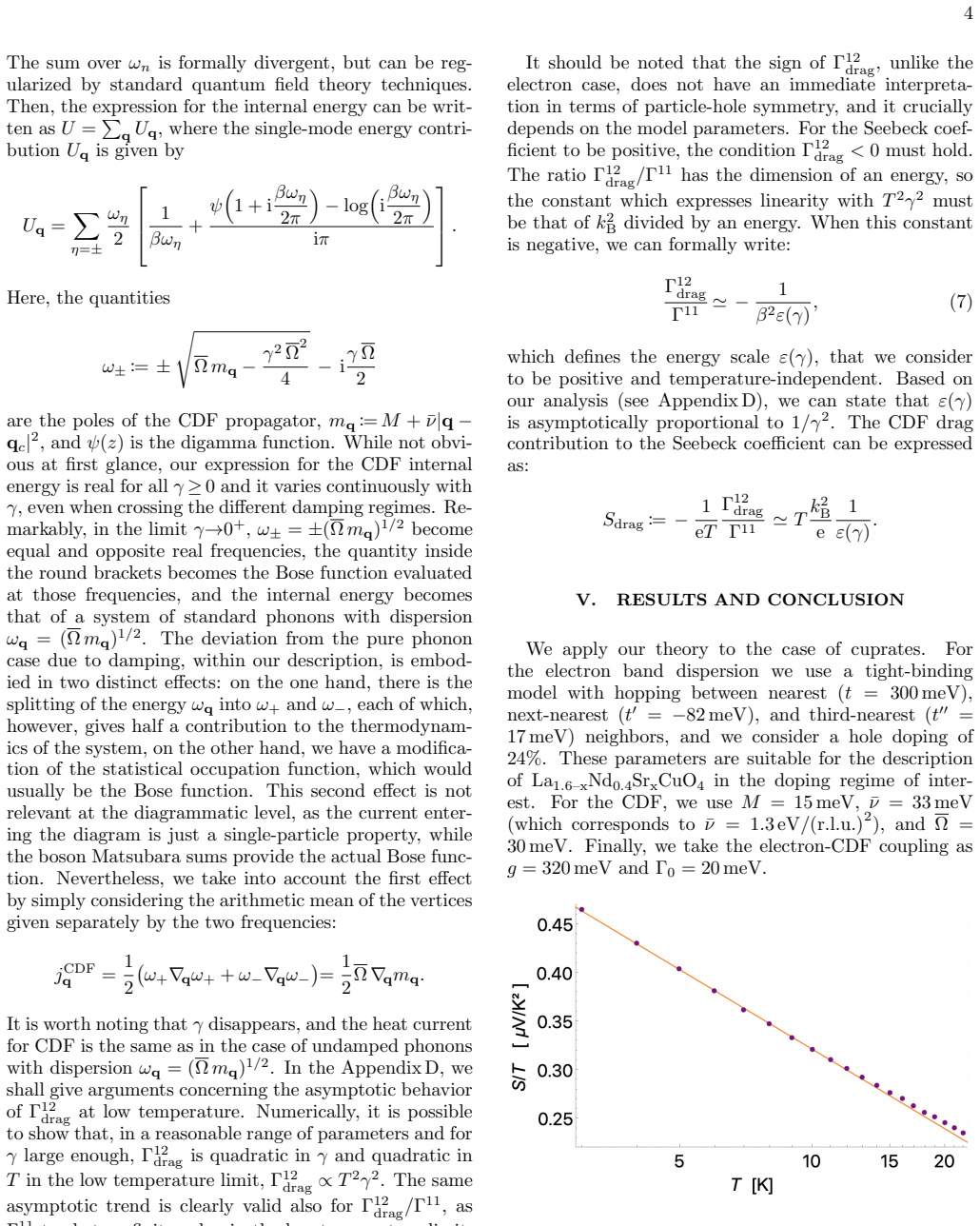
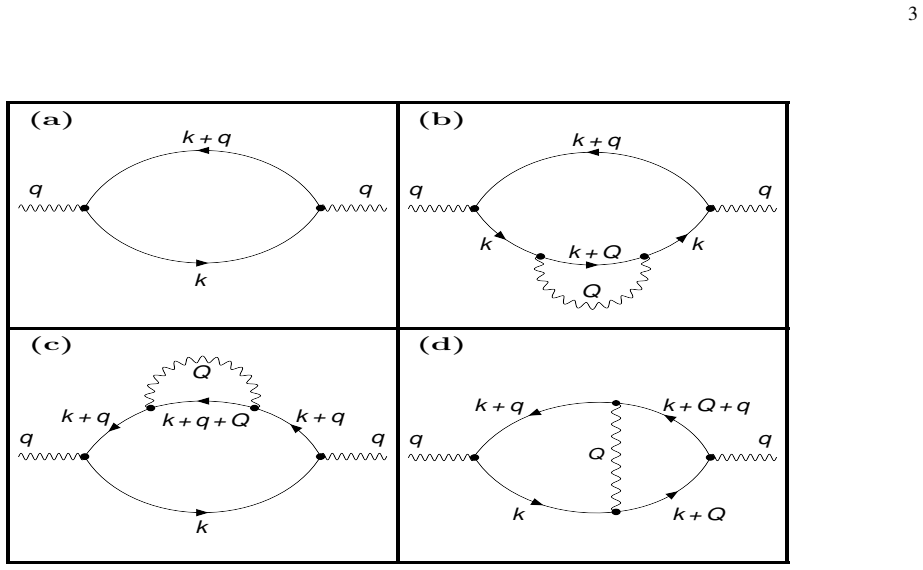
Inspired by the observation of a Seebeck coefficient ratio that exhibits a seemingly logarithmic divergence at low temperature in high-temperature superconducting cuprates, we show that a mechanisms similar to the standard phonon drag can give rise to anomalies in the thermopower of a metal, if the dragged collective mode is overdamped, with a damping coefficient that increases with lowering the temperature. Our finding adds a piece to the puzzle of the strange-metal behavior observed in many different systems and supports our proposal that overdamped charge density fluctuations can be responsible of such a behavior in high-temperature superconducting cuprates.
We consider a very general Rosenzweig-Porter-type model, $H=H_0+\lambda W$, where $H_0$ is an arbitrary Hermitian matrix and $W$ is a standard Wigner matrix. We precisely trace the localization properties of the eigenvectors and the eigenstate thermalisation hypothesis (ETH) as the coupling constant $\lambda$ interpolates between the trivial $\lambda=0$ case and the fully mean field regime of large $\lambda$. Our results hold uniformly in $H_0$ and $\lambda$, substantially generalising all previous local laws on deformed Wigner matrices even in the mean field regime. Our proof precisely captures the deterministic approximation to the resolvent which exhibits a strongly inhomogeneous structure. As a byproduct, we conclude the emergence of a mobility edge and study the phenomenon of re-entrant localization.
Polar collective motion commonly arises from alignment interactions, particle anisotropy, or an imposed directional bias. Here we identify a distinct route to polar order that does not rely on alignment interactions between the active particles. We show that non-aligning active Brownian particles embedded in a dense passive medium can develop polar coherence when confined to a compact curved surface. Persistent active motion redistributes stress through the host and creates passive-depleted regions. When the stress-spreading length becomes comparable to the sphere radius, these regions merge into elongated scars that channel active motion and, through feedback with the active flux, promote a common direction of motion. Removing the passive host suppresses polar coherence even though the active particles continue to cluster on the same sphere. Our results establish an environment-mediated route to collective polarity in which symmetry breaking emerges from the coupling between active motion, passive stress redistribution, and compact geometry.
We study the outcome of adaptive learning of a large number of players engaging in sets of two-strategy two-player games. We are interested in typical games, and generate the payoff matrices at random at the beginning. The payoff matrices then remain fixed during the learning process. This provides a game theoretic foundation for the Sherrington-Kirkpatrick (SK) game, recently introduced by Garnier-Brun, Benzaquen and Bouchaud. The original model by these authors is a special case, with no bias towards any strategy. We here determine stability of learning for SK games with general random bias, and find that the nature of the stable state is affected by random fields. We also introduce a grand-canonical version of the SK game, in which players can choose to abstain. We determine the stability of learning for this game. Our analysis confirms that complex situations involving many players are frequently unlearnable, even if each player only chooses between two different actions. The rate with which players lose memory of past payoffs and the competitiveness of the game emerge as key parameters determining whether learning converges to a unique fixed point, whether there are many fixed points, or if the dynamics remains persistently volatile.
Geometric analysis of electronic Bloch states offers a universal framework for understanding electronic properties, yet its role in the transport of orbital angular momentum remains unexplored. In this work, we establish an analytic connection between orbital angular momentum transport and the geometric properties of Bloch wave functions in electronic systems. Focusing on the intrinsic orbital Hall effect in the dc limit under a spatially nonuniform electric field, we show that its conductivity can be expressed in terms of universal geometric quantities, such as the orbital Berry curvature and quantum metric. This formulation provides a term-by-term correspondence with the geometric description of intrinsic charge Hall transport established in previous studies. Using a tight-binding model, we further illustrate that the higher-order orbital Hall response can exhibit enhanced sensitivity to the orientation of an anisotropic sample. Our work deepens the understanding of diverse intrinsic transverse transport phenomena and the role of quantum geometry in electronic systems.
The Hamiltonian-Adaptive Resolution Simulation (H-AdResS) method allows to combine atomistic and particle-based coarse-grained models in a single simulation box, which makes it very attractive to model systems containing interfaces or reactive regions surrounded by an interacting environment. In our previous work [arXiv:2604.21867], we implemented H-AdResS in LAMMPS 2023 and extended its use to interfaces, focusing on MOF/CO$_2$ interfaces as an example. We found that, despite its advantages, using this method properly for this kind of systems is not trivial. In this work, an in-depth analysis of the impact of the choice of thermostatting schemes and long-range electrostatics models is presented. Even though its Hamiltonian formulation enables performing H-AdResS simulations within constant temperatures ensembles, not every thermostat is appropriate. We demonstrate that Langevin thermostat is a reliable choice for this method, while Nos\'e-Hoover results in artifacts. In addition, we show that using short-range models such as the Damped Shifted Force method for electrostatics, a popular choice for H-AdResS simulations, can lead to non-physical results when modeling interfaces. The need of capping strategies to deal with discontinuities in forces and energies arising from abrupt changes in resolution is also discussed. Finally, the impossibility of changing the definition of the H-AdResS Hamiltonian to include a gradual interpolation of the bonded degrees of freedom is discussed. We hope that this contribution helps the reader to appropriately set up H-AdResS simulations and to assess if this method can be used to accurately model their system of interest.
Here we describe the quantum gas analysis and inference (Q-GAIN) Python package, which enables rapid deployment of machine learning (ML) and physics-informed analysis techniques for cold-atom experiments. Out of the box, Q-GAIN implements classification, object detection, and physics-informed metrics for feature detection in images of atomic Bose-Einstein condensates (BECs). Q-GAIN encourages a natural, module-based workflow: starting with data loading and preprocessing, followed by ML-based feature identification, and ending with conventional analysis techniques. We demonstrate this modularity by configuring Q-GAIN for three ML tasks. First, we demonstrate the basic workflow of the Q-GAIN framework by implementing the standard task of classifying handwritten digits from the MNIST dataset. Then, we re-implement our earlier soliton detection (SolDet) package in the Q-GAIN framework, enabling the detection and analysis of solitonic excitations in time-of-flight data. Finally, we develop an object-detection tool that identifies quantized vortices in images of ring-shaped BECs.
Helical spin textures represent the minimal realization of $p$-wave magnetism which is characterized by momentum-odd spin polarization. Independently, structurally chiral crystals exhibit momentum-odd orbital polarization arising from broken inversion symmetry. Here, we demonstrate that spin-orbit coupling couples these two independent microscopic chirality degrees of freedom, allowing the orbital polarization of a chiral crystal to generate an additional contribution to the $p$-wave spin splitting. The resulting spin-orbital state is naturally classified by the relative chirality $\eta=\chi_{\mathrm c}\chi_{\mathrm m}$, giving rise to two symmetry-distinct $p$-wave phases corresponding to homochiral and heterochiral configurations which can be directly probed by the longitudinal conductivity. These phases exhibit distinct transport signatures, establishing relative chirality as an experimentally accessible symmetry degree of freedom in chiral magnetic systems.
We study the nonequilibrium dynamics following a quantum quench in spin chains that can be solved via a mapping to free fermions in disguise. These models feature an exponential degeneracy of all energy eigenvalues, raising the question of the validity of the established framework describing the properties of integrable systems out of equilibrium. We present two main results. First, we develop an analytic method to compute the quasi-momentum distribution function characterizing the generalized Gibbs ensemble, and derive an analytic formula to compute the corresponding expectation values for special observables. Second, we conjecture a modification of the standard formula for the entanglement growth based on the quasi-particle picture, taking into account that each fermion in disguise carries an additional amount of entropy due to the exponential degeneracy of the energy eigenvalues. We test our theoretical predictions against numerical tensor-network computations for different initial states and Hamiltonian parameters. For the local observables, we find excellent agreement. For the entanglement dynamics, we find small deviations suggesting that our conjecture is only approximately correct. Our results represent a first step towards the extension of the established framework of integrable systems out of equilibrium to models hosting free fermions in disguise.
Single-agent and simultaneous versions both produce stationary states with persistent probability flows instead of equilibrium.
abstractclick to expand
I revisit the Galam Majority Model (GMM) with contrarian agents from a statistical-mechanics perspective, revealing three fundamental features. First, in addition to the GMM simultaneous-update of small discussion groups, I construct a related single-agent stochastic dynamics, providing a Markovian microscopic representation, which is found to yield the same evolution equation. Second, I show that, contrary to what is often stated in the literature, the GMM closed evolution equation for the opinion density is not the result of a mean-field approximation. Indeed, I derive the conventional mean-field dynamics associated with majority-rule interactions and show that it yields a distinct, probabilistic evolution equation contrary the deterministic GMM equation. I therefore identify the GMM as an iterated mean-field dynamics. Third, I investigate the thermodynamic nature of the dynamics obtained from both single-agent and simultaneous updates. Both are shown to violate detailed balance. However, while Kolmogorov's cycle condition is satisfied for single-agent updates, it is violated for simultaneous updates, making the departure from equilibrium stronger in the latter case. I then compute the probability flux in the stationary state and show that it is non-vanishing, confirming the absence of an effective Hamiltonian and establishing that the stationary state is a genuine nonequilibrium steady state.These results clarify the statistical-mechanical foundations of the GMM and establish contrarian majority dynamics as an intrinsically non-equilibrium process with distinct regimes of irreversibility. Contrarians are not thermal noise.
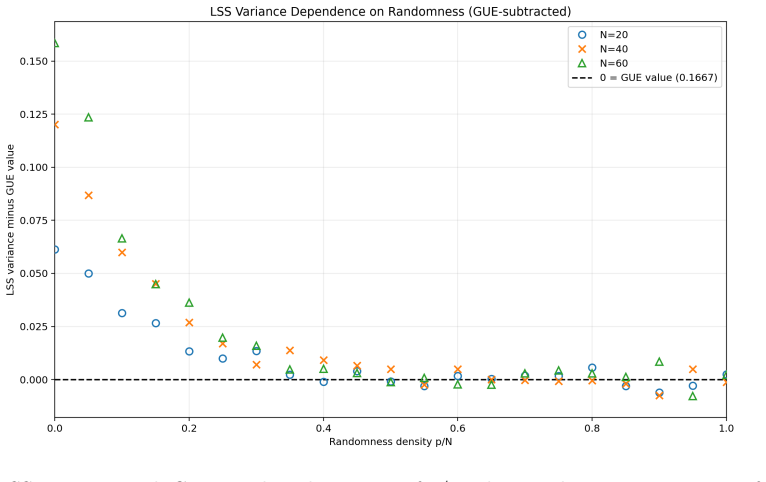
We study mesoscopic linear spectral statistics for two ensembles of random quantum graphs. These are defined by a discrete graph $G$ and a unitary-matrix-valued function $U(k)$ indexed by directed edges of $G$. The matrix function $U(k)$ is constructed from unitary matrices $U^{(v)}$ indexed by the neighbours of each vertex $v$. The first ensemble is obtained by sampling the underlying discrete graph uniformly from the set of $d$-regular graphs. The second ensemble is obtained by sampling $U^{(v)}$ uniformly from the Haar measure, independently for each vertex. We prove that the variance of a linear spectral statistic in the large graph limit on polynomial mesoscopic scales coincides with that of the Gaussian Orthogonal/Unitary Ensemble.
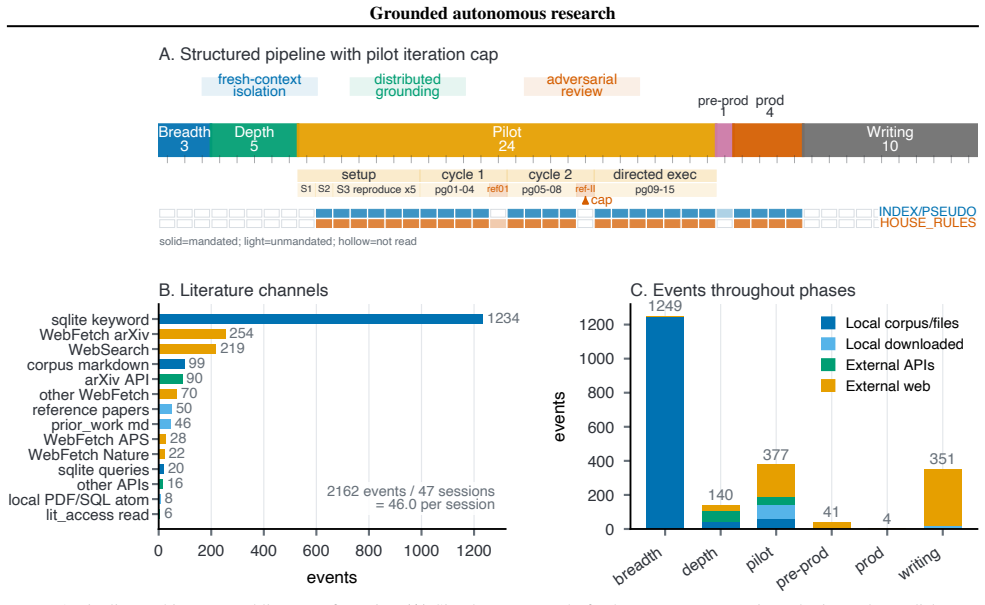
Autonomous-research agents have demonstrated end-to-end LLM automation in machine-learning sandboxes where execution provides calibration. Frontier physical science differs categorically: physical reasoning underlies every methodology choice, toolchains are often underdocumented, and calibration must come from external literature anchors - which unscaffolded agents cite but do not confront, hallucinating plausible, unverifiable results from internal priors. We present a pipeline that runs end-to-end from a corpus of 11,083 recent condensed-matter physics arXiv papers to a publication-grade manuscript with three substantive physics findings (here on altermagnetic piezomagnetism): the agent autonomously conceives a research direction by mapping the corpus, calibrates methodology by reproducing published references, conducts novel first-principles computations, and writes the manuscript - grounded in literature throughout, across 47 fresh-context sessions in six phases sharing only on-disk state, with 2,162 literature-consultation events. Fault tolerance emerges from redundancy: fresh-context isolation, distributed grounding, and adversarial review catch what any single session misses; pre- and post-pilot stages are fully autonomous, and pilot requires bounded human intervention only at reproduction failures - operational knowledge curation, not scientific direction. Two paired failure modes - a pre-architecture baseline and a no-pilot ablation - isolate structurally enforced numerical confrontation at calibration checkpoints as the operative grounding mechanism. The primitives, characterized failure modes, and quantified intervention pattern lay a foundation for autonomous research in high-stakes scientific domains beyond computational physics.
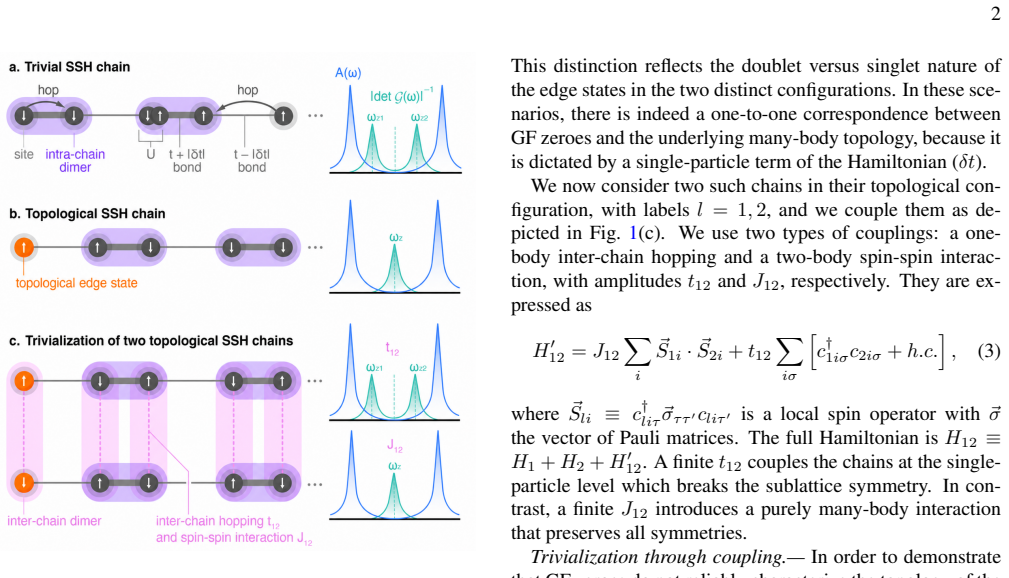
We show that topological invariants constructed from single-particle Green's functions (GFs) cannot reliably diagnose the topology of interacting many-body states. Using coupled interacting SSH chains as a minimal example, we demonstrate that a spin-spin interaction can trivialize the many-body ground state without affecting the GF topological invariant. This breakdown originates from the GF's inability to probe electronic excitations in the Fock sectors responsible for the topological degeneracy. Consequently, GF zeroes are not associated with physical topological quasiparticles and cannot generally characterize interacting topological phases.
Universality is one of the central organising principles of modern physics, explaining why systems with vastly different microscopic constituents can exhibit identical large-scale behaviour. While the classification of equilibrium critical phenomena through hydrodynamics and the renormalization group (RG) is now well established, our understanding of universality far from equilibrium remains far less developed. In recent years, however, rapid progress - driven in large part by developments in active and living matter - has uncovered a growing range of genuinely nonequilibrium universality classes (UCs) with no equilibrium counterparts. In this review, we present a pedagogical and unified introduction to hydrodynamic and RG approaches to nonequilibrium many-body systems. We first show how hydrodynamic theories can be systematically constructed from symmetry and conservation laws alone. We then introduce perturbative dynamic RG methods and demonstrate how hydrodynamic theories are organised into distinct UCs according to their scaling behaviour. Building on these foundations, we review the diverse nonequilibrium UCs uncovered since 2015, while emphasizing the conceptual connections and unifying physical principles underlying their emergence. We conclude by discussing open theoretical and experimental challenges for the field.
Electrochemical impedance spectroscopy (EIS) is a widely used technique to understand time-dependent response and relaxation under applied voltage. While these spectra contain a wealth of information, major gaps in our understanding can hinder our ability to interpret EIS spectra in terms of microscopic chemical mechanisms. We propose an alternative approach to common empirical fitting procedures for describing the contribution of the bulk electrolyte to the EIS spectrum. This new approach is rooted in determining the moments of the frequency-dependent conductivity, with molecular interpretability provided by a generalized Langevin equation description of an effective single particle dynamics; the `itinerant oscillator' (IO) model. In contrast to a Debye--Falkenhagen description, the IO model makes no assumptions regarding the concentration of the electrolyte, a fact we demonstrate by analysing molecular dynamics simulations of a room-temperature ionic liquid. By analysing the memory function from simulation within the framework provided by the IO model, we reveal the importance of capturing the separation of timescales within the memory function for describing the temperature dependent $\beta$-relaxation process. We go on to show how our impedance model directly reports on this distribution of timescales while retaining the simplicity of commonly employed workflows.
We study pressure-driven Poiseuille flow of a one-component fluid between adiabatic plates in liquid-gas coexistence. The analysis uses Poiseuille flow and Fourier heat conduction in the bulk regions together with particle and energy conservation. From these bulk equations, we identify extremely small dimensionless parameters $A^\mathrm{L}$ and $A^\mathrm{G}$ describing coexistence Poiseuille flow, whose smallness comes from squared microscopic-to-macroscopic length ratios. In weak driving with macroscopic liquid and gas regions, the pressure difference is concentrated across the interfacial region, and the ordinary Poiseuille particle current is strongly reduced. For equal-temperature reservoirs, this residual particle current produces interfacial cooling.
Neural quantum states (NQS) provide a flexible and scalable framework for approximating quantum many-body wavefunctions. Among NQS parameterizations, autoregressive models are especially attractive because they enable exact, independent sampling from the Born distribution, avoiding the autocorrelation and mixing issues of Markov chain methods. Yet their optimization remains comparatively underexplored: Adam is a scalable method but ignores function space geometry, while stochastic reconfiguration is principled but costly and numerically fragile in large models. To address this gap, we show that variational energy minimization can be viewed as an advantage policy-gradient problem over the Born distribution, motivating trust-region optimization for NQS training. We introduce Proximal Wavefunction Optimization (PWO), a principled trust-region algorithm that clips probability-ratio changes in the amplitude channel and phase increments in the phase channel. PWO avoids explicit matrix inversion, reuses samples across multiple updates, and combines the scalability of first-order optimization with theoretical guarantees. Across Ising and frustrated $J_1$-$J_2$ one- and two-dimensional spin systems, PWO improves stability and wall-clock convergence over Adam, minSR, and SPRING. Finally, we fine-tune a $1.5$B-parameter RWKV-7 model, demonstrating NQS optimization at a scale over three orders of magnitude beyond prior work.
We derive a general relation between the velocity and force autocorrelation tensors (VACT and FACT) for a Brownian particle subject to an external magnetic field. Using time-symmetry arguments, we show that, for the full Langevin dynamics, the VACT depends only on the FACT, independently of the details of the interaction potential. Under the hypothesis of timescale separation between thermalization and interaction-driven motion, this relation simplifies considerably in the overdamped (Brownian) limit. A central feature of the overdamped result is that, unlike in the field-free case, the part of the VACT that controls the self-diffusion of the particle couples to the antisymmetric part of the FACT, with a coupling strength set by the ratio of the cyclotron frequency to the thermalization rate. We validate and illustrate the formalism on an exactly solvable model: a dimer of charged particles bound by a harmonic potential. Depending on the relative sign of the particle charges, the magnetic field is found to produce either a transient suppression of mobility and diffusion that is fully recovered at long times, or a persistent oscillatory force autocorrelation, regions of negative mobility, and a
long-time suppression of self-diffusion.
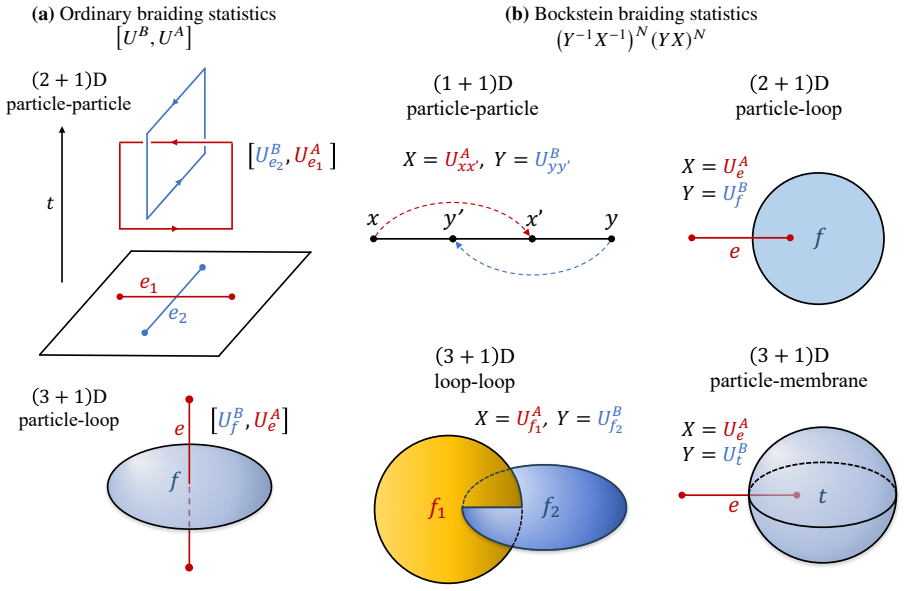
Braiding statistics, from the Aharonov-Bohm phase to anyons in fractional quantum Hall systems, play a central role in quantum physics. For $p$- and $q$-dimensional excitations in $d$ spatial dimensions, ordinary braiding requires $p+q=d-2$. In a field-theoretic description of $\mathbb Z_N$ excitations, ordinary braiding is described by the linking response $(2\pi i/N)\int A_{d-p}\cup B_{d-q}$, where $A_{d-p}$ and $B_{d-q}$ are background fields coupled to the two excitation types. In this work, we identify new mutual statistics in the adjacent case $p+q=d-1$. For two invertible excitations obeying $\mathbb Z_N$ fusion, one can choose local creation operators $X$ and $Y$ whose supports have a staggered one-dimensional overlap. The closed unitary process $W_N(X,Y)=(Y^{-1}X^{-1})^N(YX)^N$ measures the resulting mutual statistic. Its field-theory description is $(2\pi i/N)\int A_{d-p}\cup\beta_N B_{d-q}$, where $\beta_N$ is the Bockstein operation; we therefore call the invariant Bockstein braiding statistics. The construction yields particle-particle statistics in one dimension, particle-loop statistics in two dimensions, and loop-loop or particle-membrane statistics in three dimensions. Nontrivial Bockstein braiding statistics obstructs simultaneous condensation of the two $\mathbb Z_N$ excitations. It also rules out a fully symmetric gapped phase for systems with the corresponding mixed anomaly and implies symmetry fractionalization when one of the $\mathbb Z_N$ symmetries is broken.
The interplay between disorder, gauge fields, and internal degrees of freedom fundamentally affects localization and topological properties of quantum many-body systems. Motivated by recent experimental realizations of synthetic non-Abelian gauge fields for SU(3) colored fermions, we investigate their localization and topological properties in 1D bichromatic optical lattices consisting of strong and weak laser beams. Describing the non-Abelian gauge field via color-orbit coupling and color-flip (Rabi) fields, we obtain a tight-binding description of trapped SU(3) colored fermions corresponding to a generalized three-color Aubry-Andr\'e model. We show that these fields explicitly break the conventional self-duality of a simple three-color Aubry-Andr\'e system. This duality breaking generates mobility regions across the energy spectrum, demonstrating that non-Abelian fields can either enhance or hinder color localization. Using exact diagonalization, density-of-states evaluations, and finite-size scaling of the inverse participation ratio, we obtain phase diagrams that identify regions of extended or localized bulk states. Furthermore, the color-orbit and Rabi fields induce edge states with topological properties. We develop an exact mapping from our 1D disorder model into a 2D color Harper model with a fictitious magnetic flux ratio and dimension controlled by the weak laser beam's phase. Using this mapping, we evaluate topological invariants, such as the charge-charge Chern number, for edge states emerging in energy gaps, revealing the topological insulating nature of several gapped phases. Lastly, we identify that these topological color-insulator phases can energetically neighbor three configurations: two extended, two localized, or one of each. This sharply contrasts with conventional topological insulators, which always neighbor two extended phases.
If a generalized Langevin equation contains a potential of mean force, it cannot at the same time contain a linear memory kernel and a fluctuating force that obeys a second fluctuation dissipation theorem in the sense of Kubo, and be exact. As modelers often prefer to use generalized Langevin equations that have the first three properties, one needs to ask how close the model dynamics is to the dynamics of the underlying microscopic system. To test this, we analyze a simple model system in which the potential of mean force can be well approximated by a polynomial of low order. The exact generalized Langevin equation of this model contains memory terms in addition to the linear one. We show that these additional terms, at least for the model system regarded in this article, are important for the dynamics and cannot be neglected if one intends to model core aspects of the underlying system correctly.
Correlated phases of matter are typically investigated in crystalline systems, where disorder is considered to be detrimental. However, intriguing exceptions exist, such as superconductivity being enhanced in amorphous realizations of Al and Bi. Here, we demonstrate that superconductivity can even emerge entirely from disorder, using monolayer graphene as an example. In the clean limit, the semi-metallic nature of graphene requires prohibitively strong electronic interactions to achieve superconductivity. Despite the inherently random nature of disorder, we show that introducing low concentrations of vacancies or hydrogenation in graphene provides a large density of low-energy states that easily induce superconductivity. For conventional $s$-wave pairing, disorder induces a finite superconducting order parameter for arbitrarily weak attractive interactions. Rather than forming isolated superconducting puddles, global phase coherence is established through a finite superfluid weight of purely geometrical origin. Away from the chiral limit of vacancies, hydrogenation similarly yields a finite transition temperature and nonzero superfluid weight for weak interactions. For unconventional nearest-neighbor pairing, typically more disrupted by disorder, superconductivity exhibits quantum-critical-like behavior, yet phase coherence persists at low interaction strengths, with mixed $d$-wave symmetries. Our work demonstrates the robust emergence of macroscopic superconducting phase coherence engineered entirely from microscopic disorder.
We analyze particle and spin currents in networks of coupled spinor exciton-polariton condensates arranged as plaquettes and regular polygonal rings. In closed geometries, spin-conserving and TE-TM-induced spin-flip tunnelling combine to generate circulating particle currents, hidden spin counterflows, and bond-dependent spin-current patterns. For the minimal geometries - an equilateral triangle, and a square plaquette - we derive analytical expressions for edge-resolved currents from stationary configurations obtained by energy minimization. We then show how particle, in-plane spin, and out-of-plane spin currents partition the parameter plane and provide direct signatures of the equilibrium phases. Finally, we apply the same current-resolved diagnostics to larger rings, where winding numbers and a branch-invariant common-phase coherence metric organize the resulting phase structure.
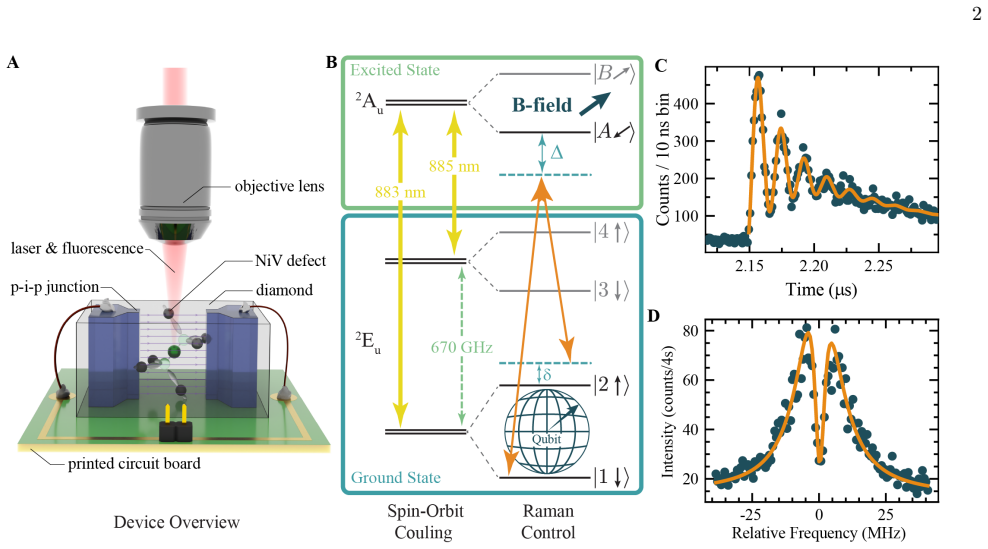
Quantum networks require qubits that combine efficient optical access, coherent control, and long-lived quantum memory, but realizing all three in one scalable platform remains a central bottleneck. Diamond color centers are leading candidates, yet widely studied defects retain tradeoffs among these capabilities. Here, we show that transition-metal defects in diamond provide a distinct route beyond these platforms by combining spin-orbit protected ground-state coherence, all-optical control, and near-infrared emission. Using a single nickel-vacancy (NiV$^-$), we demonstrate an all-optically controlled diamond spin qubit with coherence exceeding one millisecond at 1.65 K, compatible with compact closed-cycle cryogenics. We implement Raman Rabi oscillations and Ramsey interferometry and use all-optical dynamical decoupling to extend coherence from $T_2^*$ = 371 ns to $T_2^{CPMG-4}$ = 1.27 ms, establishing NiV$^-$ as a deployable diamond spin-photon interface.
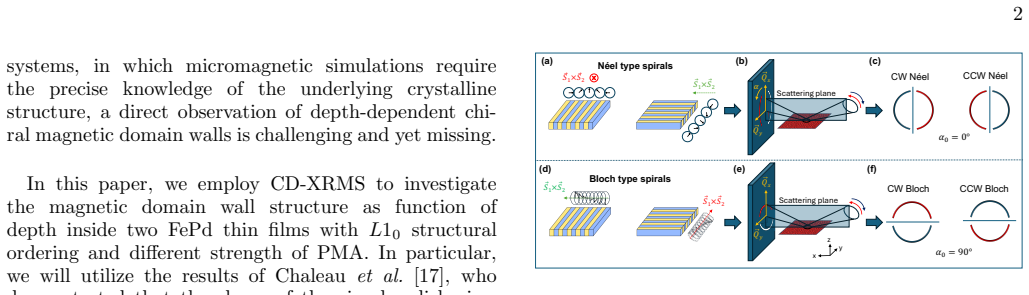
We report an experimental investigation of the depth-dependent domain wall formation in L1$_0$-FePd thin films with high perpendicular magnetic anisotropy. Using circular dichroism X-ray resonant magnetic scattering (CD-XRMS) as a function of the incident X-ray angle, we explore the depth evolution of chiral spin textures in two samples with different strengths of magnetocrystalline anisotropy. Combined with CD-STXM, CD-ptychography, and macroscopic characterization of the structural order, magnetic properties, and surface morphology, we relate these observations to differences in the long-range order of the L1$_0$ phase of FePd. One FePd thin film with very high magnetocrystalline anisotropy, characterized by $Q_{PMA}=1.8$, exhibits an unexpectedly large N\'eel contribution. Angular-dependent CD-XRMS directly reveals a smooth transition from a hybrid Bloch-N\'eel chirality within the upper FePd layer towards a purely N\'eel-type structure at the lower FePd interface. In the second FePd sample, despite a still relatively large $Q_{PMA}=1.45$, the domain walls were found to be purely N\'eel type. These results indicate a crucial role of the long-range structural order in determining the formation of the magnetic structure.
Single-molecule (SM) rotational dynamics of fluorescent probes in polystyrene near the glass transition temperature ($T_g$) are investigated over long times to reconstruct susceptibility spectra. The loss spectrum, commonly recorded using external field-driven (frequency-domain) spectroscopy, such as dielectric spectroscopy, is reconstructed from purely thermal SM rotational fluctuations. The results reproduce time-temperature superposition typically seen in dielectric spectroscopy for materials near $T_g$ and show that the ensemble spectrum is comprised of individual molecular responses to distinct environments.
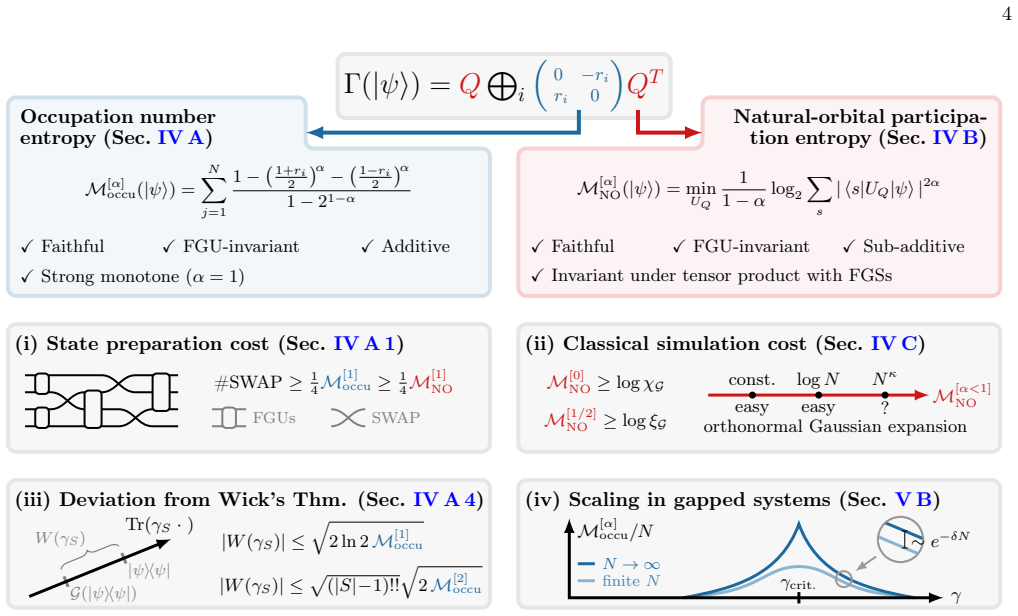
Fermionic non-Gaussianity, or fermionic magic, is a key resource underlying the computational complexity of fermionic quantum systems, yet tractable and operationally meaningful ways to quantify it remain limited. We address this challenge by developing a convex resource theory of fermionic non-Gaussianity and introducing two families of computable measures for pure fermionic states, both derived from the Williamson normal form of the covariance matrix. The first family, occupation number entropies, is defined as the Tsallis-$\alpha$ entropy of the occupation numbers. We prove that one member of this family is monotonic under Gaussian protocols, establishing it as a computable convex resource monotone. It consequently lower bounds the number of non-Gaussian gates needed for state preparation. The second family, natural-orbital participation entropies, is given by the R\'enyi-$\alpha$ entropy of the squared amplitudes of the state in the natural-orbital basis, defined by the eigenvectors of the covariance matrix. These measures quantify state compressibility in this basis and thus upper bound the classical simulation cost in an orthonormal Gaussian basis. We analyze both families for stabilizer and translation-invariant states, where they simplify and reveal additional structure. We further study representative examples, including random SWAP-doped matchgate circuits and the bond-modulated XXZ model, highlighting the role of non-Gaussianity in many-body phenomena. Our work establishes a resource-theoretic framework for computable fermionic non-Gaussianity that unifies notions arising across quantum information, condensed-matter physics, and quantum chemistry, opening new directions for studying the complexity of quantum many-body systems and providing practical tools to assess the classical simulability of fermionic states relevant for quantum advantage.
Tantalum (Ta) is a promising material for reaching long coherence times in superconducting qubits. A detailed understanding of the underlying structure-property relationship remains elusive though. In the present study, we sputter-deposited 200 nm thick Ta films on high-resistivity silicon (100) substrates at temperatures ranging from T = 20{\deg}C to 600{\deg}C, as well as on different seed layers (Nb, TiN and TaN). Alpha-Ta thin films were readily obtained at temperatures above 500{\deg}C and on all seed layers. The films were characterized in terms of surface morphology, residual-resistance ratio, crystal phase composition and superconducting transition temperature, as well as RF-performance using coplanar waveguide resonators. Internal quality factors of up to 1.5 million were measured at 100 mK in the single-photon regime. Despite similar bulk material properties, alpha-Ta films on different seed layers exhibit markedly different RF-performance, which we attribute to dissimilar strain and structural defects at the substrate-metal interfaces. Williamson-Hall analysis of XRD data reveals a clear correlation between decreasing microstrain and increasing quality factor. Cross-sectional HR-TEM further supports this interpretation by directly resolving interfacial disorder. Our results highlight the critical role of interface engineering in optimizing superconducting thin films for low-loss quantum computing circuitry.
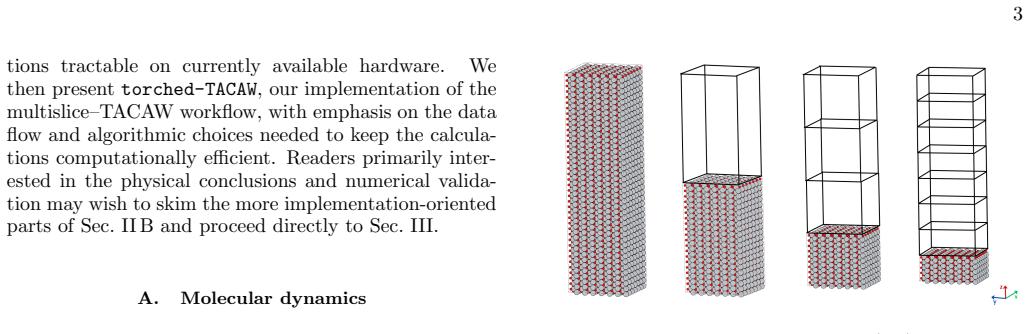
The time auto-correlation of auxiliary wave functions (TACAW) method enables efficient simulations of ultra-low-loss electron energy loss spectra (EELS) arising from vibrational and magnon excitations. In practical applications to realistic materials systems, however, TACAW calculations become challenging due to the large system sizes required for models containing defects, interfaces, impurities, or grain boundaries, as well as the substantial computational cost and data throughput associated with molecular dynamics and multislice calculations. Here we discuss a practical methodology for large-scale TACAW simulations and present torched-TACAW, a freely available implementation of the TACAW part of the described workflow for efficient STEM-EELS simulations. The overall approach combines molecular dynamics based on foundational machine-learned interatomic potentials, partitioning of elongated supercells, and on-the-fly processing of multislice outputs in order to enable near ab initio quality simulations with tractable memory use and data flow. Using rutile TiO2 as a model system, we analyze important numerical aspects of the method, including windowing and supercell partitioning, and demonstrate atomic-resolution STEM-EELS simulations for thick samples.
Gradient magnetism bypasses specific heat divergence, letting fluctuation-enhanced scattering set the rate and enabling tunable spintronic d
abstractclick to expand
For ultrafast magnetization switching devices, critical slowing down in conventional ferromagnets near their Curie temperature constitutes a key challenge that must be overcome. In contrast to this typical behavior, we observe an anomalous acceleration of demagnetization in CaRuO$_{3}$/SrTiO$_{3}$ superlattices, a moderately correlated weak itinerant ferromagnet. The demagnetization rate increases with rising temperature, pump fluence, and applied magnetic field. To explain these anomalous phenomena, we develop a phenomenological model integrating the three-temperature model with self-consistent renormalization theory. Because the intrinsic gradient magnetism of the superlattice suppresses the typical divergence of specific heat, the conventional thermodynamic bottleneck is bypassed. Our model reveals that this decoupling enables the ultrafast dynamics to be predominantly governed by the spin-fluctuation-driven enhancement of the electron-spin scattering vertex. Our work demonstrates how spatial inhomogeneity can decouple macroscopic thermodynamic singularities from microscopic scattering processes, offering a new paradigm for manipulating ultrafast spin dynamics in correlated quantum materials. The pronounced sensitivity of the demagnetization rate to external parameters further suggests the potential for designing highly tunable ultrafast spintronic devices that leverage enhanced fluctuations near the magnetic instability.
Remarkably common statistical laws characterize the diversity scaling and its fluctuations across a wide range of complex "component systems". These regularities are often interpreted as signatures of an underlying innovation mechanism driving the growth of component diversity, but the basic ingredients necessary for their emergence remain poorly understood. In particular, from language and technological artifacts to genomes and gene expression patterns, the number of distinct components grows sublinearly with system size, while its variance scales approximately as the square of its mean. This behavior is consistent across diverse systems, raising the question of whether general constraints or emergent principles underlying diversity and innovation define the architectures of realizations with different numbers of components. To address this question, we derive analytical conditions for the joint emergence of these two diversity laws within a broad class of growth models, showing that they require a specific asymptotic dependence of the innovation probability on diversity and system size. We then demonstrate that the same macroscopic laws arise in a different class of models with latent heterogeneity, where quadratic fluctuation scaling always emerges asymptotically as a consequence of general statistical principles, essentially the law of total variance, without explicitly assuming an innovation mechanism or any specific rule for system assembly. We compare these predictions with empirical data from language, genomes, LEGO constructions, and texts generated by large language models. Our results show that empirical diversity scaling laws strongly constrain generative models but do not uniquely identify the mechanisms generating diversity, revealing a close correspondence between innovation-driven growth models and latent-variable descriptions.
Short-range order (SRO) governs the mechanical response of multi-principal-element alloys, but designing an alloy for a target property usually means solving two disconnected problems: building a structure matching a desired SRO pattern, then separately checking its property, with no shared optimization. This work replaces the standard random-swap search (reverse Monte Carlo) with a gradient-based approach: atom occupancy is treated as continuous rather than fixed, so the whole process can be tuned using gradient descent, the same method used to train neural networks. This builder matches random-swap accuracy on small systems, but is six times faster and eight times more accurate on large 4000-atom systems, and scales smoothly to alloys with many elements without extra bookkeeping. A physics-based correction term, adapted from prior two-element work and extended here to many elements, keeps designed structures thermodynamically realistic rather than just numerically matching the target SRO pattern. A small neural network then predicts mechanical properties directly from composition and SRO statistics, closing the loop from target property back to structure. Tested on nine face-centered-cubic and body-centered-cubic alloys, the pipeline captured SRO-driven stiffness changes from -20% to +57%, and cell-size checks showed at least 864 atoms are needed to get the direction and size of these changes right, since the commonly used 108-atom cells can mislead. Against real simulations for a cobalt-chromium-nickel alloy, the method matched three of four target stiffness values within 6%. The method is released as an open-source Python package, anisro, offering a practical route to gradient-based, property-driven alloy design.
It has been known for several decades that the third moment of the multifractal spectrum of the harmonic measure for diffusion-limited aggregates is linked to the underlying fractal dimension of the cluster. We demonstrate, using an argument based on the Hastings-Levitov formulation of diffusion-limited aggregation (DLA) in two dimensions, an even stronger link, connecting the universal amplitude of the third moment to the cluster fractal dimension. This argument can be used for both the standard circular DLA as well as DLA in a cylinder (i.e., with periodic boundary conditions).
Non-Abelian anyons emerging in fractional quantum Hall states carry a characteristic entropy, $\Delta S = k_B \log d$, where \(d\) is the anyon's quantum dimension. This \(\mathcal{O}(1)\) entropy can, in principle, be extracted from charge measurements of an antidot via Maxwell relations. However, equilibrium charge measurements in fractional antidots have proven to be challenging with conventional charge detectors. Here, we propose a scheme based on an antidot embedded in an interferometer, in which the charge can be inferred from the recently observed time-dependent switching of the interference phase. Performing such non-local charge measurements at equilibrium, the characteristic \(\mathcal{O}(1)\) entropy of non-Abelian anyons (e.g., $d = \sqrt{2}$ for the $\nu = 5/2$ state) can be extracted for intermediate temperatures, which exceed the level spacing of the interferometer edge, but are much smaller than the level spacing of the antidot.
Using the density matrix renormalization group (DMRG) combined with the correction-vector method, we investigate the competition between an harmonic potential and repulsive interactions in a one-dimensional fermionic system. The parabolic confinement induces spatial inhomogeneity, and by tuning its curvature one can continuously interpolate between a potential well--relevant for cold-atom setups--and a quantum barrier, as realized in mesoscopic systems such as quantum point contacts. We analyze how the ground-state particle distribution evolves with the strength and sign of the confining potential and how the confinement reshapes the spectral weight of the local density of states (LDOS) at the center of the chain. In the barrier regime, a localized peak emerges in the electron part of the spectrum ($\omega >0$) as a direct consequence of the potential. In contrast, in the well configuration and for weak interactions, a localized feature persists but shifts to the hole sector ($\omega <0$). However, for stronger interactions, the LDOS no longer displays clear signatures of the external potential, indicating that correlations dominate over single-particle confinement.
We introduce a setup for coherent two-dimensional electronic spectroscopy in the pump-probe reflection geometry that is integrated with a confocal back focal plane imaging microscope. The angle-resolved capability is utilized to control pump and probe wavevectors, while real space imaging enables co-localization of the collection spots for linear and ultrafast experiments. Compression of pulses down to 20 fs is achieved. We demonstrate the capabilities of this approach on an exfoliated WSe$_2$ monolayer on Si/SiO$_2$. The setup is suited to investigate excitons and exciton-polaritons in 2D Materials and their heterostructures.
The centered free energy obeys a Gaussian CLT and the two-replica overlap scales as N to the minus two thirds.
abstractclick to expand
We consider the Sherrington--Kirkpatrick spin glass model at the critical inverse temperature $\beta = 1$ with zero external field. We prove that the free energy $F_N = F_{N,\beta=1}$ of this model has variance
\[
\mathrm{Var}(F_N) = \frac16 \log N + O(1)\,,
\] confirming a physics prediction of Aspelmeier \cite{aspelmeier2008free}, and that the centered and scaled $F_N$ satisfies a Gaussian CLT. We also identify the critical two-replica overlap scale, proving
\[
\mathbb{E} \langle R_{1,2}^2\rangle \asymp N^{-2/3}\,,
\] as conjectured by Talagrand \cite{talagrand2011mean2}, together with a uniform exponential moment bound for $N^{1/3} |R_{1,2}|$. The key input is a comparison between the Ising and spherical SK partition functions $Z_N$ and $Z^{\mathrm{sp}}_N$: if $X_N = Z_N / Z^{\mathrm{sp}}_N$, then $X_N = 1 + o(1)$ in $L^2$. Thus $Z^{\mathrm{sp}}_N$ captures the diverging critical fluctuations of $Z_N$ and serves as a tractable reweighting variable for estimating overlap moments.
We investigate homogeneous populations of smart active agents that exchange information with their neighbors to perform a decentralized learning process aimed at achieving a prescribed macroscopic state. Such agents may, for example, represent simple microrobots. The exchanged information comprises tunable parameters governing the agent dynamics, referred to as the individual policy, together with an internal memory encoding previously visited states. This memory is used to evaluate a reward that quantifies the success of a policy to achieve the prescribed state. We extend the kinetic-theory description of collective learning in spatially homogeneous systems [Phys. Rev. Lett. 134, 248302 (2025)] and derive formal evolution equations for the distribution of policies across the population. A central outcome of our theory is the emergence of an effective reward function that fully determines the evolution of the policy distribution and encapsulates the microscopic details of the agents physical and memory dynamics. We obtain closed equations for the policy mean and variance which admit explicit time-dependent solutions under the assumption of Gaussian-distributed memories and polices.
To illustrate the framework, we present a series of minimal microscopic models, considering both perfect and partial separation of physical, memory and policy exchange time scales, as well as models with one- and two-dimensional policies. The obtained theoretical results compare well with agent-based numerical simulations. The theory captures key aspects of collective learning, including the influence of population diversity and reward fluctuations on learning performance. Finally, we discuss potential applications to swarm robotics and machine learning, and highlight connections with classical models of biological evolution, including the Replicator equation and the Moran model.
Quantum reservoir computing provides a framework for processing complex temporal data, yet its fundamental computational and energetic limits remain unresolved. Here, we establish a non-equilibrium thermodynamic framework that links the macroscopic predictive performance of driven open quantum systems to their microscopic energetic costs. By mapping the Holevo capacities onto the Bogoliubov-Kubo-Mori geometric manifold, we analytically prove that the computational peak within the quantum critical region originates from a strict spectral resonance: the closing of the energy gap forces the reservoir's transition frequencies to align with the chaotic drive. To evaluate the associated thermodynamic costs, we introduce quantum informational dissipation to quantify the non-predictive historical data structurally retained by the reservoir, deriving a generalized Landauer bound for continuous temporal processing. This reveals a fundamental thermodynamic trade-off: the critical resonance that unlocks optimal predictive capacity inherently maximizes informational dissipation and the irreversible work required for environmental erasure. Furthermore, coherence decomposition demonstrates that dynamic quantum coherences strictly amplify predictive capacity without demanding additional mechanical work. These findings establish the ultimate energetic limits of quantum learning devices, providing theoretical principles for designing energy-efficient quantum neuromorphic hardware.
The local theory of the companion paper emerges as the leading term when memory time is much shorter than dynamical time.
abstractclick to expand
Attention enables a world model to condition on its entire history, providing long-term memory that facilitates long-range predictions. While the local Onsager--Machlup theory in our companion paper assumes a temporally local predictive action, we investigate the conditions under which this locality holds. We derive the predictive path measure for latent dynamics that become non-Markovian due to attention-induced memory, demonstrating that this measure is the projection of a hidden linear Markov augmentation. Eliminating the auxiliary field results in a nonlocal Onsager--Machlup action, where memory manifests as a nonlocal quadratic form rather than a force. These kernels are completely monotone and exactly match a hidden Markov embedding with a finite relaxation spectrum; otherwise, the dynamics remain fundamentally nonlocal. By expanding the action in terms of the scale-separation parameter $\epsilon=\tau_{\text{mem}}/\tau_{\text{dyn}}$, we show that the leading order recovers the local action of the companion paper, establishing locality as the short-memory limit of a nonlocal theory. We verify the reversible sector of this expansion term by term against an exactly solvable vector linear model.
Suspensions of motile microswimmers such as bacteria and other active colloids frequently encounter porous environments where obstacles and complex shear flows strongly influence their dynamics. Here, we study the distribution and transport of a dilute suspension of active particles in a square lattice of pillars, which serves as a model porous medium. The microswimmers are modeled as slender point particles, and Brownian Dynamics simulations are performed to determine how their number density and polarization fields change with systematic variations in the medium porosity, polydispersity, flow strength, and self-propulsion strength. We find that in the absence of flow, self-propulsion drives particle accumulation and radial polarization at the pillar surfaces. In the presence of a background flow, particles preferentially accumulate in the wake of pillars and exhibit upstream polarization near their surface, consistent with experimental observations. At moderate flow strengths, topological defects nucleate in the polarization field. These defects are of purely kinematic origin and mark the transition from global upstream swimming at low flow strengths to the coexistence of upstream and downstream swimming regions in the lattice at high flow strengths. The structured lattice studied here provides a controlled framework for isolating the physical mechanisms governing active transport in complex geometries, with direct relevance to transport in structured microfluidic settings.
We study the impact of the many-body effects on the phonon spectral function of Holstein polaron in one-dimension in the antiadiabatic regime by incorporating the contributions from the electron self-energy and vertex corrections within a weak-coupling approach that respects the charge-conserving Ward identity. We find that while the polaronic spectral weight is suppressed due to contribution from the electron self-energy, on the other hand, the same is enhanced due to contribution from the vertex corrections. While strength of both the contributions increases with increasing the wave vector ($\q$) of phonons, they nearly cancel each other for the small-$\q$ modes so that the polaronic spectral weight is weakly affected due to the many-body effects. For the large-$\q$ modes near the zone boundary, the net many-body correction is dominated by the contribution of the electron self-energy which increases faster in comparison to that of the vertex corrections with increasing the wave vector thereby resulting in a significant suppression of the polaronic spectral weight. We find that while the weak-coupling perturbative approach provides a reliable estimation of the impact of the many-body effects deep inside the antiadibatic regime, the renormalization of quasiparticle spectrum must be taken into account for an accurate estimation when the phonon energy approaches the electronic bandwidth.
Ultra-thin films are fundamental components of modern nanoelectronics, where reducing thickness to the few-nanometer scale leads to a dramatic increase in electrical resistivity. For decades, this behavior has been interpreted in terms of classical size effects, primarily surface scattering within the Fuchs--Sondheimer theory and grain-boundary scattering in the Mayadas--Shatzkes model. While these approaches successfully describe transport when the film thickness is comparable to the electronic mean free path, growing experimental evidence indicates that they become insufficient under extreme confinement. This review discusses the crossover from classical scattering to a quantum-confinement regime in which the electronic states available for transport are fundamentally restructured by finite size. We review the recently proposed reciprocal-space confinement theory, which predicts an exponential increase of resistivity with decreasing thickness at the nanoscale, and discuss how it can be combined with classical surface-scattering models to provide a unified description of ultra-thin metallic and semiconducting films. Finally, we summarize recent experimental evidence supporting this picture and discuss its implications for future nanoelectronic devices, nanoscale interconnects, and quantum transport under extreme spatial confinement.
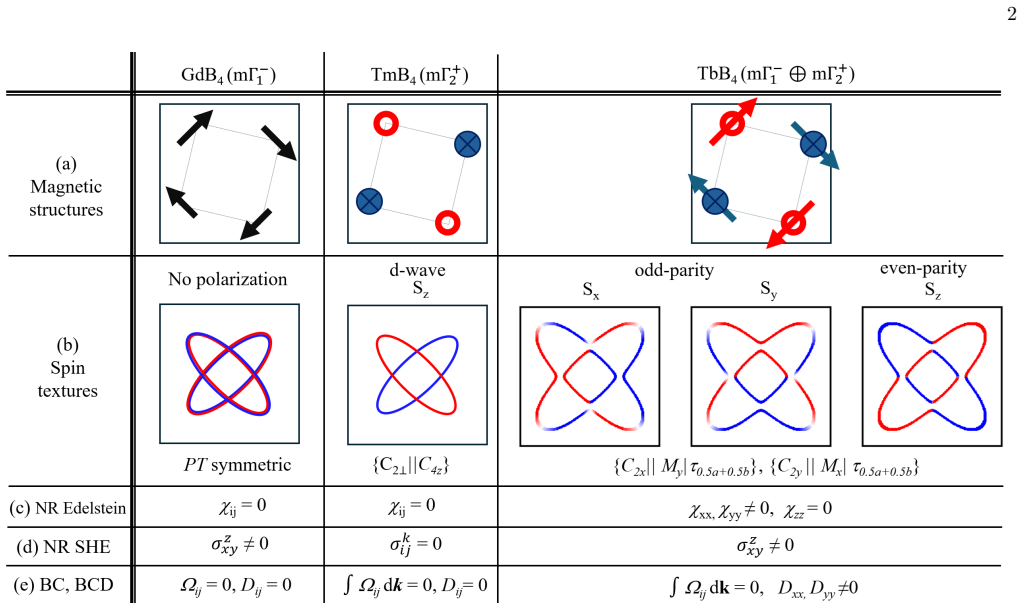
Altermagnetism has advanced the study of compensated magnets by revealing non-relativistic spin splitting, traditionally classified into strictly even- or odd-parity spin textures. Here, we unveil a fundamentally different regime: component-resolved mixed-parity spin splitting in a fully three-dimensional compensated magnet. Using first-principles calculations, tight-binding and $\mathbf{k} \cdot \mathbf{p}$ models, along with spin-group symmetry analysis, we demonstrate that the non-coplanar ground state of $\mathrm{TbB}_4$ enforces a unique momentum-space spin texture. The in-plane spin components exhibit odd-parity $p$- and $f$-wave-like textures, whereas the out-of-plane component retains an even-parity $d$-wave altermagnetic character. Crucially, the coexistence of the in-plane odd-parity textures is driven not by relativistic spin-orbit coupling, but by a staggered Berry phase arising from the inherent scalar spin chirality. This mixed-parity structure dictates distinct transport fingerprints, including bulk non-relativistic Edelstein and spin Hall responses, as well as a symmetry-allowed Berry curvature dipole. These results establish the rare-earth tetraborides as a robust platform for engineering complex spin-charge conversion phenomena.
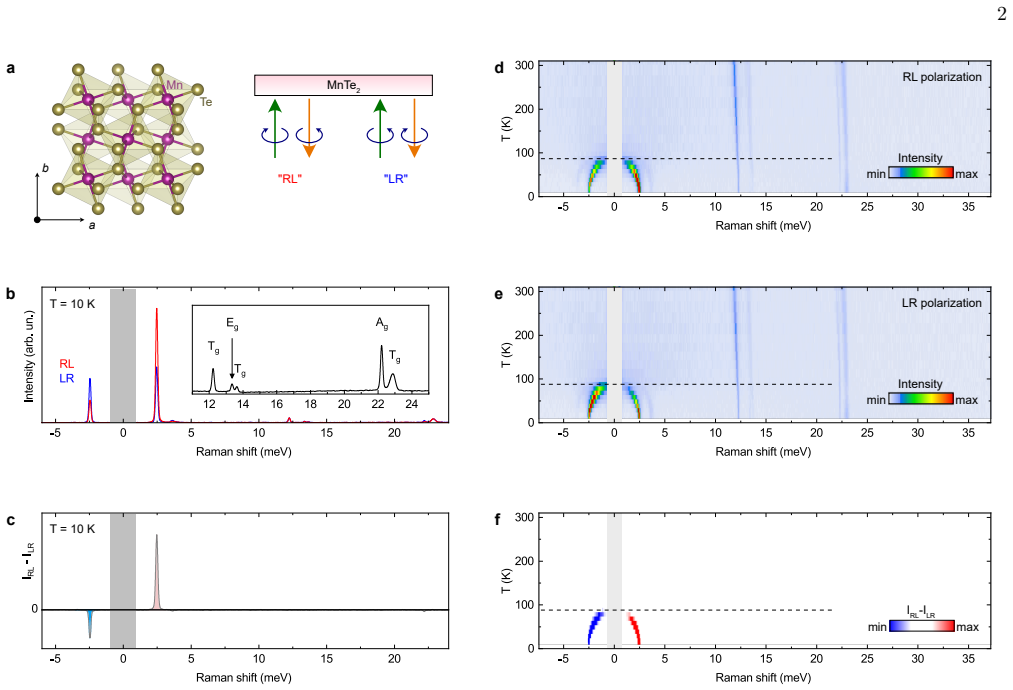
Altermagnets constitute an emerging class of magnetic materials that combine compensated antiferromagnetic order with spin-split excitations arising from crystalline symmetries. Despite strong theoretical interest, their experimental identification remains challenging. Here, we demonstrate that helicity- and angle-resolved Raman scattering measurements reveal reduced rotational symmetries of magnons and a pronounced imbalance between left- and right-circular polarization channels, indicating momentum-dependent magnon handedness. First-principles DFT+$U$ calculations combined with linear spin-wave theory uncover a characteristic plaid-like spin-splitting structure in momentum space. The resulting magnon spin textures are dictated by the unconventional sublattice symmetries of MnTe$_2$ and closely emulate those of altermagnetic electronic bands. Our work provides evidence of chiral spin-wave excitations unique to this non-coplanar antiferromagnet.
Bulk acoustic waves deliver all-to-all connectivity and four orders higher thermal stability than optical coherent Ising machines.
abstractclick to expand
Optical coherent Ising machines based on time-multiplexing have demonstrated significant progress in terms of connectivity and spin scalability. However, they are constrained by large physical footprints, high power consumption, poor thermal stability, and high cost. Here, we present a time-multiplexed Ising machine leveraging propagating wave packets in solid-state delay lines at microwave frequencies, enabling thermally stable, robust, low-power, tabletop, and affordable design. We use two serially connected 20.5 MHz, 707 {\mu}s bulk acoustic wave delay lines supporting 2,048 spins. Our design provides all-to-all connectivity with 15-bit coupling resolution and finds approximate MAX-CUT solutions in 341 ms, potentially scalable to sub-ms by using higher frequency delay lines. Additionally, we demonstrate solutions to number partitioning and Sudoku problems. Compared with state-of-the-art Coherent Ising machines, our machine exhibits four orders of magnitude higher thermal stability. Against the simulated bifurcation algorithm, our design achieves comparable results on the MAX-CUT problem, while outperforming it on the more complex number-partitioning and Sudoku problems.
We study nonlinear DC electric transport of quantum-metric origin by combining adiabatic perturbation theory with the nonequilibrium Green function approach. The adiabatic ansatz provides a basis for directly treating a DC electric field in the velocity gauge, rather than introducing it as the zero-frequency limit of an AC field. The resulting adiabatic-basis Hamiltonian takes the same form as in the length gauge, enabling a systematic comparison across different formulations. Applying this fully quantum formulation, we find a longitudinal nonreciprocal current governed by the quantum-metric dipole. The essential ingredient is a quantum correction to the distribution function that is absent in semiclassical treatments. We trace this correction to the finite spread of an electron wave packet during relaxation under a bias field, thereby identifying shifted quasiequilibrium as the physical origin of quantum-metric nonreciprocal transport.
Landau-gauge wave functions are integrated to obtain the phase-space quasi-probability distribution.
abstractclick to expand
Wigner's quasi-probability distribution function in phase space is a specialized representation of the density matrix, possessing significant physical importance. In this article, we first review the wave function describing electronic motion in an electromagnetic field under the Landau gauge. Next, based on an introduction to the properties of the Wigner function, we calculate the Wigner function for the integer quantum Hall effect using the integral method.
We present a complete classification of integrable Yang-Baxter quantum circuits with open boundary conditions and arbitrary circuit geometries. Starting from the standard transfer-matrix construction with two types of staggered inhomogeneities, we derive a general mapping that determines the arrangement of circuit gates in terms of the inhomogeneities and the system size. We conjecture that time-periodic quantum circuits are integrable whenever the local bulk and boundary gates satisfy the Yang-Baxter equation and the same bulk gate is applied exactly once per period to every nearest-neighbor pair of spins. Our construction also provides an algorithm to detect Yang-Baxter integrability for circuits with arbitrary geometries. Furthermore, we introduce a third type of inhomogeneity, denoted by $\rho$, and demonstrate that the minimum possible circuit depth is four. We show that when these $\rho$-inhomogeneities are placed at the endpoints and in their immediate neighborhood, the resulting boundary gates can be interpreted as single gates acting on multiple sites. Our construction is fully general and applies to regular $R$-matrices, both of difference and non-difference type, together with their associated boundary matrices. As an application, we consider two-qubit gates corresponding to 6- and 8-vertex $R$-matrices of non-difference form satisfying the Yang-Baxter equation, and we construct the associated reflection matrices that generate integrable quantum circuits.
We present a theoretical study of electron tunneling through a magnetic barrier in 8-Pmmn borophene, created by depositing two ferromagnetic strips on the borophene sheet. Using a low-energy effective Hamiltonian that captures the anisotropic Dirac spectrum, we solve the Dirac equation in three regions and impose wave-function continuity at the interfaces. From the resulting spinor solutions, we compute current densities and determine transmission and reflection probabilities as functions of incident energy, angle, and barrier parameters. The transmission exhibits strong anisotropy due to the tilted Dirac cones, with pronounced suppression for specific incident directions, suggesting directional filtering of carriers. We further calculate the conductance using the Landauer-B\"uttiker formalism, revealing that both magnetic strength and barrier width can tune the charge transport properties. The results demonstrate that engineered magnetic barriers in 8-Pmmn borophene enable precise control over electron flow, offering a platform for anisotropic transport control and tunable quantum devices. The interplay between the intrinsic anisotropy of borophene and external magnetic barriers provides rich opportunities to manipulate Dirac fermions in two-dimensional systems.
Crystal symmetry blocks transport along the perpendicular direction, mapped at nanoscale with electron excitation.
abstractclick to expand
In a combined experimental and theoretical study, we demonstrate anisotropic polariton transport on the nanoscale in the van der Waals antiferromagnet CrSBr. While effective cavity-polariton formation emerges via the self-hybridization of ultra-high oscillator strength excitons with a thin slab photonic mode, the absence of external mirrors facilitates spectroscopic investigation of these polaritons via cathodoluminescence (CL) on length scales determined by the electron wavelength. This direct access allows us to perform precise charting of the polariton landscape with nanometric resolution, and to probe polariton interference phenomena. The main finding of the work highlights that the coherent polariton transport follows the $C_{2v}$ symmetry of CrSBr, allowing exclusive transport along the crystallographic a-axis, while no coherent feature is found along the b-axis direction. Our work sets the foundation to use CL spectroscopy in cavity-polaritonics in more advanced landscapes, such as photonic crystals or optical lattices, and establishes the technique as a powerful tool to probe anisotropic expansion and relaxation phenomena on the nanoscale
Collective jump operators leave a subspace of states oscillating without decay, independent of field and dissipation details.
abstractclick to expand
We investigate the undamped behaviors in a spin-1/2 Heisenberg chain coupled with an environment via collective spin jump operators. Using the Bethe ansatz basis, we show that undamped modes exist for any chain length N >= 3. These modes remain robust against variations in the system parameters, including the specific form of the collective dissipation, and the external field. Exploiting the Bethe ansatz solution, we further characterize the number of undamped modes and their oscillation frequencies, uncovering long-lived coherent dynamics in open integrable quantum systems.
We investigate the sandpile model on complex networks by developing a branching-process framework that explicitly incorporates dissipation during avalanche propagation. Unlike classical branching descriptions, which assume conservative transport and locally tree-like independence, the present approach introduces grain-loss effects directly into the offspring distribution, yielding generalized generating functions for dissipative avalanche dynamics. In the dissipative regime, avalanche-size distributions acquire exponential cutoffs while preserving topology-dependent scaling behavior. Numerical simulations confirm the theoretical predictions on sparse random networks and reveal systematic deviations in highly structured topologies. In particular, by using Holme-Kim clustered scale-free networks, we show that increasing clustering continuously lowers the avalanche exponent and enhances the probability of large cascades, demonstrating that short cycles generate strong correlations that invalidate the classical independent-branch approx imation. Surprisingly, trees also exhibit substantial deviations from power-law because low edge density and the abundance of leaves constrain avalanche propagation. These results show that dissipation, clustering, and sparse connectivity fundamentally reshape avalanche size distribution of the sandpile model on networks and establish quantitative limits for branching-process descriptions of avalanche dynamics.
Magnetic inertia, emerging in the ultrafast regime, supports inertial spin waves (SWs) as novel magnetic excitations. Despite considerable efforts devoted to inertial SWs, a systematic formalism for fully characterizing their intrinsic properties, especially chirality and polarization, is still lacking, and inertial SWs in spatially nonuniform magnetic configurations remain poorly explored. Here, we develop a framework for calculating inertial SWs and establish a general definition of their chirality and polarization via the ellipticity angle, a unified parameter encoding frequency sign, phase difference, and elliptical axis ratio. Using this method, we systematically investigate precessional and nutational SWs in uniaxial antiferromagnets with staggered and homogeneous Dzyaloshinskii-Moriya interactions (DMIs), covering uniform collinear, canted, and spiral magnetic configurations. The results reveal that small staggered DMI preserves spin-wave degeneracy, whereas small homogeneous DMI lifts it. Further space-time inversion symmetry breaking in canted and spiral structures fully removes spin-wave degeneracy across the entire Brillouin zone. Long-wavelength nutational SWs behave as backward waves, and flat bands emerge in canted and spiral configurations near a critical inertial relaxation time. In canted and spiral configurations, nutational modes are always lefthanded whereas precessional modes are always righthanded; additionally, the dispersion spectra of the canted configuration can be derived from those of the spiral configuration via band folding. Polarization is wavenumber insensitive for uniform configurations but becomes strongly dispersive for nonuniform ones. This work advances the fundamental understanding of magnetic inertial dynamics and provides theoretical insights for the development of ultrafast magnonic devices.
Pristine $Ga_{2}O_{2}$ monolayers suffer from poor sensitivity and weak molecular capture, limiting their application in toxic gas detection and environmental detoxification. Here, we employ first-principles density functional theory (DFT) calculations to investigate the gas sensing and scavenging properties of $Ga_{2}O_{2}$ monolayers substitutionally tailored via seven transition-metals (TM): Pd, Zn, Zr, Mo, Ag, Ti, and Pt. All TM-substituted monolayers exhibit negative formation and binding energies, negligible lattice distortion, and structural stability in molecular dynamics simulations. Performance evaluation against eight toxic industrial and three environmental gases reveals functionalities ranging from selective, reusable room-temperature sensing to permanent molecular capture. Ag substitution exhibits exceptional selectivity for $NO$ with moderate adsorption strength (~-0.83eV), an up to eight-order-of-magnitude conductivity enhancement, besides facilitating reusable $O_2$ and $NO_2$ detection. Additionally, Pd-, Zn-, Zr-, and Mo substitutions tune selectivity toward $NO$, $NO_2$, $CO_2$, $CO$, and $O_2$. Coming to applications towards toxic gas capture, Zr- and Mo-substituted systems selectively scavenge oxidizing gases, whereas Ti and Pt act as universal scavengers. Further analysis reveals that Pd- and Ag-substituted monolayers remain selective for $NO$, while Zn substitution favors $NO_2$ detection even in ambient atmospheric conditions. Thus, these tailored $Ga_{2}O_{2}$ monolayers offer a practical platform for atmospheric monitoring and detoxification.
Depositing various coatings on surface of engineering components with the aim to improve their performance concerning wear, corrosion, friction and thermal protection is already a standard practice. Depositing metallic NiTi shape memory alloy coatings may be a viable alternative for hard ceramic coatings. NiTi coatings offer additional benefits originating from unique functional thermomechanical properties. However, fabrication of thick NiTi coatings turned out to be difficult. Standard electroplating and laser cladding methods are not suitable for NiTi the most widely used plasma spray methods tend to produce chemically inhomogeneous coatings that do not transform martensitically, cold sprayed NiTi coatings suffer from poor adhesion to the substrates. In this work we report on first ever successful fabrication of thick NiTi coatings (100-300 um) that display functional thermomechanical properties and simultaneously show very good adherence to the substrate. We used high velocity air fuel thermal spray method to fabricate NiTi coatings deposited on mild steel using four different sets of processing parameters. Chemical composition, porosity, microstructure, phase transformation and functional thermomechanical properties of the NiTi coatings were evaluated. Although the coatings contain inhomogeneous microstructure, voids, oxide particles, high density of dislocation defects and internal stress, they undergo martensitic transformation upon cooling and or mechanical loading. As sprayed NiTi coatings need to be annealed to display functional thermomechanical properties. Despite their limited tensile strength, the coatings displayed thermal actuation in 3 point bending tests and shape memory effects in nanoindentation and scratch tests.
False vacuum decay describes the relaxation of a metastable state through the nucleation and growth of bubbles of the stable phase. Despite describing a broad variety of phenomena across different fields, the quantum version of the nucleation theory has little experimental or numerical support. Testing its predictions is particularly important in two or more spatial dimensions, where bubble nucleation acquires its true geometrical nature. Here, we study false vacuum decay in the quantum Ising model in two dimensions. Through tree tensor network simulations we extract the decay rate, the effective interface tension and the critical bubble size. We compare them to new semi-classical field theory calculations, and find excellent agreement. These results provide numerical evidence that the critical-bubble picture survives in an interacting quantum spin system in 2+1 dimensions.
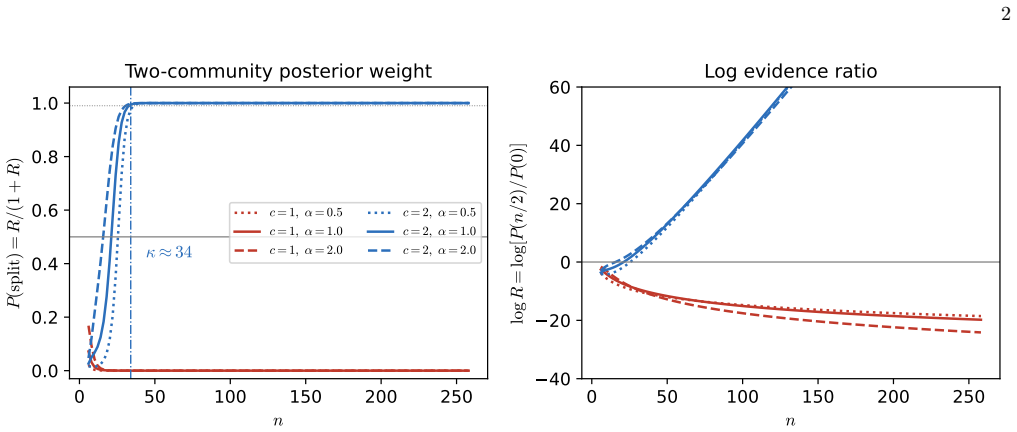
The Ramsey community number $r_\kappa$ is the minimum network size at which a graph's connectivity is better described by a partition into communities than by no partition, under a prescribed community-detection rule. It was introduced through numerical simulations of networks grown by local rules, which suggested that community structure can emerge without any node heterogeneity. Here I compute $r_\kappa$ analytically for the simplest homogeneous, locally wired graph: the circulant ring lattice $C_n(1,\dots,c)$. Using a Bernoulli stochastic block model with symmetric $\mathrm{Beta}$ priors as the detection rule, the Bayesian evidence for a balanced two-community partition and for the unpartitioned network are both obtained in closed form, so the transition between them can be located exactly. The result is a sharp dependence on the interaction range: the plain cycle ($c=1$) is never partitioned, its two-community posterior decaying as $n^{-(2\alpha+3)}$, so $r_\kappa=\infty$; but the next-nearest-neighbour ring ($c=2$) acquires a finite $r_\kappa\simeq 35$ nodes, above which the partition is preferred with a log-evidence growing as $(\ln 2)\,n$. This provides an exactly solvable instance of community emergence in a network with no built-in communities, and shows that a minimal amount of local connectivity is enough to break the ring.
We study a dilute system of non-motile chiral active particles confined in geometries ranging from straight channels to circular enclosures. Activity is introduced through chiral particle-wall interactions, modeled as tangential wall forces that generate the edge currents characteristic of chiral active matter. Remarkably, although the particles lack self-propulsion, these boundary currents induce density inhomogeneities. We show that boundary curvature drives a wall accumulation phenomenon: particles remain uniformly distributed in straight channels but accumulate near the boundaries of circular confinements. Numerical simulations and a hydrodynamic theory for the density and momentum fields consistently capture this curvature-induced wall-accumulation. These results identify boundary curvature as a fundamental control parameter for chiral edge transport and confinement-induced organization, with potential experimental relevance to spinning colloids and granular spinners.
Layered PtBi$_2$ is a candidate for topological superconductivity arising in Fermi-arc surface states. Using spin- and angle-resolved photoemission spectroscopy, we demonstrate that the Fermi arcs in PtBi$_2$ are singly degenerate and spin-polarized, which establishes their nontrivial topology and constitutes a necessary condition for topological superconductivity. We further uncover a pronounced surface-termination dependence of the Fermi-arc dispersion, yielding either nearly flat or approximately linear bands in agreement with first-principles calculations. Together, the observed spin polarization and termination-dependent bandwidth of the Fermi-arc surface states identify key ingredients underlying the potential emergence of topological superconductivity in PtBi$_2$.
We investigate the localization-delocalization transition and entanglement structure in a finite system of interacting bosons in non-rotating and rotating cases. The many-body eigenspectrum is obtained via exact diagonalization within subspaces of fixed total angular momentum, and the structure of the ground state is analyzed using the inverse participation ratio (IPR), the Shannon entropy (information entropy) and the von Neumann entanglement entropy. In the non-rotating case, a transition from localized to delocalized behavior is observed with increasing interaction strength. The transition is characterized by a decrease in IPR and a corresponding increase in entropy measures, indicating spread of eigenstate weight over all the basis states in the Hilbert space. The effect becomes more pronounced with increasing number of bosons due to the increase of the Hilbert space dimension. In the presence of rotation, the system is driven further toward delocalization. For moderate angular momentum, the eigenstates exhibit partial spreading, while at higher angular momenta a saturation behavior emerges, where further increase in rotation has a limited effect on the localization properties. However, the saturation weakens with increasing system size, indicating a nontrivial interplay between rotation and number of bosons. The consistent behavior of IPR, information entropy and von Neumann entanglement entropy demonstrates that these measures provide a unified characterization of the localization-delocalization transition. The results highlight the combined role of interaction strength, rotation and number of bosons in driving the system towards delocalized state. We observe a connection between localization-delocalization and entanglement, with localized states exhibiting weaker entanglement and delocalized states showing stronger entanglement.
Quantum droplets (QDs) are self-bound states of ultradilute quantum fluids stabilized by the interplay between the Lee Huang-Yang (LHY) quantum-fluctuation correction and the mean-field interaction, providing a useful platform for exploring macroscopic quantum phenomena. Recent studies on three-dimensional QDs have introduced the concept of bulk modulus and revealed its connection with the breathing-mode frequency, thereby linking the elastic response of QDs to their collective dynamics. Motivated by this progress, we investigate the elastic modulus of one-dimensional QDs. Based on a super Gaussian variational ansatz, we systematically derive the elastic modulus B and analyze its dependence on the interaction strength and particle number. The analytical predictions are further validated by numerical simulations based on imaginary time evolution and the spatial scaling method. We also establish a quantitative relation between the elastic modulus and the eigenfrequency of the breathing mode. In addition, by incorporating corrections to the droplet width beyond the Thomas Fermi approximation, we obtain the dependence of the ratio {\eta} = B/2 on the control parameters g and N. Unlike the three-dimensional case, where the corresponding ratio follows a simple power-law scaling, the one-dimensional system is affected by the soliton-to-droplet crossover, leading to a more intricate dependence of {\eta} on g and N. Our results show that, in the high-particle-number regime, the elastic modulus asymptotically approaches a limiting value determined mainly by the interaction strength, whereas in the low-particle-number regime it depends on both the particle number and the interaction strength.
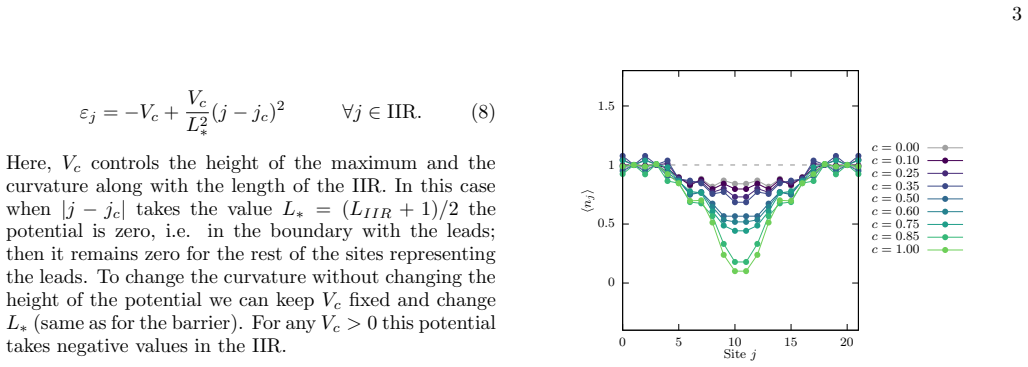
The use of intense terahertz (THz) pulses to manipulate low-energy excitations offers a powerful approach for ultrafast control of electronic and magnetic properties in materials. Theory suggests that circular ionic motions driven by THz fields carry angular momentum, potentially generating internal magnetic fields. Recent experiments in nonmagnetic SrTiO3 (STO) have hinted at such THz-induced fields, but their origin remains debated. Here, we employ ultrafast x-ray diffraction to resolve the time-dependent ionic trajectories in STO following excitation by circularly polarized THz pulses. Our analysis reveals that oxygen ions, despite their lower mass, contribute around 90% of the phonon angular momentum. The resulting imbalance between the negatively and positively charged ions provides a clear explanation for the mechanism behind induced magnetism in STO. This work further provides the first quantitative measurement of circular ionic motions and their angular momentum and establishes a general methodology for the investigation of angular momentum transfer in solids, paving the way for new strategies to control topological phonon transport and phonon-driven magnetism in quantum materials.
We investigate the Kitaev-$J_3$ honeycomb model using variational Monte Carlo calculations combined with a vison-quasiparticle analysis of the parent Kitaev spin liquid (KSL). We provide evidence for deconfined magnetic phases in which zigzag or antiferromagnetic order coexists with remnant $\mathbb{Z}_2$ topological structure inherited from the KSL. The optimized variational wave functions retain multiple linearly independent topological sectors on a torus, whereas those of conventional ordered phases collapse to a single sector. The vison-quasiparticle analysis shows that magnetic order naturally arises from vison-pair condensation while single visons remain gapped, yielding a microscopic mechanism for magnetic ordering without immediate confinement. The resulting phases further host gapless spinons with multiple Majorana cones, offering a possible microscopic scenario for the anomalous low-temperature longitudinal thermal transport reported in magnetically ordered Kitaev materials such as Na$_2$Co$_2$TeO$_6$. Our results reveal a microscopic route to fractionalized magnetism beyond the conventional dichotomy between magnetic order and spin-liquid behavior.
We investigate the structural, electronic, and optical properties of native point defects in CaO using first-principles density-functional calculations. Oxygen vacancies are favored under O-poor conditions, whereas calcium vacancies dominate under O-rich conditions. Calculated migration barriers and binding energies indicate that vacancy complexes are thermodynamically stable and can survive high-temperature annealing. Optical transition energies, evaluated using the Franck-Condon framework, suggest that several experimentally observed absorption and emission peaks can be attributed to negatively charged vacancy complexes as well as isolated oxygen vacancies.
We performed ultrasonic measurements on the unconventional superconductor Sr$_2$RuO$_4$ to investigate the dynamical properties of the electronic states near its superconducting transition temperature, $T_\mathrm{c} = 1.4$ K. We observed an increase in the in-plane transverse ultrasonic attenuation coefficient as the temperature approached $T_\mathrm{c}$. The ultrasonic attenuation exhibited a Landau-Khalatnikov-type ultrasonic frequency dependence with a typical relaxation time of approximately $10^{-10}$ s. Under an applied magnetic field of 10 T, the superconducting transition was suppressed. However, the ultrasonic attenuation coefficient exhibited an increase down to low temperatures, indicating the slowing down of fluctuations associated with multipole degrees of freedom. Based on group-theoretical considerations, we propose that the electric hexadecapole plays a crucial role in the slowing down. Furthermore, we discuss the relationship between multi-component superconducting order parameters and multipole degrees of freedom.
Machine-learning-accelerated materials discovery has yielded large numbers of computationally stable compounds, yet many remain experimentally unrealized, underscoring a persistent gap between prediction and synthesis. Here, we introduce a hierarchical screening framework that combines PBE-based thermodynamic stability, efficient dynamical-stability screening enabled by universal machine-learning interatomic potentials, and SCAN-based thermodynamic refinement. Applying this protocol to the 894 stable materials previously reported in Sci. Data 9, 302 (2022), we first curate 603 unique structures, of which only 298 remain thermodynamically stable on the complete PBE phase diagrams, demonstrating the critical role of competing phases in stability assessment. Dynamical screening then identifies 166 materials stable under both harmonic-phonon and finite-temperature molecular dynamics criteria, and SCAN phase diagrams further narrow this set to 109. Finally, by combining decomposition enthalpy with chemical-space completeness, we prioritize 25 candidates as high-confidence targets for experimental synthesis. This work provides a practical protocol for translating stability predictions into experimentally actionable synthesis targets, closing a key gap in machine-learning-driven materials discovery.
Exploring thermal transport at cryogenic temperatures presents both significant challenges and valuable insights. By uncovering the thermal counterpart of well-known quantum phenomena, researchers investigated fascinating phenomena ranging from the violation of the Wiedemann-Franz law to the quantisation of phonons. One key frontier remains : no existing method can image local heat transport at the nanoscale under cryogenic conditions. In this Perspective, we review the current state state of the art of local heat transport characterisation techniques and highlight their limitations. As a motivation for the development of cryogenic Scanning Thermal Microscopy, we provide five case studies illustrating how this approach could deepen our understanding of exotic quantum phases and enable the emergence of transformative technologies.
Density functional theory (DFT) is widely used to model twisted bilayers, but the accuracy of the local stacking energetics underlying such models remains uncertain. Here, we benchmark the local-registry landscape of bilayer InSe using diffusion quantum Monte Carlo (DMC). DFT predicts that AB, AAr, and ABr stackings, which share the same interfacial Se registry, are nearly degenerate within 1.5 meV/f.u. and exhibit nearly indistinguishable DFT charge-density responses. DMC instead separates these stackings by 8(5) and 41(4) meV/f.u., while the energy difference between the most stable and least stable registries reaches 60(7) meV/f.u.. These large energy separations show that the stacking energetics are not determined by the interfacial atomic motif alone but depend on the full registry and its associated many-body electronic response. More broadly, these results show that DFT-based moir\'e models can substantially underestimate local stacking-energy corrugation, with direct consequences for predicted structural relaxation, domain formation, and electronic reconstruction in twisted layered materials.
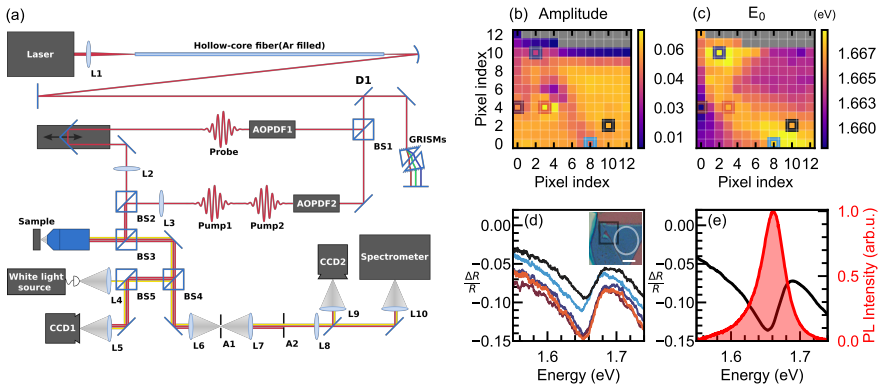
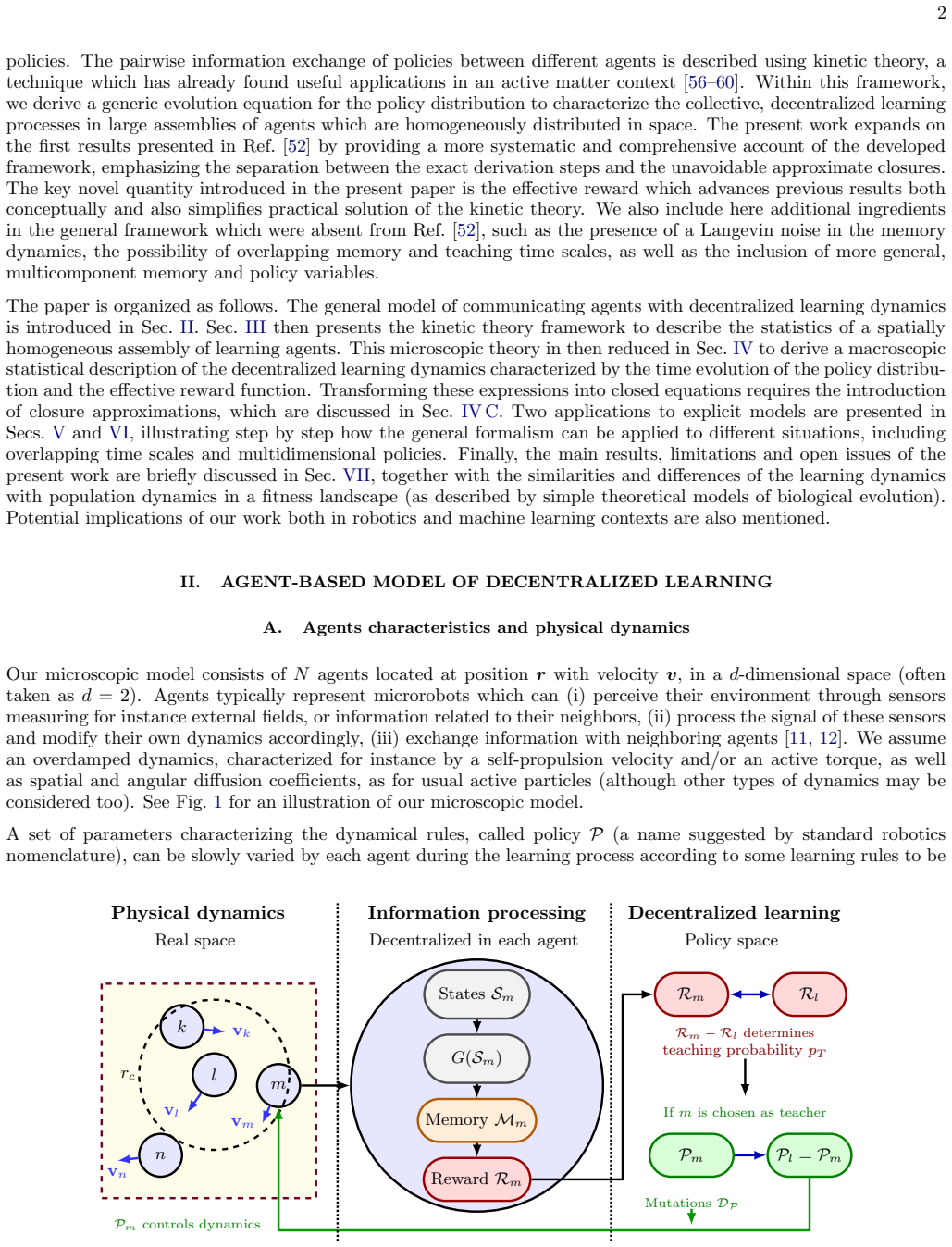
Values are orders of magnitude below silicon; conductivity halves at 10 nm film thickness due to strong anharmonicity.
abstractclick to expand
With the rapid development of integrated electro-optic and nonlinear optical devices based on lithium niobate (LiNbO$_3$, LN), thermal management is becoming a critical area of focus. However, experimental measurement of thermal transport in stoichiometric LiNbO$_3$ (sLN) remains scarce, and the intrinsic microscopic mechanisms remain to be established. Here, we combine the laser pump-probe technique of frequency-domain thermoreflectance (FDTR) with state-of-the-art machine-learned atomistic simulations to comprehensively investigate thermal transport in sLN. The measured and simulated room-temperature thermal conductivity ($\kappa$) values of sLN agree well, which are orders-of-magnitude lower than that of many classic and emerging semiconductors such as silicon. Furthermore, the temperature-dependent $\kappa$ exhibits a $T^{-\alpha}$ scaling with $\alpha$ near unity, suggesting that thermal transport is dominated by intrinsic phonon-phonon scattering. By comparing sLN with cubic boron arsenide (cBAs) which serves as an ultrahigh-$\kappa$ benchmark, we reveal that harmonic properties are not responsible for the low $\kappa$ of sLN, which feature phonon heat capacity and group velocities that are either higher than or comparable to those in cBAs. Instead, the low $\kappa$ originates from substantially stronger anharmonicity and larger scattering phase space. These two factors collectively suppress phonon lifetimes by 1-2 orders of magnitude, leading to a maximum phonon mean free path of approximately 140 nm. As a result, notable size effects emerge in thin-film sLN below 1 $\mu$m, with $\kappa$ dropping to half the bulk value at 10 nm. Altogether, our findings establish a fundamental understanding of thermal transport in sLN and provide atomistic insights for thermal management in advanced lithium niobate technologies.
The quantum Kramers-Wannier (KW) duality is a fundamental transformation mapping short-range entangled (SRE) states to long-range entangled (LRE) states. While spatially local unitary circuits require linear-in-system-size depth to implement this duality, the ultimate speed limit for purely unitary circuits equipped with nonlocal connectivity remains an open question. Here, we explicitly construct logarithmic depth, spatially nonlocal unitary circuits that realize the exact $\mathbb{Z}_2$ KW dualities in both one and two spatial dimensions. We further generalize the construction to arbitrary $\mathbb{Z}_n$ KW dualities. Unlike algorithms tailored to prepare specific target states, our circuits implement complete duality maps. Within the symmetric (charge-neutral) sector, these dualities exactly transform arbitrary non-fixed-point SRE states into their corresponding LRE duals. Consequently, our results establish an efficient, purely coherent pathway for exploring phase transitions and topological dualities on modern quantum platforms.
Two-dimensional transition metal dichalcogenides (TMDs) have emerged as promising materials for spin--orbitronics owing to their strong spin--orbit coupling and rich electronic phases. However, their orbital transport properties remain largely unexplored. Here, we demonstrate that the orbitronic response of $\mathrm{MoTe_2}$ is governed by a thickness-driven structural phase transition. RF-sputtered $\mathrm{MoTe_2}$ thin films exhibit a crossover at a critical thickness of approximately $4.5\,\mathrm{nm}$, stabilizing in the metallic $1T^\prime$ phase below this threshold and in the semiconducting $2H$ phase above it. Raman spectroscopy and scanning tunneling spectroscopy (STS) confirm the structural and electronic transition, revealing gapless behavior in ultrathin films and a finite band gap in thicker samples. Spin-pumping measurements detect an additional transverse charge-conversion signal exclusively in metallic $1T^\prime$-$\mathrm{MoTe_2}$, in agreement with first-principles calculations that identify a dominant orbital Rashba--Edelstein response as the underlying conversion mechanism.
We show that exchange symmetry in collisions of identical particles enables symmetry-protected coherent control of the total scattering cross section. For identical fermions, antisymmetrization enforces complete phase synchronization of the contributing scattering channels, yielding maximal control visibility. For identical bosons, synchronization persists but with reduced visibility due to additional exchange (satellite) contributions. Collisions of distinguishable particles lack this symmetry-imposed phase locking, leading to lower controllability and visibility. We elucidate these principles through coupled-channel quantum-scattering calculations for lithium-lithium collisions, comparing the $^{6}\mathrm{Li}$-$^{6}\mathrm{Li}$ (identical fermions), $^{7}\mathrm{Li}$-$^{7}\mathrm{Li}$ (identical bosons), and $^{6}\mathrm{Li}$-$^{7}\mathrm{Li}$ (distinguishable) systems. Furthermore, in the identical particle cases, symmetry-enforced synchronization enables full control over the parity of the final state at any collisional energy. This mechanism is broadly applicable to identical-particle collisions, including homonuclear molecules for which established approaches -- DC electric fields, or microwave shielding -- are ineffective or unavailable.
The instabilities of slender structures power biological locomotion across scales, and offer a compelling method to actuate soft robots. Nonreciprocal elastic solids have been found to amplify flexural waves in one direction only, but design principles to tune and stabilize these waves are missing. Here we develop a geometrically exact theory of nonreciprocal filaments and provide simulations that capture their post-instability nonlinear dynamics. We find that nonreciprocity, when coupled to inertia or pre-stress, amplifies and advects curvature variations. The resulting one-way patterns of shape morphing can then be selected via dissipative interactions with the environment. Our work offers a continuum-based strategy for how internal stresses can drive active unidirectional waves without need for additional degrees of freedom.
We investigate fluid mixing induced by microswimmers using mutual information as a global, information-theoretic measure of mixing efficiency. For a two-dimensional squirmer model in a confined domain, we compute numerically the swimmer-generated flows and solve the advection-diffusion equation for the transport of tracer particles in the fluid. We show that the spatial distribution of swimmers strongly affects mixing, which is suppressed by swimmer aggregation and enhanced by positional and orientational disorder. At fixed energy dissipation, mixing efficiency depends non-monotonically on the squirmer parameter, with an optimal finite value arising from the balance between swimmer translation and dipolar flow generation. When hydrodynamic interactions are included, pushers outperform pullers. The mutual information as a function of time decays in three stages: an initial diffusion-dominated stage, an intermediate advection enhanced regime, and a final relaxation stage controlled by system size. Our results demonstrate that mutual information, previously validated as a measure of mixing efficiency only in simplified model systems, can equally be used in complex flows. Its application reveals that mixing by microswimmers is subject to a trade-off between the generation of strong shear flows and achieving optimal dispersion across the fluid domain.