pith. sign in

physics.plasm-ph

Plasma Physics

Fundamental plasma physics. Magnetically Confined Plasmas (includes magnetic fusion energy research). High Energy Density Plasmas (inertial confinement plasmas, laser-plasma interactions). Ionospheric, Heliophysical, and Astrophysical plasmas (includes sun and solar system plasmas). Lasers, Accelerators, and Radiation Generation. Low temperature plasmas and plasma applications (include dusty plasmas, semiconductor etching, plasma-based nanotechnology, medical applications). Plasma Diagnostics, Engineering and Enabling Technologies (includes fusion reactor design, heating systems, diagnostics, experimental techniques)

Top Pith
5
physics.plasm-ph 2026-05-19

Kinetic ion response with driving field yields TFBI dispersion relation

by Yakov S. Dimant, Meers M. Oppenheim

Kinetic theory of the Thermal Farley-Buneman Instability in the E-region ionosphere

The analytic relation automatically includes the ion thermal instability and applies to radar signals from unmagnetized E-region altitudes b
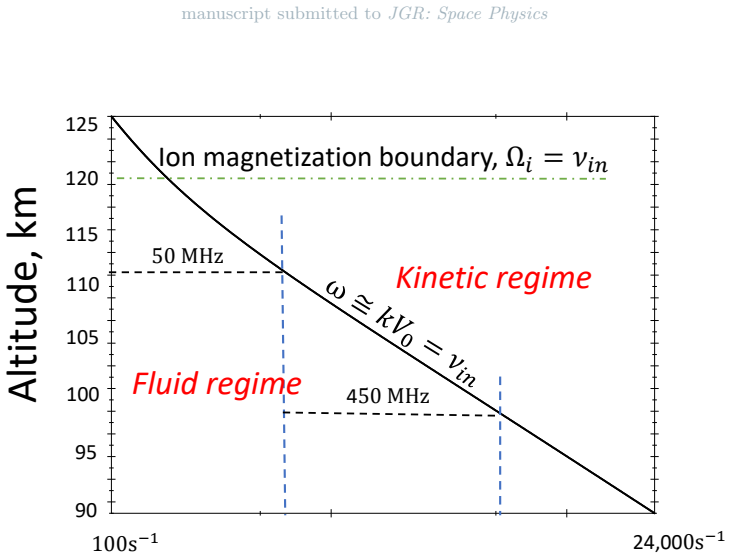
Figure from the paper full image
abstract click to expand
This paper develops a fully kinetic linear theory of the thermal Farley-Buneman instability (TFBI) in the E-region ionosphere with unmagnetized ions. The TFBI combines spatially uniform E-region plasma instabilities, such as the Farley-Buneman instability (FBI), ion thermal instability (ITI), and electron thermal instability (ETI). Similar collision-dominated plasma processes can also occur in the solar and stellar chromospheres, as well as in other planetary atmospheres. For the first time in the theory of the FBI-related processes, the kinetic description of ions includes the driving electric field, resulting in automatic inclusion of the ITI. This analytic theory has produced a comprehensive linear wave dispersion relation. It is remarkable that, similarly to the oversimplified earlier ion-kinetic studies, this much more general kinetic dispersion relation involves only elementary functions and the standard plasma dispersion function (albeit of several different arguments). This new theory is limited to plasma waves with the frequencies of the order, or larger than, the ion-neutral collision frequency. This inherently kinetic frequency range is of importance for accurate interpretation of radar signals scattered from relatively high E-region altitudes, but at altitudes where ions are unmagnetized (mostly, below 110 km).
0
Top Pith
3
cond-mat.str-el 2026-05-18 2 theorems

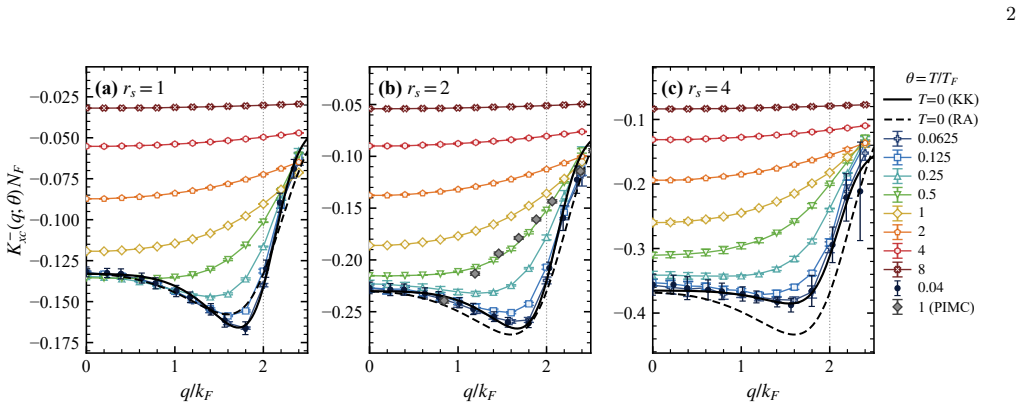
Spin kernel computation shows warm-dense LSDA mismatch

by Pengcheng Hou, Zhiyi Li +2 more

Finite-Temperature Spin Exchange-Correlation Kernel of the Uniform Electron Gas

Long-wavelength limit of the finite-temperature spin XC kernel agrees with LSDA spin stiffness at low T but exposes a residual when warm and

Figure from the paper full image
abstract click to expand
The finite-temperature spin response of the uniform electron gas (UEG) is a fundamental reference for spin-polarized and magnetized electron liquids, including warm dense matter (WDM), yet it remains far less constrained than charge response. Using variational diagrammatic Monte Carlo, we compute the static spin exchange--correlation (XC) kernel $K_{xc}(q;T)$ of the unpolarized UEG at metallic densities across the quantum-degenerate, warm-dense, and classical regimes. The kernel connects smoothly to zero-temperature spin-response parametrizations at low temperature, while heating suppresses the Fermi-surface-scale spin-correlation structure and weakens the XC-driven Stoner enhancement. Its long-wavelength limit provides a direct response test of the spin stiffness implied by thermal local-spin-density-approximation (LSDA) parametrizations, showing low-temperature consistency while exposing a resolved warm-dense residual in current LSDA parametrizations. In the classical regime, the spin XC kernel becomes nearly local on the Fermi-momentum scale, in sharp contrast to the corresponding charge XC kernel. These results provide a first-principles basis for finite-temperature spin-response theory and magnetized WDM modeling.
0
0
physics.plasm-ph 2026-07-03

Plasma wakefield boosts photons for multi-GeV gamma rays

by Michael J. Quin, Stepan S. Bulanov +5 more

Brilliant multi-GeV Compton gamma-ray source seeded by a photon accelerator

Accelerating laser light to EUV then reflecting it enables high-brilliance polarized sources via inverse Compton scattering.

Figure from the paper full image
abstract click to expand
High-brilliance sources of polarized gamma rays are widely sought after to pump and probe matter at subatomic length scales. However, existing accelerator facilities and optical lasers cannot reach a sufficiently high center-of-mass energy to produce polarized, multi-GeV gamma rays from unpolarized electrons via inverse Compton scattering. Here we propose a scheme where the optical laser photons are first "accelerated" to the extreme ultraviolet in a beam-driven plasma wakefield, then reflected by a plasma mirror back onto a trailing electron beam, producing a flash of gamma rays. Numerical simulations demonstrate this light source can achieve a high peak-brilliance (10^25 photons/s mm^2 mrad^2 0.1% BW) and a high degree of circular (95 %) or linear (77 %) polarization at multi-GeV photon energies, paving the way for the production of spin-polarized positrons and tests of light-by-light scattering.
0
0
physics.app-ph 2026-07-03

Transient drive creates virtual critical coupling for microwave plasmas

by Muhammad Rizwan Akram, Abbas Semnani

Transiently Driven Reflectionless Resonant Microwave Plasmas via Virtual Critical Coupling

Exponentially growing waveform lets resonators store 4x energy and cut ignition costs in experiments

Figure from the paper full image
abstract click to expand
Microwave plasma sources play a critical role in scientific research and a wide range of industrial, biomedical, and space applications. Resonant microwave structures have recently enabled highly energy-efficient plasma generation by concentrating electromagnetic energy within compact volumes. However, once plasma is ignited, the formation of a conductive region at the resonator's electric-field hotspot significantly perturbs the resonant impedance, resulting in severe impedance mismatch, increased reflection, and reduced power-transfer efficiency. This limitation arises because conventional resonant operation relies on critical coupling, in which the input coupling simultaneously provides impedance matching and perturbs the resonator. This paper overcomes this fundamental limitation by operating the resonator in an over-coupled regime and achieving dynamic impedance matching through temporally modulated excitation. Specifically, an exponentially growing incident waveform is used to emulate the critical coupling condition without physically modifying the resonator, a concept known as virtual critical coupling. The proposed approach enables the resonator to store up to four times as much electromagnetic energy as a conventionally critically coupled resonator. Experimental results demonstrate ultra-efficient resonant microwave plasma generation with multi-fold reductions in ignition energy consumption and enhanced dynamic control over plasma dynamics.
0
0
physics.plasm-ph 2026-07-02

New collimated detector isolates core HXR from runaway electrons

by Suman Dolui, Santosh Pandya +24 more

Development of a thin-target hard X-ray bremsstrahlung detection system to study confined runaway electrons in Aditya-U Tokamak

It records thin-target bremsstrahlung from the sawtooth inversion region in Aditya-U and matches forward modeling of confined electrons.

Figure from the paper full image
abstract click to expand
A specially shielded CdTe detector based hard X-ray (HXR) monitoring system equipped with a lead collimator has been developed and installed on the Aditya-U tokamak to investigate the dynamics of fast electrons (~20-200 keV) generated during sawtooth activity. The pre-existing HXR monitor in Aditya-U is exposed to the entire HXR bremsstrahlung emission from the plasma volume, peripheral limiters, and other structural components, which limits its ability to separately study the dynamics of lost and confined runaway electrons (REs). In contrast, the newly developed diagnostic has successfully measured the chord-averaged thin-target HXR bremsstrahlung emission encompassing the core plasma region, particularly within and around the sawtooth inversion radius. The measured HXR spectra are validated through forward modelling code that incorporates plasma parameters, confined RE characteristics, and the geometric configuration of the diagnostic system. The results confirm the capability of the developed HXR monitor to probe the fast-electron dynamics during internal plasma instabilities.
0
0
physics.plasm-ph 2026-07-02

Benjamin-Feir index marks non-Gaussian chorus waves above 0.5

by D.J. Ratliff, O. Allanson +4 more

Understanding Non-Gaussian Chorus Wave Statistics via the Benjamin-Feir Index

Model maps night and dawn sectors as primary sites and matches asymmetric spectra in probe data.

Figure from the paper full image
abstract click to expand
We derive an extended wave action model for equatorial chorus waves, identifying a wave activity index (a version of the Benjamin-Feir index, BFI) which indicates non-Gaussian frequency spectra emerge when BFI$>$0.5. Global maps of this index indicate the night and dawn sectors ($0<{\rm MLT}<9)$ of the magnetosphere as the primary region for non-Gaussian wave statistics to emerge. Comparisons with events measured by the Van Allen probe A demonstrate good qualitative agreement whilst identifying key aspects for model refinement. A key strength of our model that our work highlights is its ability to account for the asymmetric frequency spectra characteristic of non-Gaussian chorus. This work ultimately establishes the first wave activity index that distinguishes Gaussian and non-Gaussian wave scenarios from first principles, providing the groundwork for a threshold-based quantification for use in space weather modelling.
0
0
physics.atom-ph 2026-07-02

Oxygen Kα resonance fixed at 554.372 eV with isotope shift resolved

by Jonas Danisch, Marc Botz +16 more

Parts-per-million-accurate determination of the K{α} photoionization resonance of Be-like oxygen with resolution of its ¹⁶O-¹⁸O isotopic shift

Measurement pins inner-shell transition in four-electron oxygen ions and separates the 2.2 meV difference between ¹⁶O and ¹⁸O.

Figure from the paper full image
abstract click to expand
We determine with high accuracy the energy of the inner-shell transition $1s^2 2s^2~{}^1\mathrm{S}_0 \rightarrow 1s~2s^2~2p_{3/2}~{}^1\mathrm{P}_1$ ${}^{16}\mathrm{O}_{K\alpha}^{4+}$ at $554.372(3)~\mathrm{eV}$ ($\lambda$ = $22.36480(12)~\unicode{x212B}$) as well as its small shift of $2.2 \pm 1.3~\mathrm{meV}$ ($\Delta \lambda$ = $0.089(52)~\mathrm{m}\unicode{x212B}$) for the ${}^{18}\mathrm{O}$ isotope. This transition blends with a $K_\alpha$ line of $\mathrm{O}^{5+}$ used in astrophysical diagnostics, potentially affecting its reliability. In contrast to our experimental uncertainty of $\pm 3~\mathrm{meV}$, advanced electronic structure predictions for this four-electron system, including quantum electrodynamic (QED) corrections on the order of $100~\mathrm{meV}$, still scatter by more than $\pm 250~\mathrm{meV}$. Ions generated and stored in an electron beam ion trap were excited at the ELETTRA synchrotron facility with monochromatic soft x rays, with photon energies corrected by an additional spectrometer. Upon resonant excitation of $\mathrm{O}^{4+}$ and subsequent autoionization, we separate the photoions of each isotope by a time-of-flight measurement. This way, we resolve soft x-ray isotopic shifts of a few meV, obtain very accurate data on an essential astrophysical ion, and test calculations down to the level of QED contributions.
0
0
physics.plasm-ph 2026-07-02

Shake-off processes improve fit to XFEL aluminum spectra

by Lucas Ansia, Pedro Velarde +2 more

Reexamination of collisional ionization cross sections including double photoionization processes

Adding double photoionization and lowering recombination rates aligns the model with observed emission features.

Figure from the paper full image
abstract click to expand
Collisional ionization (CI) cross sections in dense plasmas remain difficult to constrain due to uncertainties in plasma conditions and the overlapping spectral signatures of competing atomic processes. The use of x-ray free electron lasers (XFELs) to both heat and probe solid-density targets has significantly advanced the field by eliminating assumptions about ion density. However, questions remain regarding collisional cross sections, suprathermal electron evolution and competing atomic processes. In this work, we revisit experimental data from XFEL-heated aluminum, previously analyzed using collisional radiative models that did not treat the degenerate electron distribution and atomic processes self consistently. We present a new analysis using BibBarT which dynamically evolves non-thermal electron populations and explicitly includes degeneracy effects. Furthermore, we incorporate an important atomic process recently observed in plasma state that mimic signatures of CI, shake-off. Our results show that including shake-off processes improves agreement with observed emission features, and lowering recombination rates further improves the agreement with data -- indicating a possible overestimate of three-body recombination in these conditions.
0
0
astro-ph.EP 2026-07-02

SKA-LOW to map lightning initiation with radio waves

by Brian M Hare, Sjoerd Bouma +16 more

Unveiling the Mysteries of Lightning: Exploring its fundamental Physical Processes with SKA-LOW

Wide bandwidth and sensitivity will capture the faint signals marking how flashes start and spread.

Figure from the paper full image
abstract click to expand
Lightning is a surprisingly poorly understood phenomena. It consists of a wide variety of complex processes such as initiation, propagation, connection to ground, even emission of high-energy radiation. However, due to the extreme challenges in observing lightning at fast time scales, small spatial scales, and behind obscuring clouds, these processes are not well understood. In the past, interferometers such as the LOFAR radio telescope have provided unique insight and discoveries into the physics of lightning. The new SKA-LOW being built in western Australia will provide unrivaled spectral bandwidth and sensitivity, which will be combined with high resolution resulting from large antenna baselines. We will use SKA-LOW to observe lightning in order to explore its fundamental plasma physics, such as how it initiates and propagates. SKA's high bandwidth will allow us to test how lightning emits VHF radiation, giving tremendous insight into precisely how the plasma behaves. SKA's sensitivity will allow us to explore extremely faint lightning processes, such as the very first radio emission from a lightning flash. Here, we detail the lightning physics that can be explored with SKA, as well as the observation strategy needed explore such physics.
0
0
physics.plasm-ph 2026-07-02

RMPs pump in density for better tokamak confinement

by N. C. Logan, Q. Hu +10 more

Improved Particle Confinement with Resonant Magnetic Perturbations in DIII-D Tokamak H-Mode Plasmas

The effect holds over counter-current rotations via lower turbulence and reversed neoclassical transport.

Figure from the paper full image
abstract click to expand
Experiments on the DIII-D tokamak have identified a novel regime in which applied resonant magnetic perturbations (RMPs) increase the particle confinement and overall performance. This Letter details a robust range of counter-current rotation over which RMPs cause this density pump-in effect for high confinement (H mode) plasmas. The pump in is shown to be caused by a reduction of the turbulent transport and to be correlated with a change in the sign of the induced neoclassical transport. This novel reversal of the RMP induced transport has the potential to significantly improve reactor relevant, three-dimensional magnetic confinement scenarios.
0
0
astro-ph.CO 2026-07-01

Adiabatic MTI forms plumes yielding turbulent energy ~ χ ω_T

by Lorenzo Maria Perrone, Henrik Latter

Magneto-Thermal Instability in Galaxy Clusters -- III. The Limit of Adiabatic Stratification

Shear destruction of large plumes sets the saturation scaling and enables near-sonic speeds with significant pressure support in cluster out

Figure from the paper full image
abstract click to expand
In the hot and dilute intracluster medium of galaxy clusters, large-scale buoyancy instabilities can develop due to the transport of heat along magnetic field lines. In particular, the peripheries of galaxy clusters are unstable to the magneto-thermal instability (MTI), which may contribute to the observed levels of turbulence. Recent theoretical and numerical work has revealed that the stable background entropy stratification controls the nonlinear saturation of the instability, by setting the strength and the integral scale of the resulting turbulent state. However, observations of the periphery of galaxy clusters show that the radial entropy profiles near the virial radii $R_{500}$ may be flatter than predicted by models of smooth gravitational accretion. This motivates us to investigate the saturation of the MTI in adiabatic (buoyantly neutral) atmospheres, using both phenomenological approaches and Boussinesq numerical simulations, carried out with the pseudospectral code SNOOPY. We find that the adiabatic MTI saturates in a state characterised by the formation of large-scale plumes and their destruction by shear instability, yielding a new scaling law for the saturated turbulent kinetic energy, $\sim$$\chi \omega_T$, as the adiabatic limit is approached, where $\chi$ is the effective thermal diffusivity and $\omega_T$ is the MTI frequency. This predicts that the MTI plumes may achieve near sonic speeds in cluster outskirts, thus providing significant turbulent pressure support, even in the face of suppressed thermal conduction.
0
0
physics.plasm-ph 2026-07-01

EUV pulses above 0.1 mJ create transient plasma double layers

by Manis Chaudhuri, Pavel Krainov +3 more

Plasma double layer development during high power EUV exposure

Simulations show the charge-separation layer forms only during the 70 ns light pulse and vanishes once the light stops.

Figure from the paper full image
abstract click to expand
The development of electrostatic plasma double layer (DL) at the boundary of Extreme Ultra Violet (EUV) exposed and un-exposed region in the bulk volume has been confirmed by 3DPIC (Particle-In-Cell) simulations in the context of fast transient high power EUV exposures. It is found that the DL exists only for short time scale during EUV-ON time period (~ 70ns) and disappears soon after EUV is OFF. Such DL fingerprint appears above a certain critical value of EUV beam energy (~ 0.1mJ) and it transforms from weak-to-strong DL with further increase of EUV power.
0
0
nucl-th 2026-07-01

Kinetic theory yields causal equations for magnetized relativistic plasmas

by Khwahish Kushwah

Relativistic magnetohydrodynamics from kinetic theory

A 14-moment truncation of the Boltzmann-Vlasov equation produces second-order hydrodynamics that include electromagnetic coupling and resist

Figure from the paper full image
abstract click to expand
This thesis develops a kinetic-theory framework for relativistic dissipative magnetohydrodynamics under strong electromagnetic fields, motivated by quark-gluon plasma in heavy-ion collisions. Starting from the relativistic Boltzmann-Vlasov equation and using the method of moments within the 14-moment approximation, it derives causal second-order hydrodynamic equations for relativistic plasmas with increasing generality. The work first review relativistic dissipative hydrodynamics and its kinetic foundations, emphasizing the need for Israel-Stewart-type transient theories to preserve causality and stability. Electromagnetic fields are then introduced at the microscopic level, where the Lorentz force modifies the moment hierarchy and produces anisotropic transport effects absent in field-free fluids. Next, it develops relativistic dissipative magnetohydrodynamics for a non-resistive two-component plasma of oppositely charged particles. Here, the magnetic field couples the dissipative sectors of the two species, generating relative dissipative currents and coupled shear dynamics. For Bjorken expansion, the theory predicts damped oscillations in the transverse shear sector associated with cyclotron motion. Finally, the thesis treats the resistive two-component case, where the electric field evolves dynamically and couples to charge diffusion and shear stress. The resulting theory reveals current-shear feedback, transient electromagnetic generation of momentum anisotropy, and underdamped dissipative oscillations. Applications to homogeneous and Bjorken-expanding plasmas show how resistive and electromagnetic effects modify evolution beyond standard hydrodynamics. Overall, the thesis extends relativistic dissipative hydrodynamics to magnetized and resistive plasmas, providing a microscopic foundation for future studies of strongly magnetized quark-gluon plasma and astrophysical systems.
0
0
physics.plasm-ph 2026-07-01

Moderate RMPs stabilize 2/1 tearing mode without locking

by Qiming Hu, Q. Yu +4 more

Effect of externally applied resonant magnetic perturbations on resistive tearing modes

J-TEXT experiments and reduced MHD simulations show amplitude tuning prevents locking while suppressing the instability

Figure from the paper full image
abstract click to expand
Static resonant magnetic perturbations (RMPs) generated by saddle coil current have been applied in J-TEXT tokamak experiments in order to study their effects on tearing mode instabilities. With increasing the RMP amplitude in time during the discharge, the mode stabilization is first observed, but a large locked mode follows if the RMP amplitude is increased to a too large value, indicating that the RMP amplitude is important in determining the plasma response and the tearing mode behavior. By careful adjustment of the RMP amplitude, the (partial) stabilization of the m/n =2/1 tearing mode by RMPs of moderate amplitude has been achieved without causing mode locking (m and n are the poloidal and toroidal mode numbers). To compare with experimental results, nonlinear numerical modeling based on reduced MHD equations has been carried out. With experimental parameters as input, both the mode locking and mode stabilization by RMPs are also obtained from numerical modeling. Further calculations have been carried out to study the plasma parameters affecting the mode stabilization by RMPs, including the plasma rotation frequency, viscosity, Alfv\'en velocity, and the RMPs amplitude. It is found that the suppression of the tearing mode by RMPs of moderate amplitude is possible for a sufficiently high ratio of plasma rotation velocity to the Alfv\'en speed. A larger plasma viscosity enhances the mode stabilization.
0
0
physics.plasm-ph 2026-07-01

Two-fluid model revises error field threshold scalings with rotation

by Q. Hu, N.C. Logan +4 more

Nonlinear modeling of the scaling law for the m/n=3/2 error field penetration threshold

Scans show linear dependence on perpendicular frequency and explain finite threshold at zero natural frequency via small undetected islands.

Figure from the paper full image
abstract click to expand
The scaling law for the n=2 error field (EF) penetration threshold is predicted numerically based on nonlinear single-fluid and two-fluid modeling using the TM1 code. The simulated penetration threshold of radial magnetic field br at the plasma edge is scaled to the electron density ne, temperature Te, viscous time, toroidal field Bt and the natural frequency by scanning these parameters separately. Single fluid modeling shows that the EF threshold scaling is similar with the analytical scaling law in both the Rutherford and visco-resistive regimes. However, two-fluid modeling shows that the scaling law differs significantly in particular regarding the dependence on plasma rotation. In detail, the scaling coefficient on density decreases from 0.67 to 0.56 and on temperature decreases from 0.67 to 0.32, while on viscous time is around -0.45 and on toroidal field decreases slightly from -1.15 to -1, when the ratio ExB over electron diamagnetic drift frequency varies from 0 to 10. Scans of the plasma rotation reveals that the penetration threshold linearly depends on the perpendicular rotation frequency (or natural frequency), and there is a minimum in the required field amplitude when electron fluid frequency near 0. In addition, the enduring mystery of non-zero penetration threshold at zero plasma natural frequency in EF experiments is resolved by two-fluid simulations. We find that the very small island and smooth bifurcation in EF penetration near zero frequency is hard to detect in the experiment, leading to a finite penetration threshold within the capability of the experimental measurements.
0
0
physics.plasm-ph 2026-07-01

Magnetic islands from RMPs suppress ELMs and pump density

by Q.M. Hu, R. Nazikian +4 more

The Role of Edge Resonant Magnetic Perturbations in Edge-Localized-Mode Suppression and Density Pump-out in low-collisionality DIII-D Plasmas

Islands form at pedestal edges while flows screen the gradient, reproducing observed thresholds in nonlinear simulations.

Figure from the paper full image
abstract click to expand
Two-fluid nonlinear MHD simulations using the TM1 code demonstrate that the formation of magnetic islands at the top and bottom of the H-mode pedestal, together with the strong screening of resonant fields in the gradient region of the pedestal, can account for ELM suppression and density pump-out by n = 2 Resonant Magnetic Perturbations (RMPs) in low-collisionality DIII-D ITER Similar Shape (ISS) plasmas. Using experimentally relevant transport coefficients, neoclassical resistivity, electron collisionality, and RMP amplitudes, nonlinear MHD simulations reproduce the observed level of density reduction (density pump-out) in DIII-D due the formation of narrow magnetic islands and resulting enhanced collisional transport in the resistive foot of pedestal. For large amplitude RMPs (Br/Bt>1*10-4) simulations predict field penetration and pressure reduction at the top of the pedestal consistent with experimental observations at the onset of ELM suppression. The predicted reduction in the height and width of the pedestal by magnetic island enhanced transport provides a quantitative mechanism for the stabilization of the Peeling-Ballooning Mode (PBM). Importantly, these simulations predict strong screening of resonant fields in the steep gradient region of the pedestal due to strong ExB and diamagnetic flows. However, if the plasma resistivity is made artificially larger (~10X) than neoclassical, the simulations predict magnetic stochasticity throughout the plasma edge and the collapse of the pedestal due to the reduction in the penetration threshold with increasing resistivity. A scaling relation for resonant field penetration at the pedestal top, using several hundred nonlinear simulations, reproduces the density and ExB dependence of the ELM suppression threshold observed in DIII-D.
0
0
physics.plasm-ph 2026-07-01

Quantum chemistry cuts memory for nonlinear plasma collisions 10000-fold

by R. Jorge, B. Herfray +2 more

Nonlinear Landau Collisions Without Collision Tensors

Reducing six-dimensional integrals to one-center moments and separable sums enables nonlinear tests that expose fourfold angular errors from

Figure from the paper full image
abstract click to expand
Far-from-equilibrium plasmas require nonlinear Coulomb collisions, but direct three-dimensional Hermite discretization of the Landau operator needs an impractical dense tensor. By porting quantum chemistry Coulomb-integral methods, we reduce the six-dimensional integrals to one-center Coulomb moments and separable exponential-sum contractions. This gives a four-order-of-magnitude working-memory reduction and enables nonlinear relaxation tests. Numerical simulations preserve invariants and show that finite-basis linearization changes relaxation and produces a fourfold angular error.
0
0
physics.plasm-ph 2026-06-30

Enhanced RPA-LDA matches proton stopping to NIST data from solids to plasmas

by Thomas A. Mehlhorn, Ming Feng Gu +1 more

An Enhanced RPA-LDA Model for Ion Stopping Power from Cold Matter to High-Energy Density Plasmas: A Unified, Open-Source Framework

Four corrections to the dielectric response yield agreement with cold-matter databases and sparse plasma measurements in one continuous fram

Figure from the paper full image
abstract click to expand
We present an enhanced random-phase-approximation--local-density-approximation (e-RPA-LDA) model for the stopping power of ions that is valid over a wide range of conditions, from cold solids through warm dense matter to high-energy-density plasmas. The electronic stopping is computed from the RPA dielectric response in the local-density approximation over an average-atom electron density obtained in a muffin-tin potential with the Flexible Atomic Code, augmented by four corrections to the earlier RPA-LDA model of Wang et al.: a strong-collision correction for large-momentum-transfer events, a static local-field correction for electron correlations, an electron-binding correction, and the higher-order Barkas and Bloch terms. The resulting proton stopping powers agree with the NIST PSTAR and IAEA databases across the periodic table and for compounds -- providing a physics-based alternative to semi-empirical codes such as SRIM -- and reproduce the limited published plasma data, including charged-particle transport-workshop benchmarks, time-dependent DFT calculations, and the first measurements of enhanced light-ion stopping in plasmas. We further extend the model to a complete total stopping power for protons and alpha particles by adding nuclear and ionic (elastic ion-ion) stopping to the electronic term, yielding a continuous, self-consistent description of energy deposition from cold matter to hot dense plasmas. Because the average-atom treatment includes contributions from all electrons -- unlike Kohn-Sham DFT -- while remaining computationally efficient and applicable to low- and high-Z targets at arbitrary temperature and degeneracy, the model is well suited to inertial fusion and high-energy-density science. The computational framework is available on GitHub (https://github.com/dedx-erpa/dedx), with tabulated stopping powers and ranges in the data/ subdirectory.
0
0
physics.plasm-ph 2026-06-30

Compressive waves amplify fusion power more than heating

by Henry Fetsch, Nathaniel J. Fisch

Fusion-power amplification by compressive hydrodynamic fluctuations

Acoustic fluctuations raise reaction rates via clumping, unequal heating, and ion streaming, often beating direct heating in plasmas.

abstract click to expand
Compressive fluctuations in hot plasma, including acoustic waves and compressible turbulence, increase the rate of fusion reactions. This power amplification comprises hydrodynamic, ``two-temperature,'' and kinetic components, the first resulting from the clumping of hot ions in the peaks of the fluctuations, the second from the unequal heating of ions and electrons as fluctuations dissipate, and the third from the long mean free paths of fast ions near the Gamow peak, which allow these ions to stream across gradients in fluctuating hydrodynamic fields before colliding. In many cases, the increase in fusion power produced by waves exceeds that produced if the wave energy were instead used for heating. Response functions describing the modification to fusion power by compressive fluctuations are obtained in magnetized and unmagnetized fusion plasmas. Comparison to the related shear flow reactivity enhancement effect, a kinetic mechanism that increases fusion power in some divergence-free flows, illustrates a fundamental distinction between compressible and solenoidal turbulence in fusion plasmas.
0
0
physics.plasm-ph 2026-06-30

Third moment sum rule estimates kinetic energy consistently

by Fotios Kalkavouras, Panagiotis Tolias +7 more

Kinetic energy from the cubic sum rule of the dynamic structure factor

Exact PIMC data for the electron gas matches thermodynamics, but approximations introduce wave-number dependence.

Figure from the paper full image
abstract click to expand
The third frequency moment sum rule of the dynamic structure factor $S(\mathbf{q},\omega)$ is explored for the first time as an alternative estimator of the kinetic energy $K$ of quantum many-body systems. As a practical example, the uniform electron gas at warm dense matter conditions is considered. First, $K$ is extracted from quasi-exact \emph{ab initio} path integral Monte Carlo results for the imaginary-time density--density correlation function $F(\mathbf{q},\tau)$ and the expected excellent self-consistency with the thermodynamic differentiation route is confirmed. Second, $K$ is extracted from approximate dielectric formalism results for $S(\mathbf{q},\omega)$ and it is observed that common semi-classical approximations lead to a wave-number dependent $K$ with an incorrect short-wavelength limit. Our results are expected to be of broad interest for a great variety of applications, including time-dependent density functional theory, dielectric formalism schemes and warm dense matter models, as well as for the design of dedicated x-ray Thomson scattering experiments with the potential to provide model-free access to the full electronic equation of state.
0
0
physics.plasm-ph 2026-06-30

Toroidal pump inlet cuts divertor back-flow up to 33%

by M. Moscheni, A. Herrmann +6 more

Harnessing Toroidal Neutral Flows to Enhance Divertor Particle Exhaust

Capturing plasma-imprinted neutral flows raises duct pressure and reduces required pumping speed for fixed throughput

Figure from the paper full image
abstract click to expand
In 1991 Reiter et al. (1991 Plasma Phys. Control. Fusion 33 1579) considered the onerous exhaust requirements of ITER, and wrote: "The vacuum pumping problem of a fusion reactor will probably require some novel solution". Here we show that a toroidally oriented pump inlet can passively exploit intrinsic neutral flows to reduce back-flow, raise duct pressure, and ultimately improve particle-exhaust performance. Drawing on previous experimental observations and SOLPS-ITER edge-plasma simulations, we consolidate the evidence for a plasma-imprinted, multi-species toroidal neutral "wind" in detached tokamak divertors. We isolate the underlying mechanism in a prototypical divertor private-flux region using a database of two-dimensional direct simulation Monte Carlo (DSMC) calculations. The ordered neutral motion is recovered with a strong toroidal alignment, kilometre-per-second velocities, and persistence up to several centimetres across slip-to-transitional rarefied regimes (Kn=0.02$-$2). We then assess the consequences of capturing this ordered motion using a second database of idealised proof-of-principle DSMC simulations. Compared to the traditional poloidal arrangement, a toroidally oriented pump inlet reduces back-flow by up to 20% for deuterium and up to 33% for helium at 10% concentration. Partial pressures in the toroidal exhaust path are enhanced across the database, nominally by a factor of 1.78$\pm$0.04 for deuterium and 2.00$\pm$0.05 for helium. For fixed throughput, this implies a reduction in the required effective pumping speed and corresponding hardware. More broadly, these results motivate explicit retention of toroidal neutral momentum in divertor and sub-divertor modelling, and dedicated studies of neutral aerodynamics, including in stellarators, where an analogous directional imprinting is expected to occur.
0
0
stat.ML 2026-06-29

Bidirectional diffusion checks MHD prediction errors without ground truth

by Alexander Scheinker

Bidirectional Autoregressive Latent Diffusion for Forward and Inverse Magnetohydrodynamics

Forward and backward flows provide a consistency metric for uncertainty in plasma field evolution.

abstract click to expand
This work presents a new bidirectional autoregressive latent diffusion approach for predicting the evolution of multiple fields (mass density, pressure, velocity, and magnetic field components) for magnetohydrodynamics. We show that this bidirectional flow can be used as a self-supervised consistency metric for uncertainty and error estimation, which enables the model to estimate test-time uncertainty and error without access to ground truth, by comparing how closely flowing forwards and backwards in time returns to the same predicted fields. We also demonstrate this methods's potential to serve as a non-invasive plasma diagnostic, and show how adaptive feedback can be used to make the model more robust based on sparse diagnostics or limited views/measurements.
0
0
physics.plasm-ph 2026-06-29

V-shaped cavity produces signature of stochastic quantum radiation reaction

by Junhua Zhang, Xianshu Wu +3 more

Detecting Quantum Stochastic Effects in Radiation Reaction via Laser-Produced Surface QED Plasmas

Laser-driven surface wave in thin QED layer leads to distinct high-energy electron preservation in stochastic versus semi-classical models

Figure from the paper full image
abstract click to expand
We propose a method to detect quantum stochastic effects in radiation reaction by irradiating a V-shaped plasma cavity with an ultra-intense laser pulse. The pulse accelerates GeV electrons along the inner surface and simultaneously drives strong-field surface wave near the cavity apex. The accelerated electron bunches then collide with the surface wave, the latter acts as an effective counter-propagating ultra-intense electromagnetic wave, triggering significant radiation reaction. Importantly, because the surface wave is confined to an ultra-thin QED plasma layer (on the scale of the skin depth) where the expected number of hard photon emissions per electron is of order unity, stochastic effects are expected. Three-dimensional particle-in-cell simulations with different QED models show that radiation reaction strongly reshapes the angular distribution of high-energy electrons. In particular, electrons deflected by the surface wave experience strong radiation loss. However, compared with the semi-classical model, the stochastic QED model preserves a higher-energy component in the deflected beam, producing a clear angular-spectral signature, which potentially opens a pathway for experimental study of quantum stochastic effects in radiation reaction.
0
0
physics.plasm-ph 2026-06-29

Co-simulation shows 11 kHz oscillation in Hall thruster coupling

by Zirui Fan, Yinjian Zhao +5 more

Simulation Study of Coupling Effects Between a Hall Thruster and a Power Processing Unit

Closed-loop voltage-current exchange creates low-frequency behavior absent from fixed-voltage tests.

Figure from the paper full image
abstract click to expand
The complex and nonlinear load characteristics of Hall thrusters remain a key challenge in the design of propulsion power-supply output stages. In existing power-supply simu-lations for electric propulsion systems, the Hall thruster is often simplified as a fixed im-pedance or a prescribed current source, which makes it difficult to capture the real-time interaction between the power-supply output stage and the thruster discharge process. To address this issue, this study encapsulates a one-dimensional discharge model as an externally callable thruster slave and proposes a HallThruster.jl-Saber-Simulink co-simu-lation method. The proposed method enables synchronized closed-loop exchange be-tween the power-port voltage Vcmd and the thruster discharge current Iout . The results show that the discharge current under the co-simulation condition exhibits a sustained low-frequency response at approximately 11 kHz. Compared with a fixed-voltage standalone simulation, the co-simulation shows observable differences in port waveforms, spectral characteristics, and internal field distributions. This method provides a co-simu-lation basis for realistic load analysis of propulsion power supplies and subsequent stress evaluation of key components.
0
0
physics.plasm-ph 2026-06-29

Semi-implicit method advances stellarator MHD at large timesteps

by C. R. Sovinec, S. A. Patil +1 more

Semi-Implicit Stellarator Magnetohydrodynamics with Nodal Spectral Elements

Nodal spectral elements in the poloidal plane and Fourier in toroidal angle use a 3D ideal-MHD operator for non-axisymmetric simulations.

Figure from the paper full image
abstract click to expand
Nonlinear time-dependent computation of macroscale dynamics in stellarators is motivated by laboratory results showing the possibility of robust operation in conditions where magnetohydrodynamic (MHD) modes are linearly unstable. A new formulation of semi-implicit MHD computation for toroidally shaped magnetic confinement systems uses 2D nodal spectral elements over the poloidal plane and Fourier representation over a generalized toroidal angle. Geometric mappings and steady-state (equilibrium) fields are expanded in the same 3D representation as the time-evolved fields to model non-axisymmetric configurations. For accuracy at large timestep, the semi-implicit operator is based on the ideal-MHD energy integral using 3D pressure and magnetic fields. The nodal spectral elements allow numerical convergence through either h-refinement or p- refinement. Our implementation (NIMSTELL) with the continuous H1 expansion of magnetic-field components and diUusive divergence control is a generalization of the NIMROD code [JCOMP 195, 355]. The NIMSTELL implementation is verified linearly and nonlinearly on resonant ideal interchange, where convergence from the stable side results from the stabilization method used in NIMROD [JCOMP 319, 61]. Optionally, NIMSTELL may use an H(curl) representation for vector potential, and both magnetic representations are verified with respect to results from JOREK [Phys. Plasmas 29, 063901] on linear and nonlinear magnetic tearing in the W7-A rotating-ellipse configuration. Application of the existing vector-potential implementation to interchange shows that it needs a minimum level of electrical resistivity to avoid numerical noise for a given level of spatial resolution. Solving the algebraic systems from the implicit parts of the time advance is facilitated by including the Fourier components of stellarator mode families in each preconditioning operation.
0
0
physics.plasm-ph 2026-06-29

BIT1 extension scales PIC MC simulations to 800 GPUs with resilience

by Jeremy J. Williams, Stefan Costea +14 more

High-Performance Resilient Multi-GPU Hybrid Particle-in-Cell Monte Carlo Simulations at Scale

Hybrid MPI+OpenMP framework adds load balancing and ADIOS2 checkpointing for uniform and non-uniform loads on Frontier, MN5, and LUMI-G.

Figure from the paper full image
abstract click to expand
The increasing demand for high-performance computing in plasma physics has driven scalable and resilient simulation methods capable of efficiently exploiting modern multi-GPU architectures. This work extends a portable hybrid MPI+OpenMP implementation of BIT1, focusing on high-performance resilience for accelerated Particle-in-Cell (PIC) Monte Carlo (MC) simulations under both uniform and non-uniform load conditions. Scalable particle load balancing and robust checkpoint/restart mechanisms across Nvidia and AMD accelerators are integrated with standardized I/O using openPMD and ADIOS2. This leverages BP4 for high-performance file-based checkpointing and SST for in-memory data streaming, enabling efficient data movement, resilient large-scale execution, seamless continuation from existing checkpoints, and effective handling of computational and I/O workloads. Advanced HPC profiling and tracing tools, including Nvidia Nsight Systems and AMD ROC-Profiler with Perfetto, provide detailed insights into computation, communication, and system-level behavior for optimization. Performance results on Frontier (OLCF-5), MN5, and LUMI-G demonstrate strong and weak scaling up to 800 GPUs, validating the framework for large-scale PIC MC simulations, while in-situ analysis and visualization using scalable I/O further enhance scientific insight without interrupting multi-GPU execution on current and future exascale systems.
0
0
physics.plasm-ph 2026-06-29

Three-wave truncation predicts zonal-flow spectrum in turbulence

by Georgia Acton, Eduardo Rodrìguez +2 more

A Weakly Nonlinear Theory of Zonal-Flow Forcing in Gyrokinetic Turbulence

Phase-space structure inherited from driving modes yields a stronger residual than the Rosenbluth-Hinton result.

Figure from the paper full image
abstract click to expand
The forced generation of zonal flows by microinstability-driven turbulence is investigated within the framework of local gyrokinetic theory far from marginality. We use a numerically and physically informed three-wave truncation scheme, which allows the prediction of the zonal-flow k_{\psi}-spectrum during the early phase of nonlinear gyrokinetic simulations. The model reproduces the known 2-\gamma growth rate resulting from nonlinear beating of linearly unstable primary modes, in line with previous results, without any marginal stability point. The phase-space structure of such zonal flow is strongly constrained by that of the driving fluctuations, which is essential to understand its behaviour in the region of validity. It is shown that this leads to an enhanced residual spectrum compared to the classic Rosenbluth-Hinton calculation.
0
0
physics.plasm-ph 2026-06-29

Puffing requires ten times more tritium than core fuelling

by Samuele Meschini, Matteo Moscheni

On the Relationship Between Plasma and Tritium Fuel Cycle Through Matter Injection and Particle Exhaust

Detached plasmas force substantial tritium into the injected gas, overturning standard tritium cycle assumptions for reactors.

Figure from the paper full image
abstract click to expand
This work identifies an inconsistency between plasma operating scenarios and tritium fuel cycle (TFC) requirements, calling for a re-examination of the traditional reactor-led design approach. The key point is simple: in current TFC architectures, fuel puffing must contain tritium. Moscheni et al. (2026 Nucl. Fusion 66 026008) investigated fuel puffing rates in detached operation. Expanding that database, puffing is shown to exceed core fuelling by about an order of magnitude, from present-day tokamaks to next-step stellarators. Though not unknown in the plasma community, TFC models instead assumed core fuelling to dominate. The implications are severe. In recent TFC architectures, direct internal recycling (DIR) is intended to minimise tritium inventory, but assumes near-50:50 D:T composition. This assumption may become self-defeating: a substantial fraction of the puffed fuel must be tritium. Tritium inventory, doubling time, required breeding ratio, and pump sizing therefore become critical once puffing is properly accounted for. Mitigation is assessed by extending the models of Meschini et al. (2023 Nucl. Fusion 63 126005). For a notional plant, realistic TFC requirements can be met with D-rich, T-lean puffing, at the cost of about 10% lower fusion power. Alternatively, for near-50:50 D:T puffing, reduced fuel puffing with stronger impurity seeding can maintain detachment while alleviating TFC constraints, albeit with higher core contamination. Combined use of these strategies enables scenarios that minimise tritium inventory and throughput while balancing competing requirements. Ultimately, these results place renewed emphasis on the TFC as a central element of reactor design. A viable fusion reactor requires joint optimisation of core plasma, edge plasma, and TFC, implying unavoidable trade-offs across all three.
1 0
0
physics.plasm-ph 2026-06-29

Short high-voltage pulses create electrons above applied voltage

by Victor F. Tarasenko, Vasily Yu. Kozhevnikov +3 more

Electrons with Anomalous Energy Generated in Gas-Filled and Vacuum Diodes

Up to 25 percent exceed the amplitude in nanosecond gaps due to synchronized motion in space-charge fields, unlike long pulses where the fra

Figure from the paper full image
abstract click to expand
It is shown that, when high-voltage pulses (with a voltage amplitude exceeding 100 kV in centimeter gaps) with a leading edge duration of 1 ns or shorter are applied to gas-filled and vacuum electric discharge diodes, electrons with kinetic energies nominally exceeding the amplitude of the applied voltage are detected. In the experiments, electron beam attenuation curves were measured in absorbers consisting of Al foil of varying thicknesses. These curves were used to reconstruct the electron beam energy spectrum by regularizing the solution of an integral equation based on deep machine learning. The obtained spectra contain electrons with anomalously high energies, the proportion of which, depending on the conditions, can reach 25 percent. A control experiment with a long voltage pulse on a large-area vacuum diode (voltage 150 kV, pulse duration 35 microseconds, vacuum gap 12 cm, electrode area 75 x 15 cm2) showed that the proportion of electrons with anomalous energies is less than 0.2 percent. Experiments have shown that the main mechanism for generating electrons with anomalous energy is the spatio-temporal synchronism of the motion of fast electrons in the enhanced field formed in the gap by space charge.
0
0
physics.plasm-ph 2026-06-29

Phase mixing seeds magnetic fields via electron flow braking

by István Pusztai, Lise Hanebring +1 more

Collisionless dynamo seeds from phase mixing-induced electron slippage

Spatially varying flows in collisionless plasma produce large-scale B-field seeds without initial magnetism or gradients.

Figure from the paper full image
abstract click to expand
Magnetic fields permeating the Universe on the largest astrophysical scales are thought to result from dynamo amplification in weakly collisional turbulence, but the origin of the seed fields remains an open problem of cosmic magnetogenesis. We identify a kinetic mechanism for magnetic-field generation in initially unmagnetized, collisionless plasmas, arising from phase-mixing-induced braking of spatially varying electron flows. Using analytical theory, fully kinetic Vlasov simulations, and turbulent scaling arguments, we show that this process generates coherent magnetic seed fields on scales far larger than the characteristic kinetic scales of the plasma, with strengths comparable to or exceeding classical Biermann battery estimates. The mechanism requires neither a finite initial magnetic field nor misaligned thermodynamic gradients and occurs naturally in electron--ion plasmas.
1 0
0
physics.plasm-ph 2026-06-29

Recurrent model recovers solar-wind fields from sparse probes

by Maryam Reza, Farbod Faraji

Inferring solar-wind plasma structures from sparse probe trajectories using recurrent reduced-order learning

Time histories from a few virtual probes yield reconstructed 2D velocity and density maps in meridional and equatorial planes.

abstract click to expand
In space plasma studies, spacecraft measurements often provide time histories of the solar-wind plasma. However, many heliospheric plasma processes are organized over spatial scales that cannot be directly resolved by limited local sampling. This creates a persistent challenge: how to use limited probe measurements to recover the spatial plasma distributions needed to interpret evolving solar-wind structures. In this work, we present a recurrent reduced-order learning framework to address this challenge. The method is demonstrated using WSA-ENLIL solar-wind simulation data to reconstruct two-dimensional meridional and equatorial fields from a small number of virtual probes, with radial velocity and plasma density considered as target quantities on both planes. From sparse temporal probe signals as inputs, the model recovers the dominant radial and latitudinal variations in the meridional plane and the spiral-shaped organization of the equatorial solar wind. It is also able to reconstruct spatial distributions of dynamically coupled plasma fields not directly sensed. Sensitivity studies are performed to assess the dependence of reconstruction accuracy on key parameters of the machine-learning framework: modal rank, number of probes, and input-history length. The outcomes underline the methodology's promise as a practical route for extracting spatial plasma-state information from spacecraft measurements in support of studies on the underlying physics of space and solar-wind plasmas.
0
0
physics.plasm-ph 2026-06-26

Shear damps flute interchanges by stretching perpendicular wavenumber

by Zheng Yang Tan, Ian Abel

Gyrokinetic Theory of Linear Gravitational Flute Interchanges with Flow Shear Stabilization

In slab geometry the growing k_perp makes gyroaveraging suppress the instability, though transient growth can occur first.

Figure from the paper full image
abstract click to expand
A collisionless electrostatic gyrokinetic theory is developed to describe how the presence of a differential velocity shear can help stabilize linear gravitational flute interchanges in slab geometry. This is made possible because the velocity shear acts to increase the perpendicular wavenumber of the unstable modes with time. Eventually, a threshold wavenumber is crossed where the effect of gyroaveraging, captured by the \(J_0\) Bessel function in the gyrokinetic equation, results in a damping of the instability by nature of \(J_0\) being a decaying sinusoidal. However, transient amplification, responsible for subcritical turbulence, can still occur. Numerical comparisons are made with a Magnetohydrodynamic model with gyroviscous corrections as well as the GX gyrokinetic code. It is demonstrated that an increasing shear acts not only to accelerate the stabilization effect but also to reduce the overall transient amplification.
0
0
physics.plasm-ph 2026-06-26

Coupled modes pump flux to suppress sawteeth in tokamak

by Boting Li, J.P. Levesque +2 more

Sawtooth suppression by flux pumping on HBT-EP

In HBT-EP, saturated edge kink amplitudes and three-mode coexistence broaden current profiles to eliminate sawtooth oscillations.

Figure from the paper full image
abstract click to expand
This study examines the mechanisms underlying sawtooth suppression in the High Beta Tokamak-Extended Pulse (HBT-EP) device. It is observed that strong-intensity sawtooth activities correlate with reduced-amplitude MHD edge modes which are identified as $m/n=3/1$ external kink modes (XK), while sawtooth suppression correlates with larger and saturated edge mode amplitudes. To further investigate these correlations, the plasma-wall coupling was manipulated by adjusting the positions of the conducting walls in HBT-EP. It was found that strong sawtooth events occur when the normalized wall radius $b/a$ is within a critical value. This implies that the plasma-wall distance must be sufficiently small to ensure effective stabilization of the edge mode. Even slight differences in major radius result in significantly different discharge styles, categorized as ``sawtoothing discharges'' and ``sawtooth-suppressed discharges'' respectively. Through a series of mode structure analyses, we confirm the coexistence and coupling of the $m/n=1/1$ helical core (HC), $m/n=2/1$ tearing mode (TM), and $m/n=3/1$ XK during sawtooth suppression, and that this coupling induces anomalous current broadening. Based on these findings, we conclude that sawtooth suppression in the HBT-EP tokamak is consistent with the process of magnetic flux pumping.
0
0
physics.plasm-ph 2026-06-26

Loss-cone feature cuts firehose growth but raises cyclotron growth

by Luiz F. Ziebell, Rudi Gaelzer +1 more

Ion firehose and ion cyclotron instability with subtracted-Kappa distributions

Numerical solutions for subtracted-Kappa ions show opposite effects on the two instabilities under different temperature anisotropies.

Figure from the paper full image
abstract click to expand
In the present paper we discuss numerical solutions of the dispersion relation for electromagnetic waves propagating along the lines of an ambient magnetic field, considering parameters representative of space plasma environments, and considering the ion population described by a subtracted-Kappa distribution. We consider situations in which the ion thermal anisotropy is such that $T_{i\perp}<T_{i\parallel}$, and investigate the effect of some parameters associated to the subtracted-Kappa distribution on the ion firehose instability. We also consider situations in which $T_{i\perp}>T_{i\parallel}$, and investigate the effects of the same parameters on the ion-cyclotron instability. For both forms of instability, we also investigate the effect of the thermal anisotropy of the electron distribution, and the effect of the occurrence of a drift velocity in the electron distribution function. Among the results obtained, we show that the increase of the loss-cone feature in a bi-kappa distribution leads to a decrease of the growth rates of the firehose instability, and to an increase of the growth rates of the ion-cyclotron instability.
0
0
physics.plasm-ph 2026-06-26

Radial magnetic field triples Plasma Focus drive parameter

by Andrea Di Vita

A possible approach to overcome the saturation of the neutron yield in a Plasma Focus and to achieve breakeven

Suppressing sheath filamentation prevents saturation above 0.5 MJ and enables breakeven in a 10 MJ DT device.

abstract click to expand
Saturation of the neutron yield with increasing energy of the condenser bank in a Plasma Focus led to the shutdown of PF research focussed on controlled nuclear fusion in the past. We review available models of saturation and develop further the model of Lee S., Applied Phys. Lett. 95, 151503, 2009. This model relies on the well-known and generally accepted model of Lee S., J. Fusion Energy 2014, 33, 319 of Plasma Focus discharges and describes saturation in terms of the dynamic resistance, i.e. the rate of change of PF inductance due to the motion of the plasma sheath during rundown. A model of this sheath discussed in Di Vita A., J. Plasma Physics, 1993, 50, 1 shows that its spontaneous filamentation rules the dynamic resistance, spoiling the power supply from the condenser bank to the plasma at the values of condenser bank energy above 0.5 MJ values which are relevant to a fusion reactor. Together, these two models lead to the conclusion that suppression of such filamentation prevents saturation, multiplies the PF drive parameter by a factor 3 at least and allows breakeven in a 224 kV, 10 MJ Plasma Focus working with DT. We can suppress filamentation by superimposing a radial magnetic field to the interelectrode region of the Plasma Focus where rundown occurs. A conservative estimate shows that a 1.4 T radial magnetic field is enough to suppress many known filamentation instabilities. Suitably located magnets can generate this field. Their layout resembles the layout of the sources of radial magnetic field in the cylindrical geometry of a Hall thruster for space propulsion. For high temperature superconducting magnets, the required current density is too small to trigger quenching.
0
0
physics.plasm-ph 2026-06-26

Stellarator sustains ordered surfaces to 1.5% beta

by Jian Zhang, Ping Zhu +4 more

Identification of MHD equilibrium β limits for CFQS plasmas

CFQS plasmas show stochastic lines emerge after major and high-order islands overlap at that beta value

Figure from the paper full image
abstract click to expand
The magnetohydrodynamic (MHD) equilibrium $\beta$ limits in the Chinese First QuasiAxisymmetric Stellarator (CFQS) are investigated using the NTEC code, for both the standard and the magnetic island configurations. The equilibrium $\beta$ limit is identified upon the onset of the rapid destruction of nested flux surfaces by evaluating several numerical metrics, including the fractal dimension, weighted Birkhoff average, and effective volume of parallel diffusion. In the standard configuration, the net-current-free and the bootstrap-current-carrying equilibria can sustain well-ordered magnetic surfaces up to $\langle\beta\rangle\approx1.5\%$. The proliferation of stochastic field lines starts after the critical overlap between the internal major islands and the high-order island chains. Two types of divertor island configurations are studied based on net-current-free equilibria. It is found that the edge islands may transition into open field lines at low $\langle\beta\rangle$ values and lead to a drastic shrinkage of the last closed flux surface. Meanwhile, the threshold $\langle\beta\rangle$ value of the degradation of inner flux surfaces is similar to the standard configuration.
0
0
physics.plasm-ph 2026-06-26

Dual plasma modes exchange cutoffs under electric-magnetic duality

by Hyeong-Chan Kim

Collective modes and screening in an electric-magnetic dual plasma

Transverse branches cut off at electric and magnetic plasma frequencies while entrainment stabilizes longitudinal oscillations when kappa sq

Figure from the paper full image
abstract click to expand
We study the linear response of an effective relativistic two-fluid medium carrying separately conserved electric and magnetic charge currents. The model is defined by the duality-symmetric Maxwell equations with electric and magnetic sources, together with Lorentz-force dynamics for two fluids with independent inertia and possible Carter-type entrainment. The magnetic component is treated as an effective charge-carrying constituent, so the analysis uses only the closed two-fluid equations. Around a homogeneous, neutral, and unmagnetized background, the transverse electromagnetic response contains two stable branches whose cutoffs are set by the electric and magnetic plasma frequencies and are exchanged by electric--magnetic duality. In the longitudinal sector, entrainment mixes the electric and magnetic density oscillations, turns their crossing into an avoided crossing, and gives the stability condition $ \kappa^2<1 ,$ equivalent to positive definiteness of the two-fluid momentum matrix. Resolving the magnetic component into monopole and antimonopole species gives a neutral branch selected by magnetic charge conjugation \(C_m\). In this branch the net magnetic current vanishes, so the long-range monopole field is absent, while the total magnetic density can still produce screened collective response. The resulting picture is that magnetic charge can be statically hidden but dynamically visible. A robust observable signature is the density scaling $\omega_{\rm coll}^2\sim\omega_{pm}^2\propto n^0_{(m)},$ which may survive dissipative broadening even when sharp ideal-plasma poles are not resolved. We briefly comment on possible dyonic interpretations of magnetically neutral composites, but the linear-response results do not rely on that interpretation.
0
0
physics.plasm-ph 2026-06-26

Negative triangularity achieves ELM-free H-mode in tokamaks

by K. E. Thome, M. E. Austin +9 more

The Negative Triangularity Tokamak Path for Fusion Pilot Plants: Experimental Progress and Future Prospects

Reversed-D shape provides larger divertor area and detachment access without L-H threshold limits, offering a simpler route to pilot plants.

Figure from the paper full image
abstract click to expand
This paper reviews the experimental progress of negative triangularity (NT), a tokamak configuration where the poloidal cross-section is a reversed-D shape compared to the conventional positive triangularity (PT) shape. NT is a promising reactor scenario that addresses the fundamental tension between performance, exhaust, and robustness. NT studies have accelerated globally across these three pillars over the past several years. While tokamak pilot plants are typically designed for the standard PT H-mode regime, this approach faces significant challenges in balancing high core performance with manageable heat and particle exhaust as well as reliable robustness. In contrast, NT plasmas have achieved H-mode-level confinement while remaining robustly free of the deleterious edge localized mode (ELM) instability. Regarding exhaust, NT offers a larger divertor wetted area on the outboard side and demonstrates compatibility with detachment and operation at high core radiation fraction without the constraints of the L-H power threshold, while also exhibiting low core impurity retention. NT operates with high reproducibility over a wide operating space, demonstrated by robust discharge-to-discharge consistency, and has access to plasmas with very high Greenwald fractions and/or low edge safety factors compared to PT H-mode plasmas. Further research is required to answer outstanding questions related to reactor confinement extrapolation, the optimal triangularity for a reactor, and core-edge integration. NT studies in existing and planned tokamaks are increasing, as is interest in possible reactor concepts. The unique physics and engineering advantages of NT offer a robust and simplified foundation for a viable fusion power plant.
0
0
physics.plasm-ph 2026-06-25

SPARC pedestal sits between local KBM second stability and global ballooning limit

by J. McClenaghan, K. E. Thome +6 more

Integrating Gyrokinetic Flux Predictions with Ideal MHD Stability Boundaries

Integrated gyrokinetic-MHD workflow shows KBM and MTM fluxes rise with toroidal field, placing the pedestal in an intermediate regime consis

Figure from the paper full image
abstract click to expand
Accurate prediction of pedestal height and width in tokamaks remains a critical issue as it strongly influences the predicted plasma performance of all future reactors. We present an integrated pedestal-stability workflow that combines equilibrium scans with magnetohydrodynamic (MHD) stability analysis using ELITE and GATO and gyrokinetic transport predictions using CGYRO/QLGYRO. The workflow reproduces the characteristic KBM first- and second-stability structure previously identified in gyrokinetic pedestal studies. Applied to spherical tokamaks (STs), the workflow shows good agreement with past studies when low-n peeling stability is included, emphasizing the importance of resolving low-n physics in ST pedestals. Extending the analysis to SPARC-like, high toroidal field plasmas, kinetic ballooning mode (KBM) and microtearing mode (MTM) heat fluxes are found to increase strongly with toroidal field, suggesting that access to the KBM second-stability region may become significantly more difficult in high toroidal field devices. Comparison with global ELITE finite-n analysis at SPARC parameters suggests that the H-mode pedestal lies in an intermediate regime bounded by local KBM second stability on one side and global finite-n ballooning instability on the other, consistent with the EPED picture once global effects are included
0
0
astro-ph.GA 2026-06-25

Thermal instability forms outside cluster cores

by Prakriti Pal Choudhury, Archie F. A. Bott

Latent thermal instability

Suppressed conduction from heat-flux-driven instabilities extends the unstable regime to over half the cluster volume

Figure from the paper full image
abstract click to expand
Multiscale temperature fluctuations are abundant in the intracluster medium (ICM) outside of galaxy cluster cores ($\sim 100~{\rm kpc}$). Their origin is often attributed to turbulent stirring by subhalos or accreting baryons crossing the virial radius. However, their apparent resistance to mixing and thermal conduction in a collisional medium has not been explained. We propose a new mechanism by which steady-state temperature fluctuations can form and persist outside the cluster core. Local thermal instability, or Field instability, is used to explain filamentary condensates in cluster cores but is usually dismissed outside them because thermal conduction should suppress instability. In weakly collisional or collisionless plasmas, however, thermal conduction can be anomalously suppressed by heat-flux-driven plasma instabilities triggered in presence of a local magnetic field, leading to two effects: (i) condensates form in a new parameter regime that overlaps with conditions outside the core, and (ii) condensates reach a steady state as in the hydrodynamic limit. This extends the regime of instability-driven fluctuations to over $\gtrsim50\%$ (depending on hot plasma temperature) of the cluster. We use one-dimensional hydrodynamic simulations of condensates to test our analytical ideas.
0
0
physics.plasm-ph 2026-06-25

Broadband pulses raise hot electrons via TPD intensity spikes

by C. Yao, Z. H. Cai +35 more

Laser-intensity-spike-dominated hot electron generation from two-plasmon decay instability driven by moderate-bandwidth pulses

Experiments and simulations link the increase to random spikes in the laser field, pointing to spike suppression as the mitigation route.

Figure from the paper full image
abstract click to expand
Our direct-drive-relevant experiments on the low-coherence Kunwu laser facility identify two-plasmon decay (TPD) as the primary source of hot electrons, and demonstrate for the first time that broadband laser pulses enhance TPD. Using particle-in-cell simulations, we attribute this TPD enhancement and the consequent hot electron production to stochastic intensity spikes inherent in broadband laser fields, robust in both weakly- and strongly-driven regimes. These findings suggest that mitigating hot electron generation requires suppressing these intensity spikes.
0
0
physics.plasm-ph 2026-06-25

Speckle correlations yield submicron x-ray images of fusion plasmas

by Kenan Qu, Daniel Bhatti +1 more

Single-Shot Intensity-Correlation Diffractive X-ray Imaging of ICF Plasmas

Single-shot diffractive method recovers amplitudes and phases from intensity correlations under low self-emission.

Figure from the paper full image
abstract click to expand
X-ray radiography of inertial confinement fusion plasmas is currently limited to several-micron resolution by geometric blur, diffraction, and photon-throughput tradeoffs. We propose single-shot intensity-correlation diffractive imaging (IDI) as a lensless route to submicron plasma turbulence measurements under low-self-emission conditions. Rather than relying on physical apertures, IDI reconstructs plasma morphology by Fourier transforming the spatial correlations of chaotic far-field speckles via the Hanbury Brown-Twiss effect. The Fourier phase is retrieved by applying bispectral closure-phase constraints derived from third-order intensity correlations. We demonstrate this submicron capability in a numerical simulation using a $50~\mathrm{keV}$ x-ray probe scattered by a spiral plasma structure.
0
0
physics.plasm-ph 2026-06-25

Theory matches numerical collision times in PIC runs from 1D to 3D

by R. M. Park, C. H. Moore +1 more

Numerical thermalization in n-D particle-in-cell simulations

Velocity autocorrelation decay agrees with Okuda-Birdsall-Langdon prediction, yet physical thermalization remains unreachable in three dimen

Figure from the paper full image
abstract click to expand
The particle-in-cell (PIC) simulation method is often understood to solve the collisionless Vlasov equation due to the finite shape of its macroparticles. In reality, it can suffer from artificially high collisionality due to the underresolution of particle number; i.e., the use of a large macroparticle weight. The degree to which particle shape effects compensate for a large macroparticle weight in 1D, 2D, and 3D is presented. The collision time is calculated from PIC simulations based on the decay rate of the velocity autocorrelation function and compared directly with the kinetic theory of Okuda, Birdsall, and Langdon. The theory is found to accurately predict the simulated collision time with varied grid spacings, plasma conditions, and simulation dimensionalities. The result is a means to predict the timescale of self-consistent Coulomb interactions in the PIC simulation and thus characterize the relevance and implications of numerical thermalization as a function of grid spacing and macroparticle weight. It is determined that reaching the physical thermalization time, let alone approximating the collisionless Vlasov limit, may often be intractable in 3D for macroparticle sizes that resolve the Debye length.
0
0
physics.plasm-ph 2026-06-25

266 nm interferometer measures plasma density in supercritical helium

by Kyusang Cho, Juho Lee +1 more

Nanosecond-resolved 266 nm Mach-Zehnder interferometry for electron-density measurements of dense plasmas generated in supercritical fluids

Phase shift maps from Mach-Zehnder setup yield local densities up to 2.5e18 cm^{-3} with nanosecond timing.

Figure from the paper full image
abstract click to expand
We developed a nanosecond-resolved 266 nm Mach-Zehnder interferometer for electron-density measurements of dense laser-produced plasmas generated in 100-bar supercritical-fluid (SCF) helium. A 1064 nm pump pulse was focused into the SCF helium medium, and the plasma-induced phase shift of a 266 nm UV probe beam was recorded using an ICCD-based interferometric imaging system. Plasma-arm-only and reference-arm-only images were used to normalize raw interferograms and improve the effective fringe visibility. The corrected interferograms were analyzed using a two-dimensional Fourier-transform method to reconstruct phase-shift maps, which were converted into line-integrated electron-density distributions through the plasma dispersion relation. Assuming cylindrical symmetry, Abel inversion was applied to the plasma with the largest line-integrated electron density, yielding a maximum local electron density of approximately \(2.5\times10^{18}~\mathrm{cm^{-3}}\). The measurement fidelity was evaluated by considering free-free absorption of the probe beam, probe-beam refraction by plasma electron density gradients, and effect of finite-collision-frequency effects on the plasma dielectric response. These estimates indicate that the inferred electron density is not altered by more than an order of magnitude under the present experimental conditions. The present system demonstrates the applicability of 266 nm UV interferometry to nanosecond-resolved density diagnostics of dense plasmas in high-pressure supercritical fluids.
0
0
physics.plasm-ph 2026-06-24

New XGC solver drops large-aspect-ratio limit for MHD modes

by Robert Hager, C. S. Chang +6 more

A toroidally spectral field solver in the X-point Gyrokinetic Code for accurate simulation of reduced magneto-hydrodynamic modes

Toroidal spectral discretization keeps cost manageable while restoring accuracy for low-n kink and tearing modes in arbitrary-aspect-ratio t

Figure from the paper full image
abstract click to expand
A new field solver has been implemented in the global electromagnetic total-$f$ gyrokinetic particle-in-cell code XGC to extend the code's capability to large-scale reduced MHD-type instabilities in tokamak plasma. While XGC's regular field solver is accurate at typical microturbulence scales of the order of the ion Larmor radius in tokamaks with arbitrary aspect ratio, a more accurate field solver is required for large-scale (i.e., low toroidal mode number) MHD-type modes such as internal kink, tearing and peeling modes. The higher accuracy of the new field solver is achieved by dropping the (large aspect ratio) assumption that the poloidal magnetic field is much smaller than the toroidal magnetic field, while its numerical complexity is controlled by using a spectral discretization in the toroidal direction. To cover the entire spectrum from large-scale MHD-type modes to small-scale microturbulence, the regular and the new field solver can be run alongside each other. This work details the derivation of the new field solver, analyzes the differences between the XGC's regular and new field solvers, and verifies the new field solver against analytic predictions and the gyrokinetic code ORB5 and the MHD code NIMROD.
0
0
astro-ph.SR 2026-06-24

New global instability of stellar toroidal fields grows on Alfvén time

by Mikhail E. Gusakov, Laura Becerra +3 more

Beyond the Tayler instability: A new global instability of toroidal magnetic fields in stars

It is large-scale, may drive shellular rotation about a perpendicular axis, and could dominate angular-momentum transport where the Tayler m

Figure from the paper full image
abstract click to expand
Stellar toroidal magnetic fields are known to be unstable to the Tayler instability. Here we demonstrate the existence of a complementary current-driven instability of essentially arbitrary toroidal-field configurations in stably stratified nonrotating stars with the following properties: (i) in ideal magneto-hydrodynamics, it grows on the Alfv\'{e}n timescale $\tau_{\rm A}$; (ii) under certain conditions, it may reveal itself by driving shellular differential rotation about an arbitrary axis perpendicular to the magnetic-field symmetry axis; (iii) it is large-scale in the angular directions $\theta$ and $\varphi$, and develops at radial wave-numbers $k \lesssim \mathcal{N}\tau_{\rm A}/R$, where $\mathcal{N}$ is the Brunt-V\"ais\"al\"a frequency and $R$ is the stellar radius. Thus, unlike the Tayler instability, the proposed instability is intrinsically global. Consequently, it may be less susceptible to dissipative suppression than the Tayler instability and can prevail over it in some regimes. This instability may have broad implications for magnetic field generation in stars and could modify scenarios of magnetic field amplification within the Tayler-Spruit dynamo, contributing to models of efficient angular-momentum transport and chemical mixing in stellar interiors.
0
0
physics.plasm-ph 2026-06-24

OpenMP offload speeds TRIMEG-C1 pusher 9x on AMD GPUs

by Giorgio Daneri, Zhixin Lu +3 more

OpenMP GPU Acceleration and Portability of TRIMEG-C1 for Electromagnetic Gyrokinetic Simulations in Tokamak Plasmas

The gyrokinetic code for tokamak instabilities runs portably on NVIDIA and AMD hardware and matches CPU accuracy for ITG modes.

Figure from the paper full image
abstract click to expand
The Triangular mesh-based gyrokinetic code TRIMEG-C1 solves the gyrokinetic equations using the particle-in-cell scheme to simulate electromagnetic instabilities in tokamak plasmas. TRIMEG-C1 utilizes a high-order C1 finite element method, which captures the accurate physics with lower grid resolution than the C0 method. In this work, we focus on achieving a portable implementation on multiple graphics processing unit (GPU) architectures to accelerate the TRIMEG-C1 code for future physics studies. The OpenMP framework is chosen as the acceleration framework for GPU offloading on different hardware platforms, specifically, NVIDIA and AMD GPUs. The particle pushing procedure, as well as particle-to-grid operations have been adapted for GPU execution. A speedup of $\approx9$ for the particle pusher kernel is achieved on 2 AMD MI300A APUs (Accelerated Processing Unit) compared with 2 AMD 9754 CPUs. In addition, the efficiency of hybrid MPI-OpenMP offloading parallelization was assessed by oversubscribing GPU resources. The Ion Temperature Gradient (ITG) mode was simulated using the GPU implementation, and its correctness was verified by comparing the physics results in terms of the energy growth rate and the two-dimensional mode structures.
0
0
physics.plasm-ph 2026-06-24

Criteria stabilize asymmetric beam wakes in hollow plasma channels

by Siqin Ding, Jianfei Hua +3 more

Evolution of Quadrupole Wakefield Driven by Transversely Asymmetric Electron Beams in Hollow Plasma Channels

Driver dynamics and ion forces identify conditions for long-lived quadrupole fields usable for positrons.

Figure from the paper full image
abstract click to expand
Plasma wakefield acceleration in hollow plasma channels has emerged as a promising approach for positron acceleration, since an electron beam can drive wakes with a transversely uniform accelerating field and no intrinsic defocusing force for positrons. Recently, it was proposed that a transversely asymmetric electron beam can excite quadrupole-dominated wakefield in a hollow channel, enabling the formation of accelerating and focusing fields suitable for positrons. However, the self-consistent evolution and stability of such asymmetric drivers, which are crucial for sustaining a usable wake over long distances, remain insufficiently understood. In this work, we investigate the evolution modes of wakefield driven by asymmetric electron beams in hollow plasma channels using fully three-dimensional particle-in-cell simulations. We identify two distinct unstable scenarios: a reversal of quadrupole field polarity and continuous penetration of the driver into the plasma wall. By analyzing the transverse dynamics of the driver and the restoring forces provided by the channel ions, we establish simple physical criteria that ensure stable propagation. These results clarify the fundamental constraints governing asymmetric-driver evolution and provide practical guidance for realizing long-lived, quasi-steady wakes in hollow plasma channels.
0
0
physics.plasm-ph 2026-06-23

Compressional heating supplies most temperature rise in LM26 shots

by S. J. Howard, D. P. Brennan +62 more

The science of compressional heating on the LM26 magnetized target fusion experiment

Modeling of 11 compression experiments shows majority of observed heating comes from the work of radial compression by the lithium liner.

Figure from the paper full image
abstract click to expand
The Lawson Machine 26 (LM26) at General Fusion has demonstrated compressional heating of a spherical tokamak deuterium plasma as it was compressed by an imploding solid lithium liner. Results from the first 11 compression shots on LM26 are presented, the highest-performing of which show more than a 3x increase in $T_e$, a 10x increase in $n_e$, and a 10x increase in $B_{pol}$ within the plasma driven by 3x radial compression. The experimental device and instrumentation are reviewed in detail, followed by observations about the liner trajectory and evolution of plasma properties, including increases in emission of neutrons, X-rays, and visible radiation. Observations from fast-camera images during compression provide context for interpreting the spatial structure of plasma-wall interaction. Overviews of relevant models and analysis are presented. Diagnostic data are used to reconstruct the experimental equilibrium state in computational framework as a function of time. The results build confidence in the stability and transport analyses that support the primary conclusions. Trends across the full set of 11 compression shots are presented, and detailed examinations of the high-performance shots are given individually. The central conclusions of the integrated physics model specifically indicate that compressional heating was achieved in this set of experiments, as evidenced by the balance of heating power from compression, Ohmic heating from plasma current, and losses to the boundary needed to match the experimental data. A majority of the temperature rise is attributable to compressional heating. An increase in neutron flux is also observed during compression. The results provide a basis for planned improvements to the LM26 facility that will enable the compression of magnetized plasma to increasingly higher densities and temperatures.
0
0
physics.plasm-ph 2026-06-23

Fusion leakage must stay near 10^{-6} to limit radiocarbon

by Brian James Albright, James Alastair Mercer-Smith

Atmospheric carbon-14 production from neutron leakage in fusion energy systems

At 2500 GWe scale, neutron escape into air must average one part per million to keep added C-14 below 10 percent of natural levels

Figure from the paper full image
abstract click to expand
Neutron-producing fusion systems can generate atmospheric carbon-14 when neutrons leak into nitrogen-containing gas. We use MCNP6.2 neutron-transport calculations to estimate the probability that leaked neutrons produce $^{14}$C through $^{14}$N$(n,p)^{14}$C under representative near-ground conditions. For 14.1 MeV deuterium-tritium source neutrons, the conversion probability is 0.25-0.50 across the geometries studied; softer leakage spectra can give larger yields. Scaling this response to a 1 GWe fusion plant shows that percent-level neutron leakage into air would produce an atmospheric $^{14}$C source within a factor of a few of natural global production. At a 2500 GWe fleet scale, limiting fusion-derived radiocarbon to 10% of the natural source implies a mean atmospheric leakage fraction of order $10^{-6}$. These results provide a screening-level source-term estimate for atmospheric $^{14}$C production from terminal neutron leakage in neutron-producing fusion systems, with particular relevance to architectures containing open ports, beamlines, ducts, or other streaming paths.
0
0
physics.plasm-ph 2026-06-23

DBS diagnostic reaches k_perp 1-3 cm^{-1} at rho 0.7-0.9 in WHAM

by E. Wikarta, U. Kumar +6 more

Design of a Doppler backscattering diagnostic for the Wisconsin HTS Axisymmetric Mirror (WHAM)

Ka-band frequencies and 1-3 degree launch angles give low mismatch for flute-mode studies in the compact mirror.

Figure from the paper full image
abstract click to expand
The Wisconsin HTS Axisymmetric Mirror (WHAM) is a compact high-field magnetic mirror. In such magnetic mirrors, cross-field transport is dominated by the flute instability (Endrizzi et al., 2023). To investigate density fluctuations associated with the flute instability, we designed a Doppler backscattering (DBS) diagnostic for WHAM, to be installed at the midplane port window. The diagnostic uses a two-channel tunable Ka-band (26.5--40 GHz) source and X-mode polarization. The azimuthal launch angle is set mechanically by rotating the external quasioptical assembly. As such, the system is reconfigurable during dedicated setup periods. Using the \textit{Scotty} beam-tracing code (Hall-Chen et al., 2022), we show that the proposed DBS system can measure density fluctuations with perpendicular wavenumbers $1 \leq k_\perp \leq 3~\mathrm{cm}^{-1}$ over radial locations $0.7 \leq \rho \leq 0.9$, where $\rho$ is the normalized radial coordinate. This is achieved with probe frequencies between 28 and 38.5 GHz, an elevation launch angle of $0^\circ$, and azimuthal launch angles in the range $1^\circ$--$3^\circ$. The selected configurations have low mismatch angle at cutoff, $|\theta_{m,c}|<1^\circ$. The quasioptical system uses a Ka-band horn and a biconvex ultra-high molecular weight polyethylene lens, and satisfies the port-access constraints in WHAM. The planned microwave system has a monostatic, homodyne architecture based on two phase-coupled Ka-band microwave channels. These two channels will be for the transmitted signal and coherent local oscillator (LO) for IQ downconversion, respectively. As the two phase-coupled channels can be independently tuned or swept with a controlled frequency offset, the same microwave chain can also support profile-reflectometry measurements using cutoff-delay information.
0
0
astro-ph.SR 2026-06-23

Sound speed gradient damps acoustic waves in solar tachocline

by D. Tsiklauri

Phase-mixing of acoustic waves with applications to solar tachocline

Phase-mixing supplies the bulk dissipation missing from classical models of low-ℓ p-modes above 3000 μHz.

Figure from the paper full image
abstract click to expand
We adapt the \textit{magnetohydrodynamic} wave phase-mixing paradigm [Tsiklauri et al. (2003)] to investigate \textit{acoustic} wave propagation and damping in media where transverse sound speed gradients exist. Using an analytical model, we recover previous harmonic wave and Gaussian pulse evolution solutions now controlled by the spatial gradient of the local \textit{sound speed}. We discover a scaling law governing a Harris current sheet-like pulse evolution: under developed-stage phase-mixing, the peak envelope of such pulse amplitude scales with propagation distance as a new power-law $\max(P_1) \propto x^{-9/2}$. Applying our model to the solar tachocline directly resolves the 26-year-old helioseismic mystery of low-$\ell$ global $p$-mode linewidth anomalies observed by BiSON above $\nu \approx 3000\,\mu\text{Hz}$. We demonstrate that the sound speed gradient forces rapid, non-turbulent energy damping directly in the shear zone, providing the exact high-efficiency bulk dissipation needed to account for the missing energy sink deep within the solar tacholine. Our model provides the exact damping rates that classical, homogeneous models severely underestimated in the past. Finally, our results provide actionable design strategies for engineering compact stealth coatings or meshes to achieve enhanced acoustic signature suppression from moving bodies immersed in a fluid.
0
0
physics.plasm-ph 2026-06-23

XPT divertor rejects disturbances better at secondary X-point than SN

by M. Winkel, K. Verhaegh +12 more

Detachment dynamics and disturbance rejection in the TCV X-Point Target divertor

TCV tests using multi-sine perturbations find inherent buffering capacity in detached plasma for fuel, seeding and heating changes.

Figure from the paper full image
abstract click to expand
The X-Point Target divertor is an alternative divertor configuration with a secondary X-point in its divertor volume. In this work, we investigate the dynamic response and disturbance rejection capacity of the XPT configuration on the TCV tokamak, comparing it to a single null (SN) divertor. We employ a system identification approach using multi-sine perturbations to measure the dynamic response of the detached state in both Ohmic and auxiliary-heated L-mode scenarios upon D$_2$ fuelling, N$_2$ seeding and Electron Resonance Cyclotron Heating (ECRH) power modulations. We demonstrate an inherent disturbance rejection capacity of the XPT at its secondary X-point compared to a SN configuration for all perturbation scenarios. Upstream of its secondary X-point, the dynamic response of the detached state between the XPT and SN appears similar. The disturbance rejection capacity of the XPT could be highly beneficial for passively buffering disturbances that cannot be effectively managed by power exhaust controllers. At the same time, it presents a challenge for monitoring the detached state close to the secondary x-point.
0
0
physics.plasm-ph 2026-06-23

Hungarian algorithm matches ITER coils to sensors at SNR 50

by M. J. Hole, S. D. Pinches +4 more

Disambiguation of magnetic sensors in ITER

Recovers first-wall connections with C>0.97 in two seconds using combined active-coil fields instead of dozens of separate discharges.

Figure from the paper full image
abstract click to expand
ITER will possess approximately 500 magnetic sensors (mainly measuring poloidal flux) distributed across the first wall. The coils are at known locations but the matching signals not necessarily known. There may also be mistakes in the wiring of the coil polarity. The existing strategy to disambiguate coils uses combinatoric programming of poloidal field coil waveforms of up to 48 discharges of plasma-less operation. An alternate strategy explored in this work is the energisation of a combination of both poloidal and toroidally asymmetric active coils, and Biot-Savart computation of the field solution from all active coils at the sensor coils. A direct brute force permutation of all $N$ coil combinations scales as $O(2^N N!) $ which is intractable for $N>10$. The mathematically formulated optimisation problem was analysed using AI-assisted coding tools, which identified the problem structure as a signed assignment problem and suggested a Hungarian-algorithm-based optimisation strategy, which scales as $O(N^3)$. This search algorithm, when embedded into the magnetic-diagnostic identification problem, was able to disambiguate randomly connected and polarised coils in a regularly spaced array in the ITER first wall (where the the coils are located) down to a signal-to-noise ratio of 50. The computation took 2 seconds. Reconstruction of the actual coil positions in the ITER first wall was achieved high confidence, $C>0.97$. Reconstruction of the second wall poloidal flux coils, which comprised multiple arrays at near constant $\phi$ (each of which is regularly spaced in $\theta$) had a much lower confidence, of $C > 0.15$. By adding the active poloidal field coils to the combined cost function, the confidence increased to $C > 0.59$. This provides the opportunity to reduce the commissioning time of ITER, and is a strategy that could be tested on other toroidal magnetic confinement devices.
0
0
physics.plasm-ph 2026-06-23

ITER Thomson scattering accuracy limited to 20 keV

by M.Yu. Kantor

On the accuracy of measurements of electron temperature by Thomson scattering diagnostic in the plasma core of the ITER tokamak

Corrected error analysis shows 10% precision holds only to 20 keV at low background, or 1 keV at high, unless laser energy or density is boo

abstract click to expand
The ITER tokamak project includes a Thomson scattering diagnostic designed to measure electron temperature and density in the plasma core. The system is required to provide measurements over a wide temperature range while meeting stringent accuracy requirements. A previous study analyzed the errors of electron temperature measurements to assess the feasibility of these requirements. The analysis concluded that the central electron temperature could be measured with the required accuracy of 10% for temperatures up to 40 keV at a minimum electron density of 3*10^19 m^-3. However, those results were based on an overestimation of the number of photoelectrons generated in detectors by the scattered radiation due to the incorrect application of the Thomson scattering cross-section. As a consequence, the temperature measurement errors were significantly underestimated. In the present work, the accuracy of electron temperature measurements in the ITER plasma core is reassessed using the corrected photoelectron yield derived from published data and incorporating the effects of background radiation. The revised analysis shows that the proposed diagnostic system can achieve the required accuracy of 10% for temperatures up to 20 keV at low plasma background radiation, whereas under high background radiation this accuracy can only be maintained up to 1 keV. To achieve the 10% accuracy across the full temperature range while preserving the current diagnostic configuration, either the energy of the probing laser pulse must be increased by a factor of 2-4 or the least electron density must be raised to 6*10^19 m^-3.
0
0
physics.plasm-ph 2026-06-23

Bayesian optimization finds double-layer targets for 64-71 MeV protons

by Chengqi-Zhang, Yang He +2 more

Multi-objective Bayesian optimisation of a double-layer target for quasi-monoenergetic TNSA protons

Eighty 2D runs identify settings that keep a narrow energy peak even after 3D verification lowers the maximum energy

Figure from the paper full image
abstract click to expand
We carry out a six-parameter multi-objective Bayesian optimisation of a carbon--hydrogen double-layer target for target-normal-sheath proton acceleration. The campaign consists of 80 two-dimensional EPOCH simulations with the laser amplitude $a_0$, pulse duration $\tau$, carbon-layer thickness $L_1$, hydrogen-layer density $N_2$, hydrogen-layer thickness $L_2$ and hydrogen-layer radius $r_p$ as input variables. Each final proton spectrum is scored by the peak energy, the charge fraction inside a $\pm10\%$ peak-energy window and the charge in that window. Among the Pareto-set evaluations, the cases with peak energies between 64 and 71 MeV occur near $a_0=30$, $\tau=45$ fs, $L_1=0.3\,\mu{\rm m}$, $L_2=30$ nm and $r_p=0.15\,\mu{\rm m}$. Along this branch, increasing $N_2$ raises the in-window charge and increases the bandwidth. The small rear-layer radius keeps the proton source within the flat central region of the transverse sheath field, where the accelerating field is nearly uniform. A 3D calculation is performed for the intermediate-density case $N_2=11.85\,n_c$, which balances bandwidth and in-window charge along this branch. The corresponding 2D spectrum has $E_{\rm peak}=67.4$ MeV and $\Delta E/E=18.8\%$, whereas the 3D spectrum has $E_{\rm peak}=34.1$ MeV and $\Delta E/E=7.0\%$. The lower 3D peak energy and narrower bandwidth are associated with an earlier decay of the rear-sheath field and an earlier saturation of the proton peak energy, and the quasi-monoenergetic peak is retained in 3D.
0
0
physics.plasm-ph 2026-06-23

Ion stopping power drops at strong plasma coupling

by Yun Liu, Jieru Ren +31 more

Observation of stopping power reduction at strong ion-plasma coupling

First measurements with carbon ions in dense plasma show reduction versus linear models and match quantum-corrected simulations.

Figure from the paper full image
abstract click to expand
Ion stopping in dense plasma is crucial for stellar evolution and fusion ignition. However, its behavior in the strong ion-plasma coupling regime beyond the linear limit has long remained elusive, due to formidable experimental challenges. Here we report the first experimental investigation of ion stopping at an unprecedented coupling parameter exceeding unity, achieved by sending laser-accelerated short-pulse and intense quasi-monoenergetic carbon ions ($\sim$583 keV/u, C$^{5+}$) into a uniform, long-lived, well-characterized dense plasma target ($T_e$ $\approx$ 17 eV, $n_e$ $\approx$ 4$\times$10$^{20}$ cm$^{-3}$). By simultaneously measuring ion energy loss and charge-state evolution, we eliminated key experimental ambiguities arising from charge-state determination. Our results clearly show a reduction in stopping power compared with predictions from standard linear dielectric response or binary collision models, and they agree well with the hybrid calculation of molecular dynamics with quantum corrections. The importance of nonlinear screening effects arising from many-body interactions and quantum effects due to the wave nature of electrons was demonstrated at strong coupling. This work establishes a definitive high-fidelity experimental benchmark for collisional dynamics in the strong-coupling regime. It offers critical insight for accurate modeling of energy transport in inertial confinement fusion and astrophysical plasmas.
0
0
physics.plasm-ph 2026-06-23

Tungsten density profiles mapped in LHD via UTA line

by R. Nishimura, T. Oishi +13 more

Evaluation of spatiotemporal tungsten density profiles using Unresolved Transition Arrays in the Large Helical Device

Pellet ablation in edge, inward diffusion, and core accumulation after NBI event derived from 191.7 Å emissivity

Figure from the paper full image
abstract click to expand
Tungsten spectroscopic studies have been conducted in the Large Helical Device with a pellet injection technique. Spatiotemporal profiles of tungsten density were evaluated using a space-resolved spectrometer, for plasmas with an electron temperature of below 1 keV and electron density of $10^{19}-10^{20}$ $m^{-3}$. Slice & Stack, a method for reconstructing emissivity, was applied to a line at 191.7 {\AA} , which is a part of the Unresolved Transition Array (UTA) spectrum at 90-250 {\AA}. Tungsten density was obtained using photon emission coefficients of $\mathrm{W}^{17+} - \mathrm{W}^{27+}$, evaluated from collisional-radiative model. The tungsten pellet injected from outside the plasma was first ablated in the edge plasma and subsequently diffused throughout the plasma. This behavior is typical of pellet injection experiments. Furthermore, after an event triggered by NBI breakdown, tungsten accumulated in the core plasma. The radiation power was estimated from the evaluated tungsten density profile and cooling factor dataset, and compared with bolometer measurement. This sequence of processes would be useful for validating atomic data of tungsten ions in low-to-intermediate charge states.
0
0
physics.plasm-ph 2026-06-22

Anisotropy adjusts tearing growth rate prefactor but keeps S^{-1/2} scaling

by Grzegorz Kowal, Gabriel L. Ferreira-Santos +1 more

Tearing Instability in Gyrotropic MHD: Effects of Equilibrium Pressure Anisotropy

Gyrotropic-MHD theory for a Harris sheet shows the maximum rate depends on Δβ0 and β0 while the Lundquist exponent is unchanged.

Figure from the paper full image
abstract click to expand
Weakly collisional plasmas are widespread in astrophysics and can sustain pressure anisotropy, yet most analytical tearing-mode scalings assume an isotropic equilibrium. We develop a linear theory of resistive tearing in nonideal gyrotropic MHD for a force-free Harris current sheet characterized by perpendicular plasma beta $\beta_0$ and parallel-minus-perpendicular beta difference $\Delta\beta_0$. In the ideal outer region, anisotropy changes the far-field decay rate, the matching parameter $\Delta'$, and the upper wavenumber cutoff for localized tearing, $\alpha\equiv ka<\alpha_c=\sqrt{\mathcal{A}/\mathcal{R}_0}$, with $\mathcal{A}=1-\Delta\beta_0/2$ and $\mathcal{R}_0=1+\frac{1}{2}[(\gamma_\parallel+\gamma_\perp-2)\beta_0+\gamma_\parallel\Delta\beta_0]$. In the resistive inner layer, anisotropy enters the leading momentum balance through $\mathcal{A}$. We derive modified FKR and Coppi branches and, by matching them at their crossover wavenumber, obtain $\gamma_{\max}\tau_A\sim\mathcal{A}^{1/2}\mathcal{R}_0^{-1/4}S^{-1/2}$. Thus the classical Lundquist-number exponent is retained, while the prefactor depends on the equilibrium anisotropy, plasma beta, and gyrotropic closure. PSECAS eigenvalue calculations support the Coppi branch and are consistent with the FKR branch when a fitted finite-wavelength approximation for $\Delta'$ is used. Within the localized-mode and pressure-positive domain, positive $\Delta\beta_0$ generally suppresses tearing and broadens the inner layer, whereas negative $\Delta\beta_0$ enhances growth and shifts the fastest mode to larger wavenumber. This work identifies how prescribed equilibrium pressure anisotropy modifies both ideal outer matching and resistive inner-layer dynamics in the gyrotropic-MHD regime.
0
0
physics.plasm-ph 2026-06-22

Framework measures numerical dissipation directly from MHD simulation data

by Yuyang Hua, Zhonghai Zhao +1 more

Characterization of Numerical Dissipation in Simulations of Magnetohydrodynamic Turbulence

It shows this dissipation acts at cascade scales but differs from physical viscosity, inherits anisotropy, and can sometimes amplify energy.

Figure from the paper full image
abstract click to expand
Comprehensive characterization of numerical dissipation is essential for high-fidelity simulations of magnetohydrodynamic (MHD) turbulence. In this work, we present an a posteriori framework for directly estimating numerical dissipation in MHD turbulence from simulation data without invoking a priori assumptions. Implemented in the open-source Python package PyMHD, the framework is applied to simulations of Alfv\'enic turbulence, turbulent small-scale dynamos, and MRI-driven turbulence, yielding a systematic characterization of the anisotropy and spectral properties of numerical dissipation across these regimes. The results indicate that numerical dissipation primarily dissipates energy transferred by the turbulent cascade at small scales, consistent with the conventional interpretation. However, its spectral properties are distinct from those of physical viscosity and resistivity, such that it cannot simply be represented by effective dissipation coefficients. In addition, numerical dissipation inherits the anisotropy of the underlying turbulence, and can even exhibit anomalous anti-dissipative behavior under certain circumstances. Moreover, this framework enables identification of the conditions under which physical dissipation dominates numerical dissipation across all scales, thereby providing practical guidance for achieving high-fidelity simulations of astrophysical MHD turbulence.
0
0
hep-ph 2026-06-22

Analytical formulas for nonlinear Compton spectra in finite pulses

by M. P. Malakhov, Th. Benahmed +5 more

Analytical calculation of the spectrum of nonlinear Compton scattering beyond local approximations

Asymptotic phase integrals with uniform approximation remove caustic divergences while retaining harmonic substructure.

Figure from the paper full image
abstract click to expand
We derive compact analytical formulae for the spectrum of nonlinear Compton scattering in a finite plane-wave pulse with a smooth temporal envelope. The strong-field QED probability is reduced to finite-pulse phase integrals, which are evaluated asymptotically for multicycle pulses with a broad class of smooth envelopes. We use the uniform approximation to remove the caustic divergences that appear at the nonlinear edges of broadened harmonics. Away from the caustics, it reduces to the standard saddle-point result. The behavior near the linear edge is further improved by an envelope-corrected saddle-point approximation. The approach retains the harmonic substructure in the spectral-angular region carrying the dominant part of the emitted radiation. The locally monochromatic approximation is recovered by averaging the finite-pulse interference. Within their asymptotic domain of applicability, the resulting formulae agree with direct numerical calculations and can be used to evaluate spectra from an electron beam.
0
0
astro-ph.HE 2026-06-22

Crystal failure forms glass layer after tiny accretion on neutron star

by D. A. Baiko, A. I. Chugunov

Crust glass formation reveals the neutron star birth properties in IGR J17480-2446

This sets accreted mass at 2.4e-6 solar masses and links the 11 Hz pulsar to birth in an electron-capture supernova.

Figure from the paper full image
abstract click to expand
IGR J17480-2446 is a low-mass X-ray binary, harboring an exceptional accreting pulsar (a neutron star) with an unusual spin frequency of 11 Hz and a very slow post-outburst crust cooling. The former may imply that it is observed at an early stage of recycling, while the latter was shown to indicate the presence in the outer crust of a low thermal conductivity layer, possibly made of glass. Here we argue that the glass layer formation is a natural result of accretion induced failure of pristine cold crystal crust. This allows us to determine the mass of the accreted material as $\Delta M \approx 2.4\times 10^{-6}~M_\odot$, confirming very early accretion stage for this neutron star. An analysis of spin and thermal state reveals a peculiar set of neutron star birth properties which is commonly associated with `recycled' neutron stars, i.e.\ those that have been experiencing prolonged periods of accretion from a companion. We speculate that such birth properties may represent the outcome of neutron star formation in an electron-capture supernova.
0
0
physics.plasm-ph 2026-06-22

Helicon waves curb runaway electron growth via Doppler resonance

by Hari Choudhury, Jeffrey Lestz +13 more

Resonant Pitch-Angle Scattering Of Runaway-Electrons by Externally-launched Helicon Waves in the DIII-D Tokamak

Normal resonance scattering limits RE population at high electric fields in both aligned and misaligned antenna cases on DIII-D.

Figure from the paper full image
abstract click to expand
Resonant wave-particle interactions between externally launched helicon waves (also known as whistler waves) and runaway electrons (REs) have been demonstrated on the DIII-D tokamak. In this work we extend the initial results reported in Choudhury, H. et al. Phys. Rev. Lett. 136, 025101 (2026) by exploring the effects of antenna alignment with the edge magnetic field, toroidal wave propagation direction, and coupled power on RE scattering in the quiescent RE experimental scenario. Two distinct experimental configurations have been investigated: one in which the antenna aligns well with the edge background magnetic field, known as the ideal antenna configuration, and one with misalignment, known as the non-ideal case. Previously, it had been found that helicon power in the ideal antenna configuration prevented RE growth despite the normalized toroidal electric field remaining high enough to drive exponential RE growth in the absence of helicon power. In this paper, we show that scattering via the normal Doppler resonance (n=1) effectively limits the growth of the RE population in both the ideal and non-ideal antenna configurations, with evidence of a power threshold in the latter case. In contrast, launching waves that favour the anomalous Doppler resonance (n=-1) is observed to enhance rather than reduce the RE population. In addition, fast magnetic measurements reveal rising-tones in the 30-60 MHz range during helicon-off periods, which are not observed prior to helicon power. Finally, the challenges of using launched helicon waves to scatter post-disruption RE beams are discussed. Collisional damping and a large vacuum gap between the plasma and antenna on the outboard side present significant obstacles to helicon waves propagating into the plasma core.
0
0
physics.plasm-ph 2026-06-22

Waves and density gaps drive phase-space turbulence

by Gabriele Celebre, Mario Imbrogno +2 more

Plasma turbulence driven by wave-hole interaction

Simulations show their interaction redistributes anisotropic energy cascades and directs flow to small scales.

Figure from the paper full image
abstract click to expand
Wave-obstacle diffraction is, par excellence, an example of transition to nonlinearity, generating turbulence and complexity in fluids. We present an idealized kinetic plasma regime capturing this ubiquitous interaction and its transition to phase-space turbulence. High-resolution Vlasov-Poisson simulations reveal that the interplay between electrostatic waves and density gaps at Debye and sub-Debye scales redistributes a strongly anisotropic energy cascade throughout the full phase space, unveiling the effect of inhomogeneities on structure formation and small-scale-directed turbulent flow.
0
0
physics.plasm-ph 2026-06-22

Rising current forms expanding magnetic bubble in plasma

by Yang Zhang, Brandon K. Russell +10 more

Plasma Flow Generation and Particle Acceleration from Expanding Magnetic Bubbles

Bubble front advances at Alfvén speed from inner field and outer density, providing a basic route to lab plasma flows and particle accelerat

Figure from the paper full image
abstract click to expand
Impulsive plasma dynamics in the laboratory are often driven by rising electric currents, yet their quantitative plasma response has not been well established. By means of fully kinetic particle-in-cell simulations and laser-driven capacitor-coil experiments, we show that a rising current expels plasma, forming an expanding magnetic bubble and accelerating particles. The expansion front velocity scales with the Alfv\'en speed determined by the magnetic field at its inner edge and the plasma density at its outer edge. This mechanism establishes impulsive current drive as a fundamental way that generates plasma flows and accelerates particles in laboratory plasmas, with potential relevance to astrophysics.
0
0
physics.plasm-ph 2026-06-22

Lenses focus microwaves to read local plasma density

by H. Jenrow, K. Reindersma +1 more

Focused Coherent Microwave Scattering for Spatially Resolved Electron Number Density Diagnostics

Demonstration in glow discharge shows signal from isolated volume, opening real-time spatial maps without averaging.

abstract click to expand
This work provides an initial demonstration of Focused Coherent Microwave Scattering (F-CMS) diagnostics technique, an extension of the conventional Coherent Microwave Scattering (CMS) technique that enables spatially resolved measurements. The spatial-resolution functionality was achieved using PTFE lenses to focus the probing microwave beam and isolate a distinct probing volume. The feasibility of F-CMS was demonstrated using glow-discharge plasma volume with an electron number density of approximately 5x10$^9$ cm$^{-3}$ as a test object. A clear F-CMS output signal was successfully detected upon the discharge initiation. These findings establish a foundation for the further development of the F-CMS technique, which has the potential to enable highly sensitive, spatiotemporally resolved measurements of electron number density in real time, without the need for signal accumulation (sensitivity down to an electron number density of approximately 10$^8$ cm$^{-3}$ is expected). Such capability will be useful for a variety of applications including diagnostics of unsteady flowfields such as those occurring in hypersonic shock tunnels and spacecraft electric propulsion systems.
0
0
physics.plasm-ph 2026-06-22

Shear flows slow relativistic tearing growth and delay reconnection

by Sarah Peery, Yi-Hsin Liu

Linear Tearing Growth and Onset of Relativistic Magnetic Reconnection in the Presence of Shear Flows and a Guide Field

Simulations and a new growth-rate solver show both shear and guide-field strength reduce onset speed, with high shear switching to Kelvin-He

Figure from the paper full image
abstract click to expand
It has been shown in non-relativistic tearing theory that shear flows will slow the linear phase of tearing instability and can delay onset of magnetic reconnection. We find using kinetic particle-in-cell simulations that shear flow as well as guide field strength affect the onset time of relativistic magnetic reconnection. To model this we develop a numerical solver for the growth rate of the relativistic linear tearing instability, including effects of the motional electric field which has not previously been done. We find slowing of growth due to both shear flows and guide field, and at higher flow shear, transition through an intermediate regime to linear Kelvin-Helmholtz instability.
0
0
physics.plasm-ph 2026-06-22

Hybrid plasma discretization reproduces analytic wave dispersion

by Nishant Narechania, Guo Meng +2 more

Geometric numerical discretization of a quasineutral hybrid model of drift-kinetic electrons and fully kinetic ions

Dual-grid structure-preserving method for drift-kinetic electrons and kinetic ions matches dispersion relation predictions

Figure from the paper full image
abstract click to expand
We extend the geometric electromagnetic particle-in-cell (PIC) framework, GEMPICX, to solve the quasineutral hybrid Vlasov-Maxwell equations with drift-kinetic electrons and fully kinetic ions. A structure-preserving finite difference method that employs dual grids is used. The discrete action principle for the hybrid model is derived, using the dual nature of the grids. The dynamical system for this hybrid quasineutral model does not explicitly involve the temporal evolution term for the electric field. A curl-curl equation is therefore used to implicitly obtain the component of the electric field that is parallel to the background magnetic field, at every timestep. The perpendicular component of the electric field is obtained using the quasineutral Ampere's equation without the displacement current, combined with the definition of the current in the drift-kinetic model. The discretized versions of the electric field equations are large, sparse linear systems. A fully explicit time-stepping scheme as well as two implicit-explicit (IMEX) schemes are tested. The numerical model is validated by verifying the various waves obtained from the dispersion relation.
0
0
physics.plasm-ph 2026-06-22

Dual-grid action principle solves quasineutral plasmas implicitly

by Nishant Narechania, Emil Poulsen +1 more

Geometric numerical discretization of electromagnetic quasineutral models

Mimetic differences and a Lagrange multiplier keep current divergence at machine zero without explicit potentials.

Figure from the paper full image
abstract click to expand
In this work, the geometric electromagnetic Particle-in-Cell (PIC) framework, GEMPICX, is extended to solve the quasineutral, fully kinetic Vlasov-Maxwell equations on dual grids using mimetic finite differences. The discrete action principle is derived, taking into account the duality between the grids. The temporal derivative of the electric field does not directly appear in the dynamical system for the quasineutral model. Hence, a discretized curl-curl equation is used to implicitly obtain the electric field at every time-step. This also circumvents the need to obtain electric potentials. A Lagrange multiplier is used to maintain the discretized divergence of the current density at machine zero.
0
0
cond-mat.stat-mech 2026-06-22

Langevin equations add fluctuations to Landau dynamics

by Anwar El Rhirhayi, Jean-Baptiste Fouvry +1 more

From Landau Equation and Large Deviations to Efficient Simulations of Dynamical Fluctuations

Derived from large deviations and Rostoker's principle, they reproduce N-body fluctuation statistics for hot long-range systems.

Figure from the paper full image
abstract click to expand
The (deterministic) Landau equation captures the mean long-term evolution of dynamically hot long-range interacting finite-$N$ systems. Though successful, this kinetic equation fundamentally ignores dynamical fluctuations. Building upon Large Deviation Theory, we present a physically-consistent system of Langevin equations that simultaneously recovers the mean Landau dynamics and accurately captures the corresponding fluctuations among different realizations. We show in particular how these Langevin equations can be derived from Rostoker's principle in the limit of weak two-body deflections. We extensively validate these equations against tailored direct $N$-body simulations, showing an exquisite level of agreement.
0
0
physics.plasm-ph 2026-06-22

Reconnection in KH current sheets energizes electrons

by Silvia Ferro, Fabio Bacchini +3 more

Reconnection-induced electron energization in magnetospheric Kelvin-Helmholtz dynamics

2D kinetic simulations tie reconnection activity during vortex breakup to anisotropic heating and nonthermal tails.

Figure from the paper full image
abstract click to expand
The Kelvin-Helmholtz instability (KHI) is a major driver of multiscale plasma dynamics at velocity shear layers, where it can promote the formation of current sheets and the onset of magnetic reconnection as well as drive plasma energization. While recent kinetic studies have shown efficient electron heating during nonlinear KH evolution, the connection between reconnection dynamics and localized electron energization is still not fully understood. We investigate this link using two-dimensional fully kinetic simulations of KHI developing in a double-periodic system with two velocity shear layers and a uniform guide field, initialized from a finite-Larmor-radius equilibrium. During the nonlinear stage, initially coherent vortices evolve into layers populated by fragmented current sheets displaying reconnection activity. The global energetics reveal species-dependent energization pathways. Ions act as the primary energy reservoir, transferring energy to the electromagnetic fields, while electrons receive the dominant net positive energy input. Electron energization is strongly anisotropic ($T_{\parallel,e} > T_{\perp,e}$) and localized within intermittent current sheets associated with enhanced field-particle energy exchange and elevated agyrotropy. These regions also show the development of suprathermal tails in the electron energy distributions, providing evidence for nonthermal electron energization. Despite opposite vorticity orientations, the two shear layers exhibit similar statistical behavior. Together, these results establish a direct connection between reconnection-associated current structures and localized electron energization in collisionless KHI dynamics.
0
0
physics.plasm-ph 2026-06-22

Magnetic modulation fails to stabilize Hall thruster instabilities

by Yinjian Zhao, Changzheng Hu

Semi-local Floquet theory for active azimuthal magnetic modulation of Hall-thruster high-frequency instabilities

Floquet model finds spectrum broadening without any finite stable Bloch intervals

Figure from the paper full image
abstract click to expand
A semi-local Floquet extension of a uniform-field kinetic electron drift instability (EDI) dispersion relation is developed to assess prescribed azimuthal magnetic-field modulation as a linear pre-screening tool for Hallthruster high-frequency instabilities. The uniform kinetic response is used as a local spectral kernel, while a sinusoidal magnetic modulation couples Floquet sidebands and replaces the scalar dispersion condition by a finite matrix dispersion problem. The numerical procedure combines scalar uniform-field predictors, determinant correction, singular-value diagnostics, sideband-weight analysis, and truncation checks. Because a single Floquet root contains multiple physical wave numbers, stability is assessed with the upper growth envelope over the Bloch zone rather than with an individual projected azimuthal wave-number branch. Parameter scans over modulation wavelength and amplitude show that sinusoidal azimuthal magnetic modulation broadens the coupled spectrum and redistributes unstable growth among low-wave-number modified-two-stream-like and cyclotron-resonant ranges. Some long-wavelength, moderate-to-large-amplitude cases reduce integrated positive growth measures, but these reductions are not accompanied by robust suppression of the peak growth envelope. No tested case produces a finite stable Bloch interval. Within the present cold-ion semi-local Floquet model, prescribed azimuthal magnetic modulation is therefore better interpreted as a spectral-redistribution mechanism than as a robust linear stabilization mechanism by itself.
0
0
physics.plasm-ph 2026-06-22

Spatial term produces intrinsic modulations in filamentation instability

by Thulasidharan K, Vishwa Bandhu Pathak

Effect of Noise on Spatio-Temporal Evolution of Current Filamentation Instability in Relativistic Beam-Plasma Systems

Numerical solutions with the second-order derivative match simulations even for constant noise, altering spatial transport at 0.42c without

Figure from the paper full image
abstract click to expand
The spatio-temporal evolution of the current filamentation instability in a relativistic beam--plasma system is studied analytically and with two-dimensional particle-in-cell simulations. A partial differential equation for the transverse vector potential is derived for a sharp-front relativistic beam entering cold, unmagnetized plasma, including a second-order spatial derivative term that governs the spatial growth near the beam front. The equation is solved analytically for constant, linearly growing, and oscillatory initial noise when this term is neglected, and numerically when it is included, as no closed-form solution then exists. For constant initial noise, the numerical solution reproduces the simulated magnetic-field structure, unlike the analytical solution without the term. This shows that the longitudinal field modulation is intrinsic to the instability, present even for a noise with constant amplitudes. The noise profile as well can influence the spatial-temporal evolution of the instability, which we discuss further considering linearly growing and oscillatory noise. The field grows spatially behind the beam front and saturates at a length $L_{\mathrm{sat}}\propto(v_{0b}+2)v_{0b}/\gamma_{0b}^{3}$, where $v_{0b}$ and $\gamma_{0b}$ are the beam velocity and Lorentz factor, beyond which growth is purely temporal. The saturation length increases linearly in time at a constant rate $\mathrm{d}L_{\mathrm{sat}}/\mathrm{d}\tau\approx0.42\,c$, matching the analytical estimate. The temporal growth rate remains unchanged, so the term modifies the spatial transport of the instability rather than its local amplification. For beam velocities above $0.6c$, the model deviates from the simulations as oblique modes and nonlinear filament dynamics outside the single-mode treatment become important.
0
0
physics.plasm-ph 2026-06-22

MHD discontinuities recast exactly in Q-variables

by Anna Krupka, Tijs Van Hoof +1 more

Rankine-Hugoniot conditions in Q-variables: a wave-aligned formulation of MHD discontinuities

Jump relations for mass, momentum, flux and energy match classical forms when alpha matches the characteristic speed.

Figure from the paper full image
abstract click to expand
The recently developed Q-variable formalism generalises the Els\"asser representation by providing a wave-aligned representation applicable to a broad class of magnetohydrodynamic disturbances, including Alfv\'enic, fast, slow, and kink waves. While this framework has proven useful for the study of wave dynamics and turbulence, its behaviour in the presence of plasma discontinuities has not yet been established. In this work, we derive the complete set of Rankine-Hugoniot jump conditions in terms of the Q-variables by rewriting the ideal MHD equations in a form suitable for shock-frame jump analysis. This yields explicit jump relations for mass, momentum, magnetic flux, and energy. We then demonstrate analytically that these relations are exactly equivalent to the classical MHD Rankine-Hugoniot conditions. This reformulation provides a wave-aligned representation of MHD discontinuities and offers a natural framework for discussing directional wave content and branch-restricted limits when $\alpha$, the wave-branch parameter entering the Q-variable definition, is chosen consistently with the relevant characteristic speed. The resulting formulation is well suited for the analysis of wave-shock interactions in magnetised plasmas, with potential applications to the solar wind, magnetospheric systems, and large-scale models of structured plasma environments such as UAWSOM.
0
0
physics.plasm-ph 2026-06-22

Fluctuating fields drive axial electron transport in Hall thrusters

by Zhongping Zhao, KunPeng Zhong +1 more

Test Particle Study of EDI Driven Electron Transport in a Hall Thruster Using PIC Derived Electric Fields

Test particles in full PIC fields exhibit negative axial displacement and anode loss while averaged fields produce weak transport.

Figure from the paper full image
abstract click to expand
Electron transport in a Hall thruster is investigated at the test particle level using prescribed electric fields derived from the electron drift instability (EDI) resolving three dimensional particle-in-cell (PIC) simulation. Four primary electric field configurations are considered: static averaged field, full PIC field, proper orthogonal decomposition (POD) reconstructed field, and a simplified analytical Ey field. Two additional control cases, the magnetic-field-only case and the denoised PIC field, are also included. Transport statistics show that the averaged field produces only weak axial cross field transport. In contrast, the full PIC field produces clear fluctuation driven transport, characterized by pronounced negative axial displacement, enhanced channel entry, finite channel residence, particle energization, and appreciable anode directed loss. POD analysis shows that the transport relevant EDI electric field structures are distributed over multiple coupled modes, and that a moderate truncation order of approximately 20 modes is required to recover the main transport signatures. The analytical Ey model separately examines the influence of azimuthal electric field fluctuations on axial electron transport and shows that fluctuation amplitude is a primary determinant.
0
0
physics.plasm-ph 2026-06-22

Damping rate equals collision frequency times motion-energy fraction

by Yanzeng Zhang, Xianzhu Tang +1 more

Wave-Energy Partition Governs Weak Collisional Damping in Cold Plasmas

Energy partition between fields and plasma motion sets exact weak-collisional damping for cold-plasma eigenmodes and explains branch differe

abstract click to expand
Weak dissipation can control wave propagation, mode competition, and instability thresholds in plasmas, yet the physical origin of large branch-to-branch differences in collisional damping is often obscured by dielectric-tensor calculations. We show that weak collisional damping in cold plasmas is governed by wave-energy partition. In the one-rate cold-plasma model, the damping rate of a collisionless eigenmode is exactly the collision frequency multiplied by the fraction of the total wave energy stored in plasma motion. This result recasts the standard perturbative damping formula into a compact and physically transparent law, immediately explaining why field-dominated branches such as whistlers can be much less damped than the collision frequency, whereas quasi-electrostatic modes can exhibit damping of comparable magnitude. Analytic examples for Langmuir, transverse electromagnetic, whistler, and extraordinary waves show that the energy-partition form classifies weak collisional damping across distinct branches and provides a simple diagnostic for mode competition in multibranch plasma-wave systems.
0
0
physics.plasm-ph 2026-06-22

EHD instability ejects droplets that carry sodium into plasma

by Seungjun Lee, Woojin Nam +1 more

Interfacial transport driven by electrohydrodynamic instability at the plasma-liquid interface

Threshold voltage falls with surface tension exactly as linear stability theory predicts, identifying the instability as the main ion transp

abstract click to expand
Interfacial dynamics play a central role in transport processes across the plasma-liquid interface. While the strong electric field in the plasma sheath can destabilize the liquid surface and induce species transfer from the liquid into the plasma, the mechanistic relationship between surface instability and interfacial transport remains poorly understood. Here, we investigate the transport of sodium species in an atmospheric-pressure helium plasma in contact with a negatively DC-biased NaCl electrolyte using high-speed imaging, laser Mie scattering, and optical emission spectroscopy. The results show that Na transport is mediated by droplet emission from the liquid surface and proceeds through three sequential stages: surface deformation, Taylor cone formation, and electrospray. The threshold voltage required for Na I optical emission decreases with decreasing surface tension, in good agreement with the marginal condition for electrohydrodynamic (EHD) instability predicted by linear perturbation analysis. These findings demonstrate that EHD-driven droplet emission is the primary mechanism carrying sodium ions from the liquid into the plasma, where they are neutralized and excited. More broadly, this work establishes surface instability as the active transport channel governing the injection of dissolved species from the liquid into the plasma, creating a unique reaction network of plasma chemistry.
0
0
physics.plasm-ph 2026-06-19

Perpendicular fields reduce net Landau damping in kinetic Alfvén waves

by Collin R. Brown, Gregory G. Howes +2 more

Phase-Space Energy Transfer of Wave-Particle Interactions using the Field-Particle Correlation Technique and Linear Plasma Theory with JET-PLUME

JET-PLUME analytic tool shows high-perpendicular-velocity ions carry parallel currents that weaken overall damping

Figure from the paper full image
abstract click to expand
The collisionless transfer of energy between fields and particles through wave-particle interactions is a fundamental process in space plasmas but remains incompletely characterized because many mechanisms operate across a wide parameter range and diverse plasma conditions. The Field-Particle Correlation (FPC) technique reveals velocity-space signatures of particle energization by correlating measured electric field fluctuations with changes in the velocity distribution. Fully mapping these signatures across plasma parameters requires an impractically large number of kinetic simulations or observations. To address this challenge, we introduce JET-PLUME (Judging Energy Transfer in a Plasma in a Linear Uniform Magnetized Environment), an extension of the PLUME Vlasov-Maxwell dispersion solver. JET-PLUME uses PLUME's ability to model parallel drifting bi-Maxwellian distributions to examine phase-space energy transfer by adding an analytic Fourier-space formulation of the FPC. This approach isolates the contribution of individual resonances, separates degenerate entropy mode components, and allows systematic analysis of unstable, growing modes. Dimensionless expressions extend the results across a broad parameter range and highlight the role of off-diagonal elements of the susceptibility tensor in coupling electric field and current response. We show that during kinetic Alfv\'en wave damping, the perpendicular field can drive parallel ion currents among particles with large perpendicular velocity, reducing the net Landau damping. The resulting velocity-space signatures, accessible through JET-PLUME, demonstrate how analytic formulations of phase-space energy transfer can reveal novel physics of wave-particle interactions across diverse plasma environments.
0
0
physics.plasm-ph 2026-06-19

Two intersected laser beams yield measurable O2 ionization for absolute calibration

by Mathis Malaussena, Liam West +3 more

Absolute Radar-REMPI via Two-Color REMPI and Absolutely Calibrated CMS for Diagnostics of Species in Gaseous Mixtures

The setup combines 355 nm and tunable 241-242 nm beams with calibrated CMS to target specific transitions and deliver absolute species densi

abstract click to expand
This work demonstrates the initial development of the Absolute Radar-REMPI diagnostic technique, a development of the Radar-REMPI technique that provides an approach for absolutely calibrated measurements, which is universally applicable to any type of tested gaseous species. Absolute measurements are achieved through the utilization of two-color Resonance Enhanced Multiphoton Ionization (REMPI) and absolutely calibrated Coherent Microwave Scattering (CMS). Two-color REMPI of molecular oxygen (O2) was demonstrated using two intersected laser beams: a 355 nm beam and a tunable parametric beam at 241-242 nm. The results confirm that the two-beam configuration can successfully generate measurable ionization associated with the targeted transition of O2 within the beam intersection region, as verified using an ICCD camera. These findings establish a foundation for the further development of Absolute Radar-REMPI, which has the potential to enable highly sensitive, real-time diagnostics of absolute species densities in unsteady flowfields such as those occurring in hypersonic shock tunnels and electric propulsion systems.
0
0
physics.plasm-ph 2026-06-19

Waveguide mode superposition drives wake at light speed without dephasing

by J.P. Palastro, K.G. Miller +11 more

Dephasingless laser wakefield acceleration in a plasma waveguide

Energy gain rises linearly with added modes while spot size stays constant and plasma volume shrinks.

Figure from the paper full image
abstract click to expand
Laser wakefield accelerators (LWFAs) provide extremely large accelerating gradients for compact electron accelerators and photon sources but are limited by dephasing, where trapped electrons outrun the accelerating phase of the wakefield. Flying-focus pulses can eliminate dephasing by driving a wake at the vacuum speed of light, but these pulses involve tradeoffs such as varying spot size, long duration, or large plasma volume. Here we show that a spatiotemporally structured laser pulse propagating in a plasma waveguide can drive a wakefield at the vacuum speed of light while maintaining a constant spot size and ultrashort duration. The pulse is formed by superposing plasma-waveguide modes with appropriately selected frequencies. Compared with flying-focus approaches, the waveguide substantially reduces the required plasma volume. Scaling laws and quasi-3D particle-in-cell simulations show that the single-stage energy gain increases linearly with the number of modes used to construct the pulse, enabling larger energy gains or shorter stages than standard LWFA.
0

browse all of physics.plasm-ph → full archive · search · sub-categories