Nuclear Theory Theory of nuclear structure covering wide area from models of hadron structure to neutron stars. Nuclear equation of states at different external conditions. Theory of nuclear reactions including heavy-ion reactions at low and high energies. It does not include problems of data analysis, physics of nuclear reactors, problems of safety, reactor construction
QCD collinear factorization allows coherent hard exclusive reactions to reveal the quark-gluon structure of light nuclei, enabling their 3D tomography. We study elastic form factors and deeply virtual Compton scattering on a helium-4 target, achieving theoretical precision unprecedented even in proton studies. Constraining generalized parton distributions at next-to-leading order in $\alpha_s$, incorporating kinematic twist corrections, and using full evolution equations, we provide the first tomography of a light nucleus, revealing distinct transverse spatial distributions of quarks and gluons.
We propose a one-point charge-correlator (OPCC) probe of the Sivers effect in back-to-back deep-inelastic scattering. This measurement uses only the signs and directions of charged tracks, with no calorimetric or particle-identification information required. The observable weights the final state by its electric charge and measures the azimuthal correlation between the charge flow and the transverse spin of the proton. This probe is shown to be IRC finite and admits a factorization involving the usual Sivers distribution and a perturbatively calculable charge-weighted jet function for small transverse seperation $b\ll \Lambda_{\rm QCD}^{-1}$, with no reliance on non-perturbative fragmentation functions or track functions due to charge conservation. We validate the factorization against the full fixed-order QCD and present resummed predictions at N\(^3\)LL accuracy for the unpolarized distribution and N\(^2\)LL for the Sivers asymmetry. The OPCC provides a theoretically clean and simple experimental measurement, and establishes a charge-and-angle measurement paradigm for spin physics at a future Electron-Ion Collider.
A self-consistent in-medium scalar field stiffens the soliton interior into the SLy4/QHC18 band and corrects an earlier rescaling shortcut.
abstractclick to expand
It has been conjectured that, at sufficiently high baryon densities, the equation of state (EoS) of bulk nuclear matter can be identified with that of the nucleon core. In this work, we illustrate how the energy density and pressure distributions inside individual nucleons can be utilized to construct the EoS of supra-dense matter. In our framework, nucleons arise as topological solitons stabilized by vector mesons, which are dynamically generated through the path integral bosonization of an underlying Nambu-Jona-Lasinio (NJL) model. The restoration of chiral symmetry is implemented dynamically via a self-consistent, density-dependent scalar field, which modifies the (isovector) and (isoscalar) channels of the soliton. We analyze the resulting changes in soliton properties for different NJL parameter sets and demonstrate that the progressive restoration of chiral symmetry leads to a stiffening of the soliton-based EoS, making it compatible with existing neutron star EoSs. An EoS constructed from the solutions of the energy-density and pressure profiles at the center of the nucleon is also explored.
Event-shape dependent TMD measurements in e+e- and SIDIS are described by a model tested on Pythia simulations.
abstractclick to expand
Transverse-momentum-dependent (TMD) fragmentation in $e^+e^-$ collisions can be studied by measuring hadrons with respect to the thrust axis, and has been measured at Belle. This provides a complementary way to extract TMD fragmentation functions, avoiding the need to disentangle the two TMD fragmentation functions that enter conventional back-to-back hadron-pair measurements. Starting from the established factorization theorems for this observable, we complete the operator-level formulation of the soft ingredients and perform one-loop checks using the $\delta$-regulator. We also extend existing results for 1-jettiness factorization in semi-inclusive deep-inelastic scattering (SIDIS), where analogous measurements give access to the TMD parton distribution functions of the incoming hadron. For phenomenology, we discuss the nonperturbative effects and propose a model that captures both the event-shape dependence and correlations between the event-shape and transverse-momentum measurements. We resum the transverse-momentum and thrust logarithms, explore several schemes for treating the latter, and implement it in artemide. As a first validation, we compare to simulated $e^+e^-$ data from Pythia8.3. We find that the proposed nonperturbative model is flexible enough to describe the simulated data, with fitted parameters of the expected size in powers of $\Lambda_{\rm QCD}/Q$. In this test, the resummation of the logarithms of $q_T/(\tau Q)$ appears to have little impact on the fit quality, but changes the fit parameters.
We formulate a reduced-profile maximum-entropy method (MEM) framework for constructing constrained zero-skewness valence-quark generalized parton distribution (GPD) transverse profiles from the four nucleon electromagnetic form factors $F_1^p(t)$, $F_1^n(t)$, $F_2^p(t)$, and $F_2^n(t)$. The form-factor sum rules fix only $x$-integrated moments of the GPDs; the forward limit of $H_v^q$ is fixed separately by the valence parton distribution functions, and the normalization of $E_v^q$ by the flavor anomalous magnetic moments. These complementary constraints are combined through the ansatz $H_v^q(x,t)=q_v(x)\exp[t f_H^q(x)]$ and $E_v^q(x,t)=e_v^q(x)\exp[t f_E^q(x)]$, where the positive profile functions encode the $x$-dependent transverse structure. Rather than attempting an unrestricted functional inversion, we use the entropy functional as a regularizing criterion on a low-dimensional positive profile manifold. In the numerical proof-of-concept calculation, a smooth elastic form-factor input and analytic forward distributions are adopted, together with the reduced form $f(x)=0.05+(1-x)^2\exp(c_0+c_1x+c_2x^2)$, which suppresses local modes that elastic moments alone cannot constrain. Within this reduced ansatz, the resulting profiles reproduce the imposed elastic moment constraints, satisfy the forward normalizations after discrete-grid normalization, and give impact-parameter distributions with the expected transverse shrinkage at large $x$. The construction provides a controlled zero-skewness baseline for connecting elastic form-factor constraints to $x$-dependent transverse profiles, and it offers a stable starting point for future analyses incorporating empirical form-factor fits, modern PDF inputs, lattice-QCD generalized form factors, and hard exclusive observables.
Three-nucleon short-range correlations (3N-SRCs) represent one of the least understood manifestations of short-range nuclear dynamics. We investigate these correlations within the generalized contact formalism and compute three-body nuclear contacts using a mean-field description of the long-range component of the nuclear wave function. These contacts quantify the probability of finding correlated nucleon triplets at short distances and provide a natural extension of the contact formalism beyond nucleon pairs. We find that the $^{3}$He and $^{3}$H contacts exhibit significant isospin-symmetry breaking, analogous to that observed previously for two-body contacts. Motivated by the semi-empirical mass formula, we derive a simple scaling relation for three-body contacts and show that it accurately reproduces the calculated values across medium-mass and heavy nuclei. Our results reveal a systematic dependence of 3N-SRCs on nuclear mass and composition, suggesting that three-body contacts obey universal scaling patterns closely analogous to those governing short-range-correlated nucleon pairs.
Strange hadrons are commonly included in dense-matter equation-of-state models by imposing chemical equilibrium, but the weak-interaction timescales required to establish it in core-collapse supernovae have not been systematically assessed. In this paper we compute the $\Lambda$-hyperon production rates in the hot, dense, and isospin-asymmetric conditions characteristic of post-collapse proto-neutron stars. We find that local $\Lambda$ chemical equilibration is driven by nonleptonic strangeness-changing reactions, especially $NN\leftrightarrow N\Lambda$ scattering, on timescales of order $10^{-11}$-$10^{-10}$ s, many orders of magnitude shorter than macroscopic proto-neutron-star evolution timescales. Using an effective-field-theory framework constrained by hypernuclear weak-decay data, we find that short-range contact interactions dominate the nonleptonic rates, beyond a pure one-meson-exchange description. Semileptonic channels are too slow to set the equilibrium $\Lambda$ abundance, but they open additional absorption channels for low-energy muon neutrinos and antineutrinos, such as $\nu_\mu+\Lambda\to\mu^-+p$ and $p+\mu^-+\bar\nu_\mu\to\Lambda$. At low energies, these $\Lambda$-induced neutrino opacities exceed the corresponding nucleonic contributions for muon (anti)neutrinos, possibly influencing the evolution of the muon lepton number during proto-neutron-star deleptonization. These results support local chemical equilibrium for $\Lambda$ hyperons under the conditions studied and provide new weak-interaction input for flavor-dependent neutrino transport, muonization, and proto-neutron-star evolution.
The yield ratios of different heavy quarkonium states serve as sensitive probes of final-state interactions in relativistic nuclear collisions, as they effectively cancel out common cold-nuclear-matter effects. To quantify hot QCD medium effects in small collision systems, such as proton-nucleus collisions, we employ a time-dependent Schrodinger equation framework to consistently simulate the real-time evolution of both bottomonium and charmonium states in the presence of in-medium complex heavy-quark potentials. In $p$-Pb collisions at $\sqrt{s_{\rm NN}}=8.16$ TeV, our model successfully describes the observed suppression in the yield ratios of excited-to-ground states-specifically $\Upsilon(nS)/\Upsilon(1S)$ and $\psi(2S)/J/\psi$-as a function of charged-particle multiplicity. This agreement supports the formation of a transient, hot QCD medium in small systems. Furthermore, the framework is employed to study the ratio of bottomonium nuclear modification factors in $\sqrt{s_{\rm NN}}=5.02$ TeV Pb-Pb collisions, where hot medium effects become stronger. By establishing a unified description across two distinct heavy-quark flavors and different collision systems, our study indicates that the yield ratio of bottomonium states serves as a clean probe of the hot QCD medium generated in small collision systems.
Recent experiments on $\alpha$-decay of odd-odd superheavy nuclei give an important information on the structure of the low-lying states of these nuclei. For this reason it is interesting to calculate the excitation spectra of these superheavy nuclei and compare the results with the experimental data. The aim of this work is to calculate the excitation energies of the two-quasiparticle states of nuclei belonging to the $\alpha$-decay chain of $^{288}$Mc. The approximation of the noninteracting quasiparticles based on the Woods-Saxon single particle potentials is used. Different sets of deformation parameters are considered. The spectra of the low-lying two-quasiparticle states are calculated. The $\alpha$-decay spectra of nuclei belonging to the $\alpha$-decay chain of $^{288}$Mc are obtained and compared with the experimental data. A possibility of the $E1$ transitions in $^{276}$Mt and $^{272}$Bh following $\alpha$-decay of $^{288}$Mc is considered. It is shown that the E1 transitions in $^{276}$Mt can be related to the transition $\pi[505]9/2\rightarrow\pi[615]11/2$. In $^{272}$Bh the $E1$ transition can be related to the neutron single quasiparticle states.
New dispersive optical model analyses of ${}^{54}$Fe and ${}^{90}$Zr together with updated results for ${}^{40}$Ca, ${}^{48}$Ca, and the earlier result for ${}^{208}$Pb shed light on the behavior of neutron skins in nuclei. Starting with a negative skin for ${}^{40}$Ca, a trend increasing somewhat stronger than linear emerges when the neutron skin of these nuclei is considered as a function of asymmetry, $(N-Z)/A$, and linked to the Green's function Monte Carlo results for asymmetric He nuclei. This general trend is consistent with the expectation that nuclei near the neutron drip line are expected to have very large neutron skins. The present analysis therefore motivates the question of which nuclei provide the most relevant link to neutron star physics.
Permanent electric dipole moments (EDMs) of nucleons, nuclei, atoms, and molecules are among the most sensitive probes of CP violation beyond the Standard Model and are intimately connected to the strong CP problem and the origin of the matter-antimatter asymmetry of the universe. This review presents the theory of EDMs from the bottom up, tracing the chain of connections that links CP-violating interactions at level of elementary particles to observable EDMs across a wide range of systems. Starting from a general CP-odd effective Lagrangian at the quark-gluon level comprising the QCD theta term, quark EDMs and chromo-EDMs, the Weinberg operator, and CP-odd four-fermion interactions, I show how chiral perturbation theory organizes the nonperturbative QCD dynamics into a small set of hadronic low-energy constants, whose relative sizes are determined by the chiral representation of the underlying source. These hadronic interactions feed into calculations of nuclear EDMs and Schiff moments, which in turn enter atomic and molecular structure calculations that connect to experimentally accessible observables in diamagnetic and paramagnetic systems. Special attention is given to the recently identified sensitivity of paramagnetic systems to hadronic CP violation, which opens a new and relatively unexplored window on the quark-gluon sector. The complementarity of the full EDM portfolio including the neutron, light nuclei, atoms, and molecules, and the role of theory in disentangling the underlying source of CP violation is discussed throughout.
The local leading-order semi-regularised interaction produces unambiguous contributions to the nuclear energy density functional for mean-fi
abstractclick to expand
We derive the most general form of a local leading-order semi-regularised three-body pseudopotential. This particular form of pseudopotential is developed with the aim of generating contributions to the nuclear energy density functional (EDF) in both the particle-hole and particle-particle channels and, hence, to be usable in mean-field and beyond-mean-field calculations without ambiguities or mathematical difficulties. Once the EDF is obtained, analytical expressions of commonly considered properties of infinite nuclear matter are provided. Finally, the structure of the EDF and the associated mean fields are given for spherically-symmetric systems.
We present a systematic study of the dynamic deformation of 140Ce using 16O and 36S projectiles in heavy-ion fusion reactions, combining experimental data, a Gaussian analytic-barrier framework and coupled-channels calculations. Fusion cross sections for 16O+140Ce are measured from ~17% above to ~12.4% below the Bass barrier. Fusion data for 36S+140Ce are obtained from the literature. Deformation parameters of 140Ce are extracted via chi-square minimization and Bayesian analysis, with independent Bayesian Model Averaging yielding beta_2 = 0.09 +/- 0.03 and beta_3 = 0.18 +/- 0.02, consistent across both systems. The extracted parameters are tested in the 28Si+140Ce system, where coupled-channels calculations including transfer of a pair of neutrons (2n) reproduce both the fusion excitation function and the barrier distribution. The positive Q-value 2n-pickup channel enhances fusion in this reaction, while the projectile's vibrational or rotational nature results in similar structure of the barrier distribution. This study demonstrates that the Gaussian analytic recipe is quite effective in deriving the fusion barrier distribution which proves to be a sensitive probe of intrinsic nuclear deformation. Further, coupled-channels analysis across multiple systems ensures robustness of the extracted deformation parameters.
One-neutron removal reactions exhibit a strong proton-neutron asymmetry dependence in the inclusive reduction factor $R_s$, a long-standing issue that has been discussed in terms of both possible intrinsic isospin dependence of single-particle strength and reaction-mechanism effects. We address this issue by reframing inclusive removal as a coupled fast-dynamics and deexcitation process, and by validating this transport-deexcitation chain against a global, mutually constraining data set. Confronting 73 one-neutron removal cross sections and 28 residue parallel-momentum distributions with isospin-dependent quantum molecular dynamics followed by GEMINI evaporation shows that the apparent $R_s$-$\Delta S$ trend is correlated with evaporation feeding and evaporation loss. By subtracting the feeding contribution and correcting for the loss component in the measured cross sections, we construct a purified reduction factor $R_{\rm dir}$, that more closely reflects single-particle strength than the inclusive $R_s$. The resulting $R_{\rm dir}$ exhibits a much weaker $\Delta S$ dependence within current uncertainties, consistent with the weak isospin-asymmetry dependence observed in nucleon-transfer and quasifree-knockout systematics.
The nature of $\phi(2170)$ remains open. We simulate its production in $e^+e^-$ collisions at $\sqrt{s}=4.95$ GeV using PACIAE 4.0, which sequentially generates the final partonic state (FPS) and the final hadronic state (FHS). While previous studies have interpreted $\phi(2170)$ as an $ss\bar{s}\bar{s}$ or a $u\bar{u}s\bar{s}$ state, the $U(1)$ anomaly coupling allows non-strange quarks to couple to a vector $s\bar{s}$ component via soft-gluon interactions. This motivates us to also explore the $d\bar{d}s\bar{s}$ tetraquark configuration. In addition, we consider $\phi(2170)$ as an excited strangeonium state, an $s\bar{s}g$ hybrid state, a $\bar{\Lambda}\Lambda$ bound state, and a $\phi K^+K^-$ resonance state. The strangeonium, hybrid, and tetraquark candidates are formed by coalescing their constituent partons in the FPS using the dynamically constrained phase-space coalescence model. The $\bar{\Lambda}\Lambda$ and $\phi K^+K^-$ states are produced via recombination of their constituent hadrons in the FHS. We calculate the orbital angular momentum quantum number of each candidate in its rest frame and perform spectral classification. Given $J^{PC}=1^{--}$, $\phi(2170)$ can be interpreted as a $D$-wave $s\bar{s}$, a $P$-wave $s\bar{s}g$, a $P$-wave $u\bar{u}s\bar{s}/d\bar{d}s\bar{s}/ss\bar{s}\bar{s}$, an $S$-wave $\bar{\Lambda}\Lambda$, or an $S$-wave $\phi K^+K^-$ state. The yields of the $D$-wave $s\bar{s}$, $P$-wave $s\bar{s}g$, $u\bar{u}s\bar{s}$ and $d\bar{d}s\bar{s}$ states are of order $10^{-4}$; those for the $S$-wave $\bar{\Lambda}\Lambda$ and $\phi K^+K^-$ states are of order $10^{-5}$; while the $P$-wave $ss\bar{s}\bar{s}$ yield is of order $10^{-6}$. Moreover, significant discrepancies are observed in the rapidity distributions and the $p_T$ spectra among the various candidates. These discrepancies could serve as valuable criteria for unraveling the nature of $\phi(2170)$.
A deep understanding of the evolution of nuclear shell structure correlating with the nucleon number is crucial for unraveling the fundamental properties of the nuclear structure and for exploring new nuclear physics phenomena far from the $\beta$-stability line. Although significant progress has been made in probing nuclear shell evolution via the measurements of nuclear root-mean-square charge radii, $R_{\text{ch}}$, the scarcity of new data for short-lived and exotic nuclei due to the increasing difficulty of measurements presents a formidable challenge in obtaining deeper and more universal insights into the nature of shell evolution. To mitigate this issue, we develop an improved method, accounting for the exchange term, charge-symmetry breaking effect, and odd-even staggering effect in the Coulomb energy formulation compared with that proposed by Liu et al. [Phys. Lett. B 872, 140046 (2026)], to determine unmeasured $R_{\text{ch}}$ values. Using the improved method, the $R_{\text{ch}}$ values of 59 nuclei are determined from their measured binding energies ($B$) and the respective $B$ and $R_{\text{ch}}$ of their mirror partners. We then systematically study the shell evolution near $N=6$, 14, 20 and 28 (sub)shells by placing the newly obtained $R_{\text{ch}}$ values into the corresponding isotopic chains. More comprehensive insights into the properties of nuclear shell evolution, particularly for the neutron-deficient sectors of the studied shell regions, e.g., $p$, $sd$ and $pf$ shells, are acquired, advancing our understanding of nuclear shell evolution in the light and intermediate mass region.
Nuclear moment studies carried out with spin-precession methods at and after the turn of the millennium are critically assessed. A period of about 30 years is covered, during which much of} the focus of nuclear structure research shifted from high-spin physics to studies of neutron-rich exotic nuclei. The formalism for the extraction of nuclear moments is described. The $\beta$-nuclear magnetic resonance/nuclear quadrupole resonance ($\beta$-NMR/NQR), the time-dependent perturbed angular distribution (TDPAD), the transient field, the recoil-in-vacuum (RIV), and the tilted-foils methods for measurements of nuclear magnetic dipole and electric quadrupole moments are described in detail, as well as the requirements for their application in studies of exotic nuclei. The impact of nuclear-moment measurements on the understanding of key topics of nuclear structure research is discussed. {Key results on short-lived states, mainly from transient-field measurements, are reviewed. Included are comparisons with large-basis shell model calculations, discussions on the nature of weakly-collective nuclei, insights into emerging collectivity away from closed shells, and electromagnetic properties of odd-$A$ rotors.} In the field of high-spin physics, research related to high-spin yrast and $\mathrm{K}$ isomers, superdeformation, magnetic, anti-magnetic, and chiral rotation is covered. In neutron-rich exotic nuclei, studies related to the $\mathrm{N=20}$, $\mathrm{N=28}$ and $\mathrm{N=40}$ ``islands of inversion'', the structure of nuclei around $^{68-78}$Ni and $^{132}$Sn, and in the $A \sim 100$ mass region are discussed.
We report a transport model study of the rapidity even component of dipolar flow, $v_{1}^{\mathrm{even}}$, for identified charged hadrons at mid-rapidity in Au+Au collisions at $\sqrt{s_{NN}} = 27-200$ GeV. The analysis is performed using the AMPT model, with comparisons to HIJING to quantify non-flow contributions. The $v_{1}^{\mathrm{even}}$ of identified hadrons ($\pi$, $K$, and $p$) shows no significant difference between particles and anti-particles at $\sqrt{s_{NN}} = 200$ GeV. However, a clear splitting between proton and anti-proton $v_{1}^{\mathrm{even}}$ develops with decreasing beam energy, while no corresponding difference is observed for mesons ($\pi^{\pm}$ and $K^{\pm}$). A comparison of the AMPT string melting and default configurations shows that the splitting arises only in the string melting scenario, where partonic interactions and quark coalescence play a dominant role. These results indicate that the proton-antiproton difference in $v_{1}^{\mathrm{even}}$ is sensitive to baryon transport and early-stage partonic dynamics. Our study highlights the potential of identified-particle $v_{1}^{\mathrm{even}}$ measurements at RHIC Beam Energy Scan energies as a novel probe of baryon stopping and the evolution of the partonic medium.
We calculate low-energy deuteron-deuteron scattering in the spin-quintet $^{5}S_2$ channel using nuclear lattice effective field theory. The calculation combines chiral interactions at next-to-next-to-next-to-leading order, implemented through wavefunction matching, with the adiabatic projection method. Because the radial cluster basis develops small norm-matrix eigenvalues at large Euclidean projection time, we investigate two stabilization procedures: Tikhonov regularization and projection onto well-resolved norm eigenmodes. The two procedures yield consistent Coulomb-subtracted phase shifts within their statistical and numerical uncertainties. A Coulomb-modified effective-range analysis gives ${}^5a_{dd} = (12.96 \pm 0.26)\,\mathrm{fm}$ and ${}^5r_{dd} = (3.62 \pm 0.79)\,\mathrm{fm}$. The phase shifts are more negative, and the scattering length is substantially larger than in previous calculations, corresponding to a stronger effective repulsion in the $^{5}S_2$ channel. These results provide a first nuclear-lattice benchmark for deuteron-deuteron scattering and establish a basis for future coupled-channel calculations of the deuteron-induced reactions relevant to big-bang nucleosynthesis.
Numerical solution resums all scatterings with realistic kernels and maps coherence loss across phase space.
abstractclick to expand
The spectrum of coherent gluon radiation from a quark-antiquark pair undergoing multiple scatterings within a colored medium is central for understanding in-medium parton cascades. However, current efforts are constrained by reliance on a number of approximations, such as the harmonic oscillator approximation, that are only valid within limited regions of phase space. In this paper, we circumvent this problem by expressing the full in-medium gluon emission spectrum as a set of differential equations that can be solved numerically. This formalism, previously applied to the case of medium-induced radiation off a single color charge, allows to resum medium interactions to all orders while employing realistic scattering models. The resulting angle and energy distributions of emitted gluons serve to illustrate the breakdown of color coherence across the entire accessible phase-space, and constitute a definite step towards a higher-precision description of jet observables.
The electron shell of the Thorium ion with the $M$1(8.4~eV) transition between levels and the doublet of the $^{229}$Th nucleus ground state with the similar transition represent two qubits spatially inserted one within the other. In the case of relative proximity of the energies of these transitions, weakly damped energy oscillations can be excited between qubits, namely, multiple coherent energy transfer from the electron shell to the nucleus and vice versa. This process in the $^{229}$Th ions does not require resonant (within the width of the levels) coincidence of the transition energies due to the relatively high interaction energy of the electron and nuclear currents. The electron shell ``breathes'', periodically decreasing and increasing in size. The effect can be observed in an ion trap by the intensity of light scattered by thorium-229 ions. This extends the energy range for the $^{229m}$Th$(3/2^+,8.4$~eV) isomer excitation via an electron bridge. Furthermore, the system under consideration is transformed into a nuclear quantum battery when exposed to coherent laser radiation. To ``charge'' the battery, i.e. to excite $^{229m}$Th, one can use developed methods for charging quantum batteries, in particular, coherent excitation of the electron shell followed by coherent transfer of excitation energy to the nucleus (the coherent electron bridge). This opens the way for the design of the $^{229}$Th nuclear quantum battery at the current level of technological development.
We investigate nuclear transparency in exclusive $\rho^{0}$ electroproduction on $^{12}$C and $^{56}$Fe nuclei within a multi-channel final-state interaction (FSI) framework that explicitly incorporates the kinematic decay length effect (DLE) arising from the short-lived $\rho^{0}\rightarrow\pi^{+}\pi^{-}$ decay. A realistic treatment of the deuteron reference state using the Paris potential wave function, which incorporates the short-range repulsive core and tensor correlations, provides a physically reliable normalization for the transparency ratio $T_A/T_D$. The conventional DLE and nuclear shadowing mechanisms together remain insufficient to account for the observed $Q^2$-dependent enhancement, systematically underestimating the measured transparency throughout the CLAS kinematic range. To address this, we introduce an effective Color Dipole Model (CDM) boundary condition for the initial PLC interaction cross section $\sigma_{\text{h}}(Q^2)$, evaluated as a dipole-weighted average over the $\gamma^*$--$\rho^0$ transition wave functions, in place of the purely empirical Quantum Diffusion Model (QDM) ansatz. This CDM-inspired initial condition, combined with the standard linear QDM transport, yields a consistent description of the $Q^2$-dependent CLAS data for both targets with an effective in-medium expansion scale $\Delta m^2 = 0.3~\mathrm{GeV}^2$. Although the present analysis does not provide definitive evidence for the onset of Color Transparency, it demonstrates that a CDM-inspired PLC boundary condition, together with a realistic treatment of the underlying reaction dynamics, yields a physically consistent and quantitatively improved description of the CLAS data.
The current S-factor calculations for weak pp interaction involve the determination of low-energy penetration probability using the bare Coulomb Gamow factor, which renders the nature and shape of actual interaction to be insignificant. In this work, the astrophysical S-factor is obtained utilizing the WKB action integral evaluated over the inverse scattering potential for the S-wave of pp-interaction, which does not involve bare Coulomb interaction in it. The np and pp inverse potentials are constructed using the phase function method by providing a reference potential consisting of three smoothly combined Morse functions, whose model parameters are optimized using a genetic algorithm to minimize the mean-squared error between the obtained and expected scattering phase shifts. The overlap integral between the bound-state deuteron and the scattering state of pp S-wave has been evaluated at different energies all the way up to 0.0001 MeV, and corresponding fusion cross-sections are determined. The WKB action integral has been computed at all energies without any approximations. Finally, the S-factor at various energies are calculated, and S(0) has been obtained using a supervised neural network. The value of S(0) obtained using our methodology involving complete evaluation of WKB action integral without approximations is $(0.1678\pm 0.0058)\times10^{-25}$, which is almost one order of magnitude lower than the currently accepted values using various methods. The inverse potentials constructed using the reference potential approach, which does not involve explicit consideration of nuclear $\&$ Coulomb interaction, resulting in a finite range of pp-interaction, have been successful in providing a new estimate for the astrophysical s-factor that depends on the nature and shape of the actual potentials
Spin correlations are among the most fundamental quantum observables in many-body systems, yet they remain difficult to access experimentally in relativistic heavy-ion collisions. Existing spin measurements, including hyperon polarization and vector-meson spin alignment, have revealed important single-particle spin phenomena, but genuine two-particle spin correlations in the produced hadronic system remain largely unexplored. Here we propose spin femtoscopy, a framework for accessing genuine two-particle spin correlations through spin-resolved femtoscopic measurements. The key principle is that different two-particle spin configurations can give rise to different femtoscopic correlation functions because of quantum statistics, spin-dependent final-state interactions. Using $\Lambda\Lambda$ pairs as a proof of principle, we exploit the self-analyzing weak decay of $\Lambda$ hyperons to construct spin-sensitive femtoscopic correlation functions with different singlet and triplet admixtures. We show that these observables provide experimental access to the spin-state populations of the pair and allow genuine spin correlations to be separated from spin-dependent femtoscopic mixing caused by quantum statistics and final-state interactions. This work extends femtoscopy from a probe of source geometry and final-state interactions to a framework for revealing the quantum spin structure of strongly interacting matter.
We advance the many-body perturbation theory (MBPT) calculations of the ground-state energy and radius of closed-shell nuclei beyond third order. Using automated diagram generation and evaluation up to fifth order, we present ground-state properties of selected closed-shell nuclei up to $^{78}$Ni with two- and three-nucleon interactions derived from chiral effective field theory. A clear convergence trend is observed for the ground-state energy enabling calculations at improved accuracy. We further investigate in detail the decomposition of the fourth-order contributions. For the ground-state energy, the magnitude of the fourth-order contribution is typically less than half of the third order, and a typical cancellation among different classes of diagrams is observed. Finally, we perform a comprehensive comparison between MBPT and non-perturbative in-medium similarity renormalization group (IMSRG) calculations, with the goal to provide insight into many-body uncertainties associated with the IMSRG(2) truncation.
One of the main advances in analysis strategies at the Large Hadron Collider (LHC) has been the ability to study the detailed structure of energy flow within high transverse momentum jets, a field referred to as jet substructure. Jet substructure has provided new ways to search for new physics, measure Standard Model parameters, and study the dynamics of the strong nuclear force. To push to the next level of precision, and to make measurements of increasingly subtle correlations, requires exquisite angular resolution achieved through the use of tracking information. In this paper we leverage recent progress in our understanding of factorization theorems and renormalization group techniques to present the first complete calculations of jet substructure observables at the LHC on tracks. We compute projected energy correlators up to four points at next-to-leading collinear logarithmic accuracy, matching the state of the art for jet substructure observables, but extending to tracks. This marks a significant step in enhancing the collider physics program, enabling precise and systematically improvable comparisons between experimental measurements and theoretical calculations, made possible by the exceptional angular resolution of tracking.
Halo effective field theory (Halo EFT) is a powerful tool to describe halo nuclei and predict low-energy observables with quantified uncertainties. However, in the case that there is a leading-order interaction determined by two or more effective-range parameters, such as the $^2P_{3/2}$ $n\alpha$ interaction in $^6$He, the standard implementation in the dimer formalism leads to an energy-dependent interaction. This complicates the construction of a Hilbert space of states, especially beyond the two-body problem. As an alternative, we propose the use of a finite-range formulation of Halo EFT, which avoids these complications. For definiteness, we use separable interactions with Yamaguchi-like form factors, but other choices are possible. We solve for the ${}^6$He bound state in this finite-range EFT up to next-to-leading order (NLO) in the Halo EFT power counting and calculate the ground-state $E1$ strength distribution of $^6$He at this order. The shape of the resulting distribution agrees with that obtained in the dimer formalism of the EFT, but finite-range EFT does not require the use of a non-standard wave function normalization condition. We also calculate the root-mean-square charge radius of $^6$He and find $2.06 \pm 0.35$~fm at LO and $2.00 \pm 0.09$~fm at NLO, in agreement with experimental data. To calculate the full $E1$ strength distribution final-state interactions must be incorporated. We approximate the full-three-body scattering operator first by single M{\o}ller operators and then by products of up to three M{\o}ller operators. The resulting NLO $E1$ strength distribution agrees with the experimental data within theory uncertainties.
Vortex particles carrying orbital angular momenta (OAMs) have found important applications in broad fields. However, the experimental verification of OAM transfer at the nuclear scale remains a great challenge. Here, we put forward a novel method to probe such OAM transfer through nuclear excitation via inelastic scattering of low-energy vortex electrons. We develop a Dirac distorted-wave Born approximation framework that incorporates the incident-electron OAM and a nonperturbative treatment of the Coulomb field, and apply it to $^{229}\mathrm{Th}$. We find that the vortex and non-vortex electrons yield opposite angular distributions, attributed to the OAM-modified selection rule and the Coulomb-induced redistribution of partial-wave strengths, providing an angle-resolved signature. Moreover, the vortex electron exhibits topological protection in the nuclear Coulomb field. Our method offers a route to probing nuclear-scale OAM transfer and deepens our understanding of the topological properties of vortex particles.
We study the chemical equilibration of a hot and dense quark-gluon plasma (QGP) at finite baryon density produced in relativistic heavy-ion collisions within conformal Gubser flow. Chemical non-equilibrium is incorporated through fugacity parameters in the parton phase-space distribution functions, whose evolution is governed by master rate equations coupled to the hydrodynamic expansion with transverse flow. We analyse the interplay between chemical equilibration and finite-density dynamics, and investigate its impact on hard thermal photon production. We observe that both finite density and transverse expansion delay chemical equilibration, leading to a chemically undersaturated medium with quarks lagging behind gluons. While the overall thermal photon yield from the expanding system is suppressed in the non-equilibrium scenario, we find an enhanced early-time contribution to high $p_T$ photon production. By analyzing the instantaneous photon emission in presence of chemical non-equilibrium, we demonstrate that the rates exhibit a distinct temporal structure arising from the interplay of rapid cooling and evolving fugacities. These features may provide potential observable signatures of chemical equilibration dynamics in the QGP.
Exceptional points, where eigenvalues and eigenvectors coalesce, are a defining feature of non-Hermitian systems and have been extensively observed in photonic, atomic, and condensed matter systems. However, they have received little attention in quantum chromodynamics (QCD), which is the fundamental theory of quarks, gluons, and hadrons. We propose that imaginary magnetic fields provide a simple realization of non-Hermitian dynamics in hadronic systems. Based on two theoretical approaches, a hadronic effective Lagrangian and a constituent quark model, we compute mass spectra of neutral mesons and find exceptional points separating the real-spectrum and complex-eigenvalue regimes. In small fields, the real spectrum exhibits level attraction between hadronic states, whereas in larger fields, hadrons are deconfined, which is a signature of a field-induced inverted potential. Our findings open a new avenue for studying QCD dynamics in non-Hermitian environments.
The ground state of $^{12}\mathrm{C}$ has often been approximated by a mean-field picture. This conventional view has been challenged by recent nuclear theories suggesting non-negligible $\alpha$-cluster formation, but experimental evidence remains inconclusive. Here, we show that existing $^{12}\mathrm{C}(p,p\alpha)^{8}\mathrm{Be}$ data provide direct evidence for a pronounced $\alpha$ cluster formation in the ground state of $^{12}\mathrm{C}$. We analyze the data with distorted-wave impulse approximation using $\alpha$ preformation amplitudes from an unrestricted $3\alpha$ cluster model and harmonic-oscillator-based models. The results show that the former reproduces the measured cross sections, whereas the latter underestimate them by more than an order of magnitude. Thus, contrary to conventional expectations, the data support a nearly fully developed three-$\alpha$ cluster structure in the ground state of $^{12}\mathrm{C}$.
Inherited 3P2 superfluidity from hadrons suppresses quark beta decay, yielding hotter stars closer to CFL behavior
abstractclick to expand
Recently, Fujimoto, Fukushima & Weise (2019) have proposed a new colour-superconductive state, 2SC+$<dd>$ phase, which can be smoothly connected to the low-density baryon superfluidity in contrast to the 2SC phase. In this scenario, the neutron ${}^3P_2$ superfluidity on the low-density side of the phase transition is inherited by unpaired $d$-quarks in the 2SC phase on the high-density side. Since this could be realized in hybrid stars (neutron stars containing hadronic and quark matter), the 2SC+$<dd>$ phase may change the properties of neutron stars compared to the traditional 2SC phase. In this work, we study the thermal evolution of hybrid stars with the 2SC+$<dd>$ phase for the first time. We find that NSs with the 2SC+$<dd>$ phase become hotter than those with the 2SC phase, and are close to the CFL phase. The ${}^{3}P_2$ superfluidity plays an important role in cooling curves with not the 2SC but 2SC+$<dd>$ phases due to the suppression of quark $\beta$ decay. We therefore point out that, if the scenario of 2SC+$<dd>$ phase is true, it could be specified through low-temperature observations such as Vela, 3C58, Vela Jr., and Vela-like pulsar.
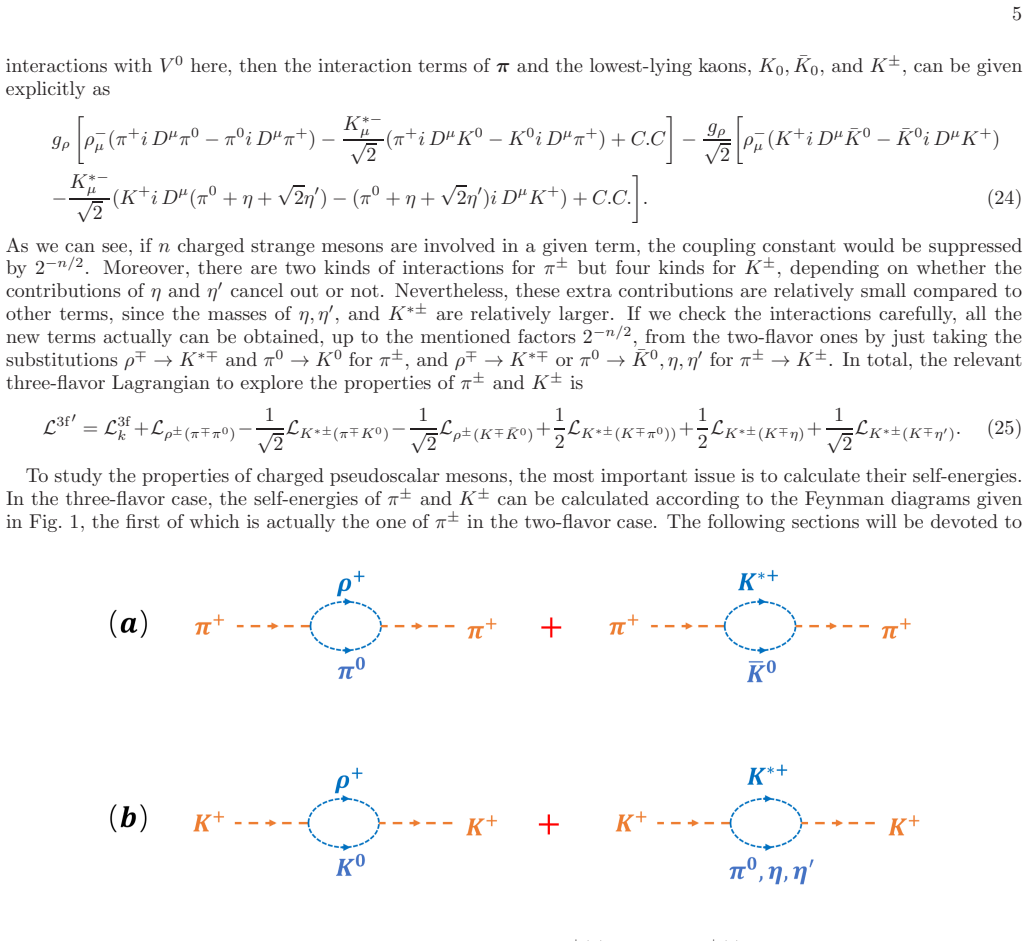
Recent lattice QCD simulations have further validated their earlier unusual findings: The lowest energies of charged pseudoscalar mesons $\pi^\pm$ and $K^\pm$ decrease at stronger magnetic field, though quasiparticle approximation assumes an increasing feature. We address this long-standing puzzle by employing the chiral effective Weinberg model, in which pseudoscalar and vector mesons exhibit intrinsic mutual couplings. Under this framework, charged pseudoscalar mesons deviate from pure quasiparticle behavior due to their interactions with neutral pseudoscalar and charged vector mesons. By incorporating the modifications induced by neutral pseudoscalar-charged vector loops, we demonstrate that the lowest energies of $\pi^\pm$ and $K^\pm$ indeed decrease at stronger magnetic field in both the lowest- and full-Landau-level calculations. However, instabilities emerge under a fixed mesonic coupling constant, and appear unavoidable when attempting to reproduce the observed peak structures. In contrast to the quark-antiquark meson description in models such as the NJL model, our results support the conjecture that a charged pseudoscalar meson could effectively form a molecular bound state of a neutral pseudoscalar meson and a charged vector meson in the strong magnetic field regime.
This thesis develops a kinetic-theory framework for relativistic dissipative magnetohydrodynamics under strong electromagnetic fields, motivated by quark-gluon plasma in heavy-ion collisions. Starting from the relativistic Boltzmann-Vlasov equation and using the method of moments within the 14-moment approximation, it derives causal second-order hydrodynamic equations for relativistic plasmas with increasing generality. The work first review relativistic dissipative hydrodynamics and its kinetic foundations, emphasizing the need for Israel-Stewart-type transient theories to preserve causality and stability. Electromagnetic fields are then introduced at the microscopic level, where the Lorentz force modifies the moment hierarchy and produces anisotropic transport effects absent in field-free fluids. Next, it develops relativistic dissipative magnetohydrodynamics for a non-resistive two-component plasma of oppositely charged particles. Here, the magnetic field couples the dissipative sectors of the two species, generating relative dissipative currents and coupled shear dynamics. For Bjorken expansion, the theory predicts damped oscillations in the transverse shear sector associated with cyclotron motion. Finally, the thesis treats the resistive two-component case, where the electric field evolves dynamically and couples to charge diffusion and shear stress. The resulting theory reveals current-shear feedback, transient electromagnetic generation of momentum anisotropy, and underdamped dissipative oscillations. Applications to homogeneous and Bjorken-expanding plasmas show how resistive and electromagnetic effects modify evolution beyond standard hydrodynamics. Overall, the thesis extends relativistic dissipative hydrodynamics to magnetized and resistive plasmas, providing a microscopic foundation for future studies of strongly magnetized quark-gluon plasma and astrophysical systems.
Based on the relativistic mean-field model and assuming $G$-parity invariance, we have studied the equation of state of baryon- and neutron-rich matter produced in low-energy relativistic heavy-ion collisions. Similar to the traditional isospin symmetry energy, we define the baryon-antibaryon symmetry energy characterizing the energy difference due to the baryon-antibaryon asymmetry. The potential difference between nucleons and antinucleons is correlated with the potential contribution of the baryon-antibaryon symmetry energy mainly from the vector interaction in baryon-rich matter. The isospin symmetry energy is considerably reduced even with a small fraction of antinucleons compared to the traditional case with only nucleons. A more attractive antineutron potential than antiproton potential is observed, and the isospin splitting of the mean-field potential for antinucleons is found to be intrinsically larger than that for nucleons in baryon- and neutron-rich matter.
Rates and electron spectra for 82Se and 136Xe deviate from standard approximations that decouple the two.
abstractclick to expand
The calculation of the two-neutrino double-beta decay (DBD) rates has relied so far on approximations that decouple the nuclear and atomic parts. To provide a more rigorous treatment, we propose an approach which incorporates the full interdependence between nuclear structure and lepton kinematics. Deviations of the decay rates and electron spectra from the traditional methods, such as closure, non-closure and Taylor expansion approximation, are presented and discussed for the isotopes $^{82}$Se and $^{136}$Xe. Our approach gives a more realistic description of the DBD process, and opens the avenue of additional, new theoretical and experimental investigations into nuclear and atomic effects in the process. Extensions of this framework to other isotopes and to neutrinoless double-beta decay are currently underway.
We investigate the phase structure, hadron masses, and topological susceptibility in the two-flavor and two-color QCD (QC$_2$D) medium, particularly focusing on the $U(1)_A$ axial anomaly effects. To this end, we employ the linear sigma model, and hadron fluctuations are incorporated through the functional renormalization group method. We establish in detail an effective potential that respects symmetries of QC$_2$D at finite quark chemical potential, $\mu_q$: $SU(2)_L\times SU(2)_R$ chiral, $U(1)$ baryon-number, parity and time-reversal symmetries. We find that the $U(1)_A$ anomaly couplings for mesons at finite temperature are enhanced with increasing $\mu_q$, while that of the baryons are not too sensitive to $\mu_q$. Despite the anomaly enhancement, we find that the topological susceptibility at larger $\mu_q$ is always suppressed regardless of the temperature, following chiral restoration. We also find that mass degeneracies of the chiral partners are well realized at higher temperatures and densities by the chiral restoration. Our findings are expected to provide useful information on properties of the $U(1)_A$ anomaly in medium for sign-problem-free lattice simulations of QC$_2$D.
The search for nucleon decay in liquid-argon time-projection chambers requires a quantitative description of how the bound nuclear environment reshapes the decay-product kinematics. We present LUNAR, a fast, openly available Monte Carlo generator dedicated to two-body decays of protons and neutrons bound in argon-40, the target nucleus of the DUNE far detector. The parent nucleon is drawn from a selectable nuclear ground state -- ten momentum distributions ranging from mean-field Fermi gases to argon spectral functions -- and bound off the mass shell by one of three removal-energy prescriptions, including the momentum-dependent optical potential of Juszczak \textit{et al}. The two-body decay is performed off-shell and boosted to the laboratory frame, and the daughter meson is then propagated out of the nucleus by a semi-classical intranuclear cascade with an optional formation zone for the freshly produced meson. We use the generator to separate the distinct roles of Fermi motion and binding in shaping the observable meson spectrum, to quantify final-state interactions channel by channel, and to translate present Super-Kamiokande limits into expected DUNE event yields for the full set of standard decay modes. Final-state interactions leave the supersymmetry-favored $p\to K^{+}\bar\nu$ signal essentially intact while roughly halving the pion, $\eta$, and antikaon rates -- an effect that dominates over the $\pm10\%$ spread induced by the choice of nuclear model. The code is released to the community as a lightweight, extensible tool for signal efficiency and systematics studies.
We calculate the nucleon axial form factor in relativistic chiral perturbation theory with $\Delta(1232)$ up to next-to-next-to-leading order (NNLO). Relevant low-energy constants are determined by fitting to recent lattice-QCD results at several pion masses, while accounting for the uncertainty associated with the truncation of the chiral expansion. We obtain a good description of the lattice data for momentum transfers up to $\sqrt{Q^2}\simeq0.6$ GeV and pion masses up to $M_\pi\simeq400$ MeV. We find that the explicit inclusion of the $\Delta$ resonance is required to reproduce the lattice-QCD pion-mass dependence of the axial charge and axial radius, as well as the momentum dependence of the form factor. At the physical point we obtain $g_A=1.257\pm 0.011$ and $\langle r_A^2\rangle=0.312\pm0.037~\mathrm{fm}^2$. Our analysis provides a model-independent and systematically improvable parametrization of the pion-mass and momentum dependence of the axial form factor, offering a framework for extrapolating lattice-QCD results to the physical point and for improving predictions of low-energy weak interactions involving nucleons.
We construct a quantum information-centered approach to describe the experimentally observed behavior of hyperon spin-pair correlations in high-energy collider experiments. The evolution of the spin density matrix of the hyperon pair is treated in the language of quantum channels, accounting both for the spin dynamics in $\mathbb{C}^2\otimes\mathbb{C}^2$ and for the pair's angular separation $\Delta R$. We show that the experimental data are consistent with an evolution under a two-qubit depolarizing channel, from which a Lindblad master equation is derived. This provides an open quantum system picture of spin dynamics during the hadronization transition, which is not naturally captured by other quantum channels, and we discuss its microscopic origins. These results show that quantum information science can offer new insights into confinement dynamics beyond the classification of entanglement in the final particle states.
We discuss a nonequilibrium Andreev reflection at an interface between quark-gluon plasma (QGP) and two-flavor color superconducting (2SC) quark matter. Based on the Schwinger-Keldysh framework and a relativistic tunneling model, we evaluate the momentum-resolved tunneling current generated by a chemical-potential bias between the QGP and 2SC phases. We find that the Andreev reflection appears as at the fourth order of the tunneling strength, in which an incident quark in QGP is converted into a reflected hole, while a Cooper pair is injected into the 2SC condensate. We show that the Andreev reflection is enhanced when the bias becomes comparable to the gap and is suppressed in the supergap region, which is similar to that in superconducting materials. The present formulation provides a field-theoretical pathway to strongly-correlated transport across dense-matter interfaces relevant to nonequilibrium dynamics in compact stars.
We employ a full Bayesian analysis with adaptive Metropolis-Hastings Markov chain Monte Carlo (BA-MCMC) sampling to systematically study the posterior probability distributions of the strengths of energy terms in optimized nuclear mass models of Bethe-Weizs\"{a}cker variants. Strong correlations of some energy terms for some mass models are revealed through the parameter degeneracy diagnosis. We analyze selected refined models to determine parameter degeneracies while proposing a new macroscopic-microscopic mass model, BWL, which considers quadrupole and high-multipole deformation and shell corrections. All mass models in this work are analyzed and optimized through the BA-MCMC method. Compared with 2242 precise experimental binding energies of AME2020, BWL produces a root-mean-square deviation of 759 keV, particularly improving the description of masses in the light-nuclei and actinide regions. BA-MCMC offers robust inference on parameter degeneracy while providing an optimization method for future nuclear mass models.
Density functional theory is a practical approach for solving quantum many-body problems with available computational resources. The complexity of the nuclear force makes constructing an accurate nuclear energy density functional much more challenging. The feasibility of constructing a nuclear covariant energy density functional with deep neural networks is demonstrated. This physics-guaranteed neural network approach achieves high accuracy in predicting nuclear energy density and exhibits significantly better extrapolation abilities than traditional machine learning methods for binding energies. When combined with the existing covariant density functional, the neural network approach improves the binding energy accuracy from $644$ keV to $86$ keV in the known region and also effectively captures the microscopic shell effect. Furthermore, its extrapolation performance is also significantly enhanced, achieving an accuracy of approximately $5$ MeV even when extrapolating up to $30$ steps. This work paves the way for the construction of accurate nuclear energy density functionals through machine learning.
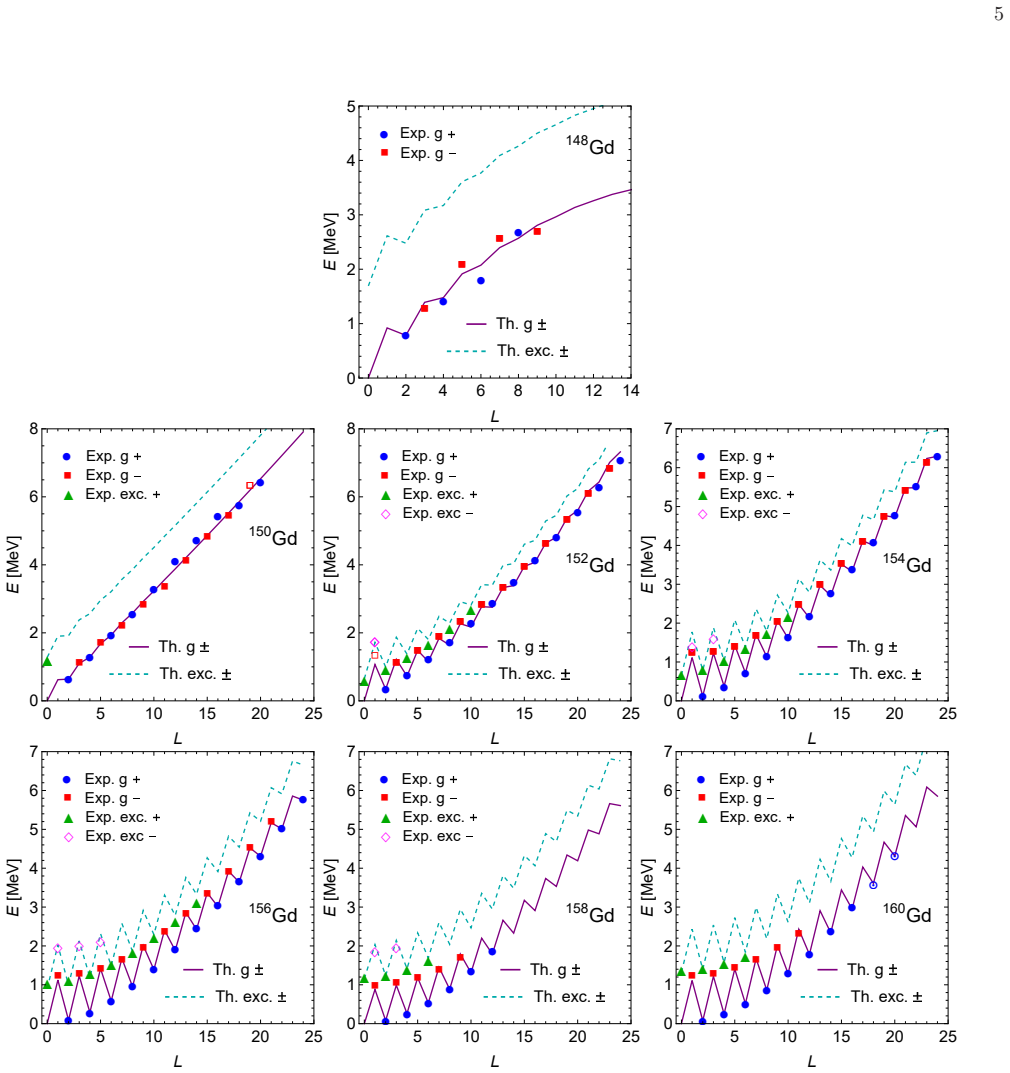
A systematic theoretical investigation of the quadrupole and octupole collective properties across the Gd isotopic chain is performed employing a quadrupole-octupole axially symmetric model. These nuclei have recently attracted significant attention following the revelation that the maximum octupole collectivity in this region is located at $^{150}$Gd. The model parameters are optimized by fitting to the low-lying positive and negative-parity energy levels, as well as to known $E0$, $E1$, $E2$, and $E3$ transition strengths. Our primary objective is a simultaneous and unified description of quadrupole and octupole collectivity across the even-even Gd nuclei in the $84\leqslant N \leqslant96$ range, a region that includes the transition from spherical to rotational nuclear shapes. The results show a smooth evolution of the quadrupole deformation, highlighted by a distinct jump at the well-known $N=90$ critical point. The enhancement of quadrupole deformation is also correlated with the loss of non-zero octupole deformation, which is reported only for the lightest $^{148,150}$Gd nuclei. This translates into a fair agreement with the measured $E3$ strength, predicting a maximum $B(E3)$ value for the $^{152}$Gd isotope.
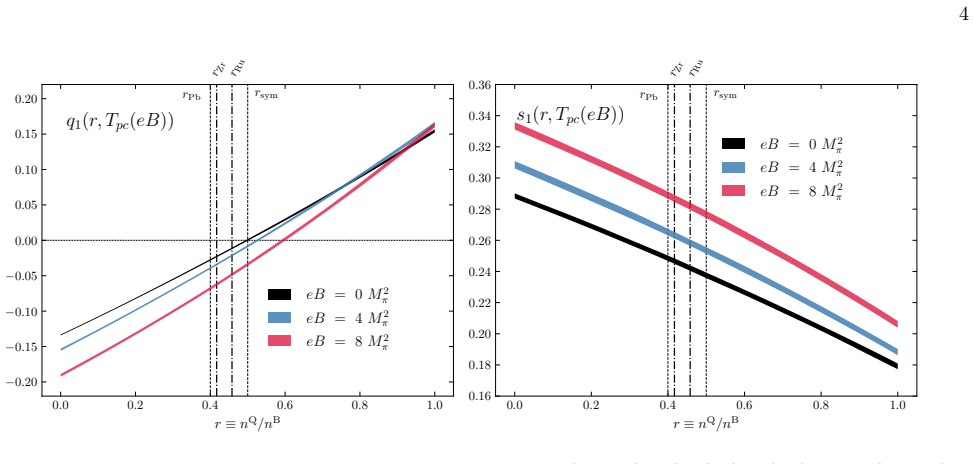
Strong magnetic fields produced in relativistic heavy-ion collisions can modify fluctuations of conserved charges and, consequently, their associated chemical potentials. We present first-principles $(2+1)$-flavor lattice-QCD results for isospin-driven splittings of conserved-charge chemical potentials between the isobar systems $^{96}_{44}\mathrm{Ru}+^{96}_{44}\mathrm{Ru}$ and $^{96}_{40}\mathrm{Zr}+^{96}_{40}\mathrm{Zr}$ in the QCD crossover region, both at vanishing and nonzero magnetic fields along the pseudo-critical line $T_{pc}(eB)$. We outline a framework that, under strangeness neutrality and charge-to-baryon ratio $r\equiv n_{\rm Q}/n_{\rm B}$, maps the isospin difference between two nuclei, as encoded in $r_{\rm Zr}$ and $r_{\rm Ru}$, onto splitting ratios $\Delta\mu_{\rm Q}/\Delta\mu_{\rm B}$, $\Delta\mu_{\rm S}/\Delta\mu_{\rm B}$, and $\Delta\mu_{\rm S}/\Delta\mu_{\rm Q}$ as functions of $\mu_{\rm B}(r_{\rm Ru})/\Delta\mu_{\rm B}$. Using continuum-estimated lattice results for the leading-order coefficients $q_1\equiv(\mu_{\rm Q}/\mu_{\rm B})_{\rm LO}$ and $s_1\equiv(\mu_{\rm S}/\mu_{\rm B})_{\rm LO}$, we find that, at vanishing magnetic field, the splitting ratios are of similar magnitude to recent Bayesian extractions from STAR isobar data and yield $\Delta\mu_{\rm Q}<0$ and $\Delta\mu_{\rm S}>0$, with the electric-charge sector dominating. At nonzero magnetic fields, the splitting ratios show only moderate $eB$ dependence. We therefore further examine Ru--Zr differences in the normalized magnetic-field response of chemical-potential ratios, particularly those involving $\mu_{\rm Q}/\mu_{\rm B}$, which display a pronounced enhancement in lattice QCD. We also present hadron resonance gas (HRG) results and experimentally motivated proxy observables with kinematic cuts to facilitate contact with experiment.
In this work, we investigate the anisotropic suppression of reconstructed $K^{*0}$ resonances arising from hadronic rescattering using the A Multi-Phase Transport (AMPT) model for Au+Au collisions at $\sqrt{s_{NN}}=200$ GeV. We demonstrate that the rescattering probability of the decay daughters depends strongly on the decay angle $\theta^{*}$ due to Lorentz boost effects, which lead to smaller laboratory-frame momenta for daughters emitted opposite to the parent particle motion. This anisotropic suppression influences several experimentally measured observables. We show that the reconstructed $K^{*0}$ yield exhibits a strong $\theta^{*}$ dependence. Furthermore, the anisotropic loss of resonances modifies the angular distributions used to extract the spin alignment parameter $\rho_{00}$ in the production-plane and helicity frames. Even in the absence of intrinsic polarization in the model, the reconstructed $K^{*0}$ sample shows deviations of $\rho_{00}$ from the unpolarized value of $1/3$, with opposite trends in the two reference frames. These results demonstrate that hadronic rescattering can generate apparent polarization signals and must be carefully considered in experimental measurements of vector-meson spin alignment using production plane and helicity frame.
An attractor locks higher harmonics to multiples of the fundamental frequency and enforces a cascading amplitude relation fixed by viscosity
abstractclick to expand
We study the late-time relaxation of a neutral relativistic viscous fluid in $d+1$ dimensions. In the long-wavelength regime, linearized hydrodynamics predicts that the sound mode at momentum $nk$ decays as $e^{-n^2\omega_I t}$. However, nonlinear analysis gives a decay of $e^{-n\omega_I t}$. We derive a closed asymptotic attractor solution in which the frequency of the $n$-th harmonic locks to $n$ times the complex frequency of the fundamental mode. The amplitude envelopes for energy current $J$ obey a simple cascading relation, $J_n=\alpha_J^{\,n-1}J_1^n$, with $\alpha_J$ fixed by the equation of state, the longitudinal viscosity, and the fundamental wavenumber. For conformal fluids, $\alpha_J=1/(8\eta k)$, in agreement with the holographic result of arXiv:2512.07242. The existence of the attractor shows that, even near equilibrium, field powers are not equivalent to amplitude order.
Using the soft-gluon theorem, we identify a soft-recoil mechanism by which unresolved gluon radiation induces decoherence in the spin correlations of heavy quark-antiquark pairs produced in deep-inelastic scattering. We show the eikonal soft contribution preserves the Born spin structure, whereas the subleading soft term generates stochastic recoil-induced rotations of the spin-correlation plane. Upon tracing over the unresolved gluon, these rotations produce an effective dephasing channel: the normal-axis correlation remains unchanged at this order, while the in-plane spin coherences are suppressed. We estimate the resulting reduction of concurrence and Bell-CHSH violation, and propose a radiation-binned EIC observable based on the ratio of in-plane to normal spin correlations. This observable isolates the characteristic anisotropic suppression predicted by the soft-recoil mechanism and provides a measurable handle on radiation-induced spin decoherence of an entangled quark-antiquark pair produced in a deep-inelastic scattering process.
Combined symmetry-energy and symmetric-matter data from collisions agree with gravitational-wave and pulsar observations up to 2.5 times sat
abstractclick to expand
In the past decades, heavy-ion collisions (HIC) at intermediate energies have allowed to probe the nuclear equation-of-state (EoS) of both symmetric and asymmetric nuclear matter over a broad range of densities. In particular, flow has proven to be a powerful observable. Combining the symmetry energy and the symmetric nuclear matter constraints of the EoS from HIC allowed to predict a density dependence of the pressure in a neutron star, up to about 2.5 times saturation density ($n_{sat}$), which agrees with recent astronomical measurements deduced from gravitational waves and pulsar observations. So far, the accuracy from HIC expectations is comparable to the latter up to 1.5 $n_{sat}$. In these studies, a fundamental aspect is the determination of the profile of densities that are probed by experimental observables used to constrain the EoS. In the near future, new experiments like ASY-EOS performed at higher incident energy and with better accuracy will push further the frontier of the knowledge of the symmetry energy at higher density. These efforts cannot be conclusive without a reliable uncertainty determination, which is related to the reliability of transport model dependencies. Improvements and breakthroughs in transport model simulations and nuclear theory are therefore expected in a joint effort towards HIC contributions to the field of neutron-star physics, including the contribution of strangeness and of the QCD phase transition.
Recently, the NNLO perturbative QCD pressure of cold and dense symmetric matter, with arbitrary quark masses, has been resummed within the renormalization-group-optimized perturbation theory (RGOPT) framework. By being imbued with renormalization group properties, the resulting pressure is less sensitive to renormalization scale ($\Lambda\equiv X \mu_B/3$) variations than the NNLO perturbative QCD pressure. Here, we extend this by considering $\beta$-equilibrium and charge neutrality to evaluate the corresponding equation of state (EoS). We provide a compact ``pocket" fitting formula for the EoS for $N_f=2+1$ massive quarks at different renormalization scale parameter ($X$) values. We describe pure quark stars as well as hybrid stars with quark-cores. Pure quark stars compatible with astrophysical observations were obtained with $X=3.08-3.58$, whereas a larger value (4.10) is needed if the low mass object of the observation GW190814 represents a neutron star. Hybrid stars were built considering three representative hadron models based on a relativistic mean-field description, and chosen to produce soft and stiff EoSs. Stable hybrid stars with masses compatible with the massive pulsar PSR J0740+6620 were obtained considering $X$ of the order of 2 to 2.60-2.98, the largest scale giving rise to hybrid stars with a large quark core with a radius of 5 to 8 km, and the smallest to a small quark core at the center of the star.
We calculate energy levels and B(E2) values for the \(\alpha\)-like nuclei \(^{104}\)Te and \(^{136}\)Te. Their energy structure is described within a Multi Step Shell Model (MSM) type approach by coupling proton-proton (pp), neutron-neutron (nn) and proton-neutron(pn) phonon states over the doubly magic nuclei \(^{100}\)Sn and \(^{132}\)Sn, respectively. We also compute the electric transitions for A = 102 and A = 134 Sn, Sb and Te nuclei, described within the Tamm-Dankoff Approach (TDA) with multipole-multipole residual interaction. The encountered similarities concerning the B(E2) values and wavefunctions of the coupled states corresponding to \(^{104}\)Te and \(^{136}\)Te are analyzed.
Embedded random matrix ensembles operating in nuclear shell model spaces, with nucleons occupying a finite set of single particle orbits and interacting via a two-body interaction, form the basis for statistical shell model. With sufficiently strong interaction, the level densities in shell model spaces take close to a Gaussian form and transition strength distributions close to a bivariate Gaussian form. In practice, partitioning via spherical configurations ($\tilde{m}$) and angular momentum $J$ (also isospin where appropriate) are essential. The resulting statistical spectroscopy or statistical shell model was applied successfully in the past in some studies of nuclear level densities, orbit occupancies, $\beta$-decay matrix elements and so on. Going beyond these, recently it is recognized that embedded ensembles, in a better approximation, generate in-fact $q$-normal form ($q=1$ gives Gaussian and $q=0$ Wigner's semi-circle) for density of eigenvalues, bivariate $q$-normal form for transition strengths and conditional $q$-normal form for strength functions. These then allow us to develop statistical shell model with $q$-normal forms. These new developments in embedded ensembles and statistical shell model are briefly reviewed in this paper. Also described, using some examples, is the role of the $q$ parameter in generating statistical properties of general quantum many-particle systems.
We perform a Bayesian analysis of transverse momentum ($p_{\mathrm{T}}$) spectra of identified particles, i.e., pions, kaons, and protons, at midrapidity in Au+Au collisions and Pb+Pb collisions using the Boltzmann-Gibbs blast-wave (BGBW) model. We investigate whether it is possible to simultaneously describe the $p_{\mathrm{T}}$ spectra of identified particles without imposing the particle species-dependent $p_{\mathrm{T}}$ fit ranges -- a practice that was followed in conventional blast-wave model studies to achieve reasonable simultaneous fits. Using Bayesian analysis, our results indicate that a simultaneous description of the $p_{\mathrm{T}}$ spectra of pions, kaons, and protons is feasible without imposing the particle species-dependent $p_{\mathrm{T}}$ fit ranges, for Au+Au collisions up to the available data ($\sim$2 GeV/c) and for Pb+Pb collisions up to 3 GeV/c. The extracted parameters remain broadly consistent with those obtained from conventional BGBW simultaneous fits, while the extension of the fit range leads to moderate changes in some parameters. Furthermore, Bayesian analysis yields well-constrained posterior distributions for the kinetic freeze-out temperature $T_{kin}$, the average transverse flow velocity $\langle \beta_{\mathrm{T}}\rangle$, and the exponent of the velocity profile $n$ and shows their correlations transparently. We suggest that the BGBW model in a Bayesian inference framework proposed can be applied in future data analyses to simultaneously describe the $p_{\mathrm{T}}$ spectra of identified particles and extract the relevant information about the collision system.
We present a novel unified conditional-probability framework for relativistic systems in which conditioning on additive conservation laws simultaneously yields equilibrium occupation statistics and conservation-induced correlations. In this formulation, equilibrium arises as a conditional limit law of a closed system. The one-mode marginal gives Maxwell--Boltzmann, Bose--Einstein, and Fermi--Dirac statistics at leading saddle order, with the conserved quantities fixing the exponential tilt and the microscopic occupation measure determining the statistics. Expanding the two-mode marginal to Gaussian order gives the leading finite-rank covariance between modes induced by exact conservation. When contracted with observables linear in mode occupations, this covariance gives their leading exact-conservation contribution. We use this structure to define projected observables orthogonal to selected conserved quantities. By construction, their covariance has no leading exact-conservation contribution. In small collision systems, where conservation effects are less suppressed by multiplicity and can survive standard nonflow suppressions, this provides a direct way to isolate conservation-aligned contributions to long-range correlations. We demonstrate this with PYTHIA8/Angantyr-generated p+Pb events at $\sqrt{s_{\mathrm{NN}}}=5.02~\mathrm{TeV}$ by comparing ordinary and projected covariances, showing that the projection removes the conservation-aligned contribution while leaving the conservation-orthogonal covariance essentially unchanged.
Low-energy $\alpha$-$\alpha$ scattering underlies stellar helium burning and sharply tests nuclear forces in the reaction regime. We present its first calculation using the high-fidelity N3LO chiral NLEFT interaction, incorporated through wave function matching, on a fine lattice, using the adiabatic projection method. On the fine lattice, the two-cluster norm matrix becomes severely ill-conditioned, and its direct inversion is unstable. We address this with Tikhonov regularization, extrapolating the regulator to zero, and confirm the result with an independent truncated singular-value decomposition. The S- and D-wave phase shifts agree with empirical analyses, extending the validation of this interaction from bound states and charge radii to scattering and providing a practical route to ab initio nuclear reactions on fine lattices
The dineutron is a spatially compact two-neutron cluster, which is expected to appear in a low-density part of nuclei. In recent years, there has been rapid progress in experimental and theoretical research on dineutron clusters, particularly on neutron-rich rare isotopes. Experimentally, evidence for dineutron in two-neutron halo nuclei, such as $^{11}$Li, has been obtained using Coulomb breakup, measurements of charge radii, and quasi-free proton scattering. Specific unbound nuclei just beyond the neutron drip line, which decay by emitting two neutrons, are also candidates for having a dineutron correlation. For instance, the dineutron structure has recently been investigated for $^{16}$Be, focusing on its decay into the core and the two neutrons. Theoretically, it is shown that the dineutron is partially due to the admixture of different-parity configurations for the two valence neutrons. Few-body theories, including dynamical effects of the decay process, play important roles in interpreting three-body decays. We also discuss the four-neutron clusters, showing the experimental results of recent tetraneutron experiments and observation of $^{28}$O. Possible relevance of these states to dineutron correlation is discussed. Finally, we discuss future perspectives on dineutron clusters in neutron-rich nuclei and their relation to the universal features in few-body physics.
Dark-matter fraction 0.12-0.88 fits GW170817 tidal data and small pulsar radii even absent a macroscopic quark core.
abstractclick to expand
Mirror dark matter (MDM) can modify neutron-star structure and tidal response through gravitational coupling. In this work, we construct an ordinary-matter equation of state (EOS) by comparing hadronic matter described by the relativistic mean-field NL3\(\omega\rho\) model, and quark matter in the framework of the Nambu--Jona-Lasinio (NJL) model. The stable branch is determined through a Maxwell construction, which serves to connect distinct phases of matter. For the parameter sets considered here, \(m_u=5.2~{\rm MeV}\) is the lowest light current-quark mass in the scanned range that satisfies the \(2M_\odot\) maximum-mass requirement, while \(m_u>5.2~{\rm MeV}\) all yield stable neutron-star configurations without a resolved macroscopic quark core. The small-radius inferences for PSR J0437--4715 and XTE J1814--338, together with the tidal-deformability constraint from GW170817, are sensitive to the dark-matter mass fraction \(f_D\). The commonly used GW170817 interval \(70\lesssim\Lambda_{1.4}\lesssim580\) corresponds approximately to \(0.12\lesssim f_D\lesssim0.88\) in the present model. These results indicate that, even without a macroscopic quark core, MDM can provide an important mechanism for reducing the visible radius and modifying the tidal response of neutron stars.
We investigate the forward--backward asymmetry in the production and elliptic flow of prompt D0 mesons in proton--lead (p--Pb) collisions at$\sqrt{s_{\mathrm{NN}}}=8.16$ TeV using the heavy-flavor improved string-melting version of the AMPT model. The model calculations provide a simultaneous description of nuclear modification factor $R_{\mathrm{pPb}}$ and $v_2$ in forward and backward rapidities. We find that the observed asymmetry arises from the interplay of initial-state cold nuclear matter effects and final-state partonic interactions, with the competition between coalescence and fragmentation playing a critical role in shaping the transverse momentum and rapidity dependence of both observables. This work suggests that a partonic medium is formed in high-multiplicity p-Pb collisions at LHC energies.
When fermions pair across mismatched Fermi surfaces, the mismatch reflects a built-in inequivalence between the species. We show it can instead arise dynamically by spontaneous symmetry breaking. In a massless two component Dirac theory with exact SU(2) flavor symmetry, a self-interacting vector boson condenses, splitting the Fermi surfaces while preserving time reversal. Pairing then yields a stable relativistic superfluid, promoting the Chandrasekhar-Clogston line to a surface in coupling space, the mismatch fixed self-consistently by the symmetry-breaking coupling.
Using new methods for computing helicity amplitudes with intermediate helicity-polarized gauge bosons, we revisit the transverse-longitudinal polarization interference in the $pp\to V+{\rm jets}$ process for $V=\gamma^*,Z^{(*)},W^{(*)}$ decaying to massless leptons. At each order of the strong coupling constant $\alpha_s$ and remaining exclusive with respect to jet kinematics, we show that the polarization interference in $\gamma^*\to\ell^+\ell^-$ vanishes after phase-space integration over the kinematics of $\ell^\pm$, thereby extending well-known results for the inclusive process. Due to parity violation, cancellations are softened for the $W$ and $Z$ bosons. We give a simple formula to account for fiducial cuts. We comment on the implications for multiboson processes, and the applicability of our results to chiral gauge bosons in new physics scenarios and to polarization measurements of weak bosons in heavy ion collisions.
Next-to-next-to-leading order (NNLO) QCD corrections to quarkonium production and decay are known to exhibit perturbative instabilities within non-relativistic QCD. We identify the origin of this problem and propose a simple remedy. Applying our approach to $S$-wave color-singlet quarkonium processes, we achieve substantially improved perturbative convergence and agreement with experimental data.
Ab initio modeling has established Wigner's SU(4) and Elliott's SU(3) as dominant symmetries of the nuclear force in light and intermediate-mass nuclei. We ask whether they also govern nuclear binding across the entire chart. Our aim is not high-precision prediction but physical insight, through interpretable, symmetry-based models. From the SU(3) and SU(4) Casimir operators we construct three neural-network (NN) mass models: Feature-Informed NN (FINN) for point predictions, Gaussian-Informed NN (GINN) adding uncertainty quantification, and Wigner-Informed NN (WINN) -- a mass formula using the Casimirs as an operator basis. All are trained on AME2016 and validated on nuclei new to AME2020. The SU(4) operators alone cut the root-mean-square error (RMSE) by nearly half on train and test data, and by about a fifth on extrapolation, relative to the liquid-drop baseline -- showing that Wigner's symmetry carries predictive information beyond bulk properties. Despite its compact form, WINN reaches the lowest validation RMSE, 0.430 MeV -- competitive with state-of-the-art mass models -- which we read less as a benchmark than as evidence that its symmetry basis captures important physics. WINN further reveals i) an enhancement of the quadratic SU(4) Casimir near the neutron dripline, signaling restoration of Wigner's symmetry, and ii) an unexpected gain of the quartic operator in the superheavy region. We thereby elevate emergent symmetries from the hidden order within individual nuclei to a governing principle of the whole nuclear chart.
We provide the first mapping of the critical surface in (2+1)-flavor QCD in the full $(T,\mu_B,\mu_Q,\mu_S)$ space, anchored on lattice QCD results at vanishing chemical potentials and obtained within an expansion along contours of constant entropy density. In the pure $\mu_B$ direction, this framework yields a critical point at $(T_c,\mu_{B,c}) \simeq (114,\, 602)$ MeV. Here we extend the construction to arbitrary directions in the three-dimensional chemical-potential space, parametrized by spherical coordinates $(\mu,\theta,\varphi)$, with the radial expansion truncated at $\mathcal{O}(\mu^2)$. The resulting two-dimensional surface carries a direction-dependent critical temperature $T_c(\theta,\varphi)$ and baryochemical potential $\mu_{B,c}(\theta,\varphi)$, which quantify the shift of the critical point relative to the pure $\mu_B$ direction. We find that $\mu_{B,c}$ increases by 40-100 MeV along the approximately strangeness neutral direction [$\mu_S \approx (0.15$--$0.33)\, \mu_B$, $\mu_Q \approx 0$] relevant for heavy-ion collisions, while the critical temperature stays essentially unchanged. In the charge-neutral, weak-equilibrium direction~[$\mu_Q \approx -(0.05$--$0.1) \,\mu_B$, $\mu_S = 0$] relevant for neutron star mergers, the critical point, and the associated first-order phase transition, remain present at essentially the same location in the $(T,\mu_B)$ plane. We find no evidence for a critical point at large isospin densities, $|\mu_Q| / \mu_B \gtrsim 1$, relevant for cosmic trajectories in the early Universe, nor along the pure electric-charge or strangeness directions, at least outside the regions where pion or kaon condensation may occur.
Reliable nuclear matrix elements (NMEs) are essential for interpreting double-beta-decay experiments and for connecting measured or constrained half-lives to the underlying weak-interaction physics. The two-neutrino mode ($2\nu\beta\beta$) is allowed by the Standard Model and has been observed in several nuclei, whereas the neutrinoless mode ($0\nu\beta\beta$) remains the key experimental signature of lepton-number violation and Majorana neutrino masses. Recent statistical shell-model studies indicate a strong correlation between the $2\nu\beta\beta$ and $0\nu\beta\beta$ NMEs, making accurate and efficient calculations of the former especially useful for assessing the latter. Direct evaluations of $2\nu\beta\beta$ NMEs usually require summing over many $1^+$ states in the intermediate odd-odd nucleus, a procedure that becomes expensive and may converge slowly in large model spaces. We present and test an improved strength-function method based on Lanczos iterations that avoids full diagonalization while preserving the accuracy of explicit summation where such benchmarks are possible. The method is applied to several experimentally important emitters and to different effective Hamiltonians. We also show that the same framework can be used for the higher-order NMEs entering Taylor-expanded phase-space treatments of $2\nu\beta\beta$ and related decay modes.
Bayesian inference of the neutron star (NS) equation of state (EOS) generally assumes that improved observations primarily reduce posterior uncertainties while leaving inferred EOS parameters unchanged. Using mock measurements of the radius of a canonical $1.4\,M_\odot$ NS with identical central values but varying observational precisions, we show that the inferred posterior means of EOS parameters can shift systematically as the measurement uncertainty changes. We demonstrate that this behavior originates from previously unidentified nearly universal inverse mappings between the NS radius $R_{1.4}$ and empirical EOS parameters. Across a broad range of observational precisions, posterior samples collapse onto nearly unique functions. These mappings are largely independent of observational precision and define a low-dimensional EOS manifold underlying Bayesian inference. We show that the precision dependence of inferred EOS parameters arises from nonlinear filtering of the posterior radius distribution through these mappings. In the narrow-distribution limit this effect reduces to a Jensen-type correction proportional to the local curvature of the inverse mapping, while for presently realistic uncertainties the full nonlinear-filtering relation accurately reproduces the posterior means. Our results reveal a geometric origin of precision-dependent inference in NS EOS studies and provide a new framework for connecting astrophysical observations directly to microscopic nuclear many-body theories.
We present a comprehensive review of regularization schemes for magnetized dense quark matter within effective models of quantum chromodynamics, focusing on the Magnetic-Field-Independent Regularization (MFIR) and the Medium Separation Scheme (MSS) at finite chemical potential and magnetic field. In nonrenormalizable frameworks such as the Nambu-Jona-Lasinio model, the treatment of ultraviolet divergences is crucial, particularly in magnetized and dense environments where conventional regularization procedures may introduce unphysical artifacts. We show that MFIR consistently isolates divergent vacuum contributions from finite magnetic-field-dependent terms, while MSS extends this separation to the medium sector, ensuring that only vacuum quantities are regularized. Within this unified framework, we analyze the thermodynamics of cold and dense quark matter, including color-superconducting phases, and demonstrate that the superconducting gap remains finite at large chemical potentials, even in the presence of strong magnetic fields. In contrast to results obtained with traditional regularization schemes, we find no evidence for a transition to a normal phase at zero temperature, highlighting the importance of a proper separation between vacuum and medium contributions. These results eliminate spurious oscillations and other nonphysical artifacts, leading to a more robust and physically consistent description of strongly interacting matter under extreme conditions relevant to compact stars and heavy-ion collisions.
We investigate the phase transition of Quantum Chromodynamics (QCD) with three degenerate quark flavors at zero baryon chemical potential. Using M\"{o}bius domain-wall fermions as the lattice fermion formulation, we ensure excellent chiral symmetry preservation. Our simulations are performed at three different temporal lattice extents, $N_{t}=6, 8, 12$, with a fixed lattice spacing $a=0.1361(20)$ fm, corresponding to temperatures of 242(4), 181(3), and 121(2) MeV, respectively. We explore a range of quark masses and spatial volumes with aspect ratios $N_{s}/N_{t}$ spanning from 2 to 4. By analyzing the mass and volume dependencies of the plaquette, plaquette susceptibility, chiral condensate, chiral susceptibilities, and Binder cumulant, we identify the pseudocritical transition quark masses from our largest lattice volumes. For $N_t=6$, this is 184(10) MeV (determined from the plaquette susceptibility). For $N_t=8$ and 12, the transition points vary slightly depending on whether the total or disconnected chiral susceptibility is used, yielding ranges of 36(1)-39.1(9) MeV and 3.5(3)-3.7(2) MeV, respectively, in the $\overline{\text{MS}}$ scheme at a scale of $\mu=2$ GeV. The negligible volume dependence at $N_t=6$ and 8, combined with finite-size scaling analysis at $N_t=12$ revealing volume growth significantly weaker than expected for a first- or second-order phase transition, points to a continuous crossover at these specific quark mass points. Additionally, we study the effects of residual chiral symmetry breaking on the chiral condensate and chiral susceptibilities using two different values of $L_s$.
We develop an effective field theory (EFT) for strongly interacting bosonic clusters, using $^4$He as a paradigmatic example of universality in systems with large scattering length. At leading order (LO), two- and three-body zero-range interactions are entirely determined by the dimer and trimer ground-state energies. We show that ground-state energies for up to $N=15$ particles converge to cutoff-independent limits with extrapolation coefficients of natural size. At next-to-leading order (NLO), corrections stemming from the two-body interaction range and a four-body force, calibrated to the tetramer ground-state energy, reduce cutoff sensitivity. Close agreement with results from a realistic potential is found at LO and improved at NLO, demonstrating systematic convergence with few parameters at each order. The resulting EFT is directly applicable to larger clusters and bulk helium.
Background: oblate-prolate shape coexistence in $^{28}$Si has been discussed for decades, but the degree of shape mixing between these configurations remains poorly constrained. Purpose: We constrain the oblate-prolate mixing amplitudes in $^{28}$Si using available experimental information and discuss the inter-band E0 transition strength. Methods: Oblate and prolate $0^+$ and $2^+$ configurations are obtained by antisymmetrized molecular dynamics combined with the generator coordinate method. Using these configurations as the basis states, we constrain the mixing amplitudes by simultaneously reproducing the measured charge radius, the quadrupole moment of the $2_1^+$ state, and the in-band and inter-band $B(\mathrm{E2})$ values. The strength of the density-dependent term in the Gogny interaction is also varied within a reasonable range. Results: In the ground state, the oblate component is dominant, and the prolate component in the ground state is limited to less than about $20\%$. For the $2_1^+$ state, the allowed prolate component is smaller than that in the ground state. The present analysis does not tightly constrain the corresponding E0 transition strength, but an upper limit of $\rho^2(\mathrm{E0};0_3^+\rightarrow0_1^+) \lesssim 0.206$ is obtained. Conclusions: The low-lying $0^+$ states of $^{28}$Si may exhibit substantial oblate-prolate mixing. A measurement of the inter-band E0 transition strength would provide a quantitative determination of the mixing amplitude.
The quark parton model grew out of deeply inelastic scattering experiments. The parton model developed into a full theory, quantum chromodynamics, QCD. This article explains some of the physics issues encountered in connecting the parton model and QCD.
Double-$\Lambda$ hypernuclei are essential for probing the $\Lambda\Lambda$ interaction in the double-strangeness $S=-2$ sector, yet the scarcity of experimental data severely limits systematic predictions. We present an evaluation framework based on nuclear many-body theory that exploits the intrinsic structural similarity between single-$\Lambda$ and double-$\Lambda$ systems to transfer empirical constraints from the well-mapped $S = -1$ sector to the $S = -2$ sector. By analyzing theoretical deviations of binding energies in light single- and double-$\Lambda$ hypernuclei, we identify a robust linear correlation between two sectors. This correlation enables a statistical evaluation of double-$\Lambda$ separation energies ($B_{\Lambda\Lambda}$) and $\Lambda\Lambda$ interaction energies ($\Delta B_{\Lambda\Lambda}$) for heavier double-$\Lambda$ hypernuclei, by drawing on a wealth of empirical data from the single-$\Lambda$ sector with quantified uncertainties. Our results show that evaluated $\Delta B_{\Lambda\Lambda}$ values, while consistent with existing data, are systematically larger than direct relativistic density functional predictions constrained only by the NAGARA event. This discrepancy suggests that standard mean-field-based extrapolations may underestimate $\Lambda\Lambda$ correlations and other many-body effects, motivating an evaluation-based correction that offers crucial benchmarks for future $S = -2$ experiments at facilities such as HIAF and J-PARC.
Compact star cores reach extreme densities and may contain exotic dense-matter phases. Information about the exotic interiors of rapidly rotating pulsars can be inferred from r-mode oscillations, whose stability is governed by viscous dissipation. In this work, we model a compact star containing a possible mixed phase of hadronic and quark matter and employ a hybrid statistical framework based on Bayesian inference to infer the dissipation time scales associated with the hybrid phase. Using low-mass X-ray binaries (LMXB) timing observations together with mass-radius constraints from the Neutron Star Interior Composition Explorer (NICER) mission, we estimate the shear and bulk viscosity contributions to r-mode damping for a hybrid star of two layers. Our inference yields shear and bulk viscous dissipation time scales of $\tau_s=(4.99^{+0.49}_{-0.52}) \times 10^8 T^{\frac{5}{3}}$s and $\tau_B=(2.150^{+1.23}_{-0.60}) \times 10^{19} (T^4 10^{-12}+T^2 10^{-6})^{-1}\Omega^{-2}$s respectively. The timescales thus obtained can be implemented to obtain the minima of the star's rotation frequency at $\Omega=451.87$ Hz at temperature $T=0.259$ MeV for a hybrid star of mass $1.5$ $M_{\odot}$ and $\Omega=517.47$ Hz at $T=0.234$ MeV for $M=1.75 M_{\odot}$. We find that the instability window obtained through the inference framework effectively explains the observed stability of millisecond pulsars in both the radio and LMXB populations, particularly for XTE J0929-314 and XTE J1807-294, J0437-4715, J2124-3358, respectively. These results demonstrate that Bayesian inference combined with r-mode phenomenology provides a powerful and observationally consistent framework for constraining the transport properties of dense hybrid matter.
We study how dark matter (DM) impacts the crust and the spectrum of torsional crust oscillations of dark-matter-admixed neutron stars (DANSs). We construct two-fluid equilibrium solutions wherein baryonic and DM interact gravitationally only, adopting a unified nuclear equation of state for the former and a fermionic equation of state with repulsive self-interaction for the latter. At fixed total gravitational mass and DM mass fraction, we find that DM reduces the crust thickness in comparison to pure baryonic-matter neutron stars (NSs). The thinning of the crust is negligible when most of the DM distribution extends beyond the star's baryonic surface. However, the crust thickness can decrease by as much as 12% when the DM distribution is within the star's baryonic surface, i.e., when the star has a "dark core." We support these results by deriving approximate analytical formulas for the crust thickness that agree with our numerical calculations at the sub-percent level in best case scenarios. Next, we derive the equation that describes crustal torsional modes of DANSs in the relativistic Cowling approximation. We find that the oscillation frequencies are in general higher than those of a comparable pure baryonic-matter NS, with the largest frequency shifts happening in the same parameter space where the crust thickness decreases the most. Moreover, we study the degeneracy between DM and baryonic-crustal microphysics effects on these modes. As an example, we study electron screening, which softens the crust's shear modulus, thus decreasing the frequencies. We find that the degeneracy between the competing effects of DM and electron screening can be broken in some regions of the parameter space we explored. Should they be measured, our results suggest that torsional oscillations could be used to infer the existence of a DM core within massive NSs. (Abridged)
Multimessenger observations of neutron star mergers are unique opportunities to constrain the properties of dense matter and the production site of heavy nuclei. To leverage these observations, we require reliable models of the electromagnetic signals powered by mergers. An important limitation to our ability to develop such models is the use of approximate neutrino physics in simulations. Here, we present simulations using an improved version of our Monte Carlo transport algorithm specifically designed to allow for more advanced on-the-fly calculations of reaction rates that use the simulated energy distribution of neutrinos, including in blocking factors, while still relying on approximations for the angular distribution of neutrinos. We use these new methods to include in simulations inelastic scattering of neutrinos on electrons, and to improve our treatment of neutrino-antineutrino pair annihilation. We find that, without increasing the cost of simulations, we can marginally get to the point when the addition of a single packet represents a change $\Delta f_\nu<1$ in the angle-integrated distribution function, at the cost of increased shot noise in the coupling to the fluid. With inelastic scattering and a better treatment of pair processes, we find a reduction in the average energy and total luminosity of heavy-lepton neutrinos, and an increase in the amount of mass ejected -- here by $50\%$, although on a relatively low amount of total ejected mass $<0.005M_\odot$. In a separate set of simulations varying the total mass of the binary away from its prompt collapse threshold, we find rapid variations in the amount of ejected matter and in the geometry and composition of the outflows with the total mass of the system. Finally, we use the simulations with our more advanced transport scheme to study in more detail the energy spectrum of neutrinos across the merger remnant.
We compare the rapidity-even directed flow $v_1^{\rm even}$ in Au+Au collisions at Beam Energy Scan (BES) energies for baryons and anti-baryons within a (3+1)-dimensional viscous relativistic hydrodynamics coupled to hadronic transport framework. The double-junction baryon stopping picture motivates a rapidity-even component in the baryon deposition in the initial state. We demonstrate that the split in the $v_1^{\rm even}$ of protons and anti-protons is sensitive to the rapidity extension of the baryon deposition that we associate with the double junction baryon stopping. Particularly, we find that the mid-rapidity curvature $\frac{d^2 \Delta v_1^{\rm even} (p-\bar{p})}{dy^2}\vert_{y=0}$ is a robust discriminator of the initial state baryon rapidity profiles. A simultaneous measurement of $\Delta v_1^{\rm even}$ and its curvature at mid-rapidity could constrain both the baryon diffusion strength and the baryon stopping profile, providing access to the physics of baryon stopping in relativistic heavy ion collisions.
We present a detailed investigation of tritium beta decay up to third order (N2LO) in chiral effective field theory (EFT) using the LENPIC interactions. Unlike existing studies, we use nucleon-deuteron scattering observables to fix the low-energy constant D that governs the strength of the short-range contributions to the exchange axial current operator and three-nucleon forces. Surprisingly, the resulting parameter-free predictions for the tritium Gamow-Teller reduced matrix element are found to considerably overestimate its empirical value. This result remains robust against reasonable variations of the pion-nucleon coupling constants and regularization scheme. A closer look at the size of the parameter-free long-range two-body contributions to the Gamow-Teller matrix element reveals the fine-tuned nature this observable in chiral EFT, which may partially explain the observed deviation. Our results indicate a considerable N2LO truncation uncertainty for tritium beta decay and point towards large higher-order two-body corrections. More definite conclusions await a complete fourth-order analysis of nucleon-deuteron scattering observables and tritium half-life.
In this work, we construct one-dimensional interacting lattice spinor theories with discretization in momentum space. We focus on strongly interacting Schwinger and Nambu--Jona-Lasinio models and perform ab-initio calculation of their single-particle and two-particle momentum distribution functions at finite temperature. We observe, at low temperature, high-momentum tail in single-particle and two particle distribution which reveals relative momentum in fermion-antifermion boundstates, as well as quasi-free spinor gases behavior at high temperature. The non-vanishing connected four-momentum function reveals the quantum coherence in momentum space under thermal equilibrium of the system and indicate the single particle correlation would remember more microscopic details within a thermal system. Overall, for a high-enough temperature at which the thermal kinetic energy comparable with the interaction, we observe that the two-particle correlation is subdominant compared to the single particle distributions, which indicates the applicability of kinetic theory.
The $^{229}$Th nucleus possesses an isomeric state at an excitation energy of $\sim 8$ eV, the lowest known nuclear transition energy, placing its frequency in the vacuum-ultraviolet range and making it directly accessible to laser spectroscopy. In this review, we discuss the $^{229}$Th isomer from three connected perspectives: experimental spectroscopy and clock development, nuclear structure theory, and applications to precision tests of fundamental physics. We first trace the experimental progress from indirect $\gamma$-ray energy inference to resonant laser excitation, absolute frequency comparison with an atomic clock, and feedback-loop operation of a solid-state nuclear clock, and discuss trapped-ion, highly charged ion, and solid-state platforms together with mechanisms for nuclear-state manipulation and readout. We then review, from the nuclear-structure perspective, how the near-degeneracy of the $5/2^+[633]$ and $3/2^+[631]$ neutron Nilsson configurations, together with Coriolis mixing and octupole correlations, underlies the anomalously low transition energy and its electromagnetic properties. Comparisons among different phenomenological and microscopic models show that octupole correlations are a common structural ingredient, while magnetic moments and transition strengths remain sensitive tests of the calculated wave functions. Finally, we discuss how the near-cancellation of MeV-scale nuclear contributions into an eV-scale transition can enhance sensitivity to variations of fundamental constants, signatures of ultralight dark matter, CP-violating interactions, Lorentz-invariance violation, and possible nuclear quantum technologies.
The temperature dependence of neutron star structure significantly alters the equation of state,thereby affecting observable properties such as the moment of inertia and gravitational redshift.Utilizing the relativistic mean-field (RMF) theory with hyperonic degrees of freedom under SU(3) flavor and SU(6) spin-flavor symmetries,we investigate the thermal effects on the structural properties of protoneutron stars (PNSs) and cold neutron stars (CNSs).Focusing on PSR J1012+5307, we analyze the drastic structural transformations occurring during the transition from a PNS to a CNS.For a 1.94 Msun hyperonic star under SU(3)flavor symmetry,decreasing the temperature from T =30 MeV to 0 MeV induces a radius contraction of approximately 48%, accompanied by a sharp drop in the moment of inertia by nearly two-thirds and a significant 142% increase in gravitational redshift.Furthermore, we examine the variations in the moment of inertia and gravitational redshift arising from the mass uncertainty of PSR J1012+5307.Take the SU(3) flavor symmetry at T =20 MeV as example, increasing the mass across the range 1.72 Msun-1.94 Msun results in a radius contraction of 2.99 km,a decrease in the moment of inertia by 10%, and a significant 43% increase in gravitational redshift.Analogous trends are observed under SU(6) spin-flavor symmetry.We find that, in the cold regime and at a fixed mass, the radius, moment of inertia, and gravitational redshift of hyperonic matter are nearly indistinguishable from those of purely nucleonic matter.This makes it difficult to observationally confirm the presence of hyperons in the core of PSR J1012+5307.Moreover, future astronomical observations that can better constrain pulsar masses,ideally by tracking their evolution from birth, hold the potential to help us more effectively determine the presence of hyperons and exotic matter in individual pulsars.
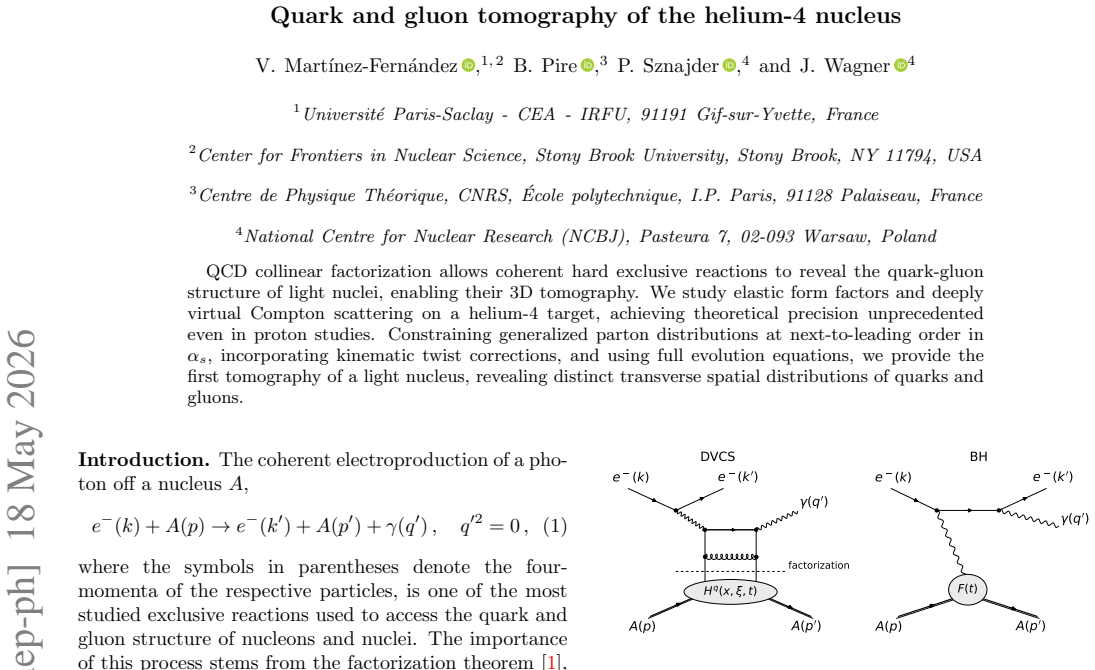 full image