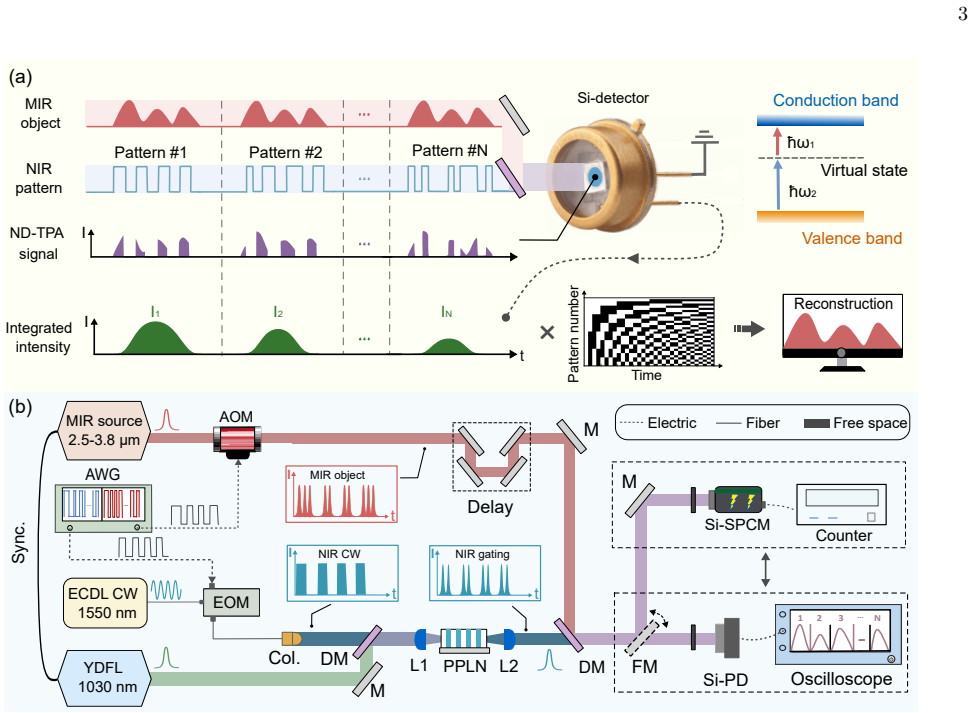
Temporal ghost imaging (TGI) enables ultrafast signal reconstruction beyond electronic bandwidth limits. Extending this concept to the mid-infrared (MIR) regime through nonlinear frequency conversion offers new opportunities for high-fidelity temporal detection, but remains constrained by stringent phase-matching condition, limited spectral coverage, and intricate optical alignment. Here, we propose and demonstrate a broadband MIR TGI system based on non-degenerate two-photon absorption. A temporally encoded near-infrared pump transfers structured modulation onto a MIR signal directly at a silicon detector, which facilitates concurrent modulation and detection without external nonlinear crystals. The reconstructed temporal waveforms exceed the detector bandwidth by more than fortyfold, achieve a detection sensitivity of 0.05 pJ/pulse, allow compressed sensing with 80\% fewer measurements, and support broadband operation across 2.5-3.8 $\mu$m. This compact, alignment-free, and room-temperature system establishes a practical route for fast and sensitive MIR time-domain analysis, holding great promise for applications in time-resolved molecular spectroscopy, high-precision infrared ranging, and high-speed free-space communication.
Non-Hermitian lattices can host the non-Hermitian skin effect, a boundary-induced collapse of all bulk eigenstates into exponentially localized edge modes. This effect underlies anomalous bulk-boundary correspondence and remarkable enhancements in non-Hermitian sensing, yet direct energy-resolved access to the eigenmodes of non-Hermitian lattices has remained limited. Here we report band- and energy-resolved eigenmode spectroscopy of skin modes in a frequency synthetic dimension. By introducing strong frequency-domain boundaries in an electro-optically modulated ring resonator, we realize finite non-Hermitian lattices and use laser detuning as a spectroscopic axis for the eigenenergies of the effective Hamiltonian. Site-resolved heterodyne measurements then reconstruct the spatial profile of each mode, revealing boundary-localized skin states throughout the spectrum and their eigenenergy-dependent displacement from the edge. Beyond 1D, the same frequency-boundary architecture, upon incorporating long-range couplings between finite lattices, produces genuine 2D frequency lattices rather than the hitherto-realized folded 1D systems on twisted tubes. In these lattices we observe tunable directional transport and edge localization in two synthetic dimensions. Our results introduce eigenmode spectroscopy as a direct probe of non-Hermitian physics and establish strongly bounded frequency lattices as a flexible platform for Hamiltonian engineering.
Single-tile aperiodic structures in microcavities produce six-fold Bragg peaks and synchronization unlike periodic or Penrose cases.
abstractclick to expand
A plethora of unconventional localization phenomena and fractal features of linear spectrum observed in quasiperiodic structures have been accompanied by a long-standing quest for the geometrical elements and structures that permit tilings of the plane, but only in a non-periodic manner. Until 2024, it was believed that such quasiperiodic structures, or quasicrystals, could only be composed of at least two different tiles. Surprisingly, a newly discovered class of quasicrystals requires only one elementary monotile. However, its physical realization and study of propagating coherent excitations in this novel setting remained elusive. Here we optically sculpt aperiodic quasicrystals composed of "einstein" monotiles in an inorganic microcavity and observe nontrivial relative phases of the exciton-polariton condensates nonresonantly excited at the vertices of each monotile. Utilizing energy-resolved tomography in momentum-space, we reveal the formation of distinct Bragg peaks with six-fold symmetry and Dirac-like spectral fingerprints, intrinsic to the underlying graphene-like structure, while interferometric phase reconstruction shows a nontrivial synchronization pattern distinct from both periodic triangular lattices and Penrose quasicrystals. Our work demonstrates that monotiles can be converted into a programmable driven-dissipative artificial material, where long-range coherence coexists with enforced geometric aperiodicity, producing synchronization and spectral responses distinct from both periodic and conventional quasicrystalline tilings.
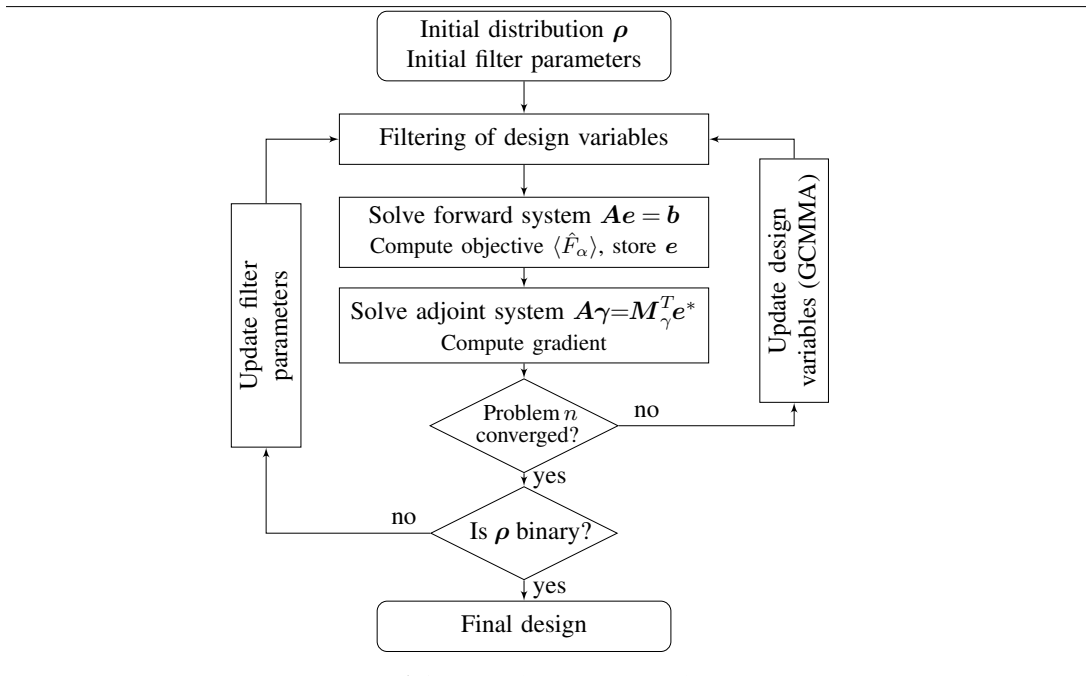
Smart metasurfaces capable of employing the momentum of light for manipulating nanoparticles hold the key to potential applications in science and nanotechnology. This article proposes a density-based topology optimization framework for optimizing plasmonic metasurfaces for nanoparticles optical trapping. The Maxwell stress tensor (MST) is employed to compute the optical force exerted on nanoparticles of different sizes and types. The metasurfaces' topologies are optimized to maximize the gradient (attractive) force on such nanoparticles subject to normally incident monochromatic excitation. Designs based on free-form optimization are investigated first, then manufacturing constraints are imposed to provide easy-to-manufacture planar designs. The results show that the topology of the optimized metasurfaces depends on the nanoparticle size and material, with a higher trapping stiffness associated with small nanoparticles. The optimized metasurfaces could offer selective mass trapping of nanoparticles for applications in biosensing, microfabrication, or assembly of quantum systems.
The steady final phonon occupation in waveguide optomechanical systems based on backward stimulated Brillouin-Mandelstam scattering has not been established in the strong-coupling regime. In this work, the displacement spectra of anti-Stokes optical modes and acoustic modes in tapered chalcogenide photonic crystal fiber are derived from the Lindblad (or Gorini-Kossakowski-Sudarshan-Lindblad) master equation. By analyzing the full spectral response, we indicate that the system can enter the strong-coupling regime through the emergence of normal-mode splitting and avoided crossings. Within a non-Hermitian framework, the threshold for strong coupling is identified, showing that it can be achieved at relatively low pump power even at room temperature. Furthermore, we derive a unified analytical expression for the final phonon occupation, revealing that quantum backaction and zero-point fluctuations impose additional fundamental limits that hinder the achievement of ground-state cooling. These results redefine the quantum limits of steady-state cooling in continuum optomechanics, motivating the search for new strategies to access the quantum ground-state of macroscopic phonons.
Broadening of spectral and spatial responses due to intrinsic loss in real materials often hides sharp features. One recently recognized route to recover those features is to probe the system with complex-frequency (CF) signals that decay exponentially in time: a suitably tailored temporal decay can compensate for loss and reveal an intrinsic, narrow response. However, generating rapidly decaying optical waveforms in real time is often challenging (the required decay times may be in the range of tens of femtoseconds). A recently proposed alternative synthesizes the CF response numerically after detection of conventional, real-frequency signals using Fourier post-processing. Here we explore advantages and challenges of these approaches: we show that a physical CF excitation robustly sharpens spectral features in the presence of noise, while a post-detection synthesized CF response shows only limited improvement once realistic detection and readout noise is considered. At the same time, in low-noise conditions a much simpler post-detection filtering procedure attains equal or better recovery than the synthesized CF reconstruction, making the synthesis unnecessary in practice.
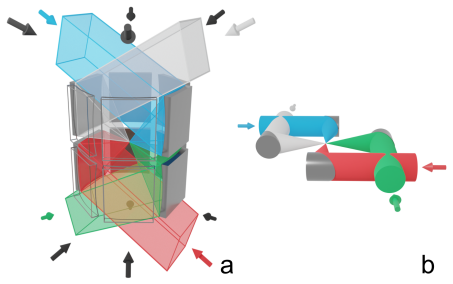
This paper presents a four-channel prototype system for the geometric combining and coherent addition of tightly focused femtosecond laser radiation into a standing-wave field configuration. A stabilization system for beam pointing and relative phase of the four optical channels has been implemented, and its performance has been experimentally demonstrated. To characterize the standing-wave electromagnetic field distribution at the main focus of the system, an original measurement technique based on a fiber subwavelength optical probe has been employed. This work has been conducted in support of the exawatt-scale XCELS project.
The interaction of free-electron wave packets with electromagnetic fields provides a powerful route toward coherent electron control, enabling the generation of energy combs, momentum-state superpositions, and aberration-engineered electron beams. Existing theoretical descriptions, however, often rely on eikonal or no-recoil approximations. Here, we present a mesh-free numerical framework that directly solves the time-dependent single-particle Schr\"odinger equation for arbitrary electromagnetic potentials. Comparison with a benchmark mesh-based Schr\"odinger solver reveals excellent quantitative agreement. By eliminating the need for spatial meshing, our method offers an efficient and scalable route for simulating electron wave packet dynamics in complex time-dependent and static electromagnetic environments, while the simulation time is significantly improved by up to 800 times faster. These capabilities establish a versatile computational tool for quantum electron optics and free-electron-light interactions beyond eikonal approximations.
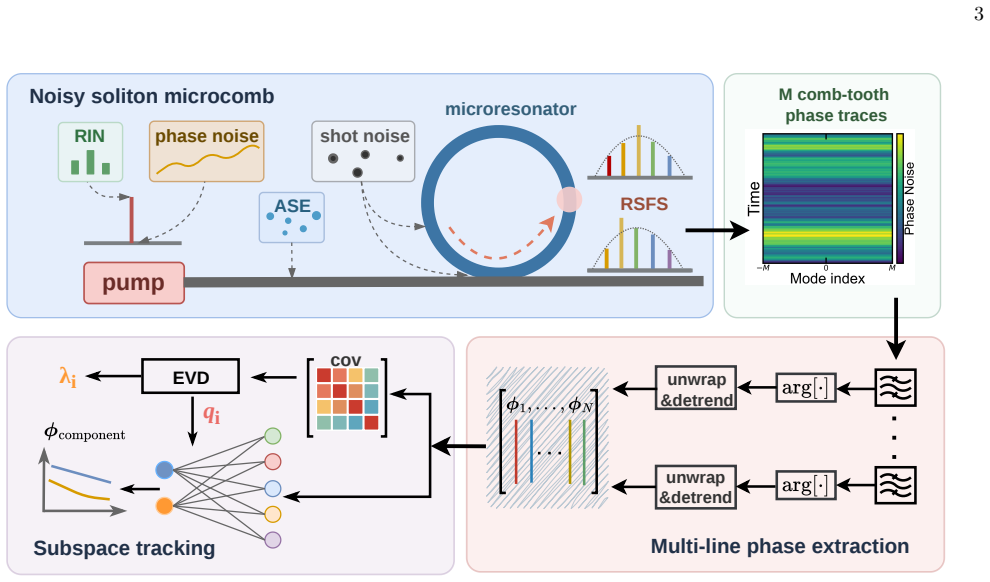
Phase noise limits the coherence and stability of soliton microcombs, yet its origin is difficult to trace because multiple noise sources act simultaneously. It is often represented by common-mode and repetition-rate components, but how each physical source contributes to these components remains unclear. We combine subspace tracking with multi-source Ikeda-map simulations, switching each source and the Raman nonlinearity on and off to isolate its contribution. Without Raman, pump phase noise is purely common-mode, while shot noise and amplified spontaneous emission drive the repetition rate noise. With Raman, the nonlinearity coherently converts pump phase noise from common-mode into repetition-rate noise without introducing an independent noise source, yielding a parabolic linewidth profile with a quiet-point minimum below the pump linewidth. When all noise sources are present, shot noise, ASE, and RIN raise the common-mode floor and shift this minimum toward the pump, setting the achievable noise floor. The intracavity dynamics thus do not merely carry noise but actively partition it, providing a mechanistic basis for low-noise microcomb design.
Digital in-line holographic microscopy is a computational imaging method useful for characterizing the refractive properties of a sample, i.e. the phase shift and absorption. This indirect measurement technique captures a diffraction pattern and uses reconstruction algorithms to retrieve the optical properties of the sample. Since only the intensity of the diffracted wave is recorded on the sensor, this inversion is not trivial, and simple backward propagation leads to artifacts known in optics as the ``twin-image''. With advances in deep learning, various algorithms have been developed for the reconstruction of in-line holograms, providing computationally efficient alternatives to iterative algorithms. These algorithms rely either on supervised learning, which requires ground truth knowledge, or physics-based self-supervised algorithms that require additional information, like phase diversity, but require multiple holograms for inference. This paper introduces a new self-supervised physics-based deep learning strategy that leverages phase diversity during training and then reconstructs sample's transmission function from a single in-line hologram during inference. We introduce five datasets of simulated and experimental in-line holograms of beads and bacteria. The proposed method produces accurate quantitative reconstructions similar or even more accurate than those obtained by regularized inversion while reducing the computational time by a factor of 1000.
Memory devices for single photons are notable components for quantum information processing and quantum communications. The present study investigates the possibility of achieving storage of light at the level of single photons inside nanofibers by exploiting stimulated Brillouin scattering. We present first the standard approach using a coherent buffer in a nanoscale waveguide by transferring the optical signal coherently to an acoustic wave, and that can be extracted by the reverse process. The life time of the acoustic wave put limitation on the applicability of such approach for single photon signals. We introduce a configuration for achieving a slow signal at the level of single photons without gain or loss. The process utilizes photon-phonon Brillouin interactions involving two counter propagating pump fields. The photon storage is achieved through time delay of significantly slow signal inside nanowires. We address the condition for getting negligible influence due to the scattering off thermal phonons.
Coherence-based spectroscopy methods are powerful tools to explore structure and dynamics of matter. However, towards higher photon energies, the generation of sequences of pulses with well-characterized relative delays and phases remains a challenge. Here, we introduce a method to measure the relative phase $\varphi$ between subsequent transform-limited pulses from high-repetition-rate x-ray free-electron lasers (XFELs). It is based on a Ramsey-type interference measurement, enabled by introducing long-lived M\"ossbauer resonances into the XFEL beam path up- or downstream a primary experiment, which allow one to bridge the temporal gap between the XFEL pulses. The measured phase can be used as additional input for the analysis of the primary experiment.
Glauber's coherent state is denoted by $\ket{\alpha}$ and its two-mode extension is represented by $\ket{\alpha,\beta}$. In this work, we introduce a two-mode superposition operator $A=tab+ra^\dagger b^\dagger$, whose action on the two-mode coherent state produces the two-mode coherent superposed quantum state $\ket{\psi}=(tab+ra^\dagger b^\dagger)\ket{\alpha,\beta}$. We investigate the nonclassicality and quantum non-Gaussianity of this state by means of the Wigner distribution and Wigner logarithmic negativity. Once its intrinsic nonclassical and non-Gaussian structure is established, the state is employed as the entangled resource in the Braunstein-Kimble continuous-variable (CV) teleportation protocol. We compute the ideal teleportation fidelity for coherent and squeezed inputs and analyze how the strengths of nonclassicality and non-Gaussianity influence the teleportation efficiency. Our results identify specific parameter regimes where enhanced non-Gaussian features or increased nonclassicality enable fidelities beyond the classical threshold, thereby revealing the operational significance of engineered two-mode quantum states in CV quantum information processing.
Over two million electrical connections per die link piezoelectric actuators to digital control for optical modulation.
abstractclick to expand
Next-generation photonic architectures for AI, sensing, and quantum computing require thousands to millions of reprogrammable photonic devices on a chip[1]. The monolithic integration of Electronically-backed Photonic Integrated Circuits (EPICs) allows for very high density electrical interconnection and electronic drivers that can scale with photonics. Piezo-optomechanical photonic integrated circuits (POMPICs) offer low power consumption, high speed modulation, cryogenic compatibility and broadband optical transparency from ultraviolet to infrared wavelengths[2,3], but have not been demonstrated with monolithically integrated CMOS electronics. Here, we show a fully monolithic, all-CMOS fabricated platform for POMPICs co-fabricated with commercial control electronics. 200 millimeter photonic wafers are constructed directly on completed CMOS driver wafers by back-end-of-line processing, connecting integrated piezoelectric actuators under broadband silicon nitride waveguides to a high-density digital backplane comprising >2 million electrical connections per die with 6.4x6.4 micron electrode pitch. We introduce segmented POMPIC components as Photonic Digital-to-Analog converters (PDACs) that convert low-voltage digital electronic signals to multi-bit analog optical phase and amplitude modulation, and we demonstrate parallel control of optical phase shifters, Mach-Zehnder interferometers, optical routing trees, and tunable ring resonators using a standard HDMI interface to program CMOS electronics. We test multiple reticles and perform electronic and photonic characterization across the entire wafer to establish uniformity and yield, demonstrating wafer-scale integration of POMPICs on an electronic backplane and enabling dense, scalable electronic control of piezo-optomechanical circuits.
Photonic integrated circuits on the silicon-on-insulator (SOI) platform typically interface with free space via grating couplers, but scaling these to collimated beams with diameters beyond 100 $\mu$m requires a fundamentally different regime of extremely weak, spatially distributed coupling. While such large-area couplers have been demonstrated, their beam quality has remained largely uncharacterized, even though applications such as coupling into high-finesse resonators or trapping of cold atoms require both a large aperture and a near-Gaussian profile. This article presents an SOI meta-grating coupler that emits collimated, near-Gaussian beams of approximately 300 $\mu$m waist diameter. The design synthesizes the required emission profile from a spatially tailored coupling strength, realized by locally varying a sub-wavelength unit cell while independently setting the local emission angle. This approach achieves the very low coupling strengths required for large beams and yields a measured beam quality of $M^2 \leq 1.10$. The scheme extends directly to other target profiles, such as flat-top or higher-order modes, rendering meta-grating couplers a practical chip-to-free-space interface for mode-matching-sensitive applications.
We present a laser system referenced to a room-temperature ultrastable cavity employing crystalline AlGaAs coatings. We demonstrate a fractional frequency instability of $4.2 \times 10^{-17}$, which is one of the lowest for room temperature systems and surpasses the limit imposed by Brownian noise if dielectric coatings were employed. For the first time in a room temperature system we identified the spontaneous fluctuations of the coating birefringence as a leading contribution to frequency instability. At optimized conditions we achieve an ultrastable cavity with an eigenfrequency that is highly immune to power fluctuations. As acceleration noise is the main noise contribution, we demonstrated that a feed-forward method can reduce the influence of accelerations on the cavity-stabilized laser frequency by a factor of four.
Zernike decomposition shows less profile distortion and supplies an analytical aperture formula for turbulent paths.
abstractclick to expand
This paper explores the selective suppression of Laguerre-Gaussian modes that are most vulnerable to atmospheric turbulence. Decomposing these modes into an orthogonal Zernike polynomial basis reveals significant differences in stability depending on the radial and azimuthal indices. We demonstrate that modes with a higher radial index exhibit minimal distortion of the transverse beam profile, providing a clear criterion for filtering out less resilient modes in turbulent media. Furthermore, we derive an analytical expression relating the required receiver aperture to the radial and azimuthal indices.
Accurate 3D localization of radiation interactions in scintillation detectors is essential for nuclear and particle physics, safeguards, and medical imaging, but remains difficult in light-starved regimes with limited photon statistics. We present PRISM, a multifocal plenoptic imaging system designed for millimeter-scale 3D position reconstruction in a single-volume scintillator. PRISM uses a multifocal microlens array with diverse focal lengths and high effective numerical aperture to balance photon collection with spatial and depth encoding. A Cram'er--Rao lower bound analysis shows that the multifocal design improves axial sensitivity over conventional unifocal plenoptic systems under photon-limited conditions. We build a prototype system, calibrate its optical response with a tunable light source, and form photon-limited measurements with $\mathcal{O}(100)$ detected photons. For sparse single-vertex events, we reconstruct interaction locations using an Alternating Descent Conditional Gradient-inspired algorithm and demonstrate an average 3D localization error of approximately 1 mm. We also provide an initial evaluation of double-vertex events, showing that localization improves as the axial separation between interactions increases. These results demonstrate that multifocal plenoptic imaging can mitigate the traditional trade-off between light collection and spatial resolution, providing a photon-efficient approach to 3D reconstruction in scintillation detectors and a foundation for future multi-scattering event reconstruction.
Near-field spin flip from chiral nematic substrate links K and K' excitons, enabling scalable valleytronics without cooling.
abstractclick to expand
Valley coherence refers to a phase-coherent superposition of inequivalent momentum valleys, in which quantum information can be encoded in the relative valley phase. Chiral nematic liquid crystals, by imposing a flip of the spin angular momentum upon light reflection, provide an effective photonic environment for optically coupling excitons of the K and K' valleys in monolayer semiconducting transition-metal dichalcogenides. We experimentally demonstrate that using such liquid crystal as a substrate, it is possible through nearfield interaction to engineer a room temperature mechanism for inducing the intervalley coupling. Our results show that this approach provides a simple and scalable route toward valleytronic functionalities based on controlled coherent emission from valleys with opposite Berry curvature.
We present the Axion Polarimetric Experiment (APE), a cavity-enhanced polarimeter designed to search for ultralight axion and axion-like-particle dark matter through a time-dependent rotation of the linear polarization of laser light. In cavity-based schemes, intracavity quarter-wave plates can restore coherent buildup of the axion-induced orthogonal polarization, but their transmissive loss limits the achievable finesse. To avoid transmissive intracavity optics, we propose a folded Fabry-Perot cavity that employs dielectric phase-shifting mirrors. At an incidence angle near $45^\circ$, these mirrors provide a reflection-phase difference $\Delta\phi \equiv \phi_s-\phi_p \simeq \pi/2$ between $s$ and $p$ polarizations and therefore act as reflective quarter-wave plates. We present the coating design, thickness optimization, and measurements of the phase shift and optical loss of the phase-shifting mirrors. Using a heterodyne polarimetric readout and an explicitly stated noise model, we derive design-level sensitivity projections for the axion-photon coupling $g_{a\gamma\gamma}$. These projections should be interpreted as target sensitivities for the proposed cavity configuration, since the full-system birefringence noise and angular-jitter coupling remain to be measured.
The integration of artificial intelligence with physical modeling offers a transformative route for accelerating the design of active nanophotonic devices. Here, we present NanoPhotoNet-Lase, a physics-informed neural network (PINN) framework that embeds the electromagnetic and rate equations of lasing directly into its learning process to expedite the design of metasurface nanolasers. By coupling Maxwell's vector Helmholtz equation with the four-level population dynamics of dye gain media, the model achieves physics-guided prediction of optical responses, enabling rapid estimation of lasing thresholds across arbitrary nanostructure geometries and material configurations. Using high-index metasurfaces cavity, the NanoPhotoNet-Lase model identifies optimized geometries supporting quasi-bound states in the continuum (BICs) with strong confinement and high-quality factors. The predicted lasing was experimentally realized using Rhodamine B dye as gain medium. The measured lasing threshold (Pth = 565 uJ/cm2) and emission wavelength of 620 nm exhibited below 1% deviation from model predictions. Importantly, the framework enables design phase-gradient nanolaser metalens and beam steering that demonstrated coherent, directional, focused or steered emission. This work bridges physics-informed machine learning with experimental nanophotonics, establishing a scalable paradigm for real-time, physically interpretable design of coherent light-emitting metasurfaces.
We have shown a pattern that connects the refractive index, area and the cavity modes of the optomechanical crystals (OMCs) by the same order function. By keeping the fundamental and second cavity modes within a range of -+16 nm and -+23 nm we have shown the link between the design area of the OMC and the refractive index of the material, by keeping the design area same we have shown the link between the refractive index and the cavity mode wavelength and by keeping the refractive index the same, we have shown the link between the cavity mode wavelength and the design area. We have performed simulations for 2 different OMC designs and 10 different refractive indices (9 different materials) to prove the first two claims and we have performed both simulations and experiments on a 3C-SiC OMC, which resulted as 100 nm shift of the second cavity mode, to prove the last claim. Our findings prove that a universal design for optomechanical crystals is possible, making the transition to different material bases easier to exploit their specific properties, suggesting a path to commercialize such devices for hybrid quantum technologies and having flexibility of tuning such devices for their own relative applications.
The exceptionally high in-plane refractive index, low sub-bandgap absorption, and strong optical anisotropy of WS2 make it a promising material platform for next-generation integrated circuits for nanophotonics. Its layered van der Waals structure further enables heterogeneous integration with silicon photonics and emerging two-dimensional optoelectronic materials. However, despite increasing interest in the waveguiding properties of WS2, experimental studies of wavelength-dependent modal confinement and attenuation remain limited. Additionally, though the extinction coefficient of WS2 is expected to be near-negligible beneath the bandgap, reported values span orders of magnitude, leading to large uncertainty in predicted modal decay lengths and wafer-scale integration feasibility. To resolve these ambiguities we perform hyperspectral cavity-enhanced imaging, determining high-resolution upper and lower bounds on the extinction coefficient of WS2 within the visible-NIR edge. We further employ scattering-type scanning near-field optical microscopy (s-SNOM) to probe TE0, TM0, and higher-order modes in both quasi-bulk and nanobeam WS2 waveguides across the 800-1400 nm spectral range, enabling identification of mode-specific trends in wavevector dispersion and loss. This work simultaneously assesses s-SNOM as a probe of waveguide performance, and we find that while absolute loss values depend on measurement geometry, s-SNOM reliably captures relative modal trends and provides upper bounds on propagation loss, supporting its use as a diagnostic tool for anisotropic waveguides. We further identify significant artefacts in nanobeam measurements arising from transverse interference and spatial sampling effects when the structure size approaches the excitation wavelength, which can shift extracted effective indices by up to 0.25.
Achieves 0.0033% noise and 40:1 extinction while switching between linear, circular, and elliptical states without breaking vacuum.
abstractclick to expand
Magneto-infrared spectroscopy under strong magnetic fields provides a powerful probe of Landau quantization and field-induced collective excitations, yet its full potential has long been constrained by the lack of in-situ polarization control, because the highly divergent infrared beam propagating through narrow light tubes undergoes multiple wall reflections, leading to severe polarization degradation. Here we report a collimated magneto-infrared spectroscopy system that integrates continuous in-situ polarimetry. The system employs incident and exit collimation chambers forming a Kepler type optical architecture, which converts the large-aperture FTIR output into a low-divergence beam and strongly suppresses multi-reflection trajectories inside long gold-plated light tubes, thereby enhancing both optical throughput and polarization fidelity. A remotely controlled polarization module, consisting of an automated linear polarizer and a switchable Fresnel rhomb positioned entirely outside the high-field region, enables continuous in-situ tuning between linear, circular, and arbitrary elliptical polarization states without thermal cycling, manual realignment, or breaking vacuum. Interchangeable compact focusing modules further support Faraday and Voigt geometries in both transmission and reflection experiments within a 50 mm magnet bore, providing efficient beam focusing and signal collection while maintaining polarization fidelity. The setup achieves a minimum root-mean-square noise of 0.0033%, an average noise of 0.0082%, and a linear polarization extinction ratio up to 40:1. We demonstrate the capability through continuous in-situ linear polarimetry and broadband circular polarimetry in the magneto-infrared spectroscopy of various single crystals. This platform establishes a robust experimental framework for in-situ polarization-resolved magneto-infrared spectroscopy.
Self-selected phase-matched second harmonic generation is introduced as an all-optical probe of refractive-index dispersion in birefringent nonlinear optical materials. Rather than requiring wavelength or angular tuning, the exposure with a spectrally broad, intense ultrashort pulse allows the material to self-select the fundamental spectral component that satisfies the type-I noncritical phase-matching condition. This produces a narrow peak in the second harmonic spectrum whose position is governed by the refractive indices and is therefore highly sensitive to material parameters that affect the optical dispersion. We demonstrate the application of this phenomenon for the optical inspection of stoichiometry and temperature gradients in technologically relevant lithium niobate, as well as composition inhomogeneities in newly grown lithium niobate-tantalate solid solutions. These results establish self-selected phase-matched second harmonic generation as a rapid, non-contact method for inspecting nonlinear optical materials, with potential relevance for bulk crystals, wafers, and thin-film platforms.
We address two distinct nonlinear propagation problems in nonlinear optical waveguide arrays (WGAs) with non-reciprocal (non-Hermitian) couplings. First, we investigate the light propagation launched by initial excitations of two different types. The single-channel excitation creates stable solitons supported by the interplay of the Kerr nonlinearity and non-Hermitian skin effect (NHSE). In this case, we derive, by means of the symbolic-regression method, an analytical formula defining the soliton existence boundary. For the broad-pulse excitation, we produce perturbed soliton solutions analytically in the continuum approximation, which is accurately corroborated by numerical results. We thus conclude that NHSE accelerates the propagation of the broad soliton towards the boundary, ultimately causing tight localization at the edge, which is a hallmark of the NHSE in the continuum limit. Second, we identify stationary solitons in the system -- specifically, nonlinear bulk modes in the Hermitian regime and near-edge skin solitons in the non-Hermitian one. The nonlinear bulk modes are compressed toward the edge of the WGA under the action of the non-reciprocality, which is the nonlinear extension of NHSE.
Optimizing vaccine prioritization is often treated as the default policy response when vaccine supply is limited. Yet optimized prioritization carries administrative, ethical and communication costs, motivating an upstream question: whether differences among vaccine allocations can alter epidemic outcomes enough to make optimization epidemiologically necessary. We show that optimization is not always worth pursuing: in some regimes, vaccination markedly reduces epidemic burden, but many feasible allocation rules perform almost equally well, making the necessity of optimization low. We quantify this necessity as the range of epidemic outcomes generated by different allocations under fixed supply and show that it is governed by competition between vaccinating high-contact groups to slow transmission and vaccinating groups that benefit most directly: necessity is low when these protection routes are balanced and high when one dominates. Increasing transmission intensity changes this balance and drives a transition in the optimal allocation from transmission-focused prioritization toward direct protection. Different prevention objectives exhibit distinct transition thresholds, creating regimes in which optimizing one objective substantially compromises another, thereby revealing when the choice of prevention target matters most. This framework reframes vaccine prioritization as a prior decision problem, identifying when optimization is warranted, when simpler rules suffice, and when prevention goals conflict.
Finite cavity boundary lifts degeneracy and separates corner and core modes with different Q-factors in PL maps.
abstractclick to expand
This work reports the spatial-spectral engineering and finite-size quantization of optical modes within a triangular-lattice silicon nitride membrane metasurface. Truncating the lattice into a finite square cavity breaks translational symmetry and lifts modal degeneracy, splitting optical modes into discrete cavity-envelope sub-modes. High-resolution photoluminescence (PL) scanning reveals distinct spatial field distributions. The corner-localized sub-mode features the highest Q-factor due to multipolar far-field destructive interference, whereas the core-localized sub-mode exhibits strong radiative coupling. PL mapping reveals a symmetric, four-fold clover-like wavelength arrangement. These results demonstrate that boundary-induced deterministic symmetry can override underlying lattice characteristics, offering a robust strategy for precise spatial-spectral tailoring of light-matter interactions at the nanoscale.
We present a theoretical framework for spontaneous Raman scattering that fundamentally bridges quantum-mechanical and nonlinear-optical approaches. By conceptualizing spontaneous Raman scattering as a stimulated Raman gain or loss event seeded by the quantum vacuum field, we rigorously derive the spontaneous Raman cross-section directly from the third-order nonlinear susceptibility. Crucially, this framework predicts the existence of a hitherto unrecognized phenomenon: "spontaneous Raman loss" (sRL), which acts as the vacuum-seeded counterpart to stimulated Raman loss, complementing traditional spontaneous Raman scattering (spontaneous Raman gain, sRG). Furthermore, we establish a rigorous connection to the traditional Kramers-Heisenberg-Dirac (KHD) theory, revealing that the spontaneous process is governed by interference before a detector between the signal field emitted from molecules and the vacuum field itself that stimulates the molecules. This insight uncovers a direct correspondence between the sRG susceptibility and the rotating/counter-rotating interference terms in the KHD formula. Ultimately, we extend the foundational KHD theory by incorporating previously unrecognized essential terms, achieving perfect analytical agreement between the quantum mechanical and nonlinear optical descriptions of Raman scattering.
A photon entering a plane parallel scattering slab performs a random walk and eventually escapes through one of the two faces or is absorbed. The scattering distribution is a Henyey Greenstein phase function and the step length distribution is exponential. The central result of this paper is that the reflectance, transmittance, absorptance, and emergent angular distributions can all be expressed in terms of the first passage statistics of the walk. Two approaches are used. In the Monte Carlo MC approach, an extremely long random walk with many steps is efficiently generated without regard to any boundaries. The intersection of this walk with a large collection of target objects creates an ensemble of excursions of the objects. The MC approach relies explicitly on the memoryless property of the exponential distribution so that the portion of the first and last steps inside the object follow the same length distribution as the walk steps. The details of each excursion are recorded and any statistics can be extracted, to the sampling precision, from the database of excursions. In particular, first passage statistics are extracted from this ensemble. In this work the objects are slabs with different positions and thicknesses. In the radiative transfer RT approach the slab is divided into thin layers with scattering treated to first order in each layer. The RT equations are then directly integrated over the slab to give the desired first passage statistics. In the RT approach reflection, transmission and absorption are found to the precision of the RT solver. The two methods agree to the precision of the MC over the tested range of random walk parameters.
Pairs with delays from 500 as to 5 fs are analyzed by Bragg spectrometers to extract time, amplitude and phase without special optics.
abstractclick to expand
X-ray free electron laser (XFEL) experiments using self-amplified spontaneous emission (SASE) pulses typically achieve temporal resolutions of order several femtoseconds, as the pulse duration puts a practical limit to pump-probe or probe-probe schemes. Even with the emerging capabilities to generate pulses with attosecond durations with new single-spike SASE schemes, direct access to attosecond electron dynamics remains an experimental challenge. Here we show how X-ray coherent attosecond pulse-pair spectroscopy (X-CAPPS) provides a powerful new approach to access the ultrashort time-delay window. Coherent attosecond pulse pairs with time delays varying from ~500 as to ~5 fs are generated with Cu K$\alpha_1$ stimulated X-ray emission from a gain medium pumped by intense SASE XFEL pulses. These pulse pairs are analyzed with two subsequent Bragg crystal spectrometers, and the resulting interference spectrum is captured on two sequential 2D image detectors encoding their time separation, relative amplitudes, and phases with high precision. X-CAPPS requires no split-and-delay X-ray optics, nor XFEL pulse modifications, making it broadly implementable across existing facilities. This technique enables the investigation of attosecond processes with $\mathring{A}$ngstr\"{o}m resolution, providing a new tool for probing ultrafast dynamics across a wide range of atomic, molecular, and solid systems.
The Spiral Phase Transform (SPT) is a generalization of the Hilbert transform for 2D signals and, as such, can be used for AC signal demodulation. However, phase demodulation with the SPT is complicated by a multiplicative term that depends on the fringe directional map. We derived an analytical formula for the twofold directional map and applied the SPT for the blind reconstruction of phase-shifted digital holograms. Possible phase ambiguities in the unfolded directional map were resolved by satisfying the spatial uniformity condition of the phase shifts. The method was experimentally verified using on-axis and off-axis digital holograms of specularly reflecting subjects.
Dissipative solitons constitute a robust class of self-localized nonlinear states sustained by the dynamic balance between nonlinearity and gain-loss, possessing an intrinsic stability that stems from their fundamental attractor nature. When combined with lattice truncation, this balance gives rise to dissipative surface solitons (DSSs), whose existence and stability are jointly dictated by boundary-induced confinement and non-Hermitian dynamics. In two-dimensional truncated lattices with linear gain and loss, surface localization emerges within gap regimes, where families of DSSs bifurcate from linear surface localized gain modes as the nonlinearity increases. Increasing the number of waveguide rows at the interface enriches the diversity of supported surface modes in both linear and nonlinear regimes. Although multiple DSS families with distinct phase configurations may coexist within the same gap, their dynamical stability is strongly phase selective. These insights establish linear gain-loss engineering as a powerful mechanism for controlling nonlinear surface localization and provide practical guidelines for realizing robust nonlinear surface states in gain-loss-tailored photonic platforms.
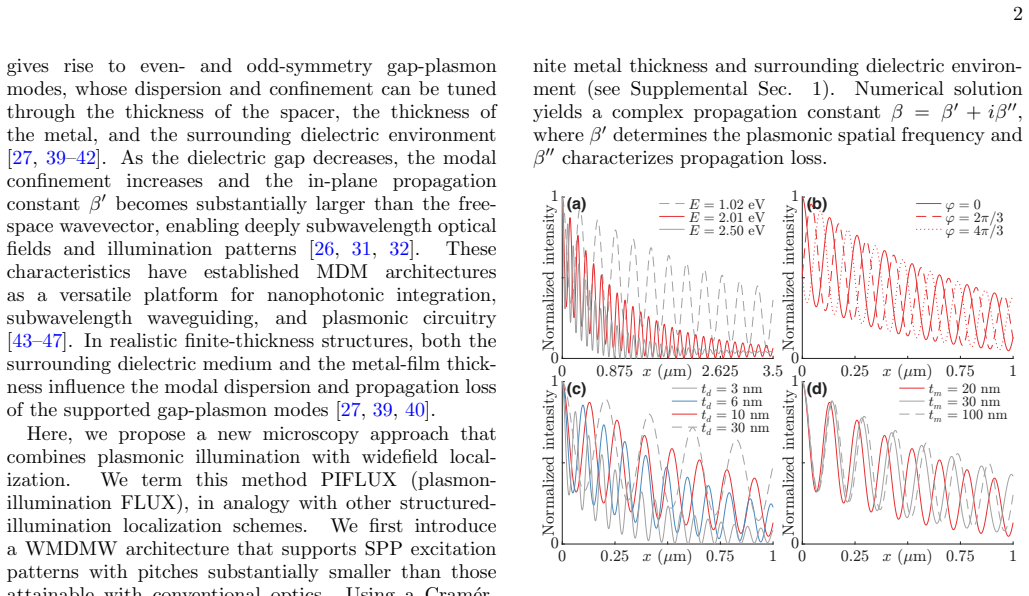
We propose PIFLUX, a single-molecule localization scheme combining deep-subwavelength plasmonic illumination with widefield detection. Interference between counter-propagating gap plasmons and a normally incident optical field generates an illumination pattern whose position can be tuned through the plasmon phase while preserving its spatial period. A Cram\'er-Rao analysis shows PIFLUX reaches few-nanometer precision matching MINFLUX while doubling that of SIMFLUX over a micrometer field of view, and a maximum-likelihood estimator confirms this on a synthetic nuclear pore complex.
Interference is commonly regarded as the most direct manifestation of the superposition principle. This association is natural for the linear Schr\"odinger equation, where coherent alternatives combine at the level of probability amplitudes. However, the situation becomes less transparent when nonlinear couplings are present, or when the field is only partially coherent. In this work, we argue that a more robust organizing principle is provided by the local flow generated by phase variations. In this sense, phase-induced flow acts as a unifying mechanism for interference-like dynamics in nonlinear and partially coherent Schr\"odinger systems. The discussion is developed from a hydrodynamic, or Bohmian, perspective, understood here as a practical probing tool rather than as an additional ontology. Three representative situations are considered: interfering Bose--Einstein condensates described by the Gross--Pitaevskii equation, nonlinear Schr\"odinger dynamics obtained by modifying the quantum-potential contribution, and partially coherent Airy beams described through their cross-spectral density. Although these systems differ in physical origin and mathematical implementation, they share a common dynamical structure: density-related observables are shaped by velocity fields determined by phase, or ensemble-phase, information. From this viewpoint, interference-like traits, localization, self-acceleration and coherence loss can be interpreted in terms of the preservation, deformation or breaking of the symmetries displayed by the underlying flow. This provides a compact way of connecting interference, nonlinear dynamics, classicality, coherence loss, and structured-light propagation within a single trajectory-based framework.
Pulse-resolved spectral phase measurement of mid-infrared (MIR) pulses is essential for many applications, from precise waveform control to ultrafast quantum optics. However, conventional MIR pulse characterization techniques are typically limited to sub-kHz-rate operation, leaving a substantial speed mismatch with MIR sources operating at kHz or MHz rates. Here, we introduce time-stretch upconversion-based mid-infrared pulse evaluation (TSUBAME), a technique that enables pulse-to-pulse spectral phase characterization of ultrashort MIR pulses at the laser repetition rate. TSUBAME combines MIR-to-NIR (near-infrared) upconversion, time-stretch, and spectral interferometry to achieve scan-free high-speed spectral phase measurements. We validated the technique by measuring MIR pulses spanning 4.98-5.30 um while introducing well-defined dispersion, obtaining excellent agreement with theoretical predictions. Operating at a measurement rate of 1 MHz, TSUBAME achieves the fastest single-pulse-resolved spectral phase characterization of MIR pulses reported to date. As a further demonstration, we captured dynamic spectral phase variations on a microsecond timescale. TSUBAME provides a powerful tool for real-time monitoring and optimization of high-repetition-rate MIR pulses, with potential applications in strong-field physics, high-harmonic generation, and coherent molecular control.
We present a free-space plasmonic modulator based on a single heavily-doped semiconductor layer. We investigate its ability to modulate both the linear and nonlinear response at mid-infrared frequencies slightly below the plasma frequency of the semiconductor. We demonstrate electric control of the linear transmittance and reflectance, and of the efficiency of third-harmonic generation with a field-effect gate structure. We discuss further performance optimization of the device in terms of modulation speed and depth towards a fast modulator with very simple active material requirements. Our results establish a viable route toward practical plasmonic modulators and mixers operating in the mid-infrared atmospheric window available for free-space communications at wavelengths between 8 and 12 um.
Traditional hyperspectral imaging (HSI) relies on sequential scanning with complex and bulky hardware, inherently limiting its temporal resolution while increasing system complexity and cost. Computational HSI offers cost-effective alternatives with simplified hardware. However, most existing computational methods rely on fixed spectral encoding units, which lack adaptability for different spectral tasks. Here, we present a reconfigurable optical stochastic encoding (ROSE) framework with programmable illumination, which can be adaptively optimized for different spectral tasks, for high-throughput, compressive HSI. By leveraging an array of monochromatic light-emitting diodes (LEDs), we synthesize stochastic spectral patterns that enable compressive acquisition using a standard monochrome camera. The proposed framework allows dynamic reconfiguration of illumination patterns, making it adaptable to diverse imaging requirements. We experimentally validate the proposed method and achieve HSI with a spatial resolution of 2048 by 1536, reconstructing 60 spectral bands across the spectral range of 400-700 nm. Furthermore, we introduce an automatic optimization strategy to search for optimal illuminations tailored to specific tasks, improving both reconstruction accuracy and task-oriented performance. We demonstrate the effectiveness of our approach in applications including anti-counterfeiting inspection and oral imaging, and further validate its compatibility with standard microscope and endoscope systems. The developed ROSE illumination module could serve as a universal, plug-and-play add-on for conventional cameras and existing optical systems, providing a cost-effective pathway to upgrade them into high-performance, task-adaptive HSI systems.
We present a theoretical, algorithmic, and experimental study of temperature sensing using $\phi$-OTDR with coherent detection. A physics-based model is developed to relate the measured Rayleigh backscattered signal to temperature variations along the fiber, showing that the phase evolution encodes the cumulative temperature change between the interrogator and the sensing location, while the amplitude exhibits only local sensitivity. Based on this insight, we propose robust algorithms for temperature-event detection and temperature-profile reconstruction. Experimental results demonstrate reliable recovery of temperature-induced perturbations in standard single-mode fibers using coherently detected $\phi$-OTDR.
Optomechanically induced transparency (OMIT) is usually modeled and studied in the resolved-sideband regime, but many compact microcavity platforms operate in the unresolved-sideband limit $(\kappa \gg \Omega_m)$. Here we investigate OMIT in this regime using a tunable fiber-based Fabry-Perot microcavity coupled to a suspended hexagonal boron nitride (hBN) drum resonator in a membrane-in-the-middle geometry. The system achieves a large single-photon coupling rate of $g_0/2\pi \sim 180$ kHz and exhibits strong radiation-pressure backaction. By measuring OMIT spectra as a function of pump power and cavity detuning, we observe a crossover from a transparency-like dip to a gain feature in the reflected response. These maps are quantitatively reproduced by the full linearized optomechanical response, demonstrating the breakdown of the standard rotating-wave approximation used in the resolved-sideband limit. Finally, we drive the system into a nonlinear regime to generate optomechanical frequency combs. These results establish hBN fiber-cavities as a versatile architecture for unresolved-sideband optomechanics, nonlinear dynamics, and hybrid device integration.
Nonzero cross-memory capacity in three-channel nanoparticles signals many-body Tm3+@Er3+ coupling for attention-like behavior.
abstractclick to expand
We present a physical computing paradigm that harnesses the intrinsic nonlinear dynamics of rare earth doped core shell nanoparticles as a computational substrate. By directly exploiting cross relaxation and energy transfer upconversion processes, the system realizes a state dependent transfer function whose effective decay rate evolves with the instantaneous Er3+ population, which mathematically analogous to gating and attention mechanisms in recurrent neural networks. The three spectrally resolved emission channels inherently span disparate timescales, endowing the reservoir with native multitimescale feature extraction without auxiliary engineering. Under the reservoir computing framework, the coupled three channel system achieves a total memory capacity exceeding fourfold that of a single ion reservoir; capacity decomposition further reveals that the nonzero cross memory capacity is a direct signature of many body Tm3+@Er3+ coupling. On the Mackey Glass and Santa Fe chaotic benchmarks, the system attains normalized mean squared errors of 1.2x10⁻³ and 2.1x10⁻², respectively, with only 125 virtual nodes. These results establish rare earth nanoparticles as a compelling platform for compact and hardware integrable neuromorphic computing, and introduce "inward evolution", the deliberate exploitation of intra material quantum dynamics, as a generalizable design principle for next generation physical computing systems.
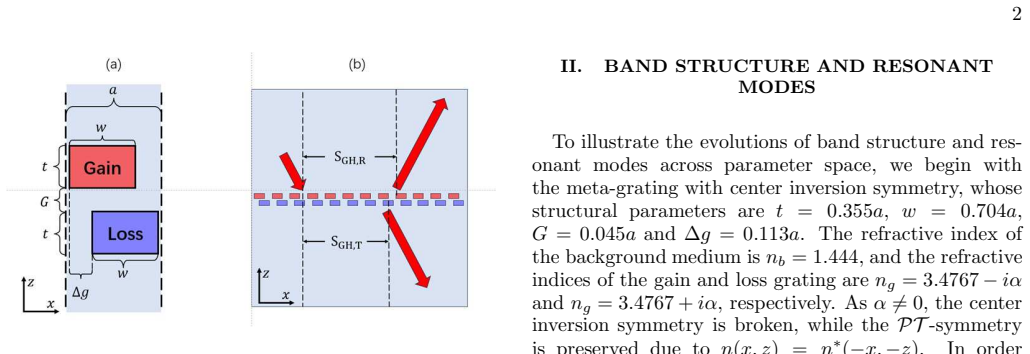
Optical Goos-H$\ddot{a}$nchen shifts can be enhanced by resonant mode with high quality factor, such as quasi-bound states in the continuum in meta-grating. Coexistence of gain and loss in bilayer meta-grating with parity-time symmetry could transfer bound states in the continuum into lasing threshold modes with real resonant frequencies and non-zero far-field radiation. When the incident frequency approaches the resonant frequency of a lasing threshold mode, the reflected and transmitted beams are strongly amplified and undergo large Goos-H$\ddot{a}$nchen shifts. The amplitude of the Goos-H$\ddot{a}$nchen shifts, including the magnitude and sign, are proportional to the reciprocal of the imaginary part of the resonant frequencies. As the incident frequency scan across the resonant frequency of a lasing threshold mode, the imaginary part flip sign, so that the Goos-H$\ddot{a}$nchen shifts diverge as well as flip sign. Simulations of optical responses under incident of Gaussian beams with finite beam width exhibit the sign flipping of the Goos-H$\ddot{a}$nchen shift with large magnitude by fine tuning the incident frequency across the resonant frequency of a lasing threshold mode.
Camera-based quantum imaging detects spatially correlated photon pairs from spontaneous parametric down-conversion (SPDC). Conventional covariance methods typically require tens of thousands of frames to extract weak correlations from noise. While thick crystals can increase photon flux, they generate photon pairs from multiple emission positions within the crystal, producing multiple correlation centers with complex pairing geometries. In addition, conventional covariance methods assume a single pre-selected correlation center and cannot fully exploit these distributed correlations. We demonstrate that kurtosis difference, a fourth-order statistic measuring tail similarity, effectively discriminates correlated pixel pairs even when correlation coefficients remain low. Weighting covariance by an exponential function of absolute kurtosis difference can select symmetric pixels while preserving true coincidences. This kurtosis weighting automatically identifies correlated pairs within a broad search region and accommodates multiple pairing geometries without requiring precise correlation center calibration. At 5000 frames, our method yields a contrast-to-noise ratio (CNR) exceeding 7, whereas standard covariance remains below 2. Compared with standard covariance, the method reduces the acquisition time by 40-fold and could enable practical quantum imaging in sparse correlated-photon regimes.
The principle of causality has long been mathematically associated with the frameworks of Titchmarsh's theorem and the Kramers--Kronig relations. While these relations arise naturally in the context of temporal system responses -- ensuring that the effect of an applied field or force does not precede its cause -- they have recently been shown to provide a pathway for realizing one-sided system responses in a variety of physical settings. In particular, one-sided frequency responses and one-sided wavevector responses have been successfully studied and engineered, enabling the prospect of numerous applications based on the complete suppression of backward scattering. In this work, we present a brief review of causality and its connection to these Fourier-domain analogs. We then turn our attention to the only remaining setting in which a one-sided system response may be explored: one-sided spatial nonlocality. We specifically investigate the possibility of realizing a one-sided spatial response within the widely used framework of nonlocal flat optics, where we uncover fundamental obstacles that hinder the achievement of such functionality in these structures. This, in turn, raises an intriguing open question: is one-sided spatial nonlocal response merely incompatible with the specific platform of nonlocal flat optics, or is it fundamentally forbidden by nature itself?
Hyperspectral fluorescence microscopy enables important biological and clinical applications, but conventional systems are bulky or require scanning, limiting temporal resolution and throughput. We introduce a computational snapshot hyperspectral microscope that uses compressed sensing to achieve higher spatial-spectral resolution than traditional snapshot systems. Our device is compact (~15 cm x 6 cm x 6 cm) and easily attaches to standard fluorescence microscopes. We benchmark our system against existing snapshot methods through simulations to evaluate its spatial and spectral performance. Experimental imaging of fluorescent beads, labeled cells, and lanthanide hydrogel beads demonstrates a practical, high-throughput solution for hyperspectral microscopy in biological and clinical applications.
This work is about the shape optimization of long tubular objects in electromagnetic chirality (em-chirality). Em-chirality is a property of individual scattering objects or metamaterials describing their qualitatively different response to electromagnetic waves of opposite polarization handedness. The optimization is performed by a Newton-type iterative maximization of a regularized em-chirality measure with respect to the scatterer's shape. In this context, the differentiability of the object-to-far field operator map is analyzed rigorously, thereby extending previously known results on the domain derivative to the far field operator setting. Our optimal design algorithm is based on the electric field integral equation, which is employed both for the evaluation of scattered fields and for the computation of the domain derivative. Our implementation is done via the boundary element method. The numerical examples presented in this work yield strongly em-chiral scattering objects capable of exciting higher-order modes beyond the dipole regime with nonintuitive shapes that expand the known set of highly em-chiral scattering objects.
In this paper, using a simplified model of the xenon atom, we numerically study the possibilities of efficient generation of coherent pulses in the XUV range through the resonant interaction of atoms with a moderate-intensity laser field, leading to the generation of its harmonics. We demonstrate the interplay of two systems of resonances affecting the harmonic generation efficiency. One is the channel-closing resonances, which arise when the sum of ionization and ponderomotive energies is equal to the energy of an integer number of laser photons. The second is the bound-bound transition resonances corresponding to an integer number of photons with a total energy equal to the energy gap between the Stark-shifted ground and excited states. The harmonic yields in the range of laser parameter values where both resonances occur exhibit a peculiar behavior, namely, near the intersection point of the resonances, a pronounced dip is observed, while the regions of increased generation efficiency due to the combined contribution of both enhancement mechanisms are slightly shifted from this point. We argue that this behavior, which is somewhat similar to the well-known phenomenon of 'avoided crossings', is associated with the formation of Fano-type resonant spectral lines. In contrast to 'avoided crossing' phenomena known in molecular physics, in the found interplay the contribution of one resonance system can be controlled, which is useful for experiments.
Photonic waveguide design often requires repeated full-vector Maxwell eigenmode solves over wavelength, geometry, and material parameters. We present an adaptive eigenvector-continuation framework for accelerating and stabilizing these modal sweeps. The method constructs a reduced basis from selected full-order modal snapshots, solves projected Maxwell eigenproblems at new query points, reconstructs the modal fields, and monitors accuracy with a full operator residual. We demonstrate three regimes. In fixed-geometry wavelength sweeps of a strip waveguide, well-distributed snapshots reproduce the target modal branch with low residual and low effective-index error. In a multimode ridge waveguide, a shared reduced basis containing several modal families enables robust broadband mode-family tracking and residual-guided adaptive enrichment. In geometry-dependent width sweeps, the method gives accurate effective-index predictions and high field overlap, but the residual reveals moving-boundary errors caused by non-smooth changes of the discrete operator on a fixed Cartesian grid. These results show that adaptive eigenvector continuation is an operator-consistent modal emulator and diagnostic tool for photonic waveguide sweeps.
Amplification squeezes biphotons while Kerr nonlinearity adds an anharmonic potential, producing collapse-revival dynamics.
abstractclick to expand
Nonlinear photonic time crystals (PTCs) can support solitons inside momentum k gaps, where the amplification of k gap modes is saturated by Kerr nonlinearity, forming spatially homogeneous but temporally localized excitations. Yet their quantum nature remains unclear. Here we quantize nonlinear k gap dynamics of PTCs and show that k gap solitons are represented by biphoton Fock ladder states. K gap amplification drives two-mode squeezing of the biphoton, while Kerr nonlinearity generates an anharmonic potential along the biphoton Fock ladder that balances this squeezing process, creating a finite biphoton number turning point and giving rise to quantum collapse and revival dynamics and nonclassical phase space interference. We further analyze how photon loss and dephasing reshape the biphoton statistics of quantized k gap solitons. Our results establish a biphoton Fock space description of k gap soliton quantization and provide a framework for studying quantum nonlinear excitations and entangled light generation in photonic time crystals.
Quantum entanglement is one of the most intriguing features of quantum mechanics. To investigate the entanglement between two excitons in a biexciton, an experimental technique called density matrix spectroscopy (DMS) has recently been developed. DMS combines stimulated emission tomography and pump-probe techniques to obtain a time-resolved density matrix of the polarization state of a photon pair emitted from the biexciton. The reconstructed density matrix is expected to encode information about the biexciton state and its entanglement dynamics, but the precise nature of this connection has remained unclear. In this paper, we derive an analytical relationship between the density matrix obtained by DMS and the biexciton state. In addition, we perform numerical simulations to compare the entanglement dynamics obtained by DMS with the biexciton's entanglement dynamics in a two-dimensional electron-hole system using an extended ionic Hubbard model. We find that DMS can partially capture the entanglement in the biexciton, in particular, the dynamics of the difference $S_{\mathrm{bi}} - S_k$, where $S_{\mathrm{bi}}$ is the entanglement entropy of the biexciton and $S_k$ is the entanglement in terms of the wavevectors of the excitons that constitute the biexciton. These results demonstrate the validity of DMS for obtaining information about the entanglement dynamics of the biexciton.
A subwavelength quantum-photonic circuit element should simultaneously generate nonclassical light, suppress plasmonic loss, and remain dynamically tunable. We show that an orthogonal plasmonic nanorod dimer can satisfy all three requirements. A phase-locked control polarization induces plasmonic refractive-index enhancement, driving the probe response toward a near-zero-extinction regime while simultaneously tuning the local second-harmonic parametric interaction. The resulting nonlinear plasmonic source operates in an absorption-suppressed regime and enables all-optical control of quantum correlations. We demonstrate switchable logarithmic negativity and single-mode nonclassicality, establishing a route toward actively tunable quantum-plasmonic circuit elements operating well below the diffraction limit.
We demonstrate that light propagation in reciprocal chiral photonic media admits a unified description in terms of an emergent Dirac structure in helicity space. Starting from Maxwell's equations, we reformulate the electromagnetic field as a four-component spinor governed by an effective non-Hermitian optical Dirac equation. In this representation, the magnetoelectric response of the chiral medium appears as a helicity-dependent background that modifies the spectrum and eigenmodes, while the breaking of the spin-degenerate condition generates the intrinsic spin-orbit coupling between helicity and orbital degrees of freedom. After projection onto the positive-frequency sector, the theory reduces to an exact two-level helicity-orbital model. This model is found to have an analytical solution and describes coherent Rabi-like oscillations between spin-orbit-coupled vector modes. Chirality controls the helicity splitting and detuning, whereas the electromagnetic mismatch of the medium determines the coupling strength responsible for oscillatory spin-orbit conversion. The resulting dynamics is constrained by exact conservation of the total angular momentum, leading to reversible conversion between spin and orbital angular momentum with well-defined selection rules. Our work establishes an optical Dirac framework for structured light in chiral media, and provides experimentally accessible predictions for chirality-controlled oscillations, polarization dynamics, and orbital angular momentum conversion in structured optical fields.
We demonstrate all-optical control of birefringence in a cold atomic cloud of ytterbium. By optically dressing the excited $^{3}\mathrm{P}_1$ state via an off-resonant coupling to the $^{3}\mathrm{D}_1$ level, we induce polarization-dependent light shifts of the Zeeman sublevels, resulting in a tunable polarization-dependent refractive index. For a circularly polarized dressing beam, we observe a rotation of the probe linear polarization, characteristic of the Faraday effect, in the absence of any magnetic field. In addition, for a linearly polarized dressing beam, the probe acquires ellipticity without rotation, corresponding to linear birefringence. More generally, the polarization of the dressing beam controls the axis of rotation of the probe polarization on the Poincar\'e sphere. Our results establish cold atoms as a versatile platform for engineering and controlling light-induced birefringence and open new perspectives for the fast and reconfigurable control of optical response of resonant media.
Higher-order Laguerre-Gaussian (LG) laser modes have been proposed to reduce test-mass thermal noise in laser interferometric gravitational-wave detectors, owing to their more homogeneous intensity profiles compared to the currently employed fundamental Gaussian beam. However, LG beams such as the LG$_{3,3}$ mode suffer significant beam quality degradation in Fabry-Perot arm cavities in GW detectors with realistic state-of-the-art mirror surface figure errors, due to scattering into degenerate modes of the same order, which are resonantly enhanced by shared cavity resonance conditions. In this work, we investigate an alternative ''donut-shaped'' LG$_{0,\ell}$-like mode, specifically the LG$_{0,6}$ mode, and demonstrate strategies to improve its performance. These include the introduction of a tailored circular mirror mask with anti-reflective coating in the central region, which selectively increases the losses of parasitic degenerate modes while minimally impacting the LG$_{0,6}$ mode due to its limited overlap with the masked area. We further assess the marginal benefits of anticipated improvements in mirror surface figure errors and the potential reduction of cavity finesse. We demonstrate that these strategies can reduce the average contrast defect by more than two orders of magnitude and lower the mode loss by nearly a factor of five, achieving performance at or below the typical values observed in current detectors. This work opens up new research and development pathways for employing LG$_{0,\ell}$-type modes that achieve significant thermal noise reduction while maintaining beam quality and optical performance comparable to current gravitational-wave interferometers.
Encoding spatial data into comb signatures plus dual-comb readout recovers images with >0.9 correlation at 2.5 MHz frame rates.
abstractclick to expand
Multimode fibers (MMFs) offer a compact platform for imaging, sensing, and information transport, but their practical deployment is hindered by sensitivity to fiber perturbations, which alter modal coupling and invalidate conventional speckle-based calibrations. Here, we demonstrate perturbation-resilient image transport through MMFs by combining image-to-spectrum encoding with dual-comb spectroscopy. Two-dimensional images are converted into comb-line-resolved spectral signatures before fiber transmission, allowing spatial information to be carried in the spectral domain rather than in the output speckle field. After propagation, dual-comb heterodyne detection maps the encoded spectrum into the radio-frequency domain, enabling massively parallel spectral readout with a single photodetector. Neural-network-assisted compressive reconstruction further enables high-fidelity imaging from sparse, noisy, and spectrally aliased measurements. Our approach achieves Pearson correlation coefficients exceeding 0.9 under strong fiber perturbations and supports frame rates up to 2.5 MHz, allowing the observation of transient switching dynamics in a digital micromirror device. These results establish a powerful tool for robust, real-time image transport through flexible MMFs, with potential applications in remote sensing and fiber-based optical instrumentation.
Interferometric sensors are ubiquitous in precision metrology, yet their performance is fundamentally limited by environmental noise and thermal drift. To achieve maximum sensitivity, these systems must be actively stabilized at the quadrature point of the interference fringe. Commercial stabilization solutions, typically based on analog lock-in amplifiers or FPGA architectures, are often prohibitively expensive and do not not offer the flexibility needed for custom experimental setups. In this work, we present an open-source, compact and low-cost digital stabilization system built upon the dual-core Arduino Giga R1 microcontroller. The system features a custom analog front-end with programmable gain amplifiers (PGAs) and active signal conditioning, enabling direct integration with standard amplified photodiodes. We implement a firmware-based digital lock-in amplifier running at a 100 kHz sampling rate, which performs real-time demodulation and PID feedback control without the latency bottlenecks of PC-based loops. Experimental characterization demonstrates that the system effectively suppresses long-term thermal drift and actively rejects external perturbations. The resulting device provides a standalone, Arduino-based alternative for laser frequency stabilization and interferometric control in educational and research laboratories.
Metasurfaces often require complex lithography for dynamic optical control. To overcome this, we utilize a lithography-free, non-Hermitian planar metastack comprising a distributed Bragg reflector and a vanadium dioxide (VO2) thin film. By virtue of temperature and thermal hysteresis as an active synthetic dimension and exploiting the VO2 insulator-to-metal transition, we actively tune topological interface states to achieve polarization-sensitive spectral control. Notably, our system hosts path-dependent exceptional points (EPs); the intermediate hysteretic states generate a continuum of hot and cold EP pairs that ultimately converge into a single, degenerate EP. Furthermore, we experimentally observe wide-range dynamic optical control, comprising reversible 8% spectral shifts with near-unity reflectance modulation, alongside potential for ultrafast dynamics. Ultimately, our CMOS-compatible design provides a scalable, simple platform for active and topological photonics.
Self-injection locking (SIL) of a diode laser to a high quality-factor microresonator has recently become increasingly important in hybrid integrated photonics, providing access to compact sub-Hz linewidth lasers. It was also shown to facilitate the access to dissipative Kerr solitons - the key to a low-noise coherent frequency comb on a photonic chip. However, the existence and stability ranges of SIL soliton states in experimentally controlled parameters are still not fully understood. Here we study the bifurcation structure of solutions in a model of soliton SIL in the weak-backscattering limit. We show that SIL produces soliton-number-dependent existence ranges of multi-soliton solutions in free-laser detuning and feedback phase parameters. We identify exclusive single-soliton existence regions and demonstrate dynamical access to single solitons in this region by direct numerical simulations using prescribed parameter sweeps.
Single-pass femtosecond measurements confirm potential for mid-IR ultrafast pulse amplification.
abstractclick to expand
The broadband gain characteristics of Co:MgF$_2$ were investigated to assess its potential as a gain medium for ultrashort-pulse amplification around the 2 $\mu$m spectral region. Single-pass gain measurements performed using femtosecond seed pulses revealed broadband amplification in the 1.5-2.4 $\mu$m region. The temporal dynamics and spectra of the gain were experimentally characterized and utilized for numerical simulations to assess the feasibility of Co:MgF$_2$ as a broadband gain medium for ultrashort pulses. The results indicate its potential for broadband amplification in future short-wave infrared to mid-infrared ultrafast laser systems, particularly when combined with coherent waveform synthesis or post-compression techniques.
Infrared detection and visualization are essential for augmenting human perception across diverse fields, ranging from night vision to industrial inspection and bio-imaging. Conventional infrared cameras are often hindered by high cost, bulky architecture, and complex fabrication requirements. Upconversion sensing systems offer a pixel-free and cost-effective alternative solution by upconverting infrared photons into visible-light signals. However, existing upconversion systems suffer from limitations such as high operating voltages, low quantum efficiency, which prevent their applications in photon-starved environments. Here, we report self-evolving infrared-to-visible upconversion with single-pixel detection (SIVIS) that enables real-time upconverted visualization under photon-starved conditions by integrating self-evolving projection with single-pixel sensing. SIVIS iteratively optimizes illumination patterns with a digital micromirror device based on real-time feedback from a single-pixel infrared detector. This self-evolving process enables the autonomous reconstruction of the target's geometric profile. Simultaneously, it projects a co-modulated visible beam onto the object itself or an adjacent screen, rendering the infrared target directly perceptible to the naked eye in real-time. SIVIS achieves sensing and projection without latency under an ultra-low infrared detection limit of 0.11 photons per pixel per frame (sub-pW -cm2 level) benefited from the high sensitivity. Furthermore, we also validate SIVIS to decrypt infrared-encoded anti-counterfeiting features and visualize vascular-like structures embedded within biological tissues. This photon-feedback-driven artificial vision framework offers a scalable and adaptive solution for ultrasensitive infrared vision, opening promising avenues for night vision, biomedical imaging, and sensing under extreme low-light conditions.
Near-infrared (NIR) imaging has emerged as an important technology for night vision, remote sensing, and biological imaging, yet conventional array-detector-based systems are often limited by insufficient sensitivity, high cost, and substantial dark noise. Single-pixel imaging (SPI) offers an attractive alternative, enabling single-photon-level NIR imaging by using a cost-effective single-element detector. Nevertheless, SPI remains restricted by photon noise, leading to degraded imaging quality and limited frame rate under extremely low photon flux conditions. Here, we present a Hessian sparsity-constrained self-supervised network (HS3N) for single-photon NIR SPI, which can suppress noise and enable high-fidelity and real-time imaging under ultra-low illumination conditions. The HS3N integrates the physical forward model of SPI with an untrained neural network regularized by both sparsity priors and Hessian-based structural constraints, enabling effective noise suppression while preserving structural fidelity and continuity. Both simulated and experimental results demonstrate that HS3N enables high-fidelity reconstructions under ultra-low NIR photon levels down to ~0.01 photons per pixel. Furthermore, we demonstrate its dynamic capability by monitoring the dynamic evolution and detachment of infrared-absorbing droplets, at a frame rate of ~20 Hz under ~0.19 photons per pixel, highlighting its potential for high-sensitivity infrared inspection. The proposed reconstruction framework paves the way for practical NIR imaging in extreme low light conditions, which can be extended to visible, mid-infrared or terahertz imaging, offering broad potential for photon-efficient sensing across a wide spectral range.
We theoretically investigate the coherent manipulation of biphoton generation via spontaneous four-wave mixing in a cavity-QED system with a single atom. The atom is driven by pumping, coupling, and driving fields, and the generation of the Stokes and anti-Stokes photons are enhanced by two cavities. By solving the master equation in the steady state, we analyze the spectral brightness, as well as the degree of the auto-correlation and cross-correlation. Our results show that when the pumping and driving fields are in two-photon resonance, the dark state established between the ground and Rydberg states. efficiently enhances the controllability of the driving field over the biphoton generation and the quantum statistics. In contrast, under large two-photon detuning, the control capability of the driving field is significantly reduced. The coupling field, which directly relates to the electromagnetically induced transparency, modifies the linewidth of the biphoton, while the atom-cavity coupling strength only changes the brightness without affecting the linewidth.
Microresonator Kerr solitons are promising candidates for the realization of miniaturized on-chip optical frequency combs. For specific system parameters, these solitons are associated with oscillatory instabilities, leading to breathing dynamics characterized by periodically modulated temporal and spectral profiles. In this regime, the solitons form a frequency comb comprised of primary comb lines surrounded by sidebands separated by the breathing frequency. Here, we numerically and experimentally demonstrate that the breathing sidebands can be all-optically synchronized to a weak monochromatic laser injected into the cavity, thus providing direct control of the soliton oscillation frequency. We judiciously characterize the synchronization process, and show that it is accompanied by a strong reduction of noise in the soliton's breathing. Our results provide fundamental insights on oscillatory dissipative structures, and could enable new forms of composite optical frequency combs.
A central premise of autonomous scientific imaging is that smarter navigation, whether Bayesian, RL-based, or otherwise adaptive, is the principal lever for sample-efficient acquisition. We present evidence to the contrary in scanning transmission electron microscopy (STEM), an atomic-resolution imaging modality whose every measurement deposits damaging electron dose. We introduce STEMGym, an open-source Gymnasium benchmark of 15 physics-simulated STEM worlds spanning five materials, three difficulty levels, and four characterisation tasks, scored by the Dose-Efficiency Curve area (DEC-AUC), a single scalar capturing the information-vs-dose Pareto frontier. Across 33 agent configurations under realistic dose budgets, the dominant determinant of dose efficiency is the analyst (perception) pipeline, not the navigator: pairing a trained CNN analyst with na\"ive raster scanning raises DEC-AUC by 5.5x over a CNN-free raster baseline (0.287 vs.\ 0.052), while substituting Bayesian or adaptive finite-state-machine navigation for raster yields no statistically significant further gain. Production-tier vision-language models further underperform task-specific CNNs by {\sim}13x on crystallographic defect analysis. By decoupling perception, navigation, and planning under a unified dose budget, STEMGym reframes where ML effort should be invested in autonomous electron microscopy and provides the measurement infrastructure to test it.
Optical antennas are widely used to localize electromagnetic fields far below the diffraction limit, enabling enhanced light-matter interactions across nanophotonics. Yet the regime in which optical confinement approaches the electronic de Broglie wavelength in a solid - where the photon momentum distribution broadens sufficiently to relax optical selection rules - remains largely unexplored. Here we show that nanometric voids embedded within crystalline silicon act as such optical antennas, dramatically altering the optical response of an indirect semiconductor without the introduction of any foreign material. Using an electrically induced melt-quench process, we generate nanometric voids throughout bulk silicon, confirmed by high-resolution electron microscopy, diffraction analysis, Fourier-filtered lattice reconstruction, elemental mapping, and supported by optical and vibrational spectroscopies. The void-containing silicon exhibits intense broadband photo- and electroluminescence spectrally indistinguishable from that produced by metallic or semiconductor nanoconfiners of similar dimensions, establishing that dielectric discontinuity, not confiner composition, governs the observed momentum-assisted optical transitions. The luminescence can be repeatedly written, erased, and rewritten through alternating electrical conditioning and optical recrystallization. These findings establish nanometric voids as a previously unexplored platform for extreme optical confinement and demonstrate that photonic functionality can be embedded and reconfigured directly within bulk silicon.
This report presents experimental measurements of coupling efficiency and laser-induced damage thresholds for a polarization-maintaining (PM) fiber patchcord with integrated end caps, evaluated at 532 nm using a compact actively Q-switched DPSS laser with sub-nanosecond pulses. It also describes the development of a custom free-space coupling array through which the problem of low coupling efficiency was identified and successfully addressed. No instantaneous damage was observed at peak power densities exceeding 10 GW/cm$^2$. Sustained operation at 30 kHz was maintained over extended durations (>5 h) at peak power densities of ~13 GW/cm$^2$, while prolonged 1 kHz operation led to gradual degradation at peak power densities of ~24 GW/cm$^2$. The broader context of this work is the investigation of stimulated Raman scattering (SRS) in optical fibers for nonlinear frequency conversion. This process requires the efficient delivery of high-peak-power pulses into the fiber, which serves as the nonlinear medium. In the course of these experiments, a substantial dataset was accumulated on fiber coupling performance and damage thresholds under repeated high-intensity illumination at 532 nm. These characterization data offer practical insight into the operational limits of end-capped PM fibers in demanding pulsed laser applications.
The emergent frequency acts as a bias for transport without gradients and triggers pair-creation instabilities above a velocity threshold.
abstractclick to expand
Relative motion between interacting systems can generate emergent energy scales that are absent in isolated systems. While uniform motion can be eliminated by a Galilean transformation, relative motion between interacting systems generally cannot. In the presence of characteristic spatial structures, relative motion gives rise to a Doppler frequency scale determined by the characteristic wavevector of the excitation and the relative velocity of the system. This emergent scale provides a fundamental mechanism for driving nonequilibrium phenomena in moving systems. In particular, the emergent energy scale is determined by how the relative motion probes the spatial structure of the relevant excitation. In this tutorial, we illustrate these ideas using magnonic systems as a concrete platform. We first discuss motion-induced magnon transport between relatively moving ferromagnets, in which the Doppler frequency serves as an effective nonequilibrium bias in the perturbative regime. This mechanism produces magnon currents even in the absence of conventional driving forces such as temperature gradients or chemical potential differences. We then introduce motion-induced parametric instabilities. When the emergent scale becomes sufficiently large to resonantly create magnon pairs, the perturbative description breaks down, and the magnonic vacuum becomes unstable. Above a critical velocity threshold, spontaneous magnon-pair creation emerges, resulting in strongly enhanced transport and nonequilibrium dynamics. Connections to related phenomena, including quantum friction, Cherenkov emission, and Zeldovich superradiance, are also highlighted. The concept of an emergent energy scale provides a unifying framework for understanding transport phenomena and instabilities in quantum systems with relative motion.
We investigate the complete dynamical pathway of photon-electron interactions involved in two-photon absorption (TPA) in a silicon nanowire waveguide using three independent high-speed measurement techniques. These methods probe different stages of the process: nonlinear photon absorption, electron excitation from the valence to the conduction band, and free-carrier generation. According to the conventional model of TPA, these three processes should occur at identical rates. However, our measurements reveal significant discrepancies between them. The measured nonlinear photon absorption is more than twice the value required to account for the measured TPA transitions, indicating the presence of additional absorption pathways or nontrivial TPA dynamics. Furthermore, the number of measured TPA transitions substantially exceeds the measured free-carrier density, indicating that long-lifetime free carriers represent only a small fraction of the TPA-excited electrons, while the majority recombine rapidly back to the valence band on a timescale shorter than 13 ps. In addition, the three stages of the TPA pathway exhibit distinct saturation behaviors at different photon densities, further indicating that the TPA process in silicon is more complex than described by the conventional model. These findings provide new insight into the physical mechanisms governing TPA, suggesting the existence of multiple competing pathways for this optical transition. A major obstacle to a complete understanding of TPA is the unclear physical origin of the virtual midgap level. The potential strategies for minimizing unwanted nonlinear losses in high-speed silicon photonic circuits, as well as for exploiting TPA in high-speed optical switching and photonic signal processing are investigated.
This work is a generalization of our previous study [arXiv:2406.17944], which dealt with the coherent and incoherent combination of linearly polarized Gaussian laser beams operating in continuous-wave mode under a $2\pi$ focusing configuration. In the present work, the laser beams are focused within a solid angle that can reach $4\pi$ by using two opposing source planes, where all the lasers from both planes are focused onto the same point in the focal plane. Our results show that the focal spot area obtained with either one or two source planes remains unchanged, despite the fact that, in the two-source-plane configuration, the numerical aperture (NA) of the system is twice that of the $2\pi$ focusing scheme. However, the intensity at the focal point is four times greater than that obtained with a single source plane. In addition, the longitudinal resolution is significantly improved, yielding a focal volume smaller than $0.5 \lambda^3$ for a numerical aperture of NA = 0.895. For incoherent beam combination, the focal volume remains practically the same in both the $2\pi$ and $4\pi$ focusing configurations, while the intensity at the focal point is twice that obtained in the $2\pi$ case. Furthermore, in the incoherent configuration, we observe a depth of focus reaching up to 30,000 $\lambda$ for a system with a low numerical aperture.
A deep defogging pipeline pretrained on controlled laboratory fog and fine-tuned with domain-randomized synthetic fog applied to clear outdoor scenes generalizes across a graded sequence of out-of-distribution settings with no target-domain training, from chamber-free free-flowing fog to iPhone video recorded through an aircraft cabin window in flight, an entirely unseen sensor, scene, and optical path. This directly addresses an open transfer limitation reported for real-world binocular defogging. Two design choices support the transfer. First, a single-camera fog imager photographs a flat-panel display through an artificial-fog enclosure with a fixed 114~mm scattering path, producing 5{,}495 pixel-aligned foggy/clear pairs. Exact registration permits a paired Laplacian ratio that predicts per-image restoration quality far better than single-image proxies (Spearman $\rho = 0.632$ versus $0.399$) and supports pixel-exact $L_1$ reconstruction training that avoids adversarial hallucination. Second, the fog-chamber checkpoint is fine-tuned on Mapillary Vistas crops overlaid with on-the-fly randomized synthetic fog spanning a broad range of strengths, spatial variations, airlights, and noise conditions. On a 552-image held-out split, a uniform comparison of 30 restoration backbones places NAFNet at the top (24.33~dB~/~0.7912~SSIM), with a compact alternative within 1.29~dB at 3\% of the parameter count, and a ResNet-50 classifier confirms that the restoration preserves semantic content rather than only pixel-level structure. On unpaired aircraft-window video, NIQE decreases from a mean of 6.22 to 4.97 after fine-tuning, with temporally stable output across full-motion sequences. The same backbone, under paired supervision, also reaches 20.71~dB~/~0.683~SSIM on a non-overlapping O-HAZE/NH-HAZE split (a transferability check rather than a competitive ranking).
We study the transport of light through dense opaque anisotropic metamaterials consisting of oriented nanowires. The nanowires consist of polymer photoresist that is structured by direct laser writing (DLW) with two-photon induced polymerization, with radii between $a = 0.5$ and $1~\mu \text{m}$. Our flat samples have a thickness up to 9 layers, from $L = 3~\mu \text{m}$ to $20~\mu \text{m}$. Within each layer, the nanowires are parallel and spaced with random nearest-neighbor distances; nanowires in adjacent layers are perpendicular. The diffuse optical transmission at $\lambda = 633~$nm is as low as $T = 12 \%$, typical of optically dense, multiple scattering metamaterials, with a mean free path down to $\ell = 1.1~\mu \text{m}$, much less than the sample thickness. It is striking that the linear polarization of the input light is maintained at the output of the dense nanowire samples, and not scrambled as in dense nanosphere arrays. Moreover, the linear output polarization faithfully tracks the input polarization. We propose that the polarization is maintained in our optically thick samples, since light is predominantly transported perpendicularly to the nanowire layers. The polarization vector then lies in the nanowire plane, consisting of a linear combination of parallel and perpendicular vectors that are both conserved upon subsequent scattering. Hence, the polarization remains independent of nanowire orientation, even after multiple scattering events. We propose that anisotropic scattering samples may find practical uses in white LEDs and its applications in lighting luminaires, optical communication, and encryption systems.
This paper presents a two-dimensional method-of-moments (MoM) solver for electromagnetic scattering from infinitely long perfectly electrically conducting (PEC) cylinders. Both TMz and TEz polarizations are considered. Starting from the scalar Helmholtz equation, the electric field integral equation (EFIE) is derived for TMz scattering and the magnetic field integral equation (MFIE) is derived for TEz scattering. The induced surface current on the PEC boundary is expanded using pulse basis functions, and the boundary integral equations are discretized using point matching at the segment centers. Circular cylinders with radii $R = {\lambda}$ and $R = 2{\lambda}$ are used as validation cases because analytical series solutions are available. The MoM-computed surface currents, total near fields, scattered near fields, and field-error distributions are compared against the analytical solutions. After validation, the same solver is applied to a square PEC cylinder, for which no simple closed-form analytical solution is used. The results show strong agreement between the MoM and analytical circular-cylinder solutions and demonstrate the geometry-dependent scattering behavior of the square cylinder.
Enforcing one-way propagation via waveguide geometry turns discrete modes into a continuum with strong field localization.
abstractclick to expand
Nonreciprocal systems enable asymmetric energy transport and suppress backscattering, giving rise to unconventional wave phenomena. Here, we show that nonreciprocal cavities based on unidirectional waveguides exhibit a continuous modal spectrum, in contrast to conventional cavities with discrete eigenmodes. Using a ferrite-loaded microwave cavity as an example, we demonstrate that enforcing unidirectionality, by tailoring the waveguide geometry, drives a transition from discrete to continuous spectra, accompanied by strong spatial localization of electromagnetic fields. Our results reveal that dissipation alone fails to regularize these singular responses, highlighting the need for additional mechanisms to control localization in nonreciprocal systems.
Full-field measurement techniques such as digital image correlation and infrared thermography are prevalent in experimental solid mechanics. Digital image correlation is used to analyze surface deformation, while infrared thermography quantifies surface temperature fields. However, sophisticated procedures are necessary to express both datasets in the same Lagrangian frame, especially when analyzing non-flat surfaces. In this study, we propose an external projection-based coupling that uses the pinhole camera model to relate two-dimensional temperature data measured by infrared thermography to three-dimensional point coordinates from stereocorrelation-based digital image correlation. Unlike existing multiview approaches, we utilize two independently calibrated industrial-grade systems and augment the experimental evaluation with the pinhole camera model. The projection matrix of the camera model is calibrated using a single image of a reference object. Through this projection, temperature fields are accurately represented at material points. Our method is particularly suited for, but not restricted to, curved surfaces and straightforward to embed in existing experimental protocols, as the image registration is kept as is. Additionally, we propose using radial basis functions as a global interpolation ansatz in both space and time to compute in-plane temperature gradients and even temperature rates on curved surfaces, thereby providing an extensive and information-rich full-field dataset.
The "cathetus rule" in optics alleges that the image of an object-point, formed by reflection or refraction at a surface, lies on the perpendicular ("cathetus") from the object-point to or through the surface. The first known statement of the rule, attributed to Euclid, was for a plane or spherical mirror. The rule was extended to refraction by Ptolemy.... Kepler was universally credited with the first disproof-and-salvage of the cathetus rule until 2018, when Benedetti's priority was exposed by Goulding.
Kepler notwithstanding, the rule was reaffirmed by Tacquet for plane and spherical mirrors, except for the case in which the rays converge toward a point behind the eye; this became known as the "Barrovian case" because it troubled Barrow, in spite of his modern concept of an image. Barrow demolished the cathetus rule for the tangential image except in the paraxial limit, and Newton salvaged it for the sagittal image. The rule then seems to fade from history.
But the rule is equivalent to the assumption that the image is stigmatic and the cathetus well defined. This narrow assumption is approximately true in the first-order (paraxial, "Gaussian") analysis of lenses and mirrors; and unacknowledged applications of the ancient rule can indeed be discerned in modern expositions of that subject. Moreover, the validity of the rule for the sagittal image fills a critical gap in meridional ray-tracing through spherical surfaces: by tracing the chief ray from an off-axis object-point, then applying the cathetus rule to the successive surfaces, one can locate successive sagittal image-points on the chief ray (produced rectilinearly through surfaces as necessary), and hence assess astigmatism to leading order, without tracing any rays outside the meridional plane.
Spin-photon interfaces based on solid-state defects are key building blocks for scalable quantum networks and hybrid quantum platforms. Optimizing light-matter coupling in these systems requires precise knowledge of the optical transition dipole polarization, yet for many promising quantum emitters this quantity is hard to determine and therefore remains poorly characterized. Here, we develop a framework for reconstructing electric transition dipole polarization in spin-1/2 solid-state defects directly from ensemble spectroscopy. The approach combines the response of photoluminescence spectra to magnetic field, optical polarization, and strain. Applied to erbium ions in silicon, a particularly challenging system containing multiple crystallographic subsites, the framework identifies strain-induced shifts as the origin of asymmetric ensemble spectra and enables simultaneous determination of the optical dipole polarization and strain-orbital coupling tensor. The resulting model predicts how cavity-ion coupling depends on crystallographic orientation and magnetic-field direction, which we verify using single erbium ions coupled to a nanophotonic cavity. Together, these results establish a broadly applicable route for extracting microscopic properties of solid-state quantum emitters from ensemble spectroscopy and for engineering optimized spin-photon and spin-phonon interfaces.
Temporal boundaries in time-modulated media provide a powerful route toward wave manipulation beyond conventional spatial boundaries. Here, we investigate nonlinear temporal boundaries generated by interaction quenches in a synthetic lattice with exactly solvable interacting dynamics. Unlike conventional temporal boundaries arising from abrupt changes of single-particle dispersion, the present system realizes a self-induced temporal medium in which the propagating wave packet dynamically determines its own effective dispersion and transport properties. By solving the nonlinear Schr\"odinger dynamics analytically, we show that the interaction generates an emergent wave-packet-dependent band structure and a state-dependent temporal refractive response while preserving fully controllable evolution. Based on this framework, we establish a nonlinear temporal-scattering picture and uncover phenomena including amplitude-dependent temporal reflection/refraction and nonlinear temporal birefringence. Furthermore, we demonstrate that gradient-induced Bloch oscillations suppress wave-packet diffusion and enable coherent periodic transport with exact state reconstruction. Our results extend temporal reflection and refraction from dispersion-quenched linear systems to interaction-quenched nonlinear media and provide a tractable framework for nonlinear wave manipulation in synthetic lattices.
The inherent spatial randomness and broad spectral heterogeneity of epitaxial quantum dots (QDs) -- one of the most mature classes of solid-state quantum emitters -- remains a major obstacle to their scalable deployment in integrated photonic quantum technologies. Overcoming this challenge requires deterministic fabrication strategies capable of precisely aligning nanophotonic structures with high-quality emitters, which in turn demands efficient and automated single-QD characterization. Despite substantial progress in optical measurement techniques, a platform capable of autonomous, data-efficient, and sufficiently versatile characterization of single quantum dots at the chip scale remains lacking. Here, we introduce an automated cryogenic measurement platform that combines wide-field photoluminescence imaging with vector-stage-scanning confocal spectroscopy to enable high-throughput, chip-scale targeted optical characterization of individual QDs. Using this platform, we automatically acquire photoluminescence data from thousands of GaAs/AlGaAs QDs on a single chip. We demonstrate how this extensive dataset enables identification of high-performance emitters for future deterministic device fabrication, while simultaneously revealing statistical trends across the QD ensemble. By uniting data-efficient targeted measurements with scalable automation, our platform establishes a foundation for large-scale quantum photonic integration and the high throughput characterization framework needed to accelerate materials optimization.
Scattering-matrix method works for arbitrary gain imbalance and detuning, recovering coupled-mode theory only as a limit.
abstractclick to expand
Parity-time (PT) symmetry in time-delay oscillators such as lasers and optoelectronic oscillators provides a potential route to enhanced spectral purity, including reduced phase noise and improved sidemode suppression. Existing theoretical descriptions are typically based on coupled-mode formulations derived under slowly varying envelope and near-degeneracy assumptions, which restrict their validity to weak coupling, small gain/loss contrast, and small detuning. In this work, a non-perturbative formulation of PT symmetric time-delay oscillators is developed based on a delay-difference equation and a scattering matrix representation of the coupling network. The approach treats propagation delay explicitly and does not rely on modal truncation, remaining valid for arbitrary coupling strength, gain/loss imbalance, and resonance detuning. The exact eigenvalue structure of the system is obtained in closed form, yielding a complete characterization of the unbroken and broken PT symmetric regimes as well as the associated exceptional points. A dimensionless order parameter is introduced that governs the symmetry transition over the full parameter space. It is further shown that conventional coupled-mode theory is recovered as an asymptotic limit of the exact formulation for small parameters. The results provide a unified and physically transparent framework for analysing PT symmetric delay systems beyond the weak-coupling limit, with direct implications for the design and optimisation of low-noise oscillators and photonic systems.
We develop a constructor-theoretic formulation of optical time in which delay, phase, temporal ordering, synchronization, and detector records are described as physical tasks rather than as consequences of a primitive time parameter. An optical delay is treated as an operational attribute defined by comparison and record-forming tasks, while phase becomes temporal only through a reference-dependent phase-delay equivalence relation. Within this framework, the Fisher information associated with delay estimation is interpreted as a distinguishability resource, and the Cramer-Rao bound becomes a task-impossibility statement: for a specified optical substrate, reference, detector, photon budget, bandwidth, visibility, and noise model, no constructor can estimate a delay with variance below the inverse Fisher information. We illustrate the approach using interferometric delay estimation, dispersive group-delay propagation, and double-slit diffraction, where the standard Fraunhofer pattern is recovered as a record distribution generated by a phase-delay task. The framework does not replace Maxwellian optics; it reorganizes optical dynamics as a means of determining which temporal tasks are physically possible or impossible.