Instrumentation and Detectors for research in natural science, including optical, molecular, atomic, nuclear and particle physics instrumentation and the associated electronics, services, infrastructure and control equipment.
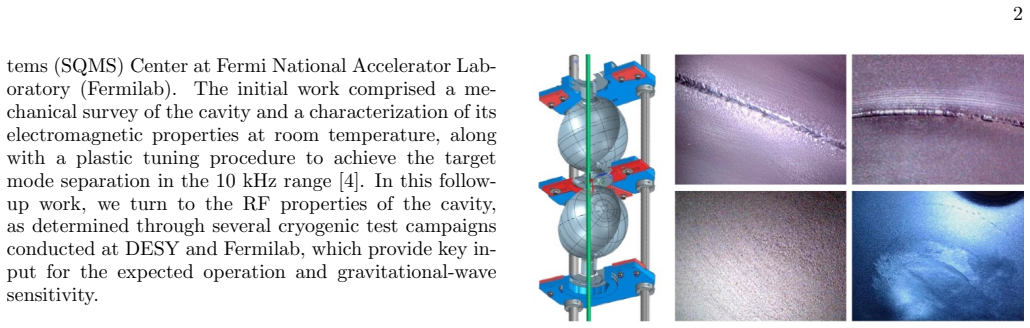
Superconducting radio-frequency (SRF) cavities are promising resonant sensors for gravitational-wave detection in the kHz-MHz frequency range. We report the cryogenic RF characterization of a prototype superconducting niobium cavity with an unconventional geometry designed for narrow electromagnetic mode separation. Following an adapted surface preparation procedure, cryogenic tests were performed at Fermilab and DESY at temperatures down to 2\,K. Mechanical tuning at room temperature achieved a mode splitting of approximately 11\,kHz at cryogenic temperature. High electromagnetic quality factors consistent with previous prototype cavities were measured. The measurements further revealed phase transfer characteristics relevant for stable low-level RF control as well as indications of mode coupling potentially caused by one-point multipacting. In addition, first cryogenic measurements of the mechanical eigenmodes yielded mechanical quality factors significantly below commonly assumed theoretical values. These results demonstrate the successful application of established SRF preparation and characterization techniques to a non-standard resonator geometry and provide important experimental input for the development of future SRF-based gravitational-wave detectors.
We present APEIRON, a distributed heterogeneous processing framework comprising both hardware architecture and software stack for multi-FPGA systems. Targeting smart trigger and data acquisition (TDAQ) systems in high energy physics, APEIRON spans the full software hierarchy: from low-level device drivers to a high-level dataflow programming model based on High-Level Synthesis. We describe the framework design, its core communication infrastructure, and a particle identification application for the NA62 experiment as a representative physics use case.
The mixing between flavor and mass eigenstates of active neutrinos is described by a $3\times3$ unitary matrix. However, the presence of additional heavy sterile neutrino states can lead to a non-unitary neutrino mixing scenario. Atmospheric neutrinos, with their wide range of baselines and energies, provide an excellent probe of such effects. In particular, Earth matter effects in neutrino oscillations play an important role, as the neutral-current potential contributes non-trivially in the presence of non-unitarity. In this work, we use 8 years of publicly available atmospheric neutrino data of IceCube DeepCore to probe this non-unitary neutrino mixing scenario. This high-purity $\nu_\mu$ CC sample provides strong sensitivity, especially to the non-unitary parameters appearing at leading order in the $\nu_\mu \rightarrow \nu_\mu$ channel. The data sample is found to be consistent with the standard unitary mixing framework with no significant deviation. Using this data sample, we place the most stringent bound to date of $\alpha_{33} > -0.027$ at 90% CL, while the other non-unitary parameters are constrained at competitive levels.
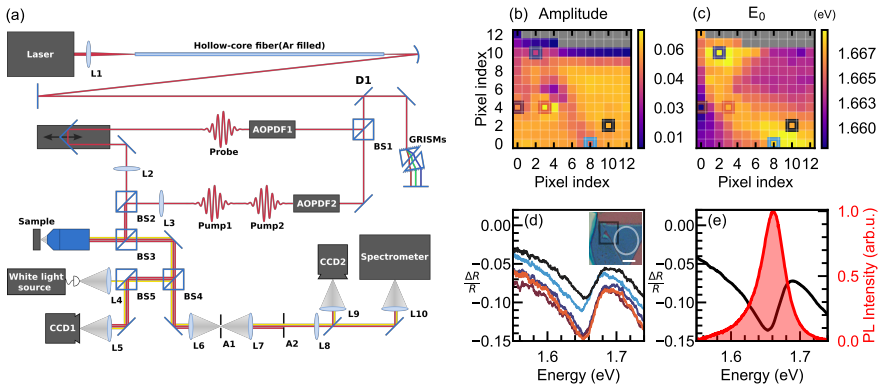
We introduce a setup for coherent two-dimensional electronic spectroscopy in the pump-probe reflection geometry that is integrated with a confocal back focal plane imaging microscope. The angle-resolved capability is utilized to control pump and probe wavevectors, while real space imaging enables co-localization of the collection spots for linear and ultrafast experiments. Compression of pulses down to 20 fs is achieved. We demonstrate the capabilities of this approach on an exfoliated WSe$_2$ monolayer on Si/SiO$_2$. The setup is suited to investigate excitons and exciton-polaritons in 2D Materials and their heterostructures.
In-flight and Raspberry Pi tests show variations matching geomagnetic shielding using only built-in phone cameras.
abstractclick to expand
Cosmic rays are ubiquitous; however, their direct observation traditionally demands specialized, high-cost hardware and significant technical expertise, presenting a high barrier for non-specialist environments such as schools and community settings. We present SORAMAME, a smartphone and tablet application that lowers this barrier by repurposing built-in CMOS image sensors as particle detectors. The system enables real-time recording and visualization of particle-like events without additional hardware, integrating on-device extraction - calibration, noise filtering, and track-candidate detection - with cloud-based data management.
By simplifying the detection process, SORAMAME facilitates widespread adoption across diverse user groups, fostering an environment where educational outreach can transition into large-scale data collection. This scalability is particularly significant given the unprecedented number of internet-connected consumer devices equipped with silicon CMOS image sensors. Despite the inherent constraints of consumer-grade sensors, our in-flight validation and Raspberry Pi-based measurements successfully captured altitude and latitude-dependent variations in particle flux consistent with geomagnetic shielding. These results suggest that lowering barriers to participation in observation not only serves educational purposes but also has the potential to contribute to future scientific breakthroughs through the development of global citizen science.
A template log-likelihood classifier using nanosecond observables adds information missing from morphology-based neural networks.
abstractclick to expand
The IceCube Neutrino Observatory, a cubic-kilometer detector at the South Pole, identifies neutrino flavor through event morphology. Sparse photon detection makes this classification particularly challenging in the 5--100~GeV regime, the energy range relevant for oscillation measurements and searches for physics beyond the Standard Model. We introduce WavePID, a template-based log-likelihood-ratio classifier that exploits nanosecond-scale timing on individual detector modules through three observables: the distance to the reconstructed vertex, the early-charge fraction, and the module-to-module time difference. Evaluated on a cascade-enriched sample selected by a state-of-the-art graph neural network, WavePID improves both cascade purity and classification performance over the neural network alone. This demonstrates that per-module pulse timing carries flavor-identification information complementary to morphology-based classifiers, opening a new physics-motivated observable for low-energy neutrino reconstruction. Geant4 simulations associate this signal with differences in Cherenkov emission geometry between muon tracks and electromagnetic showers. These results motivate exploiting nanosecond-scale pulse timing in future low-energy classifiers and in detector designs with improved per-module timing in next-generation neutrino telescopes.
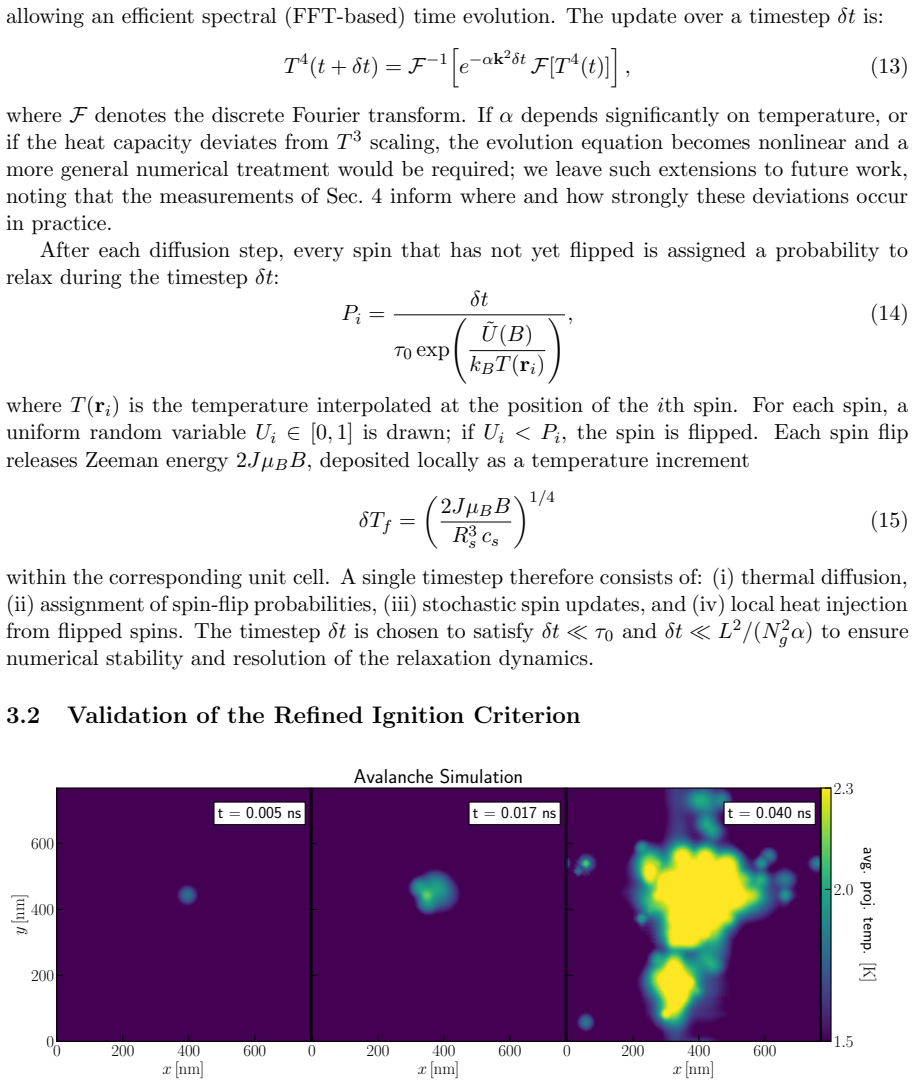
We revisit the sensitivity of Single Molecule Magnet (SMM) crystals as detectors for low-mass dark matter. In previous work, we established the concept of the ``magnetic bubble chamber'', where energy deposited by dark matter triggers a magnetic avalanche in a metastable crystal. The original sensitivity estimates relied on a conservative criterion requiring the spin relaxation time to be strictly shorter than the thermal diffusion time. Here, we demonstrate that this criterion effectively ignores the stochastic nature of spin relaxation. We derive a refined analytic estimate which accounts for the fraction of spins that relax even when diffusion is fast. We show that the Zeeman energy released by this fraction contributes to local heating, significantly lowering the energy threshold for avalanche formation. We present simulation results confirming this effect and report on experimental verification of the assumed low-temperature thermal properties of two representative SMM crystals, Mn$_{12}$-acetate and Mn$_{32}$. Together, these efforts extend this pathfinder program toward the realization of SMM-based detectors with controlled material properties and enhanced dark matter sensitivity.
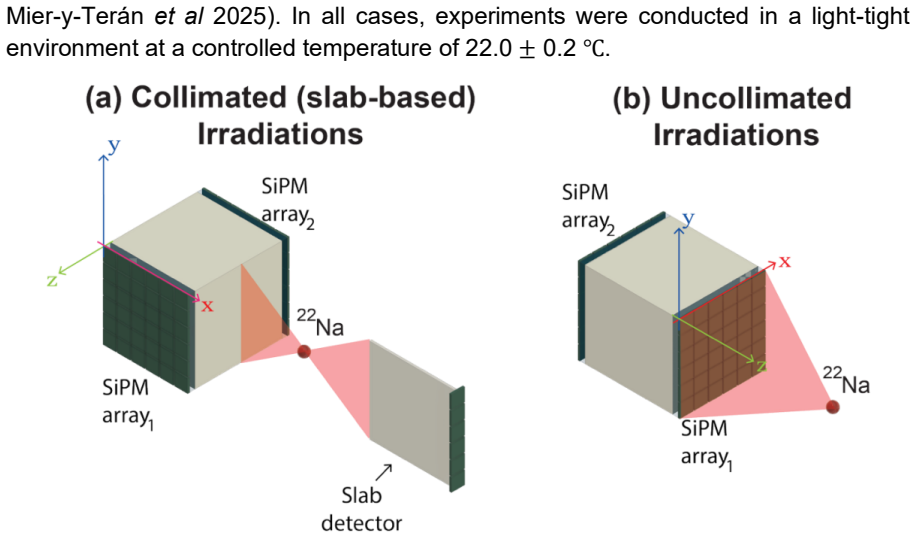
Objective. Gold-standard depth-of-interaction (DOI) calibration using collimated gamma-ray irradiation is time-consuming and impractical for system-level calibration of detector arrays. This work investigates an efficient DOI and energy calibration method for detector panels using uncollimated irradiation, with gamma rays incident nearly parallel to the crystal depth direction. Approach. The 511-keV photopeak location in a dual-ended readout PET detector block was evaluated as a function of crystal depth using collimated and uncollimated $^{22}$Na irradiation. A $4\times4$ dual-ended readout PET detector panel was then assembled. Three detector blocks were calibrated using the gold-standard method, and two uncollimated-irradiation DOI calibration approaches--a physics-informed model and a multilayer perceptron (MLP)--were compared against it. Finally, the full panel was calibrated for DOI and energy using the MLP-based approach. Main Results. The median relative RMSE between second-order polynomial fits from collimated and uncollimated irradiation was 1%, showing that uncollimated irradiation can provide reliable estimates when accurate DOI calibration parameters are available. Compared with gold-standard DOI calibration, the physics-informed and MLP-based approaches achieved RMSEs of 0.38-0.58 mm and 0.36-0.61 mm, respectively. The MLP-based approach provided better DOI resolution estimates and was therefore used for full-panel calibration. After saturation correction, the panel achieved a mean energy resolution of 15.6% and a DOI resolution of 2.0 mm. Significance. The proposed MLP-based calibration requires only a single uniform 511-keV irradiation, making it simple to implement and suitable for in situ calibration of DOI-capable PET detector arrays.
High Energy Physics experiments at flagship colliders produce and process some of the biggest datasets on Earth, with the current generation of flagship experiments at the Large Hadron Collider producing more than a tenth of the world's total internet traffic every second. Moreover the quantities of data produced have increased exponentially over the past decades and this trend shows no sign of slowing down. In parallel, the use of picosecond timing is becoming more common in HEP detectors, enabling qualitatively new approaches to real-time processing and selections. I review the planned introduction of precision timing information into the upcoming upgrades of the CMS, ATLAS, and LHCb experiments. I discuss the ways in which the combination of timing and networking technology may enable future detectors to be designed as triggereless from the ground up, and reflect on the physics benefits of such a paradigm shift for the field.
Accurate 3D localization of radiation interactions in scintillation detectors is essential for nuclear and particle physics, safeguards, and medical imaging, but remains difficult in light-starved regimes with limited photon statistics. We present PRISM, a multifocal plenoptic imaging system designed for millimeter-scale 3D position reconstruction in a single-volume scintillator. PRISM uses a multifocal microlens array with diverse focal lengths and high effective numerical aperture to balance photon collection with spatial and depth encoding. A Cram'er--Rao lower bound analysis shows that the multifocal design improves axial sensitivity over conventional unifocal plenoptic systems under photon-limited conditions. We build a prototype system, calibrate its optical response with a tunable light source, and form photon-limited measurements with $\mathcal{O}(100)$ detected photons. For sparse single-vertex events, we reconstruct interaction locations using an Alternating Descent Conditional Gradient-inspired algorithm and demonstrate an average 3D localization error of approximately 1 mm. We also provide an initial evaluation of double-vertex events, showing that localization improves as the axial separation between interactions increases. These results demonstrate that multifocal plenoptic imaging can mitigate the traditional trade-off between light collection and spatial resolution, providing a photon-efficient approach to 3D reconstruction in scintillation detectors and a foundation for future multi-scattering event reconstruction.
TD-Link is a custom optical communication architecture that combines high-throughput data readout and sub-nanosecond timing synchronization over a single optical fiber for large-scale detector systems. The protocol adopts a multidrop daisy-chain ring topology connecting a Data Concentrator to up to sixteen FERS front-end boards per link, with up to eight independent links per concentrator. Operating at 3.125~Gb/s, TD-Link carries data, synchronization, and control traffic within the same serial stream through a token-based streaming protocol that minimizes per-hop latency and supports on-the-fly payload fragmentation. Transmitter lane alignment on the concentrator is achieved by exploiting the half-full condition of the multi-gigabit transceiver elastic buffer as a one-bit phase detector: a firmware finite-state machine iteratively adjusts the transmit phase interpolator until the FIFO write-to-read pointer difference reaches half-depth, locking each lane to a deterministic phase condition. A Digital Dual Mixer Time Difference (DDMTD) circuit is employed for inter-concentrator synchronization, measuring and compensating the phase offset between the recovered transceiver clock and the FPGA fabric reference clock. On the FERS boards, the recovered clock is cleaned by an external zero-delay PLL and retransmitted downstream, preserving phase coherence along the daisy chain. Experimental validation with CERN PicoTDC-equipped FERS boards demonstrates a board-to-board synchronization sigma of 7~ps for boards sharing a coaxial reference clock and below 28~ps for boards on independent concentrators. The results are stable across power cycles, confirming the robustness of the alignment strategy.
We present a real-time hardware implementation of a versatile detector emulator capable of reproducing realistic silicon photomultiplier signals. Our approach builds upon the open-source SimSiPM framework, originally developed to simulate the microscopic response of silicon photomultipliers, including photon detection efficiency, optical crosstalk, afterpulsing, and dark counts. SimSiPM provides idealized photon-level data with arbitrary temporal and amplitude resolution. In contrast, our emulator, built on a field-programmable gate array, translates this fine-grained simulation into physically realizable analog signals, maintaining real-time operation and finite hardware resolution. The system receives simulated photon events either via a 10-gigabit Ethernet stream or directly from the processing system of a system-on-chip, and performs on-chip temporal quantization, dividing time into bins equal to one clock cycle. All photon hits within a bin are accumulated, and their contribution is combined through a weighted temporal averaging scheme that preserves sub-bin precision. Signal shaping is executed entirely in hardware, using parallel one-pole recursive filters that synthesize the rise and the two decay components of the response. The resulting waveform is converted to analog through dual 16-bit digital-to-analog converters operating at 2.5 gigasamples per second. This architecture generates physically accurate detector signals in real time, rather than replaying precomputed waveforms. It also generalizes beyond silicon photomultipliers, providing a flexible framework for hardware-in-the-loop testing of front-end electronics. The proposed implementation demonstrates high throughput, low latency, and minimal processor overhead.
We present the Axion Polarimetric Experiment (APE), a cavity-enhanced polarimeter designed to search for ultralight axion and axion-like-particle dark matter through a time-dependent rotation of the linear polarization of laser light. In cavity-based schemes, intracavity quarter-wave plates can restore coherent buildup of the axion-induced orthogonal polarization, but their transmissive loss limits the achievable finesse. To avoid transmissive intracavity optics, we propose a folded Fabry-Perot cavity that employs dielectric phase-shifting mirrors. At an incidence angle near $45^\circ$, these mirrors provide a reflection-phase difference $\Delta\phi \equiv \phi_s-\phi_p \simeq \pi/2$ between $s$ and $p$ polarizations and therefore act as reflective quarter-wave plates. We present the coating design, thickness optimization, and measurements of the phase shift and optical loss of the phase-shifting mirrors. Using a heterodyne polarimetric readout and an explicitly stated noise model, we derive design-level sensitivity projections for the axion-photon coupling $g_{a\gamma\gamma}$. These projections should be interpreted as target sensitivities for the proposed cavity configuration, since the full-system birefringence noise and angular-jitter coupling remain to be measured.
Five-layer cylindrical detector at 14-140 mm radii uses self-supported MAPS and low-mass aluminum readout to cut material budget.
abstractclick to expand
The vertex detector upgrade project for the Belle II experiment, based on CMOS depleted monolithic active pixel sensor technology, is planned to be carried out in conjunction with the major modification of the interaction region of the SuperKEKB collider during Long Shutdown 2 from 2032 to 2034. The MAPS sensor, named OBELIX currently under development, is derived from the successor to TJ-Monopix2, with modifications implemented to ensure compatibility with the Belle II trigger system. The new vertex detector consists of two layers of four self-supported consecutive OBELIX sensors, and three layers of discrete OBELIX sensors mounted on mechanical support structures with readout flex circuits attached to the sensors. The detector is arranged cylindrically around the beam pipe at radii ranging from 14 mm to 140 mm. The minimization of the material budget is required in order to enhance physics performance. We present an overview of the project and its latest developments, with particular emphasis on the development of low-material-budget flex circuits employing aluminum conductors.
Achieves 0.0033% noise and 40:1 extinction while switching between linear, circular, and elliptical states without breaking vacuum.
abstractclick to expand
Magneto-infrared spectroscopy under strong magnetic fields provides a powerful probe of Landau quantization and field-induced collective excitations, yet its full potential has long been constrained by the lack of in-situ polarization control, because the highly divergent infrared beam propagating through narrow light tubes undergoes multiple wall reflections, leading to severe polarization degradation. Here we report a collimated magneto-infrared spectroscopy system that integrates continuous in-situ polarimetry. The system employs incident and exit collimation chambers forming a Kepler type optical architecture, which converts the large-aperture FTIR output into a low-divergence beam and strongly suppresses multi-reflection trajectories inside long gold-plated light tubes, thereby enhancing both optical throughput and polarization fidelity. A remotely controlled polarization module, consisting of an automated linear polarizer and a switchable Fresnel rhomb positioned entirely outside the high-field region, enables continuous in-situ tuning between linear, circular, and arbitrary elliptical polarization states without thermal cycling, manual realignment, or breaking vacuum. Interchangeable compact focusing modules further support Faraday and Voigt geometries in both transmission and reflection experiments within a 50 mm magnet bore, providing efficient beam focusing and signal collection while maintaining polarization fidelity. The setup achieves a minimum root-mean-square noise of 0.0033%, an average noise of 0.0082%, and a linear polarization extinction ratio up to 40:1. We demonstrate the capability through continuous in-situ linear polarimetry and broadband circular polarimetry in the magneto-infrared spectroscopy of various single crystals. This platform establishes a robust experimental framework for in-situ polarization-resolved magneto-infrared spectroscopy.
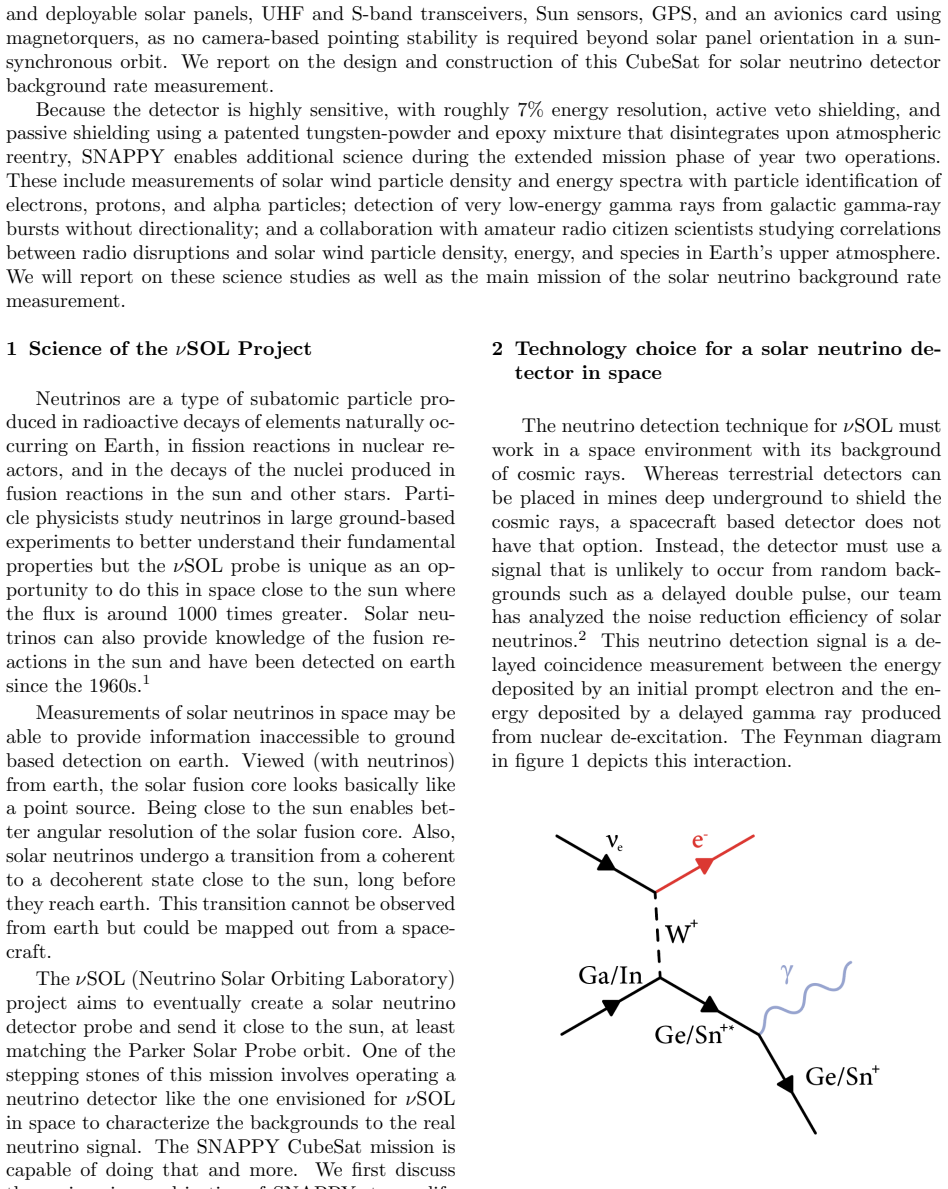
The SNAPPY CubeSat, which was launched May 3, 2026, will demonstrate and space qualify the nuSol neutrino-detection technology. The nuSol technology detects solar neutrinos using a gallium isotope which decays by emitting two particles spaced apart in time; this allows differentiating neutrino events from cosmic rays. In the NIAC Phase II project review in 2021, concept and science were determined to be feasible; however, two precursor studies were recommended before pursuing a full mission study. These studies were to characterize the true deep-space background for the detector's gallium double-pulse signal and to collect a statistically significant number of double-pulse events demonstrating that fast electronics can reliably select and analyze this signal. To test double-pulse signals in space, a NIAC Phase III funded building a 3U CubeSat carrying a 0.1-kg gallium-aluminum-gadolinium-garnet detector housed within an active veto array and shielding. Because the detector requires deep-space-like conditions, the CubeSat is designed for a polar low-Earth orbit at 450 km or higher altitude, collecting data over the Earth's poles above the Van Allen belts. The detector is highly sensitive, with roughly 7-percent energy resolution, with active veto shielding and passive shielding using a patented tungsten-powder and epoxy mixture that disintegrates upon atmospheric reentry. SNAPPY enables additional science during the extended mission phase of year two operations. These include measurements of solar wind particle density and energy spectra with particle identification of electrons, protons, and alpha particles; detection of very low-energy gamma rays from galactic gamma-ray bursts without directionality.
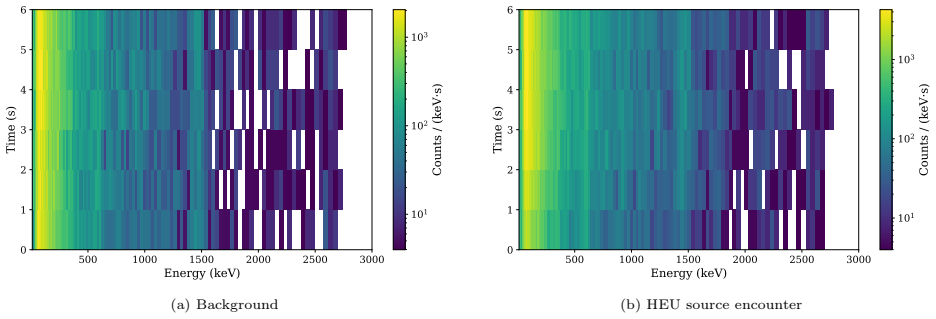
Algorithm development for radioisotope identification in mobile urban search scenarios face significant challenges from non-uniform backgrounds, momentary source encounters, and severe class imbalance between rare threat signatures and background measurements. We present a machine learning-based approach to this problem that converts list-mode gamma-ray data into two-dimensional waterfall spectrograms and applies computer vision architectures to the resulting images. Rather than treating waterfalls as conventional images, we employ a representation where consecutive time spectra can form input channels, similar to RGB channels in color images. This representation encodes both spectral and temporal information, enabling neural networks to more effectively learn patterns that distinguish source signatures from background fluctuations. We evaluate three architectures, a multilayer perceptron (MLP), convolutional neural network (CNN), and vision transformer (ViT), on the Radiological Anomaly Detection and Identification (RADAI) benchmark dataset. At a false positive rate of less than one false alarm per hour, our CNN outperforms the previous-best non-negative matrix factorization (NMF) method across all global metrics, achieving true detection, classification, and identification rates of 0.4334, 0.3965, and 0.2950 respectively, compared to 0.4151, 0.3611, and 0.2625 for NMF. At lower false positive rate constraints, the neural network approaches show comparable but ultimately lower performance than NMF, indicating opportunities for further research.
We present recent advances in fast and bright scintillators for ultrafast X-ray phase contrast imaging of dynamic materials experiments at the upgraded Advanced Photon Source (APS-U), a fourth generation synchrotron. APS-U enables hard X-ray imaging at frame rates of at least 13 MHz (corresponding to 77 ns or shorter interframe intervals), creating a new need for scintillators with faster response and higher light output than lutetium yttrium oxyorthosilicate (LYSO). For indirect imaging and diffraction with ultrafast cameras, commercial lanthanum bromide (LaBr3) and cerium bromide (CeBr3) are promising candidates. These materials exhibit decay times approximately a factor of two shorter than LYSO (around 40 ns) and lutetium oxyorthosilicate (LSO), while maintaining comparable light yield per incident X-ray photon. However, their implementation at APS-U requires addressing several challenges, including material limitations due to hygroscopicity, efficient optical coupling to imaging systems, and high quantum efficiency for conversion of scintillation light, predominantly at wavelengths below 400 nm, into detectable electronic signals. We report results from material characterization, detector integration and packaging, and beamline experiments of materials with impact. In addition, emerging scintillator classes, including perovskites and high-entropy materials, are discussed as potential alternatives for next-generation ultrafast X-ray diagnostics.
The axion represents a strong candidate for weakly interacting dark matter. To date, high sensitivity lab based experiments and astrophysical observations have ruled out a substantial part of the axion mass and photon coupling parameter space. However, a challenge remains in searching for the presence of the axion in the higher mass range 0.01-1eV corresponding approximately to axion field oscillation at THz frequencies. This work investigates via numerical simulation the feasibility of a high sensitivity, lab-based axion sensor operating in this range, based on plasmonic electric field enhancement by a nanostructured metasurface, combined with heterodyne detection and quantum sensing via nitrogen-vacancy (NV) centers in diamond. Estimates of the sensor response to anomalous electromagnetic fields resulting from axion coupling are given using Ti/Au nanopillars on LiNb at axion mass corresponding to telecommunications wavelength ($\approx$0.8eV, 196 THz). Finally, the possibility of sensing in the lower axion mass $<$10$^{-2}$ to 10$^{-1}$eV range is explored using alternative materials, with CdTe as an example.
The focal plane of the LSST Camera contains 189 individual science CCDs, arranged into 21 raft tower modules, along with 4 wavefront and 8 guider CCDs located in 4 additional corner RTMs. Altogether, the LSST Camera CCDs compose the largest focal plane ever constructed. The LSST Camera is the primary instrument of Rubin Observatory, which will begin the Legacy Survey of Space and Time in 2026. In this paper, we describe the on-sky performance of the LSST Camera CCDs, from receipt at NSF/DOE Vera C. Rubin Observatory in May 2024 to on-sky observations during the first year of operations. We discuss the process to establish functionality of several CCDs which were affected by an electrical short and faulty analog-digital converter, optimizations of readout timing in response to changes in the survey strategy, and implementation of enhanced focal plane safety measures through an active clearing mechanism on the CCDs. Finally, we discuss sensor features observed on-sky, and global performance during the first year of operations. The operations to date of the LSST Camera CCDs have demonstrated the capability of performing a wide, fast, and deep optical imaging survey of the entire southern sky at the Rubin Observatory.
Hit-level ML-based particle reconstruction methods have recently shown promising results. However, the reconstruction models are currently provided with targets that are unaware of the detector geometry and its resolution, resulting in training ambiguities. This can introduce a dependence on sample priors and reduce robustness under changes in event topology. We study the effect of a detector-aware target definition in the context of end-to-end Particle Flow reconstruction using a generic GEANT4-based detector simulation. We introduce the concept of detector-aware targets built from calorimeter showers with a hit-based merging algorithm based on cell-wise energy sharing that takes into account the spatial resolution of the detector. This includes a Particle-Flow-aware variant that preserves charged-particle consistency. Using a fixed GNN-based reconstruction model, we show that merged targets improve physics performance on a training-like sample. More importantly, models evaluated on an independent sample with different particle composition and topology show improved momentum response and resolution when trained with PF-aware merged targets. Our results show that removing experimentally non-resolvable target structure enhances not only reconstruction performance, but also improves model robustness against process-dependent variations in event topology.
Interferometric sensors are ubiquitous in precision metrology, yet their performance is fundamentally limited by environmental noise and thermal drift. To achieve maximum sensitivity, these systems must be actively stabilized at the quadrature point of the interference fringe. Commercial stabilization solutions, typically based on analog lock-in amplifiers or FPGA architectures, are often prohibitively expensive and do not not offer the flexibility needed for custom experimental setups. In this work, we present an open-source, compact and low-cost digital stabilization system built upon the dual-core Arduino Giga R1 microcontroller. The system features a custom analog front-end with programmable gain amplifiers (PGAs) and active signal conditioning, enabling direct integration with standard amplified photodiodes. We implement a firmware-based digital lock-in amplifier running at a 100 kHz sampling rate, which performs real-time demodulation and PID feedback control without the latency bottlenecks of PC-based loops. Experimental characterization demonstrates that the system effectively suppresses long-term thermal drift and actively rejects external perturbations. The resulting device provides a standalone, Arduino-based alternative for laser frequency stabilization and interferometric control in educational and research laboratories.
Highly compact and finely segmented silicon-tungsten electromagnetic calorimeters are being developed within the FCAL collaboration for applications in the LUXE experiment at DESY and future electron-positron collider facilities. These detectors combine tungsten absorber plates with thin silicon pad sensors, providing a small effective Moli\`ere radius and high spatial granularity, which are essential for resolving nearby electromagnetic showers in high-occupancy environments.
The fundamental active unit of this calorimeter concept is the Compact Silicon Sandwich (CSIS), integrating a silicon pad sensor together with signal routing, high-voltage distribution and mechanical support in a highly compact structure. The assembly of these CSIS modules is performed within a dedicated infrastructure for silicon detector integration.
A partially instrumented prototype of such a calorimeter has been tested in an electron beam with energies between 1 and 6~GeV. First results from the 2025 test beam campaign are presented, including minimum-ionizing particle calibration and preliminary event displays illustrating the shower development in the highly granular detector. These results constitute an important step towards the validation of this technology for LUXE and future collider experiments.
The Wide Field Imager (WFI), one of the two instruments on ESA's next large X-ray observatory NewAthena, is designed for imaging spectroscopy in the 0.2-15 keV range, combining a large field of view with high count-rate capability. Its focal plane is equipped with back-illuminated DEPFET (Depleted p-channel field-effect transistor) sensors that offer high radiation tolerance and provide near Fano-limited energy resolution. Achieving this performance requires an exceptionally low readout noise, with about 3 electrons ENC expected at beginning of life. Consequently, the devices are highly sensitive to radiation-induced changes in noise behavior. In this work, we investigate the impact of both total non-ionizing dose (TNID) and total ionizing dose (TID) on the relevant noise components, including their temperature dependence. A detector module containing a 64x64-pixel sensor from a flight-production wafer was irradiated with 62.4 MeV protons at the MedAustron accelerator facility in Wiener Neustadt to a total dose equivalent to 2.6 $\cdot$ 10$^9$ 10-MeV-protons/cm$^2$. The detector was fully biased and operated throughout the irradiation and subsequent measurements, maintaining the nominal operating temperature of 213 K. To study short-term annealing behavior at low temperature, a second, identical module was exposed to a comparable proton dose within a much shorter timescale by exploiting the available high beam flux. TID effects were investigated separately by irradiating another device with 17.4 keV Mo-K_alpha X-rays to a total dose of 15 Gy. We report the resulting changes in readout noise, dark current, and threshold voltage, and compare them with results from an earlier irradiation campaign using pre-flight sensors. Implications for the instrument's required operating temperature and its expected end-of-life performance are discussed.
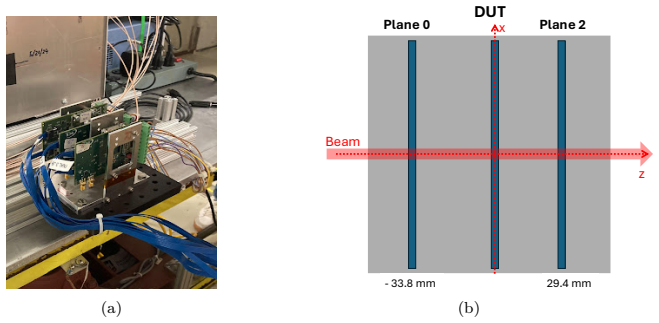
The upgrade of the ALICE experiments Inner Tracking System (ITS3) aims to replace its innermost detection layers with bent wafer-scale CMOS MAPS sensors. This study examines the performance of ALPIDE chips, currently used in the ALICE ITS2, when operated in a bent configuration under realistic experimental conditions. Proton beams with energies of 80 MeV, 120 MeV and 200 MeV were used to study proton-proton elastic scattering on a polypropylene fiber target reconstructed using two opposing arms of trackers with sensors bent to radii of 18 mm, 24 mm and 30 mm. The measured low-momentum protons provided a testbed for investigating clustering behavior in high-energy loss events, where no significant impact of bending was observed on cluster size. Additionally, alignment strategies for bent detectors were evaluated using the distance of closest approach (DCA) and opening angle between scattered proton tracks as benchmarks. The achieved resolution matches expectations from simulations, confirming the suitability of bent MAPS sensors for future high-energy and nuclear physics applications.
Cosmic-ray muon scattering has shown considerable potential for detecting nuclear materials and other dense contraband, but practical deployment remains challenging. A major difficulty arises from the coupling between material properties and muon momentum, since the broad natural momentum distribution influences the scattering angle and prevents unambiguous material identification. In this work, we propose a Coarse Momentum-Aware Domain Adaptation (CMADA) method to enable precise identification of materials. Instead of relying on high-precision momentum measurements, the proposed framework adopts coarse momentum binning combined with unsupervised domain adaptation to learn transferable scattering representations. In addition, a precision review mode based on averaging repeated samplings was proposed to further enhances identification performance. The coarse momentum binning strategy improves same-domain identification accuracy from 62.15% without momentum information to 89.52% with 5-bin momentum information, and further to 93.37% (precision review mode). Furthermore, the proposed unsupervised domain adaptation framework improves the cross-domain identification accuracy from 71.71% for the source-only baseline to 89.00% without requiring target domain labels.
An on-chip band-defining filter coupled with a superconducting photon detector is a promising technology for developing multi-band imaging cameras at millimeter and submillimeter wavelengths. In this paper, we present the design of on-chip bandpass filters based on coplanar waveguide geometry, which can be easily integrated into large-format multi-band detector arrays. A lumped element filter design is suitable not only for achieving a compact footprint but also for suppressing harmonics to reduce band-to-band crosstalk in a multiplexer. However, the coplanar waveguide geometry and the photolithography process rule limit the maximum available inductance and capacitance of lumped elements, which does not sufficiently meet the requirements of filter circuits. To overcome this limitation, we have established a design method for quasi-lumped element filters, in which the maximum element size is relaxed to a quarter wavelength, exceeding the ideal lumped element size. We achieved design solutions for 150, 220, and 270 GHz 8th-order Chebyshev bandpass filters and a triplexer. We also report on the measurement results of a scaled model of the bandpass filter, demonstrating the validity of our proposed filter design.
Quantum sensing promises enhanced precision, but the usual quantum Cramer Rao bound can be too optimistic for realistic linear sensors, where squeezing, filtering, and loss reshape quantum noise. We derive the tight Holevo Cramer Rao bound and show that realistic degradation yields a hierarchy with the usual bound and homodyne readout. This hierarchy already exists in gravitational-wave detectors. We propose a hardware-efficient readout that reaches the Holevo bound without extra signal loss, increasing compact-binary detection rates by up to 25% over the present LIGO homodyne readout.
Calibration remains one of the principal obstacles to the deployment of machine learning in scientific instrumentation because it typically relies on expert intervention, dedicated procedures, and manually labelled data. We introduce a physics-informed self-supervised framework that jointly learns latent detector calibration parameters and task-specific predictions directly from raw measurements without requiring pre-calibrated signals or external labels. The method exploits known physical constraints to generate pseudo-labels iteratively, transforming calibration into a self-supervised optimization problem. The approach is demonstrated for ionic charge-state determination in the VAMOS++ magnetic spectrometer, where the calibration of a segmented ionization chamber and the inference of ionic charge states are learned simultaneously. Starting from a weak prior on the mean ionic charge state, the model progressively refines its predictions through iterative fractional pseudo-labelling driven by the discrete nature of atomic masses. Beyond accurate ionic charge-state reconstruction, the inferred calibration coefficients provide a compact representation of the detector state that enables automated monitoring of gain drifts, pressure variations, and detector aging. The resulting labels can subsequently be transferred to specialized models that quantify detector imperfections and track their spatial and temporal evolution. These results establish a general paradigm for self-calibrating and self-monitoring scientific instruments and represent a step toward intelligent experimental systems capable of autonomous calibration, analysis, and performance optimization.
Simulations show monolithic crystal with SiPMs on both faces delivers 5.7° elevation and 3.7° azimuth imaging plus 320-fold lower-hemisphere
abstractclick to expand
Gamma-ray imaging systems capable of determining the direction of incident radiation are essential for homeland security, nuclear non-proliferation, environmental monitoring, and radiological emergency response. This work presents a compact, high-efficiency omnidirectional gamma-ray imaging concept based on a monolithic cylindrical 2 x 2 inch NaI(Tl) scintillation crystal coupled to dual-ended 16 x 16 Silicon Photomultiplier (SiPM) matrices. The system exploits scintillation light distributions collected from both crystal faces to reconstruct three-dimensional interaction positions. GEANT4 Monte Carlo simulations incorporating full optical photon transport were performed for 662 keV gamma rays from a ^137Cs source. The simulated energy resolution is 6.69% +- 0.31% FWHM at the photopeak. A hybrid directional reconstruction framework is implemented, combining volumetric self-attenuation (active masking) for robust low-energy localization with intra-crystal Compton imaging for higher energies. With approximately 40,000 accumulated photopeak counts, the active-masking algorithm achieves angular resolutions of FWHM_rm elev 5.7^degrees and FWHM_rm az 3.7^degrees. The system fully complies with the EN IEC 62327 standard for handheld radionuclide identification devices. Under the required 120-second acquisition window, it suppresses terrestrial background (NORM) from the lower hemisphere by a factor of ~320, improving to ~980 with 300-second integration. These results demonstrate that a monolithic dual-ended NaI(Tl) detector can transform a conventional scalar spectrometer into a sensitive, real-time directional imaging instrument suitable for portable field use and automated cargo inspection.
X-ray microtomography and refined algorithms recover full text from unopened ancient papyrus without damage.
abstractclick to expand
The carbonized papyri from Herculaneum preserve the only large-scale library to survive from classical antiquity, but many unopened rolls remain unread because physical opening risks irreversible damage. X-ray computed microtomography ($\mu$CT) and virtual unwrapping offer a non-invasive route to their texts, yet previous work on sealed Herculaneum scrolls has recovered only localized readings or limited surface regions. Here, using high-resolution phase-contrast $\mu$CT acquired on the BM18 beamline at the European Synchrotron Radiation Facility (ESRF), together with improved computational unrolling and machine learning, we achieve the complete virtual unwrapping and reading of PHerc. 1667 under explicit coverage and papyrological-review criteria. This makes PHerc. 1667 the first Herculaneum papyrus to be fully digitally unrolled and read for extended scholarly study without physical opening. In PHerc. Paris 4, the optimized scan protocol makes ink directly visible in the tomographic volume, allowing three-dimensional ink segmentation and independent validation of surface-conditioned ink recovery. In PHerc. 139, we recover title and author-attribution evidence identifying the scroll as Philodemus, On Gods, Book 8. These results move virtual unwrapping of the Herculaneum scrolls beyond isolated demonstrations towards a scalable framework for systematic recovery of the still-unopened library.
Swept-tone tests place transmitted and returned powers inside the ranges needed for AliCPT cryogenic TES arrays.
abstractclick to expand
Microwave SQUID multiplexing ($\mu$MUX) is a widely used readout technique for large-scale transition-edge sensor (TES) arrays. It uses radio-frequency (RF) probe tones to interrogate cryogenic resonators, requiring frequency conversion between the baseband electronics and the cryogenic RF signal chain. This work describes the RF Board, a room-temperature frequency-conversion board deployed in the AliCPT $\mu$MUX readout system. The board up-converts 0-4 GHz baseband I/Q signals to the 4-8 GHz RF band for injection into the cryogenic chain and down-converts returned RF signals to baseband I/Q for ADC digitization. For the current 1000-tone operation, with a DAC output tone power of -30 dBm/tone, the required power windows are -35 to -25 dBm/tone for the RF tones transmitted to the cryostat and -45 to -35 dBm/tone at the ADC input for the returned tones. The RF Board is characterized using swept single-tone measurements covering up-conversion, down-conversion, and RF loopback. Based on these measurements, the RF output power is calculated to be -31.06 to -25.53 dBm, satisfying the RF output window. Assuming a representative cryogenic-chain transmission of -40 dB, the loopback result gives an estimated returned power of -45 to -35 dBm, within the target range. These results show that the RF Board meets the wideband frequency-conversion and tone-power requirements for the $\mu$MUX readout system.
We present a study of the radiation tolerance of two types of diamond radiation detectors for space use. We plan to launch a 3U-size CubeSat, KSAT3-X, developed by Kanazawa University in 2027. The KSAT3-X mission is aimed to observe inflows and outflows of charged particles such as electrons and protons, particularly in the 10 - 40 keV energy range, in the Earth's magnetosphere. As the mission instrument, we have developed two diamond radiation detectors. The first is composed of a microwave plasma chemical vapor deposition (MPCVD) diamond fabricated by Element Six, and the second is based on a MPCVD diamond produced in-house at Kanazawa University. We irradiate both diamonds with 100 MeV protons and evaluate their spectroscopic performance as an indicator of radiation tolerance using characteristic X-rays from radioisotope sources. We find no significant degradation in their spectroscopic performance up to at least the 10-year equivalent irradiation under the orbital environments of KSAT3-X. We additionally irradiate the Element Six diamond with 100 MeV protons up to the 100-year equivalent. As a result, no significant degradation in the spectroscopic performance is observed. These results indicate that the two diamond radiation detectors have sufficiently high radiation tolerance. We also discuss possible physical origins of the observed difference in the spectroscopic performance between the two detectors.
A modular thermoelectric properties measurement setup in van der Pauw configuration was developed for a straightforward and simultaneous measurement of electrical resistivity and Seebeck coefficient in an extensive temperature range of 25{\deg}C - 600{\deg}C and can also perform Hall measurements at room temperature. The setup is optimized for accurate measurement of voltages and temperatures gradients by minimizing possible errors from offset voltages, wire contributions and thermal contact resistances which helps getting reliable data. The setup is user friendly, and the measurements are fully automated and controlled using a LabVIEW program. The detachable modules make this setup quite versatile and provide an all-in-one (except thermal conductivity) solution for thermoelectric measurements.
By utilizing novel lobster-eye optics, the Wide-field X-ray Telescope (WXT) onboard the Einstein Probe (EP) satellite achieves an unprecedented combination of a large instantaneous field-of-view (FoV) and high sensitivity for monitoring the dynamic X-ray sky. In this paper, we present the in-orbit calibration results of the WXT during its first two and a half years of operations. By conducting observations of standard celestial sources--including the Crab Nebula, Scorpius X-1, and Cassiopeia A--we systematically characterized key instrumental properties. Our analysis demonstrates that the in-orbit performance of the WXT agrees with prelaunch ground calibrations well. The spatial resolution, denoted by the full width at half maximum (FWHM) of the focal spot, typically ranges from $3'$ to $6'$ across $\sim$90% of the FoV, with a median of $\sim 4.3'$. The post-calibration source positioning accuracy achieves $1.3'$ (at the 90% confidence level). The in-orbit effective area is consistent with model predictions and ground measurements, exhibiting an overall systematic uncertainty of $\lesssim 10\%$ (90% C.L.) in the 0.5-4 keV band. While the vast majority of the detectors remain highly stable, a noticeable long-term degradation at the low-energy end ($\sim30\%$-$40\%$, 0.4-0.6 keV) is observed in a few specific modules. Furthermore, spectral evaluations using Cas A confirm the stability of the energy scale and spectral resolution of the focal-plane Complementary Metal-Oxide Semiconductor (CMOS) detectors. All derived calibration products have been incorporated into the WXT calibration database (CALDB). These results comprehensively verify the instrumental capabilities of the WXT, providing a solid foundation for the reliable analysis of scientific observations.
Time-resolved electron beams capture Duffing behavior and multimode coupling with nanometer spatial and nanosecond temporal resolution.
abstractclick to expand
Nanoscale mechanical oscillators exhibit a plethora of nonlinear phenomena with promising applications for the sensing and clocking of processes down to atomic length scales. Oscillator dynamics are typically probed by electrical or optical means, providing only limited access to the spatial profile of the oscillator motion. Here, we introduce event-based convergent beam electron diffraction for the spatio-temporal mapping of nanoscale mechanical resonators in ultrafast transmission electron microscopy. Employing an optically driven silicon membrane resonator at various driving strengths, we gain access to nonlinear processes with increasing complexity, ranging from a simple Duffing behavior to nonlinear multimode coupling and period-doubling bifurcations. The time-resolved diffraction probing approach supports a spatial resolution down to a few nanometers and a temporal resolution of 5 ns and provides quantitative information on the local membrane bending. Because the diffraction signal responds to local displacement gradients, which become more pronounced as resonators shrink, this approach offers a route toward probing nonlinear nanomechanics at the atomic scale.
Increasing the circulating power in gravitational-wave detectors to the megawatt level is essential for future sensitivity improvement, but this is critically limited by optomechanical parametric instabilities. Current mitigation strategies are projected to be inadequate against instabilities when circulating power reaches a megawatt. Optical feedback offers a novel independent paradigm to mitigate parametric instability. In this Letter, we report the first demonstration of optical feedback control in a full-scale gravitational wave detector. We successfully suppressed an unstable mode at 10.428 kHz, reducing the parametric gain from R = 2 to R < 0.02. This work validates optical feedback control as an effective mitigation scheme for kilometre-scale interferometric gravitational-wave detectors, providing an effective strategy to allow detectors to reach the megawatt level.
Geometry-specific factors convert spindle speed to shear rate for viscosity estimates in labs without high-end equipment.
abstractclick to expand
The flow behavior and hydrodynamic characteristics of fluids in rotational viscometry systems are investigated using the Brookfield DV3TLV viscometer, with emphasis on measurement reliability and applicability limits of different measuring geometries. The results are compared and validated using the high-precision MCR 302 rheometer manufactured by the Austrian company Anton Paar. Both Newtonian (water and glycerol) and non-Newtonian fluids (guar-based gels), exhibiting fundamentally different viscosity-shear rate behavior, were included in the study. Based on the comparison of measurements obtained with the Brookfield DV3TLV viscometer and the MCR 302 rheometer, empirical coefficients were determined that relate the spindle rotational speed to the shear rate, taking into account the geometry of the measuring systems. Analysis of the Reynolds number range showed that laminar flow conditions were maintained for all measurement systems, which justifies the application of quasi-static models that neglect possible flow turbulence within them. Comparison with high-precision measurements performed on the MCR 302 rheometer showed that, with appropriate interpretation, the data obtained using the Brookfield instrument can be used to estimate the real viscosity of process fluids with an accuracy specific to each geometry and its operating conditions. The proposed methodology enables reliable characterization of flow properties in rotational systems and can be applied in engineering practice and laboratory analysis of complex fluids, especially at oil and food production facilities where high-end rheometers are unavailable or impractical to use. The study is formulated within the framework of experimental fluid mechanics and non-Newtonian flow characterization.
We describe apparatus and experimental procedures for high stability precision measurements of levitated nanoscale particles confined in an ion trap in high vacuum. We discuss methods for particle generation and collection using electrospray emission, for rapid characterization by direct imaging of thermal motion, and for transfer of the particle from the trap where it is collected to a separate analysis trap in order to achieve better vacuum and lower noise. In the analysis trap at high vacuum (pressure $p\simeq10^{-8}$ Torr), we employ thermostatic control of the trapped particle oscillation amplitudes, allowing long-term, precision measurements of oscillation frequencies, from which the charge to mass ratio ($Q/M$) can be deduced. Under these conditions, we achieve $Q/M$ measurement precision approaching $10^{-5}$. This sensitivity will enable, for example, investigations of the surface chemistry of $\mu$m-scale levitated materials in ultra-high vacuum environments.
Large-language-model (LLM) agents can write and run experimental control code. This allows laboratory work to be conducted autonomously. However, this autonomy raises a safety problem that prior work has not addressed. Unchecked code can damage the apparatus, and there is no formal, per-operation boundary between human authorization/supervision, and agent decisions. We present a control system that places an LLM agent in the loop of a trapped-ion experiment while enforcing such a boundary. The agent controls the existing Advanced Real-Time Infrastructure for Quantum physics (ARTIQ) stack through tools provided by a Model Context Protocol (MCP) server. No tool call reaches the hardware unless it carries an authorization token bound to its exact contents. Tokens are issued in one of two ways: automatically, by running the agent's proposed script in an isolated hardware simulation (dax.sim) and checking every operation against preset per-device bounds, or manually by a human operator for sensitive actions. Within this boundary the agent develops its own experiments, rather than only calling pre-built routines. We deploy the system on a co-trapped $^{40}$Ca$^{+}$/$^{40}$CaOH$^{+}$ crystal, where the agent autonomously builds a full calibration stack and, with targeted operator guidance, closes a cross-instrument magnetic-field-stabilization loop. On a separate, independent $^{171}$Yb$^{+}$ platform, we confirm interface-level portability. We systematically test token-authorization mechanism with adversarial scripts that attempt to bypass it, mapping the precise boundary of its protection and prioritizing where to strengthen it next. Analyzing where the agent still requires human guidance, we find that its limits lie in metacognitive control, namely recognizing when a problem must be re-framed, rather than in domain knowledge.
We report independent determinations of the ground-state half-lives of $^{110}$Sn, $^{113}$Sn, and the isomeric states $^{117\mathrm{m}}$Sn (J$^{\pi} = 11/2^{-}$) and $^{123\mathrm{m}}$Sn (J$^{\pi} = 3/2^{+}$), produced via photon activation of natural tin using a TT-300HE Rhodotron accelerator. The activated samples were monitored over several months using a high-purity germanium (HPGe) detector. Time-dependent $\gamma$-ray spectra were analyzed using Gaussian peak fitting for the \SI{280.49}{keV}, \SI{391.697}{keV}, \SI{158.56}{keV}, and \SI{160.34}{keV} transitions, yielding half-lives of \SI{4.165(25)}{h} for $^{110}$Sn, \SI{116.08(94)}{d} for $^{113}$Sn, \SI{13.95(1)}{d} for $^{117\mathrm{m}}$Sn, and \SI{39.95(12)}{min} for $^{123\mathrm{m}}$Sn. Agreement with Nuclear Data Sheets (NDS) recommended values is generally observed for $^{110}$Sn, $^{113}$Sn, and $^{123\mathrm{m}}$Sn, with deviations consistent within combined uncertainties when quantified using standardized differences (z-scores). In contrast, $^{117\mathrm{m}}$Sn exhibits a statistically significant deviation from the evaluated value of \SI{13.76(4)}{d}, with a z-score indicating a discrepancy well beyond expected statistical fluctuations. This result suggests a systematic difference warranting further investigation, with potential implications for applications relying on precise decay data, including calibration, dosimetry, and astrophysical modeling.
Xenon-based time projection chambers have established themselves as one of the most powerful technologies for rare-event searches. HERETIX is a proposed multi-tonne liquid xenon observatory featuring two nested time projection chambers that enable the simultaneous optimisation of searches for weakly interacting massive particles and neutrinoless double beta decay ($0\nu\beta\beta$) of $^{136}$Xe. A hermetically sealed sapphire vessel containing xenon enriched to 90% $^{136}$Xe forms the inner detector, providing an ultra-low-background environment for $0\nu\beta\beta$ searches. Monte Carlo studies indicate that material-induced backgrounds can be effectively eliminated, yielding a projected $0\nu\beta\beta$ half-life sensitivity of $3.2 \times 10^{28} \, \mathrm{years}$ at 90% confidence level after a 10-year exposure, while the surrounding xenon volume, depleted in $^{136}$Xe, preserves the excellent dark matter sensitivity of large liquid xenon detectors. HERETIX therefore offers a unified experimental approach capable of delivering leading sensitivity to two of the most compelling questions in fundamental physics.
Discovering new fundamental physics requires spotting subtle deviations between theoretical predictions and experimental data. This delicate comparison hinges on the precise knowledge of the integrated luminosity, the measure of how many particle interactions were actually delivered by the collider. Here, we report a landmark measurement of the integrated luminosity by the Compact Muon Solenoid (CMS) experiment for proton-proton collisions at a center-of-mass energy of 13 TeV at the CERN Large Hadron Collider (LHC). By calibrating multiple independent monitors through specialized beam-separation techniques and rigorously validating their long-term stability against well-understood Z boson production rates, we comprehensively map and minimize systematic uncertainties. Combining the findings yields a total integrated luminosity precision of 0.73% for the entire data set. This marks the most precise luminosity measurement ever achieved at a bunched-beam hadron collider. Crossing the sub-percent precision threshold per data taking year fundamentally sharpens our ability to test the standard model and establishes a vital baseline for the upcoming High-Luminosity LHC era.
We developed high-purity vanadium-based nanoparticle targets for neutron scattering experiments aimed at exploring gravity-like short-range new interactions in the submicron regime. Vanadium and V-Ni nanoparticles were fabricated using top-down and bottom-up methods and quantitatively characterized by SEM-EDS, ICP-AES, NDIR and SAXS. Through the performance tests, an RF thermal plasma method was found to be the best from viewpoints of the reproducibility, dispersion of the radius, and contamination of metallic elements. The oxygen incorporation during fabrication was quantified, and its impact on the effective coherent scattering length was evaluated, leading to a minimum average coherent scattering length of $\mathrm{0.719(23)\,fm}$, comparable to that of natural vanadium. These results demonstrate that vanadium-based nanoparticle targets with controlled composition and nanostructure can be systematically designed and fabricated to suppress nuclear scattering backgrounds, thereby enabling experimentally viable coherent neutron scattering measurements for short-range interaction searches.
As SuperCDMS SNOLAB is getting ready to search for low mass dark matter particles, using cryogenic Ge and Si detectors, a set of six of the new SuperCDMS High Voltage (HV) detectors (four Ge and two Si) were tested in the Cryogenic Underground TEst facility (CUTE) at SNOLAB. This provided the first opportunity to gain experience with this new detector type and assess their performance thoroughly under low background conditions. Here we describe the SuperCDMS HV detector concept and discuss some of the newly developed analysis methods and approaches. Focusing on the Ge detectors, we investigate the detector performance under voltage bias (up to 90 V), exercise the low energy (keV to sub-keV range) calibration based on the electron capture peaks generated by the decay of $^{71}$Ge, assess the detector resolution, and demonstrate the unexpected (and encouraging) ability of these detectors to also measure high energy interactions in the hundreds of keV range with good resolution (better than 3% at 356 keV).
Largest such area yet installed on the cathode improves triggering and calorimetry for neutrino events.
abstractclick to expand
We report on the design, production, and installation of a wavelength-shifting reflective system on the cathode of the Short-Baseline Near Detector (SBND), a liquid argon time projection chamber located along the Fermilab Booster Neutrino Beam. To increase and homogenize scintillation-light collection, 64 double-sided plates were fabricated from FR4, laminated with specular reflector film and coated with 300 $\mu$g/cm$^2$ of tetraphenyl butadiene (TPB) wavelength shifter using controlled physical vapor deposition. The coating uniformity was validated through dedicated measurements of deposited mass and profilometry studies. Because exposure to ambient blue/UV light could degrade the TPB, protective filtering and controlled storage conditions were implemented during handling and installation. The coated plates were assembled between conductive meshes for high-voltage compatibility and installed in situ during detector integration. This system constitutes the largest TPB-coated area deployed in a neutrino detector. It operates in conjunction with SBND's photon detection system, which consists of photomultiplier tubes and X-ARAPUCAs. Early light-collection measurements show high uniformity and light response across the detector, supporting improved triggering, calorimetry, and position reconstruction in SBND.
The properties of polycrystalline materials are strongly influenced by the spatial arrangement and orientations of individual grains within the microstructure, making nanoscale characterization of grain orientation essential. This is also often the case for small grains in the nm regime explored using scanning transmission electron microscopy (STEM). Automated crystal orientation mapping (ACOM) is traditionally performed using spot-like diffraction patterns. In contrast, orientation mapping based on transmission Kikuchi diffraction (TKD) using an aberration-corrected (AC) convergent STEM probe remains relatively underexplored, despite its superior orientation sensitivity and higher spatial resolution. In this work, we present an open-source software-based template-matching approach for orientation mapping using AC-STEM TKD. A master pattern (a simulated angular distribution of Kikuchi band intensities on the unit sphere) is first generated through a dynamical simulation implemented in open-source software. This resulting pattern is subsequently imported into another open-source package for geometric simulations and orientation indexing. We demonstrate the capability of the proposed method by applying it to orientation mapping in BaZr0.4Ce0.4Y0.1Yb0.1O3-{\delta} (BZCYYb4411) fuel-cell material and LiNiO2 (LNO) lithium-ion battery cathode material. The best-matched simulated patterns exhibit strong agreement with experimental data, even under the challenging conditions with limited diffraction space available for matching.
Electroplating method targets background gas in dark matter and neutrino experiments.
abstractclick to expand
Rare-event searches offer a powerful avenue for investigating some of the most fundamental questions in modern physics, most prominently the particle nature of dark matter and the possible Majorana nature of the neutrino. Often, their dominant source of background comes from the radioactive noble gas radon emanating from materials. We report on a novel strategy to mitigate this background by the application of coating layers. A method for electroplating of copper was developed that showed a thousandfold reduction of the $^{222}$Rn emanation rate from a $^{226}$Ra-implanted stainless steel sample.
Coupling light to magnetic excitations in the form of spin waves underpins both the optical study of magnetism and emerging schemes for quantum transduction, positioning the quanta of these excitations, magnons, as promising carriers for hybrid quantum networks. However, exploiting them in the quantum regime requires millikelvin temperatures to suppress thermal magnon populations, thereby confining such experiments to dilution refrigerators. There, magnons can already be excited and read out electrically, yet an optical interface required for microwave-to-optical photon conversion has been missing. Here, we demonstrate the first optical detection of coherently driven, propagating spin waves via Brillouin Light Scattering (BLS) spectroscopy inside a dilution refrigerator. By simultaneously recording the optical and electrical responses of the same spin-wave mode in a yttrium iron garnet film, we find that the BLS spectra track the electrically measured transmission across a range of applied magnetic fields. For the lowest optical power of 7.9 {\mu}W that still enabled spin-wave detection, we measured a global equilibrium sample temperature of 510 mK via a resistance thermometer, while numerical modelling of the laser-induced heating yields a maximum local temperature of 900 mK at the focal spot. This brings free-space optical access to magnons into the sub-kelvin regime, representing a milestone towards magnon-mediated quantum transduction in hybrid quantum systems.
The IC4Stars (Intensity Correlation for Stars) project aims to measure the diameter of the white dwarf star Sirius B, using Intensity Interferometry. In this work we present our latest efforts and the milestones achieved in the last year. We report laboratory characterization of the single-photon detectors, TDC and synchronization electronics. We describe an observation campaign where we demonstrated on-sky time resolution below~35~ps~RMS, synchronizing two TDCs using the White Rabbit protocol and a~30~m telecom fiber. We developed the data acquisition of the raw time tags, and an algorithm to compute the second-order correlation function.
In Positron Emission Tomography, a potential, yet unutilized enhancement, may come from exploiting the quantum entanglement of the annihilation quanta, inscribed in the correlation of their polarizations. To investigate this, we built a PET demonstrator capable of measuring polarization correlations of annihilation quanta by their Compton scattering, based on single-layer scintillator polarimeters. We present a detailed study of the imaging of two $^{68}$Ge line sources, 45 MBq each, to extract the spatial resolution and assess image quality. The results show that a spatial resolution of 2.5$\pm$0.1 mm is obtained using single-pixel events, while resolutions obtained with polarization-correlated Compton events range from 3.6$\pm$0.3 mm to 4.9$\pm$0.3 mm, depending on data selection criteria. We also found that the polarization-correlated Compton events exhibit up to 20% higher average signal to random background ratio compared to the single-pixel events. We also present the first imaging of the NEMA NU-4 phantom filled with a $^{68}$Ga solution of 378 MBq initial activity, successfully combining polarization-correlated events with conventional single-pixel event selection. Based on the extracted spatial resolution, signal-to-background, signal-to-noise, contrast, and contrast-to-noise ratio, we estimate that up to 10% sensitivity increase may be attained by exploiting the polarization-correlated events, while preserving a high image quality.
This work presents test beam characterization of the ARCADIA Main Demonstrator 3, a 200 $\mu$m thick Fully Depleted MAPS developed using a custom LFoundry 110 nm CIS process on a high-resistivity substrate. Measurements using a 120 GeV proton beam demonstrate a detection efficiency exceeding 99% and a spatial resolution down to 3.8 $\mu$m. The study evaluates cluster size, spatial resolution, and efficiency as a function of the threshold, front-end currents, and backside bias voltage.
NeuXtalViz (Neutron Single-Crystal Visualization) is a Python-based software package developed at Oak Ridge National Laboratory to provide interactive three-dimensional visualization and analysis tools for single-crystal neutron diffraction experiments. Built on the Mantid framework for data reduction, and leveraging PyVista and Matplotlib within a Python Qt environment, NeuXtalViz adopts a model-view-presenter architecture that separates the user interface from the core processing components. The software provides a unified interface for tasks central to single-crystal diffraction, including UB-matrix determination, experiment planning, visualization of normalized reciprocal-space volumes, and real-space crystal-structure calculations. It also integrates with widely used community tools and has been deployed on instrument and analysis servers, where it is now being adopted by instrument teams and users. By embedding advanced three-dimensional visualization directly into the experimental workflow, NeuXtalViz enhances the planning, execution, and analysis cycle for single-crystal neutron diffraction experiments, while providing a flexible framework for future development.
Metallic Magnetic Calorimeters (MMCs) are a promising new tool for high precision X-ray spectroscopy. However, the complexity of the detector response and the need for scalable processing pipelines pose significant challenges for their widespread adoption. In this work, we explore the application of Machine Learning (ML) methods to address these challenges and enhance the performance of MMCs. We demonstrate how ML can be used for pulse classification and artifact rejection, as well as for pulse shape analysis and feature extraction. By leveraging unsupervised learning techniques for label auto-discovery and supervised learning for classification and regression tasks, we show that ML can provide robust and scalable solutions for MMC signal processing. Our results indicate that ML-based approaches can achieve comparable performance to traditional methods while offering greater adaptability and efficiency, paving the way for the next generation of high-precision X-ray spectroscopy with MMCs.
For the future high-luminosity operation of the LHCb experiment, the downstream tracker will be upgraded to the Mighty-Tracker. A key part of this upgrade is the introduction of silicon pixel detectors, MightyPix, in the central region of the tracker. We have developed MightyPix prototype chips using High-Voltage Monolithic Active Pixel Sensors fabricated in a commercially available CMOS process on high-resistivity wafers. The second prototype chip, LF-MightyPix, is fabricated in the LFoundry 150 nm CMOS process. LF-MightyPix has a chip size of 3.5 mm $\times$ 4.0 mm and a pixel size of 0.1 mm $\times$ 0.1 mm. For each pixel hit, both the time of arrival and the time over threshold are recorded to ensure correct bunch-crossing identification at 40 MHz. The results presented in this paper confirm compatibility with the MightyPix requirements.
Silicon pixel detector R&D depends on a large and rapidly growing technical literature, including beam-test and irradiation studies, performance measurements, simulation, and design reports. Locating the supporting evidence passage for a measurement, operating condition, or design decision is therefore a computing and data-science challenge for detector-development workflows. General-purpose language models are insufficient unless grounded in traceable primary sources, particularly in a domain with specialised terminology, configuration-dependent measurements, and rapidly evolving experimental results. We address this with a reproducible, general-purpose framework for evidence-grounded retrieval over technical literature, using silicon pixel detector R&D as a demanding validation domain. The framework combines sparse lexical retrieval, dense semantic retrieval, and hybrid reciprocal-rank fusion, with an optional graph-guided exploration layer and grounded, abstention-aware response generation. The accompanying benchmark provides manually curated chunk-level evidence annotations, source-level diagnostics, semantic relevance checks, and negative-query abstention tests over two detector query sets. We evaluate six retrieval configurations across 378 source documents and 8,442 indexed chunks. Hybrid sparse-dense retrieval gives the strongest strict evidence recovery, achieving Hit@5 of 0.917 on the core benchmark and 0.951 on the curated extension benchmark, while graph-based methods are more effective for literature exploration and source discovery. Graph expansion is therefore best employed as a discovery layer over the hybrid retrieval backbone. The framework provides reusable software for traceable, 1 evidence-grounded knowledge access in silicon detector R&D and high-energy physics instrumentation.
Rare single-photoelectron signals in large tubes for neutrino detectors appear independent of operating voltage.
abstractclick to expand
We report the observation of anomalously long-delayed afterpulses in photomultipliers of the Baksan Large Neutrino Telescope project$~-$ 10-inch R7081-100, 8-inch R5912-100, 20-inch R12860 photomultipliers produced by Hamamatsu Photonics, and 20-inch N6205 photomultipliers produced by NNVT. The mean delay times relative to the main pulses are approximately $85~\mu$s, $73~\mu$s, $260~\mu$s, and $90~\mu$s, respectively. The probability of such afterpulses does not exceed 0.1% per photoelectron, and their amplitudes are strictly confined to the single-photoelectron level, regardless of the amplitude of the main pulse. The delay time of these afterpulses shows no significant dependence on the PMT operating voltage.
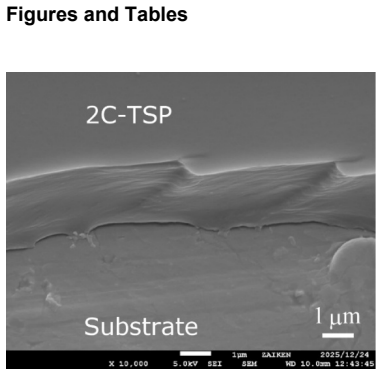
Cryogenic phase-change phenomena play an important role in a wide range of engineering applications, including cryogenic cooling systems, superconducting technologies, and space propulsion systems. In particular, the three-phase contact line is recognized as a key region governing evaporation and heat transfer. However, direct measurements of temperature distributions near cryogenic three-phase contact lines remain limited because conventional infrared thermography becomes increasingly difficult at extremely low temperatures. In this study, a two-color temperature-sensitive paint (2C-TSP) technique was applied to visualize the temperature field around a liquid-nitrogen three-phase contact line. A temperature-sensitive dye and a temperature-insensitive reference dye were incorporated into a single coating, enabling robust temperature measurements based on luminescence intensity ratios by compensating for changes in optical intensity caused by refraction and reflection at the liquid-gas interface. Temperature distributions were measured under three heating conditions with heat fluxes of 110, 430, and 900 W/m2. The measured temperature fields revealed a localized temperature minimum at the observed three-phase contact line, suggesting localized cooling associated with phase change. Quantitative analysis showed that the average temperature in the liquid region remained nearly constant, whereas the temperature in the gas region increased with increasing heat flux. These observations reveal a non-uniform thermal structure around the cryogenic three-phase contact line. The present results demonstrate that 2C-TSP is a promising technique for direct visualization of temperature fields around cryogenic three-phase contact lines and provides new insights into phase-change phenomena in liquid nitrogen.
Rare-event search experiments require construction materials with high radiopurity to minimise background contributions. Thanks to its high mechanical strength, low density, machinability, and commercial availability in relatively radiopure forms, titanium is a suitable material for structural elements in rare-event searches. In such applications, a chemical etching stage is typically performed to remove surface contamination or to prepare the surface for further treatment. However, due to its chemical resistance, the etching of titanium conventionally requires hydrofluoric acid, posing serious health and safety concerns that are further exacerbated in deep underground laboratory settings. An alternative approach is proposed, which uses sulphuric acid. Grade 1 titanium samples were etched in 20\% and 40\% sulphuric acid solutions at 20$^\circ$C and 40$^\circ$C for up to 24\,h. The effects of etching were quantified through mass change measurements, surface roughness analysis, and scanning electron microscopy. Sulphuric acid effectively etches titanium, with up to $3.5\,\pm\,0.3$ mg/cm$^2$ of titanium removed for an unagitated solution of 40\% sulphuric acid at $40^\circ$C for 24\,h. Furthermore, sulphuric acid is shown to be effective at etching at lower concentration and temperature. The formation of a passivation layer during the etching may enable control of the total mass removed.
Unfolding observed $\gamma$-ray spectra is an ill-conditioned Poisson inverse problem. Detector response effects and finite energy resolution make distinct non-negative emitted $\gamma$-ray spectra nearly indistinguishable after forward mapping, so direct inversion can strongly amplify statistical fluctuations. Here, we present an empirical-Bayes hierarchical unfolding method that preserves the Poisson counting structure, enforces non-negativity, and incorporates background through a joint ON/OFF likelihood. The prior on the emitted spectrum is centered on an automatically selected Richardson-Lucy reference spectrum, with an adaptive width that remains broad in weakly constrained regions. Posterior inference is performed with the No-U-Turn Sampler, and simultaneous uncertainty bands are reported for the resolution-limited unfolded spectrum. Our Bayesian method provides a robust and extensible framework for uncertainty quantification in unfolding, and a direct comparison with a recent frequentist regularized maximum-likelihood method gives highly consistent unfolded spectra in representative high- and low-statistics cases.
Ultra-high dose rate (UHDR) irradiation used in FLASH radiotherapy induces strong space-charge effects in plane-parallel ionisation chambers (PPICs), leading to significant reductions in charge collection efficiency (CCE). To investigate these effects, we extended the Garfield++ framework by implementing ion-ion recombination and self-consistent space-charge electric field calculations.
The developed Monte Carlo model couples particle transport, electron attachment, recombination processes, and dynamic electric-field distortions. The implementation was validated against analytical and numerical models from the literature, including the works of Fenwick and Kumar, Kranzer et al., and Paz Mart\'in et al., with excellent agreement for the free electron fraction (FEF), CCE, induced current, and electric field evolution.
The simulations show that space charge can locally increase the electric field by more than a factor of four or reduce it to nearly zero. The results suggest that CCE reduction under UHDR conditions is mainly driven by the decrease of the FEF caused by electric-field-dependent electron attachment, indicating that recombination may be largely governed by FEF evolution. This opens promising perspectives for improved analytical models and real-time correction methods for ionisation chamber dosimetry under UHDR conditions.
Accurate electric field estimation is critical for the design and optimization of Micro Pattern Gaseous Detectors (MPGDs). The nearly exact Boundary Element Method (neBEM) offers high precision field computation but is limited by long CPU runtime arising from its complex analytical formulations. This work presents a comprehensive optimization of the neBEM solver, focusing on a hybrid hardware acceleration strategy using OpenMP for multi-core CPUs and GPU acceleration using NVIDIA's CUDA. A key contribution is the new implementation of a dynamic space charge calculation, which has also been designed to be accelerated by CUDA. This primary acceleration is complemented by enhanced algorithmic optimizations to reduce the complexity of the problem. The proposed implementation achieves substantial speedups while preserving inherent accuracy of the solver. Simulations on staggered thick Gas Electron Multiplier geometries demonstrate agreement with other commercially available field solvers, verifying the fidelity of accelerated neBEM. Benchmarking tests show a significant speedup, enabling rapid yet precise simulations for complex MPGD configurations. These improvements make GPU-accelerated neBEM a practical tool for large-scale detector simulation.
Bremsstrahlung activation measurements were performed to study the production of $^{57}\mathrm{Ni}$, $^{56}\mathrm{Ni}$, $^{58}\mathrm{Co}$, $^{57}\mathrm{Co}$, $^{56}\mathrm{Co}$, and $^{55}\mathrm{Co}$ from natural nickel targets irradiated with photons generated by \SI{40}{MeV} electrons incident on a tantalum converter. Bremsstrahlung spectra were modeled using MCNP6.3\texttrademark{} and experimentally validated through activation of natural tin. Bremsstrahlung-averaged cross sections were extracted from end-of-irradiation activities, yielding $\langle\sigma\rangle = 8.983~\pm~0.028$~mb for $^{58}\mathrm{Ni}(\gamma,n)^{57}\mathrm{Ni}$, $0.248~\pm~0.025$~mb for $^{58}\mathrm{Ni}(\gamma,2n)^{56}\mathrm{Ni}$, $0.704~\pm~0.218$~mb for $^{nat}\mathrm{Ni}(\gamma,pxn)^{58}\mathrm{Co}$, $9.192~\pm~0.386$~mb for $^{58}\mathrm{Ni}(\gamma,p)^{57}\mathrm{Co}$, and $2.239~\pm~0.355$~mb for $^{58}\mathrm{Ni}(\gamma,pn)^{56}\mathrm{Co}$. A $90\%$ confidence-level upper limit of $\langle\sigma\rangle < 0.021$~mb is established for the $^{58}\mathrm{Ni}(\gamma,p2n)^{55}\mathrm{Co}$ channel. Comparison with JENDL-5 evaluations and prior studies indicates channel-dependent agreement, with residual discrepancies observed for selected charged-particle emission reactions. In particular, the measured $^{58}\mathrm{Ni}(\gamma,p)^{57}\mathrm{Co}$ cross section exceeds the JENDL-5 prediction by approximately a factor of two, whereas TALYS-2.2 calculations reproduce the experimental value, suggesting an underestimation of the $(\gamma,p)$ channel strength in JENDL-5 under bremsstrahlung conditions. For the $^{58}\mathrm{Ni}(\gamma,pn)^{56}\mathrm{Co}$ channel, both TALYS-2.2 and JENDL-5 predictions are in reasonable agreement, while the present measurement is higher by approximately a factor of two, though with larger associated uncertainty.
Localized formation after sub-MeV implantation retains directional information recoverable by simulation and ML while preserving spin cohere
abstractclick to expand
Understanding particle-induced damage tracks in solid-state materials underpins emerging applications in rare-event detection and quantum defect engineering. Resolving these tracks requires multi-scale readout, from event localization at the millimeter scale to track-morphology reconstruction at the nanoscale. Nitrogen-vacancy (NV) centers in diamond provide such a platform, combining optical localization with quantum sensing of track morphology. Here, we implant sub-MeV carbon ions into nitrogen-rich diamond and detect individual recoil events via spatially localized NV formation. We develop a simulation framework that explains the observed NV yield and predicts that directional information is retained in the NV distribution after annealing. Machine learning further recovers much of the information lost to defect diffusion and limited NV yield, improving head-tail classification to a level comparable to pre-annealed vacancy tracks. Measurements of NV spin coherence indicate compatibility with nanoscale track reconstruction via NV strain mapping and magnetic gradient-based techniques. These results identify promising pathways toward NV-diamond directional detectors for rare events, while the track-modeling framework has broader implications for paleodetection and quantum material synthesis.
Powder x-ray diffraction (PXRD) under laser-driven dynamic compression is a powerful tool to investigate material response to extreme pressure, temperature and strain rates. Robust PXRD platforms have been developed at kJ and MJ laser facilities worldwide including the Powder X-Ray Diffraction Image Plate (PXRDIP) at the Omega Laser Facility at the Laboratory for Laser Energetics (LLE) and the TARget Diffraction In Situ (TARDIS) at the National Ignition Facility (NIF). Here we present further developments of data analysis methods focused towards improving the fidelity of the PXRD intensity determination for these platforms. We illustrate these methods by discussing how they can be implemented in a data analysis package and applied to shock compression data on diamond near 1 TPa. We discuss using the XRD signal from the collimating pinhole or a layer of un-compressed material in the sample package as \textit{ in-situ} references for XRD intensity. We detail how to compare data collected with different x-ray sources and how to account for thermal damping of XRD signal when comparing XRD from a shock-compressed, hot material with the reference material at ambient.
Next-generation X-ray detectors generate data faster than any system can affordably store or process. LCLS-II, the upgraded Linac Coherent Light Source at SLAC, produces data on the order of terabytes per second, with raw-data transfer and storage projected to be prohibitively costly, even though much of the data is not scientifically useful. This concept paper focuses on two major points. The first is versatility: a deliberately tiny, single-layer Vision Transformer (ViT) is enough to serve distinct scientific quick-evaluation tasks. We demonstrate this on two very different problems: (a) a supervised hit/miss/maybe classification on the CSPAD dataset, made to resemble ePixUHR-like detector frames, and (b) a self-supervised latent space for rare-event detection in X-ray diffraction spanning two learning paradigms, two output types, and two detector modalities, with one small backbone. The second is hardware co-design: because the ViT's blocks are structurally uniform, the model maps cleanly onto the heterogeneous hardware already present in the LCLS detector pipeline (ASIC -> FPGA -> GPU) under a simple rule one ASIC is one token so the data is reduced progressively at each stage and a keep/discard decision is produced in real time at the edge. The two claims reinforce each other: versatility is precisely what justifies freezing the front-end in silicon, since a reusable front-end is only worth committing to hardware if it serves many tasks. We are explicit that this is a concept supported by early software analysis, not a hardware demonstration. The natural and primary next phase is the hardware implementation of this distributed pipeline. The decisive evidence still owed an end-to-end latency budget, ASIC feasibility of the in-sensor embedding, and the false-negative behavior that matters for a data veto defines that program. HeteroViT is our first step toward it.
Corrected error analysis shows 10% precision holds only to 20 keV at low background, or 1 keV at high, unless laser energy or density is boo
abstractclick to expand
The ITER tokamak project includes a Thomson scattering diagnostic designed to measure electron temperature and density in the plasma core. The system is required to provide measurements over a wide temperature range while meeting stringent accuracy requirements. A previous study analyzed the errors of electron temperature measurements to assess the feasibility of these requirements. The analysis concluded that the central electron temperature could be measured with the required accuracy of 10% for temperatures up to 40 keV at a minimum electron density of 3*10^19 m^-3. However, those results were based on an overestimation of the number of photoelectrons generated in detectors by the scattered radiation due to the incorrect application of the Thomson scattering cross-section. As a consequence, the temperature measurement errors were significantly underestimated. In the present work, the accuracy of electron temperature measurements in the ITER plasma core is reassessed using the corrected photoelectron yield derived from published data and incorporating the effects of background radiation. The revised analysis shows that the proposed diagnostic system can achieve the required accuracy of 10% for temperatures up to 20 keV at low plasma background radiation, whereas under high background radiation this accuracy can only be maintained up to 1 keV. To achieve the 10% accuracy across the full temperature range while preserving the current diagnostic configuration, either the energy of the probing laser pulse must be increased by a factor of 2-4 or the least electron density must be raised to 6*10^19 m^-3.
The focus of the present work is the development of specialized experimental instrumentation compatible with synchrotron characterization for in-situ and operando symmetric intermediate temperature solid oxide fuel cells (IT-SOFC) studies at maximum temperatures of 800 C , exposed to reducing and oxidizing atmospheres, using fluorescence X-ray absorption spectroscopy (XAS) measurements in combination with electrochemical impedance spectroscopy (EIS) in the multipurpose Quati beamline at CNPEM/SIRIUS synchrotron facility [1]. Symmetric IT-SOFC are gaining importance due to their structural simplicity, as they allow for the use of identical materials on both sides of the fuel cell electrolyte; the anode, and the cathode [ 2,3 ]. The symmetric configuration opens new opportunities for fundamental research of electrode materials and improves the versatility of SOFC electrochemical devices [2,3].
The VMM3a Application-Specific Integrated Circuit (ASIC), integrated into the Scalable Readout System (SRS), provides high-rate capability together with precise charge and timing measurements for gaseous detectors. In this work, the SRS-VMM3a readout architecture has been implemented for the HYDRA (HYpernuclei Decay at R$^3$B Apparatus) Time Projection Chamber (TPC), a dedicated pion tracker developed to study hypernuclei within the R$^3$B experiment at GSI/FAIR. We present the adaptation of the VMM3a-based front-end electronics to the HYDRA-TPC pad plane, including the design of custom adapter boards, power distribution, and synchronization with the R$^3$B data acquisition system. The performance of the readout chain was evaluated through a series of laboratory and integration tests. The results demonstrate reliable operation, precise timing performance, and compatibility with the R$^3$B data acquisition framework, establishing the SRS-VMM3a system as a suitable readout solution for the HYDRA-TPC.
We propose a noninvasive SQUID-based polarimeter for the polarized proton beam in the Electron-Ion Collider (EIC) Hadron Storage Ring (HSR), exploiting the collective magnetic dipole moment of the bunches rather than scattering. The six-snake HSR lattice has synchronous-particle spin tune $\nu_s = 1/2$, placing the in-plane spin-precession signal at half the revolution frequency ($\sim$39 kHz), in the DC SQUID band. Three pickup channels (cosine-$\theta$ and sine-$\theta$ saddle loops for the transverse components, a coaxial axial gradiometer for the longitudinal one) reconstruct the full polarization vector $(P_x, P_y, P_z)$ in two complementary modes. Static mode, the default for continuous noninvasive monitoring, reads all three components: $P_y$ at the revolution frequency and the residual in-plane components at $\nu_s f_\mathrm{rev}$, bunch by bunch over an hours-long fill, including $P_z$, inaccessible to single-spin scattering polarimetry by parity conservation. Dynamic mode gives a precise polarization-magnitude measurement: a longitudinal kicker tips a small fraction of the polarization into the horizontal (ring) plane to produce a free-induction-decay (FID) signal, and many phase-locked tip-$\pi$-echo-restore cycles are summed coherently via a matched filter across all bunches, with $\mathcal{O}(\alpha^2/\pi^2) \sim 10^{-4}$ loss per cycle, negligible over a full $\delta P/P = 1\%$ measurement. For tipping angle $\alpha = 30$ mrad, polarization $P = 0.7$, and effective rms spin-tune spread $\sigma_{\nu_s}^\mathrm{eff} = 10^{-3}$ (coherence time $\sim$2 ms), the integration time to reach $\delta P/P = 1\%$ is about 18 s at injection and 5 min at flattop. The architecture extends to deuteron and $^3$He beams via species-specific spin-magnetic factors, with applications to storage-ring EDM searches.
A variation of the measured neutron flux using $^3$He detectors at a TRIGA Mk II nuclear research reactor during steady-state operation is reported in this article. The observed effect shows a statistically significant anti-correlation between the temperature in the reactor pool and recorded neutron counts. Following reactor start-up under nominal operating conditions, the effect occurs for a specific time period until thermal equilibrium and a constant neutron count rate are reached. Simultaneous neutron and temperature measurements are performed in different configurations around the reactor in order to gain qualitative insights about the temperature dependent count rate behavior. Possible origins of the effect are identified and further measurements for a more detailed investigation are suggested.
The scientific utility of large single-dish radio telescopes depends critically on the stability and fidelity of their beam patterns, which govern angular resolution, sensitivity, and polarimetric accuracy. For the 32-m Ghana Radio Astronomy Observatory (GRAO) antenna, electromagnetic simulations reveal residual sidelobes, structural diffraction, and cross-polar leakage that limit performance in high-dynamic-range and polarisation-sensitive observations. To address these limitations, we develop a finite-impulse-response (FIR) spatial filtering framework that reformulates beam optimisation as a digital signal processing problem. By exploiting the equivalence between angular displacement and spatial frequency, classical FIR design methods, window-based and Parks-McClellan algorithms are adapted to operate directly on simulated Jones fields. This approach enables controlled suppression of high spatial frequency artefacts responsible for sidelobes and polarisation mixing, while preserving the telescope's diffraction-limited resolution. Applied to the GRAO 5 GHz beam model, the method achieves substantial reductions in near-in sidelobe ripple, improves beam smoothness, and lowers cross-polar leakage below -30 dB at boresight. These improvements translate into enhanced calibration stability and polarimetric precision, strengthening the telescope's capacity for Very Long Baseline Interferometry, spectral-line surveys, and pulsar timing. Beyond GRAO, the method provides a generalisable, non-invasive, and computationally efficient pathway for beam control applicable to other single-dish and phased-array instruments. The results establish digital spatial filtering as a practical complement to conventional optical or mechanical optimisation, advancing the integration of electromagnetic modelling and signal processing in next-generation radio astronomical instrumentation.
Measurements of dark count rate, gain, waveform and charge spectrum validate more than 20,000 tubes for 3% energy resolution.
abstractclick to expand
Photomultiplier tubes (PMTs) are widely used in neutrino experiments. As a new-generation neutrino observatory, JUNO requires an excellent energy resolution of 3% at 1 MeV. This will be realized with a 20 kton liquid scintillator detector instrumented with more than 20000 20-inch PMTs and 25600 3-inch PMTs. These PMTs were successfully installed in JUNO from October 2022 to December 2024. During the installation, seven test campaigns were performed to validate the PMT functionality, including measurements dark count rate, gain, waveform, and charge spectrum. In this paper, we present the implementation of these tests and the corresponding results for the 20-inch PMTs throughout the installation process.
Integrated superconducting spectrometers (ISSs) provide the instantaneous bandwidth, sensitivity, and scalable architecture for large-scale spectroscopic surveys in submillimeter-wave astronomy and cosmology. However, the accuracy with which the resonant frequencies of superconducting microstrip band pass filters can be spaced, has limited the spectral resolution for these spectrometers with continuous spectral coverage to $\frac{F}{\Delta F} < 500$. The origin of this frequency scatter has been largely unknown. In this work, we demonstrate a four-fold improvement in the frequency spacing of superconducting microstrip resonators by optimizing electron-beam lithography. We find that reducing the beam step size (BSS) on the nanometer scale reduces the random frequency scatter, and that avoiding main-field stitching across filter patterns can eliminate a systematic frequency shift between groups of resonators, indicating the different origins of these two modes of frequency deviation. These findings demonstrate that nanometer-scale control of lithographic processes is imperative for the realization of the next-generation integrated superconducting spectrometers with higher spectral resolution.
We present the characterization of two fast, crystalline inorganic scintillators, silicon-doped gallium nitride (GaN:Si) and gallium-doped zinc oxide (ZnO:Ga), and compare their performance with cerium-doped yttrium aluminium perovskite (YAP:Ce) for in-vacuum alpha-detection applications that require high-performance timing, position, and energy resolution, such as 3D elemental mapping, medical imaging, and homeland security applications. In this paper, we propose ZnO:Ga and GaN:Si as high-performance drop-in replacements for the alpha detector in Associated Particle Imaging (API) systems. However, the results reported here also have wide applicability. Prior work has reported on polycrystalline forms of ZnO:Ga, which suffer from self-absorption. To our knowledge, GaN:Si has not been proposed to be used in API systems. We present room-temperature scintillation time constants obtained via X-ray-induced time-correlated single-photon counting for both proposed materials. They both exhibit exceedingly fast rise times of <15ps, and high brightness >1000ph/MeV with resolved alpha-peaks. Single-crystal ZnO:Ga and single-crystal GaN:Si yield single-component decays of 805ps and 32ps, respectively. Using a plastic scintillator reference setup, coincidence timing resolution (CTR) and detector timing resolution (DTR) measurements demonstrate a >3x improvement in timing resolution compared to traditional YAP:Ce. GaN:Si and ZnO:Ga exhibit (35(9))ps and (49(5))ps DTR, respectively, compared to(144(2))ps for conventional, single-crystal YAP:Ce. Finally, we evaluate their position resolution in an experimental setup designed for API and measure better than 0.2mm for YAP:Ce and approximately 1mm for GaN:Si. We obtain a position resolution of 0.3mm for ZnO:Ga from simulations. We also present alpha-induced ionoluminescence emission spectra that reveal direct, red-shifted near-bandgap emission.
Precise pointing control is a critical requirement for interspacecraft laser interferometry, as angular misalignment introduces measurement noise and even leads to laser link loss. We present a nested control architecture that uses differential wavefront sensing signals to drive a fast steering mirror (FSM) to track the incoming beam, while feeding the FSM's angular changes back to the attitude and orbit control system (AOCS) to suppress angle-dependent optical path variations. This scheme is experimentally validated in our hexapod-based setup. Relative to standalone FSM actuation, the nested configuration enhanced pointing stability by 6.9 dB and 4.9 dB in the horizontal and vertical directions across the frequency band from 3 mHz to the AOCS actuation's unity-gain frequency. Additionally, tilt-to-length coupling was suppressed by an order of magnitude below 6 mHz and by two orders of magnitude below 0.45 mHz. These results demonstrate the feasibility of nested active pointing control for future interspacecraft laser interferometry missions.
This white paper introduces the concept, prototype design, projected costs, and scientific goals of a mobile experiment for detecting geoneutrinos originating from uranium and thorium decay chains in the Earth's mantle. This will constrain the planet's radiogenic heat production and unearth its geochemical makeup. This design of a deep-ocean mobile neutrino experiment, which is not mirrored by any active or planned experiments, supports physics and geoscience's goal of multi-modal data on the Earth's internal composition and structure. Based on geoscientific studies, this design is expected to achieve a 50--100-fold reduction in crustal background compared to similarly sized continental detectors, thereby enabling direct measurements of mantle geoneutrinos. The multiple stereoscopic projections enabled by the detector's unique mobility can map spatial variations in heat-producing elements within the mantle. Beyond discussing the design, we report on our collaboration's most recent hardware developments in the active prototyping of this detector. We briefly highlight the potential multiuse and interdisciplinary nature of this detector.
Cosmic-ray muon tomography records only a few detector-plane crossings per particle, while material information enters through stochastic scattering and energy loss along the path. Most pipelines first compress these hits to a per-muon scattering summary and assign a nominal momentum, moving the inverse problem away from the raw measurements. We introduce Raw-Hit Muon Tomography (RHMT), a measurement-domain formulation built directly on detector hits. RHMT-S projects out the unknown straight track and evaluates the remaining hit contrast with a Fermi--Eyges covariance; marginalizing the unknown scattering scale gives a blank-calibrated Student-$t$-type likelihood. RHMT-E fits the hits in a six-plane magnetic spectrometer to estimate each muon's log momentum loss and models it as a Bethe--Bloch line integral of the electron-density-related contrast $\rho Z/A$. In a controlled Geant4 benchmark, RHMT-S improves the mean ROC-AUC over four-plane scattering baselines ($0.84$--$0.86$ versus $0.81$ for ASR), and RHMT-E provides a separate energy-loss contrast for aluminium, where scattering contrast is weak.
We present a study of charge sharing and electronic cross-talk in second-generation Large-Area Picosecond Photodetectors (LAPPD Gen 2). The LAPPD is a vacuum-based device consisting of a photocathode, two microchannel plates, and a resistive anode that capacitively couples to an 8 $\times$ 8 pixelated readout board (25.4 mm $\times$ 25.4 mm pixel area). Using a picosecond pulsed laser, we measure signal distributions across the resistive anode and quantify coupling between target and neighboring pixels. We further examine the relationship between dark-count rate and LAPPD voltage settings, identifying decay behavior characterized by fast, intermediate, and slow relaxation timescales. We additionally observe the LAPPD behaving as a resonant cavity by injecting electrical pulses into the readout board. To further interpret observed signals, we develop a pulse-classification method and identify additional features at approximately 60 ns and 110 ns. Finally, we implement a first-principles Monte Carlo simulation to model the radial and temporal distributions of observed signals, including contributions from electron backscatter and potential ion afterpulsing. The simulation shows reasonable agreement with the experimentally derived pulse classifications.
Extending earlier work in Physics-informed Meta-instrument for eXperiments (PiMiX) [1], PiMiX~2.0 is an artificial-intelligence (AI)-enhanced data-fusion and analysis framework that integrates multi-experiment multi-modal radiographic imaging and tomography (RadIT) with physics-informed reasoning and agentic AI workflows. The framework supports automated data ingestion, multimodal image processing from one or more experiments, three-dimensional (3D) and time-resolved three-dimensional (4D) reconstruction, and physics-aware interpretation of experimental observations. The PiMiX agents are designed for deployment on desktop and laptop systems commonly used in experimental workflows, while remaining scalable to high-performance computing environments for computationally intensive tasks. By coupling RadIT instrumentation and measurements with geometry, physics, computation, and statistical inference, PiMiX 2.0 aims to accelerate RadIT data processing, knowledge extraction, improve reproducibility, and enable more integrated analysis and workflows in high-temperature plasmas, nuclear fusion, advanced manufacturing, other static and dynamic experiments.