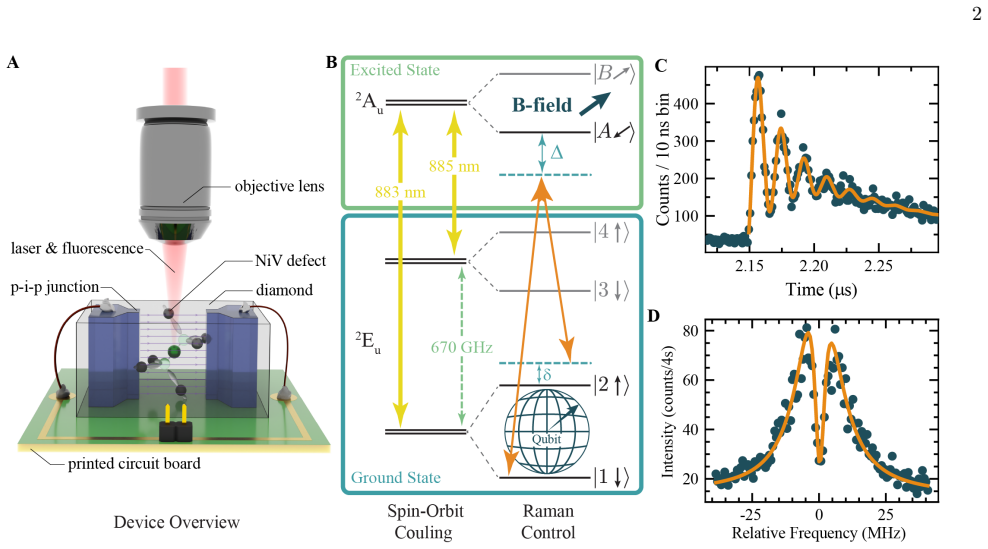
Quantum networks require qubits that combine efficient optical access, coherent control, and long-lived quantum memory, but realizing all three in one scalable platform remains a central bottleneck. Diamond color centers are leading candidates, yet widely studied defects retain tradeoffs among these capabilities. Here, we show that transition-metal defects in diamond provide a distinct route beyond these platforms by combining spin-orbit protected ground-state coherence, all-optical control, and near-infrared emission. Using a single nickel-vacancy (NiV$^-$), we demonstrate an all-optically controlled diamond spin qubit with coherence exceeding one millisecond at 1.65 K, compatible with compact closed-cycle cryogenics. We implement Raman Rabi oscillations and Ramsey interferometry and use all-optical dynamical decoupling to extend coherence from $T_2^*$ = 371 ns to $T_2^{CPMG-4}$ = 1.27 ms, establishing NiV$^-$ as a deployable diamond spin-photon interface.
We study how the Lamb shift of a static atom is modified when a nearby planar body rotates rigidly about its normal while the atom is held at a fixed distance $a$. We derive a general formula for the shift in terms of the angularly Doppler-shifted reflection coefficients of the surface, valid for any axially symmetric planar material. Expanding the result to second order in the angular velocity $\Omega$, we identify two independent contributions associated with the orbital and spin components of the electromagnetic angular momentum. The orbital contribution, proportional to $(\Omega\rho)^2$, reproduces locally the Lamb shift induced by a surface translating at the tangential velocity $\Omega\rho$, whereas the spin contribution, proportional to $(a\Omega)^2$, originates from the rotational Doppler shift of the photon helicity and survives even on the rotation axis. We first illustrate the formalism using a graphene sheet and then apply it to finite-thickness Drude and plasma conductors and to doped semiconductors. Rotation enhances the Casimir-Polder interaction for graphene and metallic surfaces, whereas it weakens it for doped semiconductors, depending on whether the carrier plasma frequency reaches the near-field scale $1/a$. Above a threshold angular velocity, the atomic level also acquires a finite linewidth, providing a spectroscopic signature of quantum friction.
We investigate the entanglement dynamics along quantum trajectories during the seeding of time-crystalline order in a boundary time crystal (BTC). Specifically, how entanglement spreads among different spin ensembles when a BTC attempts to seed its time-crystalline behavior onto otherwise static spin ensembles, through a collective dissipative channel. We analyse both the dynamical growth of entanglement in time and the steady-state properties of the system. Our results reveal two fundamentally distinct regimes. In the seeded BTC phase, the steady-state entanglement entropy between the ensembles grows with system size $N$, accompanied by macroscopic fluctuations along the trajectories. In contrast, in the non-seeded static phase, both the steady-state entanglement and its fluctuations decay exponentially with $N$. The model thus features a measurement-induced phase transition (MIPT) driven by the seeding mechanism. Furthermore, these findings establish dissipative seeding as a powerful mechanism for controlling quantum correlations in open many-body systems, with direct experimental relevance to this class of model without a postselection barrier.
In collective dissipative spin systems, the postselection barrier can be partially mitigated; however, a further obstacle may be posed by the finite temporal resolution of detectors. In this work, we investigate how initial-state inhomogeneities can control waiting-time statistics between quantum jumps, thereby mitigating the detector-resolution problem. We consider a collectively monitored spin model with a boundary time-crystalline phase, introducing inhomogeneity by partitioning the ensemble into two subsystems rotated by an angle $\theta$. We find that the measurement-induced phase transition survives under inhomogeneities, with different entanglement scaling regimes. The waiting time increases with $\theta$, scaling as $1/N$ but with a prefactor strongly enhanced by orders of magnitude, and in the anti-aligned limit $\theta = \pi$ it remains finite, fully resolving the resolution barrier. This mitigation, however, comes at a cost: the entanglement saturation time becomes significantly longer, partially reintroducing the postselection barrier. Our results highlight a trade-off between detector resolution and postselection overhead, with direct implications for the experimental observation of measurement-induced phenomena.
Electrostatically defined quantum dots (QDs) with layer-antisymmetric gating in Bernal-stacked bilayer graphene (BLG) open a local gap and generate a mass-like term with opposite sign in the two valleys, producing strongly valley-dependent scattering without magnetic fields, strain, or spin-orbit coupling. Building on this mechanism, we propose a tunable platform based on such QDs for valley-dependent electron optics in BLG. Using a four-band continuum model and a generalized multiple-scattering formalism, we analyze scattering of Gaussian electron beams from single- and multi-dot architectures and compute valley-resolved currents and angular profiles. A single dot produces distinct valley-dependent deflection, while multi-dot configurations enable enhanced control: identical-dot arrays act as valley splitters, whereas oppositely gated pairs function as valley filters. Combining these elements yields tunable generation, steering, and filtering of highly valley-polarized currents with strong suppression of forward transmission. The required energy scales, gate asymmetries, and device dimensions are within experimentally accessible regimes for dual-gated BLG, establishing quantum-dot arrays as a realistic platform for controllable valley-resolved electron optics.
We study the finite-temperature topological order of the three-dimensional $\mathbb{Z}_2$ toric code in a generic magnetic field, where every higher-form symmetry is explicitly broken and can at most be emergent. We show perturbatively, and confirm by large-scale quantum Monte Carlo, that the topological entanglement entropy stays quantized at $\gamma = \ln 2$ throughout the topological phase -- at finite temperature and under the symmetry-breaking field alike -- and collapses to $0$ across the thermal transition, a quantization protected geometrically by the Bianchi identity rather than by any exact symmetry of the system. The plateau $\gamma = \ln 2$ is, however, not invariant under quasi-local channels: a constant-depth channel can generate this identical quantized value from a trivial product state. We therefore introduce the decoded Wilson-loop correlation $f_W$, which quantizes to $1$ in the topological phase and $0$ in the trivial phase as $L\to\infty$ and, unlike $\gamma$, is a quasi-local-channel invariant -- a robust topological invariant of the mixed state.
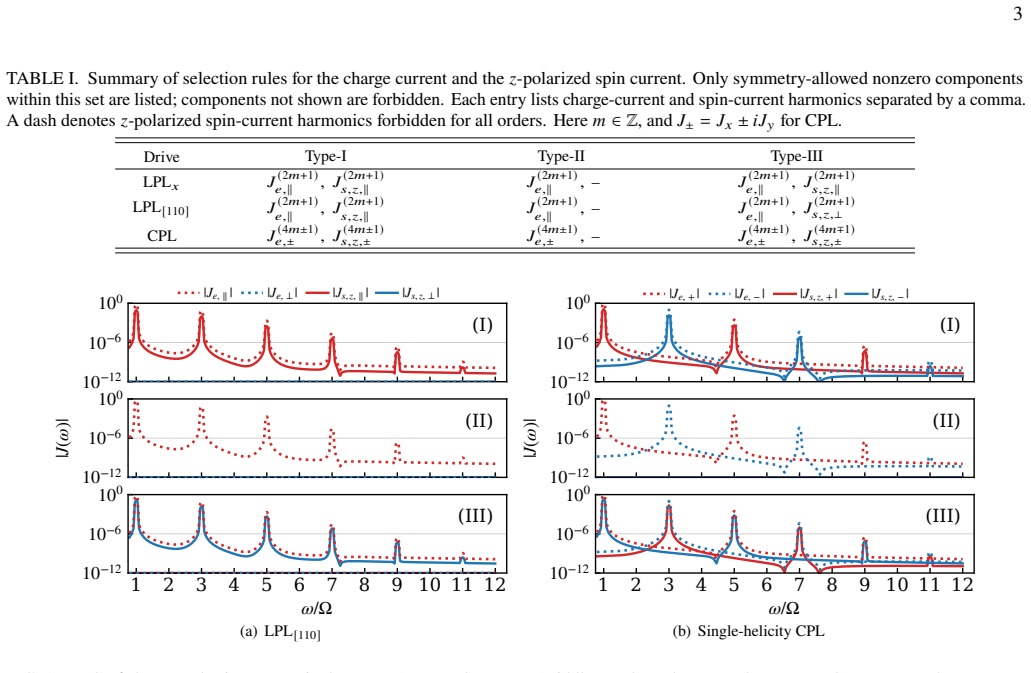
Spin point groups classify magnetic phases in the weak spin-orbit coupling regime and characterize the static properties of altermagnetic phases, but their dynamical consequences remain largely unexplored. Here, we derive selection rules for high-harmonic generation of charge and spin currents by extending dynamical symmetry to include spin point group operations. Since spin currents transform under both real and spin space operations, whereas charge currents transform only under real space operations, spin current selection rules can reveal magnetic information that is inaccessible to charge current harmonics. In a minimal altermagnetic model, an axis-aligned linearly polarized drive is non-diagnostic for distinguishing ferromagnetic and altermagnetic phases, although the antiferromagnetic phase is distinguished by the absence of the corresponding spin-current harmonics. A diagonal linearly polarized drive distinguishes the three SPG phases within the weak-SOC spin-group description, whereas a single-helicity circularly polarized drive provides a sharper spin-current-harmonic criterion for distinguishing them from magnetic-point-group mimics. These results establish spin current harmonics as a dynamical probe of spin group symmetry.
For parallel spherical defects the gravity dual switches from connected to disconnected branes, eliminating the force at large widths and li
abstractclick to expand
This paper explores the holographic Casimir effect associated with parallel spherical defects. The gravity dual is dominated by the AdS soliton with connected EOW branes at small widths, transitioning to AdS space with disconnected EOW branes as the width increases. Consequently, the holographic Casimir effect undergoes a first-order phase transition and vanishes in the disconnected phase. This new behavior highlights a significant difference from free theories, holographic parallel plane defects, and hyperbolic defects. Additionally, we confirm that the free theories adhere to the holographic bound for the Casimir effect in the case of parallel spherical defects.
Interestingly, we observe that cosmic censorship provides a holographic interpretation of the attractive nature of the Casimir force when identical boundary conditions are imposed on both parallel surfaces. The repulsive Casimir force is associated with the bulk spacetime containing a naked singularity, which is generally considered forbidden. Additionally, we argue that topological censorship offers a natural explanation for why the vacuum of parallel defects is dual to the AdS soliton.
Alien operators build staggered structures that generalize symmetry laws and parallel double-twist operators.
abstractclick to expand
We discuss the algebraic structure of observables in Schr\"odinger CFTs. These operators have zero mass (or particle number) and generically transform in staggered ''pyramid representations'' built from ''alien operators,'' as we explain with the doubled state-operator correspondence. We comment on implications for the space of non-relativistic CFTs, thermal physics, and generalize the exceptional symmetry conservation laws of Bekaert, Meunier, and Moroz, and Golkar and Son. We show that alien operators are analogous to double-twist operators in Lorentzian CFT, with systematic cross-channel corrections from massless particles when they exist.
We study the static electromagnetic response of two spherical topological insulators embedded in a dielectric medium and subjected to a uniform external electric field. The gapped surface states are described by a piecewise constant axion field, which induces a topological magnetoelectric coupling localized at the spherical interfaces. {More generally, the same formalism applies to isotropic magnetoelectric media characterized by an effective scalar magnetoelectric response.} The electrostatic problem is solved at zeroth order using bispherical coordinates, allowing for an exact treatment of both parallel and perpendicular orientations of the external field relative to the center-to-center axis. The resulting mode expansions are determined by three-term recurrence relations, which are solved perturbatively for nonoverlapping spheres. The { magnetoelectric}-induced response is then computed to leading order in the fine-structure constant {(or, more generally, in the effective coupling strength)}. The induced sources are purely interfacial and generate distinct magnetostatic field configurations in the parallel and perpendicular geometries. Closed-form series representations for the induced vector potential and magnetic field are obtained in terms of the zeroth-order electrostatic coefficients. These results provide an analytically controlled description of {interaction-induced magnetostatics in coupled spherical magnetoelectric systems}.
Direct doping and annealing tune carriers and curb bipolar conduction for sustained performance.
abstractclick to expand
The article reports on a series of n-type Bi2Te3-based thermoelectric materials prepared via a high-temperature melting combined with annealing process. The effects of Se doping content and annealing process on the carrier concentration, suppression of the bipolar effect, and thermoelectric performance of the materials were systematically investigated. The experimental results provide valuable reference for researchers in this field.
We investigate a frustrated four-leg spin-$1/2$ ladder using density matrix renormalization group calculations. The uniform system displays three regimes: short-range antiferromagnetic legs, short-range ferromagnetic legs, and an effective spin-2 Heisenberg chain, separated by a crossover and a first-order transition. The spin-2 regime is confirmed through its finite string order parameter, edge-localized excitations, and excellent agreement with a projected $S_r=2$ effective Hamiltonian. Recasting the model as two frustrated two-leg ladders coupled by rung and diagonal interactions, we track how the trivial and Haldane phases of an isolated ladder evolve as interladder couplings are introduced. The resulting phase diagrams reveal crossover and first-order lines whose locations are captured by the spin-2 projection and show how singlet- and triplet-dominated regimes reorganize when two ladders merge into a four-leg structure, clarifying the emergence of effective spin-1 versus spin-2 behavior.
The integer topological charge of a magnetic skyrmion is the standard emblem of topological protection. We ask what happens to that protection when the magnet is made non-Hermitian, with balanced gain and loss or a PT-symmetric anisotropy. A non-Hermitian skyrmion turns out to carry two charges that coincide in the Hermitian limit but part ways under deformation. The charge built from the right state alone is homotopy-protected: the PT flow reduces exactly to a Gilbert-type relaxation on the target sphere, so it cannot change under smooth evolution. The charge built from the biorthogonal left-right pair is complex, loses quantization as soon as the gain/loss is turned on, and breaks down at the exceptional point of the local generator -- a ring on the skyrmion's equator, where the biorthogonal Bloch field itself diverges. Topological protection of a skyrmion is therefore not a single statement once the dynamics is non-Hermitian: it splits at an exceptional point. This is the real-space topological counterpart of the analyticity breakdown a causal response function suffers at an exceptional point, both being manifestations of the same non-Hermitian degeneracy.
It is established that the polarity of a time-reversal-odd ($\mathcal{T}$-odd) physical quantity can be reversed under the $\mathcal{T}$ operation. Here, we use the spin-group analysis to directly demonstrate that the $\mathcal{T}$-odd magnetic spin Hall effect in ferroelectric altermagnets can be switchable by electric fields beyond the $\mathcal{T}$ operation. This arises from the ferroelectric switching of the nonrelativistic spin splitting, which swaps the roles of spin up and down channels in the reciprocal space. As a result, the $\mathcal{T}$-odd spin conductivity that are proportional to the spin-polarized conductivity difference reverses its polarity upon polarization switching. We identify spin-group operations to switch both the polarization and the magnetic spin Hall effect simultaneously for non-centrosymmetric spin point groups. Then, we exemplify those phenomena in the ferroelectric altermagnet VOI$_2$ monolayer based on density functional theory calculations and an effective Hamiltonian analysis. Our findings not only provide novel strategies to switch the magnetic spin Hall effect using the dissipation-free electric field but also open a promising avenue for electrically programmable spintronic devices.
Spin demons in d-wave altermagnets are acoustic collective excitations produced by nearly out-ofphase motion of spin-split quasiparticle populations. We identify a new mode, Rashba spin demon mode, in 2D d-wave altermagnets in the presence of Rashba Spin-Orbit Coupling (RSOC). The pristine spin demon mode in altermagnets, without RSOC, is a charge-dark excitation which is invisible to charge-sensitive probes. We show that Rashba spin demon mode is a spin-dominated acoustic mode that is distinct from the pristine mode and has a finite charge density spectral weight. RSOC rotates the quasiparticle spin texture in momentum space, generating mixed charge-spin coherence factors that give the longitudinal spin pole a charge residue. We also show that a nearby metallic gate provides a complementary electrostatic knob by screening the Coulomb interaction and tuning the pole dispersion and linewidth. Within a charge-spin random-phase approximation, we identify regimes where the Rashba mode is underdamped, charge visible, and still predominantly longitudinal-spin-like. Our results establish RSOC and electrostatic screening as complementary controls for tuning the spin and charge character of altermagnetic spin demons and making them accessible to charge probes without destroying their spin-dominated character.
In this work, we discuss how to determine and implement feasible optimal observables for a metrology protocol that saturates the quantum Fisher information (QFI) bound. In particular, we focus our study on a simple protocol, namely the method of moments (MoM). We first demonstrate that the symmetric logarithmic derivative (SLD) operator, a Hermitian observable, once implemented in the MoM, saturates the QFI bound. However, the SLD is generally too complex and typically non-local, rendering its direct experimental realization unfeasible. To overcome this limitation, we explore its structure in a specific sensing model - a Floquet time crystal (FTC) acting as an ac field sensor - and show that the SLD can be approximated by substantially simpler observables, such as the bare spin magnetization or a parity observable, for different relevant initial state preparations. We further corroborate our theoretical predictions in a nuclear magnetic resonance system operating as an FTC sensor, employing experimentally motivated parameters to simulate its performance in a state-of-the-art implementation. In general, our results establish a practical route toward near-optimal metrology in FTC sensors, where the inaccessible SLD operator can be replaced by simpler observables while retaining quantum-enhanced sensitivity.
We show that the phonon Hall viscosity at zero magnetic field is a natural probe of altermagnetism. First, we demonstrate that the finite elements of the Hall viscosity tensor unambiguously distinguish altermagnets from ferromagnets and conventional antiferromagnets. We then microscopically compute the Hall viscosity in models for d-wave and g-wave altermagnets, and find a strong sensitivity to electronic spectrum features such as gapped Dirac points and Lifshitz transitions. This sensitivity reflects a strain-space Berry curvature monopole, which contrast to the multipolar character of the standard momentum-space Berry curvature in altermagnets. Since the Hall viscosity can be probed experimentally through magneto-acoustic measurements, it provides a compelling method to probe the broken symmetries and topology of insulating altermagnets.
Coupling light to magnetic excitations in the form of spin waves underpins both the optical study of magnetism and emerging schemes for quantum transduction, positioning the quanta of these excitations, magnons, as promising carriers for hybrid quantum networks. However, exploiting them in the quantum regime requires millikelvin temperatures to suppress thermal magnon populations, thereby confining such experiments to dilution refrigerators. There, magnons can already be excited and read out electrically, yet an optical interface required for microwave-to-optical photon conversion has been missing. Here, we demonstrate the first optical detection of coherently driven, propagating spin waves via Brillouin Light Scattering (BLS) spectroscopy inside a dilution refrigerator. By simultaneously recording the optical and electrical responses of the same spin-wave mode in a yttrium iron garnet film, we find that the BLS spectra track the electrically measured transmission across a range of applied magnetic fields. For the lowest optical power of 7.9 {\mu}W that still enabled spin-wave detection, we measured a global equilibrium sample temperature of 510 mK via a resistance thermometer, while numerical modelling of the laser-induced heating yields a maximum local temperature of 900 mK at the focal spot. This brings free-space optical access to magnons into the sub-kelvin regime, representing a milestone towards magnon-mediated quantum transduction in hybrid quantum systems.
Here, we present the results of an investigation of how the pressure affects the splitting of the superfluid transition temperature in $^3$He in anisotropic aerogel. It is well known that boundary conditions significantly influence the properties of superfluid phases in aerogel. When aerogel strands are coated with a $^4$He layer in magnetic field, new phases, such as the polar, polar-distorted A (DA), polar-distorted B (DB), and $\beta$ phases, become energetically favorable. In contrast, without this coating, the system tends to favor phases resembling the bulk A, B, and A$_1$ phases. Our earlier results showed a nonlinear dependence of the superfluid transition temperature splitting in pure $^3$He, but the range of nonlinearity did not match the theoretical predictions based on magnetic scattering effects. To further investigate this discrepancy, we performed measurements of the splitting under varying pressures for both pure $^3$He and with $^4$He coverage of the aerogel strands.
We report end-to-end inference of \textbf{Qwen3.6-35B-A3B} -- a 35-billion-parameter, $\sim$3B-active Mixture-of-Experts (MoE) model with a hybrid gated-delta-net / full-attention backbone -- on a \textbf{2011 NVIDIA Tesla C2075} (Fermi, compute capability \smtwenty, 6\,GB), a GPU that predates tensor cores, native FP16 arithmetic, the \texttt{DP4A} integer dot-product instruction, and support in every modern CUDA toolchain. Because the 4-bit model ($\approx$10.5\,GB) is roughly twice the device memory, we adopt a \emph{hybrid} execution strategy: the GPU performs batched prompt \emph{prefill} with expert weights streamed layer-by-layer from host RAM, while \emph{decode} runs on the host CPU using a hand-written W4A8 integer GEMV built on the SSSE3 \texttt{pmaddubsw} instruction. The entire engine -- GEMM, hybrid-attention recurrence, MoE routing, and a from-scratch vision tower -- is written by hand for \smtwenty{} and compiled with the legacy CUDA 8.0 toolchain. On a 947-token prompt we reduce prefill latency from 57.2\,s to 37.5\,s ($-34\%$) through expert pinning, single-pass prefill, and NUMA interleaving, and we raise decode throughput from 2.8 to 8.6\,\tps{} ($\approx 3\times$) with the integer-SIMD kernel. A position-indexed snapshot cache for the recurrent (gated-delta-net) state restores prefix reuse on a recurrent architecture, cutting a repeated 78\,s prefill to 0.5\,s. We also report a set of \emph{negative} results -- offloading the language-model head to the idle GPU, hyper-threading, and three GPU-kernel rewrites all fail to help -- % which together pin down the practical floor of this hardware. Our aim is not a speed record but a careful account of what it takes, and where the walls are, to run a contemporary frontier-class MoE on fourteen-year-old silicon.
Molecular simulations show the fraction of dissociated ions reaches a maximum before clustering dominates at higher salinity.
abstractclick to expand
We report classical molecular dynamics simulations of NaCl association and dissociation in supercritical aqueous fluids over a wide range of salt concentrations, from moderate salinity to highly concentrated H2O-NaCl mixtures attainable at high temperatures. The degree of dissociation a and the corresponding ideal dissociation constant Kd, derived directly from a, were calculated as functions of the stoichiometric NaCl mole fraction at selected pressure-temperature (PT) conditions from 673.15 to 1273.15 K and from 0.1 to 2 GPa. At moderate salinity corresponding to a molality of approximately 1 mol/kg, NaCl remains largely dissociated a = 0.3-0.7 depending on pressure and temperature). In contrast, when the mole fraction of NaCl increases up to xNaCl = 0.333 (27.8 mol/kg), the degree of dissociation tends towards zero, and most ions form Na$^+$Cl$^-$ contact pairs and multi-ion clusters. As a result of these competing trends, the mole fraction of structurally dissociated Na$^+$ and Cl$^-$ ions is a non-monotonic function of the stoichiometric NaCl concentration and typically reaches a maximum at xNaCl = 0.06-0.10. This result shows that increasing salinity does not necessarily increase the abundance of structurally available chloride ions in supercritical aqueous fluids. Additional fixed density simulations at 1 and 7 mol/kg extend the analysis up to 1673.15 K and separate the effects of temperature and density on the associate/dissociate state of the ions. The obtained concentration dependences provide molecular-level constraints for thermodynamic descriptions of concentrated supercritical electrolytes and for evaluating chloride availability in high-temperature aqueous fluids.
The spinor degree of freedom associated to exciton-polariton condensates can spontaneously self-oscillate breaking time translation symmetry, thus showing a continuous time-crystal (CTC) behavior. An open question in such driven-dissipative and non-linear quantum open systems is what happens when CTCs are brought together to interact. Here we experimentally study polariton condensates in coupled traps, evidencing mutual induction and synchronization of the pseudospin temporal GHz dynamics in the CTC phase. The individual and relative orientation of the (limit cycle) precessing pseudospins can be tuned by the optical excitation power, displaying both ferro and anti-ferro dynamical configurations. We theoretically show that the exciton reservoir, and both the coherent and long-range dissipative inter-trap coupling, play important roles in the CTC dynamics. The investigation of time-broken symmetry is thus extended here to more complex non-hermitian systems opening the path to study self-sustained collective dynamics in lattices of non-linear quantum condensates.
Electron screening of positive charges in metals is most strongly nonlinear in the static near-field regime. We revisit screening of a static single protonic charge in a homogeneous electron gas, focusing on the induced density and the contact Hartree energy $U_{\text{H}}(0)$. Although evaluated at the impurity position, $U_{\text{H}}(0)$ is not purely local: our formulation makes it explicit as a nonlocal quantity set by a radial moment of the full induced density, applicable to both linear-response and nonlinear density-functional-theory (DFT) descriptions. We compare Thomas--Fermi, Lindhard/random-phase-approximation, and local-field-corrected dielectric models with nonlinear DFT benchmarks. The Estreicher--Meier local-density-approximation (LDA) parametrization reproduces the contact Hartree energy from our direct LDA calculations and the self-consistent results of Almbladh \emph{et al.} [\href{https://doi.org/10.1103/PhysRevB.14.2250}{Phys. Rev. B \textbf{14}, 2250 (1976)}]. This validates the unified $U_{\text{H}}(0)$ implementation, separates the hydrogenic density profile from non-negligible Friedel oscillations, and provides a compact nonlinear reference for linear-response theory. Testing modern local-field factors, the Corradini--Del Sole--Onida--Palummo and Kaplan--Kukkonen parametrizations yield indistinguishable contact screening despite differing near $q\simeq 2k_F$. We also analyze Yukawa, hydrogenic, and Hulth\'en screened Coulomb potentials via a variable-phase scattering formulation constrained by the Friedel sum rule; these give a useful phase-shift representation of static screening but cannot alone reproduce the nonlinear DFT contact Hartree energy. The results establish a one-center nonlinear screening benchmark for proton impurities in jellium and clarify the baseline needed before treating two-center screening relevant to low-energy fusion in condensed matter.
We present a non-Markovian open quantum dynamics formalism for the study of nonequilibrium electron-phonon interactions, based on a closed set of four coupled equations of motion for the electronic one-body reduced density matrix, the phonon density matrix, the coherent phonon, and the electron-phonon correlations. Memory effects in the electronic dynamics emerge naturally from the coupling between the electronic density matrix and the electron-phonon correlation equations, beyond the Markovian approximation. The formalism treats coherent-phonon dynamics and dissipative broadening on an equal footing, making it particularly suited to polaron formation and the finite lifetimes of driven electronic excitations. In appropriate limits it recovers the Fan-Migdal, polarization in random-phase-approximation, and Ehrenfest self-energies of nonequilibrium Green's function theory, as well as the Lindblad and Boltzmann equations, while avoiding the storage of two-time correlators. To drive the system out of equilibrium, we study its interaction with an external time-dependent field. As an illustrative application, we benchmark our theory against the exact solution of the Holstein dimer under a strong external perturbation, where the non-Markovian dynamics correctly captures dissipative spectral broadening and energy conservation.
Understanding virus-host interactions is crucial for predicting the stability of networks under various perturbations. In this study, we present an analysis of virus-related networks for several organisms (Homo sapiens, Mus musculus, Gallus gallus), encompassing directed and weighted connections. We compute a range of network parameters, including topological characteristics and thermodynamic quantities derived from adjacency spectra, to gain insights into the structural robustness and dynamic behavior of the networks. To assess stability, we model two distinct node removal scenarios: targeted elimination of the most influential nodes and random removal. Our findings reveal transition-like behavior in spectral thermodynamic functions and characteristic changes in structural measures, contributing to evaluating the potential of a thermodynamic framework for studying virus-host networks and advancing a deeper understanding of their dynamics.
The study is devoted to enhancing the existing techniques of calculating Mayer's expansion cluster integrals for lattice models of matter. Two important optimizations are proposed: simplifying the calculation of the integrand at each integration point and reducing the number of such integration points due to eliminating physically identical configurations. Based on those optimizations, new data on high-order cluster integrals are obtained for a number of 2D and 3D lattice models.
We study transient information partition in a coherent exciton-phonon-photon system using subsystem-resolved quantum mutual information (QMI). By employing a model with excitonic, phononic, and photonic degrees of freedom, we analyze the dynamics in the $J$-$\nu$ plane, where $J$ characterizes excitonic delocalization and $\nu$ denotes the exciton-phonon coupling strength. By comparing time-averaged QMI maps with the absorbed photon number, we show that optical activity alone does not determine the character of the light-induced transient state. The exciton-centered information partition identifies a broad crossover between polariton-like and polaron-like transient responses, depending on whether excitonic information is mainly shared with the photon or phonon subsystem. In contrast, the phonon-centered partition reveals a sharper boundary-adjacent redistribution ridge near the boundary between the zero- and one-exciton ground-state sectors. This ridge is absent from both the ground-state sector map and the photon-absorption map, indicating that it is neither a static sector boundary nor an enhancement of optical absorption. A variational strength-function analysis connects the ridge to a region-II-like finite-energy polaronic excitation whose dominant spectral weight lies near the one-phonon energy, and thus the ridge represents a hidden transient correlation structure in which a limited amount of phonon-related information is preferentially shared with the photon subsystem before being predominantly allocated to exciton-phonon dressing. These results show that QMI-based information partition provides a correlation-based framework for characterizing coherent light-induced transient states in which optical and material degrees of freedom jointly participate quantum mechanically.
Sums of independent exponential random variables lead to the Erlang distribution, providing a direct probabilistic route from exponential waiting times to the integer-shape gamma law. This paper investigates how this classical construction changes when the exponential waiting-time density is replaced by the $q$-exponential density of nonextensive statistics. Our main result is an analytical asymptotic expression for the outflow of a mass-conserving cascade of reservoirs driven by a $q$-exponential waiting-time kernel. In the critical case $q=5/3$, the large-cascade flow rate converges to a stable L\'{e}vy density whose time argument is shifted by a Galilean-type transformation. This shifted L\'{e}vy law gives the asymptotic hydrograph of the cascade. We also found that for the entire regime $1<q<2$ the macroscopic dynamics are governed by $\alpha$-stable L\'{e}vy laws. This proves that anomalous non-Gaussian dispersion can emerge from pure mass-conserving convolutional chains without invoking fractional derivatives.
For quantum algorithms to achieve their full potential, we need methodologies to optimize them, such as reaching a given output accuracy with minimal resource costs. Here, we develop such a methodology for a class of Noisy Intermediate-Scale Quantum (NISQ) algorithms. We leverage simulations of a Variational Quantum Eigensolver (VQE) to propose a phenomenological model of such algorithms that captures the complex relationship between algorithmic accuracy, algorithmic resource costs, and the noise that exists in realistic quantum hardware. For this, we take the algorithmic resource cost to be the total number of quantum gate-operations in the algorithm; minimizing this cost typically makes the algorithm faster and more energy-efficient. We consider the subtle trade-off between quantum circuit size (small circuits are too imprecise, but large ones are too noisy), and the number of iterations of that quantum circuit for the full algorithm to sufficiently converge. Using a noise-metric-resource methodology, we identify the sweet spot (of circuit size versus iterations) that minimizes the algorithmic resource costs for a desired algorithm accuracy. It also gives the circuit size that maximizes algorithm accuracy for a fixed resource cost. Our methodology provides a practical guideline for near-term deployment of variational algorithms on realistic noisy hardware, including hardware that uses error mitigation.
We present the exceptional phenomenon of complete absence of Anderson localization, and perfect transmission of particles, in a completely disordered diamond-dot chain. We analytically show a proof for the condition to observe this exceptional phenomenon, based on a transparent window emerging from a geometrical condition. We support our theoretical prediction by numerical simulations and direct experimental observation of the transmission probabilities of the light in a femtosecond laser-written diamond-dot photonic lattices. We additionally show that for a $\pi$ effective magnetic flux, extreme localization of the light in the same system may occur, independently on the specific geometry. Our results open up an excellent platform for controlling the transmission of energy from ballistic to zero transmission, in a completely disordered lattice system..
Lorentz force on three-particle bound states produces voltages in both drag and single-layer measurements.
abstractclick to expand
The realization of Coulomb coupled electron-hole double layers in 2D semiconductor heterostructures has enabled the thermodynamic and transport studies of equilibrium exciton fluids without a magnetic field. By doping the exciton fluid with additional electrons/holes, an equilibrium fluid of trions - three particle bound states of electrons and holes - further emerge, providing the platform to explore new transport phenomena associated with such composite particles. Here we report the observation of a Hall effect for trions in MoSe2/WSe2 heterobilayers, which support Coulomb-coupled electron and hole fluids with tunable densities. The Hall effect arises from a Lorentz force on trions under a perpendicular magnetic field. It is manifested in both Hall drag measurements and standard Hall effect measurements on just one of the semiconductor layers. For negatively charged trions, an electron Hall effect is observed even in a hole doped WSe2 monolayer due to the presence of trion drags. The trion Hall effect also disappears when the trions are ionized at elevated temperatures and/or high trion densities. Our work opens the door for realizing quantum oscillations and the quantum Hall effect for trions.
Spin dynamics in ordered magnets with topological lattice defects is investigated. Using fracton--elasticity duality, we develop an effective field theory of magnons coupled to quantized lattice dislocations (dislons) in magnetic insulators. Within this framework, an elastic gauge field mediates a nonlocal interaction between dislocations and magnetization gradients. The resulting magnetoelastic coupling gives rise to coherent magnon-dislon hybridization whose properties are dictated by dislocation topology. Screw dislocations exhibit helicity-selective hybridization and symmetry-protected dark dislon sectors, while edge dislocations generate anisotropic hybrid excitations with finite spin-precession ellipticity through the glide constraint. Our results establish dislocations as dynamical topological defects with directly observable polarization fingerprints in magnon spectra, and reveal magnon-dislon hybridization as a new route to control spin dynamics.
We study the non-equilibrium dynamics of emergent dynamical axion quasiparticles (DAQ) coupled to a photon bath in equilibrium via a Chern-Simons term as a quantum open system. A quantum master equation (QME) is derived up to second order in this coupling implementing only a \emph{partial} Markov approximation, allowing time dependent rates in the Lindblad (QME). These are determined by the equilibrium correlation functions of the Chern-Simons density, and their time dependence allows us to explore transient dynamics in coherences and population: the formation of the quasiparticle on short time scales and its decay, and the build-up of population with an effective time dependent rate. Early time evolution features quantum \emph{anti} Zeno dynamics with enhanced quasiparticle decay and population growth. These phenomena describe transient violations of Fermi's Golden rule and of \emph{detailed balance}, and are distinct \emph{non-Markovian} effects directly related to the spectral density of the Chern-Simons correlators. We obtain the equation of motion of coherent (DAQ) condensates both with the (QME) and with quantum many body linear response establishing a direct bridge between both methods. As a corollary we obtain the expectation value of the Chern-Simons density \emph{induced} by a (DAQ) condensate in linear response, the topological susceptibility is shown to be proportional to the (DAQ) many body self-energy. We provide a Feynman diagram-based interpretation of approximations invoked in the (QME) and corrections from system-bath correlations in higher order.
Quantum spin Hall insulators (QSH) are topological materials that host helical edge states protected against backscattering, making them ideal candidates for dissipationless spin transport. Within the conventional $\mathbb{Z}_2$ classification, only phases with an odd number of edge state pairs ($\mathbb{Z}_2 = 1$) are topologically nontrivial, whereas even-channel systems ($\mathbb{Z}_2 = 0$) lie beyond this framework but can host robust edge transport characterized by a spin Chern number. Experimentally accessible realizations of such phases remain rare, particularly in systems with sizeable band gaps. Here, we show that bilayer ZrTe$_5$ realizes a double quantum spin Hall phase in its energetically most stable structure. Using first principles calculations, we demonstrate that uniaxial strain drives a transition from this phase to a conventional single pair QSH phase with $\mathbb{Z}_2 = 1$. The double QSH phase hosts two pairs of helical edge states, resulting in enhanced edge conductance and a quantized spin Hall response that remains robust over an energy window of up to $\sim$100 meV. These results establish bilayer ZrTe$_5$ as a tunable platform connecting conventional and double QSH phases within a single material. More broadly, they demonstrate that untwisted van der Waals bilayers can host topological phases beyond the conventional $\mathbb{Z}_2$ classification.
The same Hopf Frobenius structure organizes both qubit diagrams and gauge theory interactions through 2D TQFT rules.
abstractclick to expand
ZX calculus provides a graphical formalism for reasoning about quantum processes, built from two interacting Frobenius algebras associated with the Z and X bases of a qubit. While it has found widespread application in quantum information and computing, its relationship to quantum field theory has only recently begun to be explored. In this work, we further develop this connection by providing a generalization of ZX calculus to two-dimensional Yang Mills theory with a compact gauge group. The key observation is that both frameworks can be organized around the Hopf Frobenius algebraic structure associated with a group algebra, which can in turn be described by the diagrammatics of two dimensional topological quantum field theory. Given the well known relationship between gauge theory and gravity in two and three dimensions, our work paves the way for applications of ZX to low dimensional gravity.
We experimentally investigate the magnetic gyrotropic mode in a system of vortex ferromagnetic (FM) nanooscillator exchange coupled to an antiferromagnetic (AFM) layer. The micron-sized disks formed from the Ni80Fe20(12 nm) / Ir80Mn20 (5 nm) FM/AFM heterostructure are prepared so that the vortex magnetic state is imprinted into the AFM layer. We apply a magnetic resonance force microscopy (MRFM) method to locally study magnetic oscillations in single FM/AFM disks. We show that the gyrotropic mode frequency is significantly (approximately 4 times) shifted to the high frequency compared to similar structure consisting of a single ferromagnetic disk. Upon applying an in-plane magnetic field, we observe a strong peak at a double frequency which was previously predicted in theory. This is governed by the fact that vortex dynamics is strongly nonlinear in a noncentrosymmetric system under investigation.
Altermagnetic $\alpha$-MnTe with N\'eel vector along the $y$-axis exhibits a finite anomalous Hall conductivity (AHC) and weak ferromagnetism along the $z$-axis. As already demonstrated in the bulk, there is the breaking of the C$_6$ symmetry by the in-plane N\'eel vector, leaving a C$_2$-type magnetic symmetry. The surface of $\alpha$-MnTe breaks the C$_2$, leaving only a time-reversed mirror symmetry with respect to the $x=0$ plane. Therefore, we demonstrate that on the surface, the interplay between breaking of the crystal symmetry and N\'eel vector orientation produces a reduction of the space group from hexagonal P6$_3$/mmc to orthorhombic Amm2. As a result, the surface exhibits not only a polar distortion along the $z$-axis, but also a polar distortion and a weak ferrimagnetism along the $y$-axis. To describe the surface of MnTe in an accessible way, we simplify the problem and examine the effect of the in-plane electric field in bulk MnTe. Moreover, as a doped ionic semiconductor, the properties of MnTe can be influenced by lattice polarization under an applied electric field. We investigate the interplay between the intrinsic anomalous Hall effect and lattice polarization, showing that polarization effects can substantially affect the AHC. Since the electric field breaks inversion symmetry, this contribution from the lattice polarization coexists with the non-linear anomalous Hall effect, highlighting the rich transport phenomenology of altermagnets.
Altermagnetic magnons in crystalline materials exhibit momentum-dependent splitting whose nodal structure and chiral character are governed by the point-group symmetry of the magnetic sublattice rotation. Here, we demonstrate the first synthetic realization of altermagnetic magnonics in a continuum platform composed of antiferromagnetically coupled ferromagnetic films with alternating in-plane exchange anisotropies, showing that the key signatures of altermagnetic magnonics emerge beyond the crystalline setting. Solving the linearized Landau-Lifshitz equation within a dipole-exchange framework, we show that this architecture reproduces the characteristic momentum-dependent splitting, nodal directions, and anisotropic isofrequency contours of A-type altermagnets. Long-range dipolar interactions qualitatively reconstruct this exchange-driven spectrum by lifting the nominal nodal degeneracy, hybridizing opposite-chirality modes, and producing a finite, thickness-dependent wave-vector splitting along directions that are nodal in the exchange-only limit. Extending the bilayer to finite multilayers reveals that synthetic altermagnetism undergoes a parity-dependent reconstruction that separates surface and bulk altermagnetic excitations. These results establish altermagnetic magnon phenomenology as an engineerable collective response of dipole-exchange multilayers beyond microscopic crystal symmetries.
Half-metallic ferromagnets exhibit a gap in the density of states for one spin projection while remaining gapless for the opposite spin. We show that in helimagnets an unusual half-metallic state can exist, where the spin projection that experiences the gap is determined by the direction of the wave vector. This state originates from the nontrivial topology of the band structure, specifically from the dispersion forming a multi-sheeted covering over the Brillouin zone. We present two-dimensional tight-binding models for $p$-wave and $f$-wave half metals. These structures can be realized in crystalline and van der Waals systems. The complex band structure of the unusual $p$-wave half metal in nanostructures is also discussed. In a quantum well, a standing wave with a helical spin structure is formed, and a persistent spin current exists.
Combinatorial memory is a class of memory in which information is encoded in the set of paths through a structured mesh. In this work, we introduce a systematic encoding framework, referred to as the Color-Rule-Function (CRF) approach, for representing information in combinatorial memory. The method consists of four key steps: selecting a sequence of paths in the mesh, assigning values (e.g., colors) to each cell, defining a set of rules based on the values encountered along each path, and constructing a Boolean function that determines the state of each path. . The coding procedure is illustrated by several examples. The design space scales of the CRF scale fundamentally faster compared to conventional memory. This apparent advantage arises from the use of rule-based and functional representations but is accompanied by increased hardware complexity. A possible hardware realization of the CRF framework is discussed. Importantly, the hardware overhead can be substantially reduced through the use of customized modules. The examples of the customized design are described in the text. The combination of CRF coding with customized module design may lead to a practical advantage in data storage density. According to the estimates, the data storage density may exceed Exabit per centimeter squared. A key problem that requires further investigation is related to the minimum Hamming distance between an arbitrary target bit sequence and the closest sequence realizable within the CRF framework under fixed hardware constraints.
These lecture notes are intended as a coherent introduction to conformal field theory in general, and composite operators in particular, through a semiclassical framework for computing scaling dimensions, with emphasis on operators of the form $\phi^n$. In doing so, they aim to fill a gap in the literature and to help decode some of the relevant concepts. The physical idea is that at large $n$ an (heavy) operator creates a highly occupied state. Through the state-operator correspondence, this state lives on the cylinder $\mathbb{R}\times S^{d-1}$, and its scaling dimension is the corresponding energy of the theory on the cylinder. The notes are organized as a self-contained route from conformal symmetry to semiclassical dynamics. Part I reviews the conformal group, primary operators, radial quantization, the state-operator correspondence, and operator mixing. Part II builds the semiclassical framework, first in the free scalar theory, where the dimension of $\phi^n$ is recovered in three independent ways, and then through the double-scaling limit, the action variable, and Bohr-Sommerfeld quantization. Part III develops the general machinery of periodic saddles, Floquet theory, fluctuation determinants, the Gel'fand-Yaglom method, and the Gutzwiller trace formula. Part IV applies the framework to the $O(N)$ $\phi^4$ theory in $d=4-\epsilon$ at the Wilson-Fisher fixed point, deriving the classical elliptic solution, the Lam\'e fluctuation spectrum, the zero modes, and the one-loop contribution to the large-$n$ scaling dimensions. Beyond the explicit computation, the notes emphasize the role of composite operators as probes of collective sectors of quantum field theory, with extensions to gauge theories, conformal windows, and asymptotically safe field theories.
Non-Hermitian skin effects (NHSEs) enable dramatic boundary accumulation of waves, yet their experimental realization typically demands engineered nonreciprocity or spatially patterned loss. Here we demonstrate theoretically and experimentally that uniform loss provides a simple and previously overlooked mechanism for enforcing unidirectional-like edge transport in photonic crystals (PhCs) that breaks time-reversal symmetry in the presence of nonchiral edge states. Using a core cladding geometry where domains share identical Chern numbers but possess distinct bulk polarizations, we show that uniform loss activates NHSEs that reshape the spectral topology of edge bands, giving rise to point gap windings that dictate a one way propagation. Near field measurements confirm that loss converts intrinsically bidirectional interface states into a unidirectional-like circulation around the entire domain wall, showing excellent agreement with theory. Our results establish uniform loss as a universal and structurally simple route for achieving unidirectional-like wave transport.
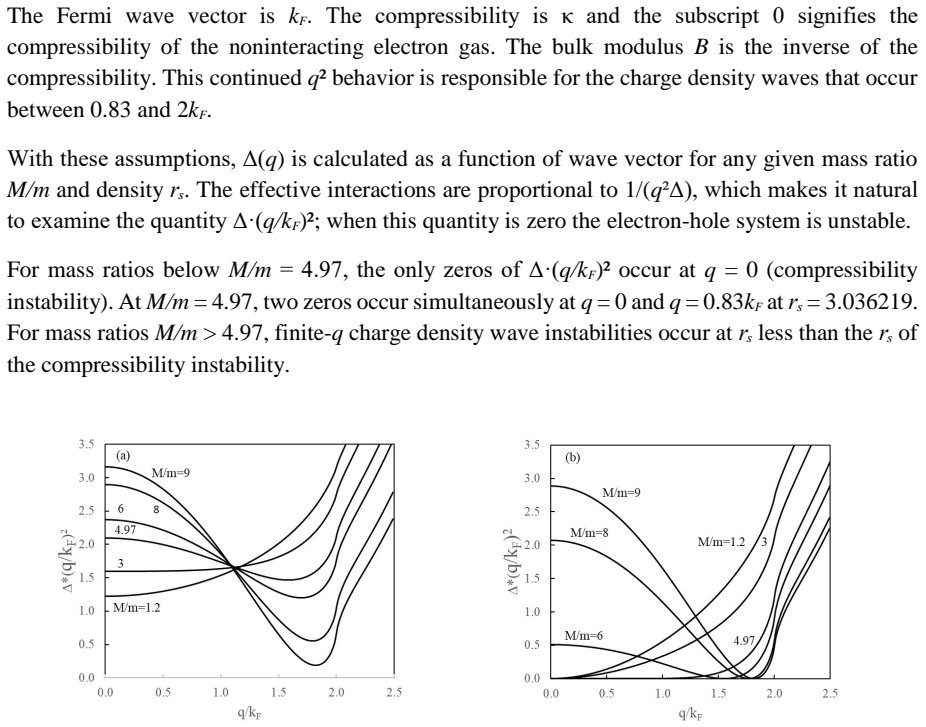
A neutral degenerate plasma of equal numbers of electrons and positively charged fermions (holes) -- the electron-hole gas -- is studied using a simple, physically motivated two-parameter model (density r_s and mass ratio M/m). Two simplifying assumptions are made but not proven: the electron-hole correlation energy is approximately independent of density and does not affect the pressure or bulk modulus, and the electron-hole contribution to the local field factors is zero, allowing use of the known electron-gas local field factors. With these assumptions the phase diagram, instabilities, and effective interactions can be calculated for all mass ratios and densities using simple formulae, reproducible on a laptop. The key new physics is the additional screening provided by the mobile holes. A single function Delta appears in the denominator of all effective interactions and response functions. Near the zeros of Delta at q = 0 (compressibility instability) and at finite q, three phenomena are simultaneously enhanced: charge density waves (for M/m >= 4.97), a large T^2 electrical resistivity from electron-hole scattering, and an attractive electron-electron interaction that is the purely electronic analog of BCS electron-phonon coupling. Crudely estimated superconducting transition temperatures approach room temperature, reaching approximately 275 K at M/m = 9. No claim is made that this model applies to any specific material. The aim is to provoke scrutiny of the assumptions, calculation of the unknown local field factors, and investigation of whether this minimal two-carrier framework maps onto real systems.
Quantum many-body scars (MBS) exhibit weak ergodicity breaking and long-lived coherent dynamics within an otherwise thermal spectrum. We investigate their metrological properties using the quantum Fisher information (QFI), focusing on estimating the amplitude of a weak AC field in the PXP model. We show that the approximately uniform energy spacing of the scar tower enables collective resonant processes when the driving frequency matches integer multiples of the scar gap, resulting in a quadratic-in-time growth of the QFI over an extended time window. We analyze how the connectivity induced by different probe operators shapes sensing performance and demonstrate that staggered magnetization leads to a more favorable growth of the QFI with system size than homogeneous magnetization. Through frequency scanning and finite-size analysis, we characterize the scaling of the QFI with the number of particles. Finally, we develop a single-tower approximation under resonant driving, deriving a compact analytical expression that captures the time dependence and system-size scaling of the QFI. Our results establish how to leverage structured non-ergodic dynamics in quantum sensing protocols.
The United Kingdom and Europe are moving rapidly from critical minerals target-setting to implementation. The EU Critical Raw Materials Act and the UK's Vision 2035 create ambitious benchmarks for domestic extraction, processing, recycling, circularity, and supply-chain resilience, but many prospective regional resources remain complex, under-explored, historically worked, or economically marginal. This paper argues that implementation will depend not only on permitting reform and project designation, but also on pre-competitive measurement, modelling, and data infrastructure capable of determining which ores, brines, waste streams, and recycling feedstocks can be processed viably and with lower environmental impact. Digital Rock Physics (DRP) should therefore be understood as enabling infrastructure for resource policy rather than as a specialist laboratory method alone. By combining three-dimensional imaging, correlative chemistry, AI-enabled image analysis, and pore-scale modelling, DRP can connect mineral texture and reactive pathways to decisions about ore characterisation, liberation prediction, leaching, Direct Lithium Extraction, mine-waste valorisation, and battery recycling. The paper sets out a UK-European policy agenda built around translational demonstrators, cross-disciplinary training, a Digital Ore Passport standard, a federated Digital Ore Database, and integrated geo-reactive end stations. Treated as shared implementation infrastructure, DRP could help turn critical minerals strategies into practical routes for supply security, resource efficiency, circularity, and more environmentally responsible development.
A new large-volume diamond anvil cell (DAC) has been developed for the Muon-catalyzed Fusion ($\mu$CF) Experiment (MuFusE), enabling the compression and heating of deuterium-tritium (d-t) mixtures to pressures and temperatures needed to advance $\mu$CF research. The MuFusE DAC achieves the large sample volumes necessary for high-precision fusion measurements while integrating cryogenic loading, all-metal sealing, and flexible bellows to maintain a secure environment during cell compression. Combined with remote pneumatic actuation and secondary containment, the DAC safely managed a 25 Ci tritium inventory while providing a clear optical path for in situ measurements of sample pressure and composition via laser spectroscopy. Utilizing 5 mm diameter diamond anvils oriented in the path of a high-intensity muon beam, the apparatus achieved a stable sample volume of 19.2 mm$^3$ at liquid density, pressures up to 933 MPa and temperatures up to 400 K - benchmarks that significantly exceed previously reported limits for static d-t targets.
We study the non-equilibrium dynamics of a disordered periodically driven quantum spin chain, with the competition between the interaction, disorder, and Floquet driving being of particular interest. We study dynamics of entanglement entropy, energy absorption to characterize dynamical regimes of the system whether it stays in the Floquet-MBL(many-body localization) region or thermalized region. Starting with a product state in the computational basis, followed by reduced density matrix which in turn gives rise to the entanglement entropy density. With the strength of the interaction, the transverse field, the parallel field, the disorder strength W and the driving frequency, we discover the distinct behaviors of fast delocalization and logarithmic entanglement growth and long-lasting memory of the initial state, indicative of localized or prethermal Floquet regimes. We observe that strong disorder arrests transport and enables slow entanglement dynamics, whereas strong driving frequency arrests energy absorption and creates a long-lived non-equilibrium state. Conversely, weak disorder or low driving frequency leads to delocalization. The outcomes show strong support for non-equilibrium phases in driven many-body systems.
We investigate the non-equilibrium dynamics of the disordered one-dimensional Fermi-Hubbard model with a focus on many-body localization. The system is initialized in a charge-density-wave-state, and its time evolution is analyzed through sublattice imbalance (spin and charge), and bipartite entanglement entropy. A clear crossover from ergodic to non-ergodic behavior is observed with increasing disorder strength. In the weak disorder regime, rapid decay of imbalance and the fast growth of entanglement indicate efficient thermalization. In contrast, a strong disorder leads to persistent imbalance and slow dynamics, signaling the breakdown of ergodicity. The charge and spin sectors exhibit distinct relaxation behavior, providing evidence for partial decoupling between these degrees of freedom. Furthermore, in the interacting regime, the entanglement entropy shows slow logarithmic growth, reflecting the dephasing-driven dynamics characteristic of the many-body localized phase. These results highlight the interplay between disorder and interactions in determining the dynamical properties of the system and establish robust signatures of many-body localization in the Fermi-Hubbard model.
Due to its localized nature and controllability, the negatively charged boron vacancy centers (V$_\text{B}^-$) in hexagonal boron nitride (hBN) are a promising spin platform for accessing its neighboring nuclei with potential for performing quantum computational tasks. However, the methods of utilizing and manipulating the nuclear spins are still lacking. In this work, we propose a protocol for the preparation of single- and multi-qubit gates on the nuclear spins, utilizing the electron spin as an auxiliary qubit. By applying a background magnetic field and a multi-tone continuous drive, we show that the electron spin coupling to the nuclei can be efficiently engineered. This allows for suppressing the undesired electron-nuclear interactions through the Hahn echo pulse sequence. The target gates are then implemented by employing proper RF drives. Our numerical results for realistic parameters show gate fidelities as high as $99\%$ for single-qubit and $95\%$ for multi-qubit gates. With the gate execution durations being less than $300$ ns, our protocol evades electron spin decoherence effects. Therefore, our scheme sets the stage for the practical application of V$_\text{B}^-$ in hBN for quantum computation purposes.
Quantum error correction protocols protect against local errors by storing logical information non-locally. This poses a challenge: how to design efficient logical gates on the non-local ``hidden'' logical information, and how to implement these gates using the local physical operations. We develop a general description of planar Pauli stabilizer codes and protocols for logical operations in terms of point-like particles called Majorana fermions. Information is stored in the pairwise fermion parities of spatially separated Majorana fermions. The description in terms of Majorana fermions captures not only large distance asymptotics, but also all scales down to the lattice constants. We exploit this locality to densely pack logical information in spacetime. The simplest application is to a static case: dense memory. More importantly, we implement fault-tolerant Majorana motion and leverage this primitive to design braiding-based logical gates. This approach reduces space overhead of logical operations resulting in an improved logical error rate given fixed number of physical qubits. We illustrate a practical use of our approach by designing and benchmarking of 2-qubit Clifford gates. We find numerically that our protocol outperforms lattice surgery in this setting for near-term error rates and realistic device constraints. More generally, introduction of compact motion of Majorana fermions as an efficient computational primitive opens a promising new route for the design of low overhead error correction protocols.
As magnonics evolves towards non-conventional computing, the development of phase-conserving and phase-sensitive amplification mechanisms becomes increasingly important. A particularly promising approach is non-adiabatic parametric amplification. In this work, the influence of local inhomogeneities on the parallel parametric amplification of spin waves in nano-scale Yttrium Iron Garnet waveguides is investigated. Micromagnetic simulations reveal that in larger pump regions, where only adiabatic amplification is expected, scattering centers provide additional linear momentum that enables non-adiabatic amplification of propagating spin waves. Importantly, the coherence of the process remains unaffected by the scattering and the generation of co-propagating spin waves enhance the effective amplification. Our simulations are confirmed by micro-focused Brillouin light scattering spectroscopy experiments, reproducing both the phase-dependent behavior and the characteristic features of the time-resolved dynamics. These findings demonstrate the flexibility of the parametric amplification process and provide a key mechanism for the development of large-scale spin-wave computing circuits.
Magneto-optical data on double quantum well match heavy-hole excitons and indicate strong spin-orbit coupling for electrical spin control.
abstractclick to expand
Hole spin qubits in germanium (Ge)-based heterostructures have demonstrated their potential for scalable quantum information processing using all-electrical gate operations. Furthermore, the emerging material platform of germanium-tin (GeSn) can feature a direct bandgap, which makes it promising for establishing spin-photon interfaces for quantum networking. Here, we perform magneto-photoluminescence measurements of a Ge0.88Sn0.12/Si0.02Ge0.89Sn0.09 double quantum well using the double modulation Fourier transform infrared-based photoluminescence spectroscopy. Our measurements reveal theoretically expected diamagnetic shift at low magnetic fields as well as the linear trend of zeroth-level Landau quantization at higher fields and Zeeman-induced polarization-dependent energy shifts at +/- 12 T. We extract an effective g-factor of ~ 2 and an excitonic reduced mass of ~ 0.04 me consistent with previous estimations for heavy-hole {\Gamma}-valley excitons. The observation of sizable Zeeman splitting is consistent with strong spin-orbit interaction in Ge-based hole systems, which can enable electrically driven spin control. Our analysis can be adopted for studying and evaluating group-IV semiconductor heterostructures as hosts for hole spin qubits toward scalable quantum information processing.
The Granovskii-Zhedanov (GZ) states are exact scar states of the spin-S XYZ chain for S >= 1. As a result, local quantum information encoded in a GZ state remains preserved under the unitary dynamics of the XYZ Hamiltonian; thus, these states evade thermalization and violate ergodicity despite the system being otherwise nonintegrable and chaotic. However, in realistic experimental settings, the realization of an ideal XYZ Hamiltonian is not possible, as perturbations are inevitable. These perturbations ultimately lead to the decay and thermalization of the GZ state. We study the stability and dynamics of GZ states in the presence of generic perturbations and propose physically realistic mechanisms to stabilize them. We show that the product structure of the GZ state allows its lifetime to be enhanced in the presence of an external helical magnetic field, which slows down thermalization but does not prevent it at long times. We further demonstrate that the inclusion of effective non-Hermitian spin relaxation processes can substantially stabilize the GZ states, leading to a nonequilibrium steady state with finite fidelity with GZ state. Such dissipative processes can naturally originate from mechanisms such as Purcell-enhanced spontaneous emission or spin-lattice relaxation in the presence of the helical magnetic field. Using infinite time-evolving block decimation and exact time evolution, we systematically analyze the dynamics and robustness of the GZ states in the perturbed non-Hermitian XYZ model. To connect with experimental platforms, we introduce a Hubbard model that maps onto the XYZ spin system and propose that ring-shaped optical lattices may provide a viable route for realizing and stabilizing GZ states. Finally, we present an equivalent Lindblad description of the effective non-Hermitian dynamics.
A 100-transistor timing circuit based on amorphous thin films runs stably to 1 million ions per cm² fluence.
abstractclick to expand
Radiation-hardened electronics using semiconductors beyond silicon are essential for computation and control in extreme environments. Yet complex digital circuits based on such material platforms operating in situ under heavy-ion irradiation remain largely unexplored. Here, we show a timing circuit based on amorphous thin-film semiconductors at the 100-transistor scale, and demonstrate its robust operation through a functional "Hello World" ASCII output sequence. Beyond static device characterization, we evaluate the circuit under powered heavy-ion irradiation using tantalum ions, providing an operationally relevant assessment of radiation tolerance at the system level. Under a high particle flux of 2.5 x 10^3 ions cm^-2 s^-1, the circuit maintains stable operation during the irradiation test, achieving a total fluence of 1 x 10^6 ions cm^-2, establishing a milestone of prolonged powered digital operation under extreme conditions. Our work expands the design space of radiation-tolerant electronics, highlighting amorphous semiconductors as a promising foundation for digital circuits deployed in harsh environments.
Generalized Gross-Pitaevskii equation yields phonon-roton spectrum for superfluid excitations
abstractclick to expand
We have derived the nonlinear Schrodinger equation generalizing the Gross-Pitaevskii (GP) equa tion for dilute Bose gas. The derivation is based on the Hartree-Fock time-dependent mean-field theory with an arbitrary intermolecular interaction potential. It is shown that obtained nonlinear Schrodinger equation with appropriate redefinition of coefficients can be used for description of dense Bose fluid at low temperatures. We also present the Schrodinger type equation describing the superfluid component of helium in two fluid hydrodynamics. This approach leads to quantum correction for superfluid component of velocity in two fluid hydrodynamics. We also have derived the nonlinear Schrodinger equation for superfluid He4 film at low temperatures. It is shown that this Schrodinger type equation for superfluid He4 film leads to phonon-roton dispersion relation for elementary excitation at low temperatures.
Based on equations of motion of an SO(5) pseudo-spin, we demonstrate a quantum quench protocol using the magnetic pulse to excite an $\textit{undamped}$ heavy Higgs boson in the Balian--Werthamer superfluid (or superconductor). To achieve that, it is essential to include the dipolar interaction in the effective Hamiltonian and to calculate the ground state self-consistently. The pumped heavy Higgs mode has the twisted angular momentum $J=2$ with the projection $J^{\,}_z=0$ and couples to a well-known light Higgs mode ($J=1$, $J^{\,}_z=0$). The numerical method of 26-point Lebedev quadrature is implemented concretely so as to observe the real-time coupled oscillation.
We investigate variational learning of quantum many-body ground states directly in measurement space using autoregressive neural networks. In particular, we represent quantum states via probability distributions of outcomes over a symmetric informationally complete positive operator-valued measure (SIC-POVM). The probability distribution is encoded in the parameters of an autoregressive neural-network-based on gated recurrent units (GRUs). Ground states are obtained by gradient descent that updates the probability distribution to minimize the energy with respect to a given Hamiltonian, while enforcing positivity constraints that ensure that the distribution of measurement outcomes correspond to a physical quantum state. We analyze the role of constraint enforcement (hierarchy of positivity conditions), variety of neural network architectures (multiple layers, dilation, and modifications of input data) in determining the success of this approach. We benchmark our approach on one-dimensional transverse-field Ising model and the Heisenberg model, along with gapping fields, for system sizes up to L=128, illustrating its efficacy across a wide variety of models.
We introduce FunKit, a Mathematica package for the derivation and tracing of functional equations from arbitrary master equations. FunKit provides an expression vocabulary and a set of rules that allow for derivations in any given field theory and master equation. It also allows users to add extensions for more specific equation systems. Therefore, it can be used in a wide range of situations, for example Dyson--Schwinger or functional RG equations, flowing reparametrisations, nPI equations, (modified) STIs and WTIs, functional Polchinski and Wegner flows, functional master equations with sources, and many others. Besides interfacing with the \FORM language to trace large tensor expressions efficiently, FunKit also provides facilities to export arbitrary Mathematica expressions to C++, Julia or Fortran code, including the results of derivations, which can then be evaluated numerically. Both the tracing and code generation can also be used independently and in combination with other packages.
We investigate magnetoresistance phenomena associated with the magnetization hard-axis collapse in polycrystalline Co thin films. Transport measurements reveal that, for specific orientations of the applied magnetic field, the system exhibits distinct remanent resistance levels in both the in-plane longitudinal and transverse voltage responses. In particular, the planar Hall resistance shows multiple stable and reproducible levels at room temperature, enabling the identification of at least three remanent states that can be distinguished and used for information storage. These resistance levels originate from non-uniform magnetic configurations stabilized after the application and removal of the external magnetic field in the hard-axis region. Since this phenomenon remains largely unexplored, we present an incipient study addressing its potential implications from an applied-physics perspective. The observation of such behavior in polycrystalline Co thin films grown on Si substrates suggests a simple and low-cost platform for spintronic memory and sensing devices based on the remanent planar Hall effect.
Quark-gluon dynamics within protons and high-energy radiation phenomena in the universe are typically regarded as two entirely distinct fields. This paper aims to demonstrate that gluon condensation (GC) may serve as a direct bridge between these two fields. We review three key aspects of GC research: first, the Zhu-Shen-Ruan (ZSR) equation, as a nonlinear evolution equation based on structural symmetry, exhibits self-consistent connections with the DGLAP, BFKL and GLR-MQ-ZRS equations, providing a theoretical foundation for the generation of GC; second, the chaotic solutions and the shadowing-antishadowing synergy inherent in this equation can drive gluons to aggregate near the critical momentum, thereby forming a novel type of high-density, strongly interacting matter; third, these changes in microstructure manifest themselves as a broken-power-law feature in high-energy cosmic gamma-ray spectra, thereby offering new insights into the hadronic scenarios underlying certain astrophysical sources. Consequently, GC not only concerns the novel behaviour of quantum chromodynamics under extreme conditions but may also serve as a vital window for probing the deep structure of protons using cosmic-ray signals. With the advancement of higher-precision gamma-ray observations, hadron collision experiments and related theoretical research, the physical picture of GC and its observational criteria are expected to undergo more rigorous testing. Should this picture be confirmed, certain features in the high-energy gamma-ray spectrum will need to be re-examined within the deeper context of hadronic dynamics; simultaneously, GC may also provide a new entry point for research into pion condensation in nuclear physics and even condensed matter physics. Consequently, the significance of the search for GC extends beyond the model itself, reaching into multiple fields of natural science.
Compressive regions stabilize order in VTe2 while the pattern competes with superconductivity induced from NbSe2.
abstractclick to expand
Twisted moire superlattices in van-der-Waals heterostructures provide a powerful platform for engineering correlated states through moire-band reconstruction. However, whether globally coherent electronic orders can be continuously manipulated at the nanoscale remains largely unexplored. Reconstructed moire structures in small-angle and near-commensurate regime feature continuously varying local environments, offering new opportunities for nanoscale manipulation of correlated phases. Here, we report the modulation of charge density wave (CDW) states in a twisted vortex moire superlattice formed between monolayer VTe2 and superconducting NbSe2. Scanning tunneling microscopy/spectroscopy reveals that the intrinsic long-range CDW of monolayer VTe2 is reconstructed into inequivalent local phases with distinct stability and coherence within a single moire unit cell, including suppressed CDW order and enhanced short-range CDW correlations persisting to room temperature. First-principles calculations show that the reconstructed CDW landscape originates from strong local strain variation, where compressive strain substantially stabilizes the charge order. Furthermore, the modulated CDW states exhibit competing interplay with proximity-induced superconductivity. Our results establish vortex moire superlattices as a versatile platform for nanoscale manipulation of correlated electronic orders in low-dimensional quantum materials.
Commuting Hamiltonians lie at the boundary between classical constraint satisfaction and quantum many-body physics, exhibiting rich quantum structure while remaining more tractable than general noncommuting models. In contrast, physical Hamiltonians are rarely exactly commuting, which naturally motivates the study of almost commuting Hamiltonians. Despite their relevance, the implications of approximate commutation are only poorly understood.
In this work, we show how to efficiently approximate any almost commuting $2$-local qubit Hamiltonian by a commuting one: we give a new locality-preserving algorithmic rounding technique that maps any $2$-local Hamiltonian $H=\sum_{i=1}^m h_i$ with $\|[h_i,h_j]\| \leq \epsilon$ to a nearby Hamiltonian $\hat{H}$ whose terms pair-wise commute, and which is within overall distance $\|H-\hat{H}\| = O(m\,\epsilon^{1/6})$. As a consequence, we show that $\delta$-approximations to the ground energy for $\epsilon$-almost commuting $2$-local qubit Hamiltonians lie in $\mathsf{NP}$ when $\delta \gg m\epsilon^{1/6}$, extending the classical containment well beyond the commuting setting. Finally, we present two applications of our rounding framework: Gibbs sampling and fast Hamiltonian simulation for almost commuting systems.
We report numerical simulations of the dissipative Gross-Pitaevskii equation for a bulk region of thermal-counterflow turbulence. Quasistationary states are obtained over a range of forcing, damping, and healing-length parameters. The mutual-friction acceleration exhibits cubic scaling with the mean relative velocity between the superfluid and normal-fluid components, and the coefficient of this scaling is linked to the phenomenological damping parameter. The intervortex spacing follows the expected dimensional scaling in the weak-forcing regime. Comparison with a straight-vortex-line model suggests that the vortex-line orientations are nearly isotropic.
We demonstrate that the effective spin-exchange coupling $J$ in open-shell nanographene dimers can be precisely tuned via tip-induced dehydrogenation of selected carbon atoms. Using the double ionization potential equation-of-motion coupled-cluster singles and doubles (DIP-EOM-CCSD) method, we accurately compute the singlet-triplet gaps, which correspond directly to the exchange coupling $J$. We show that the position of the dehydrogenated (or hydrogen-passivated) site in triangulene dimers strongly modulates the singlet-triplet splitting, allowing $J$ to be tuned over a wide range - from a few meV to several tens of meV. This strategy provides a simple yet powerful route for designing tailored spin models with alternating or spatially patterned spin-exchange couplings.
We demonstrate that the dynamical phase transition of the quantum $\mathcal{O}(N)$ model at large $N$ leaves universal fingerprints in the infrared structure of the entanglement spectrum. While the leading contribution to the entanglement entropy at long time follows the conventional volume law associated with ballistic entanglement spreading, its subleading behavior sharply distinguishes the different dynamical regimes. Specifically, quenches at and below the critical point generate gapless low-energy entanglement modes together with logarithmic corrections to the long-time entanglement entropy, whose scaling is governed by the dynamical exponent of the transition. Using an infinite-slab bipartition geometry and exact numerical correlation functions in the large-$N$ limit, we characterize these scaling laws across the dynamical phase diagram and relate them to the emergence of long-range correlations during the post-quench dynamics. We further show that the entanglement eigenmodes themselves reveal characteristic signatures of the dynamical phase transition through their spatio-temporal structure and degeneracy properties.
Quantum dissipation is studied in the superradiant phase of the Extended Dicke model. It is demonstrated analytically by quantum mechanical derivation of the Lindblad equation for the Dicke model in the superradiant state coupled to Caldeira-Leggett thermal bath, that the effective viscosity appearing in the semiclassical equations of motion of polaritonic condensate survives in the zero temperature limit T -> 0. The nonzero contribution to viscosity contains prefactor nB ({\omega}, T ) + 1 with the Bose-Einstein function nB of harmonic oscillators in the thermal bath, indicating that virtual excitations of harmonic oscillators in the thermal bath coupled to the polaritons of Dicke model give rise to effective viscosity in the T -> 0 limit. Besides, it is demonstrated analytically, that correct expression for Lindbladian in the superradiant phase should be built using condensate-shifted creation and annihilation operators of the photons and pseudospin operators in Holstein-Primakoff representation of the coupled to photons two-level systems in order the system could relax to its minimum energy in T -> 0 limit due to thermal bath provided effective viscosity.
We present a computational framework that integrates machine learning with high-throughput \textit{ab initio} calculations to screen over 2.8 million compounds for metallic transport. We identify several intermetallic candidates with predicted high conductivities comparable to that of aluminum ($36.59 \times 10^6$~S/m). We perform full electron--phonon coupling calculations for the top-performing materials, yielding results in excellent agreement with available experimental data. Our analysis reveals that while the noble metals (Ag, Au, Cu) define the practical ceiling for conductivity due to their unique electronic structure and low scattering, compounds like $\text{LiBePt}_2$ can achieve comparable performance by utilizing valence electrons from light elements to shift high-scattering $d$-states beneath the Fermi level. This study not only identifies novel high-performance conductors but also demonstrates the predictive power of combining statistical learning with detailed ab initio calculations.
Skyrmion crystals have been primarily discovered under a magnetic field for materials with non-centrosymmetric interactions. More recent developments have investigated the stability of skyrmion crystals in itinerant magnets without magnetic field. In this study, we find that a type of skyrmion crystal with two topological charges per unit cell and no magnetization at the ferromagnetic point in reciprocal space, SkX-2, is naturally stabilized in an $SO(3)$-symmetric model with short-range interactions realized by the Heisenberg model on the triangular lattice with scalar chirality. We complement our numerical results with a theoretical analysis that quantitatively describes the transition from the ferromagnetic ground state to the SkX-2 and the evolution of the topological charge density. Despite the constraints given by the Mermin-Wagner theorem at finite temperature, the SkX-2 exhibits both a first-order phase transition associated with translation symmetry breaking and a continuous transition to a floating solid, depending on the charge density controlled by the model parameters. Finally, the tetrahedral phase supported by an antiferromagnetic interaction in our model is found to host $\mathbb{Z}_2$-vortices at finite temperature, suggesting the existence of an additional vortex topological transition.
Co-adsorption of Bi and Sb on Ag(111) at room temperature yields a single-layer Bi(1-x)Sb(x) alloy with a rectangular 3xsqrt(3) structure containing four atoms per unit cell (2/3 ML total coverage) and lacking long-range chemical order. We present an electronic structure study of this system combining angle-resolved photoemission spectroscopy (ARPES) and density functional theory (DFT) calculations. To investigate the effect of inversion symmetry breaking induced by substituting a heavier atom (Bi) with a lighter isoelectronic one (Sb) within a fixed crystallographic framework, we focused on a Bi-rich composition. ARPES measurements reveal four surface-state bands, in good agreement with DFT calculations based on a rectangular four-atom overlayer unit cell. DFT calculations further show that Sb incorporation induces both in-plane and out-of-plane asymmetries in the electronic potential, leading to sizable spin splitting and spin polarization of the overlayer bands. Although these effects are partially reduced by interaction with the substrate, they remain significant. Our work illustrates, through a concrete model system, a general principle: incorporating a lighter isovalent element can significantly enhance spin polarization, potentially offering a useful design guideline for understanding and engineering Rashba-related systems.
We theoretically investigate the formation and dynamics of bright exciton-polariton solitons within systems engineered to support Bound States in the Continuum. By employing a driven-dissipative Gross-Pitaevskii equation coupled with a rate equation for the excitonic reservoir, we demonstrate that BICs provide a robust platform for stabilizing the condensate against radiative decay. Utilizing a Lagrangian variational approach, we derive analytical expressions describing the trajectory and velocity of these bright solitonic excitations. Notably, we find that the propagation of these BIC-engineered solitons exhibits a distinct self-deceleration, eventually bringing them to a halt at a final position dictated by the initial conditions and intrinsic system parameters. Furthermore, we analyze the dynamical stability of these solitons. Our findings offer valuable insights into the manipulation of polaritonic flows in non-Hermitian systems.
We present a non-perturbative Floquet-based non-equilibrium Green's function (NEGF) method to study electron transport in a quantum system driven simultaneously by multiple independent terms (multi-mode). We first derive the two-mode Floquet NEGF based on two-step transformations of the retarded-advanced Green's function from the Kadanoff-Baym equation. This derivation proceeds by elaborating on the expectation values of the number and current operators. The two-mode Floquet NEGF is then extended to cases with multiple drivings. The method is tested by investigating current suppression in the presence of two drivings. We show that an extra sinusoidal off-diagonal driving can cause substantial modification to the current suppression, provided careful selection of the driving frequency. Consequently, we expect that the established method has broad applications in a wide range of open quantum systems driven by complicated drivings.
Reproducing the experimental 41 s relaxation time shows intramolecular vibrations govern the slow channel.
abstractclick to expand
Molecular spin qubits offer a versatile platform for quantum information processing due to their synthetic tunability and well-defined electronic structure. Here, a fitted-parameter-free computational framework combining density functional theory (DFT), time-dependent DFT (TD-DFT), and Redfield theory is applied to investigate the longitudinal spin-lattice relaxation time $T_1$ of the Eu nuclear spin qubit Eu(dpphen)(NO3)3. Using a single-molecule gas-phase model, the experimental long relaxation component $T_{1,\mathrm{long}} = 41.39$ s is reproduced within a factor of 1.4 (calculated: 55.88 s at 4.2 K), indicating that the slow relaxation channel is governed by intramolecular vibronic coupling. In contrast, the calculated $T_{1,\mathrm{short}}$ deviates by a factor of 66, highlighting the importance of crystal lattice and intermolecular effects absent from the model. The experimental $^5D_0 \rightarrow {}^7F_0$ optical transition is reproduced to within 1.1%, supporting the accuracy of the electronic structure description. Vibrational analysis identifies a large-amplitude dpphen rocking mode at a frequency of $332.02~\mathrm{cm}^{-1}$ as the dominant vibronic coupling channel, while electric field gradient (EFG) derivative analysis independently identifies another nitrate-rocking mode at $180.57~\mathrm{cm}^{-1}$ as the primary modulator of the nuclear spin environment via nitrate motion. These results are consistent with a near-maximal quadrupole asymmetry parameter $\eta = 0.941$, which creates state mixing through off-diagonal quadrupolar terms. Overall, the results establish a single-molecule relaxation baseline and suggest targeted ligand rigidification and substitution strategies to suppress decoherence.
A quantitative understanding of the processes that trigger light-induced demagnetization on ultrashort timescales is crucial for achieving an ultrafast, radiation-controlled magnetic response in materials. This milestone is essential for developing next-generation magnetic storage devices and ultrafast magnetic switches. In this theoretical study, we investigated demagnetization triggered in a single magnetic domain by light pulses ranging from a few to a few tens of femtoseconds in duration, with photon energies spanning the optical and X-ray regimes, under strongly non-equilibrium conditions. We predicted a loss of magnetization in the sub-100-fs range in all cases, primarily due to the excitation of the electronic system and the subsequent redistribution of electrons within the magneto-sensitive band. The considered timescales were too short for phonon-mediated processes or inter-site Heisenberg exchange processes to contribute significantly. These findings pave the way for highly accurate, radiation-driven magnetization control in magnetic materials at sub-100-femtosecond timescales with potential practical applications.
Driven-dissipative quantum systems can exhibit robust transport and amplification in topological regimes, yet the connection between topology and the extent of correlations remains largely unexplored. In this work, we develop a general framework that links topological phases in driven-dissipative systems to bosonic correlations via the singular value decomposition (SVD). In essence, we claim that non-Hermitian topology in quadratic Liouvillians is directly encoded in steady-state correlations, providing an intrinsic characterization of topology without external probes. We show that topological amplification induces disorder-robust long-range order (LRO) in steady-state correlations at fixed frequency, establishing frequency-resolved correlations as direct signatures of non-Hermitian topological phases. We introduce a vector-valued topological invariant that captures the total number of singular-value gap closings across the frequency axis, extending the concept of adiabatic deformation from topological insulators to the case of topological phases of quadratic Liouvillians. Within this framework, we further demonstrate that the spatial structure of equal-time correlations encodes global topological information, manifested as a Gaussian spatial decay with distance in the topological phase, in contrast to the exponential decay characteristic of trivial phases. These findings open new avenues for quantum sensing and correlation engineering in non-Hermitian systems, with feasible implementations in platforms such as trapped ions and superconducting circuits.
Ultrafast dynamics of collective excitations in superfluids remains largely unexplored beyond the roton region of the Landau excitation spectrum, despite the importance of such dynamics for understanding nonequilibrium processes in these systems. Here, we employ ultrafast coherent control with sequences of femtosecond pulses to perform spectroscopy of multiple quasiparticles in superfluid helium far from equilibrium. By measuring the time-resolved optical birefringence, we track the nonequilibrium dynamics of quasiparticle pairs associated with rotons, maxons and the Pitaevskii plateau region. The spectral lineshape of the roton peak is explained by an ab initio theoretical analysis of the roton-roton interaction. We also reveal strong energy shifts and short lifetimes of both maxon and Pitaevskii-plateau pairs, as well as an influence of the quasiparticle effective mass on the phase of their coherent response to laser pulses. These results demonstrate the ability to extract previously inaccessible information about collective excitations in a strongly interacting quantum fluid by probing its nonequilibrium dynamics on picosecond and sub-picosecond timescales.
We implement manifestly microscopic many-body methods to study the dynamics of atomic impurities in a host quantum fluid, specifically $^4$He. Our investigations are motivated by experiments of muonium atoms within $^4$He with the goal of testing the universality of free fall by neutral bound states using unstable particles.
Structure calculations are performed using standard semi-analytic methods; we extend here the calculations of our previos work (Journal of Low Temperature Physics {\bf 93}, 415-449 (1993)) to muonic \he4, antiprotonic \he4 and mounium atoms within \he4. We find that the muonium impurity probes, due to its large zero-point motion, the atomic interaction at rather short distances. Its chemical potential is estimated to be about 19 meV. Antiprotonic \he4 has, on the other hand, a negative chemical potential.
Dynamics is treated by making all correlation functions time-dependent. In analogy to the derivation of the dynamics of the background liquid, we derive a working formula for the impurity self-energy that includes the most relevant physical effects. Results for the effective mass of \he3 and hydrogen atoms agree well with available experiments. The dispersion relations of muonic \he4 and antiprotonic \he4 pass through under the roton minimum.
Separate spin and orbital contributions exchange angular momentum but their vector sum remains fixed, even with laser or THz pulses.
abstractclick to expand
We develop a complete relativistic theory to describe the dynamics of electronic angular momentum including both spin (S) and orbital (L) contributions in magnetic systems. We start with the relativistic Dirac-Kohn-Sham Hamiltonian under the influence of an electromagnetic field and apply a unitary transformation to formulate the extended Pauli Hamiltonian. Using the transformed semirelativistic Hamiltonian, we derive the angular momentum dynamics for the orbital and spin angular momenta. Thereby, we formulate the coupled dynamics of orbital and spin moments consistent with the relativistic Dirac framework. Considering especially the conservation of the total angular momentum, J = S +L, we show first that J is conserved in the absence of a spin-polarized Kohn-Sham exchange field, but is no longer conserved under the application of an electromagnetic field, e.g., laser pulse, THz field, etc. Second, considering magnetic systems with atomic spin and orbital momenta, we derive the coupled equations of motion of angular momenta dynamics whilst making the atomistic Heisenberg approximation for the exchange interaction. Our results suggest that, under these assumptions, the total angular momentum remains conserved, even with electromagnetic field, but atomic spin and orbital angular momenta individually are not conserved.
We identify a correlation-driven mechanism for the temperature-induced spin reorientation in the quasi-one-dimensional van der Waals antiferromagnet CrPS4. Magnetic pair distribution function (mPDF) analysis resolves the local spin direction and shows that ferromagnetic intrachain correlations persist far above TN. Combining these correlations with a DFT-derived spin Hamiltonian reveals competing single-ion and exchange-anisotropy channels, with single-ion anisotropy remaining local while exchange anisotropy is renormalized as intersite correlations decay. This differential renormalization rotates the effective easy axis and captures the ordered-state canting. Above TN, the continued rotation beyond the model prediction delineates the limits of the dominant-chain approximation. These results establish mPDF-derived correlations as direct inputs to microscopic Hamiltonians and show how low-dimensional correlations can control magnetic anisotropy.
Polaritons are a superposition of light and matter, that combine Strong Interferences (of light) with Weak Interactions (of excitons), making them WISI (Weakly-Interacting, Strongly-Interfering) particles. Their condensation is the main highlight of a field which occupies a unique position at the intersection of quantum optics, condensed matter physics and nonlinear dynamics of driven, dissipative systems. This chapter surveys selected theoretical concepts of polariton condensates' formation, coherence and dynamics, with an emphasis on their distinctions from their atomic counterparts and on points of ongoing controversy. We argue that linear and non-interacting effects are undervalued in polariton physics, and that a significant part of the phenomenology -- including bosonic correlations and coherence buildup -- can often be understood without invoking strong interactions or genuine quantum effects.
Coding agents plus iterative constraint patching generate designs that track the sun better and reduce self-shadowing than flat panels.
abstractclick to expand
We present a case study for how AI coding systems can be used to generate novel scientific hypotheses. We combine a generic coding agent (Google's AntiGravity) with an LLM-driven tree search algorithm (Empirical Research Assistance / ERA) to autonomously generate high-efficiency three-dimensional photovoltaic (3DPV) structures that overcome losses limiting flat solar panels at mid-latitudes. These structures operate by presenting favorable angles to the sun throughout the day, and for illustrative purposes we focus on optimizing performance for a single solar day. Our workflow begins by using AntiGravity to reproduce calculations \cite{bernardi2012solar} showing that 3DPV can have energy densities much higher than stationary flat PV panels. We use these initial designs as the starting point for large scale tree search, where we seek improved solutions and score them for their diurnal yield. The initial tree search leads to nominally more efficient solutions, yet they are caused by algorithmic reward hacking, arising from non-physical design features such as structurally levitating disconnected tiers and exploitations of the discretizations in the optics solver. To counteract this, we develop a workflow where the coding agent iteratively patches the physics engine with constraints to eliminate reward hacking. With reward-hacking eliminated, ERA discovers a series of designs with various constraints and improved performance, including optimal designs with different fixed collector areas, optimizing zenith tracking and avoiding self shadowing.
Combining coding agents with tree search (ERA) provides a powerful platform for scientific discovery, for problems whose solutions can be empirically evaluated with a score function.