Translation-mode separation yields integrable coupling and Monte Carlo rates that hold for all time.
abstractclick to expand
We study second-order Consensus-Based Optimization (CBO), a derivative-free global optimization algorithm in which the consensus force and the multiplicative exploratory noise act on particle velocities. We prove quantitative uniform-in-time propagation of chaos for the unmodified second-order CBO dynamics, together with an almost uniform-in-time stability estimate for the microscopic particle system. The proof is not a direct adaptation of the first-order CBO argument. Although both first- and second-order CBO have multiplicative noise that degenerates near consensus and a shift-invariant weighted interaction, the kinetic model has an additional structural obstruction: the consensus mechanism and the stochastic forcing act only on the velocity variable, while the position variable evolves by transport. Thus spatial concentration has to be recovered indirectly through velocity dissipation. Moreover, the shift-invariant interaction leaves a translation mode that is not directly damped by the consensus force, so a standard synchronous coupling in the Euclidean phase-space distance does not close uniformly in time. The main idea of the paper is to introduce shifted internal variables that separate the contracting fluctuation modes from the undamped translation mode. In these variables we build a Lyapunov functional with a position-velocity cross term and prove exponential decay of centered moments. This decay is the mechanism that makes the time-dependent coupling coefficient integrable. Combining it with uniform-in-time raw moment bounds, concentration inequalities, stability estimates for the weighted mean, and a Monte Carlo estimate, we obtain the classical Monte Carlo rate for propagation of chaos uniformly in time. The system-to-system stability estimate avoids the sampling error and yields the faster rate \(O(J^{-q})\).
when initial loss is small and log-sum-exp functions remain linearly independent modulo affine functions
abstractclick to expand
Transformers have become the dominant architecture in modern machine learning, yet the theoretical understanding of their training dynamics remains limited. This paper develops a rigorous mathematical framework for analyzing gradient-based training of transformers in the mean-field regime, where both the depth (number of layers) and width (number of attention heads) tend to infinity. While ResNet training can be understood as controlling a neural ODE, transformer training corresponds to controlling a neural PDE, due to the coupling of multiple token distributions through the attention mechanism. Our mean-field model features two types of measure representations: token distributions evolving through layers and attention parameters at each layer. We establish well-posedness of the forward pass through infinitely deep transformers, characterizing token evolution via flow maps that satisfy ODEs in function spaces. Using adjoint sensitivity analysis, we derive an explicit formula for the conditional Wasserstein gradient of the training risk, involving adjoint variables governed by backward ODEs. We prove the existence and uniqueness of gradient flow curves in the conditional Wasserstein metric space, establishing a rigorous foundation for gradient-based transformer training. A key technical contribution is providing necessary and sufficient conditions for injectivity of the Neural Tangent Kernel (NTK) for attention mechanisms: we show that NTK injectivity is equivalent to linear independence of log-sum-exp functions modulo affine functions, a condition satisfied by diverse token distributions, including discrete distributions, uniform distributions, and Gaussian mixtures. Under this NTK injectivity assumption, we prove that gradient flow converges to global minima when the initial loss is sufficiently small, eliminating spurious local minima from the optimization landscape.
Finite-dimensional trajectories reach primal-dual solutions with o(t^{-2}) rates for α > 3 via Bregman arguments.
abstractclick to expand
We consider the Nesterov accelerated primal-dual dynamical system \[ \begin{cases} \ddot{x}(t)+\dfrac{\alpha}{t}\dot{x}(t) +\nabla f(x(t)) +A^\top\bigl(\lambda(t)+\theta t\dot{\lambda}(t)\bigr)+\beta A^\top(Ax(t)-b)=0,\\[0.6em] \ddot{\lambda}(t)+\dfrac{\alpha}{t}\dot{\lambda}(t) -\bigl(A(x(t)+\theta t\dot{x}(t))-b\bigr)=0, \end{cases} \] which is linked to the linearly constrained optimization problem $
\min_{x\in\mathbb{R}^n} f(x),\ s.t.\ Ax=b, $ where $\alpha\ge 3$ and $f$ is convex and continuously differentiable. In a Hilbert framework, the weak convergence of its trajectory was established by Bo\c{t} and Nguyen (J. Differential Equations, 303:369--406, 2021) under $\alpha>3$ and the Lipschitz continuity assumption on $\nabla f$. In this paper, we prove in finite-dimensional spaces that the trajectory converges to a primal-dual solution for $\alpha\ge3$, without assuming Lipschitz continuity of $\nabla f$. Moreover, when $\alpha>3$, we establish improved $o(t^{-2})$ convergence rates for both the objective residual and the feasibility violation. Our analysis relies on Bregman-distance arguments, instead of the Lipschitz continuity of $\nabla f$. The same strategy can also be extended to time-scaled primal-dual dynamics to obtain analogous convergence results. To the best of our knowledge, this is the first results in this topic without Lipschitz gradient assumption. Our result also present the first work on the convergence of the trajectory of the accelerated primal-dual dynamical system for the critical case $\alpha=3$.
The extension supplies explicit rates for stochastic iterative processes once the almost supermartingale and summability conditions hold.
abstractclick to expand
Olivier's 1827 theorem provides a rate of convergence to zero of the general term of a decreasing summable sequence of positive reals. We derive stochastic extensions of this result in the context of almost supermartingales. The results are applied to the analysis of stochastic iterative processes.
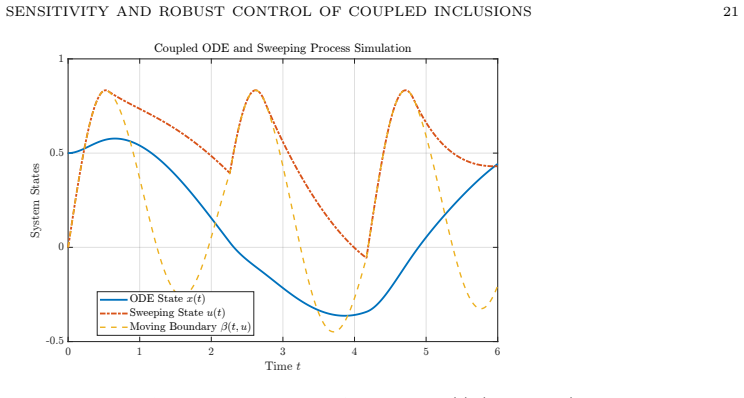
We consider a class of strongly coupled nonsmooth systems consisting of a semilinear evolution inclusion and a differential inclusion governed by state-dependent maximal monotone operators. Our main contributions are fourfold. First, we collect the well-posedness, compactness, and Painlev\'e--Kuratowski continuity properties of the parameterized solution map required for the subsequent optimization analysis. Second, for Bolza-type optimization over the solution set, we prove the existence of optimal pairs, establish continuity properties of the value function, and derive upper semicontinuity of the optimal-solution map. Third, we study fixed-parameter optimal control, simultaneous control-parameter design, min--max robust control, and Hurwicz-type compromise control under parameter uncertainty, and we establish existence results for each formulation. Fourth, we report numerical experiments for sweeping-type systems that illustrate the sensitivity and robustness phenomena predicted by the theory.
Stochastic resources such as wind farms, electric vehicle aggregators, and demand-side assets are increasingly participating as reserve providers in ancillary service markets. To manage delivery uncertainty, system operators impose minimum reliability thresholds on such providers. Energinet, the Danish transmission system operator (TSO), has pioneered this approach through the P90 requirement, requiring stochastic providers to make accepted reserve capacity bids available with at least 90% probability. Yet this threshold is set by regulatory convention, not optimization: no existing framework treats it as a design variable or characterizes the cost-reliability trade-off it governs. This paper closes that gap. We develop a bilevel optimization framework in which the TSO in the upper level sets the reliability threshold endogenously while providers in the lower levels respond through reliability-constrained bidding, with chance constraints reformulated analytically using a Weibull tail distribution. Applied to the Nordic frequency containment reserve for disturbances (FCR-D) market, the cost-optimal threshold lies below P90 in the studied cases, with cost reductions by up to 14.5% relative to the fixed standard. Dynamic hourly thresholds yield a further reduction of up to 2.4%, suggesting efficiency gains may increase in larger and more diverse reserve markets.
Cantor coordinate and contracting dynamics yield finite strict entropy but infinite ordinary entropy while breaking lower semicontinuity.
abstractclick to expand
We answer negatively two natural general forms of Kawan's questions on invariance entropy for control systems, open for more than fifteen years, by a single construction. We show that finite strict invariance entropy need not coincide with ordinary invariance entropy, and that strict invariance entropy need not be lower semicontinuous under Hausdorff perturbations of the initial set. The construction is a continuous-time control system in which a Cantor coordinate stores an infinite symbolic instruction, an exponentially contracting coordinate makes late mismatches geometrically invisible, and a compact matching graph forces exact symbolic agreement. It identifies a source of information complexity not generated by dynamical expansion, but by the persistence of exact viability constraints under thin invariant geometry and by the order of limits in invariance entropy.
Gamma-limit analysis shows the best fixed-mass distribution concentrates rather than spreads evenly on connected boundaries.
abstractclick to expand
We consider an optimal insulation problem for a bounded domain in $\mathbb{R}^N$ driven by the $p$-Laplace operator ($p>1$). We model the convective heat transfer between the body and the environment, which corresponds, before insulation, to a nonlinear Robin boundary value problem. Assuming the body is surrounded by a thin layer of insulating material of size $\varepsilon^{\frac{1}{p-1}}$, we compute the $\Gamma$-limit of the governing energy functional as $\varepsilon \to 0^+$. Furthermore, we study the optimization of the heat content among all possible distributions of the insulating material with a fixed total mass. Finally, we highlight a concentration breaking phenomenon. Under a suitable non-degeneracy condition, if the boundary of the domain is connected or the external temperature profile is constant, the optimal insulating layer fails to cover the entire boundary whenever the total mass is sufficiently small. This is shown to be optimal: an explicit example provides that a disconnected boundary can trigger an anomalous double-phase transition, causing the insulation to fracture again even at intermediate mass regimes.
Physics-informed neural networks (PINNs) have emerged as a promising route to solve partial differential equations, yet they have struggled to reach the precision of classical solvers. The obstacle is increasingly understood to be one of optimisation, owing to the severely ill-conditioned loss landscape. We present $\textbf{DSGNAR}$: Doubly-Sketched Gauss-Newton with Adaptive Ratio, a scalable second-order optimisation framework that confronts this ill-conditioning and, in doing so, obtains unprecedented accuracy and speed. $\textbf{DSGNAR}$ couples a doubly-sketched Gauss-Newton model with a novel strategy that carefully controls both regularisation and step length. Across a suite of problems spanning nonlinear, chaotic, multi-scale, high-dimensional, and Navier-Stokes, the framework greatly improves on the state of the art: able to attain relative $\ell_2$ errors as low as $3\times10^{-16}$ in double precision, improve contemporary results by five orders of magnitude on the canonical Burgers' equation, and as much as eight orders on a high-dimensional Poisson problem, while remaining markedly faster. We further show that, in single precision, solutions at the limit of round-off error can be obtained very quickly: Burgers' equation to $\ell_2^{\text{rel}} = 4.75 \times 10^{-7}$ in under ten seconds. The framework is also robust to the choice of architecture, arithmetic precision, and initial hyperparameters.
The code is available at https://www.github.com/wephy/physics-informed-neural-networks
We study timestep allocation for score-based diffusion sampling, where a learned reverse-time dynamics is discretized on a finite grid. Uniform and hand-crafted schedules are standard choices, but they rely on fixed prescriptions and can therefore be suboptimal. To address this limitation, we propose Adaptive Reparameterized Time (ART), a continuous-time control formulation that learns a time change by treating the speed of the sampling clock as the control, so that a uniform grid on the learned clock induces adaptive timesteps in the original diffusion time. Based on a leading-order Euler error surrogate, ART provides a principled objective for allocating timesteps along the sampling trajectory. To solve this deterministic control problem, we introduce ART-RL, an auxiliary randomized formulation with Gaussian policies that turns schedule learning into a continuous-time reinforcement learning problem. We prove that the randomized ART-RL formulation is equivalent to ART at the optimizer level, in the sense that its optimal Gaussian policy recovers the optimal ART time-warping rate through its mean. We further establish policy evaluation and policy improvement characterizations and derive trajectory-based moment identities that yield implementable actor--critic updates for learning the schedule. Across experiments ranging from controlled low-dimensional settings to image generation, ART-RL can be plugged into existing diffusion samplers by changing only the timestep grid, consistently improving sample quality over strong baseline schedules at matched budgets while leaving the rest of the sampling pipeline unchanged. The learned schedules also exhibit broad generalization, transferring without retraining across sampling budgets, datasets, solvers, pipelines, and representation spaces.
Recent work suggests that the convergence rate of gradient descent (GD) in smooth convex optimization can be significantly improved by employing large stepsizes that may violate the descent property. In particular, if the total number of iterations $n$ is given, an $O(n^{-1.271})$ convergence rate can be achieved for both function value and squared gradient norm minimization. On the other hand, in the setting of anytime convergence, where $n$ is not known in advance, the best known rates of GD are much slower: $O(n^{-1.119})$ for function value minimization and $O(n^{-1})$ for squared gradient norm minimization. It remains open whether any of these upper bounds can be improved, as they are far from the classical $\Omega(n^{-2})$ lower bound for any first-order method.
In this work, we establish two lower bounds on the anytime convergence of GD. We show that no positive stepsize schedule can achieve an $o(n^{-1.334})$ anytime rate for function value minimization, nor an $o(n^{-1})$ anytime rate for squared gradient norm minimization. The key ingredients of our analysis are novel upper bounds on the number and the magnitude of large stepsizes, derived by analyzing GD on quadratic functions and variants of Huber functions. Our work provides the first lower bounds for the COLT 2024 open problem posed by Kornowski and Shamir regarding the optimal anytime convergence rates of GD.
We study ridge-regularized log-density-ratio estimation in the Gaussian location model with a common covariance matrix. By affine invariance, the model is written as q $\sim$ N(0, I), p $\sim$ N($\Delta$, I), with linear features, where $\Delta$ is a mean vector. The variational estimator is the empirical Kullback-Leibler (KL) log-normalized fit with a squared L2-penalty on its nonconstant coefficient, and the spectral estimator recently introduced in [1] replaces a single variational problem by a continuum of ridge-regularized least-squares problems. We derive high-dimensional deterministic asymptotic equivalents when the numbers of observations and dimension tend to infinity with fixed ratios. The regularized variational limit is characterized by a scalar entropy minimization problem derived from the convex-Gaussian-min-max theorem (CGMT), while the regularized spectral limit follows from deterministic equivalents for resolvents of weighted sums of two independent Gaussian sample covariance matrices. We use these formulas to compare population risks, with experiments focused on fixed-signal aspect-ratio sweeps and optimized regularization. Our conclusion is that with many observations, under the criteria and asymptotic regimes analyzed here, the well-specified variational estimator has the smaller risk, while with fewer observations, the spectral estimator is favored because its covariance-based construction has lower variance. We also study how a nuclear penalty can be used and partially analyzed to perform feature learning.
A defending state facing sustained economic, media, and psychological pressure from an adversary that continuously re-optimises its campaign poses a problem that existing attacker-defender models in operations research do not directly resolve, because they treat the defender's state as a discrete allocation rather than a continuous, slow-moving institutional process. We formulate a coupled dynamical system in which grievance and institutional resilience evolve continuously while pressure intensity is chosen by an optimising Markov decision process, prove existence and local stability of the resulting equilibrium, and prove a formal result distinguishing it from standard feedback-stability analysis and from a stationary Markov chain treated in isolation. We validate the framework computationally using thirty randomised network instances, full value iteration, and a documented case study of cognitive warfare directed at Iran (2017--2026). The historically calibrated case sits approximately twenty-five times above the computed operational collapse boundary, and a greedy seeding policy reaches eighty-seven percent average network penetration across the randomised instances, significantly above a degree-centrality baseline. A practitioner can use the equilibrium and boundary computation to assess where a specific case sits relative to collapse, rather than relying on an unverified comparison between opposing pressure intensities.
In this paper, we consider the nonsmooth nonconvex decentralized optimization problem, where inter-agent communication is compressed. We propose a general framework that unifies various decentralized stochastic subgradient-type methods with unbiased compression and contractive compression with error compensation. By relating the consensus-error iterates and the averaged iterates to the trajectories of continuous-time differential inclusions, we establish global convergence for all methods encompassed by our framework when the objective functions are nonsmooth and lack Clarke regularity. Based on our framework, we further develop several compression-based methods, including decentralized stochastic subgradient methods utilizing sign-based regularization and gradient-tracking momentum. Preliminary numerical experiments empirically support our theoretical results and highlight the communication-accuracy trade-off of the newly developed methods.
Treating images as probabilistic waves integrates physics into AI for better bias handling and noise robustness.
abstractclick to expand
This study provides a theoretical expansion of the recent Data Relativistic Uncertainty (DRU) framework by formalizing a physics-to-AI paradigm for image enhancement. By modeling images as probabilistic wave functions rather than deterministic states, the paradigm explicitly integrates wave-particle duality to illustrate the system flow of how DRU leverages the intrinsic physical uncertainty of light, a dimension requiring further theoretical discussion. Consequently, this paradigm provides a rigorous Explainable AI (XAI) approach that enhances the interpretability of how DRU mitigates illumination bias and maintains robustness against data noise.
Integrated domains of members, skills, and projects reveal imbalances and support decisions on redistribution and capability building.
abstractclick to expand
This paper presents an actionable human resource (HR) decision-support framework for small firms and startups based on a multi-domain matrix (MDM). The framework addresses three key challenges faced by small organizations: complex interdependencies among organizational components; the lack of systematic analytical tools for HR decision-making; and the need for rapid responses in fast-changing organizational environments. The proposed framework formulates startup human resource management as a multi-domain structural modeling problem, where members, skills, and projects are interconnected domains within an integrated MDM. Based on this representation, the framework provides qualitative analysis guidelines and quantitative metrics for diagnosing an organization's HR state and supporting personnel decisions on workload redistribution, hiring, and capability development. A case study of MDM-based HR decisions for an early-stage technology startup is conducted to demonstrate the framework's practical applicability. The application shows that the framework can identify workload imbalances, reveal a key member with an unsustainable workload, and inform a subsequent hiring decision. The framework can be further applied after the hiring of a new member to track changes in the organization's multi-domain structure and support continuous HR diagnosis.
Since the complexity of quantum state tomography (QST) scales exponentially with system size, exploiting priors such as low-rankness, tensor-network structures, and neural-network representations is essential for scalable QST in terms of sample complexity and parameter complexity. In this paper, we introduce a unified framework, termed structured factorization, that builds on BurerMonteiro-type factorization by parametrizing the density matrix as $FF^\dagger$, where the factor $F$ is constrained to belong to a structured model class. This factorization guarantees physical validity by construction while allowing a broad range of structural priors to be incorporated directly through the choice of the factor space, ranging from the generic Cholesky decomposition to low-rank matrices, matrix product operators, and neural density operators based on multilayer perceptron and transformer architectures. Building on this structured factorization framework, we formulate QST as an optimization problem over the factor space from measurement data. We first develop a unified statistical analysis of the sample complexity of least-squares estimation for a broad class of structured quantum states. We then propose a projected gradient descent method that operates directly on the factor space and accommodates a wide range of structural parametrizations and reconstruction objectives. To further exploit the geometry of the maximum-likelihood estimation formulation and the constraints on the factors, we derive a power method that yields a step-size-free algorithm with fast convergence, recovering Covers method as a special case when the factor is unconstrained.
This paper presents a novel layered planning and control framework based on multi-rate nonlinear model predictive control (MR-NMPC) that enables quadrupedal robots to perform hybrid bipedal locomotion with wall-assisted support in constrained environments. Real-time trajectory optimization for this locomotion presents significant challenges, as the controller must simultaneously plan for both the contact points and the continuous trajectories of the robot's center of mass (CoM) and orientation within the robot's nonlinear dynamics while accounting for unilateral contact constraints, underactuation, and the switching nature of the robot's dynamics. At the high level of the control framework, an MR-NMPC is proposed, which dynamically plans both the discrete-time trajectories of the contact points and the continuous-time trajectories of the CoM and orientation, using a single rigid body (SRB) dynamics model. By incorporating contact-point planning within the multi-rate optimal control framework, this approach enhances dynamic stability compared to heuristic foot placement strategies. At the low level of the control framework, a nonlinear whole-body controller (WBC) based on virtual constraints and a quadratic program enforces full-order dynamics and tracks the MR-NMPC references. The proposed approach is validated through extensive numerical simulations demonstrating the robust wall-assisted bipedal locomotion of a Unitree A1 quadrupedal robot on rough terrains and under external disturbances in a constrained environment. Comparative analysis shows that the proposed MR-NMPC achieves a 2.9 times higher success rate compared to conventional MPC with heuristic-based foot placement strategies in negotiating irregular terrain at high speeds.
Two generalizations of the Frobenius integrability theorem are proved concerning distributions which are piecewise-C1 but may fail to be continuous. The criteria presented are sufficient, but not necessary, for complete integrability of such distributions with bi-Lipschitz coordinates.
In this paper, we consider the automated discovery of iterative optimization algorithms. We formulate the algorithm discovery task as a discrete optimization problem and search for new update functions using latent space Bayesian Optimization. The proposed framework first learns a continuous representation of the discrete space of update functions using variational autoencoders, transforming the algorithm discovery task from a discrete to a continuous search problem. The continuous representation is subsequently used to search for new algorithms using Bayesian optimization. Application to two case studies shows that the proposed approach can discover new update functions in symbolic form without any assumptions on the functional form of the update function. Moreover, the computational time required to discover the new update functions is lower than existing mathematical programming-based approaches.
This monograph provides an introduction to mean field reinforcement learning through the lens of Markov decision processes arising from large-population stochastic control with mean field interactions and common noise. Starting from the connection between multi-agent reinforcement learning and mean field control, it develops the probabilistic, mathematical, and control-theoretic framework needed to formulate representative-agent learning problems, analyze their relationship with finite-population systems, and study both general and linear-quadratic models. The presentation includes dynamic programming principles, propagation-of-chaos limits, and theoretical analyses of tabular Q-learning and policy-gradient methods. It also discusses numerical implementations, including tabular schemes and deep reinforcement learning methods such as deep deterministic policy gradient. The goal is to give readers a coherent bridge between mean field control theory and reinforcement learning methodology, emphasizing the mathematical structure of the problems and the design of tractable learning approaches for large stochastic populations.
This paper proposes a general framework for flexible and reliable network design problems (FR-NDPs). The framework enables planners to change infrastructure investments in response to realized uncertainties, while ensuring desired levels of reliability. Motivated by emerging transportation services such as shared autonomous vehicle (SAV) systems, where historical data are scarce and technological developments uncertain, FR-NDPs integrate strategic investment decisions with operational control. We formulate the FR-NDPs as risk-averse multi-stage stochastic problems to be solvable by stochastic dual dynamic programming (SDDP) and establish sufficient conditions under which strategic and operational subproblems converge to the global optimum. We illustrate applications to SAV capacity expansion and integrated SAV-BRT (Bus Rapid Transit) route design, and numerical experiments on a Midtown Manhattan network highlight three key findings: (i) flexibility and reliability act complementarily to hedge against severe scenarios while mitigating the loss of expected performance; (ii) flexibility in investment planning allows dynamic risk hedging, with risk-averse planners reducing early-stage investments to preserve adaptability; and (iii) differences in operational flexibility between SAV and BRT systems are reflected in strategic decisions, with risk-averse planners tending to refrain investment in transport modes with lower operational flexibility.
We consider the problem of synthesizing robust feedback controllers for discrete-time linear systems that ensure the satisfaction of context-dependent linear temporal logic specifications in the presence of additive bounded disturbances. Building on existing results that reduce context-triggered temporal logic synthesis to the realization of context-dependent reach-avoid-stay (cRAS) objectives, we focus on the corresponding low-level control synthesis problem. We first employ certificate-based conditions for the almost-sure satisfaction of RAS specifications. Based on these conditions, we propose a switching control architecture that combines robust model predictive control (MPC) with a local invariant controller, and show that the resulting MPC value function serves as a reachability certificate while avoidance is enforced through robust constraints and the stay is enforced via the local controller. To obtain computationally tractable formulations for the resulting robust optimizations, we employ convex duality to reformulate the robust constraints into equivalent deterministic optimization problems, yielding convex quadratic and second-order cone programs for relevant geometric settings. The proposed framework is demonstrated on a robot navigation problem with context-triggered logical switches in both static and moving environments. The results show significantly larger feasible sets than Lyapunov-based approaches, while naturally accommodating dynamic environments and online task reconfiguration.
We study admission control and capacity design for automated parcel lockers with multiple parcel and locker sizes. A smaller parcel can use a larger locker, but doing so may block a future larger parcel whose rejection is more costly. We formulate the admission problem as a finite-state, infinite-horizon average-cost Markov decision process and solve small instances exactly by relative value iteration. We analyze the always-accept (AA) policy, which admits every feasible parcel into the remaining compatible capacity, and give a sufficient condition for its optimality. Across two-, three-, and four-size experiments, AA is optimal in fast-pickup regimes and nearly optimal when holding times are longer; observed optimality gaps are negligible even when AA is not optimal. We then study the locker-assortment problem, which minimizes facility cost plus optimal expected rejection cost. We give an exact bound-and-enumerate algorithm for moderate-size instances. Although the objective is not discrete convex, exchange-neighborhood local search finds the certified optimum in every instance for which exact certification is computationally tractable, and it scales as a heuristic to larger systems.
We measured quantization-induced decision-boundary changes using local logit-margin radii, first-order boundary displacement, normal variation, slice-boundary Jaccard distance, grid prediction changes, multiclass junction counts, and low-margin boundary-band flips. On the digits benchmark, 8-bit weight quantization preserved all test labels while producing boundary-mask Jaccard \(0.428\) on the PCA slice; at 4 bits, accuracy remained \(0.9733\), while boundary Jaccard rose to \(0.970\) and median local boundary shift reached \(0.0290\). Interpolation between adjacent quantization levels localized the visible reconfigurations at multiclass junctions, with 12, 34, and 17 triple-junction cells in the selected transitions. Calibration-to-test stopping reduced the digits held-out flip rate from \(0.0094\) to \(0.0022\) and boundary Jaccard from \(0.825\) to \(0.524\); the same stopping rule also reduced flips on MNIST and Fashion-MNIST. On official CIFAR-10 subsets, PTQ-W selected by accuracy gave 6-bit flip \(0.0367\) and boundary Jaccard \(0.184\), whereas boundary-aware stopping selected 8-bit flip \(0.0083\) and boundary Jaccard \(0.048\). On full CIFAR-10 with three seeds, 6-bit PTQ-W lost \(0.0029\) accuracy relative to float, changed \(5.3\%\) of held-out decisions, and changed \(24.5\%\) of low-margin boundary-band decisions. A fixed-bit boundary-gap rounding term changed the trade-off at 4 bits by reducing boundary Jaccard from \(0.457\) to \(0.435\) and boundary-band pair-order flip from \(0.3600\) to \(0.3558\), with an accuracy trade-off; the 3-bit stress test exposed the tuning limit of this surrogate. Calibration boundary Jaccard predicted held-out boundary Jaccard across PTQ-W and optimized rounding variants with \(r=0.947\)--\(0.994\).
We study constrained bilinear optimal control for nonlocal age--space structured population equations with renewal boundary conditions and endogenous surveillance feedback. The control acts as a coefficient in a mixed transport--diffusion equation, while a scalar observable generated by the state enters both the interior dynamics and the renewal law. This produces a nonlinear closed-loop control-to-state map and a feedback-dependent adjoint system. Using a characteristic mild formulation rather than a standard Lions--Magenes argument, we establish closed-loop well-posedness and Frechet differentiability. We then derive the reduced and feedback-corrected adjoint equations. The feedback derivative is identified as a low-rank perturbation $\ell_{\bar y,\bar u}(p)(t)\chi(a,x)$; in the Volterra-kernel regime, the associated transfer operator is quasinilpotent, yielding an explicit resolvent representation of the adjoint. Finally, we prove first-order optimality conditions and decompose the switching function into reduced and feedback-induced components.
The optimal control of three-phase permanent-magnet synchronous motors (PMSMs) is challenging due to their nonlinearity and the discrete nature of the control set. Existing approaches either rely on mixed-integer trajectory optimization or require computationally intensive value-iteration procedures. This paper proposes a Linear Matrix Inequality (LMI)-based method for approximating the infinite-horizon value function using a quadratic parameterization and iterated Bellman inequalities, yielding a tractable convex program. The computed function can be obtained efficiently offline and used online as a tail cost in a horizon-one optimal control law. Simulation results show that the proposed approach achieves a favorable trade-off between switching effort and current ripple, with performance comparable to that of finite-control-set MPC but with a significantly lower computational cost.
This paper studies real-time robust optimal control for uncertain nonlinear systems, where linear time-varying (LTV) approximations make planning tractable but require sound linearization error bounds (LEBs) to guarantee robust constraint satisfaction. We develop tight, differentiable, GPU-parallel LEBs for LTV approximations of nonlinear and neural network (NN) dynamics. For analytic dynamics, we introduce path-based Hessian bounds that are tighter than standard interval methods. For NN dynamics, we derive certified LEBs using NN verifier-generated affine relaxations and local Jacobian corrections. We adapt a GPU-parallel system-level synthesis LTV-based robust control solver to be compatible with these LEBs by extending it to handle right-invertible disturbance matrices and non-zero-centered disturbance sets for tight zonotopic uncertainty propagation. Our method, GPUSLS-LEO, enables online optimization of robust feedback policies that account for linearization error, producing tight, formally verified reachable tubes. On complex nonlinear and NN dynamics up to 168 state dimensions, our method can compute robust control policies on the GPU at rates up to 67 Hz, reducing solve times and conservativeness relative to baselines while preserving formal guarantees and real-time performance.
Zeroth-order (ZO) optimization enables fine-tuning large language models when backpropagation is unavailable or memory-prohibitive, but existing methods often perturb full model weights or randomly constructed low-dimensional subspaces, yielding high-variance estimates and limited performance. We propose ZO-Act, an activation-informed ZO fine-tuning method that restricts perturbations to a fixed low-rank subspace derived from input activations. For each linear layer, ZO-Act computes a small activation basis once at initialization and optimizes only lightweight coefficient matrices using forward-only loss evaluations. This reduces the effective perturbation dimension, exposes explicit trainable variables compatible with momentum-based optimizers such as Adam, and naturally supports quantized LLM fine-tuning by keeping low-bit weights frozen. We analyze ZO-Act as zeroth-order optimization over a restricted coefficient space and show that perturbing the low-dimensional coefficients reduces both the variance-dependent convergence term and the finite-difference error of the ZO estimator, at the cost of a controlled subspace approximation bias that is mitigated by the low-rank structure of LLM activations and gradients. Experiments on Llama-3-8B, OPT-13B, and INT4 Llama-3-8B show consistent gains over strong ZO fine-tuning baselines across language understanding, question answering, and commonsense reasoning.
Portfolio diversification - a cornerstone of modern investment management - can be formulated as a Maximum Independent Set (MIS) problem on asset correlation graphs. Solving this problem at scale is computationally challenging, motivating the exploration of quantum algorithms for practical financial optimization. We propose an end-to-end pipeline leveraging qReduMIS, a recursive hybrid quantum-classical algorithm. Rather than using quantum optimization to directly produce a final solution, qReduMIS leverages independent set measurements from the Quantum Approximate Optimization Algorithm (QAOA) to identify frozen nodes - vertices likely to belong to optimal solutions - thereby guiding and unblocking subsequent (provably optimal) classical reductions on the remaining graph. We benchmark qReduMIS on real financial data from four major market indices with up to 225 assets, executing experiments on Quantinuum's 98-qubit trapped-ion Helios system, with QAOA circuits acting on kernels of up to 78 qubits and 1016 two-qubit gates. While standalone QAOA fails to find the optimal solution for two of the largest indices (S&P 100 and Nikkei 225), qReduMIS achieves success probabilities of $0.40$ and $0.95$, respectively, with average approximation ratios $\geq 0.96$ across all four indices. We perform a systematic benchmark on the Quantinuum H2-1 noisy emulator over 73 asset correlation graphs of varying size showing that, for $p=2$ QAOA layers, the optimal time-to-solution scaling exponent of qReduMIS is $3.2$ times smaller than that of standalone QAOA.
We investigate the influence of routing strategies and speed limit policies on optimal solutions in traffic emission models. Building on a first-order macroscopic traffic model coupled with an advection-diffusion model, we formulate single- and multi-objective optimization problems to simultaneously maximize traffic efficiency and minimize air pollution. We compare three control scenarios: optimizing only the routing strategy, optimizing only the speed limit policy, and optimizing both simultaneously. Numerical experiments on a small road network demonstrate that speed limit policies consistently achieve larger reductions in emissions and greater gains in traffic efficiency than routing strategies. Multi-objective optimization reveals the trade-off between the two goals and confirms that including speed limits in the control set yields Pareto-optimal solutions that are strictly superior to those obtained by routing control only. Our results provide quantitative guidance for traffic management seeking to balance mobility and environmental objectives.
First- and second-order tests using directional subdifferentials also recover standard local minimality via critical directions.
abstractclick to expand
This paper considers the unconstrained minimization of a lower semicontinuous function. Exploiting first and second subderivatives, directional limiting subdifferentials, and directional proximal subdifferentials, necessary and sufficient first- and second-order optimality conditions are derived that build upon the recently introduced notion of directional local minimality. These results then also yield optimality conditions for conventional nondirectional local minimality which are stated in terms of so-called critical directions and variational objects depending on them. Illustrative examples show that the derived conditions allow for a finer analysis than classical nondirectional optimality conditions.
We consider the problem of designing input signals for an unknown linear time-invariant system in such a way that the resulting data, within a finite horizon, is suitable for identification with a desired accuracy. We consider both noise-free and noisy settings with $\ell_\infty$--bounded noise models. We will take into account general prior knowledge of the system parameters. Central in our study is the concept of universal inputs. An input is called universal for identification if, when applied to any system complying with the prior knowledge, it yields data suitable for accurate identification. We provide new methods for designing such universal inputs. Our results generalize the experiment design approach based on Willems et al.'s fundamental lemma that relies on persistently exciting inputs, and that is limited to prior knowledge on controllability. It turns out that for other types of prior knowledge, there exist universal inputs that outperform the persistently exciting ones, e.g., in terms of sample efficiency. Moreover, we investigate types of prior knowledge that enable experiment design for exact identification in the presence of noise.
Moment estimates and tightness via the Skorokhod map establish existence, with strict controls under the Roxin condition.
abstractclick to expand
In this paper, we consider the optimal relaxed control problem for a class of one-dimensional reflected McKean--Vlasov stochastic differential equations with Poisson jumps. Due to the presence of the jump term, the state process generally belongs to the Skorokhod space $D([0,T],\Rp)$, which makes the proof of tightness and the passage to the limit more complicated. Under Lipschitz conditions and suitable growth conditions, we establish uniform moment estimates for the state process and the reflecting process. Then, by using Aldous' tightness criterion, the continuity of the Skorokhod map, and the stability results for stochastic integrals, we prove the existence of an optimal relaxed control. Furthermore, under the Roxin convexity condition, we prove the existence of a strict optimal control. In the general case, we show that relaxed controls can be approximated by a sequence of strict controls.
This letter studies reduced-attitude tracking for a rigid body on the 2-sphere S2 under a time-varying conic constraint. Using a kinematic model on S2, we first propose a geometric tracking law that guarantees almostglobal asymptotic and regionally exponential convergence in the unconstrained case, where the angular velocity serves as the control input. We then introduce a smooth reference-shaping mechanism that adjusts the desired direction so that the reference provided to the controller satisfies the time-varying conic constraint while preserving the smoothness required by the tracking law. The resulting approach yields smooth continuous feedback and retains the stability guarantees of the unconstrained controller, albeit at the expense of enforcing a soft version of the original constraint. Simulation results illustrate the effectiveness of the method and highlight its suitability for applications where deterministic behavior, smooth control action, and strong stability guarantees are preferred over hard constraint satisfaction.
The Sinkhorn algorithm is the de facto standard method for numerically solving entropy-regularized optimal transport problems over finite sets. In this work, we investigate a phenomenon arising when Sinkhorn is applied with a small regularization parameter $\tau$: the evolution of the dual variables (the logarithm of the scaling factors) is approximately piecewise-linear, while the primal variables (the approximate transport plans) exhibit a saddle-to-saddle type behavior. We prove that as $\tau \to 0$, the Sinkhorn iterates indeed converge to a continuous-time curve consistent with these observations, when time is rescaled as $t = \tau k$, and we characterize the limiting "cold Sinkhorn" dynamics explicitly. In particular, we show that it acts as a dual optimization dynamics for the unregularized problem with properties analogous to the simplex algorithm. Notably, this dynamics converges in finite time to an unregularized solution, implying a novel guarantee for the Sinkhorn algorithm itself: it achieves $\tilde{O}(\tau)$ dual suboptimality in $k = O(\tau^{-1})$ iterations, instead of $k = O(\tau^{-2})$ as existing analyses would suggest.
This paper develops a data-enabled primal-dual framework for learning optimal control policies for unknown linear discrete-time systems from online data. The proposed approach views the data-dependent control synthesis problem as a time-varying semidefinite program (SDP) whose coefficients are recursively updated from online closed-loop measurements. Instead of repeatedly solving a full SDP as new data arrive, the policy is updated online through lightweight primal-dual iterations, each consisting of a linear equation solve and a projection onto the positive semidefinite cone. The framework applies to both direct and indirect data-driven formulations and covers a broad class of control objectives, including LQR, $H_\infty$ control, and safety-critical control. To characterize the coupling between online optimization and closed-loop data generation, we introduce two data-dependent quantities: the Sim-to-Real Gap, which measures the mismatch between noisy and noiseless data-induced SDPs, and the Difference-of-Signal, which measures the temporal variation of the SDP coefficients. Under persistency of excitation, suitable SDP regularity conditions, and sufficiently slow data variation, we establish a local linear tracking result up to residual terms governed by the latter two quantities. A global ergodic convergence bound is also derived for arbitrary initialization. Numerical examples on LQR, $H_\infty$ control, and safe exploration demonstrate that the proposed method can efficiently improve control performance from online data while accommodating SDP constraints beyond the well-explored LQR policy-gradient formulations.
Stability of switched linear systems under arbitrary switching is a fundamental problem in control theory, closely related to the joint spectral radius (JSR), which characterizes the worst-case growth rate of system trajectories. In this paper, we contribute to the path-complete approach for approximating the JSR. This framework constructs algebraic stability certificates using labeled directed graphs, known as path-complete graphs. These certificates can be computed via an associated optimization problem. We propose an iterative algorithm that refines path-complete graphs in an efficient and parsimonious manner. The algorithm relies on a graph-theoretic analysis of the optimality conditions of the underlying optimization problem. In particular, we derive a sufficient condition under which the exact JSR is attained by a given path-complete graph. When this condition is not satisfied, we identify bottleneck nodes by analyzing the graph induced by the active constraints. We then use this information to refine the path-complete graph via local graph lifting (node splitting), and repeat the procedure. Numerical experiments demonstrate the effectiveness and scalability of the proposed approach, outperforming state-of-the-art methods on all challenging instances tested.
In this work, we introduce a multi-objective version of the well-known single-row facility layout problem (SRFLP). In the SRFLP, a set of one-dimensional facilities should be placed along a single line such that the weighted sum of the center-to-center distances of each pair of facilities is minimized. In our multi-objective extension, there are multiple such weighted-sum objectives which we consider under the concept of Pareto optimality.
We develop a solution algorithm based on the $\varepsilon$-constraint method to solve the bi-objective SRFLP. Many existing works on the $\varepsilon$-constraint method use integer linear programming (ILP) solvers in a black-box fashion for solving the problems at the individual iterations of the method. In contrast to that, we use our own branch-and-bound procedure based on semidefinite programming (SDP), as SDP relaxations are known to be more effective for solving the SRFLP than linear programming relaxations of ILPs. This allows us to propose several enhancements procedures for our $\varepsilon$-constraint approach, such as non-binary branching and reusing of nodes within the branch-and-bound trees, which are usually not possible when using black-box solvers. We present a computational study to demonstrate the effectiveness of our solution approach and its enhancements.
The vehicle routing problem (VRP) is a central optimization problem in artificial intelligence, logistics automation, transportation scheduling, and industrial decision-making. VRP and its variants are NP-hard, and practical routing tasks often combine time windows, vehicle capacities, pickup-and-delivery relations, dynamic requests, and other operational constraints, making both modeling and solving difficult. Large language models (LLMs) provide a flexible interface for routing optimization by processing natural-language requirements, generating code, reasoning over constraints, and interacting with external tools. This survey reviews LLM-driven research on VRP, covering the basic definition, main variants, major solver families, and LLM concepts needed for this topic. Existing studies are organized into three roles: modelers translate natural-language requirements into constraints and modeling code; designers generate heuristics, operators, or route plans; and coordinators organize tool calls, multi-agent collaboration, and connections with neural solvers. The survey also reviews standard benchmarks, real or near-real operational datasets, LLM-oriented evaluation frameworks, and two comparative experiments. The goal is to clarify current progress in LLM-assisted routing optimization and provide a structured reference for intelligent decision-making, advanced manufacturing, and industrial automation.
The bound equals the L2 norm of the bivariate transfer function on the anti-diagonal and is obtained by solving linear matrix equations.
abstractclick to expand
We derive an explicit bound for the L2-L2-gain of linear time-invariant systems whose output is a quadratic function of the state and the input. Such systems appear naturally in many areas, for example for port-Hamiltonian systems, optimal-control, and stochastic problems. In case the output is purely quadratic in the state, the bound equals the L2-norm of the bivariate transfer function evaluated along the anti-diagonal $\{(s,\,-s)\mid s\in i\mathbb R\}$ of the $i \mathbb R\times i \mathbb R$ frequency domain. Further, we show how the bound can be computed by solving linear matrix equations. This result provides a practical tool for assessing and reducing quadratic-output models.
The Potential Field Source Surface (PFSS) extrapolation is a method for estimating the large scale coronal magnetic field from photospheric magnetograms. The source surface serves as the outer boundary of its solution domain, and is typically a spherical surface. An appropriate source surface radius ($R_{ss}$) enables more accurate identification of the coronal magnetic field topology and estimation of the open flux, thereby potentially enhancing the accuracy of space weather modeling. We prove the well-posedness of the PFSS forward problem and establish the existence and uniqueness of the optimal source surface by combining compactness of the admissible set with continuity of the objective functional. The objective functional is the mean squared error (MSE) between PFSS extrapolation and Parker Solar Probe (PSP) radial magnetic field measurements after Parker spiral backmapping and radial scaling for Encounters 1-19. The optimization algorithm is validated with an analytical solution, and Advanced Composition Explorer (ACE) in situ measurements are used as an independent cross-validation dataset. Additional evaluation metrics and Pareto analysis are used to identify the dominant metrics between open flux and polarity prediction accuracy. Our results show that the optimal $R_{ss}$ derived from the algorithm generally increase from solar minimum into the ascending phase of solar cycle 25. The optimized solution improves open flux agreement while preserving or improving polarity prediction accuracy relative to $2.5R_{s}$. The Pareto frontiers show a transition for dominant metrics from open flux during solar minimum to polarity prediction accuracy during the ascending phase.
This paper develops a contraction-based stability analysis for regularized model predictive control (MPC), whose feedback law is defined implicitly by a finite-horizon optimal control problem with an additional regularizing cost. The proposed approach interprets regularized MPC as an implicit Lur'e system, in which the regularizing cost perturbs the optimality conditions. We develop a multiplier-based contraction framework for implicit Lur'e systems and derive linear matrix inequality conditions for regularized MPC with three broad classes of regularizers: convex smooth stage costs, convex closed proper stage costs, and differentiable regularizers with Lipschitz gradients. Numerical studies on input and state soft penalties, hard input constraints, and sparsity-promoting penalties illustrate that regularization shapes closed-loop performance while retaining formal contraction-based stability guarantees.
Predicting a response based on covariates is a fundamental problem in statistics and machine learning. However, profound difficulties arise when the underlying low-dimensional structural parameters are unidentifiable, as typified in dimension reduction contexts. Specifically,estimating these non-identifiable parameters inherently introduces severe nonconvexity. In distributed settings, this difficulty is further compounded by the challenges of data heterogeneity and communication cost. To overcome these intertwined barriers, we propose a novel distributed semiparametric framework. We formulate an adaptive homogeneity pursuit utilizing a trace-similarity penalty to effectively address data heterogeneity. To resolve the ensuing severe nonconvexity and communication bottlenecks, we introduce an invex relaxation technique coupled with a multi-step local update algorithm, ensuring stable convergence to global optimality with significantly reduced communication overhead. Theoretically, we establish a non-asymptotic model-free prediction error bound and prove that our estimator achieves a two-phase minimax optimal convergence rate and an sharper model-free prediction error bound. Furthermore, we provide theoretical guarantees for algorithmic convergence and communication efficiency. Extensive simulations and a real-world multi-center medical application validate the superiority of our method.
De-randomization shows deterministic sequences match sampling performance exactly, so local search suffices for strong guarantees.
abstractclick to expand
One of the traditional approaches for constructing approximate policies for dynamic assortment optimization problems is to use sampling-based inventory-agnostic policies. Such policies are called sampling-based, as they sample an assortment of products from a fixed distribution at each time period to offer to a customer of each type. Such policies are called inventory-agnostic, as the sampled assortments may include products without remaining inventories, so if a customer chooses a product without remaining inventories, then she leaves without a purchase. Inventory-agnostic nature of a policy is not a concern, because it is known that if the policy samples an assortment that includes products without remaining inventories, then dropping the products without remaining inventories does not degrade the performance. However, sampling-based nature of a policy is a concern, because sampling brings another source of uncertainty in the performance. In this paper, we give an algorithm to de-randomize any sampling-based inventory-agnostic policy, so the de-randomized policy offers a deterministic sequence of assortments within the support of the original policy without degrading the performance. Furthermore, we give a variation of our de-randomization algorithm that searches for a deterministic sequence of assortments beyond the support of the original policy. We show that we can implement the latter variation efficiently as long as we can solve the static assortment optimization problem under the choice model governing the choice process of the customers. As our crowning technical contribution, we study locally-optimal deterministic policies, where changing any single one of the assortments in the policy does not improve the total expected revenue. We show that any locally-optimal policy has a performance guarantee of 1/2 - epsilon when compared with the best sampling-based policy.
We present an algorithm for the group distributionally robust (GDR) least squares problem. Given $m$ groups, a parameter vector in $\mathbb{R}^d$, and stacked design matrices and responses $\mathbf{A}$ and $\mathbf{b}$, our algorithm obtains a $(1+\varepsilon)$-multiplicative optimal solution using $\widetilde{O}(\min\{\mathsf{rank}(\mathbf{A}),m\}^{1/3}\varepsilon^{-2/3})$ linear-system-solves of matrices of the form $\mathbf{A}^{\top}\mathbf{B}\mathbf{A}$ for block-diagonal $\mathbf{B}$. Our technical methods follow from a recent geometric construction, block Lewis weights, that relates the empirical GDR problem to a carefully chosen least squares problem and an application of accelerated proximal methods. Our algorithm improves over known interior point methods for moderate accuracy regimes and matches the state-of-the-art guarantees for the special case of $\ell_{\infty}$ regression. We also give algorithms that smoothly interpolate between minimizing the average least squares loss and the distributionally robust loss.
We develop a framework for analyzing the learning dynamics of $\ell_2$-adversarial training of single-index models on Gaussian mixtures in the high-dimensional limit under streaming stochastic gradient descent (SGD). We derive deterministic equivalents for a broad class of statistics of the SGD iterates, including the adversarial risk and distance to adversarial optimality, in terms of the solution to a system of ODEs. We use them to study two idealized learning rate schedules: the Polyak stepsize and exact line search. In the case of $\ell_2$-adversarial least squares with a single class, we show that, unlike noiseless standard least squares, no constant learning rate guarantees monotone descent of SGD towards a minimizer of the adversarial risk. We identify anisotropic covariance and a mismatch in ridge parameters as the main sources of suboptimality of exact line search relative to the Polyak stepsize. We also introduce a stochastic differential equation (SDE), called adversarial homogenized SGD, that captures the evolution of statistics of the iterates of SGD. For $\ell_2$-adversarial least squares, using this SDE, we show the evolution of the risk is equivalent, up to dimension-free constants, to that of SGD on standard least squares with an adaptive learning rate and adaptive $\ell_2$-regularization. When the dynamics converge, the limiting adversarial risk and SGD iterate are determined by a fixed-point equation, with the limiting iterate being equivalent to the solution of a ridge regression problem whose regularization parameter is the limiting effective regularization of SGD.
Many modern technologies improve through use. Each unit deployed generates data that trains the next generation, so deployment is both production and an investment in a shared learning stock. We study how the architecture of this learning, whether pooled across firms or fragmented within them, interacts with firms' deployment decisions and with product-market competition. In a two-period model, symmetric firms make irreversible capacity choices, and capacity in use feeds a learning curve that raises future productivity. We call this learning-by-deploying, replacing the production experience of the classic learning-by-doing tradition with deployment-generated data. With exogenous prices, pooling raises welfare but firms underinvest in early deployment. Downstream Cournot competition overturns this: pooling depresses the price, so the private value of sharing falls with competition and can turn negative. We characterize a sustainability threshold governed, under general demand, by the elasticity of industry demand over the output range pooling induces, and confirm the patterns numerically.
The verification works without knowing parameters and applies to systems with higher-order terms, with proofs in Lean.
abstractclick to expand
The paper proposes an approach for verifying integral persistent excitation, which is important in problems of parameter identification and adaptive control in nonlinear dynamical systems. The approach works for conservative polynomial ODEs a priori without knowledge of the parameters. Rigorous proofs of the corresponding theorems are provided. An example of a nonlinear dynamical system with higher-order interactions and the application of the proposed method to it are analyzed. The proof of the main result is formalized in the Lean formal verification language.
New proof removes the 1/n stepsize limit and epoch threshold that previously made theory favor standard SGD over RR.
abstractclick to expand
Stochastic Gradient Descent ($\textsf{SGD}$) is one of the most classical optimization algorithms with favorable theoretical guarantees, yet the practical implementation of $\textsf{SGD}$ differs subtly from its well-known form and is often referred to as Shuffling Stochastic Gradient Descent ($\textsf{Shuffling SGD}$). A particularly popular strategy in $\textsf{Shuffling SGD}$ is Random Reshuffling ($\textsf{RR}$), which has achieved great empirical success across numerous experiments. Despite its strong performance, $\textsf{RR}$ has long been considered a heuristic due to a lack of theoretical support. Over the last decade, people have finally established provable convergence rates for $\textsf{RR}$, thus justifying its observed superiority. However, for smooth convex optimization, two clouds over the convergence theory of $\textsf{RR}$ remain to this day. More precisely, according to the current theory, $\textsf{Shuffling SGD}$ under $\textsf{RR}$ converges only when the stepsize is smaller than a threshold proportional to $1/n$, where $n$ is the number of summands in the objective (or the number of data points). Consequently, the optimally tuned theoretical rate of $\textsf{Shuffling SGD}$ under $\textsf{RR}$ is strictly worse than that of $\textsf{SGD}$ when the number of epochs is smaller than another threshold proportional to $n$. These two restrictions heavily limit the applicability of existing theories and leave a critical mismatch with practice. In this work, for the first time, we prove that $\textsf{RR}$ dominates $\textsf{SGD}$ in smooth convex optimization under any reasonable stepsize after any finite number of epochs, thereby addressing a longstanding open question.
Steering succeeds only within connected components of the steady-state set using localized interior control in one dimension.
abstractclick to expand
The generalized Burgers-Huxley (GBH) equation is a prototype model that describes the interplay among reaction, convection, and diffusion. In this article, we explore the controllability of this model by means of an interior control supported in an arbitrary non-empty open subset of the domain. We establish that the GBH equation is not globally approximately controllable in a given time. However, it is possible to steer the system from any steady state to an arbitrarily small neighborhood of another steady state in some suitable time by means of a localized interior control, provided that both steady states lie in the same connected component of the set of steady states.
The nonconvex $\ell_p$ quasi-norm with $0<p<1$ is a powerful sparsity surrogate but makes the proximity operator $\mathrm{prox}_{\lambda|\cdot|^p}$ nontrivial to evaluate robustly. We give an explicit characterization of the scalar proximal map for all $0<p<1$, including the threshold structure and conditions ensuring strict, isolated solutions. Applying the Lagrange--B\"urmann inversion to the stationarity equation yields a uniformly convergent series for the larger positive root, which provides an exact and numerically stable formula above the classical threshold. We further derive a Mellin--Barnes (MB) integral representation, explaining its radius of convergence and enabling certified truncation. Building on these ingredients, we design a {certified hybrid evaluator} (short series $+$ truncated vertical MB segment) with a computable a priori error bound that remains accurate in the near-threshold regime. For rational $p$, Gauss' multiplication formula reduces the coefficients to finite products of shifted Gamma functions, reorganizing the series into a finite sum of generalized hypergeometric functions and explaining the closed forms at $p\in\{1/3,1/2,2/3\}$. We integrate the evaluator into a proximal-gradient method with an inexact proximal oracle and prove convergence under standard summability of the certificates; MATLAB implementations and numerics confirm accuracy, including near-threshold behavior.
Clarke subdifferential supplies a tool that characterizes all optimal weights for weighted Laplace and Steklov problems.
abstractclick to expand
We compute the Clarke subdifferential of the $k$th eigenvalue functional on the space of self-adjoint operators, obtaining a first-variation formula that remains valid even when the eigenvalue lies at the edge of the essential spectrum. This formula provides an effective tool for describing the structure of critical points in eigenvalue optimization problems and can also yield simple proofs of the existence of optimizers. We illustrate these advantages through applications to the optimization of weighted Laplace and Steklov eigenvalues. In particular, we characterize all optimal weights, thereby answering some open questions posed by Kokarev, and give a short proof that such weights exist.
A residual-dependent regularization parameter restores quadratic convergence when full transversality holds.
abstractclick to expand
We propose Regularized Newton-SLRA (RN-SLRA), a regularized Newton-type method for local manifold--affine intersection problems motivated by structured low-rank approximation. Classical Newton-SLRA achieves fast local convergence under transversality, but its tangent-space intersection step may become ill-defined, singular, or severely ill-conditioned when transversality fails. RN-SLRA overcomes this difficulty by replacing the exact tangent-space intersection step with a regularized quadratic subproblem over the affine space. Under intrinsic transversality, we prove local linear convergence to the intersection. Under transversality, we show that a residual-dependent choice of the regularization parameter yields higher-order local convergence; in particular, the method converges quadratically for the linear residual rule. We also analyze an inexact variant based on quasioptimal manifold projections. When the quasioptimality constant is sufficiently accurate, the inexact method retains local residual convergence. Numerical experiments on constructed degenerate SLRA instances and Hankel-structured examples illustrate the robustness of RN-SLRA in settings where Newton-SLRA may fail, and show that the inexact variant can reduce the projection cost in large-scale problems.
Ziegler proved that every simplicial $d$-dimensional $0/1$-polytope has at most $2d$ vertices, and asked whether equality forces the polytope to be centrally symmetric and hence, equivalently, a $0/1$-realization of the $d$-dimensional cross polytope. In this note, we give a negative answer, exhibiting an explicit set of $14$ vertices in $\{0,1\}^7$ whose convex hull is a simplicial $7$-polytope and is not centrally symmetric. Moreover, via exhaustive enumeration we show that up to the symmetries of the cube, there are precisely five such polytopes in dimension $7$ (of two combinatorial types) that are not centrally symmetric.
Adapts bipartite coflow methods with matching polytopes and edge colorings, then improves data migration guarantees in every regime.
abstractclick to expand
In the Graph Scheduling problem we schedule a given multiset of edges on discrete time steps, such that at each step the set of edges forms a matching. The goal is to minimize the sum of weighted group completion times, where a group is a set of edges and it completes when the last edge has been scheduled. Two popular variants of this problem are Coflow Scheduling and Data Migration. Our main result is extending a recent iterated rounding approach from Coflow Scheduling, roughly corresponding to the bipartite case, to the general Graph Scheduling problem. This yields an essentially tight $(2+\epsilon)$-approximation for the asymptotic setting where OPT is assumed to be large. For this we rely on polyhedral techniques from general matching, namely odd-set inequalities, and graph theoretical results on edge colorings in multigraphs. The state-of-the-art approximation algorithm for Data Migration is a $(1 + \phi)$-approximation that improves when OPT is small. Taking the best of this and our main result, we obtain an improvement of the approximation rate for Data Migration in any regime.
We present MINT, a dynamic-precision CNN inference accelerator based on left-to-right (LR) arithmetic. LR arithmetic computes in most-significant-digit-first manner and exposes useful partial results early so that the computation can be terminated once the desired precision is achieved. At the core, there is a MSDF serial-parallel inner-product unit, which uses redundant signed-digit representation to compute each convolution window. A budget-constrained greedy search profiles all convolution layers from INT2 to INT7 and selects the lowest precision per layer while constraining total accuracy loss to within 2\% of the INT8 baseline for VGG-16 and ResNet-18 networks. The design is synthesized on a Xilinx Zynq-7020 at \SI{200}{\mega\hertz}, and uses 5.64 average bits for VGG-16 and 6.04 for ResNet-18, while achieving 19.86 GOPS and 29.51 GOPS/W on VGG-16, and 18.86 GOPS and 26.40 GOPS/W on ResNet-18. This corresponds to 32.6\% and 26.0\% higher throughput and 82.10\% and 62.90\% higher energy efficiency than INT8 with only 1.81\% and 1.96\% drops relative to the INT8 baseline. Compared with representative prior FPGA CNN accelerators considered in this study, MINT delivers the highest energy efficiency among the listed VGG-16 and ResNet-18 designs on Zynq-7020 platform.
Adder trees are the computational backbone of delay-and-sum (DAS) ultrasound beamforming, where their implementation directly determines the energy, throughput, and area of a real-time imaging pipeline. Conventional parallel adder trees perform full-precision combinational reduction on every sample, leading to wide critical paths, high LUT consumption, and timing failures on small FPGA devices. This paper presents an alternative adder tree architecture based on \emph{left-to-right (LR)} or \emph{most significant digit first (MSDF) arithmetic}. We implement the proposed and conventional adder trees on a Xilinx Zynq XC7Z010 FPGA and evaluate them for DAS beamforming of a 64-channel ultrasound dataset. The proposed design uses 2.5$\times$ fewer LUTs than the smallest conventional tree, successfully meets the timing constraint, and consumes 23\% less dynamic power than the most efficient conventional baseline. A key advantage of the proposed MSDF adder tree is that it can generate high-quality beamformed images without waiting for full-precision completion. This naturally enables dynamic precision at runtime with negligible control overhead, since precision selection is achieved simply by stopping the computation clock after the desired number of cycles. Such quality--energy scalability is fundamentally unavailable in conventional fixed-cycle adder trees. Iso-area replication enables up to 15 parallel instances on the XC7Z010, achieving 67 FPS, which is 80\% higher throughput than the best conventional design.
Achieves O(√T) regret and O(√T log T) violation for stochastic constraints; tightens to O(log T) for strongly convex losses.
abstractclick to expand
We study constrained online convex optimization with adversarial losses and stochastic or adversarial constraints. For stochastic constraints, existing algorithms that achieve nearly optimal regret and constraint violation bounds typically rely on regularity assumptions such as Slater's condition, while adversarial-constraint algorithms avoid these assumptions by using a rather restrictive round-wise feasible comparator. We bridge this gap with an anytime primal-dual framework that incorporates an adaptive regularizer into the dual update. The regularizer stabilizes the dual process without relying on the negative drift induced by Slater's condition. For stochastic constraints and convex losses, our algorithm achieves $O(\sqrt{T})$ expected regret and $O(\sqrt{T}\log T)$ expected cumulative constraint violation. Furthermore, we show that our algorithm also admits high-probability bounds of the same order on regret and constraint violation. For strongly convex losses, the regret bound improves to $O(\log T)$ with a violation bound of the same order. With a minor modification, the framework also applies to adversarial constraints and provides guarantees for hard constraint violation.
Phase unwrapping is an essential preprocessing step for phase-based MRI applications, including susceptibility mapping, field mapping, thermometry, and MR elastography. We present Iterative Laplace-Based Phase Unwrapping (ILPU), a bi-level optimization algorithm. In this method, a lower-level solver recovers a continuous phase increment from an incremental Poisson equation using the discrete cosine transform (DCT), while an upper-level solver refines an integer offset map through quality-guided spatial regularization and a restricted local search.
This coupling enables robust unwrapping in low-SNR regions through adaptive smoothness penalties and quality-weighted regularization. We evaluated ILPU on 2D and 3D brain MRI phase images against manually unwrapped reference data, using standard Laplace unwrapping, Flynn, and SEGUE as comparison methods. In 2D, ILPU achieves accuracy comparable to SEGUE. In 3D, ILPU attains a relative error of 2.12% compared with 67.59% for SEGUE and 81.02% for Laplace, demonstrating a clear advantage in volumetric unwrapping.
The algorithm has O(N log N) complexity per iteration through DCT-based Laplacian estimation and is numerically faster than both Flynn and SEGUE while preserving superior accuracy. These results indicate that the bi-level optimization framework provides a robust and computationally efficient solution for phase unwrapping in MRI.
Discrete recursive systems contract in a weighted semi-norm under uniform exponential stability, for both standard and risk-sensitive costs.
abstractclick to expand
In this paper, we investigate the rate of convergence of the relative value iteration (RVI) algorithms for diffusions in $\mathbb{R}^d$ under both the conventional ergodic cost (CEC) and ergodic risk-sensitive cost (ERSC) criteria, and under the uniform exponential stability condition. The existing RVI algorithms for the CEC and ERSC problems solve the associated initial value Hamilton-Jacobi-Bellman type equations whose solutions are shown to converge asymptotically to the corresponding optimal values. However, the rates of convergence for such algorithms have remained open. This paper proposes discrete-time implementations for the RVI algorithms based on slight modifications of the associated PDEs, and proves that the rates of convergence of these RVI algorithms are exponential under a weighted sup-norm. These implementations have discrete-time iterates that can be explicitly expressed as recursive systems. The difference between these iterates and the desired value function in the CEC case can then be expressed in terms of the associated Markov kernels. Similarly, this can be done for the logarithms of the corresponding iterates and desired value function in the ERSC case in terms of the associated Markov kernels for the extended diffusion. As a result, we are able to prove the desirable contraction properties in order to establish the exponential rate of convergence by making use of a weighted semi-norm in which Markov kernel acts a contraction.
This paper proposes a modular vehicle system for passenger-freight integration along a bidirectional transit corridor. The system uses homogeneous units that can be coupled into vehicles and assigned to either passenger or freight service. Freight is carried by dedicated units, with loading and unloading coordinated with docking and undocking and separated from passenger boarding and alighting. To better respond to uncertain passenger demand and integrate freight transport, vehicles can be reconfigured at intermediate stations, where they can also depart and terminate. We jointly optimize departure-specific service routes, timetables, vehicle compositions, unit schedules, and passenger-freight demand assignments, with unit reuse constrained by explicit docking and undocking times. These decisions are modeled on a space-time-state network and formulated as a stochastic mixed-integer program that minimizes unit deployment costs, passenger waiting costs, and penalties for unmet freight demand. Passenger demand uncertainty is addressed using linearized chance constraints. To solve the problem, we develop an exact Benders decomposition algorithm with valid inequalities and a warm-start strategy, together with a tailored decomposition-based heuristic for larger instances. Computational experiments on instances generated from representative transit corridors in Gothenburg demonstrate the effectiveness of the Benders algorithm for small- and medium-sized instances and the scalability of the heuristic for larger problems. Sensitivity analyses highlight the value of accounting for passenger demand uncertainty and the effects of temporal overlap between passenger and freight demand. Comparisons with benchmark transit systems further demonstrate the operational advantages of the proposed modular integrated system.
Low-rank matrix optimization is often carried out via the Burer-Monteiro (BM) formulation, but choosing the factorization rank $r$ is delicate and can substantially slow optimization. We propose a unified framework, termed direction-magnitude decomposition (DMD), that decomposes the optimization variable to improve optimization efficiency even when the target rank is unknown. We develop two DMD-based approaches and establish their theoretical advantages on the canonical problem of matrix factorization. The first, overparameterized DMD, uses a rank $r$ larger than necessary and enjoys faster convergence as $r$ increases. The second, recursive DMD, is motivated by the incremental eigenpair learning, or saddle-to-saddle, behavior of overparameterized DMD. It achieves lower memory and computational costs, complementing overparameterized DMD. Both approaches are exponentially faster than gradient descent applied to the BM formulation. Numerical experiments on matrix factorization, sensing, and completion corroborate our theoretical findings and demonstrate the practical effectiveness of DMD.
Quantum Markov models have been successfully used to accurately model various physical quantum systems in fields such as quantum optics, optomechanics and superconducting circuits and they provide the basis for (measurement-based) quantum feedback control. However, the quantum Markov assumption is a strong one and it is not expected to hold for general quantum systems of interest. The projection operator approach is one approach that has been developed to model non-Markovian quantum systems by considering its embedding in a larger Markovian quantum system, but mainly in the context of quantum master equations for the dynamics of the unmonitored reduced quantum state of a quantum system. This approach was recently adapted for continuously measured non-Markovian quantum systems, which enables open-loop control but did not yet consider the presence of feedback of the stochastic measurement record, deriving non-Markovian SDEs for the evolution of the projected state of the Markovian embedding. This paper generalizes these stochastic equations to the setting of stochastic feedback based on the continuous-measurement record and shows that the equations take the same form but that previously deterministic terms become stochastic ones which depend on the measurement record, as would be intuitively expected. The stochastic equations are obtained for a generalized class of measurements that includes continuous (possibly adaptive) homodyne and photon counting measurements.
Each year, disruptions in the air transportation network strand millions of passengers and cost airlines billions in revenue. Airline networks prioritize operational and cost efficiency through hub-and-spoke structures that maximize revenue; however, these hubs also act as critical choke points during disruptions. Previous studies have focused on reactionary measures in response to air transportation network disruptions, whereas this work proposes a proactive strategy to improve resilience by reconfiguring the network's topology. Specifically, we consider airside-to-airside bus lines as a low-cost, frequent alternative to short, regional flights, offering service that can circumvent air traffic-related delays. We develop a network construction model that augments the existing air transportation network with these bus lines. The augmented networks are analyzed through an agent-based simulation, where increased resilience is measured in terms of decreased average hourly passenger delays under both nominal and disrupted conditions. Our results demonstrate that converting 10 regional routes from air service to airside-to-airside bus service, for a baseline scenario that is constrained by a $10 million investment budget, can reduce passenger delays by an average of 8% on disrupted days and 6% on nominal days. Furthermore, through a sensitivity analysis, we show that while augmenting the system using these buses decreases operational costs compared to the historic air-only network, continuously expanding bus parameters (i.e., range and investment budget) yields diminishing returns in delay mitigation. Finally, we discuss real-world precedents alongside regulatory and political hurdles to implementation. The proposed framework offers airlines, airports, and regulators a decision-support tool for integrating multimodal strategies into future disruption management policies.
This paper studies difference-of-convex (DC) optimization problems through smoothing descent techniques. In particular, we introduce the difference of high-order Moreau envelopes (HOME-DC) and establish its fundamental and differential properties. Approximating the underlying proximal points, we generate an inexact first-order oracle for HOME-DC and characterize its accuracy guarantees. Building upon this oracle, we propose a class of inexact descent methods for minimizing DC functions and provide a convergence analysis. The proposed framework extends the applicability of envelope-based optimization techniques to a broad class of structured nonconvex problems while accommodating inexact solutions to subproblems. Preliminary numerical experiments on a sparse clustering problem demonstrate the approach's practical potential and support the theoretical findings.
With the emergence of various tensor data, tensor completion from partial measurements has attracted widespread attention in data science and signal processing. Total Variation (TV) has been widely used as an effective regularization technique for tensor completion; however, theoretical studies on TV regularization in this context remain limited. In this work, we present a rigorous theoretical analysis of TV regularization for tensor completion. Specifically, we consider tensor completion under exponential-family noise, which generalizes the standard settings such as Gaussian and Poisson tensor completion. To handle exponential-family tensor completion, we propose a family of dual-TV (DTV) regularizers based on the transformed L1 function, which simultaneously capture sparsity and low-rank structures in the gradient tensor. Moreover, we establish the theoretical upper bounds on the recovery error of the proposed estimator. In certain cases, these upper bounds can attain the convergence order of $\mathcal{O}\big( n_3 r_t\big(\max_{k} s_k^2\big) \log\big((n_1+n_2)n_3\big) /n \big)$, and the minimax lower bound analysis is further presented to show that the upper-bounds can approach the lower bound with the gap of order $\mathcal{O}(\max_k s_k^2/max(n_1, n_2))$ up to a logarithmic factor. Finally, multiple groups of experiments on synthetic, image and video tensor data sets are conducted to support our theoretical results and demonstrate the effectiveness of our method.
A straightforward and computationally efficient indirect method based on STM sensitivity analysis is introduced for designing fuel-optimal low-thrust transfers under high-fidelity dynamics. Conventional indirect approaches require explicit expressions for the partial derivatives of the system dynamics to formulate the costate equations, making the derivation process complex for high-fidelity trajectory design. In this work, the costate equations are reformulated as ordinary differential equations involving only the state variables and their time derivatives. High-order dynamical effects are treated as black-box components, avoiding the need to derive partial derivatives of the system dynamics. A standard gradient-based or interior-point optimizer is used to determine the optimal costates and transfer parameters. The equivalence between the proposed method and conventional approaches is demonstrated through a classic Earth-Mars transfer scenario. An Earth-Mars transfer under high-fidelity dynamics is then presented, including perturbations from solar radiation pressure, solar J2 oblateness, Jupiter third-body gravity, and relativistic effects. Finally, the method is applied to a multiple-revolution Earth-Venus transfer under high-fidelity dynamics.
The LLM Jury, a Panel of LLM Evaluators (PoLL) reporting consensus scores, has become a practical alternative to single-judge LLM evaluation, yet its statistical behavior remains poorly understood. We formalize the LLM Jury under the Huber contamination model and show that PoLL incurs unbounded bias
under any positive contamination, regardless of jury size, whenever a single judge fails in a biased, LLM-typical way (mode collapse, sycophancy, safety refusal). Framing jury consensus as classical robust mean estimation, we propose RoPoLL (Robust Panel of LLM-as-Judge), which preserves the PoLL
panel but replaces the aggregation function with a robust mean estimator, instantiated with the geometric median (GM): tuning-free, with the optimal finite-sample breakdown point 1/2. A finite-sample error bound and a matching information-theoretic minimax lower bound agree on the parametric rate
sigma*sqrt(d/N) and differ on the breakdown floor by a factor of sqrt(d), a statistical-computational gap that polynomial-time RoPoLL pays relative to the intractable Tukey halfspace median. Across 13 open-weight judges (4B-675B), three reward-model benchmarks, and four corruption regimes at rates up
to 50%, RoPoLL dominates PoLL on every biased corruption type: by about 19% on cross-dimensional attacks at matched compute, and by orders of magnitude on heavy-tailed Byzantine adversaries. A 3-judge RoPoLL committee at 38B beats Mistral-Large-3 (675B) by 1.31x on HelpSteer-2 under 30% bimodal-random
corruption, an 18x parameter advantage at better accuracy; a Noisy-GT control confirms the premium is paid against biased contamination, not benign imprecision.
Modern deep learning has been shown to operate at the edge of stability, routinely using learning rates far larger than those justified by classical optimization theory. Most prior analyses of the edge of stability phenomenon focus on deterministic gradient descent, leaving the stochastic setting largely unexplored. In this work, we provide sharp convergence guarantees for Stochastic Gradient Descent (SGD) applied to the multiclass cross-entropy loss, for both linear classifiers and two-layer neural networks. We show that the stochasticity of SGD may cause the dynamics to alternate between an edge-of-stability regime that is dominated by curvature-driven oscillations, and a stable regime in which the expected loss decreases at a controlled rate. Despite that, we prove that SGD self-stabilizes the dynamics, ensuring that the iterates return to stability in a fixed number of iterations and allowing convergence in the best-iterate sense even with large learning rates. Experiments validate our theoretical findings and illustrate the benefits of SGD in the large-stepsize regime.
This work is about the shape optimization of long tubular objects in electromagnetic chirality (em-chirality). Em-chirality is a property of individual scattering objects or metamaterials describing their qualitatively different response to electromagnetic waves of opposite polarization handedness. The optimization is performed by a Newton-type iterative maximization of a regularized em-chirality measure with respect to the scatterer's shape. In this context, the differentiability of the object-to-far field operator map is analyzed rigorously, thereby extending previously known results on the domain derivative to the far field operator setting. Our optimal design algorithm is based on the electric field integral equation, which is employed both for the evaluation of scattered fields and for the computation of the domain derivative. Our implementation is done via the boundary element method. The numerical examples presented in this work yield strongly em-chiral scattering objects capable of exciting higher-order modes beyond the dipole regime with nonintuitive shapes that expand the known set of highly em-chiral scattering objects.
We present $\texttt{bucket-graph-spprc}$ ($\texttt{bgspprc}$ for short), an open-source, header-only C++23 library for the shortest path problem with resource constraints (SPPRC), the pricing subproblem at the heart of branch-cut-and-price for vehicle routing and related problems. The library implements the bucket-graph labelling algorithm of Sadykov, Uchoa and Pessoa (2021), with bidirectional labelling, across-arc concatenation, bucket fixing and arc elimination, and a structure-of-arrays label store with SIMD-accelerated dominance. Its central design feature is a compile-time resource concept: a new SPPRC variant is added by implementing a fixed seven-function interface, and resources compose into a label state with no runtime dispatch, the state layout fixed at compile time. Five resources ship built in: time/capacity, ng-path elementarity relaxation, rank-1 cuts, cumulative cost, and pickup-and-delivery. In a reproducible, head-to-head comparison on shared public instances at an identical bound, $\texttt{bgspprc}$ outperforms PathWyse (Salani, Basso and Giuffrida, 2024), the main open-source comparator, by $1.3\times$--$2.35\times$ in shifted geometric mean (and by $1.3\times$--$2.3\times$ even when itself run single-threaded), and runs within $1.9\times$--$2.4\times$ of parallel pull labelling (Petersen and Spoorendonk, 2025), a different labelling technique for the same problem. The library, benchmark scripts, and pinned instances are publicly available.
Joint chance constrained control recast as a constrained MDP solved by dynamic programming with explicit safety bounds under gridding.
abstractclick to expand
We consider the finite-time optimal control of stochastic systems subject to a probabilistic constraint on the trajectories' safety. Such formulations are known as joint chance constrained optimal control problems. The common practice is to jointly minimise the expected cost of all trajectories, safe and unsafe. This leads to policies which invite constraint violations to exploit low-cost unsafe trajectories. When constraints represent states of critical failure, such behaviour is undesirable. We demonstrate that this behaviour can be overcome by only minimizing the expected cost of safe trajectories. The underlying rationale follows a practical intuition: In many applications, the cost incurred by unsafe trajectories is irrelevant (e.g., the battery usage of a crashed quadcopter), and one is usually interested in minimizing the cost of trajectories that are safe. We show that this problem can be cast as a constrained Markov Decision Process over an augmented state space. This allows solving it via dynamic programming. We derive bounds on the policies' safety under errors resulting from gridding approximations when the system's state space is continuous. Finally, we empirically compare dynamic programming as well as reinforcement learning solutions on a simulated 2D unicycle system in cluttered reach-avoid environments.
Proof settles the 2002 conjecture by showing optimal free regions have no cycles for compactly supported measures.
abstractclick to expand
For a compactly supported probability measure $\mu$ on the $d$-dimensional space $\mathbb{R}^d$, the average distance problem asks us to minimize the average distance functional over all compact, connected, $\Sigma \subseteq \mathbb{R}^d$ satisfying the Hausdorff $1$-measure constraint $\mathcal{H}^1(\Sigma) \leq \ell$. This problem was first introduced in 2002 by Buttazzo, Oudet, and Stepanov to study optimal transport problems with free regions on which the transport cost vanishes, and has undergone a considerable amount of research since. Most recently, Kobayashi, Kim, and the author studied the structure of these regions using the barycentre field, a tool for studying the average distance functional introduced previously by Kobayashi, Hayase, and Kim. In this paper, we build upon this work to prove in much greater generality a topological description of minimizers of the average distance problem conjectured by Buttazzo, Oudet, and Stepanov. In particular, we prove this conjecture in all dimensions in the case originally studied by these authors.
Contrastive embedding models trained with scale-invariant losses are typically paired with distance metrics like cosine similarity, effectively ignoring embedding magnitudes. However, surprisingly, empirical studies reveal that despite this, these "discarded" norms seem to correlate with semantic properties such as concept specificity, token frequency, and human uncertainty. In this work, we provide a formal theoretical framework explaining this phenomenon. By analyzing the optimization dynamics, we derive an analytic formula demonstrating that embedding length naturally encodes this information as a byproduct of the training process. We also show how this gives rise to signals that can serve as "free" calibration tools in specific models and retrieval tasks, providing a grounded explanation for a previously heuristic observation.
We characterize weakly regularized continual classification in homogeneous models as sequential projections onto task margin sets. This result generalizes prior analyses restricted to either stationary (single-task) deep models or continual linear models. We show that global convergence generally fails, even for simple models linear in data but nonlinear in parameters. Nevertheless, by leveraging results from nonconvex projection theory, we identify regularity properties of homogeneous deep networks that guarantee local linear convergence under random and cyclic task sequences. Finally, we extend our analysis to continual regression, unifying the framework for homogeneous models.
The continuous integral R2 indicator is a Pareto-compliant refinement of the classical finite-weight-vector R2 indicator, used in performance assessment, bounded archiving for a-posteriori multi-objective optimization, and skyline selection in databases. This work introduces a bidirectional perspective mapping between continuous integral R2 computation and integration over unions of anchored axis-aligned boxes. After translating the ideal point of a minimization problem to the origin, approximation points become strictly positive loss vectors, and the subgraph of the lower weighted Tchebycheff envelope over the weight simplex maps to the complement of an anchored-box union in reciprocal objective space. The Jacobian gives an absolute R2 formula as a weighted complement volume with density $(x_1+\cdots+x_N)^{-(N+1)}$, while differences of R2 values become finite weighted hypervolume differences. Hence, hypervolume algorithms that emit box decompositions can be reused by replacing ordinary box volumes with closed-form weighted box integrals. For $N$ objectives, this gives an output-sensitive overhead $O(2^N M)$ for an $M$-box decomposition, or $O(M)$ for fixed $N$. Using existing box-decomposition approaches, the integral R2 can be computed in $O(n \log n)$ for $N=2,3$, in $O(n^2)$ for $N=4$, and in $O\left(n^{\lfloor (N-1)/2\rfloor+1}\right)$ for $N\geq4$, with $n$ denoting the size of the approximation set. On the lower-bound side, exact value computation has an $\Omega(n\log n)$ lower bound in the algebraic decision-tree model already in two objectives, this bound lifts to every fixed $N\geq2$, and exact computation is $\#P$-hard when $N$ is part of the input. Together, the proposed perspective mapping provides a powerful tool for transferring algorithmic and structural results between anchored-box union and hypervolume theory and integral R2 computation.
We study a class of robust forward--backward McKean--Vlasov variational systems under model uncertainty represented by a non-dominated family of probability measures. Mean-field interactions are described through nonlinear collective observables acting on the laws of the forward and backward components. To model asymmetric loss aversion, we introduce a nonsmooth convex functional whose subdifferential defines a law-dependent maximal monotone operator acting on the forward state. We establish existence, uniqueness, and stability of the robust forward dynamics by a fixed-point argument in Wasserstein space. The backward component is formulated as a selected backward variational system rather than a classical backward stochastic variational inequality. Our analysis relies on Yosida regularization, uniform a priori estimates, convergence of the regularized solutions, and a Minty--Br\'ezis identification argument, yielding a canonical solution associated with the minimal norm selection. We further construct a particle approximation and prove propagation of chaos for the forward dynamics with explicit convergence rates uniformly over the non-dominated family. For each fixed regularization parameter, we also establish quantitative propagation of chaos for the regularized backward component and explain why estimates uniform in both the number of particles and the regularization parameter require additional non-contact assumptions near the nonsmooth threshold.
This paper introduces the Kalman-Bucy-Koopman (KBK) filter, a novel framework for nonlinear state estimation grounded in Koopman operator spectral theory. The nonlinear estimation problem is formulated as a maximum-likelihood (Mortensen) estimator whose solution is characterized by a Hamilton-Jacobi (HJ) partial differential equation. The proposed KBK filter provides a spectral, operator-theoretic realization of this nonlinear filtering problem by parameterizing the HJ value function in terms of principal Koopman eigenfunctions. This transformation converts the nonlinear estimation problem into a Riccati-type evolution in Koopman coordinates, yielding a linear-operator analogue of the classical Kalman-Bucy filter while preserving nonlinear structure in the original state variables. We develop a path-integral formulation for computing principal Koopman eigenfunctions and introduce a dynamics-informed, characteristics-inspired basis construction for their approximation. Theoretical error bounds are derived for value-function and state-estimation approximations. Simulation results demonstrate improved performance over the extended Kalman filter and illustrate the ability of the KBK framework to operate in data-driven settings without explicit model linearization.
The standard convergence analysis of mini-batch stochastic gradient descent (SGD) models gradient noise using a single variance term that treats all parameter directions equally, ignoring the fact that noise in high-curvature directions has less impact because learning rates are already constrained there. We introduce Curvature-Weighted Gradient Diversity (CWGD), a geometry-aware measure that weights per-sample gradient diversity by the inverse square root of the Hessian, providing a tighter proxy for the effective optimization noise. For strongly convex quadratic objectives with diagonal Hessians and isotropic noise, we prove that a CWGD-modulated cosine learning-rate schedule can reduce the asymptotic optimization error floor by up to a factor of two compared with standard cosine annealing. We implement this idea as CWGD-Cosine using a Hutchinson-based diagonal Hessian estimator that is exact for quadratic objectives. Across a range of condition numbers, batch sizes, and noise structures, CWGD-Cosine consistently achieves approximately 20% lower final optimization error than standard cosine annealing while incurring negligible overhead in the quadratic setting. We also identify and correct a degenerate curvature estimator, analyze the robustness of the proposed estimator, and explicitly discuss the limitations of the method, including Hessian staleness in non-convex optimization. These results establish CWGD as a principled geometry-aware measure of optimization noise and motivate future extensions to more general learning problems.