pith. sign in

q-bio.CB

Cell Behavior

Cell-cell signaling and interaction; morphogenesis and development; apoptosis; bacterial conjugation; viral-host interaction; immunology

0
q-bio.CB 2026-07-03

Framework forecasts glycosylation under ammonia stress

by Yuming Zeng, Sarah W. Harcum +2 more

GlycoMAC: A Multiscale Metabolic-Glycosylation Framework for Predicting Glycosylation Across Conditions in Mammalian Cell Cultures

It connects single-cell metabolic states to population outcomes for better prediction of antibody quality attributes.

Figure from the paper full image
abstract click to expand
Antibody productivity and glycosylation quality in CHO cultures arise from a dynamically evolving metabolic environment, yet models often work in isolation or at a single scale. Here, we present a multiscale mechanistic framework linking molecular, cellular, and process levels to predict how inputs shape bioprocess trajectories. The framework is grounded on a single-cell kinetic model that couples metabolic and glycosylation networks governing yield and critical quality attributes (CQAs). A stochastic single-cell model describes environment-dependent transitions among growth, production, and decline, capturing population heterogeneity. We further introduce cumulative variation in the oxygen uptake rate, integrating total metabolic adjustment over time, as a compact biomarker for predicting metabolic shifts. Unlike population-averaged approaches, the model propagates cell-resolved metabolic states (including ammonia-regulated Golgi pH, nucleotide sugar availability, manganese cofactors, and synthesis rates) into glycan processing. The framework was evaluated using CHO-K1 fed-batch cultures producing VRC01 IgG1 under targeted ammonia stress, matched control conditions, and a pyramid-feeding strategy with tighter control. It accurately predicts trajectories of cell density, metabolites, productivity, and glycosylation, including increased G0F and reduced galactosylation under ammonia stress, and quantifies how metabolic heterogeneity drives variability in productivity and CQAs. This work provides a unified foundation for predictive biomanufacturing and advanced process control.
0
0
physics.bio-ph 2026-06-22

Method extracts geometric phase from noisy sperm and nematode data

by Pyae Hein Htet, Kenta Ishimoto

Data-driven geometric phase in biological locomotion

Koopman autoencoder recovers limit cycles and perturbation sensitivities using only gauge theory, no mechanics needed.

Figure from the paper full image
abstract click to expand
Geometric phase quantifies net locomotion in dissipative media via gauge theory, but linking this theoretical quantity to noisy, sparse, and weakly periodic biological shape data is challenging. We develop a theory-guided, data-driven Koopman autoencoder to recover the limit cycle embedded in imperfect cyclic data and extract shape gaits and geometric phase from sperm and nematode data. We introduce a geometric phase sensitivity function that quantifies responses to shape perturbations and reveals mechanical information using only gauge-theoretic structure, without assuming mechanical laws.
0
0
q-bio.CB 2026-06-17

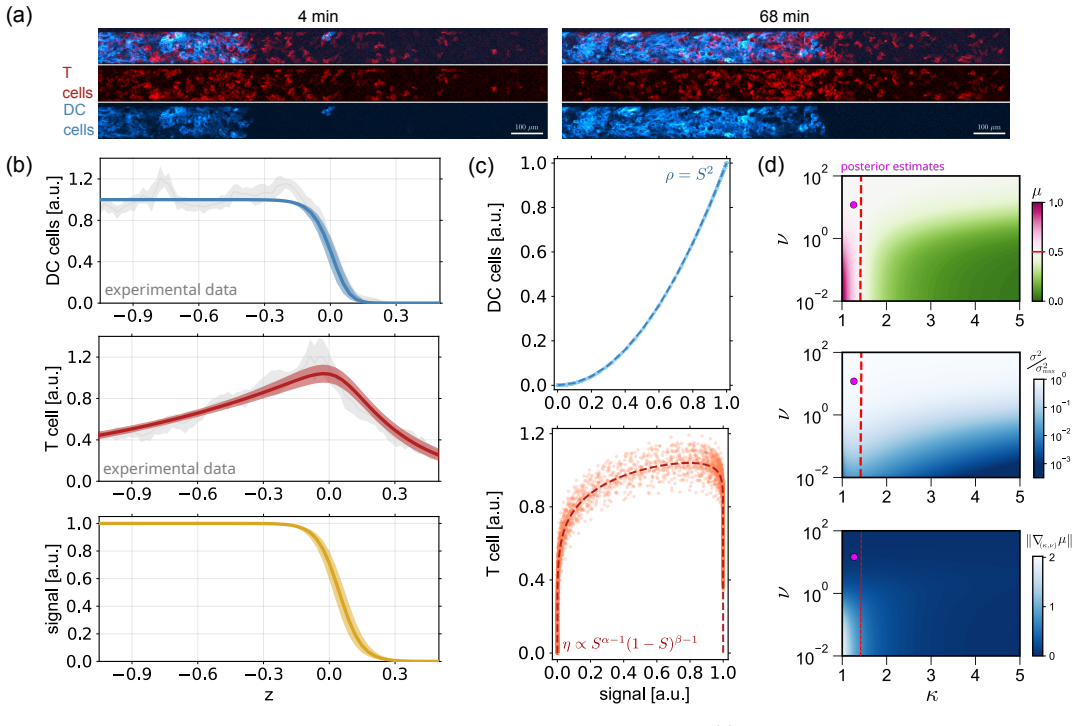
Four regimes classify chemotactic fronts of mixed cell populations

by Giulia L. Celora, Marjorie Watts +2 more

A nonlinear theory for chemotactic fronts of mixed populations

Heterogeneity in diffusivity, consumption and sensitivity determines all possible density profile shapes in self-guided migration.

Figure from the paper full image
abstract click to expand
Collective migration of heterogeneous cell populations is central to many biological and physiological processes, including development and immune response. Recent experimental and theoretical advances have shown how asymmetric interactions with self-generated chemical gradients shape the spatial distribution of distinct cell types within migrating collectives. However, the principles governing robust spatial organisation of heterogeneous cell populations remain poorly understood. Here, we use asymptotic analysis to systematically derive a nonlinear analytical theory for heterogeneous cell collectives guided by self-generated chemotaxis. Our theory disentangles how heterogeneity in cell diffusivity, chemoattractant consumption, and chemotactic sensitivity shape the density profiles of migrating heterogeneous collectives, revealing four distinct dynamical behaviours that together capture all possible regimes. We calibrate our framework to experimental data on the co-migration of dendritic and T cells. We predict that this system operates in a parameter regime that balances intercellular mixing with T-cell localisation at the leading front of the migrating collective. Our theory reveals that this behaviour is enabled by intermediate long-range chemoattractant signalling generated through strong chemoattractant consumption by dendritic cells. Overall, our framework provides general principles for understanding how non-reciprocal chemical interactions shape robust collective migration in heterogeneous cell populations.
0
0
q-bio.BM 2026-06-12

Irregular focal-adhesion curvature keeps Piezo1 active in cancer cells under ultrasound

by Ivana Pajic-Lijakovic, Milan Milivojevic +2 more

Irregular curvature at focal adhesions modulates Piezo1 activity and low frequency ultrasound induced apoptosis in cancer cells

Regular curvature in healthy cells triggers cholesterol shifts that lower coordinated channel activity and block apoptosis.

abstract click to expand
Low-frequency, low intensity ultrasound (LIUS) has emerged as a promising physical modality capable of inducing selective apoptosis of cancer cells, while sparing healthy epithelial cells and fibroblasts. Hitherto, the mechanism underlying this selectivity has been unclear, but we now propose and develop a theoretical framework linking the distinct mechanical behaviours of cancer versus healthy cells to their differential responses to LIUS. We point out that cancer cells exhibit inhomogeneous ventral stress-fiber networks, which can produce irregular focal adhesion geometry and inward membrane curvature near focal adhesions under low-intensity ultrasound (LIUS). These curvature irregularities can favor loose packing of Piezo1 channels, thereby preserving their activity. In contrast, healthy epithelial cells and fibroblasts display more homogeneous cytoskeletal organization, which can result in more regular curvature profiles adjacent to focal adhesions. This leads to curvature-driven cholesterol redistribution, resulting in altered spatial organization of Piezo1 clusters and reduced coordinated channel activity and allowing cells to remain in their active, proliferative state when exposed to LIUS. Based on theoretical modeling and previous experimental findings, we propose that differences in cytoskeletal organization and membrane curvature can contribute to distinct Piezo1 activation patterns between healthy and cancerous cells. Our analysis identifies curvature-mediated Piezo1 redistribution as a potential physical basis for LIUS selectivity and provides a mechanistic foundation for designing ultrasound-based therapies to exploit the intrinsic cytoskeletal vulnerabilities of cancer cells.
0
0
physics.bio-ph 2026-06-10

Motion polarizes actin regulator to trigger cell crawling

by Pierre Recho

Spontaneous polarization for protrusion-driven cell crawling

Minimal model shows feedback between boundary movement and chemical cue creates spontaneous motility above a critical activity level.

Figure from the paper full image
abstract click to expand
We propose a minimal one-dimensional continuum model for the spontaneous initiation of protrusion-driven cell crawling on a rigid substrate. The cell cytoskeleton is represented as a viscous actin meshwork that turns over in the bulk and polymerizes at two moving cell edges. Symmetry breaking arises from the feedback between cell motion, an external chemical regulator of actin nucleation, and actin polymerization at the cell fronts. When the cell moves, the regulator becomes polarized around the moving boundaries, thereby imposing different actin nucleation densities at the two edges. This generates unequal protrusive rates, which in turn reinforce motion and sustain the chemical polarization. Above a critical protrusive activity, the static symmetric state loses stability and the system undergoes a bifurcation toward a motile polarized state. Depending on how the external cue controls actin nucleation, the transition can be either supercritical or subcritical, leading in the latter case to coexistence between static and motile states. Using parameter values appropriate for keratocyte cells, the model predicts realistic crawling speeds and actin-density profiles, including asymmetric edge-localized density peaks. These results identify a generic mechanism by which external biochemical regulation of actin nucleation can trigger spontaneous motility along a one-dimensional track without requiring molecular motors, specific adhesion dynamics, deformable substrates, or pre-existing polarity.
0
0
nlin.PS 2026-06-10

Coupled domains permit single-morphogen Turing patterns

by D. Hernández, Alejandro Valdés López +1 more

Mean-field models for morphogenetic processes in physiological contexts

Mean-field tissue models relax the usual diffusion conditions and support multi-scale patterns even when the activator diffuses faster than

Figure from the paper full image
abstract click to expand
This work introduces a biophysical formalism to describe the spatiotemporal evolution of the chemical profile in tissues, with the novelty of modeling tissue compartmentalization and the mechanism by which cells maintain the system far from thermodynamic equilibrium via production and/or degradation of substances. The models were derived from conservation laws, chemical kinetic theory, and geometric constraints, while considering fundamental properties of tissues to connect theoretical modeling with experimental observations. In a morphogenetic context, each morphogen is described by two coupled reaction-diffusion equations, representing intra- and extracellular dynamics, linked through membrane transport processes such as nonlinear, cross, and anomalous diffusion. We explore the models' morphogenetic potential through diffusion-driven instabilities and discuss how natural tissue heterogeneities influence Turing instabilities and self-organized phenomena. The mathematical structure reveals that two-morphogen systems can produce Turing patterns with multiple characteristic length scales, while the system's dimensionality enables chaotic behavior in well-mixed dynamics. Moreover, due to domain coupling, Turing instabilities are allowed for single-morphogen systems. We used Schnakenberg kinetics to demonstrate that Turing patterns arise even when the activator diffuses faster than the inhibitor (d$<$1), thereby expanding the parameter space for pattern formation. Our results suggest that tissue spatial structure has important consequences for Turing instability mechanisms, in some cases weakening the usual conditions for its emergence while widening the possible patterns it can produce. The proposed framework offers a minimal mathematical basis to explore emergent dynamics in biological and synthetic contexts, with potential applications in developmental biology and tissue engineering.
1 0
0
q-bio.CB 2026-06-03

Stomatocyte volume alone sets spleen slit passage

by Zhaojie Chai, Jianlu Zheng +3 more

Quantifying the biophysical properties of stomatocytes in health and disease

Overhydrated cells need high pressure to pass while dehydrated ones thicken blood, separating filtration from viscosity effects

Figure from the paper full image
abstract click to expand
Hereditary stomatocytosis (HS) comprises red blood cell (RBC) disorders characterized by cup-shaped erythrocytes that respond oppositely to splenectomy: curative in overhydrated HS (OHS) but potentially thrombogenic in dehydrated HS (DHS/xerocytosis). This paradox persists because RBC biomechanics is governed by partly independent parameters--shear modulus, bending rigidity, surface-to-volume ratio (S/V), and cytoplasmic viscosity--that existing assays capture only piecemeal. Here we combine dissipative particle dynamics (DPD) simulations with microfluidic imaging to construct a control discocyte and three stomatocyte models (ST-RBC1-3) at fixed membrane area and decreasing volume (109.7, 101.5, 89.8 fL), spanning the OHS-to-DHS range. Tracing this parameter set through five mechanically orthogonal assays, we find that interendothelial-slit (IES) traversal is geometry-dominated: overhydrated ST-RBC1 requires an order of magnitude higher critical pressure than healthy RBCs, whereas dehydrated ST-RBC3 passes freely. ST-RBC3 nonetheless suppresses membrane tank-treading and raises low-shear whole-blood viscosity by ~29% at physiological haematocrit, comparable to Gaucher-disease hyperviscosity. A funnel-obstacle chip amplifies these differences into a label-free centerline-offset signal predicted to separate all four RBC types (~4.5 standard deviations between extreme phenotypes). These results unite single-cell mechanics, splenic filtration, and hemorheology in one framework, resolve the splenectomy paradox, and point toward microfluidic pre-operative risk stratification in HS.
0
0
physics.bio-ph 2026-06-03

Traction bistability arises from cell-ECM feedback on stiffening substrates

by Irina Pi-Jaumà, Jaume Casademunt +1 more

Bistability of cellular traction on strain-stiffening substrates

The loop creates two stable force levels and abrupt jumps as nonlinearity or contractility increases, potentially driving sudden migration c

abstract click to expand
To migrate, cells exert traction forces on the extracellular matrix (ECM) -- a biopolymer network that often exhibits nonlinear strain-stiffening elasticity. Cellular tractions can therefore stiffen the ECM. At the same time, cells exert stronger tractions on stiffer ECM. Here, we show theoretically that this traction-stiffness feedback can produce traction bistability and hysteresis. As a result, increasing either the ECM's nonlinear elasticity or cellular contractility leads to a discontinuous transition from low to high tractions. This traction jump might trigger collective cell migration as the ECM stiffens, for example during development and tumor progression. Moreover, the bistable behavior might provide robustness to cellular traction forces when cells migrate through mechanically heterogeneous environments.
0
0
q-bio.CB 2026-05-27

SpCAST annotates spatial cells faster using KANs

by Yiyang Zhang, Bokai Zhao +4 more

SpCAST: Decoding spatial transcriptomics at single-cell resolution with fast and interpretable analysis

The framework transfers cell-type labels from scRNA-seq references across technologies with competitive accuracy and lower runtime on hundre

abstract click to expand
Single-cell-resolution spatial transcriptomics profiles gene expression at cellular locations in native tissues, yet accurate cell-type annotation remains challenging: imaging-based platforms are constrained by targeted gene panels, whereas sequencing-based platforms often suffer from sparse molecular capture and dropout. Reliable transfer of cell-type labels from single-cell RNA sequencing references is therefore critical for interpreting targeted and sparse spatial datasets. Here, we present SpCAST, a Kolmogorov--Arnold network-based framework for reference-guided spatial transcriptomics analysis. SpCAST captures nonlinear mappings between reference and spatial expression profiles and uses feature attribution to prioritize genes supporting cell-type predictions. Within a unified framework, SpCAST performs cell-type label transfer, spatial gene-expression reconstruction and marker-gene candidate prioritization. We benchmarked SpCAST on 53 datasets comprising 413,376 spatial cells across five technologies and diverse tissue contexts. SpCAST achieved competitive annotation performance with reduced runtime relative to representative existing methods. Case studies demonstrated that SpCAST supports cross-species label transfer and candidate assignment of originally unlabeled cells. It also reconstructs marker-gene expression patterns with improved spatial concordance and prioritizes cell-type-associated marker genes. Together, these results support SpCAST as an efficient and interpretable framework for extracting cell-type and gene-level information from targeted and sparse single-cell-resolution spatial transcriptomics data.
0
0
q-bio.CB 2026-05-18 Recognition

Limit cycles sweep through rare Turing pattern regimes

by Seyoon Kim, Antonio Matas-Gil +1 more

How nature discovers rare Turing islands: exploration by common limit cycles

Coupling oscillations to reaction-diffusion parameters sweeps through narrow conditions for transient spatial patterns.

Figure from the paper full image
abstract click to expand
Turing patterns are a cornerstone of biological self-organization, yet their emergence typically requires finely tuned parameters occupying narrow regions of high-dimensional space. This poses a fundamental challenge: how can evolving biological systems reliably find and exploit such rare conditions? In this work, we propose that common biochemical limit cycles, such as those arising from genetic feedback loops, can act as natural explorers of Turing space. By coupling a reaction-diffusion system to an orbit that modulates some of its parameters, we show that the system can dynamically sweep through Turing-permissive regimes and generate transient spatial patterns. We use an entropy-based measure in Fourier space to quantify pattern formation and demonstrate how cycles enhance the detectability and robustness of Turing islands. We further explore how coupling to positional gradients increases reproducibility, suggesting a route from oscillatory dynamics to stable developmental programs. Our results highlight a powerful mechanism by which nature might bootstrap complex spatial structure from simple temporal motifs.
0
0
q-bio.CB 2026-05-14 Recognition

Nutrient depletion separates sibling bacterial colonies

by Dario Buonomo, Francesco Imperi +3 more

Kin-ematic Exclusion in Active Matter: Modelling Mutual Inhibition in textit{Pseudomonas aeruginosa} Sibling Colonies

Feedback between growth and motility creates sharp boundaries without signaling or physical force.

Figure from the paper full image
abstract click to expand
The striking variety of macroscopic morphologies displayed by bacterial colonies depends on microscopic environmental and behavioural details in a manner that is currently not well understood. A surprising example is sibling inhibition, whereby isogenic bacterial colonies spreading in soft agar hydrogels tend to avoid each other and form sharp demarcation lines when growing nearby. Here we investigate this effect with the common pathogen \textit{Pseudomonas aeruginosa}, by combining quantitative density measurements with a minimal biophysical model. Our results show that the phenomenon does not depend on gel compression, lethal inhibition or quorum sensing-dependent cell communication. Instead, colony separation is driven by localised nutrient depletion through a dynamic feedback between growth and motility. The model, which is calibrated using experimental data, captures key observations including the dependence of inhibition strength on the initial nutrient concentration. This work establishes nutrient availability and non-lethal motility inhibition as central factors underlying sibling inhibition, providing a generalisable framework for microbial spatial dynamics with implications for understanding bacterial interactions in tissues, soils and engineered microbiomes.
0
0
q-bio.CB 2026-05-14 Recognition

3D model checks if cell division rules build plant symmetry

by Naoya Kamamoto, Koichi Fujimoto

3D mechano-geometric multicellular model of apical stem cell-driven plant morphogenesis

By merging realistic mechanics with growth and division, the framework tests whether orientation alone creates symmetric body plans.

abstract click to expand
The orientation of cell division is a major determinant of three-dimensional plant morphogenesis. Whether and how a simple division orientation rule explains the establishment of symmetric body plans is a fundamental question. Testing such hypotheses is facilitated by a modeling framework that combines realistic three-dimensional cell mechanics, irreversible cell-wall growth, and a deformable tissue geometry. We recently introduced such a framework, a 3D mechano-geometric multicellular model of apical stem cell-driven morphogenesis. Here we document how the model is built from physiological and computational perspectives. We describe the triangulated thin-shell representation of cells, the treatment of turgor pressure, cell-wall elasticity and strain-driven wall growth, the cell-division algorithm together with its two pluggable division-rule implementations, and the remeshing operations that keep the triangulation well-conditioned as cells grow, divide, and deform. The aim of this paper is to make the present model accessible and customizable to experimental plant biologists.
0
0
physics.bio-ph 2026-05-11 2 theorems

Mobile nuclei shuttle signals like pigeon post in slime mold

by Johnny Tong, Kaspar Wachinger +4 more

Coexistence of trapped and flow-transported nuclei enables fast pigeon post communication across multinucleated cell

Trapped and flowing nuclei exchange diffusible messages to achieve rapid coordination over long distances, outpacing diffusion up to twenty,

Figure from the paper full image
abstract click to expand
Multi-nucleated cells exist in all domains of life, ranging from animals, plants and fungi to single-celled organisms such as the slime mold Physarum polycephalum. The large cell size, in the case of Physarum reaching centimeters and more, challenges the coordination of nuclei activity as signals need to cross large distances. In search for a mechanism for fast long-ranged communication among nuclei, we quantify nuclei dynamics and cytoplasmic flows in Physarum's tubular network. We observe nuclei in two interchangeable, dynamic states: mobile, flowing within the cytoplasmic shuttle flow, or trapped in the tube's porous cell cortex. As we find nuclei to accumulate at the tube's inner fluid-porous interface we theoretically explore and confirm, with physiological parameters, that slowing down of mobile nuclei during flow is sufficient for diffusible signal exchange between mobile and trapped nuclei. We analytically derive that communication akin to pigeon-post with mobile nuclei serving as pigeons shuttling between trapped nuclei acting as waypoints, gives rise to signaling velocities that account for the rapid intracellular reorganization observed in Physarum. Since signal transfer by flow-transported nuclei outcompetes the mere diffusion of signals encoded in cytosolic proteins, pigeon-post communication surpasses alternative signaling mechanisms, even diffusive relay signaling up to twenty-fold in velocity. The key ingredients of pigeon-post communication, namely alternating flows and waypoints, exist in other multi-nucleated cells and may also be generalized beyond intracellular signaling.
0
0
q-bio.CB 2026-05-08 Recognition

Extrinsic noise required to explain E

by Mattia Corigliano (1, 2) +18 more

Essential Role of Extrinsic Noise in Models of E. coli Division Control

A solved threshold model shows noise and partial reset produce observed fluctuations, with adder emerging only when they balance.

Figure from the paper full image
abstract click to expand
Our understanding of cell division control in bacteria still relies largely on interpreting correlations between phenomenological variables, with limited connection to the underlying molecular mechanisms. Here, we analytically solve a stochastic threshold-accumulation model in which a size-dependent divisor protein triggers division upon reaching a noisy, autocorrelated threshold, quantifying within a unified framework the combined effects of intrinsic and extrinsic noise and key mechanistic parameters such as protein reset and threshold memory. We show that incorporating these elements yields behavior far richer than the commonly assumed adder, spanning a continuum of division strategies from timer to sizer while modulating size fluctuations in a nontrivial fashion. Comparison with single-cell E. coli data shows that extrinsic noise and additional mechanistic ingredients are required to account for the observed size fluctuations. The adder emerges when threshold correlations balance protein reset, generalizing the hypothesis that full reset is necessary to maintain adder control. Our results establish a unified analytical framework linking stochastic molecular processes to emergent division laws, to be used in more complex bacterial cell-cycle models.
1 0
0
q-bio.QM 2026-05-08

Slowing cyclin B synthesis lengthens early fly cell cycles

by Meskerem Abebaw Mebratie, Benedikt Drebes +3 more

Mathematical Modeling of Early Embryonic Cell Cycles of Drosophila melanogaster

A reduced model reproduces the experimental increase in period over 14 divisions once synthesis rate is made time-dependent.

Figure from the paper full image
abstract click to expand
In the early stages of development, Drosophila melanogaster embryos possess very fast and well-coordinated cell cycles. In the cell cycle, CDK activity is essentially regulated by binding CDK and CycB to form an active complex and by phosphorylating CDK via CDC25 and dephosphorylating it via Wee1. We develop a mathematical model for the embryonic cell cycle which is biochemically sound and which can be rigorously analysed after a model reduction. We show that there exists a region in the parameter space where the model describes oscillations. We then focus on the role of two parameters: the CycB synthesis and the activation coefficient of APC. Our main biological hypothesis is that the first one is responsible for the period lengthening over the first 14 cycles which can be experimentally observed and this hypothesis is supported by numerical simulations of our model: if the CycB synthesis is made time-dependent with a prescribed dynamics, then our simulations show qualitatively a very similar behavior to experimental data reported in the literature.
0
0
q-bio.GN 2026-05-08 Recognition

Multimodal LLM reasons with omics numbers and language together

by Maciej Sypetkowski, Joanna Krawczyk +5 more

OmicsLM: A Multimodal Large Language Model for Multi-Sample Omics Reasoning

OmicsLM matches specialized models on predictions and leads on multi-sample questions from real GEO studies.

Figure from the paper full image
abstract click to expand
Interpreting transcriptomic data is one of the most common analytical tasks in modern biology. Yet most current models either consume expression profiles without producing natural-language biological explanations, or reason in language without direct access to quantitative omics measurements. We introduce OmicsLM, a multimodal LLM that connects quantitative omics profiles with natural-language biological tasks. OmicsLM represents each transcriptomic profile as a compact continuous representation within the LLM context. This interface preserves quantitative expression signal while allowing natural-language instructions, explicit gene mentions, and multiple interleaved biological samples to be processed together in one model context. We train OmicsLM on more than 5.5 million instruction-following examples spanning over 70 task types, combining continuous transcriptomic inputs, experimental data rendered through diverse language templates, and free-text biological knowledge and question-answering data. This mixture covers cell type annotation, perturbation prediction, clinical prediction, pathway reasoning, and open-ended biological question answering. Existing benchmarks evaluate either profile-level prediction or text-only biological QA, leaving language-guided, multi-sample reasoning over real expression profiles unmeasured. To close this gap, we introduce GEO-OmicsQA, a benchmark for multi-sample biological question answering built from real Gene Expression Omnibus (GEO) studies. We demonstrate that OmicsLM can use expression profiles directly and perform comparably to specialized omics models on profile-level tasks, while outperforming both omics-specialized models and general LLMs on language-guided biological reasoning over expression data.
0
0
q-bio.CB 2026-05-07

Benchmark sets standards for TCR-peptide sequence generation

by Yiming Wang, Weiyu Xiao +2 more

TCRTransBench: A Comprehensive Benchmark for Bidirectional TCR-Peptide Sequence Generation

Defines two generation tasks with tens of thousands of validated pairs and metrics covering efficiency, accuracy, and biological plausiblity

Figure from the paper full image
abstract click to expand
T-cell receptor (TCR) interactions with antigenic peptides underpin adaptive immunity and are pivotal for personalized immunotherapy and vaccine development. Despite recent progress, computational modeling of TCR-peptide specificity remains challenging due to data scarcity, complex sequence dependencies, and the absence of standardized evaluation frameworks. To systematically address these issues, we introduce TCRTransBench, a comprehensive benchmark for bidirectional TCR-peptide sequence generation tasks. Specifically, we define two sequence-to-sequence (seq2seq) tasks: generating antigenic peptides from TCR sequences (TCR2PEP) and generating TCR sequences from antigenic peptides (PEP2TCR). Our framework provides a rigorously curated, MHC-free dataset comprising tens of thousands of validated TCR-peptide pairs, along with diverse evaluation metrics that integrate computational efficiency, sequence accuracy, and biological plausibility. Extensive benchmarking across representative neural architectures, including recurrent, convolutional, and transformer-based models, reveals key trade-offs among performance metrics, highlighting the effectiveness of transformers in capturing intricate biological interactions and the necessity of biologically informed evaluation criteria. TCRTransBench establishes standardized tasks, datasets, and evaluation protocols, laying a robust foundation for future computational advances in immunological sequence modeling and therapeutic protein design.
0
0
q-bio.CB 2026-05-06 3 theorems

Robust chemotaxis beyond sensing limits: signal, noise, and strategy

by Robert G. Endres

Symmetry and time averaging let bacteria perform well even when they use only a small fraction of available signal information.

Figure from the paper full image
abstract click to expand
Bacterial chemotaxis has long been viewed as operating near the physical limits of sensing, as originally articulated by Berg and Purcell. Recent information-theoretic analyses challenge this view, suggesting that Escherichia coli uses only a small fraction of the information available in ligand arrival statistics to bias its motion. How should such low information efficiency be interpreted at the level of behavior? Here, I argue that chemotactic performance is shaped not only by information transmission and noise, but by the strategy of movement itself. Using simple scaling arguments and minimal models, I show how run-and-tumble chemotaxis can remain robust to noise through symmetry and temporal averaging, even when internal information processing is inefficient. Comparing bacterial and eukaryotic chemotaxis highlights how different sensing strategies convert physical limits into observable behavior. These considerations suggest that low information efficiency need not imply poor performance, but may instead reflect an evolved balance between robustness, simplicity, and function.
0
0
q-bio.CB 2026-05-01

Virtual cell models lose accuracy on unseen cells and perturbations

by Xinjie Mao, Songming Zhang +11 more

Benchmarking virtual cell models for in-the-wild perturbation response

Strict tests show they recover broad trends but miss specific effects, indicating limited transfer across contexts.

abstract click to expand
Virtual cell (VC) models aim to predict cellular responses to any perturbations in silico and have emerged as a promising approach for drug discovery and precision medicine. Yet, a clear gap still remains: while models routinely reported impressive results on standard benchmarks, it is unclear whether their predictions are truly meaningful in practice. This is mainly due to limitations in current evaluation setups, which are often overly simplified or inconsistent, and do not reflect the complexity and variability of real biological systems. Here, we introduce a standardized and modular benchmarking framework for virtual cell prediction. Our framework evaluates diverse models under in-the-wild challenging scenarios, including unseen cell contexts, unseen perturbations, and cross-dataset generalization, which better reflect practical applications. Our analysis shows that model performance is highly context-dependent and shaped by task design and evaluation criteria. In commonly used setups, performance is often overestimated, and naive dataset aggregation can even reduce performance. When evaluated under more strict conditions, model performance drops markedly, indicating limited robustness to shifts across cellular contexts. In unseen perturbation settings, models including simple linear approaches capture global transcriptional trends but fail to recover fine-grained perturbation-specific effects. In addition, different evaluation metrics focus on different biological properties, leading to substantially different model rankings. Together, our framework provides a more reliable and biologically grounded evaluation, offering clearer guidance for applying virtual cell models in real scenarios.
0
0
cs.CV 2026-04-30

Neural net maps microtubule curvatures directly from noisy images

by Achraf Ait Laydi, Sidi Mohamed Sid'El Moctar +2 more

MTCurv: Deep learning for direct microtubule curvature mapping in noisy fluorescence microscopy images

By training on synthetic data with a gradient-aware loss, the model recovers local bends even when background fluorescence is present.

Figure from the paper full image
abstract click to expand
Accurate quantification of the geometry of curvilinear biological structures is essential for understanding cellular mechanics and disease-related morphological alterations. Microtubule curvature is a key descriptor of filament rigidity and mechanical perturbations. However, reliable curvature extraction from fluorescence microscopy images remains challenging due to noise, low contrast, and partial filament visibility. Existing approaches rely on segmentation pipelines with pre or post-processing, which are highly sensitive to segmentation errors and often fail under adverse imaging conditions. In this work, we propose MTCurv, a deep learning framework for direct, segmenta-tion-free regression of microtubule curvature maps from noisy microscopy images. Leveraging a synthetic dataset with pixel-wise curvature annotations, we reformulated curvature estimation as a regression problem and adapted an attention-based residual U-Net. To reduce hallucinations and enforce spatial coherence, we introduced a gradient-aware loss combining Mean Squared Error with a gradient consistency term. Beyond model and loss design, we evaluated commonly used regression and image quality metrics, revealing that many perceptual and blind metrics are poorly suited for curvature estimation. Correlation-based metrics, particularly Spearman correlation, emerged as more reliable indicators of curvature prediction quality. Experiments on two datasets of increasing difficulty demonstrated that MTCurv accurately recovers local microtubule curvatures, even in the presence of background fluorescence. Ablation studies highlighted the contribution of both residual encoding and attention-based decoding. Overall, this work provides a practical tool for filament curvature analysis and methodological insights for geometry-aware regression in biomedical imaging. Datasets and code are made available.
0
0
q-bio.CB 2026-04-28

Invasive cells coagulate three times faster in melanoma clusters

by Nathan Schofield, Richard White +2 more

Quantifying the effect of phenotype on clustering behaviour in melanoma: from monoculture to co-culture

Model fitted to culture data shows phenotype-specific merging rates and higher growth when the two types mix.

abstract click to expand
Melanoma is an aggressive form of skin cancer. Survival rates are excellent if it is detected early but fall markedly if it metastasises. A key step in early tumour progression is the formation of cell clusters, which can promote metastasis. However, the mechanisms driving cell clustering, and the role of phenotypic heterogeneity in the dynamics of these clusters, remain poorly understood. In this work, we propose a system of ordinary differential equations that models cluster formation dynamics within a coagulation-fragmentation-proliferation framework. Using Bayesian inference, we fit this model to in vitro time-lapse microscopy data from two melanoma phenotypes-proliferative and invasive-to uncover the predominant mechanisms driving cluster formation and how these differ between phenotypes. Additionally, we provide preliminary insights into how clustering behaviour in co-cultures contrasts with that observed in monocultures. The model quantifies phenotypic differences in clustering dynamics: invasive cells in monoculture exhibit nearly threefold higher coagulation rates than proliferative cells, whereas proliferative cells display slightly higher proliferation rates. These differences align with known gene expression profiles. When applied to co-culture data, the model predicts hybrid coagulation behaviour of the clusters influenced by both proliferative and invasive cells but dominated by the invasive cells, and an elevated proliferation rate, suggesting a mutually beneficial effect of phenotypic heterogeneity on cell proliferation.
0
0
nlin.AO 2026-04-27

Hydrodynamics make uniform micro-collectives look heterogeneous

by Balagopal Nair, Arshed Nabeel +1 more

Hydrodynamic interactions mask the true heterogeneity of a microscopic collective

Measured speeds register diversity even when all agents share identical motilities if fluid interactions dominate.

Figure from the paper full image
abstract click to expand
Coordinated movement and self-organisation of active self-driven agents is common in nature and is seen across different scales, from herds of animals to collective motion in bacteria. Often, these systems are heterogeneous in composition, with different agents having different intrinsic motilities. Inferring these intrinsic characteristics and quantifying the level of heterogeneity in a collective system is crucial to understanding the observed emergent phenomena. However, when interaction effects dominate, i.e. the observed movement of an agent is strongly influenced by its interacting neighbours, inferring the intrinsic characteristics of agents becomes a challenge. We consider a collective system of agents that undergo purely physical interactions like collisions and long-range hydrodynamic interactions, which resembles a system of microswimmers immersed in a fluid medium. We incorporate heterogeneity into the system through variations in agent motility and examine how the perceived heterogeneity, inferred from measured speeds, depends on the strength of hydrodynamic interactions and the true intrinsic variability. The interplay between short-range collisions, long-range hydrodynamic interactions, and intrinsic heterogeneity makes the inference problem non-trivial. When hydrodynamic effects dominate, true heterogeneity is effectively masked, making even a homogeneous collective appear heterogeneous. The competing effects of collisions, which slow agents down, and hydrodynamic interactions, which enhance their motion, further complicate reliable inference. Hydrodynamic interactions also modify collision angles, rendering them more isotropic. Overall, the findings show highlight experimentally measured properties of microscopic collectives may not accurately reflect their true characteristics.
0
0
physics.bio-ph 2026-04-24

Single-cell patterning creates ordered bacterial films with optical effects

by Matthias Le Bec, Guillem Pérez Martín +8 more

Shaping nematic order in bacterial films with single-cell resolution patterning

Parallel spore orientations produce millimetre-scale nematic alignment, synchronous buckling, and light-polarising properties in growing B.

abstract click to expand
Bacterial colonies composed of elongated cells form active nematic fluids that spontaneously self-organise into ordered domains of aligned cells and exhibit self-generated chaotic flows powered by cell growth. While their dynamics have attracted significant attention, the role of initial conditions remains largely unexplored due to a lack of precise patterning methods. Here, we harness the precision of capillary assembly to pattern Bacillus subtilis endospores into arrays with controlled positions and orientations at single-cell resolution. Upon germination and growth of cell chains, we quantify the dynamics and morphologies of the resulting bacterial films. While orthogonally seeded spores lead to chaotic dynamics, seeding them with parallel orientations yields films with high nematic order across millimetres, which subsequently synchronously buckle upon further growth. Our observations are captured by numerical simulations and a model that describes the buckling dynamics starting from the mechanical properties of individual filaments. By programming local cell orientation with single-cell precision, we finally harness nematic alignment to create macroscopic bacterial films with local optical anisotropy, via structural colouration and light polarisation. Our findings demonstrate that initial conditions play a key role and offer exciting opportunities to control the spatio-temporal organization of bacterial assemblies towards addressing open biological questions and realizing living materials with tailored properties.
0
0
q-bio.CB 2026-04-22

Multi-stage cell cycles improve models of cell proliferation and invasion

by John Carlo Dimaculangan, Cameron A. Smith +1 more

Multi-stage volume exclusion models for cell proliferation

Lattice agent-based simulations with myopic sensing derive continuum equations that match averaged growth and wave behavior.

Figure from the paper full image
abstract click to expand
Cell proliferation and cell movement are fundamentally stochastic processes which lead to variability in the growth and spatial structure of cell populations in many biological settings, such as cell invasion, wound healing, and tumour growth. We develop stochastic, on-lattice agent-based models (ABMs) which incorporate volume exclusion, random movement, and multi-stage representations of the cell cycle. The multi-stage framework enables a more realistic representation of true cell cycle time distributions. We also introduce a novel form of myopic behaviour, in which cells sense their local environment when attempting to proliferate. For each ABM, we derive a corresponding continuum partial differential equation (PDE) description under the mean-field approximation. Using numerical simulations, we investigate how different proliferation mechanisms influence population-level dynamics in both the discrete and continuum models. In particular, we consider biologically relevant contexts of growth-to-confluence assays (using uniform initial conditions) and travelling wave behaviour associated with cell invasion. We examine how the PDE solutions compare with the behaviour of the corresponding ABMs averaged over many realisations.
0
0
q-bio.CB 2026-04-21

Low molecule counts mask weak contacts in cell collisions

by Mariia Kryvoruchko, Brian A. Camley

Intrinsic stochasticity in cell polarity and contact inhibition of locomotion

A stochastic model shows that few Rho GTPase proteins let noise override brief contacts during contact inhibition of locomotion, while high

Figure from the paper full image
abstract click to expand
When cells collide, they often exhibit "contact inhibition of locomotion" (CIL), a behavior in which cells repolarize and migrate away from the site of contact. Experimental CIL outcomes are highly variable - why? Here, we develop a minimal stochastic model to quantify how intrinsic noise in cell polarity, arising from the finite number of signaling molecules, influences CIL decision-making. We simulate polarization dynamics by tracking individual Rho GTPase proteins that diffuse and switch stochastically between the cell membrane and cytosol. In the absence of cell-cell contact, the polarity axis diffuses rotationally - the cell's orientation wanders - with a diffusion coefficient that decreases as Rho GTPase copy number increases. Assuming that cell-cell contact inhibits Rho GTPase activation, we investigate how contact geometry, duration, and strength affect CIL sensitivity. At low protein copy number, weak, brief, or spatially narrow contacts are masked by molecular noise. In contrast, at high protein copy number, intrinsic polarity noise is negligible, and randomness in CIL response is more likely to reflect the variability from collision to collision in the cell-cell contact properties.
1 0
0
q-bio.CB 2026-04-21

Intermediate-uptake T cells gain from dendritic cell clusters

by Domenic P.J. Germano, Federico Frascoli +3 more

Spatial dynamic modelling to understand how dendritic cell clustering affects T cell activation

Spatial models predict these cells activate more abundantly and heterogeneously than with dispersed dendritic cells.

Figure from the paper full image
abstract click to expand
The coordination of the immune system and its components is essential for the body to maintain a healthy status. Recent clinical studies show that breast cancer patients with high Dendritic cell clustering in tumour draining lymph nodes have improved survival outcomes, compared to those with a lower degree of clustering. These results suggest that a specific form of Dendritic cell clustering promotes T cell activation. However, the mechanistic effects of this spatial organisation is unclear. We develop a spatially dynamic model of T cells interacting with Dendritic cells within the lymph node. We present a novel probabilistic agent-based model (ABM) of T cells, and use it to derive the deterministic, phenotypically structured partial differential equation (PS-PDE) of T cell activation and motion. Using the PS-PDE, we derive analytic approximations of the expected T cell stimulation distribution, based on the topology and level of clustering of a given Dendritic cell population. Our analytic approximation enables us to identify T cell characteristics that benefit most from Dendritic cell clustering, to result in an enhanced stimulation distribution. We also perform a sensitivity analysis with our models to identify T cell characteristics that result in desirable T cell activation characteristics, such as rapid T cell activation, and robust heterogeneous T cell activation. Our key findings show that T cells with an intermediate level of stimulation uptake benefit most from higher levels of Dendritic cell clustering, activating with a comparable or greater abundance, and greater heterogeneity, when compared to T cells of a similar characteristic but with a lower level of Dendritic cell clustering.
0
0
q-bio.CB 2026-04-17

Thermodynamic bound sets minimum cost to hold cell ion gradients

by Guillaume Terradot, Vincent Danos

Unity and Diversity of Intracellular pH Maintenance Mechanisms

The limit equals leakage dissipation rate and holds regardless of energy source or pump architecture, explaining both universal cytoplasm,

Figure from the paper full image
abstract click to expand
All cells must sustain ionic motive forces (IMFs) -- the electrochemical gradients of permeant ions, together with the membrane potential they produce -- to regulate intracellular pH, drive secondary transport, and power ATP synthesis. Because membranes are imperfectly impermeable, IMFs continuously dissipate through passive leakage, and active transport must compensate at an energetic cost that competes with growth and biosynthesis. How environmental conditions set this cost, and why cells across the tree of life share a common ionic logic yet deploy strikingly diverse transporter repertoires, has lacked a unifying quantitative account. Here we derive a thermodynamic lower bound on the power required to maintain IMFs at steady state. The bound equals the rate of free-energy dissipation by ion leakage, holds across a broad family of electrophysiological models, and is independent of organism, energy source, or transporter architecture. Cost minimization recovers, from first principles, the universal K+-rich, Na+-poor cytoplasm observed across taxa: asymmetric membrane permeabilities alone are sufficient to explain it. The same framework predicts that extremophiles face higher maintenance costs under extreme pH, salinity, and temperature, and that when sustaining a large proton motive force becomes prohibitive, cells should shift to metabolic regimes compatible with smaller PMF, providing a thermodynamic rationale for stress-induced metabolic reconfiguration. Finally, we show that perfect energetic efficiency is unattainable in practice, and that this very imperfection, combined with environmental variability, selects for the diversity of transport architectures observed in nature: each architecture is optimal within a discrete regime of environmental constraints.
0
0
q-bio.CB 2026-04-17

Minimal adhesion model limits follower streams to short cohorts

by Thomas Jun Jewell, Samuel W.S. Johnson +2 more

Cell-cell adhesion cannot sustain extended follower streams in a minimal non-local model of leader-follower migration

Simulations show cohorts stay bounded by interaction range and fall short of extended streams seen in living tissues.

Figure from the paper full image
abstract click to expand
Cell-cell adhesion is widely hypothesised to maintain cohesion within the long streams of follower cells that trail leader subpopulations during collective migration, including in neural crest cell migration, angiogenesis, and cancer cell invasion. Mathematically, non-local advection-diffusion equations provide the canonical continuum framework within which to study such adhesive cell-cell interactions. Here, we study a minimal model of leader-follower migration within this framework, in which leaders migrate at constant velocity while followers are attracted to leaders and to one another over a finite spatial interaction range. Numerical simulations reveal that, although the model can maintain small cohorts of travelling follower cells, the size of these cohorts is limited by the adhesive interaction lengthscale, and is far below what is needed to reproduce the extended streams observed in vivo. This points to a structural limitation of the standard non-local adhesion formulation and highlights the need for the development of extended continuum models capable of sustaining long, coherent migratory streams through purely mass-conserving collective cell movement.
1 0
0
q-bio.CB 2026-04-08 2 theorems

Marangoni flows cluster Piezo1 near focal adhesions

by Ivana Pajic-Lijakovic, Milan Milivojevic +2 more

Marangoni-Driven Redistribution and Activity of Piezo1 Molecules in Epithelial and Cancer Cells

Theoretical model ties surface-tension gradients to uneven channel distribution in epithelial cells versus uniform high activity in cancer.

abstract click to expand
The activity and distribution of Piezo1 molecules, along with the maturity and strength of focal adhesions (FAs), serve as critical factors influencing cell mechanosensing. Notably, migrating epithelial cells and mesenchymal-like cancer cells exhibit significantly different behaviors regarding these elements. In cancer cells, Piezo1 molecules are distributed uniformly, while in epithelial cells, their distribution is heterogeneous. In epithelial cells, Piezo1 molecules tend to group around FAs, a phenomenon that is enhanced by actomyosin contractility. However, a reduction in contractility results in a more uniform distribution of Piezo1 molecules. The expression and activity levels of Piezo1 molecules are markedly higher in cancer cells compared to epithelial cells. The activity of Piezo1 molecules correlates with the intracellular calcium concentration. Despite the extensive experimental studies on the properties of migrating epithelial and mesenchymal-like cancer cells, the physical explanations remain lacking. The primary objective of this theoretical study is to explore: (i) the inhomogeneous distribution of Piezo1 molecules in epithelial cells in relation to the Marangoni effect, (ii) the heightened activity of Piezo1 molecules in cancer cells by specifying the driving force, and (iii) the influence of membrane-mediated interactions among Piezo1 molecules grouped near FAs in epithelial cells on their activity.
0
0
q-bio.QM 2026-03-02 2 theorems

Coherence of cell responses reveals stable gene-edit outcomes

by Prashant C. Raju

From Syntax to Semantics: Geometric Stability as the Missing Axis of Perturbation Biology

Directional consistency in perturbation data identifies master regulators without labels and flags unstable cellular states.

Figure from the paper full image
abstract click to expand
The capacity to precisely edit genomes has outpaced our ability to predict the consequences. A cell can be genetically perfect and therapeutically useless: edited exactly as intended, yet unstable, drifting toward unintended fates, or selected for properties that compromise safety. This paradox reflects a deeper gap in how we evaluate biological intervention. Current frameworks excel at measuring what was done to a cell but remain blind to what the cell has become. We argue that this blindness stems from treating cells as collections of independent variables rather than as dynamical systems occupying positions on high-dimensional state manifolds. Drawing on Waddington's epigenetic landscape, we propose geometric stability as a missing axis of evaluation: the directional coherence of cellular responses to perturbation. This metric distinguishes interventions that guide cells coherently toward stable states from those that scatter them across the state manifold. Validation across diverse perturbation datasets reveals that geometric stability captures regulatory architecture invisible to conventional metrics, discriminating pleiotropic master regulators from lineage-specific factors without prior biological annotation. As precision medicine increasingly relies on cellular reprogramming, the question shifts from ``did the intervention occur?'' to ``is the resulting state stable?'' Geometric stability provides a framework for answering.
2 0
0
q-bio.TO 2025-12-05 Recognition

Varicosities form serotonin reservoirs via diffusive coupling

by Merlin Pelz, Skirmantas Janusonis +1 more

Compartmental-reaction diffusion framework for microscale dynamics of extracellular serotonin in brain tissue

Reduced reaction-diffusion model shows how local geometry and firing rates create spatial serotonin pools

Figure from the paper full image
abstract click to expand
Serotonin (5-hydroxytryptamine) is a major neurotransmitter whose release from densely distributed serotonergic varicosities shapes plasticity and network integration throughout the brain, yet its extracellular dynamics remain poorly understood due to the sub-micrometer and millisecond scales involved. We develop a mathematical framework that captures the coupled reaction-diffusion processes governing serotonin signaling in realistic tissue microenvironments. Formulating a two-dimensional compartmental-reaction diffusion system, we use strong localized perturbation theory to derive an asymptotically equivalent set of nonlinear integro-ODEs that preserve diffusive coupling while enabling efficient computation. We analyze period-averaged steady states, establish bounds using Jensen's inequality, obtain closed-form spike maxima and minima, and implement a fast marching-scheme solver based on sum-of-exponentials kernels. These mathematical results provide quantitative insight into how firing frequency, varicosity geometry, and uptake kinetics shape extracellular serotonin. The model reveals that varicosities form diffusively coupled microdomains capable of generating spatial "serotonin reservoirs," clarifies aspects of local versus volume transmission, and yields predictions relevant to interpreting high-resolution serotonin imaging and the actions of selective serotonin-reuptake inhibitors.
0
0
q-bio.MN 2025-11-25 2 theorems

Graph conditions enable enumeration of autocatalytic subnetworks in large CRNs

by Richard Golnik, Thomas Gatter +2 more

Enumeration of Autocatalytic Subsystems in Large Chemical Reaction Networks

The method locates self-maintaining subsystems and their minimal cores in full metabolic models of E. coli and other organisms.

abstract click to expand
Autocatalysis is an important feature of metabolic networks, contributing crucially to the self-maintenance of organisms. Autocatalytic subsystems of chemical reaction networks (CRNs) are characterized in terms of algebraic conditions on submatrices of the stoichiometric matrix. Here, we derive sufficient conditions for subgraphs supporting irreducible autocatalytic systems in the bipartite K\H{o}nig representation of the CRN. On this basis, we develop an efficient algorithm to enumerate autocatalytic subnetworks and, as a special case, autocatalytic cores, i.e., minimal autocatalytic subnetworks, in full-size metabolic networks. The same algorithmic approach can also be used to determine autocatalytic cores only. As a showcase application, we provide a complete analysis of autocatalysis in the core metabolism of E. coli and enumerate irreducible autocatalytic subsystems of limited size in full-fledged metabolic networks of E. coli, human erythrocytes, and Methanosarcina barkeri (Archea). The mathematical and algorithmic results are accompanied by software enabling the routine analysis of autocatalysis in large CRNs.
0
0
q-bio.CB 2025-11-12 Recognition

Geometric structures partition cell survival regions

by Connor McShaffrey, Eran Agmon +1 more

Matters of Life and Death in Computational Cell Biology

Making the life-death boundary central yields global principles for when cells live or die.

Figure from the paper full image
abstract click to expand
Nearly all cell models explicitly or implicitly deal with the biophysical constraints that must be respected for life to persist. Despite this, there is almost no systematicity in how these constraints are implemented, and we lack a principled understanding of how cellular dynamics interact with them and how they originate in actual biology. Computational cell biology will only overcome these concerns once it treats the life-death boundary as a central concept, creating a theory of cellular viability. We lay the foundation for such a development by demonstrating how specific geometric structures can separate regions of qualitatively similar survival outcomes in our models, offering new global organizing principles for cell fate. We also argue that idealized models of emergent individuals offer a tractable way to begin understanding life's intrinsically generated limits.
0
0
cond-mat.stat-mech 2025-10-10 2 theorems

Bacterial transitions lack single rate outside small-noise limit

by Jianzhe Wei, Jingwen Zhu +3 more

Cell State Transitions Beyond the Small-Noise Limit

Tracking over 1000 cells shows multiplicative noise slows switches and questions discrete-state models.

Figure from the paper full image
abstract click to expand
State transitions are fundamental in biological systems but challenging to observe directly. Here, we present the first single-cell observation of state transitions in a synthetic bacterial genetic circuit. Using a mother machine, we tracked over 1007 cells for 27 hours. First-passage analysis and dynamical reconstruction reveal that transitions occur outside the small-noise regime, challenging the applicability of classical Kramers' theory. The process lacks a single characteristic rate, questioning the paradigm of transitions between discrete cell states. We observe significant multiplicative noise that distorts the effective potential landscape yet increases transition times. These findings necessitate theoretical frameworks for biological state transitions beyond the small-noise assumption.
0
0
cs.AI 2025-09-30 Recognition

Fine-tuned LLMs beat frontier models on cell perturbation prediction

by Lawrence Phillips, Marc Boubnovski Martell +5 more

SynthPert: Enhancing LLM Biological Reasoning via Synthetic Reasoning Traces for Cellular Perturbation Prediction

Synthetic reasoning traces deliver state-of-the-art PerturbQA results, 87% accuracy on new cell types, and strong gains from 2% of the data.

Figure from the paper full image
abstract click to expand
Predicting cellular responses to genetic perturbations represents a fundamental challenge in systems biology, critical for advancing therapeutic discovery and virtual cell modeling. While large language models (LLMs) show promise for biological reasoning, their application to perturbation prediction remains underexplored due to challenges in adapting them to structured experimental data. We present SynthPert, a novel method that enhances LLM performance through supervised fine-tuning on synthetic reasoning traces generated by frontier models. Using the PerturbQA benchmark, we demonstrate that our approach not only achieves state-of-the-art performance but surpasses the capabilities of the frontier model that generated the training data. Our results reveal three key insights: (1) Synthetic reasoning traces effectively distill biological knowledge even when partially inaccurate, (2) This approach enables cross-cell-type generalization with 87% accuracy on unseen RPE1 cells, and (3) Performance gains persist despite using only 2% of quality-filtered training data. This work shows the effectiveness of synthetic reasoning distillation for enhancing domain-specific reasoning in LLMs.
2 0
0
q-bio.CB 2025-09-01 2 theorems

Cells keep receptors half-occupied to adapt chemotaxis across wide concentrations

by Vishnu Srinivasan, Wei Wang +1 more

Perfect adaptation in eukaryotic gradient sensing using cooperative allosteric binding

Regulating an internal allosteric factor lets eukaryotic cells sense gradients near-optimally over broad ligand ranges, at the cost of speed

Figure from the paper full image
abstract click to expand
Eukaryotic cells generally sense chemical gradients using the binding of chemical ligands to membrane receptors. In order to perform chemotaxis effectively in different environments, cells need to adapt to different concentrations. We present a model of gradient sensing where the affinity of receptor-ligand binding is increased when a protein binds to the receptor's cytosolic side. This interior protein (allosteric factor) alters the sensitivity of the cell, allowing the cell to adapt to different ligand concentrations. We propose a reaction scheme where the cell alters the allosteric factor's availability to adapt the average fraction of bound receptors to 1/2. We calculate bounds on the chemotactic accuracy of the cell, and find that the cell can reach near-optimal chemotaxis over a broad range of concentrations. We find that the accuracy of chemotaxis depends strongly on the diffusion of the allosteric compound relative to other reaction rates. From this, we also find a trade-off between adaptation time and gradient sensing accuracy.
0
0
q-bio.QM 2025-07-09 Recognition

Framework models multi-phase microbial growth with explicit rates and lags

by Gustavo Mockaitis

Mono- and Polyauxic Growth Kinetics: A Semi-Mechanistic Framework for Complex Biological Dynamics

Reformulated equations define maximum rates and lag durations for co-digestion systems while constraints keep phases consistent and estimat

abstract click to expand
Kinetic modeling of microbial growth is essential for the design, optimization, and scale-up of industrial bioprocesses. Classical empirical models often lack biologically interpretable parameters or fail to capture complex multiphasic (polyauxic) behaviors, while fully mechanistic models are impractical for systems involving complex substrates and mixed cultures. This study proposes a unified mathematical framework that reformulates the canonical Boltzmann and Gompertz equations into semi-mechanistic forms, explicitly defining the maximum specific reaction rate and lag phase duration. Polyauxic growth is represented as a weighted sum of sigmoidal phases, subject to stringent constraints that ensure parameter identifiability, temporal consistency, and biological plausibility. The methodology integrates a workflow to address nonlinear regression in high-dimensional parameter spaces. A two-stage optimization strategy using Differential Evolution for global search followed by L-BFGS-B for local refinement avoid bias and heuristic parameter initialization. A Charbonnier loss function and the Robust Regression and Outlier Removal procedure are employed to identify and mitigate experimental outliers. Model parsimony is enforced using Akaike (AIC, AICc) and Bayesian (BIC) information criteria to select the optimal number of growth phases and avoid overparameterization. The framework was evaluated using experimental anaerobic digestion datasets, demonstrating that conventional single-phase models can obscure relevant metabolic transitions in co-digestion systems.
0
0
physics.bio-ph 2025-06-13 Recognition

Maximum entropy yields axon growth correlation exponent -1/2

by Julian Sutaria, Cristian Staii

Maximum-Entropy Model of Colored Noise in Superdiffusive Axonal Growth

Inferred relaxation rate distribution explains superdiffusive motion with mean squared displacement exponent 1.4 in cortical neurons

Figure from the paper full image
abstract click to expand
We develop a coarse-grained stochastic theory for axonal growth on micropatterned substrates using the Shannon--Jaynes maximum entropy principle. Starting from a Langevin description of growth cone motion, we infer the effective distribution of traction force relaxation rates from experimentally motivated constraints rather than postulating the colored noise directly. The resulting relaxation rate distribution generates a stationary colored acceleration process with power-law temporal correlations and yields analytical predictions for the axonal mean squared displacement and velocity autocorrelation. The long-time behavior is controlled by the slow-relaxation part of the inferred distribution, corresponding physically to broadly distributed clutch or adhesion engagement times. For biologically relevant parameters, the model predicts a negative correlation exponent $\alpha=-1/2$. This prediction is in close quantitative agreement with measurements on cortical neurons cultured on micropatterned poly-D-lysine-coated PDMS substrates, which are well described by $\alpha\simeq -0.6$ and exhibit superdiffusive mean squared displacement scaling with exponent $1.4$. The same framework accounts for the crossover from early diffusive behavior to long-time anomalous growth and for the corresponding power law decay of the velocity autocorrelation. These results show how entropy-constrained active fluctuations can connect microscopic force generation processes to emergent growth laws in neuronal systems and, more broadly, in active matter.
0
0
q-bio.QM 2025-05-26 2 theorems

Simplified models preserve pembrolizumab therapy dynamics in CRC

by Georgio Hawi, Peter S. Kim +1 more

Sensitivity analysis-guided model reduction of a mathematical model of pembrolizumab therapy for de novo metastatic MSI-H/dMMR colorectal cancer

Sensitivity analysis trims the full model to one faithful version and one extensible minimal version that match original tumor-immune time-c

Figure from the paper full image
abstract click to expand
Colorectal cancer (CRC) is the third most commonly diagnosed cancer worldwide and the leading cause of cancer-related deaths in adults under 55, involving a complex interplay of biological processes such as dendritic cell (DC) maturation and migration, T cell activation and proliferation, cytokine production, and T cell and natural killer (NK) cell-mediated cancer cell killing. Microsatellite instability-high (MSI-H) CRC and deficient mismatch repair (dMMR) CRC constitute 15% of all CRC and 4% of metastatic CRC, and exhibit remarkable responsiveness to immunotherapy, especially with PD-1 inhibitors such as pembrolizumab. Mathematical models of the underlying immunobiology and the interactions underpinning immune checkpoint blockade offer mechanistic insights into tumour--immune dynamics and provide avenues for treatment optimisation and the identification of novel therapeutic targets. We used our data-driven model of de novo metastatic MSI-H/dMMR CRC (dnmMCRC) and performed sensitivity analysis-guided model reduction using the Fourier amplitude sensitivity testing (FAST) and extended FAST (EFAST) methods. In this work, we constructed two simplified models of dnmMCRC: one that faithfully reproduces all of the original model's trajectories, and a second, minimal model that accurately replicates the original dynamics while being highly extensible for future inclusion of additional components to explore various aspects of the anti-tumour immune response. Together, these resulting models offer a tractable foundation for future theoretical and computational studies of immune checkpoint blockade, avoiding unnecessary complexity while preserving mechanistic interpretability.
0
0
cond-mat.stat-mech 2025-01-23 Recognition

Graph topology decides when local interactions can produce order

by Francesco Sacco, Dalton A R Sakthivadivel +1 more

Topological constraints on self-organisation in locally interacting systems

Domain-wall free-energy scaling in Potts, autoregressive and hierarchical models reveals which interaction graphs permit long-range ordering

Figure from the paper full image
abstract click to expand
All intelligence is collective intelligence, in the sense that it is made of parts which must align with respect to system-level goals. Understanding the dynamics which facilitate or limit navigation of problem spaces by aligned parts thus impacts many fields ranging across life sciences and engineering. To that end, consider a system on the vertices of a planar graph, with pairwise interactions prescribed by the edges of the graph. Such systems can sometimes exhibit long-range order, distinguishing one phase of macroscopic behaviour from another. In networks of interacting systems we may view spontaneous ordering as a form of self-organisation, modelling neural and basal forms of cognition. Here, we discuss necessary conditions on the topology of the graph for an ordered phase to exist, with an eye towards finding constraints on the ability of a system with local interactions to maintain an ordered target state. By studying the scaling of free energy under the formation of domain walls in three model systems -- the Potts model, autoregressive models, and hierarchical networks -- we show how the combinatorics of interactions on a graph prevent or allow spontaneous ordering. As an application we are able to analyse why multiscale systems like those prevalent in biology are capable of organising into complex patterns, whereas rudimentary language models are challenged by long sequences of outputs.
1 0
0
q-bio.CB 2025-01-21 2 theorems

Waddington vector field adds gene noise and cell signals to tissue models

by Casey O. Barkan, Tom Chou

Incorporating stochastic gene expression, signaling-mediated intercellular interactions, and regulated cell proliferation in models of coordinated tissue development

The framework links an epigenetic fitness landscape to proliferation rates while allowing cycles and entropy production in gene dynamics.

Figure from the paper full image
abstract click to expand
Formulating quantitative and predictive models for tissue development requires consideration of the complex, stochastic gene expression dynamics, its regulation via cell-to-cell interactions, and cell proliferation. Including all of these processes into a practical mathematical framework requires complex expressions that are difficult to interpret and apply. We construct a simple theory that incorporates intracellular stochastic gene expression dynamics, signaling chemicals that influence these dynamics and mediate cell-cell interactions, and cell proliferation and its accompanying differentiation. Cellular states (genetic and epigenetic) are described by a Waddington vector field that allows for non-gradient dynamics (cycles, entropy production, loss of detailed balance) which is precluded in Waddington potential landscape representations of gene expression dynamics. We define an epigenetic fitness landscape that describes the proliferation of different cell types, and elucidate how this fitness landscape is related to Waddington's vector field. We illustrate the applicability of our framework by analyzing two model systems: an interacting two-gene differentiation process and a spatiotemporal organism model inspired by planaria.
1 0
0
q-bio.CB 2024-11-19 2 theorems

Single pembrolizumab dose eradicates advanced MSI-H colorectal tumors

by Georgio Hawi, Peter S. Kim +1 more

Optimisation of neoadjuvant pembrolizumab therapy for locally advanced MSI-H/dMMR colorectal cancer using data-driven delay integro-differential equations

Data-driven equations show one medium-to-high dose clears tumors efficiently while cutting toxicity and treatment length.

Figure from the paper full image
abstract click to expand
Colorectal cancer (CRC) poses a major public health challenge due to its increasing prevalence, particularly among younger populations. Microsatellite instability-high (MSI-H) CRC and deficient mismatch repair (dMMR) CRC constitute 15% of all CRC and exhibit remarkable responsiveness to immunotherapy, especially with PD-1 inhibitors. Despite this, there is a significant need to optimise immunotherapeutic regimens to maximise clinical efficacy and patient quality of life. To address this, we employ a novel framework driven by delay integro-differential equations to model the interactions among cancer cells, immune cells, and immune checkpoints in locally advanced MSI-H/dMMR CRC (laMCRC). Several of these components are being modelled deterministically for the first time in cancer, paving the way for a deeper understanding of the complex underlying immune dynamics. We consider two compartments$\unicode{x2014}$the tumour site and the tumour-draining lymph node (TDLN)$\unicode{x2014}$taking into account phenomena such as DC migration, T cell proliferation, and CD8+ T cell exhaustion and reinvigoration. Parameter values and initial conditions are derived from experimental data, integrating various pharmacokinetic, bioanalytical, and radiographic studies, along with deconvolution of bulk RNA-sequencing data from the TCGA COADREAD and GSE26571 datasets. We finally optimised neoadjuvant treatment with pembrolizumab, a widely used PD-1 inhibitor, to balance efficacy, efficiency, and toxicity in laMCRC patients. We mechanistically analysed factors influencing treatment success and improved upon currently FDA-approved therapeutic regimens for metastatic MSI-H/dMMR CRC, demonstrating that a single medium-to-high dose of pembrolizumab may be sufficient for effective tumour eradication while being efficient, safe, and practical.
1 0
0
nlin.PS 2024-10-17 Recognition

Domain length selects bistability of wave-pinning and travelling waves

by Jack M. Hughes, Saar Modai +2 more

Bistability of travelling waves and wave-pinning states in a mass-conserved reaction-diffusion system: From bifurcations to implications for actin waves

Moderate 1D domains in a conserved Rho-GTPase/F-actin model allow coexistence of pinned mesas and propagating states via unfolding of a cod-

Figure from the paper full image
abstract click to expand
Eukaryotic cells demonstrate a wide variety of dynamic patterns of filamentous actin (F-actin) and its regulators. Some of these patterns play important roles in cell functions, such as distinct motility modes, which motivate this study. We devise a mass-conserved reaction-diffusion model for active and inactive Rho-GTPase and F-actin in the cell cortex. The mass-conserved Rho-GTPase system promotes F-actin, which feeds back to inactivate the former. We study the model on a 1D periodic domain (edge of thin sheet-like cell) using bifurcation theory in the framework of spatial dynamics, complemented with numerical simulations. Among several discussed bifurcations, the analysis centers on the study of the codimension-2 long wavelength and finite wavenumber Hopf instability, in which we describe a rich structure of steady wave-pinning states (a.k.a. mesas, obeying the Maxwell construction), propagating coherent solutions (fronts and excitable pulses), and travelling and standing waves, all distinguished by mass conservation regimes and classified by domain sizes. Specifically, we highlight the unexpected conditions for bistability between steady wave-pinning and travelling wave states on moderate domain sizes, i.e., unfolding through domain length. These results uncover and exemplify possible mechanisms of coexistence, robustness, and transitions between distinct cellular motility modes, including directed migration, turning, and ruffling. More broadly, the results indicate that non-gradient reaction-diffusion models comprising mass conservation have distinct pattern formation mechanisms that motivate further investigations, such as the unfolding of codimension-3 instabilities and T-points.
0
0
q-bio.CB 2024-08-27 2 theorems

Stiffness triggers hierarchical actin phase transitions

by Yuika Ueda, Shinji Deguchi

Hierarchical phase transitions as mechanical checkpoints of intracellular organization

A thermodynamic model shows energy-entropy thresholds act as checkpoints for cytoskeletal order during cell spreading.

abstract click to expand
Living cells inherently reorganize their intracellular structures in response to mechanical cues from their environment. Among these responses, the formation of actin-based stress fibers exhibits a series of structural transitions depending on substrate stiffness: from disordered states on soft substrates, to partial alignment, and eventually to bundled formations as stiffness increases. While these transformations have been well documented in many cell types, the physical principles underlying their emergence remain elusive. Here, we observe identical stiffness-dependent actin reorganizations in senescent fibroblasts despite their diminished biochemical and metabolic activities, suggesting that physical constraints play a dominant role in the phenomenon. We then develop a statistical-mechanical framework to demonstrate that these changes arise through a hierarchy of threshold-dependent phase transitions dictated by energy-entropy competition. This formulation provides a thermodynamic basis for understanding how distinct cytoskeletal orders become favored under different mechanical regimes. We propose that these transitions serve as mechanical checkpoints that coordinate intracellular organization during G1-phase spreading. These findings reveal how mechanical cues guide distinct intracellular orders through a physically constrained hierarchy of transitions.
0
0
q-bio.CB 2024-06-05 Recognition

Fungi-cyanobacteria pairs consolidate regolith simulant without added nutrients

by Nisha Rokaya, Erin C. Carr +4 more

Weaving Life into Regolith: Engineered Autotrophic-Heterotrophic Consortia for Autonomous Biofabrication from Granular Feedstocks

Metabolic coupling and particle binding shown in lab tests point to closed-loop material production from in-situ granular feedstocks.

Figure from the paper full image
abstract click to expand
Long-duration human missions to Mars will require autonomous systems capable of converting in situ resources into structural materials, tools, and functional components. More broadly, such systems represent a class of resource-limited bioprocesses relevant to extreme-environment manufacturing. Here, we investigate engineered autotrophic-heterotrophic consortia, inspired by lichen biology, as a platform for autonomous biofabrication from granular feedstocks. We experimentally screened filamentous fungi and paired them with diazotrophic cyanobacteria to identify mutually supportive consortia capable of sustained growth and biomineral production in the presence of Martian regolith simulant as the primary inorganic substrate, without external organic carbon or nitrogen inputs. Selected co-cultures exhibited evidence of metabolic coupling, and untargeted metabolomic analysis revealed coordinated reprogramming consistent with integrated carbon and nitrogen metabolism within the consortia. These systems facilitated mineral consolidation of regolith particles, demonstrating the feasibility of near-closed-loop biomineral production under resource-limited conditions. While integration with additive manufacturing remains conceptual, this study establishes a framework for engineering self-sustaining microbial consortia for biomaterials production and highlights opportunities for coupling metabolism with material synthesis in both extraterrestrial and terrestrial environments.
0
0
q-bio.CB 2024-05-17 Recognition

π-graphs distinguish endothelial connectivity beyond standard graphs

by Okezue Bell, Anthony Bell

A Mathematical Reconstruction of Endothelial Cell Networks

The formalism proves that two networks can share unnested graph structure yet differ in multi-type junction connectivity.

Figure from the paper full image
abstract click to expand
Endothelial cells form the linchpin of vascular and lymphatic systems, creating intricate networks that are pivotal for angiogenesis, controlling vessel permeability, and maintaining tissue homeostasis. Despite their critical roles, there is no rigorous mathematical framework to represent the connectivity structure of endothelial networks. Here, we develop a pioneering mathematical formalism called $\pi$-graphs to model the multi-type junction connectivity of endothelial networks. We define $\pi$-graphs as abstract objects consisting of endothelial cells and their junction sets, and introduce the key notion of $\pi$-isomorphism that captures when two $\pi$-graphs have the same connectivity structure. We prove several propositions relating the $\pi$-graph representation to traditional graph-theoretic representations, showing that $\pi$-isomorphism implies isomorphism of the corresponding unnested endothelial graphs, but not vice versa. We also introduce a temporal dimension to the $\pi$-graph formalism and explore the evolution of topological invariants in spatial embeddings of $\pi$-graphs. Finally, we outline a topological framework to represent the spatial embedding of $\pi$-graphs into geometric spaces. The $\pi$-graph formalism provides a novel tool for quantitative analysis of endothelial network connectivity and its relation to function, with the potential to yield new insights into vascular physiology and pathophysiology.
0
0
q-bio.NC 2024-05-06 Recognition

Two dimensions explain most ion channel variability in neurons

by Arthur Fyon, Alessio Franci +2 more

Dimensionality reduction of neuronal degeneracy reveals two interfering physiological mechanisms

Dimensionality reduction shows how conductance differences arise from two feedback processes and supports a reliable neuromodulation rule.

Figure from the paper full image
abstract click to expand
Neuronal systems maintain stable functions despite large variability in their physiological components. Ion channel expression, in particular, is highly variable in neurons exhibiting similar electrophysiological phenotypes, which poses questions regarding how specific ion channel subsets reliably shape neuron intrinsic properties. Here, we use detailed conductance-based modeling to explore the origin of stable neuronal function from variable channel composition. Using dimensionality reduction, we uncover two principal dimensions in the channel conductance space that capture most of the variance of the observed variability. Those two dimensions correspond to two physiologically relevant sources of variability that can be explained by feedback mechanisms underlying regulation of neuronal activity, providing quantitative insights into how channel composition links to neuronal electrophysiological activity. These insights allowed us to understand and design a model-independent, reliable neuromodulation rule for variable neuronal populations.
0
0
cs.LG 2023-06-19 2 theorems

FP-IRL recovers rewards and transitions from trajectories without sampling

by Chengyang Huang, Siddhartha Srivastava +5 more

FP-IRL: Fokker--Planck Inverse Reinforcement Learning -- A Physics-Constrained Approach to Markov Decision Processes

A correspondence between MDPs and Fokker-Planck dynamics yields analytic expressions for all components from an inferred potential.

Figure from the paper full image
abstract click to expand
Inverse reinforcement learning (IRL) is a powerful paradigm for uncovering the incentive structure that drives agent behavior, by inferring an unknown reward function from observed trajectories within a Markov decision process (MDP). However, most existing IRL methods require access to the transition function, either prescribed or estimated \textit{a priori}, which poses significant challenges when the underlying dynamics are unknown, unobservable, or not easily sampled. We propose Fokker--Planck inverse reinforcement learning (FP-IRL), a novel physics-constrained IRL framework tailored for systems that can be described by Fokker--Planck (FP) dynamics. FP-IRL simultaneously infers both the reward and transition functions directly from trajectory data, without requiring access to sampled transitions. Our method leverages a correspondence between MDPs and the FP equation, linking reward maximization in MDPs with free energy minimization in FP dynamics. This connection enables inference of the FP potential function using our inference approach of variational system identification, from which the full set of MDP components -- reward, transition, and policy -- can be recovered using analytic expressions. We demonstrate the effectiveness of FP-IRL through experiments on synthetic benchmarks and a modified version of the Mountain Car problem. Our results show that FP-IRL achieves accurate recovery of agent incentives while preserving computational efficiency and physical interpretability.
0
0
physics.bio-ph 2020-02-17 Recognition

Method recovers underdamped dynamics from noisy discrete trajectories

by David B. Brückner, Pierre Ronceray +1 more

Inferring the dynamics of underdamped stochastic systems

ULI extracts force and friction terms from cell paths and flocks while correcting for sampling gaps and measurement noise.

Figure from the paper full image
abstract click to expand
Many complex systems, ranging from migrating cells to animal groups, exhibit stochastic dynamics described by the underdamped Langevin equation. Inferring such an equation of motion from experimental data can provide profound insight into the physical laws governing the system. Here, we derive a principled framework to infer the dynamics of underdamped stochastic systems from realistic experimental trajectories, sampled at discrete times and subject to measurement errors. This framework yields an operational method, Underdamped Langevin Inference (ULI), which performs well on experimental trajectories of single migrating cells and in complex high-dimensional systems, including flocks with Viscek-like alignment interactions. Our method is robust to experimental measurement errors, and includes a self-consistent estimate of the inference error.
0
0
math.NA 2019-10-07 2 theorems

ALE finite-element scheme keeps mass exactly conserved on moving domains

by John A. Mackenzie, Christopher F. Rowlatt +1 more

A Conservative Finite Element ALE Scheme for Mass-Conserving Reaction-Diffusion Equations on Evolving Two-Dimensional Domains

Global conservation holds for any mesh velocity and time step in reaction-diffusion models of migrating cells.

abstract click to expand
Mass-conservative reaction-diffusion systems have recently been proposed as a general framework to describe intracellular pattern formation. These systems have been used to model the conformational switching of proteins as they cycle from an inactive state in the cell cytoplasm, to an active state at the cell membrane. The active state then acts as input to downstream effectors. The paradigm of activation by recruitment to the membrane underpins a range of biological pathways - including G-protein signalling, growth control through Ras and PI 3-kinase, and cell polarity through Rac and Rho; all activate their targets by recruiting them from the cytoplasm to the membrane. Global mass conservation lies at the heart of these models reflecting the property that the total number of active and inactive forms, and targets, remains constant. Here we present a conservative arbitrary Lagrangian Eulerian (ALE) finite element method for the approximate solution of systems of bulk-surface reaction-diffusion equations on an evolving two-dimensional domain. Fundamental to the success of the method is the robust generation of bulk and surface meshes. For this purpose, we use a moving mesh partial differential equation (MMPDE) approach. Global conservation of the fully discrete finite element solution is established independently of the ALE velocity field and the time step size. The developed method is applied to model problems with known analytical solutions; these experiments indicate that the method is second-order accurate and globally conservative. The method is further applied to a model of a single cell migrating in the presence of an external chemotactic signal.
0
0
cs.AI 2019-07-26 2 theorems

Mean approximate probability enables feasible probabilistic logic

by Mark-Oliver Stehr, Minyoung Kim +3 more

Probabilistic Approximate Logic and its Implementation in the Logical Imagination Engine

PALO averages formula instances under independence assumptions and applies continuous semantics for SGD and MCMC inference when embedding知識

Figure from the paper full image
abstract click to expand
In spite of the rapidly increasing number of applications of machine learning in various domains, a principled and systematic approach to the incorporation of domain knowledge in the engineering process is still lacking and ad hoc solutions that are difficult to validate are still the norm in practice, which is of growing concern not only in mission-critical applications. In this note, we introduce Probabilistic Approximate Logic (PALO) as a logic based on the notion of mean approximate probability to overcome conceptual and computational difficulties inherent to strictly probabilistic logics. The logic is approximate in several dimensions. Logical independence assumptions are used to obtain approximate probabilities, but by averaging over many instances of formulas a useful estimate of mean probability with known confidence can usually be obtained. To enable efficient computational inference, the logic has a continuous semantics that reflects only a subset of the structural properties of classical logic, but this imprecision can be partly compensated by richer theories obtained by classical inference or other means. Computational inference, which refers to the construction of models and validation of logical properties, is based on Stochastic Gradient Descent (SGD) and Markov Chain Monte Carlo (MCMC) techniques and hence another dimension where approximations are involved. We also present the Logical Imagination Engine (LIME), a prototypical implementation of PALO based on TensorFlow. Albeit not limited to the biological domain, we illustrate its operation in a quite substantial bioinformatics machine learning application concerned with network synthesis and analysis in a recent DARPA project.
0
0
q-bio.MN 2019-07-26 2 theorems

Models map EMT tipping points and path symmetry

by Shubham Tripathi, Jianhua Xing +2 more

Mathematical Modeling of Plasticity and Heterogeneity in EMT

They show how multi-stable states and neighbor signaling create varied responses in cell populations.

abstract click to expand
Epithelial-Mesenchymal Transition (EMT), and the corresponding reverse process, Mesenchymal-Epithelial Transition (MET), are dynamic and reversible cellular programs orchestrated by many changes at biochemical and morphological levels. A recent surge in identifying the molecular mechanisms underlying EMT/MET has led to the development of various mathematical models that have contributed to our improved understanding of dynamics at single-cell and population levels: a) multi-stability (how many phenotypes can cells attain en route EMT/MET?), b) reversibility/irreversibility (what time and/or concentration of an EMT inducer marks the 'tipping point' when cells induced to undergo EMT cannot revert?), c) symmetry in EMT/MET (do cells take the same path while reverting as they took during the induction of EMT?), and d) non-cell autonomous mechanisms (how does a cell undergoing EMT alter the tendency of its neighbors to undergo EMT?). These dynamical traits may facilitate a heterogeneous response within a cell population undergoing EMT/MET. Here, we present a few examples of designing different mathematical models that can contribute to decoding EMT/MET dynamics.
0
0
q-bio.QM 2019-07-26 Recognition

Brightness analysis measures GPCR clusters despite uneven membranes

by Paolo Annibale, Martin J Lohse

Molecular Brightness analysis of GPCR oligomerization in the presence of spatial heterogeneity

It extracts oligomer states from fluorescence data even when proteins are distributed unevenly across the cell surface.

abstract click to expand
Measuring the oligomerization of plasma membrane proteins is rife with biophysical and biomedical implications. This is particularly true for GPCRs, a large family of proteins representing the targets of over one third of all FDA approved medications. Over the last thirty years, fluorescence microscopy has been the leading approach to address this problem. However, in spite of a large number of studies and approaches, for most GPCRs the results have remained highly contentious, possibly due to the large spectrum of specific methods employed.
0
0
q-bio.CB 2019-07-25 Recognition

Basolateral fluids shape tissues by controlling hydration

by Markus Schliffka, Jean-Léon Maître

Stay hydrated: Basolateral fluids shaping tissues

Spatio-temporal regulation of intercellular fluid influences embryonic morphogenesis in mouse and zebrafish

Figure from the paper full image
abstract click to expand
During development, embryos perform a mesmerizing choreography, which is crucial for the correct shaping, positioning and function of all organs. The cellular properties powering animal morphogenesis have been the focus of much attention. On the other hand, much less consideration has been given to the invisible engine constituted by the intercellular fluid. Cells are immersed in fluid, of which the composition and physical properties have a considerable impact on development. In this review, we revisit recent studies from the perspective of the fluid, focusing on basolateral fluid compartments and taking the early mouse and zebrafish embryos as models. These examples illustrate how the hydration levels of tissues are spatio-temporally controlled and influence embryonic development.
0
0
cond-mat.soft 2019-07-17 2 theorems

CTC stiffness flips adhesion site in large versus small vessels

by Pieto Lenarda, Alessandro Coclite +1 more

Unraveling the vascular fate of deformable circulating tumor cells via a hierarchical computational model

Rigid cells reach walls in bigger microcapillaries; soft cells get squeezed into contact only in smaller ones

Figure from the paper full image
abstract click to expand
Distant spreading of primary lesions is modulated by the vascular dynamics of circulating tumor cells (CTCs) and their ability to establish metastatic niches. While the mechanisms regulating CTC homing in specific tissues are yet to be elucidated, it is well documented that CTCs possess different size, biological properties and deformability. A computational model is presented to predict the vascular transport and adhesion of CTCs in whole blood. A Lattice-Boltzmann method, which is employed to solve the Navier-Stokes equation for the plasma flow, is coupled with an Immersed Boundary Method. The vascular dynamics of a CTC is assessed in large and small microcapillaries. The CTC shear modulus k ctc is varied returning CTCs that are stiffer, softer and equally deformable as compared to RBCs. In large microcapillaries, soft CTCs behave similarly to RBCs and move away from the vessel walls; whereas rigid CTCs are pushed laterally by the fast moving RBCs and interact with the vessel walls. Three adhesion behaviors are observed, firm adhesion, rolling and crawling over the vessel walls, depending on the CTC stiffness. On the contrary, in small microcapillaries, rigid CTCs are pushed downstream by a compact train of RBCs and cannot establish any firm interaction with the vessel walls; whereas soft CTCs are squeezed between the vessel wall and the RBC train and rapidly establish firm adhesion. These findings document the relevance of cell deformability in CTC vascular adhesion and provide insights on the mechanisms regulating metastasis formation in different vascular districts.
0
0
q-bio.CB 2019-07-15 Recognition

Light-altering methods target single nerve cells

by Filippo Pisano, Marco Pisanello +2 more

Single-cell micro- and nano-photonic technologies

Review covers plasmonics, up-conversion and steering for single-unit neural interfaces, some already used in vivo.

abstract click to expand
Since the advent of optogenetics, technology development has focused on new methods to optically interact with single nervous cells. This gave rise to the field of photonic neural interfaces, intended as the set of technologies that can modify light radiation in either a linear or non-linear fashion to control and/or monitor cellular functions. These include the use of plasmonic effects, up-conversion, electron transfer and integrated light steering, with some of them already implemented in vivo. This article will review available approaches in this framework, with a particular emphasis on methods operating at the single-unit level or having the potential to reach single-cell resolution.
0
0
q-bio.CB 2019-06-24 3 theorems

Focal adhesion growth explains why cells spread on stiff substrates

by Elisabeth G. Rens, Roeland M.H. Merks

Cell Shape and Durotaxis Follow from Mechanical Cell-Substrate Reciprocity and Focal Adhesion Dynamics: A Unifying Mathematical Model

Model shows force-dependent adhesion size and detachment produce stiffness-sensitive shapes and directed migration from four mechanicalrules

Figure from the paper full image
abstract click to expand
Many animal cells change their shape depending on the stiffness of the substrate on which they are cultured: they assume small, rounded shapes in soft ECMs, they elongate within stiffer ECMs, and flatten out on hard substrates. Cells tend to prefer stiffer parts of the substrate, a phenomenon known as durotaxis. Such mechanosensitive responses to ECM mechanics are key to understanding the regulation of biological tissues by mechanical cues, as it occurs, e.g., during angiogenesis and the alignment of cells in muscles and tendons. Although it is well established that the mechanical cell-ECM interactions are mediated by focal adhesions, the mechanosensitive molecular complexes linking the cytoskeleton to the substrate, it is poorly understood how the stiffness-dependent kinetics of the focal adhesions eventually produce the observed interdependence of substrate stiffness and cell shape and cell behavior. Here we show that the mechanosensitive behavior of single-focal adhesions, cell contractility and substrate adhesivity together suffice to explain the observed stiffness-dependent behavior of cells. We introduce a multiscale computational model that is based upon the following assumptions: (1) cells apply forces onto the substrate through FAs; (2) the FAs grow and stabilize due to these forces; (3) within a given time-interval, the force that the FAs experience is lower on soft substrates than on stiffer substrates due to the time it takes to reach mechanical equilibrium; and (4) smaller FAs are pulled from the substrate more easily than larger FAs. Our model combines the cellular Potts model for the cells with a finite-element model for the substrate, and describes each FA using differential equations. Together these assumptions provide a unifying model for cell spreading, cell elongation and durotaxis in response to substrate mechanics.
0
0
q-bio.CB 2019-06-21 Recognition

Petri-net model captures B-cell antigen gathering without T-cell help

by Gajendra Pratap Singh, Madhuri Jha

Petri-net modeling of B-cell receptor signaling pathways: A case study in CLL

The same network also traces BCR activity in selecting CLL tumor precursors, turning hard-to-see pathways into a simulatable map.

Figure from the paper full image
abstract click to expand
Immunology is the emerging research area which deals with the study of the immune system in any living organism. It is modelled through various computational and mathematical models to deal with the problem facing while to boost the immune system of an organism or to fight with the infectious disease at the very initial stage. Such models are very important for a better understanding of the complex behaviour of pathways inside the cells. The signalling pathways between the cells are complex and difficult to visualize in the immune system of human beings. So, it's important to study the function of these cells separately. T-cells and B-cells are an important part of the immune system and both have their own receptors and their different signalling pathways by which they deal with any antigens. In this paper, we discuss the B-cell receptor and its different signalling pathways downstream of the BCR. We designed a Petri-net model of the process of gathering antigens through B-cells independent of T-cell and the effect of that in the immune system of the organism. We will also discuss the contribution of BCR in the selection of the precursor tumour cell in CLL.
0
0
q-bio.QM 2019-06-21 Recognition

P-value test flags cell hunting versus random migration

by Claus Metzner

Detecting long-range attraction between migrating cells based on p-value distributions

Comparing observed steps to randomized targets separates blind from directed movement in simulated immune-cell trajectories.

Figure from the paper full image
abstract click to expand
Immune cells have evolved to recognize and eliminate pathogens, and the efficiency of this process can be measured in a Petri dish. Yet, even if the cells are time-lapse recorded and tracked with high resolution, it is difficult to judge whether the immune cells find their targets by mere chance, or if they approach them in a goal-directed way, perhaps using remote sensing mechanisms such as chemotaxis. To answer this question, we assign to each step of an immune cell a 'p-value', the probability that a move, at least as target-directed as observed, can be explained with target-independent migration behavior. The resulting distribution of p-values is compared to the distribution of a reference system with randomized target positions. By using simulated data, based on various chemotactic search mechanisms, we demonstrate that our method can reliably distinguish between blind migration and target-directed 'hunting' behavior.
1 0
0
q-bio.CB 2019-06-12 2 theorems

Cell shape changes over seconds forecast migration over minutes

by Luke Tweedy, Patrick Witzel +3 more

Screening by changes in stereotypical behavior during cell motility

Maximum-caliber descriptors distinguish healthy from diseased motility without any biochemical markers

abstract click to expand
Stereotyped behaviors are series of postures that show very little variability between repeats. They have been used to classify the dynamics of individuals, groups and species without reference to the lower-level mechanisms that drive them. Stereotypes are easily identified in animals due to strong constraints on the number, shape, and relative positions of anatomical features, such as limbs, that may be used as landmarks for posture identification. In contrast, the identification of stereotypes in single cells poses a significant challenge as the cell lacks these landmark features, and finding constraints on cell shape is a non-trivial task. Here, we use the maximum caliber variational method to build a minimal model of cell behavior during migration. Without reference to biochemical details, we are able to make behavioral predictions over timescales of minutes using only changes in cell shape over timescales of seconds. We use drug treatment and genetics to demonstrate that maximum caliber descriptors can discriminate between healthy and aberrant migration, thereby showing potential applications for maximum caliber methods in automated disease screening, for example in the identification of behaviors associated with cancer metastasis.
0

browse all of q-bio.CB → full archive · search · sub-categories