pith. sign in

cs.CG

Computational Geometry

Roughly includes material in ACM Subject Classes I.3.5 and F.2.2.

Top Pith
2
cs.DS 2026-05-18 2 theorems

A data structure answers c-approximate furthest neighbor queries correctly against…

by Kiarash Banihashem, Jeff Giliberti +6 more

Adversarially Robust Approximate Furthest Neighbor

Achieves query time matching the classic oblivious bound while handling adversaries that adapt to prior answers

abstract click to expand
We work in the adaptive query model, where one is given a point set $P \subset \mathbb{R}^d$ and seeks to construct a data structure that can answer correctly and efficiently a sequence of adaptive queries. In this model, an adversary observes the answers returned by the data structure to previous queries $q_1, \ldots, q_{i-1}$ and, based on this information, chooses the next query point $q_i$. This setting captures strong forms of adaptivity that naturally arise in modern machine learning pipelines, and rules out many classical randomized techniques that assume oblivious queries. Our focus is the problem of furthest neighbor search in this adaptive setting, a fundamental problem in several learning tasks, including diversity maximization, outlier and anomaly detection, adversarial example generation, and more. We present the first adversarially robust data structure for $c$-approximate furthest neighbor queries that achieves query time $\tilde{O}( \min( d n^{1/c^2}, n^{2/c^2} + d))$. This matches the $n$ dependency in the query time of the seminal result by Indyk~[SODA'03] for $c$-approximate furthest neighbor in the oblivious setting, and improves upon the $\tilde{O}(n + d)$ query time achieved via the adaptive distance estimation framework of Cherapanamjeri and Nelson~[NeurIPS'20] for a wide range of natural parameters. To complement this result, we present an adversarial attack against oblivious approximate furthest neighbor algorithms. Specifically, we show that the data structure from the algorithm by Indyk fails to maintain its guarantees against adaptive queries.
0
0
cs.CG 2026-07-03

Piecewise rational cap volumes give exact ham-sandwich algorithms

by Marie-Charlotte Brandenburg, Jesús A. De Loera +1 more

From Ham-Sandwich to Centerpoints: Semialgebraic Algorithms for Cutting Polytopal Measures

For polytopal measures the cap-volume function is piecewise rational, turning prescribed-proportion cuts into polynomial-time semialgebraic

abstract click to expand
We design exact algorithms for the ham-sandwich and centerpoint theorems for polytopal measures. Our key observation is that the cap-volume function of such a measure, i.e., the volume cut off by a halfspace, is piecewise rational on a natural decomposition of the space of oriented hyperplanes. This lets us recast prescribed-proportion cutting problems as semialgebraic feasibility problems. For fixed ambient dimension, this yields polynomial-time algorithms to decide the existence of cuts, describe the full solution set, and sample or enumerate solutions. We extend this framework to the center transversal theorem, showing that spaces of deep affine flats are semialgebraic, which holds for centerpoints. We further show that the set of centerpoints of a convex polytope coincides with its floating body at level $1/(d+1)$, a useful semialgebraic description.
0
0
math.MG 2026-07-03

Bounded words give all half-spaces for Dirichlet cells

by Reymond Akpanya, Alice C. Niemeyer +1 more

An algorithmic approach for computing fundamental domains of crystallographic groups

This turns computation of fundamental domains for infinite crystal symmetry groups into a finite enumeration.

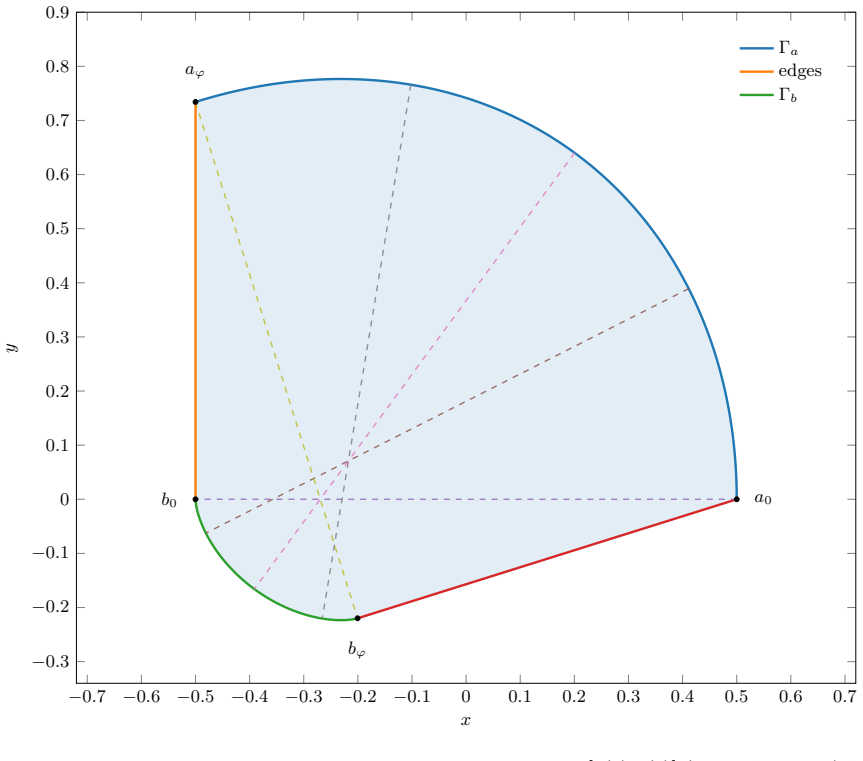
Figure from the paper full image
abstract click to expand
A crystallographic group is a discrete subgroup of the Euclidean group $\operatorname{E}(n)$ that has a compact fundamental domain. Since such a crystallographic group $\Gamma$ is infinite, computing fundamental domains of $\Gamma$ is algorithmically challenging. We address this difficulty by targeting the computation of Dirichlet cells that can form fundamental domains of $\Gamma$. We show that the half-spaces defining such a Dirichlet cell can be derived from elements of $\Gamma$ acting on $\mathbb{R}^n$ that can be expressed as words of bounded length in a suitable generating set. Based on these results, we design an algorithm for the computation of fundamental domains of crystallographic groups and exploit it to study the construction of topological interlocking assemblies.
0
0
stat.AP 2026-07-02

20-50 sampled points per region lift spatial scan power

by Foad Namjoo, Drew McClelland +2 more

Sampling for Region-Aggregated Spatial Scan Statistics

Uniform sampling from each area's geometry and even value spreading recovers most detection ability lost by using centroids alone.

Figure from the paper full image
abstract click to expand
Anomaly detection in geospatial data is a crucial tool in geographic information science (GIS), with applications ranging from national security to public-health surveillance to the study of societal disparities. This work focuses on spatial scan statistics and addresses a key mismatch: spatial counts are typically aggregated into predefined regions (census tracts, zip codes, counties), whereas the most efficient scan algorithms operate on spatial point data. The standard remedy -- collapsing each region to its centroid, as in widely used tools such as SaTScan -- is convenient but, as we show, discards the region's spatial extent and causes a significant loss in statistical power. To resolve this, we propose a simple yet scalable fix: replace each spatial region with 20-50 points sampled uniformly from its geometry and spread the region's values evenly across them. This approach improves statistical power while maintaining computational tractability. A convergence analysis explains why so few samples per region suffice. We recommend this sampling-based conversion as the default way to apply point-based spatial scan statistics to region-aggregated data for anomaly detection.
0
0
cs.CG 2026-07-02

Convex polygon reconstruction mapped across all one- and two-feature cases

by Alexander Baumann, Therese Biedl +4 more

On Reconstructing a Convex Polygon from Partial Information

Study supplies algorithms and hardness results for some scenarios and leaves many open

Figure from the paper full image
abstract click to expand
The reconstruction problem asks to construct a (convex) polygon that has a specified set of features, such as an ordered set of edge-lengths or an ordered set of polygon-angles. In this paper, we do a systematic exploration of the reconstruction problem in all scenarios where one or two sets of features have been specified. Some of these scenarios were well-studied already, for some we develop testing-algorithms and/or hardness results, and many give rise to interesting open problems for future study.
0
0
cs.DB 2026-07-02

Spatial join decode cost depends only on margin to boundary

by Madhulatha Mandarapu, Sandeep Kunkunuru

The Decode-Work Law: Margin-Governed, Provably-Exact Spatial Joins over Compressed Geometry

Pairs near the intersection flip point drive most vertex decoding; the law holds independent of polygon size on real TIGER data.

Figure from the paper full image
abstract click to expand
Filter-and-refine spatial joins have always avoided touching exact geometry for certified candidate pairs, but the field never modeled the decompression cost of the pairs that survive the filter. When geometry is stored in a compressed, progressively-decodable multiresolution codec, the join's true cost is bytes decoded. We study provably-exact polygon intersection joins over a Douglas-Peucker level-of-detail (LOD) ladder, certified by a two-sided Hausdorff-margin test, and make two contributions. First, a reproducible mechanism and harness: on real U.S. Census TIGER water polygons, our progressive certificate join returns the exact join result while decoding 3.4-16.8x (median 5.9x) fewer vertices than naive decompress-then-refine, and about 4.9x fewer than the single-approximation multi-step baseline of Brinkhoff et al. (1994), with zero correctness violations (set-equality against a full-precision oracle) across 31 workloads. Second, a characterization we call the decode-work law: decode work is governed by each pair's signed-clearance margin -- how close it is to the predicate-flip boundary -- independent of object size, because the certificate descends the ladder only until its resolution beats the margin. The law is clean on controlled geometry (held-out R2=0.87, size-independent) and directional on real data (R2 ~= 0.55). We are explicit about what does not hold: a near-boundary-vertex predictor is the wrong model (we pre-registered one and rejected it), a selectivity regime forecaster did not materialize, and the worst case is the trivial Omega(v) read bound on adversarially interleaved boundaries. We contribute the mechanism, budget-honest decode accounting, and an open harness; we do not claim a new index.
0
0
cs.CG 2026-07-02

Vineyard monodromy tied only to symmetry set points

by Erin W. Chambers, Christopher Fillmore +4 more

The Singular Source of Vineyard Monodromy

For small loops on curves in the plane, diagram points permute only if the loop contains a multi-tangent sphere center.

Figure from the paper full image
abstract click to expand
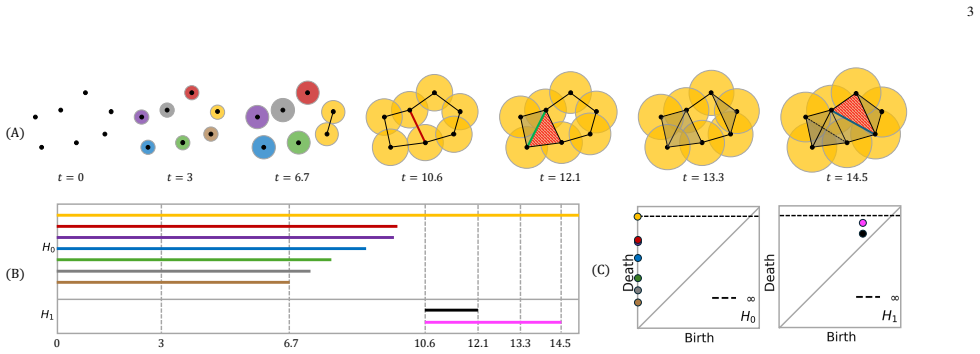
Vineyards, or time-varying families of persistence diagrams, are widely used in topological data analysis (TDA) pipelines to track how topological features change and evolve as a parameter varies. When the parameter traces a closed loop, a vineyard can exhibit monodromy: diagram points permute over the course of a full traversal, which obstructs feature tracking and can complicate downstream analysis of such data. Chambers et al. considered the periodic vineyards that arise from the radial persistence transform, which maps the manifold to a family of persistence diagrams, where each diagram fixes a base point and considers the filtration that is based on Euclidean distance to that point, and showed that monodromy and knotting can occur. Other recent work by Arya et al. considers geometric conditions that exclude monodromy in two dimensions, in an effort to better understand when this effect happens. That said, understanding when and why monodromy occurs is a fundamental open problem with direct practical consequences for many data analysis pipelines. In this work, we study this question for 1-manifolds in $\mathbb{R}^2$, using a surprising connection with tools from singularity theory, and provide a classification for the causes of monodromy in vineyards. More precisely, we prove that the vineyard of a sufficiently small loop $\gamma$ cannot exhibit monodromy unless it contains a specific singularity of the distance function. The central geometric object in our analysis is the symmetry set, which is the locus of centers of spheres tangent in more than one point to the manifold; this object classifies singularities of the distance function, and in our setting, dictates precisely when monodromy occurs. This characterization opens the door to the development of algorithmic criteria for detecting and utilizing (or avoiding) monodromy in TDA pipelines.
0
0
cs.CG 2026-07-02

B(G) equals average of two largest graph degrees

by José Fernández Goycoolea, Andrea de las Heras-Parrilla +3 more

A Geometric View of Combinatorial Fiedler Theory

The ℓ1-maximization problem in combinatorial Fiedler theory has this closed form, with optima located on a cuboctahedron shell.

Figure from the paper full image
abstract click to expand
Recently, Andrade and Dahl introduced combinatorial Fiedler theory by studying a parameter $b(G)$ defined as the $\ell_1$-analog of the Rayleigh quotient minimization characterization of the algebraic connectivity of a graph $G=(V,E)$. In this work, we study the corresponding maximization problem, which plays the role of the $\ell_1$-analog of the largest Laplacian eigenvalue. We show that the new parameter $B(G)$ associated with this maximization problem admits a simple exact description: it is the average of the two largest vertex degrees of $G$. A unified combinatorial treatment of the minimization and maximization problems is presented first. Later, both optimization problems are reinterpreted in a geometrical setting. The feasible set is identified with a $(n-2)$-dimensional cuboctahedron shell where $n=|V|$. Additional structure is presented for this polyhedron, including the fact that maximizing solutions arise at its vertices and minimizing solutions arise at the centers of its facets. Finally, we analyze the number of optimal vectors for $b(G)$ and $B(G)$ for several graph families. Although the value of $B(G)$ is determined by the two largest degrees, we prove that counting the vectors that attain this value is actually $\#\mathrm{P}$-complete.
0
0
cs.CG 2026-07-01

Bouncing robot at 45 degrees exits any pipe chain

by Ahmad Kamaludeen, Somnath Kundu +1 more

Guaranteed Escape for a Bouncing Robot in Pipe Chains

Case analysis of symmetric bounces proves escape from arbitrary-length right-angle rectangular ducts, even with curved joints.

Figure from the paper full image
abstract click to expand
We study the symmetric bouncing of a point robot within orthogonally-joined rectangles with equal width, which we refer to as pipes. We provide an exhaustive case analysis of every trajectory pattern inside a single rectangular pipe segment, identifying the conditions under which the robot exits. We then extend the analysis to L-shaped pipes and, more generally, to linear chains of $k$ orthogonally connected pipe segments. We prove exit guarantees for the special angle $\alpha = \pi/4$. Furthermore, these results extend to pipes with curved joints.
0
0
cs.CG 2026-06-30

Box decompositions compute integral R2 in O(n log n) for 2-3 objectives

by Michael T. M. Emmerich

Computing the Integral R2 Indicator by Perspective Mapping and Box Decomposition

Perspective mapping equates the indicator to weighted hypervolume differences, letting existing algorithms apply after a density substitutio

Figure from the paper full image
abstract click to expand
The continuous integral R2 indicator is a Pareto-compliant refinement of the classical finite-weight-vector R2 indicator, used in performance assessment, bounded archiving for a-posteriori multi-objective optimization, and skyline selection in databases. This work introduces a bidirectional perspective mapping between continuous integral R2 computation and integration over unions of anchored axis-aligned boxes. After translating the ideal point of a minimization problem to the origin, approximation points become strictly positive loss vectors, and the subgraph of the lower weighted Tchebycheff envelope over the weight simplex maps to the complement of an anchored-box union in reciprocal objective space. The Jacobian gives an absolute R2 formula as a weighted complement volume with density $(x_1+\cdots+x_N)^{-(N+1)}$, while differences of R2 values become finite weighted hypervolume differences. Hence, hypervolume algorithms that emit box decompositions can be reused by replacing ordinary box volumes with closed-form weighted box integrals. For $N$ objectives, this gives an output-sensitive overhead $O(2^N M)$ for an $M$-box decomposition, or $O(M)$ for fixed $N$. Using existing box-decomposition approaches, the integral R2 can be computed in $O(n \log n)$ for $N=2,3$, in $O(n^2)$ for $N=4$, and in $O\left(n^{\lfloor (N-1)/2\rfloor+1}\right)$ for $N\geq4$, with $n$ denoting the size of the approximation set. On the lower-bound side, exact value computation has an $\Omega(n\log n)$ lower bound in the algebraic decision-tree model already in two objectives, this bound lifts to every fixed $N\geq2$, and exact computation is $\#P$-hard when $N$ is part of the input. Together, the proposed perspective mapping provides a powerful tool for transferring algorithmic and structural results between anchored-box union and hypervolume theory and integral R2 computation.
0
0
cs.LG 2026-06-30

Entropy balance sets hard limit on what nets can learn

by Srinivasa Rao P., Vangmayi P Reddy

Informational Frustration in Neural Manifolds: Shannon Bottlenecks and the Limits of Learnability

When data-manifold entropy fails to exceed decision-boundary complexity, networks enter a memorization state where generalization is impossi

abstract click to expand
Why overparameterised deep networks generalise so remarkably well remains one of the most stubborn open questions in machine learning theory. Classical frameworks like VC dimension and Rademacher complexity predict catastrophic overfitting in modern models, leaving a massive theoretical gap between theory and reality. In this paper, we bridge this divide by introducing a unified framework that links information theory, topology, and statistical mechanics to map the hard limits of deep learning. Central to our approach is the Entropic Learnability Horizon (ELH): a fundamental law stating that a network can only truly learn a target function if the Shannon entropy of the data manifold outpaces the topological entropy of the function's decision boundary, balanced by the von Neumann entropy of the network's weight space. We establish the Shannon-Topological Bottleneck Theorem, proving that when a target boundary's geometric complexity exceeds this informational horizon, the system undergoes a sudden entropic phase transition. It falls into a state of Informational Frustration - a glassy, rigid memorization phase where generalization becomes thermodynamically impossible. Using this lens, we show that the enigmatic phenomenon of "grokking" is actually an Entropic Release, where weights abruptly reorganise to unlock the bottleneck. Finally, we translate this theory into practice with Entropic Gradient Descent (EGD), an optimization algorithm that dynamically manages weight entropy to keep learning on track. Ultimately, this work repositions entropy not just as a tool for tracking uncertainty but as the fundamental physical currency that dictates whether a machine can learn.
0
0
cs.RO 2026-06-30

Gradient projection keeps robotic 3D prints collision-free at 10 μm accuracy

by Zhikai Shen, Jiasheng Qu +5 more

Trajectory Optimization for Collision-Aware Redundant Robotic Multi-Axis Additive Manufacturing by Constrained Gradient Projection

Method for 8-DOF systems cuts peak jerk 77 percent and runs 10 times faster than SQP on long support-free paths.

Figure from the paper full image
abstract click to expand
Redundant robotic multi-axis additive manufacturing (MAAM) enables support-free and conformal fabrication, but trajectory optimization for long-horizon paths remains challenging under strict deposition-position constraints and time-varying collision constraints. This work proposes a computational framework for collision-aware trajectory optimization in redundant robotic MAAM. We first formulate nozzle-workpiece relative kinematics using a relative Jacobian, and develop a differentiable SDF-based collision model that captures fabrication-induced geometry evolution and provides optimization gradients. The deposition position is then enforced as a hard waypoint-wise equality constraint through iterative projection onto the self-motion manifold, with the loss gradient restricted to the corresponding tangent space. Experiments on an 8-DOF robotic MAAM platform with diverse long-horizon support-free and conformal toolpaths show that our method maintains a mean nozzle-position error below 10{\mu}m, reduces maximum joint jerk by up to $77.6\%$, and eliminates all sampled collision and orientation violations. Compared with the SQP-based baseline, it achieves up to a 10.2x speedup and improved convergence. Physical fabrication experiments further verify that the resulting smooth, collision-free trajectories enable successful printing of complex geometries with fewer visible deposition artifacts.
0
0
cs.CG 2026-06-29

Local ease scales become direct inputs for garment sewing patterns

by Kristijan Bartol, Frieda Hentschel +5 more

EASE: Parametric garment design with explicit and local ease control

Designers prescribe material allowance on the body surface and the system transfers the same distribution to new shapes without re-simulatio

Figure from the paper full image
abstract click to expand
Garment fit and comfort depend critically on ease, the local allowance of excess material relative to the body. In existing design pipelines, ease is typically a byproduct of geometry or simulation rather than an independent design variable, making it difficult to specify, edit, transfer, or redistribute without re-running simulation or optimization. We propose a garment representation that embeds meshes directly on the surface of a parametric human body model and represents ease explicitly as spatially varying, anisotropic per-triangle scales. These scales act as primary design variables, decoupling the specification of material allowance from its physical deformation. Given a design specified by parametric and user-defined surface cuts together with local scale fields, we optimize sewing patterns that enforce the prescribed ease distribution while satisfying geometric and seam constraints. The representation enables three capabilities that are unavailable without explicit ease control: (1) direct specification and editing of local material allowance on the body surface; (2) intent-preserving transfer to new body shapes that reproduces the specified ease distribution without re-running simulation; and (3) intent-modifying pose adaptation that redistributes ease to relieve strain in high-stretch regions. We verify each of these experimentally: ease is closely retained after optimization, excessive strain is significantly mitigated for target poses, and the ease distribution is accurately transferred to target shapes. The approach is implemented as a virtual try-on framework, with physics-based cloth simulation used for final garment visualization. We will publicly release our framework and detailed documentation.
0
0
cs.CG 2026-06-29

Algorithm generates unit-distance graphs exceeding density lower bounds

by Panteleimon Rodis

Algorithmic exploration of the unit distance problem in the rational plane

A bounded rational-point search produces graphs with higher scaling exponents than recent theory, supplying reproducible density data.

abstract click to expand
This paper presents reproducible experimental evidence on unit-distance graph density that surpasses recent theoretical lower bounds. Our approach is based on a novel algorithmic exploration of the rational plane for the generation of unit-distance graphs. An efficient algorithm for this utility must perform a local-breadth search on a bounded and finite set of elements and generate a graph that potentially encompasses the general properties of a unit-distance graph, not affected by restrictions on its generation. To this end, we show that our approach accomplishes this purpose by overcoming the limitations of grid-based structures used in the literature for generating unit-distance graphs. Furthermore, the scaling exponent of the generated graph surpasses recent results.
0
0
cs.LG 2026-06-29

Low-rank directions in LM trajectories improve reasoning consistency

by Arun Vignesh Malarkkan, Manan Roy Choudhury +4 more

Invariant Reasoning Directions in Latent Trajectories of Language Models

TILR extracts stable subspaces from contrastive differences, cutting variance by up to 50% and raising paraphrase consistency by ~10% withou

Figure from the paper full image
abstract click to expand
Latent reasoning models perform multi-step inference directly in hidden-state space, yet the structure of these latent reasoning trajectories remains poorly understood. We show that contrastive refinement signals between stronger and weaker reasoning trajectories exhibit a highly concentrated low-rank structure, while unconstrained latent updates remain sensitive to paraphrases, checkpoint choice, and trajectory perturbations. These observations suggest that latent reasoning trajectories contain stable invariant directions mixed with unstable instance-specific variation. We introduce \textbf{Trajectory-Invariant Latent Refinement (TILR)}, a training-free intervention framework for identifying and manipulating stable reasoning directions in latent space. TILR first learns a low-rank invariant subspace from contrastive trajectory differences across inputs, then constrains latent interventions to this subspace while suppressing poorly aligned updates through an adaptive alignment gate. Across six reasoning benchmarks, we find that a small number of latent directions explain most variation between strong and weak reasoning trajectories. Interventions on these directions causally improve reasoning consistency and reduce trajectory instability under paraphrases and perturbations. TILR improves answer consistency under paraphrase by ~10% and reduces latent trajectory variance by up to $50\%$ while preserving reasoning accuracy. These results support a geometric view of latent reasoning in which transferable reasoning behavior emerges from stable low-dimensional structure within hidden-state trajectories.
0
0
math.MG 2026-06-29

Reduced body area exceeds πΔ²/4 bound

by Scott Duke Kominers

A reduced planar body with area greater than πDelta²/4

Explicit construction yields area 0.786215 for thickness 1, larger than π/4 and disproving the conjectured maximum.

Figure from the paper full image
abstract click to expand
We construct a reduced planar convex body $R$ with thickness $\Delta(R)=1$ and \[\operatorname{area}(R)=0.786215\ldots>0.785398\ldots=\frac{\pi}{4}.\] Thus $R$ is a counterexample to Lassak's conjectured upper bound $\operatorname{area}\le(\pi/4)\Delta^2$ for planar reduced bodies. The construction is given by an explicit support function, and the proofs use only elementary support-function, width, area, and contact-point computations.
0
0
math.MG 2026-06-29

ℓ1 sparsifiers for matrices need only O(n/ε² log(1/ε)) rows

by Victor Reis, Thomas Rothvoss

Linear-size ell₁ sparsifiers

The new bound replaces the prior log n factor with log(1/ε) and gives linear-size zonotope approximations.

abstract click to expand
We prove that for any matrix $A \in \mathbb{R}^{m \times n}$ and any $\varepsilon \in (0, 1/2]$ there is a diagonal matrix $D \in \mathbb{R}_{\geq 0}^{m \times m}$ with at most $O(\frac{n}{\varepsilon^2} \log(\frac{1}{\varepsilon}))$ nonzero entries so that \[(1-\varepsilon) \|Ax\|_1 \leq \|DAx\|_1 \leq (1+\varepsilon)\|Ax\|_1 \quad \forall x \in \mathbb{R}^n.\]In particular, for any zonotope $Z \subseteq \mathbb{R}^{n}$ there exists a zonotope $Z' \subseteq \mathbb{R}^{n}$ generated by at most $O(\frac{n}{\varepsilon^2} \log(\frac{1}{\varepsilon}))$ segments so that $(1-\varepsilon) Z \subseteq Z' \subseteq (1+\varepsilon) Z$. Previously, the best known bound was $O(\frac{n}{\varepsilon^2} \log n)$ due to Talagrand (1990).
0
0
cs.CG 2026-06-26

Two non-planar drawings suffice to unbend every edge

by Therese Biedl

Unbent collections of non-planar s-grid-drawing

Any graph has two s-grid drawings where each edge is straight in at least one, improving on the three needed for planar cases.

Figure from the paper full image
abstract click to expand
In a recent paper, Anti\'{c} et al.~studied collections of planar orthogonal drawings of a graph where every edge is unbent in at least one drawing. This paper generalizes this concept to non-planar drawings, and shows that then two drawings always suffice (for planar drawings three drawings are sometimes needed). The results can also be generalized to $s$-grid drawings for $s\geq 3$.
0
0
cs.CG 2026-06-26

One database yields many Voronoi diagram types via cell merges

by Weining Zhu

A unified cell-merge algorithm for generating diverse Voronoi diagrams and new tessellations based on spatial chromatic model

A cell-merge algorithm retrieves and combines cells to produce ordinary, weighted, spherical and other variants without custom code for each

Figure from the paper full image
abstract click to expand
As a type of spatial tessellation model and an important spatial structure of computational geometry, Voronoi diagrams (VDs) are widely used in many fields. Due to differences in generation spaces, types of spatial entities, distance metrics, and relationships between entities and Voronoi regions, Voronoi diagrams vary into many types, such as the ordinary VD, VD on spheres, VD for linear entities, weighted VD, and ordered higher-order VD. These VDs also have their own generation algorithms. In this study, we propose a new cell-merge (CM) Voronoi generation algorithm based on the spatial chromatic model. The advantage of the CM algorithm is that it can quickly generate diverse VDs by retrieving and merging cells from a unified database, without requiring the development of specific algorithms for each VD. The CM Voronoi algorithm can be particularly applied in cases where a variety of Voronoi diagrams are frequently required for computation and analysis, such as in location-based spatial analysis. Furthermore, the proposed CM method can also generate some new types of spatial tessellations, such as competition intensity and couple-cell diagrams which are different from classical VDs.
0
0
astro-ph.EP 2026-06-26

Lightweight Python package computes planetary positions analytically

by Ioannis Nasios

Solarsystem: A Validated Lightweight Python Package for Planetary Positions and Solar-Lunar Event Calculations

Validation shows mean deviations of 0.44 arcmin in longitude and 0.16 arcmin in latitude versus JPL data, without external files.

Figure from the paper full image
abstract click to expand
This paper presents solarsystem, a validated lightweight and dependency-free Python package for planetary positions and solar-lunar event calculations. The package provides heliocentric and geocentric positions for the major planets, selected dwarf planets, the Centaur Chiron, and the Moon, together with sunrise, sunset, moonrise, moonset, and lunar illumination calculations. Additional functionality includes coordinate transformations between commonly used astronomical reference systems. The implemented algorithms employ analytical models that avoid reliance on external ephemeris datasets, resulting in a portable and computationally efficient solution suitable for a broad range of astronomical applications. An optional precession correction model is included, enabling calculations either in a precession-corrected reference frame or in a fixed epoch framework, depending on user requirements. The numerical performance of solarsystem was evaluated against the JPL DE440 planetary ephemerides using the Skyfield framework as a reference. Validation experiments spanning multiple bodies and extended temporal intervals demonstrate good agreement with the reference ephemerides, with mean planetary longitude and latitude deviations of approximately 0.44 and 0.16 arcminutes, respectively. Additional validation of solar and lunar event calculations yielded timing differences of only a few minutes relative to the reference solutions, while lunar illumination estimates differed by approximately 0.2%. The package can be installed directly through PyPI while the source code, documentation, validation notebooks and example workflows are publicly available through the project repository in https://github.com/IoannisNasios/solarsystem.
0
0
cs.SI 2026-06-26

Effective resistance sparsifies graphs for community detection

by Jayanta Pari, Pratibha Bhandari +1 more

Effective Resistance-Based Graph Sparsification and Community Detection

Node similarities from electrical resistance plus MST thresholding let modularity algorithms run on smaller graphs without losing structure.

Figure from the paper full image
abstract click to expand
Community detection is a key task in network analysis, providing insight into the structural organization of complex systems. Effective resistance, a graph-theoretic metric derived from electrical network theory, has emerged as a powerful tool for evaluating connectivity and influence within networks. This paper proposes an effective resistance-based community detection algorithm that calculates the similarity between nodes using effective resistance values and produces a weighted graph. The sparse graph used in the algorithm is generated after computing the minimum spanning tree (MST) of the weighted graph and adopting a threshold sparsification strategy on non-MST edges. A maximum modularity approach is adopted using the Clauset-Newman-Moore algorithm on the resultant sparse graph. This algorithm is evaluated for both synthetic and real-world networks, demonstrating its effectiveness compared to popular existing methods. The result shows that the effective resistance-based approach accurately captures the structures of the community while maintaining computational efficiency.
0
0
math.OC 2026-06-26

R2 subset selection is NP-hard in 3 objectives but greedy achieves 1-1/e approx

by Michael T. M. Emmerich

Three-Objective Integral R2 Subset Selection: NP-Hardness and Submodular Approximation

The integral R2 gain forms a monotone submodular set function, enabling reliable approximation despite exact hardness.

Figure from the paper full image
abstract click to expand
Selecting a fixed number of representative points from a finite Pareto-front approximation is a fundamental post-processing task in multiobjective optimization. This paper studies this problem for the integral R2 indicator in three objectives, where the indicator is defined as the integral of the lower envelope of weighted Tchebycheff scalarizations over the two-dimensional weight simplex. We provide two complementary algorithmic results. On the positive side, we show that the integral R2 improvement with respect to any fixed baseline is a monotone submodular set function. For the usual ideal-point based R2 indicator, with the ideal point fixed, this yields a direct gap-reduction guarantee: greedy selection closes at least a $(1-1/e)$-fraction of the maximum possible R2 gap between a fixed dominated anchor value and the best cardinality-$k$ value. We also give a tested greedy implementation that evaluates exact integral R2 values by subdivision, with worst-case running time $O(n^6)$. On the negative side, we prove that exact fixed-cardinality subset selection is NP-hard already in three objectives. The hardness proof uses a perspective transformation that maps Tchebycheff-shadow improvements to a weighted anchored-box union problem with density $(x_1+x_2+x_3)^{-4}$, and then adapts the three-dimensional anchored-box construction of Bringmann, Cabello, and Emmerich. Together, these results separate the tractable two-objective case from the three-objective case while identifying a principled approximation route based on submodular optimization.
1 0
0
cs.AI 2026-06-25

Geometry-aware search sets new records on five grid problems

by Luoning Zhang, Xu Zhuang +2 more

Geometry-Aware MCTS for Extremal Problems in Combinatorial Geometry

Incremental valid-move updates and symmetry pruning produce larger configurations than prior methods on grids up to size 119.

Figure from the paper full image
abstract click to expand
We study certain extremal problems in combinatorial geometry that ask about configurations of points in an $n \times n$ grid that satisfy strict, global geometric constraints. Classical exact solvers suffer from combinatorial explosion for these types of problems, and standard reinforcement learning and transformer-based models struggle with the sparse reward "validity cliff" and quadratic token-consumption limits. To overcome these bottlenecks, we propose a Geometry-Aware Monte Carlo Tree Search (MCTS) framework. Our approach strictly enforces geometric constraints through incremental updates to the feasible action space. For constraints about collections of collinear points, like those that occur in the classic No-Three-in-Line problem (Max-N3IL), this mechanism reduces the constraint checking complexity from $O(n^3)$ to $O(n^2)$. To improve search efficiency, we exploit geometric symmetries in two ways: canonical pruning during node expansion to reduce the branching factor, and symmetric batch transitions to accelerate the discovery of promising configurations. We perform extensive experiments and establish new best-known computational results on five out of six of the problems that we considered. Notably, for Max-N3IL we find configurations of size roughly $1.8 n$ for grids of size $82 \le n \le 119$. For the Smallest Complete Set problem, we find configurations of size roughly $0.95 n$, providing new upper bounds within the tested grids. This work establishes Geometry-Aware MCTS as a highly adaptable framework for discovering novel configurations in combinatorial geometry.
0
0
cs.CG 2026-06-25

Furthest pair requires quadratic time in any superconstant dimension under SETH

by Barna Saha, Yinzhan Xu +1 more

Furthest Pair Requires Quadratic Time in Superconstant Dimension under SETH

The lower bound now applies to every efficiently constructible d=ω(1), showing that known algorithms with f(d) n^{2-Θ(1/d)} time are tight i

Figure from the paper full image
abstract click to expand
Several fundamental problems in computational geometry admit algorithms with running time $f(d) \cdot n^{2-\Theta(1/d)}$ for $n$ points in $d$ dimensions, making them among the most prominent examples of barely subquadratic computation. Notable members of this class include Furthest Pair, Bichromatic Closest Pair, (Bichromatic) Maximum Innter Product, and Hopcroft's Problem. Chen [Theory Comput. 2020] proved that, assuming the Strong Exponential Time Hypothesis (SETH), these problems require $n^{2-o(1)}$ time when the dimension satisfies $d=2^{\Theta(\log^* n)}$. We extend this lower bound to all efficiently constructible dimensions $d=\omega(1)$. Thus, assuming SETH, the dependence of the best known algorithms on the dimension is essentially unavoidable. The proof utilizes techniques in OpenAI's recent disproof of the Erdos unit distance conjecture. The proof was initially discovered by ChatGPT 5.5 Pro. The authors have validated and substantially edited the proof to improve the presentation.
0
0
cs.CG 2026-06-25

Delaunay refinement contracts meshes faster than subdivision

by Raphaël Tinarrage

Sharp approximate Carath\'eodory theorem and application to iterated Delaunay refinement

Dimension-dependent Carathéodory theorem supplies explicit bounds showing stronger diameter decrease under iterated refinement.

abstract click to expand
We analyze the decrease of simplex diameters under iterated refinement of spherical Delaunay complexes. Unlike in ordinary subdivision, the refined Delaunay complex need not be a subdivision of the previous one, so mesh contraction is not automatic. We derive explicit contraction bounds for several families of Steiner points, including Delaunay analogues of barycentric and edgewise subdivision. The proof reduces the problem to sharp covering estimates for Euclidean simplices. These estimates are obtained through a strengthening of Maurey's empirical method via pivotal sampling and a dimension-dependent version of the approximate Carath\'eodory theorem. Theoretical results and numerical experiments show that Delaunay refinements achieve stronger contraction than their subdivision counterparts.
0
0
cs.CG 2026-06-25

Two routes cover every polygon point by an internal segment

by Anna Brötzner, Omrit Filtser +3 more

Segment Watchman Routes

The min-max and min-sum versions of the problem are NP-hard yet admit a factor-two approximation in polynomial time for simple polygons.

abstract click to expand
Motivated by applications for robust guarding, we consider a variant of the multiple-watchmen problem that ensures that every point within a polygon $P$ is seen from more than one direction: we search for two routes $W_1,W_2$, such that every point $p\in P$ is contained in a segment $\overline{w_1w_2}\subseteq P$ such that $w_1\in W_1$ and $w_2\in W_2$. We call such routes segment watchman routes. We show that finding the two routes that are optimal with respect to the min-max criterion is weakly NP-hard even in simple polygons, and that finding the routes that are optimal with respect to the min-sum criterion is NP-hard in polygons with holes. Moreover, we present sufficient conditions for routes to be segment watchman routes, and provide a polynomial-time $2$-approximation under both the min-max criterion and the min-sum criterion, both in simple polygons. Finally, we show how to generalize our results for $k$ watchmen.
0
0
cs.CG 2026-06-25

Convex polygon needs interior point for min-weight Steiner triangulation

by David Eppstein, Zahra Hadizadeh

Minimum-Weight Steiner Triangulation of Convex Polygons Requires Interior Steiner Points

The construction counters the conjecture that boundary Steiner points always suffice for convex polygons.

Figure from the paper full image
abstract click to expand
We construct a convex polygon for which the minimum-weight Steiner triangulation requires an interior Steiner point. This provides a counterexample to a 1994 conjecture of Eppstein that minimum-weight Steiner triangulation of convex polygons needs only Steiner points on the boundary of the polygon.
0
0
math.AT 2026-06-24

Hodge spectra relax discrete topology into smooth losses

by Satoshi Kanno, Yoshi-aki Shimada

Hodge Spectral Surrogates for Topology-Constrained Optimization

Soft clique complexes and low-pass filters supply distributed gradients for point clouds and graphs with target homology.

abstract click to expand
Topological information is widely used in data analysis, network design, and machine learning, and topological constraints naturally arise when optimizing or generating objects with prescribed homological structure. However, directly controlling Betti numbers and persistent homology is difficult because they are discrete and combinatorial. We propose a differentiable framework for topology-constrained optimization based on Hodge-spectral relaxations of homological constraints and low-pass spectral filters. From soft graphs and soft clique complexes, we construct Hodge-Laplacian-type spectral relaxations that unify graph clique complexes and Vietoris--Rips filtrations of point clouds. In the hard limit, the penalty-regularized ambient operator recovers the ordinary Hodge Laplacian on the active subcomplex, while in the soft regime it serves as a differentiable low-frequency spectral surrogate. Homological information is represented by zero and near-zero modes, and differentiable topological objectives are defined using heat filters, resolvent filters, and polynomial Laplacian moments. For point clouds, we show that the proposed Hodge spectral-filter losses yield more spatially distributed gradients, smoother scale-normalized behavior under persistence-pairing changes, and geometry-aware update directions than persistent-homology-based losses. For graph clique complexes, Laplacian moments control normalized first-Betti-type quantities and can be combined with ordinary graph-feature objectives. We also discuss connections to trace-based normalized Betti-number estimation, polynomial spectral methods, and possible quantum trace estimation.
0
0
cs.CG 2026-06-24

Fully convex sets peel to empty one point at a time

by Fabien Feschet (LIMOS), Jacques-Olivier Lachaud (LAMA)

How to~Peel Fully Convex Digital Sets

Characterization of peelable points lets any such set shrink while staying fully convex in every dimension.

Figure from the paper full image
abstract click to expand
Full convexity is an interesting alternative to classical digital convexity since it guarantees connectedness and even simple connectedness in digital spaces Z d , for any dimension d. This paper aims at giving a better understanding of the monotonicity properties of fully convex digital sets, since earlier works showed that the question was difficult for thin fully convex sets. To decipher the hierarchy of fully convex sets ordered by inclusion, we study how we can peel a fully convex set progressively while keeping its full convexity. We provide a characterization of peelable points and fast algorithms to identify them. Furthermore we show that fully convex set can be peeled one point at a time till reduced to the empty set, similarly to digitally convex sets in the classical sense. The peeling of a fully convex set can be seen as an analog to homotopic thinning processes, but with an additional geometric property.
0
0
cs.CG 2026-06-23

Canopies generalize vines by tracking simplex pairs instead of diagram points

by Barbara Giunti, Elizabeth Munch

Canopies: A Generalization of Vines and Vineyards for Parameterized Persistence

Different pair choices on the same filtered complex yield homeomorphic canopies, allowing vines with multiplicity and monodromy analysis.

Figure from the paper full image
abstract click to expand
In this paper, we provide a new construction for studying parameterized persistence, called a canopy. We give two versions of this construction: the A-canopy, retaining all information about points on the diagonal of the persistence diagram; and the D-canopy, encoding the information of the "standard" persistence diagram. We do this by making a simple but major modification in the persistence bundle representation information: namely, rather than tracking a point in the persistence diagram, we instead track some choice of pairs of simplices that created said point. This viewpoint is a combinatorial version of tracking the chain complex information rather than just the output of persistence. We show how to construct the canopies from any filtered filtration function, proving, using the algebraic structure of filtered chain complexes, that different choices of pairs result in homeomorphic structures. Finally, we showcase the power of our approach by using canopies to define vines even in the presence of points with multiplicity; to discuss monodromy; and to obtain some immediate results linking non-trivial monodromy in the persistent homology transform with the existence of non-Hausdorff points in the canopy.
0
0
cs.CG 2026-06-23

Monge property gives O(kn) exact algorithm for integral R2 subset selection

by Michael T.M. Emmerich

Exact and Fast Subset Selection Algorithms for the Bi-objective Integral R2 Indicator

Proof that transition costs form a Monge matrix allows linear-time dynamic programming to select k points maximizing the continuous R2 area.

Figure from the paper full image
abstract click to expand
We study fixed-cardinality subset selection for the exact integral bi-objective $R_2$ indicator with a uniform continuum of weighted Tchebycheff scalarizing functions. The indicator measures the area under the lower envelope of scalarizing losses over weight space, rather than a finite sample average over weight vectors. For a sorted bi-objective Pareto-front approximation, represented by points ordered by increasing first objective and decreasing second objective, we derive an exact adjacent-neighbor decomposition of this integral objective into boundary terms, unary diagonal corrections, and selected-neighbor transition terms. This yields an exact Bellman dynamic program with $O(kn^2)$ running time for selecting $k$ of $n$ candidate points. We then prove that the transition matrix is Monge. This gives a divide-and-conquer implementation with $O(kn\log n)$ running time and, more strongly, a staircase matrix-search implementation with $O(kn)$ running time under constant-time arithmetic comparisons. The matrix-search proof is presented through a lower-envelope sweep over single-crossing transition functions and includes the triangular feasibility condition $i<j$. The algorithms are exact for the continuous integral $R_2$ setting and are distinct from finite-weight-vector approximations, although they are related to earlier exact and dynamic-programming work on two-dimensional indicator-based subset selection, including hypervolume subset selection. Reproducible Python code compares exhaustive enumeration, the direct left-to-right dynamic program, the divide-and-conquer dynamic program, and the matrix-search implementation under explicit consistency checks.
1 0
0
math.NA 2026-06-22

Augmented cone rays lift exact NMF success from 79 to 99 percent

by Mithil Ramteke

Exact Nonnegative Matrix Factorization via Cone-Ray Witnesses: Obtuseness Ranking, Saturation Curves, and an Augmented Alt-LP Breakthrough

Slack-LP on two extra rays overcomes closed-form limits on 10-by-10 matrices at ranks 4-6.

abstract click to expand
We study exact nonnegative matrix factorization (NMF) of small exact-rank-r matrices via a cone-ray pipeline combining the truncated SVD, the polyhedral cone of nonnegative preimages, the Double Description Method (DDM, via Fukuda's cddlib), and an alternating linear program (alt-LP) for slack minimisation. Under a uniform-support restriction the factorisation constraint Q P^T = I_r reduces to entrywise nonnegativity of an r x r witness matrix M_T = R_T^{-1} (R_K^T)^{-1} for an r-subset pair (T, K) of cone rays; this closed-form witness recovers an exact NMF in microseconds when feasible. We characterise feasibility by ranking r-subsets via geometric near-orthogonality ("obtuseness") and walking the top of each list. A 100-trial Monte Carlo at m=n=10 exposes a clean saturation curve: success 44/32/8, 79/85/58, and 79/87/59 of 100 at top-5/200/400 for r=4,5,6 -- beyond top-200 the failures are structural, not budget-limited. Enlarging m,n at fixed r hurts: at m=n=15 success collapses to 37/7/0/0/0 for r=4..8. On Olivetti faces (400x4096) the DDM step itself times out. Our main contribution is a hybrid that breaks this ceiling: at each pair we first try the closed-form M_T, and when it is infeasible we augment both supports by k=2 maximally angularly-separated rays and solve for mu,nu>=0 by a short slack-LP alternation. On the same m=n=10 Monte Carlo this lifts success from 79/85/58 to 99/95/75 at r=4,5,6, with cone reconstruction error at or near machine precision. We close with the four scaling walls the pipeline faces and concrete next steps.
1 0
0
math.AT 2026-06-22

No Mapper variant leads on stability

by Annesha Sen, Shivam Singh +1 more

A Three Axis Evaluation Framework for Mapper Algorithms

Tests on synthetic data and digits show the three axes conflict, so choices depend on priorities.

Figure from the paper full image
abstract click to expand
Mapper is a well-known tool in topological data analysis, which visualizes and summarizes high-dimensional data. However, its output is sensitive to choices of lens functions, cover parameters, and clustering strategies, making evaluation challenging. Most works that have attempted to evaluate the Mapper algorithm have done so visually. In this paper, we review a roadmap for assessing Mapper algorithms along three complementary axes: stability, cluster quality, and topological shape preservation. We analyze Mapper and its variants on synthetic datasets and the UCI Digits dataset. These modes include topological explosion at high resolutions. Our findings indicate that these axes of evaluation are often in tension and that no single Mapper variant performs optimally across all three. This review provides practical guidelines for choosing Mapper variants and identifies open challenges toward a principled Mapper analysis.
0
0
math.AT 2026-06-22

Ellipsoidal fuzzy covers keep Mapper graphs fixed after finite crossings

by Annesha Sen, Shivam Singh +1 more

GK-Mapper: A Stability Framework for Gustafson-Kessel Fuzzy Mapper Graphs

GK-Mapper graphs change only at membership thresholds and freeze when those crossings end, unlike spherical versions on non-round data.

Figure from the paper full image
abstract click to expand
Topological Data Analysis uses tools from algebraic topology to study the shape and structure of data. The Mapper algorithm provides a graph-based summary of high-dimensional datasets by combining a filter function, a cover of the filter range, and clustering on the corresponding pullback sets. Several variants of Mapper have been proposed, including Conventional Mapper, F-Mapper, and Shape Fuzzy C-Means Mapper. In this article, we introduce Gustafson-Kessel Fuzzy Mapper Graphs, a geometry-adaptive extension of Shape Fuzzy C-Means Mapper. The proposed method replaces spherical fuzzy covers with ellipsoidal covers induced by the Gustafson-Kessel fuzzy clustering framework, making it more suitable for high-dimensional datasets with anisotropic and non-spherical geometry. We develop a stability framework for the graphs produced by Gustafson-Kessel Mapper and Shape Fuzzy C-Means Mapper. We prove that the membership functions depend smoothly on the fuzzifier, establish a precise condition for the existence of edges, and show that the graph is locally stable under small perturbations of the fuzzifier. We further describe the critical-event structure of graph changes in terms of threshold crossings of the membership functions and show that the graph is constant between consecutive critical events. When the threshold-crossing set is finite, this yields an eventual freezing threshold. Finally, we empirically show that Gustafson-Kessel Mapper can produce more stable graphs than Shape Fuzzy C-Means Mapper on high-dimensional and geometrically complex datasets.
0
0
cs.LG 2026-06-22

RL encoder learns art gallery geometry without visibility checks

by Domagoj Ševerdija, Jurica Maltar +2 more

Learning to Place Guards by Reinforcement: A Geo-Free Neural Policy for the Vertex-Guard Art Gallery Problem

Classifier on frozen embeddings cuts under-covered polygons by order of magnitude even at five times training range.

Figure from the paper full image
abstract click to expand
Neural combinatorial optimization (NCO) has shown that policies trained by reinforcement can construct strong solutions to NP-hard problems directly from raw instances. What such a policy actually learns, as opposed to what its decoder expresses, remains much less clear. We study this distinction on the vertex-guard Art Gallery Problem, the NP-hard task of choosing polygon vertices from which to observe an entire region. A pointer-network policy is trained from a coverage-aware reward over its own rollouts under the constraint we call geo-free inference: at test time it sees only vertex coordinates, with no visibility computation and no geometric oracle. The policy places guards economically but leaves a tail of under-covered polygons that widens far beyond the training range. To locate the cause, we freeze the trained encoder and read its embeddings with a small single-shot classifier, still geo-free at inference. The classifier closes most of the feasibility gap, in and out of distribution and at up to roughly five times the training range, cutting under-covered polygons by about an order of magnitude at an explicitly reported cost in guard count. We read this as evidence that the reinforcement-trained representation already encodes the geometry required for feasibility, and that residual failures reflect decoder calibration rather than missing knowledge. Probing a frozen encoder thus offers a practical way to ask what a neural combinatorial solver has internalized.
0
0
cs.CG 2026-06-22

Iterative method produces arc-length splines that hit all points

by Dafna K. Matsegora, Stephen M. Watt

Arc-Length Parameterized Interpolating Splines

Previous techniques either miss the points or use non-arc-length parameterization; this keeps both.

Figure from the paper full image
abstract click to expand
We present an iterative algorithm to compute an arc-length parameterized spline interpolating a set of points. This differs from other methods where the computed spline either does not interpolate the original points or the parameterization is not the arc-length of the returned curves. Our method is applicable in any dimension $D \ge 2$, and we illustrate it with numerical results for plane curves.
0
0
cs.CG 2026-06-22

Door and non-adjacency rules yield floor plans via graph method

by Rohit Lohani, Krishnendra Shekhawat

DPLAN: Minimal Connectivity to Floorplan Generation

Minimal edge additions and separating-triangle removal turn connectivity constraints into non-overlapping rectangular or orthogonal layouts.

Figure from the paper full image
abstract click to expand
Automated floor plan generation is an important problem in computational architectural design. The goal is to construct a floor plan from user-defined room numbers and door requirements. The user specifies which rooms must share a door and which rooms must not be adjacent. However, these requirements do not determine the exact placement or shape of the rooms. The task is therefore to arrange the rooms in a single floor plan so that all required door connections are satisfied and no rooms overlap. To address this problem, we propose DPLAN (Door Connectivity to Floor Plan Generation), a graph-based prototype that generates floor plans from door and non-adjacency constraints. The framework operates in three stages. First, the user-defined graph is examined and, if disconnected, additional edges are added to connect its components. Second, a bi-connected plane triangulation is constructed to ensure the existence of a floor plan without overlapping rooms or empty spaces. Third, the triangulated graph is transformed into floor plans. For rectangular floor plans (RFPs), separating triangles are removed by modifying edges without adding new vertices, thereby avoiding the creation of extra rooms. For orthogonal floor plans (OFPs), separating triangles are removed by introducing additional vertices, allowing rectilinear room shapes. By enforcing both door and non-adjacency requirements, the framework generates floor plans that satisfy the given constraints. The method is implemented in Python and includes a prototype for interactive constraint specification and floor plan visualization. Currently, the framework supports rectangular plot boundaries. Future work includes support for non-rectangular plots, dimension-based scaling, and circulation modeling.
0
0
math.AT 2026-06-22

Data as functions clarifies persistent homology

by Patrizio Frosini, Ulderico Fugacci +2 more

Persistent Homology and Equivariance in Data Analysis: A Topological Introduction

A topological introduction shows how treating information as functions bridges analysis to symmetry-aware learning via equivariant operators

Figure from the paper full image
abstract click to expand
This new book is intended as a first elementary introduction to Topological Data Analysis for mathematics students seeking a rigorous account of the foundations of persistent homology, as well as for computer scientists interested in its theoretical underpinnings. The exposition is as self-contained as possible: all the required background is recalled when needed, and only a few standard results are cited without proof. One section of the book, devoted to monodromy in biparameter persistence (Section 4.4), requires more advanced knowledge of algebraic topology. Persistent homology can be introduced from different perspectives, reflecting the variety of mathematical languages that have shaped its development over the years. Some approaches emphasize the algebraic foundations of the theory, while others highlight its topological essence. In this book, we adopt the latter viewpoint - the one that historically marked the birth of the subject - because we believe it offers both conceptual clarity and pedagogical effectiveness, making it particularly suitable for undergraduate and early graduate students. This book differs from existing introductory texts in several respects. First, it adopts a functional viewpoint: rather than representing data as finite (pseudo-)metric spaces, it treats them as functions encoding the information to be analyzed. This interpretative framework allows data to be viewed as measurable objects and highlights the role of observers and their equivariances in the analysis process. Second, this perspective provides a natural bridge between Topological Data Analysis and machine learning through the theory of Group Equivariant Non-Expansive Operators (GENEOs), which offers a mathematically grounded framework for incorporating symmetries and invariances into learning systems.
0
0
math.DG 2026-06-19

11-parameter family captures all 3D elastic curves

by David Brander, Jens Gravesen +1 more

Approximation and interactive design with exact 3D elastic curves

The spherical pendulum equation supplies a complete analytic description that recovers parameters and approximates any space curve segment.

Figure from the paper full image
abstract click to expand
An elastic space curve is a critical point of the bending energy subject to appropriate constraints. An analytic representation, equivalent to the spherical pendulum equation, leads to an 11-parameter description of the space of 3D elastic curve segments. We give a numerically stable method for recovering the 11 parameters from a given elastic curve segment. Using this, we give a fast and stable method to approximate an arbitrary space curve segment by a 3D elastica. Applications include interactive design with exact elastic curves and CAD surface rationalization for robotic hot-blade cutting.
0
0
cs.LG 2026-06-19

SGD biases toward Fisher-geometric flat minima

by Md Sakir Ahmed, Kumaresh Sarmah +1 more

Fisher-Geometric Sharpness and the Implicit Bias of SGD toward Flat Minima

Riemannian sharpness from the FIM is reparametrization-invariant and concentrates probability at solutions that generalize better.

Figure from the paper full image
abstract click to expand
A widely held intuition in deep learning is that stochastic gradient descent (SGD) implicitly favors flat minima and that flat minima generalize better, but standard Euclidean measures of flatness such as the trace or maximum eigenvalue of the loss Hessian are not invariant under reparametrizations that preserve the network function, which undermines the theoretical foundations of this narrative. In this study we resolve this issue by grounding flatness in the Riemannian geometry of the statistical manifold induced by the Fisher Information Matrix (FIM). We define Riemannian sharpness mathematically and prove that it is invariant under smooth, function-preserving reparametrizations, which directly addresses the critique of Dinh et al. in the paper ``Sharp minima can generalize for deep nets''.We note that this invariance is a property of the true FIM; the diagonal empirical estimator used in practice (and in all experiments below) inherits invariance only approximately, and exact invariance under arbitrary reparametrizations would require structured estimators such as K-FAC. We formalize the gradient noise of mini-batch SGD as having a covariance structure proportional to the FIM, derive the stationary distribution of the resulting stochastic differential equation, and then show that the probability mass is exponentially concentrated at Riemannian-flat minima. A PAC-Bayes generalization bound controlled explicitly by SR formally links this geometric bias to test performance. Our experiments on MNIST and CIFAR-10 confirm that SR reliably tracks generalization in ways that Euclidean sharpness does not, and that its scaling with $\eta/B$ matches the theoretical predictions. Together these results provide a rigorous, reparametrization-invariant account of why flat minima generalize.
0
0
cs.CG 2026-06-19

Quadratic forms measure directional spread in 3D geometric trees

by Yossi Bokor Bleile, Emanuele Cortinovis +2 more

Quadratic Forms for Measuring Geometric Trees in 3-dimensional Space

Hexplot model with Fisher-derived metric supports visualization, measurement, and statistics on tree structures.

Figure from the paper full image
abstract click to expand
Tree-like structures appear in many areas of science, and their shapes can help understand the underlying processes they drive or that give rise to them. By thinking of these structures as geometric graphs in $\mathbb{R}^3$, we gain access to tools from computational geometry and topology to study them. In this paper, we adopt the theory of quadratic forms to measure the directional spread of geometric graphs, and we introduce the hexplot model -- equipped with a metric derived from the Fisher metric on the standard triangle -- to visualize, measure, and collect statistics.
0
0
cs.CG 2026-06-19

Two user points trace corrected paths through defective 3D skeletons

by Ruoxuan Yang, Chuan Li

Semi-Automatic Correction of 3D Tubular Structure Skeletons via Component-Wise MST and Filtered Delaunay Triangulation

Component-wise MSTs plus filtered Delaunay graphs rank connections to fix crossings and gaps in vessel centerlines.

abstract click to expand
Skeletonization of tubular structures from 3D imaging is essential for tasks such as morphometric analysis, transport or flow simulation, and procedural planning in domains including vascular networks, plant root systems, and neural connectomes. However, automatic skeleton extraction often introduces topological artifacts, such as erroneous connections between nearby branches and fragmented centerlines caused by noise or missing data. Correcting these artifacts manually can be time-consuming and error-prone, especially when precise interaction is required. We present a semi-automatic correction method that reconstructs a plausible centerline connection from minimal user input. Given a user-selected source and target point, our method traces a path by combining (i) component-wise minimum spanning trees for stable local propagation and (ii) a filtered 3D Delaunay edge graph for bridging gaps and handling ambiguous junctions. Candidate steps are ranked using a score that accounts for direction continuity, spatial proximity, component consistency, and target-directed progress. The output is an ordered polyline (or edge sequence) that can be used as a suggested correction and integrated into downstream skeleton post-processing workflows. We implement the system in C++ with an interactive viewer based on Libigl and demonstrate representative qualitative results on brain vessel datasets, including correction of typical "crossing" and "dotted" artifacts. While our current validation is qualitative, the method is lightweight and serves as a practical building block toward more comprehensive interactive correction pipelines in biomedical imaging and related domains.
0
0
math.ST 2026-06-18

Patnaik-Pearson dimension aligns tail exponents with HTSR for power-law weights

by Tom Hadfield

Patnaik-Pearson intrinsic dimension for internal representations of neural networks

The measure yields matching critical exponents when neural network weight matrices follow Pareto spectra, and tracks embedding dimension thr

Figure from the paper full image
abstract click to expand
We define a new measure of intrinsic dimension of a data manifold, which we call the Patnaik-Pearson dimension, and apply this to internal representations of neural networks, in particular transformers. The inspiration for this comes from the HTSR and SETOL work of Martin, Mahoney and Hinrichs, combined with the TwoNN intrinsic dimension estimator of Facco et al. We prove various properties of this intrinsic dimension estimator. Treating weight matrices of neural networks as data manifolds, for weight matrices whose Empirical Spectral Density follows a Pareto (Power Law) distribution, we relate the Patnaik-Pearson dimension to the HTSR and SETOL analysis, and show that critical values of the tail exponent coincide for the two approaches. Using a combination of theoretical and numerical techniques, we study the behaviour of the Patnaik-Pearson dimension of a data manifold under the transformations typical to neural networks. We apply this machinery to the BERT-base and DeepSeek-R1-Distill-Qwen-1 models, to investigate first the Patnaik-Pearson dimension of the initial data manifold of token embeddings, and second the evolution of the Patnaik-Pearson dimension as token embeddings pass through the layers of the model. Code and notebooks used for the numerical results presented here is available at https://github.com/tdhadfield/PatnaikPearson
0
0
cs.CG 2026-06-18

Neural network computes geodesic-like curves on multi-surface systems

by Sheng-Gwo Chen, Chen-Chang Peng

A Neural Network Framework for Geodesic-Like Curve Computation on Parametric Surfaces

PINN framework handles single surfaces, C0 multi-surface continuity, and surfaces of revolution without custom adjustments.

Figure from the paper full image
abstract click to expand
The concept of geodesic-like curves was introduced by Chen in 2010 as a method for estimating shortest paths (geodesics) on parametric surfaces, with its convergence established theoretically. However, an efficient numerical computational framework has not yet been developed. In this paper, we propose an elegant and efficient approach for computing geodesic-like curves by leveraging deep learning and Physics-Informed Neural Networks (PINNs). Under the proposed framework, not only can single parametric surfaces be handled efficiently, but a broad class of complex parametric surfaces including multi-surface systems with $C^0$ or higher continuity and surfaces of revolution can also be robustly addressed.
0
0
cs.CG 2026-06-18

Integer distances force collinearity in hyperbolic space of any dimension

by David Eppstein

Tangent Spheres and Integer Distances

The result extends the Erdős-Anning theorem and supplies the first size bound in higher dimensions from a small general-position subset.

Figure from the paper full image
abstract click to expand
The Erd\H{o}s-Anning theorem states that any point set for which all distances are integers, in a Euclidean space of any dimension, must be either finite or collinear. We prove the same result in hyperbolic space of any dimension. A quantitative form of our result also extends for the first time to Euclidean spaces of dimension greater than two: if a set of points with integer distances in $\mathbb{E}^D$ or $\mathbb{H}^D$ has a subset of $D+1$ points in general position whose diameter is $d$, then the whole set has size $O(D(d+1)^D)$. To prove these results we formulate a lemma that, if the graph of external tangencies of a system of spheres in Euclidean or hyperbolic space contains a $K_{a,b}$ subgraph for $a,b\ge 3$, then the sets of spheres on each side of this biclique have centers that lie on a hyperplane. This lemma also implies that, in multilateration (determining a position from differences of distances to known landmarks), $D+1$ non-coplanar landmarks always suffice to limit the position to two possibilities.
0
0
stat.ML 2026-06-17

Trees admit 3D reachability embeddings regardless of size

by Prashant Gokhale, Piotr Indyk +4 more

Compact Geometric Representations of Hierarchies

Constant dimension 3 works for any directed tree; dimension scales as O(t log n) once treewidth t is fixed.

abstract click to expand
Computing geometric representations of data is a cornerstone of modern machine learning, typically achieved by training dual encoders which map queries and documents into a shared embedding space. Recent work of You et al. [NeurIPS '25] has extended this approach to hierarchical retrieval, where relevance is determined by the ancestor-descendant relationships in a Directed Acyclic Graph (DAG). While previous work has shown that valid embeddings exist when the number of descendants is small, these bounds degrade significantly for deep hierarchies, requiring dimensions as large as the total number of nodes. In this paper, we investigate compact reachability embeddings for more general graph classes and provide theoretical guarantees for representing hierarchies using embeddings whose dimension depends on structural graph parameters. We prove that for any directed tree, there exists a reachability embedding in constant dimension 3, independent of the tree's size or depth. We generalize this result to graphs characterized by treewidth $t$, constructing embeddings of dimension $O(t \log n)$, where $n$ is the number of nodes. Complementing these upper bounds, we provide matching or near-matching lower bounds, showing that dimension $\Omega(n)$ is necessary for general DAGs and $\Omega(t/\log(n/t))$ is required for graphs of treewidth $t$. We also obtain upper and lower bounds parameterized by the number of cross-edges in the DAG. We additionally show that our embeddings can be constructed on real world datasets, and that they give much smaller dimensions in high recall regimes compared to prior embeddings with theoretical guarantees.
0
0
cs.GR 2026-06-17

Blended charts fit seamless explicit surfaces without parametrizations

by Romy Williamson, Niloy Mitra

Blended Chart Surfaces: A Seamless Explicit Representation for Smooth Surface Fitting

A proxy mesh sets topology while local polynomials are optimized and blended to deliver global smoothness and direct derivative access.

Figure from the paper full image
abstract click to expand
A surface representation suitable for geometry processing should be compact and explicit, provide global smoothness guarantees, support a wide range of surface topologies, and offer reliable access to differential quantities such as normals and surface energies, while remaining compatible with modern differentiable optimization. Existing neural representations typically sacrifice one or more of these properties: implicit fields typically require iso-surfacing for downstream use, while explicit neural maps are constrained by canonical-domain parametrizations or exhibit seam artifacts between local charts. We introduce Blended Chart Surfaces, a compact, network-free, explicit representation that is smooth by construction and anchored to user-provided topology. Given a coarse proxy mesh encoding the intended surface topology and approximate geometry, Blended Chart Surfaces jointly optimize for a polynomial map at each proxy vertex using an off-the-shelf optimizer to fit to an implicit target shape, avoiding the need for an input parametrization. Neighboring maps are fused using a smooth 'one-ring coordinate' blending scheme, decoupling topology and coarse geometry (carried by the proxy) from geometric details (carried by the local patches). The surface is globally smooth, fully differentiable, and enables stable evaluation of derivatives, making differential quantities and surface energies directly accessible. Additionally, our construction is equivariant to rigid motions and scaling of the proxy mesh. We evaluate Blended Chart Surfaces on various topologies and geometric complexity, and compare against explicit alternatives including interpolating-function baselines and mesh-displacement MLPs. Across these, Blended Chart Surfaces achieve a favorable trade-off among compactness, simplicity, access to differential quantities, and expressivity while remaining smooth across patch boundaries.
0
0
cs.CG 2026-06-17

Greedy keeps prefix sums bounded by (2/δ_T)^{d-1}

by Wojciech Czerwiński, Daniel Dadush +4 more

Greedy Vector Balancing

For any finite set of unit vectors, the online sign choice confines all partial sums to a ball independent of sequence length.

abstract click to expand
In online vector balancing, vectors $t_1,\dots,t_n$ arrive one by one from a given set $T$ and the goal is to assign signs $s_1,\dots,s_n\in\{\pm1\}$ in an online manner so as to minimize the largest norm of any signed prefix sum $\sum_{i=1}^ks_i t_i$, $k \in [n]$. In this paper, we analyze the natural Euclidean greedy vector balancing algorithm for this problem: at each step $k$, the sign $s_k\in\{\pm1\}$ is chosen so that $s_k t_k$ has non-positive inner product with $\sum_{i=1}^{k-1} s_i\cdot t_i$. Our main result is the first finite bound, independent of the sequence length $n$, on the performance of greedy whenever $T$ is finite. When $T \subset \mathbb{R}^d$ consists of unit vectors, we prove that the signed sums produced by greedy have Euclidean norm at most $(2/\delta_T)^{d-1}$, where $\delta_T$ is the minimum non-zero distance between vectors in $T$ and subspaces spanned by vectors in $T$. The same upper bound holds when the sequences are composed of scaled down vectors in $T$. We also provide a simple set $T$ for which $\Omega(\sqrt{d}/\delta_T)$ is a lower bound. We analyze the greedy algorithm by proving the existence of a bounded convex $K_T$ that is $T$-absorbing: $\forall x\in K_T$ and $t \in\pm T$, $\langle x,t\rangle\leq0\Rightarrow x+t\in K_T$. We give an explicit construction of a set $K_T$ contained in a ball of radius $(2/\delta_T)^{d-1}$, based on chains of subspaces spanned by vectors in $T$, which may be of independent interest. We generalize our greedy vector balancing bound to online vector partitioning, where the sequence $t_1,\dots,t_n$ must be partitioned in an online manner into $p$ subsequences. As an application, we prove a special case of a conjecture of Bosman et al. (arxiv:2402.19259), showing that a lexicographic version of total completion time scheduling under scenarios is polynomial time solvable when the number of scenarios is fixed.
0
0
cs.CG 2026-06-17

Rectangles require at least twice as many piercers as disjoint sets allow

by Deepak Ajwani, Rishikesh Gajjala +2 more

A Counterexample to Wegner's Conjecture for Axis-Parallel Rectangles

Explicit construction yields a triangle-free family with τ at least 2ν, disproving the 1965 bound.

Figure from the paper full image
abstract click to expand
In 1965, Wegner conjectured that every finite family \(\mathcal R\) of axis-parallel rectangles in the plane satisfies \(\tau(\mathcal R) \le 2\nu(\mathcal R)-1\), where \(\tau(\mathcal R)\) denotes the minimum number of points needed to pierce all rectangles in \(\mathcal R\), and \(\nu(\mathcal R)\) denotes the maximum size of a pairwise disjoint subfamily. Over the last six decades, the conjecture has motivated a long line of work: it has been verified for several special classes of rectangle families, and the best known general upper bounds have been progressively improved, but the conjecture itself had remained open. We give an explicit counterexample. More precisely, we construct a triangle-free rectangle-intersection graph on \(n\) vertices whose independence number is at most \(n/4\). Since the graph is triangle-free, no point of the plane can lie in three rectangles; hence every piercing point hits at most two rectangles. Consequently, \(\tau(\mathcal R) \ge n/2 \ge 2\nu(\mathcal R)\), contradicting Wegner's conjectured bound. We also give a slightly more general construction for which \(\tau(\mathcal R) \ge 2.21\nu(\mathcal R)\). This shows that the standard point relaxation, equivalently the clique relaxation, for the Maximum Independent Set of Rectangles problem has integrality gap at least \(2.21\).
0
0
cs.CV 2026-06-17

Hybrid method improves 3D pelvic organ reconstruction from MRI

by Hui Wang, Xiaowei Li +8 more

High-Fidelity 3D Geometric Reconstruction of Pelvic Organs from MRI: A Hybrid Deep Learning and Iterative Optimization Approach

Deep learning predictions combined with iterative optimization yield lower shape errors and better mesh quality for bladder, uterus, and rec

Figure from the paper full image
abstract click to expand
Patient-specific 3D reconstruction of pelvic organ geometry from MRI is important for pelvic floor modeling and downstream patient-specific analysis. However, while previous studies have focused primarily on either image segmentation or downstream use of 3D models, the reconstruction of high-fidelity, high-quality geometries remains labor-intensive and poorly standardized. The study introduced a hybrid deformable shape modeling framework that integrates deep learning prediction with iterative optimization for the reconstruction of the bladder, uterus, and rectum. The framework consists of three core components: a geometry-aware multi-level deep learning architecture that preserves topological consistency of pelvic organs; a two-stage amortized optimization training strategy that balances global shape capture and local surface refinement; and a holistic synergy mechanism--where iterative optimization provides supervision for deep learning during the training phase, and during inference, deep learning rapidly predicts the global organ morphology, followed by iterative optimization to refine local surfaces and mesh quality. This framework demonstrated marked superiority in geometric fidelity than current mainstream deep learning-based organ reconstruction models. For individual anatomical structures, the reconstructed 3D geometries for the bladder, rectum, and uterus achieved significantly lower Chamfer Distance values and higher Dice Similarity Coefficient scores. In addition, while maintaining high computational efficiency, the proposed architecture yielded superior overall volumetric mesh quality. At the patient level, the framework achieved higher mean values for the 10 worst elements for both minSICN and minSIGE compared to traditional geometric post-processing algorithms.
0
0
cs.CG 2026-06-17

Entropy of repair frontier decides repair or rebuild for moving points

by Faruk Alpay, Bugra Kilictas

Repair Entropy in Dynamic Geometric Nearest-Neighbour Structures

Triangle inequality limits failures to F_t; its Shannon entropy predicts the lowest-cost strategy across 2400 motion transitions.

Figure from the paper full image
abstract click to expand
We study dynamic geometric data structures for exact nearest-neighbour maintenance under small motions. For each point we store a certificate consisting of its nearest neighbour and the two smallest neighbour distances, with clearance $c_i=d^i_2-d^i_1$. A triangle-inequality argument gives a sharp validity radius: after a step of maximum displacement $\varepsilon$, every certificate with $c_i>4\varepsilon$ remains valid, so all possible failures are confined to a repair frontier $F_t$. We introduce repair-frontier entropy $H(F_t)$, the normalized Shannon entropy of failed certificates over index cells, as a workload descriptor for choosing between event-driven repair, batched repair, and full rebuild. The resulting maintenance rule repairs only the frontier in $O(|F_t|\log N)$ time under bounded cell occupancy, while a full rebuild costs $\Theta(N)$; moreover, entropy lower-bounds the number of frontier cells touched by event-driven repair and shifts the empirical repair-rebuild crossover. We evaluate ten motion families in $d\in{2,3}$, with $N$ up to $16,000$, using an exact tiled GPU oracle and a GPU grid rebuild as ground truth and competitor. Across $2400$ labelled transitions, the validity rule misses no invalid certificate, low-pressure frontiers are usually cheaper to repair incrementally, and diffuse frontiers of the same size are more expensive for event-driven repair but not for batched repair. The released dataset records frontier geometry, certificate audits, per-strategy times, and best-strategy labels.
0
0
cs.CG 2026-06-17

Clusters enable distance denoising in metric spaces

by Han Huang, Pakawut Jiradilok +1 more

Denoising Distances in Metric Measure Spaces

Algorithm recovers local clusters around points for correction, with sharp limits when error shrinks with sample size.

Figure from the paper full image
abstract click to expand
Recent work studied the problem of finding clusters and denoising pairwise distances from noisy distances of points sampled on a manifold. We study the same problems in more general metric measure spaces under a lower mass condition. We give an algorithm that extracts large localized clusters around every sampled point, which can be used to denoise distances, with near-linear running time in the dense regime for fixed target distance error $r$. When the target distance error \(r\) is allowed to vanish as \(n\to\infty\), we identify the sharp information-theoretic scale for achieving distance error \(r\), suggesting a statistical-computational gap for high-accuracy denoising beyond the Riemannian setting.
0
0
cs.LG 2026-06-17

Topology scores regularise NMF to learn coherent bases

by Matias de Jong Van Lier, Shizuo Kaji +1 more

Non-negative Matrix Factorisation with Topological Regularisation

Persistent homology supplies threshold-free terms for images, time series and graphs in one optimisation.

Figure from the paper full image
abstract click to expand
We investigate the learning of interpretable bases in non-negative matrix factorisation (NMF) by regularising the topology of the learned basis functions. Our approach is motivated by the observation that many data modalities can be viewed as non-negative functions on a structured domain, where the quality of a basis is intrinsically linked to its topology. However, naive methods for incorporating the topology of the support are often hindered by discreteness and threshold dependence, rendering them unsuitable for continuous optimisation. We address these challenges by employing persistent homology as a stable, threshold-free topological quantifier and by designing topological scores that integrate into the NMF objective as regularisers. The resulting framework encompasses spatially coherent image components, periodic time-series structures, and clique-like graph signals within a unified modelling language.
0
0
cs.RO 2026-06-17

Utility gradients over cost-induced Voronoi regions computed 10x faster

by Andre N. Costa, Petter Ögren +1 more

Agent Utilities over Generalized Voronoi Regions and their Gradients

Reynolds Transport Theorem replaces finite differences for integrals over regions whose boundaries are defined by arbitrary costs such as LQ

Figure from the paper full image
abstract click to expand
In this paper, we generalize the concept of Voronoi regions, define agent utility as the integral of a utility density over the corresponding Voronoi region, derive gradients of the utility, and illustrate the approach in a two-team example from soccer. The generalization of Voronoi regions is in the form of so-called Cost-Induced Voronoi (CIV) regions, where the agent state space may differ from the space being partitioned. One example of such regions is when the cost is given by the optimal solution of an LQR control problem. Then the agent states include position as well as velocity, while the partitioned space only includes positions. The agent utility is defined by integrating some utility density over the CIV region of the agent. This utility density might be the probability density of some beneficial event, such as receiving a pass in soccer. The utility is then the overall probability of receiving a pass and the gradient represents a way to improve that probability. We show how this utility gradient can be computed using the Reynolds Transport Theorem from fluid mechanics, and that this approach achieves similar accuracy while reducing computation time by about an order of magnitude compared to a baseline finite-difference approximation.
0
0
cs.CG 2026-06-16

Monge inequality makes Riesz point selection polynomial-time

by Michael T.M. Emmerich

Polynomial-Time Riesz-Energy Subset Selection for Ordered Point Sets on Lines and ell₁-Staircases

The interaction obeys Monge property for any s>0, turning selection of k points from n into an exact min-cut problem on a graph with k(n-k)

Figure from the paper full image
abstract click to expand
We study efficient algorithms for one-dimensional fixed-cardinality minimum Riesz $s$-energy subset selection on ordered real-line point sets and propose and test a polynomial-time exact s-t cut-based algorithm for this problem. Given $x_1<\cdots<x_n$, an exponent $s>0$, and a cardinality $k$, the task is to choose $1\leq i_1<\cdots<i_k\leq n$ minimizing $E_s(i_1,\ldots,i_k)=\sum_{1\leq p<q\leq k}(x_{i_q}-x_{i_p})^{-s}$. We prove that the one-dimensional Riesz interaction satisfies a Monge inequality. When feasible subsets are encoded as increasing index vectors, this property implies submodularity on a finite distributive lattice and yields polynomial-time solvability by submodular minimization over such lattices. The structural reduction holds for every real $s>0$. We also derive an explicit minimum $S$--$T$ cut formulation with $k(n-k)$ threshold variables and $O(k^2(n-k)^2)$ finite pairwise edges. The constructed graph has $N=k(n-k)$ nodes and $M=O(k^2(n-k)^2)$ arcs after an $O(k^2(n-k)^2)$ coefficient-construction step; an $O(NM)$ max-flow bound gives an $O(k^3(n-k)^3)$ cut step, while the conservative $O(N^2M)$ bound gives $O(k^4(n-k)^4)$. By an isometry argument, the same algorithm applies to $\ell_1$-staircases, including monotone two-dimensional Pareto-front and skyline approximations. The accompanying Python implementation includes verification examples and an empirical runtime benchmark; on balanced instances $n=2k$, the reference min-cut code overtakes exhaustive enumeration around $n=24$--$26$. The appendix provides examples and detailed explanations of the underlying theory.
1 0
0
cs.DM 2026-06-12

Formulas give longest known count of Z-convex polyominoes by area

by Luca Castelli (University of Insubria), Paolo Massazza (University of Insubria)

On the Counting Sequence of Z-convex Polyominoes

Equations implemented in a program extend the enumeration sequence for shapes with convexity degree at most 2.

Figure from the paper full image
abstract click to expand
The degree of convexity of a convex polyomino P is the smallest integer k such that any two cells of P can be joined by a monotone path inside P with at most k changes of direction. In this paper, we present a set of formulas and equations that are the basis of a C++ program that allows you to compute the longest counting sequence known to date (with respect to the area) of convex polyominoes of degree of convexity at most 2
0
0
cs.LO 2026-06-11

Rational polytopes realize every finite apartness separoid

by Faruk Alpay, Baris Basaran

A Calculus of Apartness over Separoids: Effective Convex Representation, Stratified Conservativity, and the Complexity of Entailment

Coordinates indexed by maximal separations deliver clearance at least 2 and stay valid under enlargement by radius less than 1.

Figure from the paper full image
abstract click to expand
Every finite family of compact convex bodies in Euclidean space induces an apartness relation between disjoint index sets: two sets are apart when the convex hulls of the corresponding unions are disjoint. This paper studies the finite theory obtained by taking apartness as the primitive relation. Its basic laws are symmetry, bilateral subsumption, and vacuity, equivalently the separation-polarity form of acyclic separoids. The main contribution is an effective rational realization theorem with uniform margins and the exact consequence theory it supports. Every finite apartness separoid is realized by rational polytopes whose coordinates are indexed by maximal separations. Maximal separations and minimal Radon partitions can be enumerated from a full table, generators, or a membership oracle; the coordinate values have controlled bit height; and each coordinate records a readable certificate of one maximal separation. The realization separates every apart pair with clearance at least 2, remains correct under outer parallel enlargement by any radius below 1, and yields full-dimensional convex bodies after thickening. The distance-function layer records standard convex-analytic stability through Lipschitz comparison, monotonicity under inclusion, and outer parallel bodies. On the logical side, positive entailment is exactly one-premise subsumption. Boolean consequence over Euclidean scenes is sound, complete, and decidable; satisfiability is NP-complete, validity is coNP-complete, and positive entailment is linear for sorted encodings. A stratification theorem shows that Boolean reasoning introduces no new atomic apartness beyond separoid closure. Fixed-dimensional consequence relations form a strictly decreasing hierarchy that stabilizes in dimension n minus 1 for n sites.
0
0
cs.CG 2026-06-11

Framework automates responsive thematic maps for varying screens

by Arjen Simons, Sarah Schöttler +3 more

Automated Responsive Thematic Mapping with Layout Guides

A layout guide encodes element sizes and relative positions so one reference layout produces maps that adapt smoothly across devices.

Figure from the paper full image
abstract click to expand
Thematic maps visually communicate statistical information about spatial units such as countries or states. They must balance the individual readability of those map elements that carry the statistical information and the overall cartographic context. Nowadays, most maps are not static images, but must flexibly respond to a range of device types and display sizes. Current approaches to responsive thematic mapping are limited: they are labor-intensive for practitioners and often rely on combining disjointed visual encodings to cover different device types. In this paper we introduce the first algorithmic framework to efficiently compute responsive thematic maps that smoothly adapt to different display sizes. A key component of our framework is the layout guide: a combinatorial structure which encodes the two essential aspects of a thematic map. The first aspect are the visual requirements of each statistical map element (at least their desired width and height), the second aspect is the cartographic context in the form of relative positions of map elements. Our main algorithmic contribution is the map arranger which takes a visual container as input and returns a suitable layout guide. The map arranger does so in a stable and consistent manner: if the container changes only a little, then so does the layout guide, and the same input container always results in the same layout guide. To use our framework, one needs three ingredients: $(1)$ a reference layout, which corresponds to the ``ideal'' thematic map, $(2)$ a total vertical and horizontal order for all map elements (the desired layouts for containers with extreme aspect ratios), and $(3)$ a thematic mapping algorithm that can construct a thematic map from a layout guide. We demonstrate our framework on two types of thematic maps, namely rectangular and Demers cartograms.
0
0
math.CO 2026-06-09

ReCom chain reaches every districting on triangular lattice subsets

by Mehmet Emre, Daniel C. Jerison +1 more

Connectivity of Districting Metagraphs

Irreducibility holds for pair-sized districts on these graphs, enabling full exploration of plans.

abstract click to expand
In this article, we prove irreducibility results for a family of Markov chains arising in the study of redistricting and detecting gerrymandering. These chains use ReCom moves as their transition mechanism and are commonly employed in Markov chain Monte Carlo methods to generate ensembles of districting plans. Such ensembles are frequently used for outlier analysis, in which a proposed districting map is compared against the ensemble to determine whether it behaves atypically; this methodology often appears in expert testimony in redistricting litigation. We show that when the underlying dual graph is a triangular subset of the triangular lattice and each district consists of two merged geographic regions, the associated ReCom chain is irreducible. This provides another entry in the very small list of known classes of ReCom chains for which irreducibility has been established. We also demonstrate the fragility of this phenomenon by constructing an infinite family of maps for which the corresponding ReCom chain is not irreducible. Indeed, we produce a districting map that, after implementing a single ReCom move, always yields the same original map. These examples remain structurally close to the triangular lattice: they arise as subdivisions of the triangular lattice, and the resulting graphs have maximum degree at most 8. Finally, we prove irreducibility for a further special case: the ReCom chain on a 3 x n grid graph partitioned into three districts of size n.
0
0
cs.DS 2026-06-08

Incremental k-center cannot beat factor 2 even with unlimited time

by László Kozma

The price of incrementality in k-center clustering

A metric instance forces any one-by-one center sequence to suffer a 2-gap at some prefix length.

Figure from the paper full image
abstract click to expand
The $k$-center problem is one of the best-studied and most intuitive clustering formulations. It asks, given a set of $n$ points in a metric space, for $k$ of the points to be designated as cluster centers, so that the maximum distance of an input point to its nearest center is minimized. Gonzalez's greedy algorithm from 1985 is a simple and efficient way to find a $2$-approximate solution. The algorithm has the attractive feature of \emph{incrementality}: it outputs the centers one by one, with a guaranteed $2$-approximation for every prefix of the obtained sequence of centers. Incrementality imposes a geometric constraint on how solutions can be built, and it is natural to ask whether this comes at a price in the quality of the solution. It is known that in polynomial time, the approximation ratio of $2$ is best possible, assuming $P \neq NP$. In this paper we show that even with \emph{unlimited} computational power, the factor $2$ cannot be improved, if the solution is required to be built incrementally. The lower bound construction imposes a tradeoff between all $n$ levels of the clustering simultaneously; it was obtained with the help of ChatGPT, an aspect we discuss in Section 3 of the paper.
0
0
math.CO 2026-06-08

Positive-density order types admit linear-sized blow-ups

by Ruy Fabila-Monroy, Benedikt Hahn +1 more

Blow-ups of order types of positive density

In any large colored point set in d-space, a frequent k-point order type is realized uniformly by picking one point from each of k large dis

Figure from the paper full image
abstract click to expand
Order types are an equivalence relation between point configurations that capture their combinatorial and convexity properties. Let $P$ be a $\kappa$-colored sequence of $n \ge d+1$ points in general position in $\mathbb{R}^d$. Let $\rho$ be a $\kappa$-colored order type on $k \le d+1$ points that has positive density on $P$; that is, for some constant $\delta >0$, there are $\delta \cdot \binom{n}{k}$ $k$-point subsequences of $P$ that have the same order type as $\rho$ and the same color pattern. In this paper we show that there exists a constant $c >0$ (depending only on $d, \delta$, $k$ and $\kappa$) and disjoint subsets $X_1,\dots,X_k$ of $P$, each with at least $c \cdot n$ points, such that for every choice of $k$ points $x_i \in X_i$, $(x_1,\dots,x_k)$ has the same order type and color pattern as $\rho$.
0
0
cs.CG 2026-06-08

HRsR reconstructs meshes 6x faster with 8x less memory

by Ruiqi Cui, Cem Akarsubaş{i} +4 more

HRsR: Hierarchical Rotation System Reconstruction

The hierarchical method keeps RsR topology control while scaling to larger point clouds.

Figure from the paper full image
abstract click to expand
Surface reconstruction from point clouds remains challenging when both geometric fidelity and topology control are required. Rotation System Reconstruction (RsR) reconstructs triangle meshes from point clouds while explicitly controlling topology through the Euler characteristic, but its sequential edge insertion limits scalability. We present Hierarchical Rotation System Reconstruction (HRsR), which accelerates RsR through a hierarchical pipeline of edge collapses and vertex splits. HRsR first simplifies the input using a $k$-nearest neighbor graph, performs reconstruction on the reduced structure, and then restores geometric detail while preserving topology. To maintain geometric consistency, we incorporate intersection handling and quality-driven vertex split selection. Experiments demonstrate up to a $6\times$ speedup and more than $8\times$ reduction in memory usage over RsR, while achieving comparable reconstruction results.
0
0
cs.CE 2026-06-05

Feature graphs from CAD support GNN predictions with editability

by Abhishek Indupally, Ibraheem Alawadhi +2 more

Bridging CAD and Data-Driven Design: Attributed Feature Graphs for Engineering Design

The graphs encode design features so models can predict performance and trace results back to editable CAD elements.

Figure from the paper full image
abstract click to expand
Engineering design is an iterative, simulation-driven process where traditional workflows rely heavily on computationally expensive analyses such as finite element and computational fluid dynamics. Although data-driven methods have accelerated design evaluation and optimization, most existing geometric representations discard parametric and feature-level semantics, limiting their integration with CAD-driven design workflows and reducing model interpretability. To address this gap, this work introduces Attributed Feature Graphs (AFGs), a feature-based representation that encodes design features, such as extrusions, ribs, and pockets, as nodes and their geometric or dependency relations as directed edges. AFGs preserve design intent and parametric structure while remaining compatible with standard graph-based learning methods, enabling end-to-end learning directly on CAD-derived feature graphs. The paper demonstrates the proposed representation through a surrogate-modeling case study on the CarHoods10K automotive hood frame dataset, where a Graph Neural Network (GNN) is trained as an evaluation engine to predict performance metrics from AFG inputs. The learned model achieves competitive surrogate performance compared with traditional data-driven approaches, but with the added benefit that engineers can map predictions back to specific CAD features and interpret how individual design elements influence system behavior. Furthermore, because AFGs are built from native CAD features, engineers can directly edit the underlying geometry in the CAD environment and reevaluate the design through the same learned model.
0
0
cs.CG 2026-06-05

Interface curves carry full state across analytic patch trees

by Henk Mulder

Analytic patch trees: branch interface inheritance and fractal dimension fields

Replacing branch points, the curves fix topology and self-similarity while slicing the surface into curve trees with their own dimensions th

Figure from the paper full image
abstract click to expand
The extension of the analytic fractal curve trees of (2601.17490} to analytic surface patch trees reveals a new geometric structure: branch points are replaced by interface curves that transmit the full analytical state of parent patches to their children. These interfaces prove to be central in determining the topology of the surface patch trees, including for the conditions for self-similarity of the interfaces, the patches and thus the trees. We establish the analytic conditions for the integrability and well-posedness of the surface patch trees and introduce further restrictions for conformality. We demonstrate that patch trees have a natural foliation that slices the trees into one dimensional curve trees, each of which has their own Hausdorff dimension, jointly creating a smooth dimension field. We extend the two dimensional surface model to arbitrary dimensions $n$ where $n-1$ interface manifolds transport the $n$ field state of the parent patches to their child branches. We note that the balance or discrepancy between patch field dimension and the dimensions in which the branches may evolve, determine the analytical regime from essentially geometrical to essentially operational.
0
0
cs.LG 2026-06-05

Algebraic identity cuts mean curvature cost from O(m^4) to O(k^2 m)

by Alexandre L. M. Levada

Efficient Mean Curvature Computation on High-Dimensional Data Manifolds

Exact trace identity plus null-space Haar approximation yields 50-300x speedups while preserving accuracy on real high-dimensional data.

Figure from the paper full image
abstract click to expand
Estimating local mean curvature at each point of a high-dimensional dataset is a key ingredient of geometry-aware machine learning algorithms, such as the Mean Curvature Boundary Points (MCBP) method. The naive implementation of this computation, based on a local shape operator approximated from k-nearest neighbor patches, involves an explicit construction of a matrix $H$ whose trace form yields an $O(m^4)$ cost per point, rendering the approach intractable for datasets with more than a few dozen features. This paper introduces two complementary contributions that together reduce this cost by several orders of magnitude. The first contribution is an exact algebraic identity. This identity, derived from the orthogonality of the eigenvectors of the covariance matrix and the cyclicity of the trace operator, eliminates $H$ entirely and reduces the per-point cost to $O(m^2)$ after the eigendecomposition. The second contribution addresses the remaining $O(m^3)$ bottleneck of the full eigendecomposition. Since the local covariance matrix has rank at most $k-1 \ll m$, we replace it with a truncated SVD of the $k \times m$ centered data matrix, an $O(k^2 m)$ operation, and derive an analytical approximation for the contribution of the null-space eigenvectors based on the expected value of their outer product under the Haar measure. The resulting estimator has total cost $O(k^2 m + k m p^2)$, where $p = k-1$. Experiments on real-world datasets confirm speedups of 50 to 300 times relative to the original implementation, with negligible loss when the fast estimator is used to replace the original version. By providing a scalable and data-driven estimate of local curvature, the proposed method establishes curvature as a practical geometric feature for a broad range of machine learning tasks, from classical to modern deep learning pipelines.
0
0
cs.CG 2026-06-05

RedZeD reduces persistent homology to zero differentials for faster pairing

by Chris Kapulkin, Nathan Kershaw

RedZeD: Computing persistent homology by Reduction to Zero Differentials

Active enumeration on Vietoris-Rips filtrations cuts time and memory versus standard algorithms.

Figure from the paper full image
abstract click to expand
We introduce a new algorithm for computing persistent homology of Vietoris--Rips filtrations, which in many cases offers a considerable improvement both in terms of time and memory over the existing implementations of the persistence pairing algorithm. The key innovation, called active enumeration, is made possible by a new theoretical framework of Reduction to Zero Differentials (hence RedZeD) in which to view persistent homology.
0
0
cs.RO 2026-06-04

Lie-group curve distances solved by polynomial roots

by Vinicius M. Gonçalves, João Baião +5 more

Efficient Computation of Distance Functions for Navigation Vector Fields in Lie Groups

Cuts computation for navigation vector fields to a few root findings, with formulas for SE(3) and tests on a manipulator.

Figure from the paper full image
abstract click to expand
Vector-field-based methods are widely used for robot control and are often applied to the path-tracking problem. Some vector field approaches require repeatedly computing the distance between the robot configuration and the curve, as well as the corresponding closest point. Recently, vector fields have been extended to Lie Groups. In this case, this computation can be expensive, especially when performed at high control frequencies on embedded platforms. This paper proposes a method for efficiently computing the distance between a point and a curve represented as what is called a G-polynomial curve, which is a curve representation that generalizes polynomial curves to matrix Lie groups. The proposed approach exploits the structure of these curves to reduce the problem to a small number of polynomial root-finding computations. Simulation results show that the method significantly reduces computation time while maintaining accuracy compared to existing optimization-based approaches. Practical formulas are also provided for the case of the group SE(3), and the method is validated experimentally on a robotic manipulator. The methodology is implemented in a computational package, available online.
0
0
cs.CG 2026-06-04

Guard-point measure exceeds perimeter on one pentagon but stays under 2P

by Masahito Nakano

Sibley's Guard-Point Convexity Measure: A Perimeter Counterexample and a Dominance Bound

Explicit counterexample disproves pointwise inequality while uniform bound G <= 2P holds for all simple polygons.

Figure from the paper full image
abstract click to expand
We study Sibley's guard-point convexity measure for simple polygons and compare it with the exterior and perimeter convexity measures. We prove the exterior inequality G(F) <= E(F) and disprove the pointwise perimeter inequality G(F) <= P(F) by an explicit nonconvex pentagon with G(F) = 62/63 and P(F) = 185/189. Nevertheless, we prove the uniform bound G(F) <= 2P(F) for every simple polygon. Thus the pointwise perimeter inequality is false, but the corresponding asymptotic non-domination conclusion remains true. We also record an auxiliary guard-point-adapted anisotropic perimeter ratio, which isolates the directional loss in the Euclidean perimeter comparison.
0
0
cs.CV 2026-06-04

Visibility-ranked planes recover missing 3D details

by Minjie Tang, Xiangfei Li

Hierarchical Space Partition for Surface Reconstruction

Classifying planes by visibility lets a hierarchical partition restore occluded structures without inflating model size.

Figure from the paper full image
abstract click to expand
Generating compact polygonal models from point clouds is a key problem in 3D vision and computer graphics. However, due to inherent limitations of LiDAR scanning (e.g. range constraints and occlusions), critical scene information is often missing, leading to degraded reconstruction accuracy. To address this, we propose a plane assembling strategy that effectively recovers missing details while maintaining model compactness. We classify all the planes extracted from the scene into three categories: highly visible, barely visible, and invisible. The invisible planes, which are recovered by scene structure analysis, indicate the missing details. The three types of planes correspond to the three growth priorities. Each plane grows according to the priority level, and the space is partitioned progressively, namely, the hierarchical partition. Subsequently, we generate a watertight polygonal mesh from the partition via a min-cut-based optimization. Finally, comparisons on public datasets show the effectiveness and superiority of our method against mainstream approaches. The project page is available at https://hsr-3dv.github.io/.
0
0
cs.DB 2026-06-04

Indexicon spatial library matches top performance without dependencies

by Panagiotis Simatis, Panagiotis Bouros +1 more

Indexicon: A Spatial Indexing Library

Single-file C++ templates for R-tree, Quad-tree and KD-tree deliver comparable speed on real geographic data plus easy modification.

Figure from the paper full image
abstract click to expand
Spatial indexing is foundational to Geographic Information Systems (GIS) and multi-dimensional data management, yet the current open-source landscape poses a significant barrier to research that employs or benchmarks spatial access methods. We observe that most of the existing open-source libraries include a single index. Some are hindered by complex dependencies, missing critical functionalities, inconsistent APIs, and rigid constraints regarding the support of spatial data types. To address this issue, we introduce Indexicon: a unified, highly portable, extendable, open-source spatial indexing library, designed specifically for rapid integration and ease of modification of main-memory spatial access methods. Indexicon provides a comprehensive suite of popular tree-based spatial access methods, including the R-tree, Quad-tree variants, and the KD-tree. Each structure is meticulously implemented as a self-contained, single-file, header-only C++ template with zero external dependencies beyond the standard library. Crucially, every index features a uniform interface, natively supporting bulk-loading, dynamic insertions/deletions, range queries, $k$-nearest neighbor ($k$NN) search, and structural statistics tracking. We also present an extensive performance evaluation of Indexicon against well-established and widely used implementations of these structures (including Boost Geometry, PCL, and Nanoflann) across six real-world geographic datasets. Our results demonstrate that Indexicon's lightweight design matches or outperforms existing state-of-the-art implementations while offering unmatched architectural flexibility. To foster reproducible spatial research, we open-source the complete library alongside our datasets and query workloads.
0
0
cs.CG 2026-06-04

AdaMapper and AdaHIsomap retain more topological loops than standard methods

by Shakiba Khourashahi, Ilia Jahanshahi +2 more

Homology-Preserving Dimensionality Reduction via Adaptive Mapper and Landmark Isomap

Persistence diagrams guide adaptive cover refinement and landmark selection to improve homology preservation on point clouds, simulations, n

Figure from the paper full image
abstract click to expand
As data becomes increasingly central across engineering and scientific disciplines, effective visualization is essential for interpreting complex, high-dimensional structures. Dimensionality reduction techniques project high-dimensional data into lower dimensions while aiming to preserve structural properties such as pairwise distances and local neighborhoods. In this paper, we focus on improving homological preservation, that is, the retention of topological features such as connected components and loops, which is critical for maintaining global shape and continuity. We first introduce AdaMapper, a Mapper-based algorithm that leverages persistence diagrams to guide both skeleton construction and landmark selection. AdaMapper incorporates an adaptive refinement strategy that automatically increases cover resolution in regions exhibiting topological loops. We then propose AdaHIsomap, which extends landmark Isomap by incorporating homology-informed landmark selection and augmenting it with random anchor points to better balance distance and homology preservation. We evaluate both methods on a diverse set of datasets, including high-dimensional point clouds, scientific simulations, networks, and image data, and benchmark their performance against state-of-the-art approaches.
0
0
cs.CG 2026-06-04

Finite certificate confirms 0.832 convex cover bound

by Niantao Xie

A Reproducible Certificate for the Brass-Sharifi Lower Bound in Lebesgue's Universal Cover Problem

The record lets any verifier check that the Brass-Sharifi convex lower bound holds without repeating the placement search.

Figure from the paper full image
abstract click to expand
Brass and Sharifi proved the lower bound 0.832 for the convex form of Lebesgue's universal cover problem by combining geometric estimates with a computer search over placements of a disk, an equilateral triangle, and a regular pentagon. This paper gives a certificate-based reproduction of that computation. The finite record consists of an adaptive ledger, a terminal-route replay, three local lower-bound certificate families, compact integrity audits for large tables, and a proof-obligation layer connecting the replayed data to the lower-bound statement. Under the specified verifier, acceptance of the finite certificate implies the Brass$-$Sharifi convex lower bound $\alpha_{cvx} \ge 0.832$. The certificate concerns only the convex Brass$-$Sharifi lower bound statement: it claims neither a numerical improvement nor a lower bound for the unrestricted nonconvex problem, and proof-assistant formalization and independent external verification remain outside the present scope.
0
0
math.OC 2026-06-03

Optimization raises unit-distance lower bound to n^1.0152

by Michael T.M. Emmerich

Optimizing Explicit Unit-Distance Lower-Bound Certificates

A tailored evolution strategy finds better prime multiplicities than Sawin's original choices and verifies the stronger explicit exponent.

Figure from the paper full image
abstract click to expand
The 2026 disproof of Erd\H{o}s's unit-distance conjecture and Sawin's quantitative refinement show that the maximum number $u(n)$ of unit distances among $n$ planar points can exceed $n^{1+\varepsilon}$ for a fixed positive $\varepsilon$. Sawin's explicit bound gives more than $n^{1.014}$ unit distances for arbitrarily large $n$ and exposes integer parameters whose choice is not fully optimized. This report treats Sawin's parameter selection as a nonlinear integer optimization problem and develops an open-source Python optimization and verification pipeline for certificates involving prime sets $T$ and $S_Q$, integer multiplicities $k(p)$, and a rationally encoded real parameter $R$. After reproducing Sawin's certificate with $\delta=0.014114\ldots$, the pipeline yields improved certificates with the same $T$. We develop a tailored integer evolution strategy achieving a certificate with $\delta=0.015263\ldots$ and supporting the cautious statement $u(n)>n^{1.0152}$ for arbitrarily large $n$. For extended ramified prime ranges, the Emmerich--Cordella certificate obtained with the same framework reports $u(n)>n^{1.031}$ for $\#T=67$, illustrating the importance of enlarging $T$. Very recent MathOverflow discussions, brought to the author's attention as of version~4, report further improvements, including certificates above $\delta>0.035$ and beyond $\delta>0.036$. Some of these improvements may rely not only on larger prime ranges but also on modified constraint systems and additional degrees of freedom that deviate from Sawin's original formulation. Beyond this application, the work illustrates how randomized optimization heuristics can improve, verify, and refine explicit certificates for combinatorial geometry through nonlinear integer optimization.
0
0
quant-ph 2026-06-02

LC equivalence plus motif fusion cuts graph state costs 84%

by Tingxiang Ji, Hansika Weerasena +2 more

Towards Efficient Synthesis of Quantum Graph States by Fusing Graph Motifs

Selecting the sparsest equivalent graph before decomposing into ring, star and linear motifs multiplies photonic generation rates by orders

Figure from the paper full image
abstract click to expand
Photonic graph states with advanced topologies can enable measurement-based quantum computing, distributed quantum sensing, and quantum interconnects. However, the efficient generation of photonic graph states is limited by the probabilistic nature of photonic entangling operations and the exponential dependence of generation rate on resource cost. In this work, we study photonic graph state synthesis as a cost-aware decomposition problem, exploiting local Clifford (LC) equivalence to identify more synthesis-friendly representations of the target graph state before decomposition. Specifically, we propose Cost-aware Fusion-based Decomposition (CFD), a three-stage heuristic framework that decomposes a target graph state into ring, star, and linear motifs, and assembles them via Type-I fusion operations to minimize fusion overhead and physical-qubit consumption. We further show that selecting the LC-equivalent graph state with the minimum number of edges provides a highly effective proxy for near-optimal synthesis: in many cases it matches the best generation rate observed within the LC equivalence class under CFD, and in most remaining cases it remains close to it. Numerical evaluations on graph state orbit data and 2D and 3D lattice graph states demonstrate that CFD achieves up to 84.6\% reduction in resource overhead compared to baseline constructions, and yields improvements in photonic generation rate spanning multiple orders of magnitude. These results suggest that combining structure-aware motif decomposition with LC equivalence is a practical and scalable strategy for photonic graph state synthesis.
1 0
0
cs.CG 2026-06-01

Near-linear algorithm for discrete Fréchet TSP variant

by Omrit Filtser, Tzalik Maimon +1 more

On Fr\'echet Traveling Salesmen Problems

Two curves from one point set minimize discrete Fréchet distance in near-linear time; continuous case is NP-hard.

abstract click to expand
The Fr\'echet distance is a well-studied distance measure between two curves. In this work, we demonstrate that the merit of Fr\'echet distance extends beyond evaluating similarity, and introduce a new setting in which it proves useful. Consider a situation where two agents are required to visit a given set of sites, while staying close to each other throughout their traversal. In this paper, we study problems where the goal is to construct two curves whose vertices are from a given set of points, under the constraint that the Fr\'echet distance between the curves is kept as small as possible. This problem can be viewed as a variant of the Traveling Salesman Problem (TSP), and thus may be of interest in routing, network planning and more. We present a near-linear algorithm for this problem under the discrete Fr\'echet distance, and explore several variants of the problem, including minimizing the lengths of the curves and balancing the number of sites assigned to each agent. Lastly, we prove that the problem is NP-hard under the continuous Fr\'echet Distance.
0
0
cs.GR 2026-06-01

Integer counts on edges resolve sub-cell surface features

by Hossein Baktash, Mark Gillespie +1 more

Subgrid Marching Tetrahedra

Generalized normal coordinates let marching tetrahedra extract thin sheets and fine details without inside/outside labels.

Figure from the paper full image
abstract click to expand
We describe a method for recovering a manifold, intersection-free triangle mesh from the points where edges of a tetrahedral grid pierce a continuous surface. Unlike classic marching cubes or tets, our subgrid marching scheme allows arbitrarily many surface patches within a single cell, capturing fine features and thin sheets. Moreover, it requires neither a well-defined inside/outside (allowing surfaces with boundary), nor consistently-oriented input geometry. Yet we retain the local, parallel nature of classic marching: reconstruction is performed independently per tet, yielding a conforming mesh across tet boundaries. Our key innovation is a generalization of normal coordinates from geometric topology, which encode surface connectivity via arbitrary integer intersection counts along each grid edge. This encoding sidesteps the usual Nyquist--Shannon limit, putting no lower bound on the size of features that can be resolved on a fixed grid. In practice, for similar compute time and equal grid resolution -- or even an equal number of output triangles -- meshes produced by subgrid marching are far more accurate than those from classic marching. Beyond standard contouring, our method can be used to convert polygon soup into a manifold, intersection-free mesh.
0
0
cs.CG 2026-06-01

Five 3-cube shapes detect all graph 2-boundaries

by Jacob Ender, Chris Kapulkin

Towards fast computation of higher discrete homology

Quotient graphs replace exhaustive search and speed up second discrete homology computation.

abstract click to expand
We develop a new algorithm for computing the second discrete homology group of a graph which is much faster when compared to existing algorithms. To do so, we identify five basic shapes, which are quotient graphs of the 3-cube with the property that the injective maps from them detect all possible 2-boundaries in the singular chain complex computing discrete homology.
0
0
cs.CG 2026-06-01

Few extra slopes suffice for polynomial-area drawings of bounded-degree graphs

by Michael A. Bekos, Eleni Katsanou +2 more

How Many Slopes Does Polynomial Area Cost?

New constructions restore polynomial area and few bends by accepting a modest rise in the number of slopes.

abstract click to expand
In this work, we study the interplay between the number of slopes, the number of bends per edge, and the area requirements for planar drawings of bounded-degree graphs. Our motivation stems from the fact that, while numerous algorithms produce planar drawings with few slopes for graphs of relatively small degree in polynomial area, existing approaches for higher-degree graphs often require super-polynomial area. We address this gap in the literature by presenting new constructions that yield polynomial-area drawings with few bends per edge while slightly increasing the required number of slopes, thereby providing the first systematic study of slopes, bends and area trade-offs.
0
0
cs.CV 2026-05-29

Plug-and-play module eliminates intersections in multi-object SDFs

by Deniz Sayin Mercadier, Federico Stella +3 more

S2MDF: A Plug-And-Play Layer for Intersection-Free Multi-Object Signed Distance Fields

S2MDF enforces a hard constraint on vector-valued fields for any compositional method, reducing interpenetrations to numerical precision.

Figure from the paper full image
abstract click to expand
Compositional implicit surface representations model scenes as collections of objects, each encoded by a Signed Distance Field (SDF). A fundamental limitation of this approach is that multiple SDFs can produce geometries that interpenetrate, violating physical plausibility. Existing mitigation strategies rely on soft penalty terms that reduce but do not eliminate intersections, and require careful loss weighting. To truly prevent interpenetration, we propose a hard constraint on vector-valued SDFs and introduce S2MDF, a lightweight plug-and-play module that enforces the constraint on any object-compositional SDF representation without architectural modifications. It introduces negligible computational overhead and is compatible with linearly-interpolated standard meshing algorithms such as Marching Cubes. It can be applied during training or as a post-processing step. Experiments on multiple state-of-the-art compositional methods show that S2MDF reduces intersections to numerical precision while preserving reconstruction quality, outperforming existing mitigation strategies.
0
0
cs.CG 2026-05-29

Mean of Chebyshev moments with L1 raises F1 to 0.79

by Izhar Ali

SWORD: Spectral Wasserstein Online Regime Detection in Dynamic Networks

SWORD replaces histogram discretization and cosine scoring with two-window averaging on Laplacian moments, scaling linearly with edges.

Figure from the paper full image
abstract click to expand
Online change point detection in dynamic graphs requires comparing graphs as they arrive, in time linear in the number of edges, without parametric assumptions. Recent spectral methods address scale via the Kernel Polynomial Method (KPM): SCPD computes Chebyshev moments of the normalized Laplacian, discretizes them into a density-of-states histogram, and scores the histogram with SVD plus cosine similarity. We introduce SWORD, which computes the same moments and instead compares their mean across two adjacent time windows by their $L_1$ distance. On three real-world benchmarks (MIT Reality, AskUbuntu, Enron), this lifts mean $F_1$ from SCPD's $0.27$ to $0.79$, with SCPD failing to detect any change on Enron. A controlled cascading ablation attributes the gap to two design choices: the two-window mean structure (dominant on MIT) and the $L_1$ metric on those mean vectors (dominant on Enron). A bin-width sweep rules out histogram discretization -- SCPD's most visible architectural choice -- as the driver. SWORD inherits SCPD's KPM core, so per-graph cost is $O(KRm)$ with no eigendecomposition, scaling to $86{,}000$-node networks. With per-dataset tuning it matches the offline TIRE autoencoder on mean $F_1$ and attains the highest precision among online methods ($0.91$, only $2$ false positives across the three benchmarks).
0

browse all of cs.CG → full archive · search · sub-categories