pith. sign in

stat.TH

Statistics Theory

stat.TH is an alias for math.ST. Asymptotics, Bayesian Inference, Decision Theory, Estimation, Foundations, Inference, Testing.

Top Pith
1
cs.IT 2026-06-26

Multi-distribution functionals reduce to integrals of coincidence divergences

by Akshay Balsubramani

All you need is log

Monotonicity under data processing and additivity on independent products force every such functional to an integral over four strata

Figure from the paper full image
abstract click to expand
Comparing two probability distributions is a basic building block of statistics and machine learning, and the right family is well understood: the R\'enyi divergences of order $\alpha\in[0,\infty]$ are the unique family monotone under data processing and additive on independent products. Many problems instead compare more than two distributions at once -- multi-population fairness, multi-prior PAC-Bayes bounds, multi-hypothesis testing -- and the right multi-distribution generalization of the R\'enyi family has been an open question. We characterize it. Every functional of $W$-tuples of distributions that is monotone under data processing and additive on independent products is a positive integral of multi-way coincidence divergences $C_{\alpha}(\pi_1,\dots,\pi_W) := -\log\int \pi_1^{\alpha_1}\cdots\pi_W^{\alpha_W}$ (with $\sum_k \alpha_k = 1$) over a parameter space with four strata: the simplex interior; mixed-sign exponent cones (the analogue of R\'enyi orders $>1$); a tropical boundary at infinity carrying max-divergences; and pairwise Kullback-Leibler edges at the simplex vertices. Each stratum is necessary -- the destination of an explicit data-processing-monotone, product-additive divergence the others cannot reproduce -- and each is a clean limit of simplex-interior atoms. The same family arises from several independent routes -- the structural axioms, Kolmogorov-Nagumo means with R\'enyi's entropy axiomatics, classical entropy characterizations, multi-hypothesis testing error exponents, and a multi-lottery betting interpretation -- structural evidence that this is the canonical multi-distribution R\'enyi calculus rather than an artefact of any one axiomatic input. The two-prior case recovers the standard R\'enyi result; a worked $W=3$ instance, numerical verification, and a conditional extension round out the treatment.
1 0
Top Pith
5
cs.LG 2026-05-22 2 theorems

Stronger backdoor triggers can raise clean accuracy in high dimensions

by Donald Flynn, Hadas Yaron Goldhirsh +2 more

When Stronger Triggers Backfire: A High-Dimensional Theory of Backdoor Attacks

Proportional-regime analysis shows attack success peaks then falls while clean performance improves with training trigger strength.

Figure from the paper full image
abstract click to expand
Backdoor poisoning attacks behave counter-intuitively in high dimensions: stronger training triggers can help the defender. We study regularised generalised linear models on Gaussian-mixture data in the proportional regime ($p/n \to \kappa$), varying the training trigger strength $\alpha$ against a fixed test trigger. Three phenomena emerge: (i) clean test accuracy increases with $\alpha$; (ii) attack success peaks at a finite $\alpha$ and then declines; and (iii) the most damaging trigger direction is the minimum eigenvector of the data covariance. We prove all three results in closed form for the squared loss, and extend (i) and (ii) to general convex GLM losses via a Gaussian-proxy fixed-point system. We identify a finite-sample noise floor proportional to $\kappa$ as the mechanism behind (i), invisible to classical $n \gg p$ analysis. Experiments on CIFAR-10 and Gaussian surrogates match the theory closely; ResNet-18 experiments show the same phenomena beyond the convex setting.
0
Top Pith
2
cs.LG 2026-05-20 1 theorem

Privacy budget sets floor on federated estimation error

by Yicheng Li

General Lower Bounds for Differentially Private Federated Learning with Arbitrary Public-Transcript Interactions

The bound holds for any number of adaptive rounds and any reuse of client samples under total clientwise zCDP.

Figure from the paper full image
abstract click to expand
We prove a general lower bound for differentially private federated learning protocols with arbitrary public-transcript interactions. The protocol may use any number of adaptive rounds, and each client's local samples may be reused across rounds. For parameter estimation under squared \(\ell_2\) loss, we establish a federated van Trees lower bound for every estimator satisfying a total clientwise sample-level zero-concentrated differential privacy (zCDP) constraint. The main technical ingredient is a privacy-information contraction inequality for complete public transcripts. We illustrate the bound through applications to mean estimation, linear regression, and nonparametric regression.
0
0
stat.ME 2026-07-03

Bayesian and quasi-Bayesian estimates merge for Poisson decisions

by Stefano Favaro, Sandra Fortini

Merging of Bayes and quasi-Bayes empirical Bayes procedures for Poisson compound decisions

Concentration rates of marginal PMFs produce matching regret decay, so the faster quasi-Bayesian method performs equivalently in the multidi

Figure from the paper full image
abstract click to expand
The Poisson compound decision problem is a long-standing problem in statistics, in which empirical Bayes methods are used to estimate Poisson means under a mixture model. We study this problem from the viewpoint of $g$-modeling, comparing two nonparametric strategies for estimating the unknown mixing distribution: a Bayesian empirical Bayes strategy, based on the Dirichlet process posterior, and a quasi-Bayesian empirical Bayes strategy, based on Newton's algorithm. The latter is computationally attractive, but its relationship with the Bayesian strategy requires theoretical justification. Under a Poisson mixture model with a ``true'', or oracle, mixing distribution, we establish concentration rates for the marginal probability mass functions induced by the Bayesian and quasi-Bayesian estimates. These rates are then translated into rates of decay for the corresponding regrets, interpreted as excess Bayes risks, and used to prove a frequentist merging result between the Bayesian and quasi-Bayesian empirical Bayes strategies. We also extend the analysis to the multidimensional Poisson compound decision problem. Numerical experiments on synthetic data illustrate that the quasi-Bayesian strategy achieves accuracy comparable to the Bayesian strategy, while requiring substantially fewer computational resources, especially in the multidimensional setting.
0
0
stat.ME 2026-07-03

CAP matches empirical risk at first order and removes second-order bias

by Yijian Huang

Cross-Audit Projection for Model Risk Prediction

Resampling audit plus asymptotic projection corrects over-optimism in binary classification risk estimates without sacrificing leading accur

Figure from the paper full image
abstract click to expand
For training-data-based model risk prediction, $K$-fold cross-validation~(CV) is widely used to mitigate the well-known over-optimism of the empirical risk and is often regarded as reliable. However, for binary classification via empirical risk minimization, our numerical studies reveal a surprising phenomenon: $K$-fold CV may perform poorly in estimating class-specific risks, even worse than the empirical estimator. We perform a higher-order asymptotic analysis showing that $K$-fold CV may converge at a slower rate, whereas the empirical estimator exhibits a second-order asymptotic bias that explains its over-optimism. These findings motivate a novel two-step procedure for model risk prediction, termed cross-audit projection (CAP). The cross-audit step adopts the same resampling scheme as $K$-fold CV to estimate over-optimism in subsamples, while the asymptotic-theory-informed projection step adjusts for the reduced sample size in bias correction of the empirical risk. The resulting CAP estimator is first-order asymptotically equivalent to the empirical risk while achieving second-order asymptotic unbiasedness. An accompanying inference procedure is also developed. Simulation studies support theoretical advantages of CAP and demonstrate favorable finite-sample performance. An application to breast cancer detection further illustrates the proposed method.
0
0
math.ST 2026-07-03

AEW achieves T log(M)/(n+1) excess risk in expectation

by Mikael M{o}ller H{o}gsgaard, Patrick Rebeschini +1 more

Aggregation with Exponential Weights is Optimal in Expectation

The bound holds for large constant temperatures on bounded Lipschitz strongly convex losses without Bernstein assumptions

Figure from the paper full image
abstract click to expand
The aggregation with exponential weights (AEW) estimator is not fully understood in the basic setting of model selection aggregation with squared loss. In particular, whether it is minimax-rate optimal in expectation for large enough fixed temperatures and under random design has been an open problem since its introduction, which was explicitly posed by Lecu\'{e} and Mendelson (2013). In this paper, we settle this problem by showing that \emph{without} requiring a Bernstein-type assumption, the AEW indeed achieves the excess risk $T \log (M) / (n+1)$ in expectation, whenever the temperature $T$ satisfies $(L^2/T)\exp(B/T)\leq \mu /2$. Here, the number of dictionary elements is $M$, the estimator has observed $n$ i.i.d. samples from any distribution, and the loss is assumed to be bounded by $B$, $L$-Lipschitz continuous and $\mu$-strongly convex. For squared loss, we show that $T\geq 4 b^2$ suffices when the predictions and labels are $[0,b]$-valued. Because AEW is known to be suboptimal in expectation for temperatures below some constant, this shows that AEW has a sharp phase transition when the temperature is large enough but constant, as conjectured by Lecu\'{e} and Mendelson.
0
0
stat.ML 2026-07-03

Policy-coupled coverage optimizes counterfactual prediction sets

by Yurui Zheng, Ying Jin

Prediction Sets for Counterfactual Decisions: Coverage, Optimality, and Conformal Prediction

Equivalence to risk-averse optimization produces explicit optimal sets and a conformal method with finite-sample coverage guarantees.

Figure from the paper full image
abstract click to expand
Predictions are increasingly used to guide high-stakes decisions, from treatment selection to policy making. To ensure reliability with imperfect predictions, uncertainty quantification methods such as conformal prediction build prediction sets with coverage guarantees. However, statistical validity alone does not immediately determine the decisions to take, nor the optimality thereof. This gap is especially delicate in counterfactual settings where the outcome that materializes depends on the action taken, so uncertainty cannot be specified independently of the decision rule. We develop a decision-theoretic framework for uncertainty-informed counterfactual decisions. We identify a novel notion of \emph{policy-coupled coverage} -- namely, coverage of the realized outcome under the action induced by the prediction sets themselves -- as the optimal and lossless interface between uncertainty and action. It plays three roles. First, it justifies acting via a natural max-min rule as minimax-optimal under distributional ambiguity. Second, optimizing prediction sets under policy-coupled coverage is equivalent both to a stronger universal-coverage formulation and to the direct risk-averse optimization over policies and utility certificates; this equivalence yields the explicit form of the population-optimal prediction sets. Third, it admits a two-stage procedure, Policy-Coupled Risk-Averse Conformal Prediction (PC-RACP), that approximates these optimal sets with rigorous finite-sample coverage. Simulations and a real email-marketing experiment confirm that PC-RACP delivers higher utility than existing approaches while maintaining valid coverage, and that ignoring the counterfactual structure of the decision problem is suboptimal for both validity and utility.
0
0
math.ST 2026-07-03

Weaker matrix condition extends simplex volume theorems to AR(1) models

by Shan Xizheng, Li Yanpeng

A note on "The volume of random simplices from elliptical distributions in high dimension"

Central and stable limits for log-volumes of high-dimensional random simplices now hold under relaxed assumptions on the population matrix.

abstract click to expand
Recent work by Gusakova et al. (Stochastic Process. Appl. 164 (2023) 357-382) has shown a central and a stable limit theorem for the logarithmic volume of random simplices and random convex bodies under an elliptical framework in the high dimensional regime, that is, if p and n tend to infinity in such a way that the ratio tends to \gamma within (0,1). A technical condition (Equation (2.6) of Assumption (B) therein) requires that the population matrix AA* is close in Frobenius norm to a multiple of the identity matrix, which is rather restrictive and rules out various settings for statistical application, such as spiked models and dependent structure models. In this note we offer a general relaxation of this condition, which arrives at a reasonable condition and covers numerous scenarios, as well as consequences for the volume of general random simplices and random convex bodies. In particular, our results covers the Toeplitz/AR(1) covariance structures studied by Jiang and Pham (Ann. Stat. 53 (2025) 907-928), giving a concrete application of our theorem to high-dimensional dependent covariance models.
0
0
math.PR 2026-07-03

Geometric graphs indistinguishable from random above (nh(p))^3 dims

by Hang Du, Cheng Mao +3 more

Resolution of the Detection Threshold Conjecture for Random Geometric Graphs in the d>n Regime

Proves conjecture by showing total variation distance to Erdős–Rényi vanishes when d ≫ (nh(p))^3 and d > n.

abstract click to expand
A random geometric graph (RGG) is generated by first sampling latent points $x_1,\ldots,x_n$ independently and uniformly from the unit sphere in $\mathbb{R}^d$, and then connecting each pair $(i,j)$ if $\langle x_i,x_j\rangle$ exceeds some threshold $\tau$. We study the sharp detection threshold -- the largest dimension at which the RGG can be statistically distinguished from the Erd\H{o}s--R\'enyi graph with the same edge density $p$. This threshold is conjectured to be $d \asymp (nh(p))^3$, where $h(p)=p \log \frac{1}{p} + (1-p) \log \frac{1}{1-p}$ is the binary entropy function. Previous works proved this conjecture for dense graphs with constant $p$ and, up to polylogarithmic factors, very sparse graphs with $p=\Theta(1/n)$. In this paper, we prove that detection is impossible when $d\gg (nh(p))^3$ and $d\ge (1+\epsilon) n$ for any constant $\epsilon>0$, thereby resolving the conjecture in the regime $p\gtrsim n^{-2/3}/\log n$ and improving upon the state of the art in the regime $1/n \ll p \ll n^{-2/3}/\log n$. The key to our proof is a sharp analysis of the posterior distribution of the latent points given the observed graph, obtained through an information-theoretic comparison argument combined with strong log-concavity.
0
0
math.ST 2026-07-03

Perturbation theory transfers sup-norm rates to functional principal components

by Hajo Holzmann, Kevin Wilk

Transferring supremum-norm rates and weak convergence of covariance kernel estimators to functional principal components

L2-perturbation theory converts existing covariance kernel rates into optimal sup-norm and normality results for the associated eigenfunctio

Figure from the paper full image
abstract click to expand
We show that $L_2$-perturbation theory can be used to transfer rates of convergence in the supremum norm as well as weak convergence in the space of continuous functions from covariance kernel estimators to the associated functional principle components (FPCs). As an application we obtain optimal rates of convergence in sup-norm, including minimax-lower bounds, as well as asymptotic normality for estimating the FPCs in a discrete observational model with errors under fixed, synchronous design. The sparse to dense transition which has previously been observed for mean function and covariance kernel estimators also applies to the FPCs. Surprisingly, eigenvalue estimation exhibits a discretization-dominated regime under sparse designs, too. Our results further apply to estimators of cross-covariance and long-run covariance kernels, as well as to covariance kernels of derivative processes. We also present results of numerical experiments in which we use the Nystr\"om method to compute FPCs and eigenvalues, and give an empirical illustration to series of daily temperature curves.
0
0
cs.LG 2026-07-03

Variational estimator beats spectral for density ratios with abundant data

by Francis Bach (SIERRA)

Regularized Variational and Spectral Log-Density-Ratio Estimation in the Gaussian Location Model

In the Gaussian location model, the risk ordering reverses with the observation-to-dimension ratio under ridge regularization.

Figure from the paper full image
abstract click to expand
We study ridge-regularized log-density-ratio estimation in the Gaussian location model with a common covariance matrix. By affine invariance, the model is written as q $\sim$ N(0, I), p $\sim$ N($\Delta$, I), with linear features, where $\Delta$ is a mean vector. The variational estimator is the empirical Kullback-Leibler (KL) log-normalized fit with a squared L2-penalty on its nonconstant coefficient, and the spectral estimator recently introduced in [1] replaces a single variational problem by a continuum of ridge-regularized least-squares problems. We derive high-dimensional deterministic asymptotic equivalents when the numbers of observations and dimension tend to infinity with fixed ratios. The regularized variational limit is characterized by a scalar entropy minimization problem derived from the convex-Gaussian-min-max theorem (CGMT), while the regularized spectral limit follows from deterministic equivalents for resolvents of weighted sums of two independent Gaussian sample covariance matrices. We use these formulas to compare population risks, with experiments focused on fixed-signal aspect-ratio sweeps and optimized regularization. Our conclusion is that with many observations, under the criteria and asymptotic regimes analyzed here, the well-specified variational estimator has the smaller risk, while with fewer observations, the spectral estimator is favored because its covariance-based construction has lower variance. We also study how a nuclear penalty can be used and partially analyzed to perform feature learning.
0
0
stat.ME 2026-07-03

Lancaster copulas arise from orthogonal expansions of Lancaster probabilities

by Angelo Efoevi Koudou, Yves I. Ngounou Bakam +1 more

Lancaster copulas

The construction supplies infinite series for the copula and density whose low-order truncations already match target dependence in numerica

Figure from the paper full image
abstract click to expand
We introduce a new copula class, called Lancaster copulas, built from orthogonal expansions of continuous Lancaster probabilities. We derive infinite-series representations for the copula and its density, study truncation effects, and show in numerical experiments that low-order truncations already provide accurate approximation.
0
0
math.ST 2026-07-02

Motif signatures distinguish latent positions where degrees match

by Roland Boniface Sogan, Tabea Rebafka

Beyond Degree: Rooted Motif Signatures for Latent Position Identifiability in Graphon Models

In generic finite-rank graphons, higher-order rooted patterns recover unique connectivity profiles even when degrees are identical.

Figure from the paper full image
abstract click to expand
Graphon estimation requires structural assumptions to address its intrinsic non-identifiability. A standard approach is degree-based identifiability, where the degree function is assumed to be strictly monotonic. This assumption is rather restrictive and fails for graphons with constant or non-injective degree function, even when distinct latent positions have different connectivity profiles. In this paper, we introduce \emph{rooted motif signatures} as higher-order node-level representations for graphons. They extend the degree function by recording, at each latent position, the densities of rooted motifs such as triangles, cycles, paths, and other local subgraph patterns. We study the extent to which these signatures can distinguish latent positions beyond degree information. For generic finite-rank graphons, we prove that suitable rooted motif signatures determine the connectivity profiles of latent positions. We also explain why such a property cannot hold for arbitrary graphons without additional assumptions, since different latent positions may have identical rooted motif signatures. On the statistical side, we define empirical rooted motif signatures from a single observed graph and prove uniform concentration bounds for these estimators. Simulation experiments illustrate that rooted motif signatures can reveal latent structure in settings where degree-based representations are uninformative, including graphons with constant or non-injective degree functions and stochastic block models with equal block degrees.
0
0
stat.ML 2026-07-02

Separable graphs unify independence models in mixed graphs

by Christopher Meek, Kayvan Sadeghi

Characterizing and Identifying Separable Graphical Models

Missing edges always admit separating sets, enabling canonical representations and an identification algorithm for equivalence classes

abstract click to expand
We study a broad class of graphical models whose independencies correspond to vertex separation in mixed graphs with directed, undirected, and bidirected edges, that are capable of encoding independence structures arising from feedback, latent and selection mechanisms. In particular, we introduce separable graphs, in which each missing edge implies the existence of a separating set for its endpoints, and essentially separable graphs, those graphs separation equivalent to a separable graph. We show that these models include many existing graph families used to define graphical models an provide several characterizations of separable graphs and essentially separable graphs. We also provide multiple characterizations of separation equivalence for separable graphs. One is a graphical characterization in terms of ordinary graph properties, extending earlier results for specific subfamilies Another is a separational characterization depending only on graph separation properties. Finally, we provide a canonical representation for the equivalence classes of essentially separable graphs and develop an algorithm that, under suitable assumptions, identifies the equivalence class of any essentially separable graph.
0
0
cs.IT 2026-07-02

Planted subgraph recovery threshold set by minimal max density

by Wasim Huleihel

Recovery of Planted Subgraphs

The smallest balanced induced subgraph's densest part determines when exact recovery from a random graph becomes possible with high probabil

Figure from the paper full image
abstract click to expand
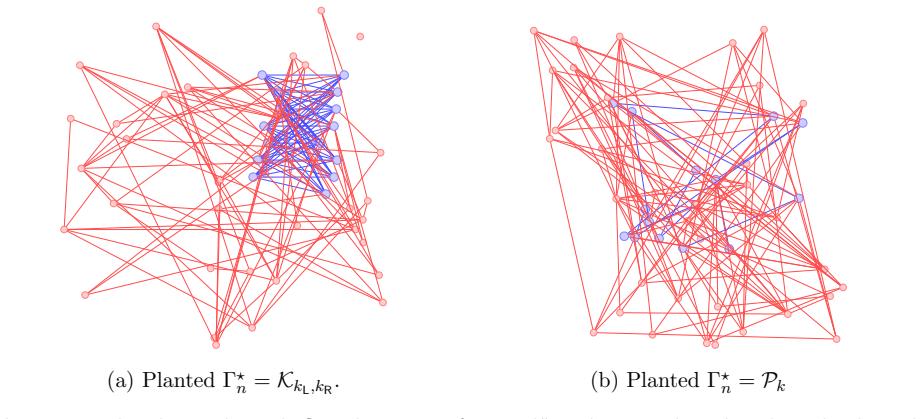
Understanding the fundamental limits of recovering planted subgraphs in random graphs is a central challenge in high-dimensional statistics and theoretical computer science. While existing work has largely focused on special subgraph families such as cliques, bicliques, or dense blocks, the exact recovery of a general planted subgraph in Erd\H{o}s--R\'enyi random graphs remains poorly understood. In this paper, we study the exact recovery of an arbitrary planted subgraph $\Gamma = \Gamma_n$ embedded in a dense Erd\H{o}s--R\'enyi random graph $\mathcal{G}(n,q_n)$, where edges within $\Gamma$ are present independently with probability $p_n > q_n$. Our main results identify sharp conditions under which exact recovery is possible with high probability, and we establish matching lower bounds showing the necessity of these conditions. The resulting statistical threshold is characterized by a new graph-theoretic quantity, which we term the \emph{minimal maximum subgraph density}. This quantity is defined as the maximum subgraph density of the smallest induced balanced subgraph of $\Gamma$. We then turn to the problem of recovery under polynomial-time constraints. We propose a computationally efficient recovery algorithm that applies to arbitrary planted subgraphs and analyze its performance in terms of certain spectral properties of the adjacency matrix. In addition, we derive computational lower bounds for recovery using the low-degree polynomial framework, establishing regimes where recovery is statistically possible but computationally hard. Finally, we consider several extensions of our setting, including recovery in semi-random models and weaker notions of recovery.
0
0
math.ST 2026-07-02

Approximating region contains full-conformal set in multi-task regression

by Davidson Lova Razafindrakoto (SAMM), Alain Celisse (SAMM) +1 more

Approximate full-conformal multi-task regression with reproducing kernels

The construction yields a computable region guaranteed to contain the exact full-conformal one, with a volume bound when task covariances ar

Figure from the paper full image
abstract click to expand
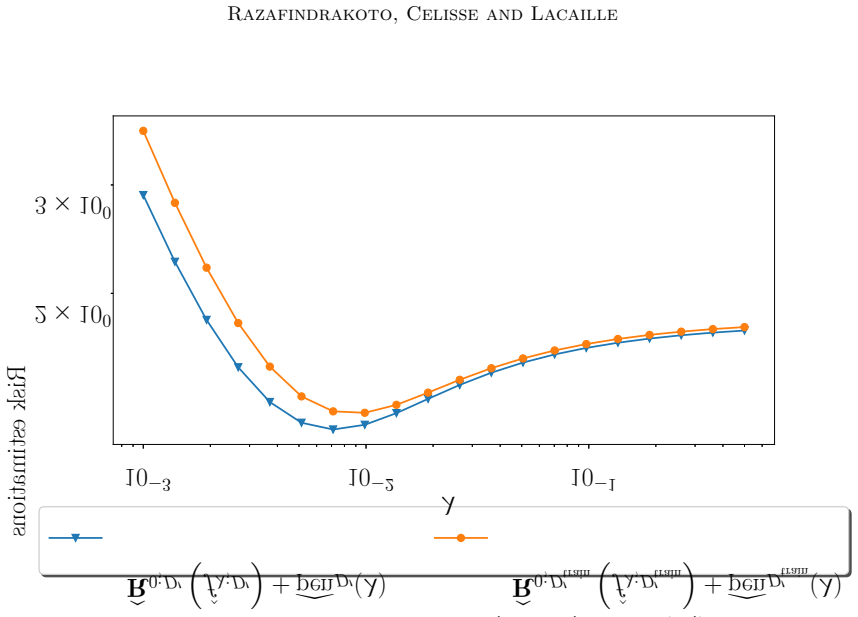
Multi-task regression aims at jointly solving multiple regression problems, called tasks. Compared to solving each task separately, better performances can be achieved as long as the tasks are sufficiently related. Full-conformal prediction is a framework that formulates a data-dependent prediction-region containing the unknown output-vector at any prescribed confidence level. However, explicit computation of this prediction-region is intractable in general since it requires training infinitely many predictors. The present work focuses on multi-task regression in a Reproducing Kernel Hilbert Space (RKHS) of vector-valued functions. This computational issue is addressed by designing an approximating predictionregion containing the full-conformal one. This construction is carried out in two scenarios: piq when the inter-task covariance-matrix is known, and piiq when this matrix is estimated. In terms of volume, the tightness of this approximation is assessed theoretically by means of an upper-bound in the first scenario. It is also empirically proved to improve upon the split-conformal prediction on synthetic data in both scenarios.
0
0
stat.ME 2026-07-02

Distributed estimator reaches two-phase minimax rates for unidentifiable prediction

by Erbo Li, Zhaojun Hu +3 more

Distributed Prediction under Heterogeneity with Unidentifiable Parameter

Trace-similarity penalty and invex relaxation deliver model-free bounds with lower communication cost.

Figure from the paper full image
abstract click to expand
Predicting a response based on covariates is a fundamental problem in statistics and machine learning. However, profound difficulties arise when the underlying low-dimensional structural parameters are unidentifiable, as typified in dimension reduction contexts. Specifically,estimating these non-identifiable parameters inherently introduces severe nonconvexity. In distributed settings, this difficulty is further compounded by the challenges of data heterogeneity and communication cost. To overcome these intertwined barriers, we propose a novel distributed semiparametric framework. We formulate an adaptive homogeneity pursuit utilizing a trace-similarity penalty to effectively address data heterogeneity. To resolve the ensuing severe nonconvexity and communication bottlenecks, we introduce an invex relaxation technique coupled with a multi-step local update algorithm, ensuring stable convergence to global optimality with significantly reduced communication overhead. Theoretically, we establish a non-asymptotic model-free prediction error bound and prove that our estimator achieves a two-phase minimax optimal convergence rate and an sharper model-free prediction error bound. Furthermore, we provide theoretical guarantees for algorithmic convergence and communication efficiency. Extensive simulations and a real-world multi-center medical application validate the superiority of our method.
0
0
math.ST 2026-07-02

Three-stage estimator consistent for hybrid Lévy switching SDEs

by Yuzhong Cheng

Ergodicity and High-Frequency Inference for Hybrid Switching L\'{e}vy-Driven Stochastic Differential Equations

Joint normality couples drift and scale via third moment of Lévy noise while switching rates stay uncorrelated

Figure from the paper full image
abstract click to expand
Hybrid switching L\'evy-driven stochastic differential equations with pure-jump noise and state-dependent switching rates are studied under high-frequency observation. A three-stage inference procedure is proposed for the drift, scale, and switching-rate parameters, combining a staged Gaussian quasi-likelihood with an intensity-type contrast. Checkable sufficient conditions for weighted exponential ergodicity are established for the hybrid process; the proof does not rely on Brownian smoothing, but uses a fixed skeleton-chain argument combining small-jump accessibility and regime connectivity. Under ergodicity and the high-frequency sampling scheme, consistency, joint asymptotic normality, and a polynomial-type large deviation inequality are proved for the full estimator. The joint limit exhibits a transparent covariance structure: the drift and scale blocks are coupled through the third moment of the driving L\'evy noise, whereas the switching-rate block is asymptotically uncorrelated with the continuous-coefficient blocks. Numerical experiments for models driven by normal inverse Gaussian noise illustrate the finite-sample behavior of the proposed estimators.
0
0
math.ST 2026-07-01

Worst-case top-k norm of heavy-tailed averages bounded by constants

by Woonyoung Chang

Worst-Case Maximal Inequalities for Heavy-tailed Random Vectors

Under variance and tail-envelope constraints the expected value is controlled up to universal factors for finite q-moment envelopes.

abstract click to expand
This paper establishes finite-sample worst-case maximal inequalities for averages of independent centered heavy-tailed random vectors. The object of interest is the expected top-$k$ Euclidean norm of the sample average, which includes the expected coordinate-wise maximum as the special case $k=1$. Under coordinatewise variance constraints and tail-envelope constraints, the worst-case value is characterized up to universal constants over the class of distributions satisfying a finite $q$:th envelope moment condition. Analogous bounds are obtained for the sub-Weibull envelope class and the marginal sub-Weibull class.
0
0
math.ST 2026-07-01

Full token observation lowers sample needs for watermark proportion estimates

by Shuwen Chai, Qiaosen Wang

Sample Complexities of Estimating Gumbel--Max Watermark Proportions with and without Reduction to Pivotal Statistics

Pivotal reduction to a scalar raises the number of tokens required, with matching bounds in each regime.

abstract click to expand
Watermarking promises statistical traceability of large language model (LLM) uses, but real documents rarely arrive as purely human-written or purely LLM-generated. This motivates a quantitative question beyond detection: what proportion of a document is generated from a pre-specified watermarked LLM? We study this watermark proportion estimation problem under the Gumbel--max watermarking mechanism, treating the next-token prediction distributions as unknown and arbitrary nuisance parameters subject to a non-degeneracy condition. We compare two observation regimes: in the full observation regime, the estimator observes the pseudorandom vector and the selected token at each position; in the more prevalent setting of pivotal reduction, it observes only a scalar pivot, which follows a one-dimensional Uniform--Beta mixture distribution. Under pivotal reduction, we develop a Laguerre-polynomial estimator and establish a matching information-theoretic lower bound for the sample complexity. For full observation, we introduce an event-counting estimator and show a matching lower bound, yielding a substantially smaller sample complexity. As our results imply, although reducing to pivotal statistics is an elegant and prevalent choice, it is not always sample-efficient for estimating the proportion of watermarks.
0
0
stat.ME 2026-07-01

Marginal separable effects summarize causal effects for everyone

by Ruixuan Zhao, Mats Stensrud +1 more

Causal Inference for All: Marginal Estimands for Outcomes Truncated by Death

They stay interpretable and use routine longitudinal data instead of restricting to survivors or using composite summaries.

Figure from the paper full image
abstract click to expand
In longitudinal studies, outcomes of interest are often truncated by death, meaning that they are only observed or well-defined conditional on intercurrent events such as survival. Existing strategies face a trade-off: causally interpretable estimands, such as survivor average causal effects, target a latent subgroup, whereas while-alive and composite summaries apply to the full population but are difficult to interpret as causal effects on the non-mortality outcome. We address these challenges by introducing methodology for a new set of estimands that (i) concern the entire population, (ii) remain causally interpretable, and (iii) leverage the longitudinal data commonly available in studies with outcomes truncated by death. The set of estimands includes single-world marginal separable effects that generalize conditional separable effects to full-population summaries. We develop identification and estimation results for these estimands and apply the methodology in a reanalysis of a prostate cancer trial, highlighting how different estimands can yield different treatment conclusions.
0
0
math.ST 2026-07-01

GLM formulation unifies Laplace BNN predictive estimators

by Romie Banerjee

A Short Review of Estimators for the GLM predictive of Laplace Bayesian Neural Networks

Review maps exact Jacobian methods against Monte Carlo approximations and their efficiency costs.

abstract click to expand
This short review examines the primary approaches for estimating the predictive distribution of Laplace-approximated Bayesian neural networks, with particular focus on the Generalized Linear Model (GLM) formulation. We survey the landscape of estimation strategies, from exact GLM computations requiring full Jacobian evaluations to Monte Carlo approximations that trade computational cost for statistical efficiency. The review covers the theoretical foundations of the Laplace approximation, the Kronecker-factored approximate curvature (KFAC) method for scalable posterior inference, and the various predictive estimation techniques developed in the literature. We provide a unified presentation that clarifies the relationships between methods and highlights their respective computational and statistical trade-offs.
0
0
math.ST 2026-07-01

Moment estimator consistent and normal for dynamic graph models

by Diego Garlaschelli, Michel Mandjes +2 more

Analysis of a maximum-entropy based estimator for dynamic random graph models

Maximum-entropy distributions on graph trajectories admit a moment-based estimator whose consistency, normality, and covariance are derived

Figure from the paper full image
abstract click to expand
We study dynamic random graphs in which the set of nodes is fixed, but edges evolve over time according to an underlying stochastic mechanism. Using a maximum-entropy approach, we define a probability distribution on graph trajectories that is consistent with observed constraints, capturing the inherent uncertainty in partially observed networks. We introduce a moment-based estimator for the parameters of this distribution and establish its statistical properties, such as consistency and asymptotic normality, with explicit formulas for the covariance structure. Numerical experiments demonstrate the estimator's accuracy and robustness across various dynamic network scenarios. Our framework bridges probabilistic modeling and statistical inference in time-varying networks, providing practical tools for understanding and predicting complex edge dynamics.
0
0
stat.ME 2026-07-01

Projection yields consistent payment estimators from macro insurance data

by Martin Bladt, Marcus Christiansen

Payment Process Estimation in Aggregated Insurance Models

Inverse-probability weighting recovers state-specific cumulative payments under truncation and censoring

Figure from the paper full image
abstract click to expand
Insurance payments may depend on latent micro states although only macro states and realized payments are observed. We study a sojourn-payment model for such aggregated multi-state systems under left-truncation and right-censoring. Starting from a micro-to-macro projection, we establish strong consistency and weak convergence for inverse-probability-weighted estimators of state-specific cumulative payment processes.
0
0
math.PR 2026-07-01

Graph geometry and dependence set empirical rates

by Mengsi Gao, Demian Pouzo

Coupling and Maximal Inequalities for Graph-Dependent Empirical Processes

Maximal inequalities show convergence speed depends on function-class complexity, graph growth, and how fast dependence fades with distance.

abstract click to expand
We develop maximal inequalities for empirical processes indexed by graph-dependent observations. Our bounds separate the complexity of the indexing class from two features specific to graph dependence: the geometry of the underlying graph and the cost of coupling graph-separated blocks to independent copies. The coupling construction combines a novel graph-adapted dependence coefficient with a coloring of a block partition. We specialize the results to graphs with polynomial and exponential growth and to directed dyadic graphs. We then derive Glivenko--Cantelli results and characterize the associated effective sample size. A central implication is that graph-dependent empirical processes need not exhibit a generic root-$n$ rate: convergence is jointly determined by function-class complexity, graph geometry, and the decay of dependence with graph distance. Finally, we apply the results to obtain uniform laws of large numbers for network autoregressive models, nonlinear local-propagation models, and treatment-interference settings.
0
0
math.ST 2026-07-01

Forecast sequences are auto-calibrated exactly when they form martingales

by Thomas Wilkinson, Christopher Ferro

Calibrated Probability Forecast Sequences and Measure-Valued Martingales

Equivalence supplies the first statistical test for calibration of updating probability predictions in any Borel space.

abstract click to expand
We consider the calibration of probability forecasts. Several notions of calibration exist when the forecaster issues a single forecast for each of the observations that is to be predicted. We extend one of these notions, auto-calibration, to the common situation in which the forecaster issues a sequence of forecasts for each observation, repeatedly updating their prediction as they receive additional information. For observations that sit in any Borel space, we show that auto-calibration is equivalent to a certain sequence of random probability measures satisfying the martingale property, and we propose a simple, statistical approach to testing this property. This provides, for the first time, a way of testing the calibration of such sequences of probability forecasts.
0
0
math.ST 2026-07-01

Optimal split minimizes conformal prediction interval length

by Sayan Das, Bahram Yaghooti +2 more

On Optimal Data Splitting for Split Conformal Prediction

Analytical expressions give the training-calibration ratio that shortens intervals while keeping coverage

Figure from the paper full image
abstract click to expand
Conformal prediction and its variants, including the split conformal prediction, provide a distribution-free framework for uncertainty quantification by constructing prediction intervals or sets with finite-sample coverage guarantees. The statistical efficiency of these intervals depends critically on how the data are split into training and calibration samples. Despite its practical importance, a principled characterization of the training-calibration split that minimizes prediction interval length while maintaining coverage has remained largely unresolved. In this paper, we develop a theoretical framework for optimal data splitting in split conformal prediction. We first analyze the problem in a general setting and derive analytical characterizations of the length-optimal split ratio under both symmetric and asymmetric regimes. We then show how the general results specialize to several commonly used regression settings, including linear regression, nonparametric regression, and neural networks, thereby demonstrating the scope of the framework. We also describe a data-based method for selecting the optimal proportion. Our analysis clarifies how model-related features govern the optimal allocation of samples between training and calibration and provides principled guidance for constructing shorter prediction intervals. Experiments on both synthetic and real-world datasets demonstrate the applicability of the proposed methodology across a variety of practical scenarios.
0
0
math.ST 2026-07-01

Binary reduction separates error roles in minimax testing bounds

by Ilmun Kim

High-Confidence Minimax Testing with Prescribed Errors

The technique produces matching lower and upper bounds for testing problems with level and type II error of different orders

abstract click to expand
Classical minimax lower bounds for testing are typically derived for fixed error probabilities, while high-confidence results often impose a common failure probability. We study prescribed-error testing, in which the level and the target type II error may be small and of different orders. Standard prior-based reductions generally aggregate the two errors into a single quantity and therefore do not capture their distinct roles. We develop a general lower-bound technique based on a binary reduction that preserves the separate roles of the two error targets. The reduction yields two directed Kullback-Leibler information requirements, corresponding respectively to the level and the target type II error. When both directed mixture divergences can be controlled, they combine into a binary Jeffreys divergence, leading to the logarithmic dependence on the level and the target type II error. Applying the framework to Gaussian sequence testing, multinomial uniformity testing, and continuous uniformity testing over H\"older balls, we obtain lower bounds that match corresponding high-confidence upper bounds and hence establish prescribed-error minimax rates sharp up to constant factors.
0
0
stat.ME 2026-07-01

FPCA rates for manifold-indexed data depend on intrinsic dimension d

by Chang Jun Im, Jeong Min Jeon

Functional Principal Component Analysis for Manifold-Indexed Data

Geodesic kernels with volume correction yield uniform bounds whose sparse-to-dense transition is set by manifold dimension, recovering the c

Figure from the paper full image
abstract click to expand
Functional principal component analysis (FPCA) is a central tool for dimension reduction and covariance analysis in functional data analysis. We study FPCA for discretely observed scalar-valued functional data indexed by a compact d-dimensional Riemannian manifold M; that is, each subject is modeled as a random function from M to R. This setting is distinct from manifold-valued functional data, where the function values themselves lie on a manifold. We develop intrinsic kernel estimators for the mean and covariance functions using geodesic distances and a Riemannian volume-density correction. The proposed framework accommodates general subject-specific sampling frequencies and includes both equal-weight-per-observation and equal-weight-per-subject schemes. The uniform stochastic analysis uses VC-type empirical-process conditions for intrinsic kernel classes, together with clustered empirical-process compatibility conditions, allowing non-Lipschitz kernels under the stated assumptions. We establish uniform convergence rates for the mean and covariance estimators, Hilbert-Schmidt and operator-norm error bounds for the estimated covariance operator, and convergence rates for eigenvalues and eigenfunctions via spectral perturbation. The rates show that the sparse-to-dense transition is governed by the intrinsic dimension of the indexing manifold, reducing to the classical one-dimensional boundary when d=1. Simulations on S^1 and S^2 and a SONICOM head-related transfer function analysis illustrate the method and show modest but consistent improvements over a coordinate-based baseline when intrinsic geometry is ignored.
0
0
math.ST 2026-07-01

Langevin dynamics concentrate on hidden indices below temperature 1

by Zong Shang, Tomoya Wakayama +2 more

The Geometry of Statistical Feature Learning in Mean-Field Langevin Dynamics

In Gaussian multi-index models the stationary distribution forms multi-spike structures that recover parameters with high probability despit

abstract click to expand
We introduce a geometric formulation of statistical feature learning for supervised regression. Feature learning is defined through a base--fiber decomposition: the base is the feature-side geometry produced by training, and the fiber is the learned feature space where estimation is performed. We prove this property for spherical mean-field Langevin dynamics, viewed as the Wasserstein gradient flow of a negative entropy-regularized empirical risk. In Gaussian multi-index models, the low-temperature stationary distribution concentrates near the hidden indices, forms a multi-spike structure, and yields parameter recovery with high probability, even though negative entropy regularization penalizes concentration. This concentration has a sharp transition at temperature $\lambda\asymp 1$. In Gaussian single-index models, the stationary measure satisfies a L\'evy--Milman concentration property, with parity determining whether it lives on $S_2^{d-1}$ or $\mathbb{RP}^{d-1}$. The induced learned feature space aligns the regression signal and yields rates $d/N$ and $Md/N$, up to logarithmic factors.
0
0
math.ST 2026-07-01

Renyi inequalities characterize majorization of statistical experiments

by Erkka Haapasalo

Multivariate majorization of continuous statistical experiments

Multivariate versions of these divergences supply conditions for large-sample and catalytic majorization on Borel spaces.

Figure from the paper full image
abstract click to expand
We derive sufficient and almost necessary conditions for large sample and catalytic majorization between finite statistical experiments over standard Borel sample spaces. This work generalizes previous results, on one hand, in the bivariate case and, on the other hand, in the multivariate discrete (or, rather, finite) case, i.e., matrix majorization. We derive multivariate generalizations of the bivariate Renyi relative entropies and show that inequalities involving these multivariate Renyi divergences characterize large-sample and catalytic majorization of finite statistical experiments. As our methods are real-algebraic in nature, this work demonstrates that large deviation techniques are not the only option available to derive conditions for large sample majorization even in the case of more general sample spaces of the experiments. We also show that all general multivariate divergences, i.e., multivariate extensive and monotone maps of finite statistical experiments, can be expressed through barycentres over the set of multivariate Renyi divergences. We also show that we may characterize the optimal conversion rate of a statistical experiment into another using the multivariate Renyi divergences.
0
0
stat.ME 2026-07-01

New methods enable simultaneous bands for incomplete functional time series

by Patrick Bastian, Tim Kutta

Simultaneous Inference for Partially Observed Functional Time Series

They handle dependence and missing sensor readings to support uniform inference over the whole domain and test for trends like high pollutio

Figure from the paper full image
abstract click to expand
Functional data analysis (FDA) provides statistical methods for analyzing samples of time-continuous stochastic processes. Measurements often arise in the form of sensor data for a key scientific variable. The practical problem of irregular sensor disruptions has fostered interest in analyzing partially observed random functions. Specifically, this paper is motivated by a time series of intermittently missing pollution data with dependence along pollution paths and missingness patterns. To allow statistical analysis, we develop the first inference methods for dependent, partially observed functional time series. Existing methods were not appropriate for this task, because they heavily rely on the independence of the data functions. Mathematically, we model data on the space of bounded functions equipped with the supremum norm. This allows simultaneous inference across the entire functional domain, including simultaneous confidence bands -- something existing Hilbert-space-based methods cannot provide. To study non-stationary trends along the time series, we extend state-of-the-art multiscale inference methods (originally developed for scalar data) to partially observed functions. The key application of the latter methods is testing for excessive pollution levels in inner cities. Our approach combines state-of-the-art Gaussian approximations with stochastic process theory. Interestingly, it also improves existing results for fully observed functional time series by avoiding a functional CLT.
0
0
math.ST 2026-07-01

Two-stage method estimates parameters and Lévy densities in switching jumps

by Yuzhong Cheng

Two-stage semiparametric inference for regime-switching jump diffusions with unknown L\'evy densities

Small increments estimate the parametric continuous part while large residuals recover the unknown jump densities per regime.

Figure from the paper full image
abstract click to expand
We study high-frequency semiparametric inference for ergodic regime-switching jump diffusions whose continuous coefficients are parametric and whose regime-wise L\'evy densities are unknown. The motivation is that jumps contaminate increments while their law is itself unknown, making likelihood-based inference circular in switching models. We propose a two-stage procedure. First, small increments are used in a truncated Gaussian quasi-likelihood to estimate the drift and diffusion parameters. Second, large drift-corrected residuals are sorted by regime and smoothed with a kernel, with normalization by empirical regime exposure time, to estimate the L\'evy intensity densities on compact sets away from zero. We establish consistency and mixed-rate asymptotic normality for the quasi-maximum likelihood estimator, and derive \(L^2(B)\)-convergence rates for the exposure-normalized residual density estimator. Simulations for switching Ornstein--Uhlenbeck models illustrate the finite-sample performance of the method.
0
0
stat.ME 2026-06-30

Dual-TV regularizers bound tensor error near minimax rate

by Wenfei Cao, Yang Chen +3 more

Exponential-Family Tensor Completion via Nonconvex Dual Total-Variation Regularization

Upper bounds reach O(n3 rt sk^2 log / n) and close the gap to the lower bound by O(sk^2 / n) for exponential-family data.

Figure from the paper full image
abstract click to expand
With the emergence of various tensor data, tensor completion from partial measurements has attracted widespread attention in data science and signal processing. Total Variation (TV) has been widely used as an effective regularization technique for tensor completion; however, theoretical studies on TV regularization in this context remain limited. In this work, we present a rigorous theoretical analysis of TV regularization for tensor completion. Specifically, we consider tensor completion under exponential-family noise, which generalizes the standard settings such as Gaussian and Poisson tensor completion. To handle exponential-family tensor completion, we propose a family of dual-TV (DTV) regularizers based on the transformed L1 function, which simultaneously capture sparsity and low-rank structures in the gradient tensor. Moreover, we establish the theoretical upper bounds on the recovery error of the proposed estimator. In certain cases, these upper bounds can attain the convergence order of $\mathcal{O}\big( n_3 r_t\big(\max_{k} s_k^2\big) \log\big((n_1+n_2)n_3\big) /n \big)$, and the minimax lower bound analysis is further presented to show that the upper-bounds can approach the lower bound with the gap of order $\mathcal{O}(\max_k s_k^2/max(n_1, n_2))$ up to a logarithmic factor. Finally, multiple groups of experiments on synthetic, image and video tensor data sets are conducted to support our theoretical results and demonstrate the effectiveness of our method.
0
0
math.ST 2026-06-30

Regenerative chains get data-dependent DKW bands

by Daniel Jerison

A data-dependent DKW inequality for regenerative Markov chains

Leading width term uses only the sample path; convergence bound enters at lower order only

abstract click to expand
We prove a version of the Dvoretzky-Kiefer-Wolfowitz inequality for Markov chains with a regenerative structure. Suppose we have a regenerative Markov chain with stationary distribution $\pi$. Given a functional $\theta$ on the state space and a confidence level $1-\delta$, our result provides a uniform $1-\delta$ confidence band for the CDF of $\theta$ under $\pi$ based on the empirical CDF. By inversion, we get a $1-\delta$ confidence band for the quantile function of $\theta$ under $\pi$. Our bounds are fully explicit and nearly optimal. In addition, they are data-dependent in the following sense: in the formula for the width of the confidence band, the leading term can be computed directly from the sample path without any a priori information about the convergence rate of the chain. A convergence bound is required, but it contributes to the width of the confidence band only through a lower-order term. For this reason, our result is attractive for Markov chains whose convergence rate is much quicker in practice than what can be proved in theory. Data-dependent bounds of this type are called empirical concentration inequalities in the literature. Thus, our result is an empirical concentration inequality for the empirical CDF of $\theta$ given the sample path.
0
0
math.ST 2026-06-30

New method estimates largest minimizer for regression change points

by Marie Hušková, Natalie Neumeyer +1 more

Analysis of gradual changes in nonparametric regression based on a new optimization method in the non-unique case

Handles non-unique cases in nonparametric models where the function starts at zero and changes at an unknown point.

Figure from the paper full image
abstract click to expand
Consider a nonparametric regression model with one-dimensional covariates and a continuous regression function. Assume that the regression function from the left of the covariate support starts equal to zero and then changes at some unknown point. Our aim is to estimate this gradual change point. We define and compare various consistent estimators based on a new general optimization method in the case where the aim is to estimate the largest minimization point of some objective function. We discuss rates of convergence and estimating the regression function based on the gradual change structure. Bootstrap bias approximation is discussed. Further applications in a two sample case are considered, where two continuous regression functions first equal and then change at some point of interest.
0
0
math.ST 2026-06-30

Minimax formulas derived for spectral densities in random-field estimation

by Oleksandr Masyutka, Mikhail Moklyachuk

Minimax approach to the estimation problem for homogeneous random fields

Least favourable densities and robust estimator characteristics obtained for special admissible sets when densities are uncertain.

abstract click to expand
The problem of the mean-square optimal estimation of the linear functionals which depend on the unknown values of a multidimensional homogeneous random field from observations of the field with noise is considered. The minimax (robust) method of estimation is applied in the case where the spectral densities of the fields are not known exactly while some sets of admissible spectral densities are given. Formulas that determine the least favourable spectral densities and the minimax spectral characteristics are derived for some special sets of admissible densities.
0
0
cs.LG 2026-06-30

Any valid transport map is as hard to estimate as the OT map

by Sivaraman Balakrishnan

The Fundamental Limits of Valid Transport Map Estimation

Stability assumptions make minimax lower bounds identical for all valid maps, including those produced by diffusion and flow-matching models

Figure from the paper full image
abstract click to expand
Many modern generative modeling methods, including diffusion models, normalizing flows, and flow matching, estimate transport maps or plans between distributions without explicitly targeting an optimal transport (OT) map. In applications like generative modeling, the transport cost itself is irrelevant, and this makes it natural to target maps which are more tractable from either a statistical or computational standpoint. In this short note, we formalize the task of estimating any valid transport map in a rigorous minimax framework. One consequence of this framing is that it yields sample complexity lower bounds for any method whose learned object is evaluated as a transport map or plan, including flow matching and diffusion-based generative models, in settings where direct analysis would be challenging due to the analytic complexity of the methods and their target maps. We observe that, under standard, though strong, stability assumptions from the OT literature, estimating any valid transport map is statistically as hard as estimating the OT map. We complement these results with some examples showing that when these stability assumptions fail, alternative transport maps can be learned substantially more accurately than the OT map. Our minimax framing provides a rigorous foundation for understanding the statistical limits of modern transport-based generative methods and clarifies when targeting sub-optimal maps can provide real statistical advantages.
0
0
math.ST 2026-06-30

MLE of coupling parameter consistent and efficient in hidden OU process

by Sascha Gaudlitz, Hasan Mert Gökalp

Parameter estimation in a fully coupled partially observed Ornstein-Uhlenbeck process

For a two-dimensional Ornstein-Uhlenbeck system observed in one coordinate only, the estimator achieves standard asymptotics as time horizon

Figure from the paper full image
abstract click to expand
We study a two-dimensional Ornstein-Uhlenbeck system where only the first coordinate is observed, whereas the second coordinate remains hidden. Our goal is the estimation of the coupling parameter in the drift of the observed coordinate. The core novelty lies in accounting for the influence of the observed component on the unobserved one, making the system fully coupled. Using linear filtering, we derive the likelihood under partial observation and establish local asymptotic normality of the statistical model. Within the Ibragimov-Hasminskii framework (1981), we prove consistency, asymptotic normality, convergence of moments and asymptotic efficiency of the MLE under stability and identifiability assumptions as the time horizon tends to infinity.
0
0
math.PR 2026-06-30

Rademacher max-average expectation bounded below by min{255/256

by Woonyoung Chang

Notes on constants for maxima of Rademacher averages

The inequality holds for all n and p with equality at (2,1) and (2,8); optimality of the constants is examined.

abstract click to expand
Let $\epsilon_{ij}, i,j\geq 1$ be independent Rademacher variables. We prove \begin{equation*} \mathbb{E} \max_{1\leq j\leq p}\left|\frac{1}{n}\sum_{i=1}^n\epsilon_{ij}\right| \geq \min\left\{\frac{255}{256},\frac{1}{\sqrt{2\log 2}}\sqrt{\frac{\log(2p)}{n}}\right\}. \end{equation*} The equality is attained, for instance, by $(n,p)=(2,1)$ and $(n,p)=(2,8).$ We also discuss the optimality of the numerical constants.
1 0
0
math.ST 2026-06-30

Horseshoe posterior rules attain optimal detection boundary

by Sayantan Banerjee, Ismaël Castillo +1 more

Multiple testing with the horseshoe

Decision procedures under continuous priors achieve asymptotic FDR and FNR control in sparse multiple testing

abstract click to expand
We study multiple testing under continuous global--local shrinkage priors, with a focus on the horseshoe prior in high-dimensional sparse settings. While such priors provide adaptive shrinkage and computational scalability, they do not induce exact zeros and hence do not directly yield posterior inclusion probabilities, making principled false discovery control nontrivial. We propose posterior--based decision rules for signal detection that are applicable across a broad class of continuous shrinkage priors and are calibrated to control the false discovery rate (FDR) while retaining high power. In the sparse normal means model, we show that the proposed procedures attain the optimal detection boundary and achieve frequentist asymptotic control of both FDR and false negative rate (FNR). The method is readily implementable via standard posterior sampling, and empirical studies indicate that the realised FDR and FNR closely track their theoretical targets. Applications to high-dimensional regression and Gaussian graphical models further illustrate the scope and practical effectiveness of the approach.
0
0
math.ST 2026-06-30

Differential algebra checks unique recovery of functions in DE models

by Torkel E Loman, Alexander P Browning +1 more

Structural functional identifiability and model discovery in differential equation models

Generalizing parameter identifiability shows when unknown components can be recovered uniquely from ideal observations.

Figure from the paper full image
abstract click to expand
Differential equation models are widely used to describe, interpret, and predict dynamical phenomena across science and engineering. In practice, however, the governing dynamics are rarely fully known and must be inferred from observational data. Traditionally, inverse problems in differential equation modelling have focused on estimating unknown parameter values. In this setting, structural identifiability determines whether parameter values can, in principle, be uniquely recovered from ideal observations and is, therefore, a prerequisite for meaningful inference. More recently, the integration of machine learning with mechanistic modelling has enabled the discovery of unknown equations, functions, and constitutive relationships, substantially expanding the space of admissible models. This raises a fundamental question: under what conditions can unknown functional components be uniquely recovered from data? In this paper, we generalise the classical notion of structural parameter identifiability to functional identifiability. We first identify broad classes of models for which unique functional recovery is impossible. We then show how functional identifiability can be assessed for differential equation models using differential algebra-based techniques which are well-established as a means of assessing structural identifiability for ordinary differential equation-based models. Our framework reveals new phenomena that arise in the transition from parametric to functional inference and have no analogue in the classical setting. Finally, we characterise functional identifiability in several common model classes. Taken together, our results demonstrate that functional identifiability provides a theoretical foundation for modern inverse problems in differential equation modelling, particularly those that use machine learning representations of unknown system components.
0
0
math.ST 2026-06-30

Optimal confidence sets induce Choquet-risk optimal contours

by Max Raner

Efficiency of Valid Inferential Models: Choquet-risk Optimal Possibility Measures, and Direct Comparisons

For concentration penalties the risk reduces to expected contour volume, so levelwise optimality transfers directly to valid possibility mea

Figure from the paper full image
abstract click to expand
Valid possibilistic inferential models provide exact finite-sample calibration, but validity alone does not determine which valid procedure results in the most informative inferential summary. This paper proposes Choquet risk as a decision-theoretic criterion for comparing valid possibility measures in finite samples. Given a non-negative penalty functional, Choquet loss is defined as the Choquet integral of that penalty with respect to the data-dependent possibility measure, and Choquet risk as its sampling expectation. A key reduction expresses this risk through the nested $\alpha$-cuts of the contour, linking procedure-level efficiency to the expected performance of calibrated confidence sets. For concentration penalties, the criterion reduces to integrated expected set size, equivalently expected contour volume, so levelwise optimal confidence sets induce Choquet-risk optimal valid contours. The framework is developed along two classical routes to optimality. First, a possibilistic notion of unbiasedness is introduced and shown, under validity, to coincide with unbiasedness of the induced confidence sets and tests, allowing UMPU and most-accurate-unbiased results to be transferred to valid contours. Second, an equivariant minimax theory is developed, including a Gaussian-location result in which the Gaussian possibility contour is Choquet-risk minimax for radial distance-to-truth losses. The construction also extends confidence risk from additive confidence distributions to non-additive calibrated inferential-model output, with Choquet loss acting as a least-favourable confidence loss. Finally, the paper clarifies the penalty-dependence of efficiency comparisons and motivates invariant size criteria and divergence-based intrinsic losses connected locally to Fisher--Rao geometry.
0
0
math.ST 2026-06-30

Copulas obey |β|^3 ≤ 2ξ exactly for Chatterjee ξ and Blomqvist β

by Jacob Israel Orenday Lares, Marcus Rockel

The exact region between Chatterjee's xi and Blomqvist's β

The attainable pairs of these two rank correlations form the region bounded by the cubic curve |y|^3 = 2x and the line ξ = 1.

Figure from the paper full image
abstract click to expand
We determine the exact attainable region of the pair $(\xi(C),\beta(C))$ formed by Chatterjee's rank correlation $\xi$ and Blomqvist's $\beta$ over the class of all bivariate copulas and show that it is given by $\{(x,y)\in[0,1]\times[-1,1]: |y|^3\le 2x\}.$ The left boundary $\xi=|\beta|^3/2$ is attained by an explicit two-strip family $(L_b)_{b\in[-1,1]}$ obtained by perturbing independence with a signed tent function $g_b$ centered at the median. We derive several properties of this copula family including the formulas for its density and rank correlation measures, as well as positive and negative dependence properties. The right boundary $\xi=1$ is attained for every admissible value of $\beta$ by deterministic measure-preserving copulas, and the full region is obtained by taking convex mixtures of the left- and right-boundary copulas with fixed $\beta$ and using the continuity of $\xi$ along these mixtures. We also record the exact regions in several natural subclasses of copulas.
0
0
math.ST 2026-06-30

Explicit MSE bounds for adaptive rare MCMC under Wasserstein contraction

by Julian Hofstadler, Daniel Rudolf

Error bounds for simultaneous Wasserstein contractive adaptive increasingly rare MCMC

Simultaneous contraction on the kernel family yields concrete error control and a cost analysis for doubly intractable targets.

abstract click to expand
We investigate adaptive increasingly rare Markov chain Monte Carlo algorithms and the associated time-average estimator for approximating expectations. Under a simultaneous Wasserstein contraction assumption on the underlying family of Markov kernels we derive explicit bounds for the mean squared error. We illustrate the applicability of our estimate through adaptive stereographic algorithms and Metropolis-Hastings schemes that employ normalizing flows for adaptation. We also consider a generic adaptive algorithm for doubly intractable problems and provide a corresponding cost analysis to achieve a desired precision.
0
0
math.ST 2026-06-30

Common noise repeats speed nonparametric regression rates

by Fabienne Comte (MAP5 - UMR 8145), Bianca Neubert

Adaptive nonparametric regression from repeated measurements under common noise

Adjusted contrast in projection estimator makes risk bounds improve with more measurements per individual.

abstract click to expand
We consider nonparametric estimation of the regression function in a model where individuals share a common noise component and repeated measurements are available for each individual. We propose a projection estimator which minimizes a least-squares contrast that accounts for the covariance structure resulting from the common noise. We analyze its risk measured either as the expectation of the empirical norm or as the expectation of the theoretical norm associated with the contrast. We discuss how the number of repeated measurements affects the estimation rates in the common noise model, and precisely characterize the dependence on the number of repetitions. In addition, we propose a data-driven projection estimator and establish risk bounds in terms of the expected empirical norm. The results are illustrated with some simulation experiments.
0
0
math.ST 2026-06-30

Frank-Wolfe computes optimal e-values for non-convex voting tests

by Adrienne Tuynman, Timothée Mathieu

Optimal Posterior E-values with Non-Convex Parameter Sets with Applications to Voting Systems

Enables early stopping in sequential polls for Condorcet, Borda and Schulze systems while preserving validity.

Figure from the paper full image
abstract click to expand
We are interested in conducting political polls sequentially, so that one can stop acquiring data as soon as possible while safely yielding statistically significant results. Building off e-values, which have recently become a useful tool to create sequential testing methods, we develop a theory of posterior optimal e-values. We use voting as a convenient example on which to illustrate our method. First, we design statistical tests for Condorcet and Borda voting system, and also for Schulze voting system which we are the first to tackle statistically. Then, we study the construction of optimal sequential e-values in the deceptively simple setting of multivariate Bernoulli data, with general composite null and alternative hypothesis sets $\mathcal{H}_0$ and $\mathcal{H}_1$. We give a way to compute these e-values using an efficient Frank-Wolfe algorithm, giving a pretty general way to compute Reverse Information Projections, even when $\mathcal{H}_0$ corresponds to a non-convex parameter set. Finally, we illustrate the efficiency, both in terms of power and sample size of our method. We compare with state of the art in both simulated and real data experiments, with application to French 2022 presidential election data.
0
0
math.ST 2026-06-30

Four Lorenz curve forms fail validity conditions

by José María Sarabia, Vanesa Jordá +2 more

Revisiting "A universal model for the Lorenz curve with novel applications''

Corrected versions allow closed-form expressions for inequality measures

Figure from the paper full image
abstract click to expand
This research reviews several crucial aspects of the universal model for the Lorenz curve proposed by Sitthiyot and Holasut (2023) (hereafter, SH (2023)). A first issue concerns the mathematical definition of the proposed curves. The four functional forms introduced by SH (2023) do not satisfy the necessary and sufficient conditions for a valid Lorenz curve. We propose corrected versions of the previous curves and derive analytical expressions for some measures of inequality.
0
0
stat.ME 2026-06-30

Symmetric noise enables valid tests after data-driven selection

by Ameer Dharamshi, Runjia Zou +1 more

Testing hypotheses via orthogonalization

Partition data by adding and subtracting symmetric noise, then test if orthogonalization succeeds to validate the null without pre-specifyin

Figure from the paper full image
abstract click to expand
Classical hypothesis testing frameworks break down in contemporary settings in which null hypotheses are increasingly abstract, the same data are used to both generate and test hypotheses, and minimal assumptions about the underlying data are made. In this work, we propose a new framework for conducting valid hypothesis tests in broad contexts. We propose to add and subtract external noise generated from a symmetric shift-family to our data, $X$, to partition it into two pieces, $X^{(1)}$ and $X^{(2)}$. We provide a generic strategy for orthogonalizing $X^{(2)}$ against $X^{(1)}$ under the null hypothesis $H_0$, then show that testing whether the orthogonalization was successful provides a valid test of $H_0$ under mild assumptions. Remarkably, this framework extends naturally to the post-selection inference setting: we simply select a hypothesis on $X^{(1)}$, then perform orthogonalization under the selected null. As our approach neither requires pre-specification of the selection mechanism, nor is restricted to a small class of data-generating distributions, it dramatically expands the settings for which valid post-selection inference can be conducted. We showcase the flexibility of our proposal in several case studies involving challenging pre-specified null hypotheses and post-selection inference scenarios.
0
0
stat.ME 2026-06-29

Multivariate BART obtains first contraction rates with joint residual dependence

by Soham Ghosh, Sameer K. Deshpande

Multivariate Varying-Coefficient BART with Graphical Horseshoe Priors

Independent tree ensembles per coefficient plus a graphical horseshoe prior allow near-minimax adaptation while recovering sparse outcome ne

Figure from the paper full image
abstract click to expand
Modern multivariate regression problems involve several related outcomes whose regression effects are not only nonlinear, heterogeneous, and outcome-specific, but also where the residual dependence among outcomes is scientifically meaningful. Existing multivariate Bayesian tree-based methods typically address only part of this problem: some impose substantial sharing of tree architecture across outcomes, which is overly restrictive when responses depend on distinct predictors or effect modifiers, while others accommodate residual dependence but retain simpler mean structures. This paper develops multiVCBART, a multivariate varying-coefficient Bayesian additive regression tree framework that jointly models flexible outcome-specific coefficient surfaces and a sparse residual precision matrix. Each entry of the coefficient matrix $B(x)$ is represented by an independent BART ensemble, allowing predictor effects to vary nonlinearly with modifiers $x$ across outcomes, while a Graphical Horseshoe prior on the precision matrix $\Omega$ captures parsimonious residual conditional dependence. To permit efficient computation, we introduce a sampler that reduces the multivariate Gaussian likelihood to a sequence of scalar pseudo-response updates, decoupling the tree backfitting from the Graphical Horseshoe step. Theoretically, we establish the first posterior contraction rates for a multivariate BART model with jointly estimated residual dependence, proving near-minimax adaptation to underlying smoothness and structural sparsity. Empirically, multiVCBART outperforms existing multivariate tree models and Bayesian SUR competitors on sparse, high-dimensional datasets. Finally, in a re-analysis of the Genomics of Drug Sensitivity in Cancer dataset, our method identifies distinct biomarker signals and recovers a coherent residual pharmacologic network.
0
0
math.ST 2026-06-29

Mixture posteriors adapt to true K with extra mass vanishing at n^{-1/2}

by Filippo Ascolani

Posterior concentration and adaptation of the mixing measure in Dirichlet process mixtures

When data follow a finite mixture, the Dirichlet process concentrates on the correct number of components, yielding nearly optimal contracti

abstract click to expand
We study the asymptotic properties of the posterior on the latent space for infinite mixtures driven by a Dirichlet process, both in terms of mixing measure and clustering behaviour. In the well-specified regime, where the data are generated by a finite mixture of location densities, we show that the posterior is adaptive to the true number of components $K$: indeed the cumulative mass assigned to weights of the stick-breaking representation beyond the $K$-th one vanishes as $n^{-1/2}$, up to terms growing slower than any polynomial. This also implies a nearly optimal posterior contraction rate for the mixing measure in Wasserstein distance. A remarkable phase transition underlies this result: approximating the mixing measure to any precision finer than $n^{-1/2}$ requires a number of components growing logarithmically with the sample size. We show that this has a profound impact on the clustering behaviour: the number of clusters grows logarithmically, as in the prior case, but the proportion of observations outside the $K$ largest clusters vanishes polynomially fast. Finally, we turn these results into posterior guarantees for truncation-based approximations: while any truncation with at least $K$ elements recovers the optimal contraction rates for both density and mixing measure, $\mathcal{O}(\log n)$ components are both necessary and sufficient to reproduce the clustering of the exact posterior.
0
0
stat.ME 2026-06-29

Model gives closed forms for discrete circular plus linear data

by Brajesh Kumar Dhakad, Jayant Jha

On Modeling Cylindrical Data with a Discrete Circular Component and Its Environmental Applications

Wrapped symmetric geometric and Weibull margins linked trigonometrically support sampling and conditional-moment regression for environmenta

abstract click to expand
Standard statistical methods are often inadequate for modeling the joint dependence between linear and circular variables, and existing methods for modeling this dependence are designed only for continuous variables. However, circular data are frequently observed on a finite set of equally spaced directions, either due to rounding prior to reporting or because of the experimental design employed for data collection. To address this gap, we propose a flexible, analytically tractable model for jointly representing a discrete circular and a continuous linear variable. The construction combines a wrapped symmetric geometric distribution, a Weibull distribution, and a trigonometric linking function. This formulation yields closed-form expressions for the joint, marginal, and conditional distributions. The choice of the Weibull distribution facilitates direct sample generation using the inverse transform technique. Additionally, it provides explicit expressions for conditional moments, enabling a flexible circular-linear regression framework. We detail the theoretical interpretation of the model parameters, mathematically establishing the monotonicity of the conditional mean and variance with respect to the dependence parameters. The performance of the estimators is demonstrated through extensive simulations, and the utility of the model is illustrated by analyzing two empirical environmental datasets.
0
0
math.OC 2026-06-29

sBDCA solves LTS up to 3.25x faster than Fast-LTS with better objectives

by Marah-Lisanne Thormann, Phan Tu Vuong +2 more

Faster than Fast-LTS: Robust Regression and Outlier Detection with DC Programming

DC reformulation of least trimmed squares plus preconditioning delivers robust regression from one start in high dimensions.

Figure from the paper full image
abstract click to expand
When datasets contain outliers, robust regression is a well-established alternative to Ordinary Least Squares. A commonly employed robust estimator is Least Trimmed Squares (LTS), which computes the regression coefficients from a subset of observations. Determining the exact solution corresponds to a combinatorial problem with prohibitive computational costs, even for instances of moderate dimension. Thus, the most prevalent approach in practice remains a heuristic known as Fast-LTS. Although the heuristic often performs effectively, certain elements of the approach remain open to improvement. In particular, its core procedure provides robust results only when initialized with a large number of starting points. To address the heuristic's limitations, this paper reformulates the LTS problem as a concave minimization problem subject to a capped simplex constraint, and proposes the successive Boosted Difference of Convex Functions Algorithm (sBDCA) as a solution method. Theoretically, we establish via the \L ojasiewicz property that sBDCA converges to a local solution with a linear rate in the fastest case. To ensure robustness from a single initialization in practice, we derive and integrate a problem-specific preconditioning matrix into the algorithmic setup. Building on this theoretical foundation, we conduct numerical studies on various synthetic and real-world datasets to demonstrate the effectiveness of sBDCA with preconditioning. Specifically, we show that our approach is up to 3.25 times faster than Fast-LTS and achieves up to 90% lower objective function values, particularly in high-dimensional settings. As all code is openly available, this paper further provides a practical guide to robust regression in Python.
0
0
stat.ML 2026-06-29

Factor indeterminacy resolves at infinite feature scale

by Carel F.W. Peeters

Perspectives on Latent Factor Indeterminacy and its Implications for Data Representation

This supplies distribution-free estimation for representation learning when the number of observed variables grows very large.

Figure from the paper full image
abstract click to expand
The common factor analytic model is related to Helmholtz and Boltzmann machines, can be conceived as a linear autoencoder, or can be thought of as a single-hidden-layer generative neural network. We thus consider it a basal generative representation learner that can be used as a minimal model for studying the foundational characteristics of (deep) generative model architectures. We focus on the fundamental problem of indeterminacy in latent factor projections. This indeterminacy implies that, even when the intrinsic dimension of the latent vector is known, regularity conditions are met, and rotational indeterminacy is resolved, an inherent indefiniteness in the retrieval of causative latent sources remains: they will be uncertain, distributionally deviant, and non-unique. This can have major implications for data representation but remains an elusive issue, even to practitioners and theorists well-versed in the factor model. Moreover, this classic psychometric problem is intricately related to the modern issue of latent variable collapse in the variational autoencoder framework for deep generative modeling. Here, we assess this indeterminacy from various perspectives and show how these are mathematically and conceptually related and we discuss subsequent implications for the Psychometrics, Statistics, and Artificial Intelligence communities. We show that one has latent factor determinacy across all its facets when the feature-dimension grows to infinity. This feeds into an essentially distribution-free estimation approach in the sample case when the number of features grows very large. We conclude, as these are emergent properties at scale, that the factor model is suited for representation learning of very-high-dimensional data.
0
0
cs.LG 2026-06-29

Known sampling designs yield unbiased ML predictions without models

by Li-Chun Zhang, Siu-Ming Tam +3 more

On design-unbiased algorithmic Machine Learning

Training data selection and algorithm tuning based on probability designs allow unbiased out-of-sample assessment for finite populations.

Figure from the paper full image
abstract click to expand
Machine Learning (ML) algorithms, such as k-Nearest Neighbours (kNN) or random forest, eschew the ideal of true data models in favour of predictive performance. However, minimising the MSE or F-score cannot lead to unbiasedness directly, which is important in many situations such as official statistics. We study the conditions of algorithmic ML, other than the existence and knowledge of true data models, which lead to unbiased prediction or classification for a given finite population, including how the training data may be sampled from the population, how a trained prediction algorithm can be tuned to achieve unbiased prediction or classification for that population, and how the performance of out-of-sample prediction or classification can be assessed unbiasedly. The inference is based on the known probability design of samples and training sets, rather than any assumed distributions or models.
0
0
math.ST 2026-06-29

Common stochastic fix fails for full conformal prediction

by Thanawat Sornwanee

Full Conformal Prediction under Stochastic Non-Conformity Measure

Permutation invariance in distribution alone does not ensure coverage; conditional independence is also required.

Figure from the paper full image
abstract click to expand
The theory of full conformal prediction uses deterministic non-conformity measure, but modern usage of full conformal prediction often relies on machine learning training, making stochasticity inevitable. A simple sufficient condition of almost sure permutation invariance of the non-conformity measure can be too restrictive, so many have suggested the relaxation to permutation in distribution as a condition for full conformal prediction validity. We, however, show that this commonly known condition is actually insufficient. We then provide a correct sufficient condition: Conditional Independence & Permutation Invariance in Distribution, which encompasses several stochastic settings that may be used in machine learning.
0
0
math.PR 2026-06-29

Stein operator derived for symmetric matrix normal from OU generator

by Robert E. Gaunt, Frédéric Ouimet

Stein's method for the symmetric matrix normal distribution with an application to the approximation of the Wishart law

The characterization supplies a Wasserstein bound when the Wishart distribution is approximated by the symmetric matrix normal.

abstract click to expand
In this paper, we extend Stein's method to the symmetric matrix normal distribution. In particular, we obtain a Stein characterization of the symmetric matrix normal distribution involving the extended generator of the symmetric matrix Ornstein-Uhlenbeck process, present a semigroup representation of the solution of the corresponding Stein equation, and establish regularity estimates for the solution. This framework of Stein's method for symmetric matrix normal approximation complements the recent theory of Stein's method for matrix normal approximation, and we make an explicit connection between these frameworks. We apply this theory to derive a Wasserstein distance bound for the symmetric matrix normal approximation of the Wishart distribution.
0
0
math.ST 2026-06-29

Shape regularity required for optimal local regression rates

by Jérémy Bettinger, François Portier +1 more

Revisiting local regression: shape regularity, uniform rates, and the limits of random splits

For Lipschitz functions, averaging sets must stay nearly round; random trees often produce elongated cells that prevent optimal rates.

abstract click to expand
Considering pointwise and sup-norm estimation, we analyze the non-asymptotic behavior of local averaging estimators for Lipschitz regression functions. Building on a general deviation bound for estimators based on a VC family of localizing sets, we introduce the notion of shape-regular local maps, where averaging is performed over sets with an almost isotropic geometry. Our main message is a characterization: shape regularity is both necessary and sufficient to attain optimal rates, up to logarithmic factors. Necessity is established non-asymptotically through an explicit anisotropic example, sharpening a phenomenon previously understood only heuristically in asymptotic theory. We then draw two consequences. First, the simple $k$-nearest neighbor rule is shape-regular by construction and attains the optimal rate, even on unbounded supports. Second, and perhaps surprisingly, the popular random-split condition for trees -- known to ensure consistency and vanishing cell diameters -- does not guarantee optimal rates: for blind tree constructions, the cell aspect ratio diverges exponentially with depth, so that shape regularity fails with positive probability. This identifies the absence of a geometric correction mechanism, rather than a slowly shrinking diameter, as the obstruction to optimality. Motivated by this gap, we propose a tree construction that enforces shape regularity through a simple constraint on admissible splits, and prove a uniform deviation inequality showing that it restores the optimal rate for Lipschitz functions.
0
0
stat.ME 2026-06-29

Bootstrap method enables non-asymptotic prediction-powered inference

by Bradley Efron

A bootstrap approach to prediction-powered inference

Resampling the two-level data structure with labeled pairs, unlabeled x's, and predictor f(x) improves efficiency and generality.

Figure from the paper full image
abstract click to expand
Prediction-powered inference (PPI) refers to a two-level situation where the statistician observes a set of $(x,y)$ pairs and another set of $x$s with the responses $y$ missing. Also available is some independent background data from which a prediction rule $f(x)$ has been produced, perhaps by a machine learning algorithm; $f(x)$ approximates $E\{y\mid x\}$ but there is no guarantee of its accuracy for the situation at hand. Angelopoulos et al. (2023a) developed an algorithm that makes use of all the data, including the unlabeled $x$s, for the estimation of a parameter of interest. A different algorithm is proposed here, using the bootstrap to avoid asymptotics, that is shown to have advantages of efficiency and generality. It is similar in spirit to the original PPI paper by Wang, McCormick and Leek (2020). Prediction-powered inference raises questions about the information available in unlabeled data, with some surprises here, particularly concerning the estimation of the expected value of $y$.
0
0
stat.ME 2026-06-29

Explicit estimator delivers third-order median-unbiased focus parameters

by Davide Benussi, Ioannis Kosmidis +2 more

Focused median bias reduction

Solves a Cornish-Fisher equation using only the reference MLE and transformation derivatives, avoiding full nonlinear systems.

Figure from the paper full image
abstract click to expand
Median bias reduction of maximum likelihood estimators can substantially improve estimation and inference. Existing generally applicable methods are, however, typically implicit, requiring the solution of nonlinear systems of estimating equations, which is computationally demanding. They also require a fully specified nuisance parameterization, and their application to transformations of parameters involves tedious algebra and bespoke implementations. We develop an explicit median bias-corrected estimator for focus parameters that are smooth scalar transformations of a chosen reference parameterization. The estimator is obtained by solving, to the required order, an equation based on the Cornish-Fisher expansion of the centred and scaled maximum likelihood estimator of the focus parameter. It requires only the maximum likelihood or an asymptotically equivalent estimator at the reference parameterization, the gradient and Hessian of the transformation, and expectations of products of log-likelihood derivatives. These expectations are available for many models from the existing bias reduction literature and can also be estimated by Monte Carlo simulation. The resulting estimators are third-order median unbiased and provide one-step approximations to estimators from implicit median bias reduction when the focus parameter is included in the reference parameterization. The method improves standard asymptotic inference and integrates naturally with hull-based confidence procedures, yielding intervals with near nominal finite-sample coverage under median bias control. We demonstrate the framework through post-selection inference using the Focused Information Criterion, Mahalanobis distances, quantiles, and other scalar focus parameters in regression, circular, and stratified models.
0
0
cs.LG 2026-06-29

IAMP algorithm matches conjectured optimal error in multi-index ERM

by Andrea Montanari, Kangjie Zhou

Replica Symmetry Breaking and Algorithmic Thresholds in Empirical Risk Minimization under Multi-Index Model

Precise asymptotic training error and test-train relation derived for high-d data; expected to be best for poly-time methods

Figure from the paper full image
abstract click to expand
Modern machine learning models are trained by optimizing high-dimensional non-convex empirical risk functions. Such cost functions can have a multitude of local optima and yet, gradient-based optimization appears to converge to near-global optima. Within a simple supervised learning setting, we develop a precise picture of which parts of the empirical risk landscape are accessible by polynomial-time algorithms. We are given i.i.d. pairs $\{(\boldsymbol{x}_i,y_i):\; 1 \le i\le n\}$ with $\boldsymbol{x}_i\in \mathbb{R}^d$ standard Gaussian feature vectors, and $y_i\in\mathbb{R}$ response variables that depend on $\boldsymbol{x}_i$ through their projections on an unknown $k$-dimensional subspace. We use empirical risk minimization to learn a model that depends on an $m$-dimensional projection of the data (e.g., an $m$-neurons neural network). We propose an incremental approximate message passing (IAMP) algorithm and precisely characterize the training error it achieves, as well as the relation between test and training error, in the high dimensional asymptotics $n,d\to\infty$, with $n/d\to\alpha \in (0, +\infty)$. Based on earlier work in related models, we expect that the performance achieved by our algorithm is optimal among polynomial-time algorithms.
0
0
math.ST 2026-06-29

LIL sets exact minimax boundary in sequential detection game

by Akshay Balsubramani

The multiply iterated law of the iterated logarithm: game-theoretic foundations of sequential detection boundaries

A two-player game shows the optimal mixing prior is the forced equalizer yielding the 3/2 iterated-log correction.

Figure from the paper full image
abstract click to expand
Anytime-valid confidence sequences and e-processes are built almost universally from one recipe: average exponential test statistics over a prior on the tilting scale, then invoke Ville's inequality on the resulting nonnegative supermartingale. The mixing prior sets the width of the detection boundary and is usually chosen by hand. We recast the recipe as a two-player game with information as currency. A Learner commits to the prior; Nature adaptively produces a mean-zero score process whose difficulty is priced by a cumulant-generating-function charge. The Learner's mixture wealth obeys a single pathwise Gibbs-variational identity that holds along every realized path with no expectation operator; Ville's inequality, the equalizer condition, the GROW characterization, and the saddlepoint formula are all specializations of it. Three messages organize the rest. First, the law of the iterated logarithm (LIL) is the minimax boundary of this sequential-detection game, not arbitrary combinatorial slack. Second, the optimal prior is not a design choice but the forced equalizer strategy -- the unique law that makes every boundary-crossing time equally costly for Nature -- and it yields the sharp first iterated-log correction in closed form, with coefficient 3/2 = 1 + 1/2 (one for the Erd\H{o}s baseline, one half for the Laplace envelope around the saddle). Third, in the log-log scale chart the equalizer is exactly the Jeffreys prior on the scale-of-scales. The Erd\H{o}s-Kolmogorov integral test is the criterion that selects it. The two-stage finite-time LIL proof, the Howard-Ramdas mixture and stitching constructions, and betting confidence sequences all read as instances of this equalizer principle. A companion empirical evaluation confirms the central identities and locates the Erd\H{o}s threshold at the predicted value.
0
0
stat.ML 2026-06-29

Proper positive-only learning requires uniform exterior separability plus finite VC dimens

by Shai Ben-David, Farnam Mansouri +2 more

Surprises in Proper Positive-Only Learning

The characterization produces separations between proper and improper learners and between randomized and deterministic learners that standa

abstract click to expand
Binary classification from positive-only samples is a variant of PAC learning in which the learner receives i.i.d. samples from the positive region of an unknown target concept, but is evaluated under the original distribution (which places mass on both positive and negative regions). This model dates back to Natarajan [1987, STOC], and the characterization of improper learning is well-known -- it even appears in textbooks. The characterization of proper positive-only learning, however, has long remained open. In this work, we revisit and settle this question: a concept class is properly learnable from positive-only samples if and only if it has finite VC dimension and satisfies a new combinatorial condition, which we call uniform exterior separability. Together with several separation results, this characterization reveals a surprisingly rich landscape that differs sharply from standard PAC learning: proper and improper learning are separated, randomized and deterministic proper learning are separated, there are classes for which no ERM is a learner, and finite VC dimension does not suffice even for non-uniform learning. Along the way, we introduce new combinatorial dimensions that we believe can be of broader interest in learning theory.
0
0
math.ST 2026-06-29

EM approximates two-exponential mixtures at sub-exponential rate in log(n) steps

by Rajita Chandak, Kathryn Dullerud

Global convergence analysis of mixtures of Exponential densities

The result shows that moving from Gaussian to exponential components leaves the algorithm's iteration complexity unchanged under adapted sep

Figure from the paper full image
abstract click to expand
The theoretical foundations of the EM algorithm are often thought of in the context of Gaussian mixture models, However, the practical use cases of the EM algorithm span beyond Gaussian models. This paper establishes the first step towards understanding the behavior of the EM algorithm under mixtures of non-Gaussian densities. We show that a mixture of two Exponential distributions can be approximated by the EM algorithm at the sub-Exponential rate of convergence in at most $\log(n)$ iterations. The results here show that extending away from Gaussian mixture models does not affect the statistical performance of the EM algorithm. Furthermore, we present generalizations of typical assumptions in the Gaussian setting like minimum mean-separation and signal-to-noise ratio to the sub-Exponential setting. A simulation study is used to highlight the empirical performance of EM for mixtures of exponentials with promising results for the extension of existing theory to a larger class of mixture models.
0
0
math.ST 2026-06-29

Convex program attains exact rate for heavy-tailed mean estimation

by Bart P.G. van Parys, Bert Zwart

Optimal Estimators for Heavy-Tailed Mean Estimation via Convex Analysis

The monotone M-estimator matches the two-point Hellinger exponent over shifted moment classes and recovers known sharp constants.

Figure from the paper full image
abstract click to expand
We study optimal estimation of the location parameter of a distribution known only to lie in a symmetric moment class $\mathcal C_0$: the mean-zero distributions with bounded moment $\int\phi\, d\mathbb P\le B$ for a fixed even $\phi$. Our main result concerns the fixed-margin regime, where the error margin $\Delta$ is fixed as $n\to\infty$: we give an exact large-deviation characterization of the smallest worst-case probability $\beta_n(\Delta)$ of an error exceeding $\Delta$ that any measurable estimator can guarantee with $n$ observations. Its exponential rate is exactly a two-point Hellinger exponent over the class shifted to means $\pm\Delta$, $r(\Delta)=-\log\sup_{\mathbb P_{\pm\Delta}\in\mathcal C_{\pm\Delta}}\int\sqrt{d\mathbb P_{-\Delta}\, d\mathbb P_{\Delta}}$, achieved non-asymptotically, $\beta_n(\Delta)\le e^{-nr(\Delta)}$, by a monotone $M$-estimator synthesized from a two-parameter convex program. Lagrangian duality collapses the infinite-dimensional search over estimating functions to two multipliers, which determine a pair of envelopes characterizing the optimal estimating functions; the sandwich shape posited ad hoc in prior constructions emerges naturally. For bounded variance ($\phi(x)=x^2$, $B=\sigma^2$) the exponent is $r(\Delta)=\tfrac12\log(1+\Delta^2/\sigma^2)$. In the fixed-confidence regime, holding $\beta$ fixed and letting the optimal margin $\Delta_n(\beta)$ shrink with $n$, the same synthesis stays optimal to leading order for several concrete classes. As $\beta\downarrow0$ it attains the sharp constant $\sqrt2$ of Catoni for bounded variance and the constant $L(\alpha)$ of Lee and Bhatt et al. for bounded $\alpha$-moments, $\alpha\in(1,2)$, thereby shown tight; for slowly varying $\phi$ it is leading-order minimax at every fixed $\beta$. The least-favorable distributions are simple, supported on at most three atoms.
0
0
math.PR 2026-06-29

Variational formulas derived for block Wishart spectral edge

by Andrea Montanari, Basil Saeed

Variational Formulas for the Spectrum of Block Wishart Matrices

Stieltjes and K-transforms produce explicit expressions for the support edge and log potential under proportional asymptotics with fixed k

abstract click to expand
We analyze the asymptotics of a block-Wishart random matrix ensemble of the type ${\boldsymbol W}_k = ({\boldsymbol X}^* \otimes {\boldsymbol I}_k){\boldsymbol T}({\boldsymbol X}\otimes{\boldsymbol I}_k)$ for ${\boldsymbol X} \in\mathbb{C}^{n\times p}$ with i.i.d. rows satisfying a suitable concentration-of-measure property, and ${\boldsymbol T} := \textrm{\bf Diag}({\boldsymbol T}_i)_{i\in[n]}$ a block diagonal matrix with self-adjoint blocks ${\boldsymbol T}_i\in \mathbb{C}^{k\times k}$, under the proportional asymptotics $n/p\to\alpha$ with $k$ fixed. These matrices play a prominent role in the analysis of $k$-index models in high-dimensional statistics. By studying the matrix Stieltjes transform of this random matrix model and its inverse ($K$-transform), we derive variational formulas for two functionals of the asymptotic spectral density of ${\boldsymbol W}_k$: the left (equivalently right) edge of its support, and its logarithmic potential.
0
0
math.ST 2026-06-26

DART MCMC matches MALA mixing rate without gradients

by Robert Kutri, Robert Scheichl

Fast-Mixing Markov Chains without Gradients

O(κ max{κ,d}) steps from warm start for strongly log-concave targets; dimension-free when condition number dominates.

Figure from the paper full image
abstract click to expand
Most approaches for accelerating Markov chain mixing either rely on incorporating expensive geometric information in the proposals, or reduce the per-step cost of sampling via surrogate densities. We propose a localisation principle that allows a surrogate-based Metropolis-Hastings proposal to exploit gradient-level geometric information of the target density, without evaluating either the target gradient or the surrogate gradient. The construction relies on regularisation and tempering of the proposal measure. We show that the expected proposal displacement coincides with the Langevin drift up to controlled error. The resulting framework, Delayed Acceptance with Regularisation and Tempering (DART), achieves an $O(\kappa \max\{\kappa, d\})$ mixing time from warm start for strongly log-concave targets with condition number $\kappa$ in $d$ dimensions. This matches the known $O(\kappa d)$ rate for MALA when $d \ge \kappa$, and scales as $O(\kappa^2)$, independent of dimension, otherwise. This is, to our knowledge, the first mixing time guarantee for a surrogate-transition-based MCMC method. We demonstrate DART on a hierarchical spatial generalised linear mixed model. In this setting, the Dirichlet-Neumann averaging parametrisation, originally introduced for the efficient simulation of Gaussian processes, is repurposed to supply the surrogate, and its linear memory and log-linear arithmetic scaling in the number of observation sites carry over to inference.
0
0
cs.DS 2026-06-26

Halfspace truncation adds no sample cost to Gaussian learning

by Haitong Liu, Deepak Narayanan Sridharan +2 more

Fast algorithms for learning a Gaussian under halfspace truncation with optimal sample complexity

Õ(d²/ε²) samples suffice via moment reinterpretation through a relative truncation parameter that directly recovers the original mean and co

abstract click to expand
We study the fundamental problem of learning a high-dimensional Gaussian truncated to an unknown halfspace. Lee, Mehrotra and Zampetakis (FOCS'24) recently obtained the first polynomial time algorithm for this problem, but their resulting sample and time complexity bounds are not optimal. Under non-trivial truncation, for any target accuracy $\varepsilon > 0$ and dimension $d$ we give an efficient algorithm that uses $n = \tilde{O}(d^2/\varepsilon^2)$ samples and learns the underlying Gaussian to error $\varepsilon$ in total variation distance. Our algorithm is also fast: its runtime is dominated by the cost of computing the empirical covariance matrix. Both our sample and time complexity are optimal in terms of $d$ and $\varepsilon$ even without truncation: in this regard, we can learn a Gaussian under halfspace truncation for free. The key ingredient behind our result is a novel reinterpretation of the low-degree moments of the truncated Gaussian in terms of a relative truncation parameter. This relative truncation parameter uniquely determines the parameters of the untruncated Gaussian and enables direct parameter recovery. This reinterpretation allows us to circumvent the time intensive projected stochastic gradient descent procedure that is widely used in learning under truncation.
0
0
stat.ME 2026-06-26

Half-trek estimators gain closed-form standard errors

by Leopold Mareis, Nils Sturma +1 more

Semiparametric Inference for Half-Trek Estimators in Linear Structural Equation Models

Deriving the influence function supplies asymptotic normality and valid inference for causal effects in graphs with latent variables and cyc

Figure from the paper full image
abstract click to expand
Linear structural equation models on directed mixed graphs encode causal relationships among variables subject to latent confounding. The half-trek criterion (HTC) provides a graphical sufficient condition for the structural coefficients to be rationally identifiable from the observable covariance matrix, and yields a corresponding closed-form rational estimator. Despite this, the asymptotic distribution of the HTC estimator, and hence valid standard errors and confidence regions, have not been derived. We derive the semiparametric influence function of this estimator for all HTC-identified directed mixed graphs, including cyclic ones. The influence function combines the structural residual at the target node with the identification instruments, recursively corrected for uncertainty from earlier estimation stages. The HTC estimator is asymptotically normal with variance computable in closed form, yielding confidence regions, marginal intervals, and Wald tests for individual structural coefficients. Applied to the Fulton Fish Market dataset, our theory delivers a complete inferential summary for the causal effect of supply on demand.
0
0
stat.ME 2026-06-26

Partial sampling lowers causal estimator variance under budget

by Leopold Mareis

Optimizing Experimental Design for Causal Effect Estimation with Partial Measurements

In specific Gaussian graphical model parameters, the optimal mix of partial and full samples cuts the number of complete observations needed

Figure from the paper full image
abstract click to expand
Instrumental variable regression quantifies causal effects between a possibly confounded treatment variable $ X_2 $ and a response variable $ X_3 $ by leveraging an instrument $ X_1 $. Our work considers the setting where some prior information of the joint distribution of $ X_{123} $ is given, potentially through an initial dataset. However, further samples must be gathered to improve the accuracy of the estimation. We show that under specific parameter configurations in a Gaussian graphical model, taking partial samples from, e.g., $ X_{12} $ can reduce the asymptotic variance of a consistent estimator. This idea is developed by adding a budget constraint over the cost per (partial) sample. The optimization problem is analytically solvable over the real numbers and gives the optimal number of requested partial and complete samples. We provide significance level, power, and sample-size calculations for detecting a non-zero causal effect under optimal budget allocation. Our method can considerably reduce the necessary budget and the number of complete samples. Finally, we showcase the advantages and applicability of adaptive causal effect estimation for automotive analytics and pharmaceutical research.
0
0
stat.ME 2026-06-26

Lecture notes introduce multiple testing error criteria

by Jesse Hemerik

Multiple testing

Covers procedures and R packages for controlling errors across many hypotheses

Figure from the paper full image
abstract click to expand
This text provides an introduction to multiple hypothesis testing. It covers various error criteria and testing procedures, and includes references to relevant R packages. An earlier version of this text served as the lecture notes for a PhD-level course on multiple testing.
0
0
math.ST 2026-06-26

Nyström subsampling reaches optimal rates for vector kernel regression

by Naveen Gupta, Vaibhav Silmana +1 more

Scalable Operator Learning via Nystr\"om Approximation With Denoising Applications

The estimator scales operator learning to large functional datasets and matches full-kernel accuracy on denoising tasks from audio to images

Figure from the paper full image
abstract click to expand
In this paper, we study Nystr\"om subsampling for vector-valued regression in vector-valued reproducing kernel Hilbert spaces. Standard kernel methods often suffer from prohibitive computational costs due to the construction and inversion of large kernel matrices, which limits their scalability to large datasets. To overcome this bottleneck, we propose an efficient operator learning algorithm based on Nystr\"om subsampling that accommodates functional outputs. Under general source conditions characterized by index functions-extending beyond the classical H\"older-type and operator-monotone frameworks-we establish minimax-optimal convergence rates for the proposed estimator. As an application of the proposed framework, we consider function denoising problems. Unlike classical denoising methods, which are typically tailored to specific signal representations or noise models, our approach formulates denoising within a general operator learning framework. Numerical experiments on signal denoising, real-time audio denoising, image denoising, inverse Radon transform reconstruction, and energy-efficiency prediction confirm that the proposed method achieves performance comparable to full kernel methods while substantially reducing computational cost.
0
0
cs.IT 2026-06-25

Grassmannian modulation cuts PAPR and enables phase-blind timing recovery

by Eylon E. Krause

A Low-PAPR, Synchronization-Robust Non-Coherent Grassmannian Modulation for Optical Communications

Constant-modulus design lowers 0.1 percent PAPR to 3.6 dB while subspace TED recovers full diversity within a fraction of a dB of genie timi

Figure from the paper full image
abstract click to expand
Non-coherent Grassmannian (unitary space-time) signaling detects on the received subspace, which is invariant to a branch-side (polarization or mode-coupling) rotation and to a phase that is constant over the coherence block. It therefore needs no carrier-phase or polarization recovery within the block and is robust to phase noise when the per-block phase drift is small, while a multi-branch (polarization or spatial) front end harvests diversity without channel estimation or pilots. However, the Grassmannian-constellation literature usually assumes a distortion-free, linear channel and transmitter and already-acquired symbol timing. This paper closes both gaps while reusing off-the-shelf Grassmannian packings. First, we impose a constant-modulus (low peak-to-average-power-ratio, PAPR) constraint on the constellation and quantify the PAPR/chordal-distance trade-off: a constant-modulus design lowers the 0.1% PAPR from 6.1 dB (unconstrained) to 3.6 dB -- 1.6 dB below 16-QAM (5.2 dB) -- easing the optical modulator linear range and the fiber Kerr-nonlinearity penalty, at a ~1.8 dB cost in high-SNR coding gain. Second, we derive a phase-blind subspace timing-error detector (TED) that exploits the invariance of the GLRT projection energy to the unknown carrier phase, plus a feedforward acquisition metric, supplying clock recovery without prior carrier or polarization recovery. The TED yields a clean S-curve with a stable lock point for roll-offs down to beta=0.1. Under block fading the proposed estimator attains genie-timing SER within a fraction of a dB and recovers full diversity, whereas an uncorrected 0.35-symbol timing offset floors the error rate near 0.4. Results use a symbol-rate block-fading abstraction; full fiber, modulator, and phase-noise modeling is future work. The scheme combines low PAPR with the diversity and phase-recovery-free operation of non-coherent reception.
0
0
math.ST 2026-06-25

Optimal extreme predictor is tilted conditional quantile

by Benjamin Bobbia, Stilian Stoev

On the optimal prediction of extreme events

It maximizes the tail dependence coefficient via the angular measure and supplies consistent peaks-over-threshold estimators.

Figure from the paper full image
abstract click to expand
The prediction of the extremely large values of a response variable $Y$ in terms of a vector of covariates $X=(X_i)_{i=1}^d$ is a fundamental problem arising in many scientific and engineering domains. The scarcity of data in the extremes makes the optimal solution of this problem of particular importance. The optimal predictors of such events can be explicitly characterized in just a few cases and it is of fundamental practical and theoretical interest to develop optimal estimators over large classes of models and predictors. In this work, the focus is on the case where $(Y,X)$ have a multivariate regularly varying distribution and one seeks an optimal predictor expressed as a positive homogeneous function $h(X)$ of the covariates. The asymptotic prediction precision in this setting coincides with the tail-dependence coefficient $\lambda(Y,h(X))$ and it can be expressed as an integral functional of the associated angular measure of $(Y,X)$. Thus, finding asymptotically optimal homogeneous predictors amounts to solving a variational problem. We obtain a general solution to this problem, which is expressed in terms of a non-extreme conditional quantile of a tilted distribution derived from the angular measure. This leads to a general inference methodology for the optimal predictors in the peaks-over-threshold framework form extreme value theory. We establish the universal consistency for these estimators over large classes of angular measures. A general-purpose implementation of the resulting inference procedure is shown to work remarkably well against optimal oracle estimators, as well as in the challenging problem of extreme solar flare prediction.
0
0
math.ST 2026-06-25

Pitman-Yor mechanism yields private synthetic discrete data

by Maria Chiara Menicucci, Mario Beraha +2 more

Bayesian Nonparametric Privacy-Preserving Synthetic Data Generation: I. Discrete Data

It supplies explicit differential privacy bounds and 1-Wasserstein consistency rates that strengthen for smaller discount parameters.

Figure from the paper full image
abstract click to expand
Synthetic data generation is a powerful approach to privacy-preserving statistical analysis, where data-release mechanisms are governed by a privacy-utility tradeoff: they should provide privacy guarantees while preserving the statistical utility of confidential data. We develop a Bayesian nonparametric framework for private synthetic data generation tailored to discrete data. Specifically, the confidential data are modeled as a random sample from an unknown discrete distribution endowed with a Pitman-Yor process prior, and synthetic data are generated from the corresponding posterior-predictive distribution. Since the Pitman-Yor process defines an almost surely discrete random probability measure, the resulting mechanism is naturally suited to data with ties and settings involving a potentially large, unknown, or growing number of categories. We study differential privacy guarantees of the Pitman-Yor posterior-predictive mechanism across the three regimes of the discount parameter $\sigma\in(-\infty,1)$. For $\sigma\in(0,1)$, we establish an instance-level $(\varepsilon,\delta)$-differential privacy guarantee. For $\sigma=0$ and $\sigma<0$, corresponding respectively to the Dirichlet process prior and to a parametric Dirichlet-Multinomial model, stronger guarantees are obtained, under suitable conditions on the released sample size. We also investigate statistical utility, or informativity, of the released data via the expected $1$-Wasserstein distance between the empirical distribution of the synthetic data and the "true" data-generating distribution. For $\sigma<0$ and $\sigma=0$, we prove consistency of the empirical distribution in this metric and derive explicit convergence rates, making precise the privacy-utility tradeoff: stronger privacy guarantees impose more restrictive choices of the released sample size, slowing down convergence to the "true" data-generating distribution.
0
0
stat.ME 2026-06-25

Dirichlet-multinomial residuals normalize overdispersed sparse counts

by Akshay Balsubramani

Deviance-style normalization for jointly overdispersed counts

The transform keeps exact zeros, runs in constant time per nonzero, and recovers multinomial residuals as overdispersion vanishes.

Figure from the paper full image
abstract click to expand
We introduce a Dirichlet--multinomial (DM) deviance residualization for sparse, jointly overdispersed count matrices, the regime that dominates sequencing-based biochemical assays. The DM null treats each sample's count vector as a fixed-total composition with a single scalar concentration $\alpha_0$ governing overdispersion, and arises exactly by conditioning independent negative-binomial feature counts on the observed sample total -- making the DM the joint conditional analogue of standard feature-wise overdispersed count models. The resulting transform preserves exact sparsity, evaluates in constant time per nonzero entry, agrees with multinomial residuals on singleton counts, shrinks repeated-count residuals according to the overdispersion the null tolerates, and recovers the multinomial residual as $\alpha_0\to\infty$. The same fixed-dispersion comparison principle extends to ordered and tree-structured features via the generalized DM and the Dirichlet-tree multinomial, giving a single residual family that subsumes joint and feature-wise count nulls under a common compositional logic and is computationally lightweight enough to drop into existing sparse pipelines.
0
0
stat.ME 2026-06-25

Few Monte Carlo replications achieve higher-order bootstrap coverage

by Shengyi He, Henry Lam +1 more

Studentized Cheap Bootstrap: Achieving Higher-Order Coverage Accuracy with Low Computation

Studentized cheap bootstrap ties t-distribution degrees of freedom to computation effort for reduced resampling cost.

abstract click to expand
The bootstrap is a versatile method for quantifying statistical uncertainty. Among its variants, a popular approach, the studentized bootstrap, provably achieves higher-order coverage error reduction compared to other benchmarks. However, its implementation typically requires an analytical form of the standard error, or otherwise an additional layer of resampling effort which can be computationally expensive. In this paper, we introduce what we call the studentized cheap bootstrap that achieves the same higher-order coverage accuracy as the conventional studentization, but substantially thinning the computational effort in the additional resampling layer to only very few Monte Carlo replications. Intriguingly, while conventional wisdom views "studentization" as an informal link between the bootstrap and t-distribution, we provide a first recognition that this link is in fact formal, notably with a distinct insight that the degree of freedom in the t-distribution corresponds to the Monte Carlo computation effort in the additional resampling layer, rather than the data size as in traditional thinking. Moreover, our desirable higher-order coverage accuracy builds crucially on this insight, as well as explicit calculations and geometric analyses of higher-order terms in the Edgeworth and Cornish-Fisher expansions tailored to limiting t-distributions.
0
0
stat.ME 2026-06-25

Surrogate slices stratify prior samples for cheaper integration

by Johannes K. Krondorfer, Christian W. Binder +2 more

Slice Monte Carlo Integration

A Nested Sampling procedure on the surrogate creates strata so the expensive target is evaluated only where it reduces variance most.

Figure from the paper full image
abstract click to expand
Numerical integration involving expensive target functions is a common bottleneck in Bayesian inference and simulation. When a cheap surrogate is available, standard approaches such as reweighting or importance sampling often suffer from high variance and inefficient use of function evaluations. We introduce Slice Monte Carlo integration (S$\ell$MC), a method that leverages a Nested Sampling-like procedure on the surrogate to partition the space into informative strata, or $\textit{slices}$, while generating samples in the parameter space drawn from the prior within each slice. This enables stratified Monte Carlo integration of the expensive target function over the surrogate-induced partition, yielding an efficient estimate of the target integral. A key advantage of S$\ell$MC is the decoupling of slice volume estimation from target function evaluation, which allows for adaptive, variance-aware allocation of computational effort. We investigate the properties of S$\ell$MC, demonstrate how to efficiently generate posterior samples, and validate the method on simple benchmark problems.
0
0
math.ST 2026-06-25

Quadratic regularization estimates OT cost at rate n^{-2/(d+4)}

by Alberto González-Sanz, Marcel Nutz +1 more

Finite-sample bounds for regularized optimal transport

Non-asymptotic bounds give explicit dependence on dimension and regularization strength for general convex penalties.

abstract click to expand
We study the sample complexity of regularized optimal transport for general convex regularizations including the Kullback--Leibler divergence and $L^p$ penalties. Our main results are non-asymptotic bias and variance bounds for the empirical cost, with explicit dependence on the regularization parameter and on the intrinsic dimension of the marginals. Our approach simultaneously improves, unifies, and extends existing finite-sample bounds. In particular, we improve the state of the art for entropic optimal transport, and we obtain the first fully quantitative results for $L^p$ regularization with $1<p<\infty$. For the quadratic transport cost, we deduce that quadratically regularized optimal transport (i.e., $L^2$ regularization) estimates the unregularized optimal transport cost at rate $n^{-2/(d+4)}$, the fastest non-asymptotic rate currently available for any estimator based on regularized optimal transport.
0
0
math.ST 2026-06-25

f-divergences stay unchanged under group actions in transformation models

by Frank Nielsen, Kazuki Okamura

Group invariance of f-divergences and the Fisher--Rao distance

The invariance reduces every such divergence to a function of a maximal invariant or double coset of the parameter pair.

abstract click to expand
Many statistical models have natural symmetries described by a group action. We study how such symmetries affect the comparison of two distributions. We work with a transformation model in which a group acts on both the sample space and the parameter space, and the densities transform with a multiplier. Under this assumption, we show that every $f$-divergence is invariant under the group action. As a consequence, an invariant divergence depends only on a maximal invariant of the pair of parameters. When the action on the parameter space is transitive, this maximal invariant is given by a double coset. We apply this result to multidimensional location-scale families, and we show that the same reduction applies to the Fisher--Rao distance.
0

browse all of stat.TH → full archive · search · sub-categories