Hidden Dependence and Aggregate Tail Risk
Pith reviewed 2026-06-30 03:17 UTC · model grok-4.3
The pith
Small perturbations of joint distributions that preserve marginals and fit hidden dependence produce the same worst-case bounds for gamma-tail risk measures as the unconstrained case.
A machine-rendered reading of the paper's core claim, the machinery that carries it, and where it could break.
Core claim
The paper claims that, starting from a tail event A of the aggregate loss for an arbitrary random vector Y, one can construct a random vector with hidden dependence that dominates Y on A. When model uncertainty takes the form of small perturbations of the distribution with respect to a suitable probability distance without changing the marginals, these perturbations are compatible with hidden dependence. Consequently, the worst-case risk bounds for arbitrary gamma-tail risk measures coincide exactly with the bounds obtained in the unconstrained dependence uncertainty setting.
What carries the argument
Hidden dependence, the construction of a random vector that dominates another on a specified tail event of the aggregate loss while preserving the marginal distributions.
If this is right
- The same worst-case bounds apply to arbitrary non-decreasing aggregation functions under the perturbed distributions.
- In a credit risk setting, even small deviations from a reference Gaussian dependence model can justify dramatic increases in capital requirements.
- The equivalence of bounds holds for arbitrary gamma-tail risk measures once gamma is chosen at a suitable level.
- Risk aggregation problems under dependence uncertainty reduce to the unconstrained case whenever the perturbations satisfy the hidden-dependence compatibility.
Where Pith is reading between the lines
- Regulatory capital rules that rely on a fixed dependence structure could be undermined if any allowable perturbation is treated as possible.
- The construction might be checked directly in low-dimensional portfolio simulations to see how quickly the bounds are attained.
- Similar hidden-dependence arguments could be explored for other classes of risk measures beyond the gamma-tail family.
Load-bearing premise
Model uncertainty consists of small perturbations of the joint distribution that leave the marginal distributions unchanged and remain compatible with the hidden-dependence construction.
What would settle it
A specific small perturbation of a reference joint distribution that preserves all marginals yet produces a strictly larger value for some gamma-tail risk measure than the unconstrained worst-case bound would show the claimed compatibility does not hold.
Figures


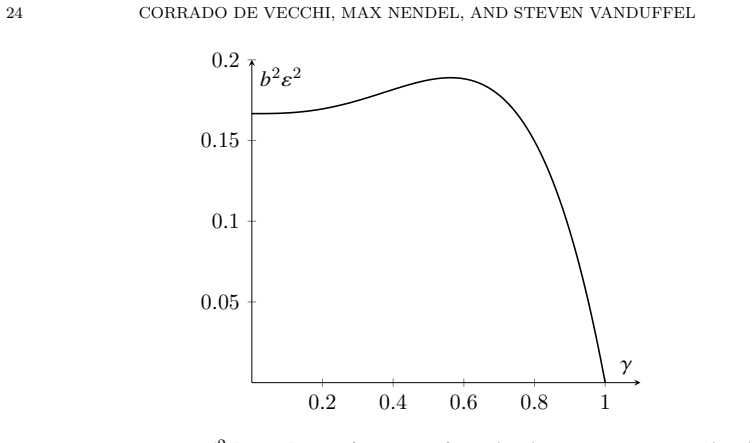

read the original abstract
We study risk aggregation problems for arbitrary non-decreasing aggregation functions and tail risk measures under dependence uncertainty in a distributionally robust setting. To this end, we introduce the notion of hidden dependence for random vectors, which is built on the concepts of risk concentration and common tail events developed in Wang and Zitikis (2020). We show that, starting from a tail event $A$ of the aggregate loss for an arbitrary random vector $Y$, one can construct a random vector with hidden dependence that dominates $Y$ on the tail event $A$. We then focus on the case in which model uncertainty is described by small perturbations of the distribution of a random vector with respect to a suitable probability distance without changing the marginals. We show that these perturbations of the reference distribution are compatible with hidden dependence and thus lead to the same worst-case risk bounds as in the unconstrained case for arbitrary $\gamma$-tail risk measures with a suitable level $\gamma$. Finally, we apply our results in a credit risk context and quantify the potential underestimation of portfolio risk arising from uncertainty in the dependence structure. In particular, we show that even small deviations from a reference Gaussian dependence model can, in principle, justify dramatic increases in capital requirements.
Editorial analysis
A structured set of objections, weighed in public.
Referee Report
Summary. The paper introduces the notion of hidden dependence for random vectors, building on risk concentration and common tail events from Wang and Zitikis (2020). It shows that, given any random vector Y and a tail event A of its aggregate loss, a hidden-dependence vector dominating Y on A can be constructed. Under model uncertainty formalized as small perturbations of the joint distribution (marginals fixed) with respect to a probability distance, these perturbations are shown to be compatible with hidden dependence. Consequently, the worst-case bounds for arbitrary γ-tail risk measures coincide with those of the fully unconstrained dependence case. The framework is applied to a credit-risk portfolio to quantify how small deviations from a reference Gaussian copula can produce large increases in capital requirements.
Significance. If the central equivalence result holds, the work supplies a rigorous justification for employing sharp unconstrained tail-risk bounds even when dependence is subject to small model uncertainty, which is directly relevant to regulatory capital calculations and stress testing. The explicit domination construction and the credit-risk quantification are concrete strengths; the latter demonstrates that the theoretical gap can translate into material differences in risk numbers. The paper builds cleanly on the 2020 reference without introducing free parameters.
major comments (2)
- [Abstract / model-uncertainty section] Abstract and the main result on perturbations (the section following the hidden-dependence construction): the claim that the perturbed distributions “lead to the same worst-case risk bounds as in the unconstrained case” for fixed γ requires that, for every neighborhood radius ε>0 in the chosen probability distance, there exists a hidden-dependence vector inside the ε-ball that still dominates on the tail event A. The construction starting from a fixed tail event A may impose a strictly positive lower bound on the distance; if so, the infimum over the uncertainty set is strictly smaller than the unconstrained value. Please supply the explicit argument (or counter-example) showing that the distance can be driven to zero while preserving exact domination for arbitrary fixed γ.
- [Hidden-dependence construction section] Hidden-dependence construction (the section containing the domination result): the vector constructed to dominate Y on A must remain inside every neighborhood of the reference distribution while keeping the marginals unchanged. The proof sketch supplied in the abstract does not indicate whether the probability distance is continuous with respect to the tail-event domination property; a positive lower bound would invalidate the exact-equivalence statement for small perturbations.
minor comments (2)
- [Model-uncertainty section] The precise definition of the probability distance used for the uncertainty set should be stated explicitly (including any parameters) at the beginning of the model-uncertainty section rather than being referenced only implicitly.
- [Introduction / notation] Notation for the aggregation function and the level γ of the tail risk measure is introduced without a consolidated table; a short notation summary would improve readability.
Simulated Author's Rebuttal
We thank the referee for the thorough review and constructive comments. The major comments correctly identify the need for a more explicit demonstration that the hidden dependence construction can be realized with arbitrarily small perturbations in the chosen probability distance. We address each point below and will revise the manuscript to supply the requested details.
read point-by-point responses
-
Referee: [Abstract / model-uncertainty section] Abstract and the main result on perturbations (the section following the hidden-dependence construction): the claim that the perturbed distributions “lead to the same worst-case risk bounds as in the unconstrained case” for fixed γ requires that, for every neighborhood radius ε>0 in the chosen probability distance, there exists a hidden-dependence vector inside the ε-ball that still dominates on the tail event A. The construction starting from a fixed tail event A may impose a strictly positive lower bound on the distance; if so, the infimum over the uncertainty set is strictly smaller than the unconstrained value. Please supply the explicit argument (or counter-example) showing that the distance can be driven to zero while preserving exact domination for arbitrary fixed γ.
Authors: We thank the referee for this observation. We will revise the manuscript to include an explicit argument demonstrating that, for any ε > 0, a hidden-dependence vector can be constructed inside the ε-ball while preserving exact domination on A for arbitrary fixed γ. This will confirm that the infimum over the uncertainty set equals the unconstrained value. revision: yes
-
Referee: [Hidden-dependence construction section] Hidden-dependence construction (the section containing the domination result): the vector constructed to dominate Y on A must remain inside every neighborhood of the reference distribution while keeping the marginals unchanged. The proof sketch supplied in the abstract does not indicate whether the probability distance is continuous with respect to the tail-event domination property; a positive lower bound would invalidate the exact-equivalence statement for small perturbations.
Authors: We agree that the current sketch does not explicitly address continuity of the domination property with respect to the probability distance. In the revised version we will supply a detailed argument showing that the tail-event domination can be preserved in the limit as the distance tends to zero, with marginals fixed. revision: yes
Circularity Check
No significant circularity; derivations are explicit constructions and proofs building on external prior work
full rationale
The paper defines hidden dependence from concepts in the external Wang and Zitikis (2020) reference, then states theorems showing a dominating hidden-dependence vector can be constructed from any tail event A and that small marginal-preserving perturbations remain compatible with this construction, yielding the same worst-case bounds. No quoted equations or steps reduce the claimed bounds to fitted parameters, self-definitions, or self-citation chains; the central claims are presented as new results rather than tautologies or renamings. The cited 2020 work is by unrelated authors and supplies independent conceptual foundation. This meets the criteria for a self-contained derivation against external benchmarks.
Axiom & Free-Parameter Ledger
axioms (1)
- domain assumption Concepts of risk concentration and common tail events developed in Wang and Zitikis (2020)
invented entities (1)
-
hidden dependence
no independent evidence
Reference graph
Works this paper leans on
-
[1]
Comments template on discussion paper on the review of specific items in the Solvency II delegated regulation
Actuarial Association of Europe. Comments template on discussion paper on the review of specific items in the Solvency II delegated regulation. Technical report, Actuarial Association of Europe, 2017
2017
-
[2]
CRE31 – IRB approach: risk weight functions, 2019
Basel Committee on Banking Supervision. CRE31 – IRB approach: risk weight functions, 2019
2019
-
[3]
Minimum capital requirements for market risk
Basel Committee on Banking Supervision. Minimum capital requirements for market risk. Tech- nical report, Bank for International Settlements, Jan. 2019. Revised February 2019
2019
-
[4]
Bellini, F
F. Bellini, F. Cesarone, C. Colombo, and F. Tardella. Risk parity with expectiles.European J. Oper. Res., 291(3):1149–1163, 2021
2021
-
[5]
Bellini and E
F. Bellini and E. Di Bernardino. Risk management with expectiles.The European Journal of Finance, 23(6):487–506, 2017
2017
-
[6]
Bernard, C
C. Bernard, C. De Vecchi, and S. Vanduffel. The impact of correlation on (Range) Value-at-Risk. Scandinavian Actuarial Journal, 2023(6):531–564, 2023
2023
-
[7]
Bernard, S
C. Bernard, S. Pesenti, and S. Vanduffel. Robust distortion risk measures.Mathematical Finance, 2024
2024
-
[8]
Bernard, L
C. Bernard, L. R¨ uschendorf, and S. Vanduffel.Risk Bounds and Model Uncertainty. Cambridge University Press, 2022
2022
-
[9]
Bernard, L
C. Bernard, L. R¨ uschendorf, S. Vanduffel, and R. Wang. Risk bounds for factor models.Finance and Stochastics, 2017
2017
-
[10]
Bernard, L
C. Bernard, L. R¨ uschendorf, and S. Vanduffel. Value-at-Risk bounds with variance constraints. Journal of Risk and Insurance, 84(3):923–959, 2017
2017
-
[11]
Bernard and S
C. Bernard and S. Vanduffel. A new approach to assessing model risk in high dimensions.Journal of Banking and Finance, 2015
2015
-
[12]
R. N. Bhattacharya and R. Ranga Rao.Normal approximation and asymptotic expansions. Wiley Ser. Probab. Math. Stat. John Wiley & Sons, Hoboken, NJ, 1976
1976
-
[13]
Bignozzi, G
V. Bignozzi, G. Puccetti, and L. R¨ uschendorf. Reducing model risk via positive and negative dependence assumptions.Insurance: Mathematics and Economics, 61:17–26, 2015
2015
-
[14]
Cherubini, E
U. Cherubini, E. Luciano, and W. Vecchiato.Copula methods in finance.Chichester: John Wiley & Sons, 2004
2004
-
[15]
Cont and T
R. Cont and T. Kokholm. A consistent pricing model for index options and volatility derivatives. Mathematical Finance, 23(2):248–274, 2013. 30 CORRADO DE VECCHI, MAX NENDEL, AND STEVEN V ANDUFFEL
2013
-
[16]
Cont and L
R. Cont and L. Wagalath. Fire sales forensics: Measuring endogenous risk.Mathematical Finance, 26(4):835–866, 2016
2016
-
[17]
Council of European Union. Regulation (EU) No 575/2013 of the European Parliament and of the Council of 26 June 2013 on prudential requirements for credit institutions and investment firms and amending regulation (EU) No 648/2012.Official Journal of the European Union, L 176:1, 2013
2013
-
[18]
C. Czado. Pair-copula constructions of multivariate copulas. In P. Jaworski, F. Durante, W. K. H¨ ardle, and T. Rychlik, editors,Copula Theory and Its Applications, volume 198 ofLecture Notes in Statistics, pages 93–109. Springer, Dordrecht, 2010
2010
-
[19]
S. R. Das and R. Uppal. The effect of systemic risk on international portfolio choice.Journal of Finance, 59(6):2809–2834, 2004
2004
-
[20]
De Vecchi, M
C. De Vecchi, M. Nendel, and J. Streicher. Upper comonotonicity and risk aggregation under dependence uncertainty.Mathematical Finance, 36(1):118–139, 2026
2026
-
[21]
F. Delbaen. A Remark on the Structure of Expectiles.Preprint, arXiv:1307.5881, 2013
work page internal anchor Pith review Pith/arXiv arXiv 2013
-
[22]
Delbaen, F
F. Delbaen, F. Bellini, V. Bignozzi, and J. F. Ziegel. Risk measures with the CxLS property. Finance Stoch., 20(2):433–453, 2016
2016
-
[23]
Eckstein, M
S. Eckstein, M. Kupper, and M. Pohl. Robust risk aggregation with neural networks.Mathematical Finance, 30:1229–1272, 2020
2020
-
[24]
Embrechts, A
P. Embrechts, A. J. McNeil, and D. Straumann. Correlation and dependence in risk management: Properties and pitfalls. In M. A. H. Dempster, editor,Risk Management: Value at Risk and Beyond, pages 176–223. Cambridge University Press, Cambridge, 2002
2002
-
[25]
Embrechts, B
P. Embrechts, B. Wang, and R. Wang. Aggregation-robustness and model uncertainty of regulatory risk measures.Finance and Stochastics, 19(4):763–790, 2015
2015
-
[26]
F¨ ollmer and A
H. F¨ ollmer and A. Schied.Stochastic finance. De Gruyter Graduate. De Gruyter, Berlin, 2016. An introduction in discrete time, fourth revised and extended edition
2016
-
[27]
Fontana, E
R. Fontana, E. Luciano, and P. Semeraro. Model risk in credit risk.Mathematical Finance, 31(1):176–202, 2021
2021
-
[28]
Frey and A
R. Frey and A. McNeil. Dependent defaults in models of portfolio credit risk.Journal of Risk, 6(1):59–92, 2003
2003
-
[29]
R. Kaas, R. J. Laeven, and R. B. Nelsen. Worst VaR scenarios with given marginals and measures of association.Insurance: Mathematics and Economics, 44(2):146–158, 2009
2009
-
[30]
L. Li, H. Shao, R. Wang, and J. Yang. Worst-case range value-at-risk with partial information. SIAM Journal on Financial Mathematics, 9(1):190–218, 2018
2018
-
[31]
Liu and R
F. Liu and R. Wang. A theory for measures of tail risk.Mathematics of Operations Research, 46(3):1109–1128, 2021
2021
-
[32]
Lux and A
T. Lux and A. Papapantoleon. Model-free bounds on value-at-risk using partial dependence infor- mation.Insurance: Mathematics and Economics, 86:73–83, 2019
2019
-
[33]
M¨ uller
A. M¨ uller. Integral probability metrics and their generating classes of functions.Adv. Appl. Probab., 29(2):429–443, 1997
1997
-
[34]
M. Nendel. Asymptotic Behaviour of Unexpected Losses and Risk Ratios for Co-Monotonic Alter- natives.Preprint, arXiv:2605.18049, 2026
work page internal anchor Pith review Pith/arXiv arXiv 2026
-
[35]
Puccetti and L
G. Puccetti and L. R¨ uschendorf. Computation of sharp bounds on the distribution of a function of dependent risks.Journal of Computational and Applied Mathematics, 236:1833–1840, 2012
2012
-
[36]
Puccetti, L
G. Puccetti, L. R¨ uschendorf, and D. Manko. VaR bounds for joint portfolios with dependence constraints.Dependence Modeling, 4(1):368–381, 2016
2016
-
[37]
Technical Document on the Swiss Solvency Test, 2006
Swiss Federal Office of Private Insurance. Technical Document on the Swiss Solvency Test, 2006. FINMA archive
2006
-
[38]
O. A. Vasicek. The distribution of loan portfolio value.Risk, 15(12):160–162, 2002
2002
-
[39]
Villani.Optimal transport, volume 338 ofGrundlehren der mathematischen Wissenschaften [Fundamental Principles of Mathematical Sciences]
C. Villani.Optimal transport, volume 338 ofGrundlehren der mathematischen Wissenschaften [Fundamental Principles of Mathematical Sciences]. Springer-Verlag, Berlin, 2009. Old and new
2009
-
[40]
Wang and R
R. Wang and R. Zitikis. An axiomatic foundation for the expected shortfall.Management Science, 67(3):1413–1429, 2020. HIDDEN DEPENDENCE AND AGGREGATE TAIL RISK 31 Department of Economics, University of Verona, Italy Email address:corrado.devecchi@univr.it Department of Statistics and Actuarial Science, University of W aterloo, Canada Email address:mnendel...
2020
discussion (0)
Sign in with ORCID, Apple, or X to comment. Anyone can read and Pith papers without signing in.